


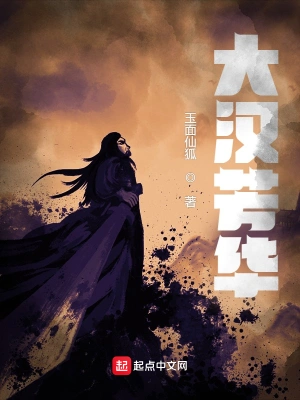
The Splendor of the Great Han
大汉芳华
- Status
- Completed
- Length
- 676k Words
- Genre
- Historical
- Subgenre
- Alternate History
- Updated
- 11mo ago
- Source
- Qidian
Stats
331Chapters
0Votes
1.3kRecs
13.7kFans
Tags
Synopsis
More by this author
In booklists 1
Readers also read
 My Only Method: I Will Add More Points to Become Stronger at the End of Ming Dynasty
 Daming: Asking for the Throne at the Beginning, Lao Zhule Went Crazy
 A Guide to Building Civilization in a Primitive Tribe
 My Father Is Wen Tianxiang, and We Win the Battle of Yashan from the Start
 A Record of a Mortal's Journey to Immortality: I Earn Immortality by Grinding Achievements for Rewards
 The Sun and Moon Endure Forever
 Great Ming: My Brother Is Zhu Yuanzhang, and I'm Founding America
 Lord Evolution
 A Record of a Mortal's Journey to Immortality: Choosing Hextech in the Chaotic Star Sea
 The Age of the Yellow Sky
 Ruling the Realm in the Prosperous Tang
 Northern Song: Seizing Zhao Ji’s Throne
Reader comments 21
Google Translate
A retainer dares to threaten the prince in front of him. Do you think he is the prince of Emperor Xian of the late Han Dynasty?
Although Emperor Wu of the Han Dynasty was relatively mediocre in the later period, he still knew that the forces behind the prince's rebellion were those on the stage: Jiang Chong and other cool officials, and off the stage: Li Guangli and Liu Quya. These two were heavyweights and potential profiteers: Sang Hongyang and others. Emperor Wu of the Han Dynasty was deceived, but he gradually figured it out - the team he had trained for decades disappeared overnight. Emperor Wu of the Han Dynasty was not stupid, so he gradually figured it out. At this time, his first approach was to grieve, try to recover losses, and stop the expansion of counterrevolutionaries. The second is to hold Li Guangli and others accountable, and in turn, wipe out all their members - this also illustrates how useless King Changyi and King Yan and their entourage were in the eyes of Emperor Wu of the Han Dynasty. They would rather promote the power to balance the Wei family than help you get on the horse. After all were promoted, only Liu Fuling, the son of Emperor Wu of the Han Dynasty, could take over. So there was the Luntai Sinji Edict. Originally, if Liu Shi took over successfully, he would not have to slap himself in the face with an imperial edict. It would be enough for the prince to change national policies. But now that the prince is dead and Emperor Zhao is young, in order to prevent his policy of depleting the land for decades from turning into political correctness in the future, and no one being able to change his control and return to the old path of violent Qin, Emperor Wu of the Han Dynasty had to hold his nose and get this done. It can also be seen here that Emperor Wu of the Han Dynasty was a very pragmatic politician, and he was definitely not what the Bohai official said, killing the prince for his own reputation.
The author is not good at politics. Su Wu must be punished. It's just a matter of severity. No matter how much you think highly of him, you should also reprimand him; it is both punishment and protection. After all, if you have already punished him, there will be no political opponents looking for trouble, and Liu Che will most likely not punish him again. So the protagonist is a complete political novice.
Behind the deposed prince
The deposed prince was indeed a foolish move, which completely broke the stability that followed and indirectly accelerated the demise of the Han Dynasty. But the deposed prince is far more than just the art of witchcraft! For example, Emperor Hui of Han Dynasty Liu Ying was almost deposed. Why? In addition to Liu Bang's dislike of doting on his concubines and killing his wife, he also disliked Lu Pheasant and even disliked Liu Ying. This was in order to combat the influence of his relatives. In fact, it was Liu Ying's cowardly character. When Empress Lu was alive, her mother suppressed her son so severely that he was like a puppet. And maybe she herself doesn't have that much talent to be able to suppress the Lu family's relatives who are already at the top of their game. The fact was just as Liu Bang expected, the entire empire almost belonged to the Lu family. Look at this, Emperor Wu of the Han Dynasty actually looks very similar to the deposed prince himself. In addition to its own reasons. In fact, he planned to use the deposed prince to kill a large number of people and find an excuse to eliminate unstable factors (but he did not play it well. Deposing the prince did kick out a large number of people, but it also aggravated instability). Conquering foreign races and creating unparalleled achievements, but the empire itself was also seriously injured. Although the empire is still stable, those heroes gathered around the prince and will rule the country with the prince in the future, and they are likely to be sidelined later. So I took this opportunity and used witchcraft as an excuse to resolve the conflict while I was still alive. But in the future, Emperor Wu of the Han Dynasty Liu Che did regret it. In addition to himself being old, the new emperor was young and easier to be accused, and was even worse than the prince. The conflict was triggered in advance, but the legacy of this conflict is still worsening.
There is still a problem with this title. Traveling into Liu Zhi is obviously the beginning of Tianhu, just lie down, the disaster of witchcraft? ? ! I laughed and told Emperor Wu of the Han Dynasty directly that if he denies it three times in a row, he will lie flat and it will be up to you. From the beginning to the end, Emperor Wu of the Han Dynasty had no intention of killing the prince. As long as this prince can hold on to himself, he will be safe. You eat, drink and have fun every day, but Emperor Wu of Han has nothing to do with you.
After reading it briefly, I predict that this book will be a hit.
After reading a few chapters, I feel that it is not as good as Liu Zhi in history! In the end, he was able to counterattack and almost made Emperor Wu overturn, but this protagonist was so timid that he broke his arm. It felt that in the end, Emperor Wu wanted him to die with just a glass of poisonous wine, not even a soldier. In history, it was okay for Liu Zhi to keep his retainers, but it's not okay for you? Your position is already unstable, and your subordinates have been laid off. Who will follow you loyally? Are you waiting to be kicked away by you one day? Emperor Wu tormented Liu Zhi because he was old, and he was afraid that Liu Zhi, who was getting stronger and stronger, would take away his throne. This will not change just because you are a coward. No matter how cowardly you are, he will think that you may be faking it. Even if he really thinks that you are a coward, he will still destroy you, because his life's hard work cannot be handed over to a coward!
To write history and write history well, I think it is necessary to do some research I read two or three chapters and stopped reading for the time being. There are many problems in it First of all, the title of the emperor is inherited by Taizu Emperor Gao. Let's not talk about it for the time being. The emperor is an understandable statement for any historian and historical researcher. An emperor pops up here. I feel that this Huangmen just came back from the Qing Dynasty? It's not so outrageous to go to the wrong set On the title issue, you can pick out a lot of things. The Han Dynasty is not the Sui and Tang Dynasties. There is no such title as father and emperor, including the recently popular name of my father, Han Gaozu. Single names, such as Liu Bang, are called Bang. There is not much difference between the name and the Warring States period. The surname is not used in the title. The Western Han Dynasty did not completely abandon the clan theory. The family name is greater than the surname. For example, Queen Wei's full name is Liu Wei. The name in historical records is unknown. The name is Zifu. Therefore, unless there is grudge, the Qin and Han Dynasties generally do not call others by their first names. If I remember correctly in the Western Han Dynasty, there was no such title as Prince. The common titles were: Lang Jun and Crown Prince. In the Western Han Dynasty, the prince refers to the legitimate son of the princes. There are historical records that after the Eastern Han Dynasty, the prince generally refers to the prince. The Western Han Dynasty followed the Qin Dynasty but was different from the Qin Dynasty. Only the princes in the Qin Dynasty could be called princes. The emperor's title was above the princes but not the title. It was quite complicated in the Tang Dynasty. In the past, there was only one self-proclaimed prince: an orphan, a prince, a widow, and an emperor, me. Among the recent novels, there is a more rigorous one. The title of the direct prince of the Qin Dynasty is more rigorous when it comes to the Qin and Han Dynasties. It should be from the history department, and it is about the history of the Qin and Han Dynasties. It is relatively easy to understand As for the other titles of ministers, the Han Dynasty's three-gong-nine ministers system and the twenty-level nobility (different titles) that followed the Qin system are also relatively easy to understand A more rigorous Gongzao start, a more nonsense start and kill two people There are many titles and titles No one who has studied can write such nonsense The title system is the same except for clan members. It was the same in the Qin Dynasty and the beginning of the Western Han Dynasty. Those who have not made military achievements will not be granted the title. All the princes of Chehou will have to destroy the country. Do you understand the destruction of the country? The Marquis of Guannei can't be sealed by just talking nonsense. It starts with ten cities If you want to be granted the title, you must go to Fengchang first. After Emperor Jing, you should ask Taichang to submit the report. Then everyone will have a meeting to discuss the merits, and finally make a decision and hand it over to the prime minister In short, if you write it first, do more homework
Nothing would happen as long as Liu Ju remained silent. Emperor Wu of the Han Dynasty only trained him.
Chapter 30 starts to persuade you to retreat. Good guy, destiny has come out, so why are you resisting? You can wait until you die.