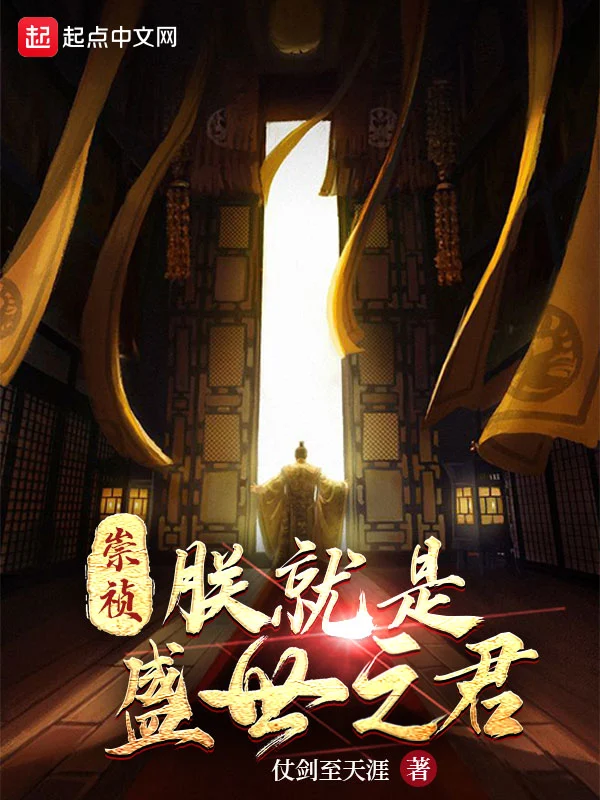
Chongzhen: I Am the King of the Prosperous Age
崇祯:朕就是盛世之君
- Status
- Completed
- Length
- 1.7M Words
- Genre
- Historical
- Audience
- Male
- Subgenre
- Song-Yuan-Ming Dynasties
- Updated
- 3y ago
- Source
- Qidian
Stats
0Monthly votes
24.7kRecommends
80.2kFans
801Chapters
Tags
Synopsis
Reader comments
In booklists 1


Readers also read
 Please Call Me Your Majesty the Tsar
 1914 Begins with the Rejection of the Schlieffen Plan
 In the Red Mansion: Escort Daiyu to Beijing at the Beginning
 Talker in the Song Dynasty
 Three Kingdoms: Ji Han Liu Zhang
 Taichang Daming
 Travel Through the Ming Dynasty and Become a Tyrant
 Nanming, This Emperor Is a Bit Stable
 Ming Dynasty Endgame 1645
 I Am the Carpenter Emperor
 Long Wanshengshi
 Return to the Three Kingdoms and the Battle of Wuhu
 The King in Jinyi
 Jin Yi Yu Ming
 Ming Dynasty: the Most Ruthless Tyrant in History
Chapter 256
The distribution of military operations is very reasonable, including routes, planning and troop allocation, but should they prepare two sets of plans? In addition, their military level has improved too fast in just a few months😀 The Martial Arts Hall is good, but I think the novel can speed up their militarization level progress. However, many policies and improvements are based on visual inspection of the protagonist's small notebooks, many of which are small notebooks and are less than a few months old. These require recall of conception and practice in line with the current public conditions and national conditions. I hope that the time span can be longer in the future, otherwise it will be too fast and it will feel distorted and buggy. These results may ultimately take three years to start. But again, the novel is pretty good so far. Effort
Chapter eighty-eight
That's great\(^▽^)/! The battle plot is very good. Whether it is a big character or a small character, the portrayal of both the enemy and ourselves is mesmerizing and fascinating. I may not know that the writing skills of the author brother will be upgraded in a few days. Hahaha (ಡωಡ)hiahiahia. Already rewarded 100 points and fed Chongzhen a chicken drum🍗😂
Chapter 226
These missionaries were early reconnaissance and instigators. They drew maps along the route, understood the folk customs of various places, and changed the local people's beliefs. In this way, they achieved the unity of politics and religion and made basic preparations for subsequent Western invasions, whether it was the Papal States or European empires of the same faith. We can absorb their talents and knowledge. If we want to do something So religious freedom must simultaneously propagate Taoism, expand the Confucian school of Mozi and the Legalist military strategists, and can only and must limit the scope of activities and missionary areas of these missionaries, including those imams, to overlap as much as possible and stay away from villages, towns and counties in the eighteen provinces of Han Dynasty, although the Western Region has been lost for a long time. For the Western calendar, which is the New calendar, it is best to distinguish it from the lunar calendar. There is also a national calendar. If possible, fix the year of the summer to the Ming Dynasty and call it the Chinese calendar, whether it is the summer calendar or the Chinese calendar, but it must come first. One is a few thousand years, one is a few thousand years. For the calendar, it is possible to judge or even judge the world civilization and the country's people's livelihood. Whoever is older and whoever formulates it has the innate right to speak.
Volume 2 Chapter 1
Regarding border trade and mutual economic issues, this was a strategic offensive posture in the early Ming Dynasty. It took Zhu Yuanzhang and Zhu Di's descendants for five generations and decades to defeat the Northern Yuan Dynasty, and no longer pulled the small nomads to contain the large nomads. From time to time, they harvested the powerful nomads and forced them to Sell horses and pay tribute, and then let them use the money rewarded by the court to buy iron pot tea and wait for them to return to the grasslands in the Ming Dynasty. They will slowly assimilate to the Chinese people. When the people's livelihood in the Ming Dynasty is stable again, they can send troops to win over the obedient nomads, similar to the chieftain's official position, establish a garrison to consolidate local rule and build a city. The Mobei Protectorate is completed. Then comes the second step, the Protectorate of the Western Regions. The emperor's fault and too many people's fault are responsible for the Tumu Fort. From strategic offense to strategic defense. At the same time, as long as Mobei and the Western Region are captured in the future, millions of people will naturally migrate to reclaim the land for border guarding and Chineseization.
Chapter sixty-four
The battle plot is very good (✪▽✪) and the character description is also good😊 Come on (ง •̀_•́)ง
Chapter 124
In fact, you can take this opportunity to cut off Tang's sacrificial flag and return to Beijing.
Chapter 236
Regarding the health issues in the capital, you can refer to Wu Youke's prototype of a traditional Chinese medicine doctor in the movie "The Tribulation of the Ming Dynasty", who predates the plague theory or something like that by more than a hundred or hundreds of years around the world.
Chapter 232
It is not good to allocate food and salary on an annual basis. The protagonist handles it very well, including supervision and registration. However, it will waste a lot of manpower on a monthly basis. Especially in ancient times, transportation was very poor. We should consider a quarterly basis, that is, once in March.
Volume 2 Chapter 21
If those people are to be forced back to the capital, it is best to kill the Nine Tribes. The principal offenders and individual relatives should be dispersed to the provincial capitals and Jinling. At the same time, they will be executed on the same day as well as Lingchi. This can better shock the whole country...
Chapter 262
The Xishan garrison should no longer be in charge of the Military Academy. Now it is managed by people promoted by the emperor with unwavering loyalty, but it will be hard to say ten or twenty years from now. There are no restrictions on the system or national sentiment and power. From weapons research and development to production and storage, as well as garrisoning troops, it is the Armed Forces Academy. I'm afraid that if it wasn't the Xuanwu Sect, it would be Chen Qiao who rebelled. Few people have absolute obedience and loyalty, only transactions and interests.
Chapter 227
Western learning is allowed, but religious intellectuals cannot spread it. It should be allowed to spread on a small scale among the people. Christianity is the bridgehead for the invasion of Western forces. This is a very important thing. Even now, their spiritual erosion of the rich and high-level intellectuals in the Southeast is very serious, and anyone who wants to study in the United States must believe in or praise Catholicism. Then it turns into convert fanaticism.
Who is the enemy? Who is the friend? Civil officials will not accompany you to hang yourself, nor will they pay for it. It is just a matter of shaving your head for another emperor. Who is not kneeling when you kneel? In the end, if you don't surrender or become an official, you will be regarded as a loyal minister. This group of people is unreliable. The eunuchs are loyal, but they are confined to the deep palace and have too little knowledge and too much selfishness. They can use it to save their lives, but there is no chance of relying on them to make a comeback. The nobles and nobles of the foreign vassals have become a loser. They are even more selfish and ignore the national crisis, and they are also unreliable. The Jiliao military town has become a strong force that cannot be lost. The military leaders support the troops and support the bandits, and they are not reliable. The southern gentry are either fat-minded or the water is too cold, making them even more unreliable. The patriotic people in the world persisted in resisting the Qing Dynasty until the end, but it was the refugees who rebelled against the thieves. They were the main force that could save the Ming Dynasty. Even the Southern Ming court mostly relied on these people to resist. Isn't that ironic?
After taking Northern Zhili as the basic plan, we must look at the whole world and first implement a Great Northern Strategy to revitalize several northern provinces. As long as the northern economy and food self-sufficiency do not depend on the south, the struggle in the south will be less difficult in the future. At the same time, due to the social reality of the Ming Dynasty, big businessmen must be officials and businessmen. Your economic policies must not only benefit farmers but also be seen by these officials and businessmen. After all, they have various channels that go deep into the grassroots. If these people are willing to cooperate with you, they will get twice the result with half the effort. These are the officials and businessmen who can be reconciled and are willing to embrace the New Deal. There is no problem in promoting the officials behind them. The other is the government and businessmen whose interests are irreconcilable. It depends on how you kill them. In short, you have to unite most of the groups that can unite, not just the farmers. The author should have an open mind and a broad mind that can accommodate all directions in the world 🔨
I came here to see the final text written carefully, not to see the invincible hair-breaking attack (the effect of a rifled gun). As a matter of fact, the Ming Dynasty can crush a few quilboars even if it considers the existing technology.
I don't even understand why everyone is so malicious towards Yuan Chonghuan? In 1629, Yuan Chonghuan submitted a letter to pacify the Liao Dynasty for five years, and was willing to lead the army with an order, but he could not pacify the Liao Dynasty and collectively committed suicide. In May 1629, Yuan Chonghuan beheaded Mao Wenlong, which was the most controversial. At this time, the Qing Dynasty had taken over the grassland and could be detoured at will. How many troops could be restrained by one banner in Dongjiang Town? Moreover, Dongjiang has no sound all year round, and there is no work to do. For real effect, 10 Niulu and some coating are enough. In November 1629, Qing troops besieged the capital. Yuan Chonghuan led the rescue troops and rushed to the capital. He applied to enter the city for repairs, but was rejected. He then fought to the death outside Guangqu Gate and repelled the Qing troops. In December 1629, Chongzhen arrested Yuan Chonghuan and imprisoned him. The remaining soldiers were not even given a reward of silver and told them to go back to Liaodong. Question: How many months did Yuan Chonghuan stay in Liaodong from the time when he took over Liaodong to when he was imprisoned? In August 1630, Yuan Chonghuan was executed late. Yuan Chonghuan spent more time in prison than when he took over Liaodong. Question 2: How many months did it take for Chongzhen to believe in him? ? I don't even understand why the author and netizens are so malicious towards Yuan Chonghuan? Yuan Chonghuan has only been in Liaodong for how many months? If it were keyboards, what could they do in the past few months? ? You say he is bragging. There is no way he can level Liao in five years. This is true, but bragging is bragging. How many months have you given them time to perform? The biggest problem in Chongzhen is that he is suspicious of people while employing people. This is not only reflected in Yuan Chonghuan, the number of replacements of chief ministers during the Chongzhen period has almost caught up with the total number of people except him in the Ming Dynasty. Beheading Yuan Chonghuan was the watershed in the late Ming Dynasty. After that, the warlords could no longer mobilize. Officials such as Yuan Chonghuan were killed for any reason. The warlords had no intention of sending themselves to test the sword. Anyway, as long as they were safe in their nests, no one dared to touch them. The unstoppable frontier troops and Liaodong warlords are equivalent to losing military morale and military power. Whatever the Ming Dynasty did, it was a desperate struggle. It was only a matter of time.
Some people always say that civil servants harmed the Ming Dynasty. I think the greatest harm to the Ming Dynasty was the emperor. Jiajing, Wanli, Tianqi, and Chongzhen were the four major disasters. Wanli ZTE was still in charge of Zhang Juzheng. The emperor used traitorous eunuchs to harm the people. In the late Ming Dynasty, some people said that the emperor was a great harm to the world. Even in modern times, the emperor still kneels down and blames the civil servants.
At the end of the Ming Dynasty, especially during the Chongzhen period, the roots of the Ming Dynasty were completely rotten. If you want to save the Han family, you can only knock down the house and rebuild it. It is impossible to reform and patch things up. What you have to deal with is not the civil servant class, but the vested interests of the entire empire. Even if you are an emperor, you still have to play within the rules, not just flipping the table.
To be honest, I have basically ordered all of them. To put it simply, I would dream of reforming without bloodshed! Literary men have very serious ideas
In the Ming Dynasty, officials and businessmen were integrated, and the court had lost control of capital. In Ming Dynasty novels, when people think of the evil merchants of the Ming Dynasty, they immediately think of the eight major Shanxi merchants. When talking about the South, the first thing that comes to everyone's mind is the inter-party struggles between the Donglin Party, the Zhejiang Party, and the Chu Party. Compared with the northern warlords' blood-sucking and smuggling, the south is the real deep-water giant, which can be said to pale into insignificance. The wealthy merchants in the south monopolize various production materials of the Ming Dynasty, such as salt, iron, tea, grain, maritime trade, human trafficking, and all kinds of plundering of the people. The Ming Dynasty's capital move was not only a strategic issue, but also partly due to the emperor's lack of sense of security. After experiencing the abnormal development of civil and military affairs in the Song Dynasty and the tax farming system in the Yuan Dynasty, in the Ming Dynasty, the commodity economy became more prosperous, and the desire for capital and money swallowed people's hearts. Confucianism became a tool to restrain the emperor, but not the literati themselves. They were inconsistent in appearance and appearance. The literati did not serve the country and the people when they were officials, but only fought for the interests of the family and power behind them. It was possible to suppress them during the periods of Zhu Yuanzhang and Zhu Di. Later, the emperor could only lie flat. As long as he did something, some unexpected phenomena would occur. Many great Confucian scholars in the Ming Dynasty wanted to live and die, and missed the Northern Yuan Dynasty. Is it really true that they are loyal to the emperor and patriotic? Why can the Jurchens easily dominate the world after entering the customs?
That's nonsense. The Ming Dynasty couldn't stop the Manchu invaders for the first time. If they can't fight in the field, they can't do anything. They also have three-stage attacks. Three-stage attacks that self-destruct when fired. If you don't have enough weapons, you're looking for death when you go out. The cavalry cuts off your food routes, slows down your speed, and harasses you at night.
I just want to say one thing, why are you successful? Why do you want your subordinates to obey? You have a few subordinates who are absolutely obedient, what use are they? Do you really want to do things? What you do can guarantee that the people below will not discount or misinterpret it 100%?
He didn't die, he would die within a month if he violated military power.
I found that the most important thing ignored in the late Ming Dynasty is that plagues and diseases do not pay attention to medical treatment. You work hard to train elite soldiers, and then a major infectious disease will wipe out your army like the current new coronavirus. Which movie about the Ming Dynasty captured some of the reasons for the failure of Sun Chuanting in the late Ming Dynasty. During the late Han Dynasty and the Three Kingdoms period, during the late Ming Dynasty, so many people died. In addition to wars, infectious diseases caused the most deaths.
Modern people play micro-manipulation and look down on Principal Chiang. They also play the role of imperial chariot and personal conquest. Success will lead to an increase in imperial power. They look down on the power and conscience of the civil servants of the Ming Dynasty. Several emperors in the late Ming Dynasty died incomprehensively.
In fact, as long as the Ming army received military pay, their combat effectiveness was extremely powerful. The Manchu Qing Dynasty entered the Pass and even fully occupied the Ming Dynasty's homeland by surrendering to the Ming army.
If Chongzhen wanted to make a comeback, he could just say one word. Political power comes from the barrel of a gun. If the gun is not strong, it will be useless.
What should I say? I just read a comment saying that the emperor of the Ming Dynasty would die if he touched the military power. It is completely nonsense. If it really happened, the Ming Dynasty would have perished long ago. When Emperor Tianqi fell into the water, there were all his confidants on the boat. He was not pushed into the water at all. It is historical records that he encountered a strong wind by chance? Now that I've said it, you fell into the water and didn't die? If he really was pushed into the water and the emperor woke up, it would not be poisonous if he didn't kill his whole family and the elixir offered by the Minister of War. He was originally an eunuch. There would be no benefit in killing the emperor. The emperor was not a fool? No one tried the medicine? Wei Zhongxian managed the inner court, and even if the emperor was killed in the palace. Wei Zhongxian killed so many people that he would have died a long time ago. Chongzhen also killed many ministers. Jiajing benefited greatly. Emperor Chenghua plowed the court to sweep holes and regained the Hetao. How could it be okay?
Did the emperor suppress the cabinet so harshly? I am the chief minister or minister, so I am absolutely forced to lead the cabinet to resign en masse! Your emperor is so powerful, go play alone! Anyway, you don't like anyone! You are so smart and discerning that you can find other capable people to dispatch troops and generals for you. Do you think that just anyone you can find is Xiao He? ? ?
Be careful of falling into water, poison, fire, and assassination. You need guard eunuchs to protect and supervise each other 24 hours a day. Strange palace maids and eunuchs are not allowed to approach, and you need to check at all levels when approaching the emperor. The concubine goes to the emperor's palace, not the emperor to the concubine's palace. The concubine's palace needs to remove hairpins and other sharp objects. When sleeping, there need to be multiple close and loyal female officers inside to guard and supervise each other. There are guards patrolling outside the house to prevent fire. There needs to be a safe way to escape after a fire breaks out. The diet is strictly supervised. The chef needs to be supervised by many people when cooking. The supervisor needs to keep a close eye when passing the dishes. Animals are required to taste the food. There are many people in the house to taste the food. A small stove is set up. Cold dishes that are good are heated under the eyes of the emperor and then eaten.
I know the author wants to write about passion, but there are too many slogans in it. Don't write it as an invincible firearm. It is the machine gun that eliminates cavalry. With machine guns, cavalry can only be used as an auxiliary force on the battlefield and cannot be used as the main force. Can you still conjure a machine gun?