Jiyuan
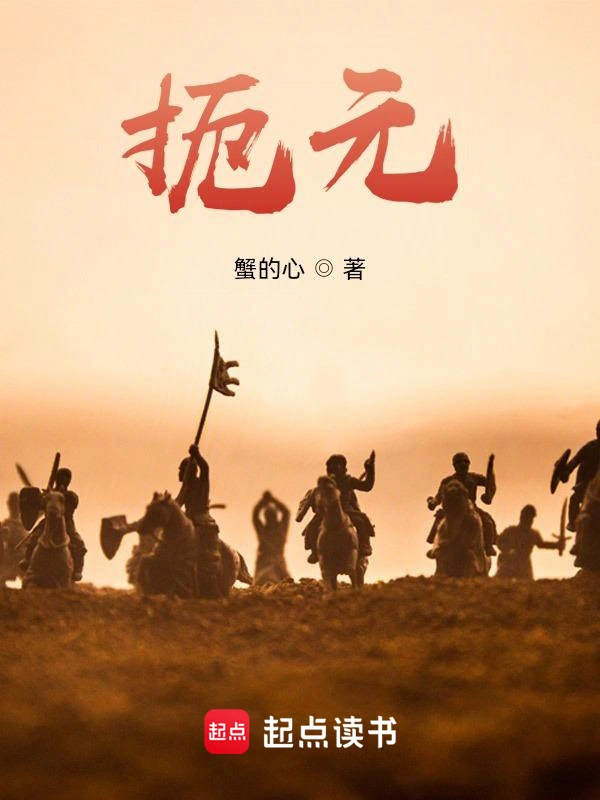
扼元
- Status
- Ongoing
- Length
- 3.0M Words
- Genre
- Historical
- Audience
- Male
- Subgenre
- Song-Yuan-Ming Dynasties
- Updated
- 1y ago
- Source
- Qidian
Stats
Tags
Synopsis
Reader comments
In booklists 46
Explore more →


Star Dream Bookstore
I like to read books and am committed to finding all kinds of excellent novels. I hope everyone will like them too.
Change History and Fight for Hegemony
This mainly contains some time-travel articles. I personally have a certain tendency to research time-travel articles, so the articles included in it will have strong historical research.

#NFIBANDANGGU# Mainly Recommends Lao Bai, Anti-Routine and Imaginative. Archive 1#
Except for the first three books, the others are archived from past issues.


Recommended Book List by a 20-Year-Old Bookworm. the Main Features Are Non-Toxic.
Mainly based on historical urban fairy tales and sports stories, the plot is reasonable, the writing is excellent, and it does not overwhelm the wits or educate the youth.

Song Dynasty Historical Texts
The Song Dynasty was a dynasty that everyone felt was a bit complicated. On the one hand, its economy and culture are unique in the world. On the other hand, it is constantly threatened by other regimes and is weak. Let us learn about the culturally prosperous Song Dynasty through novels.
A Single Owner of a Reasonable Party Must Have a Basic Understanding of Logic, but the Taste Is a Hodgepodge.
As a bookworm for almost ten years, Shanzhu's book list is quite complex. I recommend some books that non-novice readers can read. There are not so many routines, not so many saints, and not so many mindless slaps in the face. I also like books with dark protagonists. Of course, the darkness of the protagonists in each book is different. It is more accurate to say that these protagonists are more in line with human nature, rather than being some kind of saint. Ps: Everyone collect more and like

Ah, Holy Light, This Book List Is Worth Collecting!
Updated every week, all read by a single author, be sure to save it
🔥Recommendations for Ten-Year-Old Bookworms🔥must-See History for Newbies---The Song Dynasty
History is like the breath of the earth, stirring endlessly over the long years. For thousands of years, civilization has rotated and bloomed brilliantly. The towers and pavilions of the past have now become a collection of ruins. The tempering of years carries the vicissitudes of the past. The history is long and well established, carved in time, It loves, it likes, it witnesses everything. We have witnessed ancient and glorious feats in the long history, There was a dazzling light shining the
My Book List 🔥
Carrots and greens each have their own preferences, they don't like entertainment, and they reject romance and the city (with some exceptions). Although some of these books were abandoned later, they are still worth reading. I hope one of them will suit you.
[Bright Stars] That Summer Night, We Looked at the Milky Way
👌☝🖐Every novel worthy of recognition represents a turbulent whirlpool leading to the real world, condensing the moment of glory for an author to ascend to the throne of God. A good novel should be a vivid world that is logically self-consistent and self-operating. The worlds of these novels are like stars of varying brightness, shining around the sky. This book only collects parts from this galaxy for your reference. The important criterion for measuring novels in this book list is [world compl
They Are All Novels Worth Reading (Currently Being Serialized, Recommended by a 20-Year-Old Bookworm)
Personally I think it's a pretty good book and worth reading (I've deleted all the previous dozen or so old books, and the books I recommend now are mostly still updated)



A Twenty-Year Old Reader with a Good Eye for Reading Books
I have read countless protagonists and become proficient in all kinds of routines. When I reach middle age, I just want to find good books that please me.
Books That Have Accompanied Me over the Years
My personal tastes are rather mixed, and I feel that I have become more and more picky over the years. They are some novels that I have read for a long time, and some emotional works.
Book List of the Twenty-Four Solar Terms
I have read the works and liked them very much. I hope that I can enjoy them together with others and analyze their doubts together. There will be no specific evaluations such as scores, because different people will have different conclusions. It is better to see for yourself than to listen to what others say. After reading the recommended books, I thought I might add them to the book list. If I didn't add them, it just doesn't fit my current taste. The current book list mainly includes history

Personal Reading List
Only add some novels that I have ordered and feel good about. Currently, I will only add completed novels to the book list. The book list is being updated continuously. Because I am lazy, the book list will be updated irregularly. I'm really sorry 😂
Blooming Book List
These are the books I have been chasing
The First in the History of Each Dynasty
Recommend the best historical articles written in various eras, various majors, and various angles
Books to Read by Yourself
Some books still on the bookshelf

I Only Recommend What I Read (I Read Fast Food Literature)
(If you have read something good and found that it is not on my book list, please recommend it in the comment area. The book shortage is uncomfortable) I only recommend books that I have read well. I will only recommend books that I have read. Pay attention to the timeliness. If it shows that I am a trainee and the book has been out for a long time, it means that I have not read it. When I read novels, I never care about writing and plot. It's too tiring. As long as I feel good about it, I'll re
I Have Watched It Before Chai He and I Thought It Was Pretty Good.
I only list the books I am currently following and the books I want to read after reading them in the past, whether they are suitable for the general public or a niche audience.
History Is Memory Engraved on Words (No Entry for Beginners)
I'm short of books, so I'll make a book list to quench my thirst. 1. Don't recommend the works of great artists 2. Mainly promote foreign ancient history (excluding Japanese Warring States history, including the Age of Discovery) 3. In principle, we do not recommend the history of the Three Kingdoms and the late Ming Dynasty (except for the best fairy grass) 4. Preferences should be well documented and reasonably set. 5. I hate the thin sense of history (for example, the Three Kingdoms has
Zheng'anjun's Little Bookstore
* ( ) ( ) ✨ ( ' - ' ) 🌟 O(0🎀0)******************o The novels that I have read and I think are good are being added every month. If you like the books that you think are good, please remember to like and leave a comment✨*Thank you very much for your support! _(:з∠)_
There Is a Way of Writing Called Love
Oh oh oh Trouble with commenting on recommended books Shan Zhu will read them one by one, and I will recommend them if they are good ones. Guys, please give me flowers🎉! Every flower is an encouragement to the owner! 🍀🍀🍀 If you don't know, just click on the main avatar to see it! I was busy with my studies for a while, but now I have some free time to search for good books for everyone, please collect them! The content of the book list will also be compiled from time to time!

Li Xiaoyao's Pocket Book List~\(≧▽≦)/~
The books I am following, and I add them from time to time, are all food and fodder.
Readers also read
 Fu Ming 1627
 After Lying in Bed for Three Years, He Was Forced to Help the Han Dynasty
 Northern Qi, Sage Khan
 Red Mansion: Start Escaping and Farming from the Equipment Bar
 Siheyuan: Start by Picking up Attributes
 Da Liu Bandits
 The Age of Huangtian
 Beastmaster: I Can See the Evolutionary Path
 Immortal Who Seizes the Body
 Ten Kingdoms Week
 Jinting Han People
 Everyone Is Responsible
 Primarch: from the World of Beauty to the Sea of Stars
 Qiang Liang in the Late Jin Dynasty
 The Remaining Smoke of Han Ding
Armor Song Liao Jin Seen online
The book is really good, the sense of time and the bloody bravery of the warrior are very well written. I would like to make a suggestion: Can you be more coherent when writing the war chapters? When describing wars, the author always likes to give some characters a biography of several hundred words, either a psychological activity of several hundred words, or a description of the geographical environment and allusions. The rhythm of the originally thrilling climax chapter was suddenly disrupted, which made people unable to get up and down, which was very annoying.
"Illustrations of the Golden Destiny" reflects Chinese identity
(This article is excerpted because of Chapter 281) Since the "Five Virtues Beginning" theory was first created during the Warring States Period, each dynasty, in order to flaunt its orthodoxy and arrange its dynasty into the orthodox development pedigree, has determined a virtue according to the cycle of the five elements (five virtues) of earth, wood, metal, fire, and water, as the theoretical basis for being a member of the Chinese orthodox dynasty and the Chinese orthodox development pedigree. The Jin Dynasty regime established with the Jurchens as rulers was no exception. In order to highlight the orthodox status of the Jin Dynasty and to arrange the Jin Dynasty into the orthodox development pedigree of China,In November of the second year of Taihe (1202), Jin Zhangzong approved the Shangshu Province's report on the Jin Dynasty's "following the fire fortune of the Northern Song Dynasty as earth virtue" and issued an edict to "change the fate of virtue as earth virtue". After Jin Xuanzong succeeded to the throne, he compiled "Illustrated Description of the Destiny of the Great Jin Dynasty". The diagram of the inheritance of dynasties' fortunes included in this "Illustration" is a pedigree of Chinese historical development compiled by the Jin people on the basis of summarizing and summarizing the inheritance of virtues of each dynasty in Chinese history. It basically conforms to the virtues and inheritance relationships determined by each dynasty, indicating that the Jin people have a high degree of recognition of the pedigree of China's historical development. The unilinear Chinese Orthodox development theory of the "Five Virtues Beginning" theory encountered trouble when interpreting the complex linear historical development of Chinese orthodoxy in the Wei, Jin, Southern and Northern Dynasties periods. The inheritance map of dynasty virtues compiled by the Jin people divides the history after the Western Jin Dynasty into two branches, both of which are regarded as orthodox. In fact, it changes the unilinear development model of the "Five Virtues Beginning" theory to a multi-linear development model. Not only does it recognize the history of the Three Kingdoms, the Eastern Jin Dynasty, and the Southern Dynasties established by Han rulers as an integral part of Chinese history, it also recognizes the history of the Sixteen Kingdoms and the Northern Dynasties established by ethnic minority rulers as an integral part of Chinese history. The Jin people formed different opinions on "following the Tang Dynasty", "following the Song Dynasty" and "following the Liao Dynasty" respectively during the discussion of Deyun. On the surface, it seems that some people only identify with the history of the Tang Dynasty, the history of the Song Dynasty and the history of the Liao Dynasty, while rejecting the history of other dynasties and the unilinear development of Chinese history. But the actual situation is a manifestation of the Jin people's awareness of the history of the Tang Dynasty, the Song Dynasty, and the Liao Dynasty. It prompted the Jin people to gradually form a concept of the multi-linear development of Chinese history. On this basis, there was a rise in the view that "no matter what is inherited, only the virtues of Jin" emerged. This eventually led to the "Five Virtues Beginning" theory, a single-linear Chinese historical development model, to withdraw from the stage of history. Author: Zhao Yongchun Original title "The "Chinese" historical identity of the Jin people from the perspective of the Chinese nation community - a discussion centered on "Illustrations of the Golden Destiny"", excerpted from "Journal of Shaanxi Normal University" Issue 1, 2022
The author's writing is smooth and the story is fascinating. The beginning is very stable. Many details are well described. Especially the descriptions of the characters and environments in the war scenes are very cinematic. It is rare to come across a historical novel that can be read well. The author, "Keep it up, this book will be a hit!" Finally, the author quickly created the character card. I am very much looking forward to it. Will the heroine be the invincible Yang Miaozhen with peach blossom eyes and a pear blossom spear? The first meeting between her and Guo Ning was so picturesque, as one of the book friends commented: "Gone with the Wind, Sons of Heroes!"
When "The Remaining Smoke of the Han Tripod" was serialized before, Qingse once recommended this book by Taishi Xie to me, but I didn't read it at that time. Later, "The Remaining Smoke of the Han Cauldron" was completed, and Crab's Heart opened a new book "Jie Yuan", which now has almost 500,000 words. The first volume of "The Jade Account's Early Drum Ming" has also been written, so I went to read it today. This book, and even the author Taishi Crab, is characterized by the aesthetics of violence. The often mentioned feature of "The Remaining Smoke of the Han Cauldron" is that the characters in the book are so powerful that they can be compared to Gundams on the battlefield - I have heard about this for a long time. In "Jie Yuan", the protagonist Guo Ning really meets this point and is a well-deserved god of death. The most impressive and most beautiful passage in the entire volume is the battlefield action scene in which the protagonist smashes the enemy like a hammer. Crab's Heart obviously knows to put the best part at the beginning. It goes straight to the point. The first chapter arranges the desperate situation where the protagonist is ambushed and the team members are wiped out, and then writes a battlefield action scene in which the sick tiger makes a last ditch effort and kills all the remaining enemies alone. The meticulous and precise descriptions, the extremely tense scenes, and the portrayal of the protagonist who is like a demon. Even if he is seriously injured and in danger of death, he can still catch an arrow with his bare hands. It is really enjoyable to read. All the pro-army troops are dead, leaving only me as a bare commander. How can I face their relatives? The protagonist buries the corpses of his men, returns to the camp alone, and brings the bad news to the women and children left behind in the camp. There is not a single word in this paragraph that directly mentions hatred. It only uses a calm tone to create a sad atmosphere. However, the anger of revenge naturally flows out of the narrative and is accumulated in the protagonist's heart and in the readers' hearts. This naturally transitions to the next exciting action scene in which the enemy Xiao Haohu is assassinated. So the protagonist sneaks into the ranks of a local wealthy family, kills his enemies in public, and then flexes his muscles and retreats, giving readers another astonishing action scene like a white rainbow piercing the sun. The first 13 chapters are simply amazing. The rise from desperation, the bleak foreshadowing, and finally converge into a fierce blow. Master Crab uses a very expressive writing style to portray the image of an extremely fierce mourning soldier in just tens of thousands of words. It is really wonderful. This is probably what Crab's Heart is best at writing. I call it the "aesthetics of violence in history" – limited to historical themes, Crab Taishi keenly captures the vivid ferocity in boring history and expresses it with excellent battlefield action scenes. However, once the stunning start fades, the subsequent development does not seem so exciting. The background of this book is set on the eve of Mongolia's destruction of the Jin Dynasty. In the decisive battle between Jin and Mongolia, the Jin Kingdom had already suffered a defeat. The army was routed and no one escaped. The protagonist was one of the defeated troops who fled back to Hebei. The first volume mainly describes the process of the protagonist gathering the defeated troops of the five states to form a separatist force. He joined forces vertically and horizontally to develop the power, and then used this as a basis to participate in the internal political struggle between the left and right sides of the Jin Kingdom. Although the development is very solid, very reasonable, and very historical, it can be seen that the author has mastered and used the historical materials of this period (for example, when historical figures appear, he will occasionally introduce the characters' biographies to introduce science knowledge), but after all it is not as shocking as the beginning, and gradually makes people lose their temper. More action scenes! Also, it would be better if this violent spirit could be implemented throughout the book instead of just one side of the protagonist. Another regret is that the subject matter of this book really has potential. How the northern Han people under the rule of the Jin Dynasty made their own way between Mongolia and Song Dynasty is very worth looking forward to. However, the author seems to have no intention of digging deeper here and thinking about the themes contained in the subject matter. The protagonist's determination is relatively casual, and the confirmation of the route and road is a bit perfunctory, but I always feel that the discussion is not strong enough and the conflict is not intense enough... In short, this book has an amazing start, and I highly recommend reading the first 13 chapters. It feels a bit ordinary later on, but you can also see that the author has a strong historical background and is worth looking forward to. I will probably continue reading.
Good work leads to careful work, 👍 In the absence of books, there are books to grind. 🤓 If you are short of books, please share what you have read Are there any other good historical ones? I will take a closer look first (in chronological order): 1 Return to the primitive tribe and become the village chief 2 I am the king in the Spring and Autumn Period (three families are divided into Jin, Zhao Wuxie) 3 The Palace of the Wei Dynasty (Spring and Autumn Period Wei & Three Provinces and Six Ministries) 4 The beauty of the country (late Sui Dynasty, Xiao Buyi) 5 The concubine seized the Tang Dynasty (Li Shimin's son Li Ke counterattacked) 6 Capital of the Tang Dynasty (Li Ke's younger brother Li Min) 7 The Tang Dynasty sought the world (Wu Zetian's son Li Hong) 8 Ten Kingdoms Qianjiao (Guo Shao during the Chai Rong period of the later Zhou Dynasty) 9 The struggle of the reborn prince (son of Huizong of the Song Dynasty) 10 The end of the Song Dynasty (Li Xia during the Lizong period of the Song Dynasty) 11 Returned to the Ming Dynasty to become a prince 12 Brother Zhu Youxiao (Zhu Youjian) 13 The dictatorial Ming Dynasty (Zhu Youjian's younger brother Zhu Youxu) 14 I (Zhao Han during the Chongzhen period of the Ming Dynasty) 15 The last ruthless man of the Ming Dynasty (Zhu Cixiang) ……
This book is pretty good, why has no one read it?
It is a relatively rare subject. The author depicts the war scenes in detail and gives an immersive feeling. I feel like not many people read it. I don't know why, or do people prefer Shuangwen?
Survival
The way to survive for individuals in the country The situation of defeat in the battlefield and officialdom Tit-for-tat forward Looking at the heroes This book is powerful in every word, and every sentence is on the front It will be popular It will also succeed Author, Guo Ning, come on {"LinkId": "6086","LinkName":"Subscribe to the original novel and get full benefits","LinkUrl":"QDReader://ataru. Qidian. Com/noah/858211496"}
The descriptions of all living beings in this book are very good, and the descriptions of war scenes are also first-rate. Overall, it ranks among the best among ancient war and hegemony texts. It is very good and worth reading. Of course, I also want to make some suggestions to the author. The protagonist has a character like Xiao He, Yelu Chucai, and many tiger generals. The protagonist himself is also the same. He lacks a mastermind. Such a group does not feel complete, just like Zhu Yuanzhang has Liu Bowen, Liu Bei has Fazheng, and Cao Cao has Guo Jia. Without a mastermind, there is a lack of quick wit, which is not conducive to dealing with some very bad situations. I am not familiar with this period of history. I really hope the author can arrange one.
I feel that everything in this book is good and to my liking, but it exaggerates too much the combat effectiveness of the Mongolian army. This level of command and control, combat effectiveness... In fact, the Mongolian army in history is one who is not afraid of death, two who absorbs technology and culture from Genghis Khan, and who is rotten in the Song and Jin Dynasties. Don't be too deified. It makes me uncomfortable to read it.
Mongolia is strong, but not that strong. He can conquer the world simply because he is the Taicai of the Song Dynasty. The geographical advantages of northern China were divided by the four kingdoms of Liao, Jin, Xia and Song, resulting in no suppression of the grassland. In fact, the most important thing is that the Jin and Song Dynasties were too bad, and the Mongolian tribes were suppressed by the Liao Dynasty. The Song, Liao, Jin, Xia, Mongolia, and Vietnam combined together make the Tang Dynasty The combat effectiveness of the Han and Tang armies during the same period may have been stronger than that of Mongolia, but Mongolia's logistics made up for its final shortcoming. It was rolled out in East Asia, with men and horses equipped with armor, and a whole body of iron cans. It is certainly not a problem to defeat the whole world. It is equivalent to shortening the distance, directly to the world martial arts competition, Mongolia took the first place. You also competed in the world during the peak period of the founding of the Han, Tang and Ming Dynasties, and you were still ranked first.
Hello comrades! Hello Guo Jiedu!
Let's talk about the Battle of Kaifeng First of all, the map of Kaifeng City in the Jin Dynasty is as follows I spent seven days reading the updated version of this book. This book is very well written, with slight flaws in the front but they are innocuous. It can be regarded as an excellent historical text. However, I really can't understand the recently updated version of The Great Fire of Kaifeng. I have a few questions. Why should Li Ting enter from the south gate when he comes from the north? Is it to block the Song army from entering the city? If so, why not control Nanxunmen? Why keep rushing forward with your head down? Is it to rush in and kill people? There were still 17,000 defenders in the city. He was too bold. He led 7,000 to 8,000 people into the city. The road was filled with flammable objects on both sides and was very narrow. The team was stretched. Wasn't he afraid that the Song army behind him would join the Jin army to strangle him? After he entered the city, why didn't he send troops to explore both sides of Yudao Street? Aren't we afraid of Jin soldiers ambushing both sides if the team is so long? It is about 2 kilometers from Nanxun Gate to Fengyi Gate. Yudao Street is 200 steps wide and is about 120 meters. The residents were driven away. This was a military restricted area and the spies couldn't see it. But the trap was set up in early July. It's now July 20th. If the residents were driven away so suddenly to demarcate the restricted area, wouldn't the spies report it? The road is 12 wide. 0 Meters, firewood is piled on both sides of the road. If the middle is too spacious, no one can be burned. It must be filled with oiled firewood and only a 30 to 40 meter path is left. Such an obvious trap cannot be seen by Song Jun and Li Ting who entered the city? In the final analysis, this fire was written too deliberately. The author may not be in a good state recently. I think the updates are intermittent. I hope the author can take a good rest, clear his mind, and think about how to write this paragraph. Finally, although I am very unhappy about this fire, I have already read this book and will continue to read it. I hope the author can adjust his condition and continue to write well. Come on!
The two ends are not people: the problem of Youyan and Haner in the Two Song Dynasties represented by Guo Ning
1. Attitude of You Yan Han'er towards the Liao regime 1. Towards Liao (early period): In the early days when they were forced to be included in the territory of the Liao Dynasty, Yan Yun Han'er still had a strong sense of identity with the Central Plains and held a resistant attitude towards the Khitan people from the northern part of the Great Wall. The Yan people during this period "were not happy to attach themselves to the Khitan, and wanted to think about Chinese teachings." However, the newly established Liao Dynasty did not understand the management methods of the Han area, and often directly applied the rough methods of ruling other small ethnic groups to Yanyun, and discriminated against the Han people in the formulation of laws. The Khitan lords also blatantly embezzled the Han people's property in the Yanyun area, triggering many Yanyun Han people uprisings. During this period, Yanyun Haner also eagerly hoped that the army of his southern compatriots could come to rescue him. Therefore, when Emperor Taizong of the Song Dynasty launched his Northern Expedition in 979, the Song army entered Yan and was warmly welcomed by the local people. "When Wang Shi entered the north, many of his cities surrendered to the Song Dynasty." The Han officials and generals who served the Liao Dynasty, such as Liu Yansu, the prefect of Shunzhou, and Liu Shousi, the prefect of Jizhou, also surrendered. This is the ironclad evidence that Yanyun Han'er still wanted to go to the Central Plains at this time. 2. Against Liao (late period): However, after the two large-scale Northern Expeditions in the Northern Song Dynasty ended in failure, the final Song-Liao War also ended in the form of the Chanyuan Alliance. In this context,Yan Yunhan'er gradually gave up hope of returning to the Central Plains and adapted to the rule of the Liao Dynasty. The Liao government also recognized the importance of winning the hearts and minds of the Han people in Yanyun at the suggestion of some Han officials. For example, during the Daozong period of the Liao Dynasty, Han Prime Minister Liu Liufu left his last words before his death: "Yan Yun is truly the foundation of the Liao Dynasty. We are willing to win the hearts of the people and make Mengnan miss you.", Liao Dynasty. The rulers of the DPRK actively accepted advice and kept pace with the times. On the one hand, they promoted the sinicization of the Khitan people, and on the other hand, they reduced the taxes and corvee on the Yanyun Han'er. "The taxation was quite light, and the Han people were different from the supply." This series of measures has greatly eased the ethnic conflicts in Yanyun area. The Liao Dynasty also implemented the North-South official system and promoted the imperial examination, which gave the Yanyun Han'er the opportunity to enter the ruling class of the Liao Dynasty as officials. For example, the members of the Han, Liu, and Cheng families of the Yanyun Han'er family have all held important positions in the Liao Dynasty for a long time. They were highly used by the Khitan rulers and had already become the upper class. Under their leadership, Yanyun Haner's identification with the Liao Dynasty continued to deepen, and he became increasingly alienated from the Song Dynasty. "The land of Yanji has been a captive for hundreds of years, but has no intention of looking south." In 1122, the Song Dynasty envoy Ma Kuo went to the Liao Dynasty. The Han'er officials who received Ma Kuo said to him: "Every time the Southern Dynasties say that the Yan people miss the Han, they don't think that they have been part of the Khitan for nearly two hundred years. How can they not have the feeling of a monarch and his father and his son?" The feelings of Yan Yun and Han'er towards the Liao Dynasty are evident. 2. The Song people's rejection of the Han people in Yanyun 1. Northern Song Dynasty (Exclusion): The Song people had various names for the Han people in the Yanyun area. In addition to the traditional "Han people" and "Han people", there were also "Yan people", "people who surrendered", "people who returned to the imperial court", "people who returned to the right way", "people who returned to the Ming Dynasty", etc. In the eyes of most people in the Song Dynasty, these Han people who live in an "enemy territory", wear "Hu clothes", use "Hu rituals", and practice "Hu customs" are completely alien to our own country and must be discriminated against and excluded. At the end of the Northern Song Dynasty, after Xuanhe failed to conquer Liao, Song Huizong redeemed the sixteen states of Yanyun from the Jin Dynasty through redemption. (Society and people's livelihood) In the early days of the return to the Song Dynasty, the officials and people of Yanyun welcomed the Song army's takeover with considerable enthusiasm after experiencing the devastation of the Jin army's war to destroy the Liao Dynasty. "The people of Yan were very happy" but the Song Dynasty quickly poured cold water on them. During the Song Taizong period, the Northern Expeditionary Army of the Song Dynasty could still regulate military discipline in the Yanyun area and protect the Han people in Yanyun from moving inward.But at this time, the corrupt and short-sighted Northern Song Dynasty court was not able to manage Yanyun well. The officials of the Northern Song Dynasty who were sent to govern Yanyun were very happy with their achievements. Iron and other important supplies were turned into official forced buying and selling. In addition, the people's houses and properties were forcibly confiscated for use by the "Changsheng Army" of the Han'er Army who surrendered to the Song Dynasty (most of the Changsheng Army later surrendered to the Jin Dynasty). As a result, the people of Yanyun were under pressure to survive, and finally they were reduced to "no home." "There will be no career". (Destructive consequences)For the Yanyun Haner officials who surrendered, the Song court only "given them official duties, but gave orders but did not manage affairs" and did not give them real power. This made many Haner officials feel resentful and often defected to the Jin Dynasty's ruling areas and instigated the Jin people to move south. The invasion laid a huge foundation for the Jingkang Rebellion. The poor rule of the Yanyun area by the Northern Song Dynasty for more than two years brought the Yanyun economy to the edge of collapse. In 1125, on the eve of the war between the Song and Jin Dynasties,historical records record that "there was a great famine in Yanshan, and the parents ate their children, and even sick and dead bodies were put on the market and people sold them for food." "The Song court did not care about such a tragic situation, and finally lost the hearts of Yanyun. Later, Xu Cai of the Song Dynasty concluded in "The Chronicles of the Fall of Yan": "Three people lost the hearts of the Yanyun people: the first was changing officials, the second was granting land, and the third was the Salt Law. Changing officials will lose the hearts of scholars, conferring land will lose the hearts of the people, and salt law will lose the hearts of the scholars and the people. " 2. Southern Song Dynasty (Reduced somewhat): After the establishment of the Southern Song Dynasty, out of the need to fight against the Jin Dynasty, the Song court began to bring order to the chaos. When Emperor Gaozong of the Song Dynasty heard that Yanyun Haner was imprisoned in various prefectures and counties, he believed that "all of us are innocent, and we treat them differently when we happen to be born in the border areas. How can we treat them the same as the captives?" The Jin people fought with me, beating innocent people, and then led the people of other countries to risk their lives and cut their livers and brains to pieces. How can innocent people deserve it?" He issued an edict to release all of them and reinstate their officials. At the same time, they actively recruited Han soldiers in the Jin army. This move has achieved good results. "There are people from Kyushu who return to China every day. The Han'er of the dynasty were reorganized and joined the Song army to fight according to the "valor and effectiveness". For example, Liu Guangshi, the general of the Southern Song Dynasty, extensively recruited Han'er from the North for his own use. He had two Han'er armies, Qibing and Chixin, commanded by Liu Yan and other Han'er generals, and they repeatedly made military exploits in battles with the Jin army. (Total ruin) :When Qin Hui came to power, he implemented the infamous policy of "southerns return to the south and northerners return to the north". A considerable number of Yanyun Han'er officials and soldiers were sent back to the Jin Dynasty. Most of their fates are unknown. Even so, some Yanyun Han'er remained in the Southern Song Dynasty. In 1136, an edict from Song Gaozong mentioned that "one hundred and sixty-four returned to the imperial court and two hundred and eighty-four returned to the Ming Dynasty. Their loyalty is commendable."Although the situation of the Han children of Yanyun who stayed in the Song Dynasty gradually improved, the fundamental situation of long-term rejection by the Han people in the south has not changed. In 1162, King Hailing of the Jin Dynasty led an army to attack the Southern Song Dynasty. At that time, there were still seventy or eighty Yan people in Caizhou City in the Southern Song Dynasty. "Reenacted the tragedy of the massacre during the Jingkang period. 3: The embarrassment of Yanyun Han'er 1. Two-sided exclusion: As an embarrassing ethnic group during the Great Split, Yanyun Han'er has always faced the dilemma of "the two ends are not human beings". In the eyes of the Song people, they were "Fan people" in the Liao and Jin Dynasties, but in the eyes of the Khitan and Jurchens, they were all Han people. Just as Li Yu, a young minister of the Jin Dynasty who was born in Yanyun, complained when receiving the Song envoys: "The Jurchens, Khitans, and Xi were all from the same dynasty, but the Han'er was not good. Northerners call them Han'ers, but Southerners call them Fans. "The Jin Dynasty appointed officials "First Jurchen, then Bohai, then Khitan, then Han'er", and never treated Yanyun and Han'er equally. The "Eternal Victory Army" that surrendered to the Jin Dynasty was later demobilized. Most of the soldiers were massacred by Jin Army cavalry on the way to the demobilization. The chief general of the Evervictorious Army, Guo Yaoshi, was deprived of his official position. 2 . Have no choice but to do it: half-Chinese and half-Barbarian in culture, and the discrimination between the northern and southern regimes, Yanyun Han'er gradually formed a wallowing style in the process of political change. Not completely loyal to one party, everything is focused on preserving Yanyun's homeland. The people in Yanyun area are strong, and the people are mostly martial arts "Learning to ride and shoot, and they are hardworking. Before giving up, the people among them fought with the Yi and Di, and the outcome was even." This made the Han'er group a high-quality source of soldiers that Song, Liao, and Jin all actively strived for. Their own utilization value, coupled with Yanyun Han'er's tact in traveling among various political powers, made Yanyun "not corrupt despite repeated changes. "Broken". But such a style of doing things obviously cannot be respected. Until the middle of the Jin Dynasty, Jin Shizong still commented on Yan Yun Han'er with sarcasm: "The Yan people have been loyal and upright since ancient times. When the Liao soldiers arrived, they came from the Liao Dynasty, when the Song Dynasty arrived, they came from the Song Dynasty, and when the current dynasty came, they came from this dynasty. Their customs follow and come naturally. " 3. Conclusion After the Jin Dynasty occupied the Central Plains, the Han people in Shandong, Shanxi, Henan, Hebei, Shaanxi and other places in the Northern Song Dynasty gradually merged with the Yanyun Han'er and became the "Han people" in the Jin and Yuan Dynasties. The people in the Southern Song Dynasty's ruling area were called "Southerners", which was more like "fighting from the south instead of the north, fighting from the north." It was a helpless move under the trend of the times, rather than a sincere surrender. However, the separation of the northern and southern Han people and the Huhua situation of the northern Han people continued to deepen. It was not until Yanyun experienced hundreds of years of stable rule by the Ming Dynasty that the title "Han'er" was gradually forgotten, and the local people reintegrated into the Han family.
The price of mutton in the Song Dynasty is not fabricated by the author.
Chapter 640: When Zhang Peng was buying sheep, he talked about the price of mutton. When mutton was expensive in the Southern Song Dynasty, it cost 900 yuan per catty. Some people in the comment area did not believe it. In fact, the author did not fabricate it out of thin air. Now post its possible source, hope you can give me some advice! At the end of Shaoxing... The price of sheep in Wuzhong was extremely high. A catty of meat costs nine hundred. At that time, the county governor went to Zhecao to serve as an official, and Lin An lived in Ren and took charge of the affairs of the government. He was a generous but stingy person, and he thought that those who bought mutton would be greedy. He checked the items he asked for, and judged Shen Du Gongya, and told Shi Lu: "People from the north of the country will inevitably eat this, and they will change it. Don't be trapped by the government officials." Shi Lu smiled and thanked Shen before saying. He also said: "I also tried to imitate his body." A quatrain said: "Pingjiang has nine hundred and one kilograms of sheep. How can I dare to buy it if my salary is so small? I only eat fish and shrimp for two meals, and my belly is now a small pond." Everyone who heard it laughed. — "Yi Jian Zhi·Ding Zhi" Volume 17 "Sanya Town" A pound of mutton costs 900 yuan. This is in the south, and it was the early Southern Song Dynasty. There was social unrest and mutton was so expensive that some officials could not afford it. In peacetime, mutton is not that expensive. The following is the price of meat in Chang'an in the Northern Song Dynasty. Of course, it is a special case because there are many local copper coins and it is very cheap. Shao Bowen wrote about Jia Yan's family biography and said: "At the end of the Zhiping period, money was abundant in Chang'an and things were cheap. Rice and wheat were worth less than a hundred yuan, millet and beans were half, and pork and mutton were thirty or forty yuan a pound." Of course, the price of mutton is not so high in all places. In addition, in Jingzhou in the first year of Shaoding (1228), which is similar to the era of this book, the price of mutton was eighty or ninety yuan per catty. Jingzhou was remote and prices were low. Friends who are interested in prices in the Song Dynasty can read Mr. Cheng Minsheng's "Research on Prices in the Song Dynasty". Regarding meat prices, his research is shown in the figure below.
Are there any historical novels like Ji Yuan that are serious, low-key, pragmatic and not exaggerated?
The best destination for Yang Miaozhen is death. Guo has no shortage of generals. Being a woman has no value to Guo.
When nomads move from tribes to nations, this is when they are at their strongest and when civil strife begins. Because their systems do not match the fundamental system of the country, they are destined to have power conflicts. Not to mention, Yelu Abaoji began to Chineseize and changed the leader election system in order to inherit power, and a rebellion broke out among his brothers. After his death, Shulu Ping launched another round of killings in order to fight for power. The Jin Kingdom's Bojilie system promoted military democracy at the top, but allowed brothers to succeed in the succession system. However, I did not expect that Jin Taizu's brothers died so quickly. Wanyan Zonghan not only allowed Wanyan Zonghan to dominate Shanxi, but also dared to spank Jin Taizong in the court. He also used loopholes in the system to force Jin Taizong into the palace, making Jin Xizong, his grandnephew, the heir, and then took the opportunity to monopolize power. When Jin Xizong came to power, he began to liquidate Zong Han, and also took advantage of capable and capable close clan members like Wanyan Xiyin. Wan Yanliang and Wan Yanyong, you learn from him and I learn from you. It caused chaos for two generations If Genghis Khan's prestige is destroyed, it is basically concluded that civil strife will inevitably break out in the era when Mongolia begins to transform into a country.
In fact, I think some comrades are a little too fearful of Mongolia. Mongolia is very powerful, but it is not invincible. They carry one head on two shoulders, so what are they afraid of? Many people seem to simply assume that cold weapons cannot win against troops one to one. Why can't they win? Are the Mongolian brothers stronger and physically stronger than the Han and Manchu brothers? The Mongolian Plateau has a harsh climate, so Mongolians are the most resistant? The Huns, Xianbei, and Turks did not rise on the Mongolian Plateau. What was the result? Could it be that the Mongolian Plateau in the 1200s was worse than the two thousand years before and after? Mongolia is strong, but the degree of being ahead of the times may not be better than the strong armies of the past and present. There is no need to give yourself a cold weapon first, the strongest shackles of others. To put it bluntly, who among the Xiongnu, Xianbei, Liao, Jin, Ming and Qing Dynasties did not suppress Mongolia (although there was no Mongolia before them, there must be Mongolian ancestors)? Afraid of a ball!
Mongolia and Hou Jin are not forces of the same magnitude at all. The real strength of Hou Jin is at best a local separatist regime of ethnic minorities. Its basic base is only a few hundred thousand Manchus, and it can mobilize 100,000 combatable troops. It is already overwhelming. Moreover, its territory is not large, and its main body is semi-agricultural, so it is easy to be raided. Moreover, the troops of Houjin did not show absolute superiority when facing the army of the late Ming Dynasty. They still needed to rely on numerical superiority to win against some of the elite Ming troops. Generally speaking, Hou Jin's success in taking control of the Central Plains was entirely due to luck. As long as there was no civil strife in the Central Plains dynasty, it would not have been possible. The Later Jin Dynasty is very similar to the historical Goguryeo, Tubo, Xixia, Nanzhao, and early Khitan. Their overall strength is about the same or even worse than some forces. However, none of the above forces failed to take over the Central Plains. The reason is very simple, that is, they faced a relatively stable Central Plains dynasty. The basic base of the unified Central Plains dynasty can be said to be far superior to that of surrounding local forces and can withstand many major defeats. For example, the Sui Dynasty conquered Goguryeo three times, the Tang and Tubo fought fierce battles in Hexi, and the Song, Liao, and Xia decades of battles all resulted in far greater losses than the Ming and Qing wars. As long as there is no civil strife in the Ming Dynasty, the upper limit of Houjin is Xixia. It can win most frontal battles and surround Beijing like its predecessors, Anda Khan, but due to its own physical strength, it cannot defeat the Central Plains Dynasty. Let's talk about Mongolia. I have also posted about this force before. Every ethnic minority regime that can succeed is very lucky. This is especially true for Mongolia. It can be said that it is like a blessing from God. First of all, Mongolia's basic base is incomparable to other ethnic minority regimes, whether in terms of population, geographical location, or strategic depth. When Temujin unified Mongolia, more than 90 thousand households were established. A thousand households is an administrative unit and does not mean a thousand people. The specific number of people varies, but it is definitely far more than a thousand people. After the battle of the Gu Raising Test, Temujin was able to easily pull out an elite cavalry team of more than 100,000 people. Is this not the mounted infantry of Houjin? It is a strength that is worthy of even facing the peak Tang and Ming Dynasties? It has a natural advantage in geographical location. It is thousands of kilometers from east to west. The front line that the Central Plains Dynasty needs to defend is too long and very passive. Let's talk about Mongolia's opponents. The Jin Kingdom and the Southern Song Dynasty can actually be said to be the Northern and Southern Dynasties, each occupying half of China's territory. Their basic base is obviously not as good as the unified dynasty, which also gives Mongolia the opportunity to defeat each other. In fact, Mongolia's destruction of the Jin and Song Dynasties can be said to be won by fighting for the basics and comprehensive strength. They were both completed over several decades. The two sides had a mutual victory and defeat, and it was not one-sided. It can be said that they drained the last drop of each other's blood.
After watching it for a long time, I felt that the prototype of the protagonist was Zhu Yuanzhang! Of course the protagonist is an indigenous person, but with the added experience of thousands of years ago, I like this setting.
Stay up late and tell me your feelings after reading the new chapter. There is a reason why this book has such good writing skills but not many readers. The author found the most unreasonable force trick among so many tricks for the protagonist. All the difficulties were solved by using outrageous force tricks, but at least he knew nothing about the foreshadowing and logic. Guo Ning split his helmet and broke his bones when encountering the enemy, and he still rushed to the front line. Is this reasonable? Cold weapons compete with physical strength. You use the most strenuous method to kill the enemy, and you can still finish the whole battle without losing breath. That is Superman Captain America. The true meaning of a top soldier is to use the least effort and the fastest speed to disable the opponent's ability to move. Whether it's slicing the neck with a sword around the head, or piercing the eye with an arrow, you are a good protagonist. You specialize in attacking the hardest things, such as the heavenly spirit cap and breastplate. The same goes for battle formations, which specialize in the most reckless and clumsy methods. The soldiers are all leeks who are not afraid of death. There are too many forced and reasonable places. If this is martial arts, fantasy, or fairy tales, of course you can set it up at will, but this is a historical text. Even if you write an imaginary low-level martial arts historical text, the protagonist is Guo Jing's younger brother, who can live forever after practicing the Nine Suns Manual; or if you actually have a solar energy storage exoskeleton and a cold fusion battery, you will be unable to use your brute force and you are a high-tech person.
After reading the history, the Jin Dynasty was regarded as the demise of the Northern Song Dynasty in the Jingkang Incident. I thought that after they came to power, they would learn lessons and do better and better. But it turned out that the rulers were just a bunch of precious things. The classics of the 13th century commemoration season are re-released, and the original Jingkang shame event in 1211 is reproduced. The comparison of the old and new activities is as follows: Song Dynasty: Violating the century-old friendship between Song and Liao Dynasties, stabbing the Liao Dynasty in the back for the sake of Yan Yun and surrendering to the Jin Dynasty for a hundred years : The vassal country of Xixia was attacked by Mongolia, and the monarch actually planned to watch the fire from the other side Song: Come on, you didn't defend Yanyun, the Jin army easily took it. Tribes close to us on the grassland, regardless of whether they are loyal to me or not, will give them a beating first Song: I'm afraid they've built a fake ditch Jin: I'm afraid they've built a fake boundary trench Song: The Liao Dynasty's surrendered general Guo Yaoshi couldn't be appeased, and he led his army to rebel again Jin: The Zou army could not be used, so they all defected to Temujin, and the Khitans surrendered to the Mongols in droves Song: During the first siege of Kaifeng, the Jin army effortlessly obtained 10,000 good horses from Tianlong Garden on the outskirts of Kaifeng. Jin: Before the Battle of Yehuling, they gave up the three states outside the mouth and lost 400,000 good horses from the herds. Song: Huizong and Qinzong secretly fought for power and intrigue, and finally worked together for a one-way ticket to the Ice City. Jin: We, Da Jin, are relatively upright, so what are we trying to do? Wanyan Yongji, He Shiliezhizhong, Shuhu Gaoqi, and Wanyan Xun please start the battle royale show Song: During the first siege of Jingkang, all I could think about was peace talks, so send the Jurchens away as soon as possible. Jin: After the three-way plan, all I could think about was peace talks and sending the Mongols away as soon as possible Song: After the Jurchens withdrew the siege, you should hurry up and save Taiyuan, the northwest barrier of the capital. You did nothing and were busy fighting among yourself. Jin: After the Mongols withdrew the siege, you should hurry up and save Datong, the northwest barrier of the capital. You did nothing and were busy fighting among yourself Song: Five million taels of gold, fifty million silver, ten thousand cattle and horses, one million pieces of clothing and satin, and cut off the three roads of Taiyuan, Zhongshan and Hejian. Gold: Five hundred boys and girls, three thousand sets of embroidered clothes, three thousand war horses, one hundred carts of gold, silver, jewelry, jade and silk, plus a princess Song: Li Gang, aren't you the main battler? If I don't give you money or soldiers, go to Taiyuan. Jin: Wanyan Chenghui, aren't you the main battler? If I don't give you money or soldiers, just stay in Zhongdu In the first siege of Jingkang, King Qin's army came with 200,000 troops, but Yao Pingzhong carried out a sneak attack, and then he became discouraged. King Qin's army didn't even make a sneak attack... Song: "Zhong Shizhong, this is called siege and reinforcements" Jin: "Otunxiang, this is called siege and reinforcements" Song: The Jurchens are too fierce, let's go to Zhenjiang to take refuge and leave the prince behind. Jin: The Mongols are too fierce. Let's take refuge in Kaifeng and leave the prince behind - you can go together too Song: The Jurchens are here, and the people in the city have come to the city to defend the city. Martial law - oh, martial law can make people unstable, so you should go home first. Jin: It is an important place in the east of the river. All the people came to build the city in the middle of the river to defend against the Mongols - wouldn't it mean that if the city was snatched by the Mongols, it would endanger the enemy? Forget it, let's tear it down Song: It all depends on Immortal Guo Jing's Six Ding Liujia magic weapon. Jin: It all depends on Immortal Wang Shouxin's ancient and modern magic weapon. Song: Jiumei had a hard time when she escaped. She ate a sheep every day. Jin: "Transshipment, how come the mutton is so thin today?!" Song: "King Kang, I have to ask you to be a hostage." Jin: "King Cao, I feel sorry for you to be a hostage." Song: I can't defeat half of the Liao Dynasty? Superior! Jin: Can I still defeat the Southern Song Dynasty? Superior! Song Dynasty: Zhong Xiang Yang Yao: Originally, we organized a self-organized rebel army to rescue Kaifeng, but the officials dismissed us halfway, so we launched the Dongting Lake Uprising. Jin: Yang An'er: Originally, we were local tycoons who were recruited to participate in the Battle of Yehuling. However, we saw with our own eyes that the imperial court was defeated, so we immediately went back to start an uprising of the Red Coat Army Song: The roll call outside Donghua Gate is a good man. Jin: (Martial Arts) If you want to put all your talents in the army, it is not the way to reward talents Song: Jiu Mei: There are hundreds of porters in front of the palace, ready to go boating on the sea at any time Jin: Wan Yanxun: On April 18, they discussed moving the capital, and on May 11, they announced their escape Song: On the 17th, the warriors of the Jin army defeated two thousand Song troops. Jin: Three thousand Mongolian Spartans fought wildly against one hundred thousand Jin troops in Huangnigang Song Dynasty: Jiangnan is the basis, Huainan is regarded as a restraint, and those who return to the truth are not reliable. Jin: Only Jurchen nobles are allowed to go to Henan! Not even a grain of grain can go to Hebei! Song: Jiumei: I was in a hurry to run away, and all the printing plates of Zizhi Tongjian were left to Jin Jun Jin: Wanyan Xun: I was in such a hurry to run away that I threw all the armillary spheres from the Taishi Bureau to the Mongolian army Song: Although Liu Guangshi was a long-legged general, he had the merit to support him. Jin: Although Pu Xianwannu can be sent away, he is an honorable minister of Jurchen Song: Goose Councilor Jin: Queer participates in politics Song: Fan Qiong: "I sent all the emperor's concubines to the Jin camp, but I had soldiers in my hands, and Zhao Gou did not dare to kill me for a long time." Jin: He was loyal: "It would be the same if I left all the emperor's concubines in Zhongdu Song: Although there is only half of the country, Phoenix Mountain still needs ice in the summer! Jin: Although there is only one Caizhou city left, the palace still needs to be built Song: For thousands of dollars Jin: Zhenyou Baoguan Song: "Being the master of Taiyi Palace is enough! " Jin: " Where does the Holy Lord want to call his ministers? Song: Although the Jurchens are still fighting in Hebei, we must first sort out the counterattack and liquidation issues after the fall of the Six Thieves. Jin: Although the Mongols are still fighting in Hebei, we must first discuss whether Li Xianneng or Cheng Jiashan will be the number one pick this year Song: The imperial court can only have one prime minister, and that is me, Prime Minister Qin! Jin: Gao Qi: Whoever disobeys, send him to Hebei Song: Magistrate Liu Yu: Don't let me go to Jiangnan, surrender. Jin: Supervisor Pucha Qijin: Don't let me go to Henan, surrender. Song: Wanyan Zonghan: "Although it is an away battle, the Jin army is not afraid of difficulties, and the heavy snow that surrounds Kaifeng has added 200,000 troops!" Jin: Tuo Lei: "Although it is an away game, the Mongolian army is not afraid of difficulties. The heavy snow in Sanfeng Mountain is just... I can't lose without this snow." Song: The Three Emperors of Huiqin: I am shameless! Jin: Xuan Ai and his son: I have no brains
In fact, as long as the Mongolian army is defeated once, it will be completely defeated, because the Mongols are divided into tribes. The Mongolians have to prepare their own horses, dry food and even weapons when fighting. The basic logic of the Mongolian war is that you can steal things after winning. It is not about the so-called greatness of Genghis Khan. At that time, ordinary Mongolians did not feel much pride in it. It was just a melee between various tribes on the Mongolian plateau that expanded the scope. I am Mongolian, but I am opposed to praising the feudal dynasty and praising the rulers. We are ordinary people, and our surname is not Zhao. . . Having said so much, can the author assign a role? It's called Chahan. Without the blessing of the Gatling Bodhisattva, the nomads will kill them endlessly. Hahaha, even with the blessing of the Gatling Bodhisattva, they have to be allowed to surrender. Hahaha, I understand Mongolia. You can settle the herdsmen and control the nomads through trade, medicine, religion, and don't let the Mongolian plateau and Siberia fall into the hands of Russia. Damn, I get angry just thinking about this!
If modern technology is not developed, then the whole firecracker thing should be fine, right? Emperor Yongle's fifth expedition to Mongolia was to use the fire cannons of the Shenji Battalion. He adopted the "three-stage attack" tactic of having the fire cannons at the front, the cavalry at the back, and the infantry at the back. The corpses of the Mongolian cavalry were killed in the field, and the people were turned upside down. Near Desheng Gate, Yu Qian also used Shenji Camp's three-eyed blunderbuss to kill the Mongolians, throwing away their helmets and armor...
It's passed, it's really passed. The protagonist is too soft. It's not that he doesn't fight fiercely, but he is too soft-handed with Song Fang's people. Blood debt is the basic operating logic of the consensus of human organizations, let alone killing the protagonist. This is not a question of money, but the basic bottom line. If you can't protect it, there will be nothing. If the Shimiyuan clan is not wiped out in Bianjing, it will be outrageous for the protagonist to survive.
If you want to conquer the nomads, you must learn from Tsarist Russia and build transportation bunkers at strategic locations on the grasslands, drive them in with nails, and compress the nomads' space to move and drive them to death step by step.
One of the best history books I've ever seen. I have also imagined how it would be like to wake up and travel through time, but what makes things happen must be human nature, whether it is imitation or learning. That is the difference between fifty steps and one hundred steps. The people create history, but people follow the herd. The one who holds the banner in front and practices it unswervingly is the light of civilization. Undisputed!
It's the last roll, rub your hands together
The name of the Juyuan volume comes from this golden poem: Three of the seven poems at Cuipingkou The jade tent is just beginning to sound the drum, and the golden saddle is half bowed. Looking sadly at the cold water, facing the Chinese wind. When the mountains are gone, the clouds will be connected. No need to be surprised, it was once on the map. The seventh volume (no need to be surprised) has been completed, and the finale (once in the plot) is the final ending. Congratulations to Taishi for completing the book quickly under the double pressure of work and body. Spread flowers🌹🌹🌹
Because Han Ding Yuyan likes the writing style of Mr. Krabs, but because I had no income before and read pirated copies when I was in high school, now I subscribe to Mr. Krabs to make up for it. It doesn't matter if the update is slow and the quality is good. It is one of the few good books in historical literature now.