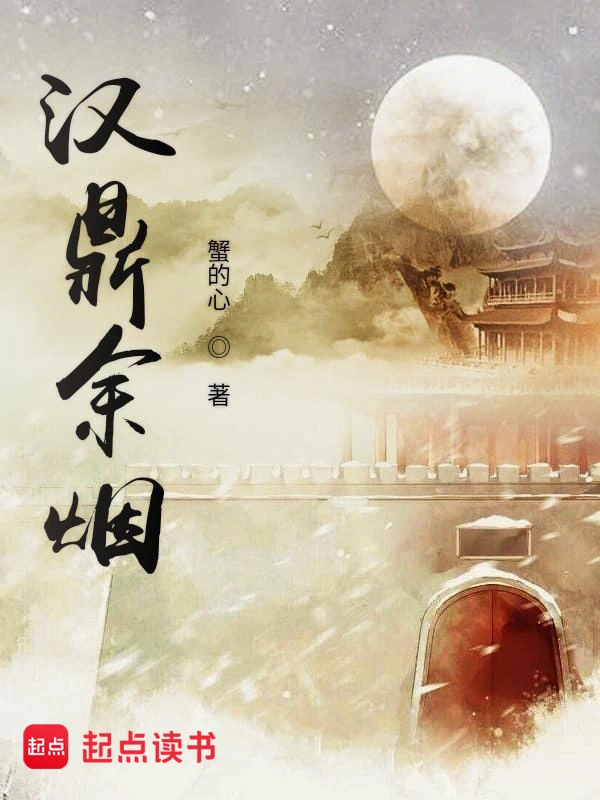
The Remaining Smoke of Han Ding
汉鼎余烟
- Status
- Completed
- Length
- 3.0M Words
- Genre
- Historical
- Audience
- Male
- Subgenre
- Qin-Han & Three Kingdoms
- Updated
- 4y ago
- Source
- Qidian
Stats
Tags
Synopsis
Reader comments
In booklists 60
Explore more →
The Green Hills Are Still There, and the Sunsets Are Red Several Times! History Book List
Five Thousand Years of China, Recommended High-Quality Historical Writings
Recommended Historical Novels About Shu and Han in the Three Kingdoms
Half his life was wandering, he was an emperor for two years, and he never saw the Han Dynasty. Yiling burns, the dragon's scales turn to ashes, sleepy and sleepy in the middle of the White Emperor. The east wind promised peace, and the west Shu was at peace. The southern barbarians expanded, and the northern expedition invaded the thief country. His achievements were outstanding, but his long-cherished wish disappeared. The three parts of the country, the history of the three dynasties, reinc
Shuhuang, Please Come In! the Grass Jelly Gathers! Good Books Are Enough!
There are many good books (✪▽✪)!


Excavator for Grass Jelly Seedlings, a New Book to Explore Potential (Current Food + Past Classics)
🌹🌹🌹There is no limit to the types of books added to the book list, all types are available. They are all personal favorites, some are currently being pursued, or they think they are good and are being fattened up. . . The only criterion for inclusion is that as long as it is a good-looking book, regardless of qualifications, only quality is considered. This book list will be continuously updated. . . Please also ask brothers and sisters passing by to leave your attention and flowers! Thank you🙏🙏
Big Historythe One I Love Is Named Huaxia🧐
The Spring and Autumn Period and the Warring States Period - the modern times of the Republic of China, as well as the fictional history of demonic reform, you want it and I have it. ️⚛️⚛️⚛️⚛️⚛️⚛️⚛️⚛️⚛️⚛️ Why do we love historical texts so much? Because every rabbit has a dream of a great country in his heart. Listen to my strongest voice of China—— "Everything in the world is the land of the king; on the shore of the land, there is nothing but the king's ministers." "I am the First Emperor.
Scholarly Mansion
There are only fifty places in this book list, so every time a new book is added, another book will be deleted, and the eunuch and harmony books will be deleted first. If you think your book is good, you can recommend it, but it may not be included. Basically, all the books in my collection have been read by me. After all, if you haven't read it, you have no right to speak. The quality of the book list is generally good. It has been selected with eight years of experience. If you like it, you ca
✨The Qin and Han Novels That Amazed Us in Those Years🦖
🎉Online writing has been around for 20 years, but reading has only been around for 8 years. 🎈 ❤️As everyone knows! There are thousands of articles on the Internet, and his epoch-making works are even more famous. 💛Liuer, as an old reader, adheres to the principle that it is better to have fun alone than to have fun with others. In this book list, I present to you several novels of the Qin and Han Dynasties that readers think are quite amazing. 👣 💚Spoken language: The smell of wine is most afraid

Star Dream Bookstore
I like to read books and am committed to finding all kinds of excellent novels. I hope everyone will like them too.


History/fantasy/games/2d Books Some Recommended Books
Just put some of the books I'm reading I'll try my best to choose some that appear less frequently on other lists. Five-star full score system. Scores are purely personal and are for reference only. If you have any good books, please leave a message and recommend them ('▿') Friends are also welcome to leave their own opinions or suggestions ฅ( ̳• ◡ • ̳)ฅ Also, friends who like this book list Please give me some attention-(¬∀¬)σ We regularly clean up books that have too few likes and see if we c
Complete Short Book List of [His Story]
An ordinary book list

Servant's Main House
Personally, it is fully booked. Feeling slowly sliding towards hy~

All Kinds of Quality Products for All Ages!
As an old monster who has been watching for twenty years, I have experienced too much and seen too much, and there are too few that can leave an impression in my memory. This list collects characteristic representative works and potential seedlings of each category. I don't have time to write detailed reviews and will add them later. Only ongoing serials and new works are included, completed works are not included. This is purely a personal opinion, I think it will be most useful to you, thank y
Collecting Relics from the Sea of Books_when You Pick up a Pearl, You Naturally Want to Share It with Others
I've read a lot of books. I like it very much, and I want more people to appreciate the scenery I see. Moreover, there are many good works in the early stage. Just because there are few readers, it is gone, gone, gone... So, here is a book list. I hope all book friends will support me. What I share is placed on the bookshelf to be used as food. I only recommend the ones I approve of, and the comments will be updated slowly. In the mid-term, if they are too ridiculous, they will be removed from
Reader of Almost 20 Years
Only choose interesting ones
Recommend Some High-Quality Novels That I Have Read with Smooth Rhythm, Self-Consistent Logic and Online IQ.
It mainly recommends some high-quality novels with self-consistent logic, smooth rhythm and online IQ in the categories of history, game alien world, time travel, fantasy, derivative fan fiction, and urban life. Basically they are all being serializedʘᴗʘ It's a summary for me (◔◡◔) Of course, a good book doesn't care what category it is in. (๑‾ ꇴ ‾๑) The requirements for novels are still relatively high. (~ ̄△ ̄)~ To avoid poisoning, screening is done before poison testing. ┐(´-`)┌ Rankings,
They Are All Novels Worth Reading (Currently Being Serialized, Recommended by a 20-Year-Old Bookworm)
Personally I think it's a pretty good book and worth reading (I've deleted all the previous dozen or so old books, and the books I recommend now are mostly still updated)

Unlimited Streaming and Other Preference Books, Long Review Analysis
I have collected grain and grass for more than 10 years, and mainly promote various unlimited works. Please pay attention (pay attention to improve the promotion of the book list).
Recommended Historical Novels
Contains serious and system flow
Books That Have Accompanied Me over the Years
My personal tastes are rather mixed, and I feel that I have become more and more picky over the years. They are some novels that I have read for a long time, and some emotional works.
The Book List of a Bookworm of More Than Ten Years
On a ten-point scale, 6 points is a strong recommendation. Anyone with similar interests can recommend it to me.
Book List of the Twenty-Four Solar Terms
I have read the works and liked them very much. I hope that I can enjoy them together with others and analyze their doubts together. There will be no specific evaluations such as scores, because different people will have different conclusions. It is better to see for yourself than to listen to what others say. After reading the recommended books, I thought I might add them to the book list. If I didn't add them, it just doesn't fit my current taste. The current book list mainly includes history
Blooming Book List
These are the books I have been chasing

Time Travel, Destiny Reborn
I hope that when you open this book list, you will find a book that you like; When you open this book, you will be attracted by the stories inside. They tell about people who traveled through time and space, returned to the past or were reborn in another world, and the various adventures and experiences they experienced. You will follow them on an unknown road and experience thrilling journeys and touching stories. These novels not only contain delicate emotional descriptions, but also contain p
Dust of History
Try your best to dig for gold in the sea of history books. This book tends to be serious and textual research. Fire prevention, theft prevention, eunuch prevention and literary youth prevention.
Readers also read
 Fu Ming 1627
 I Am a Tyrant in Nanming
 At the Beginning, Please Ask Chongzhen to Abdicate!
 Red Mansion Xiaoke
 Qingdu Shanshuilang
 The Age of Huangtian
 Da Liu Bandits
 Disciples of Fangcun Mountain, Traveling Westward
 I Have a Dark Secret Martial World
 The Heroic Ambitions of the Late Eastern Han Dynasty
 Daming Under Facebook
 Picked up a Copy of Chronicles of the Three Kingdoms
 Primarch: from the World of Beauty to the Sea of Stars
 Qiang Liang in the Late Jin Dynasty
 Jiyuan
The remaining smoke of Han Ding is very good The text is as simple and strong as a tripod, and the concept is as elegant and flying as smoke I forgot when I searched for Han Ding. When I first read it, I didn't like it because the author wrote that the protagonist is a son of a powerful family. Later, I was gradually moved by the author's wonderful and detailed description of battle formations, and I was hooked! Walking all the way, watching Lei Yuan from the deep mountains of Huaiyou to the water plains of Jingxiang Liu Gepang and the other two took control of Chengdu and then competed for dominance in Hanzhong Lei Yuan fought openly and secretly with the heroes from Jiangdong, and then went as far as Jiaozhou They were all so exciting that people were amazed and applauded! However, what I like the most, praise the most, and lament the most is Lei came from afar and stayed at Jiangling Festival My eyes were fixed on Wu and Wei as they worked step by step, planning carefully Grinning their teeth at Pan Chengming for the sake of the family Murdering comrades alive and dead for profit I was moved by the fact that the common people in Jiangling sacrificed their lives for the banner of the Han family Finally, Yunchang returned, and the flags of the former Han general Zuo General and the two generals were flying on the city tower The people cheered in the book, and I was outside the screen Tears were also shed... The fight for Fan Xiang in the end when Lao Cao bowed out was also extremely impressive The image of a cruel, cold and broad-minded hero was deeply carved into the readers' hearts bit by bit Because of this book I didn't follow this book in real time. When I read the book, the author had already written hundreds of chapters. I stayed up several nights in a row for the story of the next chapter, which even caused me to lose some energy during the day (laughs). But I still feel that this is a very worthwhile thing. Not only is the story fascinating, but I also learned a lot of historical knowledge The ancients said that reading "Hanshu" can drink wine Although I am just a mean boy, I also want to falsely claim that reading this book can still make me laugh loudly and sing and cheer!
After reading it, how can I put it, the writing is good, but there are too many problems with details, which makes it quite a drama to read... In the beginning, Lei Xu shouted one by one, one at a time, Wu Hou, and it immediately threw me out of the drama. I couldn't get used to it even after watching it twice. Sun Quan was never a Marquis of Wu... At the same time, he was called General Sun and Sun Taolu, so there is no such thing as a Marquis of Wu... Marquis Wu is his brother, and even if his brother dies and he inherits the position of leader of the force, it does not mean that he can inherit the title! Otherwise, we can inherit the throne together! Why go after the captive generals? Isn't it nice to go after the rebel generals? As for Cao Gong, it's okay to mention Cao Gong in the character dialogue. The ordinary writing is not the character's talk, and Cao Gong is spoken in one sentence. It really writes the Romance of the Three Kingdoms... There is also the part where the tiger and leopard ride, the old man and the child hang their heads on the horse... Dong Zhuo is so noisy Zhang didn't dare. He only dared to pass off his young head as a thief. He would rather be Cao Cao's elite than Dong Zhuo's... There are also heavy cavalry who hang up their vests and use them as light cavalry... What can I say? A layman can watch the excitement but an expert can tell the truth. From the author's writing style, it is indeed good. But as a semi-experienced Three Kingdoms fan, it's a pity that it's really a drama.
Impressions from watching the spy war in Liangzhou--A brief discussion of the evolution of the relationship between Liangzhou and the central hub
The reason why Liangzhou has repeatedly rebelled and separated from the Han Dynasty is that the Qiang people moved eastward, but the Han Dynasty was unable to do so and even had the idea of abandoning Liangzhou, not to mention the discrimination against border warriors in the late Han Dynasty. First, during the time of Huan Ling, the center of the Han Dynasty could still maintain stability, so the Liangzhou people represented by Liangzhou Sanming could still unite around the Han Dynasty and fight against the Qiang people with all their strength. Second, the Ling Emperor collapsed and the central government was in chaos. Under the influence of Liangzhou Sanming, Liangzhou still could not get the central government's attention. The long-term anger of the Liangzhou people coerced some Qiang and Hu people, and gave birth to the incident of Dong Zhuo's eastward march. After Dong Zhuo succeeded in his speculation, all kinds of chaos were partly the vent of Liangzhou people's anger, which was essentially the same as the revenge of Jiangnan by border warriors in the late Ming Dynasty. Third, during the period of Li Jue and Guo Si, they lost their political goals and their righteousness, and it was just a doomsday carnival. Fourth, during the period of the Ten Generals of Liangzhou and the period of orphans, they could not defeat the Wei army in Guanzhong and could not enter Yizhou. They could not use force, were economically trapped and politically confused. At this time, Liangzhou was no longer much different from the grassland. Fifth, during the Ma Chao period, Liangzhou's last military force was integrated and gained speculative value. Similar to the Dou Rong group in Hexi in the late Han Dynasty, they were waiting for the overlord to be determined in the east. However, Ma Chao was not a leader that Liangzhou people respected, and they still wanted to maintain a separatist regime, so the subordinates split into two factions: Cao and Liu. In the end, Xuande won the hearts of Liangzhou with his benevolent style and achievements in governing Shu. And in the context of Liangzhou being abandoned by Guandong again, Xuande completely won the support of Liangzhou. To paraphrase a cheesy saying, Liangzhou has been in chaos for hundreds of years and finally has a king. After integration, Liangzhou will be Xuande's reliable base.
This can be said to be the smoothest and most normal version of the Kuang Fu Han room. Although there is not much black technology, modern thinking, and no universal education, and even gunpowder only shows up at the end, in general, the plot is reasonable and the writing is flawless. Looking forward to the author's subsequent works. This book is not like ordinary time travel novels. Once you time travel, you become an ancient person. You don't need to learn anything at all. Even if you are an expert in ancient literature, the setting is a bit outrageous.
Will there be a whole wave of classic remakes 😂
Ma Dai chased Boss Cao, shouting "The one wearing the red robe is Cao Cao", Cao Cao immediately took off his red robe Ma Dai shouted again "The one with the beard is Cao Cao", Cao Cao immediately shaved off his beard Ma Dai shouted again "The one riding the white horse is Cao Cao", Cao Cao quickly dismounted
The generals of Cao's army were so lucky. Everyone who faced Lei Yuan was cheating, starting with Zhang Liao, then Xu Huang, then Xia Houchun, and finally Xu Zhu. They all fell into a desperate situation and fought fiercely. Even if they were captured, not all of them died. However, Jiangdong generals were in a miserable situation. Basically, one was defeated by the other. This preference was obvious!
The road to being a minister is full of thorns
This is a niche book Although the author writes a lot about battles, what I like is still the bits and pieces outside the battlefield. There are many novels about the Three Kingdoms, but there is a lack of a novel about ministers and heroes. The subject of auxiliary ministers is not as cool as the struggle for hegemony by nature. The theme of powerful people is even rarer, and the mainstream is anti-powerful. It can even be said to be swimming against the current. However, the author polished the Lei family of Lujiang into a blank sheet through the part of Cao Jun's pursuit in the first volume. The clan leader was seriously ill, the eldest son died in battle by force, and other relatives died in rebellion. No matter what Lujiang Lei's family was before, thanks to the cleansing of the war, it became a blank paper on which to splash ink. Xiao Langjun's most difficult moment has been passed, but the future direction is the author's biggest challenge
I read "The Remaining Smoke of the Cauldron of the Han Dynasty" recommended by [Chiji's Shuhuang Relief Center], it's really good! I deliberately reinstalled the uninstalled starting point. Personally, this article is a double wall of recent history that is comparable to "Yanming Chronicles". Of course, the writing style is different. Both of them have only forty or fifty chapters at present. However, the plot of "Han Ding" progresses faster, reaching a small plot peak in chapter 20. It is currently reaching the second plot point. The conflict and tension of the plot are more intense. The war scenes are vivid and vivid, not the kind of weak description of killing. It has the flavor of "Beixiong" and "Fire Phoenix Starts a Prairie Fire". The plot of "Yanming" is relatively gentle, because it explores the struggle of the civil servant group in the superficial chaos of the late Ming Dynasty. The focus is different, but it is also very beautiful and has depth. What is rare is that both of them conform to the "anchor theory" of personal summary (inspired by mystery). Through observation, they are applicable to Chinese and Western backgrounds. To put it simply , the protagonist does not come from the Qidian Orphanage, he has a circle, and can form effective interactions with other supporting characters. There is a saying that Jinyi walks at night. If the protagonist has no anchor, then he will lose his power whether he is rich or miserable. For example, in "Beixiong", although the protagonist looks like an orphan, he quickly gained the background of a wife in the aristocratic family circle, and through this background, he started to explore the clans of the Sui and Tang Dynasties. Description... Many articles are covered with various dynasty backgrounds, but after reading them, they cannot give people a clear sense of dynasty. They feel that they are ancient times. This is because they are not sure about the characteristics of the times and the author's historical accomplishment is not enough. Having said that, at present, the two books are comparable. Yesterday, I thought "Yanming" was better. Today, after reading the latest chapter of "Han Ding", I feel it is better. Haha, go vote now! ,,,,,,,? Of course, it can withstand scrutiny. This brings us to the issue of pattern and intention, because ordinary people rely on feelings when it comes to writing, which is difficult to compare and difficult to characterize. However, pattern and intention are easier to observe, depending on the origin and life background of the protagonist. Family and friends, the dilemma he faces, his camp teammates, his opponents, his method of breaking the situation, the male protagonist of "Han Ding" begins in the troubled times of the late Han Dynasty (Three Kingdoms), a son of a local powerful is born, his father is considered the leader of the local power, his brother is a fierce general, and he has many trusted friends. Lacking the soldiers to fight a hundred battles, encountering a boss like Cao Cao head-on is a hell of a start. Faced with this dilemma, the protagonist gradually demonstrates strategy, courage, decisiveness in killing, compassion, and a leadership temperament of being unfazed by favors and humiliations. In a short period of time, In just a few dozen chapters, the protagonist's image continues to become more fleshed out. He originally wanted to live in troubled times, but after contacting the lowest level of refugees in the late Han Dynasty, and facing the cruel reality of Cao Jun's ruthless harvest of lives, he began to awaken and began to take responsibility. A real man is to carry forward with a heavy load! The characters in his camp are all flesh and blood, and there is no saying that Goldfinger will bow to him as soon as he opens his head. His dilemma is Cao Cao and Cao Jun (the deeper Mao Dun is hidden under the turbulent chaos of the late Han Dynasty). The description of Cao Cao's camp is very powerful. In just a short space of time, the overwhelming momentum of King Qin's sweep of Liuhe is arranged for the protagonist. The first real opponent to fight is Zhang Liao, which fits the weight of this character. It is very reasonable in the current balance of power. The protagonist can only outwit the incompetent enemy and retreat. In just a few dozen chapters, a corner of a map of the troubled times of the late Han Dynasty has begun to emerge. You can imagine the vastness of the iceberg under the water. In comparison, "Yanming" actually starts in the same dynasty as the late Han Dynasty, with wars raging everywhere, but the social structure is different. The protagonist is a son of a local official, similar to a big landowner with an official background. He wants to build a team, but he currently has no access to real soldiers. His friends are still rich second-generation, unlucky scholars. His cronies are domestic servants, the team is from farmers, and the opponents are anti-thief bandits. Let me say that there are still 8 years left before the demise of the Ming Dynasty. The first time I faced the enemy without any danger, Goldfinger won a big victory. Although it is a wise and time-traveling aura, it is too light. The protagonist and his family are ambitious to climb up, which is also very interesting, but comparing the two together, of course "Han Ding" is stronger, but the subsequent development remains to be seen, let us wait and see!
I voted for this book 5 times this month.
I have been an old reader since Fufengge. I am really happy to see that Mr. Krabs has opened a new book. I feel that there is a lot to say and a lot of suggestions that I want to make. But after thinking about it, it doesn't make much sense. To be able to write such a penetrating and insightful work, the author should have already made up his mind about what he wants to express. Finally, I received two thousand starting coins for the first time in my life. I hope this book can continue smoothly. Come on!
Chaos - a rare war scene that I won't skip in too many novels
Historical time travel novels generally cannot escape two major parts: political struggle and military struggle. In politics, ordinary people can sometimes talk about secrets, conspiracy theories, historical deconstruction and so on. But the military, generally speaking, is boiled water. Some use the grand army to briefly describe it, and some use the perspective of a small person to show the tragedy and tragedy. When I saw some readers saying that they were immersed in it, I summed it up immediately. I use two words to describe the author's description of the war: chaotic. I think that's a high rating. Because I can't write, the wars we see in other novels are neat. There is one comparison, but of course it cannot be compared in terms of art, and that is the sword. Why people like Liang Jian, it's true. How did he come to show the truth? After fighting, his wife was arrested, and then came the Battle of Pinangrad, and the entire northwestern Shanxi became a mess. So the author miraculously got the true meaning of the novel. The situation is not under the control of the protagonist, and what the protagonist has to do is to rely on his own wisdom to break the situation. It's good to know how to break through chaos.
I'm watching. I'm watching 😅
I hope the male protagonist can help Liu Bei. Liu Bei wanted to revive the Han Dynasty until his death, while Cao Cao used the reputation of reviving the Han Dynasty to achieve his own desire for power. If the two areas were changed, Liu Bei would not necessarily lose. The economic and population of the area controlled by Cao Cao is the best among the three countries.
Why should an assistant minister become a king? [Be careful in making long comments]
When I saw an article in the comment area, "It's a joke to help you position yourself through troubled times" I couldn't help but want to argue. ———— First of all, the issue of ability. In ancient society, was it difficult to be the leader of a group, or to put it more bluntly, to be a monarch? Not difficult! The emperor, the one with strong soldiers and horses will do it! You don't see Liu Jingsheng in Jingxiang, with one hundred thousand troops, and all the world's troops are returning to him. Cao Cao also waited for his death before he could send his troops south. Don't you see that Gongsun Bogui is looking northward, defeating Yuan Weiyi, his fame and power are immeasurable, how could Yuan Shao dare to go north if there is no villain to stop him. We have seen how great the overlord of Western Chu was, but he was defeated by Gaozu. We have seen that King Ran Min is so brave and brave that it is difficult to defeat Han Zuo in the north. Can a man with strong soldiers and horses be the emperor of tomorrow? Can a person be a famous minister or a wise king? ... From the perspective of personal quality and ability, whether it is the authentication in thousands of years of history, or the several reorganizations and divisions of labor in modern times, everything tells you and me: Do not occupy the position unless you have the ability. Li Yuan, this king who was deliberately ignored in official history, was the one who single-handedly built the Longdi Group, which enabled him to dominate the North and dominate the world. Until Li Shimin came to power, the Longdi Group was still the main force in the court. Yang Jian, the "Holy Lord and Mingjun" of some people, regardless of his means of gaining power, his frugal virtues are obvious to all. Let me tell you a joke: The grain storage system in ancient China was perfected during the tenure of Yang Jian, who was known for his frugality. The uprising slogan of the peasant uprising army in the late Sui Dynasty was "Long-term Famine". You taste carefully. Such a wise king is not terrible. This is a matter of vision. Li Yuan was able to win over and build the Longdi Group, sacrificing some interests and laying the foundation in one fell swoop. And Yang Jian, for the sake of "the virtue of frugality", was able to "granary overflow when the time came, not allow relief, but let the people chase grain." ... The warehousing system, this system that was supposed to enrich the country and protect the people, actually caused the collapse of the country because of the frugality of the man who perfected it. Can Yang Jian be a wise king like this? If an official does not make decisions for the people, he still has to go home and sell sweet potatoes, let alone the emperor! The Son of Heaven, on behalf of the herdsmen of Heaven, is starving and dying all over the land but the barns are plentiful. How can it be called enlightenment? Yang Jian's ability as a famous official is obvious to all, but his frugality led to the collapse of the country. The name of the Mingjun and the important weapons of the family and country were not enough to pay for it. ... Do you think that the "ability" I am talking about refers to knowing people well and assigning them well, the art of checks and balances, and the power of emperors? No! I insist on holding on to his "morality" ͡°ᴥ͡°ᶅ If you are a wise king, then - you must not be partial, you must not change the law, your joy and anger cannot be expressed in color, your hobbies should not be expressed in secret, you must not be extravagant, you must not be extreme, you must not be arrogant and indulgent, and you must not have low self-esteem The vision is not demanding, but you can be far-sighted - and you can see the traps, The power is not seeking to control people - and you can be balanced, Do not seek to be like Han Gao Know people to fulfill their responsibilities - but ask for their respective responsibilities, Do not ask for humility to accept admonitions like the Emperor of the Tang Dynasty-but ask not to act arbitrarily, Do not ask for a arrogant horse to trample across the house-but ask for a peaceful land and peace for the people, We do not seek to eliminate evil with strict laws like the Ming Dynasty - but we seek to keep the system as a screen. We do not seek to be like the First Emperor who naturalized and unified - but we seek to make differences the same. We do not seek to sweep away the disease like Taizu - but we seek to protect the common people. Is this the wise king of ancient times? No, this is the wise king in the eyes of those of us who have received nine years of compulsory education and core values. Novel is written for readers. Is it difficult to be such a wise king? Disaster! Is it difficult to write a novel with such a wise king as the protagonist? I don't know, I only know that even in my favorite Three Kingdoms era, there are few hegemony stories that I can read with pleasure. Because, you are a time traveler, you are a new youth, how can you - a dragon-slaying warrior, eventually become an evil dragon? You sheep, what is the difference between you and those nihilistic cool articles [Manual Funny] If the protagonist cannot avoid the fate of "eventually becoming an evil dragon" to satisfy the needs of some readers Then, the next best thing is to take the second best and influence the world with his own power in a changing system. The path of a minister is indeed more willing to read than the path of a king who becomes the master of a party but eventually becomes an evil dragon. —— This question of ability is not only whether the protagonist has the ability to call the shots, but also whether the author has the ability to make such a "wise king" article readily accepted by readers. Of course, this is not to say that hegemony stories with protagonists with personal flaws are not good-looking, but that there are too many hegemony stories, and compared with the protagonists of hegemony stories, they are all powerful emperors in ancient times and popular characters in classic hegemony stories. It's like looking at my family and then looking at the Emperor of Sichuan, I can't help but mourn for the people of this beautiful country. By the way: The beautiful country is about to hold another general election. Please all netizens who can vote please vote for me Sichuan Bao. Come on Chuan Bao! Dad loves you! ᶘ ͡°ᴥ͡°ᶅ ———— Secondly, the issue of momentum. Taken separately, it is reputation and power. This book is about the Three Kingdoms, so let's take the Three Kingdoms as an example. I want to become an auxiliary minister and steal the power of the Three Kingdoms. If Cao Cao is unified, he will naturally be: a treacherous hero in troubled times, strong soldiers and horses, complete civil and military skills, and unparalleled prestige! If Liu Bei were to unify, it would naturally be: benevolence and righteousness would prevail, the Central Plains would be restored, the people would trust the army, and the Han Dynasty would be rejuvenated! I wonder, what do you compare yourself to? Would you be moved if Cao Cao conquered the world and regained his imperial power after decades of military service? Cao Cao died. His eldest son Cao Ang, his second son Cao Pi, his third son Cao Zhang, and his fourth son Cao Zhi were all in their prime. Are you moved? Three generations of descendants, even if the emperor is incompetent, there are still important officials in the clan. Are you moved? Fourth generation descendants, you... I'm afraid you have been mourned, sacrificed, and inherited. If Liu Bei leads the Northern Expedition to Jingchuan, kills Cao Cao's traitors, and revives the Han Dynasty, will you be moved? Liu Bei died, the Guan and Zhang families took charge of the army, and Zhuge took charge of the government. Are you moved? Three generations of descendants... Really, don't think about it. Once "Three Prosperities of the Han Dynasty" happened, the Liu family would have at least another two hundred years of national rule, and it would not be impossible for them to survive forever. Learning about prophecy Learn about it. As for Soochow... Let's not talk about other things. In terms of governance trends, Cao Wei has nine grades of Zhongzheng (in the Cao Cao period ≠ Wen and Ming dynasties), and Shu Han has Zhuge to suppress the aristocratic clan, Soochow. . . If Soochow can dominate the world, I wonder which family will "share the world" with the Sun family and the Gu, Zhang, Lu and Zhu families? Or, create a "permanent five directors"? Aren't you just like Sima, engaging in system degradation? [Personally, I think Soochow cannot completely control the south of the Yangtze River, let alone the north direction, it would be a shame! ] —— In terms of reputation, if you can help Cao Cao or Liu Bei unify, do you think it will increase your own reputation more, or that of Cao and Liu? According to the close relationship and seniority, do you think it is the old-school civil servants such as Zhuge and Er Xun, the old-school military officers such as Guan Zhang Zhao, Zhu Cao and Xia Hou Yu Le Er Zhang who have the higher reputation, or your own reputation is higher? If you kill them all, sorry, society is stable and unified, and if you want to stand up and take charge, you have no chance. If we raise troops quickly, will you die? If you don't want to help Cao and Liu Yitong, but learn from Sima and use the power to respect yourself... Time traveler, just be a human being. The bones on the battlefield and the hungry people in the wasteland are all looking at you! ... In terms of power, Military power Don't talk about military power in Cao Wei. Generals who are not relatives cannot hold heavy troops, and it is impossible to hold heavy troops for a long time. For example, in the official history, Yu Jin led the Seventh Army to rescue Cao Ren [The King of Wei sent General Yu Jin to supervise the Seventh Army with 30,000 men to rescue Fan]. The "Seventh Army" was not seven reorganized armies, but seven armies around Xiangfan, including Zhang Liao, Li Dian, Zhu Ling, Lu Kai and others. Yu Jin was just coordinating the battle. (If you don't wash it in the ban, you won't wash it if you surrender.) In the Shu Han Dynasty, Zhuge knew the soldiers, closed the generals of Zhang, Zhao, and commanded both the infantry and the cavalry. If you want to corrode the army, where do you start? Special arms? It seems that the only thing that can be fought for is the Wudang Feijun. Let's not talk about how to seize control from the Southern Barbarians. If we can't win the support and loyalty of some Han sergeants, even if there are 100,000 Wudang Feijun, how can it be justified? And if you seek support from the Han army, even if you can surpass Zhao Yun, can you surpass Guan and Zhang? If Guan Yu does not die and the God of War lives on forever, why would the Han army dare to rebel? Political Situation Who supports you? Who do you support? This is a very serious route issue, and it is left to everyone to think about whether the rebellion can succeed. As for... It will stand on its own without waiting for the world to be unified. . . In terms of base, you are not as good as Yuan Shao. In terms of ability, you may not be as good as Cao Cao. In terms of popularity, are you as good as Liu Bei? In terms of scheming, can you outsmart Tao Qian? In terms of means, can he win over Sun Quan? In terms of bravery, can he defeat Gongsun? In terms of virtuous reputation, can it be greater than Liu Biao? He is either the lord of one state, or the lord of two or four states, or he is famous in the outside world, or he is famous all over the world. He is either from a family of ministers or a member of the royal family. Who are they with? If you don't stand out in the early stage, you will be silent and powerless in the later stage. Where is your place in the world? Finally, it's a matter of survival. I have written too much, so I won't go into details in the end. Let's just say a few sentences and leave it to everyone to discuss on their own. Zhang Liang was a Korean aristocrat and contacted the princes, Xiao Heyuan was the leader and held the rear for a long time, and Han Xin was proud of himself and had the greatest military exploits. If he were in the Shu Han Dynasty, how was Liu Bei's character compared to Liu Bang? How are the protagonist's achievements compared to those of the Three Heroes? How is the protagonist's emotional intelligence better than Han Xin? Cao Wei has a heavy army and no military power. Even if he supports you with a lot of idle people, what will happen? The internal groups in Cao Wei are divided, and they are trying to grab the cake and hold each other back. Can your achievements be greater than those of the master? The long review is over. Everyone is welcome to have a friendly discussion, and avoid excessive language and weird wordsᶘ ͡°ᴥ͡°ᶅᶘ ͡°ᴥ͡°ᶅ I am going to start reading this book from the first chapter┑( ̄Д  ̄)┍
Well, hello friends, I am Yan Yan from Bajun, Yizhou. Just now a friend asked me: "Prefect Yan, what happened to your kidney?" I said what's going on? They sent me a few screenshots, and when I saw it, I thought, oh, it turns out it was today. There were two young people, one in his 20s, one with several thousand soldiers, and one in his 40s with several hundred soldiers. They said, eh. . . One of them said that I was practicing robbery on the Yangtze River and was beaten away. Teacher Yan, can you teach me how to fight? Eh. . Please help me with my tactics. I said yes. I said it wouldn't work if you were practicing robbery on the Yangtze River. He was not convinced, eh. . I said, little brother, you come with hundreds of people to attack my fortress, but he can't attack it. He said it's useless for you to do this. I said mine is useful. This is the geographical advantage. The battle is about the geographical advantage. Four ounces of heavy weight and thousands of Jingzhou army's strong men can't beat me. He said he wanted to try with me, and I said yes. Eh. . . . As soon as I told him to snap, he called me very quickly! Then came a backstab and an attack. I defended them all and got out. After I got out, I naturally kept hitting them until I could kill him. I smiled and prepared to continue defending. Because at this time, according to the traditional strategic point, he has already lost. He admitted that I had the ability to go out of the city to kill him, but I didn't kill him. Someone sent a traitor in my city. I was careless and unprepared. Hey, two minutes later, someone sneaked in. I couldn't fight at that time. I said Tingting, and then two minutes later, he slashed me with a knife. Ah, two minutes later, hey, he killed me. I said, young man, you don't have martial ethics , I don't understand. , He said that Yan Taishou said sorry, I don't understand the rules. He said that he was fighting randomly, but he was not a random fighter. He accelerated, sprinted, and was well-trained. Later, he said that he had practiced siege for three or four years. Ah, it seems that there is a bear coming. These two young men do not follow martial ethics, so they are here to cheat! Come for a sneak attack! My sixty-year-old comrade, is this okay? This is not good. I advise these two young people to think carefully and not to be so clever in the future. What a little cleverness. Well, the two states of Jing and Yi should value peace, practice martial ethics, and not engage in internal fighting. Thank you, friends!
This book has been uninteresting since the Seventh Flooded Army. I am willing to focus on one author. I can open it casually. Anyway, it is coming to an end. I wish I could write all the elements of historical novels in just over a hundred chapters. If I don't want to read it to perfection, there is no need to read it later. It is extremely intellectually depressing.
" If you really want to change the social system of the Three Kingdoms, you must have a time traveler become the emperor. This is only possible with the efforts of three generations. I don't agree with any family in the Three Kingdoms becoming emperor unless there are no time travellers. Because their thoughts are all contemporary and cannot jump out of the historical framework. If you can sit in the position of emperor in that era, he will find ways to change it, and it is difficult for anyone to refute your opinion. Because you are the founding emperor, you will start a political storm, because you have prestige, and you know one thing is that Li Shu is the leader. First, teach them literacy, slowly replace the lower-level officials, and open a hole at the right time so that they can climb up. Then there will be the printing imperial examination. If you transfer reading to the county level, you will be very successful. The rest will be maintained by your descendants. High-ranking scholars cannot see these mud-legged people.
After reading all the way, the last few hundred chapters of the author are really good... Cao Jun's superhuman logistics in the muddy field, the peculiar bottom-line locked state of morale, etc...
Shuweier analysis
Let's sort out the thoughts in the group last night: There has always been speculation that Mi Fang had a long-standing connection with Sun Quan by selling military supplies, which was the reason for his quick surrender. However, when we move our gaze a little further to the demarcation of the Xiang River, we see that the three counties of Jingnan moved very quickly, and when we returned to the time when Bai Yi crossed the river, the entire line along the river basically collapsed. It is obvious that there are problems within the entire Jingzhou. So combined with Mi Fang's guess, what if we open up our imagination further? Since Mi Fang, Liu Bei's brother-in-law, took the lead in secretly doing business and hooking up with Sun Quan, would the prefecture and bureaucrats along the Xiang River also follow suit? Originally, this kind of business would definitely be connected, and the effect would be the same in Jingzhou as a whole. When stealing Jingnan, Liao Li from Changsha ran away because the people below him were corrupted and he didn't dare to defend. Later, it was not so much that Lu Xun's kneeling and licking paralyzed Guan Yu, but that everyone who had received the money blew Guan Yu away as soon as Lu Xun's letter arrived. As a result, there was a precedent of Jingnan being stolen, but Guan Yu still neglected to take precautions and let people steal Jingzhou. When Bai Yi crossed the river, those who had the leverage to collude with Soochow either surrendered or stood aside. Liu Feng was deceived first, and suddenly realized after losing Jingzhou, he angrily snatched Meng Da's advice (I was just temporarily deceived! I got rid of the big corrupt official, my father will not do anything to me!) As a result, Meng Da got involved in Dongsan County and ran away. Old Liu's old brothers have suffered all their lives with Old Liu, and finally settled down. The rate of corruption will not be slow if they have no ambitions, and Sun Shiwan is a person who is good at doing this kind of thing, so the entire Jingzhou's corruption level soared, and it was penetrated like a sieve. On the contrary, the aristocratic families who had a great family and business did not think highly of these things, so they performed better in these things. Here should be inserted Zhuge Liang's version of "Kangxi's Angry Criticism of the Officials" (Dog Head) Zhuge Liang may have been aware of the matter afterwards, so he had to ask questions about everything like an obsessive-compulsive disorder. Because you see, Jingzhou didn't ask anything about what happened after the trusteeship. If I don't keep an eye on you, how would I know that you won't be like those people in Jingzhou and have everything leaked from behind? In the first half of my life, I always looked at the rough and tumble, and I was reduced to doing self-study books. Isn't this special code frightening? This family really can't afford it now. By the way, the entire legalist punishment and reward system has been established. Don't rely on whose family you are to be exempted from crime. At most, your family will not be harmed. Please be honest with me! The "rectification movement" involves the foundation of Lao Liu's regime. A regime established as an idealistic group. Lao Liu had already started to be evil when he seized Yizhou. If you become corrupt again, the core values of the regime will not be preserved. When Old Liu entered Chengdu and distributed a bunch of rewards to everyone, the overall corruption level went up instantly, so Zhao Yun jumped out and said that we can't continue to be corrupt like this. When Old Liu heard this, he was the one who begged Tian Wenshe, so he immediately remembered it, and quickly returned the farmhouse and the like to the people. To be honest, after Lao Liu entered Sichuan, you could see traces of corruption, but it was not obvious because of his weak foundation. Later, he listened to the advice, and overall he was fine. Thinking about it this way, it seems that Luo Guanzhong, who was once the chief clerk in the army, has grasped some truth, so there is a plot where Zhou Yu designed to corrupt Lao Liu, Lao Liu was recruited but Zhao Yun was still a clean stream... And when Zhuge Liang died, and the four people in Shu passed away one after another, the corruption of Shu Han could no longer be suppressed. With the disintegration of core values, those who followed the lead of the older generation gradually lost their faith. Finally, Qiao Yunnan, the ancestor of Yan Ge, emerged. Not long after, the entire Shu Han was full of 25 people, and surrender factions were running all over the place. In the end, the entire country collapsed. This whole route of upper-level corruption → Yan Ge → self-defeat is too deja vu 😂
The Battle of Xiangfan was also poorly written. It's ridiculous that Cao's army fought to the death after being flooded by tens of thousands, and defeated the Yizhou army who was just waiting for work.
Why does the protagonist have to be the emperor? I have watched "Sui Rebellion", "Han Cavalry" and "Ming Dynasty" but none of them became emperors, but I watched them with great interest. All the classmates who are the successors want to be emperors?... Maybe they have not entered the society! As long as we can serve the people, is it so important whether we are emperor or not? It's hard to prosper the people, and it's hard to destroy the people! Personally, I think a constitutional monarchy or a federal republic is fine!
The writing is really good, the characters, scenery, battlefields, tactics, and emotions are all excellent!
Discussing Cavalry Warfare 1
1. Preface There is a lot of emphasis on cavalry combat in the novel, and the author has repeatedly emphasized the important role of cavalry. Therefore, I took the time to read some related books/materials and sorted out the useful content. I hope it can inspire readers and provide some information for readers to discuss and understand cavalry/infantry combat. This article is mainly a rough explanation of cavalry combat during the Napoleonic Wars (it can be said to be the peak of modern cavalry combat. Later, due to changes in artillery/infantry combat and industry, the combat function of cavalry was gradually replaced by mechanized troops). Due to limited capabilities, it is temporarily difficult to find information on some aspects of cavalry combat at that time, so it will be replaced by other periods (World War I) for explanation here. Due to the vast amount of material on cavalry operations, it is inevitable for me to make mistakes in my understanding. The large amount of content also makes it difficult for me to sort out a clear and understandable structure in a short period of time, so I just write wherever I can think of and make a fool of myself. 2. A few nonsense words 1. Horse is a herbivore with a relatively docile personality. 2. Goods are a necessary but not sufficient condition for improving/maintaining military strength. 3. "Sir, you are not short of courage. In fact, you're courageous, to the point, of insanity. But courage is not synonymous with rude force. I believe you're a seasoned member of the army, a nd the army is above all order! And only then is it, rude force." Soldiers on the battlefield, but the army is order first, and then violence) - Arthur McLuhan "My Commander, My Regiment" 3. Cavalry combat during the Napoleonic Wars: Cavalry played an important role before, during, and after the battle. -Napoleon Bonaparte Before and after the battle begins: The main duties of the cavalry are reconnaissance, intelligence collection, covering the movement of one's own troops, pursuing the enemy (victory), and covering the retreat of friendly troops (defeat). 1. Types of cavalry (1) Horseback sentry (vidette) Horseback sentries mainly perform intelligence collection and battlefield protection tasks. They are the outermost link of the battlefield warning circle (Note: similar to the outermost reconnaissance aircraft in a naval formation). They operate alone or in small groups, usually moving from outposts to the periphery. In battles, they are the eyes of the army. They can also protect their own troops by driving away enemy reconnaissance troops, and provide early warning to the main forces. Without them, troops sometimes encounter unexpected and even humiliating "surprises" in combat. Equestrian sentries are usually served by light cavalry or dragoons. Since cavalry units tended to be multi-functional during the Napoleonic Wars, heavy cavalry can also serve in this task, but heavy cavalry horses are not the best choice for this task. (Note: Dragoons refer to mounted infantry. They originally referred to infantry who mounted their horses to maneuver and dismounted to fight. In the 18th century, they gradually transformed into regular cavalry) (2) Outpost Cavalry (skirmisher) Proceeding The cavalry units in outpost warfare also perform battlefield protection tasks (driving away enemy counterparts). Unlike sentries, they need to actively launch attacks (harassment) on the enemy, causing casualties through firepower projection, depleting morale, disrupting the enemy's formation, and possibly tempting the enemy to launch an attack before they are fully prepared. In addition, the outpost cavalry can also sweep through areas with difficult terrain (such as woods, reeds, depressions and ruins, etc.) To light up enemy troops that may be hiding there. Of course the enemy also has similar units. (Note: In the age of firearms, cavalry troops would shoot at large enemy forces. Before the advent of firearms, outpost troops used long-range projectile weapons such as slings, crossbows and javelins). (3) Dragoons/Heavy Cavalry Dragoons were the first infantry who used horseback riding as a mode of mobility/transportation and dismounted to fight, so their horses were of the worst quality. The role of dragoons began to change in the 17th century (30 Years' War, Great Turkish War, etc.). After entering the 18th century, dragoons became a member of the regular cavalry. Of course, in some armies, they still retained the ability to fight on foot (using long-barreled flintlocks instead of carbines, etc.). In the 18th century, the cavalry units began to be further lightweighted, which made the distinction between light and heavy cavalry increasingly blurred. At the same time, the cavalry units began to become universal, that is, all types of cavalry began to have the ability to perform a variety of tasks. The superior force of heavy cavalry was generally believed in the 18th century to rely on its greater momentum (momentum) and tight formation to overwhelm the enemy (mainly psychologically). The light cavalry, on the other hand, was thought to move at a faster pace and in a looser formation. Even in the 18th century Europe, horses suitable for heavy cavalry were very difficult to obtain: Heavy cavalry: 154 cm or more Dragoon: 152-154 cm Hussars: 145-152 cm Light cavalry: 143-1 45 cm (Note: The height here refers to the distance from the sole of the hoof to the withers) The wooden pole used to measure the height of horses at the end of the 19th century Tall war horses are not only difficult to obtain, but also more expensive to raise and maintain. The light cavalry officers who participated in the Battle of Waterloo lamented after the war that the impact of the heavy cavalry charge was because the size/weight of man + horse was completely different from that of the light cavalry. Light cavalry mostly used curved-edged sabers to slash, while heavy cavalry mostly used heavier, straight-edged sabers with wider blades to cut. The French cavalry preferred to use narrower and pointed sabers for thrusting. (Note 1: In the explanation of heavy cavalry, one of the main themes is to be as lightweight as possible while retaining a certain degree of protection. This shows that weight is a serious obstacle to heavy cavalry combat. Especially as the combat literacy of infantry increases, heavy cavalry During the Napoleonic Wars, when cavalry needed to charge repeatedly to destroy enemy arrays, the problem of physical strength management of war horses became more and more prominent.) (Note 2: The end of the Eastern Han Dynasty should be the era when the ring-shou sword was widely used and the sword was withdrawn from the battlefield. The piercing property of the ring-shou sword It is better than chopping. In the late Han Dynasty and the Three Kingdoms period when the armor rate was not high and the quality of the armor was low, it was a product that met the needs of the times. However, the stabbing sword was not particularly practical for cavalry. The huge momentum brought by the horse + man actually made the blade have a certain arc. The saber has higher combat effectiveness. [4],[6]) Heavy cavalry specializing in shock operations are rarely equipped with firearms, and French cuirassier officers believe that using a carbine while wearing a cuirass is an almost impossible task. The British retained a small number of carbines for use by soldiers performing sentry duties. In the 18th century, European breastplates almost disappeared from the cavalry units of various countries, because the breastplates severely restricted the mobility of heavy cavalry. Only Austria retained cuirassiers throughout the Revolutionary and Napoleonic Wars (France also equipped them at the beginning, but gave up midway), but the scale was reduced by 1/3, and only at the end of the Napoleonic Wars (1812 and beyond) did the Prussian and Tsarist Russian cavalry pick up cuirassiers again. (Note 1: The main reason is that the combat quality of the infantry has improved, which means that armored heavy cavalry must charge on a large scale to bring enough momentum to shake the infantry square. However, the cost of achieving such a scale is high and the cost performance is low.) (Note) 2: The cost-effectiveness of armor has been questioned during the Napoleonic Wars. After all, it is only possible to withstand bullets at long distances, and infantry, such as lobster soldiers, often attack horses instead of riders, making armored cavalry equally incapable of combat. This principle also applies to crossbows, javelins, and slings before the popularity of firearms). 2. Cavalry/Infantry Confrontation [8]: If one can attack the enemy's rear through maneuver, victory will ensue - Frederick II Cavalry units, regardless of formation, their flanks and back are always the most vulnerable. Attacking the flanks and rear of enemy cavalry units through maneuver is the most decisive method of combat against cavalry. (Note: Regardless of cavalry or infantry, no matter ancient or modern, it is common sense that people do not have eyes in the back of the head. Naturally, attacking from directions other than the front is also the most common and effective method) Charge (Part 1): The visual and auditory impact of a large-scale cavalry charge can itself shake the target (both infantry and cavalry). Hundreds of horse hooves beat on the ground, and the roar of trumpets and cavalry filled people's ears. (Note: It is probably like a recess playground suddenly turning into a heavy metal KTV...) In principle, a qualified cavalry commander will never command the troops to launch a charge without sending out outpost cavalry to test the target, or at least sending a commissioner (usually an officer) to survey the charge route and surrounding terrain (trenches, wet land, horse traps or fences, etc.). Of course, these preliminary preparations are not easy work. After all, the enemy's outpost skirmishers (both infantry and cavalry) are not for a living. To rush or not to rush? This is a problem Slow walking (walk): 1.8 Meters/second (6.4Km/h) Jogging (trot): 3.1 Meters/second (13km/h) Running (ca nter): 4.4-7.2 M/s (16–26 km/h) Sprint (gallop): 11-13 m/s (40-48 km/h) (Note: Different materials have different explanations of the movement speed of war horses. For example, when explaining the movement of the cavalry in formation in a combat situation, it takes 4 and a half minutes to walk/walk a distance of 365 meters, just over 2 minutes to jog/trot, and only 1 minute to sprint [4]) Sprinting earlier means a longer sprint distance, but it will reduce the time/damage of the cavalry units exposed to enemy long-range firepower. But sprinting too early can easily exhaust the horse's energy. After a long sprint during the Napoleonic Wars, the horse needed 10-15 minutes to rest to allow the horse's lungs to resume normal function. At that time, the maximum distance that French war horses could sprint in a single sprint was 5km. After completing the sprint, the civil war horses could only walk slowly for a day. Under normal circumstances, the cavalry unit will start with a slow walk, gradually accelerate as the distance from the enemy shrinks, and then sprint within a short distance to complete the first half of the charge process. Slow advancement is an important guarantee to maintain the cavalry formation. External environmental factors such as potholes, bulges, grass and shrubs on the ground will cause chaos in the cavalry formation. However, risking the threat of enemy long-range firepower and slowly accelerating is a heavy psychological pressure (crazy thoughts) even for experienced cavalry units, so the cavalry will subconsciously accelerate in the hope of completing the charge quickly. Knights will influence each other, and one person's acceleration can easily cause others to follow (even if the officer orders to stop it). What makes the situation more complicated is that horses can also affect each other (especially war horses). One horse running too fast will drive the surrounding horses to accelerate (it is difficult for the rider to control the war horse under his hips in this environment). [1] (Note: This principle also applies to infantry. The Greek phalanx phalanx is very easy to break up in horizontal lines on rugged terrain. This is why the early Romans gave up the Greek phalanx after being taught by their neighbors in hilly areas, and slowly evolved into chessboard formations, legions and other more flexible combat methods). [2] Off-topic: [Weapon Experiment] Gun VS Sword actual test! Which weapon is more useful in actual combat? -Bilibili, has a more intuitive impression of the use of long and short weapons Practice during the Napoleonic Wars proved that the reasonable sprint (gallop) distance is roughly 40-150 meters, and sprints beyond this distance Stab can easily cause chaos in the formation of the cavalry squadron: gaps appear, some horses in the originally straight line run too fast and become protrusions, some timid or simply slow-running horses gradually fall behind, and the wall charge with great psychological impact turns into a chaotic and wildly running nomadic herd. Cavalry Clash: Only those who know nothing about cavalry combat would think that two large groups of cavalry (regardless of formation) often collide with each other and fight each other. In reality, the common situation is that when hedging, one side maintains the attack, the other side turns to retreat, and the winner pursues. It also often happens that the winner is attacked by the enemy's second row of cavalry or reserves during the pursuit, and becomes the pursued party. — Faddei Bulgarin, officer of the Russian Grand Duke Constantine's Lancer Regiment "In 49 of the 50 cavalry confrontations, one of the parties hesitated, became confused and then turned to withdraw when the two sides came into contact. In 3/4 of these cases, The withdrawal of one side occurred before the two sides could see each other's eyes."[3] Ernst Maximilian Hermann von Gaffron, Prussian Silesian Cuirassiers: After passing through the village, we immediately accelerated, first part of it, and then the whole regiment. . . A large, dense mass of darkness stood in front of us, facing us. Not long after, I saw the flashing helmet and saber as the opponent approached. We sent out the signal to sprint, and the enemy troops could be clearly seen. Our troops cheered as they sprinted. The French dragoons stopped at a distance where I could see their beards, turned immediately, and retreated in good formation. They started to trot, and then started to sprint. The distance between us quickly narrowed to 15 meters. . . We heard the officers shouting from time to time to stay in tight formation, but the French army kept touching heels the whole time. We were unable to break through their ranks and could only follow behind them and try to find ways to kill them. (Note 1: On a noisy battlefield, the hearing of soldiers is very important. After all, grassroots officers need to rely on roars and trumpeters to issue orders, so cavalry helmets will not cover their ears. Roman infantry will hang metal cheek guards under their helmets, which will also not cover their ears) (Note 2: If a short-handed pursuer wants to kill the cavalry in front, he usually needs to move to the side and rear to reach him. In the above example, the tight formation maintained by the French army prevents the Prussian cavalry from entering the side and rear position, and the pursuit effect is very limited. This shows the importance of orderly retreat) To be continued
Situation map
I simply painted a map of the current situation in this book Liu Bei is completely controlled by three states (four states including the divided Jiangzhou), and is separated from Cao Cao in the north and south. There is a force next door to both sides that may stab him in the back (Sun Quan and Ma Chao). The next step should be which of the three directions of Guanzhong, Wanluo, and Jianghuai opens up the situation first.
The last hundred chapters are too outrageous. A large number of soldiers and horses are used as bait to die. After the failure, they can immediately use pieces of inferior rafts to transport troops to land on the beach... Not to mention the organizational power of ancient times, most modern countries cannot do this...
Information about Lei Yuan—Three Kingdoms: Overlordship in the Late Han Dynasty
Pre-viewing statement: The data comes from the game "Three Kingdoms: Han Dynasty Hegemony", and Lei Er is measured based on the game's self-built general template. The reason for choosing this game is that the templates in the game are systematic, detailed and usable. I don't use the Three Kingdoms as a reference mainly because I haven't played it for a long time and I am very unfamiliar with everything. (It's not that I don't want to do it, I can't do it.) All data are given based on the current performance and possible future achievements (Ji and Han unification), and are based on the attributes of the famous generals in the game. I hope everyone can discuss some inappropriate or imperfect areas and improve them together. The following data are the data when the generals appear on the scene. As personal experience grows, the corresponding attributes will also grow. It is roughly equivalent to leading troops to increase military power, and guarding home to increase government affairs. Lei Er's debut time is tentatively scheduled for the autumn of the 14th year of Jian'an, when he came out of Yanshan Mountain. Attributes have a five-point-one threshold. The threshold depends on personal and luck breakthroughs. The integrated value is the comprehensive expression of each attribute. It cannot be improved individually, and there is no attribute threshold. The reference persons found in the attributes are all famous generals whose data in the game are consistent or very close (the ones with high reputations are easy to identify), except for math (the maximum value is 98 for someone and so-and-so, and the popularity is too low, so it will not be recorded), and charm (the maximum value is 99 for Diao Chan, and it will not be recorded for serving people with sex) Regarding characteristics, the attributes added by characteristics are not included in the basic attributes. Talents are pre-existing on the appearance, and subsequent conditions must be met to appear and take effect. As the conditions improve, the bonuses of characteristics also shift from military to intelligence, and then to government affairs. It also fits Taishi Lei's future path - joining Kong Ming's class at the center. ——Basics (appearance data) Surname Lei, name Yuan, word continued Born: 192 years Lifespan: unknown Death: unknown Appearance: 209 years ——Ability (various attributes) Type: data (equivalent to [Military] Integration: 89 (Lu Xun [Intelligence] Integration: 83 (Cao Cao [Government Affairs] Integration: 86 (Zhang Zhao Identity: Yanshan Hero——Infantry +2, Recruitment +2, Reputation +200 (obtaining conditions: talent characteristics) People who are struggling to survive in troubled times understand the importance of the barrel of a gun better. Work: "The Thirty-Six Directions of Marquis Wu" - strategy +1, city management +1, reputation +800 (condition: merit 5000) Running an army is a science, and running a country is also a science. Coincidentally, they are really the same science. Occupation: Powerful Landlord——Conscription +1 (Condition: Talent Characteristics) It is difficult to escape the limitations of the era, but it is not necessarily without benefits. Title: Five Tiger Generals - Charm +1, Reputation +1000 (Condition: Merit 6000) The founding generals have many nicknames, but the fairness between the Lord and the enemy is the most memorable. Talent: Deep Thought and Foresight - Strategy +2, Intelligence +1, Reputation +400 (Condition: Merit 5000) Looking beyond the limitations of the times, he has become accustomed to taking all precautions for future possibilities. Achievements: Military Household System - Inspection +2, Farming +1 (Condition: Merit 10,000) Even if military households who may become feudal lords are used to govern the grassroots, it is better than leaving it to the gentry and wise men. Character: Loyalty and anti-corruption——Benevolence +1, Reputation +400 (Condition: Talent Characteristics) Vow to sweep all the cancer and filth in the world into the trash can, just for the sake of survival for more people. Military: (tentatively determined) - Charm +1, Recruitment +1, Reputation +600 (Condition: Merit 4000) The long-term accumulation of foundation has given Lei a strong personality and appeal at the grassroots level. Allusion: One man destroys Wu - Strategy +1, Bravery +1, Reputation +1000 (Condition: Open in 2xx) When a country's plans and generals are constantly destroyed by one person, he will become an unavoidable nightmare in the history of the country. , Marquis Wu cursed me, am I not a good man?) Duel mode: universal one-handed Fit degree: 75 (Liu Guanzhang) Duel type: Skills (if you can't be as heavy as a stone and move like a rabbit, you have to practice more skills) Preferences: Weapons (high) The weapon in the hand is the second life of the warrior. Famous Horse (middle) A good horse will bring you a lot of help. It is not right that (high) knowledge of books is exclusive to the class. Drinking tea (low) Drinking tea is just a means of conversation. ——Clan Father: Lei Xu Spouse: Zhao Xiang Children: ——Relationship Dear generals: Liu Bei, Zhuge Liang, Zhao Yun, Guan Yu, Huo Jun
A rare historical author who is not verbose
The next version of the Southern Song Dynasty? It would be the opposite to lead Song. Except for a few people in the entire dynasty, they were all bastards. Khitan Jurchen and Mongolia are all like the chosen ones. The Liao Kingdom is going to be finished. Only a hundred people can build a Western Liao at Yelu Dashi. The Jurchen seems to have opened a 30-life trap. The history of one's fortune sounds horrifying. When it was over, the emperor died in the battle. The beginning and the end belong to yes. Not to mention Mongolia, a grassland tribe that went from being robbed of its leader's wife and asking for help to get it back to the four khanates across the Eurasian continent. Something doesn't look right. I only took Song Quanquan to accompany me. Like a supporting villain. It does all kinds of bad things. It's just like Chang Kaishen's Republic of China.
Maybe it's because the male protagonist wrote it so well. I really want to read the fans who commented on Lei Yuan in this book in later generations, such as the Han Dynasty Book of Lei Yuan, The Romance of the Three Kingdoms with Lei Yuan's version, the OOC work Three Kingdoms, the male protagonist Ruiping Lei Yuan in the later time travel novel, the large-scale sitcom fan comedy Zhu's Three Kingdoms, and the rebirth of My Heavenly King Laozi r9: I am Lei Xuzhi 😍😍😍
At the beginning of each chapter, a large section needs to be analyzed, and parallel sentences come up every now and then. It's okay to just jump to the page when reading, but it's really unbearable when listening to a book.