
Nightcrawlers in Los Angeles
洛杉矶的夜行者
- Status
- Completed
- Length
- 1.4M Words
- Genre
- Urban
- Audience
- Male
- Subgenre
- Business & Workplace
- Updated
- 1y ago
- Source
- Qidian
Stats
0Monthly votes
18.8kRecommends
43.8kFans
369Chapters
Tags
Synopsis
Reader comments
In booklists 3
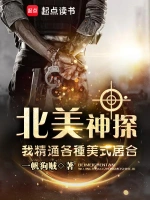


Detective Department | High-Level Design and Clear Thinking
"Definition of Detective Fiction" Detective mystery novels, referred to as "detective novels", are a genre of Western popular literature. Since most cases in traditional detective novels are solved by reasoning, some people also call them mystery novels. Detective novels mainly write about detective characters with amazing reasoning and judgment intelligence, who solve crimes (mostly murders) based on a series of clues. Its structure, plot, characters, and even environment have certain patterns
6Books884Follows3yUpdated
See It Yourself
Record it
80Books156Follows4yUpdated
Really Pretty
Good
10Books45Follows3yUpdated
Readers also read
 What Do You Mean I Am a Warmonger!
 Is There Any Limit to This Engineer's Military Research and Development?
 1979 Once Upon a Time in the Northwest
 Peninsula: the Insomniac Artist Is Connected
 Never Walk Alone!
 Rebirth of the Tokyo Bubble Era
 Rebirth of Hong Kong Island: Unlicensed
 Daming: Have I Become Wanli's Portable Grandfather?
 I Am Drawing a Hot-Blooded Episode in the Zhiyu Episode!
 US Police: I Have a Daily Intelligence System
 1960: My Uncle Was the FBI Director
 Ruin Explorer
 Big Stars Who Came Out of Football
 Rebirth Starts in 1985
 Hollywood
 Return to 1997: the Long River of Civilization Empowers Me
 I Just Traveled Through Time and Am Waiting to Die on the Titanic?
 Rebirth in South America Starts with Dreams Coming True
Tagana Patitz was born on March 25, 1966 in Hamburg, Germany. At the age of 17, she was discovered by Peter Lindbergh, a photographer famous for his supermodel photography, and began her modeling career.
Sophie Marceau
Monica Bellucci
Although it's good that you wrote a story about supporting China, I personally think that the United States will not let a person with different intentions and a crooked butt become a top chaebol. If someone dares to do this in real life, I'm afraid he will not commit suicide by shooting himself six times in the back.
Los Angeles Chinatown
During the festival, Chinatown has many traditional customs. Most of the Chinese in Los Angeles' Chinatown are from Guangdong, so they brought Cantonese culture to Los Angeles, including the annual lion dance. Photo taken in 1920 Los Angeles' Chinatown has a history of 150 years. This is what old Chinatown looked like in 1938. Old Chinatown is located in the old city center of Los Angeles, facing the oldest road in Los Angeles (now called the "Old Mexico District"). But the old Chinatown is gone. In 1941, the old Chinatown was demolished by the government, and the Los Angeles Railway Station was later built (it is still the Los Angeles Railway Station Union Station today). Old Chinatown is very crowded and dense with various Chinese restaurants, shops, bars, and casinos. In 1935, there was a well-known local fortune teller in Chinatown named Charlie Chan. Many people come to Chinatown specifically to ask Charlie Chan for fortune telling. In 1938, the first Chinese star in Hollywood, Anna May Wong, participated in the tree planting activity. Because Chinatown is next to the Old Mexico District, the students in the elementary school are quite diverse, with Mexicans and Chinese attending school. , In Chinatown, visitors can sit The 1938 Chinatown Herbalist. A Chinese restaurant in Chinatown in 1940. At that time, Chinese food was not as common in the United States as it is now. Nowadays, there are Chinese people everywhere in the United States, but at that time, most Chinese people were concentrated in a few big cities: New York, Los Angeles, and San Francisco. I estimate that most Americans in 1940 had never eaten Chinese food. But it's different in Luoshan. The Chinese restaurants in Chinatown are very interesting and exotic to the white people in Los Angeles (besides, the Cantonese taste is easily accepted by Americans). My dad grew up in Los Angeles in the 1950s. He told me stories about how his grandma and grandpa took him to a Chinese restaurant when he was little. After the old Chinatown was demolished in 1941, a new Chinatown was built half a kilometer away. Caucasian architects designed the business center after traditional Chinese architectural styles. In 1950, a monk asked people to donate money to protect the old Buddhist temple in Chinatown
Introduction to Los Angeles Sewers
Los Angeles, located in southern California on the West Coast of the United States, is a world-famous international metropolis with a total population of approximately 18 million. Hollywood has driven huge business opportunities in the film and television industry, making it one of the city's pillar industries. The GDP output of Los Angeles and surrounding areas ranks third among global cities, second only to Tokyo and New York. Eric Garcetti, born in 1971, is the youngest mayor in the history of Los Angeles and the first Jewish mayor. The first problem he faced when he took office was that Los Angeles was sunny all year round and suffered from drought and little rain. Due to very little natural precipitation, the city of Los Angeles even had to buy water from other cities every year to maintain the city's supply. In order to maintain the continuous economic growth of Los Angeles and ensure a high standard of life in Los Angeles. Infrastructure construction may be his top priority for him. It is because of the appearance of this Jewish mayor that the life of Los Angeles's sewers has been extended for another 50 years. This is a clip from the movie "Battle of Los Angeles". The two sides fought in the sewers of Los Angeles. It is understood that Los Angeles alone has 6,500 miles of underground drainage pipes, or 10,460 kilometers. The underground pipe network covers water supply, drainage, gas, telecommunications and electricity. They are like the nerves or blood vessels of the city, criss-crossing them. Los Angeles sewers have a history of more than 100 years. The city with the most complete underground infrastructure in the United States is Los Angeles. Moreover, when the Los Angeles sewers were renovated and built in the 1970s, they were built directly to the seaside. It is for this reason that the well-known Los Angeles West Coast is created! You must know that when the sewers in Los Angeles were not perfect, the West Coast was just a stinking ditch. However, multiple general strikes and economic recession in the United States, as well as the relocation of industrial industries overseas, have led to the bankruptcy of a large number of blue-collar workers in the United States, and the unemployment of white-collar workers has also given rise to the notorious sewer community in Los Angeles
Shirley Fenn (1965) Jennifer Connelly (1970) Monica Bellucci (1964) Sophie Marceau (1966) Zeta Jones (1969) Nicole Kidman (1967) Lee Chi (1961) The University of San Francisco is close Zhang Min (1968) Akina Nakamori (1965) (I have to socialize with Japanese people anyway)
A Century of Development History of RVs Around 1810, covered carriages appeared in France, and in 1820, caravan circuses appeared in England. The form of "car-as-home" has gradually spread throughout Europe and has become a way of traveling. Early RV, start here. RVs originated in Europe, and North America has further developed this form, especially Canada and the United States. The emergence of the engine and the invention of the automobile allowed the RV to begin its real journey. At the end of World War I, Americans moved tents, beds, cooking utensils, etc. Onto family cars, ushering in the camping years. In 1910, the first self-propelled mobile RV appeared. After World War II, a new generation of RVs emerged rapidly, which were larger, more comfortable, and cheaper. Starting in the 1950s, self-propelled RVs entered middle-class families. Self-propelled RVs have slowly entered middle-class families since the 1950s. Their form is roughly between today's Class A RVs (based on minibuses and buses) and Class B (based on Vans). They are called motorhomes. In the 1950s, trailer-type RVs differentiated. Due to the emergence of modern pickup trucks, the earliest truck camper designed for pickup trucks appeared. Unlike trailers, they have no wheels and their weight rests entirely on the body of the pickup truck. The front part of the RV reaches above the front of the pickup truck and houses a double bed, which is the biggest feature of this design. This kind of RV is different from the traditional A-type RV and C-type RV. Generally, it does not use the original body at all. It just builds a cabin similar to the trailer body on the chassis. The width is often wider than the original car, which is also more cost-effective. Later, this type of vehicle replaced the traditional motorhome and became the most popular type of self-propelled RV in the United States because of its large space, low price, and ease of maneuverability compared to Type A RVs. In the 1980s and 1990s, the RV market developed rapidly, and more and more people joined the ranks of RV travel.
Hey hey hey
Marco's heroic attempt to save the beauty feels like a failure. It's unreasonable. He doesn't prepare enough to save people when there is a high probability of death. It's a no-brainer.
This novel is one of the most beautiful novels I have ever read, and it is also the most tiring novel I have ever read. I am sure that the author is not a professional online writer, but a writer.
Why does it feel like the protagonist likes to do things by himself every time? Are there really no subordinates left? Quite confused
Wall Crack is recommended, a novel in 2022, and a magical toilet that can make you live a good life. It makes me feel like I was dreaming back to 2008 and watching "I Am a Gangster"
I originally thought it was a fairy herb, but it turned out that it was sweet at first and then bitter, rising first and then suppressing. See the climax. The author feeds you like crazy. Speechless😑
It's been four chapters, and you haven't come up with your golden finger yet. It's too long-winded and too slow to get to the topic.
The origin of the newsstand
Since the British began to publish newspapers in the 17th century, the profession of street newspaper sellers came into being. These "newspaper sellers" initially just walked the streets selling newspapers with bags on their shoulders, and received a small commission for each copy sold. After a little savings, some people began to open their own private newspaper sales outlets in places with large passenger flow, forming the prototype of British newsstands. With the discovery of the New World in America, the American newsstand was derived. For many years, independent newsstands have been privately operated in the United States. Opening a newsstand is just like opening a small store. In fact, most newsstands in the United States are not simple kiosks set up on sidewalks, but formal stores located on the streets. These newsstands are usually small in size. They not only sell newspapers and periodicals, but also a variety of groceries, including drinks, bread, flowers, candies, etc., To meet the needs of newspaper buyers and increase the operator's income. For independent newsstands, how to deal with distributors, how to purchase newspapers and periodicals, and even how to display newspapers and periodicals are all related to their own development and survival. Independent newspaper retailers have long understood that survival cannot rely on working alone. In 1919, they established their own industry federation, the National Newspaper Retailers Association. The association has more than 15,000 members. Since 1972, Bernard Uhlfelder has operated the newsstand at Lexington Avenue and 86th Street. There are mountains of newspapers for sale. Ulfeld said his income is 20% less than in the 1980s, when he used to sell 600 daily newspapers a day. Mike Patel, who runs a small newsstand at the intersection of Chambers Avenue and Broadway Avenue, also said that in the 1980s, he could sell 1,700 copies of the Washington Post a day. The number of newsstands in New York City reached its peak in the 1950s, with 1,500 newsstands of various sizes on the streets. Robert Bookman, chairman of the New York City Newsstand Operators Association, told the media that newsstands used to sell thousands of newspapers and periodicals every day, but now there are only a few hundred. Newsstand operators earn only 15 to 20 cents for every US$1 (approximately RMB 6.8) Of newspapers sold. Most newsstands make a living selling candy, soda and lottery tickets, and their average annual revenue may be as little as $30,000. Many new immigrants regard newsstands as their path to the middle class, and New Yorkers have long been accustomed to living with newsstands. Mitchell Moss, director of the Rudin Center for Transportation Policy and Management at New York University, said that the social function of a newsstand is not just sales. The advantage of having a newsstand is that in the event of an emergency or crisis, there is at least one contact there.
This book is very well written. Although there are some minor flaws, they do not affect reading. I hope the author can stick to it and stop being a eunuch. It is too difficult to find a book that suits my taste and can be read at the beginning.
Immigration melting pot
Little Tokyo, Los Angeles Los Angeles can be said to be one of the most diverse cities in the United States. Immigrants from all over the world have traveled across space and time, arriving one after another and settling down. While adapting to the lifestyle and pace of the New World, they have also preserved the customs and customs of their hometown. Los Angeles' respect and tolerance for diverse ethnic groups has also created the city's colorful, conflicting and compromising social and cultural scene today. In addition to the familiar Little Tokyo and Koreatown, Los Angeles has more than 20 cultural districts. A tour of Los Angeles can be said to be a trip around the world! Let's take a look at where these cultural districts are hidden and what delicious and fun things there are! Little Tokyo There are only three officially certified Japanese cultural districts in the United States, San Francisco and San Jose, and the other one is Little Tokyo in Los Angeles. Little Tokyo plays an important role in LA. Even foreign tourists will visit Little Tokyo by name. It is like a geographical extension of Japanese spiritual culture. At present, most of the Japanese in Los Angeles have settled in areas such as Torrance, Gardena and Sawtelle. Little Tokyo mainly functions as a center for commercial and cultural activities. Among the ramen shops in Little Tokyo, in addition to the popular Daikokuya spicy miso ramen, Men Oh's Tokushima ramen also has rave reviews. If you want to eat refreshing sushi, you can go to Oomasa or Sushi Go 55, which is famous for its popular Sushi Gen. The sashimi rice bowl is also great. Japanese desserts always make girls excited. Order mochi ice cream or red bean cake at the shop in Japan Village Plaza, eat matcha donuts with coffee at Cafe Dulce, or buy cream puffs at Beard Papa's. In addition to visiting Japanese supermarkets and Japanese souvenir shops, you can also visit the Japanese American Museum to learn about the history and culture of Japanese Americans. Don't forget to take a photo of the colorful painted walls at Home is Little Tokyo. The century-old Koyashan Temple also often attracts tourists to visit and buy amulets and other small items. Little Osaka Sawtelle The dispute between Kanto and Kansai in Japan spreads to Los Angeles! Not to let Little Tokyo outshine its predecessors, Sawtelle, not far from UCLA, has gathered many Japanese people and gradually formed a concentrated Japanese community. Because of its location in the west, it has been nicknamed "Little Osaka". There are many Japanese shops and restaurants here, many of which are open until midnight. Parking in the parking lot next to Marshall is convenient and free. It is a favorite "late-night dining hall" for students. Sawtelle is naturally home to a large number of ramen shops. In addition to Daikokuya and Shinsengumi, you can also find Tsujita, which is famous in Los Angeles for its tsukemen and has long queues. Yakiniku Manpuku Tokyo BBQ is a bit expensive but the beef tongue is satisfying. In addition to Japanese food, there are also a lot of tofu pot restaurants.
There are too many supporting characters, and they all have names. There is no basic description of the characters as soon as they appear, and they are directly involved in the plot. I often wonder who is who. The storyboarding is also very stiff. I often have to read a paragraph several times and sometimes have to guess. To be honest, the quality is good, but the reading experience is not good. In fact, there are not that many key characters, and the smoother performance of describing the appearance, weather and scenery of the seemingly redundant characters is greatly improved.