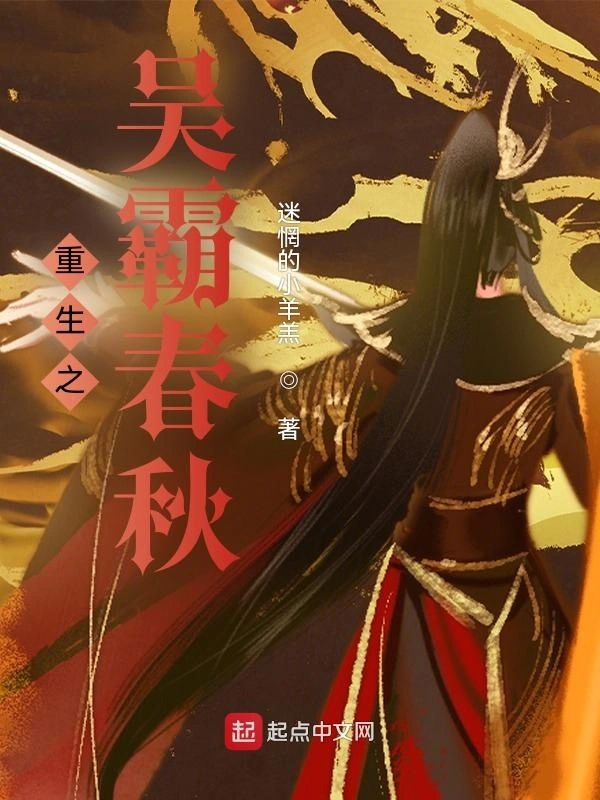
Rebirth of Wu Ba Chunqiu
重生之吴霸春秋
- Status
- Completed
- Length
- 2.3M Words
- Genre
- Historical
- Audience
- Male
- Subgenre
- Pre-Qin Antiquity
- Updated
- 3y ago
- Source
- Qidian
Stats
0Monthly votes
16.3kRecommends
52.3kFans
1.1kChapters
Tags
Synopsis
Reader comments
In booklists 4

New Book List for Old Bookworms
Nice
20Books75Follows2moUpdated
My Bookshelf
Follow up
16Books26Follows3yUpdated

I Like to Watch All Kinds of Time Travel, but I Don't Like to Watch Fantasy and Fantasy. Favorite History, Two-Dimensional
It's basically a time travel genre. I read the books one by one and then recommend them. Updates will be very slow.
44Books15Follows10moUpdated
My Bookstore
Build it yourself and see, it's okay
47Books6Follows1yUpdated
Readers also read
 In the Red Mansion: Escort Daiyu to Beijing at the Beginning
 1914 Begins with the Rejection of the Schlieffen Plan
 Talker in the Song Dynasty
 Please Call Me Your Majesty the Tsar
 Never Walk Alone!
 Ten Kingdoms Week
 The Age of Huangtian
 Daming: Have I Become Wanli's Portable Grandfather?
 I Am Drawing a Hot-Blooded Episode in the Zhiyu Episode!
 Northern Qi: My Father, Emperor Wenxuan
 Golden Family, I Will Lead the Mongolian Cavalry Across Asia and Europe
 Ming Dynasty959
 There Are so Many Beauties in the Ten Countries
 Ten Kingdoms, Land, Mountains, Wind and Moon
 Usurping Mongolia, from Slave to Emperor
 Qin Youruishi
 Northern Qi, Sage Khan
 Conquer the Sixteen Kingdoms
 Ran Wei Hegemony
 Overlord of the Late Tang Dynasty
I really don't want to endure it anymore, so I let go of the person who tried so hard to assassinate me at the beginning, calling him "benevolent and virtuous". Okay, I'll tolerate it for the time being. Then relax the plot and it will be a drama about women. If you can't write it by forcefully poisoning it, then don't write it. If you just write it off in one stroke, it will end up being sloppy. Then he repeatedly forcibly strengthened the enemy. Wu Zixu could not be killed no matter what. King Helu of Wu repeatedly violated taboos. It was clearly a civil war. He first wanted to collude with Chu and then curry favor with Yue, and later bowed to Yue. Do he really think that all his subjects are dead? He only thinks about spreading the benevolence of the protagonist, but does not take into account the attitude of the people under his command towards the enemy.
In history, King Wu Fu Chai dug the Han ditch to connect the Yangtze River and the Huai River. Currently, the protagonist is recuperating and can start the canal project from Yuhang to Pengcheng, connecting Qiantang, Yangtze River, Huaihe River, and Surabaya. After the reunification, the Beijing-Hangzhou Grand Canal was built, and Xuzhou Pengcheng was also a good choice to make the capital. Xuzhou was originally a fertile land, with the benefits of the Grand Canal, and being near the sea, it could also raise a navy to conquer the world.
Slavery can only be reformed, and the book will be abolished if it is abolished. Regardless of reality, every property owner is basically a slave owner, and the people's hearts are the people's hearts of the property owners. The landowners who have not developed yet, that is, the landlord class, have to wait for the desolation of the nobles. The Warring States Period gave an opportunity. The protagonist can at most expand the landlord class, because the protagonist's base is the nobility. Should he revolutionize his own life? Slaves can only be recruited to reclaim wasteland and swamps, but in fact slaves are more willing to work under the nobles. At most, this part should be reformed to expand the peasant class.
At the end of the Spring and Autumn Period and the beginning of the Warring States Period, it was too difficult for the Wu State to unify the world. At this time, the main economic center was in the Yellow River Basin. Not to mention Jiangnan, even Guanzhong and Hebei were not fully developed. The population, technology, economy, and culture all lagged behind the Central Plains princes. The Jin State also sent Shen Gong Wu ministers to the Wu State several times to come to Wu State to provide technical poverty alleviation. The advanced private ownership of land has been feudalized, and even the establishment of a stable ruling system has not yet been completed. Realistically, it is more reliable to defeat and encroach on the Chu State and completely occupy the south of the Yangtze River. Seize the territory east of Huaisi and Qianshan as the foundation. Don't be like the fool Fucha in history who thought that he would be invincible if he defeated Qi and Yue. Fighting for a false name as hegemon, not seeing that his own foundation is unstable is just an empty airs and will be broken with one poke. From the history, the Yue State can assimilate the Wu State, and the Chu State can assimilate the Yue State. It is obviously easier to integrate into the Chu cultural circle than to integrate into the Central Plains cultural circle.
I really can't figure out why we should copy modern systems to ancient times. Has the author been writing for too long and not getting to know the common people? The Koukou incident is the greatest irony. Those in power are always particularists. Whether it's intentional homicide or accidental homicide, as long as the sentencing is different, someone will dare to change your mind. How is this fair? If officials are not clear, any system will be nonsense. I really didn't expect that the originally well-written story about the Spring and Autumn Period, which had so many excellent ideas, would have to add modern stuff to the story. Really, I don't understand what the author meant by writing this?
What does this book say? At the beginning, I could forgive the assassin's character design. Anyway, the time traveler has nothing to do with me. It's a bit uncomfortable, but I can skip it. Now I have been sniping the usurper Gongzi Guang all the way and finally killed him. The protagonist forcefully demanded that the Yue Kingdom hand over Wu Zixu, and then Wu Zixu was captured What I am a little confused about is why Wu Zixu was forcibly washed away? If we really go back to history, wouldn't we be able to invade Chu without Wu Zixu? 1 Wu Zixu was a courtier seduced by the King of Wu. He was taken in and was disloyal to his master 2 Wu Zixu ended the King of Wu with an assassination, setting the precedent for assassinating kings 3 Wu Zixu never thought of joining the protagonist from the beginning to the end. He clearly knew that the hatred for killing his father was irreconcilable. The protagonist started to cleanse Wu Zixu. Isn't it really possible without Wu Zixu? Can you say that the protagonist is doing it for a good reputation? I understand that you can forgive someone who kills your own enemy. Can you forgive someone who kills your father? Can you forgive him on behalf of your old father, King Wu? Will your people agree? Will Wu Guoren agree?
There are several book reviews that make people feel that they should abandon the trap. The first one is to assassinate Qingji and be released. He is to invite fame. Qingji also wanted to invite fame. He killed him without looking at the subsequent assassinations because he already had this benevolence and righteousness, so there is no need to worry about killing him again 2 The abolition of slavery is just like the family teacher Confucius. The wealthy people changed their status quo and increased the number of people under their rule. The author also tried his best to be rounded. He did not completely abolish it and replaced it with official trading guarantees. War criminals and people who sold themselves into slavery could also do it. I decided on the setting of Cao Cao loving his wife, and wanted to show it off, but it turned out to be a bit embarrassing, although he took it back in the end 4 Why did he still keep it after knowing Gou Jian's forbearance? He also copied the scene in the TV series "New Three Kingdoms" where Cao Cao calls out Sima Yi, because the protagonist is set up as the template of Cao Cao loving his wife. It looks a little awkward, 5 The proton problem seemed to be like this at that time. Qin Shihuang's father also gave birth to him as a proton in Zhao. The protagonist also mentioned this sub-category. Maybe Gou Jian was left behind for the plot estimate. The main author wrote that when nothing happened, usually one year would be over. Several battles to promote changes in the territory and personnel changes would be well written. The implementation of the New Deal has been reflected in the income at the end of the year. Corruption has not been dealt with yet. It is estimated that like me, it will be dealt with later when it is more stable. Because the commercial tariff is low and the road has not been repaired, it is estimated that it will be later. 6 Why keep Wu Zixu? He encouraged the murderer. Jiao Daddy may also have a bit of celebrity effect, just like in the emperor's growth plan, the famous minister has high ambitions and doesn't want to kill him, so he played the plot of Lu Bu shooting the halberd 7 There are still small poison points left, artificial respiration to save the widow, which is a bit embarrassing, thinking that Cao Cao loves the widow, but there is no follow-up, you say it's good for him to do it , but I want to step up and retain talents, so I feel like I should go beyond it. There is also a problem with Sun Wu's battle. I don't like to watch the process, so I just watched the winning part of cleaning up the city and rewarding people, so it should be okay. Reading this book, you have to understand his era. At this time, the Spring and Autumn Period began to not abide by some of the previous etiquette. They will not wait for you to line up before fighting, or wait for you to cross the river before fighting, but they will not destroy the country, and they will become his subordinates. Because Zhou is not obvious, they are just quite the overlord, acting as Zhou's agents to handle things. The three families were divided into Jin Dynasty and the Warring States Period began. The real awakening and dynasty change began, especially after they were destroyed in two weeks.
I came back to read this book. When did I give up? It seems that Fa Yue had an absolute advantage and was attacked by others. When he was thrown into the river, he was rescued by Xi Shi. I am not sure. I know that reading any more will be an insult to my intelligence.
Traitors have the role of traitors, you have to control them well
Nowadays, domestic infrastructure is in a state of turmoil, but we don't know how bad the domestic infrastructure was before 2000. I remember that it was only two or three kilometers from my village to the town, and there was not even a cement road. It was so sour on rainy days. This was still the Wenzhou area of Zhejiang. You can imagine what it was like inland.
Later, the two sons captured Zhou, and the eldest son of the concubine actually captured the Yuxi. Moreover, the eldest son of the concubine was born by a female official. This is a way to bring disaster. The legitimate son has a reputation, and the eldest son of a concubine has luck. The other sons can earn whatever they see born by a female official. If they are provoked by someone with ulterior motives, they will definitely earn more, and the internal fighting in the country will become more serious. This is a proper way to bring disaster.
It was good. Chapter 224 is directly poisonous. With 30,000 Sun Wu, you can defeat 10,000 and you can still be ambushed. You are not poisoning. You are looking down on the Soldier Saint.
Wuyu, Li wanted to kill you, but instead of killing him, you let him go. What do you think? Do you know why we need to govern the country according to law? Just because a person breaks the law but does not deal with it in accordance with the law, then everyone will see that there is a loophole to exploit, and more people will break the law. Similarly, if Yao Li kills you, if you don't kill him, but let him go, others will take the risk. Anyway, if he fails, he doesn't have to die. After all, Yao Li has been let go. I am a novice working part-time, and I still want to be the king based on this mentality and scheming. If I were not a time traveler, I would have died a thousand times over.
I saw the place where the war to destroy Vietnam was launched, and then I died of poison. You have been accumulating for five years, making changes for five years, and you have praised the state of Wu so well. However, after being ambushed by the Yue people, your army of the state of Wu collapsed and the king was left alone. So what the hell has your think tank and army been doing in the past five years? ! ? ! The king still dives away? And then meet the mother and daughter? Are you going to write a fantasy novel and meet the old man by chance? An affair novel? This book itself has a series of poisonous points such as "roots are right and seedlings are red", and it is already difficult for readers to read it. So why are you here to tell me? I died from poison
I just confused you. Is Wu Zixu a necessity? Wu Guo wouldn't be able to survive without him? Can the revenge of killing one's father be washed away? Take Guan Zhong and Xiaobai as an example. Are they the same? Wu Zixu served the protagonist's father, who was kind to Wu Zixu, but because he was not a talented person, he teamed up with Helu to kill the king, which can be said to be unloyal and unrighteous, and morally corrupt, right? Can Guan Zhong and Xiaobai kill their father and body first? Secondly, Guan Zhong and Xiaobai are not affiliated. Can Guan Zhong be the same when he is ordered by the state of Lu? Why do you want to use Wu Zixu to create such a disgusting plot?
The steps are too big and the eggs are pulled. Having just succeeded to the throne, he lacks prestige, has not trained his elite troops, and has only one confidant in the court, Sun Wu. There is no stable family at home, and there is a strong enemy Chu Yue outside. During the reform, the people gain nothing and the ministers suffer, but you are the only one who gains. If you dare to reform in this situation, who will support you? This is because you are not dying fast enough. It's making trouble.
It's so damn poisonous, the protagonist talks about reforms like a fool, and there's a glint in his eyes at every turn.
During the Spring and Autumn Period of the Western Zhou Dynasty, there was a group of political forces with great power. They could kill the king, establish a new king, block invasions, and even change the outcome of a country's regime change. Their unified name was "guoren". For example, the people of the country expelled King Zhou Li, and during the time of Qu Wo Dai Yi, the people of the country defeated Qu Wo and Uncle Huan's line many times to support the Jin Dynasty. In the public house, after the death of Zhao Huanzi, the Chinese killed Huanzi's son and welcomed Zhao Xianzi. It can be seen that this time span lasted from the early Spring and Autumn Period to the Warring States, and in terms of geographical distribution, not only Wang Ji and the Central Plains princes under the direct jurisdiction of the Zhou Emperor had "guoren", but even Chu and Wu, which were not in the Central Plains cultural circle, also had the concept of "guoren". Who exactly are "Chinese people"? The author understands it as city dwellers with household registration and living in the capital, corresponding to "savages" without household registration and living in the countryside. I personally think this understanding is wrong. First of all, all countries started to establish households to equalize the people. It was not until the large-scale national war in the Warring States Period that all countries started to do so due to the rigid needs of production and population consumption. There is no factual basis for dividing by household registration. Secondly, dividing the Chinese people by region cannot explain the power of the Chinese people to influence the political situation. Finally, what kind of city dweller can commit such a treasonous act as killing a king or a minister and still not be held accountable and liquidated? So I believe that "Chinese people" are not so much a group of people as a class, that is, small and medium-sized nobles who have permanent property and can afford military service and tax obligations. This explains why they can always participate in various major events and play a decisive role, because they have economic strength, enjoy status privileges, and assume the obligations as the cornerstone of rule (resources of soldiers, taxes, and knowledgeable grassroots managers). It follows that not all Chinese people live in Dayi, and not all Chinese people live in Dayi. In the Spring and Autumn Period when autocratic rule was not yet popular, it was important to say that "the subjects of my subordinates are not my subjects", let alone the slaves who are private property. Therefore, we need to be cautious when implementing the abolition reform, because the biggest resistance is not those who It is visible to the high-ranking nobles and ministers that the biggest crisis in the reform movement is to directly seize the "eternal property" of the people. However, the people of the country have the traditional skills of rioting, killing the king, and welcoming the new king. The consequences of offending the people of the country were set by King Zhou Li.
I have read Chapter 50, and except for the emotional scenes, everything else is pretty good, but when the male protagonist issues a request for talent, and general Mo Xie comes to offer his sword, why does the protagonist want to beat them up? He's just a swordsmith, so forget it. Being the protagonist is suspicious, but why should Mo Xie be brought into the palace? Do you want to start a harem? ? ? ? It's so disgusting. Her husband is still here, but her thoughts are not pure. What the hell?
If the enfeoffment system is cancelled, everyone will rebel. If the Qin State does not enfeoff, what will happen?? Even if there is enfeoffment in the Qing Dynasty and the Qing Dynasty destroys the Ming Dynasty, its enfeoffment does not have a certain relationship.
Forcibly subduing the protagonist, suppressing the protagonist, and abusing the protagonist, the war drama is too childish. According to the author, it is to attract Xi Shi. It is unnecessary. It is too far-fetched to write it like this. Moreover, the military situation is in sharp contrast with west Shi's behavior. The contrast makes people speechless!
The emotional drama was a mess. A king gave a widow artificial respiration and was slapped. This is what people can think of. A Helu is almost like Liu Bei. If he loses, he will run away and he will not die. Helu died and Fu Cha ran away again. You can't write it in another direction.
You attack a fortified city with only 50,000 people with only tens of thousands of troops. Are you looking down on your opponent too much? After all, that was the main force of the Chu State, not a makeshift rabble.
Sometimes I really don't understand that a good book has to be scribbled out, otherwise I feel like I'm out of sorts! ! ! You have to straighten out some messy plots. You also said that being criticized by readers affects your financial prospects. Then you should write it well, compare it with historical conditions, and write it in a way that the protagonist's modern advanced ideas adapt to ancient times. Don't make things up.
Bullshit Silk Road? Don't you understand when porcelain is available? Just writing nonsense? Do you have any historical knowledge?
I think the most perfect way to inherit the Qing Dynasty was to secretly establish the crown prince.
Support the author, one can help the world, not dominate the world! The protagonist should establish a new Zhou ritual, establish people's political discussion, and establish a parliamentary system. The New Zhou Rites, as a new constitution, should stipulate the respective rights and obligations of ministers and the king under the law. Limit the power of the king and noble ministers. Only by limiting the power of the king and ministers and establishing a national assembly to discuss political affairs can the intensity of the power struggle be truly reduced. Why did political struggles in Europe become less intense without killing people? It is because the power of the king and ministers has been weakened. The king cannot execute ministers at will, and ministers cannot overthrow the king at will, so the struggle is not fierce. The king is under the law, the people discuss government affairs, and the new Zhou rites determine the power boundaries of the king and ministers. These are the foundations for the Chinese nation to lead the world! It was 10,000 times easier to establish a people's political assembly in the pre-Qin Dynasty than it was after Qin Shihuang. Because the pre-Qin people already had a tradition of discussing politics. Qin Shihuang is the source of the degradation of the Chinese nation, because Qin Shihuang is the king in law. The king of Xia, Shang and Zhou is a king under the law, and the princes and ministers of Xia, Shang and Zhou are in an equal and cooperative relationship. In the Xia, Shang and Zhou dynasties, the emperor, king, nobles, and ministers were shareholders of the country. They were equal relations. They were shareholders of the country under the aristocratic democratic system! After the Qin Dynasty, the emperor was the chairman of the country, and everyone except the emperor was the emperor's slave. Because the emperor is a king according to the law, and his words are made into a constitution, there are no restrictions at all.
It can no longer be fake. In that era of Spring and Autumn Period, we were still dominating the world. How could we dream? If the population base is not good, it is impossible for technology to have a technological explosion. Maybe the foundation of everything is not? It's also a big voyage. Do you have the conditions?
It's a bit poisonous. I can still understand the poisonous point at the beginning. The ancients were simple and honest, but they became more poisonous as they progressed. I wonder if the ancients were fools. Or is it the author's level that he looks like a fool no matter how he writes here.
Spring and Autumn Literature, written in the Three Kingdoms style, is not for everyone to recruit talents.