


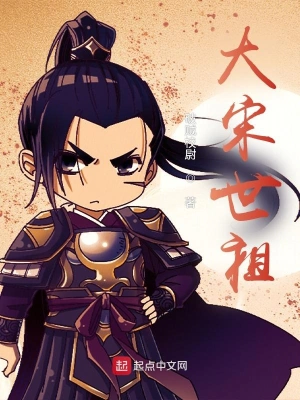
The Ancestor of Great Song
大宋世祖
- Status
- Completed
- Length
- 1.9M Words
- Genre
- Historical
- Subgenre
- Song-Yuan-Ming Dynasties
- Updated
- 3y ago
- Source
- Qidian
Stats
755Chapters
0Votes
21.7kRecs
52.6kFans
Tags
Synopsis
More by this author
 In 1996, I Became a Police Officer Again
 I Am Emperor Jiajing
 This Daming Can Still Be Rescued
 I'm Just a Cow and a Horse, but You Want Me to Save Mankind?
 Revolutionary Emperor
 Back to 1998
 Reborn in 1987, They Call Me the Great Detective
 I Am the Wanli Emperor
 Heaven's Revelation Great Ming
 A Minor Official in Great Shun
 My Era Begins in 2003
 The Sixth Year of Wanli: Saving the Empire from Collapse
In booklists 2
Readers also read
 My Father Is Wen Tianxiang, and We Win the Battle of Yashan from the Start
 My Only Method: I Will Add More Points to Become Stronger at the End of Ming Dynasty
 Daming: Asking for the Throne at the Beginning, Lao Zhule Went Crazy
 A Guide to Building Civilization in a Primitive Tribe
 The Great Ming
 The Prosperous Longwan Era
 Northern Song: The Unrivaled Statesman
 Resist the Qing: Starting at Yipianshi!
 Overthrowing the Qing: My Taiping Heavenly Kingdom
 The Sun and Moon Endure Forever
 Transmigrated to the Ming Dynasty to Become a Tyrant
 A Plan to Revive the Northern Song
My Era Begins in 2003
In 1996, I Became a Police Officer Again
A Minor Official in Great Shun
Heaven's Revelation Great Ming
I Am the Wanli Emperor
The Sixth Year of Wanli: Saving the Empire from Collapse
A Plan to Revive the Northern Song
My Era Begins in 2003
In 1996, I Became a Police Officer Again
A Minor Official in Great Shun
Heaven's Revelation Great Ming
I Am the Wanli Emperor
The Sixth Year of Wanli: Saving the Empire from Collapse
Reader comments 35
Google Translate
This author doesn't understand history at all. Liu Che's contribution is greater than that of Liu Xiu, but Liu Che is his ancestry, and Liu Xiu is his ancestor. Li Shimin's contribution is greater than that of Li Yuan, but he is only his ancestry. Zhu Di is also Taizong, and was later forcibly raised as an ancestor by Zhu Houcong. In Chinese feudal history, there are only three situations where emperors can be called ancestors. One is Liu Bang, Li Yuan, and Zhu Yuan. The founding emperors like Zhang Zhao Kuangyin, the second one like Liu Xiu who re-created the Yanhan when the country was clearly destroyed, the third one like Wanyan Aguda, Nurhachi who raised the army early but was already dead when the country was founded, and others who were posthumously named like the protagonist of this book is the son of Shenzong. Was the Song Dynasty in danger of annihilation at that time? Without this situation, no matter how great the hero's great achievements are, he will be like Emperor Xiaowu and get the title of Shizong, Shizu? There was one person in the Song Dynasty who had a chance but failed to live up to it, and that was Wan Yangou. If there was no Fengbo Pavilion during his reign, but he continued to use Yue Fei to regain the mountains and rivers, return to the old capital, and drive out the Hulu, then he would be qualified to be called the ancestor of the world.
Even if it is really about me in ancient times, it is best to change it. It will affect the reading experience, because now I feel that he has a very honest image many times. It is really funny to see an emperor talking about me.
At that time, Song Zhezong wanted to pass the throne to Zhao Ji, but Empress Dowager Xiang disagreed. Why did the throne belong to you two biological brothers? You bullied me because you didn't have a biological son, right? You couldn't pass it on to Zhao Ji. So the main stumbling block for the protagonist was Empress Dowager Xiang, who still had to find a way to solve this problem.
It is recommended that the protagonist not use the name of his previous life, because it will feel very dramatic and lack a sense of substitution. Moreover, after the emperor of the Song Dynasty came to the throne, he would change his name to a rare character so that people would not have to avoid taboos everywhere. The name of the protagonist's previous life is still a very common character.
Author, I don't want to complain. But I have to complain about these recent ones. Why do you have to change it? Isn't it better to call the university an academy? Why copy the modern system? Modern systems may not be suitable for ancient times. Half a step ahead is a genius, one step ahead is a madman. In the end, you won't do it because you want to play, let's establish a constitutional monarch! Nothing is too much or too little. The food must be eaten one bite at a time and the things must be done one by one. Reform does not happen overnight. Please ask the protagonist to consider the issue from the perspective of ancient people. The protagonist is now not a prince, but the emperor of a country. Don't just consider personal preferences when considering things. It can't be what the protagonist thinks is good. Just everything. Whatever the protagonist thinks is suitable is suitable. Especially the system. The ancient system was already very complete. During the Song Dynasty, there were still people in the Song Dynasty. It is simply unrealistic to implement education for all. That's a long-term project. It cannot be accomplished by just one generation. The system that suits the time is the best. Please don't change it casually. Guan Zhiming said. Especially what kind of university is it? You can change it to Hanlin Academy!
The war scenes in the book are really difficult to describe in one word. The author tells the story of the war in the form of side characters or reverse narration, and it is so calm and gentle that Xia's army was wiped out in ashes while talking and laughing. Those who didn't know it thought he was telling a story about the Three Kingdoms. The temple dispute is wonderfully written, but the war is the author's shortcoming.
It is recommended that the author read the "History of the Song Dynasty" carefully and see why the ritual officials did not give Zhao Gou the temple title of "Shizu"!
Don't think that being called "ancestor" is better than being called "zong"! If Zhu Di knew about it underground, he would probably scold the old Taoist Zhu Houcong who changed his temple name to death! The Ming Dynasty was not destroyed, and Zhu Di also believed that he was the son who inherited his father's legacy, so the temple name "Taizong" was most appropriate. Moreover, the temple name "Taizong" was no worse than "Shizu", and the so-called "Chengzu" was even less comparable. Therefore, Zhu Di would never be grateful to Zhu Houcong, and would only scold him as an unworthy descendant!
It feels like the protagonist is just an ordinary person. He can provoke others at will, scold others at will, and say all kinds of insults. Even if he wants to anger the protagonist, can he say certain things at will? Is the main character not royal? Can anyone step on the dignity of the royal family? Can you have some logic?
There is a very good historical novel called "The Burial of the Yuan". The protagonist confronts Kublai Khan, and then drives Kublai Khan out of the Central Plains. Then Kublai Khan takes his family to Europe, and unifies Europe, figuring out what the Qing Dynasty did, and then the two great powers of the East and the West faced off.
Divide the army into two groups, one group will destroy Xixia with generals, and the other group will march from Shaanxi to Ningxia, across the desert, across the grassland, to Outer Mongolia to fight against the Kelei tribe? What is this operation? Originally, the political intention of the imperial commander's personal expedition was greater than the military intention. Instead of personally leading the army to attack Xixia, he personally led the troops to attack the enemy thousands of miles away. What is this? Zhu Qizhen's behavior? Do you also want to be called the Son of Heaven? What political benefits can it bring to you by personally recovering the Kelie tribe? Can it be far better than destroying the country? Regardless of priority