


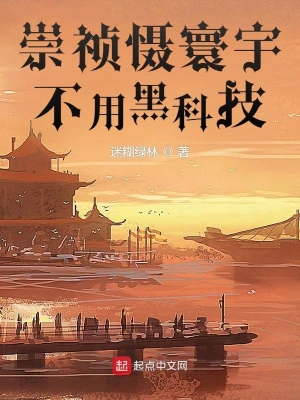
Chongzhen Rules the World Without High-Tech Weapons
崇祯慑寰宇,不用黑科技
- Status
- Completed
- Length
- 608k Words
- Genre
- Historical
- Subgenre
- Song-Yuan-Ming Dynasties
- Updated
- 4y ago
- Source
- Qidian
Stats
199Chapters
0Votes
3.3kRecs
12.9kFans
Tags
Synopsis
In booklists 1
Readers also read
 My Father Is Wen Tianxiang, and We Win the Battle of Yashan from the Start
 My Only Method: I Will Add More Points to Become Stronger at the End of Ming Dynasty
 Daming: Asking for the Throne at the Beginning, Lao Zhule Went Crazy
 A Guide to Building Civilization in a Primitive Tribe
 A Record of a Mortal's Journey to Immortality: I Earn Immortality by Grinding Achievements for Rewards
 Transmigrated to the Ming Dynasty to Become a Tyrant
 Emperor Zhengde
 Lord Evolution
 A Record of a Mortal's Journey to Immortality: Choosing Hextech in the Chaotic Star Sea
 I Am the Carpenter Emperor
 The Age of the Yellow Sky
 A Plan to Revive the Northern Song
Reader comments 24
Google Translate
Some people commented that as soon as the emperor came into conflict with the civil servants, he would die without knowing how to write, and he would be killed by the civil servants. In fact, their thinking itself has been led into a ditch by conspiracy theories, and it is a bit too evil. I really thought there was some conflict between the emperors and civil servants of the Ming Dynasty. Civil servants would think of killing the emperor, which would be an obsession. When Jiajing was fifteen years old, he was succeeded as emperor by a foreign vassal. Before he even ascended the throne, he was quarreling with civil servants. The great ceremony discussion was going on for several years. Was he killed? You are talking about Zhengde and Tianqi. Zhengde also served as emperor for sixteen years, and Tianqi also served as emperor for seven years. Tianqi's father, Ming Guangzong, died suddenly within two months, but he obeyed the advice of the civil servants. As soon as the protagonist of my book compromises with the civil servants, he becomes very aggressive and even wants to kill the emperor? This is an argument that has not been taken to the point. Of course, it's okay to read novels and have conspiracy theories. But conspiracy theories also need some basic logic. Instead of being like some readers who are obsessed with it, without any logic, and relying on their own assumptions to take the Ming Dynasty civil servants as regicides who were more ruthless and unconstrained than Dong Zhuo and Cao Cao.
This book is rigorously researched, I admire it!
The author was not only able to produce strong evidence to prove that Yuan Chonghuan was harming the country, but he was also very restrained and did not bring any private goods or slander Yuan Chonghuan. For example, a book friend said that the person behind the Ningyuan Mutiny was Yuan Chonghuan. There was no evidence, but the author resolutely refused to accept it. It is really rare! I really like the author!
The author's ideals are too full, but the reality is very skinny. Knowing that in the late Ming Dynasty all power was in the hands of civil servants, why did you still fight against them? I'm afraid I don't know how to write the word "death". It was too easy for the emperor to be killed without money, military command, voice and other rights. Simply poison them and put them in the river. The unnatural deaths of several emperors in the late Ming Dynasty are the best proof. Author, you should at least hide your capabilities and bide your time and develop slowly. The Ming Dynasty is not going to perish tomorrow. There is still time. At least you have the right to seize it first. Without power, the emperor is just a mascot.
After Yan Yingyuan rectifies the Jinyiwei, he can rectify the custom industries and loan sharking casinos in South Beijing City. In ancient times, pornography, gambling, and drugs were industries that made huge profits and were not looked down upon by public opinion. In essence, it is about making money, but it can be done under the pretext of rectifying social atmosphere and promoting the main theme of the Ming Dynasty. Moreover, there are evil forces involved in custom industries and casinos. If these are eliminated, the people will be indignant. In view of the relatively degenerate morals of the Ming Dynasty scholar-bureaucrats, there were also many people visiting brothels, such as Qian Qianyi, Wumeicun, even Mao Yuanyi, even Xu Yuqing, etc. If there is too much resistance to rectifying the brothels, priority can be given to destroying the men's houses in the south of Beijing in the Ming Dynasty. It is said that in the middle and late Ming Dynasty, male style was also prevalent. PS: Ironically, Mao Yuanyi, who was a life-and-death brother of Yuan Chonghuan, and Xu Yuqing, who was not very fond of Yuan Chonghuan, both had emotional entanglements with Wang Wei, a famous prostitute in Yangzhou. It's just that Wang Wei and Mao Yuanyi came first. In the end, Wang Wei quit because Mao Yuanyi was also with his good friend Yang Wan. Finally, after many twists and turns, Wang Wei and Xu Yuqing finally came together. What does this mean? It shows that Mao Yuanyi himself can't even handle his own emotional problems, let alone lead an army in a war. And Xu Yuqing is prudent and reliable in dealing with state and family affairs.
There is also Yuan Keli, the governor of Denglai during the Apocalypse. This person must also be appointed. There is no such person in the history of the Ming Dynasty in the Qing Dynasty, which shows that the Qing Dynasty is afraid of this person. Mao Wenlong still doesn't trust Chongzhen very much. In order to make Mao Wenlong more grateful, Chongzhen can take Mao Wenlong's old boss Yuan Keli to go to the island. Yuan Keli's son Yuan Shu was also a loyal minister who died for the Ming Dynasty, so Chongzhen had to use Yuan Keli's father and son.
In the late Ming Dynasty, your computer would not survive without plug-ins, and knowing history may not necessarily change history.
The Ming Dynasty has a population of more than 100 million, and the border troops spend more than a million military expenditures every year. They can only maintain their status. If they go out to fight the Manchus, 100 for 1 is not a loss. Although this is a bit cruel, it will not lose so miserably. If you find someone who dares to lead troops to fight, you can kill 1,800 people in a year. In 10 years, you can beat the population of the Manchus to the point of extinction.
It was okay at first, but then when I went to Phi Island, I just had nothing to do and started looking for trouble. I turned into a joke and lost the awareness of the big boss.
I have a few questions for the author 1. The most dangerous thing in the last years of a dynasty should be the unemployed refugees, right? If there are too many unemployed refugees, there will be a danger of rebellion. After all, survival is important. 2. Also you said that the heirs of the dynasty can divide the land equally, so annexation is not serious (at least better than Europe). I want to ask if this is how mergers and acquisitions are viewed. What does your landowner separation have to do with us tenant farmers? The land is still not in the hands of our tenant farmers, and mergers and acquisitions have not been alleviated at all. The degree of annexation is not about whose land is bigger, right? If this were the case, wouldn't annexation become more serious if the land is now owned by the state? 3. Are owner-farmers better able to withstand risks than tenant farmers? In comparison, tenant farmers are more likely to become refugees, right? Under the same tax rate, are homesteaders more capable of resisting risks?
The author handles Qian Qianyi very well
Some protagonists insist on making him a villain, which is also speechless