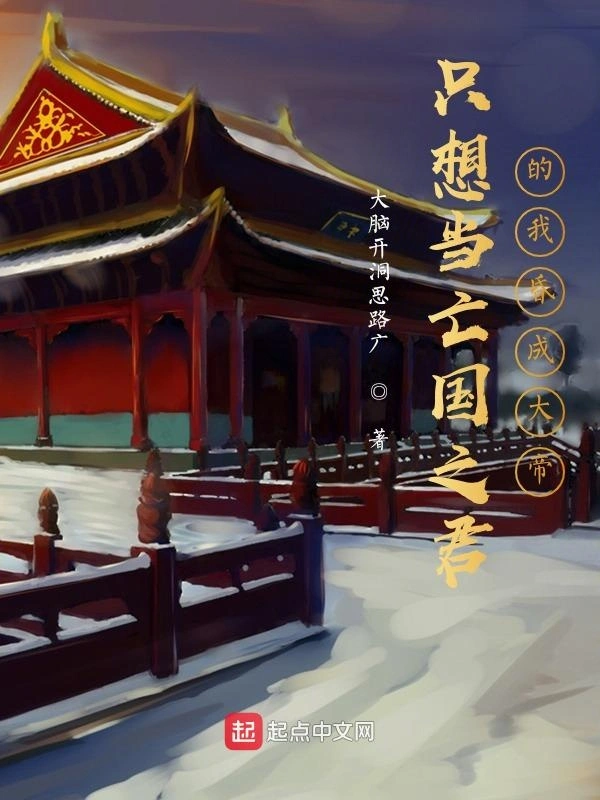
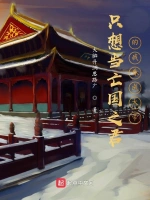
I Just Wanted to Be the King of a Subjugated Country and I Became the Great Emperor.
只想当亡国之君的我昏成大帝
- Status
- Completed
- Length
- 486k Words
- Genre
- Historical
- Audience
- Male
- Subgenre
- Alternate History
- Updated
- 4y ago
- Source
- Qidian
Stats
0Monthly votes
26.6kRecommends
70.2kFans
227Chapters
Tags
Synopsis
Reader comments
In booklists 5
Personal Taste Book List, Reject Vulgar Taste
Reject the idiot stallion article, Reject mindless and obscene articles, Reject the giant baby to bring intelligence to the protagonist I like books with originality and perspective. Different characters have flesh and blood. Niche taste, refuse to compromise, Happy to the leader, he is so willful. The books I recommend have all been read, and those I haven't read will not be recommended. Being an emperor is the most boring thing. The number of words written about the female protagonist Shui is
89Books74Follows4yUpdated
Hehe
Hehe
20Books5Follows4yUpdated
Some Books I Like to Read
Currently it's mainly comedy and historical stuff. Those who are creative and have ideas will also join in.
26Books4Follows5yUpdated
Because of His Unusual Taste, He Doesn't Fit in with Everyone
Behind the scenes flow, creation flow, dihua flow
18Books3Follows3moUpdated


Year-Round Bookworm Inventory
It doesn't have to be a famous book, but it must be an interesting book
15Books3Follows4yUpdated
Readers also read
 In the Red Mansion: Escort Daiyu to Beijing at the Beginning
 1914 Begins with the Rejection of the Schlieffen Plan
 Please Call Me Your Majesty the Tsar
 Talker in the Song Dynasty
 I Originally Wanted to Vote for the Wei Dynasty, but Why Did I Return to the Han Dynasty?
 Liu Xie: I Really Just Want to Give In!
 I Created the Internet Era in the Wizarding World
 Why Does Your Game Have a Sense of History?
 Since the Beginning of the Account: a Chronicle of the Roman Khanate
 My Wife Became a General and Killed 400,000 Enemy Troops in the Beginning.
 At the Beginning, He Will Be Torn into Pieces by Emperor Taizong of the Tang Dynasty.
 This World Is in Danger
 My Brain Is Addicted to Knowledge
The key to this novel is not the protagonist, not the Emperor Qin Gou, but the Da Qian. The prototype of Daqian is probably the Song Dynasty. Regardless of the Song Dynasty in history, the performance of the people of Daqian under the material desire is frightening. Whether it was the Reform Movement, the Jurchens, or Goryeo, what the upper echelons of Daqian showed was nothing more than what Lu Xun called "cannibalism." We all know that cannibalism is wrong, but if we look at the methods of cannibalism in the book, they are all about enriching the country and strengthening its troops to control foreign enemies. It has to be said that it is extremely absurd. In the final analysis, Qin Gou just changed his original behavior of not cannibalizing people or cannibalizing people secretly into blatant cannibalism. First, it is the feudal society that does not treat people as human beings, and second, it is the exploitation of capital.
We found this book interesting. On the surface, the protagonist writes that he has ruined his family and subjugated his country, but in fact it is not his own method. Perhaps the protagonist's prodigality is exactly how he protects himself. As we all know, it is the result of the joint efforts of the current Qianguo and the current scholar-bureaucrats. But his power is not great, and if the protagonist wants to achieve great things, he must first show his incompetence and let all opponents know that he is incompetent. A person's incompetence is not through some small things, but because of his incompetence in his actions, he is truly incompetent. What the protagonist does seems unreasonable but is reasonable. We have read some people criticizing the author in the comment area. Do you really understand the author? After reading it for so long, we realized that the author is not trying to show how he ruined his family or how to subjugate his country, but to show his imperial mentality through these. He is really a terrible person.
Regarding the guide for ordinary people to travel through the Song Dynasty, First, you'd better be born in Tokyo or Bianliang, Second, you'd better have a scholar-official father yourself Third, if you are an ordinary citizen, I suggest you become a scholar-official before you are driven crazy by the taxes of the Song Dynasty Fourth
I saw that some readers thought it was outrageous for the palace maid to earn a hundred guan a month. Here the author would like to talk about why I wrote about the palace maid earning a hundred guan a month. Sun Miao mentioned in the memorial of "Shang Renzong's Five Matters on Palace Prohibition" that "therefore, the number of servants in the previous dynasty was only five hundred, and the salary was limited to one thousand and twenty guan. They were all disciplined and not very extravagant. Now it is said that the number of people has increased tenfold, which has exceeded two or three thousand. If the salary is increased tenfold, or to two hundred thousand, it will take several jubilees to raise a daughter privately." In fact, ancient emperors were so extravagant.
If you could be the emperor in ancient times and be the emperor of a powerful country, would you still care about your 100 million?
Some readers think that it is incomprehensible that the protagonist wants to return to modern society with 100 million yuan and does not want to be an emperor in ancient times. The author will use an inappropriate analogy to explain it here. If the current President of the United States has a chance to travel to human society a thousand years from now, the gap between that future society and modern times will be the same as the gap between modern times and a thousand years ago, and in the future, his wealth will exceed 99% of people. Dear readers, do you think the President of the United States is willing to go to the future? If he were a protagonist, what would he do to go to the future? Readers are welcome to express their opinions.
The pamphlet the author explained in that book has actually collapsed. It was really surprising when political commissars, military police, high-energy gunpowder, military literacy, and signs of industrialization appeared in the front. However, the protagonist is a modern person. In order to fit the theme of the book, he forced the protagonist to create coincidences and have to trap the protagonist in the palace, give up the unity of ministers, the army, factory owners, and finally abandon the people at the bottom. He also said that in the end, the protagonist will see the pain of the people at the bottom and change. But we all know that the social conditions in this book cannot complete socialism within one or two generations, and at this time everyone in this country has become part of the capital behemoth. The protagonist no longer has the ability to control them. The success of "The Richest Man" is because Mr. Pei's character is an ordinary person who wants to make money but also wants to make conscience money, and the protagonist of this book has already broken the bones and sucked out the marrow of the people at the bottom. Doesn't any reader of this book know what the bloody accumulation in the initial stage of capitalism is? I don't think so. It's just that people no longer want to express their opinions.
After reading all the chapters, I can't stop talking. The education under the red flag makes me want to say something, but the lack of knowledge makes me not know what to say. What makes me uncomfortable is not what the protagonist does, but what the author thinks. It seems that I have read a hymn that praises the people as a salary to help capital. Looking up at the red flag, looking down at the world in the book and the author behind the book, I always feel that something is wrong.
Readers, you can share the stories of the faint king that you find interesting and see how the author reverses them.
Many people said that the navy of the DPRK was a garbage company, and why did the navy of the DPRK have a navy? Waterma laughed to death, there is no navy, the navy is not strong, how can the three treasure eunuchs lead the fleet all the way to the Red Sea and still come back? Can you bring a group of envoys from a small country to visit him? Can you bring back boatloads of pearl agate? The whole deal came back? Well, if the small countries that they traded midway can be counted as trades.
I feel that the author may not have a finance course in his university major. The Jurchen economic bubble in Chapter 103 is a big problem. The Jurchen economic bubble described by the author is based on distrust of paper money rather than excessive trust in a certain industry. This leads to the fact that economic bubbles will not happen. Normal economic bubbles originate from rising prices. Because they believe that a certain industry will appreciate in value, some people who are capable of direct investment choose to borrow a large amount of money to invest in this industry (such as real estate). This will cause more people in the market to borrow money than to lend money, thus increasing the interest rate on borrowing money. On the other hand, some people who do not have the ability to invest directly will lend money to direct investors for indirect investment when they see interest rates rising, trying to get a share of the pie by earning interest. If we stop here, it is actually a normal market process. As more people need money, the interest rate for borrowing money will increase. After the interest rate for borrowing money increases, more people will be willing to borrow money, and the interest rate will gradually stabilize at a constant value. But if people trust too much in the appreciation of this industry, the situation will get out of hand. Direct investors will not hesitate to offer extremely high interest rates just to attract as much money as possible from other people in an attempt to make a big profit. Then some people see the high interest rates and are no longer willing to just lend their own money. Instead, they start to borrow money from everywhere and lend it to direct investors at a higher price to invest and earn the difference. In the end, interest rates continue to rise, eventually exceeding the benefits of industrial appreciation. Investors are forced to use newly borrowed money to repay old debts. Ultimately, repayment cannot trigger a large-scale bankruptcy on a social scale. The economic bubble in the novel originated from the short selling of banknotes. Because of the distrust in the value of banknotes, they believed that they would inevitably depreciate, so they began to borrow large amounts of banknotes to purchase other industries. When the banknotes become waste paper in the future, they can repay the debt with other industries equivalent to a reverse appreciation. This seems very similar to the above process, but there is an essential difference, that is, because everyone knows that banknotes will depreciate, so no one will actually lend money to others for a little interest paid in banknotes like in the above situation. Everyone is trying to make themselves owe others more banknotes than others owe themselves banknotes in order to protect themselves from the subsequent depreciation of banknotes. The direct result of this difference in mentality is that economic bubbles cannot form at all, because while all the rich people are borrowing and consuming paper money crazily, no one is willing to lend out paper money. No matter how crazy the interest on borrowing money rises, it cannot catch up with the inflation caused by the huge increase in the circulation of paper money in the market. As a result, the poor begin to consume paper money crazily in exchange for material hoarding, and the price increase progresses. In the end, no one is willing to accept paper money and return to barter, and paper money is completely reduced to waste paper. The reason why there are differences between reality and the situation in the book is essentially because the game modes of investment activities are different. The game modes are divided into positive sum, 0 sum, and negative sum. The difference between the three is whether the losses and gains of everyone involved in the investment activities are combined to make money, remain unchanged overall, or lose money. Real estate investment is a positive sum game, where everyone divides the money that can be earned from real estate investment. This process allows for a win-win situation, so borrowing other people's money to earn interest (i. E., Leverage) will take effect, while a run is a negative sum game. Someone must lose money in this process, and the more others earn, the more you lose. Therefore, no one will lend money to others knowing that they will make money by borrowing money to play with leverage.
Can't the protagonist's personality be changed? Just to get 100 million for yourself, you are squeezing the people of a country. Everyone is wcjj. If you write like this, you will give everyone a hard time.
The only way to read this book is not to read the protagonist as the protagonist, but to focus on the country as a whole. Otherwise whatever you write with a crooked butt is just disgusting to readers. Why don't you treat people as human beings when writing about a socialist country? Dark characters also need to be managed well. Fang Yuan, the master of Gu, is more unscrupulous, but he also has his persistence and charm. Compared with it, your protagonist is like a clown.
In order to get money and return to modern times to live happily, are you willing to let the world be in chaos, with wars and wars everywhere, and the people living in dire straits? ? Although it has been developing in the opposite direction due to the author's reasons, what if it develops according to the protagonist's own wishes? You are the most beloved slave of the Qing Dynasty.
Now this game is about improving the moral level of the protagonist. If you see such misery and don't take any action, or are timid, most people will probably be disgusted and walk away.
To be honest, I really can't imagine that relying on handicraft industry can lead to excessive market expansion and lead to the economic crisis of the dynasty. . . Or is it possible to do this manually in our great celestial dynasty rather than in some small country in the West? Even if you shear sheep and don't have a spinning machine, you won't be able to produce much. Moreover, the handicraft industry is different from the machine industry. Your goods keep piling up and you keep asking craftsmen to produce them manually? I don't think it's possible. Also, why do you have to produce something that people can't afford and why do you keep making it? It's not written in the book, it's just blurred. There is no industrial capitalism that cannot develop. Why do we only talk about the sprout of capital? Because without the support of the industrial system, you capitalists cannot expand at all. If you support the sprout until it dies, you can only become a nouveau riche. There are limits to development based on human resources
Many novels are about maintaining feudalism or the red road. This book's path is still very wild, but it feels very bad if it continues like this. Colonial oppression will eventually lead to war, and so will capital, not to mention the protagonist, the emperor. The author asked before whether it is worth it. I think it is definitely not worth it. The emancipation of the mind, without the monarch and his ministers, the emperor is worthless.
There are many prerequisites for playing like pig's feet. First, the previous emperor must be a wise emperor like Emperor Jing of the Han Dynasty, so that he can leave enough loyal and capable team members for Pig's Feet. Second, the remnants of the previous dynasty must have been basically eliminated, which means that the rule has been deeply rooted in the hearts of the people. The third is the origin of the orthodox heir, the eldest son of the emperor - the prince - the emperor. Fourth, the order given should be concise enough to make it easier for the younger brother to make up his mind. The fifth country itself must be strong enough, and the people around it are basically at the junior level. Sixth.......
This protagonist is simply inhumane just to go back. If he can find an excuse to say that people are waiting for him, he will understand, but just to go back, he will not care about anything. As an emperor, he is thinking about causing war to destroy his own country, forcing his own people to death, and treating everything as an NPC without any emotion. I want to know, the harem does this every day, after having a child, just to go back and let yourself destroy the country, and others play with your woman and kill your children? You are not the Holy Mother. If others want to offend you, you can do whatever you want. You can force your own people to do whatever you want. All is for the subjugation of the country. Subjugation of the country is the top priority.
The industrialization process of hundreds of years and the accompanying changes in production relations are forcibly combined into a short period of less than thirty years by relying on the virtual logic of the novel. This is not a new compilation of history, you are writing a microcosm of history. The Song Dynasty is analogous to Britain and the United States, and the Imperial Han Dynasty became Ansa. The first chapter was still about primitive accumulation, and the next second it was related to transnational financial blood-sucking. Reading the middle part of the novel was like having a dream under the fast forward button of modern history. However, you suddenly changed your writing style from a painting of a faint king and a powerful country with a strange style, and suddenly changed your writing style to a microcosm and reflection of social development. I was really caught off guard. I originally just watched it for fun after work, and I guess many readers are like this too. I hope the author will finish writing this story, the history you want to interpret, and the future you want to think about.
Many of the emperors who perished were because they wanted to do things too much, or the previous emperors wanted to do things so much that they could not support the country. If they were unlucky and suffered from natural disasters, they perished. However, there were not many cases where eating, drinking, prostitution, and gambling actually led to the country's subjugation.
Seeing that the people at the bottom were living hard lives, I didn't want to read it, so I posted a chapter and the author said that the author clearly described what the future will be like, and the protagonist is still a selfish person, which is very different from what I wanted to read. But I like the author's open attitude very much, so I offer a monthly pass.
Please, readers, before you say that the values of this book are incorrect, please first read the description of the character and values of the protagonist of this book written by the author after Chapter 66.
This book is to my liking, but I would rather see the protagonist who takes another path. I like Wang Anshi in this book perhaps a little more, but Wang Anshi is a little less idealistic. If he were the protagonist of a novel, he might not be very likable. In my mind, this book is already better than most of the books in the starting point. It's true that the book Under the Red Flag is probably not very palatable. I may not be able to see the ending of this book, but I will still read it. I can only say that the author should work hard.
This book is poisonous. I don't know why you want to come back. Is it bad to be an emperor? It's too easy to come back, just keep raising exorbitant taxes and miscellaneous taxes.
I can be reported at any time, but I write really well.
I feel like he's a eunuch, and everything behind him is in chaos.
The protagonist is Daqian, what we are watching is the development of Daqian, and the problems that Daqian currently encounters are also problems that arise in modern society and cannot be avoided. I hope there will be different excitement or answers in the novel.
It was quite exciting early on, but later on I felt like it was deviating from the theme.
No new books seen