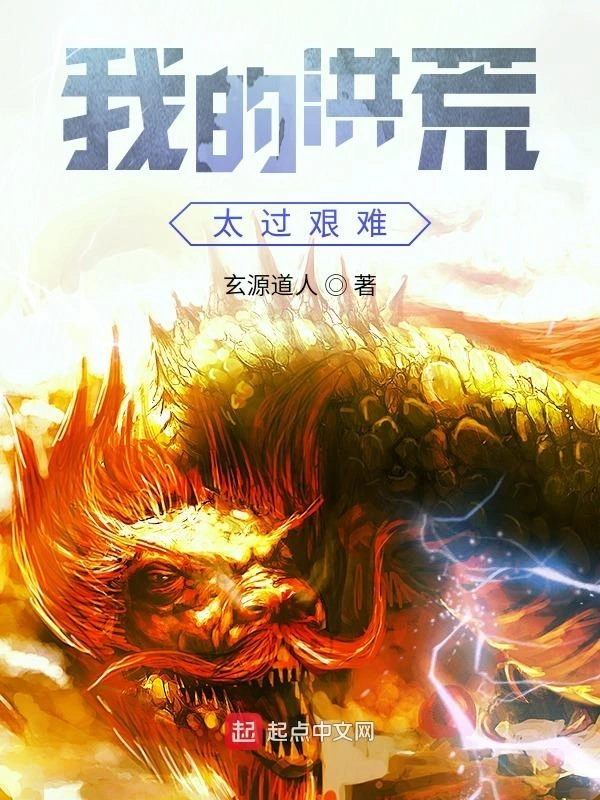
My Prehistoric Life Was Too Difficult
我的洪荒太过艰难
- Status
- Completed
- Length
- 2.0M Words
- Genre
- Cultivation
- Audience
- Male
- Subgenre
- Mythic Cultivation
- Updated
- 3y ago
- Source
- Qidian
Stats
0Monthly votes
30.8kRecommends
90.8kFans
575Chapters
Tags
Synopsis
Reader comments
In booklists 6
Industrial Technology Business Game Foreign Dragon Ball DNF Logic IQ
Theme layout, writing substitution, logical thinking, plot setting Character creation, writing style, word count, updated version, echoing from beginning to end
94Books167Follows1yUpdated
Nursery Kindergarten
The single purpose of this book is to raise seedlings. It recommends good books that are not popular but are not popular.
43Books71Follows1yUpdated
Inkstone Loft
Something innovative!
31Books69Follows10moUpdated
I Haven't Done Much in the Past Few Years, so I Just Read Some Books.
Impressive novel in blurry life
56Books7Follows4yUpdated
My Bookstore
Build it yourself and see, it's okay
47Books6Follows1yUpdated
My Book List
Let me share with you some of my favorites.
10Books6Follows4yUpdated
Readers also read
 Journey to the West: Monkey Brother and I Are Killing Each Other Randomly
 Your Magic Weapon Version Is Too Low!
 Xuanjian: the First Saint Taoist Master
 Cultivation: My Understanding Goes Against the Sky Year by Year
 The Reborn Fashion King
 A Journey to the Heavens Starting from the Conferred God
 Journey to the West Vase
 Fusion of Wolf Spider Genes, Killing Like Crazy on the Russian-Ukrainian Battlefield
 Live Forever as a Cat
 Journey to the West Starts from Xian Qin
 Prehistoric Times: Beginning with Jingwei Reclamation
 Prehistoric: Innate Gourd Vine, Cut into Pieces by Yourself
 Master Fa Started as a Member of the Sun God Cult
 Prehistoric: Ferocious Beasts of Chaos, Establishing an Abyss
 The History of Kunpeng's Works in the Prehistoric Period
 Dagan Stargazer
Come on! There are three treasures in the sky: the sun, moon and stars; there are three treasures on the earth: water, fire and wind; and people have the three treasures of essence, energy and spirit. This is the way of the three talents. The three talents are time and space. There are Yin and Yang, the Five Elements, and the Four Symbols. The three talents are the foundation of heaven and earth and the foundation of the great road. Tao gives birth to one, gives birth to two, two gives birth to three, and three gives birth to all things. Therefore, in the Tao, three is the root of all evolution. ,"" Why put "people" in quotation marks? Many novels nowadays have a very narrow understanding of "people" . Pangu created the heaven and the earth, and exhausted all his power to transform all things. Where did Pangu localize all things? It is the "essence", which is also the "spirit", "physical body" and "mana". The innate gods and demons will transform into Pangu's "innate Tao body". Pangu's "innate Taoist body" has eighty-one transformations. One of them is the "most perfect one" of Pangu's ontology, which is "man". So it is "human" that becomes the state of "human". In prehistoric times, there were "the way of heaven", "the way of earth", "the way of humanity", "heavenly tribulation", "earth tribulation", and "human tribulation" facing the three talents. Emperor Jun, owned by Taiyi, turned into eggs from wetness, and was classified as a demon clan with fur and armor. However, innate gods, demons or innate creatures are all in the form of "human". It's just that no one classifies them as "human race". Only then did Nuwa create humans to complete "humanity" and get a big advantage. But "human race" cannot represent "humanity", let alone all races in the wild. Pangu transformed all things with great compassion, so all things should coexist in the ancient world. Rather than being the only one. That's why there is "measuring calamity". Anyone who wants to dominate one family will eventually fail and turn into ashes. Including Pangu opening up the world, and three thousand chaotic gods and demons blocking the way. In the end, they all died together in the "Enlightenment Tribulation" where everything in the prehistoric world was transformed. The ferocious beast wanted to dominate the family and almost perished in the "first calamity". The three clans of dragon, phoenix and unicorn compete for hegemony, and finally withdraw from the ancient world and become the protagonists of the "second calamity". During Luohu Hongjun's Taoist Demon Tribulation, the demons increased and the Taoist Demons disappeared, and the Taoist Master's demons disappeared in the "third calamity". During the war between the lich and the witches, the witch clan was almost exterminated. Later, reincarnation occurred, and the demon clan shrank into "the fourth calamity". The calamity of deification, the calamity of killing immortals, and the "fifth calamity" of gods seeking to gain the throne. Buddhism traveled to the west and spread to the east. From then on, gods no longer appeared in the world during the "sixth calamity". The prehistoric era is a world where all races are integrated and developed, and the world has its own way. Every race has its own reason for existence, and it must complement the way of heaven and earth. Don't end up constantly saying "the human race is the protagonist of the world" as if there is no need for the other races. They are all monsters and monsters, and they are all bad. Trying to dominate one family will eventually be counterattacked by the world. Let's not talk about it earlier. Let's just say that on the journey to the west, we basically eliminated all the monsters and ghosts along the way. But it also leads to the end of the world. Moreover, after several tribulations, the ancient world was shattered several times, and its potential was almost completely overdrawn. This is the same as the earth, man and nature. Sustainable development is the right way.
It is too straightforward, and when writing about the prehistoric period, one has to dig holes and plot against others. The understanding of the prehistoric period is too one-sided, and the details don't feel right to me. For example, which calamity path recedes and when does the way of heaven come out? There are also vague descriptions of characters and realms. Time is usually measured in the prehistoric novels based on the calamities of the Yuanhui. Days, months, and years are used as time units.
It's not easy to talk about the cultivation process in such specific details. The various hardships of cultivating the Tao are described in detail. Although there are no details, the huge and rigorous construction process of the conceptual model at the abstract level is truly extraordinary. It is not like countless books that only rely on popularity. Brainless hydrology also cannot withstand scrutiny. It briefly brushes over the core parts of fantasy, such as the motivation for monasticism and the thinking process of constructing a knowledge system, which greatly tests the author's imagination and creativity, and makes almost no contribution to the construction, enrichment, and development of Honghuangliu novels. There is confusion and resignation when making a decision between going downstream or standing up, there is confusion when thinking about where to go at the end of the road, there is a tangible sense of responsibility and value when developing a certain future for the ethnic group, there is sudden but gradual development The self-examination with strict logic and the horror from the soul when one realizes that oneself has been unconsciously coerced by the general trend during self-examination... The display of the real inner and realistic dilemmas faced by these seekers of truth is really rare in contemporary Honghuangliu novels. The process of how to overcome the dilemma of the soul is meticulous. Reading the text is like personally thinking about the Taoism. This sense of substitution derived from the power of logic and spiritual authenticity is far from being comparable to water literature, and the pleasure gained from reading is not inferior. Although certain settings are repeatedly emphasized, each repetition is a new consideration under different situations and conditions, making it an enjoyable read. This article is filled with countless vivid details about the origin and evolution of the calamity, as well as the protagonist's own gains and losses, and his thinking about his positioning, especially the protagonist's psychological activities. There are immature parts in the plot and setting, and there are many absurd and unreasonable parts. However, the focus of the narrative on the exploration of monasticism itself is novel and very connotative. Its complexity and logic are far from comparable to similar novels. The language is fluent yet elegant, humorous and measured, and it reads fluently without any discomfort or fatigue. This novel is my favorite among the Honghuang novels I have read in the past three months, and I also think it is the one with the highest local value. I hope the author, Taoist Xuanyuan, will continue to work hard! (Unfortunately, although this novel is brilliant, its flaws are also considerable, and it is not enough to leave a mark in the development history of the prehistoric flow)
In fact, if it is a science fiction novel, this is an upgrading stream with wild theories and the world as the experimental ground. We are only interested in science because we are familiar with it, but in fantasy, it becomes a novel that is boring because we don't know how to cultivate immortality. But the overall story is actually very good-looking. If you really try to understand it, you will feel that each summary and improvement is a sense of satisfaction. The upgrading stream is not just about these, so I think it is really great, and And the feeling of being familiar with the ancient times is very good. The battles are reflected in this book, not only at certain points, but throughout the whole book. The setting of the single female protagonist is also great. The Taoist companion is the one who accompanies you on the road, so there is not much feeling of love, but more of the family affection of companionship. The interpretation of the whole cultivation of immortality is great. It makes people know that he is really cultivating immortals and fighting for the road instead of just pretending to be cool and winning treasures. So for me, this book is the fairy grass. A very good novel, good luck to the author! !
I really disagree with Chapter 378: Benefiting oneself, benefiting others and benefiting the world. {"NickName":"Sleep three times a day","UserId":202781542} Li is just a latent behavior in certain stages, "Curiosity", "kindness", "stability", "struggle", "wisdom", "courage", "confidence", "profit pursuit", "perseverance" These are just obvious and observable existences in the journey And "profit" is only a part of the ideological system and cannot become the core idea. The core idea should be a kind of "learning by doing" existence. Or is curiosity born out of profit? Or kindness, stability, struggle, wisdom, courage, confidence, and perseverance are born out of profit? Although I have never studied these ideological philosophies, I can't explain it but I can feel it. A simple and vernacular metaphor, Lao Tzu, Lao Tzu's core idea is "Tao", Tao can be nature, it can be inaction, or it can be like water. Although you have been fiddling with it for this "benefit" throughout the chapter, you can't even cover the "Xuanyuan Avenue". How can it become the core? Isn't Xuanyuan Avenue also the crystallization of wisdom and thought? out out out out of 100, and being able to influence part of the thinking or part of the thinking system, but it cannot represent all the thinking system, is unquestionable. To achieve enlightenment, you need to have a complete thinking system, and the core of this thinking system is the key point, and this core should be consistent, which means that no matter the past, present or future, it is infinite and there is no upper limit or lower limit. In fact, this core is also a kind of power, integrating all kinds of power without limits, such as the original, everything comes from the original, such as creation, etc. It can also be said that your core is the "Xuanyuan". There is no way, because people have a way. What is the Xuanyuan? The Xuanyuan is the original idea of building the core framework of the Tao Law, and the effect you want to achieve. The Xuanyuan is the crystallization of your thoughts, wisdom, path, will, perseverance and soul. The effect of this core "Xuanyuan" is - the power of the Xuanyuan. Just like the core of the framework of the Great Law is the power of the soul, then the core of the thinking system is "I". This is a kind of "freedom" that transcends the ego, ego, and superego. When you realize that the power of the soul comes from will, Tao heart, and thinking, you are already controlling the power of the soul. This thinking is a clear goal of what the "Xuanyuan" is, what you want to do, and what effect you want to achieve. This is why this power of the soul is the core of the law of the Tao. The mind controls the power of the Tao, and the mind controls the direction of the soul. This avenue is the "Xuanyuan" avenue, the avenue of Xuanyuan, and the power of Xuanyuan. Just like the Western Fantasy God said about the creation of the world on the Seventh Day of Chaos, and later generations borrowed its power and called it "the power of God". This ideological system just draws a circle for itself. When you are on the road to a set goal, you will always summarize some ideas, and when there are too many ideas, it will become a thinking system.
[The Way Never Walks Alone] This book has several problems, which does not prevent people who like it from still liking it. The only lingering impression left after reading this book is the word "taoist couple". Taoist lovers are not the dependence of vines and trees, nor the entanglement of vines and vines. Instead, the two big trees have grown together through wind and rain, and watched the higher sky and clouds together. Grow together, depend on each other, and move towards the future together. The Tao—does not walk alone.
Hasn't it been updated yet?,,, I'm waiting at this time every day
For those who have been reading books for more than 10 years, this book can be read. The main reason is that it becomes boring the more you read it. After subscribing, more than 80% of the chapters can be read in about 10 seconds. Also, I didn't finish the book. I gave up the book after reading Chapter 159 and couldn't stand it any more. Please try your best.
Slowly, it started to take on the flavor of a prehistoric novel. In fact, our Chinese mythological novels have something very distinctive about our national culture. are to "become an immortal and obtain the Tao" and "to attain the Tao and become an immortal". There is a difference between the two. The prehistoric novel writes about "becoming an immortal and attaining the Tao", because "in the prehistoric era, great people roamed the earth, and golden immortals were not as good as dogs." Immortals are easy to become, and most of them are born with the ability to live forever. Therefore, we must pursue a higher level of "Tao". Cultivation novels are about "achieving the Tao and becoming an immortal". Different "planes" and "worlds" have different upper limits, so there is "ascension". And this "getting the way" should actually be said to be "getting the method", the method of cultivation. Then they ascend one level at a time in order to be able to ascend to the "immortal world", "become an immortal", and finally "immortal". This is more like our society. The "rich" have no worries about food and drink, so they pursue spiritual civilization more. The "poor" can only find food and drink in the "spiritual civilization" pursued by the "rich". (Maybe this metaphor is inappropriate) Therefore, it is difficult to write Honghuang literature, and it is difficult to grasp the sense of proportion. It is written in what the "rich" want to read. The "poor" feels "not enough". In fact, we have too many "poor" and "the gap between the rich and the poor is getting wider and wider." For Riba people under the snow in the spring, this is a problem we have to consider. This has a lot to do with our own culture, our Taoist thought, Confucian culture, and various schools of thought. It is very different from the West. Our dragons can fly without wings, while those in the West need wings. Our "gods soar into the clouds and ride on the mist." The "Superman" in the West wears underwear, makes a fist with his right hand, and flies lying down like a bullet. This is the difference between Eastern and Western cultures. Our culture is more emotional and idealistic, so we are a "family" culture. Western culture is more rational and materialistic, so they are a "me" culture. That is to say, we pay more attention to the collective, while the West cares more about the individual. , In fact, Honghuang novel is a novel about "seeking the Tao and obtaining the Tao". First of all, we need to know what "Tao" is? "Tao" is "one", "Tao" is "being" and "Tao" is "empty" or "nothing". So "something comes from nothing". "Nothing" means "chaos" and "emptiness", and "you" means "Hunyuan" and "Tai Chi". Therefore, "Wuji gives birth to Tai Chi, Tai Chi gives birth to Liang Yi, Liang Yi gives birth to Four Symbols, and Four Symbols gives birth to Bagua." That is, "Wuji, Tai Chi, Liang Yi, Three Talents, Four Images, Five Elements, Liuhe, Seven Stars, Bagua, and Nine Palaces". It is the process of "0 to 9" and "9 to 0". No matter you practice "Five Elements or Bagua", you must eventually achieve "Hunyuan" and then "transcend chaos". Just like our life, no matter you are "rich" or "poor", no matter how you live or what you pursue. It's all "from birth to death", "from beginning to end". It's just that in this process, what kind of "Tao" are you seeking, and whether you have obtained the "Tao". Only you know this. In fact, our culture is very advanced. People thousands of years ago knew that Hongmeng was chaotic and void. Nothing. It is "wu, emptiness", and then there are "Pangu", "you", "wuji", "Pangu axe, Taiji string". Then Pangu created heaven and earth, "Tai Chi", "Liang Yi" and "Four Symbols". Then there were "all things", and in the end all evolution returned to ruins and returned to the chaos of Hongmeng. Waiting for the next chaotic Pangu to look at the world again, and so on. In fact, as in the West, the universe has a point, then a big bang, and slowly expands, in the process producing various material "all things". Then it expands to a peak and then starts to shrink, and finally shrinks to a point again. Then it explodes and expands, shrinks and returns to the original point, and the cycle continues. This shows that our culture is tenable, tested and logical. Therefore, whether it is "Ancient Literature" or "Xiuzhen Literature", you still need to refer to it appropriately. Properly understand the "Book of Changes", "Tao Te Ching", "Huang Ting Jing", "Huang Di Nei Jing" and "Huainan Zi" including Taoist rituals. Combined with some of our classical masterpieces, mythological novels, and folk stories. Only in this way can the novel have flesh and blood, a sense of three-dimensionality, and withstand logical reasoning. It can also help the "rich" get their "spiritual" needs and the "poor" feel "full". It can also carry forward and spread our traditional culture.
This is what the fuck is called a novel, this is what the fuck is spiritual practice, this is what the fuck is the real struggle between the great ways, I have been reading books for fifteen years, and I have read a lot in the prehistoric times. This book is the best, even if it is not as popular as Gou Ge, but it does not prevent me from fully agreeing with the views of this book.
This introduction is outrageous. Wasn't the Dragon Clan strong during the prehistoric times?
Summarize the age of the protagonist (please improve it)
I read a book and someone said that one hundred years is too slow, so I got the idea of calculating the age of the protagonist The previous numbers are chapters, and the content of 54 chapters so far is: 18 Tens of thousands of years + one hundred years + several decades 19 Two thousand years + nearly ten thousand years 21 Thousands of years 22 I don't know how long it has been 23 One hundred years + one thousand years 24 Thousands of years 29 Thousands of years 31 Three years 32 One hundred thousand years + thousands of years 36 Two thousand years 39 Two hundred thousand years 41 One hundred years + five hundred years 42 Decades 46 Tens of thousands of years I counted nearly ten thousand years as 9,000 years. I don't know how long it has passed and counted it as ten thousand years. Thousands of years counted as 8,000 years. Tens of thousands of years counted as 80,000 years... The total adds up to 508,863 years. The protagonist has lived for more than 500,000 years. The first tribulation of dragon and phoenix is calculated as an immeasurable tribulation. Infinite tribulation = 50,000 Yuanhui, and one Yuanhui = 129,600 years. The protagonist has experienced almost 4 Yuanhui. The protagonist was not the first to be born in the prehistoric era, and can only be counted as the second batch. Therefore, I don't know how many years have passed before the protagonist was born. Now the Dragon Clan has just been established, and preparations have just begun to kill the ferocious beasts. It is still early for the three tribes to weaken...
When I saw Taishan Fengchan, I really couldn't help complaining. When the protagonist was fighting with Luo Hu, he disliked the dragon clan and backed away. He forgot that he was a member of the dragon clan. Without the luck bonus of the Dragon Han Tribulation, can you use your current achievements? For those who forget their righteousness, Human Emperor Fuxi was granted Zen status at Mount Tai. You have forgotten your identity as a human race in your previous life. Have you protected the human race from its birth to now? Have you ever been educated? For the sake of luck, I didn't hesitate to threaten Fuxi. I'm just so hehe. I forgot my ancestors and betrayed my ancestors.
The Dragon Clan was not a soft persimmon in the prehistoric times.
What are you writing about? ? ? Innate gods and demons are born as heavenly father and earthly mother. Return to the Dragon Clan, are you stupid? According to your logic, the Sanqing, Nuwa and other innate gods and demons are all monsters, and they are all under the control of Taiyi.
I hope that after the human race is born, the pig's feet will not instantly become intelligent and turn into nannies. Like other prehistoric novels, it is too disgusting. Modern people believe in the theory of evolution: humans are transformed from monkeys, and have nothing to do with being shaped by almighty forces using mud and water. Hundreds of millions of years have passed on a dog! Baffling.
It's boring to eat, but it's a pity to throw it away. Most of each chapter explains why the protagonist does what he does
To be honest, the protagonist feels like he is touching Pangu's body step by step, not sparing any inch of skin and flesh. So the question is, what kind of blessed land has Pangu's asshole turned into?
I was thinking that even though the protagonist, being a Daluo Jinxian, could not change his fate of joining the Dragon Clan, how could he have the confidence to change the fate of the Dragon Clan just because he is the protagonist?
The author says that the protagonist is a dragon. The author says that the protagonist does not want to join the dragon. The author says that the protagonist has not joined the dragon yet. The author says that the protagonist defaults to being a dragon. I find this behavior of the author repeatedly slapping himself in the face very funny.
Reading this kind of self-talk novel makes me tired, and sometimes I can't see what the author wants to express.
The protagonist is not a dragon at all, but an innate demon. The so-called dragons are just people created by the ancestor dragon himself. This protagonist is really a fool and just thinks of himself as a member of the dragon clan.
Don't brag, what you're writing about is a primitive man, a pig's trotter, who traveled through the past and built a small hut, and then said that I practiced cultivation and I realized it. That's it. Illiterate people are illiterate. The author's thinking is okay and his writing is okay. If cultivation, runes are of the world, words, refining qi is industry, refining alchemy is chemistry, formations are programming, you don't know anything! You have never taken advantage of me, yet you still have enlightenment and a hammer
Reviews of around 200 chapters! ! !
The early stage was so good that I even wrote a review praising the author for being awesome! In the next second, the style of painting changes drastically, and the protagonist looks like a different person! I thought the protagonist joined the Dragon Clan to better help the world, but this is the result? ? ? ? ? ? ? ? ? Strive for world supremacy? Be the first to preach? Bah! ! ! ! ! ! Since the protagonist has the ability to transform chaotic energy into innate spiritual energy, if this spreads among the Dragon Clan, and the protagonist enlightens the Dragon Clan to transform dragon veins and water veins, the protagonist will definitely be the first to become a saint! ! ! After such a huge achievement in maintaining the world, even if the protagonist does not attain enlightenment, Heaven will make the protagonist a son of destiny, and he will be given the Purple Qi of Hongmeng to become a saint immediately! ! !
The plot is okay, a bit draggy, but the problem is not big, and the protagonist's character is well developed. It's just that I don't understand something. Now I'm reading chapter 76. Why is the protagonist so powerful? After practicing Daluo Jinxian, he is still like an ordinary weakling. It seems that he will be killed instantly when he fights with Zulong (the strongest magical power can only be used for a month, and it is not known whether he can block the attack of Zulong. This is the author's original words. Defeat after one month is no different from being killed instantly, right?). I don't expect the protagonist's strength at the beginning to be invincible in the world, in seconds, but can't he be on par with Zulong Hongjun or just a little bit behind? Can't the plot advance if his strength is equal to that of Zu Long Hongjun? He has always emphasized that strength is the most important thing in the ancient times, and he also wants to change the fate of the Dragon Clan, but without the strength, how can he have the right to speak against the Ancestral Dragon in the Dragon Clan? If he has no say, how can he change the fate? The protagonist is not even the top powerhouse in the prehistoric times. Without the strength of Zu Long Hongjun, he will not be able to protect himself from the evil beast catastrophe. What a change? And if at this point in time, he has not reached the level of rivaling Zu Long Hongjun, according to Zu Long Hongjun's cultivation speed, what else can the protagonist, an ordinary and even useless Earth Dragon (compared to Zu Long Hongjun), hope to do? What do you rely on to catch up from behind? Protagonist halo? Is it logical? Or should we wait until both of them fall before catching up from behind? It has been emphasized that the protagonist has great potential, but what is the use of that? No matter how great the potential is, can it be as great as Zulong Hongjun? Really speechless
It takes 200,000 years to become Daluo. What else is difficult?🤫
It's so painful. I thought there were no emotional scenes. Why does it still have a female protagonist when it's already at this point? ? ? It's normal for Fengyun to be together since birth, but the heroine is different, she's very unexpected! Although the structure is clear, the plot is smooth, and the logic of the male protagonist's spiritual process is perfect, the female protagonist is too abrupt! Help, the author really writes very well and is worth watching, but I really can't stand it anymore. The emotional scenes stuck to me like I had eaten a fly. It is reasonable to have no cp. There is absolutely no need for emotional entanglements. Alas
Brother, this is a primitive place. If your efforts are useful, why should you follow suit?
It's very watery, and there is no sense of substitution. The protagonist is innately sacred. There are no genius treasures in the place where he was born. Hongyun doesn't even have accompanying spiritual treasures, but they have Fire Cloud Cave. As for the protagonist, there are two accompanying spiritual treasures. The birth environment is described as ordinary water and ordinary bamboo. It is recommended not to read it.
Every time I see him transforming into a human form, I don't understand why he has to change back to his original form to fight at the critical moment of the fight. It's all you. Your strength has not changed. Why can you make a comeback by changing back to your original body? The nature of your strength has not changed. If you can't beat it, you can't beat it. You have to change back to your original body in a fight. Doesn't that mean you can't even control your own strength?