


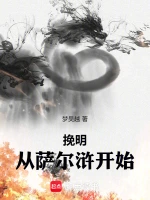
Restoring the Ming Dynasty, Starting at Sarhu
挽明从萨尔浒开始
- Status
- Ongoing
- Length
- 2.6M Words
- Genre
- Historical
- Subgenre
- Song-Yuan-Ming Dynasties
- Updated
- 8d ago
- Source
- Qidian
Stats
952Chapters
6Votes
27.2kRecs
121.5kFans
Tags
Synopsis
More by this author
In booklists 2

History Collides With Reality
Selection, contemplation, minor consultation, investigation, union with the Dao.
16Books37Follows4yUpdated




My Personal Taste: No Vulgar or Tasteless Reads
No brainless harem fantasies. No mindless wish-fulfillment. No infantile protagonists who make everyone around them seem stupid. I like books with originality and something to say. The characters feel like real people, each with their own depth. My tastes are niche, and I refuse to compromise. I hand out leaderboards to authors when I feel like it. That’s just how I roll. I only recommend books I’ve read. I won’t recommend anything I haven’t. Having the protagonist become emperor for no reason
89Books74Follows4yUpdated
Readers also read
 Great Ming: His Father Is Useless, So He Must Summon the Founding Emperor
 Seizing the Direct Descendant in the Red Mansion
 Germany: 1914
 A Literary Master in Ancient Greece
 Forum Troll, Romance Master
 The Great Bandit
 The Age of the Yellow Sky
 Hong Kong Films: In Wo Hop To, Uncle Deng Begs Me to Take Charge
 I’m Not a Suit-Wearing Thug, I’m a Chameleon Actor!
 The Prosperous Longwan Era
 Northern Qi: My Father Is Emperor Wenxuan
 The Taiping Heavenly Kingdom, 1854
 The Chongzhen Emperor Has a Gun
 The Struggle for the Ming Throne: Who Will Rule in 1644?
Reader comments 19
Google Translate
I feel that this is a relatively realistic historical time travel novel at the moment. Other novels about time travel feel quite natural. Pig's Foot traveled through the past and was surrounded by loyal ministers and righteous men. As soon as he traveled through the past, he immediately clicked on the technology tree and entered the industrial age directly from the feudal era. The war was smooth and smooth. After occupying the whole country, these famous ministers and generals will not be corrupt because of their high position. In fact, conquering the world is just the beginning. How to govern the world is the key. This is also the main theme of this book until the middle period. When pig's feet take over the world, they often find themselves facing a more powerful and indestructible enemy - the degenerate upper class. Except for a few who adhere to their ideals and beliefs, most officials (whether they are part of a bureaucratic family, or are people who have stepped up from the common people to the upper class) once they have power, they will spare no effort to benefit themselves and their families. People in ancient times may not be as smart as time travellers, and none of the founding kings of ancient times were extremely smart, but in the end they still compromised with the bureaucracy. Even if various reform systems were implemented for a while, when the most courageous and prestigious implementer died, the reform would cease. Now the totalitarian politics promoted by Pig's Feet is being violated by the people below. Officials at all levels collude with each other. Corruption spreads across the country. All kinds of burdens are placed on the people at the bottom. It can be said that it has reached the most dangerous time. I am very curious about how Pig's Feet can save Daqi who is on the verge of collapse.
At the end of the Ming Dynasty, Wei Zhongxian and others were definitely not good people, and the Donglin Party was not much better. When a country is about to perish, there must be evildoers. As far as the Ming Dynasty's bureaucracy is concerned, it must be unjust to shoot all officials. Every two officials who are pulled out and shot will definitely slip through the net. What was lacking in the late Ming Dynasty was not good policies but execution ability. Where there were policies at the top, there were countermeasures at the bottom. For example, if the emperor asks for a tax increase The eunuch may attack the landlords, or he may accept bribes and deduct exorbitant taxes on the common people. It is basically impossible for civil servants to attack landlords (this does not exclude a very few honest officials who betray the class) Some conscience cherishes famous civil servants for fear of provoking a popular uprising. It is possible that no taxes can be collected, but more civil servants will deduct exorbitant taxes and miscellaneous taxes on the common people. With this kind of execution, the bureaucracy is rotten, and trusted eunuchs may be corrupted by money. The Little Glacier was just the straw that broke the camel's back! During the disaster, who will take care of the hungry people who are dying of hunger everywhere? For the sake of political performance, an official may not report the disaster to the court. In his heart, his official career is more important than the lives of countless hungry people! Even if the report was reported to the court, it would be a big deal but not a raindrop. There was nothing that could be done, and the court had nothing to do. Even the pay of the top soldiers was in arrears. How could there be any surplus food to take care of the victims? The landlords do have a surplus of food, but the court cannot attack the feudal lords, gentry and landlords! It would be a great kindness for them not to drive up food prices at this time. As for the victims, they will go hungry! The rogue bandits in the late Ming Dynasty cannot actually be regarded as peasant uprisings. They were completely hungry people who were about to starve to death. They were unorganized and undisciplined. In the beginning, they could only be regarded as attacking landlords in order to survive. They could not be eager for too much, grabbing money, food, and women. This was the most realistic portrayal of the hungry people's army in the late Ming Dynasty. Therefore, tens of thousands of hungry people were often exterminated by hundreds of thousands of officers and soldiers. The main reason why the government and army were able to defeat the government and the army again and again in the later period was that as the Ming Dynasty's finances further collapsed, not to mention military pay, it was difficult to even eat. Military discipline was further deteriorated, and they began to rob homes and homes. They were no different from bandits. The civil servants sent by the court could not control these officers and soldiers who did not have enough to eat. Mutiny warning jpj. After the hungry people robbed the landlords, they had enough to eat, and they had experience in fighting against the government and the army for a long time. Many of the officials and soldiers deserted, and even became the backbone of the bandits after mutiny. Chongzhen also had an unshirkable responsibility and did not fight the war. He always commanded blindly and randomly in the rear. He was too eager for quick success and instant benefit, and always wanted to end the war as soon as possible. But someone who doesn't know history might do the same thing. After all, the Ming Dynasty's finances could not make ends meet and needed to cultivate their health and rest. The only way to survive in the late Ming Dynasty was to let the landlords pay for themselves to organize groups to fight against the rogue bandits. This was the only way. The landlords had money and food and the class conflicts with the rogue bandits could only sustain their lives. In the end, the landowners' regiment transformed into warlords, but they couldn't lose their tail. At the end of the Ming Dynasty, it was really a bad era!
The Ming Dynasty was hopeless at that time. At most, the emergence of powerful figures would delay it for one or two generations. The best way is that the Ming Dynasty is gone and you establish new rules. Otherwise, those corrupt officials in the Ming Dynasty, Jiangnan, maritime merchants, and guards. If you want to move, you are actually making enemies of them. It is better to be those people who were bold to their own people and useless to outsiders. Moreover, the last years of the Ming Dynasty were really lazy. No one was powerful, and none of the rebels was powerful. Therefore, it was the most incompetent period in the dynasty. In the last years of the Tang Dynasty, Han Dynasty, Qin Dynasty, or the Five Dynasties and Ten Kingdoms period, it was impossible for the Qing Dynasty to enter. The Qing Dynasty was also lucky and had several talents. It was lucky when it encountered the most useless Central Plains. In other periods, it would not be possible to enter.
Ahem, it's going to be developed. . . With Lao Wei's help, there will be at least one governor on three sides in the future. . . Historically, at least during the Wei Zhongxian period, the Ming army was still well paid. When he arrived at Chongzhen, he had no money. What's the use of Mingjun? He can't make money and be fooled by the Donglin Party. How could a dominant civil service power survive? Corrupt officials are everywhere.
The late Ming Dynasty was an era of comparison. In the late Tang Dynasty, any vassal town could beat Hou Jin into a dog.
The struggle between the two lines, however, from bonus incentives to piece-rate wages, to the promotion of the capable and the inferior of the mediocre, the methods of differentiation and disintegration are so clever. The restorers are not fools.
The demise of the Ming Dynasty and the demise of the Song, Qing and other dynasties is an inevitable law of history. As long as Confucianism is dominant, it will not survive more than three hundred years. During my time in the Great Zhou Dynasty, Confucianism only stood in a small space in the classroom, so the Great Zhou Dynasty had a history of 800 years.
^The author shows the readers the most powerful Ming Dynasty armies such as Bai Gan, Qi Jun, and Liao Zhen, which are the most bloody and courageous armies of the Han Dynasty. He hopes that the Kaiyuan Army will inherit the military spirit of these powerful armies, inject the organization and discipline of the modern army, and sublimate it in bloody battles with the Tartars. He wrote a book in the late Ming Dynasty that surpassed his predecessors. According to my reading taste, this article is already a masterpiece
I've read 300 chapters and it's a generally good book. I won't dwell on the details (I personally think Jin Yuji is quite poisonous in some places).
The demise of the late Ming Dynasty was not a military issue. Why do so many people think that defeating the Manchus and annihilating them would solve the problem? !