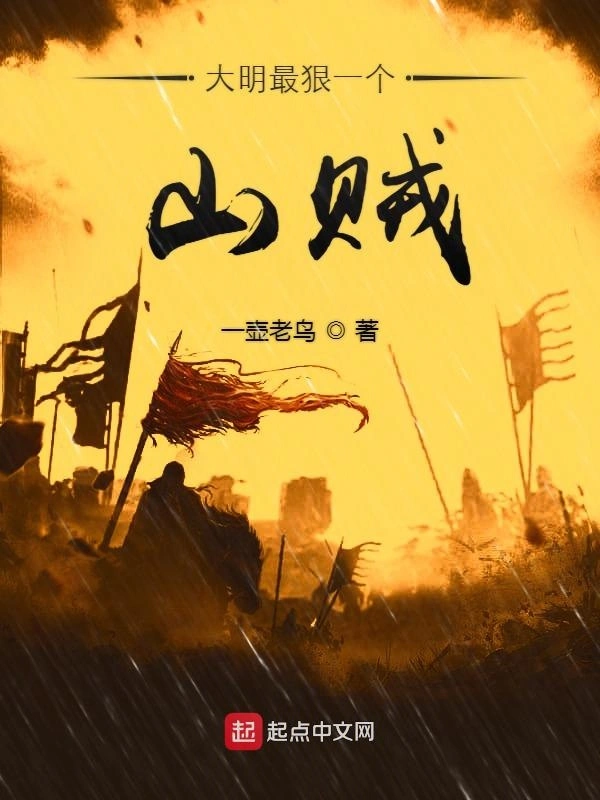
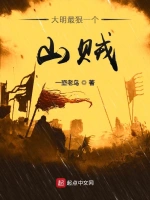
The Most Ruthless Bandit in Ming Dynasty
大明最狠一个山贼
- Status
- Ongoing
- Length
- 1.3M Words
- Genre
- Historical
- Audience
- Male
- Subgenre
- Song-Yuan-Ming Dynasties
- Updated
- 4y ago
- Source
- Qidian
Stats
0Monthly votes
14.8kRecommends
42.4kFans
496Chapters
Tags
Synopsis
Reader comments
In booklists 2
Readers also read
 Fu Ming 1627
 Red Mansion Xiaoke
 I Am a Tyrant in Nanming
 At the Beginning, Please Ask Chongzhen to Abdicate!
 Qingdu Shanshuilang
 Da Liu Bandits
 My Eldest Brother's Name Is Zhu Chongba
 Disciples of Fangcun Mountain, Traveling Westward
 I Have a Dark Secret Martial World
 Ming Dynasty Started with Caution
 Strategies for Revitalizing the Northern Song Dynasty
 Invincible Righteousness
At present, this is the historical novel that suits my taste best. The IQ of each character is above the line, and the protagonist has a distinctive personality. . . Being strong in force was a must in the environment at that time. It was quite normal to know a little bit about all aspects but not in depth. I also understood some simple principles. My favorite content is still about construction and farming. War is about logistics. This applies equally to ancient times and modern times. Some novels are either at war or on the way to war. Construction of internal affairs is skipped. I really hope that the author will spend more words on internal affairs, construction of farming. After all, historical novels cannot escape war, so there is no need to emphasize it. There are also some correct contemporary thoughts of the protagonist that are adapted to the times and they are integrated with the ancient people to save those hard-working ancient civilians, at least let them gain something from their work and avoid being exploited for life. After all, history is so fucked up, I hope it can be realized in the novel. The author did a good job in naming the combat troops. He used ancient names such as "Xianden" and "Shifang" inappropriately. What I can't stand is that in some novels, the first, second battalion, platoon, and brigade are used. This is still good. Some directly copy the modern military rank system, and then the army quickly accepts its use. The supporting characters don't have any objections. I just quit when I see this kind of thing. Isn't this afraid of causing acclimatization? The soldiers don't know a word of Chinese characters and can't even write their names. Suddenly these are given to them. Are you sure they can still find their boss? Having said so much, hurry up and put it on the shelves! 😍😭🤭🤓
Dancing on the tip of a knife, he is a ruthless person
Although there are still some coincidences, the links are intertwined and the logic is self-consistent. From the beginning of time travel, the village was forced to live under the fence of others, and then Mengjiazhuang had a foothold and had no time to farm and cultivate and make a living. Like a young child in a troubled city with a lot of money, he was besieged on all sides, but he was able to handle it with ease, but the disadvantage was that he was full of wits and ruthlessness was not very outstanding. Looking forward to the follow-up performance 🤭🤭🤭
If you don't have the strength, it is recommended to follow Li Zicheng's example, coerce the people, and strengthen yourself. As long as you can win a few games, the foundation will be established. At this time, the best strategy is to re-consolidate the foundation.
I think it's well written and I read every chapter without skipping a beat.
Good reading, good book👍I have been following this book and look forward to continuing to update it until it is finished. Thank you, the author for your hard work! 🌹
Take your time and fatten up! I'll kill it for you😁😁
This is a buried fictional historical novel. So far, it can be said that there are very few poisonous points, the logic is very reasonable, and it is more pleasing to the eye and more immersive. Personally, I think it's above average.
The author thinks that the protagonist should not pursue a constitutional monarchy. The country is too decentralized and merchants and capitalists may take advantage of the loopholes. I think the protagonist can be given fifty or more than a hundred children, and then when they are more than ten years old, they can be kicked out of the palace for training. If someone is dead or disabled, then he returns to the palace and gives the protagonist an accurate evaluation. Then the protagonist asks the children, and then combines the evaluation with the children's words, so that the result can be given, and the protagonist can choose the prince without letting outsiders know. Even if they are relatives, they are called closed education to the outside world. This is the real ruthless person. He is ruthless to foreigners. He is also ruthless to the children of the domestic landowners, wealthy merchants, salt merchants and maritime merchants, and the bandits and bandits. Only those who can protect the prosperity of a dynasty are ruthless people.
I can't stand it anymore. The author writes that the protagonist is too kind to the common people. It was unreasonable to let the people disrupt the formation last time. The entire army had been wiped out on the real battlefield. You took the risk this time to save the people. No matter what the outcome was, it was a bad start. How will your subordinates lead an expedition alone in the future and face similar situations? Should we let the people rush into the formation and disrupt the formation? Should we let the people rush to the city? People are using people as bait, why should they go and rescue them? Isn't it hard to explain if I don't save him? This kind of behavior of putting invisible shackles on the army is too stupid. One general can make thousands of bones dry up. Ending the troubled times is the greatest blessing to the people, not the kindness of women in troubled times.
I guess I read all the articles about the late Ming Dynasty, and what I've been reading on Douyin recently are all about Mingfenqingchui. To be honest, I'm not a Ming Dynasty fan, I just like to read this period of history. The Ming Dynasty was terrible, and its demise was not unjust. Especially those people in Nanming were like shit, but they definitely didn't like the Manchu and Qing Tatars. Those Qingchui people on Douyin really don't want to show off. I asked them why the Manchu Qing Dynasty didn't have even a Han queen in its nearly three hundred years of history? Why is there a wicker edge? Damn, they don't regard the Han people as their own people at all. These slaves are still trying to whitewash their masters. The Manchus and Qing Dynasties have always regarded the Central Plains as their colonies, which is no different from the Western powers in the late Qing Dynasty. This is why the Tatars who lost their territory in the late Qing Dynasty don't feel bad about it anymore. They are still trying to whitewash their names. What is there to whitewash!
Everything else is good, but worshiping Erye Guan is a bug. There should be no belief in Erye Guan at this time. The belief in Erye Guan really appeared in the Qing Dynasty. Hundreds of military generals and sages, including the chief priest, were abolished in the martial temple, and only Guan Erye, who could not even enter the temple, was worshiped. Only then did the belief in Erye Guan appear. As for why the Qing Dynasty did this, well, everyone who knows how to do it will understand.
The most important thing is to reform education and enlighten people's wisdom. Ignorance and ignorance are both sources of disaster. You can collect mathematics, physics, chemistry, geometry, astronomy, biology, geography, economics, sociology, logic, and original data to build a framework. Overseas trade, overseas colonization, and the steam engine industrial revolution. Throughout the 18th century, educational conditions in Prussia continued to improve; their prototypes were designed to spread the concept of obedience linked to doctrine, and this ethos began to waver at the end of the 18th century. The shaping of the education system can be traced back to earlier times. In 1695, the Pietist leader August Hermann Fulankai established a school similar to an orphanage for the poor in the city of Halle in the Duchy of Magdeburg under the rule of Hohenzollern (converted from the Archbishopric after 1680). In 1697, another "Latin School" was built in the city of Halle, where professional teachers taught basic courses, including Latin, Greek, Hebrew, history, geography, geometry, music and botany. These schools established in Halle have ties with Pietism: they were originally established with donations from Pietists, aiming to spread their religious teachings while educating them In 1717, King Frederick William I issued a decree to implement compulsory education in the Hohenzollern area. About 2,000 schools were ordered to be transformed according to the model of Halle schools, some of which were completed. The Pietists introduced professional training for teachers and a standardized certification process and popular science textbooks for primary school students; they also began to divide the day into different periods for student learning (initially introduced in Halle). In the 1820s, Prussian civil servants, priests and officers had to receive at least two semesters of education at the university in Halle (it became four semesters in 1729). The University of Königsberg also had the same role. In the 1840s and 1850s, the educator Johann Julius Hecker founded several schools for poor children in Berlin, and their teachers also came from the normal school Hecker established in Berlin. A practical high school was also established in Berlin, catering to the lower and middle classes. The poor in remote areas like East Prussia have specialized religious personnel to distribute faith manuals; Polish/Lithuanian speakers In a decree (Generallandschulreglement) in 1763, Frederick II established the Prussian primary education system. This decree, implemented by Hecker, introduced an eight-year compulsory basic education (for both boys and girls) in all schools financed by state taxes for students aged 5-13 and 14 years. This system is called the Volksschule, and the courses it arranges include not only basic reading and writing, but also music and Christian studies. Religious courses are closely connected with the church and the state, aiming to cultivate the so-called "spirit of obedience", "discipline" and "loyalty to the king." Interestingly, math courses are not compulsory (meaning they are not free), and parents need to pay extra to learn this course. At the same time, the state also specifically funded the construction of schools, so schools were also established in rural areas one after another, and the results were impressive. For example, two rural schools in the Electorate of Brandenburg enrolled 1,200 students from 1777 to 1794.
This book was a pleasure to read. The characterization is very good, especially that old man Huang and that one. It's not like some books are all the same except for the pig's feet. I also like the chapter about the big-headed fish, it's very down-to-earth, but also very refreshing. The author's writing skills are very solid, not ordinary, and only vernacular writing can show the author's skills.
Other aspects of the protagonist's writing are pretty good, but the issue of female heirs in the harem is too slow. As the overlord of one party, how can there be less women? The most important thing is that the heir must have at least five sons. Otherwise, in the eyes of your subordinates, if something goes wrong with you, who should they turn to for their wealth? At a young age, it is said that this is the foundation of the country. At a young age, at home, it is said that this is the inheritance of the family. The protagonist will definitely unify the country in the end. Mongolian women in the north are also indispensable. This is a political need. Jurchen women are also indispensable. This is also politics. It means that the protagonist who has ascended to the position does not need any emotions. All he needs is to stabilize the world and so on. Without the protagonist, his subordinates have already settled things for him. I think the historical hegemony novel is a hero, a hero who aspires to the world! Watching your children flirting and flirting every day under your hands means you are not calm enough. Don't you find it disgusting in the eyes of outsiders? The emperor is a lonely person, so how can he show too many emotional needs to the outside world!
It's better to give a notice if there is no update. But it's because I'm taking a leave of absence or I haven't been able to update for a while. I have to say something. I thought I was going to cut you off from reading another chapter, and then I didn't update it for a few days. . . . .
I had originally uninstalled the Qidian app, but found that the books on other websites were too rubbish and could not be read at all. I was speechless, so in the end I had to install the Qidian app again.
The pace is too fast. Yesterday I just fell out with bandits, today I am fighting an officer again, and tomorrow Shanxi merchants will come again... The enemies come one after another, without even kicking them. Is the efficiency of ancient transportation and information transmission really that high?
😥 I don't understand why we should give such good treatment to historical figures. Being awesome in the future is a matter of the future. If you lose your original trajectory, you may not be able to become an awesome person. And if you give the enemy good treatment, your subordinates will definitely feel uncomfortable.
He was willing to be killed and dared to pull down Jian Nu. He did not complain for nothing, but had an iron-blooded and benevolent heart. Come on author, persistence is victory.
I still want to read it in the front, but I can't accept it in the back. It's nothing more than advanced farming and water conservancy. Guns, steel, castings and infrastructure are all products of the industrial revolution. It's the end of a barren feudal dynasty, with internal and external troubles. Where does the economic conditions and mature manufacturing base come from? If you can complete one transformation, you are already dominating the world. Alas, although it is a novel, you don't need to take it seriously, but if you feel it is too exaggerated, you can skip the process and read the end of the book.
Good writing. Keep it up, you should be able to support your family.
As long as you don't go in, it's definitely a good book
The book is good but updates are too slow. Maybe the author is a little hasty in typing and there are many typos. I hope I won't read it and can persevere.
Yeah, the writing is okay, the bandit style suits my temperament 🤓
There are still some shortcomings, but compared to some old-fashioned stories of slowly farming under the guise of officers and soldiers, this book is refreshing. The protagonist directly robs, and if you don't accept it, you will rebel. If the emperor wants to kill you, then rebel, and the rebellion is all about recruitment. What's even more rare is that the plot of the drama here can be written without making people feel stupid. It's considered food and fodder. You can take a look.
The title of this book could be changed to "On the Son of a Son of a Gouda". In each chapter, this word is used several times to beautify the protagonist, which is interesting.
Didn't the author know about the weapons at that time? Can a three-eyed gun shoot loose bullets? At that time, the Ming army generally used French cannons.
Author, I think we should raise the bandits to respect themselves, first serve as officers and soldiers to defeat rogue bandits, train soldiers to occupy territory, bribe civilian officials, and give some credit to others. Like the protagonist, he feels that he has offended everyone, including the bandits, the government, the gentry, and the Manchus. It's a bit too frivolous. At this time, the protagonist has almost reached the 17th year of Chongzhen.
The biggest shortcoming of this book is that the protagonist is too perfect. Basically, if you think of it, you can make it immediately. Too taken for granted. I feel like it would be much better to add a system here, and it wouldn't be too abrupt when something with a big impact appears. This will also make the majority of viewers feel comfortable. In terms of writing style, it is considered a masterpiece. However, there are some minor flaws in the plot. I feel that nothing can trouble the protagonist.