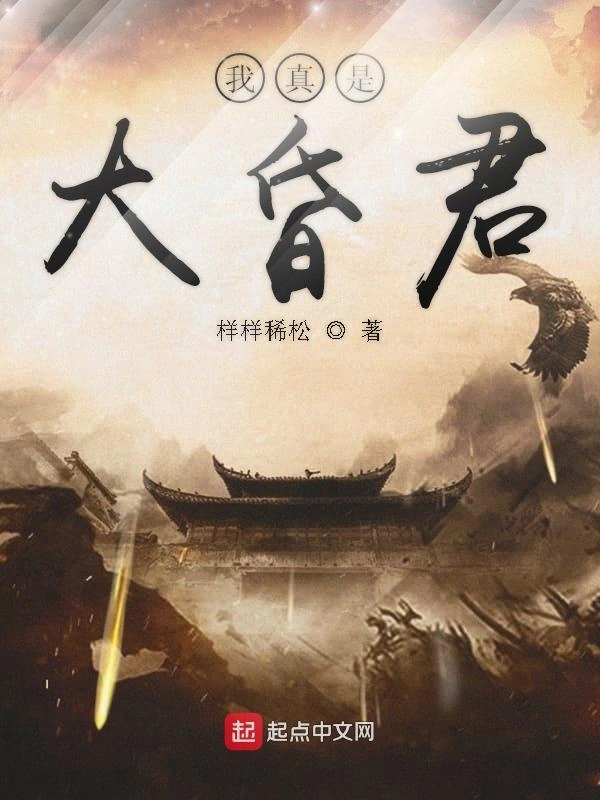
I'm Really a Fool
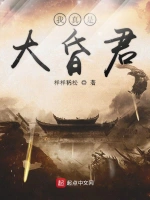
我真是大昏君
- Status
- Completed
- Length
- 1.7M Words
- Genre
- Historical
- Audience
- Male
- Subgenre
- Song-Yuan-Ming Dynasties
- Updated
- 4y ago
- Source
- Qidian
Stats
Tags
Synopsis
Reader comments
In booklists 12


Lovely Wife Is Like a Cloud, Good Books to Taste
Those unforgettable books can be read three times in a row.
A Collection of History Books
Now I like history books, which are very interesting, so I want to create such a book list.
A Fresh Reading List for Old Bookworms!
Mainly recommend seedlings!

Find a Book to Add to Your Book List. No Problem!
(Strike a thousand harvests, pay attention to collect and present flowers in three consecutive rounds, and you will be promoted if you are above the level!!!) Dear book lovers, if you don't want to rummage through the sea of books, just collect the book list and let the owner find it for you. After joining, every 30 likes will be pinned to the top, and works with negative reviews for a long time will be deleted from the book list. For all self-recommended authors, please take the trouble to pay
Excellent Books
I have read them all myself and I think they are pretty good. The categories are quite mixed.
Just Like It
There is laughter, there is discomfort, there is excitement, there is loss, just this book list
It's so Hard to Come up with a Name
Hodgepodge
Book List Recommendation
Just sauce

Grass Jelly Seedling Excavator, Discover New Books with Potential, and Continue to Update More Good Books.
Recommend some interesting new books that I like to read recently, Seedlings. Reading is to make people feel relaxed and comfortable. So I will only recommend some books that are more relaxed and comfortable. I hope you all like it as much as I do. .
Personal Network Document
Some have seen it, some have not. It feels okay

Please Read the Book Shortage
Book shortage
In the Historical City
It's all what I like, no brain-dead, no stud. If you like historical cities, you can go shopping, they are all exquisite products.
Readers also read
 Talker in the Song Dynasty
 In the Red Mansion: Escort Daiyu to Beijing at the Beginning
 Please Call Me Your Majesty the Tsar
 1914 Begins with the Rejection of the Schlieffen Plan
 Spies
Spies
 Invincible Righteousness
 The Sun and the Moon Are Always There
 Daming: Moral Kidnapping? I, Chongzhen, Have No Morals!
 Huang Ming
 Strategies for Revitalizing the Northern Song Dynasty
 Ming Dynasty Started with Caution
 Emperor Zhengde
 Conquering the Qing Dynasty Across the Four Seas
 I'm Really Not the Third Prince Zhu
 Go Against the Will and Change the Light
 Heroes of the Southern Song Dynasty
 Late Ming Dynasty: I Foresee the Future
 Wanli: I Have Become a Tyrant
 Don't Call Me the Carpenter Emperor
 The Southern Song Dynasty Is Unreliable
I just saw a reader saying that the work was a bit confusing and dizzy. In fact, what he said makes sense. The author has a very deep knowledge of the Ming Dynasty, and there is no nonsense in many places. However, it would be more interesting if the foreshadowing of the previous article could be shown. For example, how did our famous wet nurse die? Was he poisoned or something? The author won't mention it. Only the fate of small characters can depict the story. The background of the big era is interesting.
Even if there is a system, it is still a smart system. This is really poisonous.
It's pretty good👌, better than Countercurrent. I really couldn't stand that book. I read every one of the author's books (I didn't read the two books of Countercurrent and Wearing Women). They are basically above the standard. There are many high-quality products, but they are niche and have no hits. I like the setting of this book, and I feel that the author will make a hit this time. To be an emperor, of course you have to eat, drink, and have fun, and deal with the stumbling blocks that create obstacles for you. Only in this way can you be a qualified emperor. (I suggest the author learn more from the Zhengde ancestors. 😄 Just kidding, he has written 10 books, and he still uses our teaching)
I never read history that doesn't involve cheating. Who has played in ancient times where the protagonist didn't cheat? Some authors treat ancient people as pigs, thinking that they have no brains. They never read books that are not good at reading. I only read this kind of historical writing by Xiaobai. At least he is real. Unfailing historical writing is too fake. Anyway, I don't believe that a modern ordinary person can beat anyone in ancient times.
Is there a relationship between the carpenter and the Hunjun? To be fair, whether everyone thinks they are stupid or not, is it okay for you to become a carpenter? How about a chair first...?
Travelers can do this without fear of being killed. The court of the middle and late Ming Dynasty was notoriously unsafe. Emperors Zhengde and Apocalypse fell into the water and died. Jiajing was almost strangled to death by a palace maid. There is also the red pill case and the imperial assault case. Ah Quan is not clear about it.
To be honest, I really enjoyed watching it. But there is one thing I don't like. You praise the West too much. China's backwardness began during the Qianlong period of the Qing Dynasty. The technological level of the Ming Dynasty was not far behind the West. You praise the West too much, just like pulling wire. You actually say that something that existed in the Spring and Autumn Period came from the West. You can't stand it if you can tolerate artillery and guns! Can't you say it existed in ancient times?
The author is a talented person, and the queen has been pregnant for four years and has not yet given birth!
How many chapters have been put on the shelf, and they are often copied and pasted into large sections of popular science. The chapters are short, so I won't go into them. It's a waste of time.
To be honest, when I was young and watched the Ming Dynasty eunuchs in movies and TV, I thought they were all bad guys who brought harm to Zhongliang. Now I think they are just a knife in the emperor's hand, taking the blame for the emperor. Without the emperor, they are nothing. On the contrary, those Donglin Party members who regarded themselves as gentlemen only had "itchy scalps" and "water was too cold" in the end, and their reputation was nothing more than infamy.
It is said that the starting point is not to allow the harem to be opened. I think your harem is running smoothly! The key is yet to be sorted out. Great Gods have privileges.
To train generals, we must first solve one problem: Who to fight for! Even if you train those scholars who are stupid in reading to become generals, they will sit on the side of the literati. In the future, military power will also be controlled by the literati. Where should you choose junior generals? Choose from among the peasants, petty citizens, landless peasants, and refugees. They are naturally on the opposite side of the official and business class. Then promote the debate between China and barbarians, biographies of loyal generals and ministers among them, and brainwash them why they are poor and why they bear the taxes of the entire country with 10% of the society's financial resources. In this way, they become your base and can charge into battle for you.
The key is that whoever wins over Mongolia will have the advantage.
I think the emperor is no different from the boss of a private enterprise. He usually treats his employees well. When you have difficulties, most of the employees are still willing to work with you to tide over the difficulties. He is usually mean and does not say that he will definitely not be with you when something goes wrong. When something goes wrong, he may run away. Whoever you work with is not a part-time job.
In fact, the eunuchs were loyal to the emperor himself, not the empire itself. In the eunuch's mind, power relied entirely on the emperor. The ranking of interests should be the emperor, oneself, and the country. In the civil service class, power comes from oneself. Without the support of civil servants, the emperor could not manage his affairs. Can barely be understood as a manager. The ranking of interests is the family. Nation. Emperor. As for the emperor, ranking is. Emperor. Relative. Nation. In some extreme cases, the interests of eunuchs, civil servants, emperors and the country all conflicted.
The author writes very well. The author has two main features in the book that are superior to other works. First, it is to realize that the most essential task of being an emperor is political struggle. Through political struggle, one's own ideas of governing the country can be implemented. Whether it is to increase revenue and reduce expenditure to make glass, to kill people, or to withdraw military power, they all essentially serve the emperor's political struggle. If the officials cannot be purged and politics can be straightened out, then the emperor will essentially be a lonely man with only the courage of a man, unable to mobilize the power of the state machine. Second, science and technology are essentially the exchange and transformation of ideas. If the society cannot be made aware that science and technology are the primary productive force, then science will be just a personal hobby of the emperor. Then even if the emperor attaches great importance to science and technology, the people and the government will die. There are indeed many inventions and discoveries in science and technology in ancient China over the thousands of years, but they can all be classified as empiricism. Since ancient times, Chinese mathematics has lacked the axiom system of ancient Greek mathematics and the mathematical logic system. None of China's skilled craftsmen and sages attributed China's various inventions and creations to mathematical logic. He did not push empiricism into positivism and wrote great masterpieces like Newton's "Mathematical Principles of Natural Philosophy". So, if you want to value science and technology, you must not only apply advanced technology to social life, but also actively introduce Western scientific and theoretical knowledge. Pay close attention to Western scientific results. Actively carry out cultural exchanges between China and the West. Only in this way can scientific methodology break out of its cocoon and become a butterfly. Let China take off with it. Many time-travel novels say that the protagonist has traveled to ancient times. We have made various scientific inventions and creations, but in fact these are rootless things. It does not allow China to embark on the path of modern science. Because the protagonist doesn't point out the way to the future at all. When the protagonist dies, Chinese society will still return to its original path. This is what is called the death of people and the government's rest. The protagonist of this book does a very good job on the above two points and captures the essence of the problem.
There is also Zhang Juzheng's one-whip method in the Ming Dynasty, which changed from grain payment to silver payment. In a short period of time, income did increase. However, the international environment at that time was that a large amount of silver flowed into China, which caused money to be earned in the city much faster than farming. A large number of landless farmers flocked to the city. Originally, these farmers rented land or worked as tenant farmers for big landlords. Now they can support themselves by working in the city. There is no one to cultivate the land. Good years are fine, but in disaster years, there is not enough food to eat. There are more and more victims, and fewer people are farming the land. A vicious cycle. Due to the lack of silver, the country's grain depots are no longer stocked and there is no food left. It has no ability to respond to disasters. Coupled with the advent of the Little Ice Age, there are more and more disaster years.
There was another problem with the army in the late Ming Dynasty: the prevalence of private soldiers. In the late Ming Dynasty, finances were depleted and military expenditures were seriously insufficient; and due to the various parties' hands, the soldiers at the bottom were often in arrears and in shortage of pay. Over time, drills and military preparations naturally slackened, and the soldiers became weak and collapsed first when encountering the enemy. The military generals would give priority to their own troops and direct subordinates with their limited pay, and then select strong men from the battalions to add to the troops. Over time, those troops would become the general's private servants. Most of the ignored soldiers lacked food, clothing, and weapons, so they could only fight with the wind. Once they encountered a strong enemy, they rushed to escape one by one. There is a saying that there must be a brave man under a heavy reward, and the opposite is also true. If you only have three melons and two dates, you still expect others to fight for you? If he dies, he might even be burned by Tan Mo, and his wife and children at home will have to starve to death. So running away is inevitable. Once most of the soldiers run away, what's the use of hundreds or thousands of servants? Among the shortcomings of the late Ming army, this was the most fatal. We must resolutely fight against this unhealthy trend and ban private soldiers in favor of public warfare, otherwise all our efforts will be in vain. First of all, we must start with the Ministry of Household Affairs and the Ministry of War. No one is allowed to use military funds, and it is strictly forbidden to waste them. Second, banknotes were issued, modern banks were set up in major cities, and military and military battalions received their pay directly from local banknote bureaus. Third, we conduct a nationwide inventory of the old and weak of the army in batches, and set up a red line. Guard soldiers who exceed the age red line will all be transferred to the Construction Corps; a military skills competition will be held, and those who are sneaky, greedy for life, afraid of death, color-blind, and disabled will all be transferred to the engineering corps. Fourth, each battalion's military and military post should set up specialized logistics units to ensure that the army can eat a month's worth of food and grass; build military granaries in various states to directly replenish the nearby army during wartime to avoid food shortages in the army; set an official guide price to purchase at a fair price when the harvest is good, sell some old grain as appropriate during lean times, and crack down on hoarders. Fifth, abolish the life-long system of military attachés in the Governor's Office and the Guard Station of the Fifth Army, weaken the succession of father to son, and implement a rotation system for generals. It is stipulated that when generals leave office and take office, they can only take a few personal guards with them. The treatment of the Guard Station of each battalion is equalized, and the majority is not allowed to be thinned or the minority is fattened. Sixth, in government-run military schools, all new generals must undergo training at the military school for a period of time before taking up their posts. If they miss training due to war, they must make up for it. Seventh, troop selection, training, and military management are decentralized. There is a troop selection department under the Fifth Army Governor's Office, which goes to various places to select troops every year. There is also a training department under the Fifth Army Governor's Office, and training grounds are set up in each state, and unified training is centralized and distributed. Haha, that's all I can think of for now
That's right. Why do you think the ceremony of kneeling should be cancelled? Just because of humiliation? How many people in ancient times would regard kneeling as an official or an emperor as humiliation? So why do you want to cancel kneeling? It's because the habit of kneeling doesn't matter. The emperor of the Ming Dynasty who can kneel to you today can kneel to the emperor of a foreign race tomorrow. The emperor of the Ming Dynasty can kneel to you today as an official. So what does it matter if you kneel to the emperor of a foreign race as an official?
Damn it, I've read dozens of chapters. If I don't focus on military power, financial power, and kill a few Donglin Party members, it's all water. I still want to be a coward, wait until I fall into the water and die. I haven't grasped the main plot yet. Goodbye to you.
I've been watching the recent wars while skipping
Don't make ridiculous remarks like Confucianism has too much influence and too much resistance. No matter how great the resistance is, can Emperor Wu of the Han Dynasty depose hundreds of schools? Didn't you just do it as usual? In the feudal era, as long as the emperor did not make a fool of himself, nothing could be done. Especially in the Ming Dynasty, enslavement was very successful. The emperors of the Five Dynasties and Ten Kingdoms were afraid of rebellion by their generals. Was the Ming Dynasty afraid? The Neo-Confucianism of the Ming Dynasty successfully taught the people across the country to kneel down and die. If it weren't for Chongzhen's magical operation, the thieves would have had no chance because the people had no blood.
The queen and the concubine were pregnant one after another. As a result, the concubine's child was so good at saying that it would leave, but the queen's child was not yet born. The inconsistent timelines are so amazing!
To reply to the above question about firearms learning from the West, firearms were already slightly behind the West in the late Ming Dynasty. You can Baidu search Zhao Shizhen, Bi Maokang and other firearms masters in the late Ming Dynasty. The flintlock gun was completed at about the same time as Europe, but it was not popularized. Zhao Shizhen also improved Western firearms, as did the red cannon. Of course, there are some aspects in which the Ming Dynasty is ahead. But learning Western firearms makes you uncomfortable. I really can't understand it. Can only the West learn our technology and we are not allowed to learn theirs?
I hope the author will take a look at this
The author wonders if the next book also writes history, can it raise the level of Western science and technology too much? If you write about the Qing Dynasty, I have nothing to say!
Damn it, an emperor called the eunuch uncle
Author, what about the update? ! If something happens, I might as well send you a notice!
Good guy, shit shovel killer 🙂
The way of writing Huang Taiji is really wrong. This is the Chinese character chosen by the Manchus themselves when translating. How could the Ming Dynasty call Jiannu Huang Taiji? I just have a question, when the protagonist calls Huang Taiji, should he also call him Huang Taiji?