


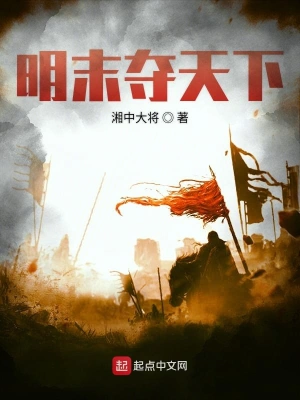
Seizing the Realm in the Late Ming Dynasty
明末夺天下
- Status
- Completed
- Length
- 710k Words
- Genre
- Historical
- Subgenre
- Song-Yuan-Ming Dynasties
- Updated
- 6y ago
- Source
- Qidian
Stats
271Chapters
0Votes
4kRecs
9.1kFans
Tags
Synopsis
More by this author
 I Really Don't Want Diga to Return the Favor.
 How Can I Become Wealthy and Free Just by Catching a Fish?
 I Have a Group of Ancestors Backing Me in Chongzhen
 Wilderness Live: Challenge the Limits and Get Rewards
 Survival on a Desert Island in a Water World
 Kyushu Wins the Title
 Sengoku Japan: I Really Don’t Want to Rule the Realm!
 Takeda’s Shogunate
 Chronicles of Sengoku Japan: The Toyotomi Clan
 Chronicles of the Swordmaster Shogun
 Rising from the Bottom in Sengoku Japan
 Uesugi’s Ambitions
In booklists 1



Readers also read
 Daming: Asking for the Throne at the Beginning, Lao Zhule Went Crazy
 A Guide to Building Civilization in a Primitive Tribe
 My Only Method: I Will Add More Points to Become Stronger at the End of Ming Dynasty
 My Father Is Wen Tianxiang, and We Win the Battle of Yashan from the Start
 Slaughtering My Way Through the Marvel Universe: Starting with The Boys
 The Sun and Moon Endure Forever
 The Great Bandit
 The Road Less Traveled
 The World of the Extreme Path: Tempering My Body Through Terror
 A Plan to Revive the Northern Song
 I Am the Carpenter Emperor
 Invincible Zhengde
 The Ambitions of a Sengoku Foot Soldier
Uesugi’s Ambitions
Rising from the Bottom in Sengoku Japan
The Ambitions of a Sengoku Foot Soldier
Uesugi’s Ambitions
Rising from the Bottom in Sengoku Japan
 Daimyo!
Chronicles of the Swordmaster Shogun
Chronicles of Sengoku Japan: The Toyotomi Clan
I Really Don't Want Diga to Return the Favor.
Takeda’s Shogunate
Daimyo!
Chronicles of the Swordmaster Shogun
Chronicles of Sengoku Japan: The Toyotomi Clan
I Really Don't Want Diga to Return the Favor.
Takeda’s Shogunate
Reader comments 35
Google Translate
Let's learn about the reasons why the Manchus conquered the world
Many people think that the Manchus conquered the world by killing without thinking In fact, it was not the case. Militaryly, they vigorously recruited surrendered troops from the Ming army. The Ming Dynasty surrendered the army as the main force, and the Eight Banners served as the governors In terms of governance, they vigorously recruited Ming Dynasty surrender ministers. Basically, two-thirds of the Qing Dynasty officials were officials from the old Ming Dynasty (mainly used for local governance, with many Manchu ministers as the center) In fact, the Manchu Qing Dynasty relied heavily on palace fighting and power strategies to rule the world... Some people commented that the Qing Dynasty actually had the twilight spirit of the Ming Dynasty when it was founded. (Except that the ruling class was replaced by Manchus, the middle class actually remained unchanged) So during the Kangxi period, they had to fight the internal warlords one after another (three times the Ming Dynasty surrendered military leaders) When Kangxi came to Yongzheng in the last years, the Qing Dynasty's finances were exhausted, similar to the late Ming Dynasty It was only saved by Yongzheng's reforms. The Manchus did not conquer the world in bloody battles, but in palace battles... If it were not for the two "wise kings" of Kangxi and Yongzheng, Hu'er would have been without luck for a hundred years, two hundred years ahead of schedule
Some suggestions on future strategic guidelines
Military attaches First, we must not allow military attaches to take power. A military government in which soldiers take power is the most stupid behavior. For specific cases, refer to the late Tang Dynasty. The Emperor of Tang was deposed by the Jiedushi and the eunuch in charge of the army. The Jiedushi was killed by Yajiang, who was killed by Yajiang. (A bit like Japan's Warring States Period) The poisoners of the military government will have a high probability of being spoiled by the military leaders below, which is very undesirable. So now, even if military attachés are to be reused in order to conquer the world, they cannot be allowed to take power. Military attachés are more harmful than civilian officials. Second, it is imperative to teach martial arts halls. Low-level generals can also be gradually trained through talent and combat. But to become a general, you must systematically study the art of war and absorb the experience of your predecessors. Another advantage of the martial arts hall is that it can form a teacher-student relationship with most mid-level officers, which is conducive to controlling the army. It is also convenient to promote new people. Direct air landing of new people is harmful to the system, but with a name, they can be promoted quickly. Civil Officials First, Legalism really cannot mess with religion. The essence of Legalism is to advocate monarchy, and Han Feizi inherited Shen Buhai's technique. Han Feizi's tactics are essentially imperial tactics and machinations. If you let the civil servants figure this out, Shi Lezhi will do it. Han Feizi can only learn it secretly as the protagonist and cannot promote it widely. Become the foundation of new civil servants. As an aside, the core theory of Han Feizi is that if the king does not believe, no one can advise and influence the king. Shang Yang's core theory is to profit from one hole, and mainly teaches the king to take back the country's financial power and political power. Become one. Pay attention to the fact that if the people are weak, the country will be strong, and if the officials are weak, the king will win. They both taught the emperor how to fight against his ministers in the palace, so these two Legalists died unexpectedly. Similar to a mouse teaching a cat how to eat a mouse... The way of death is very karmic and retributive Legalism cannot blindly teach its civil servants anything, and then it will cultivate a large group of palace fighting masters. Second, for the specific training of civil servants, you can refer to the Shaoxing Master. The Shaoxing Master is from the Jiangnan area because of the fierce competition in the imperial examination. The special literati who were transferred to different professions were mainly talented people who had failed in many trials. Go and work as a staff advisor to the bureaucrats. In fact, the maintenance of government functions in the Ming and Qing Dynasties mainly relied on the masters. The senior officials who passed the imperial examination were also confused when it came to their administrative functions. We must rely on the master below to do things. (Similar to the secretary and secretary-general in the current government) The transfer of the master's job is that the scholar who has basically completed grammar will then specialize in studying money, food, and criminal law. These are the mid-level and low-level masters, the money and food master, and the criminal lawyer. Sufficient to cope with the daily work of local officials The most senior master is to learn how to respond to memorials and analyze the court situation. It's called Master Zou Zhang, and it's enough to handle the daily work of high-ranking officials The protagonist is about to give up Confucianism anyway, so it's better to use Master's tutorials to train civil servants, which can be considered as making the best use of everything. Teach grammar first, then teach money, food, and criminal law. Finally, learn how to respond to memorials and analyze the court situation. He is fully qualified as a civil servant. There are many powerful figures in the world of masters, such as Wu Sidao (Qing Dynasty version of Kong Ming) who was very powerful in the Yongzheng Dynasty, and Zuo Zongtang who was really powerful in real history (Ji Ren, unable to become an official because of his disability, making a living on the sidelines, and later rising to military service). …To be continued
In fact, in the late Ming Dynasty, the most suitable sacred book for survival and doing great things was the "Military Training Manual" from the 1960s and 1970s. It was really a sacred book, covering everything from steelmaking to gun manufacturing, from ideological education to medical care, from organizational structure to tactical guidance, it was really all-encompassing! And most of them are local methods and simple routines adapted to local conditions! It's just not easy to find
Let's talk about some useful technology trees (long-term updates)
Agricultural science and technology tree 1, drought-tolerant crops Millet, known as millet in ancient times. The oldest crop of the Han people, it is also the most drought-resistant grain in the world. Yellow rice grains (the grains are much smaller than rice) Millet is extremely adaptable to the semi-arid climate of the Loess Plateau. It is said that it will survive drought and can survive with a little water. It is very suitable for the background of the severe drought in Shaanxi in the late Ming Dynasty. The only flaw is that the yield is relatively small, at most 100 catties per mu. Attributes: 200% drought tolerance, natural disasters do not reduce production, Hatada adapts, grain production is halved. 2. Water conservancy projects Dryland reservoirs, specially shaped reservoirs. Used to absorb excess rainfall during wet periods for year-round use. Shaped like a long-necked pitcher buried in the soil. The construction method is to dig a deep pit in a low-lying area and lay it with fine stones and gypsum as a leak-proof layer. Seal the top, leaving only a small hole. To prevent moisture from evaporating. Combining the advantages of cisterns and karez, it is a professional cistern in semi-arid areas. Attributes: water supply bonus, agricultural bonus
To be honest, there cannot be so-called tax exemptions in this world. In ancient times, civil servants were exempted from taxes. Then if you had the strength to force the officials and scholar-bureaucrats to pay taxes, they would have no choice but to support others' rebellion because they did not have an army. But if you had absolute strength, you could easily pacify it. But if you give tax-free land to soldiers, this army will become the scholar-bureaucrat class in the future, and they will have a lot of tax-free fields. Even if you stipulate that each soldier can only have a certain amount of tax-free land, they can use various methods to record in the government that they don't have much land, but they actually have a lot of land, and this is a violent institution. If you tax them in the future, they will definitely rebel. This is different from the rebellion supported by the civil servants and gentry. The rebellion supported by others is to fight for others. Generally, they fight if they can win, and surrender if they can't. This fight for yourself. Fighting for the future life of one's own family must be fought tooth and nail, and even if one can win, it will be difficult. Why do it, why don't you give the impression at birth that everyone has to pay taxes? Even if the army is high, you can give more rewards and give out more things. Do you think that civil servants are not a thing, but the ancient army is a good thing? If the control is not good, local separatism is certain.
First of all, I personally feel that the author's creative thinking is wrong! The revolutionary ideas of workers and peasants were of no use in the Ming Dynasty. Ninety percent of the social resources of the Ming Dynasty were in the hands of gentry officials and merchants, and all the vast resources in the countryside were in the hands of the gentry. This offended the gentry class all over the world. How could it succeed without the support of scholars? Although Li Zicheng destroyed the Ming Dynasty, the facts proved that after a huge defeat, Li Zicheng had no chance to stand up and was killed by the gentry! The Qing Dynasty's cavalry traveled all over the country, still trying to win over the gentry class! Therefore, the best way in the late Ming Dynasty was to win over a group of gentry and crack down on a group of local tyrants and evil gentry. Because the country's wealth, knowledge, land, resources, and connections were all controlled by these classes, it was impossible to succeed by relying on ignorant people. Besides, when you take over the world, a new class of powerful people will emerge! Even now in the 21st century, there are still aristocratic classes! Developed countries in Europe and the United States still have a grassroots aristocracy. This thing of the powerful class cannot be eradicated at all. Since it can't be eradicated, why should the author engage in workers, peasants, and soldiers? Many authors who wrote about the end of the Ming Dynasty even engaged in landlord wars, republics, etc., Which are simply fantastic.
Test the poison in the first few chapters
First, pig's feet cut people down after traveling through time, and the transformation of a legal modern man into a killer will definitely dissuade some people Second, the performance and actions of pig's feet in the first few chapters will definitely dissuade some people Third, the style is soft, not a hard historical web article, and some people will be dissuaded Fourth, the positioning of a refreshing article is undoubtedly, don't write it wrong or lower the requirements, don't be brainless and lack of historical materials! Fifth, be sincere! Writing interesting historical articles also requires sufficient investment in historical materials and the construction of a historical framework.
Character Building You can provide your character, background, and what you are good at. Try to be as careful as possible, and I will make reasonable arrangements... Of course, the mortality rate of supporting characters in this book is very high. Females are OK too.
I felt there was something wrong with the protagonist's methods. It is said to follow the line of workers and peasants, but the protagonist always gives me a strange feeling. He rewards women to his subordinates and has three wives and four concubines. Although it is said to be holding the banner of workers and peasants, its program gives me a feeling of Dashun and the Taiping Rebellion.
The book club 8574 52234 of Seizing the World in the Late Ming Dynasty welcomes everyone to join!