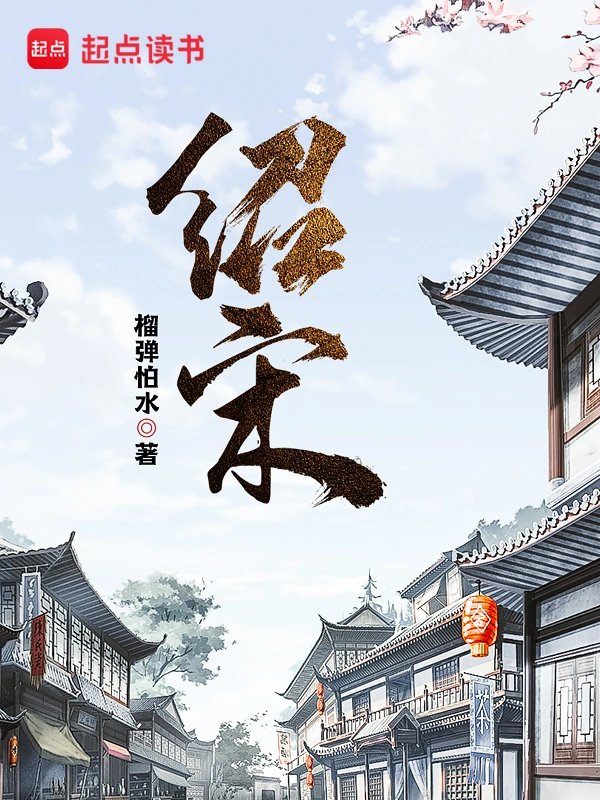
Shao Song
绍宋
- Status
- Completed
- Length
- 2.8M Words
- Genre
- Historical
- Audience
- Male
- Subgenre
- Alternate History
- Updated
- 3d ago
- Source
- Qidian
Stats
Tags
Honours
Synopsis
Reader comments
In booklists 739
Explore more →

A Long Review List Focusing on Seedlings
Self-recommendations will be deleted, but those who are interested will basically try the poison. In addition, I will not help with reviews, so don't force it, thank you.


Old Books VS Seedlings
There are both old books and potential seedlings in the book list. They are all books I have read and some books introduced by friends. If you haven't seen it, you can give it a try, you won't be disappointed. The book list is updated from time to time. New books with potential and old books that are well hidden will be updated immediately. If you think it's okay, click Follow on the right. Thanks! If you think the books on the list are not suitable for your taste, please leave silently and
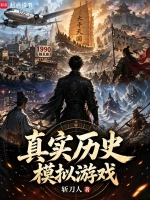
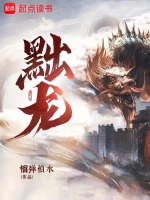
Works of the Gods
A book list, a volume of memories. Keep company with books and keep company with friends. Perhaps by chance, you saw this book list and saw the four words "The Work of the Gods". I find it novel and want to see what it means to be a god. If you have this mentality, you should leave. There are books about great gods here, but of course there are also books that can be called "masterpieces". Everyone defines this differently because each of us is an individual. This book list holds so many memori
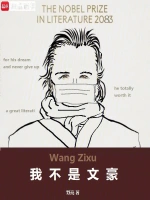
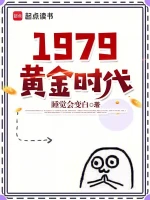
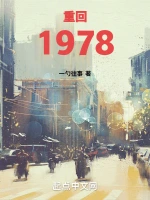
Divine Book Seedling🔥complete a Classic🔥unpopular Good Book🔥imaginary Anecdotes
Changed name! Thanks for the review! [Note] On a whim, I want to start a likes war to see how many books can reach 9999 likes through the likes war. There are now 11 books. [Special Note] Comrades, be sure to collect the book list, click on the five-pointed star🌟 at the bottom of the screen, and turn it into a red star to collect the book list, instead of paying attention to me! Click the little heart below 👇! 2. I felt that the number of places in the book list was seriously insufficient, so
🔥Lao Chai's Book List No. 7 [History] - the Dust of History🔥
[Special Note] Comrades, be sure to collect the book list, click on the small five-pointed star🌟 at the bottom of the screen, and turn it into a red star to collect the book list, instead of paying attention to me! ! ! It's not about me! ! ! Click the little heart below 👇! 😄 Please pay attention to Lao Chai's main book list - The Divine Book Seedlings🔥A complete masterpiece🔥Imaginative and wonderful articles🔥Unpopular fairy grass 1. (I am planning to create a series of high-quality historical au

515 Good Books Half Price: Last Week
[New discounted books are coming out one after another, 50% off on all purchases] [New time for good books in the book list: 6.8-6.14] [How to participate: Me → Activity Center → "New release! 50% Off on more than 100 must-read books"] [The discount launch time varies depending on the book, some discounts only last for 3 days, please stay tuned] [Click on my avatar to view more book lists]


The Four Great Classics in Internet Literature
If the Internet literature community selects the "Four Great Masterpieces" Will these books undoubtedly appear on the list? They represent a category or the pinnacle of works!

Happy Book House·selected Book List/👹🍱✂️
🚢🆚👒🐠⛄️When I came into contact with online writing eight years ago, I liked fairy tales, fantasy, and invincible cool writing, which did not require logic or IQ. ⛱️🥣⛱🍬⛱️Five years ago, 🐎 still liked fairy tales and fantasy novels, but I didn't like invincible novels anymore. 🚴♀️🚴🚴♀️🚴🚴♀️Three years ago, I still liked fantasy fairy tales, but this time I started to require logic and IQ. ✈️🔋💈🎺👾Two years ago, I suddenly got tired of fantasy and fairy tales, and fell in love with fantasy and histo
Bazhanghe Push Book
[Recommend all kinds of good-looking novels, basically all of them are high-quality products that have been ordered] [These are all my favorite works] If there are some good ones that are not on the book list, you can leave them in the comment area. I will try them out when I have time. If you like them, I will add them to the book list. Thank you🌸🌸🌸 Promote books! Promote books! Leave a mark on your past obsessions.
The Green Hills Are Still There, and the Sunsets Are Red Several Times! History Book List
Five Thousand Years of China, Recommended High-Quality Historical Writings
Good Historical Records
History Book ListDedicated to History Mainly, I recommend some good historical books and high-quality seedlings to everyone! There are many storms on the list, but they are all indifferent. Guys, do you feel familiar looking at the books in this list? I only recommend high-quality history books! Dear readers who like historical articles, please come in. If you like it, please give it a like, add a follow, and add it to your bookmark list. Please click "Pentagram⭐️" below to bookmark this boo
[After Completing This Long Review, There Is No Need to Worry About the Lack of Books]
After finishing this good book, you will not regret it if you fall into the pit. Recommended standards: 1. A complete and unfinished work 2. Works without serious pitfalls 3. Works that have their own characteristics and are refreshing 4. Works with rave reviews 5. Works that I feel are really good after reading them If you feel good about Tietie, you are welcome to collect and like it, and you are also welcome to recommend other good-looking works~

Seedling Madness (Recommend Old Books, Please Collect Them, Please Pay Attention~)
Life goes on, and poisons continue to be tested. As long as QD does not close down, the book list will continue to be written. I haven't read much recently, and I've been reading too much. ✍🏻️Book reviews are also slow, but every book I recommend is still carefully selected. Sometimes when everyone is looking for books, they will find a strange phenomenon. Although everyone is clearly short of books, they will still ask each other for books to read. Isn't this kind of behavior of hugging each

Hundred Alliances for Hegemonya Classic Online Article About the Leader of a Hundred Alliances, Using Data to Recommend Masterpieces
Hello everyone(•̀ϖ•́ ) This book list will include the starting point of the Hundred Alliance Books in order of the time when the achievement of [Battle of Alliances] was achieved. I hope everyone will collect it, like it, and bow⁽˚̌ʷ˚̌ʺ⁾ Since the upper limit of the book list is 100 books, subsequent Baimeng books will be posted in the comment area of the book list. At the same time, my column will also be updated simultaneously. As a badge of honor for the starting point, The Battle of the
Recommended Book List for Mature Readers (Under Update)
Special for mature readers, recommending books I have read
My Library
I recommend these books to all book lovers. I have read every work here. I feel that the author's writing style is very good and each book is a fine product. You can give it a try and you should find a novel you like.
I Love Reading
Picky old bookworms who are hungry for books can add this book list, which mainly recommends serialized novels and collects complete novels of classic masterpieces. The authors I mainly follow: A Line of Egrets in the Blue Sky, Three Days and Two Sleeps, Ice Comes Under the God, Jie Yu 2, Fang Xiang, Xiao Ding, Zhiqiu, Ermu, Chenci Laidiao, Far Eyes, Angry Squirrel, The Reader, zhttty, etc. I have read many novels, from junior high school to now, just like the divine farmer tasting a hundred
Learn from History
Since I was very young, I have dreamed of becoming a great hero, going back in time, changing the world, and leaving my name in history. I believe many people have this idea. The fictional historical novels satisfy people's spiritual needs, which is why today's time-travel novels are so popular. If history could repeat itself, how would you choose? In the face of the general trend of history, every change you make will change the trajectory of history. This book list will collect and update va
Shuhuang, Please Come In! the Grass Jelly Gathers! Good Books Are Enough!
There are many good books (✪▽✪)!
Fantasy World©historical Story
This is the No. 4 History book list of the single owner. If the number of likes exceeds 60, it will be added to the main book list. The number of books on the list will be based on 10. Every time the number of likes exceeds 10, it will be pinned to the top. ~~~☀☀☀ If it is not updated for a long time or the eunuch's book will be cleaned regularly🌺🌺 If you have any favorite works, please recommend them🌸🌸🌸
History
Historical literature


[Order Starting at 100,000 Yuan]
Phenomenal masterpiece recognized by readers The average number of subscriptions for each paid chapter exceeds 100,000
✨"History" Is 🦴, "Art" Is ✈️✨
History is the bones, art is the wings, Chinese civilization will be carried forward for centuries [Decade] Old bookworm, carefully selected, trustworthy. [Long Review] Continuously updated, pushing high-quality historical novels, collecting this book list is equivalent to owning the entire history of China. Novels from various dynasties can be found here, ranging from the Spring and Autumn Period and the Warring States to the Republic of China, as well as fictional histories. The dynasties a
There Are Hundreds of Herbs, a Gentleman Likes to Be Brave, I Want Them All
There are gangsters and gentlemen who are like quarrels and discussions, like grinding. The peach blossoms shine brightly, and my heart loves them. The white horse is bright and bright, the southern mountain is quiet, and the disease is called love. This book collects the online articles that the author has read recently, whether good or bad. What matters is not the rating, but the feeling after reading. The book list also has single female protagonists, as well as multiple female protagonists.
Readers also read
 Red Mansion Xiaoke
 I Am a Tyrant in Nanming
 At the Beginning, Please Ask Chongzhen to Abdicate!
 Fu Ming 1627
 Kuo Jin
 Picked up a Shihuang Emperor
 I Really Don't Do My Job Properly
 Corpse Hunter
 Jiangzuo Puppet Lang
 Mythical Version of the Three Kingdoms
 Xuanjian Immortal Clan
 Picked up a Copy of Chronicles of the Three Kingdoms
 Overthrow the Han Dynasty
 Shao Song Dynasty: Extra
 Depose the Dragon
Shao Song plane generals Jiugongge
Chronology of "Shao Song" (1126, the end of the Yuan Dynasty of Jingkang, to 1135, October of the ninth year of Jianyan)
Chronology of "Shao Song" 1126, the first year of Jingkang of Song Dynasty/the fourth year of Jin Tianhui Leap November (January 9, 1127) The city of Kaifeng was destroyed, and Zhao Ji and Zhao Huan were captured. In December, Zhao Gou built the Grand Marshal's Mansion in Xiangzhou, with Zongze as his deputy. 1127, the second year of Jingkang of the Song Dynasty/the first year of Jianyan/the fifth year of Jin Tianhui In the first month of the year, Zhao Gou went south to Dongping Mansion. In February, the Jin Dynasty deposed the second emperor of the Song Dynasty, and the Northern Song Dynasty died. Jinli Zhang Bangchang (Chu). In March, the Jin army withdrew northward, and its second crossing of the Yellow River to invade the south ended. In May, Zhao Gou (21 years old) located in Yingtianfu, Nanjing, and changed his name to Jianyan. Looking for Huanyiniang, killed Chen Dong and others, and demoted Li Gang. In August, on his way south to Yangzhou, Zhao Gou fell into a well in the Nine Dragon Well of Mingdao Palace in Bozhou. Zhao Jiu's soul passes through his body. Accept Liu Yan's Chixin team into the squad. The ministers were ordered to write a letter to express their opinions. Zhang Jun impeached his servants and isolated the inside and outside. Order Yang Yizhong to kill his servant Kang Lu. Lü Haowen was appointed as Shangshu Youcheng, and Zhang Jun was appointed as Yushi Zhongcheng. Recall Li Gang. In September, the Jin soldiers moved southward in two directions: east and west, and the third southern invasion began. In mid-October, Yue Fei (24 years old) left Wang Yanbu and crossed the river south from Taihang to Kaifeng, Tokyo. While traveling to Nanyang, the road was blocked by Ding Jin's rebellion. In November, the rebellion of Han Shizhong's former army was suppressed in Baichi, and Han Shizhong was given a jade belt. Withdraw to Shunchang Mansion. Jingdong East Road fell. Traveling to Shouzhou on the Huaihe River, Li Gang and the Queen Mother and his heirs settled in Yangzhou. In December, Liu Guangshi abandoned Liuzhou and fled south. He personally executed Liu Guangshi in Bagong Mountain. Jinxi Route Army defeated Luoyang and Chang'an. 1128, the second year of Jianyan's reign On the night of Yuan Dynasty, he crossed the Huaihe River north to Xiacai to Fu Zhangjun. On the fourth day of the first lunar month, the imperial edict was issued to the world to fight against gold. Defeat the Jin Army Wanyan Wushu Department on the East Road on the Huaihe River. On the 28th, Yang Weizhong's troops Yue Fei and Zhang Rong beheaded Wan Yan Saili in Liangshan Park. On the 30th, Jeju Prefecture was restored. On the eighth day of the second lunar month, Wushu's army was defeated in Xia Cai. The Jin army retreated north. On the ninth day of February, there is a pilgrimage meeting at Bagong Mountain. King Xin of Wuma Mountain was appointed as the deputy marshal, and Ma Kuo was appointed as the general manager of the capital. Moving to Nanyang. On the 15th day of the second lunar month, we passed through Kiashi Mountain and floated orange lanterns on the Huaihe River to commemorate the fallen soldiers. Ping Huaixi Dingjin Rebellion. Sen Miao and Liu Ping rebelled in Jianzhou. In early March, Li Yanxian returned to Shaanzhou. Lost Wuguan. They attacked Yelu Mawu at night under Ruyang City, and Wanyan Yinshu could retreat north to Luoyang. In mid-March, there was a great court meeting at Fangcheng Mountain. Fan Zhixu was demoted to death. The bank was reorganized, the east and west prefectures were changed, four provinces, three yamen, etc. Were merged. On March 20th, we traveled to Nanyang. In April, the rebellion in Xiangyang was quelled. On April 12, Dengzhou surrendered. On April 18th, Xiangyang descended and killed Fan Qiong. Returning to Nanyang, Mrs. Wu said that she was from there. Jinxi Route Army withdrew from Guanzhong. Li Yanxian crossed the Yellow River north, restored Jiezhou, and reached Taihang. In the Baihe meeting, Yuanyou's party ban was abolished and Ye Mengde was demoted. In May, the palace examination. Additional construction of Nanyang, Fangcheng and Northeastern cities. The Jin army retreated north, Han Shizhong recovered Luoyang and killed Yang Jin. The third southern invasion of Jin soldiers ended. Jiangnan is in chaos. In June, Chang'an was restored, and the chaos in Guanzhong was peaceful. Let Zhang Jun enter Shu and transfer to the fifth route. In the latter half of the year, the Jin Kingdom reorganized the Marshal's Mansion and discussed another invasion of the south. In late July, the Jin soldiers defeated the Wuma Mountain rebels in Zhending, and Ma Kuo retreated into Taihang. On the eighth day of August, Zhang Jun defeated Yizhou. On August 12, Zhang Suo attacked Jinan. On August 17, the Jindong Route Army went south. Kong Yanzhou surrendered and defeated Zhang Rong. The fourth southern invasion of Jin soldiers began. Nanjing Yingtianfu fell, Zhang Suo and Xin Daozong died. On the third day of September, Yue Fei left Jeju and headed west to Tokyo. The Jinxi Route Army defeated Yan'an in Yan'an. The Jindong Route Army jointly attacked Tokyo. The army behind the imperial camp in Jiangnan rebelled and occupied Jiangning Mansion. In early October, Wushu defeated Zhongmou. Lou Shi went north to break Fuzhou, and he could ask for a drop of gold. On October 14th, Wu Shu defeated Han Shizhong and Zhu Jiaqi. On October 16th, Han Shizhong was surrounded in Changshe. At the beginning of November, Talan went south to Changshe. Zhang Yu came to Linying to drop gold. On November 10th, the Wushu army went south to Nanyang. On the 15th, the Jin soldiers attacked the city and were frustrated under the sheep and horse wall. On the 16th, the Jinbing Tunnel was destroyed. In the second half of the year, the Jinbing artillery array was broken. The golden soldiers broke through Wuyang. In December, Zongze was seriously ill, and Du Chong was appointed deputy stay-at-home officer in Tokyo. Wang Yan led the Eight-Character Army from Taihang southward to aid Tokyo. On the 18th, Wang De defeated Zhang Yuzhai. On the 19th, Du Chong supervised the troops and went south to rescue Changshe. On the 25th, troops gathered at Yanling. On the 27th, Zhang Jun and Liu Bao arrived at Fugou. On the 29th, Li Bao and Li Kui arrived at Yanling. The generals invite you to fight. 1129, the third year of Jianyan period On the first day of the first lunar month, Du Chongtong sent envoy Talan. On the fifth day of the lunar month, the generals asked for a battle, but Du Chong refused. On the seventh day of the lunar month, Du Chong lied and reported that the generals were at odds with each other. On the night of the ninth day of the lunar month, Du Yan arrived in Nanyang and told Du Chong to avoid the war. He decided to use Lu Yihao to plan his way north. On the tenth day of the lunar month, we rode eastward with eight hundred horses. The Song army was defeated outside Nanyang City. On the 12th, he rushed into the Yanling army and killed Du Chong personally. On the 13th, he went on a personal expedition, with Yue Fei as the vanguard, and the entire army attacked Ta Lai at Changshe and achieved a great victory. Too lazy to flee north. On the 14th, Han Shizhong led his troops north to pursue, while Yue Fei went south to stop Wu Shu. Return to Zhongmu. On the fifteenth day of the Lantern Festival, I entered Tokyo and met Zongze. That night, Zongze died of illness. On the 16th, Talan abandoned Zhengzhou and crossed the river to the north. Yeluma was defeated and fled to Xijing. On the 18th, the Wushu Department began to withdraw northward. On the 22nd, Wu Shu was blocked in Lishui. Wushu was blocked by Ru River and Ying River, so he turned northwest and retreated into Xijing. Xijing Jindong Route Army crossed the river and withdrew to the north, then recovered to Xijing. Jinxi Route Army reached Hedong, and Li Yanxian's army withdrew southward. In early February, the Song and Jin sides faced off along the river. Jingdong Jinbing retreats. The fourth southern invasion of the Jin soldiers ended. On the 15th, Zhang Jun returned to Nanjing and arrived in Tokyo. He ordered the army and civilians to establish military and civilian villages in Henan, and sent an edict to all the generals in Heyin. On the 23rd, the meeting in Heyin began. Discuss posthumous gifts, awards, and banquets for commanders. On the 24th, there was a military parade and an oath with the commanders. The imperial camp was reorganized, with Han Shizhong commanding the left army, Zhang Jun commanding the right army, Yue Fei commanding the front army, and Li Yanxian commanding the center army. Yue Fei was sent south to quell the rebellion. In March, the Jin envoy reported the death of Queen Xing and returned to the second princess. Jiangning rebels harassed Yangzhou, and the prince died of illness. Li Gang dismissed the prime minister for his crime and appointed Lu Yihao as the central envoy to control Yangzhou. Jin helped Liu Yu proclaim himself emperor. Mengwu rebelled against Jin. In early April, there were many unresolved matters during the first Tokyo Imperial Meeting. Yue Fei pacified the chaos in Jiangning. In the second half of the year, Hu Yin, the censor Zhongcheng, visited Guanzhong and later transferred to the envoy. On the fourth day of May, Zheng Quduan entered Beijing. Add Southeast Yue Chun money. On the 20th, the army discussed the establishment of the imperial camp, totaling more than 200,000 troops. Envoys from Korea are coming. In June, Shi Bin caused chaos in Hanzhong. Salute Xiangguo Temple and Shaolin Temple for military use. Zongzheng and the prime minister were used to worship the imperial mausoleum. Order the redemption of the soldiers in the imperial camp and the families of the refugees, and discuss the issue of enke. The puppet Qi army came to attack and sent squads to help. Zhang Rong refused Liu Lin and Kong Yanzhou to Pingyin, Dongping Prefecture. Yang Yizhong stopped Li Cheng at Beixinqiao. Yue Fei's army arrived at Fuyang Valley, but Li Cheng and Hong Ya escaped. Yue Fei left Yanzhou and surrounded the puppet Qi army with Zhang Rong in the north of Pingyin. They formed a formation to kill Kong Yanzhou and captured Liu Lin. Zhang Rong went to Beijing to present prisoners and was granted command of the Royal Camp Navy. In July, Hu Yin used Wu Jie to quell Shi Bin's rebellion. Zhang Jun ordered Liu Qi to kill Wang Xie. On the tenth day of August, the Enke Palace Examination took place. On the 12th, the results were released, and Qu Duan and Yue Fei were admitted to the Jinshi Department. On the 16th, he signed a letter to the Privy Council in accordance with the old rules and took charge of the defense of Tokyo. The Prime Minister is imprisoned. On the 17th, all the commanders returned to their armies to prepare for autumn. Wanyan Xie, the younger brother of the Jin Emperor, also died of illness. In late September, Tokyo city defense repairs were completed. In late November, the second imperial concubine Pan Wu was established. Leaving Beijing to patrol the Yellow River. On the 28th, Yu Yunwen was used as an envoy to cross north to recover the traitorous general. On the 30th, he met the generals at Tiantai Mountain. On the first day of December, Yu Yunwen returned and discussed burning Xiaowu. On the third day of the lunar month, Zhang Rong's boat division was planned to enter the Yellow River from Liangshan. On the ninth day of the lunar month, it connects to the Bian River and Wuzhang River. On the tenth day of the lunar month, the Tokyo Water Gate and Bianhe River bridges were destroyed to allow boats to pass through. On the 12th, the boat division entered Bian. On the 17th, Zhang Rongjun burned Xiao Wuxi and beheaded the big one. Issue 500,000 guan of national debt. On the 26th, we discussed politics at Taixue. At the end of the year, the fifth southern invasion of the Jin soldiers began. The Jinxi Route Army invaded Shaanzhou, and Wanyanlou's family crossed from Pujin to the south and broke through Tongguan. 1130, the fourth year of Jianyan's reign On the fourth day of the first lunar month, the Imperial Army held a meeting to send Han Shizhong to aid Chang'an. On the fifth day of the lunar month, I went to help Shaanzhou in person. On the 12th, we arrived in Luoyang. The troops in the imperial camp were divided into aiding Shaanzhou. On the 22nd, Han Shizhong arrived in Chang'an and fought under the city. At the end of the month, Lou Shi withdrew his troops and returned to the river. The fifth southern invasion of Jin soldiers ended. Han Shizhong destroyed the Pujin Floating Bridge. February 13th, return to Tokyo. In the latter half of the year, the Jin people established Wanyan Aguda's direct grandson Hela as the crown prince in Yanjing. It is proposed to invade the south again. In March, the Jin envoy came and promised to return it to Queen Mother Wei. In the second half of the year, Han Xiaozhou sent Jin to welcome the Queen Mother Wei. Dongting Lake Bell is the opposite. Taihang reported a large gathering of gold soldiers. The sixth southern invasion of the Jin soldiers began. Wanyan Loushi crossed the river to the west and attacked Yanyan Road. The Jindong Route Army branched off to go south to Daming and west to Taiyuan. Use Han Shizhong to assist Guanzhong, and use the imperial army to march westward to determine the reserve affairs. After the imperial camp was mobilized, the army went north. On the first day of April, we passed through Sishui Pass and used Quduan as the envoy for Huanqing Road. On the fifth day, Wang Boyan stayed in Luoyang. Lou Shi broke into Yanzhou and Danzhou. Han Shizhong entered and defended Tongzhou. On the 18th, we traveled to Chang'an. In the latter half of the year, Wu Jie blocked the Jin soldiers in Fangzhou. Yelüma Wu went south to conquer Baishui. On May 2nd, the imperial camp's front army and the right army each sent their elite troops to Chang'an. On the fifth day of the lunar month, Yue Fei's army crossed to the north, and the Jin soldiers crossed to the south at Changquan. The Jin army defeated Luoyang, and Privy Councilor Wang Boyan died. On the seventh day, it was agreed to seek a decisive battle. Leaving Chang'an on the 12th. On the 15th, we arrived at the camp in Jingyao Town. On the 16th, Wu Jie was ordered to be the commander. On the 21st, the two armies met at the foot of Yao Mountain. On the 27th, Wu Shu crossed west to aid Lou Shi. On the 28th, the Jin army attacked Pinglu. On the 29th, there was a decisive battle in Yaoshan, and the formation defeated the golden coach Lou Shi. On June 2, Han Chang was captured and killed the next day. Wushu swam to the east of the river and escaped only with his body. On three days, discuss rewards and punishments. Han Shizhong was granted the title of Prince of Yan'an County. In the first ten days of the month, the Jin soldiers abandoned Luoyang and returned north. In the middle of the month, Deputy Prime Minister Xu Jingheng came to the imperial court to discuss war affairs. Wu Jie commanded the Western Army and reorganized the rear army of the imperial camp, and Qu Duan commanded the cavalry of the imperial camp. Yue Fei's tribe crossed the river and returned to the south. Jin's sixth southern invasion ended. In August, the imperial camp's seven armies were reduced to 200,000. He spent time in Guanzhong and Henan, and resumed his studies in the Three Kingdoms. Lu Haowen was appointed as the minister. In September, return to Tokyo. Xu Jingheng's illness. After the envoys from Southeast and Jingxiang were dismissed, Lu Yihao went to the throne. Zhao Ding is the prime minister, Zhang Jun is the central envoy, and Liu Ji is the deputy prime minister. With Yue Fei's tribe going south to Ping Zhongxiang. In late October, the world will be pardoned, but those who committed crimes against the Jin people will not be pardoned. In November, the national debt will be issued again. In December, I discussed principles with Lu Hao. At the end of the year, as usual, he discussed politics at Taixue. 1131, the fifth year of Jianyan's reign In the first month of the year, Lu Haowen learned the theory from Di Bao. Married to Nong Sang in the palace. In February, Yue Fei Ping Hu Ting Hu Zhong and Yang rebelled. Take original learning as official learning. In March, Sha eliminated the former generation Enyin. On the 18th, he refused the gold and made peace. In the Jin Yanjing coup, Wu Shu killed Nianhan, Wu Qimai abdicated, Hela succeeded as the leader of the country, changed the Yuan Dynasty, moved the capital to Yanjing, and reorganized the system. In April, the Jin envoy came again to discuss peace. In May, more than a hundred officials and imperial students in Beijing went to the Secretary Pavilion and refused to negotiate for peace. Yue Fei put an end to the chaos in Nanling and returned to the north. In early June, Jin sent the second queen mother to return south. Jin beats Liu Yu. On the 26th, they welcomed the return of the two saints at Baima Ferry, but refused to make peace, so Baima County was renamed Shaoxing. The imperial camp's right army recovered the three prefectures of Dongqing, Wei and Lai in Beijing. On July 2, Yue Fei defeated Li Cheng in Zi River and pursued Li Cheng in Long River. The Jin soldiers withdrew to the north, the puppet Qi was destroyed, and all the states in Jingdong were restored. In the middle of the month, Yue Fei was called back to the capital and made an engagement with Yun, Fei's eldest son, as a princess. Han Shizhong was ordered to control the military in Kansai, and Yue Fei was ordered to control the military in Jingdong. The Imperial Navy was established in Dengzhou, with Li Bao as its commander. In August, Mid-Autumn Festival, a public sacrifice will be held at Yuetai. The Secret Pavilion and the Outer Pavilion jointly decided to change Qingmiao Loan. Lu Hao asked about his resignation. The Jin soldiers attacked northern Shaanxi. In October, Yelu Yu went to the Song Dynasty. Hu Hongxiu was sent as an envoy to Western Liao. 1132, the sixth year of Jianyan (the second year of Jinhuangtong, the sixth year of Zhengde in Xixia) On the fifth day of the first lunar month, he personally conquered Chang'an, with Yue Fei as the main general. In February, the second prince was born. At the end of the month, Song Dynasty attacked Xixia. In March, he confronted Wu Shu across the river in Pujin and sent an envoy to ask. At the end of the month, Yue Fei's army changed its route and headed north from Huluhe. The Yelu Dashi Army of Western Liao Dynasty attacked Hexi. On the fifth day of April, the Jin soldiers went north from Pujin. On the ninth day of the lunar month, Yue Fei's army defeated the Xixia army south of Xingqing Mansion and beheaded the king of Liang in Xixia. On the tenth day of the lunar month, Xingqing Mansion was conquered. On the 14th, Wu Jie's army attacked the seven prefectures of Hengshan, Han Shizhong's army attacked Yan'an from the north, Wushu's army went north to Houtao, Yelu Dashi's army went north to Houtao, and Hengshan's Xixia army returned to the west. On the 22nd, he went to the security army in person. On the 28th, the Hengshan Mountains all surrendered. Yue Fei's army destroyed the main Xixia force in Shunzhou and beheaded the Xixia Jin King Cha Ge. In May, on the eighth day of the lunar month, I drove to Xingqing Mansion. On the 20th, we went north and entered Houtao, meeting Xiliao and Mengwu at Wulahaicheng. At the end of the month, we returned to Yan'an, Lin and Fu. June, the second day of the lunar month, march eastward to Jinhe. On the sixth day of the lunar month, Jinhebo held an alliance, established the Liao Emperor, and the two kings of eastern and western Mongolia, and defined the boundaries. In the second half of the day, return south to Ningxia Road. In July, send big rocks to the west. At the beginning of August, we returned to Chang'an. Liang Yangzu was promoted to deputy prime minister, Wang Yuan was promoted to deputy chief minister, and both retired. Transfer all ministers' books. At the end of the month, I returned to Tokyo. In September, at the beginning of the month, it was reported that Xixia was dead. The king of the country committed suicide in Dijinze. It was reported that the first emperor came to Beijing and moved his two sons to live in Tokyo. You can ask for death if you are given a break, but you can give up your family and family duties. In October, Zhang Zongyan's tribe of the imperial camp's right army was defeated by Dizhou. November. On the first day of the Lunar New Year, the court held a meeting and ordered the Ministry of Punishment and the Privy Council to re-establish military discipline. Eleventh, organize the navy in Heyin. On the twelfth day, Ma Kuo went south to Heyin to attend the pilgrimage, then returned to Taihang. The Central Army, Front Army, Right Army, and Navy Departments of the East Patrol Camp. December 25th, returned to Tokyo. 1133, the seventh year of Jianyan January. After relaxing the ban, Zhang Jun discussed five strategies to prepare for war. February. Promote village property. March. On the first day of the Lunar New Year, the imperial edict was issued to discuss Zhang Jun's policy. In the second half of the year, the imperial camp was ordered to increase the number of regular soldiers to 40,000. April. Envoys from Korea and Japan came. May. Change the tax system. June. King Ximengu sent his son to serve as his servant. Sell royal property, develop lottery and maritime trade. July. The gold master came to Huang Mansion during autumn hunting, and all the kings were granted the title. Wanyan Pulu rebelled and was defeated. October. The envoy from Dali is coming. If there is an illness, it will take more than a month to recover. November. The secret pavilion and public pavilion of the DPRK discuss reserve affairs. December. There will be no major wars during the year. The king of Eastern Mongolia sent his son to serve as his servant. The household department reports that the year will bring great prosperity. He learned a lot about politics and issued secrets to build up affairs. 1134, the eighth year of Jianyan the first month. Welcome Queen Mother Yuanyou back to Tokyo. On the Lantern Festival, the Lantern Festival is resumed and lanterns are made flying into the sky. In the latter half of the year, Concubine Pan was demoted to Concubine Xian and Cai Mao was executed. February. Yi clan system. March. Build a sea trading company. Make a telescope. Gold is made of armor. The number of posts in various central departments was increased, and Quanzhou Fan Temple was abolished. In the second half of the day, the imperial army marched into Hezhong Mansion. April. In the first ten days of the month, Jin reinforcements arrived and they were withdrawn. In the second half of the day, martial arts were performed on Yuetai. May. On the 21st, there was a court meeting to discuss the case of unfilial piety against Hu Yin. June. Kill Gou Long Ruyuan. He has passed the examination in six subjects and belongs to Yushitai. July. In the first ten days of the month, the southern tour began. In the middle of the year, we arrived in Nanjing. August. On the eighth day of the lunar month, we crossed the Huaihe River. On the 15th, arrived in Yangzhou. September. Fifteen, cross the river. Go to Taiping and meet Li Gang. October. On the second day of the Lunar New Year, we arrived at Jinling. On the eighth day of the lunar month, we arrived in Suzhou. On the 15th, arrive in Hangzhou. On the 25th, the West Lake Political Consultation Conference began. It is necessary to divide people into acres, fix their own money and regulate mediocrity. Jiangnan also travels to Di Bao. Li Gang retires. Yi Lu and Xu sent the Prime Minister to take charge of the affairs of the south of the Yangtze River to cut off the land and inspect the land. December. The two Zhejiang and Jiangdong Gongge conferences were held in Guangzhou, and the first inspection place was Lianglu. 1135, the ninth year of Jianyan (the fifth year of Jinhuangtong) the first month. During the Shangyuan Festival, Hangzhou Lantern Festival denounced Zhu Shengfei and replied to Liu Dazhong to revive the original academic affairs. The old emperor of Jin Dynasty, Wu Qingmai, died of illness. Spring. The imperial edict was issued to increase the number of troops, bulldoze the land, cut off the land, and inspect the territory in Huaihe, Jiangxi, and Fujian. At the beginning of summer, Jiangxi was in chaos. It's rainy in the southeast. In June, the Southeast Gongge Conference. Xu Jingheng was restored to deputy prime minister and stationed in Hangzhou as envoy to the southeast. He was reinstated as Vice-President Lu Yihao to supervise the state affairs of the Lianghe Army and prepare for the Northern Expedition. Select Southeast Gongge to replace Hebei officials. Return from Hangzhou to the north. August. Fourteenth, return to Tokyo. September. On the first day of the new year, I went out of Beijing to patrol the river. On the 15th, King Wanyan Yinliduo of the Jin Dynasty died of a sudden illness in Qinghe. On the 19th, the imperial camp's former army crossed north to conquer Liaocheng. On the 20th, he ordered all the troops in the imperial camp to cross the river and march north. Yue Fei was appointed commander of the Hebei army, commanding the front army, right army, navy, and navy of 90,000 people. Han Shizhong was appointed commander of the Hedong army. He commanded 130,000 central army, left army, and rear army. He marched westward with 80,000 cavalry and the remainder of the central army, and personally conquered the east of the river. He also recruited party and other Tibetan troops. Twenty-five, heading west, passing through Tokyo. October. On the first day of the new year, we arrived at Sishui Pass. The right army crossed the river to attack Yanci, and the front army defeated Guan City. On the third day of the lunar month, Han Shizhong's left army crossed eastward, defeated the Jin army in Pujin, and surrounded Fucheng in the middle of the river. On the fifth day of the lunar month, the three armies of Han, Li, and Ma met at Tieling Pass to prevent Jin Wanyan from pulling out the reinforcements. On the eighth day of the lunar month, the Eight-Character Army arrived at Zhiguanxing. On the ninth day of the lunar month, the battles of Tieling Pass and Zhi Pass blocked reinforcements from both sides. On the 13th, Han Shizhong joined Zhang Heng at the mouth of Fenhe River, and defeated Wanyan Sali and drank. On the 18th, the royal driver crossed north. On the 23rd, Anyi surrendered. The city in the middle of the river was destroyed. In the second half of the year, the East Route Army captured Daming City. Han Shizhong led the troops on the west route to advance northward, and at the end of the month, they entered Jiangzhou and Quwo.
About gold…
1. Personally, I am strongly opposed to the preservation chapter (and the more I think about it, the more angry I am, wishing I had never seen this chapter). 2. Gold is my love and gratitude for the previous part of the work. This work helped me get through a very painful period and was just one step away from a mental breakdown. 3. The power of words can be so powerful, it can be like an antidote, or it can be like a steel knife. This is true both inside and outside the novel.
Beautiful Flowers and Full MoonChang'an Autumn
The fourth year of Jianyan period, late autumn, Chang'an Han Niangzi's Cooking Cake Shop is a newly opened breakfast shop in Lirenfang. It only sells breakfast stalls. Although it has just opened, it is already well-known and its business is good. Everyone who works in a shop inside or outside the shop falls in love with Mrs. Han and hangs out there. Business is good because of the free side dish that goes with the rice. Han Sanniang is good at cooking spicy dishes. Just three things, spicy vegetables, spicy feet, and mustard spicy melons. No matter what, it is a good ingredient for rice. It stands to reason that the spicy vegetable dumplings are cheap and the pickling process is simple. There is not much to say. But what Han Sanniang made was different from other people's. As long as you use it for the first time, you will stop involuntarily when you pass by her shop next time. When you come to your senses, the porridge, pancakes and a small plate of spicy vegetables have been placed in front of you. Smelling the aroma of vinegar, your mouth will water. Don't say anything, just eat. It's also the world's fault. Although the army is fighting more and more north, it takes more than a short while for people to settle down after the chaos. Take the city of Chang'an as an example. After the Jin army passed by, it was in a mess. Both those who stayed and those who had just returned were frightened. At this time, dragon liver, phoenix gallbladder, gold and jade grains cannot soothe people's hearts. On the contrary, the simple ingredients and a steaming bowl of home-cooked rice can make people feel a little bit of peace. The simple meal can fill the stomach and calm the mind. After eating the last bite of cakes, swallowing the last bite of porridge, and wiping my mouth, the noise in the market was shouting that the pot was about to start. After eating, I had enough energy and strength to cope with this new day. However, in the past three days, diners have had no place to eat. The proprietress of the sewing shop next to the cake shop is happy to talk to confused customers about why Han Sanniang no longer sells food. "She is now a noble lady with a royal decree. The man before her died not in vain, she was given the title of wife, and she even has a son. When she came to announce the decree, she was also rewarded with gold and silver silk and satin. There is no need to continue doing this small business. I advise you to find another place to eat." Han Sanniang's dead husband was named Zhang and Yongzhen. Since receiving the decree, Han Sanniang has been in a trance these days, her hair floating as she walks, as if she is stepping on clouds. It's not that she is light-boned. She no longer knows who she is after becoming rich. But Han Sanniang took one in ten thousand chances, assuming that Zhang Yongzhen was still alive. After all, didn't she and her son survive? He Zhang Yongzhen has a knife in his hand and is an official in the army. It is always easier to save his life. Since the situation gradually improved, what Han Sanniang was most worried about was how she would explain her remarriage if Zhang Yongzhen found her. According to his enemy's temper and punches, Liu Qi was afraid that he would lose his life if he couldn't withstand three punches from him. Han Sanniang was worried day and night. She relied on thinking about this matter to make herself forget another possibility, that is, Zhang Yongzhen could not find her and would never come back. Han Sanniang just arranged things at home slowly. The official who announced the decree said that Zhang Yongzhen was buried in the south. This is not possible, you have to let him go home and take the money to a big trading house. Their guys are selling goods from north to south, and there is always a line passing nearby to bring Zhang Yongzhen back. After doing this, I thought again, it's broken, Suide Mansion is still in a mess, and it will be inconvenient to pick the cemetery for a while. I also bought incense and candle paper ingots, and found someone to draw a hanging portrait and make a memorial tablet. At least I first arranged a place for Zhang Yongzhen to receive incense and worship. After Han Sanniang finished her work, she asked her son Zhang Bingde to kneel on the futon and kowtow to his biological father. The son kowtowed three times. The first thing he said after getting up was to tell her to make peace with Liu Qi. Liu Qi's face turned pale at that time. Han Sanniang did not give a clear answer. She only said to her son, "Let mother think about it." Han Sanniang is from Mizhi Village in Yinzhou, and Yihe watched her grow up. This river is the Wuding River in the famous poem "The poor bones beside the Wuding River are like the people in the spring boudoir's dream". It is also called Sheyanshui. Han Sanniang didn't know this before. In her family, the river is the river, and the whole family relies on the river to survive. This poem was taught to her by her teacher when she was in school, and she told it to her again when she got home. Back then, she sat on the back of a donkey, carried a meager dowry, and was escorted by her two brothers, and went down the river to marry in Suide Mansion. In fact, there were originally three brothers and two sisters on her head, but only two brothers survived to adulthood. Han Sanniang often helped her elder brother despite Zhang Yongzhen's complaints. If Zhang Yongzhen was really unhappy, she would not dare, but she knew clearly that Zhang Yongzhen was just afraid that she would be too partial to her mother's family. There is that foolish woman who does not know what is good or bad. She is won over by her parents' relatives and insists on taking the money from her husband's family to provide subsidies to her parents' family. But she, Han Sanniang, is not stupid. Her wife is an officer in the Western Army, and she climbed up as a soldier. Before joining the army, he was a famous rogue in Suide area. One day I passed by her house. She had just returned from fetching water, and her back hurt from the two buckets full of water. She was so focused on thinking that she was home that she didn't even notice that there was a big man staring at her. He saw her entering the house and was still reluctant to leave. The next day this fool found a matchmaker to come to propose marriage. Then she was beaten out by her father. The family has no permanent property and the person has not established a career. No matter how you look at it, it is not suitable for you to marry. Later I met him at the market, maybe he was there specifically to block her. "Han Sanniang, I just want to ask you, are you willing to marry me." After he asked, he poked and stared at her face, making her blush. Looking at him alone, he is worth marrying. He is a typical Shaanxi man with some basic skills and strength. But rogues are not people who can live a good life. Women want a stable life. She told him this. He turned around and joined the army. Next to Xixia, being a soldier is hard work, but it is also a way to earn a living. Zhang Yongzhen has quite a talent for this. She had an official position two years ago in Jingkang. Her family started a courtyard and bought land. She wore silk and satin clothes during festivals and also added a few jewelry items to her makeup box. The days are getting more and more prosperous. Such as he was a soldier, he was generous and loved to help his brothers. One year, he also gave out the money for his son's education. As a result, she didn't talk to him much for half a month, and he only took half a month's leave in total. That year, the boy's husband was paid by her by selling jewelry. She couldn't force him to collect debts from his brothers. How could he be willing to take on debts if he couldn't survive. He felt very sorry and said that he would give her a better one in the future. I didn't break my promise. Zhang Yongzhen broke his trust in her once. Their biggest regret is that they are not close enough to have descendants. Perhaps following her mother, she gave birth to four children in a row, but only one, Zhang Bingde, survived. She kowtows when she sees Buddha and burns incense when she meets gods, but it's no use. With the chaos in Jingkang, there is no need to worry about these things, everything is gone. Her family members were all dead, and they all died on the way to escape. The bandit soldiers chased and killed them. Han Sanniang pulled her son and ran as hard as she could. When she was desperate, she took the child and threw herself into the river. It was at this time that Liu Qi rescued the couple. He is a businessman. Later, the army regained Chang'an, and Liu Qi took her and her son back to Shaanzhou. Liu Qi pawned a piece of jade passed down from his family, giving the three of them a place to stay. Han Sanniang pawned the last thing Zhang Yongzhen left for her, a gold hairpin. She didn't dare to wear it on her head when she was escaping. She sewed a bag with cloth, put the hairpin in it, and hung it around her neck day and night. Unexpectedly, the situation was stabilized, but not saved. With the money exchanged from the hairpin, he rented a shop, opened a morning food shop, and bought pancakes, steamed buns, porridge and rice. I thought that life would be like this, but such a big change happened again. It rains less in the north, but it still rains a few times in autumn. On this day, there was a cool breeze in the evening. Zhang Bingde is playful and playful. He has just arrived in Chang'an and has already met many neighborhood kids. He has been homeless for three days. As expected, Han Sanniang was not there during dinner. Han Sanniang left food for him in the kitchen, and she and Liu Qi had a silent dinner. After dinner, Han Sanniang began to make cotton-padded clothes. It rained and cold in autumn, and the weather in Shaanzhou got cold very quickly. The cotton-padded clothes had to be made early. After the cotton-padded clothes were finished, there were also cotton-padded shoes. Time flies when I get busy, it's time to go to sleep. After tidying up, Han Sanniang and Liu Qi returned to the bedroom. Han Sanniang took a comb to comb her hair and said casually: "It's my fault, I originally thought that since you have provided food and drink for your child in the past few years, it is appropriate for him to bear your surname. When he grows up, gets married, and his first son's surname is Zhang, he will continue to live in the old Zhang family. I told him this before, and he became angry when he heard it. I'm afraid I thought it was you who instigated me. Instead of blaming me, I blamed you. Now the situation has changed. If the baby's father earns the baby, then he must be Zhang Yongzhen's son. But he is not angry and wants to send you away with money. From now on, he will not owe anyone anything." Liu Qi moved her lips, feeling extremely dry. It took him a long time to speak out: "I know I'm not good enough for you. When I asked you to marry me, it was because I borrowed the grace of saving my life to beg you to marry me. When I was fleeing, this was nothing short of a threat." Han Sanniang smiled: "I don't want to marry you, but I want you to feed and drink one big and one small. How can there be such a beautiful thing in the world? I remarried voluntarily, and there is nothing worthy or unworthy. She wasn't born as a young lady, and her family was just digging in the dirt, so she stayed with Zhang Yongzhen and cheered up." After that, Han Sanniang stopped talking and was quiet for a while, then said: "My son is my son, and I am my son. I won't divorce you, so just live by it." The blessing of survival is great, and Han Sanniang knows that what Liu Qi wants is not money. Besides, how much money can buy her and her son's lives? Han Sanniang thought that he, Zhang Yongzhen, had no conscience, and neither did she, Han Sanniang. In the future, he would not be able to say anything to me when she went underground. After that, Han Sanniang ignored Liu Qi, blew out the oil lamp and rested. Autumn rain began to fall outside the house, and even though there was a quilt, it could not cover the moisture and moisture that filled the house When Han Sanniang fled, she waded through rivers and waded along the way. She was short of clothes and food, which inevitably hurt her foundation. So every time it was rainy, her bones hurt, and she couldn't sleep because of the pain. Afraid of shocking Liu Qi, he didn't dare to do anything tossing and turning, he just opened his eyes in a daze. For no reason, she remembered that poem. "The poor bones by the Wuding River are like those in a spring boudoir's dream." After some confusion, she understood the meaning of this poem. Moisture rose from the corners of the ground and slowly enveloped her. Zhang Yongzhen's former voice, appearance, and smile appeared one by one before her eyes. "Han Sanniang, I just want to ask you, are you willing to marry me?" "That jewelry seller really loves to fool people. A hairpin actually costs so much. Well, you shouted several times I'll make up for the betrothal gift you received in 2018." "If you dare to remarry, I won't let you go even if you're a ghost." The moisture was getting stronger and stronger, and Han Sanniang felt that her whole face was wet. Zhang Yongzhen, I have remarried and you are dead too. Why don't you come to settle accounts with me? Han Sanniang touched her face. Her hands were covered with tears she had shed unconsciously. Indistinctly, Han Sanniang saw her enemy again. The man looked to be in his twenties and was hunched over sharpening his knife. He had just come back and stayed for less than five days and was leaving again. Of course she was not satisfied, but she still set up a firewood stove in the yard and prepared a meal for him to eat on the road. Peel the husks of the rice, soak it in water, and steam it dry several times in a row. In this way, the weight will be only 20% of the original value. Pack it in a cloth bag and carry it with you. When you want to eat, just pour a bowl of boiling water over it. While working, he chatted with Zhang Yongzhen. Speaking of her and her sister-in-law going to the temple to burn incense. There is a marriage tree in the temple. It is said that if you tie a red cloth strip to the branch of the tree, you can be a couple for life after life. The great monk in the temple said that reincarnation is the sea of suffering, but she felt that the Buddhist theory of reincarnation was very good. She is very willing to be husband and wife with Zhang Yongzhen for all eternity. While sharpening the knife, the man laughed at her, "How can such a good fortune be reincarnated as a human being?" Sanniang said: "I am greedy, so I ask the Buddha to bless me. As long as I am reincarnated as an adult, I will be your husband and wife." "Silly Woman" The man sharpened the knife, and she also prepared dry food. The baby is only a few months old and is sleeping in the house. She sent him out, feeling very uneasy. "Keep the door closed. If you are really scared, ask your mother's brother and sister-in-law to come and stay for a few days. When I come back next time, I will catch two puppies for you. They will be able to care for you in a few months." "Go back quickly. The baby should be awake and waiting to be fed." She shook her head. She didn't want to go back, she wanted to follow him. It seems as if once he leaves, he will never come back. Han Sanniang reached out to pull Zhang Yongzhen's sleeve, but she didn't hold it. A baby's cry sounded from behind. Zhang Yongzhen led the horse away, turned around, and waved to her, "Go back, my son is hungry, you, the mother-in-law, have to drag him up." Han Sanniang couldn't help but shed tears, and forgot to close the door, so she walked into the house. But she could not go into the house to nurse the baby. In a blink of an eye, the dream was shattered. The skylight leaked through the crack in the door, and the overnight autumn rain also stopped. Han Sanniang wiped the tears from her eyes with the quilt, got dressed and got up. The days have to go on until the day she dies. To this day, Han Sanniang hopes that Zhang Yongzhen will not be in a hurry to reincarnate and wait for her. When he met her down there, he would definitely scold her for remarrying, but if she said she wanted to be husband and wife with him in the next life, he would definitely not be unwilling to do so. To this day, she does not dare to ask for anything in the next life. She only wants to be husband and wife again in the next life. This time, we want peace and quiet, with children around our knees, firewood, rice, oil and salt, and gossip. But the truth is Flowers will eventually fade away, but it is difficult for people to be full when the moon is full. Note: Spicy vegetables are mustard greens, which are still commonly used to pickle pickles in the north. In the Song Dynasty, cooking cakes were steamed buns, and steamed buns were steamed buns. The writing capacity is limited, thank you for watching.
On the contrasting writing style and the creation of small characters in "Shao Song"
Grenade Afraid of Water is a rare author in the Internet literary world who can write articles that appeal to both refined and popular tastes. This has a lot to do with his writing techniques. The two magic weapons of grenade writing are: small characters and contrast. In fact, these two points are different aspects of one point. In terms of the portrayal of small characters, the most impressive ones include the greedy Zhang Jun and the indomitable Zhang Qilang. Different from the usual way of writing, Zhang Qilang's active charge did not stem from his loyalty to Zhao Jiu, but from his longing for his hometown. Only this most basic emotion can arouse readers' resonance. However, under the circumstances at that time, this slogan happened to be in line with the feelings of family and country. The confluence of the two values acted as a rallying cry, amplifying this indomitable spirit to the point of touching people's hearts. No matter what values they hold, readers can find moving points in it, and this kind of moving is not triggered by discussion, but by plot. This is much better than most online articles that use arguments instead of narratives. And Zhang Jun writes in another way. When Zhang Jun used all his belongings to motivate the soldiers, there was a clear contrast between him and his original greed for money. This contrast made Zhang Jun's loyalty to the emperor even more touching. This is not foolish loyalty brainwashed by Confucian classics, but loyalty after intense ideological struggle. This is quite Nietzsche. Nietzsche believed that only when a person realizes that he is capable of evil but chooses to be kind can he be called truly kind. Zhang Jun's choice gave his loyalty a certain philosophical meaning. The most amazing thing is the later scene where Zhang Jun couldn't bear his property to be divided up by everyone, so he left the show early and dug around in the backyard to find a son-in-law for himself. This brings Zhang Jun back to the perspective of a small person, putting the contradiction between greatness and insignificance in one person, which makes the character more believable and moving. As for the rhythm of the plot, an uplifting story is followed by a little comedy that is endlessly memorable, so that the atmosphere will not be too serious. It not only caters for readers who want to have fun and relax, but also takes care of readers who want to read serious history. The creation of supporting characters is actually very exciting in "The Overthrow of the Han". The improvement of this book is that the protagonist is more three-dimensional. The protagonist of "The Overlord" is an indigenous person, and he is an indigenous Batman. If the protagonist is too strong, readers will take it for granted whatever the protagonist does successfully. Even when the protagonist does some relatively narrow things, it will disgust the readers. However, the protagonist of this game is an out-and-out contemporary loser. He didn't know anything when he first traveled through time. He was even scared to death when he saw people killing people. However, people with such big flaws are all inspired by simple national sentiments to fight against the Jin Dynasty. If you think about it carefully, the people who resist gold are all small people with flaws, such as the money-grubbing Zhang Jun, the rude Han Shizhong, and the silk-like Zhao Jiu. Why is the protagonist such an unlikable character? Is it true, as many people think, that this is due to Lu Lu's literary youth disease, and does he insist on creating a protagonist with growth? In fact, such a protagonist fully serves the central idea of the book. Such a weak protagonist is trying his best to fight against the gold. However, the princes here are all moral role models and have thought deeply. How can the world be in such a situation? It's not as good as a * silk with blood and martial virtue. Then this theme is ready to come out. What our Song Dynasty lacks is not the thoughtful and sophisticated state-holding, but the blood and courage to fight. If the protagonist were replaced by a superman from a traditional web novel, who made absolutely no mistakes and made every plan hit the mark, would it still have the same effect? It is natural for this kind of superhuman protagonist to successfully fight against gold, but you gentlemen are just ordinary people and it is impossible to do anything better than superman. If this is the case, readers can only attribute the reason for the defeat of the Song Dynasty to the fact that they cannot blame the Song Dynasty, but can only blame the Song Dynasty for not having Gundam. If you think about it carefully, you will find that it contains the author's private goods, a strong national narrative, and extreme contempt for the literati of the Song Dynasty. However, this kind of private goods is very convincing in the context of the entire story, coupled with this passionate character description. This is the charm of narrative. Many online writers like to use discussion instead of narration, which is actually a very unskilled way of writing. Discussions can only lead to mutual criticism, but this kind of viewpoint hidden in the narrative can moisten things silently. Finally, the plot of the grenade is too intense. For details, please refer to the section about beheading Liu Guangshi, which is simply a movie-level description. After reading this description, you can figure out how to set up the camera on the set, how to cut close-ups, how to cut panorama, and how to add music. If you are interested, be sure to read this paragraph carefully. It may be better if you listen to it. However, I still have to talk about the shortcomings. Different from the popular Three Kingdoms background of "The Overthrow of the Han", this book is the background of the communication between the Southern and Northern Song Dynasties. I am relatively unfamiliar with the characters, and the characters appear and exit so quickly that it makes people feel like they can't remember their names. However, this is a matter of opinion. It may not be a problem for hard-core historical readers, but it may be difficult for entertainment readers to accept it. It is better to add some background descriptions before and after the characters appear, or to use other people's words to introduce them. In short, this book continues the advantages of "Overturning the Han", further strengthens this writing technique, and enhances the pleasure of reading. It is worth recommending by Xiancao.
Historical missteps and fictional new journeys
Dandan opened a new book, and to the surprise of many readers, the protagonist actually time-traveled into Zhao Gou's body. Many friends said in the book review area that if a dog were placed in Zhao Gou's position, he would win. Then, many friends worry that this will reduce a lot of challenges and affect the book reading experience. I think there is no need to worry about this problem. Not to mention that the protagonist encountered a hell-level challenge in the first chapter - not a single NPC was known to him, all the loyal ministers and good generals of the SSR were driven away by the original owner, all government affairs were controlled by a group of five traitors, and the only thing the little emperor knew was that Jin Wushu would lead an army to search the mountains and seas to capture him. Let's just talk about the author's true intention. In the advertising chapter of the book "The Overthrow of the Han Dynasty", it has been clearly stated – "to lead this era and the court to a new path." Yes, the biggest difficulty in this question is not to fight for power, nor to attack Huanglong with violence. The real challenge is to guide China at the end of the Middle Ages onto a new path. Chinese history after the Northern Song Dynasty has, to some extent, reached a not-so-good dead end. In other words, the Tang and Song models have come to an end, and the highly feudal and centralized Ming and Qing models chosen by history are very unattractive compared to the Renaissance & Industrial Revolution models of the same period. In Dandan's previous book "The Overthrow of the Han", it is reasonable for Gongsun and his mother and son, who are richest in the world and sharply armed, to seek imperial power. But the real purpose of the mother and son was to establish a new model as soon as possible to replace the Qin and Han model, so as to avoid the tragic trial and error stage of the Wei, Jin, Southern and Northern Dynasties. As for Zhao Ajiu's official family in "Shao Song Dynasty", his ultimate goal will not be too far away from this. After all, our Mr. Jiu is also a decent person who reads high-end historical novels. Even if he has not been friends with Aunt Gongsun for a long time, he has been flirting with Mr. Heifu for a long time. Therefore, he still has this historical awareness and sense of responsibility. We look back and create a new path that is completely different from history. Gongsun and his mother relied on the clan power of the Gongsun family in the Northeast, the aunt's business acumen that transcended the times, and the high-end historical novel "The Romance of the Three Kingdoms". What about Mr. Zhao in "Shao Song"? What can he rely on? Yue Wumu? The 25-year-old Lengtouqing was offended by himself. Zongze? Offended by myself. Li Gang? He is not his father, yet he is offended. Reliance on the golden finger of historical prophet? Come on, he had never heard of any of the names of the five-person team. Well, there are only two things that our Mr. Zhao can rely on - 1. The identity of the emperor; 2. Knowing that the consequences of staying on the safe side will be disaster. But it is easier said than done. Emperor Ling of the Han Dynasty also knew that harsh government would lead to an uprising of refugees, but so what? So how Xiaojiu relies on his only two advantages to pave a new path for classical China after Jingkang, please let us wait and see!
I've read half of it and I'd like to express my opinion. I came from Fu Han, but after reading this book, I felt a bit like giving up on it in the middle. The biggest problem may be that the protagonist, a modern person, can't do anything through time travel. This book is not like Fu Han. The protagonist is a modern person who has not had any modern reforms to 50%. He is a person with high political sensitivity and does not have the feeling of time travel at all. Moreover, the description of the engineering dog at the beginning However, so far, I have not done anything that requires a change in modern concepts. Everything I do can be done by a qualified ancient person, which makes the writing very boring.
Some ideas
First of all, I want to declare that I am also a layman. A little understanding of the history of medieval thought and a little knowledge of Confucian classics. A layman in Neo-Confucianism, a novice on Song history, and a novice on philosophy. So if there is something wrong with the writing, it is normal. Please don't hesitate to correct me. I read that there are several people in the chapter who should be higher than me. I made a complaint before. It was purely an intuitive feeling of writing casually. I wrote whatever I thought of, which is not logical. It is normal for other book friends to say that the protagonist's level is low. After all, it is a standard "Chinese college student" time travel, and it is not for the purpose of becoming a saint, but purely to bridge the problems between Jing Gong's new learning and Neo-Confucianism, and to extend the life of Jing Gong's new learning. After thinking about it, it makes sense. But I still feel that the author is not up to standard. The reason is that the protagonist persuades Lu Xianggong too easily. The protagonist's theory was acceptable to Lu Xianggong, and he felt that it would work. However, in the eyes of a self-aware layman like me, there are huge problems. What's more, a professional Neo-Confucianist like Lu Xianggong? So the impression it gives me is basically the same as that of a time traveler who traveled to the Han Dynasty and recited the song "Jiang Jinjiu" at a banquet. And then getting applause from the whole house is really poisonous. Of course, I also know that "people who are looking for reality in the virtual world must have something wrong with their brains", "Internet articles are entertainment products, not academic papers. If you are so serious, why don't you read the paper?" "The characters in the work are the embodiment of the author's breadth of knowledge, and there is no generalist author." So I don't want to be harsh. For me personally, it's a big deal and I won't read this paragraph. But the reason why the author's article is particularly outstanding compared to other online articles is that it is rigorously researched. Although everyone thinks it's okay now, I'm the only one who thinks it's not good. Maybe I'm too pretentious. However, if the above three reasons are extended infinitely, there is basically nothing that cannot be washed. The key is probably still a matter of degree. I would like to write some opinions about these two chapters, and declare again: Because I am a layman, it is normal to have problems. The author may not be able to change the writing at this point, so this is just a suggestion. Another: I don't know anything about the political history of the Song Dynasty, the imperial examination system, etc., So the following is just based on the more familiar methods of intellectual history. 1. The specific content of Jing Gong's new learning Wang Anshi's new learning, which is mentioned repeatedly in this article, is generally called "Jing Gong's new learning". It is the official school established by Wang Jinggong specifically for his political reform. Its main content is "New Meanings of the Three Classics". That is, "Zhou Guan Xin Yi", "Mao Shi Yi" and "Shang Shu Yi". Now only "Zhou Guan Xin Yi" survives, and the remaining two books have been lost. In the article, Prime Minister Lu repeatedly emphasized that the discussion of Jing Gong's new learning on heavenly principles was missing, but is this really the case? Wang Jinggong wrote "Huainan Miscellanies" in his early years. In his "Huainan Miscellaneous Theory", he talks about the theory of human nature. That is what Lu Xianggong said in the article was lacking in the new learning. Moreover, the book "Za Shuo" was widely recognized at the time and was even compared to "Mencius". For example, Ma Yongqing said: "Huainan Zashuo" was popular at that time, and the world respected it compared to "Mencius". Huang Gongwu's "Junzhai Shuzhi·Houzhi 2" quoted Cai Bian as saying: "(Wang Anshi) first wrote "Zashuo" with tens of thousands of words, and the world said that his words were as good as Meng Ke's, so the world's scholars began to understand the meaning of morality and get a glimpse of the end of life. " Even Cheng Yinchuan, Wang Jinggong's old enemy, recognized his early knowledge. According to the "Miscellaneous Notes on Rumors" in Volume 12 of "Henan Chengshi Waishu": "When Wang Jiefu was a layman, there was a "Miscellaneous Theory" that was published at that time. The essence of it is: "No great evil can be tolerated. 'Also said: 'If you are moral and righteous, don't underestimate the prince; if you are determined, don't be arrogant about wealth. ' Why not? Yi Chuanchang said: 'If Jiefu only does his job, who can see through it? '" So if we only look at Wang Jinggong's own knowledge, he is very knowledgeable in the study of life and morality. However, his "New Meanings of the Three Classics" was purely for the promotion of new laws, so naturally he does not pay much attention to this aspect. 2 Cheng Chang criticized Wang Jinggong for not knowing the "Tao", which was based on his views on the relationship between heaven and man. Because his works are generally lost, we can only talk about them from lost texts. For example, "Annotation of Mao's Poems" says: "When it falls, it becomes water, when it rises, it becomes dew, and when it condenses, it becomes frost. Its rising, falling, and condensation have degrees of existence, which are called the time and this is the way of heaven. Animals are virtuous, spreading is benevolence, and gathering is righteousness. Their origin is the same. It is an animal, a collection, a scattering, and there is a degree of preservation, which is called etiquette, and this is the way of humanity. "Also, "Those who are distant and respected are the way of heaven; those who are close and close are the way of humanity" (Volume 31 of "Wang Wengong's Collected Works" "Jiao Zongyi") Therefore, Wang Jinggong actually does not have no discussion of the ontology at all, but believes that the way of heaven and the way of humanity are They are two different things. On this issue, Neo-Confucianism believes that they are the same thing. So, when someone asks: "Jiefu said, 'Yao followed the way of heaven to govern people, and Shun followed the way of humanity to serve heaven'." Cheng Yi replied: "Jiefu didn't know the word "dao". There is no difference between heaven and man before the Tao begins, but in heaven it is the Tao of Heaven, on earth it is the Tao of Earth, and in humans it is the Tao of humanity. " Also "Henan Chengshi's Collection of Words·Volume 1": "If you talk about one thing, it must be divided into two, which is also the learning of Jiefu. The Tao is the same, and there is no such thing as perfecting people but not perfecting heaven. It is not Tao to treat heaven and man as two persons. " Therefore, although there is little talk about human nature in his "New Meanings of the Three Classics", it is not that it is not discussed at all. And his views are inconsistent with Er Cheng. Therefore, Lu Xianggong said that there is no mention of natural principles in the new theory, which is biased. Even if he talks little about it in his "Xinyi", it is not mentioned in his early works. There is also a saying. As for Lu Xianggong's second question, "What is the interactive relationship between heaven and man?" Although there is currently insufficient literature, Wang Jinggong probably thinks that "there is no relationship between heaven and man." On this issue, it is impossible for Neo-Confucianists to accept it. If we follow the Neo-Confucian approach, it is contrary to the New Learning. Er-Cheng Neo-Confucianism and Huan Guo Although it is well known that Zhu Yuanhui was the master of Neo-Confucianism, but it was also founded by Er Cheng Zhong Mingdao and there are few writings about it. For me, Zhu Yuanhui is more based on Cheng Yichuan's theory. In the chapter on Tianli, Lu Xiang said that his group of Taoists wanted to find a theory of Tianli for Confucianism. It was as if Cheng Yichuan had not solved this problem, and then the officials gave me an explanation. Although it is understandable that the official's level as an "ordinary Chinese college student" is like this, but Lu Xiang's performance... Described the official's theory as "something that I can't figure out for most of my life"... This is really... The problem with this is that first, he does not understand the two processes. The second is to establish Huan Guo as a great scholar in the world, and Huan Guo's thought was "Qi Theory", which was already advanced at the time. Let's start with the public execution. , Tai Chi suddenly generates yin and yang, and then the origin of heaven comes out. The origin of heaven inherits the principles of heaven and becomes all things. Human beings are the spirits of all things and are unstable in life. Therefore, we should follow human desires and argue the principles of heaven. If we want to argue the principles of heaven, we should understand all things. If we want to understand all things, we should learn and practice them, practice them, and achieve morality. Complete morality and the perfect principle of life. , Is a saint. This paragraph is difficult to explain in one sentence. And it just so happens that Lu Xianggong said it in the same way, but the two Chengs said it in reverse. Human beings are endowed with good and evil principles, but these two things do not exist in opposition to each other in the nature of nature. Some have been good since childhood, and some have been evil since childhood. Houji's Keqi Keyi, the son Yuejiao was born, and people know that they will be destroyed like Ao's family. It's because of the natural qi. , Goodness is a solid nature, but evil cannot be ignored. It cannot be said that "life is called nature" and "man is born quiet". When we talk about nature, it is no longer nature. When ordinary people talk about human nature, they only mean "what follows is good." Mencius said that human nature is good. What I mean by "whatever follows is good" is like water flowing down. All are water. If there is a current flowing to the sea, there will be no pollution in the end. Why bother with human effort? If there is a flow but it is not far away, it has gradually become turbid; if there is a flow but it is far away, it will become turbid. There are those with more turbidity and those with less turbidity. Although clear and turbid are different, the one that cannot be turbid is not water. If this is the case, one cannot fail to contribute to the governance. Therefore, if you exert force quickly and bravely, you will be quick and clear; if you exert force slowly and lazily, you will be slow and clear; if it is extremely clear, it is just water in the early Yuan Dynasty. Nor is it to replace the clear with the turbid, nor is it to take out the turbid and put it in a corner. When water is clear, its nature is good. Therefore, good and evil are not two opposite things in nature. Come out individually. This principle is destiny. If you follow it, it is the way. Cultivate according to this, and if you get your own points, you will teach. From the destiny to the teaching, I have done nothing to harm him, just like Shun who had the world but did not cooperate with him. I feel like this paragraph makes it very clear. And it can be regarded as a famous saying of Cheng's. It is impossible for Prime Minister Lu not to know. And if you know that you will still agree with the official family, emmmmm Other than that, it is the extremely miserable country of Huan. He really isn't a gas talker. Huan Guo was taught by Xie Liangzuo, and he was also a direct descendant. There is no theory... 3. The difference between justice and benefit The above has already mentioned Wang Jinggong's new learning and Ercheng's learning. But the main difference between the two lies in the difference between justice and benefit. The issue of ontological nature is secondary. The distinction between justice and benefit is a well-known question from Mencius. Er Cheng basically followed Mencius's thoughts and believed that righteousness comes first. Wang Jinggong, on the other hand, believed in the unity of justice and benefit. This proposition is really famous, because Mencius talks about this at the beginning of his book.... Mencius met King Hui of Liang. The king said: "The old man has come thousands of miles away, will it be beneficial to our country?" Mencius said to him: "Why does the king need to say benefit? It's just benevolence and righteousness. The king said: 'Why? The great man said, "How can I benefit my family?" The common people said, "How can I benefit my body?" The king of a country with thousands of chariots must be killed by a hundred chariots. If you take a thousand chariots, you can't do it for a few. If you don't take advantage of others, you will not be satisfied with them. If you don't have benevolence and leave your relatives, then you will be the king. Why should you call it benefit?" In the relationship between justice and benefit, Wang Anshi believes in Within the scope of "political affairs", justice and benefit are unified. He said: "What Mencius said is beneficial is to benefit our country, such as to prevent and control the breeding of animals, and to benefit our body and ears. When a dog eats a person, it will be checked, and if there is a hungry tiger in the wild, it will be attacked. This is the so-called political affairs. Therefore, managing money is the so-called righteousness. In the "Book of Rites of Zhou", financial management accounts for half of it. Is it true that the Duke of Zhou is interested in benefiting the people? "(Collected Works of Wang Wengong, Volume 8, "Reply to Zeng Gongshu") Here, Wang Anshi believes that there are three types of benefits: one is "benefiting my country"; the other is "benefiting my body"; and the other is "benefiting my body". "The interests of the people". If it is to manage finances for the "people", then justice and benefit are unified. If it is to manage finances for the "country", Wang Anshi also advocates "managing finances with righteousness". He said: "People from the world cannot be gathered together without wealth; people from all over the world cannot be managed without righteousness." (Collected Works of Wang Wengong, Volume 31 "Begging System" It can be seen that Wang Anshi does not ignore righteousness. When managing finances for the "country", he also advocates putting righteousness first; when managing finances for the "people", he believes that financial management itself is righteousness, and righteousness lies in profit. In response to Wang Anshi's use of the theory of the unity of justice and benefit to guide the reform, Er Cheng countered with the view of the opposition of justice and benefit. Cheng Hao pointed out: "In general, when righteousness comes out, benefit comes in, and when benefit comes out, righteousness comes in. Everything in the world is only about righteousness and benefit." (Volume 11 of "The Posthumous Letters of the Cheng Family in Henan") Starting from this, Er Cheng also divided people in the world into two types: one is the sage who "regardless of the benefits and disadvantages, but only sees what should be done and what should not be done when righteousness is done"; the other is the villain who "knows that everyone pursues benefits and avoids harm." The criterion for distinguishing saints from villains is how to deal with the relationship between justice and benefit. "Mencius distinguishes between Shun and Zhi only on the basis of righteousness and benefit." (Volume 17 of "The Posthumous Letters of the Cheng Family in Henan") The principle of dealing with the relationship between righteousness and benefit lies in grasping whether their motives are for righteousness or benefit. "It is not only about financial gain, but also about having a good intention. If you do something, you must find a place where you can be stable, and it is also beneficial to the heart. The sage takes righteousness as his benefit, and righteousness and peace are his benefit." (Volume 16 of "The Posthumous Letters of the Cheng Family in Henan") Obviously, Er Cheng not only opposed the pursuit of financial gain, but also opposed the "benefit intention", that is, he opposed the pursuit of profit as a motive. This was obviously aimed at Wang Anshi's reform aimed at enriching the country and strengthening the military. In Er Cheng's eyes, the reform cannot be motivated by the pursuit of financial gain, but can only be motivated by the education of benevolence and righteousness, because "benevolence and righteousness are not detrimental" (Volume 19 of "The Posthumous Letters of the Cheng Family in Henan"). Finally, Er Cheng attributed the relationship between justice and benefit to the relationship between public and private. "Righteousness and benefit are just public and private matters." (Volume 17 of "The Posthumous Letters of the Cheng Family in Henan") Ercheng's criticism that Wang Anshi's reforms were motivated by personal interests, Ercheng naturally came to the conclusion that Wang Anshi's reforms were not in line with "righteousness". Under this premise, Er Cheng put forward the reform guideline of "sincerity and benevolence-based". "At that time, Wang Jing and Gong Anshi became more and more trustworthy. Whenever Mr. Chen Jundao came to see him, he would say that Chen Jundao was based on sincerity and benevolence, and did not touch on utilitarianism." ("The Conduct of Mr. Mingdao" in Volume 11 of "Collected Works of Henan Cheng Family") The reason why Er Cheng tried his best to advocate "sincerity and benevolence is the basis" was to oppose Wang Anshi's reform aimed at promoting profit. They believe that even if the reform aimed at promoting profit can achieve some results and solve some financial difficulties, in the long run, the gains will still outweigh the losses. Therefore, at the beginning of Wang Anshi's implementation of the New Deal, Cheng Hao criticized: "If you give orders by chance, little success will be achieved, but ministers who are interested in profit will advance day by day, and the trend of advocating virtue will decline, which is not a blessing for the court." ("Zai Shang Shu", Volume 1 of "Collected Works of Henan Cheng Family") ) In this regard, Cheng Yi was even more alarmist and further criticized: "If you are relying on the power you have, you are greedy, you are gratified by strict laws and regulations, you are content with a rich country and strong soldiers, you are sharp in action, and you are quick to take charge of yourself, you are so greedy. , How can one realize one's mistakes? If so, it is the case that those who work hard in the world can lead to failure, and those who work hard and sleep well at night can lead to regrets. This means that if the main goal is to enrich the country and strengthen the army, even if you "work hard" and "work hard and sleep nightly", you will only "lead to failure" and "regret", and the consequences will be unimaginable. So, in Ercheng's opinion, what should be the goal of change? That is "morality". "Virtue is the foundation, wealth is the end." (Volume 5 of "Henan Cheng's Classics" "Mr. Mingdao's Correction of the University") It can be seen that "advocating virtue" and "promoting profit" are the fundamental points of disagreement between Er Cheng and Wang Anshi on the reform issue. (continued below——)
The second time I saw the psychological description of jealousy, I really felt that it was a failure. After all, the purpose of writing plots that reflect the human side of the protagonist in commercial books is only threefold, to inspire readers' admiration/sympathy/empathy. However, the facts show that most people are completely unable to find a sense of empathy in the matter of being jealous of Yue Fei. Instead, they can only arouse disgust or understanding but dislike. I was criticized once before but still insisted on writing about this part of my psychology. Is it a bit unclear about the positioning of this book?
New Year Blessings
In the new year, I wish Dandan's new book a hit, more success, and becoming a master. I wish all book friends of "Shao Song" to be like Yang Yizhong and meet the emperor of Ming Dynasty; be like Lu Haowen and rise to prominence; be like Han Shizhong and be simple in the heart of the emperor; be like Zhang Boying and be beautiful in his arms; be like Zhang Yongzhen and become a blockbuster; be like Yue Pengju and be famous in history.
Impressions after reading "Holding Fire into a Torch" The latest chapter of "Shao Song", "Raising Fire into a Torch", I think can also be called "Going to Death" or "Sacrifice". The navy, led by Sean, launched a desperate attack from the river in order to attract enemy fire and cover up Yue Fei's true tactics. They were once water bandits, but now they are warriors who died in their hometown. The right army led by Tian Shizhong and Zhang Zigai, from general to soldier, all carried items suspected of resisting the horses, and went from the pontoon to the blocking position to face the Jin Army cavalry that was several times their own. Are they only burdened with rejection and responsibility? What they are carrying is actually their own tombstone, a wordless monument that can only be shaped by blood and loyalty. Bei Yan lit his beloved hot air balloon just to illuminate the battlefield so that more comrades could survive. They are all sacrificing themselves for a hope that so far has no chance of winning. Even though Yue Feibing is slightly invincible, without the above-mentioned sacrifices and the upcoming sacrifices, can this battle be won? There is no such thing as a good egg chef. "Shao Song" is awesome!
The map of Gyeonggi Road in the first year of Zhenghe in the Northern Song Dynasty (the story is about 20 years ago), the ship transfer channel envisioned by Yu Yunwen: Liangshanbo in the upper right corner-Guangji River-Kaifeng Prefecture-Bianhe River-Biankou-Yellow River
On the Difficulties of Grenade Becoming a God
,,,,,2 With 2 lines, Xiaoke has become a half-lived novel, and the second one is about to be released. It is said that the average subscription has exceeded 60,000, and the highest subscription is nearly 100,000; In order to show off the Song Dynasty, we can only seek breakthroughs in the military and then improve politically and economically. It is easy to say militarily. The Later Qin Dynasty was so powerful that it was defeated. The victory of the weak against the strong is never an exception in Chinese military history or the world's military history. But if the book of grenade only stays The "clever" victories in the military have made us die-hard fans excited every time. I personally feel that we will get tired of fatigue. If we use the same posture too much, there will be no freshness. This is also one of the factors of male empathy 😚. ,,,,,,, I think that during the political and economic reforms, during the Song Dynasty, especially from the Northern Song Dynasty to the Southern Song Dynasty, the land annexation situation became more and more serious. At the same time, the solidification of bureaucratic circles, taxation issues, currency issues in poor countries, and even the system "system" I personally think the question is much more interesting than that of other dynasties, but how can we write brilliantly about this kind of subject that is in-depth for readers, explain it in simple terms, and be reasonable at the same time without losing the fun of online writing? If you do this, I am afraid it will be a sure thing! Another thing about work and rest, updating and self-discipline are the basic factors for becoming a god. I hope Dandan will really make changes in this regard. According to Dandan's writing skills, actually updating twice a day should not be a problem. Unfortunately, Dandan still has to go to work, and he likes to be distracted when writing books. At present, readers generally feel that they hate Dandan. Me too, Dandan, if you want to become a god, update efficiency is a basic requirement. Squid Girl basically updates twice a day! I hope to accompany my friends to witness Grenade's journey to becoming a god! Come on, Eggy!
This is a hurdle that history and literature cannot get around.
The greatest tragedy when reading historical novels is that the more heroic and heroic the characters in the novel are, the more depressing and embarrassing the real history is. Therefore, every climax moment, after a short period of happiness for the characters in the article, will be followed by a long feeling of regret, and the cycle begins again and again.
Book review of the latest chapter of Shao Song Dynasty, "Tianjing"
As the official Zhihu said, many places cannot catch up with the chapter of Falling Eagles, and this is also supported by actual background data. Compared with the dangers of falling eagles and the thrill of shooting eagles into the sky, I was actually sweating for Mr. Dan while reading this chapter. From the beginning, I knew from the title of "Jingjing" that this chapter would definitely blow up the city. Looking at the 17,000 words, my expectations were very high. However, the first half is not so compact. From the two Japanese discussing the ethics and moral issues of the imperial family, to Yue Hu discussing the Jin people's behavior of Jiang Gong, it is not very nervous. This feeling lasts until the final bombing of the city was successful and Wu Shu was defeated. I didn't have much fluctuation. On the contrary, my inner worry increased, "Isn't the rhythm broken?" So where did I start to be shocked? It should be the scene when Yuan Weiyi climbed up the high platform and saw the officials and civilians marching forward, followed closely by the civil and military personnel. The smoke of gunpowder had not dispersed in the distance, the flags covered the sky, and thousands of soldiers roared like a tsunami. Dandan once said that the most important thing in his writing is those few scenes. He will connect the plot for those few scenes, that is, to make a table full of dumplings for a plate of vinegar. I don't know if this picture is in Dandan's mind, but I like it very much. It's magnificent and charming. The whole story is filled with heroic spirit. The moment I saw this paragraph, I put myself into Yuan Weiyi without any obstacles, and the same words flashed in my head, "This is war, this is the emperor." What is the Southern Song Dynasty in our plane? The king took the lead in betraying his country, killed Yue Fei, and castrated himself and the future of this country. Maybe this is the unique experience of historical time-travel novels. In every hearty moment, there are actually countless regrets. I was excited, regretful, and then envious. I naturally knew that the Shao Song Dynasty was just a novel constructed by Dan Dan, but I still thought that in that plane, people there would praise heroic deeds of this kind and that for a long time. The battle between Song Dynasty and Jin Dynasty would be a heroic era shining with legendary glory, rather than a steep slope on the long downhill road of Chinese civilization in this plane. At that time, when Minamoto Weiyi returned to Japan, he might have painted "The Officials of the Shao Song Dynasty in Battle" in his spare time when he was overthrowing the Empress of Heaven. At that time, with the help of Yuan Xue, China should be reborn and no longer suffer from the national humiliation of a century. This may be the unique charm of historical time-travel novels. There are endless regrets in every longing plot. Shao Song is the only novel I have been following. Dandan's writing style and detailed and detailed description forced me to remind myself repeatedly that this is not real history. In this chapter, Zhao Jiu and Yue Fei blasted Taiyuan and Yuancheng before the upcoming Spring Festival of the tenth year of Jianyan. However, the real history is that Yue Fei was killed by Wanyan Gou in Fengbo Pavilion in 1142. But, so to say but, I am still very grateful to Mr. Dan for letting me have a magnificent dream. If the essence of comedy is tragedy, then the essence of time-travel novels should be regret.
Recommend your own column and comment. A full year has passed since "Shao Song" was uploaded on December 15 last year. The book's performance and popularity continue to increase, and it is now among the best historical time travel novels. So, what is the reason why this novel is so popular? Today, the editor recommends this book "Shao Song" to you. Plot Summary The main plot of the book "Shao Song" is that the protagonist Zhao Jiu (Zhao Gou) travels to "Song Gaozong" who has just ascended the throne after the Jingkang Incident, and goes through various difficulties to regain the country. From the time when the protagonist first traveled through, he was "searched for mountains and seas", to the beheading of Liu Guangshi on Bagong Mountain to block Jin Wushu; from returning to Nanjing (today's Shangqiu, Henan Province) to reorganize the army and prepare for war, to returning to Kaifeng to stabilize his footing; from the battle of Yaoshan to Baima Shaoxing to realize the switch from defense to attack; until the recent destruction of Xixia and preparations for the Northern Expedition against Jin. In the 1.7 Million-word plot, the protagonist has grown into an emperor, and the "New Song Dynasty" in the book has also entered the right track of the Northern Expedition. Advantages of this book This book has many advantages. The editor takes several plots in the book as examples to summarize the following three points. First, the description of the battle scenes is extremely strong. The greatest strength of this book lies in its description of battles on large battlefields. Chapter 79 of the third volume, "The Falling Eagle", provides a comprehensive description of the "Battle of Yaoshan" in 16,500 words. Wanyan Loushi, the leader of the Jin Army, who has never been defeated in history, and the Song Army, with Wu Jie as the main general and the protagonist Zhao Jiu as the "deputy general", fought a decisive battle in Yaoshan. The two sides mobilized their troops to battle wits and courage, relying on the protagonist's "Jin Wu Ji Hao" to move forward bravely. The protagonist, as the emperor, "sniped" with the enemy general in the middle. In the end, Wanyan Loushi was beheaded. In the end, the protagonist ordered someone to kill Hai Dongqing of the Jin army, which heralded the change in the contrast between Song and Jin. The Jin army could no longer run rampant in the Song Dynasty. The entire plot is completed in one go, and combined with the battlefield map for book friends, the readers are immersed in the scene and excited. Jin Wu Huan The second is to dig into the root of the problem, and the internal affairs plot is in-depth. At the turn of the Song Dynasty, the war against the Jin Dynasty was naturally the main conflict. As for the internal affairs plot, it was often brushed aside. This book pays more attention to the balance between war and internal affairs. From the moment the protagonist stabilizes his feet, the plot of the court has been interspersed. From the debate among the ministers about establishing the capital after the Jin army was defeated at Bagong Mountain, to the longing of the people after Yao Mountain for "Fengheng Henan", to the turmoil in the court after the return of the two saints of Shaoxing, Baima, and finally to the recent turmoil in the court caused by the Second Priority of the Northern Expedition. Although the protagonist is the emperor, his idea of the Northern Expedition is still not something that can be realized just because he wants to. The ministers and even the people longed for peace and returned to the peaceful era. Various thoughts emerged. How to balance all parties and find the greatest common denominator of the Northern Expedition tested Zhao Jiu's political wisdom, which undoubtedly placed higher demands on the author. Third, there are endless famous scenes. The author has a very high pursuit of visual sense. Not only the war scenes are well written, but many scenes in the plot are also beautifully created. What impressed me the most was undoubtedly the "White Horse" in Chapter 38 of Volume 4. This chapter connects the past and the future, starting with the "Return of the Two Saints" and ending with changing Baima Crossing to Shaoxing and realizing the self-revolution of the court. It can be called the most famous scene in the book. The author has put a lot of effort into handling this plot. Whether it is the meeting between father and son at the beginning, or the so-called "removing the throne to make way for the worthy" later, the sentence "What are the two saints?" Points out Zhao Jiu's mentality. He is not afraid of the so-called old emperor at all. Regarding the restoration, what he cares about is the ministers, "This is just like you don't really respect the two saints, but you want to use the two saints to pinch me!" From this, we can see that Zhao Jiu's ambition is not about how long he can be emperor, but whether he can create a new Song Dynasty. At the same time, the author also mentioned the title of "Shao Song" here: "Then I will call it Shao, and I will Shao Song." What "then" points out is the identity of the protagonist. Zhao Jiu is the historical Zhao Gou. To achieve his current status, he must inherit Song's past. This is an advantage and a hindrance. "Guide" was spoken under this circumstance. How to separate the New Song Dynasty from the Old Song Dynasty and let the Song Dynasty go on a new path was the biggest problem Zhao Jiu faced. The next plot From the editor's personal point of view, the main line of the subsequent plot of this book is undoubtedly the Northern Expedition. It directly determines whether this book will become a classic of online literature or a typical example of high-end and low-end. The editor is not worried about the combat plot. Whether in "Overthrow of the Han" or in this book, the combat descriptions of grenades being afraid of water are always online. But how to write new ideas about the plot during this period of preparation is a real test of the author's skill. Recently, the author stopped updating for 4 days in a row. Although there is a reason that "cyberpunk is too popular", it is essentially caused by Kavin. In addition, if this book wants to continue to expand, it will also take a lot of thinking about how to unfold the plot after the money is destroyed. Some people say that today's readers like to read gags, read light-hearted novels, read technology trees, and all the above. But I feel that historical novels must ultimately tell stories honestly, and this book made me feel the author's sincerity. As a reader of historical novels, I am so happy.
Wanyan Xiyi He has witnessed the glory of this country in its most prosperous times. In the past ten years, the Jurchens have risen from the white mountains and black waters, streaking across the dark night like meteors, blooming like fireworks, and laying down a vast territory of thousands of miles. The strength of that army was as strong as the rainbow, and its force was supreme. In that era, gods and heroes descended from the sky, and the Jurchens at that time were so powerful that they could conquer mountains and rivers. However, they all died. As the stability of the Great Jin Kingdom died one after another, Wanyan Xiyi's old friends completely disappeared in the chaos of that night. Watching the country he built with his own hands completely collapsed, it was like watching the children raised by his own hands drown in the water bit by bit. The torrent of the times is mighty, and he is already old and can no longer afford the big money. After all, he wanted to leave some memories behind, and he couldn't see with his own eyes that the Kingdom of Jin had become something he couldn't accept. So he died, he didn't want to stay in this strange world. Living is too tiring for him.
I have never been a big fan of historical nihilism But when I saw the author writing such an absurd yet reasonable plot as "Wan Qixi said, "The officials should not rule the world by making things up", I hesitated After reading it in one breath, my mind went blank again. I opened the history book, the shame of Jingkang, the peace of the Southern Song Dynasty, opened the photo album, and saw the Yuewang Temple taken in Hangzhou, and saw the West The Royal Street Slate by the Lake I am silent There are so many characters that I can't count, so many plots that I can't remember. I have read and watched them. At the end of the volume, I looked back, laughed and cried, Heartbroken and indignant Zhao Jiu held up oranges, lit candles, and offered sacrifices to the souls of heroes; Zhang Yongzhen's words to the official's family, "I want to go home and I'm going crazy"; Zhang Rong turned around and asked The sentence "Do officials also understand the suffering of the people?" Xu Dadao held Li Kui's hand and gazed at it for the last time; Shi Wenbin, as an ordinary commoner, struggled to survive in the Jin and Song Dynasties; Spent his money and traveled thousands of miles to be a diligent king. Li Yongqi; The old Xixia man who went crazy for his family and country in order to survive; Wanyan Xiyin who drew his sword and committed suicide, Wanyan Loushi who fell as a hero Bei Yan who was dying, Han Chang who went to die, Wang who set himself on fire The soldiers who collapsed thousands of miles away, the people who were worse off than dead, the homeland with broken mountains and rivers ... I can only admire the author's writing power so much, thank the author's writing power so much, as if I had a dream, a dream that should be like this but is not, a Tokyo dream of my own Only heroes have great ambitions and dare to make the sun and moon change the sky
A brief evaluation
Hey, when I read this book, the author's early writing was indeed very good, and it satisfied the core point of reading historical novels: rebuilding the country. In the middle period, the author found that there was nothing left to write. After killing what should be killed and what should be saved, there was no contradiction to promote the plot. When the serialization started in the middle period, readers said that you, the protagonist, was not as good as Yue Fei. Then the author Wen Qing's disease broke out, so you can see that there is a period in the middle period where he constantly boasts about martial arts. It should have been a sideways and implicit description, but the author did not hesitate to add these to the main text to protect the useless protagonist he created. After the end of this paragraph, there was a long running-in period. The author worked hard to search for information to see how to wrap up the story, and then found that the personal ethics of these heroes in the Southern Song Dynasty were really bad. The author discovered: Hey, did I write too idealistically before? Then I'll just do a super double. ok readers are blown away. The author has no idea who his audience is. His audience is readers who have read a few time-travel books and have a certain understanding of this period of history, but have not studied this history systematically and professionally. This group of readers does not care whether you have some things like bowing in the early and middle stages of logic, being alone in danger, and being unbalanced in the court. Our group of readers who can read it just want to read a heroic epic story with smooth and romantic writing, so the author has received the most serious criticism since the beginning of the article. Readers will take a look and wonder, why did you write a super doubling nonsense? When the reader hears the author's explanation: These generals have bad personal ethics and I really want to protect them. OK, readers went back and relived the plot, and re-read the early and middle stages with a critical purpose. It turned out that the book was logically unreasonable or too rational in many places. As a result, this wave of people have turned away from fans and disliked it until now (I am also one of them), so if you haven't read Baoquan and say that this book is good, I do agree. After reading Baoquan and saying how good this book is, you are either a pure novice or a true loyalist. This plot does not mean that 100+1 exceeds the limit, but the effect of detonating a detonator. It directly denies the core positioning of the author's book: a heroic epic. Since everyone has bad personal ethics and is not a hero, then the plot of the signature is logically untenable. This plot is also a key turning point in the author's career: the author's Overthrow of the Han Dynasty: Heroic Epic/Shao Song Dynasty: Epic, but I questioned whether it was a hero/The current deposed dragon: a complete change that puts aside all heroes. It can be seen that Emperor Dan Ling is also writing this new book in pain, but it is also a turning point. If the author can handle this relationship well, I think his writing skills and thoughts will be greatly improved.
I have repeatedly stressed that I am an engineering student, but it turns out that I have been playing tricks in the past. To be honest, modern people can't defeat the ancients, so most people who do time travel are playing with technology. This guy has been traveling for more than a year, not only muskets, but also not even a telescope useful for military use. Isn't it justified? And when you should be stubborn, you should be stubborn, because the idea of traveling to the past is more conducive to the rapid development of society and the increase in strength faster. Although you can win by focusing on fighting, there will undoubtedly be more sacrifices.
Shao Song Book Review
This is a plate of vinegar-wrapped dumplings for the sake of "the bleak autumn wind is coming again today, and the world has changed." ,,,, ,,, Regarding the Southern Song Dynasty, I can only shake my head to express regret and continue to turn to the next page of the history book. not coming across the shaoxing and song dynasties, i didn't know how to write about the harem in addition to the system, cheats, cheats, and harem in time travel novels. This is a "Tokyo Menghua Lu" that belongs to modern people It contains all modern people's fantasies about the Southern Song Dynasty - if Yue Fei had not died at that time; if the Song generals did not eat empty wages and drink the blood of soldiers; if everyone was united at that time; if Zhao Gou did not run away at that time. Will the Song Dynasty fight back again? Will the Song Dynasty regain the sixteen states of Yanyun? Will history change here? All these fantasies are realized in "Shao Song". "Zong Ze did not need to cross the river with three calls, Li Gang did not need to die in depression, Yue Fei did not need to die in Dali Temple, Han Shizhong did not need to live alone in the West Lake, Li Yanxian did not need to be buried in Shaanzhou." The brilliance of this novel lies in the control of the plot and the description of the war. Almost all plots in the novel are real historical events. Because people and factors have changed, different endings have appeared, which is sad. After reading it for a long time, I really can't tell what is a novel and what is history, because it is too real. After reading the novel, when I pick up the history of Song Dynasty, I will find how unbearable and cruel the reality is. ,,,,,,,,, ,,, ,,, The protagonist Zhao Jiu has been preparing for the Northern Expedition for ten years, taking almost all factors into consideration, and finally succeeded in the Northern Expedition in one go. Until the end, the relationship between Zhao Jiu and his ministers far exceeded all dynasties, and then subtle changes occurred. They were no longer ordinary monarchs and ministers, but existed like brothers. The most important thing is that the king and his ministers can understand each other and everyone understands each other tacitly. our novel is definitely a contemporary masterpiece except for some flaws, but it has some flaws. No one is perfect, and the same goes for books. But I at least hope it doesn't go wrong again in the future. ,,, It's rare to see comics of this style nowadays. ,—— : ,, If you can't see the vast ocean, who do you know where to go? ,, The bleak autumn wind is here again, and the world has changed
Intermittently, I picked it up and read it, then discarded the book, then picked it up again, and so on... It just didn't feel like it was my cup of tea. How should I put it? Many people commented that the protagonist of this book is "heroic". But when I read it, I just felt that the protagonist was awkward. He was the kind of indecisive character who gritted his teeth when everything was about to happen. I couldn't taste the heroic spirit. To put it simply, it is unpleasant. The heroism in my imagination is the kind that once you make up your mind, hold on to a certain belief, and never look back, you exude the light of idealism and have a group of people gathering around you. The advantage of this book is that the group portraits are well written, and the various supporting characters are very three-dimensional, with their own personalities and characteristics. But the more well-written the supporting characters are, the more they bring out the protagonist's unbearability, giving it a feeling of "Why should you be the emperor? There are people to help you." And this book is in the last chapter. I remember that there was a storyline that was quite loud and said it was very disgusting, which made me want to finish reading it even more, because no one wants to be fed while eating... In that case, I would rather not eat it.
This book, the comment section alone is worth the price of admission
On the character interpretation of the protagonist Zhao Jiu in "Shao Song" [3]
This article was first published in the Shaosong Book Friends Circle. No doubt, that one is me too. There is a lot of preface today, and there are some things that need to be said. First, since I am also an old Ford user, I have the right to publish any article on any article publishing platform I own. In addition to posting it to Book Club and Old Ford, I also publish it to Zhihu. The basic content remains unchanged except for the preface. Secondly, I suggest that both sides should not use any arguments to criticize others or have a scuffle in the comment area. This will create a chaotic atmosphere and affect the creation of other authors. Especially it is forbidden to open the box, open your mother's box, if you can, don't open others to open me. When someone cheats on someone and opens the box, it's better to write an interpretation of the character in response. The truth becomes clearer with more debate. Third, I will not delete any articles or comments. Some deletions have nothing to do with me. Lao Ford cannot see that there are other platforms. The last sentence is the same. This is a non-professional interpretation from my perspective as a former world view architect and former character setting editor. They are all subjective thoughts and entertainment articles. Do not take them seriously. I just say this, and you just listen to it. After all, grenades are afraid of water and he knows shit about overthrowing the Han Dynasty/Shao Song Dynasty/Deposing the Dragon. The author himself doesn't understand it, and I don't understand it even more. The following is the text. ———————— As mentioned earlier, Zhao Jiu is an idealist full of action. This kind of mobility has become a powerful driving force for him to constantly pursue his ideals and move forward. When we talk about Zhao Jiu's mobility, we also have to mention his idealism. This feeling not only pointed the way forward for him, but also became the driving force for his continuous efforts and unremitting pursuit. In him, we can see a tenacious spirit of persistent pursuit of ideals and practical actions to realize his ideals. This perfect combination of idealism and action is what makes Zhao Jiu unique. When exploring Zhao Jiu's inner world in depth, we must firmly grasp a crucial fact: whether they are original works or derivative works after secondary creation, they all carry the author's unique thoughts. As I solemnly pointed out in the preface, everyone has a unique interpretation of the work, and these differences are valuable assets for understanding and appreciating the work. Therefore, we should face these different understandings with an open and respectful attitude, rather than blindly refute other people's views. On the contrary, we should bravely share our own opinions in order to deepen our understanding of Zhao Jiu's works through communication. In this discussion, we will not touch on the issue of secondary creation for the time being, but focus on the setting of the original text. The character Zhao Jiu is essentially the embodiment of Grenade's inner thoughts. Although the external form of the ideal he pursues may change, its core remains the same—the desire for people to live a fulfilling and happy life. In order to achieve this lofty goal, he adopted a series of means, which include but are not limited to: vigorously promoting the anti-golden struggle, working to improve the political and military system, building a magnificent empire system, playing the role of a teacher, arranging generals, and even cutting down the statue of Laojun. The original intention of the anti-Jin Dynasty struggle was that only by completely annihilating the Jin Dynasty and Xixia and leaving the territory of the Song Dynasty intact, could the people truly live and work in peace and contentment. In the extra chapter, Zhao Jiu's decision to abdicate stems from the conflict of ideas that broke out within the regime. This dispute not only severely damaged the country's harmony and stability, but also posed a huge challenge to Zhao Jiu's personal ability to govern. At the same time, as the years passed, Zhao Jiu felt that his energy in maintaining the purity of Yuan Xue and handling government affairs was gradually insufficient. In order to defend his ideals, Zhao Jiu made a wise decision - to abdicate. He chose to devote all his energy to the research of Yuanxue, hoping to contribute to the long-term stability of the country in this way. His abdication is not only a frank confrontation of his personal abilities, but also a deep expectation for the country's future prosperity. Zhao Jiu unswervingly pursues the lofty ideal of letting people live a happy life. This belief is like a beacon, illuminating his path forward, allowing him to always stick to his original intention, unwavering and uncompromising in the turbulent years. It is this firm belief that inspired his strong power of action and drove him to continue to struggle and work hard for the happiness of the people. Throughout Zhao Jiu's life, this ideal has always been present throughout, becoming the source and motivation for his actions. In the comment area of the second issue, a friend made an accurate evaluation of Zhao Jiu, saying that he is an idealist full of execution. This idealistic spirit not only runs through Zhao Jiu's career, but is also his lifelong belief and pursuit. He has seen the true light, knows the meaning of greatness, and has always moved forward firmly towards the light. Every decision and action he makes is full of persistent pursuit of ideals and a deep understanding of reality. Such Zhao Jiu is not only an example for us to learn from, but also our motivation to move forward. Zhao Jiu has a complex and changeable personality, with both advantages and disadvantages coexisting, which together shape his unique personality. He is deeply influenced by idealism, which sometimes makes him feel unbearable pressure when facing the challenges of the real world. However, as the holder of imperial power, he also has the authority and ability to make decisions, which enables him to act firmly according to his own wishes when necessary. Although he is the king of a country, Zhao Jiu is not afraid to show a little willfulness for the ideals in his heart. This complex character trait made him a contradictory and charming character on the historical stage of the Shao-Song plane, thus attracting the support of everyone inside and outside the text. Even though he was defined as a tool man because of his fear of grenades and water in the structure of the article, he was still loved by the majority of readers. So it's still the same sentence, if you don't like something that the people like to hear and see, you have to criticize it. Who do you think you are? The reason why the character Zhao Jiu is so fascinating stems from the contradictions and complexity in him. Through multi-angle analysis, we can gradually reveal his inner world and the deep motivations behind his actions. This process not only deepens our understanding of the work itself, but also leads us to conduct in-depth examination and reflection on our own thoughts and values. The complexity of Zhao Jiu lies in his multi-faceted nature. He has a distinct personality and often exhibits unexpected behaviors. This makes him a charismatic character whose inner world we find irresistible to explore further. In the process of exploring Zhao Jiu, we can not only gain a deeper understanding of the work, but also take this opportunity to reflect on our own thoughts and behaviors, thereby achieving self-improvement.
"Book of the Song Dynasty: The Chronicles of Shizu"
Tajiu, Shizu of the Song Dynasty, was the ninth son of Huizong, and his mother was Queen Wei of Xiansu. In the second year of Jingkang, the Jin people fell into Bianjing, and the two emperors hunted north. The emperor crossed from Cizhou to the south, and was located in Yingtian. It was changed to Jianyan in the Yuan Dynasty, and later to Shaoxing. It was called "Zhongzu of the Song Dynasty" in history. He was quiet in his early years, but suddenly showed his brilliance When the emperor was young, he was quiet by nature and liked to read military books, but he was not valued by Prince Xiande. During the Jingkang Incident, he hurriedly crossed to the south and climbed to Dabao, which suddenly showed his valor. In the first year of Jianyan, the rebel general Du Chong was executed at the foot of Jiankang City. He hung the heads of the three armies and said: "The crossing to the south can be tolerated, but those who abandon the people cannot be forgiven!" This settled the hearts of the people south of the Yangtze River. Personally marched on Changshe and defeated the captives to establish power In the autumn of the second year of Shaoxing, Jin Shuai Wanyan Wushu surrounded Han Shizhong and was loyal to Changshe. The emperor rebuked the ministers' suggestion of "guarding the river" and led the Wei army to cross the Huaihe River at night. In October of Gengyin, Emperor Zhang Longzhen broke into the siege. When the Han troops saw him, they shouted: "The official family is here!" The morale was greatly boosted and eight thousand people were beheaded. Historical records: "Since Han Guangwu rescued Kunyang, I have never heard of an emperor rushing into battle to relieve the siege." Yaoshan shot a tiger and subdued the Beiting In the winter of the third year of Shaoxing, Wanyan Lou's family led 100,000 iron pagodas to knock on Tongguan. The emperor personally supervised Wu Jie and Yue Fei's formation at Mount Yao. In November Bingshen, Lou Shi led thousands of cavalry to penetrate the seventh level of the formation and approach the imperial camp. The emperor ascended the battlement to draw his Zhemu bow, and hit his right arm with an arrow. Han Shizhong took advantage of the situation and killed Lou Shizhong under his horse. The golden man was gutted, and twenty thousand corpses fled north. From then on, there was no more captive cavalry on the Western Front. Abolition of peace talks, restoration of Yanyun In the seventh year of Shaoxing, Qin Hui and Tong Pingzhang were deposed, and the alliance documents were burned at Suzaku Gate with gold and annual coins. The edict said: "The emperor is guarding the country. Is there any reason to lose silk to buy peace?" Yue Fei was ordered to open the Privy Council to manage Hebei, and Yang Yizhong trained a new army of 100,000. In the spring of ten years, Yuebu conquered Bianliang; in autumn, Han Shizhong defeated Huining Mansion, and captured the Liao and Song emperors and returned to the south from Zi Palace. Restructuring and establishing an example, ZTE can be expected The emperor reigned for twenty-four years, and there were many old disadvantages in reforming: he abolished the autocratic administration and established a military aircraft department; he collected the army for farming and set up the "Huang Song Bank" to connect to sea trade; he promulgated the "Shaoxing Criminal Regulations" and banned the scholar-bureaucrats from covering hundreds of hectares of farmland. He said to the officials: "I don't want to compare with the Emperor Wu of the Han Dynasty, but I only hope that the descendants of future generations will not have to cross the south again." The posthumous edict: "Don't enshrine Zen, don't build monuments to commemorate your achievements. A handful of soil from the Yellow River is enough for the spiritual pivot." The ministers gave him the posthumous title of "Guangwu Shengwen Xiande Chengxiao Emperor", and the temple name was Shizu. The Ming Dynasty people compiled history and claimed that "the revival of the Song Dynasty began with the ancestors of the Central Dynasty". Shi Chen said: "Looking at the life of the ancestor, there are five wonders: the prince suddenly carried the burden of the building, which is the first wonder; the nine-fold sacrifice and personal risk of the arrow and the stone, the second wonder; the acceptance of Yue Han without doubt, the third wonder; the restoration of Yanyun without showing merit, the fourth wonder; the reform of the system to benefit future generations, the five wonders . In the past, Emperor Xuan of the Han Dynasty inherited the shortcomings of Zhaolie, and Guangwu continued the chaos of Xinmang. However, he was not as difficult as Jingkang. However, he was able to pull back the Tianhe to wash away the armored soldiers. It may be ridiculed for his arbitrariness. However, when the land of China is sinking, how can it show the heart of a Bodhisattva?
After reading Liu Ming I really realized what vivid characterization is. The descriptions are good, such as Zhao Jiu's paintings in Cangzhou, various belts, please kill Yang Yizhong, the pair of good horses, Qu Da's fancy fights, Santiao Xianggong, Xiaolin Bachelor, Hu Yin, etc. After reading it, it is like eating a plate of heavenly delicacies, which makes people feel that the fragrance lingers on their lips and teeth for a long time. . .
My fairy grass!
Understand?
It is really a perfect historical novel. History always has all kinds of regrets. After all, I saw the history I hoped for in the novel. It is one of the few books that I don't want to pirate and save money to order.
It's okay, but there's no signature, and I don't know where they did it
Reading Track: The Chronicle of My Sea of Books
Author of "Shao Song": Grenades are afraid of water