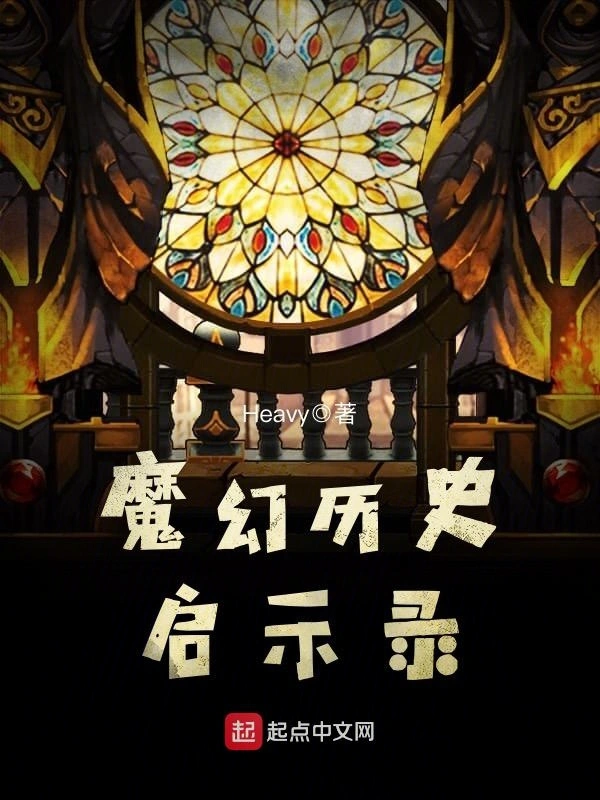
Magical Historical Apocalypse
魔幻历史启示录
- Status
- Ongoing
- Length
- 114k Words
- Genre
- Western Fantasy
- Audience
- Male
- Subgenre
- Epic Fantasy
- Updated
- 5y ago
- Source
- Qidian
Stats
0Monthly votes
148Recommends
4Fans
55Chapters
Synopsis
Reader comments
Readers also read
 Great Navigation: My Professional Skills Have No Upper Limit
 Voyage: the System Is Hex
 Is This What We Paladins Are Like?
 Panlong Began by Becoming the Great Perfection and Enslaving the Four Divine Beasts.
 Iron Powder and Spellcaster
 Invincible Righteousness
 Ji Dao Du Tian
 Tao and Carbon-Based Monkey Breeding Rules
 The Secret Martial Arts: the Record of the Knight's Rhinoceros
 Start Cultivating Immortality by Killing Pigs
 I Became a Dragon
 How Did I Become the Emperor?
[Passers' comments]
Total score: 73 Author: Hea-vy Reviewer: Encounter Genre: Epic Fantasy Number of words read: 100%, 7.8W/ 7.8W General comments: A relatively serious Western fantasy work, set in the Holy Roman Empire in the Middle Ages, which strengthens the magic elements of the Holy See/Magician dispute and the King/Church power struggle. It is a relatively new work by a newcomer with a relatively strong epic feel. Introduction to the work: Stephen, a poor man who accidentally stepped into the magic door, came into contact with a brand new world, and at the same time he came into contact with the higher levels of the empire that he could not reach originally, and the story of his continuous upward struggle. Detailed review: Title: 2/5 Magic and history can be regarded as indicating the genre. Revelation has a slightly religious style. Anyway, for me, the three words "Revelation" basically equal the doomsday judgment. The eye-catching effect is not good, it is too regular and a bit serious. Introduction: 2/5 The third sentence is missing a word, obsessive-compulsive disorder means a negative review. The male protagonist appears in the introduction, and there are hints about the female protagonist (the cousin is a princess, maybe). The appearance of specific words will naturally attract a specific group of readers. At the very least, people who have some knowledge of this period of history will continue reading after seeing the introduction. The performance is acceptable at this point. Genre score: 5/5 Orthodox Western fantasy, from the use of historical figures, to the reproduction of historical background, to the display of magic, is a very pure medieval European style. However, we need to dig more into the performance of magic. For the time being, it seems to be a low-law world. Basic skills: 12/15 Generally speaking, the writing style is good, I am good at describing the environment, and the characterization of details is also quite exciting. I picked out the typos while reading, but later I saw that they should have been corrected, which is a good point. You should check it more before posting. The more a novel requires readers to pay attention to details, the more perfect the details are. Although it's a bit nit-picking, I still want to remind you that many of the author's sentence patterns are a bit complicated. For example, in the sentence at the beginning of Chapter 16, "The Princess's 'First Array,'" after the subject "Canossa" appears, Before, the attributive is long "She has put on the thick yet flexible 'Violet Tears' breastplate, carved with simple and beautiful patterns, which perfectly fits her body shape, and is playing with the knight's gloves on her hands." This long attributive also contains The subject "breastplate" and the detailed description of it make the whole sentence a bit complicated and lengthy. When reading, it will also cause misunderstandings due to the presence of commas, and this subject that appears very late will also create a sense of separation from the previous sentence, so It is best to avoid such nested sentence patterns, for example, change it to: Canossa Hohenzollern turned her head and looked at the woman who was helping her tighten the shoulder armor straps, and received a helpless and caring look from the other party. Although her "Violet Tears" breastplate is so thick that it is difficult to wear alone, it perfectly fits her body shape and allows her to move flexibly after wearing it. It is also engraved with simple and beautiful patterns. (You can also add some adjectives here to praise someone's beauty and good figure, etc.) Similar complex sentence patterns also appear in the tenth chapter. , Chapter 17, Chapter 27, etc., Although it does not affect understanding, it is not recommended to use such long sentences, because for many people who use mobile devices to read books, a sentence that exceeds two lines on most screens (personal experiments on 6s and xmax) is really troublesome to read. For people like me who like to read books word for word, I often have to go back and read the rational sentences again. Opening: 6/10 Let's start with the golden three chapters. This opening is basically a failure, but the writing is good, so as long as people are willing to read on, they should still be attracted. The rhythm of the plot in Chapters 1 and 2 is acceptable. There is a description of the environment from the small to the big picture. There are details and secret revelations about the protagonist's class. There is also a princess online, which brings a little expectation of encounters. After that, it enters the slow-paced daily stage. This part is actually very good in terms of unfolding and describing the structure of the entire world. However, for some readers who are impatient and accustomed to fast reading, it is probably a good example of a persuasive start. Character design: 15/20 After all, the character design is not broken at the beginning. From the perspective of character establishment, the protagonist Stephen's cautious and motivated mind, and the (suspected) heroine's quirky spirit as a princess and knight are all very distinct. Moreover, the other supporting characters also seem to have online IQs and have not become victims or stepping stones of the plot. I praise this. However, because there are too many people appearing in these short twenty-nine chapters, individuals including the protagonists do not have many roles. In addition, it is difficult to remember the names and family names of foreigners. I can already foresee that in the future as the plot goes further and further, readers will not be able to remember the characters and cannot tell who is who. Plot: 15/20 It is also just at the beginning, with all the foreshadowing and foreshadowing. It can only be seen that the author has a big plan. In the early stage, he continued to improve his personal strength. In the later stage, he is expected to become emperor and conquer the world, overthrowing the rule of the Holy See? After all, it is not a complete copy of history, so it is difficult to say the final direction. I estimate that it will achieve a Renaissance and Industrial Revolution in the field of magic. Judging from the chapters that have been released, the plot logic is rigorous, and the reversals and crises are also presented just right. I hope it will continue to be maintained. Creativity/conception: 8/10 Because there is a question about setting reference in the comment area. Although I have not read Arcana, I only looked at it on Baidu. For the time being, it seems that there are similarities in the magic system? As for the similarity and integration of magic and science, the existence form of the church, the manifestation of artistic characteristics, etc., These are the characteristics of this period of history in the Western Middle Ages, and there is no problem of borrowing settings from others. The detailed divisions between astrology and astronomy, alchemy and chemistry, numerology and mathematics, pharmacy and medicine, etc., Were incomprehensible to the people of the time in the Middle Ages, an era when the boundaries between profane/non-profane were unclear and nature was equal to mystery. But since someone has brought it up, the author should still pay attention and try to show off his personal characteristics as much as possible. For me personally, the scientific deconstruction of medieval magic is not really new. After all, this kind of understanding is actually quite common in both academic and literary circles. Subjective part: 8/10 First of all, I am relatively familiar with this period of history, so it seems relatively easy. However, for most people who do not know much about Western history, the large number of family names and personal names in this book are enough to dissuade people. But this is also a helpless thing, and it is also a test of the author's character creation level, because once the character characteristics are not distinctive enough, there will be a mess behind it. The first suggestion is to try to minimize the "knowable information" chapters. Even if they do appear, please control them in the free part, otherwise it will be just to make up the word count. When introducing history, instead of using a chronology, it is better to intercept some more interesting historical events and angles, otherwise it will be boring and boring. In fact, it is not recommended to have a historical science popularization chapter, because this article is an exploration of historical possibilities (I do not agree with the idea of magically changing history, because history has infinite possibilities, and many people who think history should be the only one are textbook recipients of consequentialism) Of course, since there is magic, I can accept the term "magic reform"), then the best effect is to let the history you write replace the perception of real history, and try to eliminate the difference between reality and imagination. Once your contrast between true and false is established, it will only confuse readers. The second suggestion is to consider integrating more Western mythology, witchcraft, fantasy, etc. To enrich a setting with distinctive characteristics. For the time being, it is only known that the author has introduced Germanic Norse mythology, such as the Valkyries and the Ring of the Nibelungs. It seems that the Hebrew Star of David symbol appears, and then there are the Greek and Egyptian gods that appear in the magic names. In fact, there are quite a few things that can be drawn into this general background, such as the Celtic Druid faith, numerology, Middle Eastern alchemy, Gnostic dualism, and various strange prophecies (such as the prophecy of observing the internal organs of birds) , as well as those gospels that are not included in the New Testament and are considered heretical (Gospel of Judas, Gospel of Magdalene, Gospel of Truth, etc.). These may not be able to be integrated into the author's scientific magic system, but they are also excellent fillers for rich and specialized settings. In fact, the book "The Golden Bough" has a very unique interpretation of witchcraft, although it does not belong to a mathematical interpretation, and it also records many specific examples of witchcraft. And Aradia, or the Gospel of the Witches directly recorded a lot of spells and rituals. In addition, it is quite interesting to directly copy poems (such as those Nordic ballads) as spells. I hope to continue to work hard to write this story well and write my own characteristics.
The writing foundation is good, but now Western fantasy is becoming more and more unpopular, and traditional Western fantasy has almost completely declined. The Internet era is getting faster and faster, and the slow-paced plots of traditional Western fantasy can no longer keep up with readers' interests. In addition, the names of people and places in Western fantasy are complicated and have no cultural affinity, so it is definitely a niche. Nowadays, the core of online writing is pleasure, which can be overt pleasure (such as pretending to be slapped in the face, invincible golden fingers, nonsensical and lighthearted comedy, etc.), Or secret pleasure (such as playing tricks, high IQ comebacks, decrypting suspense, power development, etc.). It is recommended to take a look at the bestseller list of Western Fantasy. In fact, every book with good results can easily find elements that make readers feel "fun". Only by combining these elements can we achieve better results! Wish the fire~
A very novel theme! Come on^0^~