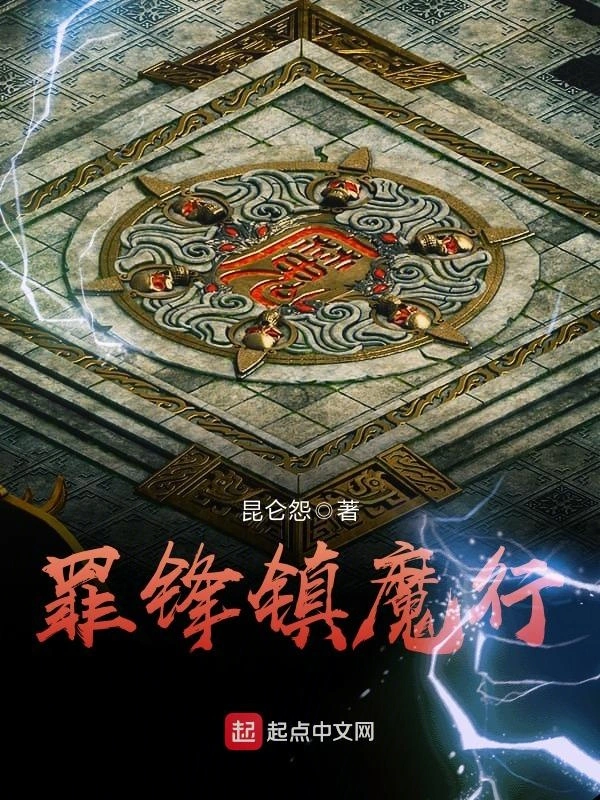
Sin Feng Suppresses the Demonic Line
罪锋镇魔行
- Status
- Completed
- Length
- 1.1M Words
- Genre
- Martial Arts
- Audience
- Male
- Subgenre
- Wuxia Fantasy
- Updated
- 5y ago
- Source
- Qidian
Stats
Synopsis
Reader comments
In booklists 9
Cang Yiwei's Book Promotion Alliance
This book contains all kinds of works, whether they are great writers or small authors, as long as they are exciting enough!
🌹Female Fairy Flowers, Spring and Autumn Dreams?🍀male Fairy Grass, Rivers and Lakes Feelings!
Me: "I will regularly search for high-quality female videos from major lists, click circles, book lists, and columns to read, comment (Xianhua Index), and guess (screen potential)! I will also collect high-quality male videos from Xiancao to read, comment (Xiancao Index), and chat about (their strength)." Nymphomaniac: "Every female fairy flower always has a big spring and autumn dream. One day, she will devote herself to the screen!" Fairy flower index: 🌹🌹🌹🌹🌹 Screen potential: 🎬🎬🎬🎬🎬 Give it
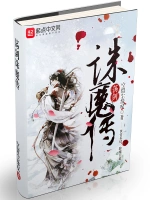
Martial Arts - Asking for Love
Online martial arts warriors are struggling to survive. As long as there are still people who are persistent and don't give up, let's work hard together.
Waiting for You to Pick
Committed to discovering great works. There is currently no clear standard, it depends on personal reading and perception. But I will read it carefully and attach my own review. Whether it is a work that has been completed, or a work that may become a god, as long as it suits my reading taste, it will be included. If you want to place an order, you can also leave a comment. I will read the selection carefully.
🌴The Book List Has Not Been Moved, Food and Grass Go First🌿
I am too lazy to write a book introduction, but: 🤔Books are just for reading, right? 🧐The plot is just for making fun of, right? 😙Characters are just for attracting hatred, right? 👀Give you a pair of eyes to see for yourself! The main mantra of this order: As long as you can automatically filter the slots, you are a qualified drug tester! The conscientious owner guarantees quality and quantity. If there is any falsehood, we will compensate you ten percent! 😏 Please follow and add it to favorit
Kunlun Bookstore
Adhering to the principle of erring on the side of shortage, the personal score is above 80, and the quality certification is reliable, but the completion of the book is not guaranteed. The content of the work promotion is minimal and subjective advertising is eliminated. Those who are interested in trying drugs should make their own choices.

[Xiancao & Masterpieces] We Accept Orders as Long as They Are Well-Written Seedlings
Each book is personally read by a single author, so there must be something worth recommending, and they are all works with excellent writing and plot. The owner is a super lazy person and does not want to write an introduction to each book, so he only includes articles that have been reviewed by roadside review circles and articles that the owner loves. If you want to add an order, you can leave a message with a book introduction. If the owner thinks it's good after trial reading, he or she wil
Excellent Martial Arts Novels: Laughing at the Grievances and Grudges in the World and Exploring the Martial Arts Style
Martial arts novels can be called the most attractive novels among modern Chinese novels. I still remember that when we were young, we were attracted by the martial arts world constructed by Jin Laogu, and were moved by the world of grievances and hatreds. Today I have selected a few high-quality martial arts novels to let everyone re-appreciate the flavor of traditional martial arts and recollect the martial arts dreams we had when we were young.
Red Dragon Bookshelf
It mainly collects martial arts, ancient romance, supernatural and other themes, focusing on writing and character creation, and there is no guarantee that the book will be completed.
Readers also read
 Pretending to Be a Postman, He Gained the Power of Four Dragons and Four Elephants at the Beginning!
 God Rewards Hard Work, Starting from Xiao Li Feidao
 The Reincarnation of Immortals and Martial Arts Begins with the Enlightenment of the Supreme Being
 Become Invincible in the World from the Eighteen Palms of Subduing the Dragon
 Unrivaled Double Harmony
 Blood Sword Chant
 Great Sui State Master
 Iron Powder and Spellcaster
 Steam Xia Ke Xing
 Nine Days
 Unscrupulous Swordsman
 Daming Under Facebook
[Chat about Zuifeng] Chapter 4: Impressions of Volume 1
Facts have proved that the last discussion was indeed written too early, but it did not affect my impression of the character Yun Duoduo. It was just that I felt sad after seeing the truth. As mentioned in the turning point, this book can often make people immersed unexpectedly, and it can also wake you up when you are thinking about it in your dreams. I am also too young. After falling into several pits, I still haven't escaped the last pit in the first volume, which is melancholy. What is true is also false, and sometimes false is true. It seems like a dream, and others are talking about it, but as a person who has actually experienced it and put it into his emotions, is it really so easy to let go? You also need to continue reading from the following content. Impressions of the first volume. Overall, it is very smooth and the main line is not laggy. [Advantages] 1. The character movements, especially the martial arts, are almost indistinguishable and very exciting. 2. The character creation is consistent with the person's behavior and behavior, which coincides with the four words of compassion and compassion. 3. The explanation of the Buddha's path in language is very accurate, which shows his wisdom. 4. Even the villains are very clever and not brainless. This is a great novel. [Non-Advantages] 1. The language description is a bit stiff. In addition to the 'Tao' and 'The Tao' mentioned earlier, Nana appears too frequently in Volume 1, Nana when the character cannot answer the question, Nana when the character is almost hit by a weapon, it seems that everything he does can be related to Nana. Of course, the content of this article is not limited to the word nana. 2. The connection between high and low is short of breath. The protagonist is about to be killed, and suddenly a side story is forcibly inserted. This feeling is like when I was a child watching the TV series finale and sighing about life and death. Then a shampoo commercial suddenly appeared. What was originally uncomfortable was because of such a interruption, not much was left. Even if it can be said to relieve the atmosphere, it does not change the nature of the arrangement of the plot making the arrangement of primary and secondary uncomfortable. Perhaps the author has other considerations. In fact, I liked various painting styles in the early days of writing. However, after writing for a long time and looking at it from other angles, I found that it hindered the emotional accumulation of reading. As for the last sentence, if the author still has any questions, please feel free to ask. 3. Female characters lack characteristics. What I'm talking about here is not a single person, but the feeling given by the female characters in Volume 1: as soon as they get married, or once they fall in love with someone, they wait dryly, or they just let things happen and don't think independently. Facialization. Strictly speaking, a girl who has never seen the world again will not say that she will dedicate everything to him when she meets a knight. She may be unable to control her heart, but when it comes to dedication, she is really divorced from reality. Women are not appendages, they are not mindless followers, let everyone know that. 4. Not yet freed from the influence of previous sages. This mainly lies in the setting of some parts of the plot. There are some places that people can't help but think of famous scenes in other works. Naturally, this is not considered unacceptable, but I would like to ask the author, when he wrote those plots, did he really not think about a certain content of a certain book and then imagine it. If not, I would like to apologize. If so, I would like to say that writing a book is a process of gradually discovering oneself and confirming one's own style. It does not mean that tribute cannot be done, nor does it mean that conflicts can be completely avoided, but those so-called shadows will gradually solidify the creative ideas. It's like drawing a gourd by pressing it on a gourd. No matter how beautiful the gourd is, the object will still have the mark of the maker of the gourd. That is not one's own, but always someone else's. This is a bit harsh, and you may even be blacklisted. Of course, it is not impossible that you will not be refined. However, since you have a true intention to comment, you should not be perfunctory, saying one thing or not, and adopting another thing. …… The evaluation is completed today.
I think the story is very strong, especially the dialogue, which establishes the character of the character very deeply at the beginning. It is said that every word and sentence is used to serve the plot and theme. I like compact novels like this
[Zhile Comments] Chivalry is Eternal
This is a very colorful traditional martial arts novel. The author uses the protagonist's trial of inner demons in the dream to outline the story of knowing that there are tigers in the mountains and heading for the tigers in the mountains. Xiao Ting, the son of the Demon King, has never known his own life experience. He abandoned literature and martial arts because of the tragic death of his mother and the destruction of his home. He vowed to kill his enemies and avenge them. As soon as he had achieved success in martial arts, he heard that his enemy, the Demon King, was injured and had not yet recovered. He refused to listen to his master's dissuasion, and was even willing to trade the rest of his life for seven days of magical skills, just to die with the enemy. The master had no choice but to let him enter the dream world and use the experiences in the dream to wake him up. When Xiao Ting wakes up from his dream, he will finally gain something. The novel is written based on an encounter in a dream, and the dream encounter is a lofty content such as the Eight Sufferings of Buddhism, which is simply breathtaking. The whole novel gave me the feeling of being profound, sophisticated and unpredictable. The author's writing style is rigorous and smooth, and every word is carefully crafted. The lines are full of ancient meaning, rich in chivalry, and quite traditional martial arts charm. There are almost no typos and incorrect sentences in the article, which shows the author's creative ingenuity. The plot progress is a little slow, but the content is very exciting. The plot of Xiao Ting passing five levels and killing six generals is very attractive. The villains all have distinctive personalities and extraordinary strength. It reminds me of the scene in "The Legend of the Condor Heroes" where Guo Jing carries Huang Rong and asks for help from Master Yideng, who is a fisherman, a woodcutter and a farmer. The description of the martial arts scenes in the article is delicate and realistic, and the characters with very unique characteristics create a strong sense of picture and make people immersed in the scene. This novel is highly literary, and the allusions and diction in the text are eye-opening. It's a pity that the title and introduction of the novel have a serious dissuasive effect. The title of the book is difficult to remember. Even if I read the title after reading the entire text, it still feels strange. The introduction is rigorous and concise, which shows the author's profound literary skills, but it also automatically abandons some readers who feel ashamed of themselves. At the same time, the wording in the article is too particular, the sentences are sometimes too cold, and the style is too high. The writing style of the novel is a bit boring, more condensed than free and easy. This is very similar to Xiao Ting, the male protagonist of this article. He is honest and loyal but not flexible enough. It is very unpleasant in an online novel that pursues refreshing and fast. The author meticulously describes the body movements of both parties during martial arts, and even contains a large amount of Buddhist scripture knowledge. These contents are very unpopular. How many online readers can read it carefully now?
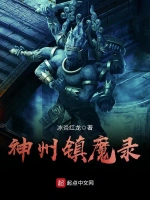
[Scale-Scraper Alliance] "Sin Feng Demon Suppression" & "Shenzhou Demon Suppression Record"
This "The Journey of Sin Feng Suppresses Demons" is the prequel of "Shenzhou Suppresses Demons". The prequel mentions that Feng Junqing and Long Yanbing traveled to the time of Sin Feng and became Mu Yun. Of course, this prequel is nonsense from the author, but I still take it seriously. Especially the name Long Yanbing. When I saw this name, I automatically substituted the protagonist [Mu Yun] for the author of "Shenzhou Demon Suppression Record" [Bingyan Red Dragon] [Title & Introduction] "The author knows it well, so I won't lie." However, friends who can remember these two book titles at the same time are really amazing, like me. [Writing style] "Bapi 1's "Shenzhou" said that he was writing a novice novel, but after reading Bapi 2's "Sin Feng Suppresses Demons", I don't know why it is said to be a novice novel." The book Shenzhou's laughter and curses are self-contained, and everyone's temperament is relatively distinct. But the author may have some misunderstanding about "Xiaobai Wen". This is not Xiaobai Wen at all. Although the writing style of this book is more relaxed and lively, looking at the wording and sentence construction, I always feel that the author may never be able to write any Xiaobai Wen in this life. The entire writing of "Sui Feng Suppresses Demons" is more stable and sophisticated. It is a book where you have to stop and ponder after reading a chapter. Perhaps it is the setting of "Suffering the Eight Sufferings of Buddhism for the remaining seven days of my life" that sets the tone of this article. Of course, the protagonist of this book is a Pig Buddha, so it is not easy for him to have emotions of great joy and great sorrow, so the emotional rendering of this "Seven Days to Live" is not particularly strong. However, I feel that he is not a person who has nothing in common, nor should he be pessimistic about life and death. Since he is willing to receive the buff bonus of the [Heavenly Buddha Nirvana], has the belief to destroy his family, and is closely involved with the heroine, when he learns that he is a demon, it shows that he does not take it lightly, but the process of suffering these eight sufferings also shows his benevolence and chivalry. Therefore, there should be more layers in terms of emotional and psychological construction of characters. [Setting] "Same world view, different journey of suppressing demons." "Shenzhou Demon Suppression Record" originated from "Sui Feng Suppressing Demon Journey", and the background world view of both is the same. In the world of Sinfeng, Buddha and demons are at odds with each other. Finally, the demon sect is destroyed. Ten years have passed and disputes have arisen again. ————I am a dividing line—————— The structure of "Gui Feng" makes me very comfortable to watch. Divine will, soul sorrow, residual light, extinction, (dream recall: key clues), heaven, (a word I can't pronounce) emptiness, violent shadow, pure universe, including birth, old age, illness, death, resentment and hate, separation from love, failure to seek, and the burning of the five aggregates. At the end of the plot, there are two major twists. The man who cultivates Buddhism is the son of the devil. The father and son hit the forge together. When everything returned to nothingness, they discovered that it was all a big dream. (I don't know how to praise it, but it's awesome anyway. I quite like watching it.) After pretending to praise it, let's talk about the bloody current situation. 🌟Because I am a big fan, so even if I think this book is good, I will still speak from the perspective of the big fan. Of course, even if I don't like watching it, I will praise it. This book is a short article with a tight rhythm. When writing this short article, the author has actually secretly established countless thresholds for his readers. A. First of all, traditional martial arts themes have eliminated a group of readers (this can no longer be called traditional martial arts.) As long as it involves traditional concepts, especially traditions that do not add new elements, it is easy to die. Just use what Bapi said in the group last night: "The routines of female channels before." It seems that they still have this consciousness. It is easy to say this to others, but difficult to say to yourself. The values of the times are changing. In the past, Qiong Yao was very popular, and the love was so deep that so many people watched it. Now, if I look at it again, the only visual comments left are "He Shuhuan is a scumbag" and "the author has problems with his three views"... B. The introduction of this book title will eliminate a group of readers. C. Short stories and weekly updates eliminate a group of people (the reading experience of short stories is actually not as good as that of long stories. The slow pace of long stories has a process of emotional sublimation, and the moderate elongation of the story line is more suitable for readers to self-involve. If the rhythm is the same, there will be less of an emotional brewing process. And with weekly updates, there are so many hidden points, which is a good thing for those who follow the reading. A critical hit.) D. The chapter title is vague and eliminates a group of people (the first chapter is changed to the first day, which may be clearer. The two words "divine will" are replaced with the words "life", which means "birth, old age, illness and death", and the rest will be more clear.) E. The meaning is too deep, and there are too many foreshadowings to eliminate a group of people. Both books have this problem. I think reading is a process of exchange of ideas between the author and the reader, so if you bury too much and too deep, you will definitely die. The reason why Shuangdian is so popular is not only Shuang, or what is known to the public as a slap in the face, or a golden finger, but more importantly, the way of expressing emotions is simple and crude, straightforward, and more likely to cause emotional collisions. On the contrary, if there are more foreshadowings and deeper writing, the emotional bond with you will be shallow. Let me tell you a few words to give you a feel. 🌟"The rest of my life will be for you!" 🌟"From now on, I will swipe all my cards for you!" (Except for brain-burning articles, in an era of oversupply, don't try to make an unfamiliar reader spend too much time guessing your intentions.) To add to this, why are secondary creations such as unlimited streaming and fan derivatives popular: For example, I like "Harry Potter". I have watched it about a dozen times, and I already have a fixed idea of each image. Just hearing the word owl, I have a lot of plots in my head. Therefore, if a re-creation casually mentions a term in the original work, such as "Sorting Hat", he doesn't need to describe it too much, and I will have a very strong resonance and emotional graft. (So, in this era when feelings are over-consumed, a large number of authors are sparing no effort to create derivative works that excite fans of the original works. You hide it from me, and you decide whether to die or not.) F. When it comes to religious issues, a lot of people are swiped away, such as me. As a Buddhist, my parents have not allowed me to come into contact with Buddhism since I was a child. I am totally ignorant about this. What about the Eight Sufferings of Buddhism and the Five Aggregates? If I didn't read Baidu, I wouldn't know what you are talking about. ——————I am a dividing line———————— Let's talk about "Shenzhou" again. Although I made fun of this book, I still enjoyed the reading process. I can read it while working, and my memory is relatively clear. (Although from the perspective of literary creation, it is not as well written as "Gui Feng".) However, the characters are really clear, especially this Mu Yun, who has been affectionate since ancient times, and can only win people's hearts through routine. Moreover, I spent more emotion on this book than the first one. Whether it was teasing the protagonist or the author, I could even tell you a lot about Mu Yun's characteristics. His image is deeply rooted in my heart, and I want to complain about it when I think about it. But the other one is not the same, it is relatively flat, and I can't even remember its name. I think the author sometimes needs to reduce the dimensionality of the character image at certain points, whether it is identity, behavior, or man, to create an opposition. For example, the full-time master Ye Xiu, a master with the highest level of glory, is a living baichi. Such a downgrade can bring readers closer to the character. For example, if Mu Yun is a person with a narrow heart, high martial arts skills, and a good brain, the sense of substitution will be very poor. But if you add a setting that makes you unable to walk when you see a woman, the majority of men will probably smile. While elevating the image of the character, it is also necessary to create a universal resonance point, so I am complaining, but I still have to approve this setting. (That so-and-so is pulled up too high, so I think he is almost like a person reading a piece of paper.) Let me talk about this woman, there are many problems. (I feel that novels that do not satisfy people's [negative emotions] are easy to be boring. For this negative emotion, you can refer to rage, laziness, greed, vanity and seyu. You can also refer to the seven deadly sins.) Rage is rebirth and revenge, laziness is the blessing of the golden finger of the system, greed is the glory of God, and vanity is fame (the ordinary Harry Potter is the Boy-Who-Lived in the wizarding world, this is to satisfy the vanity of the masses). Needless to say, seyu is to answer women's questions. (Appropriate reverse satisfaction is still necessary, of course, I am not talking about the overall situation) Then, return to this book to analyze why I am full of desire to complain and still want to praise. A. Room for appreciation Don't push too high at the beginning. If you push too high, you have to fight it down, or you can also set up public opposition. Mu Yun starts as a buddy, and there is a lot of room for appreciation as a buddy. Of course, he must set a point that can be seen and expected, such as martial arts, and what moves he will use "Kong Lan Xuan" , but he is not from the Kunlun sect. If he attracts the attention of the girl, it will also attract the attention of the readers. When the mysterious second brother is substituted, he can be converted into ordinary us, with special skills and special status. After raising the level and defeating it, we still refer to our Ye Xiu, (the master becomes a network administrator.) The opposite of the public is that the protagonist is a demon and a witch. (For example, if the protagonist of "Crime" starts out as the son of a demon who is being suppressed by the world...) B. Concealment/lie (1). The identity of the male protagonist (2). Yu Bingru's face (3). The identity of Qi Xuegu - the real person appears. These points will become reasons for readers to read on, adding a little bit of ciji to the honest itinerary. The liar male protagonist and the female protagonist whose face is not shown are very "cheating ghosts with men's mouths" + women who "still hold the pipa half-hiding their faces" can more arouse men's desire to conquer. C. Conflict (Chapter 40-50, I only read Chapter 50) I think this part is well written, the creation of the atmosphere, the turning point of the story, the emergence of the protagonist, and the changes in the character's mood are all pretty good. Finally, I think Papi is an author who likes to create reading difficulties for his readers. The novel "Shenzhou" is like this. It has a lot of foreshadowing, the identity of the protagonist is unknown, and there may be many people involved in the group. The main line is not clear enough, and it is semi-hidden. Coupled with the relationship between the two books, it takes a lot of effort to explore the background of this story.
[Scaler Alliance] I'm just here to make a point!
All conditioned phenomena are like dreams, illusions, bubbles, and shadows. —— .:? It refers to the suffering of birth, the suffering of old age, the suffering of illness, the suffering of death, the suffering of resentment and hatred, the suffering of separation from love, the suffering of not getting what you want, and the suffering of the five excessive Yin sufferings. "Together, they are called the "Eight Sufferings". This article is based on the Eight Sufferings. He uses his strength to bless the dream of heaven and man, allowing the male protagonist to experience it one by one. The organizer calls it a trial, and the result of the trial is naturally "after experiencing the eight sufferings, he finally gains the heart of Buddha." In the end, the male protagonist follows his destiny and joins the world. From the perspective of the novel itself, this ending is indeed "unexpected. "It makes sense", but since this book is based on the Eight Sufferings of Buddhism, I will talk about the unreasonableness of this ending from the perspective of "after experiencing the eight sufferings, finally gaining the Buddha's heart". Therefore, I am forewarned that this article is not a literary review, but is more focused on the discussion of the core of textual Buddhism. At the same time, there will be some theoretical science popularization, so it may be boring. ——What are the eight sufferings? To talk about the eight sufferings, we must first talk about the Four Noble Truths of Buddhism, that is, the path of the accumulation of suffering. In layman's terms, all existence is suffering, so we must find the source of suffering (the setting), eliminate the source of suffering (the path), and let the suffering no longer accumulate (the path). Detailed explanation of the truth of suffering. Copy the content of my previous book review: Birth, old age, illness and death are the inherent sufferings of human beings, which are physiological sufferings; love and separation means that what you love and seek will always be separated; resentments and hate will always be faced; the failure of what you want means that the human heart will never be satisfied; a brief summary of the suffering of the five yin, also called the suffering of all five aggregates, is caused by the origin of all living beings. (Reception, Thought, Action, Consciousness) are connected, and they are also a gathering of many sufferings. According to the chapter layout of this book, "Divine Will", "Soul's Sorrow", "Remaining Light" and "Extinction" are about life, old age, illness and death. The next four chapters of "Heaven's Secret" are interspersed with the last four of the eight sufferings, and do not talk about one suffering in one chapter like the previous four chapters. Of course, it may be the author. It's a score, but it's really hard to tell. The male protagonist "loves and separates" twice, and the "resentment meeting", "unavailability" and "all the five aggregates" are with him from the "Heavenly Secret" chapter to the end. It can be said that the suffering is there, but it is a pity that the separation, realization and cultivation are all very different. I don't know where this final Buddha's heart came from. ——Dream. Is there any karmic reward for cultivating the Tao? According to the author's layout, many of the previous bustling dreams are the dreams of gods and beings that he has blessed the protagonist to practice, but can the words and deeds in the dream prove the Tao? First of all, this leisurely dream is naturally for the male protagonist to remember, even when he is awake. In Freud's words, this is called manifestation. Sexual dreams are the product of shallow sleep. Since it is an explicit dream, it is scientifically inferred that it is like what is said in the "Milanda King's Inquiry Sutra". This is a coma that occurs only when you are not awake or half asleep, and the "Santa Vipassana" says that "dreams are neither good nor evil", so there is no retribution. It is true. There are some allusions that use dreams to explain things, such as "Ananda's Seven Dreams Sutra" and "Eight Dreams Sutra", but they are to explore the nature of dreams (emptiness has no self-nature), and use dream metaphors to describe the essence of the reality of all things, rather than practicing through dreams. Therefore, it can be seen that the male protagonist's "eight sufferings" in dreams do not necessarily allow him to understand his mind and nature. R> ——Does the male protagonist have any practice in the dream? It's hard for me to say that he does. Although he practices charity, he has nothing to give up. Although he practices purity, he is trapped in sex. Although he practices patience, his mind is not calm. Although he practices meditation, he has no concentration. Regardless of what the male protagonist says. OK, or the words and deeds of other monks in the book. If you refute it based on Buddhist scriptures, it would be a bit arrogant, so I won't mention it. To put it lightly, read the "Suffering of Sickness" chapter, which ends with a quack doctor saving people, and the "Suffering of Death" chapter, where a beauty saves a hero. After reading "Heaven's Secret", I let the eight sufferings burn, without thinking or enlightenment, and the ending. The situation is superficial, only suppressing demons but not overcoming them, and not enlightening demons (after all, the demons here refer to all the five aggregates containing suffering). It directly concludes that the Four Noble Truths are just the first step in seeing suffering, and does not even implement the four mindfulness practices. - If the Tao can be cultivated in a dream, and the male protagonist has indeed cultivated the Tao in a dream, then what should he achieve by "finally attaining the Buddha's heart"? What is the Buddha's heart? To put it loosely, it is all empty. Hatred is empty, hatred is empty, demons are empty, and the world is empty. No matter how you think about it, it is right to become a Buddha immediately. In the end, the male protagonist ended up going around in the world with a knife? Didn't his master vomit blood due to anger? Have you experienced the eight sufferings in vain? Are dreams of gods so easy to deal with? There are not many people in the Buddhist scriptures who can give blessings to this level! Don't talk about destiny, otherwise there would be no saying that the Buddha is a great free being and an endless phenomenon outside the mind. Buddha is a person of great freedom. He has a mind that does not cling to a single phase or a thought. He is free, autonomous and infinitely active. He is the person who has at least achieved the state of emptiness (the origin and cessation of suffering and the path to emptiness). From this, it can be seen that the Buddha's heart should be the same. Isn't the male protagonist's Buddha's heart very special? It is better to stay in the temple and become a monk, or to admit that he has failed in enlightenment and relapsed into reincarnation. Let's do it! ——In short What a bad ending!
A good book, a good story, and the writing is so immersive! !
It's a pity that the writing is so sophisticated, it's a novel that I knew I would follow from the beginning.
Ksitigarbha PagodaDedicated sign-in building for book friends
Six paths of reincarnation, rebirth in bliss, heavenly Buddha forgiving sins, Ksitigarbha being compassionate.
[Tiandao Ming Pagoda] Book friends criticize and correct the building
A typo is like a buzzing mosquito in the summer. You know it's there, but sometimes you can't see it even if you're blind. This page is dedicated to enthusiastic book lovers to help authors discover text or sentence errors that were overlooked during proofreading, and learn and progress together. Special reminder: The problem of land acquisition is not within the scope of the activity.
Small rewards support good books! Come on!
Complete the books one by one and spread the flowers 😏!
The next few extras are very interesting 🤭