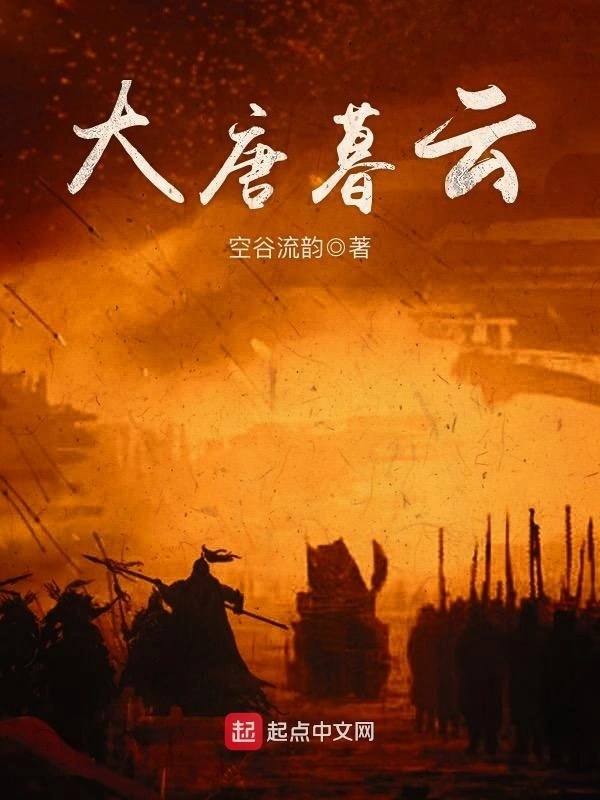
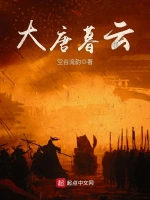
Muyun of the Tang Dynasty
大唐暮云
- Status
- Completed
- Length
- 1.0M Words
- Genre
- Historical
- Audience
- Male
- Subgenre
- Jin-Sui-Tang Dynasties
- Updated
- 6y ago
- Source
- Qidian
Stats
Tags
Synopsis
Reader comments
In booklists 8
Favorite Historical Text (Focuses on Fighting for Hegemony, Many Niche Dynasties)
Feel the weight of history. There are both new and old books, everyone is welcome to recommend~ (ps: some books will be recommended in the comment area)
Focusing on Lesser-Known Historical Periods
This book list mainly recommends stories from lesser-known historical periods such as the Spring and Autumn Period and the Warring States Period, the Qin and Han Dynasties, the Jin and Southern and Northern Dynasties, the Five Dynasties and Ten Kingdoms, the turn of the Yuan and Ming dynasties, and foreign history. The single author will select the books with good writing skills and exciting stories to recommend to everyone. Books with novel stories and well-written stories will be highly recomm

History Book Express
Share some good new historical books
Selection of Masterpieces - Excellent Recommendations
💯✔️Most of the works recommended in the book list are excellent works. ㊙️Most of the novels on the list have been read by the author. They are accompanied by long and short book reviews. They are absolutely recommended by conscience. 🔥New authors can increase their writing experience by reading excellent works. Friends who are short of books can collect this book list and have books to read at any time. 🇨🇳Continuously updated, focusing on outstanding works📚 🇨🇳The book list rejects idiotic ar
Use History as a Mirror and People as a Mirror.
Please recommend, please collect In recent years, good historical novels have become more and more popular. Too few, I can't find good historical texts, and it's hard to update the book list. (⇀‸↼‶) Recommend two classics PS: Book friends are welcome to recommend high-level historical novels. Priority will be given to those with historical data support, invincible flow, system flow, etc. YY flow Except pie.
Personal Preference
Fantasy; mostly history. This is my personal book list. Paratroopers don't talk nonsense. Nowadays, idiots and illiterate people make up the majority. They are characterized by difficulty reading long sentences and difficulty understanding written language. Even short spoken sentences are difficult to understand. After reading 10,000 words, I don't know what to write. The extreme pursuit of substitution and the so-called need for pleasure. Therefore, the work cannot form a true literary work. Be
Those Good Stories That I Read Day and Night
I like reading, and I also write books myself. The book list is all books I have read, and occasionally I recommend books from friends. They are all good books, and I would not recommend them if they are not good.
Books You Can Read
Personally I think it's pretty good
Readers also read
 In the Red Mansion: Escort Daiyu to Beijing at the Beginning
 Talker in the Song Dynasty
 Please Call Me Your Majesty the Tsar
 1914 Begins with the Rejection of the Schlieffen Plan
 The Reborn Fashion King
 Ten Kingdoms Week
 Daming Under Facebook
 Tokyo: Starting from Pretending to Be a Boyfriend
 Fusion of Wolf Spider Genes, Killing Like Crazy on the Russian-Ukrainian Battlefield
 Everlasting Ming Dynasty
 A Lifetime of Wealth
 Long Wanshengshi
 Daming Yinghua
 Qinghuan of the Great Song Dynasty
 Cooking for Thousands of Miles
 Nanyang Servitor
 Four Seasons
 Thousands of Mountains Next Year
The historical truth of the Jingyuan Rebellion is very strange. There are few mutinies in history that are so accidental. Tang Dezong encountered the Anshi Rebellion at the age of fourteen. He once served as the marshal of the world's soldiers and horses and finally put down the Anshi Rebellion. He worshiped Guo Ziyi as his father-in-law, and he was regarded as a half-horse emperor with rich military experience. In the early days of his administration, he was considered a wise ruler. When the Jingyuan Rebellion broke out, only 5,000 Gansu troops mutinied for lack of food supplies (this reason is far-fetched, mutiny is a serious crime that destroys the nine ethnic groups). Unable to find any resistible Forbidden Army defenders of only five thousand rebels in Chang'an City, Emperor Dezong of the Tang Dynasty fled in panic. Half a year later, the Jingyuan rebellion subsided, and the Tang Dynasty entered a vicious cycle of separatist vassal towns and eunuchs controlling the central government. Since the Anshi Rebellion, the national fortunes of the Tang Dynasty dipped for the second time, marked by the Jingyuan Rebellion, and have never recovered since.
The author's writing style is exquisite but not gorgeous. In an era when fast food-style online writing is prevalent, the author carefully crafted the story, which is very valuable. It is not wishful thinking, but a down-to-earth approach. Good article worth recommending!
The group portrait is very good, please support the author
Recommended by a friend - it kind of reminds me of the elegance of the Han and Tang Dynasties. After all, the Tang Dynasty was the most glorious era of the Chinese nation. I don't know much about the history of the late Tang Dynasty, so I searched several characters in the article. Huangfu Weiming and Yao Lingyan actually have so many stories, and they are set against the backdrop of the most bizarre Jingyuan Rebellion in history. It must be exciting. This is the first time I have read Kong Yunda's work, and I am sitting on a small bench waiting for the wonderful sequels...
I can't remember how many years I haven't read! Only history makes people think! Thanks to the author🙂
The earliest reason why this book was written was that a film and television screenwriter friend of the author wanted to make a TV series with a theme of the Tang Dynasty. Because the author has a deep foundation in the history of the Tang Dynasty, he asked the author to write about it and accumulate feedback from readers. After investing 100 seats in the new book, it can be promoted on a small scale as a starting point. There are currently 57 seats. Readers are interested in betting on whether this book will eventually be made into a TV series. Looking for new book investment, no money, spend 10 minutes reading, bet on your eyesight 😁
Imperial Sunset
Finally finished the book, it's very exciting. Especially the last chapter is really thrilling. It ends abruptly at the climax of the whole drama (you understand, there are three missing points here), which makes people think a lot. This work of my friend has three hundred chapters and more than one million words. Such a majestic masterpiece was written word by word on the subway while working at the desk. The plot is full of ups and downs, and the plot is full of twists and turns, making people unable to put it down. 1. Historical Facts The author uses three main lines of historical facts: First, the confrontation between the feudal town and the imperial court. It started with the Jingshi Mutiny in 783 and ended with the siege of Fengtian, which became the first climax. Dezong fled in panic and was in a terrible state. Fortunately, the loyal eunuchs around him escorted him, and the prince and others led the army to defend Fengtian, and finally maintained peace for a while. After Li Huaiguang rebelled, Dezong moved to Liangzhou. It was not until Li Sheng defeated Zhu Si and regained Chang'an that Dezong returned home. After the Battle of Hezhong, Li Huaiguang was defeated and committed suicide, and this main line was temporarily flat. The second is the struggle between Tang and Tubo, which was also interspersed with Uihe and Nanzhao. In 786, Tubo took advantage of the crisis of the Tang Dynasty and launched a large-scale invasion, but was defeated by the Tang army. In 787, Tubo and the Tang Dynasty agreed on an alliance in Pingliang. The third was the civil strife in the palace, Princess Yanguang's filth and the case of witchcraft, which almost led to the seizure of the heir apparent. During these four years, many major domestic and foreign affairs occurred. Dezong, who was determined to reduce the vassal vassal, was disgraced by the rebellions and separatist regimes in the vassal town. In the end, it also triggered the beginning of the eunuch's autocratic power (the prince, who had always had a low sense of presence, was forced to step down by the eunuch less than a year after he came to the throne, and died soon after, which is very suspicious). Externally, facing the powerful Tubo, Tang no longer had enough power to restrain it. The author threads these historical facts together to form the outline of the entire novel. Therefore, the whole book is gripping, and there is no sense of sloppiness in reading. 2. Characters The real ones are written fictitiously, and the fictitious ones are written realistically. The core characters in the book are: Huangfu Heng, Amei, Wei Gao, Song Ruozhao, followed by Pu Wang Li Yi, Dezong, Li Mi, Lu Zhi, Xue Tao, etc. Among the protagonists, Wei Gao is a historical figure, and the other three are fictional. Huangfu Heng was determined to make great achievements and restore the glory of his ancestors, but he was so obsessed with fame that he boarded King Pu's pirate ship. There must be many readers who regard him as a scumbag. However, in his eyes, his wife and children are nothing after the success of a general. The fame and fortune promised by King Pu can make him proud of his ancestors. He is confident that he can be compared with the good generals of Tiance Mansion and can surrender to the wise master, but he lacks a clear decision. This is a hound. At the beginning of the chapter, Ah Mei is hanging out in a wine shop, doing shady business, but suddenly she explodes, revealing her identity as a common princess and her unusual abilities, which determines the direction of the whole book. This fictional character is written very realistically, but sometimes I feel that her character is too idealistic. As a concubine princess, how would her psychology change if she was sent to do dark things? Is this dispatch an arrangement for Zamp's training or a relegation from the palace? Between Tang and Fan, is she seeking to return to her status, or is she looking for an opportunity to avenge her fate? Her life experience and her relationship with Meng Xun should prevent her from having too much feelings about her motherland towards Tibet. Maybe she is a woman who wants to control her own destiny. Many people like Wei Gao. His friendship with Song Ruozhao, which is limited to courtesy, and his relationship with Xue Tao are quite interesting. Song Ruozhao has the gentleness of a good wife and the kindness of an eldest sister. However, her husband is involved in a heinous crime. Can she escape? Prince Pu, I am stuck in thinking about who I am. He was very ambitious and wanted to be the King of Qin, Li Shimin, but all the agencies planned to kill Qing Qing. He was decisive in killing and acted cunningly, but was ultimately destroyed by his own desires. Dezong, in a high position, was full of suspicions, but what could he do? Faced with the mess that took over, for those vassal towns that support their own troops and respect themselves, use Zhang San to suppress Li Si today, and use Wang Wu to suppress Zhang San tomorrow. The empire has gone into decline. The situation of warlord rule is similar to that of the late Roman Empire. The area that the emperor can control is probably only around the capital. After Dezong, any resurgence would be nothing more than a return to glory, with the eunuchs and imperial guards playing around with the throne. Prince Li Song is probably the most aggrieved in the book, and this is also true in history. Dezong reigned for a long time, and the prince stayed on standby for more than 20 years. Care must be taken in these years to avoid being seen as plotting to usurp the throne. During the siege of Fengtian, the prince had a few moments of glory, but was quickly suppressed. The witchcraft case almost caused him to lose his position as the crown prince, and the sight of Concubine Xiao being killed made him even more silent. However, it is difficult to be a prince. If you are capable, you are afraid of the emperor's suspicion. If you are not capable, you are afraid of the emperor's dissatisfaction. This has been the case in all dynasties. Li Mi, an important official in the four dynasties, was also a rare loyal minister. He was dedicated to maintaining orthodoxy and protecting the interests of the Tang court. He had both Confucian sentiments for worldliness and Taoist indifference to fame and fortune. These characters are all struggling or working hard in this huge whirlpool of the times for their own beliefs, fame, profit, or justice. Everyone is a chess piece. Sometimes they can become flags, sometimes they are treated as odd pieces, but they will inevitably become discarded pieces. 3. Plot The author is extremely serious in his research. The characters' diet, daily life, language and behavior are all well documented. It is by no means comparable to the current time-traveling articles on the Internet. We have seen too many Mongolian generals who "man can conquer nature", Xuanzang who "went to obtain Buddhist scriptures" under the orders of Emperor Taizong of the Tang Dynasty, and I guess there were also the Qin army charging with armored cavalry. The author also analyzes the tactical details well, and is by no means as careless as the screenwriters of the Winterfell White Walkers battle in the eighth season of GOT. Thank you to the author for writing such a good work, allowing us to immerse ourselves in that changing era.
Although Li Shi, who experienced a lot in his childhood, was determined to be a useful emperor, after he succeeded to the throne, he recruited talents, reduced the power of eunuchs, and reduced the power of vassal towns, but he failed to reverse the situation of the Tang Dynasty from prosperity to decline.
This book must have some changes in the literary settings of some real historical figures. For example, Yao Lingyan, historically, was a native of Hezhong Prefecture, not a native of Anbei, a former general of the Beiting Army. Therefore, historically, when the Jingyuan mutiny rushed into Danfeng Gate without greeting him, it was not because the sergeants were deceived, but because they simply did not regard him as an old Jingyuan soldier. Who is Lao Jingyuan? Duan Xiushi. Therefore, Zhu Si would ask him to take up a fake position, but Duan Xiushi's character was not bad, and he would rather die together than usurp the Tang Dynasty. However, historical images and literary settings cannot completely overlap. Otherwise, there would be no novel to read. I would just read the old and new Tang books.
A family of talented women in the Tang Dynasty, the five Song sisters
Throughout the history of the Tang Dynasty, the most famous talented woman was Shangguan Wan'er. She was talented and led the literary style of her generation. In the middle and late Tang Dynasty, the only person who could rival Shangguan Wan'er in talent was Song Ruozhao and her four sisters, known as the five Song sisters. The Song Ruozhao sisters are descendants of Song Zhiwen, a famous poet in the early Tang Dynasty. The five sisters are named Ruoxin, Ruozhao, Ruolun, Ruoxian and Ruoxun from the oldest to the youngest. Under the guidance of their father, the five sisters were intelligent, beautiful and talented since childhood, and were good at poetry and writing. The reputation of the five sisters was very loud during the Zhenyuan period of Tang Dezong. After Dezong Li Shi heard about it, he immediately summoned the five sisters. Facing the emperor, the five sisters were calm and calm and answered fluently. Dezong was so impressed by this that he kept all five sisters in the palace. Emperor Dezong of the Tang Dynasty respected the talents and learning of the five sisters of the Song family and did not grant them the title of concubine, but called them "bachelors". He also ordered Ruoxin to be in charge of the literature of the Sixth Palace and named them "Waishangshu". When Dezong and his courtiers were writing poems and singing poems, they would invite these five sisters to study together. Moreover, the poems written by the five of them were always praised by the emperor and his ministers. Their family also received rewards from Emperor Dezong, and their father naturally became the Sima of Raozhou. The three sisters Song Ruoxin, Song Ruolun and Song Ruoxun died early one after another. Song Ruozhao took over the duties of his sister, taking charge of the performance in all directions, taking charge of the literature of the Six Palaces, and often explained scriptures and training to the then crown prince Mu Zong. This shows that Song Ruozhao's talent and learning were recognized and his position in the palace was very high. Song Ruozhao stayed in the palace for more than 40 years and experienced five emperors. He was responsible for teaching the concubines in the harem, as well as the princes and princesses. Song Ruozhao personally taught them. Starting from Emperor Xianzong, Xianzong and everyone in the palace respectfully addressed her as "Sir". The concubines, kings and princesses of the Sixth Palace had to salute her when they saw her, because they were all her students. When Mu Zong of the Tang Dynasty lived in the East Palace, Ruozhao once explained scriptures to him. Because he was deeply loved by the emperor, he was later named Shang Palace. Due to his extraordinary achievements, Song Ruozhao occupied a place in the biographies of his concubines in the two "Books of Tang" (the collective name of "New Book of Tang" and "Old Book of Tang"). However, she was selected as a "Bachelor Shang Gong", which is the only special case in the two "Tang Shu" biographies of concubines.
Message about the title page
The message on the title page comes from Xue Tao's poem "Farewell to a Friend": "There is frost at night in the water country, and the moon is cold and the mountains are all green. Who said that a thousand miles has passed since this evening, and the distance from dreams is as long as a fortress." This is a Tang poem that I like very much. Xue Tao's poetic style was recognized at the time as delicate yet unrestrained, and was criticized as "feminine". In my novel, the first female lead is a person whose history contains only a few strokes and requires a lot of imagination. The second female lead is fictional, and only the third female lead, Xue Tao, has a life direction that is roughly consistent with historical facts. I admire Xue Tao and hope that my writing can also be "female-free". If I can't do it, then I will only be as long as I am in Mengyao, 😄
The beginning is about the Jingyuan Incident. I happened to be traveling to Xi'an last week with my children. On the afternoon of my arrival, I visited the Forest of Steles and rode a bicycle on the city wall. As dusk approached, facing the afterglow of the setting sun and looking at the old and new buildings under the city, I couldn't help but think of the title of this book - Muyun of the Tang Dynasty. On the second day, I watched Song of Everlasting Sorrow in Huaqing Pool. Needless to say, it changed from its peak to its decline. The last thing worth mentioning is the trip to the Shaanxi Expo. Many of the treasures found in the museum were found among the treasures of Hejia Village. It is amazing to see those cultural relics today. One hypothesis is that these treasures are the product of the Jingyuan Army Rebellion. I wonder if the writer has been there? I've been there before, even with my kids. My parents are like this, I am like this, and my children will be like this too. This is how culture is passed on. Place a photo of the Dusk Clouds of the Tang Dynasty and the Opera of Everlasting Sorrow. I don't know how to take pictures, but it's better to be in time.
"When I read Acton in the past, I left a strong impression. There is a significant difference from many modern historians. His writing always leaves an unshakable position for religious beliefs. He believes that history is not pure facts, but has the laws of morality and faith running through it. Historiography should be about recording the truth of history, but it is also a matter of faith. The discipline must carry out a noble spiritual mission, and it should use its own responsibility to make up for the shortcomings of political and legal norms. It must not only distinguish good and evil with the help of faith, but also provide empirical evidence for faith to fulfill its duty of conveying religious and political truths. " This is a passage from an article I saw today about the French Revolution. I have been reading the author's novels simultaneously and thinking about it myself. I feel that the author's settings and descriptions of historical events and characters in the novel also have very clear concepts of faith, morality, and religion running through them. Including the changes in the thoughts and mentality of the characters due to the influence of their experiences and encounters, the author also clearly points to the religious basis. Maybe this is more obvious among scholars and upright people. Compared with people who are kind and righteous, those who are only interested in profit seem to have no clue.
It's on the shelves. Historical reasoning is often the decisive factor behind the cyclical nature of history. Therefore, when studying history, we do not start from detailed stories, but look at the economic, policy, environmental and other factors at the time in a more macroscopic manner. We can see the inevitability of some historical development. The so-called history is futurology, and the decisive factors behind these will also affect the future social trend.
I got to know Konggu Dadai because of reading Cuiyu Dada's book, and I realized that this is also a rare and good author from the starting point. I just started to follow the first book, read a few articles, and already subscribed to all of them, it seems to my liking. I have almost stopped reading paper books in recent years. E-books are both convenient for reading and can be played by voice when you are busy, saving a lot of time. However, this reading habit has brought about dependence on e-books and periodicals. However, the quality of e-books has been getting lower and lower in the past two years. Books are also about fate, and I discovered another treasure today, oh yeah!
The article is written with depth, which requires readers to calm down and read it. This is an imaginary historical novel about the Middle Tang Dynasty, but it is closely related to historical facts. It has to be said that writing about the Middle Tang Dynasty requires a certain amount of historical knowledge and an overall view. Especially in terms of grasping the central and local vassal towns, aristocratic families and humble people, external dynasties and internal officials, etc., No sloppiness is allowed. The above factors are the core elements of the historical background of the Mid-Tang Dynasty, and are the "skeleton" supporting a historical text of the Mid-Tang Dynasty. Without certain experience and thinking about the historical evolution of the Middle Tang Dynasty, it is difficult to write an excellent novel. I also hope that the author can persevere. I personally still like this novel very much.
It's very well written. It's hard to see this kind of novel in the historical circles of Changming 😭
😐. How can I put it this way? When I first read it today, I thought I had encountered such a delicate writing, compact plot, and well-conceived ideas. But when I read 100+ chapters, I felt it was getting weirder and weirder. The layout became smaller and smaller, and there were a lot of emotional expressions and trivial matters. There was no necessary introduction and explanation of the backgrounds of some important historical events and characters, because most people may not understand this period of history and characters, which may cause readers to be unable to follow the author's ideas and become confused. There are many successful novels in which the narrative methods and techniques have been improved over time. As we look towards the end, the suspense becomes higher and higher, and some of them are more like historical biographies. In addition, it becomes increasingly unclear who the protagonist is, and the performance is obviously insufficient. After reading the comments from fellow book friends and the author's message, the author wants to write a group drama about this period of history? I think it's very difficult, and the author's angle is very problematic. In fact, from a certain point of view, historical group dramas such as House Gate, War and Peace in Guandong, Anna Karenina, etc., Including some other works, also pay great attention to the perspective of looking at the problem. Moreover, there are primary and secondary, and clear levels. It mainly highlights some characters, and also describes and reflects the various aspects of other characters. The changes that occur over time are also reflected around the main axis. If you write like this, it will most likely end up being a running story, and the result you want to express, the author, will not be reflected. The result is that by the end, it is nothing, nothing like it, and there is no special impression. According to my understanding, in fact, it is difficult to just write a novel about this period of history. It is best to write a time-travel novel. It is not simple to cleverly conceive of the time-travel and the big picture. How to reflect the author as a modern person with ideals, pursuits, beliefs and abilities, how to change this period of history reasonably and difficultly through careful conception and step-by-step. It is difficult to express what you want to express. Referring to Water Margin, A Dream of Red Mansions and some novels and operas of the Ming and Qing Dynasties, it is obvious that themes such as group portrait dramas in feudal society and various people and things in a profound social and historical background are shown. It is extremely difficult to reach an extraordinary level. I have to say that the author still has a deep foundation in writing and history. It can be seen that he has a deep literacy. He is considered good among female authors who write historical articles. For example, Yanjiu and Futian's books are very good, especially Yanjiu. She shows all aspects of the Ming and Qing families extremely well. She is particularly detailed and has an ideal layout. She can take into account all aspects. You can refer to some of her techniques. Also, what you are complaining about is history. As a reader who likes history and loves to read historical articles, history is really not as simple as most people think. Many people only look at the problem from one or a few points or aspects, which is quite naive. In fact, history is reality, and reality is also history. This is a multi-dimensional three-dimensional object that can be viewed from countless angles and aspects. What is true and false, what is false and what is true requires more experience, cultivation and wisdom. Just like reality, it contains all kinds of hidden rules and unspeakable things. . . Want to know what the history is like? Just look at real society and you will know. Such a logic exists as an unchanging truth from the birth of the universe, the birth of the earth, and the development of human society to this day. Finally, I think, is it because the author's consideration and preparation are somewhat insufficient? Not thorough? There is something I want to express, but it is already a niche within a niche, the difficulty level is high, and readers still don't buy it. Or do you just want to buy niche products? I still feel there is a gap. It's better to change the angle and write a time-travel novel, haha. In fact, it's not that easy to write a time-travel novel that is high-quality, interesting and in-depth. In fact, if you are really good at it, it is not impossible for someone who writes on this subject to win the Mao Dun Literature Prize or the Nobel Prize for Literature. While today's society is developing rapidly, from a certain perspective, it is more like standing still or going backwards, at least that's what I think. 😜 I hope the author's writing will get better and better, his career will progress, and his family will be happy!
God, this book made me so uncomfortable! On the one hand, the content is depressing. Each character has their own personality and choices. People with a God's perspective cannot judge what they do. On the other hand, the author's writing is smooth and the group portraits are described delicately. He knows that this is a good story and is unwilling to put it down easily. Coming from "Qing Huan of the Song Dynasty", this comparison makes Shao Qing's character even more likable. It is hateful that while the author gives the heroines a character that everyone likes, he also gives her a love path that cannot last forever. Why does the person I like at first become unworthy of my love again? Is it because human nature is fickle, or do people always insist on something they shouldn't insist on? There is no right or wrong. Women really must insist on being self-reliant, self-reliant, self-respecting and self-loving in order to live in society. To sum up, the author's two books made me fall in love with them😃
I finally finished reading it. It's a very interesting group portrait story. I won't lose money if I invest in it 👍 (I really like this kind of novel that doesn't make up stories about real historical figures)
I read fifteen chapters in one go. The story flows smoothly and the writing is full of ink. There is no doubt that it is a good article. One of the few fine articles in Qidian, a work of sincerity! I followed a few books at the starting point. Some panicked halfway through, and some stopped hastily. Both Youhou and Tang Dynasty finished the books from the beginning. Tomorrow I will start the second book of Song Qinghuan. I am really looking forward to the new time travel novel!
Being brought over by Tiger Mom Chasing from one senior's novel to another's novel 2333 What I admire the most about the author is that he can handle everything from politics and diplomacy to subtle changes in temperament, with a degree of relaxation and respect orz No matter the ending is HE or BE, those who can live long and live up to their own characteristics in such troubled times are probably not considered losers Bring it on, author!
I read the first chapter. The author's writing is good. I have always been interested in stories under the background of the Tang Dynasty. After reading Futian's Romance in the Tang Dynasty, I thought there were no other high-quality books about the Tang Dynasty. I didn't expect to find this one! Come on, author! I will watch it slowly
Why is such a good article not as good as "Qin Li"? Is it because of insufficient publicity or slow popularity😵 I hope more people will see the good article🤭
Death of Du Jishi
Du Cishi, a middle-aged greasy man, is a veteran who works hard to make ends meet. With his hunting skills and escape skills, he became a local magistrate in Yanzhou. He didn't have any ideals, he just thought that if he could get married and get married, he would be a winner in life if he could return to the capital. Whether it is Huangfu Heng or Li Sheng, they are ambitious people who look down on Lao Du. However, at the critical moment when Tubo invaded, Lao Du rose up and reminded me of the once dim King Theoden of Rohan in "The Lord of the Rings". In the end, Governor Du followed King Pu to Beijing with the dream of promotion. After discovering the plot, he risked his life to call the police. A few strokes also show a hint of heroism. Touching
In the Southern Song Dynasty, from the time when Meng Gong defended the Mongols until the fall of the Song Dynasty, the Mongol army was able to overcome any direction it faced and was invincible across Europe and Asia. However, the Southern Song Dynasty persisted in the hands of such a powerful enemy for fifty years.
😃
Coming from the Song Dynasty, good story and good writing style
After watching the ending, I woke up from the dream. It turns out that looking back at history, we ourselves are time travellers.
It's very comfortable to read... I like it very much... Maybe this is the charm of female readers~