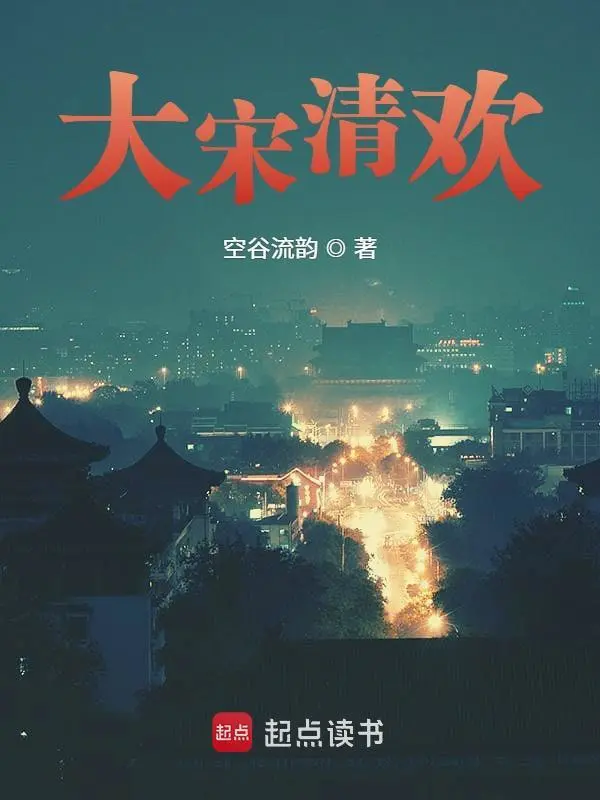
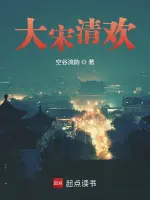
Qinghuan of the Great Song Dynasty
大宋清欢
- Status
- Completed
- Length
- 1.0M Words
- Genre
- Ancient Romance
- Audience
- Female
- Subgenre
- Business & Farming
- Updated
- 5y ago
- Source
- Qidian
Stats
Tags
Synopsis
Reader comments
In booklists 11
Ten Years Main Female Channelrecommend Articles That I Like! Plot and Story First!
Please send me flowers for collection (the collection is the star in the middle at the bottom of the book list)! Click on the main avatar in the lower left corner to send flowers My book friend ID: carefree haha 🌸Put the articles on cultivating immortality in another bookshelf on cultivating immortality🌸 [Because the bookshelf is limited, deleted books will appear in the comment area] These are all very good books. Before, I wrote plot-based writing first, but after thinking about it, I probabl
✨We Grow Old Together✨(complete the Book Waste Food That Can Be Chewed)
🍁 As white as snow on the mountain, as bright as the moon among the clouds 🍁 I heard that you have two minds, so I came to resolve it. ——————————————— 📓Contains 12 ancient poems by Lin Jiacheng 📓Other ancient sayings (mostly completed masterpieces) ———————————————— There was a period of time when there was a kind of writing style, which should be attributed to Lin Jiacheng Some people say that the heroines in Lin Jiacheng's works are too pretentious - but I think, rather than saying that they a
Mom, It's Them! Stopped My Study_(:3∠)_
Mainly female videos, male videos will also be watched [Thank you to the book friends who collected and sent flowers>3<] I haven't read much in the past two years, so I basically haven't updated my book list orz ↓↓↓Welcome to jump❤❤❤ The booklet of ancient proverbs "Who said women are inferior to men" contains ancient proverbs about the majestic court battles.
Nice and Relaxing Female Videos
I've read it, it's a good-looking, interesting and unconventional novel Most of them are new books, but there are also books that have been completed or have been updated a lot, and they may also be novels written by men without CP. Personally, I don't like to read formulaic stories, nor do I like to read overly sweet love stories. I prefer to see the heroine exist as an independent person, not as a vassal of men, nor as a bad mother who is surrounded by some best people and lives in a distorted
My Heart Pleases
First of all, let me state that this book list is not limited to novels from the main site but also female-channeled novels. I am a female owner of the book list, so please don't be surprised to see female-channeled novels in the book list. This book list is a novel that I personally like. I think the plot is attractive and the writing is pretty good, so I put it on the book list. Regardless of the main website or the female channel novel, for me, it is a novel worth reading. Secondly, I persona
A Bookstore for History Lovers (Song Dynasty)
The history of the Song Dynasty is very interesting. It was one of the few orthodox dynasties that lasted for hundreds of years, but it was also a dynasty that did not achieve true unification until its demise. The civil servants and military generals are all very powerful, but they still can't get rid of the label of being weak in the Song Dynasty and fighting against the five scum. The northern dynasty has changed three times, but their own land is getting less and less, as if they can't do an
The Sky Is Vast and the Snow Is Vast, Who Can Sail Together?
Prerequisite: No stallion, no harem. There are various types available, suitable for both men and women. These are all carefully read by the original poster himself. Keep updating if you can. In the early days, I didn't know the starting point, so I searched directly on the Internet. Later, I had an initial V number, but after watching too much I felt it was not worthwhile, so I got this high V number. Therefore, I guarantee that all the books recommended have been read. Everyone is welcome to l
My Book List🍃
The book I'm following is not in good taste, so don't criticize it.

A First-Rate Online Article About a Strong Woman and Her Business Partner, Which Will Be Appreciated by Common Fans.
As an old bookworm, I have very high requirements for reading, the writing is first-rate, the heroine has a good personality, and she has a good mix of business intelligence. The books recommended below are all books that can be read from beginning to end. They meet the requirements, have good writing and plots, and have good novel concepts. And they are basically all about strong women. Looking for book friends with common interests to enjoy together.


Notes on Mengzhai
1. All comments in this book are personal opinions, please do not upload them online! 2. This book only reviews books that I have actually read.
Books I've Read over the Years
Record keeping
Readers also read
 Karma Temple
 Rescue System: Escape Host, Please Calm Down.
 Quickly Travel Through the Cannon Fodder That Is Not Cannon Fodder
 Around Gushan
 Northern Song Life Consultant
 Affordable Men in Qing Dynasty
 Southern Song Life Consultant
 Xie Huixin's Ancient Life
 Spring Clouds Warm
 Marriage
 The Life of a Minor Official in the Ming Dynasty
 Be a Small County Magistrate in Ancient Times
 Daming Yinghua
 Cooking for Thousands of Miles
 Nanyang Servitor
 Four Seasons
 Muyun of the Tang Dynasty
 Thousands of Mountains Next Year
It has been a thousand years since the great dream dawned, and life has been slow, so I am happy.
Book review: From the perspective of writing style, the author is quite good. Just reading the first few chapters, you can get a glimpse of the author's profound writing skills. Let me give you a novel first. Let's take a look at a passage from the book: Mrs. Yao was furious when she resisted the marriage, and Mr. Zhang acted righteously to save the orphan girl. At this moment, many Tokyo people who were watching around could even think of the storytelling topics of the artists in "Wazi" in the next few days. What a touching and heartfelt live drama. I don't know how you feel after reading it; anyway, after reading it, I can only exclaim: "Awesome!" Let me give you a brief analysis: the first sentence rhymes with each other, people are relative to each other, words are relative to each other, and things are relative to things. This sentence alone shows three correspondences. Looking at the word "tile" in the second sentence, storytelling, we can see that the author has made sufficient preparations to write this book. (Wazi is another name for entertainment venues in the Song Dynasty) The third sentence: Live drama, this sentence is quite ironic. Live drama, a scene that should have taken place in fantasy, has appeared in reality... Without a long period of practice, reviewing, reviewing, and reading manuscripts, such an article would never have been written. This shows how much effort the author has put into presenting us with an excellent work. Storyline: Whether a book is good or not depends on first reading the title, second reading the introduction, and third reading the three golden chapters. This book takes advantage of all three of these points. Not to mention the title of the book, the introduction alone attracted me deeply. The literary giant Su Shi actually considered the protagonist his adopted sister? The infamous Gao Qiu actually helped the protagonist sell chicken feet on a live broadcast? The most important thing is that even the most beautiful woman in the Song Dynasty, Li Shishi, taught her everything. My God, what a strange woman this is. Out of curiosity, I couldn't help but click into the book. Once I entered the book, I couldn't get out at all. The prosperous Kaifeng Mansion of the Song Dynasty, Miss Yao Huan who traveled from later generations, and the male protagonist Shao Qing, who has been practicing medicine since his ancestors, is willing to help others, and is attentive, have completely integrated me, an outsider, into this perfect world of the Song Dynasty... All in all, this book is a pretty good ancient romance novel. People who like this kind of articles must read it.
I came in with the mentality of reading a time-traveling food novel. However, I felt like I was watching a picture of "Along the River During the Qingming Festival", watching the historical and cultural customs of the Song Dynasty slowly unfolding in front of me. The author's profound historical background and humorous writing style make the long-standing historical figures appear in front of me one by one with the advancement of the storyline. It is really hard to read the double update every day 🥺
BYD should ask the author to take it with a pinch of salt. This was written in both the Tang and Song Dynasties. Next, it can be Qin, Han, and BYD brands 🙂
The charm of gourmet food is unrivaled
Traveling to the Song Dynasty, what would Yao Huan do who likes to eat? She is destined to be an extraordinary person, and this extraordinary does not refer to her identity, but her craftsmanship and the delicious food she makes, which are unforgettable. After all, who can say no to delicious food, especially for foodies, food is their only love! The delicious food made by Yao Huan is not only a taste experience, but also a visual experience. Only people in the book can truly taste the taste. As for outsiders, looking at this beautiful and moving text, it is enough for the eyes. It is just a feast for the eyes! Even watching Yao Huan cook is extremely pleasing to the eye, but his knife skills are nothing to mention. Under the author's influence, the bone removal techniques that are usually difficult to notice are described in a poetic and picturesque way. At first glance, Yao Huan looks like a veteran, but he doesn't have the murderous look of holding a knife at all, but a sense of exquisite beauty. Yao Huan has come up with new tricks by combining modern cuisine with ancient cuisine. Of course, there are not only delicious food but also various battles in the book. Although Yao Huan does not want to get involved, she will not let others bully her. Thanks to Yao Huan, the trouble caused by food broke the dilemma. Otherwise, the matter was bound to get worse. Originally, she could just cook by herself, but unexpectedly, she suddenly got a younger brother. Although he was confused, Yao Huan still held his brother's hand. The description of Yao Huan's expression here is very detailed, describing her inner feelings step by step, and also allowing readers to understand what she is thinking. This is a good book. If you calm down and read it, you will read a lot, because its words are so charming. However, people need to read it carefully to understand the meaning. If you read it in a hurry, you will obviously lose some fun.
I still feel unsatisfied after watching it every day 😁
Only by enduring hardship can one become a master.
The male protagonist is actually the crown prince of Liao Dynasty, and the female protagonist is from Song Dynasty. Such an embarrassing identity is not suitable for the heroine at all. If the relationship between Daliao and Song Dynasty is tense, the heroine will be in a difficult situation, and the heroine will be regarded as an outcast.
Recommended "Records of Zeng Gong" and "Research on Zeng Bu"
This novel does not make up history, but it is still an online novel. The characters, clues, and story settings all have great deduction and fictional elements. It is difficult to construct conflicts in romance novels by copying historical materials, because official history hardly records the emotional world and various gossips of historical figures. Historically, Zeng Bu had ten sons, both direct and concubine. Folk inscriptions record that there was a son named "Zeng Wei", but historians have not accepted this name. Of course, although the author writes romance, he does not dare to deviate too far from the historical data. Therefore, the author will not make up the political stances of Zeng Bu, Zhang Dun, Su Song and others, the imperial theory of "confusion with different opinions" after Zhao Xu took office, and the party struggles in the late Northern Song Dynasty during the Xifeng Reform, Yuanyou Reform, and Shaoshu New Deal. The author prefers to memorize political and military history when reading history. He does not have a good memory in terms of artifacts and art. Readers are requested to point out any shortcomings in the book. Finally, in addition to recording the diary "Zeng Gong's Legacy" written by Zeng Bu himself, the author also recommends "Research on Zeng Bu" written by Professor Xiong Mingqin. Readers who like this period of history and tend to read historical materials and papers by historians can take a look.
One more thing to say. If I don't order it, I'm afraid the author will starve to death. . Can you bear to read the D version of such a good article?
The more I watch, the more I feel that Fourth Uncle Zeng and Sister Huan are going to be pornographic. As a new woman who is independent and self-reliant at the core, she has to accept the constraints of feudal ideas and become an appendage of Fourth Uncle Zeng. Sister Huan will definitely not jump into this pit! No amount of sweet words, no matter how many hairpins and fine clothes, no matter how many delicacies and delicacies are available, will not work!
Song Zhezong's real face restoration
AI restores Song Taizu and Song Zhezong. Song Zhezong should be a handsome young man
I can't help but confess!
My description may be a little vague, but the writing is smooth, the atmosphere is warm, and the details are exquisite. It's so late to meet you! In addition, this is the author who interacts with readers the most I have ever seen - so much so that I read the comments one by one, which seriously affected the speed of reading the book and gave a "bad review" 🤭
The character development trend of the female lead
It is impossible to travel back in time without using Golden Finger, and it is also impossible not to interpret the supporting historical figures. Otherwise, I would not write a novel at the starting point and publish a paper on CNKI. In romance, it is impossible not to write about the joys and sorrows of love, and it is also impossible to have only one official match. Otherwise, I would not write romance at the starting point and write academic articles on the public account. However, although the heroine is famous, she is not a character who indulges in small pleasures and loves. She is a feminist who has returned from modern times, not a feminist. She has her own principles and persistence, and also has the ability to adapt to the other world skillfully. Human nature is complex, and characters are not flat. When I write, even if I read a book, I will still try to create three-dimensional and diverse characters. Just like after I quit my legal career and switched to design and entrepreneurship, I like to design three-dimensional, non-flat themed jewelry, such as this bouquet theme, dedicated to the personality charm of women.
Dishes cooked by the author
The physical food book was published by Shanghai Literature and Art Publishing House in 2005. Some home-cooked dishes I usually make: Snowflake beef and scallop noodle soup Crab powder stuffed with asparagus Braised beef shank Fried cuttlefish with spicy pickles and pickles Steamed egg whites with shrimps and shiitake mushrooms (hibiscus)
Expected to be on shelves on August 28th
Tentatively, it will be available next Friday. To thank everyone for your support, we will prepare 3-4 updates on the day it is released. If the manuscript collection goes well, how about 5 updates? Haha, but I still insist on quality 🌹🌹. Please pass by and click to subscribe, leave a discussion, and everyone will have a good time.
I was originally not qualified to write a book review because I was ashamed and I really hadn't had time to read the masterpiece in detail 😌. But because of my relationship with the book, I was moved by Kong Gu's humility and sincerity. I read dozens of chapters at once before going to bed last night. If my eyelids hadn't been fighting, I would have read more. "Fascinating" is the most important thing about this story. Good expression. In the form of time travel by the heroine Yao Huan, the customs and customs of the Song Dynasty are described in a real and interesting way. The writing is smooth and the story is smart. I have talked with a film and television publisher about the current hot topics. Time travel is still a very popular one at the moment. So I'm optimistic about you, Konggu. Come on, come on
Signed the contract with 11,000 words
I received the website short message yesterday. I didn't take the initiative to apply, but Qidian signed it. Still have to persist and work hard. Thank you for your support.
From the Tang Dynasty to the Song Dynasty, I also traveled through a thousand years 😄 and the writing style changed drastically. I interspersed modern things into ancient society. While being humorous, I also integrated history into the story. Love it!
I collected some comments from readers about the work
Being asked to do double updates every day, for an older second-born child like me who is still starting a business during the day, I feel a lot of pressure. At present, I see that there are fewer and fewer manuscripts saved, and my ideas are still stuck. Relax and sort out the comments from readers. Maybe you can find more inspiration through your criticisms. 1. Zeng Wei and Zhang Shangyi are disgusting. Zhang Shangyi and Zeng Bu are so disgusting that they almost gave up the article. (The author explains that it may be true in history. Zhang is the adopted daughter of Mrs. Wei and Prime Minister Zeng. Human nature is very complicated) 2. Both male protagonists are too controlling. If the author hadn't forcibly given the female protagonist a halo, she is such a stupid woman. Why would the two big brothers fall in love with her. (Okay, keep reading, friends. The heroine is just an ordinary person. She is a business person who doesn't cheat and is a little enthusiastic about doing business, but she is not stupid. Sometimes in unfamiliar environments, be cautious and observe before pretending to be a pig. Also, the male lead is not very controlling at all! The male lead is The layout is very high. In more than 200,000 words, the author keeps using various details to express this man's integrity and generosity, especially in Chapter 113. The author has a hard time coding, so he kindly asks readers not to read more than ten lines at a time.) 3. Not enough food, but too much romance. 4. Not enough romance and too much food. 5. Don't double wear. Don't wear double wear for the heroine's ex-boyfriend. Time travel is not a piece of cake. Okay, you can complain as much as you want and let me think about it. The outline and direction of the story must have taken shape, but novels, like painting or designing jewelry, can be modified as you go. Thank you for your support. And, please support Qidian genuine 🥺
Shao Qing
Other writers or fans are welcome to recommend books on this post
Tomorrow I will go to Qingyun, and I hope that my work will gain more attention from readers. The starting point author is a family. Although I am only a Level 1 author and the popularity of my works cannot be compared with those of others, I am a writer who likes to communicate with other authors and fans and learn from other people's strengths, so everyone is welcome to tweet 🌹🌹 on this post. My first book was on the History Channel Then on the History Channel, I met many friends. I recommend a few historical texts that I like: The above books are all good works that I think have vivid language and rich plots. As for the ancient sayings of female videos, I prefer these books:
The taste in the world is happiness, and the opening of a famous name has touched the lifeblood. In just one or two chapters, Yao Huan, Shao Qing, the protagonists and supporting characters, and delicious food have been laid out. Although I knew who the two protagonists were, I looked at Zeng Shiro with affection and grace. I still want Huan'er to have a talk. If you are in love, I will live up to the love between our children. Let's see how our author cooks sake and side dishes, or thick oil and red sauce, frying, stewing, stir-frying, and cooking up a masterpiece of Qinghuan during the Song Dynasty. I will wait and taste it in detail.
Northern Song Dynasty Historical Materials Series 2: Currency Conversion
To read novels from the Song Dynasty, you first need to have a basic concept of the monetary system. According to ancient and modern currency conversion conventions, the average price of gold, silver and rice is used as the benchmark for currency purchasing power. The gold and silver value ratio in ancient China was generally 1:7. In the early and middle Ming Dynasty, the gold and silver price ratio was 1:7, in the early Qing Dynasty it was 1:10, and in the middle period it reached 1:11. Huang Renyu's inference in Chinese history is that 1 tael of gold is equal to 10 taels of silver and 10 copper coins. This article uses Huang Renyu's method as the basis for calculation After Spain discovered the silver mines in Mexico, the exchange rate was 1:1 2.5 To 1:14 In the 72 years from the first year of Wanli in the Ming Dynasty (1573) to 1644, 1/3 of the total silver produced in the world flowed into China, totaling about 335 million taels (conservative estimate, re-estimate about 500 million taels). The large inflow of silver is related not only to the China craze in Western society (tea, silk, porcelain), but also to the price difference of silver. The gold-silver ratio in ancient Greece was 1:10. In the Roman era and the European Middle Ages, the gold-silver ratio was generally 1:12-1:15. After the great geographical discovery, the gold-silver ratio reached 1:15 and remained stable for a long time. Silver smelting technology has progressed significantly since the 19th century, and the gold-silver ratio has gradually dropped to 1:40, until 1:90 in 2020 The gold benchmark international gold price was US$1,810 per ounce on July 16, 2020, and one ounce was 28.3 Grams. In the Song Dynasty, one pound was 640 grams. There are 16 taels in 1 pound, so 1 tael in the Song Dynasty was 40 grams today. In this way, one tael of gold in the Song Dynasty is equivalent to 1,868 U. S. Dollars. Based on the U. S. Dollar to RMB 7 yuan, it is equivalent to about 18,000 yuan. It can be seen that the copper coin in the Song Dynasty is equivalent to 1,800 yuan, and 1 copper coin is equivalent to 1.8 Yuan today. Silver Benchmark The international gold price on August 27, 2016 was US$19.4 Per ounce, and one ounce was 28.3 Grams. One tael of silver in the Song Dynasty is 40 grams today. In this way, one tael of silver in the Song Dynasty is equivalent to US$27.4, Which is equivalent to 190 yuan based on the US dollar to RMB 7 yuan. It can be seen from the conversion that one tael of silver in the Song Dynasty is about 190 yuan today. But according to the 1:10 price ratio of gold, one tael of silver in the Song Dynasty was equivalent to 1,800 yuan. If based on the ratio of 1:7, one tael of silver is worth about 2,500 yuan. The standard rice pound in the Song Dynasty was 640 grams. In the Song Dynasty, 1 stone equaled 92.5 Song jins (Shen Kuo's Mengxi Bi Tanjuan 3 has, "For ordinary stones, ninety-two and a half jins are used as the standard, which is equivalent to the Han scale of 341 jins"). Therefore, one stone of rice weighs 59,200 grams, or 59.2 Kilograms. If we do not consider special famine years or great harvest years, the price of rice in the early Northern Song Dynasty was between 300 and 600 wen per stone, in the middle period (the Renzong period) it was between 600 and 700 wen, and in the early Southern Song Dynasty, the price was around 2 guan. So it should be more reasonable to calculate that the average rice price in the Song Dynasty was about 1 guan per stone. If calculated based on the current rice price of 5 yuan per kilogram, one stone of rice in the Song Dynasty was 59.2 Kilograms equivalent to 296 yuan, which means 1 copper coin was equivalent to 296 yuan, and 1 copper coin was equivalent to 0.3 Yuan today. But according to the price ratio of gold and silver, one tael of silver in the Song Dynasty was equivalent to about 1,800 yuan. The fluctuation of copper coins is more severe. One tael of silver can be exchanged for one copper coin. During the war, one tael of silver can be exchanged for 2 to 3 copper coins. During the Yue Fei period, according to military pay records, one tael of silver could be exchanged for four copper coins. Conversion conclusion: Due to technological progress, the actual prices of silver and rice in modern times are much lower than those in the Song Dynasty. Only the price of gold is relatively stable. Therefore, in the mid-Northern Song Dynasty, one tael of silver was worth about 1,800 yuan, and one copper coin was worth about 1.8 Yuan. The monthly salary of grassroots civil servants and waiters in the Northern Song Dynasty was 800 Wen, which is about 1,500 RMB. There is another verification. In the story "The Oil Seller Monopolizes the Oiran" in the three-part film, the background is during the Huizong period of the Northern Song Dynasty. Wang Meiniang was the oiran of Lin'an City, and the price of a night's drinking was ten taels of silver, equivalent to 18,000 to 25,000 RMB. Prices are more in line with the current actual situation. This shows that this currency conversion calculation is more reasonable. The Song Dynasty was the most active era of coinage. The highest annual mintage in the Northern Song Dynasty was 5.7 Million guan. This did not include the issuance of iron coins and banknotes. In normal years, the amount remained between 1 million and 3 million guan. This shows the huge scale of the market economy of the Song Dynasty. Compared with the highest annual mintage of 330,000 guan in the Tang Dynasty, usually it only maintains about 100,000 guan in a year By the way, the weight of gold bars, "big yellow croaker", is 10 taels, which is 312.5 Grams. Like this Only wealthy people can afford "big yellow croaker". Its weight is one tael, which is 31.25 Grams. The weight of "small yellow croaker" is exactly 1/10 of the weight of "big yellow croaker", and its price is also 1/10.
Northern Song Dynasty Historical Materials Series 4: Su Shi and Shen Kuo
Shen Kuo and Su Dongpo, two of China's top figures in the sciences and liberal arts, have a grievance and grudge that is as unresolved as history, and there is no conclusion yet. Shen Kuo is famous in history for writing the masterpiece "Mengxi Bi Tan". He is a national treasure-level scientist who is an encyclopedic generalist in arts, sciences, engineering and restoration. The "History of Song Dynasty - Shen Kuo Biography" said that he was "erudite and good at writing, and he wrote on everything from astronomy, local chronicles, laws and calendars, music, medicine, and divination." It can be said that Shen Kuo was an academic master who was a writer, musician, calligrapher, collector, geographer, mathematician, physicist, chemist, medical scientist, astronomer, water conservancy expert, weapons expert, military strategist, and diplomat. Even oil, the most in-demand strategic material that countries around the world are now competing for, was first discovered and named by Shen Kuo. Joseph Needham, a British expert on the history of science and technology, said that he is: "the most outstanding figure in the entire history of science in China." Shen Kuo was five years older than Su Shi, but he passed the Jinshi examination six years later. In 1065, Shen Kuo was transferred to the capital to compile and edit the books of Zhaowen Palace. He and Su Shi, who worked in the History Museum, were both bachelors of the Imperial Palace, and they got to know each other and became good friends. In 1069, Wang Anshi began to implement reforms. Shen Kuo strongly supported Wang Anshi, while Su Shi, Sima Guang and others firmly opposed it. The two became political enemies, and rifts inevitably appeared in their relationship. In 1073, Shen Kuo was ordered to inspect the two Zhejiang provinces to supervise the implementation of the new law. When leaving the capital, Shenzong specifically told Shen Kuo: "Su Shi is a judge of Hangzhou, please treat him well." He hinted that he wanted to reuse him, so he asked Shen Kuo to investigate first. Since Shen Kuo supported the reform, was well aware of Su Shi's energy, and was looking for an opportunity to get rid of him, how could he treat him well? After arriving in Hangzhou, Su Shi went to visit Shen Kuo and had a pleasant conversation with him. Suddenly, Shen Kuo asked: "Zizhan must have written many poems and essays in this beautiful place in Hangzhou. Can you let me have a look?" Su Shi, who had always been open-minded, was completely unprepared. He thought Shen Kuo was a good friend and happily told all his recent poems and essays. Shen Kuo copied it immediately and expressed that he would take it home and appreciate it. After returning to the capital, Shen Kuo gave full play to his scientific spirit, studied line by line, marked out the verses that he thought were problematic, and then handed them over to Shenzong, in order to expose Su Shi's "fooling the court" and "not having the meaning of monarch and minister" in his poems. Although Shenzong firmly supported the reform, he did not take very strict measures against those who opposed the reform and only transferred key positions. Seeing that Su Shi still opposed the reform, Shenzong did not investigate further, but gave up the idea of reusing him. However, the above historical materials come from the "Yuanyou Supplementary Records" written during the Emperor Gaozong of the Southern Song Dynasty, and the content is similar to a historical paper. This is not the first-hand historical data of the year, and there is no hatred for Shen Kuo in Su Shi's own poems. Shen Kuo and Su Shi met again five years before the Wutai Poetry Case. Therefore, the truth of this matter has been lost in history and cannot be confirmed.
Northern Song Dynasty Historical Materials Series 1: Research on Pork Prices
The doggerel "Ode to Pork" from the Song Dynasty says: "The good pork in Huangzhou is as cheap as dung." By the Western Han Dynasty, pork had become the most important meat for folk consumption. According to Huan Kuan's Treatise on Salt and Iron in the Western Han Dynasty. At that time, there were butchers in both urban and rural areas, and eating pork was very common. This is what the saying goes: "In today's Luxiang County, Qian Bo butchered hundreds of people. They cooked and killed them for no reason, and gathered together in the wild." But pork was not cheap at that time. "One pig's meat is a middle-aged harvest." That is, the price of buying one pig is equivalent to the annual income of one acre of land in a middle-aged person. According to "Book of the Later Han Dynasty", in the early Eastern Han Dynasty, there was a man named Uncle Min Zhong who was old and sick and could not afford pork. He could only buy a piece of pork liver every day. Some butchers deliberately refused to sell it to him. Pork consumption increased greatly in the Tang and Song Dynasties and later. Historically, urban pork consumption in the Song Dynasty was quite large. When Meng Yuan of the Song Dynasty introduced the streets and lanes outside Zhuquemen in Bianliang City (now Kaifeng) in the capital, he said: "Going south is Nanxunmen... Only pigs slaughtered by the people must enter the capital from now on. Every day until night, each group numbered tens of thousands, only a dozen people were expelled, and there were no trespassers." It can be seen that the daily consumption of pork in the capital at that time was huge. By the Southern Song Dynasty, urban pork consumption continued to increase. The "Butcher Shop" in "Mengliang Lu" written by Wu Zimu of the Song Dynasty said that Lin'an's meat market was in Xiuyifang, north of the dam: "The two streets in the alley are home to slaughterhouses, and hundreds of meat are slaughtered every day." There are countless stalls selling take-out meat in the entire city of Hangzhou: "Every day, there are many stalls. There are no less than ten pigs hanging on each side. "Usually, the meat is sold out before lunch. "There are so many people eating it." Song people like to eat pork, which is not unrelated to the fact that pork is cheaper than other meats. When Su Dongpo was demoted to Jiangxi, he found that pork was too cheap there. In his limerick "Ode to Pork", he said: "The good pork in Huangzhou is as cheap as dung." How cheap was pork in the Song Dynasty? During the Chunhua period of the Northern Song Dynasty (AD 990-994), a man named Mou Hui in the capital lost a pig, and the court compensated him 1,000 yuan. At that time, a horse was worth 25 to 50 pigeons, which meant that a horse could be exchanged for 25 to 50 heads of pork. In Lin'an City, pork is also very cheap. According to "The Records of the Old Man of West Lake", there were several meat shops in the bustling Wa City at that time. The big shop could consume 10 heads of pork every day, and the meat purchased for 38 yuan was more than an adult could eat in one meal.
Northern Song Dynasty Historical Materials Series Three: Tokyo Menghualu and Song Dynasty Food
"Tokyo Menghua Lu" was created in the Southern Song Dynasty. The author Meng Yuanlao lived in Bianjing for more than 24 years from the second year of Chongning of Huizong of the Song Dynasty in the late Northern Song Dynasty to the second year of Jingkang of Song Qinzong when the Jin army invaded. Therefore, he was very familiar with the scenery of Shengjing. Bianjing was a cosmopolitan city at that time. "With the passage of time, peace and prosperity abounded." Meng Yuanlao described the urban life of the capital of the Song Dynasty in an extremely precise style, showing the prosperity of the old capital in an all-round way. It has very important historical value and has always been valued by people. In the description of urban life in Bianjing in "Tokyo Menghualu", diet is a very important part. Just as the Japanese scholar Kazuo Kubota said: "The most original and brilliant description in "Tokyo Yume Hua Lu", I think, is the detailed record of famous dishes and the description of the actual status of the stalls that change with time." Meng Yuan In the preface of "Tokyo Menghua Lu", the old man also said: "The treasures collected from all over the world are all returned to the market; the peculiar smells of Huihuan District are all found in the kitchen." People in the Song Dynasty respected mutton, which was a special treat for the upper class. The emperor's meals mainly consisted of mutton, and it was also part of the official salary. Pork is the favorite of common people and has a lower social status than mutton; beef is relatively rare because cattle are very important production tools in agricultural societies and can only be eaten secretly. Vegetables can only be used as condiments for meat dishes, as side dishes. In the Song Dynasty, vegetables finally became independent under the name of vegetarian dishes. The rise of vegetarian dishes in the Song Dynasty had a great influence, and was even considered an important symbol of the transformation of "Chinese cuisine" from medieval times to modern times. Compared with military generals, the literati of the Song Dynasty had more room to exert themselves after a meal. For example, Su Shi, Huang Tingjian, Lu You and Yang Wanli wrote many poems praising vegetarian dishes, which led the trend of vegetarian food in the Song Dynasty and made people gradually fall in love with vegetarian food In each volume and section of "Tokyo Menghua Lu", there are almost popular dishes and various food stores. Records, and a special section of "Food and Drink", which indicates that daily urban food is no longer an embellishment, but can be independent from many industries, and each has its own specialties - mountain game: pan rabbit, fried rabbit, rabbit with green onion; image dishes: fake puffer fish, fake yuanyu, fake roasted deer; cooking techniques: steamed goose and duck steaks , lotus duck sticks; knife skill display: rotary cut lettuce, lychee kidneys; famous seafood dishes: fried clams, hand-washed crabs; Mingshi market preserved food: Xuejia's tea, Dingjia's tea; specialty stores: Duanjiaowu, Liqing's bad ginger; refreshing drinks: ice and snow outside the old Song Dynasty; snacks: various honey fried, fragrant and medicinal fruits; popular fast food : Lujia Steamed Buns, Wangloushan Cave Plum Blossom Steamed Buns, Cao Granny Meat Cake, Zhangjia Oil Cake, Zhengjia Oil Cake at Deshengqiao, Shijia Huxen, Jiajia Huxen, Dingjia Steamed Buns, Sun Haoshou Steamed Buns... The author took the trouble to recount the food customs of Bianjing in his memory, retaining precious clues for us to trace the development of food in the Song Dynasty.
Northern Song Dynasty Historical Materials Series 5: The First Ranking in Imperial Examinations Through the Ages
The imperial examination in Jiayou's second year in the Northern Song Dynasty was called the first in the imperial examination by later generations. In 1057, the examiner was the great writer Ouyang Xiu. The students who took the exam were Su Shi and Su Che, as well as Zhang Zai, Cheng Hao, Cheng Yi, Zeng Gong, Zeng Bu, Lu Huiqing, Zhang Dun, and Wang Shao. Because of the shining stars, this scientific examination is called "the first in the millennium imperial examination". The examiner of the examination that year was the famous Ouyang Xiu. After reading Su Shi's examination paper, he was filled with admiration. But he thought it was written by his student Zeng Gong, so in order to avoid suspicion, he assigned the exam paper that was supposed to be the first place to the second place. Unexpectedly, when I unsealed it, I found that the author was Su Shi. After learning the truth, Ouyang Xiu was shocked and said to Su Shi: "Bring me your old articles to read." Su Shi showed Ouyang Xiu his old poems and articles, and Ouyang Xiu was even more surprised and praised: "Reading Shi's books makes me sweat. It's so good. I should stay out of the way and let him go." This is how the word "getting ahead" comes from. Su Shi's talent astonished the entire Song Dynasty as soon as he appeared on the stage. From then on, he gradually became famous all over the world. The Eight Great Masters of Tang and Song Dynasty prose, also known as the "Eight Great Masters of Tang and Song Prose", is the collective name of eight prose writers in the Tang and Song Dynasties, namely Liu Zongyuan and Han Yu in the Tang Dynasty and Ouyang Xiu, Su Xun, Su Shi, Su Che, Wang Anshi and Zeng Gong in the Song Dynasty. In this list, there are three of the eight great prose writers of the Tang and Song Dynasties. Among the eight great families, there are three father-son brothers of the Su family, known as the "Three Sus", namely Su Xun, Su Shi, and Su Che. They are also known as "three bachelors in one discipline". Therefore, it can be summarized as "King Zeng Sansu of Han Liuou". Su Shi's father, Su Xun, also accompanied his two sons to Beijing to take the exam this year. There are 9 people in this department who have successively become prime ministers, including Lu Huiqing, Zhang Dun, Wang Shao, Zheng Yong, Liang Tao, Su Che, Lin Xi, Zeng Bu, Zhang Hong. Jiayou's second-year imperial examination talents Shu Party leader: Su Shi, Su Zheshuo Party leader: Liang Tao The backbone of the reform: Lu Huiqing, Zeng Bu, Jiang Zhiqi, Lin Xi, Deng Wan, Zhang Hong, Wang Shao and others. Among the four major schools of Song Dynasty, Cheng Hao, the founder of Luo School and his disciple Zhu Guangting, the founders of Guan School, Luo School and Shu School; Zhang Zai, the founder of Guan School and his disciple Lu Dajun;
Northern Song Dynasty Historical Materials Series 6: Commercial Taxation in the Northern Song Dynasty
There is a detail in "Along the River During the Qingming Festival". At a crossroads, the hotel "Sun Yangzheng Store" has three three-dimensional light box signs, which are similar to today's neon advertisements. This kind of light box advertisement has a silk painting on the outside and a candle inside. It is lit at night to indicate that the hotel is open at night. The night economy of the Song Dynasty accounted for 5-10% of the Song Dynasty's fiscal revenue. This proportion was unimaginable in other dynasties. According to records in the Song Dynasty's notes such as "Chasing the profit of tithes" and "Chasing the profits of ten hundred", the average business profit rate in the Song Dynasty was about 10%, and money was easy to make. For example, the gross profit margin of Tokyo steamed pancakes exceeds 60%. Since opening a hotel was the most profitable, there were many hotels in Lin'an, and there was a saying at the time that there were "three hundred brothels and wine houses". Even for street stall restaurants, the profit margin is above 50%. In the Song Dynasty, various commercial taxes accounted for more than 50% of the total fiscal revenue, and by the Southern Song Dynasty, it even exceeded 70%. It is equivalent to the status of modern land finance in taxation. Therefore, there is relatively loose room for agricultural taxes. The Song Dynasty was one of the rare dynasties in history that had relatively abundant finances and taxes at the end of the dynasty. The items subject to commercial tax are mainly cloth, utensils, incense, treasures, farmland, shops, horses, cattle, tea and salt. Among them, deed tax is levied on land, shops, horses and cattle during mortgage sales, and residence tax is also levied. In addition, items subject to commercial tax include gold, silver, and utensils. About the commercial tax rate. According to the "Tongkao of Documents", the overtax is 20 per thousand liters, and the residence tax is 30. The total of the two is 50, that is, the commercial tax rate is 5%. However, due to numerous local taxes and repeated taxation, the overtax is greater than the residential tax, resulting in a commercial tax rate much higher than 5%. There is a compound tax rate of approximately 20%.
Northern Song Dynasty Historical Materials Series 7: Liquor Monopoly System
Que (que, sound bird) wine is also called que. The Liquor System is a system in which the government strictly restricts the private brewing and selling of alcohol, and the government exclusively operates it. The Quejiu system was first initiated and implemented by Sang Hongyang during the period of Emperor Wu of the Han Dynasty. The Song Dynasty was the only feudal dynasty in the history of our country that implemented the wine drinking system from beginning to end. In the second year of Jianlong reign of Emperor Taizu of the Song Dynasty, the government began to unify the management of wine and Qu. In the fifth year of Chunhua reign of Emperor Taizong of the Song Dynasty, the imperial court issued an imperial edict to conquer the world. It was not until the fourth year of Emperor Zhenzong's reign in Jingde of the Song Dynasty that the Guefu system was fully implemented. Under the Qianjiu system, "zhengdian" and "foot shop" came into being. "Zhengdian" refers to a shop that has the right to brew wine, while "Jiaodian" does not have the right to brew wine, and all the wine sold is wholesaled from the "Zhengdian". After the implementation of the Liquor System, the Song Dynasty had very strict management of wine production and sales. Except for the capital, other cities implement a policy of unified winemaking and unified sales by the government. Liquor shops, wine shops, wine warehouses, etc. In various places are either run by the government and the military, or are purchased and operated by the private sector from the government. Generally, they implement patents and strict sales areas, and no cross-border smuggling of goods is allowed. Any private brewing and selling of liquor by any household in the forbidden area may be punished. The liquor system brings a large amount of tax revenue to the government, which encourages the government to encourage alcohol consumption. Alcohol is a high-profit, high-tax commodity, and alcohol tax has always been an important source of national fiscal revenue. According to records, in the second year of Emperor Taizong's reign in the Song Dynasty (AD 996), a total of 3.26 Million yuan of wine and copper and iron coins were collected nationwide. "History of the Song Dynasty" records: "Taizong came to the throne, pardoned and reinstated the old officials. At the beginning, he discussed wine, and in order to supervise Xijing's wine song, the tax was increased by 60 million yuan every year." By the end of Tianxi, the revenue from alcohol tax was 10.17 Million yuan, while the country's fiscal revenue during the same period was about 60 million yuan, and alcohol tax accounted for 1/6 of it. The wine tax in the Song Dynasty was similar to our country's tobacco monopoly system. It is an important financial foundation for the embargo system.
Northern Song Dynasty Historical Materials Series 8: Housing Prices in the Northern Song Dynasty
In the late Northern Song Dynasty, the population density of Bianjing urban area was about 12,000-13,000 people per square kilometer; by comparison, the population density of Beijing in the 21st century is about 14,000 people per square kilometer. The expansion of urban population will inevitably create a large demand for housing. Today's big cities are full of high-rise buildings. But in the Song Dynasty, ordinary houses were only one or two stories tall, and the number of people that could be accommodated per unit of land area was far less than it is now. So the scene described in the poem of Yang Kan, a poet of the Northern Song Dynasty, appeared - "There are many stars in the sky, there are rows of houses, there are no streets and lanes, and the market is not accessible." Weng Yanguo, a minister of the Northern Song Dynasty, even described it: "The capital's household registration is increasing day by day, and the buildings are closely connected, with no room for space. Even if the price is high, where can I buy land? Northern Song Dynasty In the early Song Dynasty, a house in Bianjing cost at least 10,000 guan (equivalent to 18 million yuan) for an ordinary family, and the asking price was 1,300 guan (2.4 Million yuan). At that time, the monthly income of ordinary citizens was only 3-5 guan, and there was no hope of buying a house. By the end of the Northern Song Dynasty, the price of luxury homes in the capital had soared to hundreds of thousands of guan (the standard money in the Song Dynasty was approximately equivalent to 1,800 yuan in 2020). According to the "History of Song Dynasty Official Records", the salary of officials in the Northern Song Dynasty was divided into 41 grades, with the highest salary of 300 guan per month for the prime minister and privy minister; Historically, it was 200 guan per month; however, the majority of middle- and lower-level officials had a monthly salary of 20 guan to 60 guan. Excluding living expenses, they actually could not save much money. Han Qi, a famous official in the Northern Song Dynasty, said, "There are many government officials who live in private houses in Beijing. "Zhu Xi, the master of Neo-Confucianism in the Southern Song Dynasty, also said, "In the ancestral dynasty, all the officials had no place to live, and even the prime ministers had to rent houses." Su Shi's younger brother, Su Zhe, who had served as the censor Zhongcheng, could not afford a house. His friend Li Luo moved to a new house. He wrote a poem to congratulate him, and at the same time expressed his "envy, jealousy and hatred": "I am seventy years old and have no house, and I am living in chaos. My children and grandchildren will be with me for eighty years, and I can be a guest for ten years after I have completed my stay. It is hard to know that it is difficult to live for eighty years. From now on, I am still alive and well. It would be better for the Jun family to gather all their strength and settle down thirty rooms. " It was not until his later years that Su Che built three new houses in the second-tier city of Xuzhou. He couldn't help being happy and wrote another poem: "I have never had three houses in my life, but at the beginning of this year I built a hundred-step verandah. If I want to take advantage of my free time to build a new house, I will spend the summer months lying in the setting sun. " In the seventh year of Emperor Huizong's reign in the Song Dynasty, Zhang Gen, the transfer envoy to Huainan, said: "There are hundreds of thousands of strings in the first place. If it is slightly more majestic, it must be a million." "It means that at that time, it cost hundreds of thousands of guan to buy a luxury house in Kaifeng. If you wanted to decorate it more luxuriously, you would have to spend 1 million guan. This means that the luxury house in Kaifeng cost 180 million to 200 million yuan. The real estate in the Northern Song Dynasty was the same. This can also be used as a mortgage loan. In official loans, the borrower's property, that is, land and other real estate ownership certificates, is used as collateral, which is also called "collateral." For example: "The law of the city allows people to lend the county official's property on credit, using the property or gold and silk as collateral, and the interest is two-tenths." (That is, the mortgage loan interest rate is 20%) Almost all wealthy families in the Song Dynasty were keen on investing in real estate (another investment hotspot was the lending industry). Today's real estate developers basically build houses for sale, while developers in the Song Dynasty built houses for rent. At the beginning of the Southern Song Dynasty, "the wealthy and powerful families occupied official land, built houses and corridors, and leased them to people. The amount of money increased, and the villains were in deep trouble." A Southern Song Dynasty man named Zhang Shou also said: "It is said that the annexed houses have different properties. Some have residences, shops, corridors, and business properties. It seems too lucky to have no land at first and work in the countryside." The "dishops, properties, corridors" here are properties used for rent, and the "business properties" are loans. In 1105 AD, Li Qingzhao's father, Li Gefei, published a report on real estate in Luoyang, titled "Luoyang Famous Gardens". He sampled and analyzed dozens of luxury residences and gardens in Luoyang, the western capital of the Song Dynasty at that time, and then combined the real estate trends in Luoyang over hundreds of years to draw a bearish conclusion, which was confirmed 22 years later. Li Gefei is a pessimistic bearer. He is very pessimistic about the trend of Luoyang, a prosperous central city. He believes that the location of the economic center will inevitably lead to the center of war, a battleground for various military forces, and "a battleground for all parties." More than 20 years after the report was released, the Jin soldiers marched into the Central Plains, and Luoyang's flower gardens and luxury real estate were "turned into ashes" as the report summary said. Li Gefei's professional vision was recognized by the industry. "History of the Song Dynasty" commented: "Afterwards, Luoyang fell into the Jin Dynasty, and people thought it was wise. Notes: Ranking of the top ten cities in the Northern Song Dynasty: 1. Kaifeng Prefecture in Tokyo 2. Luoyang in Xijing 3 , Yingchang Prefecture (Xuchang, Henan) 4, Shangdu (Zhengzhou, Henan) 5, Qizhou (Jinan, Shandong) 6, Taiyuan Prefecture 7, Daming Prefecture (Daming, Hebei) 8, Yangzhou 9, Lin'an Prefecture (Hangzhou, Zhejiang) 10, Jingnan Prefecture (Jingzhou, Hubei)