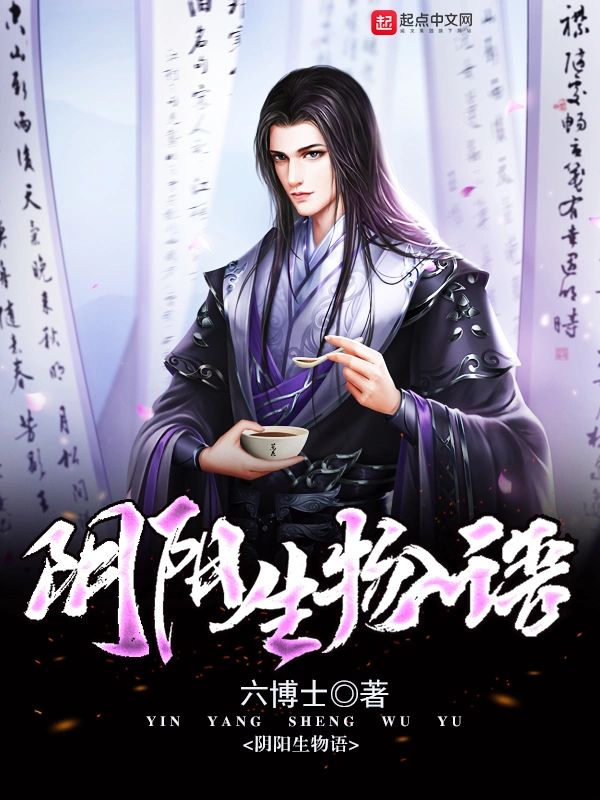
Yin-Yang Biology
阴阳生物语
- Status
- Ongoing
- Length
- 181k Words
- Genre
- Cultivation
- Audience
- Male
- Subgenre
- Classical Xianxia
- Updated
- 3y ago
- Source
- Qidian
Stats
0Monthly votes
3.7kRecommends
23Fans
145Chapters
Synopsis
Reader comments
Readers also read
 Xuanjun
 If the Effect Is the Cause, I Use My Magical Powers to Deduce the Future
 Sect Cultivation: Start with Entries
 I Can Plunder Magic Spells
 Qingdu Shanshuilang
 Don't Talk About It
 Taoist Priests in the World of Strange Things
 Disciples of Fangcun Mountain, Traveling Westward
 I Have a Dark Secret Martial World
 Sanqing Inheritance System
 Entering the Chinese Chat Room
 Starting from the Ancestors of Montenegro
Give me a dollar to feel the feeling of being wealthy
Japanese fairy tale, this is the first time I have heard of such a genre. The author refers to the Xia people as China, implying that the Japanese culture is a sub-culture of China, but it only covers the surface and does not go into depth. The ancient Xia civilization is likely to be glorious again in the hands of the protagonist. An analogy can be made like this: the protagonist works as a magician in a low-demon world. He has received the inheritance of a high-level demon civilization (Xia Civilization) like Liuli Bo, and has been cheating all the way through his life. In fact, it is a story about the Emperor of the Han Dynasty covered with Japanese culture. It is actually a golden finger that is inherited from ancient higher civilizations or the modern world, similar to Headshot Wizard and Era of Light. Very readable and interesting. I like it very much, keep up the good work.
So is it interesting to care about Japanese and Chinese style? It's also a personal attack. This book is actually a Japanese-style fairy tale, and the cultural background is almost all based on Japan. But in the final analysis, Japanese culture is also Chinese culture, or it belongs to the Confucian cultural circle. It is a poppy flower in Chinese culture. I don't think there is any sense of violation in writing it this way. From my understanding, they want to express a story in which the Central Plains colonial system was destroyed and then revived by the protagonist. Highlights🙂🙂🙂🙂 Putting aside these things, why don't we just look at the story itself? I think the story itself has a plot, a plot, a main line, and it's also interesting. After getting Liuli Bo, the protagonist began to soar. I think people who attack people based on the cultural background of the novel have no brains. After reading the novel, please comment on the novel itself, its plot, description, characterization, etc. 🙂🙂🙂Draw the key points. Don't miss a good book because of your inherent thinking.
Some readers reported that the introduction was not clearly written. The author learned from the experience and re-wrote the introduction in the first chapter. Hope everyone can take a look.
There's nothing wrong with the background. Most of Japan's ancient religions were inherited from the Tang Dynasty, and the clothing and costumes were especially inherited from the Tang Dynasty... It's just modern times. I have had a bad memory. Some readers who are more casual may see that some pictures from the Tang Dynasty are close to the painting style on the island, so they criticized it... It's too early... Well...
The settings and introduction are not well written, and they are long-winded. They have been invalidated and cannot be changed for the time being, so they are written here. A Japanese-style fairy tale with an imaginary background (do not match the specific affairs). The space of the Central Plains civilization is in Fusang. The colonial system established in the space is broken. The protagonist, as a descendant of the Central Plains people, obtained the core of the system - Liuli Bo, and then helped the Central Plains civilization colonize Fusang. P. S. Many official positions in Fusang have Tang names, so I just wrote the Tang names. If it is similar to Chinese and can be understood, just write the original name.
The author's imagination is very strange, and everyone is watching quickly 🙂
Since it is Japanese cultivation, it should focus on Shugendo and Eastern Esotericism
Ikakuko, Saicho, and Kukai, should they all appear in the scene?
The Japanese style is very strong and has a bit of a weird atmosphere. However, the structure of Japanese literature is too small and always gives people the feeling of being confused and confused. The author has also included the grand feeling of Chinese culture, which makes it very comfortable to read. I personally like it a lot, so I gave it five stars for encouragement, but I actually think four stars should be more pertinent.
In the future, the Chinese team of protagonists will consider looking for surnames here (such as Harada Akiomi) and then change them back to Chinese surnames in the finale Surnames of Japanese Chinese descendants: Descendants of immigrants during the Zhou Dynasty: Osato, Nagano, Hirono, Miyake , Yamada, Ibe, Shiratori, Shirahara, Tiao, Changcen, Shou, Shuihai Descendants of Qin Shihuang: Qin, Chaoyuan, Taiqin, Dazang, Kawakatsu, Sakurada, Zong, Takao, Tokihara, Temple, Qinyuan, Hirobata, Monoji, Sanlin, Ide, Kawabe, Nakaie, Hara, Kotaku, Ide, Nagata, Juchi, Nagaoka, Nara, Otaki, Yamamura Descendants of Han Emperor Gaozu: Atsumi, Ma, Jono, Kurisu, Fushi, Takashi, Sakurano, Takeo, Takamichi, Tamasaku, Toyooka, Haru Sawa, Higinae, Bun, Ozu, village head, Takahashi, Harada, Akizuki, Hatae, Egami Descendants of Emperor Han Ling: Sakaue, Ozo, Tanba, Kizu, Hibara, Uchizo, Yamaguchi, Hirata, Sata, Tani, Sakurai, Road, Bun, Hikinawa, Tibetan, Shiga, Hirohara, Ikebe, Risu Other descendants of Han emperors: Kuwabara, Shimo, Hikinomae, Wakae, Tanabe, Tani, Toyooka, Hachinohe, Takayasu, Takamichi, Harui, Kawachi After the immigration of civilians during the Han Dynasty Descendants: Dayuan, Jishui, Zhenshen, Tai, Jiaoye Descendants of immigrants from the Wei Dynasty: Shang, Gaogen, Zhuzi, Pingsong, Gaoxiang, Yunti, Jun, Hanoi, Heyuan, Chutian, Nogami, Guangqiao, Anita Descendants of immigrants from the Wu Dynasty : Matsuno, Shengen, Hele, Gong, Zhubu, Etian, Sheng, Shang, Xingbu, Citian, Gaoxiang, Xiaodou Descendants of immigrants from the Han Dynasty: Yiji (Iqi), Jiaoye, Guanghai, Jishui Descendants of immigrants from the Yan Dynasty: Chiran, Akasomebu, Tsunei, pen Descendants of immigrants from the Tang Dynasty: Eda, Kiyomizu, Kiyomi, Kiyokawa, Jingshan, Rongshan, Chiyo, Shincho Other Chinese immigrants: Dashan, Dashi (raw stone), Gaoqiu, Chaozuma, Qingcun, Chuncun
Build a thank-you building Thank you to the Hakka people krall's reward 2019***006 Panda loves to eat coriander's recommendation vote To be honest, for a newcomer. I didn't see a single person voting, but they were all very happy. Because I know there are still people reading this book. It's crucial for me to know that I still have readers. I will keep your support in mind. 🙏🙏
The writing is quite good. I finished it in one go. Please update me more.
Come on, you will be awesome when you finish this book 😃
This book is really well written and great.
What is an international movie star? (Tactical retreat)
I feel that this is a work that has the weird atmosphere of Japanese fantasy literature and the majestic Chinese style. Collection, recommendation vote, hope you can support me.
I have read until the end, wondering what more secrets Liuli Bo has, what Xia Wenming and the grand world view will look like, and I am looking forward to it.
Keep the book for now, call me when it's on the shelf
I read all the updated chapters in one go, and my favorite part is the scene where Ima Chizawa captures Okuno Doji in the mountains. I hope there will be more content like this in the future.
Comparison of Tang Names
Taking Japan as a blueprint, there are a lot of Chinese-style honorifics. Although a large part of Japanese culture is passed down from China, there are still big differences in what people absorb and develop into their own culture. As for calling you, it is completely Chinese without any Japanese flavor, and the pronunciation and pronunciation of some Chinese characters are also different from ours. This is totally a Chinese-style novel with a Japanese twist.