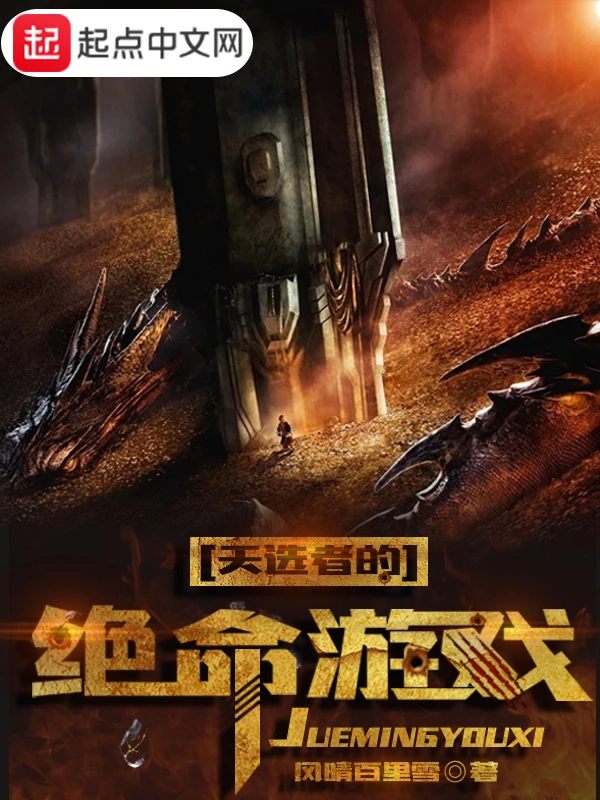
The Desperate Game of the Chosen One
天选者的绝命游戏
- Status
- Ongoing
- Length
- 60k Words
- Genre
- Western Fantasy
- Audience
- Male
- Subgenre
- Mystic Fantasy
- Updated
- 8y ago
- Source
- Qidian
Stats
0Monthly votes
24Recommends
2Fans
34Chapters
Synopsis
Reader comments
Readers also read
 Kobold Wizard: What the Hell Is Your Attainment Status?
 I Won the Favor of Ms. Quiet
 Open Your Adventure Log
 The Alchemist Girl Is Becoming a God
 Tokyo Criminal 1962
 Corpse Hunter
 Green Hills
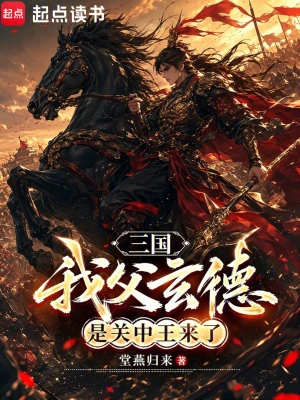 Three Kingdoms: My Father Xuande, the King of Guanzhong Is Here
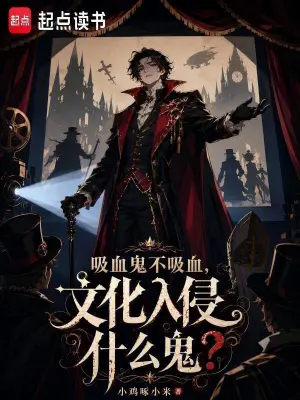 Vampires Don't Suck Blood, What the Hell Is a Cultural Invasion!
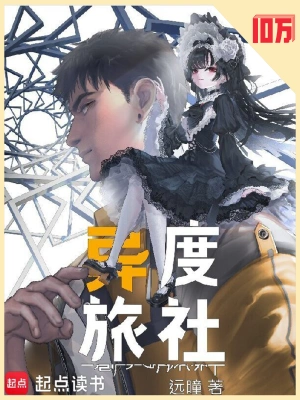 Alien Hotel
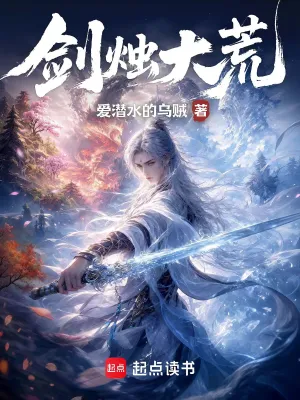 Sword and Candle Wilderness
 Become a God from Water Monkey
Interesting? Boring? Dull? Complex? Spring and snow? Lower ribs?
If I were to give this book a one-sentence review, I would give this review: For this book, it is difficult to evaluate it simply as good or bad, interesting or boring. For me, this book may have given me some ideas about Yangchun Baixue and Lower Riba People, but for others, this may not be the case. As usual, we first look at the most basic part of a book, grammar. It is difficult to find obvious grammatical errors in this book. At least the author has put a lot of effort into the smoothness of the article and the accuracy of the information conveyed. Apart from some minor mistakes and confusion in tasks that should be caused by past works (this is a big problem), it is difficult to find grammatical errors that affect the reading experience. In this regard, this book has surpassed quite a few, at least the online articles I have read. Secondly, the plot, plot and plot. In fact, there is very little to say in this part. The arrangement of the plot is often determined subjectively, and there is no absolute good or bad, so the opinions here are all based on subjective impressions. In terms of the design of the plot, as far as I can see, in addition to the conventional "where to go, what to do", the part that fills the plot is more composed of various logics, philosophical speculations, and classic questions, such as the variant three-door problem in the first chapter, the mathematical expectation calculation in the fourth chapter... This kind of plot design has both good and bad aspects. At best, this design makes the content of the novel not simply a so-called "survival at the end of the world", but adds a bit of a mystery-solving feel. It also played a positive role in character creation. For readers who have a certain understanding of these issues, they may show a knowing smile, which invisibly increases their goodwill. But on the other hand, for the novice readers who may account for the vast majority, these unclear and obscure questions seem to be dispensable in the plot. The process of raising and solving the puzzles is a boring narrative throughout, and there is no sense of reading interest at all. At the same time, it also occupies a large amount of text space, compressing the actual proportion of the plot in each chapter. As a result, during the reading process, most of the time is actually spent watching the protagonist and the puzzle proposer's bickering, and there are very few parts that actually advance the plot. From here, it can basically be seen that the author's target audience should not be novice readers, but people who are more interested in philosophy and logical issues. Let's look at the writing style, structure, and narrative logic. At least in the smooth part, there are not too many "problems" with the writing style. The overall style is basically consistent, and the description part conforms to the writing style; the narrative and action parts are readable to a certain extent, and the author's writing style is still relatively strong. But structurally, some problems were exposed. In the plot part, the issue of "puzzles" was mentioned. From a structural point of view, the puzzle part that takes up a lot of text dilutes the advancement of the plot itself. On the other hand, large explanations of the settings, psychological activities of the protagonist, and somewhat excessive atmosphere creation also occupy a large amount of text, leaving not much for the advancement of the plot... (See below)
(Continued from above) Interesting? Boring? Dull? Complex? Spring and snow? Lower ribs?
(Continued from above) In addition, in the plot advancement part, as far as the chapters I have seen so far, it seems that the writing method of plot advancement/event separation is used. This method has a strong sense of theater, but it also brings a problem: The connection between the event part and the plot advancement part is not strong. It seems that there is no problem in skipping the puzzles in the events and some descriptions before and after the puzzles. Just take a look at the characters. This is somewhat similar to Nikkei's melodrama-style division of volumes. The plot of each volume is basically independent, and it doesn't matter if you skip a certain volume. The narrative logic and the entire story line, as far as I can see, is a very traditional quasi-infinite flow advancement method, where the entire story is strung together through tasks and "points". This method is actually very convenient, because there is no need to think about the connection between plots. Through tasks and changes in points, plots can be well connected. But the weakness is that this method will cause readers to lack a sense of expectation during the transition, because the way the plot starts and the ending seems predictable - you will die if you fail anyway, so you will not fail. In addition, combined with the design of the plot, in the logical line of the entire narrative, the character settings are slightly facial-shaped. I can even put a set of RPG labels on these characters while reading the book: This is the novice village tutorial man This is an intelligence dealer who sees the potential of the protagonist and sends the mission. This is... In addition, the character of the protagonist in the opening chapter is somewhat incongruous. After that, let's look at the subject matter, the expansion of the subject matter, and the coordination of the writing style. The subject matter of this book is obviously that Mugenliu uses a shell to survive in the wasteland. It is not easy to write well about these two subjects. In terms of the author's writing skills, the writing was not broken, but it was not written well either. In the wasteland part, the atmosphere is average. The atmosphere creation of the wasteland is limited to the description of the environment and the so-called "survival items are scarce and expensive". The core human part is only touched upon. It is difficult to find the feeling of the wasteland during the reading process. As for the infinite flow part, the sense of urgency of the task and the sense of oppression of being obliterated are also not created enough. Sometimes I even feel that the protagonist is playing a happy IQ game with friends at the Mensa venue... Of course, it is not yet clear what the general background is before the general background is laid out. There are not many comments here, and they are all subjective views. The coordination of the writing style is a bit lacking. The author's writing skills are very good, but it feels a little inconsistent when used in a novel with this background. The description of the general environment, atmosphere, and background is relatively weak. The author seems to prefer to focus on a certain person or something. Perhaps the author's writing style is more suitable for writing urban and fantasy novels, rather than writing this kind of grand wasteland novel. From this perspective, this book is more like an urban battle of wits novel with the appearance of an infinite flow of wasteland. The coordination between the writing style and the subject matter is somewhat low, and this needs to be strengthened... (See below)
The setting feels very attractive
Keep it first. Based on my years of experience, it should be a food book~~~