


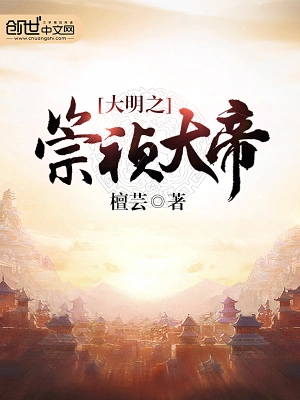
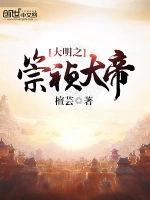
The Great Emperor Chongzhen of the Ming Dynasty
大明之崇祯大帝
- Status
- Completed
- Length
- 1.5M Words
- Genre
- Historical
- Subgenre
- Song-Yuan-Ming Dynasties
- Updated
- 4y ago
- Source
- Qidian
Stats
Tags
Synopsis
More by this author
In booklists 7
Underrated Gems
These are all novels I've read and enjoyed. There are no big-name authors here. If you like their books, just browse the recommendation charts. But if you're tired of the big names, give these a try.
Ten Years of Great Reads
I've been reading novels for over ten years, since I was thirteen. Here are some recommendations.
New Historical and Xianxia Novels
Books I've read and think are worth recommending.
Late Ming Dynasty Novels
Anti-Qing specialist for three or four years!
My Collection Room
My room is filled with book after book. Whenever I come across an ongoing or completed book that I think is good, I'll put it here.
The Wonders of History and Culture
History cannot be changed, but the countless remarkable figures of five thousand years of history still inspire our imagination. Historical transmigration novels may not be rigorous, but they make you feel as though you've returned to that bygone era.

The Way of Reading!
Created this list to recommend books I've come across that are creative, full of highlights, meaningful, and educational, books that leave you with something after reading. I hope you'll find something you like!
Readers also read
 A Guide to Building Civilization in a Primitive Tribe
 Daming: Asking for the Throne at the Beginning, Lao Zhule Went Crazy
 My Only Method: I Will Add More Points to Become Stronger at the End of Ming Dynasty
 My Father Is Wen Tianxiang, and We Win the Battle of Yashan from the Start
 The Great Ming
 Emperor Zhengde
 Reversing the Ming Dynasty, 1644
 Resist the Qing: Starting at Yipianshi!
 Ming Dynasty Endgame: 1645
 I Am the Carpenter Emperor
 My Neighbor Is the Emperor
 A Plan to Revive the Northern Song
 The Ming Dynasty's Iron-Blooded Power Minister
Reader comments 25
Google Translate
Comment on the most recent chapter. The author originally wanted to play a big game and highlight the ambitions and conspiracies of Queen Zhou, Xu Shaohua, the three princes and the officials surrounding the succession of the throne as much as possible when the protagonist knows everything. However, I feel that there are the following shortcomings, which result in readers' poor senses when reading, and do not induce the effect of "suppression" first and then promotion: 1. No intervention should be done after weeks. The character of Queen Zhou should be a superior being. She can see the children feeling sad and struggling for the throne, and she can even advise them. This will help readers have a sense of anticipation for the plot, and at the same time have a sensory understanding of Queen Zhou's knowledge. But in this article, Zhou Hou fell in love with the prince and became a stupid accomplice. On the one hand, the character lacked charm, creating the illusion that everyone was the enemy of the protagonist. 2. For the character Xu Shaohua, the author did not portray her ability, or in other words, lacked the motivation to change her attitude. In fact, if we change the idea and make her completely black, and become a spy who knows the prince, and develop a certain degree of resourcefulness, this will have a more effective effect in promoting the plot than being muddled. It's okay if it's not black, it's black to the end! During this period, a meaningful dialogue between the protagonist and her can be added, and when the prince rebels, he should show shock. He did not expect to get to this point. Focus on the description, and report to the protagonist out of his final conscience after the psychological struggle. The protagonist scolds her from the perspective of a successful person! 3. The character of the prince lacks charisma. He can be portrayed as a diehard who stubbornly adheres to Confucianism, but he must be given the ability to judge right and wrong. In the end, he was tricked by the third prince and had to rebel. When he was given poisonous wine, he saw the faces of his third brother and the officials clearly, and he suddenly woke up and drank the poisonous wine. This can add to the plot. This article is too simple and has no independent opinion. The role of the prince can be stupid and manipulated, but the "qi" in his heart cannot be vented! Try to write as much as possible as the situation forces you to feel. 4. The second prince's behavior was a bit sudden, and there was a lack of foreshadowing in the early stage. 5. The strategy of the third prince is still a bit lacking. It is too simple, does not understand the overall situation, does not involve enough breadth, and does not give the protagonist the feeling of "actually all your direct descendants are mine." To sum up, the author was a little hasty in handling this plot. The reason is that the response from readers is relatively large. The more important reason, I think, is the lack of personality charm and position description during character creation, which gives readers the experience of getting rid of them quickly and ending this farce.
Chen Yuanyuan didn't like it, so she gave it up.
I have just read a few chapters. The protagonist, Emperor Chongzhen, who will defeat his own skills two months after being reborn, has been reborn for a month. What has he done? After doing this, you sleep with your concubine in your arms every day? According to history, it only took a month before the arrangements were made. Who has a bigger heart, the protagonist or the author?
The best way to determine whether a Ming Dynasty novel is poisonous is to turn to the end and click on it if there is content about attacking European countries. Then I was blinded and died. I didn't know how to complain well. Was it because the author was in a hurry to end it? The protagonist is like a street gangster who breaks into other people's houses and is so righteous. The author is that Macau was not a colony in the Ming Dynasty. It was managed by Ming officials. You don't have this historical knowledge. Moreover, whether it is the way and reason of declaring war or the other party's reaction, I feel like my eyes are going blind. It looks like two hoodlums about sixteen years old fighting each other, and that If you take advantage of the world, I will kill you for robbery. What the hell is your attitude? Author, you don't know that Europeans are working hard to colonize everywhere. We just sit at home and let them send half of the world's silver. They secretly destroyed so many vassal countries of the Ming Dynasty. Instead of using it as an excuse, they come to the door and curse, saying that the person who comes to give you money owes you money...
This book is a bit extreme, lacks the foundation of uprightness, and has big problems with its logic. Although it is okay that fierce government is needed in troubled times, it is not a mindless killing...
There is too much nonsense, and even if I just make up the word count, it is all a narrative, not a novel.
The protagonist lacks poisonous men like Chen Ping and Jia Ru. The most wasteful thing is that Tu Guobao kills everyone. The more he reads, the narrower his temper is. He is not as big as the Manchus. This is a shortcoming of the Han people. The more villainous the Manchurians are, the more they like them. The only way to success is to be close to villains and stay away from gentlemen. This is my experience after reading so many novels. You will consciously guard against villains, but you cannot guard against gentlemen, friends and relatives. This is the example of the Pig Dynasty.
It's all good, but it's a bit hard to accept.
Li Zicheng does not deserve to be buried by an emperor, neither in history nor in novels. I'm really unhappy about having no merit and virtue, and enjoying an imperial burial! The Zhu family at least contributed to the founding of the country. Apart from being a disaster, what else could Li Zicheng do? It's one thing to be forced to do so. To enjoy the imperial burial, you must at least have some merit, right? But he was only rebelling against the enemy and did not help the people survive. How many people died under the coercion?
Didn't anyone realize that the author has reversed the classification of battleships? Level one is the strongest.
The author has a thorough understanding of the overall situation and clearly understands where the main contradictions lie. However, he fails in many detailed descriptions and characterizations. I hope he will continue to work hard in the next book.