


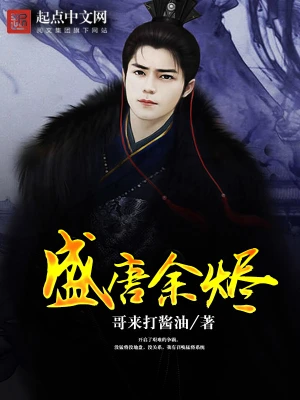
The Last Embers of the High Tang
盛唐余烬
- Status
- Completed
- Length
- 1.2M Words
- Genre
- Historical
- Subgenre
- Jin-Sui-Tang Dynasties
- Updated
- 8y ago
- Source
- Qidian
Stats
547Chapters
0Votes
17.4kRecs
11.5kFans
Tags
Synopsis
More by this author
In booklists 2
Readers also read
 My Father Is Wen Tianxiang, and We Win the Battle of Yashan from the Start
 A Guide to Building Civilization in a Primitive Tribe
 Daming: Asking for the Throne at the Beginning, Lao Zhule Went Crazy
 My Only Method: I Will Add More Points to Become Stronger at the End of Ming Dynasty
 Slaughtering My Way Through the Marvel Universe: Starting with The Boys
 The Ming Dynasty Behind the Mask
 A Life of Wealth and Glory
 The Road Less Traveled
 The World of the Extreme Path: Tempering My Body Through Terror
 The Generals of Great Song
 The Ming Dynasty's Chief Minister
 The Prosperous Longwan Era
Reader comments 29
Google Translate
A good book, the pearl is hidden in the sea of books.
Rubber grass is found in the Western Region and rubber can be extracted from it to make tires.
It is indeed a good book. I came across this book by chance this month. My poor performance was mainly due to the opening of the chapter. Several scenes at the same time were not switched freely enough, which affected the reading effect. The main character should be written separately, and then slowly unfold after dozens of chapters, and then fill in the scenes other than the main character through other people's mouths. You might as well refer to Xun Qin Ji for this point! A problem in the later period is that there are too many women in Chang'an. You must know that the protagonist is only 16. He is a soldier before time travel and has a beloved fiancée. After time travel, the purpose is to continue the glory of the Tang Dynasty. Then you should be more self-disciplined, or transition to 18 for two years before meeting women who will leave their mark in history! The other slightly bad thing is that before and after entering the Tibetan capital, we went to Kashmir, Nepal, southern Tibet and other places. We wrote about many difficulties, but entering and exiting the Qinghai-Tibet Plateau and conquering the plateau were still too smooth. This is a flaw. Because this is about the rise of the protagonist, readers will be bored if there is too much space, but if there is less space, it will be impossible to write about how to conquer! I rarely write so many reviews because the author's writing style, rhythm, narration, and story-telling are all good, and he has enough historical knowledge. He is neither a noob nor a showoff. Overall, his flaws do not hide his flaws! I hope the author will finish writing this article, or start a new book. The results of this article are indeed not good, so the new book brings a new atmosphere!
This book is very culturally written, but it is too literary and craftsmanship, and the story cannot be told well. In my opinion, no matter what a novel is, it must at least tell the story well so that people can accept it. If it cannot be accepted, no matter how good the writing is, no matter how clever the rhythm design is, it is of no use. Moreover, the author designed the scene paragraphs in all kinds of strange and fragmented ways. One scene jumps to another before the story is over, and it jumps around. In my opinion, it is simply crazy.
There is no clear main plot, and I haven't seen it at all, so I'm destined to be disappointed.
Comment
I read this book on QQ Reading and saw that there are more than 40 chapters left. The author was really careful in researching the information, and the writing style is not bad, but there are really many poisonous points. Without mentioning the plot, I will talk about the historical "flaws": First of all, the eleventh year of Tianbao is The third year of Tianbao began to be changed to Zai. In the Tang Dynasty, that is wrong. In China, from the creation of Emperor Wu of the Han Dynasty to the second year of Tianbao, they were all years, not Zai. The Kaiyuan era often appears in the author's articles, and there are also those after the third year of Tianbao, such as the eighth year of Tianbao, which are all wrong; secondly, the ancients People are called by their first names, such as Li Taibai and Du Zimei. They would not directly call them Li Bai or Du Fu. This is very rude. Feng Changqing, Li Chu, and Li Hao often appear in the article. Even if they are emperors, as a father, they can only call their sons Dalang, Sanlang, and Shibalang. Also, the title level of a county king is the same. For example, An Lushan is granted the title of Prince of Dongping, and Geshu Han is granted the title of Prince of Xiping. They are also called kings, or King An, King Geshu, or King Dongping or King Xiping. If they don't know how to call themselves kings, should they call him Prince An after they are granted the title of prince? Prince Geshu? It must be to address the king with the name of the country, such as King Liang, King Qi, or the king; also, the vassal king usually calls himself an orphan or a widower. The title "my king" should be made up by the uneducated TV drama screenwriters in the past. Could it be that the emperor still calls me "this emperor"? There is also the issue of title. The prime ministers of the Tang Dynasty are generally called Xianggong. The position of prime minister is higher than that of prime minister. Later it became the standard position for usurping power officials. Li Yuan, Yang Jian, etc. Have all served as prime ministers. Finally, let's talk about the age issue. Today's Chinese people are too poisoned by the West and have forgotten us. Following the millennium-old method of counting age in fictitious years, our Chinese tradition is that one is one year old on the day of birth, and then adds one year old on the New Year's Day of the following year. For example, a person is born on New Year's Eve of the previous year and will be 2 years old on the next day of the New Year's Day. However, according to your Western calculations, the age is only 1 day. ; Just like Li Shimin was born in December of the 18th year of Emperor Kaihuang's reign (598) in the lunar calendar; according to the Western Gregorian calendar, this is 599, and he died in the 23rd year of Zhenguan (649). Many people take his age as 649-599=50, but in fact he was 649-598, plus more. One year old in the year of birth is equal to 52 years old; the old Tang book records that Emperor Taizong of the Tang Dynasty died and his life span was 52 years old. This is how it was calculated. Therefore, when writing ancient Chinese historical novels, I calculated my age according to the traditional Chinese method. For example, in this book, which Tang Dynasty person followed the Western Gregorian calendar? This is really a show! There are only so many that I can think of. Among the novels I have read so far, the only ones that have not touched these thunders are The Floating Life of the Late Tang Dynasty and Long Song of the Late Jin Dynasty written by Mike; there are also a few books such as The Imperial Estate of the Northern Dynasties and The Famous Families of the Ming Dynasty!
I've read dozens of chapters and I still don't understand it. The names of the enemy characters are really hard to read. Besides, how many readers really understand this history? If you make it so hard to understand and read, who will read it... So it's destined to be a hit.
After reading your book, I might as well read Tang History
Why do you keep talking about the imperial court or palace affairs in endless chapters? (It has little to do with the protagonist at the moment.) Although these things are indispensable, there is no need to describe them in ten or twenty chapters! Three or four chapters at most will be enough. It will be boring to read more.
A waste of time and junk book with too many poisonous points