Library
Browse and search books
895 novels found
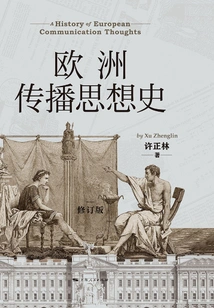
欧洲传播思想史(修订版)
Xu Zhenglin
As an independent discipline, communication studies was born in the United States in the 1940s, but the emergence of communication ideas can be traced back to ancient Greece. As the famous communication theorist E. M. Rogers said, "Anyone involved in a new river wants to know where the water here comes from and why it flows like this." "Where do we come from?" This is a question that the young and ancient discipline of communication has to face. This book is such a traceable book. From the ancient Greek academies more than 2,000 years ago to the colorful contemporary Internet world, this book attempts to transcend the barriers of time and break the boundaries of disciplines. Through the investigation of the thoughts of several generations of scholars and philosophers, it traces the emergence, development and evolution of communication ideas in Europe, and outlines a "lineage table" of communication studies in the context of history and the broad humanities and social sciences background. As a relatively complete research work on the history of Western communication thought, the author uses a personalized interpretation method to explore the essence, which helps to broaden readers' horizons and promote in-depth research on communication thought.
As an independent discipline, communication studies was born in the United States in the 1940s, but the emergence of communication ideas can be traced back to ancient Greece. As the famous communication theorist E. M. Rogers said, "Anyone involved in a new river wants to know where the water here comes from and why it flows like this." "Where do we come from?" This is a question that the young and ancient discipline of communication has to face. This book is such a traceable book. From the ancient Greek academies more than 2,000 years ago to the colorful contemporary Internet world, this book attempts to transcend the barriers of time and break the boundaries of disciplines. Through the investigation of the thoughts of several generations of scholars and philosophers, it traces the emergence, development and evolution of communication ideas in Europe, and outlines a "lineage table" of communication studies in the context of history and the broad humanities and social sciences background. As a relatively complete research work on the history of Western communication thought, the author uses a personalized interpretation method to explore the essence, which helps to broaden readers' horizons and promote in-depth research on communication thought.
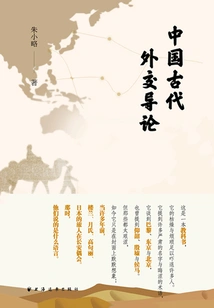
中国古代外交导论
Zhu Xiaolue
This book focuses on the theoretical construction of ancient Chinese diplomacy. Based on a large amount of detailed historical data research, this book discusses the particularly unique disciplinary tradition of diplomatic studies, and provides an in-depth analysis of the origins, schools, representative views and development of the discipline history of ancient Chinese diplomatic studies as a discipline. The narrative logic of the manuscript is rigorous and the materials are cited extensively, allowing readers to gain additional insights while understanding ancient Chinese diplomacy. It is a rare masterpiece in the study of the history of transportation between China and the West.
This book focuses on the theoretical construction of ancient Chinese diplomacy. Based on a large amount of detailed historical data research, this book discusses the particularly unique disciplinary tradition of diplomatic studies, and provides an in-depth analysis of the origins, schools, representative views and development of the discipline history of ancient Chinese diplomatic studies as a discipline. The narrative logic of the manuscript is rigorous and the materials are cited extensively, allowing readers to gain additional insights while understanding ancient Chinese diplomacy. It is a rare masterpiece in the study of the history of transportation between China and the West.
宋代科举制度与文学演变
Zhuge Yibing
Since the birth of the imperial examination system in the Sui and Tang Dynasties, it has affected social politics, culture and life in many aspects, especially the impact on scholars, which also restricted the literary creation at that time. The imperial examination system was greatly improved in the Song Dynasty, which not only greatly increased the number of candidates, but also improved the selection and management systems of the imperial examination system. For a long time, academic circles have always focused their research on the imperial examination system and its social significance, focusing on historical elaboration, and to a certain extent, neglected the impact of the imperial examination system on the texts of contemporary literati. As the official career promotion path that had the greatest impact on Song Dynasty literati, the imperial examination system most directly affected the literary creation and literary themes of Song Dynasty literati.
Since the birth of the imperial examination system in the Sui and Tang Dynasties, it has affected social politics, culture and life in many aspects, especially the impact on scholars, which also restricted the literary creation at that time. The imperial examination system was greatly improved in the Song Dynasty, which not only greatly increased the number of candidates, but also improved the selection and management systems of the imperial examination system. For a long time, academic circles have always focused their research on the imperial examination system and its social significance, focusing on historical elaboration, and to a certain extent, neglected the impact of the imperial examination system on the texts of contemporary literati. As the official career promotion path that had the greatest impact on Song Dynasty literati, the imperial examination system most directly affected the literary creation and literary themes of Song Dynasty literati.
清代以来黄河中游气候变化及其社会响应
Zhang Jian
This book establishes a historical data database on the historical climate and hydrological changes of the Yellow River by systematically collecting and sorting out historical data on rainfall, water regime, disasters and other existing archives, local chronicles and collections of works on the middle reaches of the Yellow River since the Qing Dynasty. Based on this, the drought and flood levels (1644-2009) and surface rainfall change sequence (1765-2010) of the middle reaches of the Yellow River since the Qing Dynasty were reconstructed; the major drought of 1689-1692 and the extreme precipitation of 1819 on small and medium spatial scales were restored , the spatial and temporal differentiation characteristics of climate-hydrological events such as the temperature change in 1929, and the historical aspects of regional social response; and then try to diagnose the influence of external environmental factors such as natural and social factors, and clarify the interactive relationship between the impact of single disaster events and regional social response. At the same time, it also discusses the operation mode of the Yellow River flood control and flood reporting system in the Qing Dynasty, as well as the Yellow River river control management, river engineering management, etc. To a certain extent, it has promoted the depth of research on related academic issues in cross-cutting fields such as historical geography and Yellow River water conservancy history. The research conclusions reveal the characteristics and patterns of droughts and floods, rainfall changes, extreme dryness and humidity, and cold and warm events in the middle reaches of the Yellow River since the Qing Dynasty. It is not only a positive response to the study of regional climate reconstruction from a global perspective, but also provides historical reference for current disaster risk management and human adaptation to climate change. It also provides historical similarities for predicting regional climate change in the next decades or even centuries.
This book establishes a historical data database on the historical climate and hydrological changes of the Yellow River by systematically collecting and sorting out historical data on rainfall, water regime, disasters and other existing archives, local chronicles and collections of works on the middle reaches of the Yellow River since the Qing Dynasty. Based on this, the drought and flood levels (1644-2009) and surface rainfall change sequence (1765-2010) of the middle reaches of the Yellow River since the Qing Dynasty were reconstructed; the major drought of 1689-1692 and the extreme precipitation of 1819 on small and medium spatial scales were restored , the spatial and temporal differentiation characteristics of climate-hydrological events such as the temperature change in 1929, and the historical aspects of regional social response; and then try to diagnose the influence of external environmental factors such as natural and social factors, and clarify the interactive relationship between the impact of single disaster events and regional social response. At the same time, it also discusses the operation mode of the Yellow River flood control and flood reporting system in the Qing Dynasty, as well as the Yellow River river control management, river engineering management, etc. To a certain extent, it has promoted the depth of research on related academic issues in cross-cutting fields such as historical geography and Yellow River water conservancy history. The research conclusions reveal the characteristics and patterns of droughts and floods, rainfall changes, extreme dryness and humidity, and cold and warm events in the middle reaches of the Yellow River since the Qing Dynasty. It is not only a positive response to the study of regional climate reconstruction from a global perspective, but also provides historical reference for current disaster risk management and human adaptation to climate change. It also provides historical similarities for predicting regional climate change in the next decades or even centuries.
W
Historyw
H
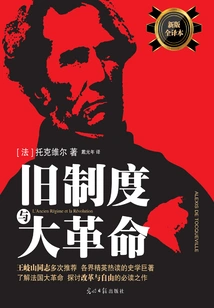
"The Old Regime and the Great Revolution" is a work by French historian Tocqueville. It discusses the French Revolution. The original feudal system collapsed due to corruption and unpopularity. However, the social unrest did not bring about the results expected by the revolutionary party. Both the rulers and the people were eventually swallowed up by mutual anger. The author conducts an in-depth study of documents, archives and historical events related to the French Revolution, and combines his understanding of freedom to answer the following questions: why the revolution first occurred in France; why the revolution was accelerated during the most prosperous period of the old system; why the centralization of power that emerged after the Great Revolution was a continuation of the old system, etc.
"The Old Regime and the Great Revolution" is a work by French historian Tocqueville. It discusses the French Revolution. The original feudal system collapsed due to corruption and unpopularity. However, the social unrest did not bring about the results expected by the revolutionary party. Both the rulers and the people were eventually swallowed up by mutual anger. The author conducts an in-depth study of documents, archives and historical events related to the French Revolution, and combines his understanding of freedom to answer the following questions: why the revolution first occurred in France; why the revolution was accelerated during the most prosperous period of the old system; why the centralization of power that emerged after the Great Revolution was a continuation of the old system, etc.
宋代家礼
Lu Minzhen
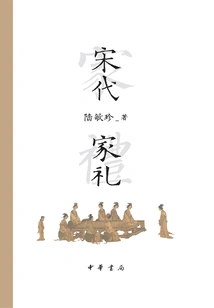
The book "Family Rites in the Song Dynasty" observes the historical scene of the Song Dynasty's family rituals as a collective writing norm, explores the self-setting of the writers in the family rituals text during this period, and their intentions and approaches when writing. It describes the general writing of the family ritual texts in the Song Dynasty and analyzes the history of the text's production. Context, the continuation and update of different family ritual texts, and changes in knowledge types, and taking Zhu Zi's "Family Rites" as a case study, outlines the process of canonization of family ritual texts and popularization of knowledge after the Song Dynasty, in order to illustrate the testing and practice of the family ritual knowledge created by writers throughout the Song Dynasty in later generations. The research combines methods such as intellectual history, cultural history, and social history, including detailed analysis of written records and interpretation of images, providing a new paradigm for the study of family rituals.
The book "Family Rites in the Song Dynasty" observes the historical scene of the Song Dynasty's family rituals as a collective writing norm, explores the self-setting of the writers in the family rituals text during this period, and their intentions and approaches when writing. It describes the general writing of the family ritual texts in the Song Dynasty and analyzes the history of the text's production. Context, the continuation and update of different family ritual texts, and changes in knowledge types, and taking Zhu Zi's "Family Rites" as a case study, outlines the process of canonization of family ritual texts and popularization of knowledge after the Song Dynasty, in order to illustrate the testing and practice of the family ritual knowledge created by writers throughout the Song Dynasty in later generations. The research combines methods such as intellectual history, cultural history, and social history, including detailed analysis of written records and interpretation of images, providing a new paradigm for the study of family rituals.
从演揲儿法中拯救历史:元代宫廷藏传密教史研究
Shen Weirong An Haiyan
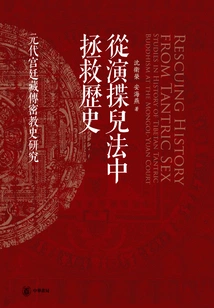
The rise of Mongolia in the early 13th century and its conquest and rule over vast areas of Eurasia not only changed the world, but also caused the Mongolian nation to break away from their original shamanic beliefs and convert to Tibetan Buddhism. However, for a long time, the details of the spread of Tibetan Buddhism inside and outside the Yuan Dynasty court have been little known. Due to various historical reasons, traditional Han scholars lacked a basic understanding of Tibetan Esotericism, and at the same time they were keen to eroticize it. They even believed in unofficial histories and portrayed Tibetan Esotericism in official history as a "witchcraft" and "ghost religion" similar to Fangzhongshu. This tendency to seriously shamanize and eroticize Tibetan Buddhism and even the entire Tibetan society has continued to the present day and has even affected the Western world. This book makes use of a large number of Chinese-translated Tibetan esoteric documents discovered in recent years, and conducts textual research and in-depth research on them with corresponding Tibetan, Tangut, Uighur and other ethnic language documents. It attempts to understand Tibetan Buddhist terms such as "Yanjuerfa" in their original language, history, culture and religious context, restore the true appearance of the Tibetan esoteric rituals passed down by the Yuan Dynasty court, and finally reveal the truth about the history of the spread of Tibetan Buddhism in Yuan Dynasty China.
The rise of Mongolia in the early 13th century and its conquest and rule over vast areas of Eurasia not only changed the world, but also caused the Mongolian nation to break away from their original shamanic beliefs and convert to Tibetan Buddhism. However, for a long time, the details of the spread of Tibetan Buddhism inside and outside the Yuan Dynasty court have been little known. Due to various historical reasons, traditional Han scholars lacked a basic understanding of Tibetan Esotericism, and at the same time they were keen to eroticize it. They even believed in unofficial histories and portrayed Tibetan Esotericism in official history as a "witchcraft" and "ghost religion" similar to Fangzhongshu. This tendency to seriously shamanize and eroticize Tibetan Buddhism and even the entire Tibetan society has continued to the present day and has even affected the Western world. This book makes use of a large number of Chinese-translated Tibetan esoteric documents discovered in recent years, and conducts textual research and in-depth research on them with corresponding Tibetan, Tangut, Uighur and other ethnic language documents. It attempts to understand Tibetan Buddhist terms such as "Yanjuerfa" in their original language, history, culture and religious context, restore the true appearance of the Tibetan esoteric rituals passed down by the Yuan Dynasty court, and finally reveal the truth about the history of the spread of Tibetan Buddhism in Yuan Dynasty China.
明代都察院研究
Lu Zhenxing
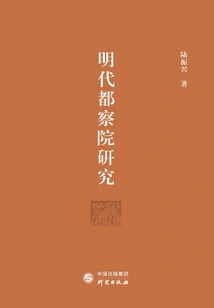
The Metropolitan Procuratorate of the Ming Dynasty had a prominent significance in the supervisory system of the Ming Dynasty. It played an important role in maintaining the relationship between the central and local governments, strengthening communication between the upper and lower levels, and maintaining judicial justice and social equity. This book examines the construction and implementation of the supervisory system in the Ming Dynasty, analyzes the innovations in the political system of the Metropolitan Procuratorate in the Ming Dynasty, points out the importance and key significance of "human construction", and contributes to deepening the study of the supervisory system. It is an academic work with great reference value.
The Metropolitan Procuratorate of the Ming Dynasty had a prominent significance in the supervisory system of the Ming Dynasty. It played an important role in maintaining the relationship between the central and local governments, strengthening communication between the upper and lower levels, and maintaining judicial justice and social equity. This book examines the construction and implementation of the supervisory system in the Ming Dynasty, analyzes the innovations in the political system of the Metropolitan Procuratorate in the Ming Dynasty, points out the importance and key significance of "human construction", and contributes to deepening the study of the supervisory system. It is an academic work with great reference value.
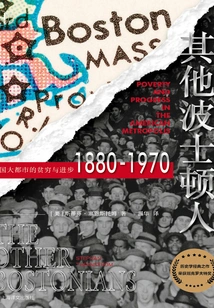
其他波士顿人:美国大都市的贫穷与进步1880-1970(历史学堂)
(us) Stephen Saenstrom
This is a Bancroft Prize-winning historical classic and a model for social mobility research. One of its contributions is that no one has before used such records to study the development of cities and their causes in this way. Newspapers and other familiar sources record the lives of only 5% of the population. And beyond these records, there are thousands more whose births, lives, and deaths went unnoticed by the chroniclers of their times. Sainstrom looked at surviving records of these people, as well as raw, uninterpreted data from old city directories, as well as disappearing marriage license applications and abandoned local tax records. He collected and analyzed this overlooked evidence to provide one of the most thorough series of observations ever made on patterns of immigration and social mobility in changing American communities. Sainstrom's research, especially "Other Bostonians," provides new material and perspectives for discussing society, politics, and union organizing, investigating Americans' upward mobility, and examining the diverse experiences of particular groups (Irish, Italians, English, Jews, native Americans, and blacks).
This is a Bancroft Prize-winning historical classic and a model for social mobility research. One of its contributions is that no one has before used such records to study the development of cities and their causes in this way. Newspapers and other familiar sources record the lives of only 5% of the population. And beyond these records, there are thousands more whose births, lives, and deaths went unnoticed by the chroniclers of their times. Sainstrom looked at surviving records of these people, as well as raw, uninterpreted data from old city directories, as well as disappearing marriage license applications and abandoned local tax records. He collected and analyzed this overlooked evidence to provide one of the most thorough series of observations ever made on patterns of immigration and social mobility in changing American communities. Sainstrom's research, especially "Other Bostonians," provides new material and perspectives for discussing society, politics, and union organizing, investigating Americans' upward mobility, and examining the diverse experiences of particular groups (Irish, Italians, English, Jews, native Americans, and blacks).
西周王室赏赐礼制研究
Jing Hongyan
The book "Research on the Royal Reward Ceremony of the Western Zhou Dynasty" is mainly based on handed down documents, combined with bronze inscriptions and archaeological results, starting from five aspects: feudal rewards, appointment rewards, sacrificial rewards, war rewards, and court appointments. The study not only reveals the main content of the Western Zhou royal reward ceremony system and its role in national political life, but also the political relationships and functions between various reward ritual systems. It also explores the historical trajectory and internal reasons of the emergence, development and decline of the Western Zhou royal reward ceremony system.
The book "Research on the Royal Reward Ceremony of the Western Zhou Dynasty" is mainly based on handed down documents, combined with bronze inscriptions and archaeological results, starting from five aspects: feudal rewards, appointment rewards, sacrificial rewards, war rewards, and court appointments. The study not only reveals the main content of the Western Zhou royal reward ceremony system and its role in national political life, but also the political relationships and functions between various reward ritual systems. It also explores the historical trajectory and internal reasons of the emergence, development and decline of the Western Zhou royal reward ceremony system.
通鉴版本谈
Xin Deyong
This is a concise reading book about the edition knowledge of "Zi Zhi Tong Jian". The book starts with Hu Ke's imitation of "Tongjian" by Hu Ke during the Jiaqing period of the Qing Dynasty, and explores in detail the origin of editions of "Zi Zhi Tongjian" since the publication of Hu Sansheng's "Tongjian Annotation". The greatest contribution of the book is that the author makes full use of his knowledge of editions and historical methods to systematically elaborate on the relevant historical background of Hu's commentary on "Tongjian" and its publication and the basic issues of editions of ancient Chinese books through specific examples. At the same time, it allows readers to have a deeper understanding of the value of historical materials on the basis of understanding the edition of "Tongjian". This is an important contribution of this book to edition studies and historical philology.
This is a concise reading book about the edition knowledge of "Zi Zhi Tong Jian". The book starts with Hu Ke's imitation of "Tongjian" by Hu Ke during the Jiaqing period of the Qing Dynasty, and explores in detail the origin of editions of "Zi Zhi Tongjian" since the publication of Hu Sansheng's "Tongjian Annotation". The greatest contribution of the book is that the author makes full use of his knowledge of editions and historical methods to systematically elaborate on the relevant historical background of Hu's commentary on "Tongjian" and its publication and the basic issues of editions of ancient Chinese books through specific examples. At the same time, it allows readers to have a deeper understanding of the value of historical materials on the basis of understanding the edition of "Tongjian". This is an important contribution of this book to edition studies and historical philology.
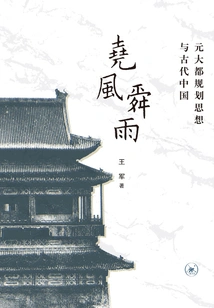
尧风舜雨:元大都规划思想与古代中国
Wang Jun
The winds of Yao and the rains of Shun represent the Chinese people's yearning for a peaceful and prosperous age for thousands of years, and the construction and planning of ancient China were based on the idea of achieving this ideal. This book is based on ancient Chinese classics and uses Chinese astronomy and archeology as research methods. It traces back to the founding period of Chinese civilization from Qizheng Tower in the Yuan Dynasty, showing the origin and continuity of Chinese civilization. The book is divided into two parts. The first part is "A Study on the Name and Orientation of Qizheng Tower", which examines the name, direction and central axis system of Qizheng Tower, revealing the significance of its meaning in "Yao Dian" of Shangshu, and also reflects the inclusiveness and stability of the ancient Chinese historical development of "following the Taoist tradition and establishing a new governance", and its ideological support. It reflects the integration of China's diverse cultures and nationalities; Chapter B is "The Yin and Yang Formula of the Yuan Dadu Plan", which combines the ancient astronomical laws and calculations to explain that the Yuan Dadu, as a representative of the ancient Chinese construction system, is the carrier of traditional Chinese thought and culture, and presents its typical significance as a political and cultural center. Kublai Khan's Yuan Dynasty, with the construction of a city, proved the ideological origin and great significance of China's pluralistic unity pattern, and witnessed the long history of Chinese civilization with its immortal cultural heritage.
The winds of Yao and the rains of Shun represent the Chinese people's yearning for a peaceful and prosperous age for thousands of years, and the construction and planning of ancient China were based on the idea of achieving this ideal. This book is based on ancient Chinese classics and uses Chinese astronomy and archeology as research methods. It traces back to the founding period of Chinese civilization from Qizheng Tower in the Yuan Dynasty, showing the origin and continuity of Chinese civilization. The book is divided into two parts. The first part is "A Study on the Name and Orientation of Qizheng Tower", which examines the name, direction and central axis system of Qizheng Tower, revealing the significance of its meaning in "Yao Dian" of Shangshu, and also reflects the inclusiveness and stability of the ancient Chinese historical development of "following the Taoist tradition and establishing a new governance", and its ideological support. It reflects the integration of China's diverse cultures and nationalities; Chapter B is "The Yin and Yang Formula of the Yuan Dadu Plan", which combines the ancient astronomical laws and calculations to explain that the Yuan Dadu, as a representative of the ancient Chinese construction system, is the carrier of traditional Chinese thought and culture, and presents its typical significance as a political and cultural center. Kublai Khan's Yuan Dynasty, with the construction of a city, proved the ideological origin and great significance of China's pluralistic unity pattern, and witnessed the long history of Chinese civilization with its immortal cultural heritage.
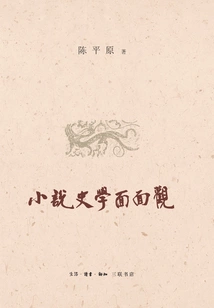
Aspects of Novel History
History小说史学面面观
Chen Pingyuan
Chen Pingyuan's "Aspects of Novel History" discusses the history of modern Chinese novel research since the late Qing Dynasty. He did not seek to cover everything, but selected Lu Xun, Hu Shi, A Ying, Pu Shike, Xia Zhiqing, Han Nan, Yan Jiayan, Fan Boqun, Zhao Yuan, Huang Ziping, Wang Dewei and himself, a total of twelve, for review, extension and development. In his words, these researchers may not necessarily have the best performance, but they are all unique and can stimulate thinking and discussion. Chen Pingyuan has always been concerned about the possibility of integrating novel theory and novel history, and even pursued how to truly achieve methodological innovation and even theoretical creation in the actual operation of novel history. Therefore, with a prominent awareness of issues, this book repeatedly asks questions about the functions, methods and realm of "historiography of novels", as well as how far the history of novels can go. The book combines the interest of novel history, the scale of academic history, and the vision of education history. It is not only a flash of inspiration, but also the result of his long-term accumulation and smooth progress. This book is compiled based on the lecture notes of Peking University in the spring and summer of 2020, and also includes professional papers and academic essays. Sometimes it's a long talk, sometimes it's just to the point, "big beads and small beads fall on the jade plate", flexible and diverse, and pay attention to the rhythm, at the same time interspersed with gossip, and anecdotes of teachers and friends. "Twelve People and Twelve Books" can be regarded as both a point of reference in the academic world and an analysis of famous works. It is an effective attempt to break down the barriers between the academic world and the public.
Chen Pingyuan's "Aspects of Novel History" discusses the history of modern Chinese novel research since the late Qing Dynasty. He did not seek to cover everything, but selected Lu Xun, Hu Shi, A Ying, Pu Shike, Xia Zhiqing, Han Nan, Yan Jiayan, Fan Boqun, Zhao Yuan, Huang Ziping, Wang Dewei and himself, a total of twelve, for review, extension and development. In his words, these researchers may not necessarily have the best performance, but they are all unique and can stimulate thinking and discussion. Chen Pingyuan has always been concerned about the possibility of integrating novel theory and novel history, and even pursued how to truly achieve methodological innovation and even theoretical creation in the actual operation of novel history. Therefore, with a prominent awareness of issues, this book repeatedly asks questions about the functions, methods and realm of "historiography of novels", as well as how far the history of novels can go. The book combines the interest of novel history, the scale of academic history, and the vision of education history. It is not only a flash of inspiration, but also the result of his long-term accumulation and smooth progress. This book is compiled based on the lecture notes of Peking University in the spring and summer of 2020, and also includes professional papers and academic essays. Sometimes it's a long talk, sometimes it's just to the point, "big beads and small beads fall on the jade plate", flexible and diverse, and pay attention to the rhythm, at the same time interspersed with gossip, and anecdotes of teachers and friends. "Twelve People and Twelve Books" can be regarded as both a point of reference in the academic world and an analysis of famous works. It is an effective attempt to break down the barriers between the academic world and the public.
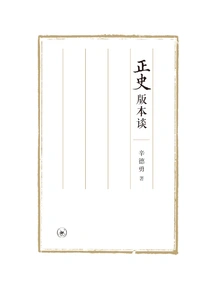
正史版本谈
Xin Deyong
"Talk about Official History Versions" starts from the "History Department" official history books and photos included in the "National Library of Song and Yuan Rare Books Catalog", explores the relevant historical philology and version bibliography knowledge, and puts forward its own opinions on some specific issues in official history handed down from ancient times. For example, there are issues with the style of ancient books, issues with the circulation of versions of the same official history, and even the author signatures of some books, etc. Many of the questions raised have good implications for the future compilation of ancient books and the compilation of related ancient books catalogues.
"Talk about Official History Versions" starts from the "History Department" official history books and photos included in the "National Library of Song and Yuan Rare Books Catalog", explores the relevant historical philology and version bibliography knowledge, and puts forward its own opinions on some specific issues in official history handed down from ancient times. For example, there are issues with the style of ancient books, issues with the circulation of versions of the same official history, and even the author signatures of some books, etc. Many of the questions raised have good implications for the future compilation of ancient books and the compilation of related ancient books catalogues.
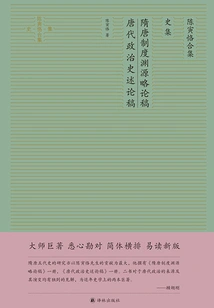
隋唐制度渊源略论稿·唐代政治史述论稿(陈寅恪合集:史集)
Chen Yinke
This book contains two masterpieces of ancient Chinese history, both written during the Anti-Japanese War. It is also a book of sorrow. The first book explains the overall reform points and partial development of the systems of the Sui and Tang dynasties from aspects such as etiquette, official positions, criminal laws, music, military systems, and finance. The second book is a companion volume to the first one. It discusses the ruling class, party divisions, domestic and foreign affairs, and other topics. There is an outline of the political history of the Tang Dynasty, which is contained in these three chapters.
This book contains two masterpieces of ancient Chinese history, both written during the Anti-Japanese War. It is also a book of sorrow. The first book explains the overall reform points and partial development of the systems of the Sui and Tang dynasties from aspects such as etiquette, official positions, criminal laws, music, military systems, and finance. The second book is a companion volume to the first one. It discusses the ruling class, party divisions, domestic and foreign affairs, and other topics. There is an outline of the political history of the Tang Dynasty, which is contained in these three chapters.
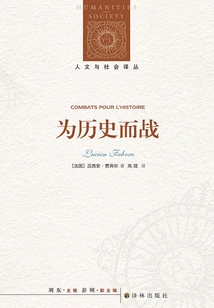
为历史而战(人文与社会译丛)
C
This book is a collection of articles and speeches written by Lucien Favre from 1906 to 1952. It expounds his overall views and outstanding insights on historical research. In the first 33 articles, he put forward new ideas on the nature of history, historical epistemology, methodology, interdisciplinary research, etc., Which are quite innovative; the last 11 articles recalled the lives of 11 outstanding intellectuals in different fields over the past 30 years, thereby emphasizing the importance of interdisciplinary research on history (geography, sociology, linguistics, philosophy, etc.).
This book is a collection of articles and speeches written by Lucien Favre from 1906 to 1952. It expounds his overall views and outstanding insights on historical research. In the first 33 articles, he put forward new ideas on the nature of history, historical epistemology, methodology, interdisciplinary research, etc., Which are quite innovative; the last 11 articles recalled the lives of 11 outstanding intellectuals in different fields over the past 30 years, thereby emphasizing the importance of interdisciplinary research on history (geography, sociology, linguistics, philosophy, etc.).
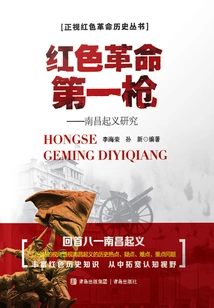
红色革命第一枪:南昌起义研究
Compiled By Li Hairong And Sun Xin
The Nanchang Uprising fired the first shot of armed resistance against the Kuomintang reactionaries, declared the Chinese Communist Party's firm stance to carry the Chinese revolution to the end, marked the beginning of the Chinese Communist Party's independent creation of a revolutionary army and leadership of the revolutionary war, and the beginning of the creation of the people's army. This shot was the first shot of the Red Revolution, opening a new chapter in the armed revolution of Chinese workers and peasants. This book is a work that comprehensively and systematically organizes, summarizes and summarizes the research results of the Nanchang Uprising. Objectively and systematically summarizes the academic research views on several issues of the Nanchang Uprising.
The Nanchang Uprising fired the first shot of armed resistance against the Kuomintang reactionaries, declared the Chinese Communist Party's firm stance to carry the Chinese revolution to the end, marked the beginning of the Chinese Communist Party's independent creation of a revolutionary army and leadership of the revolutionary war, and the beginning of the creation of the people's army. This shot was the first shot of the Red Revolution, opening a new chapter in the armed revolution of Chinese workers and peasants. This book is a work that comprehensively and systematically organizes, summarizes and summarizes the research results of the Nanchang Uprising. Objectively and systematically summarizes the academic research views on several issues of the Nanchang Uprising.
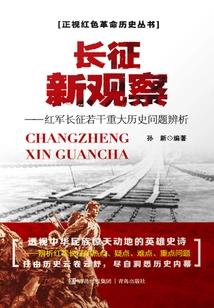
长征新观察:红军长征若干重大历史问题辨析
Compiled By Sun Xin
This book closely focuses on 30 hot spots, doubts, difficulties, and key issues about the Long March, reflecting and embodying new developments and new perspectives in the field of Red Army Long March research. The book strives to present the research results of domestic academic circles in recent years in a relatively comprehensive manner. It can be read by scholars who study the Long March, as well as scholars, college students, and graduate students majoring in the history of the Communist Party of China, the history of the Chinese revolution, and modern Chinese history, so as to systematically understand the research trends of the history of the Red Army's Long March. It is a work that comprehensively and systematically organizes, summarizes, and summarizes the research results of the history of the Red Army's Long March. The starting point of its writing determines that this book is to introduce a large number of research results on the history of the Long March to readers, but it is not simply introduced to readers. It is necessary to correctly analyze some major historical issues of the Red Army's Long March.
This book closely focuses on 30 hot spots, doubts, difficulties, and key issues about the Long March, reflecting and embodying new developments and new perspectives in the field of Red Army Long March research. The book strives to present the research results of domestic academic circles in recent years in a relatively comprehensive manner. It can be read by scholars who study the Long March, as well as scholars, college students, and graduate students majoring in the history of the Communist Party of China, the history of the Chinese revolution, and modern Chinese history, so as to systematically understand the research trends of the history of the Red Army's Long March. It is a work that comprehensively and systematically organizes, summarizes, and summarizes the research results of the history of the Red Army's Long March. The starting point of its writing determines that this book is to introduce a large number of research results on the history of the Long March to readers, but it is not simply introduced to readers. It is necessary to correctly analyze some major historical issues of the Red Army's Long March.
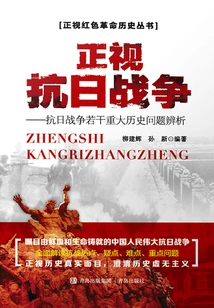
Facing the Anti-japanese War: Analysis of Several Major Historical Issues of the Anti-japanese War
History正视抗日战争:抗日战争若干重大历史问题辨析
Compiled By Liu Jianhui And Sun Xin
This book summarizes and narrates and studies 30 major hot spots, doubtful points, and difficult issues about the War of Resistance Against Japan. It will generate great positive energy for correcting people's misunderstandings in ideological understanding and returning to historical truth. It is undoubtedly of great value and significance for carrying out historical materialism education, patriotism education, and nationalism education, so as to strengthen the understanding of the correct history of the Communist Party of China. This book is not a completely original work by the author. The starting point of its writing determines that this book aims to introduce a large number of research results on the history of the Anti-Japanese War to readers. The book not only draws on and absorbs the comprehensive research results of Guo Dehong and others on the history of the Anti-Japanese War, but also introduces and paraphrases hot articles published by experts on the history of the Anti-Japanese War such as Xu Yan, Liu Tong, and He Zhengcheng. From it, we can see some of the latest results of the research on the history of the Anti-Japanese War. After reading this book, you will have a new and in-depth understanding of the Chinese Communist Party's political foresight, superhuman wisdom in military strategy, and practical perseverance during the Anti-Japanese War.
This book summarizes and narrates and studies 30 major hot spots, doubtful points, and difficult issues about the War of Resistance Against Japan. It will generate great positive energy for correcting people's misunderstandings in ideological understanding and returning to historical truth. It is undoubtedly of great value and significance for carrying out historical materialism education, patriotism education, and nationalism education, so as to strengthen the understanding of the correct history of the Communist Party of China. This book is not a completely original work by the author. The starting point of its writing determines that this book aims to introduce a large number of research results on the history of the Anti-Japanese War to readers. The book not only draws on and absorbs the comprehensive research results of Guo Dehong and others on the history of the Anti-Japanese War, but also introduces and paraphrases hot articles published by experts on the history of the Anti-Japanese War such as Xu Yan, Liu Tong, and He Zhengcheng. From it, we can see some of the latest results of the research on the history of the Anti-Japanese War. After reading this book, you will have a new and in-depth understanding of the Chinese Communist Party's political foresight, superhuman wisdom in military strategy, and practical perseverance during the Anti-Japanese War.
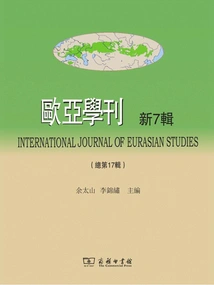
欧亚学刊(新7辑)
Yu Taishan Editor-in-chief Li Jinxiu
"Journal of Eurasia" brings together the latest results of inland Eurasian archeology, history, culture, and literature research, with two volumes per year. The articles included in this collection are as follows: Shi Dangshe's "Two Ways of Qin's Control of "Xirong" and Their Historical Significance", Duan Qing's "Jingjue, Shanshan's Ancient History", Li Jinxiu's "Shanshan Research", Zhou Sicheng's "A Preliminary Study on the Military Merit Rewards of the Modern Army", Wang Zijin's "Qiuci Left General Liu Pingguo" "Research on "Guancheng Chan"", Lin Meicun's "An Examination of the Donkey's Entry into China", Lin Wushu's "Re-Understanding of the Mingjiao Society in the Post-Tang Dynasty", Chen Xi's "A Short Examination of Jie'er Harang Seen in the History of the Yuan Dynasty", Shen Xie's "Investigation of the Mongolian Yuan Gold Artifacts in the Hermitage Museum", Yu Taishan's "Records" Concerning the Hephthalites in the Inscriptions of Gupta Times", Li Hongbin "The Rise of the Tang Dynasty in a Global Perspective", etc.
"Journal of Eurasia" brings together the latest results of inland Eurasian archeology, history, culture, and literature research, with two volumes per year. The articles included in this collection are as follows: Shi Dangshe's "Two Ways of Qin's Control of "Xirong" and Their Historical Significance", Duan Qing's "Jingjue, Shanshan's Ancient History", Li Jinxiu's "Shanshan Research", Zhou Sicheng's "A Preliminary Study on the Military Merit Rewards of the Modern Army", Wang Zijin's "Qiuci Left General Liu Pingguo" "Research on "Guancheng Chan"", Lin Meicun's "An Examination of the Donkey's Entry into China", Lin Wushu's "Re-Understanding of the Mingjiao Society in the Post-Tang Dynasty", Chen Xi's "A Short Examination of Jie'er Harang Seen in the History of the Yuan Dynasty", Shen Xie's "Investigation of the Mongolian Yuan Gold Artifacts in the Hermitage Museum", Yu Taishan's "Records" Concerning the Hephthalites in the Inscriptions of Gupta Times", Li Hongbin "The Rise of the Tang Dynasty in a Global Perspective", etc.
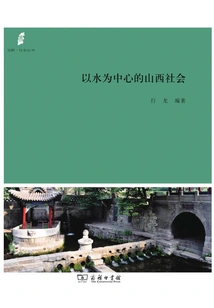
以水为中心的山西社会
Compiled By Xing Long
The social history of water conservancy is one of the most active fields in regional social history research in recent years. "Water is beneficial to all things without fighting for it." In fact, both advantages and disadvantages come with each other, and the benefits and disadvantages go hand in hand. It is better to seek advantages and avoid disadvantages. This is true whether in water-rich areas or water-scarce areas. This also reminds researchers that through "watershed" research at different spatial scales, they can effectively examine water conservancy society in the ecological environment, regard water conservancy society as the link between nature and society, and deepen the study of regional social history. This book embodies the new exploration of Shanxi's water conservancy society from the aspects of the theory of water conservancy and social history research, case studies of specific "watersheds", water conservancy and water hazards, rural areas and cities, etc. Focusing on the water resources issues in Shanxi during the historical period, the content covers theoretical methods of water conservancy and social history research, river basins and springs, lake preservation and waste, water division and competition, water rights and water cases, water conservancy and flood disasters, ritual governance systems, family sacrifices, etc., With the intention of establishing a basic research framework for "water-centered Shanxi society".
The social history of water conservancy is one of the most active fields in regional social history research in recent years. "Water is beneficial to all things without fighting for it." In fact, both advantages and disadvantages come with each other, and the benefits and disadvantages go hand in hand. It is better to seek advantages and avoid disadvantages. This is true whether in water-rich areas or water-scarce areas. This also reminds researchers that through "watershed" research at different spatial scales, they can effectively examine water conservancy society in the ecological environment, regard water conservancy society as the link between nature and society, and deepen the study of regional social history. This book embodies the new exploration of Shanxi's water conservancy society from the aspects of the theory of water conservancy and social history research, case studies of specific "watersheds", water conservancy and water hazards, rural areas and cities, etc. Focusing on the water resources issues in Shanxi during the historical period, the content covers theoretical methods of water conservancy and social history research, river basins and springs, lake preservation and waste, water division and competition, water rights and water cases, water conservancy and flood disasters, ritual governance systems, family sacrifices, etc., With the intention of establishing a basic research framework for "water-centered Shanxi society".
魏晋子书研究
Wang Lin
During the Wei and Jin Dynasties, the writing of Zishu showed another extremely active situation since the Spring and Autumn Period and the Warring States. Only from the relevant records in the Zishu of Sui Shu·Jingji Zhi, we can get a glimpse of the variety of works by its writers. Due to the long history and the frequent occurrence of various natural and man-made disasters, the writings of the Wei and Jin Dynasties have been seriously lost, which has caused great difficulties for future generations to explore. Therefore, for a long time, few people have been involved in this research field as a whole. This book is an overall review of the books of the Han, Wei and Six Dynasties. The study of this book believes that the Eastern Han, Wei, and Jin dynasties generally belonged to the prosperous period. Compared with the Western Han Dynasty, Zishu in the Eastern Han Dynasty was on the rise. Regarding the classification and summary of the writings of various schools of thought in the Wei and Jin Dynasties, the author reveals the active trend of Wei and Jin thought from different aspects. The book's discussion section discusses the school affiliation, ideological connotation and literary factors of the extant Wei and Jin zishu works, covering a total of more than 50 relatively complete or only a small amount of lost works by the 46 zishu writers of the Wei and Jin dynasties. This paper analyzes the differences in the writings of Zishu in various specific periods of this period, and reveals that the authors of the more important Zishu of the Three Kingdoms were mostly military and political ministers. Their works mostly dealt with political strategies and governance, or criticism and reconstruction of social atmosphere, as well as character appreciation. In analyzing the school positioning of Wei and Jin Zishu and its similarities and differences, this book focuses on exploring its literary value.
During the Wei and Jin Dynasties, the writing of Zishu showed another extremely active situation since the Spring and Autumn Period and the Warring States. Only from the relevant records in the Zishu of Sui Shu·Jingji Zhi, we can get a glimpse of the variety of works by its writers. Due to the long history and the frequent occurrence of various natural and man-made disasters, the writings of the Wei and Jin Dynasties have been seriously lost, which has caused great difficulties for future generations to explore. Therefore, for a long time, few people have been involved in this research field as a whole. This book is an overall review of the books of the Han, Wei and Six Dynasties. The study of this book believes that the Eastern Han, Wei, and Jin dynasties generally belonged to the prosperous period. Compared with the Western Han Dynasty, Zishu in the Eastern Han Dynasty was on the rise. Regarding the classification and summary of the writings of various schools of thought in the Wei and Jin Dynasties, the author reveals the active trend of Wei and Jin thought from different aspects. The book's discussion section discusses the school affiliation, ideological connotation and literary factors of the extant Wei and Jin zishu works, covering a total of more than 50 relatively complete or only a small amount of lost works by the 46 zishu writers of the Wei and Jin dynasties. This paper analyzes the differences in the writings of Zishu in various specific periods of this period, and reveals that the authors of the more important Zishu of the Three Kingdoms were mostly military and political ministers. Their works mostly dealt with political strategies and governance, or criticism and reconstruction of social atmosphere, as well as character appreciation. In analyzing the school positioning of Wei and Jin Zishu and its similarities and differences, this book focuses on exploring its literary value.
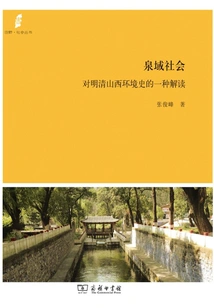
Spring Society: an Interpretation of Shanxi's Environmental History in the Ming and Qing Dynasties
History泉域社会:对明清山西环境史的一种解读
Zhang Junfeng
Spring society is an important type of Shanxi water conservancy society. It is an active attempt and exploration advocated by the author to conduct research on the history of Chinese water conservancy society from the perspective of typology. At the beginning of my research on the social history of water conservancy in Shanxi, I noticed that Gu Yanwu, a famous scholar in the late Ming and early Qing dynasties, said in "The Book of Benefits and Diseases of Prefectures and Countries in the World" that "the spring water in Shanxi is as abundant as that in Fujian." This is in sharp contrast to the current people's impression of Shanxi's lack of water resources. The ancient and modern changes in Shanxi's water resources are intrinsically related to the development of regional society. Taking water as the starting point is a new perspective to comprehensively examine the social and historical changes in Shanxi's region. This is complementary to the emerging environmental history research in China. This book strives to organically combine social history and environmental history. It hopes to provide a comparable regional case for the study of Chinese water conservancy social history while interpreting the environmental history of Shanxi in the Ming and Qing Dynasties. As an important birthplace of the Yellow River civilization, Shanxi has a long history of development and utilization of spring water resources. The water politics, water economy, water rights, water beliefs, and water culture formed around the development of water resources are very rich. The main spring areas represented by Taiyuan Jinci Spring, Jiexiu Hongshan Spring, Hongdong Huo Spring, Xinjianggudui Spring, Yicheng Luanchi Spring, and Linfen Longci Spring not only fully retain the ancient water conservancy facilities and water conservancy relics since the Tang and Song Dynasties, but also have a wealth of water conservancy inscriptions, water conservancy contracts, water conservancy canals, water conservancy lawsuit files and other precious documents, which provide us with favorable conditions for research on the social history of Shanxi water conservancy. In the spirit of "Going to poverty and falling into the underworld, looking for things with hands and feet" and under the guidance of Professor Xinglong's academic philosophy of "going to the fields and society", we have traveled throughout the major spring areas in Shanxi over the past twenty years, going deep into the countryside and fields, entering villages and households, conducting field surveys and conducting on-site visits. On this basis, the impression of "Quanyu Society" has become more and more profound. In order to fully present the appearance and characteristics of Shanxi Quanyu society, this book adopts a combination of case study and special research. As an important branch and hot field of Chinese social history, the social history of water conservancy has attracted the attention of researchers from multiple disciplines. Since the Tang and Song Dynasties, Shanxi's large-scale spring irrigation systems are dotted throughout the province, especially in the Fen River Basin. They are important economic zones and cultural centers in their respective regions. This book fully explores and utilizes the abundant and diverse water conservancy inscriptions, contract documents, canal and water records, genealogy, archives and other folk documents in various spring areas in Shanxi. It combines case-based empirical research and special research to fully demonstrate the history of Shanxi, a province with increasingly scarce water resources. During this period, focusing on the water environment, aquatic industry, water organization, water system, water culture, water belief and water politics formed by the development of spring water resources, we tried to use spring society as an example to construct a basic knowledge system for the study of water conservancy social history, and on this basis, we refined a localized conceptual model - spring society.
Spring society is an important type of Shanxi water conservancy society. It is an active attempt and exploration advocated by the author to conduct research on the history of Chinese water conservancy society from the perspective of typology. At the beginning of my research on the social history of water conservancy in Shanxi, I noticed that Gu Yanwu, a famous scholar in the late Ming and early Qing dynasties, said in "The Book of Benefits and Diseases of Prefectures and Countries in the World" that "the spring water in Shanxi is as abundant as that in Fujian." This is in sharp contrast to the current people's impression of Shanxi's lack of water resources. The ancient and modern changes in Shanxi's water resources are intrinsically related to the development of regional society. Taking water as the starting point is a new perspective to comprehensively examine the social and historical changes in Shanxi's region. This is complementary to the emerging environmental history research in China. This book strives to organically combine social history and environmental history. It hopes to provide a comparable regional case for the study of Chinese water conservancy social history while interpreting the environmental history of Shanxi in the Ming and Qing Dynasties. As an important birthplace of the Yellow River civilization, Shanxi has a long history of development and utilization of spring water resources. The water politics, water economy, water rights, water beliefs, and water culture formed around the development of water resources are very rich. The main spring areas represented by Taiyuan Jinci Spring, Jiexiu Hongshan Spring, Hongdong Huo Spring, Xinjianggudui Spring, Yicheng Luanchi Spring, and Linfen Longci Spring not only fully retain the ancient water conservancy facilities and water conservancy relics since the Tang and Song Dynasties, but also have a wealth of water conservancy inscriptions, water conservancy contracts, water conservancy canals, water conservancy lawsuit files and other precious documents, which provide us with favorable conditions for research on the social history of Shanxi water conservancy. In the spirit of "Going to poverty and falling into the underworld, looking for things with hands and feet" and under the guidance of Professor Xinglong's academic philosophy of "going to the fields and society", we have traveled throughout the major spring areas in Shanxi over the past twenty years, going deep into the countryside and fields, entering villages and households, conducting field surveys and conducting on-site visits. On this basis, the impression of "Quanyu Society" has become more and more profound. In order to fully present the appearance and characteristics of Shanxi Quanyu society, this book adopts a combination of case study and special research. As an important branch and hot field of Chinese social history, the social history of water conservancy has attracted the attention of researchers from multiple disciplines. Since the Tang and Song Dynasties, Shanxi's large-scale spring irrigation systems are dotted throughout the province, especially in the Fen River Basin. They are important economic zones and cultural centers in their respective regions. This book fully explores and utilizes the abundant and diverse water conservancy inscriptions, contract documents, canal and water records, genealogy, archives and other folk documents in various spring areas in Shanxi. It combines case-based empirical research and special research to fully demonstrate the history of Shanxi, a province with increasingly scarce water resources. During this period, focusing on the water environment, aquatic industry, water organization, water system, water culture, water belief and water politics formed by the development of spring water resources, we tried to use spring society as an example to construct a basic knowledge system for the study of water conservancy social history, and on this basis, we refined a localized conceptual model - spring society.
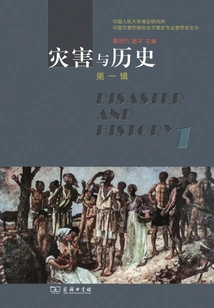
灾害与历史(第一辑)
Editor-in-chief Xia Mingfang Hao Ping
The name of this journal is "Disasters and History", which is based on the understanding that "disasters and history interact in two directions and are indispensable" formed during long-term research practice. It advocates examining disasters from a historical perspective, and at the same time, exploring history from the perspective of disasters; disasters are no longer isolated, closed single events, or abnormal conditions outside the norm, but are open dynamic systems deeply embedded in history and are part of the historical evolution process. History also uses disasters as representations to present its essential complexity, diversity, and uncertainty. It is no longer just a discussion of the so-called past disaster history, but an observation and prediction of current and even future disaster situations from a dynamic process perspective, that is, a historical perspective.
The name of this journal is "Disasters and History", which is based on the understanding that "disasters and history interact in two directions and are indispensable" formed during long-term research practice. It advocates examining disasters from a historical perspective, and at the same time, exploring history from the perspective of disasters; disasters are no longer isolated, closed single events, or abnormal conditions outside the norm, but are open dynamic systems deeply embedded in history and are part of the historical evolution process. History also uses disasters as representations to present its essential complexity, diversity, and uncertainty. It is no longer just a discussion of the so-called past disaster history, but an observation and prediction of current and even future disaster situations from a dynamic process perspective, that is, a historical perspective.
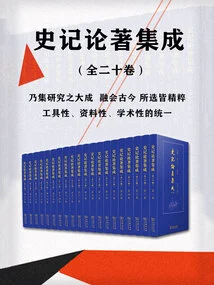
史记论著集成(全二十卷)
Editor-in-chief Zhang Dake And Others
The "Collection of Historical Records and Treatises" has a total of 20 volumes, totaling about 12 million words. This series of books has a wide range of research angles and in-depth research content, representing the research level of "Historical Records" in contemporary Chinese academic circles. The contents of this series generally include the essence summaries and reviews of all aspects of the research results of "Historical Records" in ancient and modern times, with special emphasis on the interpretation of the content and ideas contained in the "Historical Records". With this collection in hand, you can have a glimpse of the development trajectory of "Historical Records" for more than two thousand years, as well as the research methods.
The "Collection of Historical Records and Treatises" has a total of 20 volumes, totaling about 12 million words. This series of books has a wide range of research angles and in-depth research content, representing the research level of "Historical Records" in contemporary Chinese academic circles. The contents of this series generally include the essence summaries and reviews of all aspects of the research results of "Historical Records" in ancient and modern times, with special emphasis on the interpretation of the content and ideas contained in the "Historical Records". With this collection in hand, you can have a glimpse of the development trajectory of "Historical Records" for more than two thousand years, as well as the research methods.
宗室王公与清末新政
Zhou Zengguang
The political reform of the late Qing Dynasty and the Revolution of 1911 are an area in which the study of modern Chinese history has achieved fruitful results in recent years. As the relevant research on the revolutionary party and constitutionalists becomes increasingly in-depth, the study of the Qing court and the Manchu dignitaries becomes even more important. This book takes the prominent and powerful Manchu princes and the political reform in the late Qing Dynasty as the topic. It has important academic value and is a clear advancement and deepening of previous research. Focusing on the research theme, the author focused on collecting various materials, including unpublished files collected by the First Historical Archives of China and the diplomatic history files of the Ministry of Foreign Affairs of Japan. He also used newly published historical materials such as "Copies of Qing Dynasty Celebrity Manuscripts Collected by Modern History" to focus on discussing the great turmoil of the late Qing Dynasty. The political mentality of the Manchu princes, their actions in military and political reforms in the late Qing Dynasty, and preparations for the establishment of the constitution, etc., Analyze their relationship with the changes in the power structure of the Manchus and Han Dynasties in the late Qing Dynasty, and their political choices after the Revolution of 1911. It is very innovative and enriches and enriches academic research in related fields.
The political reform of the late Qing Dynasty and the Revolution of 1911 are an area in which the study of modern Chinese history has achieved fruitful results in recent years. As the relevant research on the revolutionary party and constitutionalists becomes increasingly in-depth, the study of the Qing court and the Manchu dignitaries becomes even more important. This book takes the prominent and powerful Manchu princes and the political reform in the late Qing Dynasty as the topic. It has important academic value and is a clear advancement and deepening of previous research. Focusing on the research theme, the author focused on collecting various materials, including unpublished files collected by the First Historical Archives of China and the diplomatic history files of the Ministry of Foreign Affairs of Japan. He also used newly published historical materials such as "Copies of Qing Dynasty Celebrity Manuscripts Collected by Modern History" to focus on discussing the great turmoil of the late Qing Dynasty. The political mentality of the Manchu princes, their actions in military and political reforms in the late Qing Dynasty, and preparations for the establishment of the constitution, etc., Analyze their relationship with the changes in the power structure of the Manchus and Han Dynasties in the late Qing Dynasty, and their political choices after the Revolution of 1911. It is very innovative and enriches and enriches academic research in related fields.
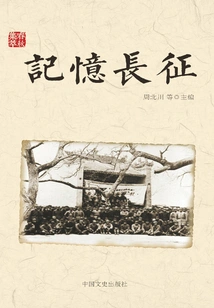
Long March of Memory
History记忆长征
Cppcc Newspaper
This book is a collection of special-page articles published by the People's Political Consultative Conference newspaper "Spring and Autumn Weekly" to commemorate the 80th anniversary of the victory of the Chinese Workers' and Peasants' Red Army's Long March. Taking advantage of the CPPCC's cultural and historical materials, the People's Political Consultative Conference newspaper carefully planned and selected topics, organized and published reminiscence articles by veteran comrades such as He Jiesheng and Wang Dingguo who were witnesses of the Long March, the Red Army generals themselves and their descendants who were members of the CPPCC, reviews of important meetings and battles during the Long March, and key proposals, research and suggestions from the National Committee of the Chinese People's Political Consultative Conference on the Red Army's Long March. The CPPCC Newspaper was rich in content, vivid in detail, and profoundly expounded the spirit of the Long March. After editing and compilation, four parts were formed: suggestions, testimony, beliefs, and details, which became the main content of this book.
This book is a collection of special-page articles published by the People's Political Consultative Conference newspaper "Spring and Autumn Weekly" to commemorate the 80th anniversary of the victory of the Chinese Workers' and Peasants' Red Army's Long March. Taking advantage of the CPPCC's cultural and historical materials, the People's Political Consultative Conference newspaper carefully planned and selected topics, organized and published reminiscence articles by veteran comrades such as He Jiesheng and Wang Dingguo who were witnesses of the Long March, the Red Army generals themselves and their descendants who were members of the CPPCC, reviews of important meetings and battles during the Long March, and key proposals, research and suggestions from the National Committee of the Chinese People's Political Consultative Conference on the Red Army's Long March. The CPPCC Newspaper was rich in content, vivid in detail, and profoundly expounded the spirit of the Long March. After editing and compilation, four parts were formed: suggestions, testimony, beliefs, and details, which became the main content of this book.
唐代买卖制度研究
Han Wei
This book mainly studies the sales system of the Tang Dynasty. It not only conducts a multi-faceted investigation from the perspective of the legal system of the Tang Dynasty as official law, but also focuses more on the local law of the sales system. That is, through the analysis and refinement of more than a hundred historical sales contract documents of the Tang Dynasty, it conducts a detailed examination of the folk customs or norms related to sales transactions. Beyond the system, the author attempts to enter the inner spirit and value of the trading system and analyze the cultural mechanism behind it, such as the analysis of the influence of Confucian culture and the analysis of the "retribution" that constitutes the effectiveness of the customary law of buying and selling, all of which reflect innovation.
This book mainly studies the sales system of the Tang Dynasty. It not only conducts a multi-faceted investigation from the perspective of the legal system of the Tang Dynasty as official law, but also focuses more on the local law of the sales system. That is, through the analysis and refinement of more than a hundred historical sales contract documents of the Tang Dynasty, it conducts a detailed examination of the folk customs or norms related to sales transactions. Beyond the system, the author attempts to enter the inner spirit and value of the trading system and analyze the cultural mechanism behind it, such as the analysis of the influence of Confucian culture and the analysis of the "retribution" that constitutes the effectiveness of the customary law of buying and selling, all of which reflect innovation.
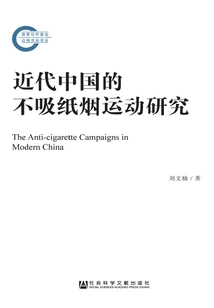
近代中国的不吸纸烟运动研究
Liu Wennan
This book examines the shaping and transformation of the relationship between the state and the people in modern China from a unique perspective. The author compiles historical materials from newspapers, archives, memoirs and other materials to reconstruct the ins and outs of the three cigarette-free movements from the late Qing Dynasty to the Republic of China. He details the rhetoric, organization and development process of these three movements. He uses this as a clue to organically combine political mobilization, national education, daily life disciplines, the evolution of hygiene concepts, the economic development of the tobacco industry, government tax management, central-local relations, nationalist ideological trends, etc., And finally focuses on the definition and shaping of people's daily life by elites and governments in modern China.
This book examines the shaping and transformation of the relationship between the state and the people in modern China from a unique perspective. The author compiles historical materials from newspapers, archives, memoirs and other materials to reconstruct the ins and outs of the three cigarette-free movements from the late Qing Dynasty to the Republic of China. He details the rhetoric, organization and development process of these three movements. He uses this as a clue to organically combine political mobilization, national education, daily life disciplines, the evolution of hygiene concepts, the economic development of the tobacco industry, government tax management, central-local relations, nationalist ideological trends, etc., And finally focuses on the definition and shaping of people's daily life by elites and governments in modern China.
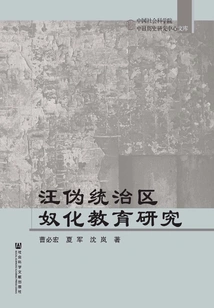
汪伪统治区奴化教育研究
Xia Jun Shen Lan Cao Bihong
After Japan launched its war of aggression against China, it implemented enslavement education in the occupied areas as a means of invading China and enslaving the Chinese people. This book uses a large amount of archival materials to discuss the principles, policies and specific implementation of enslavement education in the Wang Puppet-controlled areas from the aspects of primary, secondary and higher education, social education and education in Japan. It provides a comprehensive explanation of the enslaved education system in the Wang Puppet-controlled areas, and also provides an overview of the development of education in this area before the outbreak of the Anti-Japanese War and after the end of the Anti-Japanese War.
After Japan launched its war of aggression against China, it implemented enslavement education in the occupied areas as a means of invading China and enslaving the Chinese people. This book uses a large amount of archival materials to discuss the principles, policies and specific implementation of enslavement education in the Wang Puppet-controlled areas from the aspects of primary, secondary and higher education, social education and education in Japan. It provides a comprehensive explanation of the enslaved education system in the Wang Puppet-controlled areas, and also provides an overview of the development of education in this area before the outbreak of the Anti-Japanese War and after the end of the Anti-Japanese War.
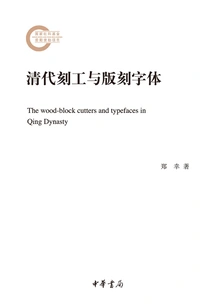
清代刻工与版刻字体(国家社科基金后期资助项目)
Zheng Xing
The study of engraving has always been an important part of traditional philology. This book is the first monograph so far to conduct a multi-angle and multi-level study of engraving in the Qing Dynasty. The book is divided into five chapters, which provide a comprehensive and systematic elaboration on issues such as the naming method, quantity and distribution of engravers in the Qing Dynasty, the form of organizational operation, the engraving activities of representative engravers and their interaction with publishers, as well as the influence of pattern writers and engravers on the style of block engraving in the Qing Dynasty. On the one hand, the book is based on traditional documentary disciplines such as editions and bibliography, and collects and organizes thousands of engraving and title materials, thereby laying a relatively deep documentary foundation; on the other hand, it also attempts to expand the research horizons to publishing history, cultural history, art history, economic history and other fields. , To examine the group of carvers in a broader social context, and always implement both macro and micro perspectives, not only an overall grasp and observation of the overall situation of carvers in the Qing Dynasty, but also detailed analysis and examination of specific cases, making the entire study appear systematic and in-depth. In general, compared with the previous simple research that was limited to the compilation of engravers' lists, this book actually attempts to start from the engravers as a group and make a more in-depth thinking and discussion on some important issues in the entire publishing history of the Qing Dynasty.
The study of engraving has always been an important part of traditional philology. This book is the first monograph so far to conduct a multi-angle and multi-level study of engraving in the Qing Dynasty. The book is divided into five chapters, which provide a comprehensive and systematic elaboration on issues such as the naming method, quantity and distribution of engravers in the Qing Dynasty, the form of organizational operation, the engraving activities of representative engravers and their interaction with publishers, as well as the influence of pattern writers and engravers on the style of block engraving in the Qing Dynasty. On the one hand, the book is based on traditional documentary disciplines such as editions and bibliography, and collects and organizes thousands of engraving and title materials, thereby laying a relatively deep documentary foundation; on the other hand, it also attempts to expand the research horizons to publishing history, cultural history, art history, economic history and other fields. , To examine the group of carvers in a broader social context, and always implement both macro and micro perspectives, not only an overall grasp and observation of the overall situation of carvers in the Qing Dynasty, but also detailed analysis and examination of specific cases, making the entire study appear systematic and in-depth. In general, compared with the previous simple research that was limited to the compilation of engravers' lists, this book actually attempts to start from the engravers as a group and make a more in-depth thinking and discussion on some important issues in the entire publishing history of the Qing Dynasty.
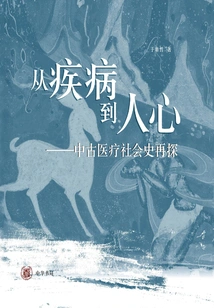
从疾病到人心:中古医疗社会史再探
Yu Gengzhe
How did the ancients face the plague? Is the miasma real or just a figment of the human mind? What was the doctor-patient relationship like in ancient times? Did they also have doctor-patient conflicts? Professor Yu Gengzhe has long been committed to the study of the medical and social history of medieval China. He believes that "diseases have a greater long-term impact on human history than many factors" and "when exploring the basic laws of people, society and even human nature, medical treatment and diseases are an excellent window." By combing and sorting out a large number of historical materials at home and abroad, this book analyzes actual cases, explores the relationship between disease and people's hearts, medical treatment and society, and traditional Chinese medicine and Western medicine. It attempts to discover the historical facts hidden behind the words, and provides an idea to try to pull traditional medicine back from the shackles of "science or superstition" and restore the original appearance of ancient Chinese medicine. Its entry points include the review and outlook of medical history research, the shaping of the image of doctors, and the discussion of the doctor-patient relationship. It also considers issues such as the ancient health system, the thinking model of causing and treating plague, the impact of sexually transmitted diseases on brothel culture, and the medical culture behind the tomb murals of the Song Dynasty.
How did the ancients face the plague? Is the miasma real or just a figment of the human mind? What was the doctor-patient relationship like in ancient times? Did they also have doctor-patient conflicts? Professor Yu Gengzhe has long been committed to the study of the medical and social history of medieval China. He believes that "diseases have a greater long-term impact on human history than many factors" and "when exploring the basic laws of people, society and even human nature, medical treatment and diseases are an excellent window." By combing and sorting out a large number of historical materials at home and abroad, this book analyzes actual cases, explores the relationship between disease and people's hearts, medical treatment and society, and traditional Chinese medicine and Western medicine. It attempts to discover the historical facts hidden behind the words, and provides an idea to try to pull traditional medicine back from the shackles of "science or superstition" and restore the original appearance of ancient Chinese medicine. Its entry points include the review and outlook of medical history research, the shaping of the image of doctors, and the discussion of the doctor-patient relationship. It also considers issues such as the ancient health system, the thinking model of causing and treating plague, the impact of sexually transmitted diseases on brothel culture, and the medical culture behind the tomb murals of the Song Dynasty.
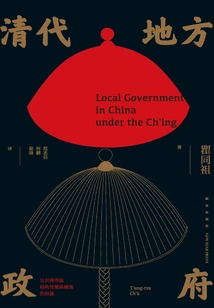
清代地方政府
Qu Tongzu
"Local Government in the Qing Dynasty" is the masterpiece of the famous historian and sociologist Qu Tongzu. It is also a classic work written in English during his academic peak period. This book was first published by Harvard University Press in 1962, which won Qu Tongzu great reputation around the world. It is still a must-read in relevant teaching and research in Western sinology circles. There is a folk saying that "the sky is high and the emperor is far away", and there is also a topic in academic circles that "the imperial power does not extend to the county." As the smallest administrative unit in the Qing Dynasty, the state and county-level local governments dealt directly with ordinary people, and their importance is self-evident. The purpose of writing "Local Government in the Qing Dynasty" is to describe, analyze and interpret the structure and operation of state and county-level local governments in the Qing Dynasty. Through various manuscripts and notes, while referring to a large number of official materials, Mr. Qu Tongzu introduced the functions, status, income, forms of corruption and disciplinary control of state and county officials and his four auxiliary groups, namely scribes, Yamen servants, chief followers, and secretaries in extremely concise words, emphasizing that the local government in the Qing Dynasty was actually a "one-person government" centered on state and county officials. It also focuses on the role of the gentry in local administration. "Local Government in the Qing Dynasty" is a classic academic work, but when the author Qu Tongzu wrote it, his intended readers were students in the English-speaking world who lacked understanding of traditional China. Therefore, its narrative is simple and easy to understand, and even ordinary readers without academic background can read it without any hindrance.
"Local Government in the Qing Dynasty" is the masterpiece of the famous historian and sociologist Qu Tongzu. It is also a classic work written in English during his academic peak period. This book was first published by Harvard University Press in 1962, which won Qu Tongzu great reputation around the world. It is still a must-read in relevant teaching and research in Western sinology circles. There is a folk saying that "the sky is high and the emperor is far away", and there is also a topic in academic circles that "the imperial power does not extend to the county." As the smallest administrative unit in the Qing Dynasty, the state and county-level local governments dealt directly with ordinary people, and their importance is self-evident. The purpose of writing "Local Government in the Qing Dynasty" is to describe, analyze and interpret the structure and operation of state and county-level local governments in the Qing Dynasty. Through various manuscripts and notes, while referring to a large number of official materials, Mr. Qu Tongzu introduced the functions, status, income, forms of corruption and disciplinary control of state and county officials and his four auxiliary groups, namely scribes, Yamen servants, chief followers, and secretaries in extremely concise words, emphasizing that the local government in the Qing Dynasty was actually a "one-person government" centered on state and county officials. It also focuses on the role of the gentry in local administration. "Local Government in the Qing Dynasty" is a classic academic work, but when the author Qu Tongzu wrote it, his intended readers were students in the English-speaking world who lacked understanding of traditional China. Therefore, its narrative is simple and easy to understand, and even ordinary readers without academic background can read it without any hindrance.
清代政治论稿
Guo Chengkang
This book is a collection of the author's main research results on Qing history. It can be roughly divided into several aspects: "The Rise of Manchuria", "The Achievements and Hidden Dangers of the Kangxi and Qianlong Dynasties" and "The Conflict and Integration of Manchu and Han Cultures". Not only can we sort out the context and grasp the general trend from the big picture, but we can also see through the big issues from the details, showing strong practical concern. One of them, "The Eight Banners System in the Early Qing Dynasty," uses Manchu archives and other documents to conduct a comprehensive and systematic study of the Eight Banners system of the Manchus before they entered the customs. It represents a generation of scholars' thinking, summary and commentary on Qing history.
This book is a collection of the author's main research results on Qing history. It can be roughly divided into several aspects: "The Rise of Manchuria", "The Achievements and Hidden Dangers of the Kangxi and Qianlong Dynasties" and "The Conflict and Integration of Manchu and Han Cultures". Not only can we sort out the context and grasp the general trend from the big picture, but we can also see through the big issues from the details, showing strong practical concern. One of them, "The Eight Banners System in the Early Qing Dynasty," uses Manchu archives and other documents to conduct a comprehensive and systematic study of the Eight Banners system of the Manchus before they entered the customs. It represents a generation of scholars' thinking, summary and commentary on Qing history.
新史学(第12卷):量化史学专辑
Editor-in-chief Chen Zhiwu And Others
"New Historiography" is sponsored by the Institute of Qing History at Renmin University of China. It focuses on grasping the forefront of the development of history from a methodological perspective and strives to explore the path of historical innovation. This book is the 12th volume, with the theme of "quantitative history". It covers new trends in quantitative historical research, state formation and bureaucratization in the pre-Qin period, the decline of state capabilities and the transformation of the disaster relief system in the late Qing Dynasty, the characteristics of serious murder cases in the Qing Dynasty, and the longevity of Qing people. Topics include urban population problems in Sichuan in 1910, comparison of family and educational backgrounds of the first Academia Sinica academicians in the natural sciences and humanities and social sciences, the issue of "Zhuzi's gifting" and factors affecting bilateral trade relations between Japan and its major trading partners.
"New Historiography" is sponsored by the Institute of Qing History at Renmin University of China. It focuses on grasping the forefront of the development of history from a methodological perspective and strives to explore the path of historical innovation. This book is the 12th volume, with the theme of "quantitative history". It covers new trends in quantitative historical research, state formation and bureaucratization in the pre-Qin period, the decline of state capabilities and the transformation of the disaster relief system in the late Qing Dynasty, the characteristics of serious murder cases in the Qing Dynasty, and the longevity of Qing people. Topics include urban population problems in Sichuan in 1910, comparison of family and educational backgrounds of the first Academia Sinica academicians in the natural sciences and humanities and social sciences, the issue of "Zhuzi's gifting" and factors affecting bilateral trade relations between Japan and its major trading partners.
史学理论与史学史学刊(2020年下卷\u002F总第23卷)
Editor-in-chief Yang Gongle
"Journal of Historical Theory and Historiography" is an academic journal sponsored by the Research Center of Historical Theory and Historiography of Beijing Normal University. It has permanent columns for ancient Chinese history research, modern Chinese history research, foreign history research, historical literature research, and contemporary history reviews. It has been included in the Chinese Social Sciences Citation Index (CSSCI) source collection. This book is the 23rd volume. It has added the column "Research on Basic Theoretical Issues of History with Chinese Characteristics in the New Era" and includes two articles: "World Historical Interpretation of "A Community with a Shared Future for Mankind"" by Sun Lixin and "Tradition, Methods and Enlightenments of Western Historiography Criticism - An Interpretation Based on "Western Historiography, Chinese Perspective"" by Chen Anmin.
"Journal of Historical Theory and Historiography" is an academic journal sponsored by the Research Center of Historical Theory and Historiography of Beijing Normal University. It has permanent columns for ancient Chinese history research, modern Chinese history research, foreign history research, historical literature research, and contemporary history reviews. It has been included in the Chinese Social Sciences Citation Index (CSSCI) source collection. This book is the 23rd volume. It has added the column "Research on Basic Theoretical Issues of History with Chinese Characteristics in the New Era" and includes two articles: "World Historical Interpretation of "A Community with a Shared Future for Mankind"" by Sun Lixin and "Tradition, Methods and Enlightenments of Western Historiography Criticism - An Interpretation Based on "Western Historiography, Chinese Perspective"" by Chen Anmin.
英国学派与历史学家:霍布斯鲍姆的马克思主义史学
Liang Minsu
From the perspective of the relationship between the British school and historians, this book places the historical thoughts of typical historians of the school in the context of the new Western historiography and the genealogy of Marxist history in the 20th century. It systematically explains the Marxist historical writings, core connotation and academic status of Eric John Ernest Hobsbawm. It also highlights the ideological expression and essential characteristics of the British Marxist historical school, and then presents the ideological evolution and academic style of British historiography in the 20th century from a side view.
From the perspective of the relationship between the British school and historians, this book places the historical thoughts of typical historians of the school in the context of the new Western historiography and the genealogy of Marxist history in the 20th century. It systematically explains the Marxist historical writings, core connotation and academic status of Eric John Ernest Hobsbawm. It also highlights the ideological expression and essential characteristics of the British Marxist historical school, and then presents the ideological evolution and academic style of British historiography in the 20th century from a side view.
中国古代法律文献研究(第14辑)
Compiled By The Institute Of Collation Of Ancient Legal Books At China University Of Political Science And Law
"Research on Ancient Chinese Legal Documents" is sponsored by the Institute of Ancient Legal Books of China University of Political Science and Law. It takes ancient Chinese legal documents as the main research object and includes original academic papers, book reviews and research reviews on related topics in academic circles at home and abroad. It is the only academic journal in the academic circle that studies ancient Chinese legal documents. This issue is the fourteenth and includes a total of 13 papers including "Tsinghua Bamboo Slips "Receiving Coins"" and a catalog of research works on Chinese legal history in Taiwan and abroad in 2019.
"Research on Ancient Chinese Legal Documents" is sponsored by the Institute of Ancient Legal Books of China University of Political Science and Law. It takes ancient Chinese legal documents as the main research object and includes original academic papers, book reviews and research reviews on related topics in academic circles at home and abroad. It is the only academic journal in the academic circle that studies ancient Chinese legal documents. This issue is the fourteenth and includes a total of 13 papers including "Tsinghua Bamboo Slips "Receiving Coins"" and a catalog of research works on Chinese legal history in Taiwan and abroad in 2019.
牛致功隋唐史论集
Niu Zhigong
This book selects 40 academic papers published by Mr. Niu Zhigong in various periods and is divided into four parts. "Political History Research" mainly studies the political trends of the Tang Dynasty from Li Yuan to Wu Zetian; "Historical History Research" mainly analyzes the historical methods and concepts of historians in the Tang Dynasty. As well as the gains and losses of the study of Sui and Tang history in "Zi Zhi Tong Jian"; "Cultural History Research" mainly discusses the cultural characteristics of the Sui and Tang Dynasties; "Research on Stone Inscriptions" mainly studies the stone inscriptions of the early Tang Dynasty, especially the study of the eunuch Gao Lishi's inscriptions.
This book selects 40 academic papers published by Mr. Niu Zhigong in various periods and is divided into four parts. "Political History Research" mainly studies the political trends of the Tang Dynasty from Li Yuan to Wu Zetian; "Historical History Research" mainly analyzes the historical methods and concepts of historians in the Tang Dynasty. As well as the gains and losses of the study of Sui and Tang history in "Zi Zhi Tong Jian"; "Cultural History Research" mainly discusses the cultural characteristics of the Sui and Tang Dynasties; "Research on Stone Inscriptions" mainly studies the stone inscriptions of the early Tang Dynasty, especially the study of the eunuch Gao Lishi's inscriptions.
Pre-qing Dynasty
History清朝前纪
Monson
"Pre-Chronicles of the Qing Dynasty" are the lecture notes given by Mr. Meng Sen, a modern Qing historian, when he taught Manchurian history at Nanjing Central University. The book is divided into chapters such as the Outline, Jurchen Chronicles, Jianzhou Chronicles, Jianzhou Zuowei Preface Chronicles, Zhaozu Chronicles, Chu Yanchong Shanji, Tuoluo Ji, Xingzu Ji, Jingzu Ji, Xianzu Ji, and Wang Gao Ji. Readers interested in Manchurian history must read this book. This book was originally a school handout, but the assessment is quite detailed. It records the historical events before the Manchus entered the customs, including tribal changes, lineage formation and development, etc. The tribe will be detailed first, and the lineage will be described later until the end of the Qi Dynasty (equivalent to the death of Nurhachi). Its content "has been omitted but not preserved by Ming history, and has been tabooed by Qing history. Therefore, this volume fills the common gaps between Ming and Qing histories." It is an important material for studying the history of the early Qing Dynasty.
"Pre-Chronicles of the Qing Dynasty" are the lecture notes given by Mr. Meng Sen, a modern Qing historian, when he taught Manchurian history at Nanjing Central University. The book is divided into chapters such as the Outline, Jurchen Chronicles, Jianzhou Chronicles, Jianzhou Zuowei Preface Chronicles, Zhaozu Chronicles, Chu Yanchong Shanji, Tuoluo Ji, Xingzu Ji, Jingzu Ji, Xianzu Ji, and Wang Gao Ji. Readers interested in Manchurian history must read this book. This book was originally a school handout, but the assessment is quite detailed. It records the historical events before the Manchus entered the customs, including tribal changes, lineage formation and development, etc. The tribe will be detailed first, and the lineage will be described later until the end of the Qi Dynasty (equivalent to the death of Nurhachi). Its content "has been omitted but not preserved by Ming history, and has been tabooed by Qing history. Therefore, this volume fills the common gaps between Ming and Qing histories." It is an important material for studying the history of the early Qing Dynasty.
明清史评论(第三辑)
Department Of History, Fudan University
"Review of Ming and Qing History" (Third Edition) is compiled by the History Department of Fudan University and is published twice a year. This collection contains a total of 13 articles, including 1 interview with Professor Fan Shuzhi, 9 monographs (including 2 translations of overseas Chinese studies), 1 literature review, 1 academic review, and 1 academic news. The authors are all famous figures and experts at home and abroad in the field of Ming and Qing history research. The article not only focuses on hot topics, but also contains new discoveries and developments. It represents the cutting-edge level of current academic circles in this field, especially regional history and social history research.
"Review of Ming and Qing History" (Third Edition) is compiled by the History Department of Fudan University and is published twice a year. This collection contains a total of 13 articles, including 1 interview with Professor Fan Shuzhi, 9 monographs (including 2 translations of overseas Chinese studies), 1 literature review, 1 academic review, and 1 academic news. The authors are all famous figures and experts at home and abroad in the field of Ming and Qing history research. The article not only focuses on hot topics, but also contains new discoveries and developments. It represents the cutting-edge level of current academic circles in this field, especially regional history and social history research.
明中叶唐顺之的史学世界
Li Defeng
Deeply rooted in the political, ideological and historical background of the mid-Ming Dynasty, Tang Shunzhi's historical connotation is relatively rich. The characteristics of historiography have changed throughout life, and it has generally gone through the study of classics in the early stage to the maturity of compilation theory and historical commentary in the later stage. In addition to his daily entertainment and official responsibilities, he wrote a certain number of biographies and inspection records, and participated in the transcription of actual records, which became an integral part of the history of the Ming Dynasty. His historiography had a direct and extensive impact on the subsequent development of historiography in the Ming Dynasty in terms of enlightenment and practical application. Tang Shunzhi also enriched and deepened our understanding of the interactive relationship between "national history" and "unofficial history" with his "appearance in his later years". Broadening the historical perspective, as an ordinary scholar in the mid-Ming Dynasty, Tang Shunzhi's historical value is not limited to the direct expression of his own historiography, but also reflects the general occurrence and development of historiography in the mid-Ming Dynasty to a certain extent due to his "ordinary" and "general" universal significance. At the same time, in accordance with the understanding of "one flower, one world, one leaf, one Tathagata", his complete growth process of historiography also reflects to some extent the development process of Ming Dynasty historiography and even the entire ancient Chinese historiography.
Deeply rooted in the political, ideological and historical background of the mid-Ming Dynasty, Tang Shunzhi's historical connotation is relatively rich. The characteristics of historiography have changed throughout life, and it has generally gone through the study of classics in the early stage to the maturity of compilation theory and historical commentary in the later stage. In addition to his daily entertainment and official responsibilities, he wrote a certain number of biographies and inspection records, and participated in the transcription of actual records, which became an integral part of the history of the Ming Dynasty. His historiography had a direct and extensive impact on the subsequent development of historiography in the Ming Dynasty in terms of enlightenment and practical application. Tang Shunzhi also enriched and deepened our understanding of the interactive relationship between "national history" and "unofficial history" with his "appearance in his later years". Broadening the historical perspective, as an ordinary scholar in the mid-Ming Dynasty, Tang Shunzhi's historical value is not limited to the direct expression of his own historiography, but also reflects the general occurrence and development of historiography in the mid-Ming Dynasty to a certain extent due to his "ordinary" and "general" universal significance. At the same time, in accordance with the understanding of "one flower, one world, one leaf, one Tathagata", his complete growth process of historiography also reflects to some extent the development process of Ming Dynasty historiography and even the entire ancient Chinese historiography.
清代地方档案中的政治、法律与社会
Wu Peilin Et Al.
"Everything begins in the state and county." The state and county-level governments that directly manage the people are of vital significance in the country's governance system. This book uses the "Nanfang Archives" of southern counties in Sichuan Province and the "Ba County Archives" of Ba County, and combines it with local archives such as "Danxin Archives" and "Baodi Archives" as well as official classics and documents. Practical research has been carried out on the responsibilities of the territory, student litigation, Feng Shui litigation, the establishment of markets, concepts and beliefs in the context of "cutting legs to cure marriage", rain praying activities in prefectures and counties, and the implementation of official marriage certificates in the late Qing Dynasty. It also explores issues such as the social governance structure of prefectures and counties in the Qing Dynasty, the administrative operations of grassroots yamen, and the interaction between officials, gentry, and citizens.
"Everything begins in the state and county." The state and county-level governments that directly manage the people are of vital significance in the country's governance system. This book uses the "Nanfang Archives" of southern counties in Sichuan Province and the "Ba County Archives" of Ba County, and combines it with local archives such as "Danxin Archives" and "Baodi Archives" as well as official classics and documents. Practical research has been carried out on the responsibilities of the territory, student litigation, Feng Shui litigation, the establishment of markets, concepts and beliefs in the context of "cutting legs to cure marriage", rain praying activities in prefectures and counties, and the implementation of official marriage certificates in the late Qing Dynasty. It also explores issues such as the social governance structure of prefectures and counties in the Qing Dynasty, the administrative operations of grassroots yamen, and the interaction between officials, gentry, and citizens.
南沙争端的由来与发展:南海纷争史国别研究
Wu Shicun
This book is a masterpiece carefully polished by Wu Shicun, founding director of the China South China Sea Research Institute and chairman of the board of directors of the China-Southeast Asia South China Sea Research Center, who has devoted more than 20 years of in-depth thinking and research on the South China Sea issue. Focusing on the "Nansha Dispute", the source and main conflict of the South China Sea issue, this book systematically and in-depth explains the evolution of the South China Sea issue from scratch, from small to large, and its driving factors from multiple dimensions of history, law and country. At the back of the book, there are also 6 appendices of the author's review and outlook on the situation in the South China Sea over the years since 2016, which complement the book's in-depth analysis and interpretation of the situation in the South China Sea from a long-term perspective from an annual perspective. This book is an indispensable reference book for South China Sea studies. It pioneeringly fills the gaps and deficiencies in comprehensive works on South China Sea studies and reflects the latest achievements of my country's academic community in the study of South China Sea issues.
This book is a masterpiece carefully polished by Wu Shicun, founding director of the China South China Sea Research Institute and chairman of the board of directors of the China-Southeast Asia South China Sea Research Center, who has devoted more than 20 years of in-depth thinking and research on the South China Sea issue. Focusing on the "Nansha Dispute", the source and main conflict of the South China Sea issue, this book systematically and in-depth explains the evolution of the South China Sea issue from scratch, from small to large, and its driving factors from multiple dimensions of history, law and country. At the back of the book, there are also 6 appendices of the author's review and outlook on the situation in the South China Sea over the years since 2016, which complement the book's in-depth analysis and interpretation of the situation in the South China Sea from a long-term perspective from an annual perspective. This book is an indispensable reference book for South China Sea studies. It pioneeringly fills the gaps and deficiencies in comprehensive works on South China Sea studies and reflects the latest achievements of my country's academic community in the study of South China Sea issues.
春秋战国与百家争鸣
Yu Xiaoyao Shen Zhiying
This book is the masterpiece of two editorial scholars who have been deeply engaged in the field of pre-Qin intellectual history for many years. In the book, the author uses concise and concise words to make an in-depth and concise narrative analysis of many representative figures in the ideological and academic aspects of the Spring and Autumn and Warring States periods one by one, pointing out their status in the history of thought and their influence on later generations. It can be considered that this is an introductory book for quickly and accurately understanding the historical situation of the Spring and Autumn Period and the Warring States Period and the contention of hundreds of schools of thought in the ideological world.
This book is the masterpiece of two editorial scholars who have been deeply engaged in the field of pre-Qin intellectual history for many years. In the book, the author uses concise and concise words to make an in-depth and concise narrative analysis of many representative figures in the ideological and academic aspects of the Spring and Autumn and Warring States periods one by one, pointing out their status in the history of thought and their influence on later generations. It can be considered that this is an introductory book for quickly and accurately understanding the historical situation of the Spring and Autumn Period and the Warring States Period and the contention of hundreds of schools of thought in the ideological world.
辛亥革命的前前后后(增订版)
Jin Chongji
This book is divided into two parts. The first part, "The Before and After of the Revolution of 1911", provides a systematic historical explanation of the entire process of the occurrence, development, victory and defeat of the Revolution of 1911. The second part, "Research on the Revolution of 1911," selects research articles on the Revolution of 1911 written by the author over the past forty years, and examines various topics such as the formation and development of Sun Yat-sen's revolutionary thought, the political plans of the Tongmenghui people, and the political forces in the national defense movement.
This book is divided into two parts. The first part, "The Before and After of the Revolution of 1911", provides a systematic historical explanation of the entire process of the occurrence, development, victory and defeat of the Revolution of 1911. The second part, "Research on the Revolution of 1911," selects research articles on the Revolution of 1911 written by the author over the past forty years, and examines various topics such as the formation and development of Sun Yat-sen's revolutionary thought, the political plans of the Tongmenghui people, and the political forces in the national defense movement.
上林繁叶:秦汉生态史丛说
Wang Zijin
From the Qin and Han Dynasties, when Qin Shihuang unified the six kingdoms in 221 BC to 220 AD when Cao Pi succeeded the Han Dynasty, there were important changes in the composition and creative content of Chinese civilization. The overall ecological environment conditions in the Qin and Han Dynasties were different from today. The ecological environment conditions in various regions were different, and the ecological environment conditions also changed in the more than 400 years before and after. When studying the history of the Qin and Han dynasties and summarizing the conditions for the historical progress of the Qin and Han dynasties, the role of the ecological environment cannot be ignored. This book discusses the basic situation of ecological and environmental conditions in the Qin and Han Dynasties from several aspects such as climate, wildlife, vegetation, and human factors. It also explains the Qin and Han people's views on the ecological environment and the relationship between the ecological environment and the social history of the Qin and Han Dynasties from the perspective of the history of ideas and concepts. The author also analyzes several cases of the ecological environment during this period, such as the palace gardens of the Qin and Han Dynasties "at the foot of the forest", the story of "rats" written by Tai Shigong, the etiquette and customs of the Qin and Han mausoleums of the "trees forming a forest", etc. It not only interprets historical materials, but also contains the latest discoveries in related archeology. It is a unique historical reading from the perspective of ecological and environmental history.
From the Qin and Han Dynasties, when Qin Shihuang unified the six kingdoms in 221 BC to 220 AD when Cao Pi succeeded the Han Dynasty, there were important changes in the composition and creative content of Chinese civilization. The overall ecological environment conditions in the Qin and Han Dynasties were different from today. The ecological environment conditions in various regions were different, and the ecological environment conditions also changed in the more than 400 years before and after. When studying the history of the Qin and Han dynasties and summarizing the conditions for the historical progress of the Qin and Han dynasties, the role of the ecological environment cannot be ignored. This book discusses the basic situation of ecological and environmental conditions in the Qin and Han Dynasties from several aspects such as climate, wildlife, vegetation, and human factors. It also explains the Qin and Han people's views on the ecological environment and the relationship between the ecological environment and the social history of the Qin and Han Dynasties from the perspective of the history of ideas and concepts. The author also analyzes several cases of the ecological environment during this period, such as the palace gardens of the Qin and Han Dynasties "at the foot of the forest", the story of "rats" written by Tai Shigong, the etiquette and customs of the Qin and Han mausoleums of the "trees forming a forest", etc. It not only interprets historical materials, but also contains the latest discoveries in related archeology. It is a unique historical reading from the perspective of ecological and environmental history.
昨日之我与今日之我:当代史学的反思与阐释
Yang Nianqun
This book is a collection of contemporary historical research papers that comprehensively reflects on and explains the application of various Western historical trends in Chinese history. The author also proposes that new ideas for expanding the advancement of history need to draw on the "middle-range theory" of sociology from an interdisciplinary perspective. This book is not only the quintessence of the author's continuous thinking on this issue in the past two decades, but also a fruitful attempt by the historians to establish a new research paradigm. By reflecting on and interpreting contemporary historical research, the author shares with more scholars the research literacy with a global perspective, the research ideas that analyze the dynamics and complexity of things, and the research methods that transcend the barriers of disciplines and specialties. This is reflected in the macro perspective of thinking about political dynamics and social development under the changes in contemporary ideological trends, and the micro perspective of going deep into society to observe life with a sense of problem, in order to hone historians' problem awareness and insight beyond local events.
This book is a collection of contemporary historical research papers that comprehensively reflects on and explains the application of various Western historical trends in Chinese history. The author also proposes that new ideas for expanding the advancement of history need to draw on the "middle-range theory" of sociology from an interdisciplinary perspective. This book is not only the quintessence of the author's continuous thinking on this issue in the past two decades, but also a fruitful attempt by the historians to establish a new research paradigm. By reflecting on and interpreting contemporary historical research, the author shares with more scholars the research literacy with a global perspective, the research ideas that analyze the dynamics and complexity of things, and the research methods that transcend the barriers of disciplines and specialties. This is reflected in the macro perspective of thinking about political dynamics and social development under the changes in contemporary ideological trends, and the micro perspective of going deep into society to observe life with a sense of problem, in order to hone historians' problem awareness and insight beyond local events.
外国史学理论与史学史新论
Editor-in-chief Yuan Zujie Lu Heying
"New Theory of Foreign Historiography and Historiography" is edited by Professor Yuan Zujie and Associate Professor Lu Heying of the School of History and Culture of Sichuan University. It contains outstanding papers from the 2016 Forum on the Frontiers of History and Historiography at Sichuan University. It mainly involves research on the development of various stages of Western historiography from ancient Greece to the 20th century. The entire collection of papers comprehensively reflects the latest achievements in domestic research on the history of Western historiography in recent years.
"New Theory of Foreign Historiography and Historiography" is edited by Professor Yuan Zujie and Associate Professor Lu Heying of the School of History and Culture of Sichuan University. It contains outstanding papers from the 2016 Forum on the Frontiers of History and Historiography at Sichuan University. It mainly involves research on the development of various stages of Western historiography from ancient Greece to the 20th century. The entire collection of papers comprehensively reflects the latest achievements in domestic research on the history of Western historiography in recent years.