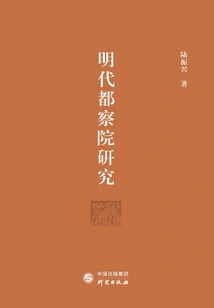
Research on the Imperial Procuratorate in the Ming Dynasty
by Lu Zhenxing
About This Novel
The Metropolitan Procuratorate of the Ming Dynasty had a prominent significance in the supervisory system of the Ming Dynasty. It played an important role in maintaining the relationship between the central and local governments, strengthening communication between the upper and lower levels, and maintaining judicial justice and social equity. This book examines the construction and implementation of the supervisory system in the Ming Dynasty, analyzes the innovations in the political system of the Metropolitan Procuratorate in the Ming Dynasty, points out the importance and key significance of "human construction", and contributes to deepening the study of the supervisory system. It is an academic work with great reference value.
Official Sources
What Readers Think
Rating
Community(0)
Official(1)Scraped 2mo ago
This book can be used as an introductory book to understand the supervisory system of the Ming Dynasty.
This book narrates and analyzes the censorship and supervisory system of the Ming Dynasty. The theory is based on history, with clear logic and well-organized theory. Personally, I feel that the shortcoming of this book is that the government agencies in the Ming Dynasty were basically one in Nanjing and another in Beijing. The book has a relatively comprehensive description of Beijing's supervisory agencies, but basically does not see much about Nanjing. Of course, it may be the focus of the narrative. However, the author also talks about Nanjing in the book, but I still feel that the description is not enough. Of course, the flaws cannot be concealed, and the value of this book is indelible.
Rating
Community(0)
Official(1)Scraped 2mo ago
This book can be used as an introductory book to understand the supervisory system of the Ming Dynasty.
This book narrates and analyzes the censorship and supervisory system of the Ming Dynasty. The theory is based on history, with clear logic and well-organized theory. Personally, I feel that the shortcoming of this book is that the government agencies in the Ming Dynasty were basically one in Nanjing and another in Beijing. The book has a relatively comprehensive description of Beijing's supervisory agencies, but basically does not see much about Nanjing. Of course, it may be the focus of the narrative. However, the author also talks about Nanjing in the book, but I still feel that the description is not enough. Of course, the flaws cannot be concealed, and the value of this book is indelible.