Library
Browse and search books
2,037 novels found
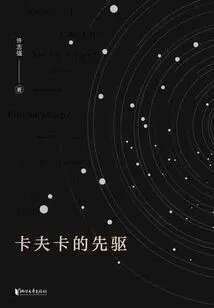
Kafka's Forerunner
Literature卡夫卡的先驱
Xu Zhiqiang
"Kafka's Pioneer" is a collection of reviews by Xu Zhiqiang, a literature professor at Zhejiang University. Different from post-reading novel reviews, he understands writing as a sketch, trying to imitate the spirit of the subject, leading us to read, and even encouraging us to read carefully. The author has profound insights, profound knowledge, and exquisite writing skills. He conveys literature to readers through recreation, enjoyment, taste, and even pain. Those complicated, absurd and bizarre 20th century European and American literary works full of symbols and metaphors opened the door to him in his writings. Writers such as Kafka, Borges, Coetzee, Tóibín, Saramago, Ugresic and other writers appeared one by one to talk to us.
"Kafka's Pioneer" is a collection of reviews by Xu Zhiqiang, a literature professor at Zhejiang University. Different from post-reading novel reviews, he understands writing as a sketch, trying to imitate the spirit of the subject, leading us to read, and even encouraging us to read carefully. The author has profound insights, profound knowledge, and exquisite writing skills. He conveys literature to readers through recreation, enjoyment, taste, and even pain. Those complicated, absurd and bizarre 20th century European and American literary works full of symbols and metaphors opened the door to him in his writings. Writers such as Kafka, Borges, Coetzee, Tóibín, Saramago, Ugresic and other writers appeared one by one to talk to us.
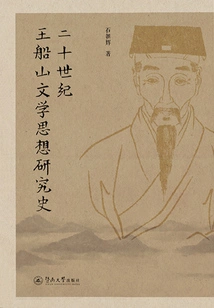
二十世纪王船山文学思想研究史
Shi Chaohui
Wang Fuzhi was an outstanding thinker and philosopher in the late Ming and early Qing dynasties. In his later years, he lived in seclusion in Shichuanshan, which is shaped like a stubborn rock. He signed himself as a sick old man in Chuanshan and a survivor of Nanyue, so scholars called him Mr. Chuanshan. Wang Chuanshan wrote prolifically throughout his life, covering a wide range of categories, specializing in classics, history, and literature. The academic school in which later generations studied his thoughts was called "Chuanshan Studies." This book uses time as a clue to provide a comprehensive introduction to the study of Chuanshan's literary thought in the 20th century from the perspectives of literature, poetry, aesthetics, etc., Summarizes the existing results and experiences, and also discovers problems that need to be further solved, so as to promote the prosperity and development of "Chuanshan Studies" research.
Wang Fuzhi was an outstanding thinker and philosopher in the late Ming and early Qing dynasties. In his later years, he lived in seclusion in Shichuanshan, which is shaped like a stubborn rock. He signed himself as a sick old man in Chuanshan and a survivor of Nanyue, so scholars called him Mr. Chuanshan. Wang Chuanshan wrote prolifically throughout his life, covering a wide range of categories, specializing in classics, history, and literature. The academic school in which later generations studied his thoughts was called "Chuanshan Studies." This book uses time as a clue to provide a comprehensive introduction to the study of Chuanshan's literary thought in the 20th century from the perspectives of literature, poetry, aesthetics, etc., Summarizes the existing results and experiences, and also discovers problems that need to be further solved, so as to promote the prosperity and development of "Chuanshan Studies" research.
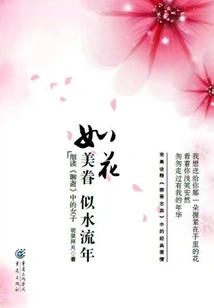
如花美眷,似水流年:细读《聊斋》中的女子
Jackal Worships The Moon
From Jiao Na, Qing Feng, A Bao, to Xi Hou and Jiang Cheng, these Liaozhai women are either "looking at the smoke and walking in a charming way", or "beautiful waves are flowing with wisdom, and thin willows are graceful"; or "weakness is charming, and autumn waves are flowing with wisdom". They are brave, talented and wise. "Strange Stories from a Chinese Studio" itself is a regular classical Chinese text, but why can it be circulated for so long? What is the appeal of these stories? With the adaptation and remake of Liaozhai TV series in recent years, names such as A Bao, Xiao Cui, and Liancheng have been mentioned by people constantly. So what are their images in the original work? What are their joys and sorrows like? What legendary stories and unique characters do these women have? These women are not just flimsy characters in the book. Whether they are flower demons and fairies, or elves and fairies, they are all living, strange women with their own independent personality and charm, and they even have certain similarities with contemporary women. Through the delicate and eloquent narration of the original work mixed with new ideas, these female images are analyzed one by one from the perspective of contemporary women, striving to integrate into the classical feelings and appreciate the touch and reality.
From Jiao Na, Qing Feng, A Bao, to Xi Hou and Jiang Cheng, these Liaozhai women are either "looking at the smoke and walking in a charming way", or "beautiful waves are flowing with wisdom, and thin willows are graceful"; or "weakness is charming, and autumn waves are flowing with wisdom". They are brave, talented and wise. "Strange Stories from a Chinese Studio" itself is a regular classical Chinese text, but why can it be circulated for so long? What is the appeal of these stories? With the adaptation and remake of Liaozhai TV series in recent years, names such as A Bao, Xiao Cui, and Liancheng have been mentioned by people constantly. So what are their images in the original work? What are their joys and sorrows like? What legendary stories and unique characters do these women have? These women are not just flimsy characters in the book. Whether they are flower demons and fairies, or elves and fairies, they are all living, strange women with their own independent personality and charm, and they even have certain similarities with contemporary women. Through the delicate and eloquent narration of the original work mixed with new ideas, these female images are analyzed one by one from the perspective of contemporary women, striving to integrate into the classical feelings and appreciate the touch and reality.
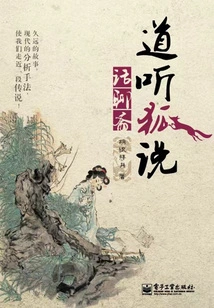
Tao Listens to the Fox Talking and Chats
Literature道听狐说话聊斋
Jackal Worships The Moon
This book looks at the people and things in "Strange Stories from a Chinese Studio" from a modern perspective, and reads "Strange Stories from a Chinese Studio" in a relaxed and humorous way. The content involves aesthetics, philosophy, psychology, thick black studies, and film montage, aspects that are rarely covered by Liaozhai researchers. It also includes an understanding of modern elements such as fraud, marketing, and magic. It is a comprehensive interpretation of "Strange Stories from a Liaozhai" itself. Let readers reinterpret this masterpiece from a different perspective.
This book looks at the people and things in "Strange Stories from a Chinese Studio" from a modern perspective, and reads "Strange Stories from a Chinese Studio" in a relaxed and humorous way. The content involves aesthetics, philosophy, psychology, thick black studies, and film montage, aspects that are rarely covered by Liaozhai researchers. It also includes an understanding of modern elements such as fraud, marketing, and magic. It is a comprehensive interpretation of "Strange Stories from a Liaozhai" itself. Let readers reinterpret this masterpiece from a different perspective.
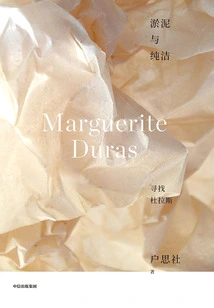
Mud and Purity: Searching for Duras
Literature淤泥与纯洁:寻找杜拉斯
Hu Si She
Duras's work is often considered obscure because of its diversity, complexity, depth, and breadth, and she herself has been misunderstood and even questioned as a result. Hu Sishe, a senior domestic scholar and Duras research expert, conducted a comprehensive interpretation of Marguerite Duras's written and non-written works, restoring to us a Duras who was both loved and misunderstood. This is a study of Duras as well as a study of French literature - Duras's life and writing bear witness to French literature throughout the twentieth century. What she brings us is not only literature, but also non-literary. She uses literature to appeal to her faith and conscience. While reading, we experience the spiritual world of Duras, and while gazing at each other with the works, we pay attention to the outside world from a distance, seek the way of life, and poetically inhabit our own world.
Duras's work is often considered obscure because of its diversity, complexity, depth, and breadth, and she herself has been misunderstood and even questioned as a result. Hu Sishe, a senior domestic scholar and Duras research expert, conducted a comprehensive interpretation of Marguerite Duras's written and non-written works, restoring to us a Duras who was both loved and misunderstood. This is a study of Duras as well as a study of French literature - Duras's life and writing bear witness to French literature throughout the twentieth century. What she brings us is not only literature, but also non-literary. She uses literature to appeal to her faith and conscience. While reading, we experience the spiritual world of Duras, and while gazing at each other with the works, we pay attention to the outside world from a distance, seek the way of life, and poetically inhabit our own world.
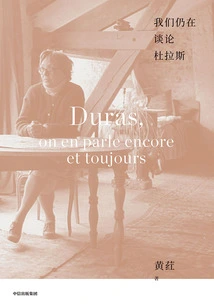
We Are Still Talking About Duras
Literature我们仍在谈论杜拉斯
Huang Yizhi
This book is an academic essay about Duras. The author is a well-known Duras researcher in my country, a French scholar and translator, and Professor Huang Xing of the French Department of Nanjing University. This book explains Duras and his text from the perspectives of the reception of Duras's translation in China, Duras's writing stages and motifs, Duras's canonization and even legendization (including the part constructed by himself through writing), and the introduction of related books and monographs. It is interspersed with the author's adventures and life changes in the process of researching and translating Duras. In addition to essays on Duras, this book also includes two dialogues between Huang Xin, Yuan Xiaoyi and French Duras expert Amel, as well as two published short works related to Duras.
This book is an academic essay about Duras. The author is a well-known Duras researcher in my country, a French scholar and translator, and Professor Huang Xing of the French Department of Nanjing University. This book explains Duras and his text from the perspectives of the reception of Duras's translation in China, Duras's writing stages and motifs, Duras's canonization and even legendization (including the part constructed by himself through writing), and the introduction of related books and monographs. It is interspersed with the author's adventures and life changes in the process of researching and translating Duras. In addition to essays on Duras, this book also includes two dialogues between Huang Xin, Yuan Xiaoyi and French Duras expert Amel, as well as two published short works related to Duras.
Military Literature Appreciation
Literature军旅文学鉴赏
Zhu Huiling Editor-in-chief Su Junru
This book briefly outlines the basic characteristics, value orientation and main functions of military literature, focusing on the main contents of ancient and modern Chinese and foreign military poetry, prose, novels, documentary literature, songs, dramas, films and other classic works. The book consists of seven chapters in total. The first chapter briefly introduces the development context, basic characteristics, value orientation and main functions of military literature; Chapters 2 to 7 respectively introduce the basic knowledge, aesthetic characteristics and appreciation methods of military poetry, military prose, military novels, military documentary literature, military songs, as well as military dramas and films. On this basis, the main contents of some classic works are briefly summarized and analyzed.
This book briefly outlines the basic characteristics, value orientation and main functions of military literature, focusing on the main contents of ancient and modern Chinese and foreign military poetry, prose, novels, documentary literature, songs, dramas, films and other classic works. The book consists of seven chapters in total. The first chapter briefly introduces the development context, basic characteristics, value orientation and main functions of military literature; Chapters 2 to 7 respectively introduce the basic knowledge, aesthetic characteristics and appreciation methods of military poetry, military prose, military novels, military documentary literature, military songs, as well as military dramas and films. On this basis, the main contents of some classic works are briefly summarized and analyzed.
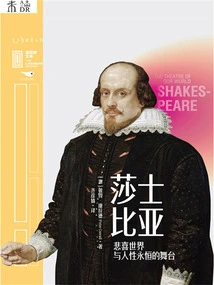
Shakespeare: the World of Sadness and Joy and the Eternal Stage of Humanity (milestone Library)
Literature莎士比亚:悲喜世界与人性永恒的舞台(里程碑文库)
(australia) Peter Conrad
In 1623, the actors John Heming and Henry Condell compiled and published all of Shakespeare's plays they could find in the world-famous First Folio, creating one of the most dynamic and poetic treasures in English literature. Over the centuries, although these plays of Shakespeare have been published, interpreted, criticized, adapted, and performed countless times, their charm has not diminished. Whenever people need to think about issues such as conscience and morality, love and death, politics and war, their eyes will invariably turn to Hamlet, Romeo and Juliet, and King Lear-in other words, to Shakespeare, as if he has all the answers. Conrad, professor of literature at Oxford University, provides us with an in-depth interpretation of the popular code of Shakespeare's phenomenon from the perspective of text analysis, revealing to us the huge influence the playwright had on later culture, politics, and morality. He also analyzes in detail how writers, painters, musicians, and filmmakers around the world reinterpret them, thereby revealing the changes in human nature in modern society.
In 1623, the actors John Heming and Henry Condell compiled and published all of Shakespeare's plays they could find in the world-famous First Folio, creating one of the most dynamic and poetic treasures in English literature. Over the centuries, although these plays of Shakespeare have been published, interpreted, criticized, adapted, and performed countless times, their charm has not diminished. Whenever people need to think about issues such as conscience and morality, love and death, politics and war, their eyes will invariably turn to Hamlet, Romeo and Juliet, and King Lear-in other words, to Shakespeare, as if he has all the answers. Conrad, professor of literature at Oxford University, provides us with an in-depth interpretation of the popular code of Shakespeare's phenomenon from the perspective of text analysis, revealing to us the huge influence the playwright had on later culture, politics, and morality. He also analyzes in detail how writers, painters, musicians, and filmmakers around the world reinterpret them, thereby revealing the changes in human nature in modern society.
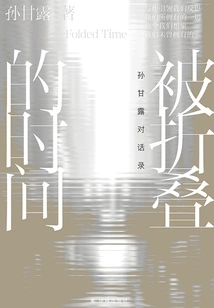
被折叠的时间:孙甘露对话录
Sun Ganlu
This book contains more than 30 conversations between Sun Ganlu and many friends from the 1990s to the present. The time spans more than 30 years, with scholars such as Mao Jian, writers such as Xiaobai and Wang Shuo, and filmmakers such as Xu Jinglei. The topics of the conversations involve not only Shanghai, novels, writing and other content related to the author, but also contemporary elements such as popular movies and changes in literary trends at the time. More than 30 dialogues reflected issues of concern to both parties at different times, and witnessed the vicissitudes of society. This book is a history of reading, watching movies, writing, and spirituality of the award-winning writer. It is an "oral history" that records the golden age of literature.
This book contains more than 30 conversations between Sun Ganlu and many friends from the 1990s to the present. The time spans more than 30 years, with scholars such as Mao Jian, writers such as Xiaobai and Wang Shuo, and filmmakers such as Xu Jinglei. The topics of the conversations involve not only Shanghai, novels, writing and other content related to the author, but also contemporary elements such as popular movies and changes in literary trends at the time. More than 30 dialogues reflected issues of concern to both parties at different times, and witnessed the vicissitudes of society. This book is a history of reading, watching movies, writing, and spirituality of the award-winning writer. It is an "oral history" that records the golden age of literature.
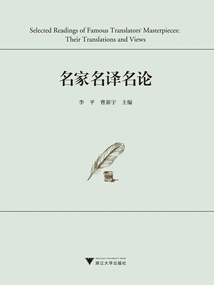
On the Translation of Famous Names
Literature名家名译名论
Editor-in-chief Li Pingping
This book analyzes and sorts out the famous translations and theories of 20 famous Chinese translators since Yan Fu. Each famous writer includes a brief introduction to the famous translator, an appreciation of famous translations, and a close reading of famous theories. By appreciating classic translations and studying classic translation theories, readers can understand famous translators, famous translations, and the principles and methods of translation. It embodies the characteristics of openness, comprehensiveness, completeness, and bilingualism. This book is divided into twenty chapters. Chapter 1: Yan Fu; Chapter 2: Lin Shu; Chapter 3: Hu Shi; Chapter 4: Lu Xun; Chapter 5: Zhou Zuoren; Chapter 6: Lin Yutang; Chapter 7: Zhao Yuanren; Chapter 8: Guo Moruo; Chapter 9: Zhu Shenghao; Chapter 10: Zhang Yousong; Chapter 11: Ye Jun Jian; Chapter 12: Liang Shiqiu; Chapter 13: Fu Lei; Chapter 14: Cao Ying; Chapter 15: Feng Zikai; Chapter 16: Wang Zuoliang; Chapter 17: Gao Keyi; Chapter 18: Yu Guangzhong; Chapter 19: Yang Xianyi; Chapter 20: Sha Boli.
This book analyzes and sorts out the famous translations and theories of 20 famous Chinese translators since Yan Fu. Each famous writer includes a brief introduction to the famous translator, an appreciation of famous translations, and a close reading of famous theories. By appreciating classic translations and studying classic translation theories, readers can understand famous translators, famous translations, and the principles and methods of translation. It embodies the characteristics of openness, comprehensiveness, completeness, and bilingualism. This book is divided into twenty chapters. Chapter 1: Yan Fu; Chapter 2: Lin Shu; Chapter 3: Hu Shi; Chapter 4: Lu Xun; Chapter 5: Zhou Zuoren; Chapter 6: Lin Yutang; Chapter 7: Zhao Yuanren; Chapter 8: Guo Moruo; Chapter 9: Zhu Shenghao; Chapter 10: Zhang Yousong; Chapter 11: Ye Jun Jian; Chapter 12: Liang Shiqiu; Chapter 13: Fu Lei; Chapter 14: Cao Ying; Chapter 15: Feng Zikai; Chapter 16: Wang Zuoliang; Chapter 17: Gao Keyi; Chapter 18: Yu Guangzhong; Chapter 19: Yang Xianyi; Chapter 20: Sha Boli.
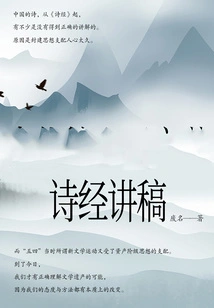
Lectures on the Book of Songs
Literature诗经讲稿
Waste Name
This is an interpretation of the Book of Songs. For readers who like "The Book of Songs", this book has certain reading and reference value. Feiming believes: "Many Chinese poems, starting from the Book of Songs, have not been correctly explained. The reason is that feudal ideas have dominated people's hearts for too long. And the so-called New Literature Movement of the May Fourth Movement was dominated by bourgeois ideas. Only today can we have the possibility to correctly understand literary heritage, because our attitudes and methods have fundamentally changed. We demand correct interpretations of poetry. Only when the interpretation is correct can we talk about criticism and acceptance." Therefore, this "Lecture Notes on the Book of Songs" was created. The book selects many widely circulated famous passages in the Book of Songs for analysis, including "Guanyong", "Taoyao", "Hanguang", "Xinglu", "Plum Blossoms", "Dead Wilds", "Bitter Leaves", "House", "Preparation", "Dongshan", "Cheji", etc. I hope that through this book, readers can have a deeper understanding of the Book of Songs.
This is an interpretation of the Book of Songs. For readers who like "The Book of Songs", this book has certain reading and reference value. Feiming believes: "Many Chinese poems, starting from the Book of Songs, have not been correctly explained. The reason is that feudal ideas have dominated people's hearts for too long. And the so-called New Literature Movement of the May Fourth Movement was dominated by bourgeois ideas. Only today can we have the possibility to correctly understand literary heritage, because our attitudes and methods have fundamentally changed. We demand correct interpretations of poetry. Only when the interpretation is correct can we talk about criticism and acceptance." Therefore, this "Lecture Notes on the Book of Songs" was created. The book selects many widely circulated famous passages in the Book of Songs for analysis, including "Guanyong", "Taoyao", "Hanguang", "Xinglu", "Plum Blossoms", "Dead Wilds", "Bitter Leaves", "House", "Preparation", "Dongshan", "Cheji", etc. I hope that through this book, readers can have a deeper understanding of the Book of Songs.
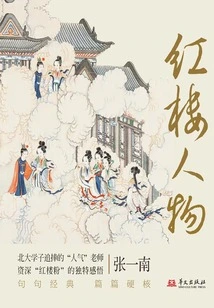
Figures in Red Mansions
Literature红楼人物
Zhang Yinan
Cao Xueqin created a variety of characters: the "fake" Jia Zheng, the "unfeeling" Jia Baoyu, the ideal "Flower in the Mirror" Lin Daiyu, the "ruthless" and "fateless" Xue Baochai, the bold and generous man Shi Xiangyun, the eldest lady Wang Xifeng, the high-class concubine Jia Tanchun, and Jia Baoyu's fan group - the maids of Yihongyuan. The characters, no matter how big or small, are all flesh and blood, all have reasonable motivations for their actions, and they are all one of the incarnations of Cao Xueqin. How can we sort out the complicated relationships between characters in "A Dream of Red Mansions"? This book will also teach you some methods: for example, how to read "Guan Guan Talisman" and how to remember the twelve hairpins like the twelve constellations. Help you turn character analysis into a game and get an overview of "A Dream of Red Mansions". "A Dream of Red Mansions" is not a political struggle textbook, a palace battle novel, a love story, a "serious book", a stupid riddle for you to do crossword puzzles, a diary of the political life of Yongzong and Qianlong, or a supreme holy book. She is a novel, an imaginary novel, and a realistic novel. It is an adult's recollection of the life of a teenager. The character setting of "Dream of Red Mansions" is typical, and the character's identity determines the character's personality.
Cao Xueqin created a variety of characters: the "fake" Jia Zheng, the "unfeeling" Jia Baoyu, the ideal "Flower in the Mirror" Lin Daiyu, the "ruthless" and "fateless" Xue Baochai, the bold and generous man Shi Xiangyun, the eldest lady Wang Xifeng, the high-class concubine Jia Tanchun, and Jia Baoyu's fan group - the maids of Yihongyuan. The characters, no matter how big or small, are all flesh and blood, all have reasonable motivations for their actions, and they are all one of the incarnations of Cao Xueqin. How can we sort out the complicated relationships between characters in "A Dream of Red Mansions"? This book will also teach you some methods: for example, how to read "Guan Guan Talisman" and how to remember the twelve hairpins like the twelve constellations. Help you turn character analysis into a game and get an overview of "A Dream of Red Mansions". "A Dream of Red Mansions" is not a political struggle textbook, a palace battle novel, a love story, a "serious book", a stupid riddle for you to do crossword puzzles, a diary of the political life of Yongzong and Qianlong, or a supreme holy book. She is a novel, an imaginary novel, and a realistic novel. It is an adult's recollection of the life of a teenager. The character setting of "Dream of Red Mansions" is typical, and the character's identity determines the character's personality.
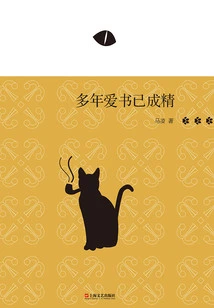
多年爱书已成精
Ma Ling
"Having Loved Books for Many Years and Becoming a Master" is the latest work by Ma Ling, a professor at the School of Journalism at Fudan University and a book reviewer. In this book, she selected 18 writers, painters, and literary artists, using the reading pleasure of a "bookworm" and the academic vision of an "academic" to allow readers to get closer to these famous literary and artistic figures more thoroughly. Why did Maugham flee England and refuse to publish his biography? Woolf is actually a famous "dog lover"? How many trivial everyday things were written in Proust's letters? Through these small points of concern, Ma Ling penetrates their lives, anecdotes, and intersecting moments... And connects their lives and works, giving them a dual interpretation of their lives and works.
"Having Loved Books for Many Years and Becoming a Master" is the latest work by Ma Ling, a professor at the School of Journalism at Fudan University and a book reviewer. In this book, she selected 18 writers, painters, and literary artists, using the reading pleasure of a "bookworm" and the academic vision of an "academic" to allow readers to get closer to these famous literary and artistic figures more thoroughly. Why did Maugham flee England and refuse to publish his biography? Woolf is actually a famous "dog lover"? How many trivial everyday things were written in Proust's letters? Through these small points of concern, Ma Ling penetrates their lives, anecdotes, and intersecting moments... And connects their lives and works, giving them a dual interpretation of their lives and works.
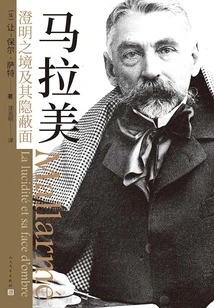
马拉美:澄明之境及其隐蔽面
(france) Jean-paul Sartre
Mallarmé was a French Symbolist poet and essayist, and he was a representative figure of early Symbolist poetry along with Rimbaud and Paul Verlaine. Mallarmé made an indelible contribution to the development of French poetry and literature. Mallarmé is very difficult to understand. These two reasons are enough to explain why the master of Symbolism, Mallarmé, is still being continuously and patiently interpreted by scholars in France and around the world even after the death of symbolist literature and art for so long. Sartre conducted research on Mallarmé and Symbolist poetry. Sartre raised a universal question through his critical biography of Mallarmé: Does the literature of the death of God (Nietzsche's language) still exist? Mallarmé's tragedy lies in his determination to become a "capital man", to engage in "capital poetry" at all costs, and then turn the great failure of poetry into a great failure of poetry.
Mallarmé was a French Symbolist poet and essayist, and he was a representative figure of early Symbolist poetry along with Rimbaud and Paul Verlaine. Mallarmé made an indelible contribution to the development of French poetry and literature. Mallarmé is very difficult to understand. These two reasons are enough to explain why the master of Symbolism, Mallarmé, is still being continuously and patiently interpreted by scholars in France and around the world even after the death of symbolist literature and art for so long. Sartre conducted research on Mallarmé and Symbolist poetry. Sartre raised a universal question through his critical biography of Mallarmé: Does the literature of the death of God (Nietzsche's language) still exist? Mallarmé's tragedy lies in his determination to become a "capital man", to engage in "capital poetry" at all costs, and then turn the great failure of poetry into a great failure of poetry.
Instructions for Use of Novels
Literature小说使用说明
(france) Henri Godard
"Instructions for Using Novel" is a history of the development of French novels in the 20th century written by the famous contemporary French literary critic Henri Godard. It was first published in 2006. French novels experienced a very special process of change in the 20th century. Prior to this, novels tended to narrate in chronological order, arrange plots according to the law of cause and effect, and strive to create the illusion that literature imitates reality. These principles formed the basis of the most important European novels in the 19th century. Beginning in the late 19th and early 20th centuries, some novelists-such as Woolf and Joyce-began to challenge this tradition of novel writing. In France, this challenge is relevant to several novelists of every generation during the 20th century. When we look back at this period of history, we will find that by exploring the opposite of mimetic fiction, these novelists also established a real trend. This trend has its own development logic, development process and development progress, among which the 1920s and 1950s were its two development acceleration periods. Although the works in this trend have different characteristics, they also show an important commonality. Henri Godard's "Instructions for Using Novel" focuses on such an innovative critical trend. This book has a total of fourteen chapters. It introduces French novelists who "anti-imitation" through various forms of innovation and their representative works in chronological order. It clearly presents an anti-traditional path that French novels took in the first seventy-five years of the twentieth century, and analyzes the characteristics of each development stage of this path. Through this analysis, Henri Godard reveals the many possibilities of novel creation.
"Instructions for Using Novel" is a history of the development of French novels in the 20th century written by the famous contemporary French literary critic Henri Godard. It was first published in 2006. French novels experienced a very special process of change in the 20th century. Prior to this, novels tended to narrate in chronological order, arrange plots according to the law of cause and effect, and strive to create the illusion that literature imitates reality. These principles formed the basis of the most important European novels in the 19th century. Beginning in the late 19th and early 20th centuries, some novelists-such as Woolf and Joyce-began to challenge this tradition of novel writing. In France, this challenge is relevant to several novelists of every generation during the 20th century. When we look back at this period of history, we will find that by exploring the opposite of mimetic fiction, these novelists also established a real trend. This trend has its own development logic, development process and development progress, among which the 1920s and 1950s were its two development acceleration periods. Although the works in this trend have different characteristics, they also show an important commonality. Henri Godard's "Instructions for Using Novel" focuses on such an innovative critical trend. This book has a total of fourteen chapters. It introduces French novelists who "anti-imitation" through various forms of innovation and their representative works in chronological order. It clearly presents an anti-traditional path that French novels took in the first seventy-five years of the twentieth century, and analyzes the characteristics of each development stage of this path. Through this analysis, Henri Godard reveals the many possibilities of novel creation.
毛泽东诗词欣赏(国民阅读经典·典藏版)
Zhou Zhenfu
This is a work by Mr. Zhou Zhenfu on the artistic and ideological appreciation of Mao Zedong's poetry. In 1993, it was published as a single volume by Shanghai Bookstore, and in 1999 it was included in "Collected Works of Zhou Zhenfu". The book is divided into three parts: main editor, sub-editor and appendix. The main editor contains 39 poems, and the sub-editor contains 24 poems, covering the time span from 1923 to 1966. The appendix contains 7 letters from Comrade Mao Zedong to comrades Zang Kejia, Hu Qiaomu, Chen Yi and other comrades, as well as the introduction to the postscript. Mr. Zhou Zhenfu analyzed and interpreted the connotation of Comrade Mao Zedong's poems based on his vivid and rich revolutionary life and the background of his era, and truly appreciated the spirit contained in them; he appreciated the various artistic techniques used in the works from an artistic perspective. During the specific appreciation process, the author also gave a detailed and vivid introduction to the common sense of poetry. This book is of great help to readers in understanding Chairman Mao's poetry.
This is a work by Mr. Zhou Zhenfu on the artistic and ideological appreciation of Mao Zedong's poetry. In 1993, it was published as a single volume by Shanghai Bookstore, and in 1999 it was included in "Collected Works of Zhou Zhenfu". The book is divided into three parts: main editor, sub-editor and appendix. The main editor contains 39 poems, and the sub-editor contains 24 poems, covering the time span from 1923 to 1966. The appendix contains 7 letters from Comrade Mao Zedong to comrades Zang Kejia, Hu Qiaomu, Chen Yi and other comrades, as well as the introduction to the postscript. Mr. Zhou Zhenfu analyzed and interpreted the connotation of Comrade Mao Zedong's poems based on his vivid and rich revolutionary life and the background of his era, and truly appreciated the spirit contained in them; he appreciated the various artistic techniques used in the works from an artistic perspective. During the specific appreciation process, the author also gave a detailed and vivid introduction to the common sense of poetry. This book is of great help to readers in understanding Chairman Mao's poetry.
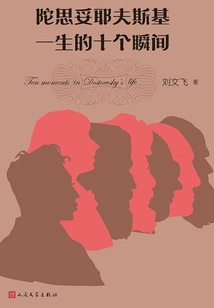
Ten Moments in the Life of Dostoevsky
Literature陀思妥耶夫斯基一生的十个瞬间
Liu Wenfei
The book "Ten Moments in the Life of Dostoevsky" contains the author's fourteen essays related to Russian literature, including "Ten Moments in the Life of Dostoevsky", "In Search of Chekhov's Footsteps", "Tolstoy Through Time and Space", "Tsvetaeva's Prague", "Nabokov and the Butterfly", etc., Involving the life and creation of many classic Russian writers in the 19th and 20th centuries. The author uses good materials found in academic research and literary translation as the writing objects of prose essays, and uses a freer and more emotional style to discuss more academic topics, making this essay collection interesting, readable and informative, and bringing Chinese readers closer to Russian literature, Chinese literature and Russian literature. Fourteen essays have been published individually in well-known publications such as "People's Literature", "Yilin", and "Yangtze River Literature and Art".
The book "Ten Moments in the Life of Dostoevsky" contains the author's fourteen essays related to Russian literature, including "Ten Moments in the Life of Dostoevsky", "In Search of Chekhov's Footsteps", "Tolstoy Through Time and Space", "Tsvetaeva's Prague", "Nabokov and the Butterfly", etc., Involving the life and creation of many classic Russian writers in the 19th and 20th centuries. The author uses good materials found in academic research and literary translation as the writing objects of prose essays, and uses a freer and more emotional style to discuss more academic topics, making this essay collection interesting, readable and informative, and bringing Chinese readers closer to Russian literature, Chinese literature and Russian literature. Fourteen essays have been published individually in well-known publications such as "People's Literature", "Yilin", and "Yangtze River Literature and Art".
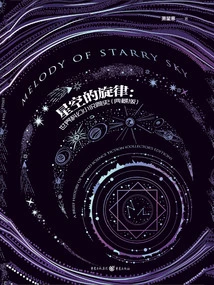
星空的旋律:世界科幻小说简史(典藏版)
Xiao Xinghan
Han Song, Dong Renwei, Yao Haijun, Zheng Jun and Yang Bo jointly recommended. Wu Yan, professor of the Humanities Center of Southern University of Science and Technology, wrote the preface. Xiao Xinghan, winner of the Chinese Science Fiction Nebula Award, travels to the vast sea of science fiction stars in the name of love, and invites you to a cosmic romantic date. Pay tribute to the master, pay tribute to the classic. A new revised version, a work of sincerity for ten years. "Melody of the Starry Sky: A Brief History of World Science Fiction (Collector's Edition)" is not a history of science fiction criticism, nor is it a difficult academic work; its author, a grassroots science fiction fan, mainly focuses on countries and genres, and uses easy-to-understand techniques to introduce those people, those things, and those works in the history of science fiction to readers who are new to science fiction. Stars flow across the sea, and time becomes a monument. The author invites you and me to explore the science fiction starry sky and listen to the unique melodies played by the stars.
Han Song, Dong Renwei, Yao Haijun, Zheng Jun and Yang Bo jointly recommended. Wu Yan, professor of the Humanities Center of Southern University of Science and Technology, wrote the preface. Xiao Xinghan, winner of the Chinese Science Fiction Nebula Award, travels to the vast sea of science fiction stars in the name of love, and invites you to a cosmic romantic date. Pay tribute to the master, pay tribute to the classic. A new revised version, a work of sincerity for ten years. "Melody of the Starry Sky: A Brief History of World Science Fiction (Collector's Edition)" is not a history of science fiction criticism, nor is it a difficult academic work; its author, a grassroots science fiction fan, mainly focuses on countries and genres, and uses easy-to-understand techniques to introduce those people, those things, and those works in the history of science fiction to readers who are new to science fiction. Stars flow across the sea, and time becomes a monument. The author invites you and me to explore the science fiction starry sky and listen to the unique melodies played by the stars.
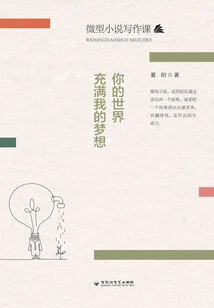
你的世界充满我的梦想(微型小说写作课)
Xia Yang
"Your World is Full of My Dreams" is a collection of micro-novel appreciation and commentary. It is a collection of micro-novel that the writer Xia Yang has read since he entered the world of micro-novel until now, and has had a profound impact on himself. This book has a total of 14 themes. Under each theme, Xia Yang comments on this theme, and also covers other micro-novels related to this theme. They are either inheritance, adaptation or reference. By reading this book, you can not only get to know more masterpieces by famous writers, but also improve your own understanding of novel appreciation.
"Your World is Full of My Dreams" is a collection of micro-novel appreciation and commentary. It is a collection of micro-novel that the writer Xia Yang has read since he entered the world of micro-novel until now, and has had a profound impact on himself. This book has a total of 14 themes. Under each theme, Xia Yang comments on this theme, and also covers other micro-novels related to this theme. They are either inheritance, adaptation or reference. By reading this book, you can not only get to know more masterpieces by famous writers, but also improve your own understanding of novel appreciation.
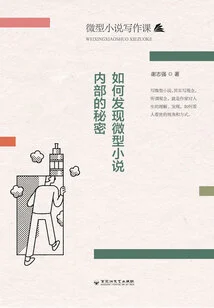
如何发现微型小说内部的秘密(微型小说写作课)
Xie Zhiqiang
"How to Discover the Secrets Inside Micro-Novel" is one of the "Micro-Novel Writing Courses" series. It is a collection of works by the famous micro-novel writer Xie Zhiqiang. The content includes the interpretation of micro-novel works, the author's own thoughts on the genre of micro-novel, and some views on the current literary situation. It helps micro-novel lovers understand the genre of micro-novel and provides some writing methods.
"How to Discover the Secrets Inside Micro-Novel" is one of the "Micro-Novel Writing Courses" series. It is a collection of works by the famous micro-novel writer Xie Zhiqiang. The content includes the interpretation of micro-novel works, the author's own thoughts on the genre of micro-novel, and some views on the current literary situation. It helps micro-novel lovers understand the genre of micro-novel and provides some writing methods.
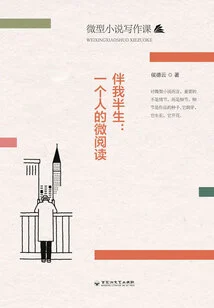
伴我半生:一个人的微阅读(微型小说写作课)
Hou Deyun
"Half of My Life: One Person's Micro-Reading" is one of the series of "Micro-Novel Writing Courses". The author Hou Deyun is a famous master who has achieved high achievements in the field of micro-novel theory and creation. The work provides a detailed anatomy of fifty micro-novel writers and their works. It not only comments on famous writers' famous works, but also observes and thinks about the current micro-novel creation team. It is worthy of reading by micro-novel creators and lovers.
"Half of My Life: One Person's Micro-Reading" is one of the series of "Micro-Novel Writing Courses". The author Hou Deyun is a famous master who has achieved high achievements in the field of micro-novel theory and creation. The work provides a detailed anatomy of fifty micro-novel writers and their works. It not only comments on famous writers' famous works, but also observes and thinks about the current micro-novel creation team. It is worthy of reading by micro-novel creators and lovers.
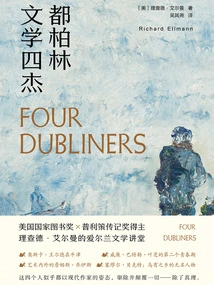
Dublin's Four Literary Heroes
Literature都柏林文学四杰
J
Richard Ellman's Lectures on Irish Literature, winner of the National Book Award and Pulitzer Prize for Biography, is a literary lecture on four profoundly influential Irish writers (Wilde, Yeats, Joyce and Beckett), which is both academic and readable. It may be said that these four people formed a strange combination. And similarities that they themselves were unaware of began to emerge: they were both far from home, witty, obscure, and violent. These Dubliners are outstanding and self-satisfied, even when they think they are down and out, they still show off their wealth, just like Pythagoras in Yeats's poem, with golden stockings. They raise and challenge their own assumptions, they move between art and anti-art, pleasure and fear, acceptance and abandonment. The fact that they all came from the same city doesn't mean much, but like their motherland, they fought hard for independence, despised occupation by external powers, and had many internal differences. These qualities are not unique to Ireland, but they are epitomized in Ireland. With these four native Dubliners, a city once forced into empire regained its power to influence the world with another kind of dominion: the dominion of art. --Richard Elman
Richard Ellman's Lectures on Irish Literature, winner of the National Book Award and Pulitzer Prize for Biography, is a literary lecture on four profoundly influential Irish writers (Wilde, Yeats, Joyce and Beckett), which is both academic and readable. It may be said that these four people formed a strange combination. And similarities that they themselves were unaware of began to emerge: they were both far from home, witty, obscure, and violent. These Dubliners are outstanding and self-satisfied, even when they think they are down and out, they still show off their wealth, just like Pythagoras in Yeats's poem, with golden stockings. They raise and challenge their own assumptions, they move between art and anti-art, pleasure and fear, acceptance and abandonment. The fact that they all came from the same city doesn't mean much, but like their motherland, they fought hard for independence, despised occupation by external powers, and had many internal differences. These qualities are not unique to Ireland, but they are epitomized in Ireland. With these four native Dubliners, a city once forced into empire regained its power to influence the world with another kind of dominion: the dominion of art. --Richard Elman
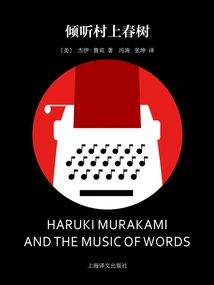
Listen to Haruki Murakami
Literature倾听村上春树
Q
This is the most authoritative critical biography of Haruki Murakami's works to date, adding nearly 30,000 words of new content compared to the previous version. Full analysis of Haruki Murakami's important works, updated to "1Q84". Jay Rubin is one of the important translators of Haruki Murakami's English translations. He is also a professor at Harvard University and a professional scholar who studies Murakami's works. This book "Listening to Haruki Murakami" was written by Rubin for the loyal readers of Haruki Murakami, giving everyone the opportunity to further understand this great writer who has passed away and lives in isolation. Rubin uncovers key elements in Murakami's novels and explains how Murakami developed his own distinctive new writing style in the Japanese literary world. And following Murakami's career trajectory, combined with multiple interviews with Murakami from 1993 to 2001, and relying on the rich material and keen insights accumulated through years of communication with Murakami, he wrote this excellent work.
This is the most authoritative critical biography of Haruki Murakami's works to date, adding nearly 30,000 words of new content compared to the previous version. Full analysis of Haruki Murakami's important works, updated to "1Q84". Jay Rubin is one of the important translators of Haruki Murakami's English translations. He is also a professor at Harvard University and a professional scholar who studies Murakami's works. This book "Listening to Haruki Murakami" was written by Rubin for the loyal readers of Haruki Murakami, giving everyone the opportunity to further understand this great writer who has passed away and lives in isolation. Rubin uncovers key elements in Murakami's novels and explains how Murakami developed his own distinctive new writing style in the Japanese literary world. And following Murakami's career trajectory, combined with multiple interviews with Murakami from 1993 to 2001, and relying on the rich material and keen insights accumulated through years of communication with Murakami, he wrote this excellent work.
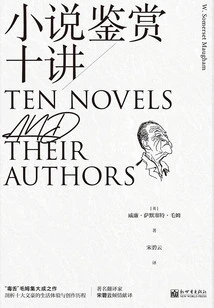
Ten Lectures on Novel Appreciation
Literature小说鉴赏十讲
H
This is a literary review written in the form of essays, and it is also a book of Maugham's insights into reading and philosophy. When you open this book, you will be stunned by the little-known sides of the top ten literary giants: Dostoevsky, whom everyone admires, was addicted to gambling and liked to advance manuscript fees but did not submit manuscripts on time; Balzac was vain and flashy, and often owed money. Not to return; Jane Austen's tacky clothes and low taste... Maugham's almost ruthless and bloody comments about the great masters are not intended to sensationalize, but to present their truest and most human side to the readers. In Maugham's words, "Knowing what kind of person the author is can help you better understand the author's works." Maugham not only told the personalities, hobbies and life experiences of the ten writers, but also introduced ten great novels. Once opened, you will enter a rich and wonderful world of literature.
This is a literary review written in the form of essays, and it is also a book of Maugham's insights into reading and philosophy. When you open this book, you will be stunned by the little-known sides of the top ten literary giants: Dostoevsky, whom everyone admires, was addicted to gambling and liked to advance manuscript fees but did not submit manuscripts on time; Balzac was vain and flashy, and often owed money. Not to return; Jane Austen's tacky clothes and low taste... Maugham's almost ruthless and bloody comments about the great masters are not intended to sensationalize, but to present their truest and most human side to the readers. In Maugham's words, "Knowing what kind of person the author is can help you better understand the author's works." Maugham not only told the personalities, hobbies and life experiences of the ten writers, but also introduced ten great novels. Once opened, you will enter a rich and wonderful world of literature.
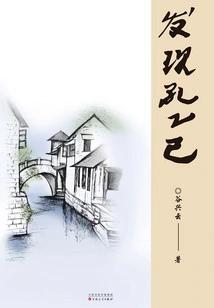
Discover Kong Yiji
Literature发现孔乙己
Gu Xingyun
It involves many doubts and difficulties in Lu Xun's classic works such as "Kong Yiji", as well as issues that have been debated for many years. Through slow reading, careful reading, and in-depth research, the author has made a different interpretation of the themes, characters, artistic forms, textual expressions, etc. Of "Kong Yiji" than before. His academic insights are significantly different from the original scholar's views and teaching reference book teachings. It is a new breakthrough in the old academic results and teaching guidance, and is a new result of the study of Lu Xun's works such as "Kong Yiji". For example, many scholars and teaching reference books believe that the theme of "Kong Yiji" is to expose the evils of the imperial examination system, that Kong Yiji is a pedantic, poor, and eager to climb the feudal intellectuals, and that the young men look down on Kong Yiji, etc. Based on Lu Xun's self-narration and the actual work, the author clarifies: The purpose of the novel is to describe the general society's indifference to the poor. The down-and-out Kong Yiji is an "insulted and damaged" scholar, not a critical or negative image in the novel. The boy pays attention to and sympathizes with Kong Yiji. He evaluates Kong Yiji's conduct as better than others. From the perspective of artistic achievements, the creation of "Kong Yiji" is Lu Xun's unique contribution to modern Chinese literature.
It involves many doubts and difficulties in Lu Xun's classic works such as "Kong Yiji", as well as issues that have been debated for many years. Through slow reading, careful reading, and in-depth research, the author has made a different interpretation of the themes, characters, artistic forms, textual expressions, etc. Of "Kong Yiji" than before. His academic insights are significantly different from the original scholar's views and teaching reference book teachings. It is a new breakthrough in the old academic results and teaching guidance, and is a new result of the study of Lu Xun's works such as "Kong Yiji". For example, many scholars and teaching reference books believe that the theme of "Kong Yiji" is to expose the evils of the imperial examination system, that Kong Yiji is a pedantic, poor, and eager to climb the feudal intellectuals, and that the young men look down on Kong Yiji, etc. Based on Lu Xun's self-narration and the actual work, the author clarifies: The purpose of the novel is to describe the general society's indifference to the poor. The down-and-out Kong Yiji is an "insulted and damaged" scholar, not a critical or negative image in the novel. The boy pays attention to and sympathizes with Kong Yiji. He evaluates Kong Yiji's conduct as better than others. From the perspective of artistic achievements, the creation of "Kong Yiji" is Lu Xun's unique contribution to modern Chinese literature.
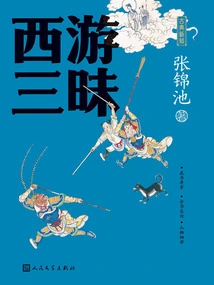
西游三昧(古典新知)
Zhang Jinchi
This book is a collection of academic essays commenting on "Journey to the West" from multiple perspectives. It includes an appreciation of Tang Monk, Sun Wukong, Zhu Bajie, Monk Sha, etc., And an exploration of the creative purpose and artistic structure of "Journey to the West". The author also expressed new opinions on the authorship of "Journey to the West". The author of this book is a famous scholar who studied "Journey to the West". He has written extensively and is famous at home and abroad. This time, the author uses his profound knowledge and handwriting to write academic sketches. The ideas are more flexible, the writing style is freer, and the readability is stronger. This book is both academic and interesting, allowing readers to appreciate "Journey to the West" from multiple perspectives. While acquiring new knowledge, they can also have a relaxing and enjoyable reading experience.
This book is a collection of academic essays commenting on "Journey to the West" from multiple perspectives. It includes an appreciation of Tang Monk, Sun Wukong, Zhu Bajie, Monk Sha, etc., And an exploration of the creative purpose and artistic structure of "Journey to the West". The author also expressed new opinions on the authorship of "Journey to the West". The author of this book is a famous scholar who studied "Journey to the West". He has written extensively and is famous at home and abroad. This time, the author uses his profound knowledge and handwriting to write academic sketches. The ideas are more flexible, the writing style is freer, and the readability is stronger. This book is both academic and interesting, allowing readers to appreciate "Journey to the West" from multiple perspectives. While acquiring new knowledge, they can also have a relaxing and enjoyable reading experience.
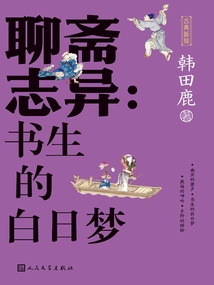
聊斋志异:书生的白日梦(古典新知)
Handan Deer
This book is an academic essay on "Strange Stories from a Chinese Studio" written by Professor Han Tianlu of the School of Liberal Arts of Hebei University. The author explores the ghostly world of fox fairies depicted in "Strange Stories from a Chinese Studio" from multiple angles and in simple terms, Pu Songling's feelings embodied in "Strange Stories from a Chinese Studio" and the criticism and reflection of "Strange Stories from a Chinese Studio" on the society at that time. The manuscript contains both a macroscopic overall view and an understanding interpretation of classic chapters. The writing style is sophisticated and the prose is natural. It is a relatively high-quality popular reading material, which is very helpful for ordinary readers to get into "Strange Stories from a Chinese Studio". Professor Han Tianlu has taught courses such as "Three Words and Two Patterns", "Westward Journey" and "Ming and Qing Novels" at the "Hundred Schools Forum", and has a high reputation and influence.
This book is an academic essay on "Strange Stories from a Chinese Studio" written by Professor Han Tianlu of the School of Liberal Arts of Hebei University. The author explores the ghostly world of fox fairies depicted in "Strange Stories from a Chinese Studio" from multiple angles and in simple terms, Pu Songling's feelings embodied in "Strange Stories from a Chinese Studio" and the criticism and reflection of "Strange Stories from a Chinese Studio" on the society at that time. The manuscript contains both a macroscopic overall view and an understanding interpretation of classic chapters. The writing style is sophisticated and the prose is natural. It is a relatively high-quality popular reading material, which is very helpful for ordinary readers to get into "Strange Stories from a Chinese Studio". Professor Han Tianlu has taught courses such as "Three Words and Two Patterns", "Westward Journey" and "Ming and Qing Novels" at the "Hundred Schools Forum", and has a high reputation and influence.
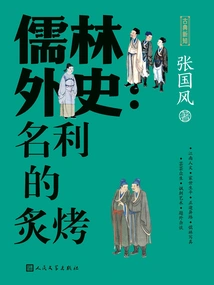
儒林外史:名利的炙烤(古典新知)
Zhang Guofeng
Among ancient Chinese literary works, apart from some widely circulated chapters in Tang poems and Song lyrics, novels are probably the most influential among contemporary readers. Among the novels, in addition to the four famous novels "Romance of the Three Kingdoms", "Water Margin", "Journey to the West" and "Dream of Red Mansions", there are also "San Yan Er Pai", "Jin Ping Mei", "The Scholars", "Strange Stories from a Chinese Studio", etc. "The Scholars: Celebrities and Fame and Fortune" aims to use interesting viewpoints, bright language, and active ideas to establish a bridge between scholars' desk research and public reading. The author of this book, Mr. Zhang Guofeng, has conducted in-depth research on "The Scholars" and has unique insights into the characters, artistic connotations, imperial examination system, etc. Involved in the novel, which is thought-provoking and interesting.
Among ancient Chinese literary works, apart from some widely circulated chapters in Tang poems and Song lyrics, novels are probably the most influential among contemporary readers. Among the novels, in addition to the four famous novels "Romance of the Three Kingdoms", "Water Margin", "Journey to the West" and "Dream of Red Mansions", there are also "San Yan Er Pai", "Jin Ping Mei", "The Scholars", "Strange Stories from a Chinese Studio", etc. "The Scholars: Celebrities and Fame and Fortune" aims to use interesting viewpoints, bright language, and active ideas to establish a bridge between scholars' desk research and public reading. The author of this book, Mr. Zhang Guofeng, has conducted in-depth research on "The Scholars" and has unique insights into the characters, artistic connotations, imperial examination system, etc. Involved in the novel, which is thought-provoking and interesting.
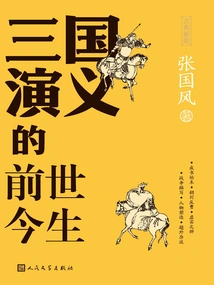
三国演义的前世今生(古典新知)
Zhang Guofeng
"The Romance of the Three Kingdoms" is one of the four great classics and a representative work of historical romance novels among classical novels. This book is a collection of essays that interpret "The Romance of the Three Kingdoms" for public reading. The book sets multiple themes such as "The Fiction and Historical Facts of "The Romance of the Three Kingdoms"", "Important Characters of the "Romance of the Three Kingdoms"", "The Layout and Structure of the "Romance of the Three Kingdoms"", etc., Which are explained in detail in a series of related articles. The author of this book is an expert in the study of classical novels. He writes short articles in his own handwriting. Compared with high-level lectures or cumbersome textual research, the writing style is more free and lively. At the same time, it also maintains a certain academic standard, so that readers can appreciate "The Romance of the Three Kingdoms" from multiple perspectives and gain a more relaxed and enjoyable reading experience.
"The Romance of the Three Kingdoms" is one of the four great classics and a representative work of historical romance novels among classical novels. This book is a collection of essays that interpret "The Romance of the Three Kingdoms" for public reading. The book sets multiple themes such as "The Fiction and Historical Facts of "The Romance of the Three Kingdoms"", "Important Characters of the "Romance of the Three Kingdoms"", "The Layout and Structure of the "Romance of the Three Kingdoms"", etc., Which are explained in detail in a series of related articles. The author of this book is an expert in the study of classical novels. He writes short articles in his own handwriting. Compared with high-level lectures or cumbersome textual research, the writing style is more free and lively. At the same time, it also maintains a certain academic standard, so that readers can appreciate "The Romance of the Three Kingdoms" from multiple perspectives and gain a more relaxed and enjoyable reading experience.
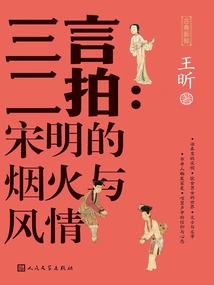
三言二拍:宋明的烟火与风情(古典新知)
Wang Xin
"Three Words and Two Pats" is a representative collection of Chinese classical vernacular short stories. It is widely read by the public and has a wide variety of adapted works such as opera, film and television, etc. This book is a collection of academic essays that interprets "Three Words and Two Pai" from multiple angles and is intended for public readers. The book extracts themes such as "the world of men and women eating and drinking", "the history of fortunes of urban figures", "smoking powder monsters", and "the concept of chastity", and narrates and explains them in a series of articles around the corresponding themes. The author of this book is an expert in the study of classical novels. He writes short articles in his own handwriting, with rich academic connotations and lively writing style, which will help the public readers appreciate classical masterpieces and understand ancient culture.
"Three Words and Two Pats" is a representative collection of Chinese classical vernacular short stories. It is widely read by the public and has a wide variety of adapted works such as opera, film and television, etc. This book is a collection of academic essays that interprets "Three Words and Two Pai" from multiple angles and is intended for public readers. The book extracts themes such as "the world of men and women eating and drinking", "the history of fortunes of urban figures", "smoking powder monsters", and "the concept of chastity", and narrates and explains them in a series of articles around the corresponding themes. The author of this book is an expert in the study of classical novels. He writes short articles in his own handwriting, with rich academic connotations and lively writing style, which will help the public readers appreciate classical masterpieces and understand ancient culture.
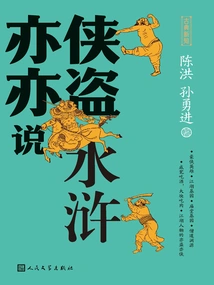
亦侠亦盗说水浒(古典新知)
Chen Hong Sun Yongjin
"Water Margin" is one of the "Four Great Masterpieces" that is well-known to every household. It is a representative work of classical heroic romance novels. The book not only creates many vivid heroes, but also describes various aspects of life and social life, with rich content. Reading the book has raised many important questions for generations of readers, and these questions are still being analyzed, explored, and discussed by contemporary readers. "The Hero and the Thief: The Water Margin" is classified according to the topics, respectively telling the historical background of the Water Margin, the ideological themes of the Water Margin heroes, the Water Margin heroes' views on women, money, food and wine, personality, etc. The author writes in a relaxed manner, long if he has words, and short if there is no words, trying to be unique and provide enlightening thinking. Reading this book will help increase readers' interest in reading the original work, and at the same time help readers deepen their thinking about the original work.
"Water Margin" is one of the "Four Great Masterpieces" that is well-known to every household. It is a representative work of classical heroic romance novels. The book not only creates many vivid heroes, but also describes various aspects of life and social life, with rich content. Reading the book has raised many important questions for generations of readers, and these questions are still being analyzed, explored, and discussed by contemporary readers. "The Hero and the Thief: The Water Margin" is classified according to the topics, respectively telling the historical background of the Water Margin, the ideological themes of the Water Margin heroes, the Water Margin heroes' views on women, money, food and wine, personality, etc. The author writes in a relaxed manner, long if he has words, and short if there is no words, trying to be unique and provide enlightening thinking. Reading this book will help increase readers' interest in reading the original work, and at the same time help readers deepen their thinking about the original work.
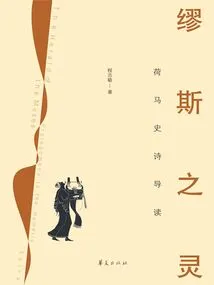
缪斯之灵:荷马史诗导读
Cheng Zhimin
"Spirit of the Muses - An Introduction to Homer's Epic" uses unique insights to carefully interpret and sort out Homer's own ideological image and the history of his epic, and analyzes the content structure, text body and metaphorical classical political philosophy of Homer's two epics, "The Iliad" and "The Odyssey". This book "Spirit of the Muse - An Introduction to Homer's Epic" is an introductory book written by the author who has been deeply involved in the study of Homer's epic and has devoted many years of painstaking efforts. It is written in simple language for many students. It explains clearly the ideological portrait of Homer's epic in the length of a book. The author once taught Homer studies courses in colleges and universities and used this book as a teaching material. Even today, the mission of this book remains timeless, and Homer's epic is still looking forward to its younger generation of readers. As the author admits frankly, this book still retains the "ambition" of his youth: "All great dreams must be implemented and based on detailed work. To put it more bluntly, the author's ambition is to attract more young people to enter classical thinking, to participate in grand events, and to join hands together. Not only can everyone (first let themselves) learn from each other, but it may also slightly change the spirit of the times."
"Spirit of the Muses - An Introduction to Homer's Epic" uses unique insights to carefully interpret and sort out Homer's own ideological image and the history of his epic, and analyzes the content structure, text body and metaphorical classical political philosophy of Homer's two epics, "The Iliad" and "The Odyssey". This book "Spirit of the Muse - An Introduction to Homer's Epic" is an introductory book written by the author who has been deeply involved in the study of Homer's epic and has devoted many years of painstaking efforts. It is written in simple language for many students. It explains clearly the ideological portrait of Homer's epic in the length of a book. The author once taught Homer studies courses in colleges and universities and used this book as a teaching material. Even today, the mission of this book remains timeless, and Homer's epic is still looking forward to its younger generation of readers. As the author admits frankly, this book still retains the "ambition" of his youth: "All great dreams must be implemented and based on detailed work. To put it more bluntly, the author's ambition is to attract more young people to enter classical thinking, to participate in grand events, and to join hands together. Not only can everyone (first let themselves) learn from each other, but it may also slightly change the spirit of the times."
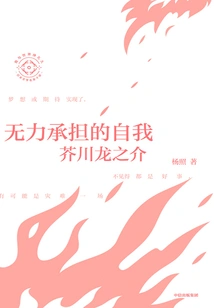
The Unbearable Self: Ryunosuke Akutagawa (ten Lectures by Famous Japanese Literary Masters 03)
Literature无力承担的自我:芥川龙之介(日本文学名家十讲03)
Yang Zhao
The standard-bearers of literature in the 20th century were also laggards of their respective eras. "Classic Reader" Yang Zhao's ten-lecture series on Japanese literary masters: Using literature, listen to their struggles and answers. Yang Zhao, the "classic reader" of this volume × Ryunosuke Akutagawa, "the ruthless writer who faces the world squarely": When a dream or expectation comes true, it may not always be a good thing, it may be a disaster. Ryunosuke Akutagawa is one of the most cosmopolitan among modern Japanese writers. From "Rashomon", which transcends tradition, to "Hell Transformation", which shows the magic of art, and crazy writing that is far away from daily life, such as "Kappa" and "Gear", reading his works is like being in the labyrinth of human nature, standing on the opposite side of the natural, to explore the chaos and confusion that neither reason nor sense can reach, but that modern life has to face and deal with. What he repeatedly shows in his works is how people who are deeply penetrated by "human feelings and principles" completely confuse the external and internal aspects of themselves. Many times people simply don't know what their true feelings and thoughts are, and what their performance is in line with the expectations of others in the outside world. Only in a few moments of sudden inspiration do people suddenly gain insight into the complex psychological operations of others, or suddenly understand their own subtle thoughts. And those moments of inspiration are what Akutagawa believes the novel should capture.
The standard-bearers of literature in the 20th century were also laggards of their respective eras. "Classic Reader" Yang Zhao's ten-lecture series on Japanese literary masters: Using literature, listen to their struggles and answers. Yang Zhao, the "classic reader" of this volume × Ryunosuke Akutagawa, "the ruthless writer who faces the world squarely": When a dream or expectation comes true, it may not always be a good thing, it may be a disaster. Ryunosuke Akutagawa is one of the most cosmopolitan among modern Japanese writers. From "Rashomon", which transcends tradition, to "Hell Transformation", which shows the magic of art, and crazy writing that is far away from daily life, such as "Kappa" and "Gear", reading his works is like being in the labyrinth of human nature, standing on the opposite side of the natural, to explore the chaos and confusion that neither reason nor sense can reach, but that modern life has to face and deal with. What he repeatedly shows in his works is how people who are deeply penetrated by "human feelings and principles" completely confuse the external and internal aspects of themselves. Many times people simply don't know what their true feelings and thoughts are, and what their performance is in line with the expectations of others in the outside world. Only in a few moments of sudden inspiration do people suddenly gain insight into the complex psychological operations of others, or suddenly understand their own subtle thoughts. And those moments of inspiration are what Akutagawa believes the novel should capture.
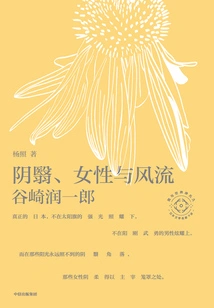
Shadow, Women and Romance: Junichiro Tanizaki (ten Lectures by Famous Japanese Literary Masters 02)
Literature阴翳、女性与风流:谷崎润一郎(日本文学名家十讲02)
Yang Zhao
The standard-bearers of literature in the 20th century were also laggards of their respective eras. "Classic Reader" Yang Zhao's ten-lecture series on Japanese literary masters: Using literature, listen to their struggles and answers. This volume's "classic reader" Yang Zhao × "the aesthetic master hidden in the corner of the great era" Junichiro Tanizaki: Writing all the way without echoing any era is his most remarkable achievement. From the "demonist" fantasy writing to the classical aesthetics of "Snow", passion that is not accepted and should not exist under collective standards will not really disappear from human reality. This is Tanizaki's basic creative attitude in his 50-year writing career. He spent 30 years and translated "The Tale of Genji" three times, which inspired him to create a unique "shadow aesthetic" writing, and then created a lifetime classic work "Snow". When the whole society was forced to sing for war, in his writing, the daughters of the Makoka family still cared about love, singing and dancing, catching fireflies, and admiring flowers. Are war, bushido, militarism, etc. Really more representative of Japan and closer to the Japanese people than their lives?
The standard-bearers of literature in the 20th century were also laggards of their respective eras. "Classic Reader" Yang Zhao's ten-lecture series on Japanese literary masters: Using literature, listen to their struggles and answers. This volume's "classic reader" Yang Zhao × "the aesthetic master hidden in the corner of the great era" Junichiro Tanizaki: Writing all the way without echoing any era is his most remarkable achievement. From the "demonist" fantasy writing to the classical aesthetics of "Snow", passion that is not accepted and should not exist under collective standards will not really disappear from human reality. This is Tanizaki's basic creative attitude in his 50-year writing career. He spent 30 years and translated "The Tale of Genji" three times, which inspired him to create a unique "shadow aesthetic" writing, and then created a lifetime classic work "Snow". When the whole society was forced to sing for war, in his writing, the daughters of the Makoka family still cared about love, singing and dancing, catching fireflies, and admiring flowers. Are war, bushido, militarism, etc. Really more representative of Japan and closer to the Japanese people than their lives?
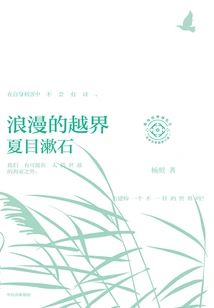
浪漫的越界:夏目漱石(日本文学名家十讲01)
Yang Zhao
The standard-bearers of literature in the 20th century were also laggards of their respective eras. "Classic Reader" Yang Zhao's ten-lecture series on Japanese literary masters: Using literature, listen to their struggles and answers. Yang Zhao, the "classic reader" of this volume, × Natsume Soseki, the translator of the word "romance": Life is not easy, and it is difficult wherever you go. Is it possible for us to build a different world outside of the constraints of human society? From "I Am a Cat" to the unfinished work "Light and Dark", Natsume Soseki created 15 novels in just over ten years. Each work has different styles and characteristics, but they are all about the wrestling and confrontation between "human feelings" and "inhuman feelings". This also points to the collective confusion of an era. After the Meiji Restoration, the "modernity" of rapid Westernization did not bring the expected freedom to Japan, and traditional human ethics still fully enveloped individual lives. Over time, people lose their self, are unable to behave without social roles, and do not know who they are or where they are. Therefore, Soseki, who was determined to fight against the trend, used protagonists with "inhuman" qualities to illustrate that there are no established boundaries and there is no so-called "normal". People have the freedom and potential to choose. The standard answer of this era can only be faced and decided by oneself.
The standard-bearers of literature in the 20th century were also laggards of their respective eras. "Classic Reader" Yang Zhao's ten-lecture series on Japanese literary masters: Using literature, listen to their struggles and answers. Yang Zhao, the "classic reader" of this volume, × Natsume Soseki, the translator of the word "romance": Life is not easy, and it is difficult wherever you go. Is it possible for us to build a different world outside of the constraints of human society? From "I Am a Cat" to the unfinished work "Light and Dark", Natsume Soseki created 15 novels in just over ten years. Each work has different styles and characteristics, but they are all about the wrestling and confrontation between "human feelings" and "inhuman feelings". This also points to the collective confusion of an era. After the Meiji Restoration, the "modernity" of rapid Westernization did not bring the expected freedom to Japan, and traditional human ethics still fully enveloped individual lives. Over time, people lose their self, are unable to behave without social roles, and do not know who they are or where they are. Therefore, Soseki, who was determined to fight against the trend, used protagonists with "inhuman" qualities to illustrate that there are no established boundaries and there is no so-called "normal". People have the freedom and potential to choose. The standard answer of this era can only be faced and decided by oneself.
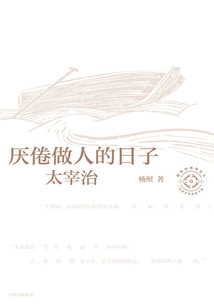
厌倦做人的日子:太宰治(日本文学名家十讲05)
Yang Zhao
The standard-bearers of literature in the 20th century were also laggards of their respective eras. "Classic Reader" Yang Zhao's ten-lecture series on Japanese literary masters: Using literature, listen to their struggles and answers. This volume's "classic reader" Yang Zhao × "the unusual libertine in the literary world" Dazai Osamu: How should a turbulent soul that cannot be classified into a framework be placed? The 26-year-old Osamu Dazai was shortlisted for the first "Akutagawa Prize", but was opposed by the judge Kawabata Yasunari: "This does not seem to be a work written by an author who lives a decent life." Dazai Osamu retorted: "Raising birds and watching Butoh, is it called a 'decent life'?" This "undecent" writer committed suicide three times and committed suicide five times, and his various debaucheries can be found in his final work "Disqualification in the World". However, what "Disqualification in the World" really explores is not how a person loses the qualification to be a human being. It forces us to reflect back on the "human world" including ourselves: What exactly do we pursue in life, and where are we going? Osamu Dazai's consistent contribution is to pierce our comfortable protective layer and unearth the experiences and feelings of people we are unfamiliar with, giving us the opportunity to review whether we lack sufficient understanding of the diversity and complexity of people, so that we self-centeredly regard the phenomenon of people who are different from ourselves as bad, terrible, and dark. Darkness is not just darkness, darkness may be more content and richer than light. When we are willing to admit this, we begin to truly know people. --Yang Zhao.
The standard-bearers of literature in the 20th century were also laggards of their respective eras. "Classic Reader" Yang Zhao's ten-lecture series on Japanese literary masters: Using literature, listen to their struggles and answers. This volume's "classic reader" Yang Zhao × "the unusual libertine in the literary world" Dazai Osamu: How should a turbulent soul that cannot be classified into a framework be placed? The 26-year-old Osamu Dazai was shortlisted for the first "Akutagawa Prize", but was opposed by the judge Kawabata Yasunari: "This does not seem to be a work written by an author who lives a decent life." Dazai Osamu retorted: "Raising birds and watching Butoh, is it called a 'decent life'?" This "undecent" writer committed suicide three times and committed suicide five times, and his various debaucheries can be found in his final work "Disqualification in the World". However, what "Disqualification in the World" really explores is not how a person loses the qualification to be a human being. It forces us to reflect back on the "human world" including ourselves: What exactly do we pursue in life, and where are we going? Osamu Dazai's consistent contribution is to pierce our comfortable protective layer and unearth the experiences and feelings of people we are unfamiliar with, giving us the opportunity to review whether we lack sufficient understanding of the diversity and complexity of people, so that we self-centeredly regard the phenomenon of people who are different from ourselves as bad, terrible, and dark. Darkness is not just darkness, darkness may be more content and richer than light. When we are willing to admit this, we begin to truly know people. --Yang Zhao.
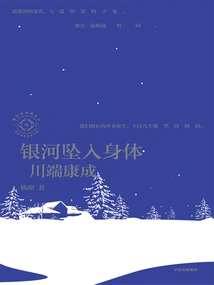
The Milky Way Falls into the Body: Kawabata Yasunari (ten Lectures by Japanese Literary Masters 04)
Literature银河坠入身体:川端康成(日本文学名家十讲04)
Yang Zhao
The standard-bearers of literature in the 20th century were also laggards of their respective eras. "Classic Reader" Yang Zhao's ten-lecture series on Japanese literary masters: Using literature, listen to their struggles and answers. Yang Zhao, the "classic reader" of this volume × Yasunari Kawabata, the "reconstructor of Japanese beauty": What we have is not this life, but a few accidental moments. In this world, while looking at the flowers, you are walking towards hell. Kawabata Yasunari, who grew up at the funeral of his relatives when he was young, was hit by the double blow of the country's defeat and the death of his best friend. He early felt the "futility" of life: How could he continue to survive for the rest of his life? Delicate and sensitive, he found a way in novels: novels can condense time - it is both an instant and an eternity fixed by condensation. There is a huge conflict and tension between the two, bursting out an indescribable beauty. In the post-war atmosphere of advocating the West, the multi-layered circulation of people's hearts, human kindness, strong time perception and social care perspective in Kawabata Yasunari's works not only revitalized Japan's own civilizational value, but also allowed it to be seen and valued by the world again. He was determined to preserve the beauty of Japan while preserving the country and find a reason for its continued existence amidst the ruins of defeat.
The standard-bearers of literature in the 20th century were also laggards of their respective eras. "Classic Reader" Yang Zhao's ten-lecture series on Japanese literary masters: Using literature, listen to their struggles and answers. Yang Zhao, the "classic reader" of this volume × Yasunari Kawabata, the "reconstructor of Japanese beauty": What we have is not this life, but a few accidental moments. In this world, while looking at the flowers, you are walking towards hell. Kawabata Yasunari, who grew up at the funeral of his relatives when he was young, was hit by the double blow of the country's defeat and the death of his best friend. He early felt the "futility" of life: How could he continue to survive for the rest of his life? Delicate and sensitive, he found a way in novels: novels can condense time - it is both an instant and an eternity fixed by condensation. There is a huge conflict and tension between the two, bursting out an indescribable beauty. In the post-war atmosphere of advocating the West, the multi-layered circulation of people's hearts, human kindness, strong time perception and social care perspective in Kawabata Yasunari's works not only revitalized Japan's own civilizational value, but also allowed it to be seen and valued by the world again. He was determined to preserve the beauty of Japan while preserving the country and find a reason for its continued existence amidst the ruins of defeat.
Reading for You
Literature为你读书
Jiang Xiaoyuan
This book tells the story of Professor Jiang Xiaoyuan, a famous bibliophile and book critic, about his reading, reviewing and writing process. The book contains 33 relevant articles recently published by the author, divided into four series, including Jiang Xiaoyuan's personal stories and experiences of reading, his thoughts and questions while reading, as well as his academic book reviews, film reviews and appreciation comments. It not only analyzes the methodological nature of reading, but also demonstrates Jiang Xiaoyuan's rich and extensive reading scope and professional evaluation. He uses his own example and personal demonstration to tell readers how to read, covering world history and geography, science fiction film and television works, scientism, Chinese classical literature, world literary masterpieces, literary criticism, etc.
This book tells the story of Professor Jiang Xiaoyuan, a famous bibliophile and book critic, about his reading, reviewing and writing process. The book contains 33 relevant articles recently published by the author, divided into four series, including Jiang Xiaoyuan's personal stories and experiences of reading, his thoughts and questions while reading, as well as his academic book reviews, film reviews and appreciation comments. It not only analyzes the methodological nature of reading, but also demonstrates Jiang Xiaoyuan's rich and extensive reading scope and professional evaluation. He uses his own example and personal demonstration to tell readers how to read, covering world history and geography, science fiction film and television works, scientism, Chinese classical literature, world literary masterpieces, literary criticism, etc.
对话批评:诗·史·思之维
Zhou Xinmin
Today, literary criticism often loses the warmth of understanding others and observing oneself. Some critics only focus on self-admiration, with no works in their eyes and no readers in their hearts. The reason lies in the loss of dialogue in literary criticism. Good literary criticism should be like a deep dialogue with a close friend. Against this background, this book focuses on interviews with a number of well-known poets, novelists and literary critics from the 1960s to the 1980s. Through face-to-face conversations, it aims to build a bridge of communication, trigger a collision of ideas and generate spiritual resonance during dialogue and exchange, in order to rebuild the dialogue of literary criticism and reach the deep realm of literature.
Today, literary criticism often loses the warmth of understanding others and observing oneself. Some critics only focus on self-admiration, with no works in their eyes and no readers in their hearts. The reason lies in the loss of dialogue in literary criticism. Good literary criticism should be like a deep dialogue with a close friend. Against this background, this book focuses on interviews with a number of well-known poets, novelists and literary critics from the 1960s to the 1980s. Through face-to-face conversations, it aims to build a bridge of communication, trigger a collision of ideas and generate spiritual resonance during dialogue and exchange, in order to rebuild the dialogue of literary criticism and reach the deep realm of literature.
Selected British Prose Essays
Literature英国散文名篇选
Wang Zuoliang
"Selected Famous British Prose Essays" is a short book compiled by Mr. Wang Zuoliang, a well-known poet, translator and expert on British literature in my country. Wang Zuoliang selected prose works by thirty British writers such as Thomas More, Francis Bacon, Daniel Defoe, and John Keats. Each writer has an analysis of his or her work, which is placed before the translation. He carefully sorted out British prose in various eras based on time, including essays and portraits in the seventeenth century, journal discussions and political essays in the eighteenth century, essays and historical works in the nineteenth century, literary essays, travel notes, and popular science articles in the twentieth century, etc., Mainly showing a common prose tradition in British prose. It is simple but not ordinary, and it is both meaningful and literary.
"Selected Famous British Prose Essays" is a short book compiled by Mr. Wang Zuoliang, a well-known poet, translator and expert on British literature in my country. Wang Zuoliang selected prose works by thirty British writers such as Thomas More, Francis Bacon, Daniel Defoe, and John Keats. Each writer has an analysis of his or her work, which is placed before the translation. He carefully sorted out British prose in various eras based on time, including essays and portraits in the seventeenth century, journal discussions and political essays in the eighteenth century, essays and historical works in the nineteenth century, literary essays, travel notes, and popular science articles in the twentieth century, etc., Mainly showing a common prose tradition in British prose. It is simple but not ordinary, and it is both meaningful and literary.
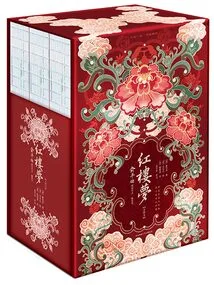
A Dream of Red Mansions: Yu Pingbo's Finely Edited and Dianzhi Version (complete Three Volumes)
Literature红楼梦:俞平伯精校评点脂批本(全三册)
Comments By Yu Pingbo
This book is based on Qi Xu, an early copy of Cao Xueqin's original work, and compiles a relatively complete comment system of Zhi Yanzhai. It also has careful comments and proofreading by Yu Pingbo, a master of Red Mansions, and fills a major gap in the version history of "Dream of Red Mansions". This book is compiled with reference to many manuscripts (Jiaxu version, Jimao version, Gengchen version, Jiachen version, Chengjia version, etc.), And the last forty chapters of the widely circulated continuations compiled by Cheng Weiyuan and Gao E are appended to the back of the book. Readers can gain rich reading benefits.
This book is based on Qi Xu, an early copy of Cao Xueqin's original work, and compiles a relatively complete comment system of Zhi Yanzhai. It also has careful comments and proofreading by Yu Pingbo, a master of Red Mansions, and fills a major gap in the version history of "Dream of Red Mansions". This book is compiled with reference to many manuscripts (Jiaxu version, Jimao version, Gengchen version, Jiachen version, Chengjia version, etc.), And the last forty chapters of the widely circulated continuations compiled by Cheng Weiyuan and Gao E are appended to the back of the book. Readers can gain rich reading benefits.
Six Lectures of Haizi
Literature海子六讲
Zhang Qinghua
"Six Lectures on Haizi" is a series of articles written by Zhang Qinghua to commemorate the 30th anniversary of Haizi's death. The author sorts out Haizi's poetry creation from six aspects: the background of Haizi's creation, the spiritual phenomenology characteristics of Haizi's poetry, the matrix and aesthetic foundation of Haizi's poetry, the sensibility and body in Haizi's poetry, and Haizi's cultural writing and meta-writing. In particular, he conducts an in-depth exploration of the deep relationship between the imagery in Haizi's poetry and Western philosophy, which helps readers to have a clear connection and understanding between Haizi's creation and the spiritual map of the Western world. "Six Lectures on Haizi" also has three appendices, one is a comparative article about Haizi and Luo Yihe, one is about the analysis of Haizi's lyric poems, and the third article gives a very practical and specific reading method of Haizi's poems. These three appendices, together with the six lecture notes, open a wider channel for readers to approach and understand Haizi's creative world.
"Six Lectures on Haizi" is a series of articles written by Zhang Qinghua to commemorate the 30th anniversary of Haizi's death. The author sorts out Haizi's poetry creation from six aspects: the background of Haizi's creation, the spiritual phenomenology characteristics of Haizi's poetry, the matrix and aesthetic foundation of Haizi's poetry, the sensibility and body in Haizi's poetry, and Haizi's cultural writing and meta-writing. In particular, he conducts an in-depth exploration of the deep relationship between the imagery in Haizi's poetry and Western philosophy, which helps readers to have a clear connection and understanding between Haizi's creation and the spiritual map of the Western world. "Six Lectures on Haizi" also has three appendices, one is a comparative article about Haizi and Luo Yihe, one is about the analysis of Haizi's lyric poems, and the third article gives a very practical and specific reading method of Haizi's poems. These three appendices, together with the six lecture notes, open a wider channel for readers to approach and understand Haizi's creative world.
温儒敏讲现代文学名篇
Wen Rumin
This book was carefully revised, written, and polished by carefully selecting and excerpting the classic works from Professor Wen's lectures on modern Chinese literature at Peking University. It was combined with the latest academic research, primary and secondary school textbooks, and teaching status. It focuses on the close reading and analysis of more than 40 masterpieces by 26 famous writers in the history of modern literature, demonstrates various methods of interpreting the works, and guides the reading appreciation of classics. It is an introductory book for literary appreciation and a reference book for Chinese language study. It can be used as a study book for college students taking modern literature courses, and can also be used as a reference for Chinese teachers in primary and secondary schools and literature lovers. This book has two major features: 1. Academic. The essence of Peking University's modern literature lecture notes, many precious research materials focus on tracing the source, so that readers can follow the pictures to find research clues. The classic version of the work is selected to explore the academic rationality of the work analysis, which can complement "Thirty Years of Modern Chinese Literature". 2. Popularity. There are many new things to see, interesting and informative. It helps readers learn how to read works, analyze literary phenomena, and cultivate artistic perception and thinking ability. It can be called an "introductory book for literary appreciation" and "a reference book for Chinese language study."
This book was carefully revised, written, and polished by carefully selecting and excerpting the classic works from Professor Wen's lectures on modern Chinese literature at Peking University. It was combined with the latest academic research, primary and secondary school textbooks, and teaching status. It focuses on the close reading and analysis of more than 40 masterpieces by 26 famous writers in the history of modern literature, demonstrates various methods of interpreting the works, and guides the reading appreciation of classics. It is an introductory book for literary appreciation and a reference book for Chinese language study. It can be used as a study book for college students taking modern literature courses, and can also be used as a reference for Chinese teachers in primary and secondary schools and literature lovers. This book has two major features: 1. Academic. The essence of Peking University's modern literature lecture notes, many precious research materials focus on tracing the source, so that readers can follow the pictures to find research clues. The classic version of the work is selected to explore the academic rationality of the work analysis, which can complement "Thirty Years of Modern Chinese Literature". 2. Popularity. There are many new things to see, interesting and informative. It helps readers learn how to read works, analyze literary phenomena, and cultivate artistic perception and thinking ability. It can be called an "introductory book for literary appreciation" and "a reference book for Chinese language study."
中国文学的魅力(洋眼看中国)
P
"The Charm of Chinese Literature" is mainly translated from "Literary Signposts" in "The Complete Random Works of Shintaro Okuno". It interprets Chinese literary classics from a Japanese perspective, criticizes literary masters of the past dynasties, and analyzes the origins of Japanese writers such as Mori Ogai and Nagai Karikaze's study of Chinese literature. The Chinese literature written by the author shines brightly. In the Wei and Jin literary circles, Tao Yuanming and Xie Lingyun showed their character, suave and free and easy; in the romantic Tang Dynasty, poets such as Xue Tao, Yu Xuanji, and Li He performed ups and downs and legendary lives; in the Qing Dynasty, There is Hong Beijiang, who "drifted north" six times in order to pursue an official career, and Shen Fu, who is content with peace and contentment in his ordinary life... The author spreads Chinese culture with great enthusiasm and feels the charm of Chinese literature.
"The Charm of Chinese Literature" is mainly translated from "Literary Signposts" in "The Complete Random Works of Shintaro Okuno". It interprets Chinese literary classics from a Japanese perspective, criticizes literary masters of the past dynasties, and analyzes the origins of Japanese writers such as Mori Ogai and Nagai Karikaze's study of Chinese literature. The Chinese literature written by the author shines brightly. In the Wei and Jin literary circles, Tao Yuanming and Xie Lingyun showed their character, suave and free and easy; in the romantic Tang Dynasty, poets such as Xue Tao, Yu Xuanji, and Li He performed ups and downs and legendary lives; in the Qing Dynasty, There is Hong Beijiang, who "drifted north" six times in order to pursue an official career, and Shen Fu, who is content with peace and contentment in his ordinary life... The author spreads Chinese culture with great enthusiasm and feels the charm of Chinese literature.
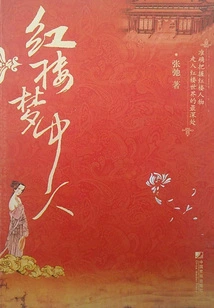
Dream of Red Mansions
Literature红楼梦中人
Relax
"Red Thread Dream" is a novel that will attract readers in itself, which is its greatest value. From Emperor Shunzhi, the founder of the Qing Dynasty, to Emperor Guangxu, Emperor Dezong of the Qing Dynasty, the imperial court repeatedly banned the dissemination of "Dream of Red Mansions", but the ban continued, and the author still reads it with gusto today. This is enough to illustrate its charm. The purpose of this book is to show the charm of "Dream of Red Mansions" itself. The charm of this book is mainly expressed through the characters, so the author sorted out the characters in the book and simply and clearly displayed the image, social and family relationships, main stories, etc. Of each important character. The author's purpose is to make it easier for readers to grasp the novel without getting lost in millions of words. This book also selects some simple and unpretentious comments for readers' reference only.
"Red Thread Dream" is a novel that will attract readers in itself, which is its greatest value. From Emperor Shunzhi, the founder of the Qing Dynasty, to Emperor Guangxu, Emperor Dezong of the Qing Dynasty, the imperial court repeatedly banned the dissemination of "Dream of Red Mansions", but the ban continued, and the author still reads it with gusto today. This is enough to illustrate its charm. The purpose of this book is to show the charm of "Dream of Red Mansions" itself. The charm of this book is mainly expressed through the characters, so the author sorted out the characters in the book and simply and clearly displayed the image, social and family relationships, main stories, etc. Of each important character. The author's purpose is to make it easier for readers to grasp the novel without getting lost in millions of words. This book also selects some simple and unpretentious comments for readers' reference only.
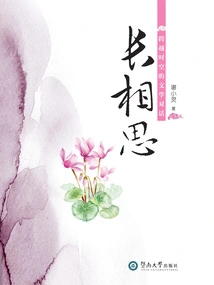
长相思:跨越时空的文学对话
Xie Xiaoling
This book is a collection of appreciation of ancient literary works, including articles such as "Mythical Things about Human Childhood", "Words Written in the Book of Songs in the Morning of Humanity", "People Here Love to Sing", etc.
This book is a collection of appreciation of ancient literary works, including articles such as "Mythical Things about Human Childhood", "Words Written in the Book of Songs in the Morning of Humanity", "People Here Love to Sing", etc.
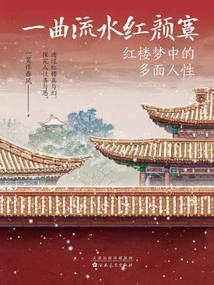
A Song of Flowing Water and a Lonely Beauty: the Multi-faceted Human Nature in Dream of Red Mansions
Literature一曲流水红颜寞:红楼梦中的多面人性
A Smile Makes The Spring Breeze
"A Dream of Red Mansions" is a history of Chinese society as well as a history of Chinese culture. Read "A Dream of Red Mansions" for its humanities and sophistication, and learn the Chinese people's philosophy of life. Through the truth and illusion of Red Mansions, we can see the good and evil of human nature. The author uses a unique perspective and lively writing style to interpret the world's rare book "A Dream of Red Mansions". It turns out that the people in the Red Mansions are you and me around you. "A Dream of Red Mansions" is the compulsory study content in the second volume of the unified high school Chinese textbook. "A Dream of Red Mansions" was selected as the college entrance examination essay for the 2022 National College Entrance Examination. Reading "A Dream of Red Mansions" is not only to feel the charm of literature, but also an unavoidable problem in reality. Go through the Red Mansions and read all the world. The book takes the flowers and beautiful couples in the Grand View Garden and the passage of time as examples, describing the romantic and heart-wrenching emotions in the world. Through the expressions and absurdity in the apocalypse, it reveals the true dimension of human nature. The content of the book is divided into three parts. The first volume: Beauty - a song of flowing water, a lonely beauty, and twelve beauties in a red building. They spent their beautiful years in the Grand View Garden, but their fates changed thousands of times and drifted away in the wind. Part 2: Love - Deep love in heaven and sea, love is just a momentary decision, but it lingers for a lifetime. Love is caused by fate, and fate is also a calamity. The third volume: Rivers and Lakes - The rivers and lakes are full of waves, and the story of The Red Mansion is about human nature. Whether it is Grandma Liu who is struggling with life, or the little gourd monk who is clever but is misled by his cleverness, they are all in the world of people's hearts. Shocking emotions and philosophies are extracted from the trivial life in the Red Mansion, allowing each character to show his complex side and the good and evil deep in their human nature.
"A Dream of Red Mansions" is a history of Chinese society as well as a history of Chinese culture. Read "A Dream of Red Mansions" for its humanities and sophistication, and learn the Chinese people's philosophy of life. Through the truth and illusion of Red Mansions, we can see the good and evil of human nature. The author uses a unique perspective and lively writing style to interpret the world's rare book "A Dream of Red Mansions". It turns out that the people in the Red Mansions are you and me around you. "A Dream of Red Mansions" is the compulsory study content in the second volume of the unified high school Chinese textbook. "A Dream of Red Mansions" was selected as the college entrance examination essay for the 2022 National College Entrance Examination. Reading "A Dream of Red Mansions" is not only to feel the charm of literature, but also an unavoidable problem in reality. Go through the Red Mansions and read all the world. The book takes the flowers and beautiful couples in the Grand View Garden and the passage of time as examples, describing the romantic and heart-wrenching emotions in the world. Through the expressions and absurdity in the apocalypse, it reveals the true dimension of human nature. The content of the book is divided into three parts. The first volume: Beauty - a song of flowing water, a lonely beauty, and twelve beauties in a red building. They spent their beautiful years in the Grand View Garden, but their fates changed thousands of times and drifted away in the wind. Part 2: Love - Deep love in heaven and sea, love is just a momentary decision, but it lingers for a lifetime. Love is caused by fate, and fate is also a calamity. The third volume: Rivers and Lakes - The rivers and lakes are full of waves, and the story of The Red Mansion is about human nature. Whether it is Grandma Liu who is struggling with life, or the little gourd monk who is clever but is misled by his cleverness, they are all in the world of people's hearts. Shocking emotions and philosophies are extracted from the trivial life in the Red Mansion, allowing each character to show his complex side and the good and evil deep in their human nature.
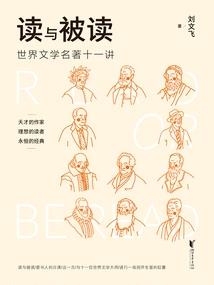
读与被读:世界文学名著十一讲
Liu Wenfei
"Reading and Being Read" is a new collection of academic essays written by Liu Wenfei, Yanjing Chair Professor of Humanities at Capital Normal University and an authoritative scholar of Russian literature, who interprets and comments on world literary classics. This book discusses eleven world literary masters and their representative works, including Homer, Dante, Shakespeare, Cervantes, Goethe, Hugo, Dostoevsky, Tolstoy, Joyce, Kawabata Yasunari, and Nabokov. Based on careful reading of classic texts and research and sorting out of the writer's life, the author extracts a focus in each article and analyzes and comments around it, or studies characters, or discusses literary attributes, or talks about serious topics such as thought and survival, or deconstructs classics from details such as architecture and color. The eleven themes are vivid, new, rich, and profound, opening and closing vertically and horizontally, creating a grand view. It is a feast for the minds of world literature lovers.
"Reading and Being Read" is a new collection of academic essays written by Liu Wenfei, Yanjing Chair Professor of Humanities at Capital Normal University and an authoritative scholar of Russian literature, who interprets and comments on world literary classics. This book discusses eleven world literary masters and their representative works, including Homer, Dante, Shakespeare, Cervantes, Goethe, Hugo, Dostoevsky, Tolstoy, Joyce, Kawabata Yasunari, and Nabokov. Based on careful reading of classic texts and research and sorting out of the writer's life, the author extracts a focus in each article and analyzes and comments around it, or studies characters, or discusses literary attributes, or talks about serious topics such as thought and survival, or deconstructs classics from details such as architecture and color. The eleven themes are vivid, new, rich, and profound, opening and closing vertically and horizontally, creating a grand view. It is a feast for the minds of world literature lovers.
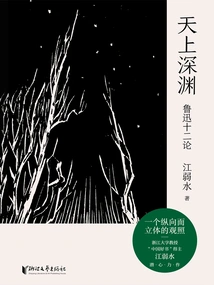
天上深渊:鲁迅十二论
Jiang Ruoshui
"Abyss in the Sky: Twelve Essays on Lu Xun" is a comprehensive review of Lu Xun. It is the masterpiece of Jiang Zuoshui, a professor at Zhejiang University and winner of the "Chinese Good Book". The book is divided into twelve chapters, from "The Scream" to "Wandering", from "Picking Up Flowers at Morning and Evening" to "New Stories", from the modern prose poem "Wild Grass" to Lu Xun's old-style poems, from Lu Xun's life dilemma to the discourse dilemma, to the concept of language, it provides a vertical and three-dimensional view of Lu Xun's writing. This book breaks down many stereotypes about Lu Xun's works and provides a new way to interpret Lu Xun. At the same time, it also provides a more detailed and complete analysis based on previous research, such as the comparison of Lu Xun's and Hu Shi's views on language, the discussion of the artistic charm of Lu Xun's old poems, etc. Today, when there are so many studies on Lu Xun, this book is full of original ideas and inventions, and provides many refreshing interpretations of Lu Xun.
"Abyss in the Sky: Twelve Essays on Lu Xun" is a comprehensive review of Lu Xun. It is the masterpiece of Jiang Zuoshui, a professor at Zhejiang University and winner of the "Chinese Good Book". The book is divided into twelve chapters, from "The Scream" to "Wandering", from "Picking Up Flowers at Morning and Evening" to "New Stories", from the modern prose poem "Wild Grass" to Lu Xun's old-style poems, from Lu Xun's life dilemma to the discourse dilemma, to the concept of language, it provides a vertical and three-dimensional view of Lu Xun's writing. This book breaks down many stereotypes about Lu Xun's works and provides a new way to interpret Lu Xun. At the same time, it also provides a more detailed and complete analysis based on previous research, such as the comparison of Lu Xun's and Hu Shi's views on language, the discussion of the artistic charm of Lu Xun's old poems, etc. Today, when there are so many studies on Lu Xun, this book is full of original ideas and inventions, and provides many refreshing interpretations of Lu Xun.