Library
Browse and search books
2,169 novels found
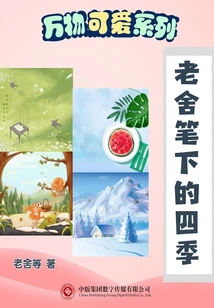
老舍笔下的四季(万物可爱系列)
Lao She Et Al.
"All Things Lovely Series" is a series of books specially edited for young people's writing. It includes many of Lao She's well-known works and guides young people to improve their writing skills and let them swim in the ocean of literature. "All Things Lovely Series: The Four Seasons in Lao She's Writings" includes works such as "Spring Breeze", "Spring in Daming Lake", "Remembering Guangzhou in Spring", etc.
"All Things Lovely Series" is a series of books specially edited for young people's writing. It includes many of Lao She's well-known works and guides young people to improve their writing skills and let them swim in the ocean of literature. "All Things Lovely Series: The Four Seasons in Lao She's Writings" includes works such as "Spring Breeze", "Spring in Daming Lake", "Remembering Guangzhou in Spring", etc.
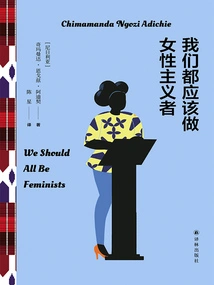
我们都应该做女性主义者(阿迪契作品)
H
"Culture does not create people, people create culture." "I have made a choice and will no longer feel guilty about my femininity." In 2012, Adichie was invited by TED to give a speech on feminism, which quickly became popular around the world. "We Should All Be Feminists" is a revised version of this speech. Are feminists unhappy people? A man hater? People who don't like wearing lip gloss and high heels? Starting from her own experience, Adichie corrected some of the stereotypes carried by the word "feminist"; she used a feminist perspective to cut into the life we are accustomed to and tell the common difficulties encountered by women; she borrowed a series of short stories she had personally experienced and witnessed in Nigeria and the United States to highlight the gender bias in the culture and inspire people to work together to build a more gender-equal future.
"Culture does not create people, people create culture." "I have made a choice and will no longer feel guilty about my femininity." In 2012, Adichie was invited by TED to give a speech on feminism, which quickly became popular around the world. "We Should All Be Feminists" is a revised version of this speech. Are feminists unhappy people? A man hater? People who don't like wearing lip gloss and high heels? Starting from her own experience, Adichie corrected some of the stereotypes carried by the word "feminist"; she used a feminist perspective to cut into the life we are accustomed to and tell the common difficulties encountered by women; she borrowed a series of short stories she had personally experienced and witnessed in Nigeria and the United States to highlight the gender bias in the culture and inspire people to work together to build a more gender-equal future.
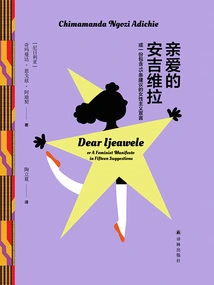
亲爱的安吉维拉:或一份包含15条建议的女性主义宣言(阿迪契作品)
H
Adichie received a letter from her childhood friend asking how she could raise her daughter to be a feminist. "Dear Angievilla" is one of her replies. In the letter, Adichie gave fifteen pieces of direct and candid advice, covering all aspects of parenting, motherhood, marriage, workplace, identity, and more. Regarding raising girls, it is also a discussion about how women should define and shape their true selves. "Because you're a girl" is never an excuse for anything. Never.
Adichie received a letter from her childhood friend asking how she could raise her daughter to be a feminist. "Dear Angievilla" is one of her replies. In the letter, Adichie gave fifteen pieces of direct and candid advice, covering all aspects of parenting, motherhood, marriage, workplace, identity, and more. Regarding raising girls, it is also a discussion about how women should define and shape their true selves. "Because you're a girl" is never an excuse for anything. Never.
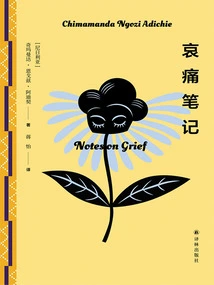
Notes on Grief (works by Adichie)
Literature哀痛笔记(阿迪契作品)
(nigeria) Chimamanda Ngozi Adichie
I am writing about my father in the past tense. But I really can't believe that I am recording my father in the past tense. "Notes on Grief" is a moving account of a daughter's grief. Using personal events as the starting point, Adichie meticulously describes the memories of close relatives and family life, deeply presenting the characteristics of the genre of grief memoirs, and how grief erases language and eliminates the boundaries of self-identity and time in such memoirs. As the most high-profile African-American female writer in the world's literary world today, Adichie focuses on issues such as family reconstruction, intergenerational differences, and communication difficulties caused by separation and migration, and records the isolation, disorder, and pain caused by the epidemic to immigrant families. Grief is a cruel education. It forces us to shed our shells and be reborn.
I am writing about my father in the past tense. But I really can't believe that I am recording my father in the past tense. "Notes on Grief" is a moving account of a daughter's grief. Using personal events as the starting point, Adichie meticulously describes the memories of close relatives and family life, deeply presenting the characteristics of the genre of grief memoirs, and how grief erases language and eliminates the boundaries of self-identity and time in such memoirs. As the most high-profile African-American female writer in the world's literary world today, Adichie focuses on issues such as family reconstruction, intergenerational differences, and communication difficulties caused by separation and migration, and records the isolation, disorder, and pain caused by the epidemic to immigrant families. Grief is a cruel education. It forces us to shed our shells and be reborn.
W
Literaturew
H
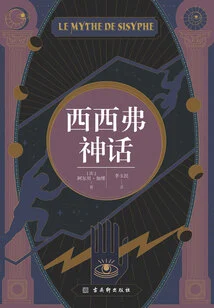
"The Myth of Sisyphus" is a collection of philosophical essays by Camus. The book is divided into three parts and conducts in-depth philosophical discussions on absurdity, suicide and other philosophical issues. In addition, the book includes a comprehensive chronology of Camus's life and creation, a special preface by Camus to the American edition, and a special supplement of "Hope and Absurdity in the Works of Franz Kafka" from 1943. The whole book expresses that after facing the absurdity of life, Camus was determined not to turn to external gods or fall into complete despair. He wanted to find happiness from life itself and within.
"The Myth of Sisyphus" is a collection of philosophical essays by Camus. The book is divided into three parts and conducts in-depth philosophical discussions on absurdity, suicide and other philosophical issues. In addition, the book includes a comprehensive chronology of Camus's life and creation, a special preface by Camus to the American edition, and a special supplement of "Hope and Absurdity in the Works of Franz Kafka" from 1943. The whole book expresses that after facing the absurdity of life, Camus was determined not to turn to external gods or fall into complete despair. He wanted to find happiness from life itself and within.
Snow Country (nobel Prize-winning Work)
Literature雪国(诺贝尔文学奖获奖作品)
H
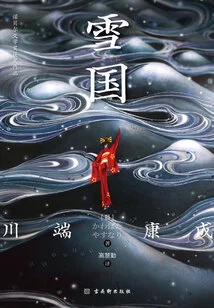
"Snow Country" is one of Kawabata Yasunari's Nobel Prize-winning works. Youth Island Village went to the snowy snow country three times. There, he met two girls with completely different personalities - the enthusiastic geisha Komako and the cold girl Ye Zi. Since then, several people have been involved in long-term entanglements, until a fire breaks out unexpectedly...
"Snow Country" is one of Kawabata Yasunari's Nobel Prize-winning works. Youth Island Village went to the snowy snow country three times. There, he met two girls with completely different personalities - the enthusiastic geisha Komako and the cold girl Ye Zi. Since then, several people have been involved in long-term entanglements, until a fire breaks out unexpectedly...
Qinhuai Night
Literature秦淮之夜
H
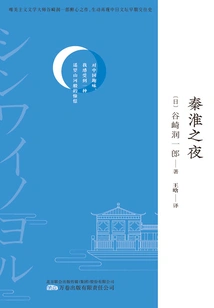
"Night at Qinhuai" is a collection of prose essays written by Junichiro Tanizaki after he visited China twice in 1918 and 1926. The book describes in detail the customs and customs of the Jiangnan water town, the characteristics of Chinese drama and cuisine, as well as the details of interactions with Shanghai new literature writers such as Tian Han. It is a first-hand material that shows the style of contemporary China and understands the history of Sino-Japanese literary exchanges.
"Night at Qinhuai" is a collection of prose essays written by Junichiro Tanizaki after he visited China twice in 1918 and 1926. The book describes in detail the customs and customs of the Jiangnan water town, the characteristics of Chinese drama and cuisine, as well as the details of interactions with Shanghai new literature writers such as Tian Han. It is a first-hand material that shows the style of contemporary China and understands the history of Sino-Japanese literary exchanges.
忙而有时,不亦乐乎(老舍作品精选集)
Lao She
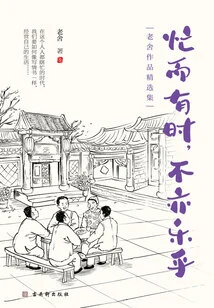
This book is divided into four series: "Love comforts the busy years", "Writers' tips", "Come to complain occasionally", "Let's express my love through pen and ink", and selects classics such as "Literature and Carpenters", "Dance Sword at First Look and Busy Picking Up the Pen", "Description of Scenery", "How to Write Popular Literature and Art", "When Humor Becomes Grease", "Not to Die in the Examination is a God", "How to Allow a Person", "My Mother" and other classics. With an open-minded and open-minded heart, Lao She shared his personal opinions on literature, art, classical books, etc., Summarized creative techniques and thoughts, commented on life with humorous writing, and recorded the lives and events of relatives and friends, etc., Demonstrating his talent, humor, wisdom, and understanding of life and worldly affairs.
This book is divided into four series: "Love comforts the busy years", "Writers' tips", "Come to complain occasionally", "Let's express my love through pen and ink", and selects classics such as "Literature and Carpenters", "Dance Sword at First Look and Busy Picking Up the Pen", "Description of Scenery", "How to Write Popular Literature and Art", "When Humor Becomes Grease", "Not to Die in the Examination is a God", "How to Allow a Person", "My Mother" and other classics. With an open-minded and open-minded heart, Lao She shared his personal opinions on literature, art, classical books, etc., Summarized creative techniques and thoughts, commented on life with humorous writing, and recorded the lives and events of relatives and friends, etc., Demonstrating his talent, humor, wisdom, and understanding of life and worldly affairs.
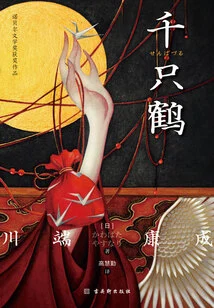
千只鹤(诺贝尔文学奖获奖作品)
G
"A Thousand Cranes" is one of Kawabata Yasunari's Nobel Prize-winning works. Many years after his father passed away, young Kikuji suddenly received an invitation from Kurimoto to attend a tea party. During the dinner, Kikuji met Miss Yukiko and later Miss Shimamura. In addition, Kikuji also accidentally came into contact with Mrs. Ota, who had a close relationship with his father. This triggered a bizarre love story involving two generations...
"A Thousand Cranes" is one of Kawabata Yasunari's Nobel Prize-winning works. Many years after his father passed away, young Kikuji suddenly received an invitation from Kurimoto to attend a tea party. During the dinner, Kikuji met Miss Yukiko and later Miss Shimamura. In addition, Kikuji also accidentally came into contact with Mrs. Ota, who had a close relationship with his father. This triggered a bizarre love story involving two generations...
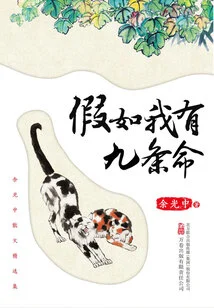
If I Had Nine Lives
Literature假如我有九条命
Yu Guangzhong
This book selects 19 articles by Mr. Yu Guangzhong, including popular classics such as "Hugging across the Water", "The Lost Hat", "Listen to the Cold Rain", "Iguazubai Falls", "If I Had Nine Lives", etc., To bring you multiple beautiful enjoyments and life enlightenments. In Mr. Yu Guangzhong's light words, you can experience his nostalgia and memories for his hometown, his love for the vegetation, mountains, seas and stars, his description of his journey, his thoughts on the meaning of life and social phenomena...
This book selects 19 articles by Mr. Yu Guangzhong, including popular classics such as "Hugging across the Water", "The Lost Hat", "Listen to the Cold Rain", "Iguazubai Falls", "If I Had Nine Lives", etc., To bring you multiple beautiful enjoyments and life enlightenments. In Mr. Yu Guangzhong's light words, you can experience his nostalgia and memories for his hometown, his love for the vegetation, mountains, seas and stars, his description of his journey, his thoughts on the meaning of life and social phenomena...
Liang Shiqiu's Prose
Literature梁实秋散文
Liang Shiqiu
"Liang Shiqiu's Prose" selects the most influential famous articles in Liang Shiqiu's prose creation, with rich content, different themes, exquisite conception, exquisite writing style, humorous language and profound connotation. Such as "Elegant Home", "Jealous", "Gift Giving", "Education of Money", "Treating Guests", "Travel", etc.
"Liang Shiqiu's Prose" selects the most influential famous articles in Liang Shiqiu's prose creation, with rich content, different themes, exquisite conception, exquisite writing style, humorous language and profound connotation. Such as "Elegant Home", "Jealous", "Gift Giving", "Education of Money", "Treating Guests", "Travel", etc.
Wu Guanzhong's Prose
Literature吴冠中散文
Wu Guanzhong
"Wu Guanzhong's Prose" is a collection of prose by Mr. Wu Guanzhong, a famous contemporary painter, art educator and essayist. It contains more than 50 works in total and is divided into three series according to content. There are affectionate descriptions of life in childhood hometown, affection between parents, hard life of studying abroad, love and friendship, as well as observations and insights on artistic development, painting creation, sketching footprints, and various aspects of life. The characterization, interpretation and analysis of art masters who are renowned at home and abroad are unique, profound and sharp. Mr. Wu Guanzhong's prose is natural and fresh, with original viewpoints, simple and profound, and is unique in its own way, reflecting his pursuit of pure and noble art. Among them, "The Boat of Father's Love" and "The Beauty of the Bridge" have been selected into Chinese textbooks for primary and secondary schools and are widely circulated. He paints the vicissitudes of life, talks about everything in the world, the warmth and warmth of family, beauty and ugliness, life and death, development and innovation, and the differences between Eastern and Western cultures. He exudes a unique intellectual light and can inspire young people to think about love and beauty.
"Wu Guanzhong's Prose" is a collection of prose by Mr. Wu Guanzhong, a famous contemporary painter, art educator and essayist. It contains more than 50 works in total and is divided into three series according to content. There are affectionate descriptions of life in childhood hometown, affection between parents, hard life of studying abroad, love and friendship, as well as observations and insights on artistic development, painting creation, sketching footprints, and various aspects of life. The characterization, interpretation and analysis of art masters who are renowned at home and abroad are unique, profound and sharp. Mr. Wu Guanzhong's prose is natural and fresh, with original viewpoints, simple and profound, and is unique in its own way, reflecting his pursuit of pure and noble art. Among them, "The Boat of Father's Love" and "The Beauty of the Bridge" have been selected into Chinese textbooks for primary and secondary schools and are widely circulated. He paints the vicissitudes of life, talks about everything in the world, the warmth and warmth of family, beauty and ugliness, life and death, development and innovation, and the differences between Eastern and Western cultures. He exudes a unique intellectual light and can inspire young people to think about love and beauty.
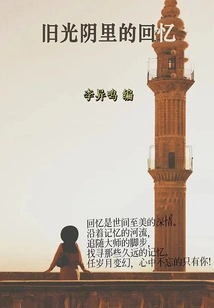
Memories from the Old Days
Literature旧光阴里的回忆
Li Yiming
This is a book with the theme of nostalgia. We have compiled some articles about remembrance by famous literary figures into a volume, which includes remembrances of relatives and friends. Of course, the sentiments about separation and separation are also indispensable. All things must part ways, just as flowers fade and bloom, the tide ebbs and flows. Because of the separation, there are endless thoughts and memories. In this book, what we see are not only feelings about specific people and things, but also memories of the past.
This is a book with the theme of nostalgia. We have compiled some articles about remembrance by famous literary figures into a volume, which includes remembrances of relatives and friends. Of course, the sentiments about separation and separation are also indispensable. All things must part ways, just as flowers fade and bloom, the tide ebbs and flows. Because of the separation, there are endless thoughts and memories. In this book, what we see are not only feelings about specific people and things, but also memories of the past.
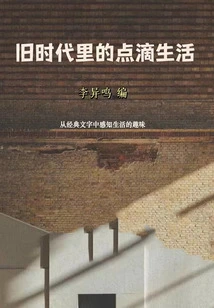
Bits and Pieces of Life in the Old Days
Literature旧时代里的点滴生活
Li Yiming
Understand every bit of the old time, and follow the master's strokes to have a love that travels through time and space! This book is selected from the aspects of people, things, enlightenment, etc., And includes some classic articles. From these works, readers can follow the author's footsteps, trace the years at that time, appreciate the years at that time, read about the characters at that time, and recall the joys and sorrows at that time. Savor the spring, summer, autumn and winter of the old years from the words, and look for the long-lost touch between the lines of the words, which are either affectionate or elegant.
Understand every bit of the old time, and follow the master's strokes to have a love that travels through time and space! This book is selected from the aspects of people, things, enlightenment, etc., And includes some classic articles. From these works, readers can follow the author's footsteps, trace the years at that time, appreciate the years at that time, read about the characters at that time, and recall the joys and sorrows at that time. Savor the spring, summer, autumn and winter of the old years from the words, and look for the long-lost touch between the lines of the words, which are either affectionate or elegant.
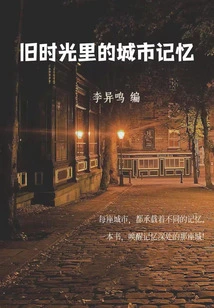
City Memories from the Old Days
Literature旧时光里的城市记忆
Li Yiming
Magnificent mountains and rivers, north and south, and the memory of the city have been left in many literary works. In order to pursue those unforgettable beauty, we have selected words related to the city written by famous writers, including the majestic scenery of the North and the gentle and pleasant scenery of the south of the Yangtze River. What flows between the lines are memories and feelings about the city.
Magnificent mountains and rivers, north and south, and the memory of the city have been left in many literary works. In order to pursue those unforgettable beauty, we have selected words related to the city written by famous writers, including the majestic scenery of the North and the gentle and pleasant scenery of the south of the Yangtze River. What flows between the lines are memories and feelings about the city.
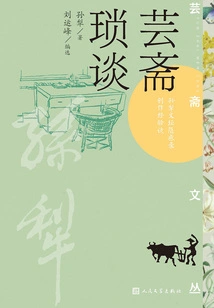
Yunzhai Chat (yunzhai Wencong)
Literature芸斋琐谈(芸斋文丛)
Written By Sun Li And Edited By Liu Yunfeng
"Yunzhai" was Sun Li's nickname in his later years. In his writings in his later years, he was mostly titled "Yunzhai Novels", "Yunzhai Briefs", "Yunzhai Blips", "Yunzhai Broken Blips" and "Yunzhai Briefs". "Yun Zhai Xiao Tan" is a collection of Sun Li's words about literature and life. Among them are words about the understanding of human nature and the insights into the creation of novels, such as "Feelings after Eating Porridge" and "Novel is a Kind of Aesthetic Education"; the writing experience of different literary genres such as prose, popular literature, travel notes, and biographical literature, such as "About "Native Literature"; and the description of the ups and downs in the literary world that one has experienced, such as "Literary Career". The length is not limited, it is free and easy, and the writing style is steady but sharp. It reflects Sun Li's consistent insistence on taking literature seriously and having the courage to face reality. It is not only Sun Li's reflections on the literary world, but also Sun Li's creative experience. It has important enlightenment significance for current literary and artistic creation. The editor will indicate the publication status of each article in the form of a caption, and add explanations for obvious errors in the article.
"Yunzhai" was Sun Li's nickname in his later years. In his writings in his later years, he was mostly titled "Yunzhai Novels", "Yunzhai Briefs", "Yunzhai Blips", "Yunzhai Broken Blips" and "Yunzhai Briefs". "Yun Zhai Xiao Tan" is a collection of Sun Li's words about literature and life. Among them are words about the understanding of human nature and the insights into the creation of novels, such as "Feelings after Eating Porridge" and "Novel is a Kind of Aesthetic Education"; the writing experience of different literary genres such as prose, popular literature, travel notes, and biographical literature, such as "About "Native Literature"; and the description of the ups and downs in the literary world that one has experienced, such as "Literary Career". The length is not limited, it is free and easy, and the writing style is steady but sharp. It reflects Sun Li's consistent insistence on taking literature seriously and having the courage to face reality. It is not only Sun Li's reflections on the literary world, but also Sun Li's creative experience. It has important enlightenment significance for current literary and artistic creation. The editor will indicate the publication status of each article in the form of a caption, and add explanations for obvious errors in the article.
Memories of Yunzhai (yunzhai Wencong)
Literature芸斋漫忆(芸斋文丛)
Written By Sun Li And Edited By Liu Yunfeng
"Yunzhai" was Sun Li's nickname in his later years. In his writings in his later years, he was mostly titled "Yunzhai Novels", "Yunzhai Briefs", "Yunzhai Blips", "Yunzhai Broken Blips" and "Yunzhai Briefs". "Reminiscences of Yunzhai" is divided into five parts: "Chronology of the Dark Room", "Experiences during the Illness", "Travel Traces", "Recollections of Past Events" and "Miscellaneous Notes of Yunzhai". It is a collection of Sun Li's words recalling his life experiences. Among them are excerpts from "Chronicles of the Good Dark Room" written in the form of a chronology, as well as unforgettable things he saw and heard during the period of "ten years wasted by illness". There are memories of his studies in Baoding, writing and joining the army, and narrow escapes. There are also records of reminiscing about childhood, nostalgia for classmates, seeking old dreams, and reminiscing about the past. The text is timeless and meaningful. From it, we can see the author's growth environment and creative process.
"Yunzhai" was Sun Li's nickname in his later years. In his writings in his later years, he was mostly titled "Yunzhai Novels", "Yunzhai Briefs", "Yunzhai Blips", "Yunzhai Broken Blips" and "Yunzhai Briefs". "Reminiscences of Yunzhai" is divided into five parts: "Chronology of the Dark Room", "Experiences during the Illness", "Travel Traces", "Recollections of Past Events" and "Miscellaneous Notes of Yunzhai". It is a collection of Sun Li's words recalling his life experiences. Among them are excerpts from "Chronicles of the Good Dark Room" written in the form of a chronology, as well as unforgettable things he saw and heard during the period of "ten years wasted by illness". There are memories of his studies in Baoding, writing and joining the army, and narrow escapes. There are also records of reminiscing about childhood, nostalgia for classmates, seeking old dreams, and reminiscing about the past. The text is timeless and meaningful. From it, we can see the author's growth environment and creative process.
Yunzhai Novels (yunzhai Wencong)
Literature芸斋小说(芸斋文丛)
Written By Sun Li And Edited By Liu Yunfeng
"Yunzhai" was Sun Li's nickname in his later years. In his writings in his later years, he was mostly titled "Yunzhai Novels", "Yunzhai Briefs", "Yunzhai Blips", "Yunzhai Broken Blips" and "Yunzhai Briefs". "Yunzhai Novels" selects all the author's retrospective prose works, including "A Friend", "Memories of a Partner", "Father's Memory", "Mother's Memory", "Uncle Fengchi", "Uncle Scarzeng", etc. Some of them are named "novel", but they are actually true records of the prototypes of characters in life. It can be said that the people and things mentioned in the article are closely related to Sun Li's life experience. In these works, there are memories of relatives, friends, and teachers, recollections of trivial matters in the hometown, and literary interpretations of the good and evil of human nature. These works are not long in length, but they are written with sophisticated style, sincere emotions, and many of them have magical touches. They are the most literary works among Sun Li's later works and the most influential ones.
"Yunzhai" was Sun Li's nickname in his later years. In his writings in his later years, he was mostly titled "Yunzhai Novels", "Yunzhai Briefs", "Yunzhai Blips", "Yunzhai Broken Blips" and "Yunzhai Briefs". "Yunzhai Novels" selects all the author's retrospective prose works, including "A Friend", "Memories of a Partner", "Father's Memory", "Mother's Memory", "Uncle Fengchi", "Uncle Scarzeng", etc. Some of them are named "novel", but they are actually true records of the prototypes of characters in life. It can be said that the people and things mentioned in the article are closely related to Sun Li's life experience. In these works, there are memories of relatives, friends, and teachers, recollections of trivial matters in the hometown, and literary interpretations of the good and evil of human nature. These works are not long in length, but they are written with sophisticated style, sincere emotions, and many of them have magical touches. They are the most literary works among Sun Li's later works and the most influential ones.
《中国小说史略》校注
Written By Lu Xun, Edited By Chen Pingyuan And Edited By Bao Guohua
This book shows the little-known second face of Lu Xun. Behind the writer Lu Xun is the scholar Lu Xun who did not have the foundation of a scholar. This book does not pay attention to basic knowledge, but adopts the method of "annotating Lu with Lu". It includes Lu Xun's various writings other than "A Brief History of Chinese Novel", including academic writings (monographs, essays, speeches, edited prefaces and postscripts to ancient books, etc.), Essays, and letters, and annotates the content related to the history of Chinese novels after the relevant sentences to present the diversity and complexity of Lu Xun's works, and to show Lu Xun's overall research process and views on the history of Chinese novels. At the same time, this book selects several passages from "The Changes in the History of Chinese Novels" that Lu Xun lectured in Xi'an in July 1924, and places them in relevant positions with exquisite pictures to show the differences between the "Changes" compiled based on the records and the "Historical Brief" prepared as handouts before class. In addition to factors such as different audiences, different occasions, and different lengths of time, there is also a huge gap between classical Chinese and vernacular. A comparative reading of both is believed to be of great benefit to general readers and professional scholars.
This book shows the little-known second face of Lu Xun. Behind the writer Lu Xun is the scholar Lu Xun who did not have the foundation of a scholar. This book does not pay attention to basic knowledge, but adopts the method of "annotating Lu with Lu". It includes Lu Xun's various writings other than "A Brief History of Chinese Novel", including academic writings (monographs, essays, speeches, edited prefaces and postscripts to ancient books, etc.), Essays, and letters, and annotates the content related to the history of Chinese novels after the relevant sentences to present the diversity and complexity of Lu Xun's works, and to show Lu Xun's overall research process and views on the history of Chinese novels. At the same time, this book selects several passages from "The Changes in the History of Chinese Novels" that Lu Xun lectured in Xi'an in July 1924, and places them in relevant positions with exquisite pictures to show the differences between the "Changes" compiled based on the records and the "Historical Brief" prepared as handouts before class. In addition to factors such as different audiences, different occasions, and different lengths of time, there is also a huge gap between classical Chinese and vernacular. A comparative reading of both is believed to be of great benefit to general readers and professional scholars.
人生大事 吃喝二字
Liang Shiqiu Wang Zengqi Cai Lan Et Al.
This is a collection of essays by famous writers about food with color illustrations and illustrations. Each article is hand-painted with color illustrations. Specially invited illustrators hand-draw full-color exquisite illustrations based on the cooking scenes and dishes that appear in the book, presenting the authentic taste of the food of that year. Food always brings us warmth and happiness. Food is both the art of life and the bond of emotion. Food has long surpassed its own concept in the writer's writing, and it is also a representative of cultural heritage. When it comes to Chinese modern and contemporary food essayists, there must be Wang Zengqi, Liang Shiqiu, Cai Lam, etc. The literary masters love to eat, know how to eat, and even talk about eating. The eating of the masters is more about the literati's perceptions and emotions of life. The masters talked about eating, quoted classics, and picked it up at their fingertips. Every line in the words is full of practical enjoyment in life. When reading, you often feel like "full of wine and meat, hearty and hearty"
This is a collection of essays by famous writers about food with color illustrations and illustrations. Each article is hand-painted with color illustrations. Specially invited illustrators hand-draw full-color exquisite illustrations based on the cooking scenes and dishes that appear in the book, presenting the authentic taste of the food of that year. Food always brings us warmth and happiness. Food is both the art of life and the bond of emotion. Food has long surpassed its own concept in the writer's writing, and it is also a representative of cultural heritage. When it comes to Chinese modern and contemporary food essayists, there must be Wang Zengqi, Liang Shiqiu, Cai Lam, etc. The literary masters love to eat, know how to eat, and even talk about eating. The eating of the masters is more about the literati's perceptions and emotions of life. The masters talked about eating, quoted classics, and picked it up at their fingertips. Every line in the words is full of practical enjoyment in life. When reading, you often feel like "full of wine and meat, hearty and hearty"
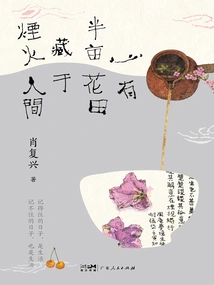
心有半亩花田 藏于烟火人间
Xiao Fuxing
This book is a collection of selected prose works by the famous contemporary writer Xiao Fuxing. It contains 40 classic and easy-to-read prose works written by Xiao Fuxing in different periods, writing about the beauty of the world. The writing is delicate and the thoughts are clear. It contains attachment to relatives, sincerity to friendship, love for life, and redemption of the inner self. It is a confession, a reflection on life, and a perception of life. Leading readers step by step into Xiao Fuxing's affectionate world, there will always be a moment in life when these words are moved, as if they are talking to the soul, awakening sleeping emotions and stirring up ripples in the soul. Although life is hard and destiny is turbulent, we will eventually become soft and tough, restrained and beautiful.
This book is a collection of selected prose works by the famous contemporary writer Xiao Fuxing. It contains 40 classic and easy-to-read prose works written by Xiao Fuxing in different periods, writing about the beauty of the world. The writing is delicate and the thoughts are clear. It contains attachment to relatives, sincerity to friendship, love for life, and redemption of the inner self. It is a confession, a reflection on life, and a perception of life. Leading readers step by step into Xiao Fuxing's affectionate world, there will always be a moment in life when these words are moved, as if they are talking to the soul, awakening sleeping emotions and stirring up ripples in the soul. Although life is hard and destiny is turbulent, we will eventually become soft and tough, restrained and beautiful.
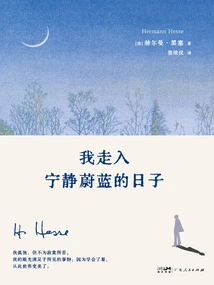
I Walk into the Quiet Blue Days
Literature我走入宁静蔚蓝的日子
G
This book is a collection of 38 essays and poems written by Hermann Hesse, the winner of the Nobel Prize for Literature, after he left Germany and lived in seclusion in a beautiful mountain village in Ticino, Switzerland, in order to treat his depression. He observed and experienced nature. It also includes a selection of many illustrations he created at the same time. Hesse took contemplation of the beauty of nature as a practice of self-healing in Ticino, which became a model for young people around the world to practice, and this work also became a guiding text for self-healing.
This book is a collection of 38 essays and poems written by Hermann Hesse, the winner of the Nobel Prize for Literature, after he left Germany and lived in seclusion in a beautiful mountain village in Ticino, Switzerland, in order to treat his depression. He observed and experienced nature. It also includes a selection of many illustrations he created at the same time. Hesse took contemplation of the beauty of nature as a practice of self-healing in Ticino, which became a model for young people around the world to practice, and this work also became a guiding text for self-healing.
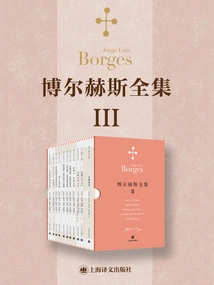
博尔赫斯全集第三辑(套装共12册)
H
The four-hand collaboration between Borges and famous artists, fantasy and reality, past and present, space and time, those abrupt endings die over and over again in the writer's writing, and are resurrected again and again in the readers' hearts. Capture the light of philosophy in the name of literature, and build an exquisite labyrinth of literature with extraordinary imagination. "The Complete Works of Borges: The Third Volume" includes the literary essays of Borges, the Argentine poet, novelist, critic, translator and master of Spanish literature, as well as fantasy stories, game articles, movie scripts, literary reviews, speech records, etc. Co-authored by Borges and Adolfo Bioy Casares and others. There are 12 volumes in total, which fully demonstrate Borges's writing exploration and achievements outside the well-known literary fields. Attached are 12 volumes with titles of works: "Original Manuscripts", "Introduction to English Literature", "Introduction to American Literature", "Suburbanites Believer's Paradise", "Chronicles of Bustos Domec", "New Stories of Bustos Domec", "Six Mysteries of Isidro Parodi", "Two Visions Worth Remembering", "Models of Death", "The Language of Buenos Aires", "About Martin Fierro", "Germanic Medieval Literature".
The four-hand collaboration between Borges and famous artists, fantasy and reality, past and present, space and time, those abrupt endings die over and over again in the writer's writing, and are resurrected again and again in the readers' hearts. Capture the light of philosophy in the name of literature, and build an exquisite labyrinth of literature with extraordinary imagination. "The Complete Works of Borges: The Third Volume" includes the literary essays of Borges, the Argentine poet, novelist, critic, translator and master of Spanish literature, as well as fantasy stories, game articles, movie scripts, literary reviews, speech records, etc. Co-authored by Borges and Adolfo Bioy Casares and others. There are 12 volumes in total, which fully demonstrate Borges's writing exploration and achievements outside the well-known literary fields. Attached are 12 volumes with titles of works: "Original Manuscripts", "Introduction to English Literature", "Introduction to American Literature", "Suburbanites Believer's Paradise", "Chronicles of Bustos Domec", "New Stories of Bustos Domec", "Six Mysteries of Isidro Parodi", "Two Visions Worth Remembering", "Models of Death", "The Language of Buenos Aires", "About Martin Fierro", "Germanic Medieval Literature".
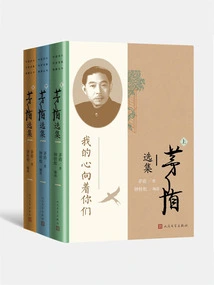
茅盾选集(全3册)
Written By Mao Dun And Edited By Zhong Guisong
Mao Dun is not only an outstanding novelist and essayist since the May Fourth Movement, but also a famous literary critic and translator, and one of the leaders of the modern revolutionary literary movement. His creation began in 1916 and has gone through the entire period of the new democratic revolution, socialist revolution and construction, from the "Eclipse" trilogy, "Midnight" and "Corrosion" to "Qingming" "Before and After", "Frost Leaves Red Like February Flowers", "Lin's Shop", and then "The Story of the First Stage", "Exercise", "Praise to Poplars", "Scenery Talk", etc., Describe a wide range of social classes and various characters, forming a rich, colorful and nuanced realistic picture of modern Chinese society. He can be said to be an outstanding art master in the great era. Our publisher published a three-volume "Selected Works of Mao Dun" in the 1980s. As time goes by, the selections need to be updated. This time, Zhong Guisong, the former vice president of the Mao Dun Research Association, was invited to edit the selection. The purpose is to not only cover the author's representative works except "Midnight", but also to add important works that have not been selected in the previous selection. At the same time, it must adapt to the market, meet the purchasing needs of readers, and create a classic version.
Mao Dun is not only an outstanding novelist and essayist since the May Fourth Movement, but also a famous literary critic and translator, and one of the leaders of the modern revolutionary literary movement. His creation began in 1916 and has gone through the entire period of the new democratic revolution, socialist revolution and construction, from the "Eclipse" trilogy, "Midnight" and "Corrosion" to "Qingming" "Before and After", "Frost Leaves Red Like February Flowers", "Lin's Shop", and then "The Story of the First Stage", "Exercise", "Praise to Poplars", "Scenery Talk", etc., Describe a wide range of social classes and various characters, forming a rich, colorful and nuanced realistic picture of modern Chinese society. He can be said to be an outstanding art master in the great era. Our publisher published a three-volume "Selected Works of Mao Dun" in the 1980s. As time goes by, the selections need to be updated. This time, Zhong Guisong, the former vice president of the Mao Dun Research Association, was invited to edit the selection. The purpose is to not only cover the author's representative works except "Midnight", but also to add important works that have not been selected in the previous selection. At the same time, it must adapt to the market, meet the purchasing needs of readers, and create a classic version.
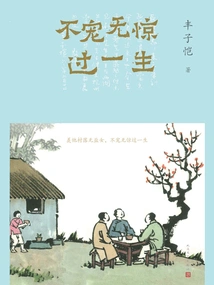
不宠无惊过一生
Feng Zikai
This book is a by-product of editing "The Collection of Feng Zikai". It selects Feng Zikai's essays, cartoons, etc., And tells various philosophies of life from many perspectives such as talking about society, painting, reading, and nature. This book is also one of the series of Chinese famous writers talking about life. It overcomes the traditional thinking of previous writers' prose collections, and the text and pictures are more in line with the current life conditions of people, giving new vitality to classic masterpieces. This book is divided into three parts: love between children, society in carriages, and caring for students and hearts. Through Feng Zikai's comics and words, readers can appreciate the beauty of life, experience a calm and leisurely attitude towards life, live a life without being flattered, and realize the value of life through self-struggle.
This book is a by-product of editing "The Collection of Feng Zikai". It selects Feng Zikai's essays, cartoons, etc., And tells various philosophies of life from many perspectives such as talking about society, painting, reading, and nature. This book is also one of the series of Chinese famous writers talking about life. It overcomes the traditional thinking of previous writers' prose collections, and the text and pictures are more in line with the current life conditions of people, giving new vitality to classic masterpieces. This book is divided into three parts: love between children, society in carriages, and caring for students and hearts. Through Feng Zikai's comics and words, readers can appreciate the beauty of life, experience a calm and leisurely attitude towards life, live a life without being flattered, and realize the value of life through self-struggle.
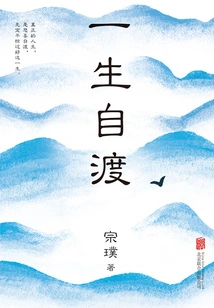
A Life-long Journey
Literature一生自渡
Zong Pu
The essence of life is to live alone and filter life layer by layer with your own heart, only then can you get the essence and true meaning of life. Regarding family affection, Zong Pu said: "I am over forty years old, and I still feel most at ease sleeping next to my mother." Regarding love, Zong Pu said: "The fullest part of life is because he has me and I have him. Such possessions in the world can never become the past." Regarding sorrow and joy, Zong Pu said: "Even if what I get is difficult and painful, I still have it. Because I am not the only one in the world, I feel more fulfilled and warmer." Regarding the future, Zong Pu said: "When a person reaches the bottom of his life, he has no hope of falling anymore, and there is hope for improvement. ""A Lifelong Journey" is the life wisdom written by Zong Pu, the winner of the Mao Dun Literature Award, for young people. It selects 36 of the author's most widely circulated articles. She may review her own growth, reminisce about old friends and relatives, record her daily life, or understand the philosophy of life. The complicated world, the joys and sorrows in life, all become calm and serene in her writings, radiating light and warmth, becoming Zong Pu's unique charm. Reading Zong Pu's prose lets us know that we are the ferrymen of our own lives. The real life is to handle sorrows and joys by ourselves, and live this life without being flattered.
The essence of life is to live alone and filter life layer by layer with your own heart, only then can you get the essence and true meaning of life. Regarding family affection, Zong Pu said: "I am over forty years old, and I still feel most at ease sleeping next to my mother." Regarding love, Zong Pu said: "The fullest part of life is because he has me and I have him. Such possessions in the world can never become the past." Regarding sorrow and joy, Zong Pu said: "Even if what I get is difficult and painful, I still have it. Because I am not the only one in the world, I feel more fulfilled and warmer." Regarding the future, Zong Pu said: "When a person reaches the bottom of his life, he has no hope of falling anymore, and there is hope for improvement. ""A Lifelong Journey" is the life wisdom written by Zong Pu, the winner of the Mao Dun Literature Award, for young people. It selects 36 of the author's most widely circulated articles. She may review her own growth, reminisce about old friends and relatives, record her daily life, or understand the philosophy of life. The complicated world, the joys and sorrows in life, all become calm and serene in her writings, radiating light and warmth, becoming Zong Pu's unique charm. Reading Zong Pu's prose lets us know that we are the ferrymen of our own lives. The real life is to handle sorrows and joys by ourselves, and live this life without being flattered.
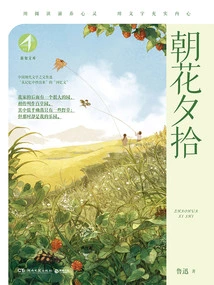
朝花夕拾(新知文库)
Lu Xun
This book is a collection of reminiscence essays by Mr. Lu Xun recalling different life experiences in his childhood, adolescence and youth. As a "note of memories", this book reflects sideways the author's life as a teenager and vividly reflects the formation of his character and interests. The first seven chapters reflect his childhood life in his family and private school in Shaoxing, while the last three chapters describe his experience of traveling from his hometown to Nanjing, then to Japan to study, and then back to China to teach. In addition to Mr. Lu Xun's collection of essays "Morning Blossoms Plucked at Dusk", this book also includes some other articles by the author. It is intended to use reading to nourish the reader's growth, cultivate the reader's sentiment, so that the reader's outlook on life and values are subtly affected during the reading process, and develop a good character. On the basis of selected beautiful articles, this book is also equipped with exquisite color illustrations, allowing readers to visually understand the author's heart while appreciating the beautiful articles.
This book is a collection of reminiscence essays by Mr. Lu Xun recalling different life experiences in his childhood, adolescence and youth. As a "note of memories", this book reflects sideways the author's life as a teenager and vividly reflects the formation of his character and interests. The first seven chapters reflect his childhood life in his family and private school in Shaoxing, while the last three chapters describe his experience of traveling from his hometown to Nanjing, then to Japan to study, and then back to China to teach. In addition to Mr. Lu Xun's collection of essays "Morning Blossoms Plucked at Dusk", this book also includes some other articles by the author. It is intended to use reading to nourish the reader's growth, cultivate the reader's sentiment, so that the reader's outlook on life and values are subtly affected during the reading process, and develop a good character. On the basis of selected beautiful articles, this book is also equipped with exquisite color illustrations, allowing readers to visually understand the author's heart while appreciating the beautiful articles.
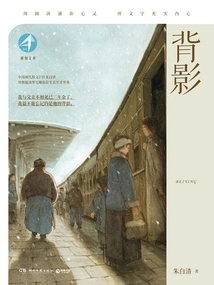
Back View (new Knowledge Library)
Literature背影(新知文库)
Zhu Ziqing
This book is a collection of Zhu Ziqing's classic works. The book not only contains Zhu Ziqing's widely recited classics, but also includes "Back View", "Moonlight over the Lotus Pond" and many other chapters selected as Chinese textbooks. This book not only has concise language and clear writing style, but also contains profound truth and power, which can bring spiritual comfort to readers. This book aims to use reading to nourish readers' growth, cultivate readers' sentiments, so that readers' outlook on life and values can be subtly affected during the reading process, and they can develop good character. On the basis of selected beautiful articles, this book is also equipped with exquisite color illustrations, allowing readers to visually understand the author's heart while appreciating the beautiful articles.
This book is a collection of Zhu Ziqing's classic works. The book not only contains Zhu Ziqing's widely recited classics, but also includes "Back View", "Moonlight over the Lotus Pond" and many other chapters selected as Chinese textbooks. This book not only has concise language and clear writing style, but also contains profound truth and power, which can bring spiritual comfort to readers. This book aims to use reading to nourish readers' growth, cultivate readers' sentiments, so that readers' outlook on life and values can be subtly affected during the reading process, and they can develop good character. On the basis of selected beautiful articles, this book is also equipped with exquisite color illustrations, allowing readers to visually understand the author's heart while appreciating the beautiful articles.
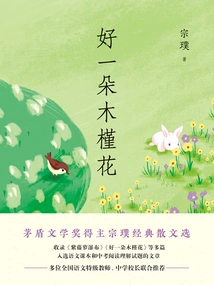
What a Hibiscus Flower
Literature好一朵木槿花
Zong Pu
How to write flowers? "Each blooming flower is like a small, full sail, with a sharp-bottomed ship under the sail and a bulging cabin." How to write cloud? "Small flowers merged into big flowers, like piles of cotton, like piles of snow. After a while, the cotton and snow turned into a group of white sheep, and a big dog - was the dog herding sheep?" How to write about people? "There are many subtle twists and turns in a mother's love that cannot be fully described and cannot be fully captured. But it is because of these subtle twists and turns that a home is formed. This home is alive everywhere, every inch of the wall and every inch of the curtains are alive." How to write things? "Children who grew up in the Tsinghua Garden do not have a rich impression of Peiping, and their dreams are filled with woods, paths, lotus ponds, and a place where auspicious clouds surround the auditorium, Gongzi Hall, etc." "What a Hibiscus Flower" is a collection of essays given to children by Zong Pu, winner of the Mao Dun Literature Prize. The book is divided into four volumes. It contains thirty-six articles from the perspectives of objects, scenes, people and narratives, including "Wisteria Waterfall", "Lilac Knot" and other famous articles included in Chinese textbooks and examination questions. Many of Zong Pu's prose are full of childlike innocence, observing life from a child's perspective and presenting the world in a child's eyes, making it an excellent work to assist children in reading and writing and other language learning, understanding life, and cultivating correct values.
How to write flowers? "Each blooming flower is like a small, full sail, with a sharp-bottomed ship under the sail and a bulging cabin." How to write cloud? "Small flowers merged into big flowers, like piles of cotton, like piles of snow. After a while, the cotton and snow turned into a group of white sheep, and a big dog - was the dog herding sheep?" How to write about people? "There are many subtle twists and turns in a mother's love that cannot be fully described and cannot be fully captured. But it is because of these subtle twists and turns that a home is formed. This home is alive everywhere, every inch of the wall and every inch of the curtains are alive." How to write things? "Children who grew up in the Tsinghua Garden do not have a rich impression of Peiping, and their dreams are filled with woods, paths, lotus ponds, and a place where auspicious clouds surround the auditorium, Gongzi Hall, etc." "What a Hibiscus Flower" is a collection of essays given to children by Zong Pu, winner of the Mao Dun Literature Prize. The book is divided into four volumes. It contains thirty-six articles from the perspectives of objects, scenes, people and narratives, including "Wisteria Waterfall", "Lilac Knot" and other famous articles included in Chinese textbooks and examination questions. Many of Zong Pu's prose are full of childlike innocence, observing life from a child's perspective and presenting the world in a child's eyes, making it an excellent work to assist children in reading and writing and other language learning, understanding life, and cultivating correct values.
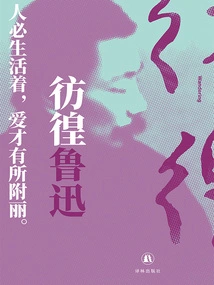
彷徨(鲁迅作品:他和他的觉醒年代)
Lu Xun
"Wandering" contains 11 novels written by Lu Xun. First published in 1926. Chapters include: Blessings, In Restaurants, Happy Family, Soap, Ever-Bright Lamp, Public Display, Old Master Gao, Lonely Man, Sad Death, Brothers, and Divorce.
"Wandering" contains 11 novels written by Lu Xun. First published in 1926. Chapters include: Blessings, In Restaurants, Happy Family, Soap, Ever-Bright Lamp, Public Display, Old Master Gao, Lonely Man, Sad Death, Brothers, and Divorce.
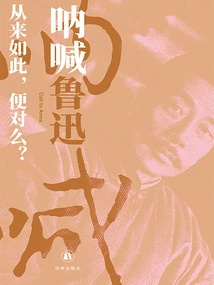
呐喊(鲁迅作品:他和他的觉醒年代)
Lu Xun
"The Scream" contains 14 novels written by Lu Xun and 1 preface. First published in 1923. Chapters include: Preface, Diary of a Madman, Kong Yiji, Medicine, Tomorrow, A Little Thing, Hair Story, Troubles, Hometown, The True Story of Ah Q, Dragon Boat Festival, White Light, Rabbit and Cat and Duck Comedy, and Social Drama.
"The Scream" contains 14 novels written by Lu Xun and 1 preface. First published in 1923. Chapters include: Preface, Diary of a Madman, Kong Yiji, Medicine, Tomorrow, A Little Thing, Hair Story, Troubles, Hometown, The True Story of Ah Q, Dragon Boat Festival, White Light, Rabbit and Cat and Duck Comedy, and Social Drama.
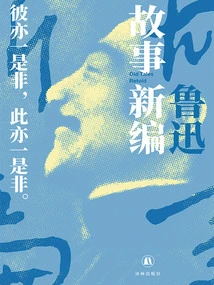
故事新编(鲁迅作品:他和他的觉醒年代)
Lu Xun
"New Stories" contains 8 novels written by Lu Xun and 1 preface. First published in 1936. The chapters include: Preface, Mending the Sky, Flying to the Moon, Managing Water, Picking Weeds, Forging Swords, Leaving Seclusion, Non-Attack, and Raising Death.
"New Stories" contains 8 novels written by Lu Xun and 1 preface. First published in 1936. The chapters include: Preface, Mending the Sky, Flying to the Moon, Managing Water, Picking Weeds, Forging Swords, Leaving Seclusion, Non-Attack, and Raising Death.
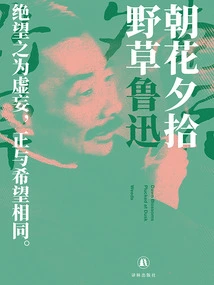
朝花夕拾 野草(鲁迅作品:他和他的觉醒年代)
Lu Xun
"Morning Blossoms Plucked at Dusk", formerly known as "Revisiting Old Things", contains 10 retrospective essays written by Lu Xun, as well as 1 short introduction and 1 postscript. First published in 1928. The chapters include: Xiao Yin, Dog·Cat·Mouse, A Chang and "The Classic of Mountains and Seas", "Twenty-Four Pictures of Filial Piety", Wuchang Meeting, Impermanence, From Baicao Garden to Sanwei Bookstore, Father's Illness, Trivial Notes, Mr. Fujino, Fan Ainong, and Postscript. "Wild Grass" contains 23 prose poems written by Lu Xun and one inscription. First published in 1927. Chapters include: inscription, autumn night, shadow's farewell, beggar, my lovelorn, revenge, revenge (Part 2), hope, snow, kite, good story, passerby, dead fire, dog's rebuttal, lost good hell, tombstone inscription, trembling of the line of decay, argument, after death, such warriors, wise men and fools and slaves, wax leaves, faint traces of blood, and a sleep.
"Morning Blossoms Plucked at Dusk", formerly known as "Revisiting Old Things", contains 10 retrospective essays written by Lu Xun, as well as 1 short introduction and 1 postscript. First published in 1928. The chapters include: Xiao Yin, Dog·Cat·Mouse, A Chang and "The Classic of Mountains and Seas", "Twenty-Four Pictures of Filial Piety", Wuchang Meeting, Impermanence, From Baicao Garden to Sanwei Bookstore, Father's Illness, Trivial Notes, Mr. Fujino, Fan Ainong, and Postscript. "Wild Grass" contains 23 prose poems written by Lu Xun and one inscription. First published in 1927. Chapters include: inscription, autumn night, shadow's farewell, beggar, my lovelorn, revenge, revenge (Part 2), hope, snow, kite, good story, passerby, dead fire, dog's rebuttal, lost good hell, tombstone inscription, trembling of the line of decay, argument, after death, such warriors, wise men and fools and slaves, wax leaves, faint traces of blood, and a sleep.
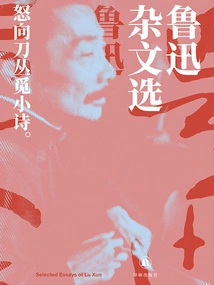
鲁迅杂文选(鲁迅作品:他和他的觉醒年代)
Lu Xun
"Selected Essays of Lu Xun" selects 65 essays by Lu Xun, which is the essence of Lu Xun's essay creation. The main topics include: The soul of debate, warriors and flies, how we are fathers now, what happened after Nora left, on the collapse of Leifeng Pagoda, on "Fair play" should be slowed down, in memory of Liu Hezhen, some miscellaneous thoughts, in order to forget the memory, how I started a novel, "Beijing school" and "Shanghai school", Northerners and Southerners, scolding and praising, appropriationism, have the Chinese lost their self-confidence...
"Selected Essays of Lu Xun" selects 65 essays by Lu Xun, which is the essence of Lu Xun's essay creation. The main topics include: The soul of debate, warriors and flies, how we are fathers now, what happened after Nora left, on the collapse of Leifeng Pagoda, on "Fair play" should be slowed down, in memory of Liu Hezhen, some miscellaneous thoughts, in order to forget the memory, how I started a novel, "Beijing school" and "Shanghai school", Northerners and Southerners, scolding and praising, appropriationism, have the Chinese lost their self-confidence...
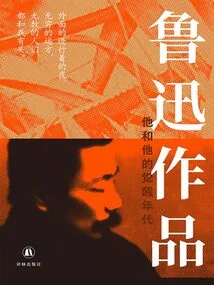
鲁迅作品:他和他的觉醒年代(共5册)
Lu Xun
On the 100th anniversary of the first publication of "The Scream", Lu Xun's collection of novels that pioneered modern literature, Yilin Publishing House launched "Lu Xun's Works: He and His Age of Awakening", interpreting "A Centenary of "The Scream", Today's New Voice" in the form of a beautifully commemorative letter cover. The series includes five categories: "Scream", "Wandering", "New Stories", "Morning Blossoms and Dusk Picking Weeds", and "Selected Essays of Lu Xun". Each volume contains photos of Lu Xun authorized by the Beijing Lu Xun Museum, a total of twelve photos, printed in high definition on pure wood pulp paper, restoring the image of Lu Xun in different periods. The antique double spot color letter sleeve and the novel pixel style cover jointly create a multi-faceted Lu Xun. Selected items and refined annotations to reduce reading difficulties. Small format that fits your hand, soft and easy to carry. "Scream": "It's always been like this, is it right?" Contains 14 novels written by Lu Xun and 1 preface. First published in 1923. Chapters include: Preface, Diary of a Madman, Kong Yiji, Medicine, Tomorrow, A Little Thing, Hair Story, Troubles, Hometown, The True Story of Ah Q, Dragon Boat Festival, White Light, Rabbit and Cat and Duck Comedy, and Social Drama. "Wandering": "People must live, and only love can be attached." It contains 11 novels written by Lu Xun. First published in 1926. Chapters include: Blessings, In Restaurants, Happy Family, Soap, Ever-Bright Lamp, Public Display, Old Master Gao, Lonely Man, Sad Death, Brothers, and Divorce. "New Stories": "He is also right and wrong, this is also right and wrong." It contains 8 novels written by Lu Xun and 1 preface. First published in 1936. The chapters include: Preface, Mending the Sky, Flying to the Moon, Managing Water, Picking Weeds, Forging Swords, Leaving Seclusion, Non-Attack, and Raising Death. "Morning Blossoms Gathered at Dusk and Wild Grasses": "Despair is vain, just like hope." "Morning Blossoms Gleaned at Dusk" was originally called "Revisiting Old Things", which contains 10 retrospective essays written by Lu Xun, as well as a short introduction and a postscript. First published in 1928. The chapters include: Xiao Yin, Dog·Cat·Mouse, A Chang and "The Classic of Mountains and Seas", "Twenty-Four Pictures of Filial Piety", Wuchang Meeting, Impermanence, From Baicao Garden to Sanwei Bookstore, Father's Illness, Trivial Notes, Mr. Fujino, Fan Ainong, and Postscript. "Wild Grass" contains 23 prose poems written by Lu Xun and one inscription. First published in 1927. Chapters include: inscription, autumn night, shadow's farewell, beggar, my lovelorn, revenge, revenge (Part 2), hope, snow, kite, good story, passerby, dead fire, dog's rebuttal, lost good hell, tombstone inscription, trembling of the line of decay, argument, after death, such warriors, wise men and fools and slaves, wax leaves, faint traces of blood, and a sleep. "Selected Essays of Lu Xun": "Angrily looking for small poems among the swords." This selection of 65 essays by Lu Xun is the essence of Lu Xun's essay creation. The main topics include: The soul of debate, warriors and flies, how we are fathers now, what happened after Nora left, on the collapse of Leifeng Pagoda, on "Fair play" should be slowed down, in memory of Liu Hezhen, some miscellaneous thoughts, in order to forget the memory, how I started a novel, "Beijing school" and "Shanghai school", Northerners and Southerners, scolding and praising, appropriationism, have the Chinese lost their self-confidence...
On the 100th anniversary of the first publication of "The Scream", Lu Xun's collection of novels that pioneered modern literature, Yilin Publishing House launched "Lu Xun's Works: He and His Age of Awakening", interpreting "A Centenary of "The Scream", Today's New Voice" in the form of a beautifully commemorative letter cover. The series includes five categories: "Scream", "Wandering", "New Stories", "Morning Blossoms and Dusk Picking Weeds", and "Selected Essays of Lu Xun". Each volume contains photos of Lu Xun authorized by the Beijing Lu Xun Museum, a total of twelve photos, printed in high definition on pure wood pulp paper, restoring the image of Lu Xun in different periods. The antique double spot color letter sleeve and the novel pixel style cover jointly create a multi-faceted Lu Xun. Selected items and refined annotations to reduce reading difficulties. Small format that fits your hand, soft and easy to carry. "Scream": "It's always been like this, is it right?" Contains 14 novels written by Lu Xun and 1 preface. First published in 1923. Chapters include: Preface, Diary of a Madman, Kong Yiji, Medicine, Tomorrow, A Little Thing, Hair Story, Troubles, Hometown, The True Story of Ah Q, Dragon Boat Festival, White Light, Rabbit and Cat and Duck Comedy, and Social Drama. "Wandering": "People must live, and only love can be attached." It contains 11 novels written by Lu Xun. First published in 1926. Chapters include: Blessings, In Restaurants, Happy Family, Soap, Ever-Bright Lamp, Public Display, Old Master Gao, Lonely Man, Sad Death, Brothers, and Divorce. "New Stories": "He is also right and wrong, this is also right and wrong." It contains 8 novels written by Lu Xun and 1 preface. First published in 1936. The chapters include: Preface, Mending the Sky, Flying to the Moon, Managing Water, Picking Weeds, Forging Swords, Leaving Seclusion, Non-Attack, and Raising Death. "Morning Blossoms Gathered at Dusk and Wild Grasses": "Despair is vain, just like hope." "Morning Blossoms Gleaned at Dusk" was originally called "Revisiting Old Things", which contains 10 retrospective essays written by Lu Xun, as well as a short introduction and a postscript. First published in 1928. The chapters include: Xiao Yin, Dog·Cat·Mouse, A Chang and "The Classic of Mountains and Seas", "Twenty-Four Pictures of Filial Piety", Wuchang Meeting, Impermanence, From Baicao Garden to Sanwei Bookstore, Father's Illness, Trivial Notes, Mr. Fujino, Fan Ainong, and Postscript. "Wild Grass" contains 23 prose poems written by Lu Xun and one inscription. First published in 1927. Chapters include: inscription, autumn night, shadow's farewell, beggar, my lovelorn, revenge, revenge (Part 2), hope, snow, kite, good story, passerby, dead fire, dog's rebuttal, lost good hell, tombstone inscription, trembling of the line of decay, argument, after death, such warriors, wise men and fools and slaves, wax leaves, faint traces of blood, and a sleep. "Selected Essays of Lu Xun": "Angrily looking for small poems among the swords." This selection of 65 essays by Lu Xun is the essence of Lu Xun's essay creation. The main topics include: The soul of debate, warriors and flies, how we are fathers now, what happened after Nora left, on the collapse of Leifeng Pagoda, on "Fair play" should be slowed down, in memory of Liu Hezhen, some miscellaneous thoughts, in order to forget the memory, how I started a novel, "Beijing school" and "Shanghai school", Northerners and Southerners, scolding and praising, appropriationism, have the Chinese lost their self-confidence...
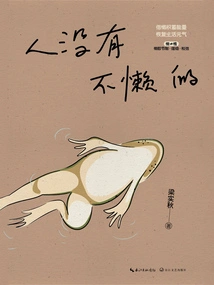
No One is Lazy
Literature人没有不懒的
Liang Shiqiu
If you are tired of running in a hurry, stop and experience life. Mr. Liang Shiqiu once bluntly stated in the article "Lazy" that "no one is lazy", but in a tight living situation, we occasionally need this kind of "lazy" relaxation to use laziness to accumulate energy and restore vitality in life. Let life slow down and be simple, and accumulate the strength to move forward and start better. This book selects 55 interesting essays by Liang Shiqiu to explore the joy of life from ordinary little things, happy or sad moods, occasional poems and distant places. The witty and humorous writing style, which is both ancient and modern, is filled with the joy of life in a relaxed atmosphere.
If you are tired of running in a hurry, stop and experience life. Mr. Liang Shiqiu once bluntly stated in the article "Lazy" that "no one is lazy", but in a tight living situation, we occasionally need this kind of "lazy" relaxation to use laziness to accumulate energy and restore vitality in life. Let life slow down and be simple, and accumulate the strength to move forward and start better. This book selects 55 interesting essays by Liang Shiqiu to explore the joy of life from ordinary little things, happy or sad moods, occasional poems and distant places. The witty and humorous writing style, which is both ancient and modern, is filled with the joy of life in a relaxed atmosphere.
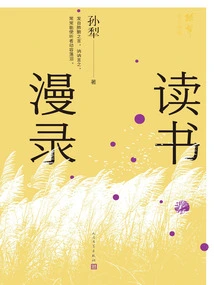
读书漫录(孙犁散文新编)
Sun Li
"Reading Man Lu" is one of the "New Collection of Sun Li's Prose" (five) book series, compiled and selected by Liu Zongwu, the former secretary-general of the Tianjin Sun Li Research Association. Sun Li has been passionate about reading since he was a child, and he has been addicted to books. His reading notes such as "The Road to Literature and Life - Talking with Journalists", "Reading Xiao Hong's Works", "Gogol - Commemorating the Centenary of His Death", "My History Book", "Reading Notes (Part 1)" are all good articles that are long-lasting and enjoyable to read. This volume contains selected authors' reading notes, divided into three volumes. The first volume contains comments and reflections on modern Chinese and foreign writers and works; the second volume contains notes and prefaces to their works; and the third volume contains reading notes and comments on ancient works.
"Reading Man Lu" is one of the "New Collection of Sun Li's Prose" (five) book series, compiled and selected by Liu Zongwu, the former secretary-general of the Tianjin Sun Li Research Association. Sun Li has been passionate about reading since he was a child, and he has been addicted to books. His reading notes such as "The Road to Literature and Life - Talking with Journalists", "Reading Xiao Hong's Works", "Gogol - Commemorating the Centenary of His Death", "My History Book", "Reading Notes (Part 1)" are all good articles that are long-lasting and enjoyable to read. This volume contains selected authors' reading notes, divided into three volumes. The first volume contains comments and reflections on modern Chinese and foreign writers and works; the second volume contains notes and prefaces to their works; and the third volume contains reading notes and comments on ancient works.
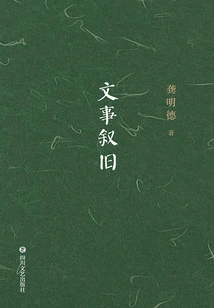
Literary Reminiscing About the Past
Literature文事叙旧
Gong Mingde
"Sherlock Holmes in Modern and Contemporary Chinese Literature Research" is Gong Mingde's research masterpiece. One topic, one article, one article, one incident, tells the story of the literary world. Explore the secrets, explore the source, and dig out the details of historical facts. This book is Professor Gong Mingde of Sichuan Normal University's research on the diaries and correspondence of writers in the history of modern and contemporary Chinese literature, editions of works, and details of the author's life. The author focuses on old events in the literary world, and examines anecdotes and unsolved cases of famous literati in the history of modern and contemporary literature, such as Hu Shi, Lu Xun, Yu Dafu, Lao She, Zhu Ziqing, Xu Zhimo, Ding Ling, Bing Xin, Lin Yutang, Ai Qing, Liu Shahe, etc. Starting from the doubtful place, seeking true knowledge in the subtleties, peeling off the cocoons in the dense and complex text materials, exploring the hidden details, is a work of "addendum" to modern and contemporary literature, which also shows the author's unique perspective and profound contribution to the study of modern and contemporary Chinese literature.
"Sherlock Holmes in Modern and Contemporary Chinese Literature Research" is Gong Mingde's research masterpiece. One topic, one article, one article, one incident, tells the story of the literary world. Explore the secrets, explore the source, and dig out the details of historical facts. This book is Professor Gong Mingde of Sichuan Normal University's research on the diaries and correspondence of writers in the history of modern and contemporary Chinese literature, editions of works, and details of the author's life. The author focuses on old events in the literary world, and examines anecdotes and unsolved cases of famous literati in the history of modern and contemporary literature, such as Hu Shi, Lu Xun, Yu Dafu, Lao She, Zhu Ziqing, Xu Zhimo, Ding Ling, Bing Xin, Lin Yutang, Ai Qing, Liu Shahe, etc. Starting from the doubtful place, seeking true knowledge in the subtleties, peeling off the cocoons in the dense and complex text materials, exploring the hidden details, is a work of "addendum" to modern and contemporary literature, which also shows the author's unique perspective and profound contribution to the study of modern and contemporary Chinese literature.
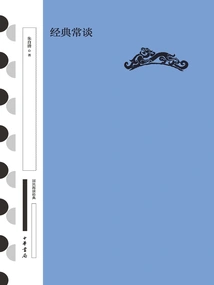
经典常谈(国民阅读经典·典藏版)
Zhu Ziqing
"Classics" is a popular reading book written by Mr. Zhu Ziqing in 1942 for students with secondary education or above. It has been widely circulated for 80 years and is an introductory guide to understanding ancient Chinese cultural classics. In this book, Mr. Zhu Ziqing interprets the "Four Books and Five Classics" of "Shuowen Jiezi" in a clear and concise manner using popular, fluent and easy-to-understand words.
"Classics" is a popular reading book written by Mr. Zhu Ziqing in 1942 for students with secondary education or above. It has been widely circulated for 80 years and is an introductory guide to understanding ancient Chinese cultural classics. In this book, Mr. Zhu Ziqing interprets the "Four Books and Five Classics" of "Shuowen Jiezi" in a clear and concise manner using popular, fluent and easy-to-understand words.
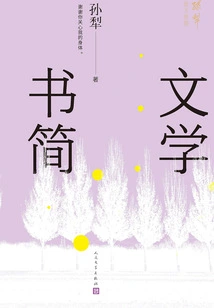
文学书简(孙犁散文新编)
Sun Li
"New Collection of Sun Li's Prose" was edited and selected by Liu Zongwu, former secretary-general of Tianjin Sun Li Research Association. This volume selects a selection of Sun Li's letters. Sun Li's literature influenced a generation of young people at that time, and he maintained close correspondence with young literary people. So far, scholars have collected more than a thousand letters from Sun Li. This book selects letters related to literary creation and literary life and compiles them into four volumes for the readers.
"New Collection of Sun Li's Prose" was edited and selected by Liu Zongwu, former secretary-general of Tianjin Sun Li Research Association. This volume selects a selection of Sun Li's letters. Sun Li's literature influenced a generation of young people at that time, and he maintained close correspondence with young literary people. So far, scholars have collected more than a thousand letters from Sun Li. This book selects letters related to literary creation and literary life and compiles them into four volumes for the readers.
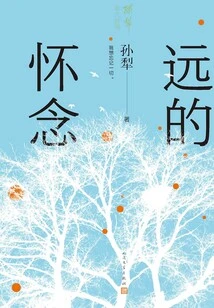
远的怀念(孙犁散文新编)
Sun Li
"New Collection of Sun Li's Prose" was edited and selected by Liu Zongwu, the former secretary-general of the Tianjin Sun Li Research Association. The book is divided into an upper part and a lower part. It selects the author's self-narrative articles and articles in memory of old friends, such as "Memories of a Partner", "Mourning of the Painter Ma Da", "Reminiscences of Comrade Shakov", "Talk about Zhao Shuli", etc. The content is full of the author's thoughts and friendship.
"New Collection of Sun Li's Prose" was edited and selected by Liu Zongwu, the former secretary-general of the Tianjin Sun Li Research Association. The book is divided into an upper part and a lower part. It selects the author's self-narrative articles and articles in memory of old friends, such as "Memories of a Partner", "Mourning of the Painter Ma Da", "Reminiscences of Comrade Shakov", "Talk about Zhao Shuli", etc. The content is full of the author's thoughts and friendship.
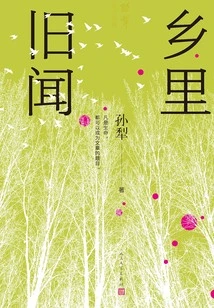
乡里旧闻(孙犁散文新编)
Sun Li
"New Collection of Sun Li's Prose" was edited and selected by Liu Zongwu, former secretary-general of Tianjin Sun Li Research Association. "Old News from Hometown" is the general title of a series of essays by Sun Li. Under this title, he wrote a series of essays recalling people and events in his hometown, such as "Uncle Fengchi", "Caihu", "Uncle Scarzeng", "Carpenter's Daughter", "Grandma's Home", etc., Which are very popular.
"New Collection of Sun Li's Prose" was edited and selected by Liu Zongwu, former secretary-general of Tianjin Sun Li Research Association. "Old News from Hometown" is the general title of a series of essays by Sun Li. Under this title, he wrote a series of essays recalling people and events in his hometown, such as "Uncle Fengchi", "Caihu", "Uncle Scarzeng", "Carpenter's Daughter", "Grandma's Home", etc., Which are very popular.
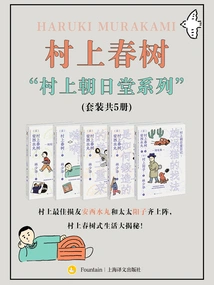
村上春树“村上朝日堂系列”(套装共5册)
(japan) Haruki Murakami And Others
An excellent set of three-dimensional portraits of Haruki Murakami - What kind of person is the real Haruki Murakami? A cold-faced comedian with a casual sense of humor, unrestrained and unconstrained, who loves life and has a wide range of interests, the secrets of Haruki Murakami's life are revealed. "Haruki Murakami "Murakami Asahido Series" (set of 5 volumes in total)" includes Haruki Murakami's five collections of essays written between 1984 and 1997, "Murakami Asahido", "Murakami Asahido's Comeback", "Murakami Asahido Hey Ho!" "How to Find the Whirlpool Cat" and "How Murakami Asahido was Forged" are excellent reading choices to understand the real Haruki Murakami.
An excellent set of three-dimensional portraits of Haruki Murakami - What kind of person is the real Haruki Murakami? A cold-faced comedian with a casual sense of humor, unrestrained and unconstrained, who loves life and has a wide range of interests, the secrets of Haruki Murakami's life are revealed. "Haruki Murakami "Murakami Asahido Series" (set of 5 volumes in total)" includes Haruki Murakami's five collections of essays written between 1984 and 1997, "Murakami Asahido", "Murakami Asahido's Comeback", "Murakami Asahido Hey Ho!" "How to Find the Whirlpool Cat" and "How Murakami Asahido was Forged" are excellent reading choices to understand the real Haruki Murakami.
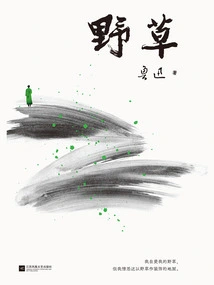
Weed
Literature野草
Lu Xun
Lu Xun once said that his entire life's philosophy is contained in "Weeds". In addition to the complete collection of 23 prose poems full of symbolic meaning in the original work, the new edition of "Weeds" also includes 15 classic Lu Xun poems, as well as 41 classic prose essays from the collections such as "Grave", "Hot Wind" and "Huagai Collection". Reading prose poems reveals Lu Xun's emotions; reading poetry reveals Lu Xun's personality; reading prose essays reveals Lu Xun's thoughts. In this book, Lu Xun showed his fragility, doubt, hesitation, and self-denial to the world, and completed a great spiritual debate through self-examination and self-contradiction. The era awakened a hundred years ago, and the world will awaken a hundred years later. To understand Lu Xun is to understand our society and these people.
Lu Xun once said that his entire life's philosophy is contained in "Weeds". In addition to the complete collection of 23 prose poems full of symbolic meaning in the original work, the new edition of "Weeds" also includes 15 classic Lu Xun poems, as well as 41 classic prose essays from the collections such as "Grave", "Hot Wind" and "Huagai Collection". Reading prose poems reveals Lu Xun's emotions; reading poetry reveals Lu Xun's personality; reading prose essays reveals Lu Xun's thoughts. In this book, Lu Xun showed his fragility, doubt, hesitation, and self-denial to the world, and completed a great spiritual debate through self-examination and self-contradiction. The era awakened a hundred years ago, and the world will awaken a hundred years later. To understand Lu Xun is to understand our society and these people.
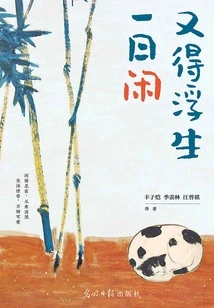
又得浮生一日闲
Feng Zikai Ji Xianlin Wang Zengqi Et Al.
The natural gifts of these mountains, rivers and lakes mark the difficult seasons with the annotation of comfort and joy, and sublimate ordinary daily activities into experiences full of the joy of life, adding some innocent interest and worldly warmth to peace and calmness. Stealing a day of "free time" in life, whether we are confused by mountains and seas or suddenly enlightened, may we be able to collect unforgettable and wonderful feelings wherever we meet.
The natural gifts of these mountains, rivers and lakes mark the difficult seasons with the annotation of comfort and joy, and sublimate ordinary daily activities into experiences full of the joy of life, adding some innocent interest and worldly warmth to peace and calmness. Stealing a day of "free time" in life, whether we are confused by mountains and seas or suddenly enlightened, may we be able to collect unforgettable and wonderful feelings wherever we meet.
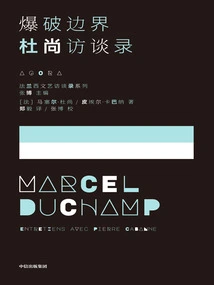
Exploding Boundaries: an Interview with Duchamp (french Literature and Art Interview Series)
Literature爆破边界:杜尚访谈录(法兰西文艺访谈录系列)
(france) Marcel Duchamp Et Al.
Marcel Duchamp talks about his life, his works, the time he spent. His life itself was a "ready-made" and the time he spent in it has been called his most beautiful work. Calm irony, abandoning aesthetics, interest and pure visual pleasure, the legitimacy of doing nothing, keen on chance and word games, keen on "the poetry of words"... The Duchamp who constantly escapes Duchamp, the intellectual Duchamp, is self-contradictory, "reluctant to take any definition as the end point". For Duchamp, aesthetics is absurd, and anti-aesthetics is also absurd.
Marcel Duchamp talks about his life, his works, the time he spent. His life itself was a "ready-made" and the time he spent in it has been called his most beautiful work. Calm irony, abandoning aesthetics, interest and pure visual pleasure, the legitimacy of doing nothing, keen on chance and word games, keen on "the poetry of words"... The Duchamp who constantly escapes Duchamp, the intellectual Duchamp, is self-contradictory, "reluctant to take any definition as the end point". For Duchamp, aesthetics is absurd, and anti-aesthetics is also absurd.
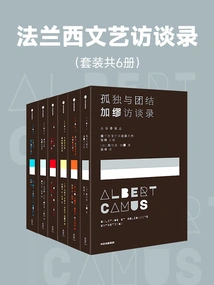
法兰西文艺访谈录(套装共6册)
(france) Abel Camus Et Al.
The set includes 6 volumes: "Loneliness and Solidarity: Interviews with Camus", "Indomitable Adventures: Interviews with Breton", "My Truth: Interviews with Colette", "Impromptu Memory: Interviews with Claudel".
The set includes 6 volumes: "Loneliness and Solidarity: Interviews with Camus", "Indomitable Adventures: Interviews with Breton", "My Truth: Interviews with Colette", "Impromptu Memory: Interviews with Claudel".
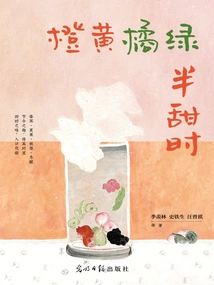
Orange, Orange, Green, Semi-sweet
Literature橙黄橘绿半甜时
Ji Xianlin Shi Tiesheng Wang Zengqi Et Al.
They may not have profound meanings, but they are sweet treats after countless events in the world. They are not only related to the shock of history, but also tell the warmth of life. When the change of seasons and the bitterness of the long night dissipate, there is only a bright and crisp fragrance left in the nose, which has a sweet meaning and is sent to those who cherish the time.
They may not have profound meanings, but they are sweet treats after countless events in the world. They are not only related to the shock of history, but also tell the warmth of life. When the change of seasons and the bitterness of the long night dissipate, there is only a bright and crisp fragrance left in the nose, which has a sweet meaning and is sent to those who cherish the time.
别怕!请允许一切发生
Shi Tiesheng Wang Zengqi Ji Xianlin Et Al.
It selects more than 40 representative prose works by 16 literary masters such as Shi Tiesheng, Wang Zengqi, Ji Xianlin, etc., Divided into four chapters: "The best taste is not fried", "Sleeping at ease in an empty hall", "Eternal and floating clouds are in the same boat", and "Parting in the world for a long time will not cause sadness". The more lonely and fragile the moment, the more eager people are to open up the past. Memories are always about food, family, friendship and life itself. They bring appropriate and bright memories, and thousands of things like them wrap, enrich and colorful our lives. Under the influence of memory, we will no longer worry about the word "change", but will have some indescribable expectations for the upcoming season. We are all the same, nostalgic for the old while pursuing the new, even if life is never perfect, even if we have to move forward. But what to be afraid of? All that is to come must come!
It selects more than 40 representative prose works by 16 literary masters such as Shi Tiesheng, Wang Zengqi, Ji Xianlin, etc., Divided into four chapters: "The best taste is not fried", "Sleeping at ease in an empty hall", "Eternal and floating clouds are in the same boat", and "Parting in the world for a long time will not cause sadness". The more lonely and fragile the moment, the more eager people are to open up the past. Memories are always about food, family, friendship and life itself. They bring appropriate and bright memories, and thousands of things like them wrap, enrich and colorful our lives. Under the influence of memory, we will no longer worry about the word "change", but will have some indescribable expectations for the upcoming season. We are all the same, nostalgic for the old while pursuing the new, even if life is never perfect, even if we have to move forward. But what to be afraid of? All that is to come must come!