Library
Browse and search novels
8,194 novels found
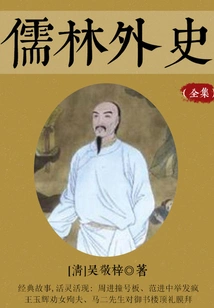
The Scholars (complete Collection)
General Fiction儒林外史(全集)
I
"The Scholars" is a novel with intellectuals as the main description object, and it is also a typical satirical novel. It describes some images of Confucian scholars who were deeply poisoned by the eight-part imperial examination system. For example, it is written that Zhou Jin and Fan Jin spent their entire lives trying to pass the examination, and even when their beards turned gray, they still failed to pass the examination. Although life was extremely difficult, he still couldn't forget the imperial examination. Zhou Jin passed by an examination room and went in to watch. He was touched by a lifetime of bitterness and pain. He burst into tears and was so sad that he could not help but feel miserable. Later, with the help of some small businessmen, he took the exam and won the sympathy of the examiner, and things turned around. When he passed the exam, those who had ridiculed him in the past came to flatter him and praised him as the most knowledgeable person. Another example is Fan Jin. Before he passed the imperial examination, his family was so poor that he had no rice to cook with, so he went to the market to sell an old hen. When he learned that he had won the election, he was so happy that he became a madman. Fortunately, his father-in-law Hu Tuhu slapped him and he regained consciousness. At this time, the local squires and other prominent people all looked at him with admiration. Some gave him houses and some gave him property. Fan Jin's life immediately changed... And so on, which reflected the corruption of the secular customs at that time. On the one hand, it truly reveals the process and reasons for the corruption of human nature, thereby deeply criticizing and ridiculing the corruption of officialdom at that time, the shortcomings of imperial examinations, and the hypocrisy of ethics; on the other hand, it passionately praises the protection of human nature by a few characters by insisting on themselves, thus embodying the author's ideals.
"The Scholars" is a novel with intellectuals as the main description object, and it is also a typical satirical novel. It describes some images of Confucian scholars who were deeply poisoned by the eight-part imperial examination system. For example, it is written that Zhou Jin and Fan Jin spent their entire lives trying to pass the examination, and even when their beards turned gray, they still failed to pass the examination. Although life was extremely difficult, he still couldn't forget the imperial examination. Zhou Jin passed by an examination room and went in to watch. He was touched by a lifetime of bitterness and pain. He burst into tears and was so sad that he could not help but feel miserable. Later, with the help of some small businessmen, he took the exam and won the sympathy of the examiner, and things turned around. When he passed the exam, those who had ridiculed him in the past came to flatter him and praised him as the most knowledgeable person. Another example is Fan Jin. Before he passed the imperial examination, his family was so poor that he had no rice to cook with, so he went to the market to sell an old hen. When he learned that he had won the election, he was so happy that he became a madman. Fortunately, his father-in-law Hu Tuhu slapped him and he regained consciousness. At this time, the local squires and other prominent people all looked at him with admiration. Some gave him houses and some gave him property. Fan Jin's life immediately changed... And so on, which reflected the corruption of the secular customs at that time. On the one hand, it truly reveals the process and reasons for the corruption of human nature, thereby deeply criticizing and ridiculing the corruption of officialdom at that time, the shortcomings of imperial examinations, and the hypocrisy of ethics; on the other hand, it passionately praises the protection of human nature by a few characters by insisting on themselves, thus embodying the author's ideals.
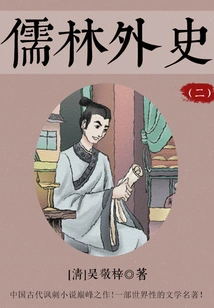
The Scholars (2)
General Fiction儒林外史(二)
H
"The Scholars" is a novel with intellectuals as the main description object, and it is also a typical satirical novel. It describes some images of Confucian scholars who were deeply poisoned by the eight-part imperial examination system. For example, it is written that Zhou Jin and Fan Jin spent their entire lives trying to pass the examination, and even when their beards turned gray, they still failed to pass the examination. Although life was extremely difficult, he still couldn't forget the imperial examination. Zhou Jin passed by an examination room and went in to watch. He was touched by a lifetime of bitterness and pain. He burst into tears and was so sad that he could not help but feel miserable. Later, with the help of some small businessmen, he took the exam and won the sympathy of the examiner, and things turned around. When he passed the exam, those who had ridiculed him in the past came to flatter him and praised him as the most knowledgeable person. Another example is Fan Jin. Before he passed the imperial examination, his family was so poor that he had no rice to cook with, so he went to the market to sell an old hen. When he learned that he had won the election, he was so happy that he became a madman. Fortunately, his father-in-law Hu Tuhu slapped him and he regained consciousness. At this time, the local squires and other prominent people all looked at him with admiration. Some gave him houses and some gave him property. Fan Jin's life immediately changed... And so on, which reflected the corruption of the secular customs at that time. On the one hand, it truly reveals the process and reasons for the corruption of human nature, thereby deeply criticizing and ridiculing the corruption of officialdom at that time, the shortcomings of imperial examinations, and the hypocrisy of ethics; on the other hand, it passionately praises the protection of human nature by a few characters by insisting on themselves, thus embodying the author's ideals.
"The Scholars" is a novel with intellectuals as the main description object, and it is also a typical satirical novel. It describes some images of Confucian scholars who were deeply poisoned by the eight-part imperial examination system. For example, it is written that Zhou Jin and Fan Jin spent their entire lives trying to pass the examination, and even when their beards turned gray, they still failed to pass the examination. Although life was extremely difficult, he still couldn't forget the imperial examination. Zhou Jin passed by an examination room and went in to watch. He was touched by a lifetime of bitterness and pain. He burst into tears and was so sad that he could not help but feel miserable. Later, with the help of some small businessmen, he took the exam and won the sympathy of the examiner, and things turned around. When he passed the exam, those who had ridiculed him in the past came to flatter him and praised him as the most knowledgeable person. Another example is Fan Jin. Before he passed the imperial examination, his family was so poor that he had no rice to cook with, so he went to the market to sell an old hen. When he learned that he had won the election, he was so happy that he became a madman. Fortunately, his father-in-law Hu Tuhu slapped him and he regained consciousness. At this time, the local squires and other prominent people all looked at him with admiration. Some gave him houses and some gave him property. Fan Jin's life immediately changed... And so on, which reflected the corruption of the secular customs at that time. On the one hand, it truly reveals the process and reasons for the corruption of human nature, thereby deeply criticizing and ridiculing the corruption of officialdom at that time, the shortcomings of imperial examinations, and the hypocrisy of ethics; on the other hand, it passionately praises the protection of human nature by a few characters by insisting on themselves, thus embodying the author's ideals.
Beauty's Grace·part One (zhang Henshui's Literature Classic)
General Fiction美人恩·第一部分(张恨水文学经典)
Zhang Henshui
The story of "Beauty's Grace" takes place in Beijing in the 1920s. The heroine Chang Xiaonan was born in a poor family at the bottom of the class and made a living by collecting coal cores. Once, he met the unemployed and down-and-out Hong Shiyi. He deeply sympathized with her fate and used his meager income from working as a substitute at a charity to support the Chang family. The two began to fall in love. The beautiful Chang Xiaonan was later spotted by the foreman of the Yangliu Song and Dance Ensemble. From then on, she changed her mind in love. She successively dumped Hong Shiyi and musician Wang Sun, and finally fell into the hands of the playboy Chen Siye, causing the Chang family to be ruined. Zhang Henshui (May 18, 1895 - February 15, 1967), whose original name was Xinyuan, Henshui was his pen name, which was taken from the poem "Meeting Happily" written by Li Yu in the Southern Tang Dynasty, which means "I will grow up in life and hate the water in the east". Zhang Henshui is a famous chapter novelist and a representative writer of the Mandarin Duck and Butterfly School. He is honored as the first "master of chapter novels" and "master of popular literature" in the history of modern literature. The plot of the work is tortuous and complex, and the structure is rigorous and complete. It integrates traditional Chinese chapter novels with new techniques in Western novels. He is also famous for his prolific output. In his fifty-year writing career, he created more than 100 popular novels, most of which are medium and long chapter novels with a total of 30 million words, which can be regarded as a book in his lifetime.
The story of "Beauty's Grace" takes place in Beijing in the 1920s. The heroine Chang Xiaonan was born in a poor family at the bottom of the class and made a living by collecting coal cores. Once, he met the unemployed and down-and-out Hong Shiyi. He deeply sympathized with her fate and used his meager income from working as a substitute at a charity to support the Chang family. The two began to fall in love. The beautiful Chang Xiaonan was later spotted by the foreman of the Yangliu Song and Dance Ensemble. From then on, she changed her mind in love. She successively dumped Hong Shiyi and musician Wang Sun, and finally fell into the hands of the playboy Chen Siye, causing the Chang family to be ruined. Zhang Henshui (May 18, 1895 - February 15, 1967), whose original name was Xinyuan, Henshui was his pen name, which was taken from the poem "Meeting Happily" written by Li Yu in the Southern Tang Dynasty, which means "I will grow up in life and hate the water in the east". Zhang Henshui is a famous chapter novelist and a representative writer of the Mandarin Duck and Butterfly School. He is honored as the first "master of chapter novels" and "master of popular literature" in the history of modern literature. The plot of the work is tortuous and complex, and the structure is rigorous and complete. It integrates traditional Chinese chapter novels with new techniques in Western novels. He is also famous for his prolific output. In his fifty-year writing career, he created more than 100 popular novels, most of which are medium and long chapter novels with a total of 30 million words, which can be regarded as a book in his lifetime.
Beauty's Grace Part 4 (zhang Henshui's Literary Classic)
General Fiction美人恩·第四部分(张恨水文学经典)
Zhang Henshui
The story of "Beauty's Grace" takes place in Beijing in the 1920s. The heroine Chang Xiaonan was born in a poor family at the bottom of the class and made a living by collecting coal cores. Once, he met the unemployed and down-and-out Hong Shiyi. He deeply sympathized with her fate and used his meager income from working as a substitute at a charity to support the Chang family. The two began to fall in love. The beautiful Chang Xiaonan was later spotted by the foreman of the Yangliu Song and Dance Ensemble. From then on, she changed her mind in love. She successively dumped Hong Shiyi and musician Wang Sun, and finally fell into the hands of the playboy Chen Siye, causing the Chang family to be ruined. Zhang Henshui (May 18, 1895 - February 15, 1967), whose original name was Xinyuan, Henshui was his pen name, which was taken from the poem "Meeting Happily" written by Li Yu in the Southern Tang Dynasty, which means "I will grow up in life and hate the water in the east". Zhang Henshui is a famous chapter novelist and a representative writer of the Mandarin Duck and Butterfly School. He is honored as the first "master of chapter novels" and "master of popular literature" in the history of modern literature. The plot of the work is tortuous and complex, and the structure is rigorous and complete. It integrates traditional Chinese chapter novels with new techniques in Western novels. He is also famous for his prolific output. In his fifty-year writing career, he created more than 100 popular novels, most of which are medium and long chapter novels with a total of 30 million words, which can be regarded as a book in his lifetime.
The story of "Beauty's Grace" takes place in Beijing in the 1920s. The heroine Chang Xiaonan was born in a poor family at the bottom of the class and made a living by collecting coal cores. Once, he met the unemployed and down-and-out Hong Shiyi. He deeply sympathized with her fate and used his meager income from working as a substitute at a charity to support the Chang family. The two began to fall in love. The beautiful Chang Xiaonan was later spotted by the foreman of the Yangliu Song and Dance Ensemble. From then on, she changed her mind in love. She successively dumped Hong Shiyi and musician Wang Sun, and finally fell into the hands of the playboy Chen Siye, causing the Chang family to be ruined. Zhang Henshui (May 18, 1895 - February 15, 1967), whose original name was Xinyuan, Henshui was his pen name, which was taken from the poem "Meeting Happily" written by Li Yu in the Southern Tang Dynasty, which means "I will grow up in life and hate the water in the east". Zhang Henshui is a famous chapter novelist and a representative writer of the Mandarin Duck and Butterfly School. He is honored as the first "master of chapter novels" and "master of popular literature" in the history of modern literature. The plot of the work is tortuous and complex, and the structure is rigorous and complete. It integrates traditional Chinese chapter novels with new techniques in Western novels. He is also famous for his prolific output. In his fifty-year writing career, he created more than 100 popular novels, most of which are medium and long chapter novels with a total of 30 million words, which can be regarded as a book in his lifetime.
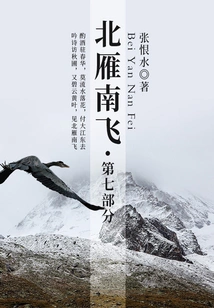
北雁南飞·第七部分(张恨水经典小说)
Zhang Henshui
"Northern Wild Geese Flying to the South" is a chapter novel by Zhang Henshui. It is based on the author's study experience in a private school in Sanhu Town, Jiangxi Province when he was a boy. It describes the love tragedy of the girl Yao Chunhua and the boy Li Xiaoqiu. With sincere feelings and delicate writing style, it makes people sigh. The plot, as well as the vivid outline of the folk customs, sentiments and customs of Sanhu Town, provide us with the social scene and school life records of Xiaoqing Jiangnan Town. From these descriptions, it is not difficult to find the footprints of the writer Zhang Henshui, which is a relatively typical old-style novel of talents and beauties. Zhang Henshui (May 18, 1895 - February 17, 1967), whose original name was Xinyuan, Henshui was his pen name, which was taken from the poem "Meeting Happily" written by Li Yu in the Southern Tang Dynasty, which means "I will grow up in life and hate the water in the east". Zhang Henshui is a famous chapter novelist and a representative writer of the Mandarin Duck and Butterfly School. He is honored as the first "master of chapter novels" and "master of popular literature" in the history of modern literature. The plot of the work is tortuous and complex, and the structure is rigorous and complete. It integrates traditional Chinese chapter novels with new techniques in Western novels. He is also famous for his prolific output. In his fifty-year writing career, he created more than 100 popular novels, most of which are medium and long chapter novels with a total of 30 million words, which can be regarded as a book in his lifetime.
"Northern Wild Geese Flying to the South" is a chapter novel by Zhang Henshui. It is based on the author's study experience in a private school in Sanhu Town, Jiangxi Province when he was a boy. It describes the love tragedy of the girl Yao Chunhua and the boy Li Xiaoqiu. With sincere feelings and delicate writing style, it makes people sigh. The plot, as well as the vivid outline of the folk customs, sentiments and customs of Sanhu Town, provide us with the social scene and school life records of Xiaoqing Jiangnan Town. From these descriptions, it is not difficult to find the footprints of the writer Zhang Henshui, which is a relatively typical old-style novel of talents and beauties. Zhang Henshui (May 18, 1895 - February 17, 1967), whose original name was Xinyuan, Henshui was his pen name, which was taken from the poem "Meeting Happily" written by Li Yu in the Southern Tang Dynasty, which means "I will grow up in life and hate the water in the east". Zhang Henshui is a famous chapter novelist and a representative writer of the Mandarin Duck and Butterfly School. He is honored as the first "master of chapter novels" and "master of popular literature" in the history of modern literature. The plot of the work is tortuous and complex, and the structure is rigorous and complete. It integrates traditional Chinese chapter novels with new techniques in Western novels. He is also famous for his prolific output. In his fifty-year writing career, he created more than 100 popular novels, most of which are medium and long chapter novels with a total of 30 million words, which can be regarded as a book in his lifetime.
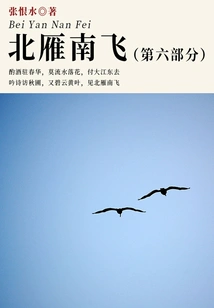
北雁南飞·第六部分(张恨水经典小说)
Zhang Henshui
"Northern Wild Geese Flying to the South" is a chapter novel by Zhang Henshui. It is based on the author's study experience in a private school in Sanhu Town, Jiangxi Province when he was a boy. It describes the love tragedy of the girl Yao Chunhua and the boy Li Xiaoqiu. With sincere feelings and delicate writing style, it makes people sigh. The plot, as well as the vivid outline of the folk customs, sentiments and customs of Sanhu Town, provide us with the social scene and school life records of Xiaoqing Jiangnan Town. From these descriptions, it is not difficult to find the footprints of the writer Zhang Henshui, which is a relatively typical old-style novel of talents and beauties. Zhang Henshui (May 18, 1895 - February 16, 1967), whose original name was Xinyuan, Henshui was his pseudonym, which was taken from the poem "Meeting Happily" written by Li Yu in the Southern Tang Dynasty, which means "I will grow up in life and hate the water in the east". Zhang Henshui is a famous chapter novelist and a representative writer of the Mandarin Duck and Butterfly School. He is honored as the first "master of chapter novels" and "master of popular literature" in the history of modern literature. The plot of the work is tortuous and complex, and the structure is rigorous and complete. It integrates traditional Chinese chapter novels with new techniques in Western novels. He is also famous for his prolific output. In his fifty-year writing career, he created more than 100 popular novels, most of which are medium and long chapter novels with a total of 30 million words, which can be regarded as a book in his lifetime.
"Northern Wild Geese Flying to the South" is a chapter novel by Zhang Henshui. It is based on the author's study experience in a private school in Sanhu Town, Jiangxi Province when he was a boy. It describes the love tragedy of the girl Yao Chunhua and the boy Li Xiaoqiu. With sincere feelings and delicate writing style, it makes people sigh. The plot, as well as the vivid outline of the folk customs, sentiments and customs of Sanhu Town, provide us with the social scene and school life records of Xiaoqing Jiangnan Town. From these descriptions, it is not difficult to find the footprints of the writer Zhang Henshui, which is a relatively typical old-style novel of talents and beauties. Zhang Henshui (May 18, 1895 - February 16, 1967), whose original name was Xinyuan, Henshui was his pseudonym, which was taken from the poem "Meeting Happily" written by Li Yu in the Southern Tang Dynasty, which means "I will grow up in life and hate the water in the east". Zhang Henshui is a famous chapter novelist and a representative writer of the Mandarin Duck and Butterfly School. He is honored as the first "master of chapter novels" and "master of popular literature" in the history of modern literature. The plot of the work is tortuous and complex, and the structure is rigorous and complete. It integrates traditional Chinese chapter novels with new techniques in Western novels. He is also famous for his prolific output. In his fifty-year writing career, he created more than 100 popular novels, most of which are medium and long chapter novels with a total of 30 million words, which can be regarded as a book in his lifetime.
X
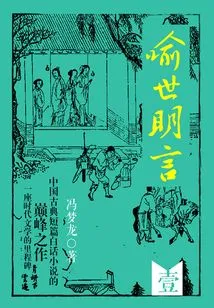
A Clear Statement About the World·1
General Fiction喻世明言·壹
(ming Dynasty) Feng Menglong
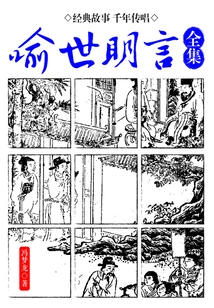
"Yu Shi Ming Yan" mainly collects stories or scripts based on real folk life in the Song, Yuan, and Ming dynasties. The themes cover love, marriage, friendship, etc., Showing the various social conditions at that time. Most of them are old scripts from the Song and Yuan Dynasties, such as "Shi Hongzhao's Meeting of the Dragon and Tiger Monarchs and His Ministers" and "The Four Dukes of the Song Dynasty Raised the Soul-forbidden Zhang", while a few are scripts from the Ming Dynasty, such as "Brother Jiang Xing Meets Again in Pearl Shirt" and "Shen Xiaoxia Meets as a Teacher". The themes are also closely related to urban life. For example, "The Golden Jade Slave Beats the Lover with a Stick" condemns the unfaithfulness of a heartless man; "Jiang Xing Ge Reunites in Pearl Shirt" describes the unforgettable old love for his wife who lost his virginity and reunited with her husband; "Redemption of Friends" and "Fan Juqing's Friend of Life and Death" extol the spirit of loyalty to friendship regardless of life and death; while "Yang Siwen meets an old friend in Yanshan", "Mu Mian'an Zheng Huchen avenges injustice", "Yang Balao's unexpected encounter with the country of Yue" touch on real political themes such as alien invasions and powerful ministers mistreating the country. In addition, some historical legends are included and adapted, such as "Yan Pingzhong's two peaches killed three soldiers" and so on.
"Yu Shi Ming Yan" mainly collects stories or scripts based on real folk life in the Song, Yuan, and Ming dynasties. The themes cover love, marriage, friendship, etc., Showing the various social conditions at that time. Most of them are old scripts from the Song and Yuan Dynasties, such as "Shi Hongzhao's Meeting of the Dragon and Tiger Monarchs and His Ministers" and "The Four Dukes of the Song Dynasty Raised the Soul-forbidden Zhang", while a few are scripts from the Ming Dynasty, such as "Brother Jiang Xing Meets Again in Pearl Shirt" and "Shen Xiaoxia Meets as a Teacher". The themes are also closely related to urban life. For example, "The Golden Jade Slave Beats the Lover with a Stick" condemns the unfaithfulness of a heartless man; "Jiang Xing Ge Reunites in Pearl Shirt" describes the unforgettable old love for his wife who lost his virginity and reunited with her husband; "Redemption of Friends" and "Fan Juqing's Friend of Life and Death" extol the spirit of loyalty to friendship regardless of life and death; while "Yang Siwen meets an old friend in Yanshan", "Mu Mian'an Zheng Huchen avenges injustice", "Yang Balao's unexpected encounter with the country of Yue" touch on real political themes such as alien invasions and powerful ministers mistreating the country. In addition, some historical legends are included and adapted, such as "Yan Pingzhong's two peaches killed three soldiers" and so on.
Yu Shi Ming Yan (complete Collection)
General Fiction喻世明言(全集)
G
"Yu Shi Ming Yan" mainly collects stories or scripts based on real folk life in the Song, Yuan, and Ming dynasties. The themes cover love, marriage, friendship, etc., Showing the various social conditions at that time. Most of them are old scripts from the Song and Yuan Dynasties, such as "Shi Hongzhao's Meeting of the Dragon and Tiger Monarchs and His Ministers" and "The Four Dukes of the Song Dynasty Raised the Soul-forbidden Zhang", while a few are scripts from the Ming Dynasty, such as "Brother Jiang Xing Meets Again in Pearl Shirt" and "Shen Xiaoxia Meets as a Teacher". The themes are also closely related to urban life. For example, "The Golden Jade Slave Beats the Lover with a Stick" condemns the unfaithfulness of a heartless man; "Jiang Xing Ge Reunites in Pearl Shirt" describes the unforgettable old love for his wife who lost his virginity and reunited with her husband; "Redemption of Friends" and "Fan Juqing's Friend of Life and Death" extol the spirit of loyalty to friendship regardless of life and death; while "Yang Siwen meets an old friend in Yanshan", "Mu Mian'an Zheng Huchen avenges injustice", "Yang Balao's unexpected encounter with the country of Yue" touch on real political themes such as alien invasions and powerful ministers mistreating the country. In addition, some historical legends are included and adapted, such as "Yan Pingzhong's two peaches killed three men" and so on.
"Yu Shi Ming Yan" mainly collects stories or scripts based on real folk life in the Song, Yuan, and Ming dynasties. The themes cover love, marriage, friendship, etc., Showing the various social conditions at that time. Most of them are old scripts from the Song and Yuan Dynasties, such as "Shi Hongzhao's Meeting of the Dragon and Tiger Monarchs and His Ministers" and "The Four Dukes of the Song Dynasty Raised the Soul-forbidden Zhang", while a few are scripts from the Ming Dynasty, such as "Brother Jiang Xing Meets Again in Pearl Shirt" and "Shen Xiaoxia Meets as a Teacher". The themes are also closely related to urban life. For example, "The Golden Jade Slave Beats the Lover with a Stick" condemns the unfaithfulness of a heartless man; "Jiang Xing Ge Reunites in Pearl Shirt" describes the unforgettable old love for his wife who lost his virginity and reunited with her husband; "Redemption of Friends" and "Fan Juqing's Friend of Life and Death" extol the spirit of loyalty to friendship regardless of life and death; while "Yang Siwen meets an old friend in Yanshan", "Mu Mian'an Zheng Huchen avenges injustice", "Yang Balao's unexpected encounter with the country of Yue" touch on real political themes such as alien invasions and powerful ministers mistreating the country. In addition, some historical legends are included and adapted, such as "Yan Pingzhong's two peaches killed three men" and so on.
Y
X
The Second Part of a Decadent Life: a Night of Diligence, Part 2 (zhang Henshui's Classic Literature)
General Fiction纸醉金迷·第二部:一夕殷勤·下(张恨水经典文学)
Zhang Henshui
As a satirical work that exposes reality, "Intoxication" directly criticizes the ugly and despicable world conditions in the Kuomintang-controlled areas on the eve of the victory of the Anti-Japanese War. On the eve of the victory of the Anti-Japanese War, the fate of Wei Duanben, a young civil servant, and his "anti-war wife" Tian Peizhi in Chongqing, the capital of the Anti-Japanese War, are used as clues to describe the twisted human nature and the bleakness of the world lost in the "golden dream" of vanity and corruption. Tian Peizhi, a most beautiful but extremely vain woman, sent her husband to prison and was almost sentenced to death for money and good food and clothing. In order to escape from a life without money, she did not need her husband and disowned her children. She finally hooked up with a rich and prestigious gentleman. The wife who was about to become the center of attention suddenly became the fiancée and mistress of a traitor after the war of resistance against Japan was suddenly won. It reveals the loss and struggle in the face of human nature and money in a special era. Zhang Henshui (May 18, 1895 - February 15, 1967), whose original name was Xinyuan, Henshui was his pen name, which was taken from the poem "Meeting Happily" written by Li Yu in the Southern Tang Dynasty, which means "I will grow up in life and hate the water in the east". Zhang Henshui is a famous chapter novelist and a representative writer of the Mandarin Duck and Butterfly School. He is honored as the first "master of chapter novels" and "master of popular literature" in the history of modern literature. The plot of the work is tortuous and complex, and the structure is rigorous and complete. It integrates traditional Chinese chapter novels with new techniques in Western novels. He is also famous for his prolific output. In his fifty-year writing career, he created more than 100 popular novels, most of which are medium and long chapter novels with a total of 30 million words, which can be regarded as a book in his lifetime.
As a satirical work that exposes reality, "Intoxication" directly criticizes the ugly and despicable world conditions in the Kuomintang-controlled areas on the eve of the victory of the Anti-Japanese War. On the eve of the victory of the Anti-Japanese War, the fate of Wei Duanben, a young civil servant, and his "anti-war wife" Tian Peizhi in Chongqing, the capital of the Anti-Japanese War, are used as clues to describe the twisted human nature and the bleakness of the world lost in the "golden dream" of vanity and corruption. Tian Peizhi, a most beautiful but extremely vain woman, sent her husband to prison and was almost sentenced to death for money and good food and clothing. In order to escape from a life without money, she did not need her husband and disowned her children. She finally hooked up with a rich and prestigious gentleman. The wife who was about to become the center of attention suddenly became the fiancée and mistress of a traitor after the war of resistance against Japan was suddenly won. It reveals the loss and struggle in the face of human nature and money in a special era. Zhang Henshui (May 18, 1895 - February 15, 1967), whose original name was Xinyuan, Henshui was his pen name, which was taken from the poem "Meeting Happily" written by Li Yu in the Southern Tang Dynasty, which means "I will grow up in life and hate the water in the east". Zhang Henshui is a famous chapter novelist and a representative writer of the Mandarin Duck and Butterfly School. He is honored as the first "master of chapter novels" and "master of popular literature" in the history of modern literature. The plot of the work is tortuous and complex, and the structure is rigorous and complete. It integrates traditional Chinese chapter novels with new techniques in Western novels. He is also famous for his prolific output. In his fifty-year writing career, he created more than 100 popular novels, most of which are medium and long chapter novels with a total of 30 million words, which can be regarded as a book in his lifetime.
A Clear Metaphor for the World·4
General Fiction喻世明言·肆
(ming Dynasty) Feng Menglong
"Yu Shi Ming Yan" mainly collects stories or scripts based on real folk life in the Song, Yuan, and Ming dynasties. The themes cover love, marriage, friendship, etc., Showing the various social conditions at that time. Most of them are old scripts from the Song and Yuan Dynasties, such as "Shi Hongzhao's Meeting of the Dragon and Tiger Monarchs and His Ministers" and "The Four Dukes of the Song Dynasty Raised the Soul-forbidden Zhang", while a few are scripts from the Ming Dynasty, such as "Brother Jiang Xing Meets Again in Pearl Shirt" and "Shen Xiaoxia Meets as a Teacher". The themes are also closely related to urban life. For example, "The Golden Jade Slave Beats the Lover with a Stick" condemns the unfaithfulness of a heartless man; "Jiang Xing Ge Reunites in Pearl Shirt" describes the unforgettable old love for his wife who lost his virginity and reunited with her husband; "Redemption of Friends" and "Fan Juqing's Friend of Life and Death" extol the spirit of loyalty to friendship regardless of life and death; while "Yang Siwen meets an old friend in Yanshan", "Mu Mian'an Zheng Huchen avenges injustice", "Yang Balao's unexpected encounter with the country of Yue" touch on real political themes such as alien invasions and powerful ministers mistreating the country. In addition, some historical legends are included and adapted, such as "Yan Pingzhong's two peaches killed three soldiers" and so on.
"Yu Shi Ming Yan" mainly collects stories or scripts based on real folk life in the Song, Yuan, and Ming dynasties. The themes cover love, marriage, friendship, etc., Showing the various social conditions at that time. Most of them are old scripts from the Song and Yuan Dynasties, such as "Shi Hongzhao's Meeting of the Dragon and Tiger Monarchs and His Ministers" and "The Four Dukes of the Song Dynasty Raised the Soul-forbidden Zhang", while a few are scripts from the Ming Dynasty, such as "Brother Jiang Xing Meets Again in Pearl Shirt" and "Shen Xiaoxia Meets as a Teacher". The themes are also closely related to urban life. For example, "The Golden Jade Slave Beats the Lover with a Stick" condemns the unfaithfulness of a heartless man; "Jiang Xing Ge Reunites in Pearl Shirt" describes the unforgettable old love for his wife who lost his virginity and reunited with her husband; "Redemption of Friends" and "Fan Juqing's Friend of Life and Death" extol the spirit of loyalty to friendship regardless of life and death; while "Yang Siwen meets an old friend in Yanshan", "Mu Mian'an Zheng Huchen avenges injustice", "Yang Balao's unexpected encounter with the country of Yue" touch on real political themes such as alien invasions and powerful ministers mistreating the country. In addition, some historical legends are included and adapted, such as "Yan Pingzhong's two peaches killed three soldiers" and so on.
纸醉金迷·第二部:一夕殷勤·上(张恨水经典文学)
Zhang Henshui
As a satirical work that exposes reality, "Intoxication" directly criticizes the ugly and despicable world conditions in the Kuomintang-controlled areas on the eve of the victory of the Anti-Japanese War. On the eve of the victory of the Anti-Japanese War, the fate of Wei Duanben, a young civil servant, and his "anti-war wife" Tian Peizhi in Chongqing, the capital of the Anti-Japanese War, are used as clues to describe the twisted human nature and the bleakness of the world lost in the "golden dream" of vanity and corruption. Tian Peizhi, a most beautiful but extremely vain woman, sent her husband to prison and was almost sentenced to death for money and good food and clothing. In order to escape from a life without money, she did not need her husband and disowned her children. She finally hooked up with a rich and prestigious gentleman. The wife who was about to become the center of attention suddenly became the fiancée and mistress of a traitor after the war of resistance against Japan was suddenly won. It reveals the loss and struggle in the face of human nature and money in a special era. Zhang Henshui (May 18, 1895 - February 15, 1967), whose original name was Xinyuan, Henshui was his pen name, which was taken from the poem "Meeting Happily" written by Li Yu in the Southern Tang Dynasty, which means "I will grow up in life and hate the water in the east". Zhang Henshui is a famous chapter novelist and a representative writer of the Mandarin Duck and Butterfly School. He is honored as the first "master of chapter novels" and "master of popular literature" in the history of modern literature. The plot of the work is tortuous and complex, and the structure is rigorous and complete. It integrates traditional Chinese chapter novels with new techniques in Western novels. He is also famous for his prolific output. In his fifty-year writing career, he created more than 100 popular novels, most of which are medium and long chapter novels with a total of 30 million words, which can be regarded as a book in his lifetime.
As a satirical work that exposes reality, "Intoxication" directly criticizes the ugly and despicable world conditions in the Kuomintang-controlled areas on the eve of the victory of the Anti-Japanese War. On the eve of the victory of the Anti-Japanese War, the fate of Wei Duanben, a young civil servant, and his "anti-war wife" Tian Peizhi in Chongqing, the capital of the Anti-Japanese War, are used as clues to describe the twisted human nature and the bleakness of the world lost in the "golden dream" of vanity and corruption. Tian Peizhi, a most beautiful but extremely vain woman, sent her husband to prison and was almost sentenced to death for money and good food and clothing. In order to escape from a life without money, she did not need her husband and disowned her children. She finally hooked up with a rich and prestigious gentleman. The wife who was about to become the center of attention suddenly became the fiancée and mistress of a traitor after the war of resistance against Japan was suddenly won. It reveals the loss and struggle in the face of human nature and money in a special era. Zhang Henshui (May 18, 1895 - February 15, 1967), whose original name was Xinyuan, Henshui was his pen name, which was taken from the poem "Meeting Happily" written by Li Yu in the Southern Tang Dynasty, which means "I will grow up in life and hate the water in the east". Zhang Henshui is a famous chapter novelist and a representative writer of the Mandarin Duck and Butterfly School. He is honored as the first "master of chapter novels" and "master of popular literature" in the history of modern literature. The plot of the work is tortuous and complex, and the structure is rigorous and complete. It integrates traditional Chinese chapter novels with new techniques in Western novels. He is also famous for his prolific output. In his fifty-year writing career, he created more than 100 popular novels, most of which are medium and long chapter novels with a total of 30 million words, which can be regarded as a book in his lifetime.
纸醉金迷·第四部:谁征服了谁·下(张恨水经典文学)
Zhang Henshui
As a satirical work that exposes reality, "Intoxication" directly criticizes the ugly and despicable world conditions in the Kuomintang-controlled areas on the eve of the victory of the Anti-Japanese War. On the eve of the victory of the Anti-Japanese War, the fate of Wei Duanben, a young civil servant, and his "anti-war wife" Tian Peizhi in Chongqing, the capital of the Anti-Japanese War, are used as clues to describe the twisted human nature and the bleakness of the world lost in the "golden dream" of vanity and corruption. Tian Peizhi, a most beautiful but extremely vain woman, sent her husband to prison and was almost sentenced to death for money and good food and clothing. In order to escape from a life without money, she did not need her husband and disowned her children. She finally hooked up with a rich and prestigious gentleman. The wife who was about to become the center of attention suddenly became the fiancée and mistress of a traitor after the war of resistance against Japan was suddenly won. It reveals the loss and struggle in the face of human nature and money in a special era. Zhang Henshui (May 18, 1895 - February 15, 1967), whose original name was Xinyuan, Henshui was his pen name, which was taken from the poem "Meeting Happily" written by Li Yu in the Southern Tang Dynasty, which means "I will grow up in life and hate the water in the east". Zhang Henshui is a famous chapter novelist and a representative writer of the Mandarin Duck and Butterfly School. He is honored as the first "master of chapter novels" and "master of popular literature" in the history of modern literature. The plot of the work is tortuous and complex, and the structure is rigorous and complete. It integrates traditional Chinese chapter novels with new techniques in Western novels. He is also famous for his prolific output. In his fifty-year writing career, he created more than 100 popular novels, most of which are medium and long chapter novels with a total of 30 million words, which can be regarded as a book in his lifetime.
As a satirical work that exposes reality, "Intoxication" directly criticizes the ugly and despicable world conditions in the Kuomintang-controlled areas on the eve of the victory of the Anti-Japanese War. On the eve of the victory of the Anti-Japanese War, the fate of Wei Duanben, a young civil servant, and his "anti-war wife" Tian Peizhi in Chongqing, the capital of the Anti-Japanese War, are used as clues to describe the twisted human nature and the bleakness of the world lost in the "golden dream" of vanity and corruption. Tian Peizhi, a most beautiful but extremely vain woman, sent her husband to prison and was almost sentenced to death for money and good food and clothing. In order to escape from a life without money, she did not need her husband and disowned her children. She finally hooked up with a rich and prestigious gentleman. The wife who was about to become the center of attention suddenly became the fiancée and mistress of a traitor after the war of resistance against Japan was suddenly won. It reveals the loss and struggle in the face of human nature and money in a special era. Zhang Henshui (May 18, 1895 - February 15, 1967), whose original name was Xinyuan, Henshui was his pen name, which was taken from the poem "Meeting Happily" written by Li Yu in the Southern Tang Dynasty, which means "I will grow up in life and hate the water in the east". Zhang Henshui is a famous chapter novelist and a representative writer of the Mandarin Duck and Butterfly School. He is honored as the first "master of chapter novels" and "master of popular literature" in the history of modern literature. The plot of the work is tortuous and complex, and the structure is rigorous and complete. It integrates traditional Chinese chapter novels with new techniques in Western novels. He is also famous for his prolific output. In his fifty-year writing career, he created more than 100 popular novels, most of which are medium and long chapter novels with a total of 30 million words, which can be regarded as a book in his lifetime.
纸醉金迷·第三部:此间乐·上(张恨水经典文学)
Zhang Henshui
As a satirical work that exposes reality, "Intoxication" directly criticizes the ugly and despicable world conditions in the Kuomintang-controlled areas on the eve of the victory of the Anti-Japanese War. On the eve of the victory of the Anti-Japanese War, the fate of Wei Duanben, a young civil servant, and his "anti-war wife" Tian Peizhi in Chongqing, the capital of the Anti-Japanese War, are used as clues to describe the twisted human nature and the bleakness of the world lost in the "golden dream" of vanity and corruption. Tian Peizhi, a most beautiful but extremely vain woman, sent her husband to prison and was almost sentenced to death for money and good food and clothing. In order to escape from a life without money, she did not need her husband and disowned her children. She finally hooked up with a rich and prestigious gentleman. The wife who was about to become the center of attention suddenly became the fiancée and mistress of a traitor after the war of resistance against Japan was suddenly won. It reveals the loss and struggle in the face of human nature and money in a special era. Zhang Henshui (May 18, 1895 - February 15, 1967), whose original name was Xinyuan, Henshui was his pen name, which was taken from the poem "Meeting Happily" written by Li Yu in the Southern Tang Dynasty, which means "I will grow up in life and hate the water in the east". Zhang Henshui is a famous chapter novelist and a representative writer of the Mandarin Duck and Butterfly School. He is honored as the first "master of chapter novels" and "master of popular literature" in the history of modern literature. The plot of the work is tortuous and complex, and the structure is rigorous and complete. It integrates traditional Chinese chapter novels with new techniques in Western novels. He is also famous for his prolific output. In his fifty-year writing career, he created more than 100 popular novels, most of which are medium and long chapter novels with a total of 30 million words, which can be regarded as a book in his lifetime.
As a satirical work that exposes reality, "Intoxication" directly criticizes the ugly and despicable world conditions in the Kuomintang-controlled areas on the eve of the victory of the Anti-Japanese War. On the eve of the victory of the Anti-Japanese War, the fate of Wei Duanben, a young civil servant, and his "anti-war wife" Tian Peizhi in Chongqing, the capital of the Anti-Japanese War, are used as clues to describe the twisted human nature and the bleakness of the world lost in the "golden dream" of vanity and corruption. Tian Peizhi, a most beautiful but extremely vain woman, sent her husband to prison and was almost sentenced to death for money and good food and clothing. In order to escape from a life without money, she did not need her husband and disowned her children. She finally hooked up with a rich and prestigious gentleman. The wife who was about to become the center of attention suddenly became the fiancée and mistress of a traitor after the war of resistance against Japan was suddenly won. It reveals the loss and struggle in the face of human nature and money in a special era. Zhang Henshui (May 18, 1895 - February 15, 1967), whose original name was Xinyuan, Henshui was his pen name, which was taken from the poem "Meeting Happily" written by Li Yu in the Southern Tang Dynasty, which means "I will grow up in life and hate the water in the east". Zhang Henshui is a famous chapter novelist and a representative writer of the Mandarin Duck and Butterfly School. He is honored as the first "master of chapter novels" and "master of popular literature" in the history of modern literature. The plot of the work is tortuous and complex, and the structure is rigorous and complete. It integrates traditional Chinese chapter novels with new techniques in Western novels. He is also famous for his prolific output. In his fifty-year writing career, he created more than 100 popular novels, most of which are medium and long chapter novels with a total of 30 million words, which can be regarded as a book in his lifetime.
纸醉金迷·第四部:谁征服了谁·上(张恨水经典文学)
Zhang Henshui
As a satirical work that exposes reality, "Intoxication" directly criticizes the ugly and despicable world conditions in the Kuomintang-controlled areas on the eve of the victory of the Anti-Japanese War. On the eve of the victory of the Anti-Japanese War, the fate of Wei Duanben, a young civil servant, and his "anti-war wife" Tian Peizhi in Chongqing, the capital of the Anti-Japanese War, are used as clues to describe the twisted human nature and the bleakness of the world lost in the "golden dream" of vanity and corruption. Tian Peizhi, a most beautiful but extremely vain woman, sent her husband to prison and was almost sentenced to death for money and good food and clothing. In order to escape from a life without money, she did not need her husband and disowned her children. She finally hooked up with a rich and prestigious gentleman. The wife who was about to become the center of attention suddenly became the fiancée and mistress of a traitor after the war of resistance against Japan was suddenly won. It reveals the loss and struggle in the face of human nature and money in a special era. Zhang Henshui (May 18, 1895 - February 15, 1967), whose original name was Xinyuan, Henshui was his pen name, which was taken from the poem "Meeting Happily" written by Li Yu in the Southern Tang Dynasty, which means "I will grow up in life and hate the water in the east". Zhang Henshui is a famous chapter novelist and a representative writer of the Mandarin Duck and Butterfly School. He is honored as the first "master of chapter novels" and "master of popular literature" in the history of modern literature. The plot of the work is tortuous and complex, and the structure is rigorous and complete. It integrates traditional Chinese chapter novels with new techniques in Western novels. He is also famous for his prolific output. In his fifty-year writing career, he created more than 100 popular novels, most of which are medium and long chapter novels with a total of 30 million words, which can be regarded as a book in his lifetime.
As a satirical work that exposes reality, "Intoxication" directly criticizes the ugly and despicable world conditions in the Kuomintang-controlled areas on the eve of the victory of the Anti-Japanese War. On the eve of the victory of the Anti-Japanese War, the fate of Wei Duanben, a young civil servant, and his "anti-war wife" Tian Peizhi in Chongqing, the capital of the Anti-Japanese War, are used as clues to describe the twisted human nature and the bleakness of the world lost in the "golden dream" of vanity and corruption. Tian Peizhi, a most beautiful but extremely vain woman, sent her husband to prison and was almost sentenced to death for money and good food and clothing. In order to escape from a life without money, she did not need her husband and disowned her children. She finally hooked up with a rich and prestigious gentleman. The wife who was about to become the center of attention suddenly became the fiancée and mistress of a traitor after the war of resistance against Japan was suddenly won. It reveals the loss and struggle in the face of human nature and money in a special era. Zhang Henshui (May 18, 1895 - February 15, 1967), whose original name was Xinyuan, Henshui was his pen name, which was taken from the poem "Meeting Happily" written by Li Yu in the Southern Tang Dynasty, which means "I will grow up in life and hate the water in the east". Zhang Henshui is a famous chapter novelist and a representative writer of the Mandarin Duck and Butterfly School. He is honored as the first "master of chapter novels" and "master of popular literature" in the history of modern literature. The plot of the work is tortuous and complex, and the structure is rigorous and complete. It integrates traditional Chinese chapter novels with new techniques in Western novels. He is also famous for his prolific output. In his fifty-year writing career, he created more than 100 popular novels, most of which are medium and long chapter novels with a total of 30 million words, which can be regarded as a book in his lifetime.
纸醉金迷·第一部·上(张恨水经典文学)
Zhang Henshui
As a satirical work that exposes reality, "Intoxication" directly criticizes the ugly and despicable world conditions in the Kuomintang-controlled areas on the eve of the victory of the Anti-Japanese War. On the eve of the victory of the Anti-Japanese War, the fate of Wei Duanben, a young civil servant, and his "anti-war wife" Tian Peizhi in Chongqing, the capital of the Anti-Japanese War, are used as clues to describe the twisted human nature and the bleakness of the world lost in the "golden dream" of vanity and corruption. Tian Peizhi, a most beautiful but extremely vain woman, sent her husband to prison and was almost sentenced to death for money and good food and clothing. In order to escape from a life without money, she did not need her husband and disowned her children. She finally hooked up with a rich and prestigious gentleman. The wife who was about to become the center of attention suddenly became the fiancée and mistress of a traitor after the war of resistance against Japan was suddenly won. It reveals the loss and struggle in the face of human nature and money in a special era. Zhang Henshui (May 18, 1895 - February 15, 1967), whose original name was Xinyuan, Henshui was his pen name, which was taken from the poem "Meeting Happily" written by Li Yu in the Southern Tang Dynasty, which means "I will grow up in life and hate the water in the east". Zhang Henshui is a famous chapter novelist and a representative writer of the Mandarin Duck and Butterfly School. He is honored as the first "master of chapter novels" and "master of popular literature" in the history of modern literature. The plot of the work is tortuous and complex, and the structure is rigorous and complete. It integrates traditional Chinese chapter novels with new techniques in Western novels. He is also famous for his prolific output. In his fifty-year writing career, he created more than 100 popular novels, most of which are medium and long chapter novels with a total of 30 million words, which can be regarded as a book in his lifetime.
As a satirical work that exposes reality, "Intoxication" directly criticizes the ugly and despicable world conditions in the Kuomintang-controlled areas on the eve of the victory of the Anti-Japanese War. On the eve of the victory of the Anti-Japanese War, the fate of Wei Duanben, a young civil servant, and his "anti-war wife" Tian Peizhi in Chongqing, the capital of the Anti-Japanese War, are used as clues to describe the twisted human nature and the bleakness of the world lost in the "golden dream" of vanity and corruption. Tian Peizhi, a most beautiful but extremely vain woman, sent her husband to prison and was almost sentenced to death for money and good food and clothing. In order to escape from a life without money, she did not need her husband and disowned her children. She finally hooked up with a rich and prestigious gentleman. The wife who was about to become the center of attention suddenly became the fiancée and mistress of a traitor after the war of resistance against Japan was suddenly won. It reveals the loss and struggle in the face of human nature and money in a special era. Zhang Henshui (May 18, 1895 - February 15, 1967), whose original name was Xinyuan, Henshui was his pen name, which was taken from the poem "Meeting Happily" written by Li Yu in the Southern Tang Dynasty, which means "I will grow up in life and hate the water in the east". Zhang Henshui is a famous chapter novelist and a representative writer of the Mandarin Duck and Butterfly School. He is honored as the first "master of chapter novels" and "master of popular literature" in the history of modern literature. The plot of the work is tortuous and complex, and the structure is rigorous and complete. It integrates traditional Chinese chapter novels with new techniques in Western novels. He is also famous for his prolific output. In his fifty-year writing career, he created more than 100 popular novels, most of which are medium and long chapter novels with a total of 30 million words, which can be regarded as a book in his lifetime.
纸醉金迷·第三部:此间乐·下(张恨水经典文学)
Zhang Henshui
As a satirical work that exposes reality, "Intoxication" directly criticizes the ugly and despicable world conditions in the Kuomintang-controlled areas on the eve of the victory of the Anti-Japanese War. On the eve of the victory of the Anti-Japanese War, the fate of Wei Duanben, a young civil servant, and his "anti-war wife" Tian Peizhi in Chongqing, the capital of the Anti-Japanese War, are used as clues to describe the twisted human nature and the bleakness of the world lost in the "golden dream" of vanity and corruption. Tian Peizhi, a most beautiful but extremely vain woman, sent her husband to prison and was almost sentenced to death for money and good food and clothing. In order to escape from a life without money, she did not need her husband and disowned her children. She finally hooked up with a rich and prestigious gentleman. The wife who was about to become the center of attention suddenly became the fiancée and mistress of a traitor after the war of resistance against Japan was suddenly won. It reveals the loss and struggle in the face of human nature and money in a special era. Zhang Henshui (May 18, 1895 - February 15, 1967), whose original name was Xinyuan, Henshui was his pen name, which was taken from the poem "Meeting Happily" written by Li Yu in the Southern Tang Dynasty, which means "I will grow up in life and hate the water in the east". Zhang Henshui is a famous chapter novelist and a representative writer of the Mandarin Duck and Butterfly School. He is honored as the first "master of chapter novels" and "master of popular literature" in the history of modern literature. The plot of the work is tortuous and complex, and the structure is rigorous and complete. It integrates traditional Chinese chapter novels with new techniques in Western novels. He is also famous for his prolific output. In his fifty-year writing career, he created more than 100 popular novels, most of which are medium and long chapter novels with a total of 30 million words, which can be regarded as a book in his lifetime.
As a satirical work that exposes reality, "Intoxication" directly criticizes the ugly and despicable world conditions in the Kuomintang-controlled areas on the eve of the victory of the Anti-Japanese War. On the eve of the victory of the Anti-Japanese War, the fate of Wei Duanben, a young civil servant, and his "anti-war wife" Tian Peizhi in Chongqing, the capital of the Anti-Japanese War, are used as clues to describe the twisted human nature and the bleakness of the world lost in the "golden dream" of vanity and corruption. Tian Peizhi, a most beautiful but extremely vain woman, sent her husband to prison and was almost sentenced to death for money and good food and clothing. In order to escape from a life without money, she did not need her husband and disowned her children. She finally hooked up with a rich and prestigious gentleman. The wife who was about to become the center of attention suddenly became the fiancée and mistress of a traitor after the war of resistance against Japan was suddenly won. It reveals the loss and struggle in the face of human nature and money in a special era. Zhang Henshui (May 18, 1895 - February 15, 1967), whose original name was Xinyuan, Henshui was his pen name, which was taken from the poem "Meeting Happily" written by Li Yu in the Southern Tang Dynasty, which means "I will grow up in life and hate the water in the east". Zhang Henshui is a famous chapter novelist and a representative writer of the Mandarin Duck and Butterfly School. He is honored as the first "master of chapter novels" and "master of popular literature" in the history of modern literature. The plot of the work is tortuous and complex, and the structure is rigorous and complete. It integrates traditional Chinese chapter novels with new techniques in Western novels. He is also famous for his prolific output. In his fifty-year writing career, he created more than 100 popular novels, most of which are medium and long chapter novels with a total of 30 million words, which can be regarded as a book in his lifetime.
北雁南飞·第三部分(张恨水经典小说)
Zhang Henshui
"Northern Wild Geese Flying to the South" is a chapter novel by Zhang Henshui. It is based on the author's study experience in a private school in Sanhu Town, Jiangxi Province when he was a boy. It describes the love tragedy of the girl Yao Chunhua and the boy Li Xiaoqiu. With sincere feelings and delicate writing style, it makes people sigh. The plot, as well as the vivid outline of the folk customs, sentiments and customs of Sanhu Town, provide us with the social scene and school life records of Xiaoqing Jiangnan Town. From these descriptions, it is not difficult to find the footprints of the writer Zhang Henshui, which is a relatively typical old-style novel of talents and beauties. Zhang Henshui (May 18, 1895 - February 18, 1967), whose original name was Xinyuan, Henshui was his pen name, which was taken from the poem "Meeting Happily" written by Li Yu in the Southern Tang Dynasty, which means "I will grow up in life and hate the water in the east". Zhang Henshui is a famous chapter novelist and a representative writer of the Mandarin Duck and Butterfly School. He is honored as the first "master of chapter novels" and "master of popular literature" in the history of modern literature. The plot of the work is tortuous and complex, and the structure is rigorous and complete. It integrates traditional Chinese chapter novels with new techniques in Western novels. He is also famous for his prolific output. In his fifty-year writing career, he created more than 100 popular novels, most of which are medium and long chapter novels with a total of 30 million words, which can be regarded as a book in his lifetime.
"Northern Wild Geese Flying to the South" is a chapter novel by Zhang Henshui. It is based on the author's study experience in a private school in Sanhu Town, Jiangxi Province when he was a boy. It describes the love tragedy of the girl Yao Chunhua and the boy Li Xiaoqiu. With sincere feelings and delicate writing style, it makes people sigh. The plot, as well as the vivid outline of the folk customs, sentiments and customs of Sanhu Town, provide us with the social scene and school life records of Xiaoqing Jiangnan Town. From these descriptions, it is not difficult to find the footprints of the writer Zhang Henshui, which is a relatively typical old-style novel of talents and beauties. Zhang Henshui (May 18, 1895 - February 18, 1967), whose original name was Xinyuan, Henshui was his pen name, which was taken from the poem "Meeting Happily" written by Li Yu in the Southern Tang Dynasty, which means "I will grow up in life and hate the water in the east". Zhang Henshui is a famous chapter novelist and a representative writer of the Mandarin Duck and Butterfly School. He is honored as the first "master of chapter novels" and "master of popular literature" in the history of modern literature. The plot of the work is tortuous and complex, and the structure is rigorous and complete. It integrates traditional Chinese chapter novels with new techniques in Western novels. He is also famous for his prolific output. In his fifty-year writing career, he created more than 100 popular novels, most of which are medium and long chapter novels with a total of 30 million words, which can be regarded as a book in his lifetime.
纸醉金迷·第一部·下(张恨水经典文学)
Zhang Henshui
As a satirical work that exposes reality, "Intoxication" directly criticizes the ugly and despicable world conditions in the Kuomintang-controlled areas on the eve of the victory of the Anti-Japanese War. On the eve of the victory of the Anti-Japanese War, the fate of Wei Duanben, a young civil servant, and his "anti-war wife" Tian Peizhi in Chongqing, the capital of the Anti-Japanese War, are used as clues to describe the twisted human nature and the bleakness of the world lost in the "golden dream" of vanity and corruption. Tian Peizhi, a most beautiful but extremely vain woman, sent her husband to prison and was almost sentenced to death for money and good food and clothing. In order to escape from a life without money, she did not need her husband and disowned her children. She finally hooked up with a rich and prestigious gentleman. The wife who was about to become the center of attention suddenly became the fiancée and mistress of a traitor after the war of resistance against Japan was suddenly won. It reveals the loss and struggle in the face of human nature and money in a special era. Zhang Henshui (May 18, 1895 - February 15, 1967), whose original name was Xinyuan, Henshui was his pen name, which was taken from the poem "Meeting Happily" written by Li Yu in the Southern Tang Dynasty, which means "I will grow up in life and hate the water in the east". Zhang Henshui is a famous chapter novelist and a representative writer of the Mandarin Duck and Butterfly School. He is honored as the first "master of chapter novels" and "master of popular literature" in the history of modern literature. The plot of the work is tortuous and complex, and the structure is rigorous and complete. It integrates traditional Chinese chapter novels with new techniques in Western novels. He is also famous for his prolific output. In his fifty-year writing career, he created more than 100 popular novels, most of which are medium and long chapter novels with a total of 30 million words, which can be regarded as a book in his lifetime.
As a satirical work that exposes reality, "Intoxication" directly criticizes the ugly and despicable world conditions in the Kuomintang-controlled areas on the eve of the victory of the Anti-Japanese War. On the eve of the victory of the Anti-Japanese War, the fate of Wei Duanben, a young civil servant, and his "anti-war wife" Tian Peizhi in Chongqing, the capital of the Anti-Japanese War, are used as clues to describe the twisted human nature and the bleakness of the world lost in the "golden dream" of vanity and corruption. Tian Peizhi, a most beautiful but extremely vain woman, sent her husband to prison and was almost sentenced to death for money and good food and clothing. In order to escape from a life without money, she did not need her husband and disowned her children. She finally hooked up with a rich and prestigious gentleman. The wife who was about to become the center of attention suddenly became the fiancée and mistress of a traitor after the war of resistance against Japan was suddenly won. It reveals the loss and struggle in the face of human nature and money in a special era. Zhang Henshui (May 18, 1895 - February 15, 1967), whose original name was Xinyuan, Henshui was his pen name, which was taken from the poem "Meeting Happily" written by Li Yu in the Southern Tang Dynasty, which means "I will grow up in life and hate the water in the east". Zhang Henshui is a famous chapter novelist and a representative writer of the Mandarin Duck and Butterfly School. He is honored as the first "master of chapter novels" and "master of popular literature" in the history of modern literature. The plot of the work is tortuous and complex, and the structure is rigorous and complete. It integrates traditional Chinese chapter novels with new techniques in Western novels. He is also famous for his prolific output. In his fifty-year writing career, he created more than 100 popular novels, most of which are medium and long chapter novels with a total of 30 million words, which can be regarded as a book in his lifetime.
北雁南飞·第四部分(张恨水经典小说)
Zhang Henshui
"Northern Wild Geese Flying to the South" is a chapter novel by Zhang Henshui. It is based on the author's study experience in a private school in Sanhu Town, Jiangxi Province when he was a boy. It describes the love tragedy of the girl Yao Chunhua and the boy Li Xiaoqiu. With sincere feelings and delicate writing style, it makes people sigh. The plot, as well as the vivid outline of the folk customs, sentiments and customs of Sanhu Town, provide us with the social scene and school life records of Xiaoqing Jiangnan Town. From these descriptions, it is not difficult to find the footprints of the writer Zhang Henshui, which is a relatively typical old-style novel of talents and beauties. Zhang Henshui (May 18, 1895 - February 19, 1967), whose original name was Xinyuan, Henshui was his pseudonym, which was taken from the poem "Meeting Happily" written by Li Yu in the Southern Tang Dynasty, which means "I will grow up in life and hate the water in the east". Zhang Henshui is a famous chapter novelist and a representative writer of the Mandarin Duck and Butterfly School. He is honored as the first "master of chapter novels" and "master of popular literature" in the history of modern literature. The plot of the work is tortuous and complex, and the structure is rigorous and complete. It integrates traditional Chinese chapter novels with new techniques in Western novels. He is also famous for his prolific output. In his fifty-year writing career, he created more than 100 popular novels, most of which are medium and long chapter novels with a total of 30 million words, which can be regarded as a book in his lifetime.
"Northern Wild Geese Flying to the South" is a chapter novel by Zhang Henshui. It is based on the author's study experience in a private school in Sanhu Town, Jiangxi Province when he was a boy. It describes the love tragedy of the girl Yao Chunhua and the boy Li Xiaoqiu. With sincere feelings and delicate writing style, it makes people sigh. The plot, as well as the vivid outline of the folk customs, sentiments and customs of Sanhu Town, provide us with the social scene and school life records of Xiaoqing Jiangnan Town. From these descriptions, it is not difficult to find the footprints of the writer Zhang Henshui, which is a relatively typical old-style novel of talents and beauties. Zhang Henshui (May 18, 1895 - February 19, 1967), whose original name was Xinyuan, Henshui was his pseudonym, which was taken from the poem "Meeting Happily" written by Li Yu in the Southern Tang Dynasty, which means "I will grow up in life and hate the water in the east". Zhang Henshui is a famous chapter novelist and a representative writer of the Mandarin Duck and Butterfly School. He is honored as the first "master of chapter novels" and "master of popular literature" in the history of modern literature. The plot of the work is tortuous and complex, and the structure is rigorous and complete. It integrates traditional Chinese chapter novels with new techniques in Western novels. He is also famous for his prolific output. In his fifty-year writing career, he created more than 100 popular novels, most of which are medium and long chapter novels with a total of 30 million words, which can be regarded as a book in his lifetime.
北雁南飞·第五部分(张恨水经典小说)
Zhang Henshui
"Northern Wild Geese Flying to the South" is a chapter novel by Zhang Henshui. It is based on the author's study experience in a private school in Sanhu Town, Jiangxi Province when he was a boy. It describes the love tragedy of the girl Yao Chunhua and the boy Li Xiaoqiu. With sincere feelings and delicate writing style, it makes people sigh. The plot, as well as the vivid outline of the folk customs, sentiments and customs of Sanhu Town, provide us with the social scene and school life records of Xiaoqing Jiangnan Town. From these descriptions, it is not difficult to find the footprints of the writer Zhang Henshui, which is a relatively typical old-style novel of talents and beauties. Zhang Henshui (May 18, 1895 - February 20, 1967), whose original name was Xinyuan, Henshui was his pen name, which was taken from the poem "Meeting Happily" written by Li Yu in the Southern Tang Dynasty, which means "I will grow up in life and hate the water in the east". Zhang Henshui is a famous chapter novelist and a representative writer of the Mandarin Duck and Butterfly School. He is honored as the first "master of chapter novels" and "master of popular literature" in the history of modern literature. The plot of the work is tortuous and complex, and the structure is rigorous and complete. It integrates traditional Chinese chapter novels with new techniques in Western novels. He is also famous for his prolific output. In his fifty-year writing career, he created more than 100 popular novels, most of which are medium and long chapter novels with a total of 30 million words, which can be regarded as a book in his lifetime.
"Northern Wild Geese Flying to the South" is a chapter novel by Zhang Henshui. It is based on the author's study experience in a private school in Sanhu Town, Jiangxi Province when he was a boy. It describes the love tragedy of the girl Yao Chunhua and the boy Li Xiaoqiu. With sincere feelings and delicate writing style, it makes people sigh. The plot, as well as the vivid outline of the folk customs, sentiments and customs of Sanhu Town, provide us with the social scene and school life records of Xiaoqing Jiangnan Town. From these descriptions, it is not difficult to find the footprints of the writer Zhang Henshui, which is a relatively typical old-style novel of talents and beauties. Zhang Henshui (May 18, 1895 - February 20, 1967), whose original name was Xinyuan, Henshui was his pen name, which was taken from the poem "Meeting Happily" written by Li Yu in the Southern Tang Dynasty, which means "I will grow up in life and hate the water in the east". Zhang Henshui is a famous chapter novelist and a representative writer of the Mandarin Duck and Butterfly School. He is honored as the first "master of chapter novels" and "master of popular literature" in the history of modern literature. The plot of the work is tortuous and complex, and the structure is rigorous and complete. It integrates traditional Chinese chapter novels with new techniques in Western novels. He is also famous for his prolific output. In his fifty-year writing career, he created more than 100 popular novels, most of which are medium and long chapter novels with a total of 30 million words, which can be regarded as a book in his lifetime.
北雁南飞·第一部分(张恨水经典小说)
Zhang Henshui
"Northern Wild Geese Flying to the South" is a chapter novel by Zhang Henshui. It is based on the author's study experience in a private school in Sanhu Town, Jiangxi Province when he was a boy. It describes the love tragedy of the girl Yao Chunhua and the boy Li Xiaoqiu. With sincere feelings and delicate writing style, it makes people sigh. The plot, as well as the vivid outline of the folk customs, sentiments and customs of Sanhu Town, provide us with the social scene and school life records of Xiaoqing Jiangnan Town. From these descriptions, it is not difficult to find the footprints of the writer Zhang Henshui, which is a relatively typical old-style novel of talents and beauties. Zhang Henshui (May 18, 1895 - February 21, 1967), whose original name was Xinyuan, Henshui was his pseudonym, which was taken from the poem "Meeting Happily" written by Li Yu in the Southern Tang Dynasty, which means "I will grow up in life and hate the water in the east". Zhang Henshui is a famous chapter novelist and a representative writer of the Mandarin Duck and Butterfly School. He is honored as the first "master of chapter novels" and "master of popular literature" in the history of modern literature. The plot of the work is tortuous and complex, and the structure is rigorous and complete. It integrates traditional Chinese chapter novels with new techniques in Western novels. He is also famous for his prolific output. In his fifty-year writing career, he created more than 100 popular novels, most of which are medium and long chapter novels with a total of 30 million words, which can be regarded as a book in his lifetime.
"Northern Wild Geese Flying to the South" is a chapter novel by Zhang Henshui. It is based on the author's study experience in a private school in Sanhu Town, Jiangxi Province when he was a boy. It describes the love tragedy of the girl Yao Chunhua and the boy Li Xiaoqiu. With sincere feelings and delicate writing style, it makes people sigh. The plot, as well as the vivid outline of the folk customs, sentiments and customs of Sanhu Town, provide us with the social scene and school life records of Xiaoqing Jiangnan Town. From these descriptions, it is not difficult to find the footprints of the writer Zhang Henshui, which is a relatively typical old-style novel of talents and beauties. Zhang Henshui (May 18, 1895 - February 21, 1967), whose original name was Xinyuan, Henshui was his pseudonym, which was taken from the poem "Meeting Happily" written by Li Yu in the Southern Tang Dynasty, which means "I will grow up in life and hate the water in the east". Zhang Henshui is a famous chapter novelist and a representative writer of the Mandarin Duck and Butterfly School. He is honored as the first "master of chapter novels" and "master of popular literature" in the history of modern literature. The plot of the work is tortuous and complex, and the structure is rigorous and complete. It integrates traditional Chinese chapter novels with new techniques in Western novels. He is also famous for his prolific output. In his fifty-year writing career, he created more than 100 popular novels, most of which are medium and long chapter novels with a total of 30 million words, which can be regarded as a book in his lifetime.
北雁南飞·第二部分(张恨水经典小说)
Zhang Henshui
"Northern Wild Geese Flying to the South" is a chapter novel by Zhang Henshui. It is based on the author's study experience in a private school in Sanhu Town, Jiangxi Province when he was a boy. It describes the love tragedy of the girl Yao Chunhua and the boy Li Xiaoqiu. With sincere feelings and delicate writing style, it makes people sigh. The plot, as well as the vivid outline of the folk customs, sentiments and customs of Sanhu Town, provide us with the social scene and school life records of Xiaoqing Jiangnan Town. From these descriptions, it is not difficult to find the footprints of the writer Zhang Henshui, which is a relatively typical old-style novel of talents and beauties. Zhang Henshui (May 18, 1895 - February 15, 1967), whose original name was Xinyuan, Henshui was his pen name, which was taken from the poem "Meeting Happily" written by Li Yu in the Southern Tang Dynasty, which means "I will grow up in life and hate the water in the east". Zhang Henshui is a famous chapter novelist and a representative writer of the Mandarin Duck and Butterfly School. He is honored as the first "master of chapter novels" and "master of popular literature" in the history of modern literature. The plot of the work is tortuous and complex, and the structure is rigorous and complete. It integrates traditional Chinese chapter novels with new techniques in Western novels. He is also famous for his prolific output. In his fifty-year writing career, he created more than 100 popular novels, most of which are medium and long chapter novels with a total of 30 million words, which can be regarded as a book in his lifetime.
"Northern Wild Geese Flying to the South" is a chapter novel by Zhang Henshui. It is based on the author's study experience in a private school in Sanhu Town, Jiangxi Province when he was a boy. It describes the love tragedy of the girl Yao Chunhua and the boy Li Xiaoqiu. With sincere feelings and delicate writing style, it makes people sigh. The plot, as well as the vivid outline of the folk customs, sentiments and customs of Sanhu Town, provide us with the social scene and school life records of Xiaoqing Jiangnan Town. From these descriptions, it is not difficult to find the footprints of the writer Zhang Henshui, which is a relatively typical old-style novel of talents and beauties. Zhang Henshui (May 18, 1895 - February 15, 1967), whose original name was Xinyuan, Henshui was his pen name, which was taken from the poem "Meeting Happily" written by Li Yu in the Southern Tang Dynasty, which means "I will grow up in life and hate the water in the east". Zhang Henshui is a famous chapter novelist and a representative writer of the Mandarin Duck and Butterfly School. He is honored as the first "master of chapter novels" and "master of popular literature" in the history of modern literature. The plot of the work is tortuous and complex, and the structure is rigorous and complete. It integrates traditional Chinese chapter novels with new techniques in Western novels. He is also famous for his prolific output. In his fifty-year writing career, he created more than 100 popular novels, most of which are medium and long chapter novels with a total of 30 million words, which can be regarded as a book in his lifetime.
Idol(2)
General Fiction偶像(2)
Zhang Henshui
"Idol" has a strong sense of irony. The novel describes the story of Ding Guyun, a serious "old antique" who is about 50 years old, who pursues female students, but is eventually defrauded by two women, Lan and Xia. Lan and Xia assessed the situation, and for the sake of money, they took advantage of men's lustful and weak characteristics to defraud one after another, and finally lived a acceptable life compared to other people in troubled times. The irony is extremely strong. The details of the story are vividly depicted, especially the psychological changes of the characters, which is consistent with Zhang Henshui's style.
"Idol" has a strong sense of irony. The novel describes the story of Ding Guyun, a serious "old antique" who is about 50 years old, who pursues female students, but is eventually defrauded by two women, Lan and Xia. Lan and Xia assessed the situation, and for the sake of money, they took advantage of men's lustful and weak characteristics to defraud one after another, and finally lived a acceptable life compared to other people in troubled times. The irony is extremely strong. The details of the story are vividly depicted, especially the psychological changes of the characters, which is consistent with Zhang Henshui's style.
Idol (3)
General Fiction偶像(3)
Zhang Henshui
"Idol" has a strong sense of irony. The novel describes the story of Ding Guyun, a serious "old antique" who is about 50 years old, who pursues female students, but is eventually defrauded by two women, Lan and Xia. Lan and Xia assessed the situation, and for the sake of money, they took advantage of men's lustful and weak characteristics to defraud one after another, and finally lived a acceptable life compared to other people in troubled times. The irony is extremely strong. The details of the story are vividly depicted, especially the psychological changes of the characters, which is consistent with Zhang Henshui's style.
"Idol" has a strong sense of irony. The novel describes the story of Ding Guyun, a serious "old antique" who is about 50 years old, who pursues female students, but is eventually defrauded by two women, Lan and Xia. Lan and Xia assessed the situation, and for the sake of money, they took advantage of men's lustful and weak characteristics to defraud one after another, and finally lived a acceptable life compared to other people in troubled times. The irony is extremely strong. The details of the story are vividly depicted, especially the psychological changes of the characters, which is consistent with Zhang Henshui's style.
Idol(1)
General Fiction偶像(1)
Zhang Henshui
"Idol" has a strong sense of irony. The novel describes the story of Ding Guyun, a serious "old antique" who is about 50 years old, who pursues female students, but is eventually defrauded by two women, Lan and Xia. Lan and Xia assessed the situation, and for the sake of money, they took advantage of men's lustful and weak characteristics to defraud one after another, and finally lived a acceptable life compared to other people in troubled times. The irony is extremely strong. The details of the story are vividly depicted, especially the psychological changes of the characters, which is consistent with Zhang Henshui's style.
"Idol" has a strong sense of irony. The novel describes the story of Ding Guyun, a serious "old antique" who is about 50 years old, who pursues female students, but is eventually defrauded by two women, Lan and Xia. Lan and Xia assessed the situation, and for the sake of money, they took advantage of men's lustful and weak characteristics to defraud one after another, and finally lived a acceptable life compared to other people in troubled times. The irony is extremely strong. The details of the story are vividly depicted, especially the psychological changes of the characters, which is consistent with Zhang Henshui's style.
Long Live Huben (5)
General Fiction虎贲万岁(5)
Zhang Henshui
"Long Live Tiger Ben" is the first full-length novel to directly describe the famous frontal battlefield battle of the Kuomintang - the Battle of Changde. It is also China's first modern war history novel. The work describes how the 57th Division of the 74th Army, code-named "Hu Ben", was surrounded by more than 60,000 Japanese troops. They shared the same hatred and fought tooth and nail, "one against eight". They fought hard for more than ten days and fought bloody street battles with the Japanese aggressors. They were able to encircle the reinforcements and defend Changde. There were more than 8,000 people in the division, but only 83 survived. The whole story is so evocative and majestic.
"Long Live Tiger Ben" is the first full-length novel to directly describe the famous frontal battlefield battle of the Kuomintang - the Battle of Changde. It is also China's first modern war history novel. The work describes how the 57th Division of the 74th Army, code-named "Hu Ben", was surrounded by more than 60,000 Japanese troops. They shared the same hatred and fought tooth and nail, "one against eight". They fought hard for more than ten days and fought bloody street battles with the Japanese aggressors. They were able to encircle the reinforcements and defend Changde. There were more than 8,000 people in the division, but only 83 survived. The whole story is so evocative and majestic.
Long Live Huben (4)
General Fiction虎贲万岁(4)
Zhang Henshui
"Long Live Tiger Ben" is the first full-length novel to directly describe the famous frontal battlefield battle of the Kuomintang - the Battle of Changde. It is also China's first modern war history novel. The work describes how the 57th Division of the 74th Army, code-named "Hu Ben", was surrounded by more than 60,000 Japanese troops. They shared the same hatred and fought tooth and nail, "one against eight". They fought hard for more than ten days and fought bloody street battles with the Japanese aggressors. They were able to encircle the reinforcements and defend Changde. There were more than 8,000 people in the division, but only 83 survived. The whole story is so evocative and majestic.
"Long Live Tiger Ben" is the first full-length novel to directly describe the famous frontal battlefield battle of the Kuomintang - the Battle of Changde. It is also China's first modern war history novel. The work describes how the 57th Division of the 74th Army, code-named "Hu Ben", was surrounded by more than 60,000 Japanese troops. They shared the same hatred and fought tooth and nail, "one against eight". They fought hard for more than ten days and fought bloody street battles with the Japanese aggressors. They were able to encircle the reinforcements and defend Changde. There were more than 8,000 people in the division, but only 83 survived. The whole story is so evocative and majestic.
Long Live Huben (2)
General Fiction虎贲万岁(2)
Zhang Henshui
"Long Live Tiger Ben" is the first full-length novel to directly describe the famous frontal battlefield battle of the Kuomintang - the Battle of Changde. It is also China's first modern war history novel. The work describes how the 57th Division of the 74th Army, code-named "Hu Ben", was surrounded by more than 60,000 Japanese troops. They shared the same hatred and fought tooth and nail, "one against eight". They fought hard for more than ten days and fought bloody street battles with the Japanese aggressors. They were able to encircle the reinforcements and defend Changde. There were more than 8,000 people in the division, but only 83 survived. The whole story is so evocative and majestic.
"Long Live Tiger Ben" is the first full-length novel to directly describe the famous frontal battlefield battle of the Kuomintang - the Battle of Changde. It is also China's first modern war history novel. The work describes how the 57th Division of the 74th Army, code-named "Hu Ben", was surrounded by more than 60,000 Japanese troops. They shared the same hatred and fought tooth and nail, "one against eight". They fought hard for more than ten days and fought bloody street battles with the Japanese aggressors. They were able to encircle the reinforcements and defend Changde. There were more than 8,000 people in the division, but only 83 survived. The whole story is so evocative and majestic.
Long Live Huben (3)
General Fiction虎贲万岁(3)
Zhang Henshui
"Long Live Tiger Ben" is the first full-length novel to directly describe the famous frontal battlefield battle of the Kuomintang - the Battle of Changde. It is also China's first modern war history novel. The work describes how the 57th Division of the 74th Army, code-named "Hu Ben", was surrounded by more than 60,000 Japanese troops. They shared the same hatred and fought tooth and nail, "one against eight". They fought hard for more than ten days and fought bloody street battles with the Japanese aggressors. They were able to encircle the reinforcements and defend Changde. There were more than 8,000 people in the division, but only 83 survived. The whole story is so evocative and majestic.
"Long Live Tiger Ben" is the first full-length novel to directly describe the famous frontal battlefield battle of the Kuomintang - the Battle of Changde. It is also China's first modern war history novel. The work describes how the 57th Division of the 74th Army, code-named "Hu Ben", was surrounded by more than 60,000 Japanese troops. They shared the same hatred and fought tooth and nail, "one against eight". They fought hard for more than ten days and fought bloody street battles with the Japanese aggressors. They were able to encircle the reinforcements and defend Changde. There were more than 8,000 people in the division, but only 83 survived. The whole story is so evocative and majestic.
Long Live Huben (1)
General Fiction虎贲万岁(1)
Zhang Henshui
"Long Live Tiger Ben" is the first full-length novel to directly describe the famous frontal battlefield battle of the Kuomintang - the Battle of Changde. It is also China's first modern war history novel. The work describes how the 57th Division of the 74th Army, code-named "Hu Ben", was surrounded by more than 60,000 Japanese troops. They shared the same hatred and fought tooth and nail, "one against eight". They fought hard for more than ten days and fought bloody street battles with the Japanese aggressors. They were able to encircle the reinforcements and defend Changde. There were more than 8,000 people in the division, but only 83 survived. The whole story is so evocative and majestic.
"Long Live Tiger Ben" is the first full-length novel to directly describe the famous frontal battlefield battle of the Kuomintang - the Battle of Changde. It is also China's first modern war history novel. The work describes how the 57th Division of the 74th Army, code-named "Hu Ben", was surrounded by more than 60,000 Japanese troops. They shared the same hatred and fought tooth and nail, "one against eight". They fought hard for more than ten days and fought bloody street battles with the Japanese aggressors. They were able to encircle the reinforcements and defend Changde. There were more than 8,000 people in the division, but only 83 survived. The whole story is so evocative and majestic.
The World is Prosperous
General Fiction天下熙熙
Canglang
After being admitted to Nanfang University, Yang Liusheng, a diligent, studious and self-motivated man, was easily captured by romantic love. He agreed to his first love's request to "work in Nanfang City to be with him" and took his lover with him, almost eloping, to study in Nanfang City. Bai Banxiang has good IQ and EQ, and excels in academic studies. However, due to her father's ignorance, she had to drop out of school and return home after graduating from junior high school. After her first love, Yang Liusheng, was admitted to college, she was full of longing and worried that her lover would "fly when his wings became hard", so she took matters into her own hands and followed the gourd's example to cook the raw rice into a cooked meal. She was still uneasy and simply accompanied her first love to work in Nanfang City. The outside world far exceeds her imagination, and her lover is so far from her expectations that she is "forced" to get involved in a game of choosing between money and love...
After being admitted to Nanfang University, Yang Liusheng, a diligent, studious and self-motivated man, was easily captured by romantic love. He agreed to his first love's request to "work in Nanfang City to be with him" and took his lover with him, almost eloping, to study in Nanfang City. Bai Banxiang has good IQ and EQ, and excels in academic studies. However, due to her father's ignorance, she had to drop out of school and return home after graduating from junior high school. After her first love, Yang Liusheng, was admitted to college, she was full of longing and worried that her lover would "fly when his wings became hard", so she took matters into her own hands and followed the gourd's example to cook the raw rice into a cooked meal. She was still uneasy and simply accompanied her first love to work in Nanfang City. The outside world far exceeds her imagination, and her lover is so far from her expectations that she is "forced" to get involved in a game of choosing between money and love...
Little Love
General Fiction小痛爱
Lu Yingong
In the prestigious "Ambelli" Kindergarten, Niu Niu repeatedly gets into trouble. He is a rubber child in the eyes of the teachers, leaving people helpless. My sister Yiyi also has a similar problem. Upon closer inspection, it turns out that all this is due to the child's growth environment. Parents cannot give their children the love they really need. What's more inspiring is that the lack of love is passed down from generation to generation - Niu Niu's parents also lacked the nourishment of love in their early years. After finding the crux of the problem, Niu Niu's parents slowly began to adjust themselves.
In the prestigious "Ambelli" Kindergarten, Niu Niu repeatedly gets into trouble. He is a rubber child in the eyes of the teachers, leaving people helpless. My sister Yiyi also has a similar problem. Upon closer inspection, it turns out that all this is due to the child's growth environment. Parents cannot give their children the love they really need. What's more inspiring is that the lack of love is passed down from generation to generation - Niu Niu's parents also lacked the nourishment of love in their early years. After finding the crux of the problem, Niu Niu's parents slowly began to adjust themselves.
I Am a Cat
General Fiction我是猫
(japan) Natsume Soseki
Hit the nail on the head, hit the nail on the head, expose the ridiculous things in the world! The representative work of the great Japanese writer Natsume Soseki was praised by Lu Xun as "unparalleled in the world"! A model of critical realism literature that profoundly influenced literary masters such as Lu Xun and Ryunosuke Akutagawa! Natsume Soseki, a great national writer, was voted "the most popular writer in a thousand years" by the Japanese! A stone statue of Natsume Soso was once printed on the thousand-yen yen coin to commemorate his great contribution to Japanese literature. Recommended books for the new curriculum standards, must-read for primary and secondary school students! A must-select chapter in Japanese textbooks! Must-read reasons (1) The new translation vividly reproduces the humorous language style of "I am a Cat" and restores the charm of Natsume Soseki's writing. (2) Includes the preface written by Natsume Soseki to fully understand the background of the creation of this book. (3) Includes Natsume Soseki's "Memories of His Debut" to trace the origin of the author's creation. I am an unnamed cat who lives in a teacher's house. I enjoy observing the conversations between the owner and the guests every day. I can't help but complain about the ridiculous behavior of humans. No matter how rampant human beings are, it is impossible for them to remain so prosperous. Let us wait patiently for the arrival of the "Cat Era"!
Hit the nail on the head, hit the nail on the head, expose the ridiculous things in the world! The representative work of the great Japanese writer Natsume Soseki was praised by Lu Xun as "unparalleled in the world"! A model of critical realism literature that profoundly influenced literary masters such as Lu Xun and Ryunosuke Akutagawa! Natsume Soseki, a great national writer, was voted "the most popular writer in a thousand years" by the Japanese! A stone statue of Natsume Soso was once printed on the thousand-yen yen coin to commemorate his great contribution to Japanese literature. Recommended books for the new curriculum standards, must-read for primary and secondary school students! A must-select chapter in Japanese textbooks! Must-read reasons (1) The new translation vividly reproduces the humorous language style of "I am a Cat" and restores the charm of Natsume Soseki's writing. (2) Includes the preface written by Natsume Soseki to fully understand the background of the creation of this book. (3) Includes Natsume Soseki's "Memories of His Debut" to trace the origin of the author's creation. I am an unnamed cat who lives in a teacher's house. I enjoy observing the conversations between the owner and the guests every day. I can't help but complain about the ridiculous behavior of humans. No matter how rampant human beings are, it is impossible for them to remain so prosperous. Let us wait patiently for the arrival of the "Cat Era"!
A Man Named Ove
General Fiction一个叫欧维的男人
(sweden) Frederik Backman
Get to know Ove. He is 59 years old. He has an eccentric temper and dislikes everything. He wanders around the community with unbreakable principles, daily routines, and a temper that can explode at any time. He is known behind his back as the "evil neighbor from hell." He patrols around early every morning, moving bicycles that have not parked in the grid, checking whether the garbage is sorted according to regulations, complaining about whose lawn is not mowed, and cursing the stray cat that has lost its fur. Endless. He wants to commit suicide. Until one November morning, when a chatty couple and their two chatty daughters moved next door and accidentally knocked down his mailbox.
Get to know Ove. He is 59 years old. He has an eccentric temper and dislikes everything. He wanders around the community with unbreakable principles, daily routines, and a temper that can explode at any time. He is known behind his back as the "evil neighbor from hell." He patrols around early every morning, moving bicycles that have not parked in the grid, checking whether the garbage is sorted according to regulations, complaining about whose lawn is not mowed, and cursing the stray cat that has lost its fur. Endless. He wants to commit suicide. Until one November morning, when a chatty couple and their two chatty daughters moved next door and accidentally knocked down his mailbox.
The Night is Gentle
General Fiction夜色温柔
(us) Fitzgerald
That day I finally believed that the excitement would eventually end, thanks to "Tender Is the Night"! Fitzgerald: ""Tender Is the Night" is my crowning work, even more than "The Great Gatsby."" Haruki Murakami: ""The Great Gatsby" is infinitely more beautiful and perfect. "Tender Is the Night" is infinitely gentle and contains something that is captivating." Hemingway: The more I recall "Tender Is the Night," the better I feel. The Modern Library of America named "Tender Is the Night" one of the "Top 100 English Novels of the Twentieth Century". In the history of human literature, Fitzgerald, the spokesman for American literature, used poetic language and real experience to create "Tender Is the Night", which shows the disillusionment of the glitzy world and is known as the elegy of the American "Jazz Age". Reasons why the new collector's edition of "Tender Is the Night" is a must-have: 1. A brand-new translation, not a word deleted, that completely presents the Jazz Age. 2. Special collection of Fitzgerald's chronology of major events! Take you closer to "The Great Fitzgerald". 3. Special collection of anecdotes about the creation of "Tender Is the Night"! Let you truly understand "Tender Is the Night"! 4. Featured selection of sharp comments from famous Chinese and foreign experts! One second, there was feasting and entertainment; the next second, the building was empty and deserted. One second, he was in the center of the world, graceful; the next second, he was in the corner of the world, down and out. When the halo of life faded, he realized that everything he had had was finally lost.
That day I finally believed that the excitement would eventually end, thanks to "Tender Is the Night"! Fitzgerald: ""Tender Is the Night" is my crowning work, even more than "The Great Gatsby."" Haruki Murakami: ""The Great Gatsby" is infinitely more beautiful and perfect. "Tender Is the Night" is infinitely gentle and contains something that is captivating." Hemingway: The more I recall "Tender Is the Night," the better I feel. The Modern Library of America named "Tender Is the Night" one of the "Top 100 English Novels of the Twentieth Century". In the history of human literature, Fitzgerald, the spokesman for American literature, used poetic language and real experience to create "Tender Is the Night", which shows the disillusionment of the glitzy world and is known as the elegy of the American "Jazz Age". Reasons why the new collector's edition of "Tender Is the Night" is a must-have: 1. A brand-new translation, not a word deleted, that completely presents the Jazz Age. 2. Special collection of Fitzgerald's chronology of major events! Take you closer to "The Great Fitzgerald". 3. Special collection of anecdotes about the creation of "Tender Is the Night"! Let you truly understand "Tender Is the Night"! 4. Featured selection of sharp comments from famous Chinese and foreign experts! One second, there was feasting and entertainment; the next second, the building was empty and deserted. One second, he was in the center of the world, graceful; the next second, he was in the corner of the world, down and out. When the halo of life faded, he realized that everything he had had was finally lost.
我的隐藏人生(电影《看不见的女人》原著)
(brazil) Martha Battaglia
The film adaptation "The Invisible Daughter" won the "Un Certain Regard" award at the 2019 Cannes Film Festival! This book was shortlisted for the "São Paulo Literary Award", Brazil's mainstream award. There was a fierce struggle inside me that forced me to be my true self. I have been working hard for thirty years to write this masterpiece of women's novels! It seems to be about hidden life, but in fact it shows the struggle and never-compromise of all women on the road to self-realization. A pair of sisters, one is beautiful and rebellious, the other is extremely intelligent. The world is blind to their talents, selves and struggles. When one of them is broken physically and mentally and becomes homeless, and the other is forced to hide her light and eclipse it, they will find each other and tell about their hidden lives and eternal beliefs. Then, use your hands to create opportunities and step up for yourself.
The film adaptation "The Invisible Daughter" won the "Un Certain Regard" award at the 2019 Cannes Film Festival! This book was shortlisted for the "São Paulo Literary Award", Brazil's mainstream award. There was a fierce struggle inside me that forced me to be my true self. I have been working hard for thirty years to write this masterpiece of women's novels! It seems to be about hidden life, but in fact it shows the struggle and never-compromise of all women on the road to self-realization. A pair of sisters, one is beautiful and rebellious, the other is extremely intelligent. The world is blind to their talents, selves and struggles. When one of them is broken physically and mentally and becomes homeless, and the other is forced to hide her light and eclipse it, they will find each other and tell about their hidden lives and eternal beliefs. Then, use your hands to create opportunities and step up for yourself.
Individual Tribal Chronicles
General Fiction个体部落纪事
Fan Xiaoqing
The story narrated in this book is: The self-employed tribe composed of Shen Mengjie and her partners violently impacted and shook the ancient city of Suzhou - culture, religion, destiny, future, love... Were all transformed in this shock.
The story narrated in this book is: The self-employed tribe composed of Shen Mengjie and her partners violently impacted and shook the ancient city of Suzhou - culture, religion, destiny, future, love... Were all transformed in this shock.
Good Girl
General Fiction好女
Li Ximin
A landowner's daughter was abandoned because she could laugh when she was born. But she has done many things that women in mountain villages cannot do. Her greatest happiness lies in her selflessness. In her vicissitudes of life, she has seen the glory and darkness of some people at the fingertips, kind hearts and twisted souls, reflecting the essence of life in the struggle between good and evil...
A landowner's daughter was abandoned because she could laugh when she was born. But she has done many things that women in mountain villages cannot do. Her greatest happiness lies in her selflessness. In her vicissitudes of life, she has seen the glory and darkness of some people at the fingertips, kind hearts and twisted souls, reflecting the essence of life in the struggle between good and evil...
Lively Town in Snow Country
General Fiction雪国热闹镇
Liu Zhaolin
This book is the work of the famous writer Liu Zhaolin. Liu Zhaolin is currently a member of the Presidium of the Chinese Writers Association and vice president of the Chinese Prose Society. There are more than 4 million words of novels and prose works such as "No Regrets" and "Ah, the Gunshots in the Sauron Valley". He has won the National Award for Outstanding Novels and Short Stories, the Bing Xin Prose Award, and the Cao Xueqin Novel Award. He is the winner of the National Special Contribution Expert Award.
This book is the work of the famous writer Liu Zhaolin. Liu Zhaolin is currently a member of the Presidium of the Chinese Writers Association and vice president of the Chinese Prose Society. There are more than 4 million words of novels and prose works such as "No Regrets" and "Ah, the Gunshots in the Sauron Valley". He has won the National Award for Outstanding Novels and Short Stories, the Bing Xin Prose Award, and the Cao Xueqin Novel Award. He is the winner of the National Special Contribution Expert Award.
Hundred Days of Sunshine
General Fiction百日阳光
Fan Xiaoqing
This book is a work by the famous writer Fan Xiaoqing. The main content is: When Wen Shu, the new secretary of the Municipal Party Committee of Pingjiang City, took office, it was a critical moment when township enterprises faced a major crisis. City TV reporter Lu Di exposed the country's advanced model and Pingjiang City's flag Taohua Town's default in fund-raising, causing an uproar in the city. There is a turbulent undercurrent in Taohua Town, and problems continue to arise. Xiang Damin, secretary of the town party committee, is overwhelmed. Can he withstand it?
This book is a work by the famous writer Fan Xiaoqing. The main content is: When Wen Shu, the new secretary of the Municipal Party Committee of Pingjiang City, took office, it was a critical moment when township enterprises faced a major crisis. City TV reporter Lu Di exposed the country's advanced model and Pingjiang City's flag Taohua Town's default in fund-raising, causing an uproar in the city. There is a turbulent undercurrent in Taohua Town, and problems continue to arise. Xiang Damin, secretary of the town party committee, is overwhelmed. Can he withstand it?
Triangular Sun
General Fiction三角形太阳
Liu Zhaolin
This book is the work of the famous writer Liu Zhaolin. Liu Zhaolin is currently a member of the Presidium of the Chinese Writers Association, vice president of the Chinese Prose Society, and honorary (former) chairman of the Liaoning Writers Association. There are more than 4 million words of novels and prose works such as "No Regrets" and "Ah, the Gunshots in the Sauron Valley". He has won the National Award for Outstanding Novels and Short Stories, the Bing Xin Prose Award, and the Cao Xueqin Novel Award. He is the winner of the National Special Contribution Expert Award.
This book is the work of the famous writer Liu Zhaolin. Liu Zhaolin is currently a member of the Presidium of the Chinese Writers Association, vice president of the Chinese Prose Society, and honorary (former) chairman of the Liaoning Writers Association. There are more than 4 million words of novels and prose works such as "No Regrets" and "Ah, the Gunshots in the Sauron Valley". He has won the National Award for Outstanding Novels and Short Stories, the Bing Xin Prose Award, and the Cao Xueqin Novel Award. He is the winner of the National Special Contribution Expert Award.
City fragment
General Fiction城市片断
Fan Xiaoqing
A work by the famous contemporary writer Fan Xiaoqing. This book is a long novel composed of fragments and stories, showing people a large ancient and peaceful museum; old mansions of officials and former residences of celebrities can be seen everywhere, dotted temples and nunneries, wells and monuments, ancient streets with parallel rivers and adjacent water and land, crisscrossing small bridges and water alleys, beautiful and exquisite classical gardens, leisurely and peaceful people who like nostalgia...
A work by the famous contemporary writer Fan Xiaoqing. This book is a long novel composed of fragments and stories, showing people a large ancient and peaceful museum; old mansions of officials and former residences of celebrities can be seen everywhere, dotted temples and nunneries, wells and monuments, ancient streets with parallel rivers and adjacent water and land, crisscrossing small bridges and water alleys, beautiful and exquisite classical gardens, leisurely and peaceful people who like nostalgia...
How Does the Night Get Dark?
General Fiction夜是怎样黑下来的
Zhang Chu
As a collection of short stories, "How the Night Got Dark" mainly records the spiritual history of some people living in a small town. For example, "Do You Like Hawaii" describes the fate of a divorced woman who longs for happiness, but happiness always slips away from her hands inadvertently; "How the Night Gets Dark" describes how a philistine and smart old man was completely defeated by life, and his unwillingness and humiliation are more like the revenge of time; and so on.
As a collection of short stories, "How the Night Got Dark" mainly records the spiritual history of some people living in a small town. For example, "Do You Like Hawaii" describes the fate of a divorced woman who longs for happiness, but happiness always slips away from her hands inadvertently; "How the Night Gets Dark" describes how a philistine and smart old man was completely defeated by life, and his unwillingness and humiliation are more like the revenge of time; and so on.
Costume
General Fiction戏衣
Jingge
"Playing Clothes" contains eight novels. The eight stories revolve around boys, girls, or young men and women. They are narrated from their perspectives, or show their confusion, pain, joy, and sadness during their growth, or show family relationships and the larger world outside through their eyes. For example, "Studying in Spain" tells the story of Mao Xin's parents who sent their son to study in Spain. However, Mao Xin "lived and drank" in Spain and defrauded his family of money from time to time. He quietly returned to China to stay with the girl he liked, but his parents did not know. The alienation between parents and children is shocking. In "Sea Beast and Grape Mirror", there is a cat that died of unknown causes and a mysterious and strange bronze mirror. There are turbulent undercurrents between the father, mother and grandmother. Wan Wan lives in the cracks of broken family relationships. "Performance Clothes" tells the story of youth's secret love. Huang Hongfei, a young boy, is in the confusion of youth. Qi Jiaping, who is dressed in a performance costume and sings gracefully, becomes his love and spiritual support. However, the false and secret love is eventually shattered... Life is like a play. Under the costumes are pursuit, fear, abandonment, and joy. The costumes are disguises, and the costumes are the truth.
"Playing Clothes" contains eight novels. The eight stories revolve around boys, girls, or young men and women. They are narrated from their perspectives, or show their confusion, pain, joy, and sadness during their growth, or show family relationships and the larger world outside through their eyes. For example, "Studying in Spain" tells the story of Mao Xin's parents who sent their son to study in Spain. However, Mao Xin "lived and drank" in Spain and defrauded his family of money from time to time. He quietly returned to China to stay with the girl he liked, but his parents did not know. The alienation between parents and children is shocking. In "Sea Beast and Grape Mirror", there is a cat that died of unknown causes and a mysterious and strange bronze mirror. There are turbulent undercurrents between the father, mother and grandmother. Wan Wan lives in the cracks of broken family relationships. "Performance Clothes" tells the story of youth's secret love. Huang Hongfei, a young boy, is in the confusion of youth. Qi Jiaping, who is dressed in a performance costume and sings gracefully, becomes his love and spiritual support. However, the false and secret love is eventually shattered... Life is like a play. Under the costumes are pursuit, fear, abandonment, and joy. The costumes are disguises, and the costumes are the truth.
Want to Wear the Crown
General Fiction欲戴王冠
Zhou Hongxiang
In the second year after joining BUNK, an internationally renowned clothing company, Wang Ye encountered a series of challenges and opportunities. The workload doubled, and he was repeatedly bullied in the middle-level power struggles; he met his professional idol in his youth, and the life and relationship he longed for quietly sprouted... Wang Ye was able to handle everything clearly, making good use of his energy and never working overtime. Be immune to chicken soup for the soul, and face corruption and calculations in the workplace with calmness and professionalism. When a partner was in danger of going bankrupt, she rushed to help support her. She saw a senior executive she admired in the past being expelled from the company overnight, and felt unfair for him. She was also confused by the reality: Why do we work? Does work bring satisfaction? When there is a conflict between work and love, how should you choose?
In the second year after joining BUNK, an internationally renowned clothing company, Wang Ye encountered a series of challenges and opportunities. The workload doubled, and he was repeatedly bullied in the middle-level power struggles; he met his professional idol in his youth, and the life and relationship he longed for quietly sprouted... Wang Ye was able to handle everything clearly, making good use of his energy and never working overtime. Be immune to chicken soup for the soul, and face corruption and calculations in the workplace with calmness and professionalism. When a partner was in danger of going bankrupt, she rushed to help support her. She saw a senior executive she admired in the past being expelled from the company overnight, and felt unfair for him. She was also confused by the reality: Why do we work? Does work bring satisfaction? When there is a conflict between work and love, how should you choose?
Sister's Cemetery
General Fiction姐姐的墓园
Li Ximin
This book is a new novel by writer Li Ximin. Different from Li Ximin's previous works, this is a novel with realistic themes. By reviewing the short life of "sister" Li Wanrong, this book outlines the image and destiny of women in an era. She was kind, sensitive, longed to be loved, suffered deception, and finally died trying to save others. The "sister" described by the author had a tragic fate, but the author set up the role of "younger brother", who went through hardships to find his sister's body that was washed away by the river, and to trace his sister's unknown experience. The author retains the ultimate tenderness and warmth in his writing.
This book is a new novel by writer Li Ximin. Different from Li Ximin's previous works, this is a novel with realistic themes. By reviewing the short life of "sister" Li Wanrong, this book outlines the image and destiny of women in an era. She was kind, sensitive, longed to be loved, suffered deception, and finally died trying to save others. The "sister" described by the author had a tragic fate, but the author set up the role of "younger brother", who went through hardships to find his sister's body that was washed away by the river, and to trace his sister's unknown experience. The author retains the ultimate tenderness and warmth in his writing.
碧血丹心之南宋(文史社)
Wang Kangmin
This book is a melancholy, generous and tragic novel, which presents a historical picture of the pain of country subjugation and the longing for the motherland. It reflects the special historical period of the Southern Song Dynasty when the country changed hands and the imperial court changed. After the people of the Southern Song Dynasty experienced the pain of national subjugation, their hearts suffered incurable trauma. It shows the criss-crossing relationships of characters from different walks of life and the ups and downs of love and hatred in a multi-layered and multi-faceted manner. This reveals human beings' confusion and deep sorrow in the face of the ever-changing ups and downs of the human world and the decline of clans, and their strong desire to grasp the inevitable. By describing the "Battle of Yashan" at the end of the Southern Song Dynasty, this book gives a detailed account of the cause, course and impact of the naval battle on later generations, and consciously intersperses several specific historical figures, making people sigh with emotion.
This book is a melancholy, generous and tragic novel, which presents a historical picture of the pain of country subjugation and the longing for the motherland. It reflects the special historical period of the Southern Song Dynasty when the country changed hands and the imperial court changed. After the people of the Southern Song Dynasty experienced the pain of national subjugation, their hearts suffered incurable trauma. It shows the criss-crossing relationships of characters from different walks of life and the ups and downs of love and hatred in a multi-layered and multi-faceted manner. This reveals human beings' confusion and deep sorrow in the face of the ever-changing ups and downs of the human world and the decline of clans, and their strong desire to grasp the inevitable. By describing the "Battle of Yashan" at the end of the Southern Song Dynasty, this book gives a detailed account of the cause, course and impact of the naval battle on later generations, and consciously intersperses several specific historical figures, making people sigh with emotion.