Library
Browse and search novels
1,323 novels found
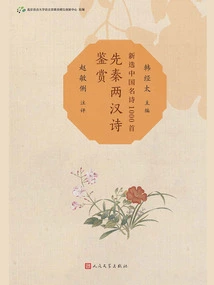
先秦两汉诗鉴赏
Editor-in-chief Han Jingtai Commentary By Zhao Minli
The "Newly Selected 1,000 Famous Chinese Poems" series is edited by Han Jingtai, a distinguished professor at Beijing Language and Culture University, and written by famous contemporary scholars Zhao Minli, Qian Zhixi, Ge Xiaoyin, Mo Lizhen, Zhang Jing, Zuo Dongling, Jiang Yin, and Zhang Fugui. It selects 1,000 famous poems from the vast sea of Chinese poetry, provides detailed annotations and wonderful appreciation, and helps readers appreciate the ideological connotation and artistic characteristics of Chinese poetry. The part about Pre-Qin and Han Dynasties was written by Zhao Minli, a professor at Capital Normal University. The book contains 100 selected poems, including six parts: ancient ballads, "The Book of Songs", "Chu Ci", Yuefu poems of the Han Dynasty, literati poems of the Han Dynasty, and unknown poems of the Han Dynasty. The author selects representative early Chinese poetry works and provides refined annotations and appreciations. Sometimes he adds some simple cultural knowledge introductions so that readers can deepen their understanding of these poems from a historical and cultural perspective.
The "Newly Selected 1,000 Famous Chinese Poems" series is edited by Han Jingtai, a distinguished professor at Beijing Language and Culture University, and written by famous contemporary scholars Zhao Minli, Qian Zhixi, Ge Xiaoyin, Mo Lizhen, Zhang Jing, Zuo Dongling, Jiang Yin, and Zhang Fugui. It selects 1,000 famous poems from the vast sea of Chinese poetry, provides detailed annotations and wonderful appreciation, and helps readers appreciate the ideological connotation and artistic characteristics of Chinese poetry. The part about Pre-Qin and Han Dynasties was written by Zhao Minli, a professor at Capital Normal University. The book contains 100 selected poems, including six parts: ancient ballads, "The Book of Songs", "Chu Ci", Yuefu poems of the Han Dynasty, literati poems of the Han Dynasty, and unknown poems of the Han Dynasty. The author selects representative early Chinese poetry works and provides refined annotations and appreciations. Sometimes he adds some simple cultural knowledge introductions so that readers can deepen their understanding of these poems from a historical and cultural perspective.
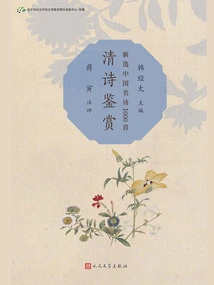
Appreciation of Qing Dynasty Poetry
Literature清诗鉴赏
Editor-in-chief Han Jingtai With Comments By Jiang Yin
The "Newly Selected 1,000 Famous Chinese Poems" series is edited by Han Jingtai, a distinguished professor at Beijing Language and Culture University, and written by famous contemporary scholars Zhao Minli, Qian Zhixi, Ge Xiaoyin, Mo Lizhen, Zhang Jing, Zuo Dongling, Jiang Yin, and Zhang Fugui. It selects 1,000 famous poems from the vast history of Chinese poetry, provides detailed annotations and wonderful appreciation, and helps readers appreciate the ideological connotation and artistic characteristics of Chinese poetry. The Qing Dynasty part was written by Jiang Yin, a famous professor at South China Normal University. Mr. Jiang Yin enjoys a high reputation in the field of Qing poetry research and has published many important works on Qing poetry.
The "Newly Selected 1,000 Famous Chinese Poems" series is edited by Han Jingtai, a distinguished professor at Beijing Language and Culture University, and written by famous contemporary scholars Zhao Minli, Qian Zhixi, Ge Xiaoyin, Mo Lizhen, Zhang Jing, Zuo Dongling, Jiang Yin, and Zhang Fugui. It selects 1,000 famous poems from the vast history of Chinese poetry, provides detailed annotations and wonderful appreciation, and helps readers appreciate the ideological connotation and artistic characteristics of Chinese poetry. The Qing Dynasty part was written by Jiang Yin, a famous professor at South China Normal University. Mr. Jiang Yin enjoys a high reputation in the field of Qing poetry research and has published many important works on Qing poetry.
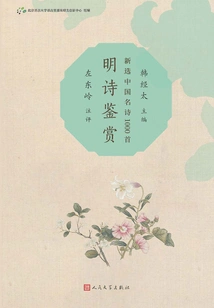
Appreciation of Ming Poetry
Literature明诗鉴赏
Editor-in-chief Han Jingtai Commentary By Zuo Dongling
The "Newly Selected 1,000 Famous Chinese Poems" series is edited by Han Jingtai, a distinguished professor at Beijing Language and Culture University, and written by famous contemporary scholars Zhao Minli, Qian Zhixi, Ge Xiaoyin, Mo Lizhen, Zhang Jing, Zuo Dongling, Jiang Yin, and Zhang Fugui. It selects 1,000 famous poems from the vast history of Chinese poetry, provides detailed annotations and wonderful appreciation, and helps readers appreciate the ideological connotation and artistic characteristics of Chinese poetry. The Ming Dynasty part was written by Zuo Dongling, a famous professor at the School of Liberal Arts of Capital Normal University. Mr. Zuo Dongling has been deeply engaged in the field of Ming Dynasty literature research for many years and has published many important works on Ming Dynasty literature.
The "Newly Selected 1,000 Famous Chinese Poems" series is edited by Han Jingtai, a distinguished professor at Beijing Language and Culture University, and written by famous contemporary scholars Zhao Minli, Qian Zhixi, Ge Xiaoyin, Mo Lizhen, Zhang Jing, Zuo Dongling, Jiang Yin, and Zhang Fugui. It selects 1,000 famous poems from the vast history of Chinese poetry, provides detailed annotations and wonderful appreciation, and helps readers appreciate the ideological connotation and artistic characteristics of Chinese poetry. The Ming Dynasty part was written by Zuo Dongling, a famous professor at the School of Liberal Arts of Capital Normal University. Mr. Zuo Dongling has been deeply engaged in the field of Ming Dynasty literature research for many years and has published many important works on Ming Dynasty literature.
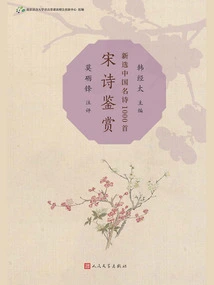
Appreciation of Song Poetry
Literature宋诗鉴赏
Editor-in-chief Han Jingtai Commentary By Mo Lifeng
The "Newly Selected 1,000 Famous Chinese Poems" series is edited by Han Jingtai, a distinguished professor at Beijing Language and Culture University, and written by famous contemporary scholars Zhao Minli, Qian Zhixi, Ge Xiaoyin, Mo Lizhen, Zhang Jing, Zuo Dongling, Jiang Yin, and Zhang Fugui. It selects 1,000 famous poems from the vast history of Chinese poetry, provides detailed annotations and wonderful appreciation, and helps readers appreciate the ideological connotation and artistic characteristics of Chinese poetry. The Song Dynasty part was written by Mo Lifeng, a senior professor of liberal arts at Nanjing University.
The "Newly Selected 1,000 Famous Chinese Poems" series is edited by Han Jingtai, a distinguished professor at Beijing Language and Culture University, and written by famous contemporary scholars Zhao Minli, Qian Zhixi, Ge Xiaoyin, Mo Lizhen, Zhang Jing, Zuo Dongling, Jiang Yin, and Zhang Fugui. It selects 1,000 famous poems from the vast history of Chinese poetry, provides detailed annotations and wonderful appreciation, and helps readers appreciate the ideological connotation and artistic characteristics of Chinese poetry. The Song Dynasty part was written by Mo Lifeng, a senior professor of liberal arts at Nanjing University.
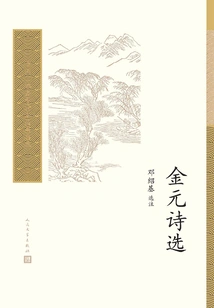
金元诗选
Selected Notes By Deng Shaoji
During the Jin and Yuan Dynasties, outstanding poets such as Yuan Haowen emerged, especially "the author Yunxing was born in the Yuan Dynasty" (General Catalog of the Complete Collection of Four Libraries). There were the so-called "Four Great Masters of Yuan Poetry" (Yu Ji, Yang Zai, Fan Zhen, Jiexisi), and many ethnic minority writers who were good at poetry and prose appeared (Guanyunshi, Sadula, Ma Zuchang, Ding Henian, etc.). The poetry of this period had a great influence on the poetry of the Ming Dynasty, and is also an integral part that cannot be ignored in the development history of ancient Chinese literature. This book selects nearly 100 poems from the Jin Dynasty and nearly 300 poems from the Yuan Dynasty, and provides detailed annotations. The author has a detailed biography, which is of great benefit to readers in learning and appreciating the poetry creation of the Jin and Yuan Dynasties.
During the Jin and Yuan Dynasties, outstanding poets such as Yuan Haowen emerged, especially "the author Yunxing was born in the Yuan Dynasty" (General Catalog of the Complete Collection of Four Libraries). There were the so-called "Four Great Masters of Yuan Poetry" (Yu Ji, Yang Zai, Fan Zhen, Jiexisi), and many ethnic minority writers who were good at poetry and prose appeared (Guanyunshi, Sadula, Ma Zuchang, Ding Henian, etc.). The poetry of this period had a great influence on the poetry of the Ming Dynasty, and is also an integral part that cannot be ignored in the development history of ancient Chinese literature. This book selects nearly 100 poems from the Jin Dynasty and nearly 300 poems from the Yuan Dynasty, and provides detailed annotations. The author has a detailed biography, which is of great benefit to readers in learning and appreciating the poetry creation of the Jin and Yuan Dynasties.
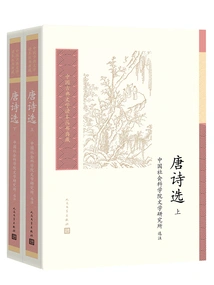
唐诗选(全两册)
Annotated By The Institute Of Literature, Chinese Academy Of Social Sciences
The Tang Dynasty was the peak of the development of Chinese classical poetry. A large number of outstanding poets emerged, such as Li Bai, Du Fu, Wang Wei, Meng Haoran, Gao Shi, Cen Shen, Bai Juyi, Han Yu, Du Mu, Li Shangyin, etc. There are about 50,000 Tang poems in existence today, and there are many anthologies of Tang poems both ancient and modern. The representative work among them is "Three Hundred Tang Poems" compiled by Hengtang retired scholars of the Qing Dynasty. Although the selections are all the best, the book is small in size and cannot well show the style of Tang poetry. "Selected Tang Poems", collectively annotated by experts from the Institute of Literature of the Chinese Academy of Social Sciences, contains more than 630 works from more than 130 authors, which is about twice as many as "Three Hundred Tang Poems" (77 companies, 310 poems). The book not only contains classics of Tang poetry, but also better reflects the development of Tang poetry. In addition, the annotators have made wonderful annotations on the selected Tang poetry works. This book is not only a classic anthology of Tang poetry, but also a model for writing anthologies of contemporary classical literature.
The Tang Dynasty was the peak of the development of Chinese classical poetry. A large number of outstanding poets emerged, such as Li Bai, Du Fu, Wang Wei, Meng Haoran, Gao Shi, Cen Shen, Bai Juyi, Han Yu, Du Mu, Li Shangyin, etc. There are about 50,000 Tang poems in existence today, and there are many anthologies of Tang poems both ancient and modern. The representative work among them is "Three Hundred Tang Poems" compiled by Hengtang retired scholars of the Qing Dynasty. Although the selections are all the best, the book is small in size and cannot well show the style of Tang poetry. "Selected Tang Poems", collectively annotated by experts from the Institute of Literature of the Chinese Academy of Social Sciences, contains more than 630 works from more than 130 authors, which is about twice as many as "Three Hundred Tang Poems" (77 companies, 310 poems). The book not only contains classics of Tang poetry, but also better reflects the development of Tang poetry. In addition, the annotators have made wonderful annotations on the selected Tang poetry works. This book is not only a classic anthology of Tang poetry, but also a model for writing anthologies of contemporary classical literature.
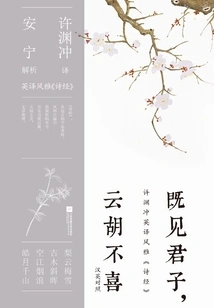
既见君子,云胡不喜(汉英对照)
Translated By Xu Yuanchong And Analyzed By An Ning
Professor Xu Yuanchong has personally translated the English version of Aesthetic Ancient Style and the Anthology of Aesthetic Classical Chinese Studies, which can be read from an early age to an adult about the beauty of China. The beloved world of a hundred-year-old translator, the emotions and stories of ancient literati. Mr. Xu Yuanchong read a poem in "The Long Reader", which made countless readers cry. This is a poem that Xu Yuanchong translated when he was a freshman in college in order to pursue a female classmate. It was published in "Literary Translation News". But it took half a century before I received a reply. And when he was nearly a hundred years old, he was moved to tears when he read this poem. Therefore, Mr. Xu Yuanchong translated into English the most beautiful poems in his heart and shared them with everyone, hoping to bring happiness and touch to everyone. Professor Anning will appreciate these poems in popular and elegant language, and further interpret the stories behind the poems and the author's life, hoping to let more readers feel the beauty of traditional culture. A treasure trove of poetry: Carefully selected classic romantic poems to celebrate the classics that have been passed down for more than a thousand years; Perfect English translation: Mr. Xu Yuanchong, a master translator, personally translates and guides you to appreciate the beauty of bilingual poetry; Poetry appreciation: resolves the difficulties of words and sentences, analyzes allusions in detail, and uses romantic and beautiful language to guide readers Enter the country of poetry; in-depth interpretation: background of the times, historical allusions, modern value... Each poem has its own unique meaning, worthy of tasting and reading; biographies of poets: the legendary life experiences of poets, reading poetry also reads people; exquisite texture: the arrangement of poems is full of ancient style. Appreciation of English translation, Shu Lang and clear. "The Book of Songs" has been sung gracefully from ancient times in the beautiful plains and beautiful scenery to the present day. There is joy, singing and dancing, the heaven and earth are beautiful, and the articles are splendid. Yuan Opera: The emerging literary and artistic styles of the Jin and Yuan Dynasties, folk emotions, and popular art are either crystal clear and graceful, or lively and straightforward. They recreate another pinnacle of ancient Chinese culture in the appreciation of both refined and popular tastes, laughter and tears.
Professor Xu Yuanchong has personally translated the English version of Aesthetic Ancient Style and the Anthology of Aesthetic Classical Chinese Studies, which can be read from an early age to an adult about the beauty of China. The beloved world of a hundred-year-old translator, the emotions and stories of ancient literati. Mr. Xu Yuanchong read a poem in "The Long Reader", which made countless readers cry. This is a poem that Xu Yuanchong translated when he was a freshman in college in order to pursue a female classmate. It was published in "Literary Translation News". But it took half a century before I received a reply. And when he was nearly a hundred years old, he was moved to tears when he read this poem. Therefore, Mr. Xu Yuanchong translated into English the most beautiful poems in his heart and shared them with everyone, hoping to bring happiness and touch to everyone. Professor Anning will appreciate these poems in popular and elegant language, and further interpret the stories behind the poems and the author's life, hoping to let more readers feel the beauty of traditional culture. A treasure trove of poetry: Carefully selected classic romantic poems to celebrate the classics that have been passed down for more than a thousand years; Perfect English translation: Mr. Xu Yuanchong, a master translator, personally translates and guides you to appreciate the beauty of bilingual poetry; Poetry appreciation: resolves the difficulties of words and sentences, analyzes allusions in detail, and uses romantic and beautiful language to guide readers Enter the country of poetry; in-depth interpretation: background of the times, historical allusions, modern value... Each poem has its own unique meaning, worthy of tasting and reading; biographies of poets: the legendary life experiences of poets, reading poetry also reads people; exquisite texture: the arrangement of poems is full of ancient style. Appreciation of English translation, Shu Lang and clear. "The Book of Songs" has been sung gracefully from ancient times in the beautiful plains and beautiful scenery to the present day. There is joy, singing and dancing, the heaven and earth are beautiful, and the articles are splendid. Yuan Opera: The emerging literary and artistic styles of the Jin and Yuan Dynasties, folk emotions, and popular art are either crystal clear and graceful, or lively and straightforward. They recreate another pinnacle of ancient Chinese culture in the appreciation of both refined and popular tastes, laughter and tears.
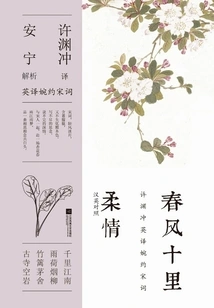
春风十里柔情(汉英对照)
Translated By Xu Yuanchong And Analyzed By An Ning
Professor Xu Yuanchong has personally translated the English version of Aesthetic Ancient Style and the Anthology of Aesthetic Classical Chinese Studies, which can be read from an early age to an adult about the beauty of China. The beloved world of a hundred-year-old translator, the emotions and stories of ancient literati. Mr. Xu Yuanchong read a poem in "The Long Reader", which made countless readers cry. This is a poem that Xu Yuanchong translated when he was a freshman in college in order to pursue a female classmate. It was published in "Literary Translation News". But it took half a century before I received a reply. And when he was nearly a hundred years old, he was moved to tears when he read this poem. Therefore, Mr. Xu Yuanchong translated into English the most beautiful poems in his heart and shared them with everyone, hoping to bring happiness and touch to everyone. Professor Anning will appreciate these poems in popular and elegant language, and further interpret the stories behind the poems and the author's life, hoping to let more readers feel the beauty of traditional culture. A treasure trove of poetry: Carefully selected classic romantic poems to celebrate the classics that have been passed down for more than a thousand years; Perfect English translation: Mr. Xu Yuanchong, a master translator, personally translates and guides you to appreciate the beauty of bilingual poetry; Poetry appreciation: resolves the difficulties of words and sentences, analyzes allusions in detail, and uses romantic and beautiful language to guide readers Enter the country of poetry; in-depth interpretation: background of the times, historical allusions, modern value... Each poem has its own unique meaning, worthy of tasting and reading; biographies of poets: the legendary life experiences of poets, reading poetry also reads people; exquisite texture: the arrangement of poems is full of ancient style. Appreciation of English translation, Shu Lang and clear. The lyrics of the Song Dynasty are full of breeze and light moonlight, implicit and hazy yet elegant. I can't write endless thoughts, and I can't express my affection. Join the people of the Song Dynasty in a dream of apricot blossoms and spring rain in the south of the Yangtze River, and enjoy a song of lovesickness and grow old together.
Professor Xu Yuanchong has personally translated the English version of Aesthetic Ancient Style and the Anthology of Aesthetic Classical Chinese Studies, which can be read from an early age to an adult about the beauty of China. The beloved world of a hundred-year-old translator, the emotions and stories of ancient literati. Mr. Xu Yuanchong read a poem in "The Long Reader", which made countless readers cry. This is a poem that Xu Yuanchong translated when he was a freshman in college in order to pursue a female classmate. It was published in "Literary Translation News". But it took half a century before I received a reply. And when he was nearly a hundred years old, he was moved to tears when he read this poem. Therefore, Mr. Xu Yuanchong translated into English the most beautiful poems in his heart and shared them with everyone, hoping to bring happiness and touch to everyone. Professor Anning will appreciate these poems in popular and elegant language, and further interpret the stories behind the poems and the author's life, hoping to let more readers feel the beauty of traditional culture. A treasure trove of poetry: Carefully selected classic romantic poems to celebrate the classics that have been passed down for more than a thousand years; Perfect English translation: Mr. Xu Yuanchong, a master translator, personally translates and guides you to appreciate the beauty of bilingual poetry; Poetry appreciation: resolves the difficulties of words and sentences, analyzes allusions in detail, and uses romantic and beautiful language to guide readers Enter the country of poetry; in-depth interpretation: background of the times, historical allusions, modern value... Each poem has its own unique meaning, worthy of tasting and reading; biographies of poets: the legendary life experiences of poets, reading poetry also reads people; exquisite texture: the arrangement of poems is full of ancient style. Appreciation of English translation, Shu Lang and clear. The lyrics of the Song Dynasty are full of breeze and light moonlight, implicit and hazy yet elegant. I can't write endless thoughts, and I can't express my affection. Join the people of the Song Dynasty in a dream of apricot blossoms and spring rain in the south of the Yangtze River, and enjoy a song of lovesickness and grow old together.
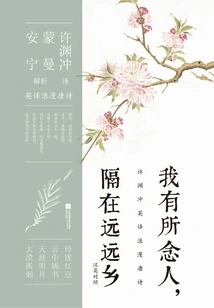
我有所念人,隔在远远乡(汉英对照)
Translated By Xu Yuanchong, Meng Man, Analysis By An Ning
Professor Xu Yuanchong has personally translated the English version of Aesthetic Ancient Style and the Anthology of Aesthetic Classical Chinese Studies, which can be read from an early age to an adult about the beauty of China. The centenary-year-old translator's beloved world, the sentiments and stories of ancient literati, Mr. Xu Yuanchong read a poem in The Long Reader, which made countless readers cry. This is a poem that Xu Yuanchong translated when he was a freshman in college in order to pursue a female classmate. It was published in "Literary Translation News". But it took half a century before I received a reply. And when he was nearly a hundred years old, he was moved to tears when he read this poem. Therefore, Mr. Xu Yuanchong translated into English the most beautiful poems in his heart and shared them with everyone, hoping to bring happiness and touch to everyone. Professors Meng Man and An Ning appreciated these poems in professional and elegant language, and further interpreted the stories behind the poems and the author's life, hoping to let more readers feel the beauty of traditional culture. A treasure trove of poetry: Carefully selected classic romantic poems to celebrate the classics that have been passed down for more than a thousand years; Perfect English translation: Mr. Xu Yuanchong, a master translator, personally translates and guides you to appreciate the beauty of bilingual poetry; Poetry appreciation: resolves the difficulties of words and sentences, analyzes allusions in detail, and uses romantic and beautiful language to guide readers Enter the country of poetry; in-depth interpretation: background of the times, historical allusions, modern value... Each poem has its own unique meaning, worthy of tasting and reading; biographies of poets: the legendary life experiences of poets, reading poetry also reads people; exquisite texture: the arrangement of poems is full of ancient style. Appreciation of English translation, Shu Lang and clear. Exquisite format, lightweight and easy to carry. Tang poetry is romantic and sentimental. The poet is aloof and elegant. Together with the poets of the Tang Dynasty, they expressed their feelings among the mountains and rivers, looked at the distant mountains and seas, and sang about love, hatred and hatred. It is a lovesickness like the stars and the moon, and the loneliness of the bright moon in the end of the world.
Professor Xu Yuanchong has personally translated the English version of Aesthetic Ancient Style and the Anthology of Aesthetic Classical Chinese Studies, which can be read from an early age to an adult about the beauty of China. The centenary-year-old translator's beloved world, the sentiments and stories of ancient literati, Mr. Xu Yuanchong read a poem in The Long Reader, which made countless readers cry. This is a poem that Xu Yuanchong translated when he was a freshman in college in order to pursue a female classmate. It was published in "Literary Translation News". But it took half a century before I received a reply. And when he was nearly a hundred years old, he was moved to tears when he read this poem. Therefore, Mr. Xu Yuanchong translated into English the most beautiful poems in his heart and shared them with everyone, hoping to bring happiness and touch to everyone. Professors Meng Man and An Ning appreciated these poems in professional and elegant language, and further interpreted the stories behind the poems and the author's life, hoping to let more readers feel the beauty of traditional culture. A treasure trove of poetry: Carefully selected classic romantic poems to celebrate the classics that have been passed down for more than a thousand years; Perfect English translation: Mr. Xu Yuanchong, a master translator, personally translates and guides you to appreciate the beauty of bilingual poetry; Poetry appreciation: resolves the difficulties of words and sentences, analyzes allusions in detail, and uses romantic and beautiful language to guide readers Enter the country of poetry; in-depth interpretation: background of the times, historical allusions, modern value... Each poem has its own unique meaning, worthy of tasting and reading; biographies of poets: the legendary life experiences of poets, reading poetry also reads people; exquisite texture: the arrangement of poems is full of ancient style. Appreciation of English translation, Shu Lang and clear. Exquisite format, lightweight and easy to carry. Tang poetry is romantic and sentimental. The poet is aloof and elegant. Together with the poets of the Tang Dynasty, they expressed their feelings among the mountains and rivers, looked at the distant mountains and seas, and sang about love, hatred and hatred. It is a lovesickness like the stars and the moon, and the loneliness of the bright moon in the end of the world.
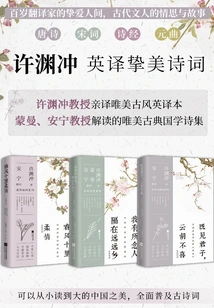
许渊冲英译挚美诗词
Translated By Xu Yuanchong, Meng Man, Analysis By An Ning
Professor Xu Yuanchong has personally translated the English version of Aesthetic Ancient Style and the Anthology of Aesthetic Classical Chinese Studies, which can be read from an early age to an adult about the beauty of China. The beloved world of a hundred-year-old translator, the emotions and stories of ancient literati. Mr. Xu Yuanchong read a poem in "The Long Reader", which made countless readers cry. This is a poem that Xu Yuanchong translated when he was a freshman in college in order to pursue a female classmate. It was published in "Literary Translation News". But it took half a century before I received a reply. And when he was nearly a hundred years old, he was moved to tears when he read this poem. Therefore, Mr. Xu Yuanchong translated into English the most beautiful poems in his heart and shared them with everyone, hoping to bring happiness and touch to everyone. Professors Mengman and An Ning used popular and elegant language to appreciate these poems, and further interpreted the stories behind the poems and the author's life, hoping to let more readers feel the beauty of traditional culture. A treasure trove of poetry: Carefully selected classic romantic poems to celebrate the classics that have been passed down for more than a thousand years; Perfect English translation: Mr. Xu Yuanchong, a master translator, personally translates and guides you to appreciate the beauty of bilingual poetry; Poetry appreciation: resolves the difficulties of words and sentences, analyzes allusions in detail, and uses romantic and beautiful language to guide readers Enter the country of poetry; in-depth interpretation: background of the times, historical allusions, modern value... Each poem has its own unique meaning, worthy of tasting and reading; biographies of poets: the legendary life experiences of poets, reading poetry also reads people; exquisite texture: the arrangement of poems is full of ancient style. Appreciation of English translation, Shu Lang and clear.
Professor Xu Yuanchong has personally translated the English version of Aesthetic Ancient Style and the Anthology of Aesthetic Classical Chinese Studies, which can be read from an early age to an adult about the beauty of China. The beloved world of a hundred-year-old translator, the emotions and stories of ancient literati. Mr. Xu Yuanchong read a poem in "The Long Reader", which made countless readers cry. This is a poem that Xu Yuanchong translated when he was a freshman in college in order to pursue a female classmate. It was published in "Literary Translation News". But it took half a century before I received a reply. And when he was nearly a hundred years old, he was moved to tears when he read this poem. Therefore, Mr. Xu Yuanchong translated into English the most beautiful poems in his heart and shared them with everyone, hoping to bring happiness and touch to everyone. Professors Mengman and An Ning used popular and elegant language to appreciate these poems, and further interpreted the stories behind the poems and the author's life, hoping to let more readers feel the beauty of traditional culture. A treasure trove of poetry: Carefully selected classic romantic poems to celebrate the classics that have been passed down for more than a thousand years; Perfect English translation: Mr. Xu Yuanchong, a master translator, personally translates and guides you to appreciate the beauty of bilingual poetry; Poetry appreciation: resolves the difficulties of words and sentences, analyzes allusions in detail, and uses romantic and beautiful language to guide readers Enter the country of poetry; in-depth interpretation: background of the times, historical allusions, modern value... Each poem has its own unique meaning, worthy of tasting and reading; biographies of poets: the legendary life experiences of poets, reading poetry also reads people; exquisite texture: the arrangement of poems is full of ancient style. Appreciation of English translation, Shu Lang and clear.
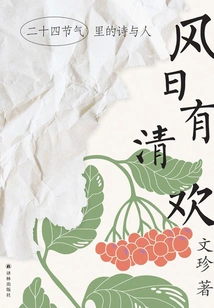
风日有清欢:二十四节气里的诗与人
Wen Zhen
"Poets in the past never imagined that they would be recited repeatedly by future generations to imagine the orderly old days when they were older - but I want people in the future to know that in the century I live in, there are still countless Chinese people who love life and live in the present seriously and with a sense of ritual." This book is the writer Wen Zhen's reflection on herself. I have recorded three years of reading, living, and observing the world. I use classical poems related to the 24 solar terms to solve the theme. Reading, traveling, finding friends, and cherishing people. Yesterday's poems and today's events reflect each other. Pay attention to daily situations in the four seasons. Ancient solar terms can also be a new measure of understanding contemporary life.
"Poets in the past never imagined that they would be recited repeatedly by future generations to imagine the orderly old days when they were older - but I want people in the future to know that in the century I live in, there are still countless Chinese people who love life and live in the present seriously and with a sense of ritual." This book is the writer Wen Zhen's reflection on herself. I have recorded three years of reading, living, and observing the world. I use classical poems related to the 24 solar terms to solve the theme. Reading, traveling, finding friends, and cherishing people. Yesterday's poems and today's events reflect each other. Pay attention to daily situations in the four seasons. Ancient solar terms can also be a new measure of understanding contemporary life.
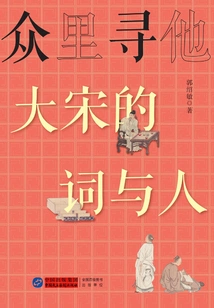
众里寻他:大宋的词与人
Guo Shaomin
The Northern and Southern Song Dynasties were famous for "the emperor and the scholar-bureaucrats co-ruling the world." However, scholars still had to go through countless ups and downs, whether in government or in opposition. Some of them failed in the examinations, some were displaced, some had great ambitions, or some died in commoner life. All kinds of joy, anger, sorrow and joy poured out from their pens, and they became masterpieces that have been passed down through the ages. This book carefully selects the finest works of Song poetry and explains the artistic conception of their works through the lives of poets such as Su Shi, Li Qingzhao, Xin Qiji, and Liu Yong. The book uses allusions carefully and quotes extensively. The author tries to incorporate modern elements and stories into the interpretation of Song poetry, so that readers can not only understand the vivid and interesting souls of several poets and the cultural connotation behind Song poetry, but also witness the rise and fall of an era that coexists with prosperity and desolation.
The Northern and Southern Song Dynasties were famous for "the emperor and the scholar-bureaucrats co-ruling the world." However, scholars still had to go through countless ups and downs, whether in government or in opposition. Some of them failed in the examinations, some were displaced, some had great ambitions, or some died in commoner life. All kinds of joy, anger, sorrow and joy poured out from their pens, and they became masterpieces that have been passed down through the ages. This book carefully selects the finest works of Song poetry and explains the artistic conception of their works through the lives of poets such as Su Shi, Li Qingzhao, Xin Qiji, and Liu Yong. The book uses allusions carefully and quotes extensively. The author tries to incorporate modern elements and stories into the interpretation of Song poetry, so that readers can not only understand the vivid and interesting souls of several poets and the cultural connotation behind Song poetry, but also witness the rise and fall of an era that coexists with prosperity and desolation.
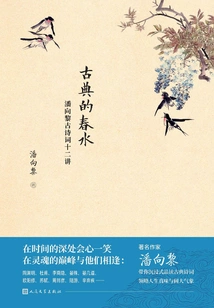
古典的春水:潘向黎古诗词十二讲
Pan Xiangli
This is a more mature collection of ancient poetry and essays by Pan Xiangli after "Unclear Poetry" and "News from the Plum Edge". Focusing on keywords such as melancholy, female beauty, and nostalgia in ancient poetry, the book tells readers about the beauty of connotations in ancient traditional Chinese poetry from the Book of Songs to Tang poetry and Song poetry. It also includes close-to-spiritual speculations and meticulous interpretations of famous poets such as the mid- and late-Tang Dynasty poets, Ouyang Xiu, Zhou Bangyan, Er Yan, Su Shi, Lu You, and Xin Qiji. This is the pinnacle and final work of the author's ancient poetry course. Since its publication in "Zhongshan" magazine, it has been popular among the industry and readers. The column "Like Flowers in the Wild" has just won the 4th "Zhongshan" Literary Award.
This is a more mature collection of ancient poetry and essays by Pan Xiangli after "Unclear Poetry" and "News from the Plum Edge". Focusing on keywords such as melancholy, female beauty, and nostalgia in ancient poetry, the book tells readers about the beauty of connotations in ancient traditional Chinese poetry from the Book of Songs to Tang poetry and Song poetry. It also includes close-to-spiritual speculations and meticulous interpretations of famous poets such as the mid- and late-Tang Dynasty poets, Ouyang Xiu, Zhou Bangyan, Er Yan, Su Shi, Lu You, and Xin Qiji. This is the pinnacle and final work of the author's ancient poetry course. Since its publication in "Zhongshan" magazine, it has been popular among the industry and readers. The column "Like Flowers in the Wild" has just won the 4th "Zhongshan" Literary Award.
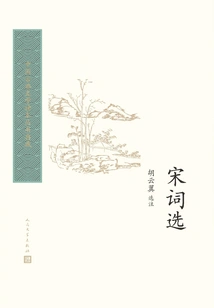
Selected Song Poems
Literature宋词选
Selected Notes By Hu Yunyi
Song Ci occupies a very important position in the history of Chinese literature. The "Song Poems" selected and annotated by Mr. Hu Yunyi can be regarded as a classic among the Song Dynasty anthologies. The anthology breaks the tradition of word selection that emphasizes the rhythm of words such as "Three Hundred Song Ci Poems" and pays more attention to the ideological connotation of the lyrics. Therefore, Jiaxuan's words are selected the most in the anthology, followed by Dongpo and others. For poets such as Ouyang Xiu, Yan Shu, Liu Yong, and Yan Jidao, they also pay more attention to the bright and lively lyrics. At the same time, the detailed annotations and incisive and clear comments can not only help readers better appreciate the charming style of Song Ci, so that readers can get more life experience and beauty cultivation, but also help to form correct value judgments on the Ci poetry of the past, so it is very suitable for ordinary readers.
Song Ci occupies a very important position in the history of Chinese literature. The "Song Poems" selected and annotated by Mr. Hu Yunyi can be regarded as a classic among the Song Dynasty anthologies. The anthology breaks the tradition of word selection that emphasizes the rhythm of words such as "Three Hundred Song Ci Poems" and pays more attention to the ideological connotation of the lyrics. Therefore, Jiaxuan's words are selected the most in the anthology, followed by Dongpo and others. For poets such as Ouyang Xiu, Yan Shu, Liu Yong, and Yan Jidao, they also pay more attention to the bright and lively lyrics. At the same time, the detailed annotations and incisive and clear comments can not only help readers better appreciate the charming style of Song Ci, so that readers can get more life experience and beauty cultivation, but also help to form correct value judgments on the Ci poetry of the past, so it is very suitable for ordinary readers.
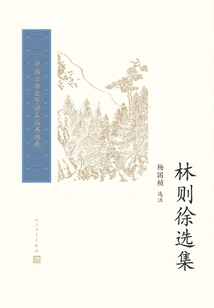
Selected Works of Lin Zexu
Literature林则徐选集
Selected Notes By Yang Guozhen
Lin Zexu was a political activist in the first half of the 19th century. He was not a pure scholar or poet, but this did not prevent his poems from having a unique artistic style. From the content point of view, Lin Zexu's works reflect a strong sense of urgency and documentary characteristics, and at the same time have artistic characteristics of strong ambition and brilliance. By reading Lin Zexu's poetry and prose, readers can have a more vivid and profound understanding of the background of the times, the social atmosphere at that time, and Lin Zexu's own courage and spirit through the content of these artistic works. The book is carefully annotated and can give a detailed introduction to the work based on various factors such as the author's life and historical background. After Mr. Yang Guozhen's selection and annotation, these works are more readable.
Lin Zexu was a political activist in the first half of the 19th century. He was not a pure scholar or poet, but this did not prevent his poems from having a unique artistic style. From the content point of view, Lin Zexu's works reflect a strong sense of urgency and documentary characteristics, and at the same time have artistic characteristics of strong ambition and brilliance. By reading Lin Zexu's poetry and prose, readers can have a more vivid and profound understanding of the background of the times, the social atmosphere at that time, and Lin Zexu's own courage and spirit through the content of these artistic works. The book is carefully annotated and can give a detailed introduction to the work based on various factors such as the author's life and historical background. After Mr. Yang Guozhen's selection and annotation, these works are more readable.
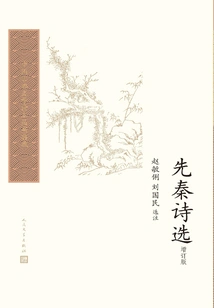
先秦诗选(增订版)
Selected Notes By Zhao Minli And Liu Guomin
Pre-Qin poetry is simple and elegant, with unique form, rich content, and long rhyme. It represents two peaks of ancient Chinese literature: one is the source of Chinese literature and the first collection of poetry, the Book of Songs, from which later generations of literati summarized the fundamental principles of Chinese poetry creation such as "elegance" and "Bixing" and regarded it as a model for later generations of poetry creation; the other is the Chu Ci represented by Qu Yuan's works, which represents the poetic art of southern China characterized by individual singing. In addition, there are ancient ballads scattered in classics that retain the appearance of original poetry. This book pays attention to artistry and ideological aspects in the selection of poems. The annotations are concise and easy to understand, and the interpretation is accurate and appropriate. It provides readers with an excellent selection that comprehensively grasps the artistic style of Pre-Qin poetry and understands the profound content of Pre-Qin poetry.
Pre-Qin poetry is simple and elegant, with unique form, rich content, and long rhyme. It represents two peaks of ancient Chinese literature: one is the source of Chinese literature and the first collection of poetry, the Book of Songs, from which later generations of literati summarized the fundamental principles of Chinese poetry creation such as "elegance" and "Bixing" and regarded it as a model for later generations of poetry creation; the other is the Chu Ci represented by Qu Yuan's works, which represents the poetic art of southern China characterized by individual singing. In addition, there are ancient ballads scattered in classics that retain the appearance of original poetry. This book pays attention to artistry and ideological aspects in the selection of poems. The annotations are concise and easy to understand, and the interpretation is accurate and appropriate. It provides readers with an excellent selection that comprehensively grasps the artistic style of Pre-Qin poetry and understands the profound content of Pre-Qin poetry.
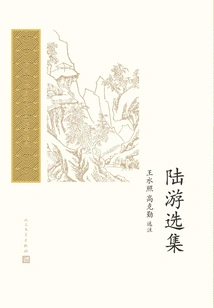
Selected Works of Lu You
Literature陆游选集
Selected Notes By Wang Shuizhao And Gao Keqin
Lu You is the most famous patriotic poet in the Southern Song Dynasty in my country. He has achieved high achievements in poetry, lyrics and writing. The "Selected Works of Lu You" annotated by Mr. Wang Shuizhao and Mr. Gao Keqin contains more than 400 representative works of Lu You in various periods and styles. It is an excellent anthology that can comprehensively reflect Lu You's creative achievements and style. The original text is excellent, the selection is classic, and the annotations are concise and accurate. Lu You is a popular writer among readers, and the annotator, Mr. Wang Shuizhao, is a master in the study of Song Dynasty literature.
Lu You is the most famous patriotic poet in the Southern Song Dynasty in my country. He has achieved high achievements in poetry, lyrics and writing. The "Selected Works of Lu You" annotated by Mr. Wang Shuizhao and Mr. Gao Keqin contains more than 400 representative works of Lu You in various periods and styles. It is an excellent anthology that can comprehensively reflect Lu You's creative achievements and style. The original text is excellent, the selection is classic, and the annotations are concise and accurate. Lu You is a popular writer among readers, and the annotator, Mr. Wang Shuizhao, is a master in the study of Song Dynasty literature.
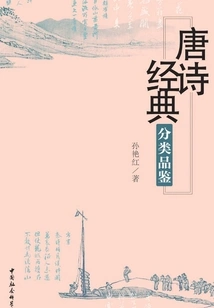
唐诗经典分类品鉴
Sun Yanhong
The book is divided into nine chapters, selecting nine categories of poems for evaluation and appreciation, including the most distinctive poems of the Tang Dynasty, such as separation from friends and friends, homesickness while traveling, love and palace resentment, love and marriage, mourning for immortals, chanting about things and aspirations, chanting about history and remembering the past, landscapes and pastoral, and frontier fortress battles. The poets selected are mainly first-rate poets, as well as second-rate and third-rate poets. The selected poetry list not only pays attention to the reception history of Tang poetry, but also refers to the required reading list of ancient poetry in basic education and the value orientation of national reading. 233 Poems by 85 poets are selected, focusing on the emotional characteristics, main content, and artistic techniques of each type of poem. Each chapter uses a close-reading analysis of the Chinese text to appreciate three or four poems. The outline-based appreciation and the comments on famous sentences complement each other, and the details are appropriate and complement each other. The purpose of elucidating the subtleties is to deeply explore the aesthetic fashion and cultural value of each type of poetry, and lead readers through the historical tunnel to appreciate the culture and art of the Tang Dynasty, thereby promoting traditional culture and improving readers' aesthetic ability.
The book is divided into nine chapters, selecting nine categories of poems for evaluation and appreciation, including the most distinctive poems of the Tang Dynasty, such as separation from friends and friends, homesickness while traveling, love and palace resentment, love and marriage, mourning for immortals, chanting about things and aspirations, chanting about history and remembering the past, landscapes and pastoral, and frontier fortress battles. The poets selected are mainly first-rate poets, as well as second-rate and third-rate poets. The selected poetry list not only pays attention to the reception history of Tang poetry, but also refers to the required reading list of ancient poetry in basic education and the value orientation of national reading. 233 Poems by 85 poets are selected, focusing on the emotional characteristics, main content, and artistic techniques of each type of poem. Each chapter uses a close-reading analysis of the Chinese text to appreciate three or four poems. The outline-based appreciation and the comments on famous sentences complement each other, and the details are appropriate and complement each other. The purpose of elucidating the subtleties is to deeply explore the aesthetic fashion and cultural value of each type of poetry, and lead readers through the historical tunnel to appreciate the culture and art of the Tang Dynasty, thereby promoting traditional culture and improving readers' aesthetic ability.
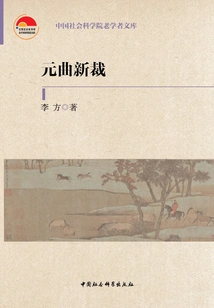
New Song of Yuan Dynasty
Literature元曲新裁
Li Fang
As a popular reading about Yuan opera, the first part of this book comprehensively introduces the basic knowledge about Yuan opera, especially Sanqu, and points out the methods of composing Yuan opera. The lower part selects representative works, indicates their format (number of words, sentence patterns, rhyme and antithesis requirements, etc.), Distinguishes the orthographic characters and lining characters, and adds detailed annotations, so as to provide reference for fans of Yuan opera to increase their appreciation level and improve their ability to compose Yuan opera. The author has done in-depth research on the rhythm of ancient poetry and music. The introduction of Yuan opera in the book is very informative. At the same time, because the author has formulated strict selection criteria, this book can also be regarded as a good selection of Yuan opera.
As a popular reading about Yuan opera, the first part of this book comprehensively introduces the basic knowledge about Yuan opera, especially Sanqu, and points out the methods of composing Yuan opera. The lower part selects representative works, indicates their format (number of words, sentence patterns, rhyme and antithesis requirements, etc.), Distinguishes the orthographic characters and lining characters, and adds detailed annotations, so as to provide reference for fans of Yuan opera to increase their appreciation level and improve their ability to compose Yuan opera. The author has done in-depth research on the rhythm of ancient poetry and music. The introduction of Yuan opera in the book is very informative. At the same time, because the author has formulated strict selection criteria, this book can also be regarded as a good selection of Yuan opera.
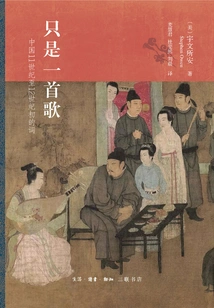
只是一首歌:中国11世纪至12世纪初的词
(us) Yuwen Suoan
The author focuses on and traces how during the Northern Song Dynasty, lyrics evolved from performance texts for banquets to add to the entertainment, through the processes of creation, singing, copying, and collection, and finally evolved into an independent literary genre, gradually gaining an orthodox status alongside poetry. On the one hand, Yuwen Suo'an regards the history of Ci as "the history of Ci collections" rather than "the history of Ci poets" from a new perspective such as performance practice, text dissemination, author issues, compilation and evolution of Ci collections; on the other hand, he also pays close attention to representative Ci poets such as Liu Yong, Yan Jidao, Su Shi, Qin Guan, He We conduct textual interpretations of the works of Zhu Zhu, Zhou Bangyan, Li Qingzhao and others, analyze their different stylistic characteristics and the correlation and influence between them, and strive to present the diachronic development of Ci and its authorization, stylization and canonization process from multiple levels.
The author focuses on and traces how during the Northern Song Dynasty, lyrics evolved from performance texts for banquets to add to the entertainment, through the processes of creation, singing, copying, and collection, and finally evolved into an independent literary genre, gradually gaining an orthodox status alongside poetry. On the one hand, Yuwen Suo'an regards the history of Ci as "the history of Ci collections" rather than "the history of Ci poets" from a new perspective such as performance practice, text dissemination, author issues, compilation and evolution of Ci collections; on the other hand, he also pays close attention to representative Ci poets such as Liu Yong, Yan Jidao, Su Shi, Qin Guan, He We conduct textual interpretations of the works of Zhu Zhu, Zhou Bangyan, Li Qingzhao and others, analyze their different stylistic characteristics and the correlation and influence between them, and strive to present the diachronic development of Ci and its authorization, stylization and canonization process from multiple levels.
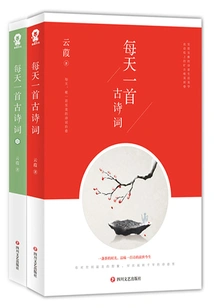
每天一首古诗词(全集)
Yunjia
Ancient poetry is a dazzling pearl in the history of Chinese literature. After thousands of years, it is still dazzling. "An Ancient Poetry Every Day" is based on the concept of simplicity and elegance. Among the vast and complex classical poems, it selects famous works, including the fantasy and magnificence of the Pre-Qin Dynasty, the elegance of the Han and Tang Dynasties, and the elegance and sentimentality of the Yasong Dynasty. It forms an ancient and beautiful picture full of vitality, taking readers to easily travel through the ages, feel the purest and most sincere classical feelings, and let the soul find a poetic dwelling place in the noisy and impetuous life.
Ancient poetry is a dazzling pearl in the history of Chinese literature. After thousands of years, it is still dazzling. "An Ancient Poetry Every Day" is based on the concept of simplicity and elegance. Among the vast and complex classical poems, it selects famous works, including the fantasy and magnificence of the Pre-Qin Dynasty, the elegance of the Han and Tang Dynasties, and the elegance and sentimentality of the Yasong Dynasty. It forms an ancient and beautiful picture full of vitality, taking readers to easily travel through the ages, feel the purest and most sincere classical feelings, and let the soul find a poetic dwelling place in the noisy and impetuous life.
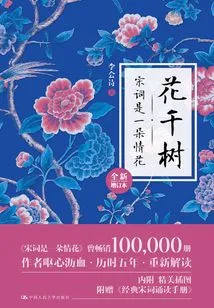
花千树:宋词是一朵情花(全新增订本)
Li Huishi
In the Valley of Unfeeling and the Cliff of Broken Heart, life and death are promised in this world, but love flowers are the only thing. She is frosty and dewy, bright and charming, blooming in the deep valley of ruthlessness and unrighteousness. Song Ci is the gorgeous flower of love that blooms in the valley of despair, and we have all been poisoned by it. All those who have been "poisoned" by Song poetry will hide their books in deep thought and burst into tears. This book takes love as the outline and people as the network. It lays out exquisite Song poems one after another, tells touching stories one after another, and takes us into the Chimei Gallery of the two Song Dynasties a thousand years ago.
In the Valley of Unfeeling and the Cliff of Broken Heart, life and death are promised in this world, but love flowers are the only thing. She is frosty and dewy, bright and charming, blooming in the deep valley of ruthlessness and unrighteousness. Song Ci is the gorgeous flower of love that blooms in the valley of despair, and we have all been poisoned by it. All those who have been "poisoned" by Song poetry will hide their books in deep thought and burst into tears. This book takes love as the outline and people as the network. It lays out exquisite Song poems one after another, tells touching stories one after another, and takes us into the Chimei Gallery of the two Song Dynasties a thousand years ago.
Source of Ancient Poetry
Literature古诗源
(qing Dynasty) Selected And Edited By Shen Deqian, Edited By Wang Xiaole And Edited By Cui Chenxi
"The Source of Ancient Poems" was compiled and selected by Shen Deqian of the Qing Dynasty. It is an anthology of poems before the Tang Dynasty. This book selects poems from various eras from the Pre-Qin Dynasty to the Sui Dynasty, with a total of more than 700 poems divided into 14 volumes. The collection of works is extremely extensive. In addition to the "Book of Songs" and "Chu Ci" before the Tang Dynasty, almost all famous poems are included in it. It is a must-read book to understand the poetry before the Tang Dynasty. Although the editor intends to restore ancient times and promote "poetic education" and advocate "elegance" through poetry selection, poetry annotation and poetry criticism, and expresses old and conservative poetic concepts, judging from his poetry selection standards, his artistic insights are relatively high and objectively reflects the true development of poetry.
"The Source of Ancient Poems" was compiled and selected by Shen Deqian of the Qing Dynasty. It is an anthology of poems before the Tang Dynasty. This book selects poems from various eras from the Pre-Qin Dynasty to the Sui Dynasty, with a total of more than 700 poems divided into 14 volumes. The collection of works is extremely extensive. In addition to the "Book of Songs" and "Chu Ci" before the Tang Dynasty, almost all famous poems are included in it. It is a must-read book to understand the poetry before the Tang Dynasty. Although the editor intends to restore ancient times and promote "poetic education" and advocate "elegance" through poetry selection, poetry annotation and poetry criticism, and expresses old and conservative poetic concepts, judging from his poetry selection standards, his artistic insights are relatively high and objectively reflects the true development of poetry.
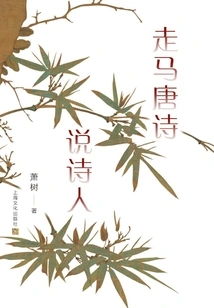
Poem of Tang Dynasty Poetry on Zouma
Literature走马唐诗说诗人
Xiao Shu
This book introduces the experiences and works of the poets of the Tang Dynasty, and selects a total of 37 representative poets from different periods, including the early Tang, the prosperous Tang, the middle Tang, and the late Tang. Through the evaluation and appreciation of their life experiences, creative processes, and representative works, this book presents the different characteristics and styles of Tang poetry in different periods in response to the different poets, and then summarizes the overall picture of Tang poetry. This book focuses on appreciation, with a fresh perspective, concise and vivid writing, clear and clear writing, unique perspective, and lofty interest. It is a book on Tang poetry appreciation with a grand layout and outstanding style, and is also an excellent model for essay writing. It is suitable for teachers, students and lovers of ancient Chinese literature to read.
This book introduces the experiences and works of the poets of the Tang Dynasty, and selects a total of 37 representative poets from different periods, including the early Tang, the prosperous Tang, the middle Tang, and the late Tang. Through the evaluation and appreciation of their life experiences, creative processes, and representative works, this book presents the different characteristics and styles of Tang poetry in different periods in response to the different poets, and then summarizes the overall picture of Tang poetry. This book focuses on appreciation, with a fresh perspective, concise and vivid writing, clear and clear writing, unique perspective, and lofty interest. It is a book on Tang poetry appreciation with a grand layout and outstanding style, and is also an excellent model for essay writing. It is suitable for teachers, students and lovers of ancient Chinese literature to read.
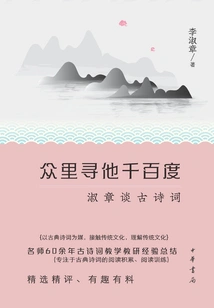
众里寻他千百度:淑章谈古诗词
Li Shuzhang
This book takes classic ancient poetry as the starting point and integrates knowledge from multiple disciplines such as literature, history, aesthetics, philology, and art. This book contains 100 classic ancient poems, which are mainly divided into three parts: "Poetry Appreciation", "Anecdotes about the Author\u002F Works Anecdotes" and "Appendix". Among them, "Poetry Appreciation" focuses on interpreting poems from the aspects of ideological content and creative art, and on the basis of sorting out the meaning of the poem, in-depth analysis of the creative characteristics of poems; "Anecdotes about the author\u002FAnecdotes about the work" are background information or supplementary materials about the author or the work, so that readers can better understand the poems. In response to the creative background of the poems or the poet's life experience, it aims to improve the appreciation of ancient poems from the perspective of exploring the value of China's excellent traditional culture; the "Appendix" is the experience of people in various teaching fields studying "Shu Zhang Talks about Ancient Poems", which is both a summary of teaching experience and an accumulation of learning experience.
This book takes classic ancient poetry as the starting point and integrates knowledge from multiple disciplines such as literature, history, aesthetics, philology, and art. This book contains 100 classic ancient poems, which are mainly divided into three parts: "Poetry Appreciation", "Anecdotes about the Author\u002F Works Anecdotes" and "Appendix". Among them, "Poetry Appreciation" focuses on interpreting poems from the aspects of ideological content and creative art, and on the basis of sorting out the meaning of the poem, in-depth analysis of the creative characteristics of poems; "Anecdotes about the author\u002FAnecdotes about the work" are background information or supplementary materials about the author or the work, so that readers can better understand the poems. In response to the creative background of the poems or the poet's life experience, it aims to improve the appreciation of ancient poems from the perspective of exploring the value of China's excellent traditional culture; the "Appendix" is the experience of people in various teaching fields studying "Shu Zhang Talks about Ancient Poems", which is both a summary of teaching experience and an accumulation of learning experience.
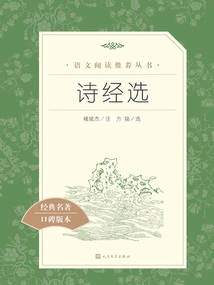
Selected Poems
Literature诗经选
Notes By Chu Binjie And Fang Mingxuan
"The Book of Songs" is the earliest poetry collection in my country, including style, elegance, and odes. It contains 305 poems, covering all aspects of social life such as love, marriage, folk customs, singing and dancing, farming, labor, banquets, sacrifices, wars, etc. It vividly presents the rich life picture of the entire society in ancient times, marking the first peak of my country's poetry creation. Because of its creative achievements, it has become a model for future generations of poets to learn from, and is praised as "real gold and jade." This book contains a selection of 152 poems, which are detailed and detailed. It refers to the achievements of predecessors, accurately explains the meaning and theme of each poem, and clearly annotates each sentence of each chapter. It is an excellent anthology among similar books.
"The Book of Songs" is the earliest poetry collection in my country, including style, elegance, and odes. It contains 305 poems, covering all aspects of social life such as love, marriage, folk customs, singing and dancing, farming, labor, banquets, sacrifices, wars, etc. It vividly presents the rich life picture of the entire society in ancient times, marking the first peak of my country's poetry creation. Because of its creative achievements, it has become a model for future generations of poets to learn from, and is praised as "real gold and jade." This book contains a selection of 152 poems, which are detailed and detailed. It refers to the achievements of predecessors, accurately explains the meaning and theme of each poem, and clearly annotates each sentence of each chapter. It is an excellent anthology among similar books.
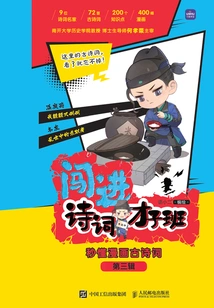
闯进诗词才子班:秒懂漫画古诗词(第三辑)
Edited By Yu Xiaoer
Ancient poetry is the shining pearl in our country's traditional culture. Over the past thousands of years, a large number of famous poets have emerged in our country. The poems they created have a wide range of themes and far-reaching influence. Their famous works have traveled through thousands of years and exuded a dazzling light. This book selects nine famous poets in Chinese history, including Wen Tingyun, Wei Zhuang, Li Yu, Liu Yong, Yan Shu, Yan Jidao, Su Shi, Huang Tingjian, and Qin Guan, and uses comics to express their life experiences and creative processes. It also introduces their famous poems, hoping that in this way, readers can get closer to famous ancient poems, understand the stories behind the poems, and appreciate the charm of ancient poems. This book is suitable for primary and secondary school students and readers who are interested in ancient poetry.
Ancient poetry is the shining pearl in our country's traditional culture. Over the past thousands of years, a large number of famous poets have emerged in our country. The poems they created have a wide range of themes and far-reaching influence. Their famous works have traveled through thousands of years and exuded a dazzling light. This book selects nine famous poets in Chinese history, including Wen Tingyun, Wei Zhuang, Li Yu, Liu Yong, Yan Shu, Yan Jidao, Su Shi, Huang Tingjian, and Qin Guan, and uses comics to express their life experiences and creative processes. It also introduces their famous poems, hoping that in this way, readers can get closer to famous ancient poems, understand the stories behind the poems, and appreciate the charm of ancient poems. This book is suitable for primary and secondary school students and readers who are interested in ancient poetry.
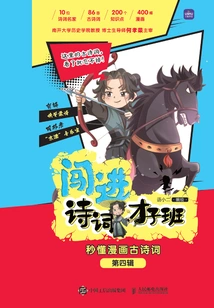
Breaking into the Poetry Talent Class: Understand Ancient Comic Poetry in a Second (fourth Series)
Literature闯进诗词才子班:秒懂漫画古诗词(第四辑)
Edited By Yu Xiaoer
Ancient poetry is the shining pearl in our country's traditional culture. Over the past thousands of years, a large number of famous poets have emerged in our country. The poems they created have a wide range of themes and far-reaching influence. Their famous works have traveled through thousands of years and exuded a dazzling light. This book selects ten famous poets in Chinese history, including He Zhu, Zhou Bangyan, Zhu Dunru, Li Qingzhao, Zhang Yuanqian, Zhang Xiaoxiang, Xin Qiji, Jiang Kui, Chen Zilong, and Nalan Xingde. Their life experiences and creative processes are expressed in comics, and their famous poems are introduced. In this way, readers can get closer to famous ancient poems, understand the stories behind the poems, and appreciate the charm of ancient poems. This book is suitable for primary and secondary school students and readers who are interested in ancient poetry.
Ancient poetry is the shining pearl in our country's traditional culture. Over the past thousands of years, a large number of famous poets have emerged in our country. The poems they created have a wide range of themes and far-reaching influence. Their famous works have traveled through thousands of years and exuded a dazzling light. This book selects ten famous poets in Chinese history, including He Zhu, Zhou Bangyan, Zhu Dunru, Li Qingzhao, Zhang Yuanqian, Zhang Xiaoxiang, Xin Qiji, Jiang Kui, Chen Zilong, and Nalan Xingde. Their life experiences and creative processes are expressed in comics, and their famous poems are introduced. In this way, readers can get closer to famous ancient poems, understand the stories behind the poems, and appreciate the charm of ancient poems. This book is suitable for primary and secondary school students and readers who are interested in ancient poetry.
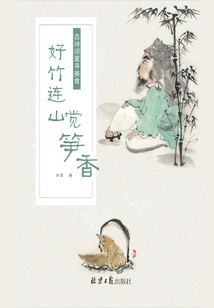
好竹连山觉笋香:古诗词里寻美食
Liu Fei
"When the Yangtze River goes around Guo, you will know the beauty of the fish, and when the mountains are full of good bamboos, you will feel the fragrance of bamboo shoots." In the lives of Chinese people, eating is an extremely important thing. "Food is the first necessity of the people" is not just a saying. Food has a long history, and food culture is as bright as the stars. The poems describing food by great poets such as Li Bai, Du Fu, Su Shi, Lu You, and Yang Wanli are even more bright stars in the night sky. "Good Bamboo Mountains and the Fragrance of Bamboo Shoots: Looking for Food in Ancient Poems" selects 37 ancient poems as the starting point, divided into six categories: vegetarian food, the beauty of fresh food, abundant harvests, the fragrance of flowers and fruits, food customs of the four seasons, and food miscellaneous notes, and introduces the origin of food. It covers evolution, traditional customs, historical allusions, etc. Each chapter is equipped with exquisite illustrations, both pictures and texts are easy to understand. It pays attention to both knowledge and interest. It is an excellent book about traditional food, solar terms and food customs.
"When the Yangtze River goes around Guo, you will know the beauty of the fish, and when the mountains are full of good bamboos, you will feel the fragrance of bamboo shoots." In the lives of Chinese people, eating is an extremely important thing. "Food is the first necessity of the people" is not just a saying. Food has a long history, and food culture is as bright as the stars. The poems describing food by great poets such as Li Bai, Du Fu, Su Shi, Lu You, and Yang Wanli are even more bright stars in the night sky. "Good Bamboo Mountains and the Fragrance of Bamboo Shoots: Looking for Food in Ancient Poems" selects 37 ancient poems as the starting point, divided into six categories: vegetarian food, the beauty of fresh food, abundant harvests, the fragrance of flowers and fruits, food customs of the four seasons, and food miscellaneous notes, and introduces the origin of food. It covers evolution, traditional customs, historical allusions, etc. Each chapter is equipped with exquisite illustrations, both pictures and texts are easy to understand. It pays attention to both knowledge and interest. It is an excellent book about traditional food, solar terms and food customs.
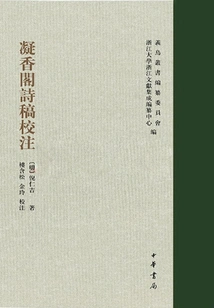
凝香阁诗稿校注:义乌丛书
(ming Dynasty) Written By Ni Renji, Edited By Lou Hansong And Edited By Jin Ling
This book is a collection of poetry manuscripts by Ni Renji, a writer in the late Ming and early Qing dynasties. Ni Renjineng is a poet and essayist, and is the author of one volume of "Poems of Ningxiang Pavilion", one volume of "Poems on Palace Intentions", and one volume of "Miscellaneous Odes of Mountain Residence", which were jointly engraved into "Manuscript of Poems of Ningxiang Pavilion" in the early years of Kangxi. However, the Kangxi edition was destroyed by the San Francisco Rebellion, and the printed edition has not been handed down to this day. The only surviving edition is the reprinted edition dated to the 21st year of the Jiaqing reign of the Qing Dynasty (1816). Among them, "Poems of Ningxiang Pavilion" contains 89 poems with a total of 150 poems, and "Poetry List of Doctor Guanxian" is followed by eight poems from his father's "Poems of Eight Scenes of Little West Lake"; "Poems of Palace Intentions" contains 37 seven-character quatrains, which are from the album "Palace Intentions" painted by Renji. A collection of poems with titles, each poem is preceded by a detailed description of the relevant picture situation. Unfortunately, the picture album "Palace Intentions" is no longer available; "Miscellaneous Odes of Mountain Dwelling" contains 144 five-character quatrains, mainly describing the scenery and customs of the four seasons in the mountainous areas of Lanxi and Pujiang. At the end of the book, there are seven Qilufan poems written by niece Ni Yizi.
This book is a collection of poetry manuscripts by Ni Renji, a writer in the late Ming and early Qing dynasties. Ni Renjineng is a poet and essayist, and is the author of one volume of "Poems of Ningxiang Pavilion", one volume of "Poems on Palace Intentions", and one volume of "Miscellaneous Odes of Mountain Residence", which were jointly engraved into "Manuscript of Poems of Ningxiang Pavilion" in the early years of Kangxi. However, the Kangxi edition was destroyed by the San Francisco Rebellion, and the printed edition has not been handed down to this day. The only surviving edition is the reprinted edition dated to the 21st year of the Jiaqing reign of the Qing Dynasty (1816). Among them, "Poems of Ningxiang Pavilion" contains 89 poems with a total of 150 poems, and "Poetry List of Doctor Guanxian" is followed by eight poems from his father's "Poems of Eight Scenes of Little West Lake"; "Poems of Palace Intentions" contains 37 seven-character quatrains, which are from the album "Palace Intentions" painted by Renji. A collection of poems with titles, each poem is preceded by a detailed description of the relevant picture situation. Unfortunately, the picture album "Palace Intentions" is no longer available; "Miscellaneous Odes of Mountain Dwelling" contains 144 five-character quatrains, mainly describing the scenery and customs of the four seasons in the mountainous areas of Lanxi and Pujiang. At the end of the book, there are seven Qilufan poems written by niece Ni Yizi.
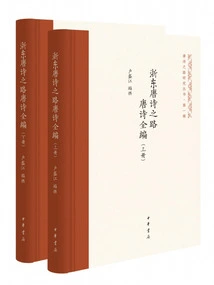
The Road to Tang Poetry in Eastern Zhejiang, Complete Collection of Tang Poems (Two Volumes)
Literature浙东唐诗之路唐诗全编(全二册)
Compiled By Lu Shengjiang
During the Tang Dynasty, poets shuttled back and forth among the beautiful mountains and rivers of the seven states in eastern Zhejiang, lingering and chanting endlessly. They not only left more than a thousand poems, but also created a poetic cultural ancient road - the Road of Tang Poetry in Eastern Zhejiang. Lu Shengjiang, a professor at Nankai University and the president of the Research Association of the Road to Tang Poetry, compiled Tang and Five Dynasties poems related to Eastern Zhejiang, especially its cultural sceneries, from documents such as "Complete Tang Poetry", "Supplement to the Complete Tang Poetry" and "Collection of Kuaiji Duoying". This book is the most comprehensive collection of Tang poems on the Road to Tang Poetry in Eastern Zhejiang that has been seen so far. It is a basic and informative work on the study of the Road to Tang Poetry in Eastern Zhejiang. It is expected to become an important reference in this field.
During the Tang Dynasty, poets shuttled back and forth among the beautiful mountains and rivers of the seven states in eastern Zhejiang, lingering and chanting endlessly. They not only left more than a thousand poems, but also created a poetic cultural ancient road - the Road of Tang Poetry in Eastern Zhejiang. Lu Shengjiang, a professor at Nankai University and the president of the Research Association of the Road to Tang Poetry, compiled Tang and Five Dynasties poems related to Eastern Zhejiang, especially its cultural sceneries, from documents such as "Complete Tang Poetry", "Supplement to the Complete Tang Poetry" and "Collection of Kuaiji Duoying". This book is the most comprehensive collection of Tang poems on the Road to Tang Poetry in Eastern Zhejiang that has been seen so far. It is a basic and informative work on the study of the Road to Tang Poetry in Eastern Zhejiang. It is expected to become an important reference in this field.
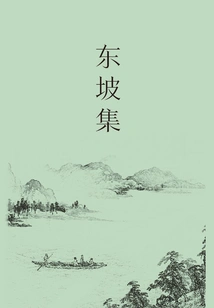
Dongpoji
Literature东坡集
(song Dynasty) By Su Shi, With An Introduction By Zhu Gang
This book is based on the fragments of the Hangzhou edition of "Dongpo Collection" in the Southern Song Dynasty, and is supplemented by "Dongpo Hou Collection". Comprehensively edited and edited with reference to the Yuan Dynasty editions of "Dongpo Yuefu", "Dongpo Yuefu Notes" and "Dongpo Long and Short Sentences", it contains a total of 337 lyrics, 164 poems and 32 articles written by Su Shi. The works in the book are arranged chronologically, and the poems, lyrics, and articles are all accompanied by the creation time. Readers can not only understand the relevant works along the ups and downs of Su Shi's life, but also more deeply grasp the turning points of Su Shi's legendary life through the themes reflected in the collection of works. The book is accompanied by a ten-thousand-word introduction by Professor Zhu Gang of Fudan University and a chronology of Su Shi, which explains in detail the character and destiny, ideals and choices, artistic pursuits and life attitudes of a generation of literary giant Su Dongpo. The illustrations include five representative works of Su Shi's calligraphy: "Baoyue Tie", "Chibi Fu", "Return to the Ci Volume", "Gui'an Qiuyuan Tie" and "Raspberry Tie", all of which are reproduced in equal proportions based on the original works of national first-class cultural relics.
This book is based on the fragments of the Hangzhou edition of "Dongpo Collection" in the Southern Song Dynasty, and is supplemented by "Dongpo Hou Collection". Comprehensively edited and edited with reference to the Yuan Dynasty editions of "Dongpo Yuefu", "Dongpo Yuefu Notes" and "Dongpo Long and Short Sentences", it contains a total of 337 lyrics, 164 poems and 32 articles written by Su Shi. The works in the book are arranged chronologically, and the poems, lyrics, and articles are all accompanied by the creation time. Readers can not only understand the relevant works along the ups and downs of Su Shi's life, but also more deeply grasp the turning points of Su Shi's legendary life through the themes reflected in the collection of works. The book is accompanied by a ten-thousand-word introduction by Professor Zhu Gang of Fudan University and a chronology of Su Shi, which explains in detail the character and destiny, ideals and choices, artistic pursuits and life attitudes of a generation of literary giant Su Dongpo. The illustrations include five representative works of Su Shi's calligraphy: "Baoyue Tie", "Chibi Fu", "Return to the Ci Volume", "Gui'an Qiuyuan Tie" and "Raspberry Tie", all of which are reproduced in equal proportions based on the original works of national first-class cultural relics.
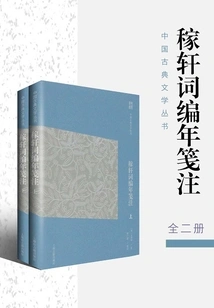
稼轩词编年笺注(简体版)
(song Dynasty) Written By Xin Qiji Annotated By Deng Guangming
Since its publication in 1957, this book has been reprinted many times and is famous at home and abroad. Mr. Deng Guangming has made substantial revisions and adjustments to the notes and chronology of the book, and added a large number of valuable documents. This "simplified Chinese version" maintains the reading content of various notes and punctuation of proper names in the traditional version, and hopes to use the simplified horizontal format that is easier to read, so that more readers can come into contact with the orthodox interpretation of traditional culture and appreciate the high-quality essence.
Since its publication in 1957, this book has been reprinted many times and is famous at home and abroad. Mr. Deng Guangming has made substantial revisions and adjustments to the notes and chronology of the book, and added a large number of valuable documents. This "simplified Chinese version" maintains the reading content of various notes and punctuation of proper names in the traditional version, and hopes to use the simplified horizontal format that is easier to read, so that more readers can come into contact with the orthodox interpretation of traditional culture and appreciate the high-quality essence.
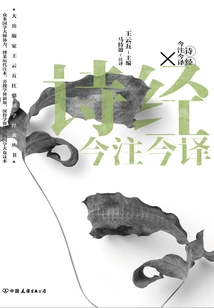
诗经今注今译
Editor-in-chief Wang Yunwu
This series is edited by Mr. Wang Yunwu, a master publisher. He carefully selects famous classics from various collections of classics and history of Chinese studies, and invites a group of famous cultural figures with rigorous academic styles (such as Nan Huaijin, Mao Zishui, Yang Lianggong, etc.) To annotate, translate, and comment on them. They draw extensively on the annotations of the past dynasties and search for new knowledge in the academic world. It is a rare treasure in the field of Chinese studies. It has been reprinted more than 20 times since its publication, and has won praise from the academic community. "The Book of Songs" was annotated and translated by Mr. Ma Chiying. It took several years to correct the errors in the popular versions. The annotations are precise and the translation is smooth, making it easy to read without any knowledge of ancient Chinese.
This series is edited by Mr. Wang Yunwu, a master publisher. He carefully selects famous classics from various collections of classics and history of Chinese studies, and invites a group of famous cultural figures with rigorous academic styles (such as Nan Huaijin, Mao Zishui, Yang Lianggong, etc.) To annotate, translate, and comment on them. They draw extensively on the annotations of the past dynasties and search for new knowledge in the academic world. It is a rare treasure in the field of Chinese studies. It has been reprinted more than 20 times since its publication, and has won praise from the academic community. "The Book of Songs" was annotated and translated by Mr. Ma Chiying. It took several years to correct the errors in the popular versions. The annotations are precise and the translation is smooth, making it easy to read without any knowledge of ancient Chinese.
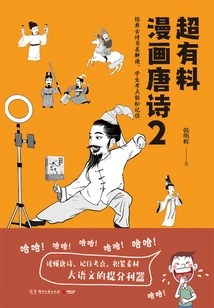
Super Informative Comic Tang Poetry 2
Literature超有料漫画唐诗2
Han Minghui
King Luo Bin, who writes poems with impeccable style, the wild and uninhibited He Zhizhang, Zhang Jiuling, an evergreen figure in officialdom, Wang Changling, who is dedicated to making achievements, Han Yu, who "has been in decline for eight generations", Li Shen, a famous poet but not a famous poet, and Wen Tingyun, a genius gunman... Along with vivid hand-drawn cartoons and funny jokes, poets we are familiar with come forward one by one, and popular Tang poems ring in our ears. This book tells serious knowledge in a humorous way, presents readers with the life experiences of 13 Tang Dynasty poets, and interprets their representative poems. Behind the poets' joys and sorrows is the history of the Tang Dynasty from prosperity to decline.
King Luo Bin, who writes poems with impeccable style, the wild and uninhibited He Zhizhang, Zhang Jiuling, an evergreen figure in officialdom, Wang Changling, who is dedicated to making achievements, Han Yu, who "has been in decline for eight generations", Li Shen, a famous poet but not a famous poet, and Wen Tingyun, a genius gunman... Along with vivid hand-drawn cartoons and funny jokes, poets we are familiar with come forward one by one, and popular Tang poems ring in our ears. This book tells serious knowledge in a humorous way, presents readers with the life experiences of 13 Tang Dynasty poets, and interprets their representative poems. Behind the poets' joys and sorrows is the history of the Tang Dynasty from prosperity to decline.
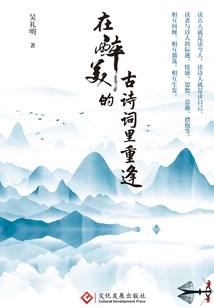
在醉美的古诗词里重逢
Wu Liming
"Reunion in the Beautiful Ancient Poems" is another masterpiece of appreciation after "The Beautiful Ancient Poems of China". This book selects 203 ancient poems for refined interpretation, and actually involves 241 poems. The interpretation focuses on the correlation between the text elements of the poem and its structure and logic, and strives to penetrate into the details of the poem or the parts that have been overlooked by others, and strives to give readers a concise and comprehensive or simple and vivid effect. The main point is to concisely outline and discover the purpose of the poem, so as to break through the understanding space limited by authoritative interpretation. "Following principles to explain interest, storing abundance and supporting it through simplicity" is a distinctive feature of this book's reading of classical poetry.
"Reunion in the Beautiful Ancient Poems" is another masterpiece of appreciation after "The Beautiful Ancient Poems of China". This book selects 203 ancient poems for refined interpretation, and actually involves 241 poems. The interpretation focuses on the correlation between the text elements of the poem and its structure and logic, and strives to penetrate into the details of the poem or the parts that have been overlooked by others, and strives to give readers a concise and comprehensive or simple and vivid effect. The main point is to concisely outline and discover the purpose of the poem, so as to break through the understanding space limited by authoritative interpretation. "Following principles to explain interest, storing abundance and supporting it through simplicity" is a distinctive feature of this book's reading of classical poetry.
唐诗洛阳记:千年古都的风物之美
Ma Mingqian
This book is a companion volume to "Tang Poems of Luoyang: The Literary History of the Thousand-Year Ancient Capital". From the side of life and scenery in Tang poetry, we strive to present the details of the ancient capital Luoyang. It is like a city guide map of the ancient capital Luoyang. It is written in a spatial sequence from the outside in, from the post roads and palaces around the capital to the palaces, river bridges, lanes and temples in the city. It covers most of the landmarks of Luoyang in the Tang Dynasty. Combined with the cultural relics, historical records and legends that have survived to this day, these landmarks paint a three-dimensional, romantic and magnificent picture of the ancient capital. Then the writing moves from urban space to themes such as solar terms, gardening, beauties and flowers. Starting from a large number of Luo poems in different styles, it vividly shows various aspects of urban life in Luoyang in the Tang Dynasty. The lines are full of the elegance and interest of poetry and literature, as well as the colorful life of Luoyang Tang people.
This book is a companion volume to "Tang Poems of Luoyang: The Literary History of the Thousand-Year Ancient Capital". From the side of life and scenery in Tang poetry, we strive to present the details of the ancient capital Luoyang. It is like a city guide map of the ancient capital Luoyang. It is written in a spatial sequence from the outside in, from the post roads and palaces around the capital to the palaces, river bridges, lanes and temples in the city. It covers most of the landmarks of Luoyang in the Tang Dynasty. Combined with the cultural relics, historical records and legends that have survived to this day, these landmarks paint a three-dimensional, romantic and magnificent picture of the ancient capital. Then the writing moves from urban space to themes such as solar terms, gardening, beauties and flowers. Starting from a large number of Luo poems in different styles, it vividly shows various aspects of urban life in Luoyang in the Tang Dynasty. The lines are full of the elegance and interest of poetry and literature, as well as the colorful life of Luoyang Tang people.
唐诗洛阳记:千年古都的文学史话
Ma Mingqian
This book sets the time period in the Sui and Tang Dynasties and the space in Luoyang. It is a unique literary history of the Tang Dynasty and attempts to paint a panoramic view of Luoyang poetry and literature. Starting from the introduction, this article makes a "sketch" of the history of the capital city of Luoyang, and then moves to the horizontal axis of urban history, literary history, and institutional history, trying to decipher the reasons for the prosperity of Tang poetry, tracing back the evolution of poetry and literature during the Sui and Tang Dynasties, and exploring the hidden cultural codes of the ancient capital Luoyang. The second half focuses on specific people and events, interweaving the poetic works of famous poets of the Tang Dynasty with historical events, and corroborating each other with the poet's life and geographical space, making the reader feel like they have returned to Luoyang in the Tang Dynasty in a dream, and experienced a literary appreciation journey through time and space.
This book sets the time period in the Sui and Tang Dynasties and the space in Luoyang. It is a unique literary history of the Tang Dynasty and attempts to paint a panoramic view of Luoyang poetry and literature. Starting from the introduction, this article makes a "sketch" of the history of the capital city of Luoyang, and then moves to the horizontal axis of urban history, literary history, and institutional history, trying to decipher the reasons for the prosperity of Tang poetry, tracing back the evolution of poetry and literature during the Sui and Tang Dynasties, and exploring the hidden cultural codes of the ancient capital Luoyang. The second half focuses on specific people and events, interweaving the poetic works of famous poets of the Tang Dynasty with historical events, and corroborating each other with the poet's life and geographical space, making the reader feel like they have returned to Luoyang in the Tang Dynasty in a dream, and experienced a literary appreciation journey through time and space.
唐诗洛阳记(套装共2册)
Ma Mingqian
If you understand Luoyang, you will understand the spiritual core of the Tang Dynasty and even the entire Chinese civilization. If you understand the poems chanting Luo, you will understand the beauty and charm of Tang poetry. This book sets the time period in the Sui and Tang Dynasties and the space in Luoyang. It is a unique literary history of the Tang Dynasty. It attempts to paint a panoramic view of Luoyang poetry and literature, both in terms of literary history and urban space.
If you understand Luoyang, you will understand the spiritual core of the Tang Dynasty and even the entire Chinese civilization. If you understand the poems chanting Luo, you will understand the beauty and charm of Tang poetry. This book sets the time period in the Sui and Tang Dynasties and the space in Luoyang. It is a unique literary history of the Tang Dynasty. It attempts to paint a panoramic view of Luoyang poetry and literature, both in terms of literary history and urban space.
张晋张谦集校笺
Editor-in-chief Du Guiping And Proofreader By Zhao Kuifu
This book is a collated and proofed version of the poetry collection of Gansu poet Zhang Jin in the late Ming and early Qing dynasties. It is based on the six-volume "Jie'an Shicao" compiled by Wuzhen during the Qianlong period, supplemented with prefaces and postscripts, and uses replicas and manuscripts as proofreadings. , Carefully collated, preserved and restored; Zhang Jin's "Lv Tao", "Ji Du" and "Seventeen Changes of Pipa" appended to Zhang Jin's brother Zhang Qian's "Deshu Zhai Shicao" were used as "Collected Sentences" in three volumes, and the manuscripts were edited. This book is not only a carefully edited and annotated version of Zhang Jin's poems, but also a collection of Zhang Jin's relevant research materials. It is currently the most complete book for understanding and studying Zhang Jin.
This book is a collated and proofed version of the poetry collection of Gansu poet Zhang Jin in the late Ming and early Qing dynasties. It is based on the six-volume "Jie'an Shicao" compiled by Wuzhen during the Qianlong period, supplemented with prefaces and postscripts, and uses replicas and manuscripts as proofreadings. , Carefully collated, preserved and restored; Zhang Jin's "Lv Tao", "Ji Du" and "Seventeen Changes of Pipa" appended to Zhang Jin's brother Zhang Qian's "Deshu Zhai Shicao" were used as "Collected Sentences" in three volumes, and the manuscripts were edited. This book is not only a carefully edited and annotated version of Zhang Jin's poems, but also a collection of Zhang Jin's relevant research materials. It is currently the most complete book for understanding and studying Zhang Jin.
一书通识五千年最美古诗词(修订2版)
Compiled By Cheng Xiaonan
The craze for Chinese studies that has arisen in recent years has brought classical culture closer to the eyes of ordinary people. As the most timeless and classic part of classical culture, ancient poetry is a spiritual wealth that every Chinese should master. This book has selected nearly 300 popular and long-circulated ancient poems. Based on the existing annotations and translations, it has added beautiful appreciation based on poetic language, and also added expansion links to connect some poetic works with similar artistic conceptions, so that readers can further deepen their understanding of the selected poems.
The craze for Chinese studies that has arisen in recent years has brought classical culture closer to the eyes of ordinary people. As the most timeless and classic part of classical culture, ancient poetry is a spiritual wealth that every Chinese should master. This book has selected nearly 300 popular and long-circulated ancient poems. Based on the existing annotations and translations, it has added beautiful appreciation based on poetic language, and also added expansion links to connect some poetic works with similar artistic conceptions, so that readers can further deepen their understanding of the selected poems.
《全宋诗》补阙:补诗人、补诗事、补诗评
Compiled By Gao Zhizhong And Zhang Fuxun
This book is divided into three parts: supplementing poets, supplementing poetry, and supplementing poetry criticism. Supplement the poets' part, that is, those who have been left out and not included in "The Complete Poems of the Song Dynasty". The supplementary poetry section refers to the above-mentioned four books. One of the four books has included the poet (or some have not been included), and there is a biography of the poet. However, if there are missing contents in the biography, especially those involving the poet's creation, the "poetry" will be supplemented. The supplementary poetry review section refers to those in which a certain book (or several books) in the above four books has been collected (or not collected), and has a relatively complete biography or story, but lacks comments on its poetic style and characteristics, which is more valuable in theory. It is particularly important for comprehensively and accurately understanding and grasping the style of the poet's creation, the evolution of his poetry, the comparison of different poets' styles, the situation of their schools, etc. It is combined with the wonderful discussion of Qian Zhongshu's "Supplement and Correction" and marked together as "Complementary Poetry Commentary". Since the publication of "Complete Poems of the Song Dynasty", there have been some individual researchers who have published relevant papers to supplement it, but this book systematically completes the comprehensive review of poets, poetry, and poetry criticism. "Poetry reviews" are not included in "Complete Poems of the Song Dynasty". This book has compiled a total of 129 Buque poets, 132 Buque poems, and 192 Buque poetry reviews. Its systematicness and scale are unmatched by other compilers. A lot of new material has been added to the supplement, and if necessary, "notes" should be added after the supplement to explain it. This is the feature and value of this book.
This book is divided into three parts: supplementing poets, supplementing poetry, and supplementing poetry criticism. Supplement the poets' part, that is, those who have been left out and not included in "The Complete Poems of the Song Dynasty". The supplementary poetry section refers to the above-mentioned four books. One of the four books has included the poet (or some have not been included), and there is a biography of the poet. However, if there are missing contents in the biography, especially those involving the poet's creation, the "poetry" will be supplemented. The supplementary poetry review section refers to those in which a certain book (or several books) in the above four books has been collected (or not collected), and has a relatively complete biography or story, but lacks comments on its poetic style and characteristics, which is more valuable in theory. It is particularly important for comprehensively and accurately understanding and grasping the style of the poet's creation, the evolution of his poetry, the comparison of different poets' styles, the situation of their schools, etc. It is combined with the wonderful discussion of Qian Zhongshu's "Supplement and Correction" and marked together as "Complementary Poetry Commentary". Since the publication of "Complete Poems of the Song Dynasty", there have been some individual researchers who have published relevant papers to supplement it, but this book systematically completes the comprehensive review of poets, poetry, and poetry criticism. "Poetry reviews" are not included in "Complete Poems of the Song Dynasty". This book has compiled a total of 129 Buque poets, 132 Buque poems, and 192 Buque poetry reviews. Its systematicness and scale are unmatched by other compilers. A lot of new material has been added to the supplement, and if necessary, "notes" should be added after the supplement to explain it. This is the feature and value of this book.
亦诗 亦剑 亦飘零:唐诗绝响
Bruises On Flower Base
"Poems, Swords, and Floats: The Unparalleled Sound of Tang Poems" is a book about the Qingming Riverside Scene by poets of the Tang Dynasty. The 40 poets of the Tang Dynasty are arranged according to the arrangement of 4 periods and 10 poets in each period. Starting from the poems, real historical events and the poet's life experience are used as clues, and relevant allusions are interspersed to present the poet's personal spirit and life story. The characteristic of this book is that it closely combines poetry with feelings, insights, actions, conversations and discussions with friends, and comments on worldly events and allusions, etc., To restore the real and perceptible life of the poet, covering many aspects such as self-cultivation, life, dealing with people, and things. It allows you to observe the great wisdom in a small way, and to see the true knowledge through humor.
"Poems, Swords, and Floats: The Unparalleled Sound of Tang Poems" is a book about the Qingming Riverside Scene by poets of the Tang Dynasty. The 40 poets of the Tang Dynasty are arranged according to the arrangement of 4 periods and 10 poets in each period. Starting from the poems, real historical events and the poet's life experience are used as clues, and relevant allusions are interspersed to present the poet's personal spirit and life story. The characteristic of this book is that it closely combines poetry with feelings, insights, actions, conversations and discussions with friends, and comments on worldly events and allusions, etc., To restore the real and perceptible life of the poet, covering many aspects such as self-cultivation, life, dealing with people, and things. It allows you to observe the great wisdom in a small way, and to see the true knowledge through humor.
文赋诗品译注
(jin) Lu Ji (liang) Zhong Rong, Translated And Annotated By Yang Ming
Lu Ji's "Wen Fu" and Zhong Rong's "Shi Pin" occupy an important position in the history of Chinese literary criticism. "Wen Fu" depicts the entire process of literary creation in the form of Fu; "Shipin" is my country's first monograph on poetry theory and literary criticism. The two books are combined into one volume, with detailed annotations and vernacular translation.
Lu Ji's "Wen Fu" and Zhong Rong's "Shi Pin" occupy an important position in the history of Chinese literary criticism. "Wen Fu" depicts the entire process of literary creation in the form of Fu; "Shipin" is my country's first monograph on poetry theory and literary criticism. The two books are combined into one volume, with detailed annotations and vernacular translation.
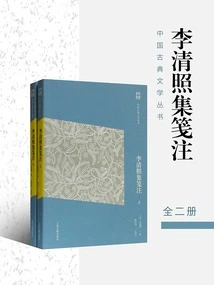
李清照集笺注(简体版)
(song) Written By Li Qingzhao Annotated By Xu Peijun
This book is famous for its complete collection, well-documented notes and rich information, which greatly facilitates readers. This time, the "Simplified Chinese Edition" of the "Chinese Classical Literature Series" is launched. On the basis of maintaining the reading content of various notes and punctuation of proper names in the traditional version, it is hoped that more readers will be exposed to the orthodox interpretation of traditional culture and appreciate the high-quality essence in the simplified horizontal format that is easier to read.
This book is famous for its complete collection, well-documented notes and rich information, which greatly facilitates readers. This time, the "Simplified Chinese Edition" of the "Chinese Classical Literature Series" is launched. On the basis of maintaining the reading content of various notes and punctuation of proper names in the traditional version, it is hoped that more readers will be exposed to the orthodox interpretation of traditional culture and appreciate the high-quality essence in the simplified horizontal format that is easier to read.
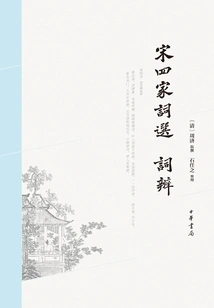
宋四家词选、词辨
(qing Dynasty) Compiled By Zhou Ji And Compiled By Shi Renzhi
"Selected Poems from the Four Schools of Song Dynasty" and "Ci Bian" were written by Zhou Ji, a famous lyricist in the Qing Dynasty. They have attracted the attention of the world since their publication and can be regarded as the masterpiece of the Changzhou Ci School. The former uses 51 famous poets from the Song Dynasty, who belong to the four families of Zhou Bangyan, Xin Qiji, Wang Yisun, and Wu Wenying, to select classic works and comment on them; the latter focuses more on the theoretical construction of Ci, among which "Jie Cunzhai's Miscellaneous Works on Ci" is full of famous quotes. It is a must-read masterpiece in the study of the history of Chinese Ci, and is often cited by various histories of Ci and even literary history. Comparing it with the whole book can gain a more comprehensive and practical understanding. For this publication, "Selected Poems from Four Families of the Song Dynasty" is from Pan Zuyinpang Xizhai's version, and "Ci Bian" is from Tan Xian's critical edition. The comments and highlights of the original books are all retained, and the selected words are based on the separate collections of each school. Attached are four biographies of Zhou Ji and an index of selected words from the entire book for the convenience of readers.
"Selected Poems from the Four Schools of Song Dynasty" and "Ci Bian" were written by Zhou Ji, a famous lyricist in the Qing Dynasty. They have attracted the attention of the world since their publication and can be regarded as the masterpiece of the Changzhou Ci School. The former uses 51 famous poets from the Song Dynasty, who belong to the four families of Zhou Bangyan, Xin Qiji, Wang Yisun, and Wu Wenying, to select classic works and comment on them; the latter focuses more on the theoretical construction of Ci, among which "Jie Cunzhai's Miscellaneous Works on Ci" is full of famous quotes. It is a must-read masterpiece in the study of the history of Chinese Ci, and is often cited by various histories of Ci and even literary history. Comparing it with the whole book can gain a more comprehensive and practical understanding. For this publication, "Selected Poems from Four Families of the Song Dynasty" is from Pan Zuyinpang Xizhai's version, and "Ci Bian" is from Tan Xian's critical edition. The comments and highlights of the original books are all retained, and the selected words are based on the separate collections of each school. Attached are four biographies of Zhou Ji and an index of selected words from the entire book for the convenience of readers.
飞花令·田(中国文化·古典诗词品鉴)
Compiled By Su Xin Luoxue
In accordance with the rules of the traditional Chinese poetry culture game "Feihua Ling", this book carefully selects 106 classic ancient poems containing the word "field" by more than 70 poets. Each poem is followed by corresponding annotations, brief analysis, background and comments from famous experts, leading readers to embark on a beautiful and moving journey of poetry culture in the sea of books and ink. This book is reasonably organized, with pictures and texts. It is a popular cultural book that combines knowledge, aesthetics and culture.
In accordance with the rules of the traditional Chinese poetry culture game "Feihua Ling", this book carefully selects 106 classic ancient poems containing the word "field" by more than 70 poets. Each poem is followed by corresponding annotations, brief analysis, background and comments from famous experts, leading readers to embark on a beautiful and moving journey of poetry culture in the sea of books and ink. This book is reasonably organized, with pictures and texts. It is a popular cultural book that combines knowledge, aesthetics and culture.
飞花令·江(中国文化·古典诗词品鉴)
Compiled By Su Xin Luoxue
In accordance with the rules of the traditional Chinese poetry culture game "Feihua Ling", this book carefully selects 104 classic ancient poems containing the word "jiang" by more than 70 poets. Each poem is followed by corresponding annotations, brief analysis, background and comments by famous experts, leading readers to embark on a beautiful and moving journey of poetry culture in the sea of books and ink. This book is reasonably organized, with pictures and texts. It is a popular cultural book that combines knowledge, aesthetics and culture.
In accordance with the rules of the traditional Chinese poetry culture game "Feihua Ling", this book carefully selects 104 classic ancient poems containing the word "jiang" by more than 70 poets. Each poem is followed by corresponding annotations, brief analysis, background and comments by famous experts, leading readers to embark on a beautiful and moving journey of poetry culture in the sea of books and ink. This book is reasonably organized, with pictures and texts. It is a popular cultural book that combines knowledge, aesthetics and culture.
飞花令·水(中国文化·古典诗词品鉴)
Compiled By Su Xin Luoxue
In accordance with the rules of the traditional Chinese poetry culture game "Feihua Ling", this book carefully selects 105 classic ancient poems containing the word "water" by more than 70 poets. Each poem is followed by corresponding notes, brief analysis, background and comments from famous experts, leading readers to embark on a beautiful and moving journey of poetry culture among the sea of books and ink. This book is reasonably organized, with pictures and texts. It is a popular cultural book that combines knowledge, aesthetics and culture.
In accordance with the rules of the traditional Chinese poetry culture game "Feihua Ling", this book carefully selects 105 classic ancient poems containing the word "water" by more than 70 poets. Each poem is followed by corresponding notes, brief analysis, background and comments from famous experts, leading readers to embark on a beautiful and moving journey of poetry culture among the sea of books and ink. This book is reasonably organized, with pictures and texts. It is a popular cultural book that combines knowledge, aesthetics and culture.
飞花令·园(中国文化·古典诗词品鉴)
Compiled By Su Xin Luoxue
In accordance with the rules of the traditional Chinese poetry culture game "Feihua Ling", this book carefully selects 101 classic ancient poems containing the word "garden" by more than 70 poets. Each poem is followed by corresponding notes, brief analysis, background and comments from famous experts, leading readers to embark on a beautiful and moving journey of poetry culture among the sea of books and ink. This book is reasonably organized, with pictures and texts. It is a popular cultural book that combines knowledge, aesthetics and culture.
In accordance with the rules of the traditional Chinese poetry culture game "Feihua Ling", this book carefully selects 101 classic ancient poems containing the word "garden" by more than 70 poets. Each poem is followed by corresponding notes, brief analysis, background and comments from famous experts, leading readers to embark on a beautiful and moving journey of poetry culture among the sea of books and ink. This book is reasonably organized, with pictures and texts. It is a popular cultural book that combines knowledge, aesthetics and culture.