Library
Browse and search books
2,037 novels found
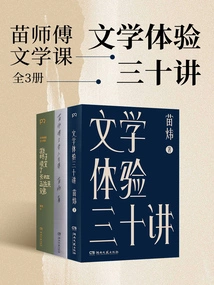
Master Miao's Literature Class: Thirty Lectures on Literary Experience (3 Volumes in Total)
Literature苗师傅文学课:文学体验三十讲(全3册)
Miao Wei
In "Thirty Lectures on Literary Experience", the novelist Miao Wei shared his reading experience of dozens of foreign literary classics over the years, and a literary reading guide that incorporated the collaborator's own life experience. He also talked about his thoughts on essential issues such as love, loneliness, and death, as well as his understanding of basic objects such as self, others, and the world: "Literary experience is actually about my feelings. Feelings, most of these experiences are related to some difficulties in life. I hope you gain something, look at life from a literary perspective, look at the human situation, feel a little more delicate, and have a richer soul. "Enter words, experience many possibilities and infinite life, understand the chaos and complexity of the human heart; feel with your heart, learn to get along with loss and pain, and finally be able to resist loneliness and gain comfort.
In "Thirty Lectures on Literary Experience", the novelist Miao Wei shared his reading experience of dozens of foreign literary classics over the years, and a literary reading guide that incorporated the collaborator's own life experience. He also talked about his thoughts on essential issues such as love, loneliness, and death, as well as his understanding of basic objects such as self, others, and the world: "Literary experience is actually about my feelings. Feelings, most of these experiences are related to some difficulties in life. I hope you gain something, look at life from a literary perspective, look at the human situation, feel a little more delicate, and have a richer soul. "Enter words, experience many possibilities and infinite life, understand the chaos and complexity of the human heart; feel with your heart, learn to get along with loss and pain, and finally be able to resist loneliness and gain comfort.
Hero of China
Literature中国之侠
Hou Xiangxue
This book is a literature (review, research) book that tells the development and evolution of the history of Chinese chivalry literature (chivalry in early history, ancient chivalrous writings, century-old martial arts novels, and online fantasy martial arts). By sorting out and analyzing the basic issues of Chinese chivalry (chivalry in history), it proposes an ideal personality perspective (chivalry is between "sages and sages"). " And "hero") to re-understand the idea of chivalry, and then explore the trajectory and context of the development and evolution of chivalry literature from ancient times to modern times and then to the present (from historical biographies to prose to poetry to novels, from ancient chivalry literature to martial arts novels to online novels), so as to conduct a comprehensive study and grasp of the history of chivalry and chivalry literature in China over the past 2,500 years. 2023 Is the centenary of the birth of martial arts novels, and 2024 is the centenary of the births of Jin Yong and Liang Yusheng. On this occasion, it is particularly necessary to write and study the history of Chinese chivalry literature as a whole. However, there is currently no such book in the academic world or on the market that is both academic and popular. As the first independently signed work by an individual, it is also a relatively representative work. It is expected to provide reference for the contemporary construction and reconstruction of China's excellent cultural traditions - chivalrous cultural traditions and chivalrous spirit. It is also a useful supplement and advancement for the research on martial arts literature and online literature.
This book is a literature (review, research) book that tells the development and evolution of the history of Chinese chivalry literature (chivalry in early history, ancient chivalrous writings, century-old martial arts novels, and online fantasy martial arts). By sorting out and analyzing the basic issues of Chinese chivalry (chivalry in history), it proposes an ideal personality perspective (chivalry is between "sages and sages"). " And "hero") to re-understand the idea of chivalry, and then explore the trajectory and context of the development and evolution of chivalry literature from ancient times to modern times and then to the present (from historical biographies to prose to poetry to novels, from ancient chivalry literature to martial arts novels to online novels), so as to conduct a comprehensive study and grasp of the history of chivalry and chivalry literature in China over the past 2,500 years. 2023 Is the centenary of the birth of martial arts novels, and 2024 is the centenary of the births of Jin Yong and Liang Yusheng. On this occasion, it is particularly necessary to write and study the history of Chinese chivalry literature as a whole. However, there is currently no such book in the academic world or on the market that is both academic and popular. As the first independently signed work by an individual, it is also a relatively representative work. It is expected to provide reference for the contemporary construction and reconstruction of China's excellent cultural traditions - chivalrous cultural traditions and chivalrous spirit. It is also a useful supplement and advancement for the research on martial arts literature and online literature.
Silently Growing, Silently Shining
Literature寂静生长,默然闪亮
Dust In The World
"Growing Silently, Shining Silently" is a collection of literary criticism works, including "Growing Silently, Shining Silently", "Walking Lonely in the Noise", "Don't let the clouds obscure your eyes, the scenery is long and you should look broadly", "In the Name of Love", "Looking for a Light", a total of 5 works, including a review of online literature, a survey on the status of online writers, book reviews, etc.
"Growing Silently, Shining Silently" is a collection of literary criticism works, including "Growing Silently, Shining Silently", "Walking Lonely in the Noise", "Don't let the clouds obscure your eyes, the scenery is long and you should look broadly", "In the Name of Love", "Looking for a Light", a total of 5 works, including a review of online literature, a survey on the status of online writers, book reviews, etc.
Literary Treasure Map
Literature文学的藏宝图
Kay Goose
You know a book is a "literary masterpiece," but do you know what makes it a masterpiece? Why did the founder of the "Desolate Island Farming Style" become a famous novel? Why did the absurd story of a man turning into a bug become a famous novel? Why did the derailment story of "three incorrect views" become a famous book? ... This book aims at the common problems faced by public readers when reading classics. It uses in-depth and simple explanations to help readers update their literary cognition and build a reading system for reading classics, so as to truly appreciate the charm of literary classics and regain the pleasure of reading. When you close the book, those classics that were once labeled as "boring" and "difficult to understand" will become your yardstick for measuring the literary world.
You know a book is a "literary masterpiece," but do you know what makes it a masterpiece? Why did the founder of the "Desolate Island Farming Style" become a famous novel? Why did the absurd story of a man turning into a bug become a famous novel? Why did the derailment story of "three incorrect views" become a famous book? ... This book aims at the common problems faced by public readers when reading classics. It uses in-depth and simple explanations to help readers update their literary cognition and build a reading system for reading classics, so as to truly appreciate the charm of literary classics and regain the pleasure of reading. When you close the book, those classics that were once labeled as "boring" and "difficult to understand" will become your yardstick for measuring the literary world.
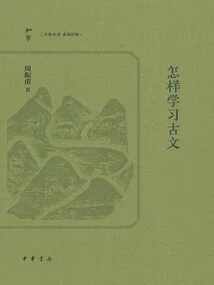
How to Learn Ancient Chinese (zichang)
Literature怎样学习古文(知常)
Zhou Zhenfu
"How to Learn Ancient Chinese" is a simple and easy-to-understand ancient Chinese study guide and a golden key to learning ancient Chinese. The whole book uses the three major methodologies of problem-finding, comparison, and differentiation as its main lines, and systematically analyzes the creative features and artistic gains and losses of classics from the Spring and Autumn Period, "Historical Records", "Hanshu" to the Eight Great Masters of the Tang and Song Dynasties, and the Tongcheng School. The author creatively uses the "Six Views" theory in Liu Xie's "The Literary Mind and the Carving of Dragons" to transform the difficult way of appreciating ancient Chinese literature into an operable learning path, leading you to master the core essence of ancient Chinese reading from the outside to the inside. The brand new edition is well edited and equipped with more than 20 fine illustrations, rich in pictures and text, and elegantly bound.
"How to Learn Ancient Chinese" is a simple and easy-to-understand ancient Chinese study guide and a golden key to learning ancient Chinese. The whole book uses the three major methodologies of problem-finding, comparison, and differentiation as its main lines, and systematically analyzes the creative features and artistic gains and losses of classics from the Spring and Autumn Period, "Historical Records", "Hanshu" to the Eight Great Masters of the Tang and Song Dynasties, and the Tongcheng School. The author creatively uses the "Six Views" theory in Liu Xie's "The Literary Mind and the Carving of Dragons" to transform the difficult way of appreciating ancient Chinese literature into an operable learning path, leading you to master the core essence of ancient Chinese reading from the outside to the inside. The brand new edition is well edited and equipped with more than 20 fine illustrations, rich in pictures and text, and elegantly bound.
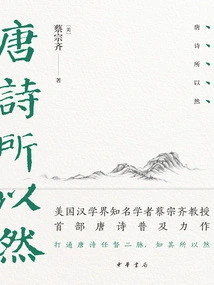
Why is Tang Poetry So
Literature唐诗所以然
(us) Cai Zongqi
Professor Cai Zongqi, a well-known scholar in the field of Sinology in the United States, has accumulated 40 years of research and 30 years of teaching experience to publish the popular work "Why Tang Poetry Is What It Is", which condenses a lifetime of skills. The book selects 72 classic Tang poems, conducts comparative analysis of the three genres of rhymed poetry, quatrains, and ancient poetry, and systematically explains the formal characteristics and artistic characteristics of different poetry styles. It innovatively divides poetry into 13 theme categories, and clearly presents the unique skills of famous poets in handling themes through comparative interpretation of works with the same theme. It uses modern linguistic analysis methods to conduct layer-by-layer analysis from calligraphy, syntax, and composition to reveal the inner texture of "why" each poem is good and the artistic rules of poetry creation. The author uses his profound knowledge of cross-cultural poetics to break the limitations of traditional appreciation of "poems based on poems", which can be regarded as another example of contemporary appreciation of Tang poetry.
Professor Cai Zongqi, a well-known scholar in the field of Sinology in the United States, has accumulated 40 years of research and 30 years of teaching experience to publish the popular work "Why Tang Poetry Is What It Is", which condenses a lifetime of skills. The book selects 72 classic Tang poems, conducts comparative analysis of the three genres of rhymed poetry, quatrains, and ancient poetry, and systematically explains the formal characteristics and artistic characteristics of different poetry styles. It innovatively divides poetry into 13 theme categories, and clearly presents the unique skills of famous poets in handling themes through comparative interpretation of works with the same theme. It uses modern linguistic analysis methods to conduct layer-by-layer analysis from calligraphy, syntax, and composition to reveal the inner texture of "why" each poem is good and the artistic rules of poetry creation. The author uses his profound knowledge of cross-cultural poetics to break the limitations of traditional appreciation of "poems based on poems", which can be regarded as another example of contemporary appreciation of Tang poetry.
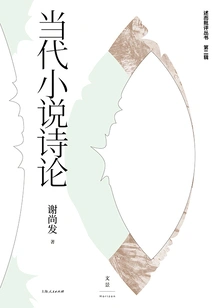
述而批评丛书·第二辑:当代小说诗论
Xie Shangfa
It is a meaningful adventure to try to use the method of "poetic theory" to refresh the concepts, forms and styles of literary criticism. The so-called literary criticism is not actually a judgment, but more like a kind of excavation, a kind of dialogue and conversation, a kind of self-cleaning and enlightenment. Use the words of others to present your own reflections. "Contemporary Novel Poetry" is divided into two parts: "Predecessors" and "Contemporaries". The upper part reviews the works of writers born around the 1960s, such as Jia Pingwa, Liu Zhenyun, and Han Shaogong, while the lower part reviews the works of "post-70s" and "post-80s" writers such as Liang Hong, Huang Deng, Xu Zechen, Liu Yukun, and Sun Pin. Each review article is preceded by a short poem. The concise "poetry" and the detailed "theory" explain and complement each other. Each serves as a footnote to the other. It is also an in-depth practice of the concept that "literary criticism is also a kind of literary creation".
It is a meaningful adventure to try to use the method of "poetic theory" to refresh the concepts, forms and styles of literary criticism. The so-called literary criticism is not actually a judgment, but more like a kind of excavation, a kind of dialogue and conversation, a kind of self-cleaning and enlightenment. Use the words of others to present your own reflections. "Contemporary Novel Poetry" is divided into two parts: "Predecessors" and "Contemporaries". The upper part reviews the works of writers born around the 1960s, such as Jia Pingwa, Liu Zhenyun, and Han Shaogong, while the lower part reviews the works of "post-70s" and "post-80s" writers such as Liang Hong, Huang Deng, Xu Zechen, Liu Yukun, and Sun Pin. Each review article is preceded by a short poem. The concise "poetry" and the detailed "theory" explain and complement each other. Each serves as a footnote to the other. It is also an in-depth practice of the concept that "literary criticism is also a kind of literary creation".
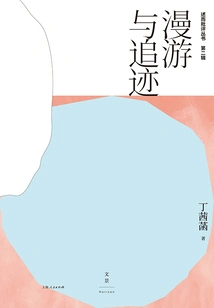
述而批评丛书·第二辑:漫游与追迹
Ding Qianhan
"How is space presented? With flowing objects, knotted sounds and escaping behaviors." Under the guidance of curiosity, we reach interesting places and understand different experiences. Through persistent exploration and keen awareness of the unknown, we constantly broaden our horizons and receive rich gifts. This collection of reviews is a partial presentation of the author's "roaming" and "tracing" experiences in his academic research. The book consists of three volumes: the first two volumes are selected reviews, which include specific analyzes of the works of writers such as Ge Fei, Xu Haofeng, Lin Bai, and Yi Zhou, as well as overall thoughts on issues such as fact construction in non-fiction writing; the third volume includes the author Shen Congwen's initial research results: Shen Congwen's biography.
"How is space presented? With flowing objects, knotted sounds and escaping behaviors." Under the guidance of curiosity, we reach interesting places and understand different experiences. Through persistent exploration and keen awareness of the unknown, we constantly broaden our horizons and receive rich gifts. This collection of reviews is a partial presentation of the author's "roaming" and "tracing" experiences in his academic research. The book consists of three volumes: the first two volumes are selected reviews, which include specific analyzes of the works of writers such as Ge Fei, Xu Haofeng, Lin Bai, and Yi Zhou, as well as overall thoughts on issues such as fact construction in non-fiction writing; the third volume includes the author Shen Congwen's initial research results: Shen Congwen's biography.
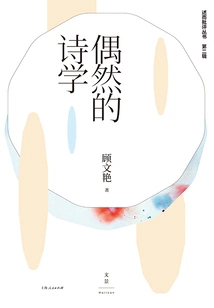
述而批评丛书·第二辑:偶然的诗学
Gu Wenyan
"I don't like creations that need to be given meaning by criticism, and I don't like criticism that clings to the continuation of the work." This is a collection of criticism about literature and accident, which places the subject of literature back in the historical time and space governed by "accident". Hegel saw the spirit of the world coming towards us on horseback. What I saw was a spider web hanging on the horse's back, binding the world mechanism of sunrise and sunset. The literary field is the same, it's a big cobweb. Everyone's writing and actions are not accidental, they all operate in an orderly manner within a logical framework driven by spiritual pursuit and fame and fortune. It's just that literature itself presupposes more subjectivity, so we always look forward to some miraculous and accidental moments that can redefine life.
"I don't like creations that need to be given meaning by criticism, and I don't like criticism that clings to the continuation of the work." This is a collection of criticism about literature and accident, which places the subject of literature back in the historical time and space governed by "accident". Hegel saw the spirit of the world coming towards us on horseback. What I saw was a spider web hanging on the horse's back, binding the world mechanism of sunrise and sunset. The literary field is the same, it's a big cobweb. Everyone's writing and actions are not accidental, they all operate in an orderly manner within a logical framework driven by spiritual pursuit and fame and fortune. It's just that literature itself presupposes more subjectivity, so we always look forward to some miraculous and accidental moments that can redefine life.
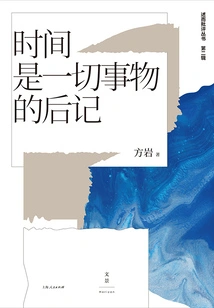
述而批评丛书·第二辑:时间是一切事物的后记
Fang Yan
"Literature is a particularly personal and concrete work, and the gathering of countless concrete works cannot match the moment when the unknown happens." "Time is the Postscript of Everything" is one of the "Series of Statements and Criticisms" (Second Series) edited by "Sinan Literature Selections". Wencong gathers the most influential and potential critical writers in Shanghai and strives to become a collection of fine essays that can fully reflect the overall style of Shanghai youth literary criticism. This book is a collection of comments compiled by the author during the three years since he moved to Shanghai. It is divided into three volumes. The first volume focuses on the analysis of short and medium-sized novels; the second volume is a close reading of the novels; the third volume is essays, which are slightly more interesting than the first two volumes; the appendix records some thoughts in the form of notes.
"Literature is a particularly personal and concrete work, and the gathering of countless concrete works cannot match the moment when the unknown happens." "Time is the Postscript of Everything" is one of the "Series of Statements and Criticisms" (Second Series) edited by "Sinan Literature Selections". Wencong gathers the most influential and potential critical writers in Shanghai and strives to become a collection of fine essays that can fully reflect the overall style of Shanghai youth literary criticism. This book is a collection of comments compiled by the author during the three years since he moved to Shanghai. It is divided into three volumes. The first volume focuses on the analysis of short and medium-sized novels; the second volume is a close reading of the novels; the third volume is essays, which are slightly more interesting than the first two volumes; the appendix records some thoughts in the form of notes.
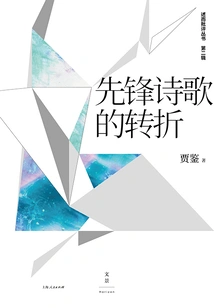
述而批评丛书·第二辑:先锋诗歌的转折
Jia Jian
An important mission of the avant-garde today is to cross the fog of history and become the stranger again. This book mainly focuses on the evolution of Chinese avant-garde poetry in the 1980s and 1990s and the two spiritual aspects of poetry in the 1990s. Starting from root-seeking poems and Haizi's cultural epic, the author explores how poetry conveys cultural reflection by transforming the concept of "tradition." Then it takes the poems of Wang Jiaxin, Ouyang Jianghe, Duoduo, Han Dong, Yu Jian, Zang Di, Zhang Zao, Xiao Kaiyu and others as examples to rethink the issue of "pure poetry\u002Fpure literature" and describe the "narrative" turn of poetry in the 1990s. The author intends to explore the transformation and differentiation process of avant-garde poetry in the 1980s and 1990s, and is more concerned about the differences and convergence of poetic consciousness in the two eras.
An important mission of the avant-garde today is to cross the fog of history and become the stranger again. This book mainly focuses on the evolution of Chinese avant-garde poetry in the 1980s and 1990s and the two spiritual aspects of poetry in the 1990s. Starting from root-seeking poems and Haizi's cultural epic, the author explores how poetry conveys cultural reflection by transforming the concept of "tradition." Then it takes the poems of Wang Jiaxin, Ouyang Jianghe, Duoduo, Han Dong, Yu Jian, Zang Di, Zhang Zao, Xiao Kaiyu and others as examples to rethink the issue of "pure poetry\u002Fpure literature" and describe the "narrative" turn of poetry in the 1990s. The author intends to explore the transformation and differentiation process of avant-garde poetry in the 1980s and 1990s, and is more concerned about the differences and convergence of poetic consciousness in the two eras.
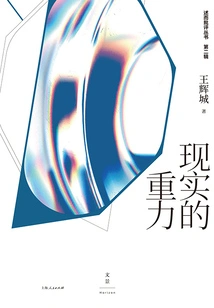
述而批评丛书·第二辑:现实的重力
Wang Huicheng
"The Gravity of Reality" is one of the "Series of Statements and Criticisms" (Second Series) edited by "Selected Sinan Literature". Wencong gathers 11 of the most influential and potential young critical writers in Shanghai, and asks each author to select his or her most representative literary criticism articles, striving to become a collection of fine articles that can fully reflect the overall style of Shanghai youth literary criticism. This book is the second collection of reviews by the young writer and critic Wang Huicheng. Following the publication of "Do Beautiful Women Love Me" published in 2020, this work collects Wang Huicheng's review articles on the works of young writers such as Shen Shuzhi, Xiang Jing, Wen Zhen, San San, Zhang Yiwei, Qian Jianan, Zhang Dinghao and other young writers. In addition to commenting on the works, it also describes the author's own understanding of novels, essays and other literary creations.
"The Gravity of Reality" is one of the "Series of Statements and Criticisms" (Second Series) edited by "Selected Sinan Literature". Wencong gathers 11 of the most influential and potential young critical writers in Shanghai, and asks each author to select his or her most representative literary criticism articles, striving to become a collection of fine articles that can fully reflect the overall style of Shanghai youth literary criticism. This book is the second collection of reviews by the young writer and critic Wang Huicheng. Following the publication of "Do Beautiful Women Love Me" published in 2020, this work collects Wang Huicheng's review articles on the works of young writers such as Shen Shuzhi, Xiang Jing, Wen Zhen, San San, Zhang Yiwei, Qian Jianan, Zhang Dinghao and other young writers. In addition to commenting on the works, it also describes the author's own understanding of novels, essays and other literary creations.
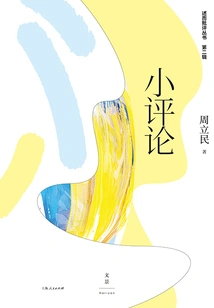
述而批评丛书·第二辑:小评论
Zhou Limin
Who said that literary criticism must be written with a frown on one's brows, and read like one must take medicine? The long and short "mini-comments" not only delve into the details of the text, but also take a panoramic view of the literary world, talking about Huang Yongyu's wonderful "The Wandering Man of Wuchou River", Wei Wei's "Flying Time" like a breeze, gossiping about the Mao Dun Literary Award, and asking about the "third way" of literary criticism... The 35 articles strive to reshape the vitality of literary criticism with vivid words.
Who said that literary criticism must be written with a frown on one's brows, and read like one must take medicine? The long and short "mini-comments" not only delve into the details of the text, but also take a panoramic view of the literary world, talking about Huang Yongyu's wonderful "The Wandering Man of Wuchou River", Wei Wei's "Flying Time" like a breeze, gossiping about the Mao Dun Literary Award, and asking about the "third way" of literary criticism... The 35 articles strive to reshape the vitality of literary criticism with vivid words.
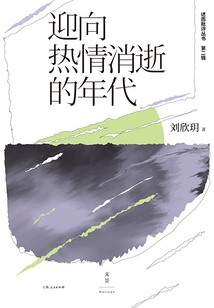
述而批评丛书·第二辑:迎向热情消逝的年代
Liu Xinyue
From Zhang Yueran's "art complex" to Huang Jinshu's "youth fantasy", from Lin Chu's fictitious frogs to the old factories in Zhang Yiwei's and Lu Nei's novels, 24 in-depth and simple reading notes take us beyond the limits of literary criticism and find new surprises in the diverse aspects of contemporary Chinese novels.
From Zhang Yueran's "art complex" to Huang Jinshu's "youth fantasy", from Lin Chu's fictitious frogs to the old factories in Zhang Yiwei's and Lu Nei's novels, 24 in-depth and simple reading notes take us beyond the limits of literary criticism and find new surprises in the diverse aspects of contemporary Chinese novels.
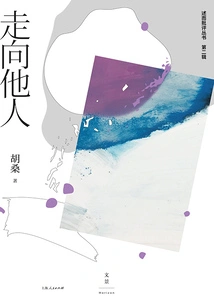
述而批评丛书·第二辑:走向他人
Hussan
The book is divided into three volumes: "Lessons of Love", "Connecting with Others" and "Crossing Boundaries". It not only discusses and reviews specific novels and poetry works, but also cares about the trend of contemporary poetry, the mission of translators in the digital age and other larger issues. From Mutis, Benjamin, and Szymborska to Mu Dan, Zhang Ji, and Liu Liduo, the author's brushstrokes travel lightly through ancient and modern times, at home and abroad, outlining the reading map and thinking path of a literary creator and researcher.
The book is divided into three volumes: "Lessons of Love", "Connecting with Others" and "Crossing Boundaries". It not only discusses and reviews specific novels and poetry works, but also cares about the trend of contemporary poetry, the mission of translators in the digital age and other larger issues. From Mutis, Benjamin, and Szymborska to Mu Dan, Zhang Ji, and Liu Liduo, the author's brushstrokes travel lightly through ancient and modern times, at home and abroad, outlining the reading map and thinking path of a literary creator and researcher.
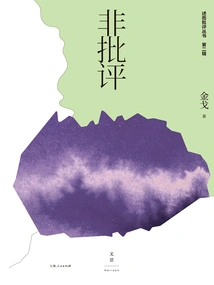
述而批评丛书:非批评
Jin Ge
"Criticism" must be "decision-making", just as "becoming a human being is still a kind of decision-making". This is an atypical collection of critical essays. What critics care about is not so much the works as life. If these various lives have something in common, it is that they all failed, and the secret of the times lies in this failure. Look, how many people around us regard "spectating" as "failure" and are eager to appear on stage despite being unwilling to be lonely. If the "spectator" is the poet's prophecy, it is one he is willing to bear. Because, in the life of "spectating", "knowledge" is the only reward for "spectating". But - our good people, please don't get me wrong, "bystanders" are not "victims". And the "knowledge" of the "spectator" is not the "knowledge" of the "baby" or the "square head". Remember this, otherwise, we will have fallen into the "trance" of the times before we even get on the right track.
"Criticism" must be "decision-making", just as "becoming a human being is still a kind of decision-making". This is an atypical collection of critical essays. What critics care about is not so much the works as life. If these various lives have something in common, it is that they all failed, and the secret of the times lies in this failure. Look, how many people around us regard "spectating" as "failure" and are eager to appear on stage despite being unwilling to be lonely. If the "spectator" is the poet's prophecy, it is one he is willing to bear. Because, in the life of "spectating", "knowledge" is the only reward for "spectating". But - our good people, please don't get me wrong, "bystanders" are not "victims". And the "knowledge" of the "spectator" is not the "knowledge" of the "baby" or the "square head". Remember this, otherwise, we will have fallen into the "trance" of the times before we even get on the right track.
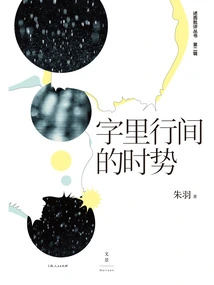
述而批评丛书:字里行间的时势
Zhu Yu
Looking for the "intermediary" between language and politics in the late Qing Dynasty, tracing the "form" and "content" of contemporary Chinese novels through the prism of Lukács's "Theory of Novel", being obsessed with the untranslatability of "cannibalism" in "Diary of a Madman", trying to provide another explanation for the "silence" of "Flowers"... The eight articles included in this collection not only trace important moments in the evolution of "new literature", but also examine the historical "ghosts" in contemporary literature.
Looking for the "intermediary" between language and politics in the late Qing Dynasty, tracing the "form" and "content" of contemporary Chinese novels through the prism of Lukács's "Theory of Novel", being obsessed with the untranslatability of "cannibalism" in "Diary of a Madman", trying to provide another explanation for the "silence" of "Flowers"... The eight articles included in this collection not only trace important moments in the evolution of "new literature", but also examine the historical "ghosts" in contemporary literature.
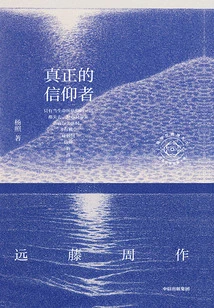
True Believer: Shusaku Endo
Literature真正的信仰者:远藤周作
Yang Zhao
This book is a collection of literary criticism by Taiwanese scholar and writer Yang Zhao interpreting Endo Shusaku and his works. In this book, Yang Zhao starts from Endo Shusaku's special identity as a Catholic and explains his life experiences such as being forced to be baptized under the influence of his mother and breaking with his father when he was a teenager. He also uses several of his representative works "Silence", "Mother", "Sea and Poison", "Shadow", "Deep River" and "Samurai" as examples to analyze Endo Shusaku's reflections on "guilt" and "shame" in post-war Japanese society and his doubts about the values of the Catholic Church. The manuscript is of good quality, highly knowledgeable, and backed by a large amount of literary materials. The language is fluent and easy to understand. Through Yang Zhao's explanation, readers can learn about Shusaku Endo, a heavyweight writer who is not well-known in China but who definitely occupies an important position in the Japanese literary world.
This book is a collection of literary criticism by Taiwanese scholar and writer Yang Zhao interpreting Endo Shusaku and his works. In this book, Yang Zhao starts from Endo Shusaku's special identity as a Catholic and explains his life experiences such as being forced to be baptized under the influence of his mother and breaking with his father when he was a teenager. He also uses several of his representative works "Silence", "Mother", "Sea and Poison", "Shadow", "Deep River" and "Samurai" as examples to analyze Endo Shusaku's reflections on "guilt" and "shame" in post-war Japanese society and his doubts about the values of the Catholic Church. The manuscript is of good quality, highly knowledgeable, and backed by a large amount of literary materials. The language is fluent and easy to understand. Through Yang Zhao's explanation, readers can learn about Shusaku Endo, a heavyweight writer who is not well-known in China but who definitely occupies an important position in the Japanese literary world.
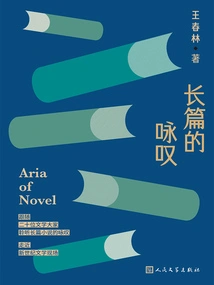
Long Chant
Literature长篇的咏叹
Wang Chunlin
"A Long Ode" is the latest collection of reviews by the famous literary critic Wang Chunlin. This book selects Jia Pingwa's "Ji Hua", Chi Zijian's "The Top of the Mountains", Zhang Wei's "The Alone Medicine Master", Ge Fei's "Looking at the Spring Breeze", Dongxi's "Tampering with Fate", Lu Xin's "Last Quarter Moon", Xu Zechen's "The Royal City is Like the Sea", Yi Zhou "Our Hesitation", Li Fengqun's "Strong Wind", Ai Wei's "The South", Zhou Daxin's "The Man Is Here", Sun Huifen's "Looking for Zhang Zhan", Fu Xiuying's "Moshang", Zhang Ji's "Monk", Xu Yigua's "Others", Li Shi Jiang's "Extraordinary", He Yuru's "Front Street and Back Street", Zhang Haohao's "Hemu", Qin Bazi's "Following Notes", Ye Wei's "Blessed Land", Lin Sen's "Guan Guan Jujiu", Pu Ge's "A Mouth of Mud", Li Yonggang's "The Widower" Excellent novels in recent years such as "My Laila" are taken as the objects of analysis, and their uniqueness is analyzed in a simple and profound way, showing the author's staged thinking on the creation of novels since the new century.
"A Long Ode" is the latest collection of reviews by the famous literary critic Wang Chunlin. This book selects Jia Pingwa's "Ji Hua", Chi Zijian's "The Top of the Mountains", Zhang Wei's "The Alone Medicine Master", Ge Fei's "Looking at the Spring Breeze", Dongxi's "Tampering with Fate", Lu Xin's "Last Quarter Moon", Xu Zechen's "The Royal City is Like the Sea", Yi Zhou "Our Hesitation", Li Fengqun's "Strong Wind", Ai Wei's "The South", Zhou Daxin's "The Man Is Here", Sun Huifen's "Looking for Zhang Zhan", Fu Xiuying's "Moshang", Zhang Ji's "Monk", Xu Yigua's "Others", Li Shi Jiang's "Extraordinary", He Yuru's "Front Street and Back Street", Zhang Haohao's "Hemu", Qin Bazi's "Following Notes", Ye Wei's "Blessed Land", Lin Sen's "Guan Guan Jujiu", Pu Ge's "A Mouth of Mud", Li Yonggang's "The Widower" Excellent novels in recent years such as "My Laila" are taken as the objects of analysis, and their uniqueness is analyzed in a simple and profound way, showing the author's staged thinking on the creation of novels since the new century.
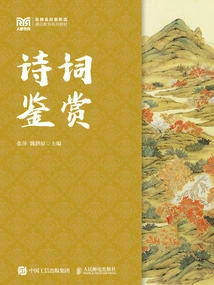
Poetry Appreciation
Literature诗词鉴赏
Zhang Ping Editor-in-chief Wei Gengyuan
This book selects classic works from classical poetry and analyzes and explores their literary aesthetic value and ideological and cultural value. The book is divided into three parts, with special topics set up from three levels: personal cultivation, social virtue, and man and nature. Classical poetry works are selected to highlight the corresponding themes. The first part mainly explores the personal virtues and personality cultivation in classical poetry, starting from the five themes of self-improvement, benevolence and love, clear intention, perseverance, and innocence. The second part mainly explores the relationship between people and society in classical poetry, as well as the virtues that people should have in society, starting from five themes: patriotism, glorious dreams, concern for the country, dedication to the community, and homesickness. The third part explores the relationship between man and nature, starting from the three themes of harmony between nature and man, Tao following nature, and the unity of things and myself. On the one hand, this book explains the aesthetic meaning of poetry through the analysis and appreciation of classical poetry; on the other hand, it combines the core values of socialism to explore the contemporary value of classical poetry. This book can be used as a general humanities textbook for ordinary colleges and universities, and can also be used by readers who are interested in classical poetry.
This book selects classic works from classical poetry and analyzes and explores their literary aesthetic value and ideological and cultural value. The book is divided into three parts, with special topics set up from three levels: personal cultivation, social virtue, and man and nature. Classical poetry works are selected to highlight the corresponding themes. The first part mainly explores the personal virtues and personality cultivation in classical poetry, starting from the five themes of self-improvement, benevolence and love, clear intention, perseverance, and innocence. The second part mainly explores the relationship between people and society in classical poetry, as well as the virtues that people should have in society, starting from five themes: patriotism, glorious dreams, concern for the country, dedication to the community, and homesickness. The third part explores the relationship between man and nature, starting from the three themes of harmony between nature and man, Tao following nature, and the unity of things and myself. On the one hand, this book explains the aesthetic meaning of poetry through the analysis and appreciation of classical poetry; on the other hand, it combines the core values of socialism to explore the contemporary value of classical poetry. This book can be used as a general humanities textbook for ordinary colleges and universities, and can also be used by readers who are interested in classical poetry.
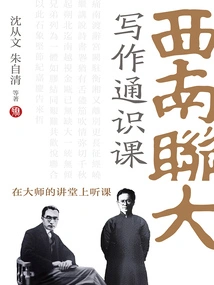
西南联大写作通识课(在大师的讲堂上听课)
Shen Congwen Zhu Ziqing Et Al.
The diverse and free academic and teaching environment of Southwest Associated University provides teachers and students with huge space for growth and performance; the Chinese general education system pioneered by Southwest Associated University has created an educational myth and laid the foundation for the modernization of Chinese education. "General Course on Writing at Southwest Associated University" consists of four parts and an appendix. In the first part, Mr. Zhu Ziqing explains literary knowledge and language arts aesthetics; in the second part, Mr. Shen Congwen explains specific writing methods and skills; in the third part, Mr. Zhu Ziqing and Shen Congwen give reading appreciation classes to students; in the fourth part, a monologue by Mr. Shen Congwen as the creator is selected. The appendix is a selection of texts from the "Selected Chinese Literature of Southwest Associated University", a compulsory course for students in all departments of the General Assembly, including works by masters such as Zhu Guangqian, Lu Xun, and Wang Guowei.
The diverse and free academic and teaching environment of Southwest Associated University provides teachers and students with huge space for growth and performance; the Chinese general education system pioneered by Southwest Associated University has created an educational myth and laid the foundation for the modernization of Chinese education. "General Course on Writing at Southwest Associated University" consists of four parts and an appendix. In the first part, Mr. Zhu Ziqing explains literary knowledge and language arts aesthetics; in the second part, Mr. Shen Congwen explains specific writing methods and skills; in the third part, Mr. Zhu Ziqing and Shen Congwen give reading appreciation classes to students; in the fourth part, a monologue by Mr. Shen Congwen as the creator is selected. The appendix is a selection of texts from the "Selected Chinese Literature of Southwest Associated University", a compulsory course for students in all departments of the General Assembly, including works by masters such as Zhu Guangqian, Lu Xun, and Wang Guowei.
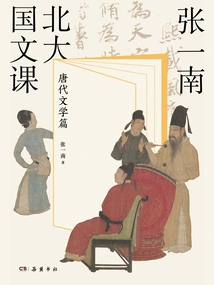
Zhang Yi Chinese Language Course at North and South University: Literature of the Tang Dynasty
Literature张一南北大国文课:唐代文学篇
Zhang Yinan
The final work of Zhang Yinan's Chinese language course series, the character and excitement of the golden age of literature! The Tang Dynasty was the golden age of Chinese classical literature, especially poetry. Tang poetry rose to an insurmountable peak, and a large number of outstanding great poets emerged, which has become a familiar literary memory of the Chinese people. This book is the final work of teacher Zhang Yinan's "Peking University Chinese Language Course Series". After the literature of the Six Dynasties, it enters the literature of the Tang Dynasty. From the founding of the Tang Dynasty to the fall of the Southern Tang Dynasty, spanning more than 300 years, the author uses the development of poetry as the main line to sort out the literary history of the Tang Dynasty in detail. The four heroes of the early Tang Dynasty, Meng Haoran, Wang Wei, Li Bai, Du Fu, Gao Shi, Cen Shen, Han Yu, Bai Juyi, Poets such as Li He and Li Shangyin are all presented one by one in the literary galaxy of the Tang Dynasty. Interpreting their life circumstances, famous poems, and creative styles in the real historical situation allows us to discover that many poems that have long been well-recited actually have different meanings. In addition to poetry, the author also introduces articles, lyrics, and legends of the Tang Dynasty, leading readers to fully appreciate the unique scenery of Tang Dynasty literature.
The final work of Zhang Yinan's Chinese language course series, the character and excitement of the golden age of literature! The Tang Dynasty was the golden age of Chinese classical literature, especially poetry. Tang poetry rose to an insurmountable peak, and a large number of outstanding great poets emerged, which has become a familiar literary memory of the Chinese people. This book is the final work of teacher Zhang Yinan's "Peking University Chinese Language Course Series". After the literature of the Six Dynasties, it enters the literature of the Tang Dynasty. From the founding of the Tang Dynasty to the fall of the Southern Tang Dynasty, spanning more than 300 years, the author uses the development of poetry as the main line to sort out the literary history of the Tang Dynasty in detail. The four heroes of the early Tang Dynasty, Meng Haoran, Wang Wei, Li Bai, Du Fu, Gao Shi, Cen Shen, Han Yu, Bai Juyi, Poets such as Li He and Li Shangyin are all presented one by one in the literary galaxy of the Tang Dynasty. Interpreting their life circumstances, famous poems, and creative styles in the real historical situation allows us to discover that many poems that have long been well-recited actually have different meanings. In addition to poetry, the author also introduces articles, lyrics, and legends of the Tang Dynasty, leading readers to fully appreciate the unique scenery of Tang Dynasty literature.
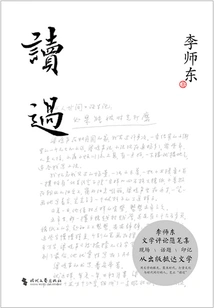
Read
Literature读过
Li Shidong
This is a collection of literary criticism essays. The author Li Shidong has been engaged in the editing and publishing of literary books and journals for a long time. He is an eyewitness and important promoter of contemporary Chinese literary creation activities. The articles collected in this book are based on the literary publishing scene. They include exclusive interpretations of important literary works (such as Liang Xiaosheng's "The World", Liu Zhenyun's "The Recruit Company", Mo Yan's "Transparent Carrot"), in-depth analysis of the creative situations of important writers, as well as factual displays of important literary statements and careful observations of contemporary literary creation trends. The whole book shows the publishing scene, literary insights and cultural imprints from three dimensions: scene, topic and imprint. It is the author's thinking and summary of his journey from publishing to literature over the past 30 years.
This is a collection of literary criticism essays. The author Li Shidong has been engaged in the editing and publishing of literary books and journals for a long time. He is an eyewitness and important promoter of contemporary Chinese literary creation activities. The articles collected in this book are based on the literary publishing scene. They include exclusive interpretations of important literary works (such as Liang Xiaosheng's "The World", Liu Zhenyun's "The Recruit Company", Mo Yan's "Transparent Carrot"), in-depth analysis of the creative situations of important writers, as well as factual displays of important literary statements and careful observations of contemporary literary creation trends. The whole book shows the publishing scene, literary insights and cultural imprints from three dimensions: scene, topic and imprint. It is the author's thinking and summary of his journey from publishing to literature over the past 30 years.
诺贝尔文学奖名著全编(导读版)
U Thant
This book records in detail many authors and works that won the Nobel Prize for Literature. After carefully studying each work, the author uses the classic original text combined with analysis and appreciation techniques to perfectly present the content of the original work in a short space. Each award-winning work also describes the reasons for the award, comments from famous experts, the author's life story, etc., So that readers can gain a comprehensive and detailed understanding of the award-winning author and his works.
This book records in detail many authors and works that won the Nobel Prize for Literature. After carefully studying each work, the author uses the classic original text combined with analysis and appreciation techniques to perfectly present the content of the original work in a short space. Each award-winning work also describes the reasons for the award, comments from famous experts, the author's life story, etc., So that readers can gain a comprehensive and detailed understanding of the award-winning author and his works.
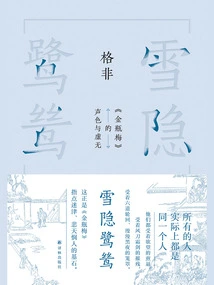
雪隐鹭鸶:《金瓶梅》的声色与虚无(格非作品)
Ge Fei
This book is Ge Fei's interpretation of the classic "Jin Ping Mei". The book is divided into three volumes. Volume 1, "Economy and Law" and Volume 2, "Ideology and Morality" connect the social history and intellectual history of the Ming Dynasty, and place "Jin Ping Mei" in the context of global social transformation and cultural change in the 16th century for detailed examination; Volume 3, "Rhetorical Examples", carefully reads the text of "Jin Ping Mei" in the form of delicate and vivid essays and examples, and appreciates the wonderful rhetoric of its articles. The title of the book "Herons Hidden in the Snow" is taken from the poem "The Herons Hidden in the Snow", "The egrets hidden in the snow are seen when they fly, and the parrot's language can only be understood when they are hidden in the willows", which refers to the profound and subtle human world and historical and cultural information in "The Plum in the Jin Ping".
This book is Ge Fei's interpretation of the classic "Jin Ping Mei". The book is divided into three volumes. Volume 1, "Economy and Law" and Volume 2, "Ideology and Morality" connect the social history and intellectual history of the Ming Dynasty, and place "Jin Ping Mei" in the context of global social transformation and cultural change in the 16th century for detailed examination; Volume 3, "Rhetorical Examples", carefully reads the text of "Jin Ping Mei" in the form of delicate and vivid essays and examples, and appreciates the wonderful rhetoric of its articles. The title of the book "Herons Hidden in the Snow" is taken from the poem "The Herons Hidden in the Snow", "The egrets hidden in the snow are seen when they fly, and the parrot's language can only be understood when they are hidden in the willows", which refers to the profound and subtle human world and historical and cultural information in "The Plum in the Jin Ping".
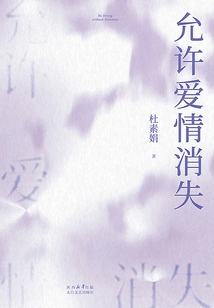
Allow Love to Disappear
Literature允许爱情消失
Du Sujuan
"Allowing Love to Disappear" is a collection of literary research and appreciation works. It uses the female images in more than ten works such as "Madame Bovary", "Notre Dame de Paris" and "Pride and Prejudice" as cases to explore the proper view of love in this era. Some people are in love and fantasize about "the domineering president falling in love with me"; some people are humble and patient and love the other person unconditionally; some people compromise and "lower into the dust". This one-way relationship creates the pain and suffering in love. Du Sujuan used classic characters in literary history such as Jane Eyre, Emma, and Scarlett as carriers to explore the concept of love in this era. Love is not necessary and the only measure of the value of life. Women in this era cannot love someone while kneeling. In the face of love, you can allow it to disappear, so that you can maintain your boundaries and bottom line.
"Allowing Love to Disappear" is a collection of literary research and appreciation works. It uses the female images in more than ten works such as "Madame Bovary", "Notre Dame de Paris" and "Pride and Prejudice" as cases to explore the proper view of love in this era. Some people are in love and fantasize about "the domineering president falling in love with me"; some people are humble and patient and love the other person unconditionally; some people compromise and "lower into the dust". This one-way relationship creates the pain and suffering in love. Du Sujuan used classic characters in literary history such as Jane Eyre, Emma, and Scarlett as carriers to explore the concept of love in this era. Love is not necessary and the only measure of the value of life. Women in this era cannot love someone while kneeling. In the face of love, you can allow it to disappear, so that you can maintain your boundaries and bottom line.
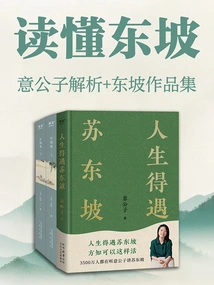
读懂东坡:意公子解析+东坡作品集
Yi Gongzi (song Dynasty) By Su Shi, With An Introduction By Zhu Gang
Life is like a journey against the odds, but fortunately I have Dongpo by my side. Su Dongpo's poems describe life's circumstances, and Su Dongpo's spirit illuminates current life. Almost every Chinese will encounter Su Dongpo at different stages of life. When I was young, I read "Poetry and wine while enjoying my youth"; when I was troubled and confused, I read "This is my hometown"; when I was proud of the spring breeze, I realized that "the taste of the world is pure joy"; when I looked back in my old age, I sighed "the mist of Lushan and the tide of Zhejiang".
Life is like a journey against the odds, but fortunately I have Dongpo by my side. Su Dongpo's poems describe life's circumstances, and Su Dongpo's spirit illuminates current life. Almost every Chinese will encounter Su Dongpo at different stages of life. When I was young, I read "Poetry and wine while enjoying my youth"; when I was troubled and confused, I read "This is my hometown"; when I was proud of the spring breeze, I realized that "the taste of the world is pure joy"; when I looked back in my old age, I sighed "the mist of Lushan and the tide of Zhejiang".
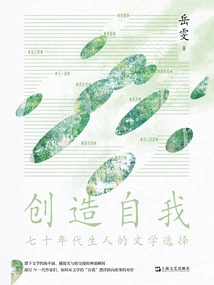
创造自我:七十年代生人的文学选择
Yue Wen
"Creating the Self: The Literary Choices of People Born in the 1970s" is a new review book by Yue Wen, a doctor of literature. This book carefully reads 10 writers and their representative works, disassembles the texts one by one, dives into the sea of literature, captures the miraculous moment of the intersection of light and darkness, and explores how writers born in the 1970s floated from the "self" of literature to the other side of the story, thereby completing the understanding of disappearance and eternity, characters and times.
"Creating the Self: The Literary Choices of People Born in the 1970s" is a new review book by Yue Wen, a doctor of literature. This book carefully reads 10 writers and their representative works, disassembles the texts one by one, dives into the sea of literature, captures the miraculous moment of the intersection of light and darkness, and explores how writers born in the 1970s floated from the "self" of literature to the other side of the story, thereby completing the understanding of disappearance and eternity, characters and times.
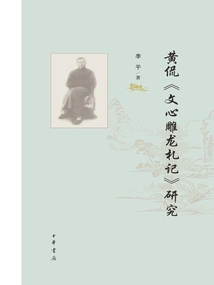
黄侃《文心雕龙札记》研究
Li Ping
In 1914, Huang Kan brought "Literary Mind and Carving of Dragons" as a subject to the university lecture hall, marking the birth of "Dragonology" in the modern sense; and the lecture notes he wrote for his lectures, "Notes on Literary Mind and Carving of Dragons," became the foundation of modern "Dragonology" research. "Notes" transcends traditional annotations and comments and creates a research method that combines text collation, data verification and theoretical elaboration, giving people a new perspective, "thus enabling the academic and ideological circles to make revolutionary adjustments to the practical value and research angle of "Wen Xin Diao Long"." "Notes" focuses on the interpretation of the main themes of thirty-one articles. Because Huang has profound academic background and considerable creative experience, his exploration of the main themes has been fruitful. It has been particularly enlightening for the study of modern literary theory of "Wen Xin Diao Long". It is still an essential reference book for the study of "Wen Xin Diao Long". This book conducts a comprehensive, in-depth and systematic study of the "Notes" and discusses the interactive and symbiotic relationship between Huang Kan and his "Notes" and the academic history of China in the 20th century, especially the history of "Longxue".
In 1914, Huang Kan brought "Literary Mind and Carving of Dragons" as a subject to the university lecture hall, marking the birth of "Dragonology" in the modern sense; and the lecture notes he wrote for his lectures, "Notes on Literary Mind and Carving of Dragons," became the foundation of modern "Dragonology" research. "Notes" transcends traditional annotations and comments and creates a research method that combines text collation, data verification and theoretical elaboration, giving people a new perspective, "thus enabling the academic and ideological circles to make revolutionary adjustments to the practical value and research angle of "Wen Xin Diao Long"." "Notes" focuses on the interpretation of the main themes of thirty-one articles. Because Huang has profound academic background and considerable creative experience, his exploration of the main themes has been fruitful. It has been particularly enlightening for the study of modern literary theory of "Wen Xin Diao Long". It is still an essential reference book for the study of "Wen Xin Diao Long". This book conducts a comprehensive, in-depth and systematic study of the "Notes" and discusses the interactive and symbiotic relationship between Huang Kan and his "Notes" and the academic history of China in the 20th century, especially the history of "Longxue".
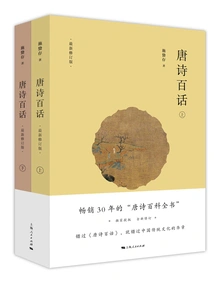
唐诗百话(最新修订版)
Shi Zhecun
"One Hundred Words of Tang Poetry" is an excellent work on the research and appreciation of Tang poetry created by Mr. Shi Zhecun in his later years. Mr. Shi also won the "Outstanding Contribution Award" of the Shanghai Literature and Art Award for the academic achievements and widespread influence of this book. Since its publication, "One Hundred Words of Tang Poems" has been highly praised by academic circles at home and abroad and warmly praised by readers. Yale University and other prestigious universities in the United States have also used this book as a teaching material for Chinese studies courses. Shi Zhecun combines decades of painstaking exploration of Chinese classical poetry into one book with rigorous textual research and comparative literary research methods. In particular, he does not follow the predecessors' perspective in selecting and describing poems. It not only provides a macroscopic overview of the history of poetry, but also analyzes and clarifies the evolution of poetic styles, as well as a poetic appreciation. The text in the book is elegant, lucid and clear, with the magnanimous attitude of connecting ancient and modern times at home and abroad. It is unique and innovative in the study of Tang poetry. The book is divided into four parts: Poetry Talk of the Early Tang Dynasty, Poetry Talk of the High Tang Dynasty, Poetry Talk of the Middle Tang Dynasty, and Poetry Talk of the Late Tang Dynasty. There are 100 articles in the book, and there are 9 articles by Shi Zhecun on the study of Tang poetry in the appendix. The book combines the explanation of Tang poetry and the special topic, combining the explanation of Tang poetry with the introduction of Tang poetry creation methods and historical knowledge. There is no shortage of research in the analysis, which clarifies many difficult problems about Tang poetry that have been controversial in history. The poems include single appreciation of quatrains, seven rhymes, and Yuefu, as well as thematic analysis of several poems combined. The special topics include an introduction to the author of Tang poetry and an exploration of the stylistic issues of Tang poetry. The book is insightful, well-substantiated, and full of character, and is known as an "Encyclopedia of Tang Poems."
"One Hundred Words of Tang Poetry" is an excellent work on the research and appreciation of Tang poetry created by Mr. Shi Zhecun in his later years. Mr. Shi also won the "Outstanding Contribution Award" of the Shanghai Literature and Art Award for the academic achievements and widespread influence of this book. Since its publication, "One Hundred Words of Tang Poems" has been highly praised by academic circles at home and abroad and warmly praised by readers. Yale University and other prestigious universities in the United States have also used this book as a teaching material for Chinese studies courses. Shi Zhecun combines decades of painstaking exploration of Chinese classical poetry into one book with rigorous textual research and comparative literary research methods. In particular, he does not follow the predecessors' perspective in selecting and describing poems. It not only provides a macroscopic overview of the history of poetry, but also analyzes and clarifies the evolution of poetic styles, as well as a poetic appreciation. The text in the book is elegant, lucid and clear, with the magnanimous attitude of connecting ancient and modern times at home and abroad. It is unique and innovative in the study of Tang poetry. The book is divided into four parts: Poetry Talk of the Early Tang Dynasty, Poetry Talk of the High Tang Dynasty, Poetry Talk of the Middle Tang Dynasty, and Poetry Talk of the Late Tang Dynasty. There are 100 articles in the book, and there are 9 articles by Shi Zhecun on the study of Tang poetry in the appendix. The book combines the explanation of Tang poetry and the special topic, combining the explanation of Tang poetry with the introduction of Tang poetry creation methods and historical knowledge. There is no shortage of research in the analysis, which clarifies many difficult problems about Tang poetry that have been controversial in history. The poems include single appreciation of quatrains, seven rhymes, and Yuefu, as well as thematic analysis of several poems combined. The special topics include an introduction to the author of Tang poetry and an exploration of the stylistic issues of Tang poetry. The book is insightful, well-substantiated, and full of character, and is known as an "Encyclopedia of Tang Poems."
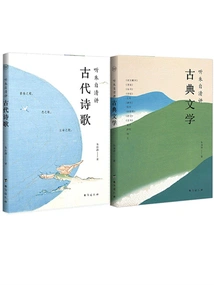
听朱自清讲经典:听朱自清讲古代诗歌+听朱自清讲古典文学(全2册)
Zhu Ziqing
This book is a series of classical literature research works by Zhu Ziqing. The whole book is divided into two volumes: "Listening to Zhu Ziqing Talk about Classical Literature" and "Listening to Zhu Ziqing Talk about Ancient Poetry". "Listening to Zhu Ziqing Lectures on Classical Literature" is an introductory course on Chinese studies taught by Mr. Zhu Ziqing. The content includes thirteen academic studies including Shuowen Jiezi, Zhouyi, Shangshu, Book of Songs, Three Rites, Spring and Autumn Annals, Four Books, Warring States Policy, Historical Records and Hanshu, Zhuzi, Ci Fu, Poetry, and Wen. Zhu Ziqing introduced the classic works in my country's cultural heritage in a simple and profound way. The whole book's combing and explanation of the classics has long become a must-read for countless Chinese studies enthusiasts. "Listening to Zhu Ziqing Talk about Ancient Poetry" contains both annotations and textual research on poetry, as well as an appreciation and analysis of the meaning of poetry. Zhu Ziqing's unique interpretation of poetry is recognized by the academic community as a model of modern Chinese scholarship.
This book is a series of classical literature research works by Zhu Ziqing. The whole book is divided into two volumes: "Listening to Zhu Ziqing Talk about Classical Literature" and "Listening to Zhu Ziqing Talk about Ancient Poetry". "Listening to Zhu Ziqing Lectures on Classical Literature" is an introductory course on Chinese studies taught by Mr. Zhu Ziqing. The content includes thirteen academic studies including Shuowen Jiezi, Zhouyi, Shangshu, Book of Songs, Three Rites, Spring and Autumn Annals, Four Books, Warring States Policy, Historical Records and Hanshu, Zhuzi, Ci Fu, Poetry, and Wen. Zhu Ziqing introduced the classic works in my country's cultural heritage in a simple and profound way. The whole book's combing and explanation of the classics has long become a must-read for countless Chinese studies enthusiasts. "Listening to Zhu Ziqing Talk about Ancient Poetry" contains both annotations and textual research on poetry, as well as an appreciation and analysis of the meaning of poetry. Zhu Ziqing's unique interpretation of poetry is recognized by the academic community as a model of modern Chinese scholarship.
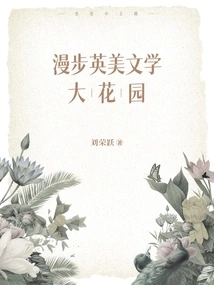
漫步英美文学大花园
Liu Rongyue
In world literature, British and American literature undoubtedly occupies a very important position. The names of Shakespeare, Hardy, Thackeray, Mark Twain and Jack London are almost household names. Each literary classic masterpiece has rich and profound ideological connotation and extraordinary artistic charm, so it has withstood the test of time. Generations of people read and appreciate them, enriching and improving themselves. Countless classic masterpieces such as "Jane Eyre", "Tess of the D'Urbervilles", "Robinson Crusoe" and "The Call of the Wild" have influenced many people. They seem to be rooted in a large beautiful garden filled with breathtaking scenery. The author of this book is a literary translator who has been working in the field of British and American literary translation for a long time. He has unique insights and perspectives on writers and works. He can see unique scenery from it, which brings readers into the vast world of British and American literature, so that they can enter the masterpieces of famous masters and appreciate their broad thoughts and great artistic charm.
In world literature, British and American literature undoubtedly occupies a very important position. The names of Shakespeare, Hardy, Thackeray, Mark Twain and Jack London are almost household names. Each literary classic masterpiece has rich and profound ideological connotation and extraordinary artistic charm, so it has withstood the test of time. Generations of people read and appreciate them, enriching and improving themselves. Countless classic masterpieces such as "Jane Eyre", "Tess of the D'Urbervilles", "Robinson Crusoe" and "The Call of the Wild" have influenced many people. They seem to be rooted in a large beautiful garden filled with breathtaking scenery. The author of this book is a literary translator who has been working in the field of British and American literary translation for a long time. He has unique insights and perspectives on writers and works. He can see unique scenery from it, which brings readers into the vast world of British and American literature, so that they can enter the masterpieces of famous masters and appreciate their broad thoughts and great artistic charm.
网络文学榜单作品精读
Ouyang Youquan
This "intensive reading" selects 18 works (items) on the Chinese Writers Association's "2019 China Online Literature Ranking", including 10 online novels, 6 online literature IP influence shortlisted works, and 2 Chinese online literature overseas communication projects. Each work adopts the format of "Author Introduction", "Comments on the List", "Story Synopsis", "Reactions to the Work" and "Work Analysis" to comment on the essence. The purpose is to promote excellent online literary works through intensive reading and appreciation. It is also an amplification of the influence of this important literary ranking activity itself.
This "intensive reading" selects 18 works (items) on the Chinese Writers Association's "2019 China Online Literature Ranking", including 10 online novels, 6 online literature IP influence shortlisted works, and 2 Chinese online literature overseas communication projects. Each work adopts the format of "Author Introduction", "Comments on the List", "Story Synopsis", "Reactions to the Work" and "Work Analysis" to comment on the essence. The purpose is to promote excellent online literary works through intensive reading and appreciation. It is also an amplification of the influence of this important literary ranking activity itself.
网络作家作品评价实践
Zhou Zhixiong Et Al.
This book selects the types of works of representative Internet writers in my country. Through the investigation of the growth path of outstanding Internet writers and the careful reading and analysis of their works, it dialogues with Internet writers and the times. In the cultural context of the new era where cosmopolitanism and nationality converge, it combines the characteristics of Internet media communication to sort out the development of Internet literature. Context, we conduct research on the cultural connotation, literary inheritance, artistic creation, value of the times, writing dilemmas, etc. Of my country's Internet literature, explore the occurrence and development rules of Internet literature, and try to construct an evaluation system for the works of Chinese Internet writers that is compatible with the development requirements of the times and has both understanding and sympathy as well as understanding and criticism.
This book selects the types of works of representative Internet writers in my country. Through the investigation of the growth path of outstanding Internet writers and the careful reading and analysis of their works, it dialogues with Internet writers and the times. In the cultural context of the new era where cosmopolitanism and nationality converge, it combines the characteristics of Internet media communication to sort out the development of Internet literature. Context, we conduct research on the cultural connotation, literary inheritance, artistic creation, value of the times, writing dilemmas, etc. Of my country's Internet literature, explore the occurrence and development rules of Internet literature, and try to construct an evaluation system for the works of Chinese Internet writers that is compatible with the development requirements of the times and has both understanding and sympathy as well as understanding and criticism.
最新网络小说佳作赏评
Nie Qingpu
This book collects a total of 63 online novels that have attracted much attention in recent years, divided into realistic chapters, historical chapters, and fantasy chapters. Reality refers to works based on real life and with today's life scenes as the background. Here you can see the police's clear understanding, the intellectuals' concern for the country and the people, the sincere dedication of the angels in white, the all-powerful entertainment stars, and the hard work of the wage earners; here is the sweetness of love, the hardships of life, and the intrigues in the workplace. Historical chapters refer to works that describe history and are set in ancient or fictional dynasties. Here are the majesty of the Tang Dynasty, the ambition of the Song Dynasty, the helplessness of the Ming Dynasty, the rise of the Qing Dynasty, the battles of the Republic of China, and some inspirational stories of young heroes. Fantasy refers to works that use imagination to construct different worlds and different lives. Here are the undefeated God of War, the young man who never gives up, the emperor who rules the world, the senior brother who develops secretly, the watchman who likes racing, and the mysterious master who makes people confused... Each of them is very powerful and can destroy the world with just one finger.
This book collects a total of 63 online novels that have attracted much attention in recent years, divided into realistic chapters, historical chapters, and fantasy chapters. Reality refers to works based on real life and with today's life scenes as the background. Here you can see the police's clear understanding, the intellectuals' concern for the country and the people, the sincere dedication of the angels in white, the all-powerful entertainment stars, and the hard work of the wage earners; here is the sweetness of love, the hardships of life, and the intrigues in the workplace. Historical chapters refer to works that describe history and are set in ancient or fictional dynasties. Here are the majesty of the Tang Dynasty, the ambition of the Song Dynasty, the helplessness of the Ming Dynasty, the rise of the Qing Dynasty, the battles of the Republic of China, and some inspirational stories of young heroes. Fantasy refers to works that use imagination to construct different worlds and different lives. Here are the undefeated God of War, the young man who never gives up, the emperor who rules the world, the senior brother who develops secretly, the watchman who likes racing, and the mysterious master who makes people confused... Each of them is very powerful and can destroy the world with just one finger.
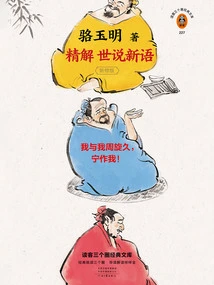
精解世说新语(新修版)
Luo Yuming
If you want to live your life the way you want, you will definitely find resonance in the stories of "Shishuoxinyu". Drink hard\u002F Sing wildly\u002F Take\u002F Lie down, the undefined life is super exciting. People in Wei and Jin Dynasties have tried it a long time ago. There are thousands of ways people can be, but after thinking about it, I still only want to be myself. ? The book "Exquisite Interpretation of Shishuo Xinyu" comes from the "Shishuo Xinyu" interpretation course taught by Professor Luo Yuming at Fudan University for 20 years. It is simple but not superficial. It is divided into 13 topics to explain the understanding and love of dignity, virtue, wisdom and beauty among scholars in the Wei and Jin Dynasties in "Shishuo Xinyu", covering all hot topics in the Wei, Jin, Southern and Northern Dynasties: heroes With celebrities\u002FMedicine and wine\u002FConversation customs\u002FMarriage and family of nobles\u002FIdeal personality of scholars in Wei and Jin Dynasties\u002FFemale style... See how they release their nature with unconventional words and deeds in an unsatisfactory world, and gain happiness through the pursuit of beauty and enjoyment.
If you want to live your life the way you want, you will definitely find resonance in the stories of "Shishuoxinyu". Drink hard\u002F Sing wildly\u002F Take\u002F Lie down, the undefined life is super exciting. People in Wei and Jin Dynasties have tried it a long time ago. There are thousands of ways people can be, but after thinking about it, I still only want to be myself. ? The book "Exquisite Interpretation of Shishuo Xinyu" comes from the "Shishuo Xinyu" interpretation course taught by Professor Luo Yuming at Fudan University for 20 years. It is simple but not superficial. It is divided into 13 topics to explain the understanding and love of dignity, virtue, wisdom and beauty among scholars in the Wei and Jin Dynasties in "Shishuo Xinyu", covering all hot topics in the Wei, Jin, Southern and Northern Dynasties: heroes With celebrities\u002FMedicine and wine\u002FConversation customs\u002FMarriage and family of nobles\u002FIdeal personality of scholars in Wei and Jin Dynasties\u002FFemale style... See how they release their nature with unconventional words and deeds in an unsatisfactory world, and gain happiness through the pursuit of beauty and enjoyment.
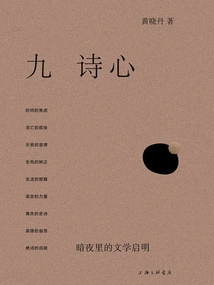
九诗心:暗夜里的文学启明
Huang Xiaodan
Is it possible for ancient poetry to respond to the current changes in the times and living conditions? Perhaps this book provides an answer. "Nine Poetry Hearts" refers to nine poets (Qu Yuan, Li Ling, Cao Pi, Tao Yuanming, Du Fu, Ouyang Xiu, Li Qingzhao, Wen Tianxiang, and Wu Meicun) who sought the direction of life in the throes of the turbulence of the times. Their situation and life issues will be felt by everyone in the post-epidemic era. Through poetry, we can see how people transform the pain of life and gain individual calmness and inner stability in the chaos of the times; we can also see how people can respond to the fundamental situation of life. With the delicate romance of a female scholar, the author explores the unknown side of the poets and constructs a rich and three-dimensional portrait of the nine poets; with poetic writing, the author takes the readers to cross the barriers of ancient texts, directly access the subtle thoughts of thousands of years, and illuminate the common life situation; with solid document collation and mutual corroboration of literature and history, the author reproduces the historical scene of the conflict between the poet's soul and reality.
Is it possible for ancient poetry to respond to the current changes in the times and living conditions? Perhaps this book provides an answer. "Nine Poetry Hearts" refers to nine poets (Qu Yuan, Li Ling, Cao Pi, Tao Yuanming, Du Fu, Ouyang Xiu, Li Qingzhao, Wen Tianxiang, and Wu Meicun) who sought the direction of life in the throes of the turbulence of the times. Their situation and life issues will be felt by everyone in the post-epidemic era. Through poetry, we can see how people transform the pain of life and gain individual calmness and inner stability in the chaos of the times; we can also see how people can respond to the fundamental situation of life. With the delicate romance of a female scholar, the author explores the unknown side of the poets and constructs a rich and three-dimensional portrait of the nine poets; with poetic writing, the author takes the readers to cross the barriers of ancient texts, directly access the subtle thoughts of thousands of years, and illuminate the common life situation; with solid document collation and mutual corroboration of literature and history, the author reproduces the historical scene of the conflict between the poet's soul and reality.
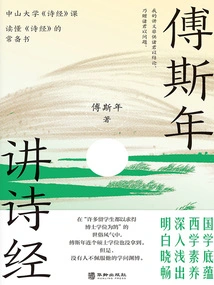
Fu Sinian Lectures on the Book of Songs
Literature傅斯年讲诗经
Fu Sinian
"Fu Sinian Lectures on the Book of Songs" is a lecture note written by Mr. Fu Sinian to teach the "Book of Songs" to students when he was a professor at Sun Yat-sen University in 1928. It is also an important document for the study of the "Book of Songs" in modern times. This book is both textual research and annotated, with many new interpretations. The author systematically sorts out the results of previous studies of the Book of Songs, and then proposes that studying the Book of Songs requires not only appreciating its diction, but also paying attention to its value as historical material and ancient linguistic material. The book mainly narrates various chapters of the Book of Songs, and is divided into several parts such as "Zhou Song", "Daya", and "Xiaoya". It covers the history of research on the Book of Songs, research methods on the Book of Songs, and the artistry of the Book of Songs. It shows the academic vision of a scholar with profound accumulation of Chinese studies and systematic Western ideological literacy. This book covers the breadth and depth of issues related to the Book of Songs. It is not out of date among today's research works on the Book of Songs. It can be regarded as a classic of handouts on the Book of Songs.
"Fu Sinian Lectures on the Book of Songs" is a lecture note written by Mr. Fu Sinian to teach the "Book of Songs" to students when he was a professor at Sun Yat-sen University in 1928. It is also an important document for the study of the "Book of Songs" in modern times. This book is both textual research and annotated, with many new interpretations. The author systematically sorts out the results of previous studies of the Book of Songs, and then proposes that studying the Book of Songs requires not only appreciating its diction, but also paying attention to its value as historical material and ancient linguistic material. The book mainly narrates various chapters of the Book of Songs, and is divided into several parts such as "Zhou Song", "Daya", and "Xiaoya". It covers the history of research on the Book of Songs, research methods on the Book of Songs, and the artistry of the Book of Songs. It shows the academic vision of a scholar with profound accumulation of Chinese studies and systematic Western ideological literacy. This book covers the breadth and depth of issues related to the Book of Songs. It is not out of date among today's research works on the Book of Songs. It can be regarded as a classic of handouts on the Book of Songs.
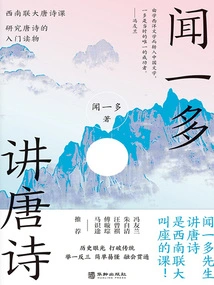
Wen Yiduo Talks About Tang Poetry
Literature闻一多讲唐诗
Wen Yiduo
This book is a literary review book by famous writers. The author, Mr. Wen Yiduo, stands at a new height and analyzes and studies the essence of Tang poetry from a historical perspective. The whole book breaks through the narrowness and isolation of traditional academic methods and academic research. It looks at and studies poetry from the perspective of a poet and has many outstanding insights. As a pioneering work, its historical status in the study of Tang poetry is unshakable. At the same time, Wen Yiduo's research on Tang poetry has his unique perspective and method, which is still inspiring to our scholars today and can also improve the level of literary appreciation for ordinary readers.
This book is a literary review book by famous writers. The author, Mr. Wen Yiduo, stands at a new height and analyzes and studies the essence of Tang poetry from a historical perspective. The whole book breaks through the narrowness and isolation of traditional academic methods and academic research. It looks at and studies poetry from the perspective of a poet and has many outstanding insights. As a pioneering work, its historical status in the study of Tang poetry is unshakable. At the same time, Wen Yiduo's research on Tang poetry has his unique perspective and method, which is still inspiring to our scholars today and can also improve the level of literary appreciation for ordinary readers.
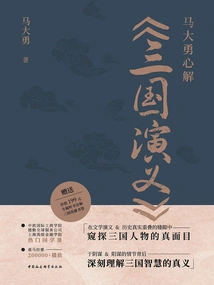
马大勇心解《三国演义》
Ma Dayong
This book is an updated version of "The Romance of the Three Kingdoms" taught by Professor Ma Dayong for a long time and based on the audio lessons released by "Himalaya FM". What is history? Some people say that history is an infinite non-repeating decimal. We can only get infinitely close but cannot really find the answer. This may be true, and novels like The Romance of the Three Kingdoms walk precisely in the gap between history and literature, like a skilled acrobat walking a tightrope. It uses exquisite literary means to recreate this already thrilling story and construct the "Three Kingdoms" in the author's own mind. It may not follow historical truth to a certain extent, but it demonstrates the charm of "romantic fiction" - that is, literature - and opens the door to historical romance novels.
This book is an updated version of "The Romance of the Three Kingdoms" taught by Professor Ma Dayong for a long time and based on the audio lessons released by "Himalaya FM". What is history? Some people say that history is an infinite non-repeating decimal. We can only get infinitely close but cannot really find the answer. This may be true, and novels like The Romance of the Three Kingdoms walk precisely in the gap between history and literature, like a skilled acrobat walking a tightrope. It uses exquisite literary means to recreate this already thrilling story and construct the "Three Kingdoms" in the author's own mind. It may not follow historical truth to a certain extent, but it demonstrates the charm of "romantic fiction" - that is, literature - and opens the door to historical romance novels.
Light Years (volume 5)
Literature光年(第五辑)
Editor-in-chief Dai Weina
The fifth issue of "Lightyear" Poetry Translation Magazine has the theme of "The Bet of Our Generation". The content covers the latest creative trends in the contemporary international poetry world, poetry theories, and in-depth presentations of figures and events in the poetry world. "Lightyear" was founded in 2017. The theme of the first issue is "The Republic of Poetry". The themes of previous issues also include "World within Worlds", "City of Birth and City of Memory" and "Poetry of Disaster: Witnessing Death Like Daily Events". The editor-in-chief of "Lightyear" magazine is Dai Weina, a young poet and scholar. The key issue of the fifth issue of "Light Years" is how poetry relates to current events. The relationship between them is not just how poetry is affected by reality, or how poetry affects reality, but a more complex and multi-dimensional dialogue. In a world political environment full of unrest and disputes, poetry plays a small role after all, but the sound it makes may reverberate for a long time and become evidence for the next generation to look at us.
The fifth issue of "Lightyear" Poetry Translation Magazine has the theme of "The Bet of Our Generation". The content covers the latest creative trends in the contemporary international poetry world, poetry theories, and in-depth presentations of figures and events in the poetry world. "Lightyear" was founded in 2017. The theme of the first issue is "The Republic of Poetry". The themes of previous issues also include "World within Worlds", "City of Birth and City of Memory" and "Poetry of Disaster: Witnessing Death Like Daily Events". The editor-in-chief of "Lightyear" magazine is Dai Weina, a young poet and scholar. The key issue of the fifth issue of "Light Years" is how poetry relates to current events. The relationship between them is not just how poetry is affected by reality, or how poetry affects reality, but a more complex and multi-dimensional dialogue. In a world political environment full of unrest and disputes, poetry plays a small role after all, but the sound it makes may reverberate for a long time and become evidence for the next generation to look at us.
胡辛创作与江西文化形象建构
Editor-in-chief Zhan Aibin
Hu Xin is one of the representative writers of female writing in the new era of China and the female writer with the most outstanding literary achievements in Jiangxi since modern times. His creations are rooted in the regional and traditional spirit through rich life experiences and insights, and have lasting charm. This is a collection of commentaries on interpreting and recognizing Hu Xin's creations. Covering nearly 100 articles commenting on Hu Xin and his creations in the past 40 years, spanning the fields of literature, film and television, ceramics, etc., It outlines Hu Xin's unique words and affectionate expressions of the land, water, and people of Gan. The perspectives are diverse and the forms are varied, including Mr. Wang Meng's comments from a high position and the words of Academician Pan Jiluan; there are different opinions from scholars and professors, as well as intergenerational readings by students and young readers... The collection of forty years of comments can not only effectively promote Hu Xin's creation and the construction of Jiangxi cultural image to a deeper level, but also reflect the social style, literary and artistic trends and aesthetic judgments of different eras.
Hu Xin is one of the representative writers of female writing in the new era of China and the female writer with the most outstanding literary achievements in Jiangxi since modern times. His creations are rooted in the regional and traditional spirit through rich life experiences and insights, and have lasting charm. This is a collection of commentaries on interpreting and recognizing Hu Xin's creations. Covering nearly 100 articles commenting on Hu Xin and his creations in the past 40 years, spanning the fields of literature, film and television, ceramics, etc., It outlines Hu Xin's unique words and affectionate expressions of the land, water, and people of Gan. The perspectives are diverse and the forms are varied, including Mr. Wang Meng's comments from a high position and the words of Academician Pan Jiluan; there are different opinions from scholars and professors, as well as intergenerational readings by students and young readers... The collection of forty years of comments can not only effectively promote Hu Xin's creation and the construction of Jiangxi cultural image to a deeper level, but also reflect the social style, literary and artistic trends and aesthetic judgments of different eras.
玄韵流芳:《世说新语》的审美精神
Yang Xingying Jiang Nan Guan Caijun
This book starts from the awakening of individual life consciousness, focuses on exploring the philosophical foundation and social roots of Wei and Jin aesthetics, and leads readers to understand and appreciate the beauty of life in Wei and Jin aesthetics through the highly individual speech and behavior and distinctive anecdotes of the scholars of the late Han, Three Kingdoms and Two Jin Dynasties in "Shishuoxinyu", understand and grasp the aesthetic spirit of the literature and art of the Wei, Jin and Six Dynasties, and its influence on the aesthetic spirit and literary creation of later generations of Chinese people. The combination of philosophy and enlightenment, the combination of in-depth theoretical explanations and flexible written expressions are a major feature of this book.
This book starts from the awakening of individual life consciousness, focuses on exploring the philosophical foundation and social roots of Wei and Jin aesthetics, and leads readers to understand and appreciate the beauty of life in Wei and Jin aesthetics through the highly individual speech and behavior and distinctive anecdotes of the scholars of the late Han, Three Kingdoms and Two Jin Dynasties in "Shishuoxinyu", understand and grasp the aesthetic spirit of the literature and art of the Wei, Jin and Six Dynasties, and its influence on the aesthetic spirit and literary creation of later generations of Chinese people. The combination of philosophy and enlightenment, the combination of in-depth theoretical explanations and flexible written expressions are a major feature of this book.
Research on Li Shen and His Poetry
Literature李绅及其诗歌研究
Yan Zhengdao
This book takes Li Shen, an important poet and politician in the Mid-Tang Dynasty, and his poems as the research object. From the perspective of the relationship between politics and literature, with the Niu-Li party struggle as the political background, and based on the new changes in literature in the Mid-Tang Dynasty, this book comprehensively and systematically examines Li Shen and his poems. Jufan's family background, life, thoughts, main friendships, stance and attitude in the Niu-Li party struggle, his role in the New Yuefu Movement in the Mid-Tang Dynasty, the circulation of his poetry versions, origin relationships, the emotions expressed in the poetry, the changing trajectory of the poetry style, and the evaluation of later generations, etc., Have been analyzed and discussed in depth.
This book takes Li Shen, an important poet and politician in the Mid-Tang Dynasty, and his poems as the research object. From the perspective of the relationship between politics and literature, with the Niu-Li party struggle as the political background, and based on the new changes in literature in the Mid-Tang Dynasty, this book comprehensively and systematically examines Li Shen and his poems. Jufan's family background, life, thoughts, main friendships, stance and attitude in the Niu-Li party struggle, his role in the New Yuefu Movement in the Mid-Tang Dynasty, the circulation of his poetry versions, origin relationships, the emotions expressed in the poetry, the changing trajectory of the poetry style, and the evaluation of later generations, etc., Have been analyzed and discussed in depth.
中国当代文学作品导读
Editor-in-chief Jia Liping
The selected chapters in this book are representative works that have had a certain influence or a certain aspect in the history of contemporary literature in my country since the founding of the People's Republic of China, reflecting the historical trajectory and creative overview of the development of contemporary literature in my country over the past 70 years. The articles are organized into units in the order of novels, poems, essays and dramas, and works in the same unit are arranged in order of publication time. This book includes an 800-1,000-word analysis at the end of each work to help readers understand. Due to space limitations, some novels and novels and plays appear in preserved form.
The selected chapters in this book are representative works that have had a certain influence or a certain aspect in the history of contemporary literature in my country since the founding of the People's Republic of China, reflecting the historical trajectory and creative overview of the development of contemporary literature in my country over the past 70 years. The articles are organized into units in the order of novels, poems, essays and dramas, and works in the same unit are arranged in order of publication time. This book includes an 800-1,000-word analysis at the end of each work to help readers understand. Due to space limitations, some novels and novels and plays appear in preserved form.
江淹《杂体诗三十首》研究
Guo Chenguang
The Wei, Jin, Southern and Northern Dynasties were a critical period for the gradual development and maturity of five-character poetry, and "imitation poetry" was a new phenomenon that emerged in the creation of five-character poetry during this period. Many great poets at that time had many works and achieved high artistic achievements. Through the study of Jiang Yan's "Thirty Miscellaneous Poems" and its preface, this book explores the relationship between this special literary phenomenon and the creative mentality of scholars at that time, as well as the relationship with poetry creation and literary criticism at that time. It also examines these thirty poems in the overall environment of the literary development of the Southern Dynasties, giving a relatively objective and fair evaluation of this literary trend of "writing for literature's sake" and "art for art's sake".
The Wei, Jin, Southern and Northern Dynasties were a critical period for the gradual development and maturity of five-character poetry, and "imitation poetry" was a new phenomenon that emerged in the creation of five-character poetry during this period. Many great poets at that time had many works and achieved high artistic achievements. Through the study of Jiang Yan's "Thirty Miscellaneous Poems" and its preface, this book explores the relationship between this special literary phenomenon and the creative mentality of scholars at that time, as well as the relationship with poetry creation and literary criticism at that time. It also examines these thirty poems in the overall environment of the literary development of the Southern Dynasties, giving a relatively objective and fair evaluation of this literary trend of "writing for literature's sake" and "art for art's sake".
Dreaming in Red Mansions: a Study on the Mythical Archetypes of Dreams in "dream of Red Mansions
Literature梦演红楼:《红楼梦》之梦的神话原型研究
Zhang Lihong
The dream in "Dream of Red Mansions" is a dream of mythical archetype. The fate of the characters in "Dream of Red Mansions" is not only a repetition of their dreams but also a repetition of mythical archetype. The tragic fate of women in Red Mansions re-enacts Jia Baoyu's "Dream of Taixu Dream" and the dreams of Lin Daiyu and others. In fact, it is a re-enactment of the historical prototype of women's tragic fate. Before Western theorists revealed the secrets of dream and myth archetypes, Cao Xueqin used dreams and myth archetypes to create "A Dream of Red Mansions", which undoubtedly shows Cao Xueqin's advancement and greatness.
The dream in "Dream of Red Mansions" is a dream of mythical archetype. The fate of the characters in "Dream of Red Mansions" is not only a repetition of their dreams but also a repetition of mythical archetype. The tragic fate of women in Red Mansions re-enacts Jia Baoyu's "Dream of Taixu Dream" and the dreams of Lin Daiyu and others. In fact, it is a re-enactment of the historical prototype of women's tragic fate. Before Western theorists revealed the secrets of dream and myth archetypes, Cao Xueqin used dreams and myth archetypes to create "A Dream of Red Mansions", which undoubtedly shows Cao Xueqin's advancement and greatness.
阡陌暖春:中华诗词的格局与文脉
Zhang Zhichang
Chinese poetry is as vast as a sea of smoke, as bright as a galaxy, and covers many themes including landscapes and countryside, travel and farewell, chanting of objects and nostalgia, wars and relocations, and many other themes. Everything is inaccessible, unintentional and ruthless, and it embodies the benevolence and love of the Chinese nation. The broad and profound cultural connotations of things, self-improvement, harmony and sharing have been passed down through the ages through the expressive and lyrical texts, constructing a cultural pattern rich in national characteristics and forming a cultural context with orderly inheritance. Based on multiple perspectives, this book is based in Chang'an of the Tang Dynasty, reflecting on thousands of years of thinking, looking at ancient and modern times, wandering in the long history of poetry, and experiencing the whiteness, wonder, and long-lasting warmth of poetry in the poetry, wine and banquets, the clear breeze, the bright moon, and the solitary smoke in the desert. The years are passing by slowly, the streets are warm in spring, and with the infiltration of Chinese poetry, the world becomes more joyful and the years become more peaceful. The whole book uses hundreds of short essays and dialogues to form a mountain, rich in connotation, scattered in form and spirit. The author provides a personalized and wonderful interpretation of classic poetry. In his admiration and reflection on traditional culture, he demonstrates the great power of excellent Chinese poetry to nourish individual life, shape the national spirit, and convey the Chinese context.
Chinese poetry is as vast as a sea of smoke, as bright as a galaxy, and covers many themes including landscapes and countryside, travel and farewell, chanting of objects and nostalgia, wars and relocations, and many other themes. Everything is inaccessible, unintentional and ruthless, and it embodies the benevolence and love of the Chinese nation. The broad and profound cultural connotations of things, self-improvement, harmony and sharing have been passed down through the ages through the expressive and lyrical texts, constructing a cultural pattern rich in national characteristics and forming a cultural context with orderly inheritance. Based on multiple perspectives, this book is based in Chang'an of the Tang Dynasty, reflecting on thousands of years of thinking, looking at ancient and modern times, wandering in the long history of poetry, and experiencing the whiteness, wonder, and long-lasting warmth of poetry in the poetry, wine and banquets, the clear breeze, the bright moon, and the solitary smoke in the desert. The years are passing by slowly, the streets are warm in spring, and with the infiltration of Chinese poetry, the world becomes more joyful and the years become more peaceful. The whole book uses hundreds of short essays and dialogues to form a mountain, rich in connotation, scattered in form and spirit. The author provides a personalized and wonderful interpretation of classic poetry. In his admiration and reflection on traditional culture, he demonstrates the great power of excellent Chinese poetry to nourish individual life, shape the national spirit, and convey the Chinese context.
Research on Color Words in Song Ci
Literature宋词颜色词研究
Dong Jia
This book uses the closed corpus of nearly 20,000 lyrics, about 1.4 Million words, collected in "Complete Song Ci" as corpus, and uses the five basic colors of "yellow, red, green, white, and black" as clues for research. The main content includes: the use of color words alone in sentences, the use of color words to form color-containing words, the reasoning mechanism of color-containing words in metaphors and metonymies, and the semantic and pragmatic usage characteristics of color words themselves. At the end of each chapter, each color category is taken as the main link, and multiple color words representing each color category are sorted out and comparatively analyzed to a certain extent in the form of semantic fields. Finally, we jump out of the individual corpus and stand at a more general level, summarizing and summarizing the characteristics and rules of the use of color words in "Quan Song Ci" from the syntactic, semantic and pragmatic levels.
This book uses the closed corpus of nearly 20,000 lyrics, about 1.4 Million words, collected in "Complete Song Ci" as corpus, and uses the five basic colors of "yellow, red, green, white, and black" as clues for research. The main content includes: the use of color words alone in sentences, the use of color words to form color-containing words, the reasoning mechanism of color-containing words in metaphors and metonymies, and the semantic and pragmatic usage characteristics of color words themselves. At the end of each chapter, each color category is taken as the main link, and multiple color words representing each color category are sorted out and comparatively analyzed to a certain extent in the form of semantic fields. Finally, we jump out of the individual corpus and stand at a more general level, summarizing and summarizing the characteristics and rules of the use of color words in "Quan Song Ci" from the syntactic, semantic and pragmatic levels.