Library
Browse and search books
3,417 novels found
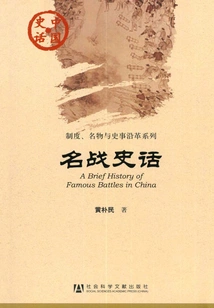
Famous War History
History名战史话
Huang Pumin
There were frequent wars in ancient China, and there were countless famous battles. Therefore, the difficulty of writing lies not in complexity but in simplicity. The layout of the whole book and the selection of cases are the best test of the author's ability. Huang has been studying the history of ancient warfare and military thought for many years, and his chapter layout is quite ingenious. This manuscript roughly takes time as its warp and war examples as its latitude, and roughly divides the wars since the end of primitive society into the wars of the ancient times (Xia, Shang and Western Zhou), the annexation and hegemony wars of the Spring and Autumn Period and the Warring States, and the wars of dynastic unification, etc. It is described in minutes. Another two chapters are used to combine ancient Chinese military thought (especially Sun Tzu's thought) to describe the wonderful battles in ancient times, and at the same time show the rich and profound military thought of ancient China. The layout of the chapter is reasonable, and the selection of battle examples is generally appropriate.
There were frequent wars in ancient China, and there were countless famous battles. Therefore, the difficulty of writing lies not in complexity but in simplicity. The layout of the whole book and the selection of cases are the best test of the author's ability. Huang has been studying the history of ancient warfare and military thought for many years, and his chapter layout is quite ingenious. This manuscript roughly takes time as its warp and war examples as its latitude, and roughly divides the wars since the end of primitive society into the wars of the ancient times (Xia, Shang and Western Zhou), the annexation and hegemony wars of the Spring and Autumn Period and the Warring States, and the wars of dynastic unification, etc. It is described in minutes. Another two chapters are used to combine ancient Chinese military thought (especially Sun Tzu's thought) to describe the wonderful battles in ancient times, and at the same time show the rich and profound military thought of ancient China. The layout of the chapter is reasonable, and the selection of battle examples is generally appropriate.
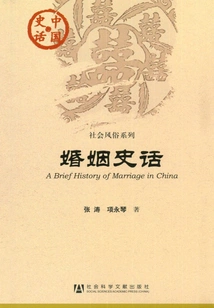
Marriage History
History婚姻史话
Zhang Tao Xiang Yongqin
This book starts from the legend of Fuxi and Nuwa's marriage to the group of women who called for freedom of marriage during the Revolution of 1911. It not only carefully analyzes ancient books and documents, but also quotes unearthed materials from aspects of marriage forms, marriage age customs, folk wedding rituals, and marriage restrictions. It also obtains precious evidence from modern folk customs at home and abroad, and strives to combine historical clues and logical clues to complement each other, integrate academic, intellectual, and readability, and display the colorful development process of ancient Chinese marriage in a three-dimensional and all-round way. Among them, chapters such as the birth and demise of property ownership, the elevation of women's status, the widespread popularity of family-based marriages, the high admiration of chastity archways, the special existence of prostitutes' faces, etc., Will all provide some lessons and enlightenment to people.
This book starts from the legend of Fuxi and Nuwa's marriage to the group of women who called for freedom of marriage during the Revolution of 1911. It not only carefully analyzes ancient books and documents, but also quotes unearthed materials from aspects of marriage forms, marriage age customs, folk wedding rituals, and marriage restrictions. It also obtains precious evidence from modern folk customs at home and abroad, and strives to combine historical clues and logical clues to complement each other, integrate academic, intellectual, and readability, and display the colorful development process of ancient Chinese marriage in a three-dimensional and all-round way. Among them, chapters such as the birth and demise of property ownership, the elevation of women's status, the widespread popularity of family-based marriages, the high admiration of chastity archways, the special existence of prostitutes' faces, etc., Will all provide some lessons and enlightenment to people.
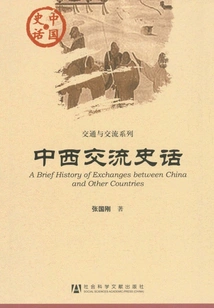
中西交流史话
Zhang Guogang
The middle and lower reaches of the Yellow River are the core areas for the formation and development of Chinese civilization, and it gradually spread. The relative independence in physical geography plays an important role in the stability and sustainable development of Chinese civilization, but it has never been closed. There are continuous exchanges with the Buddhist culture of South Asia, the Islamic culture of West Asia and North Africa, and the Christian culture of Europe to the west. Zhang Qian's passage to the Western Regions in the Han Dynasty, the gathering of religious culture from the Western Regions in Chang'an during the Tang Dynasty, the establishment of a great empire across Asia and Europe in the Yuan Dynasty, and the arrival of Western commercial and religious forces from the east in the Ming and Qing Dynasties were the four major climaxes of cultural exchanges between China and the West. This book traces the footsteps of our ancestors and tells the historical process of the exchange, collision and mutual nourishment between ancient Chinese civilization and Western civilization through records and cultural relics such as King Mu of Zhou Dynasty's Western Tour, Monk Tang's Journey to the West, Genghis Khan's Western Expeditions, and Zheng He's Voyages to the West.
The middle and lower reaches of the Yellow River are the core areas for the formation and development of Chinese civilization, and it gradually spread. The relative independence in physical geography plays an important role in the stability and sustainable development of Chinese civilization, but it has never been closed. There are continuous exchanges with the Buddhist culture of South Asia, the Islamic culture of West Asia and North Africa, and the Christian culture of Europe to the west. Zhang Qian's passage to the Western Regions in the Han Dynasty, the gathering of religious culture from the Western Regions in Chang'an during the Tang Dynasty, the establishment of a great empire across Asia and Europe in the Yuan Dynasty, and the arrival of Western commercial and religious forces from the east in the Ming and Qing Dynasties were the four major climaxes of cultural exchanges between China and the West. This book traces the footsteps of our ancestors and tells the historical process of the exchange, collision and mutual nourishment between ancient Chinese civilization and Western civilization through records and cultural relics such as King Mu of Zhou Dynasty's Western Tour, Monk Tang's Journey to the West, Genghis Khan's Western Expeditions, and Zheng He's Voyages to the West.
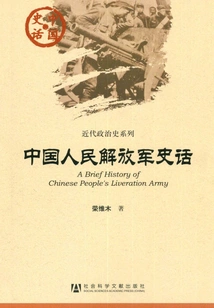
中国人民解放军史话
Rong Weimu
The Chinese People's Liberation Army was born in the Nanchang Uprising on August 1, 1927. From the autumn of 1927 to the spring of 1928, the Communist Party of China launched the Nanchang Uprising, Autumn Harvest Uprising, Guangzhou Uprising, and other regional uprisings. The troops that survived the uprising in these areas were called the Chinese Workers' and Peasants' Revolutionary Army at that time. After May 1928, they were gradually renamed the Chinese Workers' and Peasants' Red Army, or the "Red Army" for short. The Anti-Japanese War broke out on July 7, 1937, and the main force of the Red Army was reorganized into the Eighth Route Army of the National Revolutionary Army, referred to as the Eighth Route Army. The Red Army guerrillas operating in 14 regions in eight southern provinces were gathered together and reorganized into the newly formed Fourth Army of the National Revolutionary Army on October 2, referred to as the New Fourth Army. In 1945, Zhu De, commander-in-chief of the Eighth Route Army, approved seven anti-Japanese counter-offensive orders, and in the fourth order, he proposed the term "People's Liberation Army" for the first time. In 1946, the Liberation War broke out. The various units in the liberated areas were gradually renamed the People's Liberation Army from the Eighth Route Army, New Fourth Army, Northeast Democratic Alliance Army, etc., And were organized into five major field armies. After several years of liberation war, the rule of the Nationalist Government was overthrown, and then it entered Tibet and unified mainland China. After the founding of the People's Republic of China, the People's Liberation Army assumed the mission of defending national defense and participating in socialist revolution and construction. At the same time, it carried out revolutionization, modernization, and regularization construction, so that it could develop into a comprehensive military force composed of land, sea, air force and missile forces.
The Chinese People's Liberation Army was born in the Nanchang Uprising on August 1, 1927. From the autumn of 1927 to the spring of 1928, the Communist Party of China launched the Nanchang Uprising, Autumn Harvest Uprising, Guangzhou Uprising, and other regional uprisings. The troops that survived the uprising in these areas were called the Chinese Workers' and Peasants' Revolutionary Army at that time. After May 1928, they were gradually renamed the Chinese Workers' and Peasants' Red Army, or the "Red Army" for short. The Anti-Japanese War broke out on July 7, 1937, and the main force of the Red Army was reorganized into the Eighth Route Army of the National Revolutionary Army, referred to as the Eighth Route Army. The Red Army guerrillas operating in 14 regions in eight southern provinces were gathered together and reorganized into the newly formed Fourth Army of the National Revolutionary Army on October 2, referred to as the New Fourth Army. In 1945, Zhu De, commander-in-chief of the Eighth Route Army, approved seven anti-Japanese counter-offensive orders, and in the fourth order, he proposed the term "People's Liberation Army" for the first time. In 1946, the Liberation War broke out. The various units in the liberated areas were gradually renamed the People's Liberation Army from the Eighth Route Army, New Fourth Army, Northeast Democratic Alliance Army, etc., And were organized into five major field armies. After several years of liberation war, the rule of the Nationalist Government was overthrown, and then it entered Tibet and unified mainland China. After the founding of the People's Republic of China, the People's Liberation Army assumed the mission of defending national defense and participating in socialist revolution and construction. At the same time, it carried out revolutionization, modernization, and regularization construction, so that it could develop into a comprehensive military force composed of land, sea, air force and missile forces.
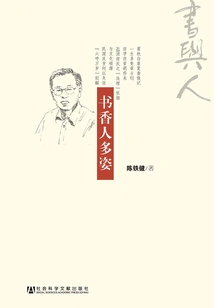
书香人多姿
Chen Tiejian
How did Qu Qiubai change from a "revolutionary martyr" to a "revolutionary traitor", and how did he change from a "revolutionary traitor" to a "revolutionary martyr"? What is the true meaning of Chen Duxiu's democracy? What is the "legal" basis and cultural origin of the AB regiment's suppression of counterrevolutionaries; why did the Chinese Revolution fail in the 1920s? Why is it said that Hu Qiaomu is "both an official and an academic"? ... This book has incisive and profound explanations.
How did Qu Qiubai change from a "revolutionary martyr" to a "revolutionary traitor", and how did he change from a "revolutionary traitor" to a "revolutionary martyr"? What is the true meaning of Chen Duxiu's democracy? What is the "legal" basis and cultural origin of the AB regiment's suppression of counterrevolutionaries; why did the Chinese Revolution fail in the 1920s? Why is it said that Hu Qiaomu is "both an official and an academic"? ... This book has incisive and profound explanations.
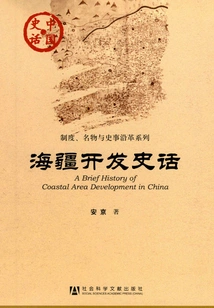
海疆开发史话
Anjing
With the help of a large number of ancient historical documents, this book provides a relatively detailed introduction to the history of China's maritime development from ancient times to modern times. It not only introduces the great achievements of the Qin Emperor and Han Dynasty in opening up territories, the history of the formation of the famous Maritime Silk Road, and the great navigator Zheng He's seven voyages to the Western Ocean, but also focuses on the development history of coastal ports, Taiwan, and the South China Sea Islands, the heroic history of patriotic officials and people defending maritime borders, and the humiliating history of Western powers' invasion of China's maritime borders. At the same time, some introductions were also made to the rich products in China's waters and the construction of the modern navy. It can be said that this book is a better popular reading for understanding the history of China's maritime development.
With the help of a large number of ancient historical documents, this book provides a relatively detailed introduction to the history of China's maritime development from ancient times to modern times. It not only introduces the great achievements of the Qin Emperor and Han Dynasty in opening up territories, the history of the formation of the famous Maritime Silk Road, and the great navigator Zheng He's seven voyages to the Western Ocean, but also focuses on the development history of coastal ports, Taiwan, and the South China Sea Islands, the heroic history of patriotic officials and people defending maritime borders, and the humiliating history of Western powers' invasion of China's maritime borders. At the same time, some introductions were also made to the rich products in China's waters and the construction of the modern navy. It can be said that this book is a better popular reading for understanding the history of China's maritime development.
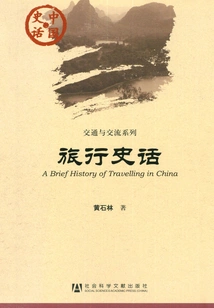
Travel History
History旅行史话
Yellow Stone Forest
This book is organized in chronological order with traveling characters as the center, and is divided into five periods: Pre-Qin, Qin-Han, Wei, Jin, Southern and Northern Dynasties, Sui and Tang, Song, Yuan and Ming. It introduces the characters and their travel events in ancient China who traveled to the famous mountains and rivers of the motherland. From it, readers can not only appreciate the beauty of mountains and rivers, the dangers of rocks and ravines, the wonders of historical sites, and the tranquility of gardens through the author's beautiful language, but also expand their knowledge, broaden their horizons, and enrich their lives. At the same time, they can also have a deeper understanding of the social impact and historical significance of tourism, a noble cultural activity.
This book is organized in chronological order with traveling characters as the center, and is divided into five periods: Pre-Qin, Qin-Han, Wei, Jin, Southern and Northern Dynasties, Sui and Tang, Song, Yuan and Ming. It introduces the characters and their travel events in ancient China who traveled to the famous mountains and rivers of the motherland. From it, readers can not only appreciate the beauty of mountains and rivers, the dangers of rocks and ravines, the wonders of historical sites, and the tranquility of gardens through the author's beautiful language, but also expand their knowledge, broaden their horizons, and enrich their lives. At the same time, they can also have a deeper understanding of the social impact and historical significance of tourism, a noble cultural activity.
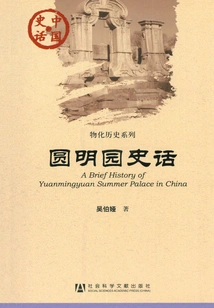
圆明园史话
Wu Boya
The Old Summer Palace was the pinnacle of Chinese classical garden art. It was also the royal museum that collected treasures, cultural relics and books, and was a center of political activity in China at that time. The rise and fall of the Old Summer Palace is closely related to the economy, politics, military, and culture at that time. It is almost a microcosm of the Qing Dynasty since Kang and Yong. The glory and humiliation it has experienced are engraved in the hearts of hundreds of millions of people and will never be erased from generation to generation.
The Old Summer Palace was the pinnacle of Chinese classical garden art. It was also the royal museum that collected treasures, cultural relics and books, and was a center of political activity in China at that time. The rise and fall of the Old Summer Palace is closely related to the economy, politics, military, and culture at that time. It is almost a microcosm of the Qing Dynasty since Kang and Yong. The glory and humiliation it has experienced are engraved in the hearts of hundreds of millions of people and will never be erased from generation to generation.
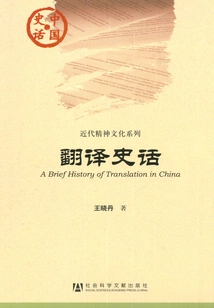
翻译史话
Wang Xiaodan
China has a long history of translation. In summary, it has gone through three stages: the first stage is the translation of Buddhist classics from the Han Dynasty to the Yuan Dynasty. During this long historical period, monks from China and India translated a large number of Buddhist classics, which had a huge impact on Chinese culture. Its heyday was the Tang Dynasty. The second stage was the translation of Western scientific works in the late Ming and early Qing dynasties. The climax of translation during this period was caused by Western missionaries coming to China to preach. The third stage is the comprehensive translation and introduction of Western science and technology, thought and even literature and art in modern China. This stage began around 1840 with the Opium War. The history of translation introduced in this book mainly focuses on the third stage, which not only involves the translation of modern Western science and technology books and periodicals, and the translation of Western philosophy and social science books and periodicals, but also introduces in more detail the translation of Marxist works and foreign literary works in China. Through this book, readers can have a general and clear understanding of the history of translation in modern China.
China has a long history of translation. In summary, it has gone through three stages: the first stage is the translation of Buddhist classics from the Han Dynasty to the Yuan Dynasty. During this long historical period, monks from China and India translated a large number of Buddhist classics, which had a huge impact on Chinese culture. Its heyday was the Tang Dynasty. The second stage was the translation of Western scientific works in the late Ming and early Qing dynasties. The climax of translation during this period was caused by Western missionaries coming to China to preach. The third stage is the comprehensive translation and introduction of Western science and technology, thought and even literature and art in modern China. This stage began around 1840 with the Opium War. The history of translation introduced in this book mainly focuses on the third stage, which not only involves the translation of modern Western science and technology books and periodicals, and the translation of Western philosophy and social science books and periodicals, but also introduces in more detail the translation of Marxist works and foreign literary works in China. Through this book, readers can have a general and clear understanding of the history of translation in modern China.
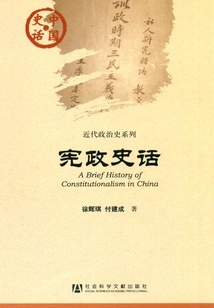
Constitutional History
History宪政史话
Xu Huiqi
Constitutionalism, that is, constitutional politics, is also democratic politics. It is a kind of politics that manages the country and society by formulating the country's fundamental law - the constitution, which is fundamentally different from the feudal autocratic system. From a broad world historical perspective, constitutionalism is the product of the modern bourgeois revolution and one of the main contents of the anti-feudal struggle in the early stages of the bourgeois revolution. Based on the history of the development of Chinese constitutionalism, this book details the development of constitutionalism in several historical stages including the "preparatory constitutionalism" in the late Qing Dynasty, the practice of constitutionalism in the early Republic of China, the "government training" and "constitutionalism" of the Nanjing National Government, and the new-democratic constitutionalism implemented by the Communist Party of China. It also discusses Sun Yat-sen's constitutionalism thought, the constitutionalism advocates of the national bourgeoisie, and the new-democratic constitutionalism theory, etc., Which completely presents the entire development of China's constitutionalism over the past century.
Constitutionalism, that is, constitutional politics, is also democratic politics. It is a kind of politics that manages the country and society by formulating the country's fundamental law - the constitution, which is fundamentally different from the feudal autocratic system. From a broad world historical perspective, constitutionalism is the product of the modern bourgeois revolution and one of the main contents of the anti-feudal struggle in the early stages of the bourgeois revolution. Based on the history of the development of Chinese constitutionalism, this book details the development of constitutionalism in several historical stages including the "preparatory constitutionalism" in the late Qing Dynasty, the practice of constitutionalism in the early Republic of China, the "government training" and "constitutionalism" of the Nanjing National Government, and the new-democratic constitutionalism implemented by the Communist Party of China. It also discusses Sun Yat-sen's constitutionalism thought, the constitutionalism advocates of the national bourgeoisie, and the new-democratic constitutionalism theory, etc., Which completely presents the entire development of China's constitutionalism over the past century.
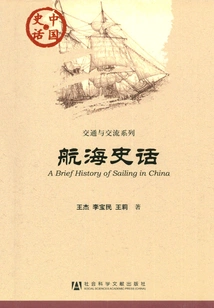
Maritime History
History航海史话
Wang Jie
My country's navigation has a long history. As early as the Neolithic period 7,000 years ago, our ancestors were able to "cut wood to make boats and cut wood to make jigs." During the slave society period, with the birth of wooden boats, large-scale maritime transportation and maritime migration occurred, and China's navigation industry began to take shape. After that, it went through three major development periods of Qin and Han, Sui and Tang, Song and Yuan Dynasties, and Zheng He's voyages to the West in the early Ming Dynasty pushed ancient China's navigation industry to its peak. In the form of special topics, this book introduces the development overview of Chinese maritime civilization from ancient times to modern times according to various aspects such as Chinese maritime figures, maritime events, maritime technology, navigation regulations and management institutions, ports, etc. What is the mystery of the Yin people's voyage to America? Is the legend of Xu Fu's eastward journey to Japan true? What countries did Zheng He pass through during his voyages to the West? Readers can get answers one by one from this book.
My country's navigation has a long history. As early as the Neolithic period 7,000 years ago, our ancestors were able to "cut wood to make boats and cut wood to make jigs." During the slave society period, with the birth of wooden boats, large-scale maritime transportation and maritime migration occurred, and China's navigation industry began to take shape. After that, it went through three major development periods of Qin and Han, Sui and Tang, Song and Yuan Dynasties, and Zheng He's voyages to the West in the early Ming Dynasty pushed ancient China's navigation industry to its peak. In the form of special topics, this book introduces the development overview of Chinese maritime civilization from ancient times to modern times according to various aspects such as Chinese maritime figures, maritime events, maritime technology, navigation regulations and management institutions, ports, etc. What is the mystery of the Yin people's voyage to America? Is the legend of Xu Fu's eastward journey to Japan true? What countries did Zheng He pass through during his voyages to the West? Readers can get answers one by one from this book.
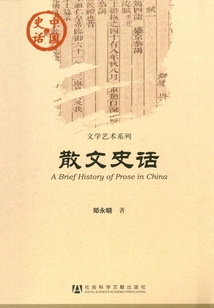
Prose History
History散文史话
Zheng Yongxiao
The book expounds on issues such as the nature, origin, system, evolution and influence of Chinese prose, focusing on a more detailed analysis of the artistic achievements of the prose of pre-Qin scholars, ancient prose of the Han and Tang Dynasties and parallel prose of the Six Dynasties. The vertical aspect clearly shows the context of prose development over the past 3,000 years and the regular and essential things in the development of prose. The horizontal aspect displays the more important writers and works in various historical periods. It is an academic and popular book.
The book expounds on issues such as the nature, origin, system, evolution and influence of Chinese prose, focusing on a more detailed analysis of the artistic achievements of the prose of pre-Qin scholars, ancient prose of the Han and Tang Dynasties and parallel prose of the Six Dynasties. The vertical aspect clearly shows the context of prose development over the past 3,000 years and the regular and essential things in the development of prose. The horizontal aspect displays the more important writers and works in various historical periods. It is an academic and popular book.
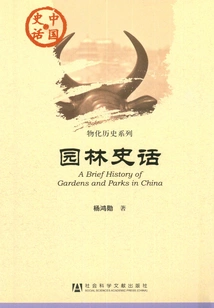
Garden History
History园林史话
Yang Hongxun
Garden is a recreational and appreciation environment with natural interest created by human beings out of their yearning for nature. It is an object of aesthetic enjoyment. The natural scenery processed or reproduced by the means of gardening art is an idealized garden scene imbued with the interest of human life. It potentially gives people the gratification of labor's victory over nature, and more directly gives people a pleasing aesthetic enjoyment. Today, classical gardens have become relics of history and serve as witnesses and cultural relics for appreciation of the splendid civilization of ancient China. The purpose of this book is not only to summarize human cultural heritage, but more importantly, to create a garden-like living space for the entire society in modern and future times.
Garden is a recreational and appreciation environment with natural interest created by human beings out of their yearning for nature. It is an object of aesthetic enjoyment. The natural scenery processed or reproduced by the means of gardening art is an idealized garden scene imbued with the interest of human life. It potentially gives people the gratification of labor's victory over nature, and more directly gives people a pleasing aesthetic enjoyment. Today, classical gardens have become relics of history and serve as witnesses and cultural relics for appreciation of the splendid civilization of ancient China. The purpose of this book is not only to summarize human cultural heritage, but more importantly, to create a garden-like living space for the entire society in modern and future times.
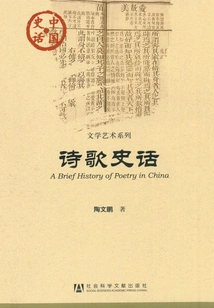
Poetry History
History诗歌史话
Tao Wenpeng
This is a history of poetry that connects ancient and modern times. The book briefly describes the history of the origin, development, and evolution of Chinese poetry, starting from ancient ballads and ending with the founding of New China. The author divides historical periods according to the development rules of Chinese poetry, and provides an overall grasp of the thoughts and artistic styles of poetry in each period. At the same time, he selects important poetry schools and representative writers' works for specific analysis. In this way, readers can understand the development process of Chinese poetry from both macro and micro, vertical and horizontal aspects, and understand the fine traditions and national characteristics such as classical poetry's emphasis on artistic conception creation and modern new poetry's close connection with the times. The author pays attention to absorbing new research results in the academic world and integrating his own experience. The book has a clear context, highlighted key points, fluent writing, and easy-to-understand explanations. It is a highly readable academic popular reading.
This is a history of poetry that connects ancient and modern times. The book briefly describes the history of the origin, development, and evolution of Chinese poetry, starting from ancient ballads and ending with the founding of New China. The author divides historical periods according to the development rules of Chinese poetry, and provides an overall grasp of the thoughts and artistic styles of poetry in each period. At the same time, he selects important poetry schools and representative writers' works for specific analysis. In this way, readers can understand the development process of Chinese poetry from both macro and micro, vertical and horizontal aspects, and understand the fine traditions and national characteristics such as classical poetry's emphasis on artistic conception creation and modern new poetry's close connection with the times. The author pays attention to absorbing new research results in the academic world and integrating his own experience. The book has a clear context, highlighted key points, fluent writing, and easy-to-understand explanations. It is a highly readable academic popular reading.
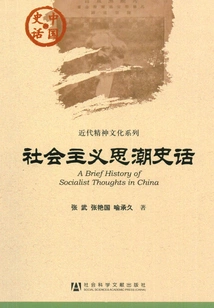
社会主义思潮史话
Yu Chengjiu Zhang Yanguo Zhang Wu
This book closely links the emergence and development of modern socialist ideological trends in China and the metabolic logic contained in it with the 110 years of profound social changes in modern Chinese society. In particular, it introduces the Taiping Heavenly Kingdom agricultural socialism, Kang Youwei's Datong socialism, and Sun Yat-sen's people's livelihood socialism in modern Chinese society. It theoretically analyzes the historical conditions and characteristics of the times for the emergence of China's utopian socialism in light of modern national conditions. This book places the spread and rise of scientific socialism in modern China against the background of profound changes in modern Chinese society. It systematically introduces the early spread of Western socialist doctrine in China, the overall rise of socialist ideological trends with scientific socialism as its main content in China, and the social and historical conditions for the early spread of scientific socialism in China. It also deeply analyzes the social mechanism and historical inevitability of scientific socialism being chosen by Chinese society. This book introduces the close integration of scientific socialism with China's revolution, construction, and reform, especially the combination with China's New Democratic Revolution to produce Mao Zedong Thought, and realize the theoretical profundity, time span, and historical rationality of the first theoretical leap in the sinicization of Marxism. It not only points out that scientific socialism is a scientific theory that the Communist Party of China must adhere to for a long time, but it must also be combined with China's national conditions to continuously push forward the theory of scientific socialism in the process of sinicizing Marxism. This book is suitable for the national conditions education and quality education of college and middle school students, and can also be used as a teaching reference book for postgraduate students majoring in line management.
This book closely links the emergence and development of modern socialist ideological trends in China and the metabolic logic contained in it with the 110 years of profound social changes in modern Chinese society. In particular, it introduces the Taiping Heavenly Kingdom agricultural socialism, Kang Youwei's Datong socialism, and Sun Yat-sen's people's livelihood socialism in modern Chinese society. It theoretically analyzes the historical conditions and characteristics of the times for the emergence of China's utopian socialism in light of modern national conditions. This book places the spread and rise of scientific socialism in modern China against the background of profound changes in modern Chinese society. It systematically introduces the early spread of Western socialist doctrine in China, the overall rise of socialist ideological trends with scientific socialism as its main content in China, and the social and historical conditions for the early spread of scientific socialism in China. It also deeply analyzes the social mechanism and historical inevitability of scientific socialism being chosen by Chinese society. This book introduces the close integration of scientific socialism with China's revolution, construction, and reform, especially the combination with China's New Democratic Revolution to produce Mao Zedong Thought, and realize the theoretical profundity, time span, and historical rationality of the first theoretical leap in the sinicization of Marxism. It not only points out that scientific socialism is a scientific theory that the Communist Party of China must adhere to for a long time, but it must also be combined with China's national conditions to continuously push forward the theory of scientific socialism in the process of sinicizing Marxism. This book is suitable for the national conditions education and quality education of college and middle school students, and can also be used as a teaching reference book for postgraduate students majoring in line management.
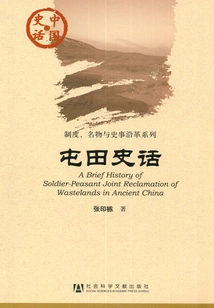
History of Farming
History屯田史话
Zhang Yindong
Farming is a form of agricultural production in which the government directly organizes workers to collectively produce. It is highly organized and planned. Although the direct motivation for its creation is military needs, fundamentally speaking, farming is the product of the development of ancient China's social economy and centralized political system to a certain stage. It was originally produced in the border areas of the feudal regime of the Western Han Dynasty. It played an important role in developing the border and promoting national integration. It has since been imitated and developed by successive feudal regimes. After the Tang Dynasty, farming gradually became popular in the mainland, and the military purpose of farming gradually weakened, while the economic factors continued to strengthen. By the Ming Dynasty, farming entered its heyday and spread throughout the areas under the jurisdiction of the Ming government. It became an important form of agricultural production in the Ming Dynasty and an important means for the Ming government to maintain its rule. By the Qing Dynasty, with the decline of feudal society, the agricultural production form of farming also came to an end.
Farming is a form of agricultural production in which the government directly organizes workers to collectively produce. It is highly organized and planned. Although the direct motivation for its creation is military needs, fundamentally speaking, farming is the product of the development of ancient China's social economy and centralized political system to a certain stage. It was originally produced in the border areas of the feudal regime of the Western Han Dynasty. It played an important role in developing the border and promoting national integration. It has since been imitated and developed by successive feudal regimes. After the Tang Dynasty, farming gradually became popular in the mainland, and the military purpose of farming gradually weakened, while the economic factors continued to strengthen. By the Ming Dynasty, farming entered its heyday and spread throughout the areas under the jurisdiction of the Ming government. It became an important form of agricultural production in the Ming Dynasty and an important means for the Ming government to maintain its rule. By the Qing Dynasty, with the decline of feudal society, the agricultural production form of farming also came to an end.
国民政府史话
Zheng Zemin
This book begins with the establishment of the Generalissimo's Base Camp of the Army and Navy and ends with the escape of Chiang Kai-shek and the remnants of the Kuomintang regime from the mainland in December 1949. It briefly introduces the domestic and foreign policies and military activities of the National Government at various stages, as well as the struggle and cooperation with the Communist Party of China. The subversion of the Kuomintang's power in mainland China and the victory of the people's democratic regime led by the Communist Party are historical choices and historical inevitabilities, reflecting the sincere wishes of the Chinese people.
This book begins with the establishment of the Generalissimo's Base Camp of the Army and Navy and ends with the escape of Chiang Kai-shek and the remnants of the Kuomintang regime from the mainland in December 1949. It briefly introduces the domestic and foreign policies and military activities of the National Government at various stages, as well as the struggle and cooperation with the Communist Party of China. The subversion of the Kuomintang's power in mainland China and the victory of the people's democratic regime led by the Communist Party are historical choices and historical inevitabilities, reflecting the sincere wishes of the Chinese people.
Family History
History家庭史话
Zhang Guogang
The family is a kinship group based on marriage and tied by blood relations. It is the basic life organization for people to live together and live together. Traditional China is a family-oriented society with "family and country isomorphic", and the family occupies an important position in society. This book is the first "History of Chinese Family". It discusses the entire process of the origin, foundation, development, transformation and decline of traditional Chinese families from the emergence of matrilineal families in the late Yangshao culture to modern times. It is believed that the traditional family emerged from scratch in the Pre-Qin Dynasty and gradually took shape; the period from the Spring and Autumn Period and the Warring States Period to the Wei, Jin, Southern and Northern Dynasties was the foundation and preliminary development stage of the traditional family. The traditional family form characterized by small nuclear families and linear families occupied the mainstream, and the livelihood model of small and fully comprehensive small-scale peasant families with the family as the unit gradually took shape; during the Sui, Tang and Five Dynasties, the traditional family ushered in its first prosperity During the Ming and Qing Dynasties, the development of production tools provided a material basis for small family production, and small families and large families coexisted at the same time; the Song, Liao, Jin, and Yuan dynasties were an important period for the modern transformation of traditional families. The three-generation family of five with a prime-age couple as the core became the main form of Chinese families thereafter; during the Ming and Qing dynasties, the traditional family reached its peak; after the Republic of China, the traditional family declined and the modern family emerged. It comprehensively displays the development and evolution history of Chinese families.
The family is a kinship group based on marriage and tied by blood relations. It is the basic life organization for people to live together and live together. Traditional China is a family-oriented society with "family and country isomorphic", and the family occupies an important position in society. This book is the first "History of Chinese Family". It discusses the entire process of the origin, foundation, development, transformation and decline of traditional Chinese families from the emergence of matrilineal families in the late Yangshao culture to modern times. It is believed that the traditional family emerged from scratch in the Pre-Qin Dynasty and gradually took shape; the period from the Spring and Autumn Period and the Warring States Period to the Wei, Jin, Southern and Northern Dynasties was the foundation and preliminary development stage of the traditional family. The traditional family form characterized by small nuclear families and linear families occupied the mainstream, and the livelihood model of small and fully comprehensive small-scale peasant families with the family as the unit gradually took shape; during the Sui, Tang and Five Dynasties, the traditional family ushered in its first prosperity During the Ming and Qing Dynasties, the development of production tools provided a material basis for small family production, and small families and large families coexisted at the same time; the Song, Liao, Jin, and Yuan dynasties were an important period for the modern transformation of traditional families. The three-generation family of five with a prime-age couple as the core became the main form of Chinese families thereafter; during the Ming and Qing dynasties, the traditional family reached its peak; after the Republic of China, the traditional family declined and the modern family emerged. It comprehensively displays the development and evolution history of Chinese families.
Collect Historical Stories
History收藏史话
Li Xuemei
Collection is a unique conscious activity of human beings. It is a cultural activity in which human beings collect, utilize, research and circulate all items that can be collected and have preservation value. Over the past five thousand years, the Chinese nation has accumulated a wealth of material and spiritual wealth, of which collecting culture is an important part. China's collection has a long history, rich content, and complicated historical materials, but there are not many people who are interested in studying it. The author only wants to arouse readers' interest in collection and collection culture through the introduction of several aspects of the history of collection development in China, and to participate in the team of collection and collection research.
Collection is a unique conscious activity of human beings. It is a cultural activity in which human beings collect, utilize, research and circulate all items that can be collected and have preservation value. Over the past five thousand years, the Chinese nation has accumulated a wealth of material and spiritual wealth, of which collecting culture is an important part. China's collection has a long history, rich content, and complicated historical materials, but there are not many people who are interested in studying it. The author only wants to arouse readers' interest in collection and collection culture through the introduction of several aspects of the history of collection development in China, and to participate in the team of collection and collection research.
Stone History
History石器史话
Li Zongshan
In the long evolutionary history of mankind, stone tools have dominated as the main production tools. Stone tools were used by primitive people as tools for hunting and defense, thus maintaining a dominant position in agriculture, fishing and hunting production, and food processing. After humans entered the civilized era, stone tools developed from simple production tools to handicrafts, leaving behind exquisite stone works in human history. Through the study of Chinese stone tools, this book reveals the basic laws and overall appearance of the development of stone tools, and highlights the artistic achievements and characteristics of the times, thereby showing readers the long history and glorious achievements of the development of stone tools in my country.
In the long evolutionary history of mankind, stone tools have dominated as the main production tools. Stone tools were used by primitive people as tools for hunting and defense, thus maintaining a dominant position in agriculture, fishing and hunting production, and food processing. After humans entered the civilized era, stone tools developed from simple production tools to handicrafts, leaving behind exquisite stone works in human history. Through the study of Chinese stone tools, this book reveals the basic laws and overall appearance of the development of stone tools, and highlights the artistic achievements and characteristics of the times, thereby showing readers the long history and glorious achievements of the development of stone tools in my country.
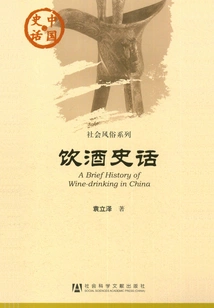
History of Drinking
History饮酒史话
Yuan Lize
The five-thousand-year history of Chinese civilization has always been indispensable for the existence of wine, which has also formed the eloquent, extensive and rich wine culture of ancient China. Wine has the appearance of water and the inner substance of fire. It can be said that it is a vivid portrayal of the essence of Chinese culture. Chinese civilization has been advancing for thousands of years. In its everlasting tone, there are both the cohesion of femininity and the vigorous growth of masculinity. It is fortunate to be a special carrier that highly integrates and reflects all aspects of our nation's material progress, spiritual perfection, and wisdom development. Only wine! The sun and moon in wine, the universe in drunkenness, can be enough to become a "big article" in the spirit of the Chinese nation.
The five-thousand-year history of Chinese civilization has always been indispensable for the existence of wine, which has also formed the eloquent, extensive and rich wine culture of ancient China. Wine has the appearance of water and the inner substance of fire. It can be said that it is a vivid portrayal of the essence of Chinese culture. Chinese civilization has been advancing for thousands of years. In its everlasting tone, there are both the cohesion of femininity and the vigorous growth of masculinity. It is fortunate to be a special carrier that highly integrates and reflects all aspects of our nation's material progress, spiritual perfection, and wisdom development. Only wine! The sun and moon in wine, the universe in drunkenness, can be enough to become a "big article" in the spirit of the Chinese nation.
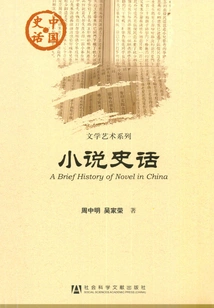
Novel History
History小说史话
Wu Jiarong Zhou Zhongming
The encyclopedia of novel history and life is a mirror of society and the "soul of the nation". A good novel often makes people feel happy and cannot put it down. Ancient Chinese novels have a history of about 1,500 years. According to incomplete statistics, there are about 3,000 novels of various types. The most outstanding ones are "The Romance of the Three Kingdoms", "Water Margin", "Journey to the West", "Strange Stories from a Chinese Studio", "The Scholars" and "A Dream of Red Mansions". These novels, with their profound ideological connotations and immortal artistic charm, have been passed down from generation to generation. They are the crystallization of Chinese national culture and a treasure of world literature.
The encyclopedia of novel history and life is a mirror of society and the "soul of the nation". A good novel often makes people feel happy and cannot put it down. Ancient Chinese novels have a history of about 1,500 years. According to incomplete statistics, there are about 3,000 novels of various types. The most outstanding ones are "The Romance of the Three Kingdoms", "Water Margin", "Journey to the West", "Strange Stories from a Chinese Studio", "The Scholars" and "A Dream of Red Mansions". These novels, with their profound ideological connotations and immortal artistic charm, have been passed down from generation to generation. They are the crystallization of Chinese national culture and a treasure of world literature.
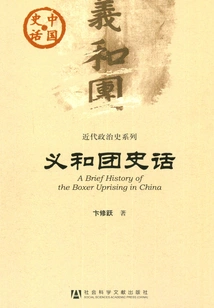
义和团史话
Bian Xiuyue
The Boxer Rebellion was a spontaneous anti-imperialist patriotic struggle against imperialist powers in China at the end of the 19th century, with the slogan "Support the Qing Dynasty and destroy the foreign countries" as its slogan. Although it inevitably has religious superstitious overtones, as well as various shortcomings such as childishness and backwardness, and general xenophobia, as a trend at that time, it essentially represented the strong will of the Chinese nation to resist the aggression of foreign powers, which is worthy of praise and affirmation. The book is divided into seven parts. The author uses time as a clue. On the basis of a relatively comprehensive introduction to the background of China's invasion by foreign powers in the late 19th century, the author focuses on the establishment of a factory by the Boxer Rebellion in the early 19th century, the Battle of Laishui with the Qing army, the defense of Tianjin against the invasion of foreign powers, the invasion of Beijing by the Eight-Power Allied Forces, and the continued struggle in the Northeast. This will help readers understand that tragic and tragic history.
The Boxer Rebellion was a spontaneous anti-imperialist patriotic struggle against imperialist powers in China at the end of the 19th century, with the slogan "Support the Qing Dynasty and destroy the foreign countries" as its slogan. Although it inevitably has religious superstitious overtones, as well as various shortcomings such as childishness and backwardness, and general xenophobia, as a trend at that time, it essentially represented the strong will of the Chinese nation to resist the aggression of foreign powers, which is worthy of praise and affirmation. The book is divided into seven parts. The author uses time as a clue. On the basis of a relatively comprehensive introduction to the background of China's invasion by foreign powers in the late 19th century, the author focuses on the establishment of a factory by the Boxer Rebellion in the early 19th century, the Battle of Laishui with the Qing army, the defense of Tianjin against the invasion of foreign powers, the invasion of Beijing by the Eight-Power Allied Forces, and the continued struggle in the Northeast. This will help readers understand that tragic and tragic history.
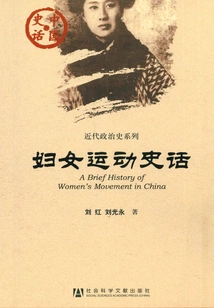
妇女运动史话
Liu Hong
In the long history of China's feudal society, although there are many touching legends about Hua Mulan joining the army on behalf of her father and Mu Guiying leading the army to defeat the Liao soldiers, there have also been female politicians, female talents, and even female heroes who are comparable to men. However, the majority of women have always been tightly bound by the four ropes of political power, clan power, divine power and husband's power. They are at the bottom of society and live a miserable life without power and status. Strictly speaking, the modern Chinese women's movement, that is, the bourgeois women's movement, started with the reform movement. From the Reform Movement to the Revolution of 1911, to the May 4th Movement, the Great Revolution, the Anti-Japanese War, and the War of Liberation, the vast number of women in China actively participated in it, just like men. They even held weapons in hand and fought side by side with men, writing a glorious chapter. This book uses time as a clue to show you in detail the touching events that happened to heroines in modern history.
In the long history of China's feudal society, although there are many touching legends about Hua Mulan joining the army on behalf of her father and Mu Guiying leading the army to defeat the Liao soldiers, there have also been female politicians, female talents, and even female heroes who are comparable to men. However, the majority of women have always been tightly bound by the four ropes of political power, clan power, divine power and husband's power. They are at the bottom of society and live a miserable life without power and status. Strictly speaking, the modern Chinese women's movement, that is, the bourgeois women's movement, started with the reform movement. From the Reform Movement to the Revolution of 1911, to the May 4th Movement, the Great Revolution, the Anti-Japanese War, and the War of Liberation, the vast number of women in China actively participated in it, just like men. They even held weapons in hand and fought side by side with men, writing a glorious chapter. This book uses time as a clue to show you in detail the touching events that happened to heroines in modern history.
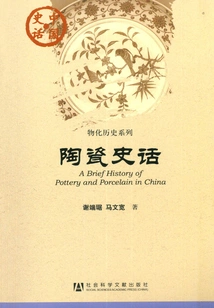
History of Ceramics
History陶瓷史话
Xie Duanju Ma Wenkuan
China's ancestors have been using pottery extensively since the Neolithic Age. Primitive celadon appeared during the Shang and Zhou dynasties, and real porcelain was born during the Eastern Han Dynasty. Since the Tang Dynasty, porcelain has been introduced to the world as a characteristic Chinese commodity and has won the favor of people all over the world. It has enjoyed a high reputation internationally for thousands of years. China, the transliteration of "China", connects our great country and porcelain forever. When we trace the development history of Chinese ceramics, we are tracing the development history of Chinese civilization. This book provides a systematic, comprehensive and detailed introduction to the development history of ceramics over thousands of years. Readers can appreciate the creative and pioneering spirit of the ancestors of the Chinese nation, thereby carrying forward my country's excellent traditional culture.
China's ancestors have been using pottery extensively since the Neolithic Age. Primitive celadon appeared during the Shang and Zhou dynasties, and real porcelain was born during the Eastern Han Dynasty. Since the Tang Dynasty, porcelain has been introduced to the world as a characteristic Chinese commodity and has won the favor of people all over the world. It has enjoyed a high reputation internationally for thousands of years. China, the transliteration of "China", connects our great country and porcelain forever. When we trace the development history of Chinese ceramics, we are tracing the development history of Chinese civilization. This book provides a systematic, comprehensive and detailed introduction to the development history of ceramics over thousands of years. Readers can appreciate the creative and pioneering spirit of the ancestors of the Chinese nation, thereby carrying forward my country's excellent traditional culture.
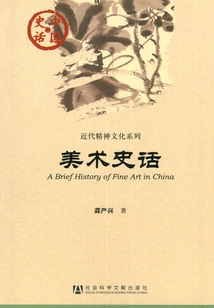
Art History
History美术史话
Gong Chanxing
In the past, when many scholars talked about the art of the past century from 1840 to 1949, they lamented that it was "conservative and self-contained", "Chinese painting today has reached its end", "it is not as good as our ancestors thousands of years ago", and so on. But in fact, there are many remarkable things in the history of art in the past century. Even when it comes to traditional Chinese painting, there are still people who are constantly exploring and making changes and innovations. Ren Bonian, Xu Gu, Wu Changshuo, Qi Baishi, Huang Binhong and others saw the dangers of retroism, threw off the heavy shackles of antiquity, faced reality, followed the example of nature, and created a new realm of Chinese painting. What's more, in the past century, not only traditional Chinese paintings have developed in fine arts, but also oil paintings, murals, news paintings, pictorials, comics, calendars, emerging woodcuts, commercial advertising paintings, sculptures, art education, etc. Have also shown new looks. This is what this book wants to bring you a new understanding of the art history of the past century.
In the past, when many scholars talked about the art of the past century from 1840 to 1949, they lamented that it was "conservative and self-contained", "Chinese painting today has reached its end", "it is not as good as our ancestors thousands of years ago", and so on. But in fact, there are many remarkable things in the history of art in the past century. Even when it comes to traditional Chinese painting, there are still people who are constantly exploring and making changes and innovations. Ren Bonian, Xu Gu, Wu Changshuo, Qi Baishi, Huang Binhong and others saw the dangers of retroism, threw off the heavy shackles of antiquity, faced reality, followed the example of nature, and created a new realm of Chinese painting. What's more, in the past century, not only traditional Chinese paintings have developed in fine arts, but also oil paintings, murals, news paintings, pictorials, comics, calendars, emerging woodcuts, commercial advertising paintings, sculptures, art education, etc. Have also shown new looks. This is what this book wants to bring you a new understanding of the art history of the past century.
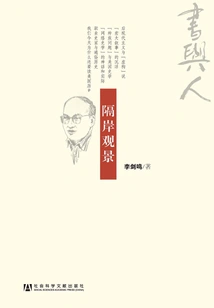
View from Across the Bank
History隔岸观景
Li Jianming
This book is one of the Books and People series, written by Li Jianming, a professor at Peking University and an expert on American history. The articles included in the book are mostly miscellaneous talks or essays, and most of them are closely related to the author's research field. In addition to the above-mentioned discussions related to historical theory, there are also several articles directly related to the author's professional direction, that is, American history, such as new trends in the field of American history, the current status and problems of American history research in China, etc. The few articles that the author calls "by-products of professional work" are actually more "inspired", such as the understanding of "online history" and popular history, the qualities that historians should possess, and even the author's own experience and experience in reading history. This kind of article is simpler and more vivid than the previous one. Editor's comment: It is said that some editors want to "kill" the author, and there are probably also editors who want to embrace the author. The editor of this book is lucky, and the readers of such a book will also be lucky.
This book is one of the Books and People series, written by Li Jianming, a professor at Peking University and an expert on American history. The articles included in the book are mostly miscellaneous talks or essays, and most of them are closely related to the author's research field. In addition to the above-mentioned discussions related to historical theory, there are also several articles directly related to the author's professional direction, that is, American history, such as new trends in the field of American history, the current status and problems of American history research in China, etc. The few articles that the author calls "by-products of professional work" are actually more "inspired", such as the understanding of "online history" and popular history, the qualities that historians should possess, and even the author's own experience and experience in reading history. This kind of article is simpler and more vivid than the previous one. Editor's comment: It is said that some editors want to "kill" the author, and there are probably also editors who want to embrace the author. The editor of this book is lucky, and the readers of such a book will also be lucky.
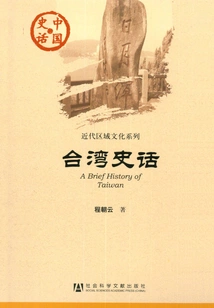
Taiwan History
History台湾史话
Cheng Chaoyun
This book describes the historical development of Taiwan starting from the archaeological discovery of human life remains to the defeat of the Kuomintang in 1949. It shows the development of Taiwan by the Chinese government since the Three Kingdoms period, Taiwan's political establishment, economic development and trade, the immigration and reclamation of Taiwan by the mainland, the management of Taiwan by the Zheng family and Liu Mingchuan, the Qing government's cession of Taiwan after the Opium War, Japan's occupation and establishment of the colonial system, and the oppression and plunder of the Taiwanese people, the continuous resistance struggle of the Taiwanese people, the recovery of Taiwan after Japan's surrender, the gains and losses of the Nationalist government's policy towards Taiwan, the conflicts between immigrants to Taiwan and Taiwanese indigenous people, etc. After reading, you can have a comprehensive understanding of Taiwan's development and development process from prehistory to the founding of New China, as well as the relationship between Taiwan and the mainland. In today's situation of frequent cross-strait exchanges, it has a high reference value for ordinary readers and related personnel to understand Taiwan's history.
This book describes the historical development of Taiwan starting from the archaeological discovery of human life remains to the defeat of the Kuomintang in 1949. It shows the development of Taiwan by the Chinese government since the Three Kingdoms period, Taiwan's political establishment, economic development and trade, the immigration and reclamation of Taiwan by the mainland, the management of Taiwan by the Zheng family and Liu Mingchuan, the Qing government's cession of Taiwan after the Opium War, Japan's occupation and establishment of the colonial system, and the oppression and plunder of the Taiwanese people, the continuous resistance struggle of the Taiwanese people, the recovery of Taiwan after Japan's surrender, the gains and losses of the Nationalist government's policy towards Taiwan, the conflicts between immigrants to Taiwan and Taiwanese indigenous people, etc. After reading, you can have a comprehensive understanding of Taiwan's development and development process from prehistory to the founding of New China, as well as the relationship between Taiwan and the mainland. In today's situation of frequent cross-strait exchanges, it has a high reference value for ordinary readers and related personnel to understand Taiwan's history.
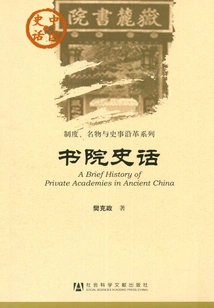
History of the Academy
History书院史话
Fan Kezheng
Academy is a form of special education organization in Chinese history. It sprouted in the Tang Dynasty, was formed in the Song Dynasty, and was abolished and reformed in the late Qing Dynasty. After more than a thousand years, it has an important historical position in the history of Chinese civilization. This book comprehensively describes the historical process of the origin, development and evolution of Chinese academies, introduces the famous teachers and students of the academies in the Song, Yuan, Ming and Qing dynasties, as well as an overview of the academies in terms of organization and management, teaching, worship, book collection, book engraving, architectural structure and financial revenue and expenditure. It highlights the important significance of the academies in promoting the development of the history of academic thought, literature, bookdom and education in China.
Academy is a form of special education organization in Chinese history. It sprouted in the Tang Dynasty, was formed in the Song Dynasty, and was abolished and reformed in the late Qing Dynasty. After more than a thousand years, it has an important historical position in the history of Chinese civilization. This book comprehensively describes the historical process of the origin, development and evolution of Chinese academies, introduces the famous teachers and students of the academies in the Song, Yuan, Ming and Qing dynasties, as well as an overview of the academies in terms of organization and management, teaching, worship, book collection, book engraving, architectural structure and financial revenue and expenditure. It highlights the important significance of the academies in promoting the development of the history of academic thought, literature, bookdom and education in China.
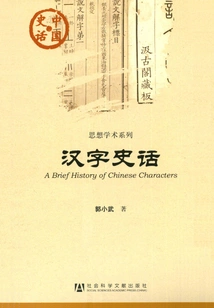
汉字史话
Guo Xiaowu
The Chinese nation invented the original Chinese characters about five or six thousand years ago. After more than two thousand years of development, they independently created their own writing system, the Chinese character system. The origin and evolution of Chinese characters have a lofty status and special significance in the history and culture of the Chinese nation. This book explores the origin of Chinese characters from the combination of pictures and names, explores the connection of Jiajin characters from the connection between Shang and Zhou cultures, explores the characteristics and causes of the various fonts of seal, Li, Cao, Kai and Xing from the unity of the opposition between traditional and simplified and orthodox, and outlines a concise history of the formation and evolution of Chinese characters.
The Chinese nation invented the original Chinese characters about five or six thousand years ago. After more than two thousand years of development, they independently created their own writing system, the Chinese character system. The origin and evolution of Chinese characters have a lofty status and special significance in the history and culture of the Chinese nation. This book explores the origin of Chinese characters from the combination of pictures and names, explores the connection of Jiajin characters from the connection between Shang and Zhou cultures, explores the characteristics and causes of the various fonts of seal, Li, Cao, Kai and Xing from the unity of the opposition between traditional and simplified and orthodox, and outlines a concise history of the formation and evolution of Chinese characters.
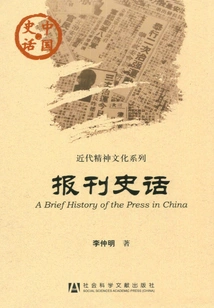
报刊史话
Li Zhongming
The emergence of modern newspapers and periodicals is closely related to the emergence and development of capitalism. In the 1870s, the earliest self-run newspapers appeared in China. This book systematically introduces the development of China's modern newspaper industry. The author introduces to us the development of the newspaper industry in the late Qing Dynasty, the revolutionary newspapers and periodicals during the Revolution of 1911, the rise and fall of the newspaper and periodical industry in the early Republic of China, the newspaper and periodical industry in the Kuomintang-controlled areas, the newspapers and periodicals in the Central Soviet Area and the Red Army, and the newspapers and periodicals during the Anti-Japanese War. This book provides a general introduction to the "Soviet Newspaper Case" in which the Qing government destroyed revolutionary public opinion, the powerful "New Youth" magazine of the times, Zou Taofen and "Life" weekly, the prestigious newspapers "Shenbao", "Ta Kung Pao" and "Xinmin Daily" founded by the national bourgeoisie, "Xinhua Daily" and "National Salvation Daily" founded by the Communist Party of China during the Anti-Japanese War, etc., Major events and famous newspapers and periodicals in the development of modern Chinese newspapers and periodicals.
The emergence of modern newspapers and periodicals is closely related to the emergence and development of capitalism. In the 1870s, the earliest self-run newspapers appeared in China. This book systematically introduces the development of China's modern newspaper industry. The author introduces to us the development of the newspaper industry in the late Qing Dynasty, the revolutionary newspapers and periodicals during the Revolution of 1911, the rise and fall of the newspaper and periodical industry in the early Republic of China, the newspaper and periodical industry in the Kuomintang-controlled areas, the newspapers and periodicals in the Central Soviet Area and the Red Army, and the newspapers and periodicals during the Anti-Japanese War. This book provides a general introduction to the "Soviet Newspaper Case" in which the Qing government destroyed revolutionary public opinion, the powerful "New Youth" magazine of the times, Zou Taofen and "Life" weekly, the prestigious newspapers "Shenbao", "Ta Kung Pao" and "Xinmin Daily" founded by the national bourgeoisie, "Xinhua Daily" and "National Salvation Daily" founded by the Communist Party of China during the Anti-Japanese War, etc., Major events and famous newspapers and periodicals in the development of modern Chinese newspapers and periodicals.
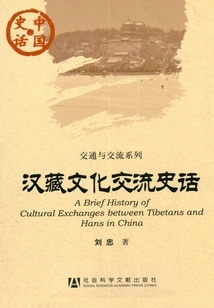
汉藏文化交流史话
Liu Zhong
Among the fraternal ethnic relations in China, the ethnic relations between Han and Tibetan are particularly important ethnic relations. Sino-Tibetan relations have a long history of establishing friendly relations, and Sino-Tibetan cultural exchanges have a long history. This book explores and discusses the establishment and development of Sino-Tibetan ethnic relations, as well as the historical process and characteristics of cultural exchanges from the aspects of history, religion, Dunhuang studies, and science and technology. Systematically exploring and discussing Sino-Tibetan cultural exchanges is an important and brand-new topic. The establishment and development of economic and political relations between the Han and Tibetan ethnic groups is the basis for cultural exchanges, giving far-reaching influence and positive promotion to cultural exchanges. I hope this book can draw an outline and provide some basic historical facts for readers who are interested in understanding this topic.
Among the fraternal ethnic relations in China, the ethnic relations between Han and Tibetan are particularly important ethnic relations. Sino-Tibetan relations have a long history of establishing friendly relations, and Sino-Tibetan cultural exchanges have a long history. This book explores and discusses the establishment and development of Sino-Tibetan ethnic relations, as well as the historical process and characteristics of cultural exchanges from the aspects of history, religion, Dunhuang studies, and science and technology. Systematically exploring and discussing Sino-Tibetan cultural exchanges is an important and brand-new topic. The establishment and development of economic and political relations between the Han and Tibetan ethnic groups is the basis for cultural exchanges, giving far-reaching influence and positive promotion to cultural exchanges. I hope this book can draw an outline and provide some basic historical facts for readers who are interested in understanding this topic.
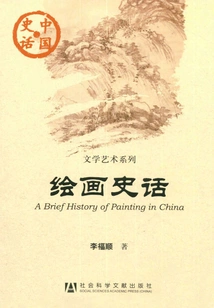
History of Painting
History绘画史话
Li Fushun
Chinese painting has a long history. If we count it from rock paintings, it has a history of 10,000 years. If we count it from primitive painted pottery, it has a history of seven or eight thousand years. As an important part of Chinese culture, Chinese painting has continued uninterrupted since its birth to this day. Chinese painting has distinctive national characteristics and is unique in the field of world art. This book uses time as a clue to give a more detailed introduction to important painters of all dynasties and their representative works, as well as important events and schools in the history of painting. From it, you can not only feel the strangeness of original paintings, the splendor of Qin and Han paintings, the splendor of the Tang Dynasty, but also the contending and grandeur of Yuan, Ming and Qing paintings.
Chinese painting has a long history. If we count it from rock paintings, it has a history of 10,000 years. If we count it from primitive painted pottery, it has a history of seven or eight thousand years. As an important part of Chinese culture, Chinese painting has continued uninterrupted since its birth to this day. Chinese painting has distinctive national characteristics and is unique in the field of world art. This book uses time as a clue to give a more detailed introduction to important painters of all dynasties and their representative works, as well as important events and schools in the history of painting. From it, you can not only feel the strangeness of original paintings, the splendor of Qin and Han paintings, the splendor of the Tang Dynasty, but also the contending and grandeur of Yuan, Ming and Qing paintings.
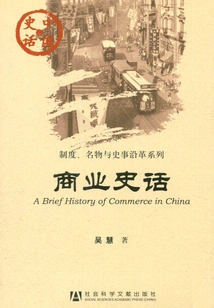
Business History
History商业史话
Wu Hui
The history of Chinese commerce from Yu and Shun to the late Qing Dynasty is also a history of the rise and fall of the Chinese nation. The evolution of business history has triggered changes in business models. In Chinese history, starting from the exchange activities of the Shang Dynasty, commerce has been relatively developed for a long time. Many famous business figures and various policies, regulations, and reforms that are beneficial to the development of commerce have emerged, which have profoundly affected all aspects of social development. However, by the Qing Dynasty, as Chinese society fell into a semi-colonial and semi-feudal situation, despite the resistance of many people with lofty ideals, Chinese commerce was increasingly declining under the ravages of imperialist powers.
The history of Chinese commerce from Yu and Shun to the late Qing Dynasty is also a history of the rise and fall of the Chinese nation. The evolution of business history has triggered changes in business models. In Chinese history, starting from the exchange activities of the Shang Dynasty, commerce has been relatively developed for a long time. Many famous business figures and various policies, regulations, and reforms that are beneficial to the development of commerce have emerged, which have profoundly affected all aspects of social development. However, by the Qing Dynasty, as Chinese society fell into a semi-colonial and semi-feudal situation, despite the resistance of many people with lofty ideals, Chinese commerce was increasingly declining under the ravages of imperialist powers.
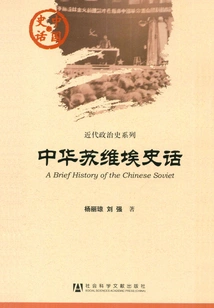
中华苏维埃史话
Yang Liqiong Liu Qiang
In November 1931, the Soviet Republic of China was established, ushering in the ten-year Soviet revolutionary era in which the Chinese revolution led by the Communists of China entered. For ten years, the Soviet flag summoned and inspired Communists and the broad masses of working people to join this heroic revolutionary struggle. Under extremely harsh conditions, the Communists led arduous military struggles, created vast rural revolutionary bases, and promoted the rural agrarian revolution and the construction of the Workers' and Peasants' Soviet regime. In the vast Soviet area, cadres and the masses are equal, help each other and coexist, eliminate corruption and promote integrity, and do not work well; develop the economy, popularize education, and benefit the people. As an early exploration by the Chinese Communists to lead the Chinese revolution, and as a heroic practice of the broad masses of people participating in the revolution and pursuing liberation, the Soviet flag provides valuable empirical experience for us to re-understand new democracy and build socialism with Chinese characteristics today.
In November 1931, the Soviet Republic of China was established, ushering in the ten-year Soviet revolutionary era in which the Chinese revolution led by the Communists of China entered. For ten years, the Soviet flag summoned and inspired Communists and the broad masses of working people to join this heroic revolutionary struggle. Under extremely harsh conditions, the Communists led arduous military struggles, created vast rural revolutionary bases, and promoted the rural agrarian revolution and the construction of the Workers' and Peasants' Soviet regime. In the vast Soviet area, cadres and the masses are equal, help each other and coexist, eliminate corruption and promote integrity, and do not work well; develop the economy, popularize education, and benefit the people. As an early exploration by the Chinese Communists to lead the Chinese revolution, and as a heroic practice of the broad masses of people participating in the revolution and pursuing liberation, the Soviet flag provides valuable empirical experience for us to re-understand new democracy and build socialism with Chinese characteristics today.
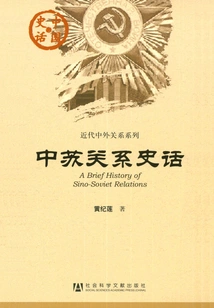
中苏关系史话
Huang Jilian
On November 17, 1917, the rumble of the October Revolution ushered in a new proletarian regime. From then on, the Soviets began to be active on the world stage with a unique attitude and provided a new path choice for the Chinese revolution. China and the Soviet Union put aside their past grudges in mutual sympathy and established a new diplomatic relationship. In the torrent of the world anti-fascist war, we stood at the forefront of the war and supported each other, making great contributions to the complete destruction of the fascist group. With the help of the Soviet Union, China also won an overall victory in the anti-Japanese war and finally embarked on the path of socialist development. Today, the history of the Soviet Union has quietly come to an end, but for China, in certain historical periods, the success of the Soviet Union is an example and a guide.
On November 17, 1917, the rumble of the October Revolution ushered in a new proletarian regime. From then on, the Soviets began to be active on the world stage with a unique attitude and provided a new path choice for the Chinese revolution. China and the Soviet Union put aside their past grudges in mutual sympathy and established a new diplomatic relationship. In the torrent of the world anti-fascist war, we stood at the forefront of the war and supported each other, making great contributions to the complete destruction of the fascist group. With the help of the Soviet Union, China also won an overall victory in the anti-Japanese war and finally embarked on the path of socialist development. Today, the history of the Soviet Union has quietly come to an end, but for China, in certain historical periods, the success of the Soviet Union is an example and a guide.
Dunhuang History
History敦煌史话
Yang Baoyu
Dunhuang is a county-level city in the westernmost part of Gansu Province and a national-level historical and cultural city. Before it was converted into a city in 1987, it was just a small county. However, the popularity of this remote small county far exceeds that of Zhongzhou County. It is not only well-known at home and abroad, but also admired by the whole country and the world. Dunhuang played a huge role in the cultural exchange between the East and the West in ancient times. Dunhuang has been an ethnic inhabited area since ancient times. Many ethnic groups such as the Han, Yuezhi, Xiongnu, Di, Qiang, Xianbei, Tubo, and Uighurs have thrived here. It has played an important role in the formation and development of China's unified multi-ethnic country. The art of the Dunhuang Grottoes, mainly including the Mogao Grottoes, and the tens of thousands of ancient documents preserved in the Mogao Grottoes' Sutra Cave have fascinated countless literati and contributed to the birth and development of Dunhuang Studies, an internationally renowned study. This has also made Dunhuang's history and culture shine.
Dunhuang is a county-level city in the westernmost part of Gansu Province and a national-level historical and cultural city. Before it was converted into a city in 1987, it was just a small county. However, the popularity of this remote small county far exceeds that of Zhongzhou County. It is not only well-known at home and abroad, but also admired by the whole country and the world. Dunhuang played a huge role in the cultural exchange between the East and the West in ancient times. Dunhuang has been an ethnic inhabited area since ancient times. Many ethnic groups such as the Han, Yuezhi, Xiongnu, Di, Qiang, Xianbei, Tubo, and Uighurs have thrived here. It has played an important role in the formation and development of China's unified multi-ethnic country. The art of the Dunhuang Grottoes, mainly including the Mogao Grottoes, and the tens of thousands of ancient documents preserved in the Mogao Grottoes' Sutra Cave have fascinated countless literati and contributed to the birth and development of Dunhuang Studies, an internationally renowned study. This has also made Dunhuang's history and culture shine.
Clan History
History宗族史话
Yan Aimin Feng Erkang
The clan is an ancient social organization, and traces of its activities can still be seen today. Why can clans endure ups and downs in the long river of history? What are the different characteristics of today's clans compared with ancient clans? This book pays attention to the combination of academic and popular, trying to use concise writing style and typical examples to briefly display the rich and colorful history of the clan, the clan's aristocratic development to the organization of Yanbian, the ancient tradition of the clan, and its ever-changing adaptability. The content of the book covers many aspects such as ancestor worship and clan ancestor worship, clan form and structure, clan education and clan people's life, clan and local society, etc.
The clan is an ancient social organization, and traces of its activities can still be seen today. Why can clans endure ups and downs in the long river of history? What are the different characteristics of today's clans compared with ancient clans? This book pays attention to the combination of academic and popular, trying to use concise writing style and typical examples to briefly display the rich and colorful history of the clan, the clan's aristocratic development to the organization of Yanbian, the ancient tradition of the clan, and its ever-changing adaptability. The content of the book covers many aspects such as ancestor worship and clan ancestor worship, clan form and structure, clan education and clan people's life, clan and local society, etc.
History of the Smoking Ban
History禁烟史话
Wang Hongbin
The serious harm caused by opium to Chinese society began during the Jiaqing and Daoguang years of the Qing Dynasty. Britain had a monopoly on opium production in the East India Company, with the main purpose of exporting it, using China as an opium dumping market. The Qing government first implemented the smoking ban in the seventh year of Yongzheng (1729), and in the eighteenth year of Daoguang (1838) it appointed Lin Zexu as the imperial envoy to Guangdong to investigate the smoking ban, which finally led to the outbreak of the Opium War. After the Second Opium War, the Qing government was forced to agree to legalize the opium trade, further deepening the crisis in Chinese society. After the Revolution of 1911, Sun Yat-sen issued a smoking ban. The anti-smoking campaign in the early years of the Republic of China was the largest anti-opium campaign since the eradication of opium in Humen, with remarkable results. But after that, warlords fought for years, and tobacco and drugs became widespread again. Until the founding of New China, opium and tobacco poisoning were quickly eliminated in mainland China.
The serious harm caused by opium to Chinese society began during the Jiaqing and Daoguang years of the Qing Dynasty. Britain had a monopoly on opium production in the East India Company, with the main purpose of exporting it, using China as an opium dumping market. The Qing government first implemented the smoking ban in the seventh year of Yongzheng (1729), and in the eighteenth year of Daoguang (1838) it appointed Lin Zexu as the imperial envoy to Guangdong to investigate the smoking ban, which finally led to the outbreak of the Opium War. After the Second Opium War, the Qing government was forced to agree to legalize the opium trade, further deepening the crisis in Chinese society. After the Revolution of 1911, Sun Yat-sen issued a smoking ban. The anti-smoking campaign in the early years of the Republic of China was the largest anti-opium campaign since the eradication of opium in Humen, with remarkable results. But after that, warlords fought for years, and tobacco and drugs became widespread again. Until the founding of New China, opium and tobacco poisoning were quickly eliminated in mainland China.
Health History
History养生史话
Luo Shiming
A history of health care in ancient China is a history of a proactive attitude towards life care and a history of healthy and progressive life concepts of the Chinese ancestors. While the ancients pursued the quantity and length of life, they also constantly pursued the quality standard of life. What is revealed to our descendants is the colorful and varied health-preserving theories and methods. While this book explores the main line of the history of health care development in ancient China, the greater inspiration it draws is: in health and longevity, a major issue that humans are most concerned about, health care is not only a purpose, but also an important life process.
A history of health care in ancient China is a history of a proactive attitude towards life care and a history of healthy and progressive life concepts of the Chinese ancestors. While the ancients pursued the quantity and length of life, they also constantly pursued the quality standard of life. What is revealed to our descendants is the colorful and varied health-preserving theories and methods. While this book explores the main line of the history of health care development in ancient China, the greater inspiration it draws is: in health and longevity, a major issue that humans are most concerned about, health care is not only a purpose, but also an important life process.
故宫史话
Jiang Shunyuan
This book provides a concise, systematic and complete introduction to the history of the Forbidden City in Beijing. The book is divided into two parts: the first part covers the origin of the name "Forbidden City" and its relationship with celestial phenomena and the five elements, the artistic achievements of the Forbidden City and the outstanding craftsmen of the Ming and Qing dynasties. It also focuses on introducing It introduces the Palace of Supreme Harmony and its symbolic significance in the establishment of a multi-ethnic unified country in the Qing Dynasty; the second part combines the palace architecture with historical figures and historical sites, restores historical events to the historical environment, is serious and vivid, and makes readers feel immersed in the scene.
This book provides a concise, systematic and complete introduction to the history of the Forbidden City in Beijing. The book is divided into two parts: the first part covers the origin of the name "Forbidden City" and its relationship with celestial phenomena and the five elements, the artistic achievements of the Forbidden City and the outstanding craftsmen of the Ming and Qing dynasties. It also focuses on introducing It introduces the Palace of Supreme Harmony and its symbolic significance in the establishment of a multi-ethnic unified country in the Qing Dynasty; the second part combines the palace architecture with historical figures and historical sites, restores historical events to the historical environment, is serious and vivid, and makes readers feel immersed in the scene.
History of Weapons
History兵器史话
Yang Yi
This book starts from the history of the separation of weapons and production tools in ancient times, and is based on a large number of rich archaeological materials and ancient documents. It introduces in detail the characteristics of various weapons and protective equipment in ancient China's cold weapon period and their role in wars at that time. It also introduces the invention of ancient Chinese gunpowder and primitive firearms and their role in war, as well as the development history of firecrackers in the Yuan and Ming Dynasties.
This book starts from the history of the separation of weapons and production tools in ancient times, and is based on a large number of rich archaeological materials and ancient documents. It introduces in detail the characteristics of various weapons and protective equipment in ancient China's cold weapon period and their role in wars at that time. It also introduces the invention of ancient Chinese gunpowder and primitive firearms and their role in war, as well as the development history of firecrackers in the Yuan and Ming Dynasties.
开埠史话
Du Language
Treaty ports generally refer to ports established for trade between countries or regions, but in modern China, they have a specific connotation and refer to treaty ports opened through the relevant provisions of unequal treaties. Through a series of unequal treaties, the great powers forced China to open more than 100 treaty ports. Initially, they were limited to the southeastern coast, but soon expanded from the coast to the inland, and connected the originally isolated points to form a network of treaty port cities. Through this network, the great powers not only achieved their goals of invading, exploiting, and enslaving China, and China gradually became a semi-colonial and semi-feudal society; moreover, as a self-contained urban network, the treaty ports had their own political, economic, and cultural characteristics, and also played an important role in the social progress and development of modern China. The treaty ports were the base that nurtured the power of change in modern China.
Treaty ports generally refer to ports established for trade between countries or regions, but in modern China, they have a specific connotation and refer to treaty ports opened through the relevant provisions of unequal treaties. Through a series of unequal treaties, the great powers forced China to open more than 100 treaty ports. Initially, they were limited to the southeastern coast, but soon expanded from the coast to the inland, and connected the originally isolated points to form a network of treaty port cities. Through this network, the great powers not only achieved their goals of invading, exploiting, and enslaving China, and China gradually became a semi-colonial and semi-feudal society; moreover, as a self-contained urban network, the treaty ports had their own political, economic, and cultural characteristics, and also played an important role in the social progress and development of modern China. The treaty ports were the base that nurtured the power of change in modern China.
满汉文化交流史话
Dingyizhuang
The Manchus arose in Baishan and Heishui, and gradually grew stronger through intermarriage, trade, and integration with the Han and other ethnic groups. In 1644, they entered the Central Plains and established the Qing Dynasty. In order to consolidate their political power, the rulers of the Qing Dynasty vigorously promoted the "Manchu-Han family"; at the same time, in response to the rapid and widespread integration of the Manchu-Han ethnic groups, the rulers also proposed the policy of "Mandarin riding and shooting", hoping to maintain the ethnic characteristics of the Manchus amidst the great changes in society. However, the integration of nations and cultures cannot be prevented by a ban. Manchu customs, language, literature and other aspects have been greatly influenced by Han culture. In the cultural fusion, famous Manchu writers and artists such as Cao Xueqin, Nalan Xingde, and Yue Duan also emerged, leaving a profound mark in the history of Chinese literature and art. The Revolution of 1911 overthrew the rule of the Qing Dynasty, and the development of the Manchus entered a new historical stage. Especially after the founding of New China, the Manchus were able to develop as an independent nation as never before.
The Manchus arose in Baishan and Heishui, and gradually grew stronger through intermarriage, trade, and integration with the Han and other ethnic groups. In 1644, they entered the Central Plains and established the Qing Dynasty. In order to consolidate their political power, the rulers of the Qing Dynasty vigorously promoted the "Manchu-Han family"; at the same time, in response to the rapid and widespread integration of the Manchu-Han ethnic groups, the rulers also proposed the policy of "Mandarin riding and shooting", hoping to maintain the ethnic characteristics of the Manchus amidst the great changes in society. However, the integration of nations and cultures cannot be prevented by a ban. Manchu customs, language, literature and other aspects have been greatly influenced by Han culture. In the cultural fusion, famous Manchu writers and artists such as Cao Xueqin, Nalan Xingde, and Yue Duan also emerged, leaving a profound mark in the history of Chinese literature and art. The Revolution of 1911 overthrew the rule of the Qing Dynasty, and the development of the Manchus entered a new historical stage. Especially after the founding of New China, the Manchus were able to develop as an independent nation as never before.
农民运动史话
Gong Yun Fang Zhiguang
After the Opium War in 1840, China's rural areas were on the verge of bankruptcy and collapse; China's farmers lived a precarious and miserable life, struggling on the line of life and death. "For the sake of sacrifice, I dare to teach the sun and the moon to create a new sky." Chinese farmers, unwilling to surrender and sink, set off one magnificent wave of resistance after another in order to seek their own liberation in modern China for more than a century. Finally, under the leadership of the Communist Party of China, the old-style peasant rebellion developed into a modern peasant movement sweeping the country. It won the victory in the struggle, gained liberation, and became the master of the land and the master of destiny.
After the Opium War in 1840, China's rural areas were on the verge of bankruptcy and collapse; China's farmers lived a precarious and miserable life, struggling on the line of life and death. "For the sake of sacrifice, I dare to teach the sun and the moon to create a new sky." Chinese farmers, unwilling to surrender and sink, set off one magnificent wave of resistance after another in order to seek their own liberation in modern China for more than a century. Finally, under the leadership of the Communist Party of China, the old-style peasant rebellion developed into a modern peasant movement sweeping the country. It won the victory in the struggle, gained liberation, and became the master of the land and the master of destiny.
三民主义史话
He Yuan
Sun Yat-sen was a pragmatic politician and theorist. He had a deep love for the motherland and a lofty sense of responsibility. A group of revolutionaries represented by him constantly sought the revolutionary ideas of saving the country and the people, enriching the country and strengthening the people in the dark feudal society. They used the theory of evolution as their world view. , In the garden of diverse thoughts, pick the pollen you need to brew the honey of national salvation - the Three People's Principles, which are modeled on the Western capitalist republican system, with the traditional Chinese people-oriented thinking as the grafting point, and the Soviet Union's organization and revolutionary means as the method. The Three People's Principles theory founded by Sun Yat-sen was the most advanced theory of national salvation and governance before the spread of Marxism. It revealed the main contradictions of Chinese society in a profound and clear way and became a necessity for the society at that time.
Sun Yat-sen was a pragmatic politician and theorist. He had a deep love for the motherland and a lofty sense of responsibility. A group of revolutionaries represented by him constantly sought the revolutionary ideas of saving the country and the people, enriching the country and strengthening the people in the dark feudal society. They used the theory of evolution as their world view. , In the garden of diverse thoughts, pick the pollen you need to brew the honey of national salvation - the Three People's Principles, which are modeled on the Western capitalist republican system, with the traditional Chinese people-oriented thinking as the grafting point, and the Soviet Union's organization and revolutionary means as the method. The Three People's Principles theory founded by Sun Yat-sen was the most advanced theory of national salvation and governance before the spread of Marxism. It revealed the main contradictions of Chinese society in a profound and clear way and became a necessity for the society at that time.
Xinjiang History
History新疆史话
Wang Jianmin
In the late 2nd century BC, during the reign of Emperor Wu of the Western Han Dynasty, after Zhang Qian made two missions to the Western Regions, the relationship between the Western Regions, including today's Xinjiang, and the Central Plains Dynasty became increasingly close. In 60 BC, the Han Dynasty established a direct governing body in Xinjiang - the Protectorate of the Western Regions. Since then, Xinjiang has become an integral part of China. Whether it was under the direct jurisdiction of central dynasties such as the Han, Tang, Yuan, Ming, and Qing dynasties, or during the periods of local political administration such as the Wusun, Gaochang Kingdom, Kara Dynasty, Xiliao, Yarkand Khanate, and Junggar Khanate, Xinjiang existed as a part of China. People of all ethnic groups in this land have jointly developed the ethnic cultures of Xinjiang and become members of the Chinese nation. The nearly century-old history of Xinjiang has been an important period for people of all ethnic groups to jointly develop and build their motherland. At the same time, it has also been an important stage for people of all ethnic groups to jointly fight against foreign aggression. This book gives you a more detailed introduction to the ups and downs that Xinjiang has gone through in the past century.
In the late 2nd century BC, during the reign of Emperor Wu of the Western Han Dynasty, after Zhang Qian made two missions to the Western Regions, the relationship between the Western Regions, including today's Xinjiang, and the Central Plains Dynasty became increasingly close. In 60 BC, the Han Dynasty established a direct governing body in Xinjiang - the Protectorate of the Western Regions. Since then, Xinjiang has become an integral part of China. Whether it was under the direct jurisdiction of central dynasties such as the Han, Tang, Yuan, Ming, and Qing dynasties, or during the periods of local political administration such as the Wusun, Gaochang Kingdom, Kara Dynasty, Xiliao, Yarkand Khanate, and Junggar Khanate, Xinjiang existed as a part of China. People of all ethnic groups in this land have jointly developed the ethnic cultures of Xinjiang and become members of the Chinese nation. The nearly century-old history of Xinjiang has been an important period for people of all ethnic groups to jointly develop and build their motherland. At the same time, it has also been an important stage for people of all ethnic groups to jointly fight against foreign aggression. This book gives you a more detailed introduction to the ups and downs that Xinjiang has gone through in the past century.
History of the Mausoleum
History陵寝史话
Liu Qingzhu Li Yufang
As the ancestors in our country entered the civilized era, classes and societies emerged, the country gradually took shape, and the tomb system became increasingly complete. The tombs of the country's supreme rulers have specific regulations and requirements. A set of strict systems have been formed in terms of the shape of the tomb, the layout of the mausoleum area, and many other aspects. This system has been inherited from generation to generation in ancient China and gradually developed, forming the development history of the tombs of ancient Chinese emperors. This book first introduces the development history of ancient Chinese mausoleums, including mausoleums, cemeteries, ritual buildings, human sacrifices and burials, stone carvings in front of mausoleums, etc. On this basis, it introduces the imperial mausoleums of past dynasties in detail - from the imperial mausoleums in the legendary era to the imperial mausoleums of the Qing Dynasty. It is of positive significance to help people understand the ancient imperial mausoleums and promote the excellent historical and cultural heritage of the Chinese nation.
As the ancestors in our country entered the civilized era, classes and societies emerged, the country gradually took shape, and the tomb system became increasingly complete. The tombs of the country's supreme rulers have specific regulations and requirements. A set of strict systems have been formed in terms of the shape of the tomb, the layout of the mausoleum area, and many other aspects. This system has been inherited from generation to generation in ancient China and gradually developed, forming the development history of the tombs of ancient Chinese emperors. This book first introduces the development history of ancient Chinese mausoleums, including mausoleums, cemeteries, ritual buildings, human sacrifices and burials, stone carvings in front of mausoleums, etc. On this basis, it introduces the imperial mausoleums of past dynasties in detail - from the imperial mausoleums in the legendary era to the imperial mausoleums of the Qing Dynasty. It is of positive significance to help people understand the ancient imperial mausoleums and promote the excellent historical and cultural heritage of the Chinese nation.
Firearms History
History火器史话
Wang Yucheng
Firearms refer to a type of combat weapon formed from gunpowder as the basic raw material. According to the order of the development of firearms, this book introduces in detail the emergence of gunpowder and early firearms, gunpowder war tools recorded in ancient documents, and gunpowder weapons in the Yuan, Ming and Qing Dynasties. It includes the history of the invention of gunpowder, the formulas of various gunpowder bombs, documentary records, and unearthed firearms such as blunderbuss, artillery, and rockets, the Franco machine guns and red cannons introduced from the West, new firearms made by absorbing European firearms technology during the Westernization Movement in the late Qing Dynasty, and so on. China is the country that invented gunpowder. Over the long years, it has developed a wide range of gunpowder weapons. This book completely shows the process of the emergence, growth and eventual replacement of cold weapons by firearms. It guides readers to trace their origins and is also helpful for readers to understand ancient Chinese wars and military thought.
Firearms refer to a type of combat weapon formed from gunpowder as the basic raw material. According to the order of the development of firearms, this book introduces in detail the emergence of gunpowder and early firearms, gunpowder war tools recorded in ancient documents, and gunpowder weapons in the Yuan, Ming and Qing Dynasties. It includes the history of the invention of gunpowder, the formulas of various gunpowder bombs, documentary records, and unearthed firearms such as blunderbuss, artillery, and rockets, the Franco machine guns and red cannons introduced from the West, new firearms made by absorbing European firearms technology during the Westernization Movement in the late Qing Dynasty, and so on. China is the country that invented gunpowder. Over the long years, it has developed a wide range of gunpowder weapons. This book completely shows the process of the emergence, growth and eventual replacement of cold weapons by firearms. It guides readers to trace their origins and is also helpful for readers to understand ancient Chinese wars and military thought.