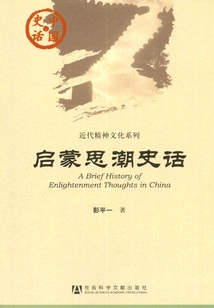
History of Enlightenment Thoughts
by Peng Pingyi
About This Novel
At the turn of the Ming and Qing Dynasties in the early 17th century, a serious social crisis occurred in feudal society. The germination of the capitalist mode of production has opened a gap in the dam of feudal production relations, and the people's resistance struggle is shaking the edifice of feudal rule. Under such historical conditions, early Enlightenment thinkers represented by Li Zhi, Huang Zongxi, Gu Yanwu, Wang Fuzhi, Dai Zhen, etc. Emerged. However, China's early Enlightenment thought was far less fortunate than Western Enlightenment thought. After the Qing Dynasty established its rule across the country, feudal despotism was unprecedentedly strengthened. For the needs of their own rule, the rulers of the Qing Dynasty adopted cruel cultural authoritarian policies. The authority of Neo-Confucianism in the Song and Ming Dynasties was restored under the situation of "imperial compilation" and "imperial approval"; cultural exchanges between China and the West were also interrupted due to the seclusion policy; what followed was the death of Enlightenment thought. This book takes this as a clue to briefly outline the development of the early Enlightenment trends in China's modern history from its germination to its demise.
Official Sources
What Readers Think
Rating
Community(0)
Rating
Community(0)