Library
Browse and search books
3,417 novels found
隐忍与抗争:抗战中的北平文化界
Qin Shiyong
During the Anti-Japanese War, in order to preserve their cultural heritage, almost all major universities chose to move inland. The stories of universities such as Southwest Associated University that moved inland are well known. However, little is known about the professors and students who stayed in Peiping. Similarly, not much is known about the situation in the literary and artistic circles, calligraphy and painting circles, etc. During the period of occupation. This book strives to fill the gaps in this area and unearth little-known historical deeds based on various historical facts. This book focuses on the Liuping professors in Peiping during the Anti-Japanese War, the left-behind artists in the literary and art circles, the protection and transfer of collections of materials and cultural relics, etc. Through a series of little-known past events, it shows the special journey of intellectuals in the war environment.
During the Anti-Japanese War, in order to preserve their cultural heritage, almost all major universities chose to move inland. The stories of universities such as Southwest Associated University that moved inland are well known. However, little is known about the professors and students who stayed in Peiping. Similarly, not much is known about the situation in the literary and artistic circles, calligraphy and painting circles, etc. During the period of occupation. This book strives to fill the gaps in this area and unearth little-known historical deeds based on various historical facts. This book focuses on the Liuping professors in Peiping during the Anti-Japanese War, the left-behind artists in the literary and art circles, the protection and transfer of collections of materials and cultural relics, etc. Through a series of little-known past events, it shows the special journey of intellectuals in the war environment.
Museum of Contemporary China
History当代中国博物馆
Duan Yong
The author of this book has been engaged in museum operation and management for many years. He has served as the deputy director of the Palace Museum and the director of the Museum Department of the State Administration of Cultural Heritage. He has experienced both micro-practice and macro-management. This book is based on the materials accumulated over the years, and strives to place the Chinese museum industry in the context of international museum development, observe the current problems of Chinese museums, and think about and explore sustainable development directions. The book closely adheres to the international academic community's definition of museums. It has a rigorous structure, detailed cases, clear viewpoints, and precise comments. It can be described as a practitioner's summary of the development of Chinese museums in the past ten years.
The author of this book has been engaged in museum operation and management for many years. He has served as the deputy director of the Palace Museum and the director of the Museum Department of the State Administration of Cultural Heritage. He has experienced both micro-practice and macro-management. This book is based on the materials accumulated over the years, and strives to place the Chinese museum industry in the context of international museum development, observe the current problems of Chinese museums, and think about and explore sustainable development directions. The book closely adheres to the international academic community's definition of museums. It has a rigorous structure, detailed cases, clear viewpoints, and precise comments. It can be described as a practitioner's summary of the development of Chinese museums in the past ten years.
父母官:明清州县官群像
Bai Hua
This is a serious historical work describing grassroots officials in prefectures and counties during the Ming and Qing dynasties in China. This book takes parent officials, a group that directly implements rule to every corner, as the research object. Based on a large number of testable cases, it describes the composition, selection, management system of state and county officials in the Ming and Qing Dynasties, as well as the judicial, financial and other work practices of the Ming and Qing states and counties. It uses their political behavior as an analytical framework, and at the same time draws on Incorporating theories and methods from psychology and administrative management, it focuses on exploring the behavior of parents-in-chief during the specific historical period of the Ming and Qing Dynasties; by analyzing the changes in the political environment in which they governed, the composition of their power is studied; while introducing the power application methods of parents-in-law, it analyzes and explores their inner world and other group laws.
This is a serious historical work describing grassroots officials in prefectures and counties during the Ming and Qing dynasties in China. This book takes parent officials, a group that directly implements rule to every corner, as the research object. Based on a large number of testable cases, it describes the composition, selection, management system of state and county officials in the Ming and Qing Dynasties, as well as the judicial, financial and other work practices of the Ming and Qing states and counties. It uses their political behavior as an analytical framework, and at the same time draws on Incorporating theories and methods from psychology and administrative management, it focuses on exploring the behavior of parents-in-chief during the specific historical period of the Ming and Qing Dynasties; by analyzing the changes in the political environment in which they governed, the composition of their power is studied; while introducing the power application methods of parents-in-law, it analyzes and explores their inner world and other group laws.
明朝简史
Monson
"A Brief History of the Ming Dynasty" was originally titled "Lecture Notes on the History of the Ming Dynasty". It was a draft of Mr. Meng Sen's lecture notes on the history of the Ming Dynasty when he came to Peking University as professor and director of the History Department in 1931. It was a textbook printed and distributed to students at that time. It was quite popular at the time. The book is divided into two parts: the first part is a general introduction, which is a summary explanatory text; the second part is divided into seven parts: the founding of the country, Jingnan, seizing the gate, discussing rites, the desolation of Wanli, Jiongjian of the chaos and fall of Tianchong and the two dynasties, and the ups and downs of the Southern Ming Dynasty. It comprehensively discusses the history of the Ming Dynasty and provides precise comments. Mr. Mengsen is rigorous in his history and is good at discovering doubts. Then he conducts extensive verification of historical facts and conducts in-depth exploration to find out the truth. Therefore, this "A Brief History of the Ming Dynasty" is relatively close to the historical truth, has great historical research value, and is recognized as one of the representative works of Ming history research.
"A Brief History of the Ming Dynasty" was originally titled "Lecture Notes on the History of the Ming Dynasty". It was a draft of Mr. Meng Sen's lecture notes on the history of the Ming Dynasty when he came to Peking University as professor and director of the History Department in 1931. It was a textbook printed and distributed to students at that time. It was quite popular at the time. The book is divided into two parts: the first part is a general introduction, which is a summary explanatory text; the second part is divided into seven parts: the founding of the country, Jingnan, seizing the gate, discussing rites, the desolation of Wanli, Jiongjian of the chaos and fall of Tianchong and the two dynasties, and the ups and downs of the Southern Ming Dynasty. It comprehensively discusses the history of the Ming Dynasty and provides precise comments. Mr. Mengsen is rigorous in his history and is good at discovering doubts. Then he conducts extensive verification of historical facts and conducts in-depth exploration to find out the truth. Therefore, this "A Brief History of the Ming Dynasty" is relatively close to the historical truth, has great historical research value, and is recognized as one of the representative works of Ming history research.
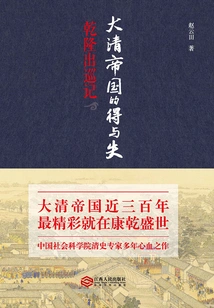
大清帝国的得与失:乾隆出巡记
Zhao Yuntian
By reading this book, people can follow the path that Emperor Qianlong walked, appreciate the motherland's scenic spots, landscape gardens, palaces and villas, and learn about the national customs, social features, and etiquette systems of that era. Of course, what is more important is that through the corner of the historical curtain raised by this book, people can understand the Chinese society in the 18th century and understand the gains and losses brought by Emperor Qianlong's tour to the Qing Empire. It can provide useful reference for people today to understand the past and explore the future, learn from historical experiences and lessons. Let us travel through the time and space of history and return to the Qianlong Dynasty of the Qing Empire to see what gains and losses Emperor Qianlong's tour brought to the Qing Empire.
By reading this book, people can follow the path that Emperor Qianlong walked, appreciate the motherland's scenic spots, landscape gardens, palaces and villas, and learn about the national customs, social features, and etiquette systems of that era. Of course, what is more important is that through the corner of the historical curtain raised by this book, people can understand the Chinese society in the 18th century and understand the gains and losses brought by Emperor Qianlong's tour to the Qing Empire. It can provide useful reference for people today to understand the past and explore the future, learn from historical experiences and lessons. Let us travel through the time and space of history and return to the Qianlong Dynasty of the Qing Empire to see what gains and losses Emperor Qianlong's tour brought to the Qing Empire.
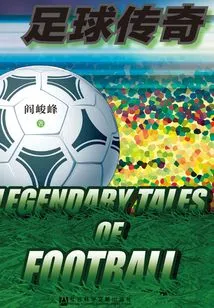
Football Legend
History足球传奇
Yan Junfeng
This book starts with the prehistory of football and takes you on a journey through world football in the long river of time. Why does this football that people love and hate have so many crazy believers? What is the relationship between the football styles of South American and European countries and their national characters? Under the seemingly rude surface, this world's first sport has rich connotations, and is accompanied by the leap of human thought, the development of science and technology and the progress of society.
This book starts with the prehistory of football and takes you on a journey through world football in the long river of time. Why does this football that people love and hate have so many crazy believers? What is the relationship between the football styles of South American and European countries and their national characters? Under the seemingly rude surface, this world's first sport has rich connotations, and is accompanied by the leap of human thought, the development of science and technology and the progress of society.
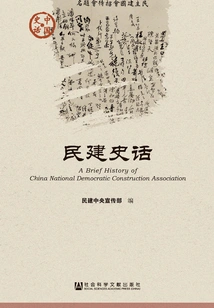
民建史话
Propaganda Department Of The Central Committee Of Democratic National Construction Association
"History of the Democratic National Construction Association" uses "A Brief History of the China Democratic National Construction Association" as the main source of information, and also refers to a large number of historical archives and biographies of the sages of the Democratic National Construction Association to interpret the 70-year development history of a democratic party for readers. The book tells how generations of democratic construction workers have worked hard to realize their ideals in the tide of the times; in the face of difficulties and choices, how a political party can grasp the course and sail from patriotism to new democracy, and from new democracy to socialism.
"History of the Democratic National Construction Association" uses "A Brief History of the China Democratic National Construction Association" as the main source of information, and also refers to a large number of historical archives and biographies of the sages of the Democratic National Construction Association to interpret the 70-year development history of a democratic party for readers. The book tells how generations of democratic construction workers have worked hard to realize their ideals in the tide of the times; in the face of difficulties and choices, how a political party can grasp the course and sail from patriotism to new democracy, and from new democracy to socialism.
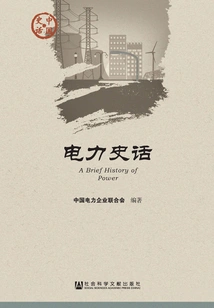
The History of Electricity
History电力史话
China Electricity Council
Electricity is the foundation of modern civilization. It has been more than 130 years since the first arc lamp was lit in Shanghai in 1879. How has China developed from poverty to the world's largest country in terms of power generation capacity and power grid scale? During this period, what kind of electric power culture has been formed in China, and what kind of spiritual values have been formed by electric power people? This book starts with the origin of electricity and its introduction into China, and combines the landmark events of China's electricity development to tell readers the history of China's electricity development one by one...
Electricity is the foundation of modern civilization. It has been more than 130 years since the first arc lamp was lit in Shanghai in 1879. How has China developed from poverty to the world's largest country in terms of power generation capacity and power grid scale? During this period, what kind of electric power culture has been formed in China, and what kind of spiritual values have been formed by electric power people? This book starts with the origin of electricity and its introduction into China, and combines the landmark events of China's electricity development to tell readers the history of China's electricity development one by one...
官制史话
Xie Baocheng
As the monarch's power gradually strengthened, the scope of government administration over the people became wider and wider, the ranks of bureaucracy continued to expand, officials were divided into more detailed divisions, and the monarch's management of officials became more and more strict, forming an increasingly complex official system. This book mainly introduces the official system of unified dynasties in the past dynasties. It is written in a systematic way and is divided into five aspects: the central decision-making system, the central government system, the local administrative system, the supervisory system and the military system. It aims to reflect the overall evolution of the ancient official system through the changes in each official system, and at the same time examine the relationship between the monarchy and the official system as well as the gains and losses of the official management system.
As the monarch's power gradually strengthened, the scope of government administration over the people became wider and wider, the ranks of bureaucracy continued to expand, officials were divided into more detailed divisions, and the monarch's management of officials became more and more strict, forming an increasingly complex official system. This book mainly introduces the official system of unified dynasties in the past dynasties. It is written in a systematic way and is divided into five aspects: the central decision-making system, the central government system, the local administrative system, the supervisory system and the military system. It aims to reflect the overall evolution of the ancient official system through the changes in each official system, and at the same time examine the relationship between the monarchy and the official system as well as the gains and losses of the official management system.
海上丝路史话
Du Yu
My country's silk has always enjoyed a high reputation around the world. From the Han Dynasty to the Tang Dynasty, a large number of merchants connected China with the rest of the world through the land-based "Silk Road", promoting economic and cultural exchanges between the East and the West. From the middle of the Tang Dynasty onwards, the Maritime Silk Road gradually became the main channel for exchanges between the East and the West. My country's porcelain was sold to the world through this channel and became a treasure coveted by countries around the world, while foreign spices, ivory, etc. Valuables have also become a necessity for Chinese rulers. During the Song and Yuan Dynasties, the Maritime Silk Road experienced unprecedented prosperity, which lasted for hundreds of years. People called this Maritime Silk Road the "Ceramic Road" or the "Fragrant Silk Road". It was the link between my country and Asian and African countries. It was a road of civilization and friendship. It made an indelible contribution to the exchange and development of world civilization. It was not until the late Qing Dynasty that this Maritime Silk Road gradually declined.
My country's silk has always enjoyed a high reputation around the world. From the Han Dynasty to the Tang Dynasty, a large number of merchants connected China with the rest of the world through the land-based "Silk Road", promoting economic and cultural exchanges between the East and the West. From the middle of the Tang Dynasty onwards, the Maritime Silk Road gradually became the main channel for exchanges between the East and the West. My country's porcelain was sold to the world through this channel and became a treasure coveted by countries around the world, while foreign spices, ivory, etc. Valuables have also become a necessity for Chinese rulers. During the Song and Yuan Dynasties, the Maritime Silk Road experienced unprecedented prosperity, which lasted for hundreds of years. People called this Maritime Silk Road the "Ceramic Road" or the "Fragrant Silk Road". It was the link between my country and Asian and African countries. It was a road of civilization and friendship. It made an indelible contribution to the exchange and development of world civilization. It was not until the late Qing Dynasty that this Maritime Silk Road gradually declined.
文明起源史话
Du Jinpeng
This is a short book that briefly introduces the origin of Chinese civilization. Based on a series of archaeological discoveries in Chinese archeology and the latest results of academic research on the origin of Chinese civilization, this book provides a systematic and brief introduction to the gestation, germination, birth and growth of Chinese civilization from the Paleolithic Age to the Shang Dynasty. It also explains the characteristics of the origin of Chinese civilization.
This is a short book that briefly introduces the origin of Chinese civilization. Based on a series of archaeological discoveries in Chinese archeology and the latest results of academic research on the origin of Chinese civilization, this book provides a systematic and brief introduction to the gestation, germination, birth and growth of Chinese civilization from the Paleolithic Age to the Shang Dynasty. It also explains the characteristics of the origin of Chinese civilization.
民居建筑史话
Bai Yunxiang
Based on archaeological discoveries, documentary records and residential surveys, this book briefly and systematically describes the history of the origin and development of traditional Chinese residential buildings; comprehensively and succinctly introduces the main types of existing traditional residential buildings, and explains the basic characteristics of each type of residential buildings; analyzes the role and mutual relationship of the natural environment and human society in the formation and development of residential buildings in a simple and easy-to-understand way; briefly summarizes and summarizes the main features and fine traditions of traditional Chinese residential buildings, and thinks and explains the future of residential buildings.
Based on archaeological discoveries, documentary records and residential surveys, this book briefly and systematically describes the history of the origin and development of traditional Chinese residential buildings; comprehensively and succinctly introduces the main types of existing traditional residential buildings, and explains the basic characteristics of each type of residential buildings; analyzes the role and mutual relationship of the natural environment and human society in the formation and development of residential buildings in a simple and easy-to-understand way; briefly summarizes and summarizes the main features and fine traditions of traditional Chinese residential buildings, and thinks and explains the future of residential buildings.
矿冶史话
Tang Jigen
Starting from the inherent stages of the development of ancient China's metallurgical industry, this book briefly introduces the mining, refining and use of several major metals such as copper, iron, gold, silver, lead, tin, zinc and mercury in Chinese history. The book analyzes the social background of the emergence and development of ancient China's mining and metallurgy industry, and provides a clear explanation and summary of the level of mining and metallurgy in different periods. At the same time, the development of the mining and metallurgical industry, especially the profound impact of bronze smelting and iron smelting technology on social historical progress and social change, was discussed. The materials quoted in this book are based on archaeological excavations and historical documents, and fully absorb the scientific research results of the metallurgical history community. It has been praised by Mr. Hua Jueming, a famous metallurgical history expert, as "a highly academic yet profound work."
Starting from the inherent stages of the development of ancient China's metallurgical industry, this book briefly introduces the mining, refining and use of several major metals such as copper, iron, gold, silver, lead, tin, zinc and mercury in Chinese history. The book analyzes the social background of the emergence and development of ancient China's mining and metallurgy industry, and provides a clear explanation and summary of the level of mining and metallurgy in different periods. At the same time, the development of the mining and metallurgical industry, especially the profound impact of bronze smelting and iron smelting technology on social historical progress and social change, was discussed. The materials quoted in this book are based on archaeological excavations and historical documents, and fully absorb the scientific research results of the metallurgical history community. It has been praised by Mr. Hua Jueming, a famous metallurgical history expert, as "a highly academic yet profound work."
汪伪政权史话
Wen Shaohua
The establishment of Wang Jingwei's pseudo-National Government was the product of Japan's policy of aggression against China. The obvious sign that distinguishes the Wang puppet regime from other puppet regimes is that it steals the name of the Kuomintang and the National Government, and uses it to deceive under the banner of clear sky and white sun. Through bargaining with other puppet regimes, the team of the Wang puppet regime was barely formed. After the establishment of the Wang Puppet regime, it followed the Japanese invaders and implemented the policy of clearing the countryside with the purpose of anti-communism. A "Central Reserve Bank" was established, numerous tax cards were set up, and the people in the occupied areas were levied and extorted. They advocate the "theory of peaceful nation-building", the East Asia Alliance, and the "new nationals" in an attempt to enslave the Chinese people. With the worldwide victory of the anti-fascist war, Japan announced its unconditional surrender, and the traitor leaders of the Wang puppet regime were put on the trial stand of history and received the punishment they deserved.
The establishment of Wang Jingwei's pseudo-National Government was the product of Japan's policy of aggression against China. The obvious sign that distinguishes the Wang puppet regime from other puppet regimes is that it steals the name of the Kuomintang and the National Government, and uses it to deceive under the banner of clear sky and white sun. Through bargaining with other puppet regimes, the team of the Wang puppet regime was barely formed. After the establishment of the Wang Puppet regime, it followed the Japanese invaders and implemented the policy of clearing the countryside with the purpose of anti-communism. A "Central Reserve Bank" was established, numerous tax cards were set up, and the people in the occupied areas were levied and extorted. They advocate the "theory of peaceful nation-building", the East Asia Alliance, and the "new nationals" in an attempt to enslave the Chinese people. With the worldwide victory of the anti-fascist war, Japan announced its unconditional surrender, and the traitor leaders of the Wang puppet regime were put on the trial stand of history and received the punishment they deserved.
状元史话
Song Yuanqiang
The imperial examination system has existed in China for more than a thousand years, and now it has become a relic of history. However, the word "number one scholar" as an auspicious word, revealing a spirit of fair competition and hard work, has been circulated and used to this day. From this, readers will naturally have some interest and conjecture about the number one scholar in history. In order to answer these questions, our small book summarizes the process of producing the number one scholar in the past dynasties, lists the names, birthplaces and subjects of nearly 600 candidates who have been tested so far, and introduces some historical data on the first person to win the imperial examination. From this, we can see how they worked hard since childhood and competed step by step in the examination room before finally standing out; we can also see their actual performance and social role in moral conduct, political performance, academic and social life after they became talents and entered the official career.
The imperial examination system has existed in China for more than a thousand years, and now it has become a relic of history. However, the word "number one scholar" as an auspicious word, revealing a spirit of fair competition and hard work, has been circulated and used to this day. From this, readers will naturally have some interest and conjecture about the number one scholar in history. In order to answer these questions, our small book summarizes the process of producing the number one scholar in the past dynasties, lists the names, birthplaces and subjects of nearly 600 candidates who have been tested so far, and introduces some historical data on the first person to win the imperial examination. From this, we can see how they worked hard since childhood and competed step by step in the examination room before finally standing out; we can also see their actual performance and social role in moral conduct, political performance, academic and social life after they became talents and entered the official career.
History of Papermaking
History造纸史话
Zhang Dawei
This book starts from the ancestors' desire for paper, and gives a relatively detailed introduction to the emergence of Chinese papermaking, paper production and its development in various dynasties, and the role of paper in Sino-foreign exchanges. It is interspersed with a large number of events, poems, allusions and discussions about papermaking, making the book rich in content and highly informative and readable.
This book starts from the ancestors' desire for paper, and gives a relatively detailed introduction to the emergence of Chinese papermaking, paper production and its development in various dynasties, and the role of paper in Sino-foreign exchanges. It is interspersed with a large number of events, poems, allusions and discussions about papermaking, making the book rich in content and highly informative and readable.
History of Cave Temple
History石窟寺史话
Evergreen
Cave temples refer to Buddhist temples carved out of riverside cliffs. For some places with dense caves in cave temples, people are accustomed to calling them "Thousand Buddha Cave". The construction of ancient cave temples in my country gradually emerged and developed with the introduction of Buddhism. This book more systematically introduces the process of the emergence and development of grotto temples: In the late Eastern Han Dynasty, after Buddhism was introduced to China, grotto temples first developed in Xinjiang, with a strong ancient Kucha national style. During the Sixteen Kingdoms period, early grotto art in the Hexi Corridor emerged, centered in Liangzhou of the Northern Liang Kingdom. The Datong Yungang Grottoes and Luoyang Longmen Grottoes in the Northern Wei Dynasty pushed China's cave temples onto the track of Han nationalization. The development of cave temple art in the late Northern Dynasties and Sui Dynasty prepared sufficient conditions for the peak of Buddhist art in the early Tang Dynasty. After the prosperous Tang Dynasty, Chinese cave temples began to decline and gradually became secular. Tibetan Lamaist art after the Yuan Dynasty injected fresh blood into Han Buddhism. Through the systematic introduction of this book, we can see the development of Chinese cave temple art, and thus better understand the development process of Buddhist art in China.
Cave temples refer to Buddhist temples carved out of riverside cliffs. For some places with dense caves in cave temples, people are accustomed to calling them "Thousand Buddha Cave". The construction of ancient cave temples in my country gradually emerged and developed with the introduction of Buddhism. This book more systematically introduces the process of the emergence and development of grotto temples: In the late Eastern Han Dynasty, after Buddhism was introduced to China, grotto temples first developed in Xinjiang, with a strong ancient Kucha national style. During the Sixteen Kingdoms period, early grotto art in the Hexi Corridor emerged, centered in Liangzhou of the Northern Liang Kingdom. The Datong Yungang Grottoes and Luoyang Longmen Grottoes in the Northern Wei Dynasty pushed China's cave temples onto the track of Han nationalization. The development of cave temple art in the late Northern Dynasties and Sui Dynasty prepared sufficient conditions for the peak of Buddhist art in the early Tang Dynasty. After the prosperous Tang Dynasty, Chinese cave temples began to decline and gradually became secular. Tibetan Lamaist art after the Yuan Dynasty injected fresh blood into Han Buddhism. Through the systematic introduction of this book, we can see the development of Chinese cave temple art, and thus better understand the development process of Buddhist art in China.
革命根据地史话
Ma Hongwu
This book focuses on the base areas during the Agrarian Revolution, the Anti-Japanese War, and the Liberation War. It introduces readers to the establishment and development, political power and legal system, economy and culture of the revolutionary base areas in each period in more detail. From this, we can see the development of the revolutionary base areas in each period and its profound impact on the Chinese revolution.
This book focuses on the base areas during the Agrarian Revolution, the Anti-Japanese War, and the Liberation War. It introduces readers to the establishment and development, political power and legal system, economy and culture of the revolutionary base areas in each period in more detail. From this, we can see the development of the revolutionary base areas in each period and its profound impact on the Chinese revolution.
转型、博弈与政治空间诉求:1928~1933年奉系地方政权研究
Tong Deyuan
Based on a large amount of literature, this book combs the historical process of the evolution of the local political power of the Feng Clan from 1928 to 1933, and attempts to explore the major impact of institutional transformation, especially the "Political Branch-Governmental Affairs Committee" institutional model, on the early political trends of the Feng Clan and the Nanjing National Government, as well as the relationship between the Feng Clan and the Kuomintang and the National Government based on unified cooperation and other issues.
Based on a large amount of literature, this book combs the historical process of the evolution of the local political power of the Feng Clan from 1928 to 1933, and attempts to explore the major impact of institutional transformation, especially the "Political Branch-Governmental Affairs Committee" institutional model, on the early political trends of the Feng Clan and the Nanjing National Government, as well as the relationship between the Feng Clan and the Kuomintang and the National Government based on unified cooperation and other issues.
明代江西进士考证
Qiu Jinchun
Through comprehensive research on a series of imperial examination documents of the Ming Dynasty, this book discovers various problems existing in the documentary records and solves several major problems in the field of research on the imperial examination system of the Ming Dynasty, such as the accurate list of Hongwu's eighteenth year list, the exact number of subjects and the total number of admissions in the Ming Dynasty Jinshi list, etc. On this basis, a statistical analysis was conducted on the number of Jinshi scholars and their distribution in a province in Jiangxi during the Ming Dynasty, and a detailed textual research was conducted on the errors or omissions in relevant documents when recording Jiangxi Jinshi scholars. Finally, a biography of Jiangxi Jinshi scholars in the Ming Dynasty was obtained. The research results of this book will help readers gain an in-depth understanding of the imperial examination documents of the Ming Dynasty, so as to make rational use of relevant documents; accurately grasp the basic information of Jiangxi Jinshi in the Ming Dynasty, and promote the development of related cultural industries.
Through comprehensive research on a series of imperial examination documents of the Ming Dynasty, this book discovers various problems existing in the documentary records and solves several major problems in the field of research on the imperial examination system of the Ming Dynasty, such as the accurate list of Hongwu's eighteenth year list, the exact number of subjects and the total number of admissions in the Ming Dynasty Jinshi list, etc. On this basis, a statistical analysis was conducted on the number of Jinshi scholars and their distribution in a province in Jiangxi during the Ming Dynasty, and a detailed textual research was conducted on the errors or omissions in relevant documents when recording Jiangxi Jinshi scholars. Finally, a biography of Jiangxi Jinshi scholars in the Ming Dynasty was obtained. The research results of this book will help readers gain an in-depth understanding of the imperial examination documents of the Ming Dynasty, so as to make rational use of relevant documents; accurately grasp the basic information of Jiangxi Jinshi in the Ming Dynasty, and promote the development of related cultural industries.
当代中国史研究(第4辑·2014)
Editor-in-chief Zhu Jiamu
This book reflects the basic appearance and overall level of contemporary Chinese history research in 2013. This book is divided into several parts: political history, economic history, cultural history, social history, diplomatic history and national defense history.
This book reflects the basic appearance and overall level of contemporary Chinese history research in 2013. This book is divided into several parts: political history, economic history, cultural history, social history, diplomatic history and national defense history.
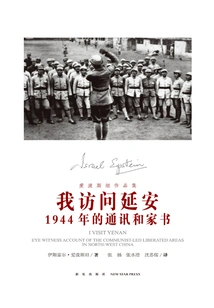
我访问延安:1944年的通讯和家书
Israel Epstein
"My Visit to Yan'an: Correspondence and Letters Home from 1944" is Epstein's early work. In 1944, as a member of the "Northwest Visiting Group of Chinese and Foreign Journalists", he went to the base areas behind enemy lines for interviews as a reporter for the New York Times and Time magazines. He wrote a large number of vivid and detailed communications reports, which were widely reprinted and disseminated by international media. He broke the Kuomintang's blockade of public opinion and had a wide-ranging and positive impact. This interview report has therefore become an indelible page in the history of news dissemination of China's Anti-Japanese War.
"My Visit to Yan'an: Correspondence and Letters Home from 1944" is Epstein's early work. In 1944, as a member of the "Northwest Visiting Group of Chinese and Foreign Journalists", he went to the base areas behind enemy lines for interviews as a reporter for the New York Times and Time magazines. He wrote a large number of vivid and detailed communications reports, which were widely reprinted and disseminated by international media. He broke the Kuomintang's blockade of public opinion and had a wide-ranging and positive impact. This interview report has therefore become an indelible page in the history of news dissemination of China's Anti-Japanese War.
九十二宗罪:雍正杀年羹尧的缘由与诡局
Chen Xiaofeng
The case of Nian Gengyao is full of strange events. Why did Yongzheng execute Nian Gengyao? Since the middle of the Qing Dynasty, different scholars have made various speculations on the Yongzheng murder case based on conspiracy theories, fatalism and imperial autocracy. However, the differences among the various theories coexist, making the case a suspenseful and unsolved mystery for more than 200 years. Professor Chen Xiaofeng of Wuhan University made an in-depth analysis of the internal strife between the clan party, the Kejia party and the capable veteran party during the reign of Emperor Kangxi and Yongzheng, and analyzed in detail the process of Yongzheng using the Nian Gengyao case to eliminate the cliques in the court and the purpose of murdering people. With a profound academic background in the history of the Chinese legal system, the author analyzes the characteristics of Nian Gengyao's ninety-two crimes, the application of criminal law, extrajudicial punishment, and post-penalty pardon and other special features of the legal operation in the early Qing Dynasty based on the "Annotated Bylaws of the Qing Dynasty Code Collection". It also focused on analyzing the strange fate of Nian Gengyao, who was convicted of treason, but was only sentenced to death for himself, implicated the eldest son, and immediately returned the Nian residence after the execution, and the Nian family returned to the capital, as well as the deceitful tactics involved. The author of the book also focuses on analyzing the character of Emperor Yongzheng and the impact of prophecies and prophecies on the vicissitudes of political affairs in the politics of the early Qing Dynasty. He also analyzes in detail the key role that the five-star couplets and prophecies during the case, especially the death of the white tiger in Nian's house, played in Yongzheng's determination to kill Nian Gengyao. In conjunction with the crimes committed by Nian Gengyao, the book comprehensively introduces the general rules of bad officialdom, official conduct, worldly customs, and despicable etiquette during the Kang and Yong reigns that caused trouble and led to executions in the political situation of Kang and Yong. In particular, it also analyzes the institutional causes of Yong Zheng's use of the secret system to instigate relations among ministers and form decisive powers. The author of this book painstakingly analyzes the authenticity of various legends in Kangxi's edict, uniquely puts forward the political choices that should be taken when Emperor Kangxi is about to return to heaven, and effectively demonstrates the important influence of military power, especially the control of the internal guards, in the succession of the throne. This explanation was put forward in the summer of 2012, and it is completely consistent with the interpretation of the original Manchu version of Kangxi's will discovered by the Shenyang History Museum in 2013 in old Manchu documents. As a follow-up to the analysis of the case, Professor Chen Xiaofeng also sharply analyzed the incident in which Yongzheng killed Nian Gengyao but retained his adopted son Yue Zhongqi as the legacy of the faction. After liquidating the parties, he used Yue's backhand to kill the Kejia Party. He summarized the unique tactics used by the emperor to use the forces of various factions in the changing political situation, allowing readers to gain the pleasure of reading the history of centralized political forms.
The case of Nian Gengyao is full of strange events. Why did Yongzheng execute Nian Gengyao? Since the middle of the Qing Dynasty, different scholars have made various speculations on the Yongzheng murder case based on conspiracy theories, fatalism and imperial autocracy. However, the differences among the various theories coexist, making the case a suspenseful and unsolved mystery for more than 200 years. Professor Chen Xiaofeng of Wuhan University made an in-depth analysis of the internal strife between the clan party, the Kejia party and the capable veteran party during the reign of Emperor Kangxi and Yongzheng, and analyzed in detail the process of Yongzheng using the Nian Gengyao case to eliminate the cliques in the court and the purpose of murdering people. With a profound academic background in the history of the Chinese legal system, the author analyzes the characteristics of Nian Gengyao's ninety-two crimes, the application of criminal law, extrajudicial punishment, and post-penalty pardon and other special features of the legal operation in the early Qing Dynasty based on the "Annotated Bylaws of the Qing Dynasty Code Collection". It also focused on analyzing the strange fate of Nian Gengyao, who was convicted of treason, but was only sentenced to death for himself, implicated the eldest son, and immediately returned the Nian residence after the execution, and the Nian family returned to the capital, as well as the deceitful tactics involved. The author of the book also focuses on analyzing the character of Emperor Yongzheng and the impact of prophecies and prophecies on the vicissitudes of political affairs in the politics of the early Qing Dynasty. He also analyzes in detail the key role that the five-star couplets and prophecies during the case, especially the death of the white tiger in Nian's house, played in Yongzheng's determination to kill Nian Gengyao. In conjunction with the crimes committed by Nian Gengyao, the book comprehensively introduces the general rules of bad officialdom, official conduct, worldly customs, and despicable etiquette during the Kang and Yong reigns that caused trouble and led to executions in the political situation of Kang and Yong. In particular, it also analyzes the institutional causes of Yong Zheng's use of the secret system to instigate relations among ministers and form decisive powers. The author of this book painstakingly analyzes the authenticity of various legends in Kangxi's edict, uniquely puts forward the political choices that should be taken when Emperor Kangxi is about to return to heaven, and effectively demonstrates the important influence of military power, especially the control of the internal guards, in the succession of the throne. This explanation was put forward in the summer of 2012, and it is completely consistent with the interpretation of the original Manchu version of Kangxi's will discovered by the Shenyang History Museum in 2013 in old Manchu documents. As a follow-up to the analysis of the case, Professor Chen Xiaofeng also sharply analyzed the incident in which Yongzheng killed Nian Gengyao but retained his adopted son Yue Zhongqi as the legacy of the faction. After liquidating the parties, he used Yue's backhand to kill the Kejia Party. He summarized the unique tactics used by the emperor to use the forces of various factions in the changing political situation, allowing readers to gain the pleasure of reading the history of centralized political forms.
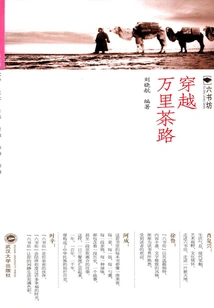
穿越万里茶路
Liu Xiaohang
Taking the rise of the Sino-Russian Wanli Tea Road in the middle of the Qing Dynasty to its decline in the early 20th century as the main line of time, it takes the Yangloudong in Hubei Province, one of the sources of the Wanli Tea Road, to Hankou, the Oriental Tea Port, the land and water transfer center credit store, Jinzhong, the base camp of Shanxi merchants, naturalization, Zhangjiakou, and Kyaktu on the Sino-Russian border. Focusing on the city as a narrative space, we use the historical facts of the formation of the tea road and the historical figures and major events related to the tea road (including Chinese businessmen, British businessmen, Russian businessmen, government officials and people, mainly Shanxi merchants) to introduce the glorious history of the thousands of miles of tea road and the sadness that it will inevitably be annihilated in the storm of the times.
Taking the rise of the Sino-Russian Wanli Tea Road in the middle of the Qing Dynasty to its decline in the early 20th century as the main line of time, it takes the Yangloudong in Hubei Province, one of the sources of the Wanli Tea Road, to Hankou, the Oriental Tea Port, the land and water transfer center credit store, Jinzhong, the base camp of Shanxi merchants, naturalization, Zhangjiakou, and Kyaktu on the Sino-Russian border. Focusing on the city as a narrative space, we use the historical facts of the formation of the tea road and the historical figures and major events related to the tea road (including Chinese businessmen, British businessmen, Russian businessmen, government officials and people, mainly Shanxi merchants) to introduce the glorious history of the thousands of miles of tea road and the sadness that it will inevitably be annihilated in the storm of the times.
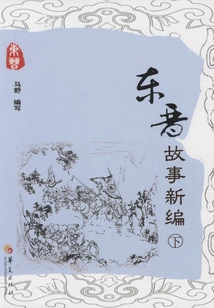
东晋故事新编(下册)
Mashu
It tells that in 316 AD, Sima Ye, the last emperor of the Western Jin Dynasty, was captured, announcing the demise of the Western Jin Dynasty. In 317, Langya King Sima Rui proclaimed himself emperor in Jiankang, and the Eastern Jin Dynasty began. During the Eastern Jin Dynasty, internal and external wars continued. Externally, after the fall of the Western Jin Dynasty, the five ethnic groups of the Xiongnu, Xianbei, Jie, Di, and Qiang successively established many separatist regimes in the north. As a result, Zu Ti, Yu Liang, Yin Hao, Huan Wen, Liu Yu and others launched the Northern Expedition. Within the country, Sun En, Lu Xun and others rebelled one after another; Huan Xuan usurped the Jin Dynasty for a time; and Liu Yu established his prestige by suppressing the peasant army, quelling Huan Xuan's rebellion, and the Northern Expedition, and eventually replaced the Eastern Jin Dynasty.
It tells that in 316 AD, Sima Ye, the last emperor of the Western Jin Dynasty, was captured, announcing the demise of the Western Jin Dynasty. In 317, Langya King Sima Rui proclaimed himself emperor in Jiankang, and the Eastern Jin Dynasty began. During the Eastern Jin Dynasty, internal and external wars continued. Externally, after the fall of the Western Jin Dynasty, the five ethnic groups of the Xiongnu, Xianbei, Jie, Di, and Qiang successively established many separatist regimes in the north. As a result, Zu Ti, Yu Liang, Yin Hao, Huan Wen, Liu Yu and others launched the Northern Expedition. Within the country, Sun En, Lu Xun and others rebelled one after another; Huan Xuan usurped the Jin Dynasty for a time; and Liu Yu established his prestige by suppressing the peasant army, quelling Huan Xuan's rebellion, and the Northern Expedition, and eventually replaced the Eastern Jin Dynasty.
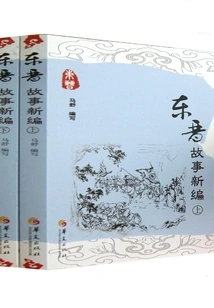
东晋故事新编(全集)
Mashu
It tells that in 316 AD, Sima Ye, the last emperor of the Western Jin Dynasty, was captured, announcing the demise of the Western Jin Dynasty. In 317, Langya King Sima Rui proclaimed himself emperor in Jiankang, and the Eastern Jin Dynasty began. During the Eastern Jin Dynasty, internal and external wars continued. Externally, after the fall of the Western Jin Dynasty, the five ethnic groups of the Xiongnu, Xianbei, Jie, Di, and Qiang successively established many separatist regimes in the north. As a result, Zu Ti, Yu Liang, Yin Hao, Huan Wen, Liu Yu and others launched the Northern Expedition. Within the country, Sun En, Lu Xun and others rebelled one after another; Huan Xuan usurped the Jin Dynasty for a time; and Liu Yu established his prestige by suppressing the peasant army, quelling Huan Xuan's rebellion, and the Northern Expedition, and eventually replaced the Eastern Jin Dynasty.
It tells that in 316 AD, Sima Ye, the last emperor of the Western Jin Dynasty, was captured, announcing the demise of the Western Jin Dynasty. In 317, Langya King Sima Rui proclaimed himself emperor in Jiankang, and the Eastern Jin Dynasty began. During the Eastern Jin Dynasty, internal and external wars continued. Externally, after the fall of the Western Jin Dynasty, the five ethnic groups of the Xiongnu, Xianbei, Jie, Di, and Qiang successively established many separatist regimes in the north. As a result, Zu Ti, Yu Liang, Yin Hao, Huan Wen, Liu Yu and others launched the Northern Expedition. Within the country, Sun En, Lu Xun and others rebelled one after another; Huan Xuan usurped the Jin Dynasty for a time; and Liu Yu established his prestige by suppressing the peasant army, quelling Huan Xuan's rebellion, and the Northern Expedition, and eventually replaced the Eastern Jin Dynasty.
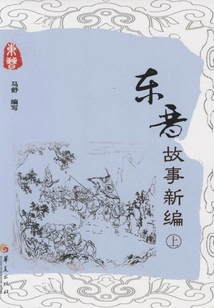
东晋故事新编(上册)
Mashu
It tells that in 316 AD, Sima Ye, the last emperor of the Western Jin Dynasty, was captured, announcing the demise of the Western Jin Dynasty. In 317, Langya King Sima Rui proclaimed himself emperor in Jiankang, and the Eastern Jin Dynasty began. During the Eastern Jin Dynasty, internal and external wars continued. Externally, after the fall of the Western Jin Dynasty, the five ethnic groups of the Xiongnu, Xianbei, Jie, Di, and Qiang successively established many separatist regimes in the north. As a result, Zu Ti, Yu Liang, Yin Hao, Huan Wen, Liu Yu and others launched the Northern Expedition. Within the country, Sun En, Lu Xun and others rebelled one after another; Huan Xuan usurped the Jin Dynasty for a time; and Liu Yu established his prestige by suppressing the peasant army, quelling Huan Xuan's rebellion, and the Northern Expedition, and eventually replaced the Eastern Jin Dynasty.
It tells that in 316 AD, Sima Ye, the last emperor of the Western Jin Dynasty, was captured, announcing the demise of the Western Jin Dynasty. In 317, Langya King Sima Rui proclaimed himself emperor in Jiankang, and the Eastern Jin Dynasty began. During the Eastern Jin Dynasty, internal and external wars continued. Externally, after the fall of the Western Jin Dynasty, the five ethnic groups of the Xiongnu, Xianbei, Jie, Di, and Qiang successively established many separatist regimes in the north. As a result, Zu Ti, Yu Liang, Yin Hao, Huan Wen, Liu Yu and others launched the Northern Expedition. Within the country, Sun En, Lu Xun and others rebelled one after another; Huan Xuan usurped the Jin Dynasty for a time; and Liu Yu established his prestige by suppressing the peasant army, quelling Huan Xuan's rebellion, and the Northern Expedition, and eventually replaced the Eastern Jin Dynasty.
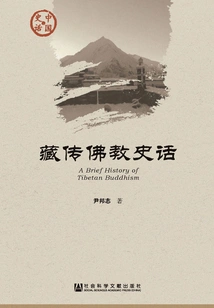
Tibetan Buddhism History
History藏传佛教史话
Yin Bangzhi
This book tells the history of the development of Tibetan Buddhism in vivid and concise language, sorts out the disputes and integration between Buddhism and Bon religion after its introduction to Tibet, reveals the creation and contribution of Tibetan Buddhism on the basis of integrating Indian Buddhism and Chinese Buddhism, analyzes the relationship between Tibetan social and economic development and religion, and briefly introduces the contemporary development of Tibetan Buddhism.
This book tells the history of the development of Tibetan Buddhism in vivid and concise language, sorts out the disputes and integration between Buddhism and Bon religion after its introduction to Tibet, reveals the creation and contribution of Tibetan Buddhism on the basis of integrating Indian Buddhism and Chinese Buddhism, analyzes the relationship between Tibetan social and economic development and religion, and briefly introduces the contemporary development of Tibetan Buddhism.
Insurance History
History保险史话
Editorial Board Of "insurance History"
China has grown from a weak insurance country to an important emerging insurance country. This book is the first official popular Chinese insurance history book in China. It uses time as its warp and events as its latitude. Through many stories, it recounts the past and explores its origins. It provides a panoramic review of the budding of Chinese insurance ideas, the emergence of the modern insurance industry, the introduction of Western insurance, the insurance market structure of the Qing Dynasty, the evolution of the insurance market of the Republic of China, red insurance in revolutionary base areas, the creation and development of the people's insurance industry in New China, and the rise of the insurance industry after reform and opening up. It also looks forward to the opportunities and future of China's insurance industry.
China has grown from a weak insurance country to an important emerging insurance country. This book is the first official popular Chinese insurance history book in China. It uses time as its warp and events as its latitude. Through many stories, it recounts the past and explores its origins. It provides a panoramic review of the budding of Chinese insurance ideas, the emergence of the modern insurance industry, the introduction of Western insurance, the insurance market structure of the Qing Dynasty, the evolution of the insurance market of the Republic of China, red insurance in revolutionary base areas, the creation and development of the people's insurance industry in New China, and the rise of the insurance industry after reform and opening up. It also looks forward to the opportunities and future of China's insurance industry.
History of Jiusan Society
History九三学社史话
Wang Shiduo
Most of the founders of Jiusan Society lived through three eras: the Qing Dynasty, the Republic of China, and the People's Republic of China. This period of one hundred years of vicissitudes has condensed almost all the tragedies and comedies in China's history. The tragedy of the war, the turmoil of society, the hardship of the people, the overturning of heaven and earth, the collision of the old and the new... Can be said to be unprecedented in history. Because of such a contrasting and shocking background of the times, when we open this book, what we see in front of us is naturally the mountains rushing to the sea, the clouds rising and thunder... And the passionate and courageous characters, endless past events, and touching feelings...
Most of the founders of Jiusan Society lived through three eras: the Qing Dynasty, the Republic of China, and the People's Republic of China. This period of one hundred years of vicissitudes has condensed almost all the tragedies and comedies in China's history. The tragedy of the war, the turmoil of society, the hardship of the people, the overturning of heaven and earth, the collision of the old and the new... Can be said to be unprecedented in history. Because of such a contrasting and shocking background of the times, when we open this book, what we see in front of us is naturally the mountains rushing to the sea, the clouds rising and thunder... And the passionate and courageous characters, endless past events, and touching feelings...
忆往谈旧录
Liang Shuming
"Recalling the Past and Talking about the Past" is a collection of the past writings of Mr. Liang Shuming, a thinker of the 20th century. It records his important experiences in many important historical periods such as the Revolution of 1911, the May 4th Movement, the Northern Expedition, the Anti-Japanese War, and the peace talks between the Kuomintang and the Communist Party. For example, as a record As a scholar, he witnessed Yuan Shikai's inauguration as interim president; as a scholar, he interacted with Liang Qichao, Cai Yuanpei, Hu Shi, Li Dazhao, etc.; As a social reform movement, he interacted with Yan Xishan, Li Jishen, Han Fuju, etc. In Shanxi, Shandong, Henan and other places. As a patriot, he had a close relationship with Chiang Baili, the "Military God" of the Kuomintang, and asked for advice and discussed the situation of the Anti-Japanese War many times. As Secretary-General of the Democratic League, he personally participated in the peace talks between the Kuomintang and the Communist Party, and was close to Chiang Kai-shek, Mao Zedong, Zhou Enlai and others. The interaction of separation..., Because it is a text that records personal experience and involves many big figures and events, it has very important historical value. Since its first publication in the 1980s, it has been highly valued by scholars at home and abroad who study modern Chinese history.
"Recalling the Past and Talking about the Past" is a collection of the past writings of Mr. Liang Shuming, a thinker of the 20th century. It records his important experiences in many important historical periods such as the Revolution of 1911, the May 4th Movement, the Northern Expedition, the Anti-Japanese War, and the peace talks between the Kuomintang and the Communist Party. For example, as a record As a scholar, he witnessed Yuan Shikai's inauguration as interim president; as a scholar, he interacted with Liang Qichao, Cai Yuanpei, Hu Shi, Li Dazhao, etc.; As a social reform movement, he interacted with Yan Xishan, Li Jishen, Han Fuju, etc. In Shanxi, Shandong, Henan and other places. As a patriot, he had a close relationship with Chiang Baili, the "Military God" of the Kuomintang, and asked for advice and discussed the situation of the Anti-Japanese War many times. As Secretary-General of the Democratic League, he personally participated in the peace talks between the Kuomintang and the Communist Party, and was close to Chiang Kai-shek, Mao Zedong, Zhou Enlai and others. The interaction of separation..., Because it is a text that records personal experience and involves many big figures and events, it has very important historical value. Since its first publication in the 1980s, it has been highly valued by scholars at home and abroad who study modern Chinese history.
Bozhou History
History亳州史话
Bozhou Federation Of Literary And Art Circles
Bozhou is located in the northwest of Anhui Province. It is a national historical and cultural city and one of the first batch of outstanding tourist cities in China. Bozhou is one of the birthplaces of the ancient culture of the Chinese nation. Historical records can be traced back to 3,800 years ago. It is called the "ancient capital of three dynasties" by historians. The book is divided into six chapters, including an overview of Bozhou, military strategies, cultural characteristics, historical figures, scenic spots, and modern features. It introduces Bozhou City's geographical location, historical events, unique regional customs and culture, Bozhou people's character, and contemporary development to readers in more detail.
Bozhou is located in the northwest of Anhui Province. It is a national historical and cultural city and one of the first batch of outstanding tourist cities in China. Bozhou is one of the birthplaces of the ancient culture of the Chinese nation. Historical records can be traced back to 3,800 years ago. It is called the "ancient capital of three dynasties" by historians. The book is divided into six chapters, including an overview of Bozhou, military strategies, cultural characteristics, historical figures, scenic spots, and modern features. It introduces Bozhou City's geographical location, historical events, unique regional customs and culture, Bozhou people's character, and contemporary development to readers in more detail.
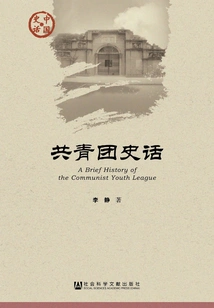
共青团史话
Li Jing
The more than 90-year history of the Communist Youth League of China is a precious asset of the Communist Youth League and young people. Reading the history of the Communist Youth League can help young members to further understand the basic laws of the Chinese youth movement, further understand the important position of youth work in various historical periods, and further understand the basic direction of the work of the Communist Youth League, so as to better grasp the present and win the future. "History of the Communist Youth League" records and reflects the more than 90 years of history of the Chinese Communist Youth League in the form of historical narratives. Through this book, we can understand in more detail the history of the Communist Youth League and the important and outstanding contributions it has made under the leadership of the party in various historical periods.
The more than 90-year history of the Communist Youth League of China is a precious asset of the Communist Youth League and young people. Reading the history of the Communist Youth League can help young members to further understand the basic laws of the Chinese youth movement, further understand the important position of youth work in various historical periods, and further understand the basic direction of the work of the Communist Youth League, so as to better grasp the present and win the future. "History of the Communist Youth League" records and reflects the more than 90 years of history of the Chinese Communist Youth League in the form of historical narratives. Through this book, we can understand in more detail the history of the Communist Youth League and the important and outstanding contributions it has made under the leadership of the party in various historical periods.
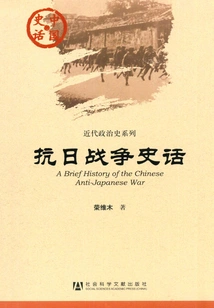
抗日战争史话
Rong Weimu
This book is a popular history of the Anti-Japanese War written by an expert on the Anti-Japanese War from the Institute of Modern History of the Academy of Social Sciences. It describes in detail the historical process of the Chinese nation's fight against Japanese aggression. The author's thinking is clear and closely follows the historical relations between China and Japan, Japan's partial invasion of China and total invasion of China, the cooperation between the Kuomintang and the Communist Party in resisting Japan, the frontal battlefield and the battlefield behind enemy lines, the crimes of the Japanese invaders, as well as key points such as China's Anti-Japanese War and the world's anti-fascist war. It comprehensively shows the historical picture of the Chinese people's fearless and heroic resistance against powerful enemies. The author's writing is fluent and the historical materials are informative. It is an excellent book introducing the Chinese People's War of Resistance Against Japan.
This book is a popular history of the Anti-Japanese War written by an expert on the Anti-Japanese War from the Institute of Modern History of the Academy of Social Sciences. It describes in detail the historical process of the Chinese nation's fight against Japanese aggression. The author's thinking is clear and closely follows the historical relations between China and Japan, Japan's partial invasion of China and total invasion of China, the cooperation between the Kuomintang and the Communist Party in resisting Japan, the frontal battlefield and the battlefield behind enemy lines, the crimes of the Japanese invaders, as well as key points such as China's Anti-Japanese War and the world's anti-fascist war. It comprehensively shows the historical picture of the Chinese people's fearless and heroic resistance against powerful enemies. The author's writing is fluent and the historical materials are informative. It is an excellent book introducing the Chinese People's War of Resistance Against Japan.
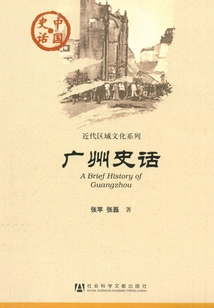
Guangzhou History
History广州史话
Chen Jianhua Gong Erzhen
In the form of historical narrative, this book concisely and systematically records the changes in Guangzhou's more than 2,200 years of city building history and the inheritance of the city's blood. The book is divided into six parts: "History of the City", "Sea of History", "Glory of Commerce", "Guangfu Culture", "Scenic Spots" and "Contemporary Splendor". It focuses on Guangzhou as the center of Lingnan culture, the birthplace of the Maritime Silk Road, and the modern revolutionary strategy. The origin and the context of the frontier of reform and opening up can be traced back to the pre-Qin Dynasty to the present day. In simple and popular language, the city's development history, major events, important figures, and important cultural and natural landscapes of Guangzhou are fully captured with pictures and texts.
In the form of historical narrative, this book concisely and systematically records the changes in Guangzhou's more than 2,200 years of city building history and the inheritance of the city's blood. The book is divided into six parts: "History of the City", "Sea of History", "Glory of Commerce", "Guangfu Culture", "Scenic Spots" and "Contemporary Splendor". It focuses on Guangzhou as the center of Lingnan culture, the birthplace of the Maritime Silk Road, and the modern revolutionary strategy. The origin and the context of the frontier of reform and opening up can be traced back to the pre-Qin Dynasty to the present day. In simple and popular language, the city's development history, major events, important figures, and important cultural and natural landscapes of Guangzhou are fully captured with pictures and texts.
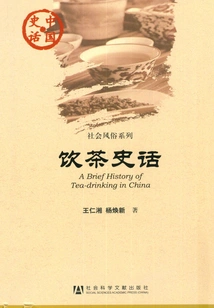
History of Tea Drinking
History饮茶史话
Wang Renxiang
The hometown of tea is in China. The Chinese use tea as medicine and pick tea for drinking. China was the first country to discover and utilize tea. It is also the country with the most developed tea science in ancient times. The hometown of tea science is also in China. The book begins with a talk about tea science, tea saints and the "Tea Classic", and covers tea tree cultivation, tea and Chinese culture, famous teas of the past, tribute tea, colorful fragrant tea, etc. It also describes the production of floral tea, and also introduces purple clay ware, rabbit hair cup, partridge spotted cup and other tea sets. It also provides an overview of tea art, teahouses and tea customs. Tea has changed the lives of Chinese people, nourished China, and also nourished the world.
The hometown of tea is in China. The Chinese use tea as medicine and pick tea for drinking. China was the first country to discover and utilize tea. It is also the country with the most developed tea science in ancient times. The hometown of tea science is also in China. The book begins with a talk about tea science, tea saints and the "Tea Classic", and covers tea tree cultivation, tea and Chinese culture, famous teas of the past, tribute tea, colorful fragrant tea, etc. It also describes the production of floral tea, and also introduces purple clay ware, rabbit hair cup, partridge spotted cup and other tea sets. It also provides an overview of tea art, teahouses and tea customs. Tea has changed the lives of Chinese people, nourished China, and also nourished the world.
History of Folk Beliefs
History民间信仰史话
Hou Jie
Chinese folk belief is a strange and mysterious world. If you want to uncover the layers of veils that have covered it for thousands of years, you can only enter the spiritual world of the people and embark on a never-ending journey of exploration and discovery. As a result, you will find that there is not only the concept of animism, but also ancestor worship that has been inherited from generation to generation, a life attitude that is happy with life and hate death, various explanations driven by mysterious psychology, and colorful contents such as goddess worship and polytheistic beliefs. Unknowingly, you will also change the traditional understanding of Chinese people's lack of religious belief and enhance your understanding of the broad and profound Chinese folk beliefs. To this end, this book has rich information, a complete system, rich content, and vivid language. The theory is derived from history, and it combines academic nature with popular nature.
Chinese folk belief is a strange and mysterious world. If you want to uncover the layers of veils that have covered it for thousands of years, you can only enter the spiritual world of the people and embark on a never-ending journey of exploration and discovery. As a result, you will find that there is not only the concept of animism, but also ancestor worship that has been inherited from generation to generation, a life attitude that is happy with life and hate death, various explanations driven by mysterious psychology, and colorful contents such as goddess worship and polytheistic beliefs. Unknowingly, you will also change the traditional understanding of Chinese people's lack of religious belief and enhance your understanding of the broad and profound Chinese folk beliefs. To this end, this book has rich information, a complete system, rich content, and vivid language. The theory is derived from history, and it combines academic nature with popular nature.
Film History
History电影史话
Sun Lifeng
Movies are also called movies. From a technical point of view, movies use photography and recording methods based on the principle of "persistence of vision" to record the images and sounds of natural objects and objective environments on film. Then, through corresponding projection and restoration technologies, moving images and sound-picture counterpoints are formed on the screen, which is a modern technology used to express certain page content. Chinese film creation came into being in 1905. Chinese films have gone through historical stages such as China's semi-feudal and semi-colonial period, the revolutionary war period, the construction period of New China, the Cultural Revolution and the New Era. The main content of "Film History" here is to write the history of Chinese films before the founding of the People's Republic of China in 1949. In other words, the words of "History of Film" express the historical aspects of the evolution and changes of Chinese films from silent to sound, from black and white to color, from tradition to modernity, from germination to pioneering, from inception to advancement.
Movies are also called movies. From a technical point of view, movies use photography and recording methods based on the principle of "persistence of vision" to record the images and sounds of natural objects and objective environments on film. Then, through corresponding projection and restoration technologies, moving images and sound-picture counterpoints are formed on the screen, which is a modern technology used to express certain page content. Chinese film creation came into being in 1905. Chinese films have gone through historical stages such as China's semi-feudal and semi-colonial period, the revolutionary war period, the construction period of New China, the Cultural Revolution and the New Era. The main content of "Film History" here is to write the history of Chinese films before the founding of the People's Republic of China in 1949. In other words, the words of "History of Film" express the historical aspects of the evolution and changes of Chinese films from silent to sound, from black and white to color, from tradition to modernity, from germination to pioneering, from inception to advancement.
History of Metaphysics
History玄学史话
Zhang Qiming
This book displays the historical form of metaphysics in the Wei and Jin Dynasties through three perspectives: political background, ideological evolution, and social fashion, and attempts to reproduce the context and development trajectory of metaphysics. Metaphysics has become history, and celebrities have long since turned into dust. Brushing away the dust of history, having close contact with celebrities, and carefully pondering their thoughts on the universe, society, life, and beliefs can often make us living today tremble.
This book displays the historical form of metaphysics in the Wei and Jin Dynasties through three perspectives: political background, ideological evolution, and social fashion, and attempts to reproduce the context and development trajectory of metaphysics. Metaphysics has become history, and celebrities have long since turned into dust. Brushing away the dust of history, having close contact with celebrities, and carefully pondering their thoughts on the universe, society, life, and beliefs can often make us living today tremble.
Taoist History
History道教史话
King Card
Mr. Lu Xun once said: "The foundation of China lies in Taoism... If you read history in this way, many problems can be easily solved." Indeed, Taoism is a religion native to China. It is inextricably linked to the traditional culture of ancient China. Moreover, Taoism was shrouded in mystery at the beginning of its emergence and has been attracting people for thousands of years. This book is a brief introduction to the history of the development of Taoism. The content mainly includes the relationship between Taoism and Taoism, Taoist sects, Taoist scriptures and teachings, alchemy techniques, fasting rituals, etc. After reading this book, I believe you will have a more comprehensive and in-depth understanding of Taoism.
Mr. Lu Xun once said: "The foundation of China lies in Taoism... If you read history in this way, many problems can be easily solved." Indeed, Taoism is a religion native to China. It is inextricably linked to the traditional culture of ancient China. Moreover, Taoism was shrouded in mystery at the beginning of its emergence and has been attracting people for thousands of years. This book is a brief introduction to the history of the development of Taoism. The content mainly includes the relationship between Taoism and Taoism, Taoist sects, Taoist scriptures and teachings, alchemy techniques, fasting rituals, etc. After reading this book, I believe you will have a more comprehensive and in-depth understanding of Taoism.
Furniture History
History家具史话
Li Zongshan
This book outlines the development history of Chinese furniture, the characteristics of furniture in different periods, and its relationship with social and cultural forms. On the basis of furniture classification, this paper gives a systematic and comprehensive explanation of the history of Chinese furniture from both vertical and horizontal aspects, and proposes two development stages of Chinese furniture history due to different living styles - early classical furniture and late classical furniture. Early classical furniture began to flourish since the Warring States Period, represented by Chu-style furniture and later Han-style furniture. Late classical furniture reached its peak in the Ming Dynasty, represented by Ming-style furniture and Qing-style furniture from the late Ming Dynasty to the mid-Ming Dynasty. This book displays the development of Chinese furniture in the past dynasties in the form of pictures and texts, and reflects the basic context and main laws of the development of Chinese furniture as comprehensively and clearly as possible, in order to enable readers to have a more comprehensive understanding of the rise and fall of Chinese furniture history.
This book outlines the development history of Chinese furniture, the characteristics of furniture in different periods, and its relationship with social and cultural forms. On the basis of furniture classification, this paper gives a systematic and comprehensive explanation of the history of Chinese furniture from both vertical and horizontal aspects, and proposes two development stages of Chinese furniture history due to different living styles - early classical furniture and late classical furniture. Early classical furniture began to flourish since the Warring States Period, represented by Chu-style furniture and later Han-style furniture. Late classical furniture reached its peak in the Ming Dynasty, represented by Ming-style furniture and Qing-style furniture from the late Ming Dynasty to the mid-Ming Dynasty. This book displays the development of Chinese furniture in the past dynasties in the form of pictures and texts, and reflects the basic context and main laws of the development of Chinese furniture as comprehensively and clearly as possible, in order to enable readers to have a more comprehensive understanding of the rise and fall of Chinese furniture history.
The History of Marriage
History和亲史话
Song Chao
In the process of handling ethnic relations in Chinese dynasties, "harmony" has always been an important policy and measure that has attracted much attention and has been controversial. Although "harmony" began in the early Western Han Dynasty, its origin can be found in the political marriages of the Pre-Qin period. The peacemaking in the Wei, Jin, Southern and Northern Dynasties inherited the legacy of peacemaking in the Han Dynasty and started the climax of peacemaking in the Sui and Tang Dynasties. It was an important turning period in the development history of peacemaking in ancient China. During the Sui and Tang Dynasties, the most distinctive ones were those with Tibet and the Uighurs. It not only set the precedent for the Central Plains dynasty to use "true princesses" to make peace, but also expanded the scope of the marriage from the north and the Central Plains to the southwest for the first time. The Mongolian and Yuan Empire took "harmony" to the extreme in targeting different ethnic groups and political regimes, and eventually became the first central government established by an ethnic minority in Chinese history. The marriage between Manchu and Mongolia is not only the end of the history of marriage in ancient China, but also one of the most distinctive marriage paradigms, reflecting the distinctive characteristics of "Manchu and Mongolia as one". In the endless stream of history, Heqin has made important contributions to the integration and cohesion of the Chinese nation from a unique perspective.
In the process of handling ethnic relations in Chinese dynasties, "harmony" has always been an important policy and measure that has attracted much attention and has been controversial. Although "harmony" began in the early Western Han Dynasty, its origin can be found in the political marriages of the Pre-Qin period. The peacemaking in the Wei, Jin, Southern and Northern Dynasties inherited the legacy of peacemaking in the Han Dynasty and started the climax of peacemaking in the Sui and Tang Dynasties. It was an important turning period in the development history of peacemaking in ancient China. During the Sui and Tang Dynasties, the most distinctive ones were those with Tibet and the Uighurs. It not only set the precedent for the Central Plains dynasty to use "true princesses" to make peace, but also expanded the scope of the marriage from the north and the Central Plains to the southwest for the first time. The Mongolian and Yuan Empire took "harmony" to the extreme in targeting different ethnic groups and political regimes, and eventually became the first central government established by an ethnic minority in Chinese history. The marriage between Manchu and Mongolia is not only the end of the history of marriage in ancient China, but also one of the most distinctive marriage paradigms, reflecting the distinctive characteristics of "Manchu and Mongolia as one". In the endless stream of history, Heqin has made important contributions to the integration and cohesion of the Chinese nation from a unique perspective.
甲午战争史话
Kou Wei
The Sino-Japanese Sino-Japanese War of 1894 was an aggressive war deliberately planned and launched by Japan. Due to the corruption and incompetence of the Qing government, the war ended with China's defeat. This book describes in concise and vivid language a series of events, battles and characters related to the Sino-Japanese War before and after it, giving us a panoramic view of the entire process of the Sino-Japanese War. Like all previous wars, the Qing government not only compensated huge military expenditures, but also ceded territory, further deepening the semi-colonialization of Chinese society. The defeat of this war also deeply shocked Chinese society and became an important turning point in the process of China's modern national awakening.
The Sino-Japanese Sino-Japanese War of 1894 was an aggressive war deliberately planned and launched by Japan. Due to the corruption and incompetence of the Qing government, the war ended with China's defeat. This book describes in concise and vivid language a series of events, battles and characters related to the Sino-Japanese War before and after it, giving us a panoramic view of the entire process of the Sino-Japanese War. Like all previous wars, the Qing government not only compensated huge military expenditures, but also ceded territory, further deepening the semi-colonialization of Chinese society. The defeat of this war also deeply shocked Chinese society and became an important turning point in the process of China's modern national awakening.
History of Metrology
History计量史话
Guan Zengjian
Metrology is related to the national economy and people's livelihood. It has dual attributes of natural science and social science. It is the basis for maintaining the normal operation of the national machinery and ensuring the sustained and stable development of its economy, science and technology, and is the technical guarantee for building an honest society. The importance of measurement determines the importance of measurement history. For readers, to understand metrology, they should first understand the history of metrology in China. The history of Chinese metrology not only allows people to understand ancient metrology, but also provides a unique perspective for people to understand ancient society and traditional culture. This book is divided into categories and provides an in-depth and easy-to-understand introduction to the important branches of metrology in ancient China. It is the first academic work in China titled the history of metrology. It has been translated into Japanese and serialized in the entire book "Research on the History of Metrology", the journal of the Japanese Society for the History of Metrology. Reading this book will enable you to gain an overall understanding of ancient Chinese measurement.
Metrology is related to the national economy and people's livelihood. It has dual attributes of natural science and social science. It is the basis for maintaining the normal operation of the national machinery and ensuring the sustained and stable development of its economy, science and technology, and is the technical guarantee for building an honest society. The importance of measurement determines the importance of measurement history. For readers, to understand metrology, they should first understand the history of metrology in China. The history of Chinese metrology not only allows people to understand ancient metrology, but also provides a unique perspective for people to understand ancient society and traditional culture. This book is divided into categories and provides an in-depth and easy-to-understand introduction to the important branches of metrology in ancient China. It is the first academic work in China titled the history of metrology. It has been translated into Japanese and serialized in the entire book "Research on the History of Metrology", the journal of the Japanese Society for the History of Metrology. Reading this book will enable you to gain an overall understanding of ancient Chinese measurement.
古塔史话
Liu Zuochen
The pagoda was originally a burial place for Buddhists. After being introduced to China, it was combined with traditional Chinese architecture and bore fruitful results. With the widespread spread of Buddhism in China, pagodas have also blossomed all over the country. Their large number, variety, and high artistic value are enough to dazzle the world. From wooden pagodas, stone pagodas, brick pagodas to iron pagodas and glazed pagodas, from pavilion-style pagodas, dense eaves style pagodas, flower pagodas to gate pagodas, Dai pagodas, Vajra throne-style pagodas... A large number and different types of ancient pagodas are like bright gems dotted among the rivers and mountains of the motherland. This book starts from the origin of the pagoda, introduces the origin of the name "pagoda", the shape and texture of the pagoda, etc. On this basis, it selects a number of representative ancient pagodas by category for detailed explanation, leading readers to stroll through the kingdom of ancient pagodas and taste the colorful world.
The pagoda was originally a burial place for Buddhists. After being introduced to China, it was combined with traditional Chinese architecture and bore fruitful results. With the widespread spread of Buddhism in China, pagodas have also blossomed all over the country. Their large number, variety, and high artistic value are enough to dazzle the world. From wooden pagodas, stone pagodas, brick pagodas to iron pagodas and glazed pagodas, from pavilion-style pagodas, dense eaves style pagodas, flower pagodas to gate pagodas, Dai pagodas, Vajra throne-style pagodas... A large number and different types of ancient pagodas are like bright gems dotted among the rivers and mountains of the motherland. This book starts from the origin of the pagoda, introduces the origin of the name "pagoda", the shape and texture of the pagoda, etc. On this basis, it selects a number of representative ancient pagodas by category for detailed explanation, leading readers to stroll through the kingdom of ancient pagodas and taste the colorful world.
Temple History
History寺观史话
Chen Kewei
Buddhist temples and Taoist temples are closely connected with the introduction of Buddhism, the founding of Taoism, its spread and development. The format and layout of its buildings have gone through a long-term development process before finally becoming the architectural pattern it is today. Temples and temples embody and preserve my country's excellent traditional architectural art. Chinese temples and temples are rich in content. This book mainly introduces the historical development and evolution of Chinese Buddhist temples and Taoist temples. It also briefly introduces their internal layout and the religious life of monks, nuns, Taoist priests and Taoist nuns, providing some common sense for readers.
Buddhist temples and Taoist temples are closely connected with the introduction of Buddhism, the founding of Taoism, its spread and development. The format and layout of its buildings have gone through a long-term development process before finally becoming the architectural pattern it is today. Temples and temples embody and preserve my country's excellent traditional architectural art. Chinese temples and temples are rich in content. This book mainly introduces the historical development and evolution of Chinese Buddhist temples and Taoist temples. It also briefly introduces their internal layout and the religious life of monks, nuns, Taoist priests and Taoist nuns, providing some common sense for readers.
宫殿建筑史话
Yang Hongxun
The palace is the most advanced building built by gathering social wealth, wisdom and skills. It is a concentrated expression of the ideology, culture and art, production level and engineering technology of the society at that time. It reflects the material civilization, spiritual civilization and hierarchical order of the time. It is a symbol of royal power or imperial power. This book gives a general and popular explanation of the occurrence and development of Chinese palaces, lists examples of typical palaces from past dynasties, and vividly and concretely demonstrates the most glorious architectural achievements in history.
The palace is the most advanced building built by gathering social wealth, wisdom and skills. It is a concentrated expression of the ideology, culture and art, production level and engineering technology of the society at that time. It reflects the material civilization, spiritual civilization and hierarchical order of the time. It is a symbol of royal power or imperial power. This book gives a general and popular explanation of the occurrence and development of Chinese palaces, lists examples of typical palaces from past dynasties, and vividly and concretely demonstrates the most glorious architectural achievements in history.
Bronze History
History青铜器史话
Yin Weizhang Cao Shuqin
Focusing on the various bronze ritual vessels, musical instruments, tools, weapons and decorative utensils with unique shapes and shapes made and used by ancient ancestors, this book explains the rise and fall of the Bronze Age in Chinese history and its causes. It also introduces the mining, smelting and casting of ancient craftsmen. The outstanding achievements in technology are intended to guide readers on a journey through the Kingdom of Bronze and make them realize the important position that the splendid and colorful bronze culture created by our ancestors between 4000 and 2000 years ago occupies in the cultural treasure house of the ancient world.
Focusing on the various bronze ritual vessels, musical instruments, tools, weapons and decorative utensils with unique shapes and shapes made and used by ancient ancestors, this book explains the rise and fall of the Bronze Age in Chinese history and its causes. It also introduces the mining, smelting and casting of ancient craftsmen. The outstanding achievements in technology are intended to guide readers on a journey through the Kingdom of Bronze and make them realize the important position that the splendid and colorful bronze culture created by our ancestors between 4000 and 2000 years ago occupies in the cultural treasure house of the ancient world.
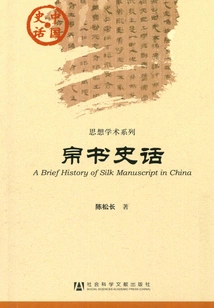
帛书史话
Chen Songchang
Silk books are a special form of ancient Chinese books. They are often juxtaposed with bamboo slips and are called "bamboo and silk". So far, there are three main batches of original silk books unearthed through archaeological discoveries: two silk books discovered by the British Stein in Dunhuang in 1908; the famous Chu silk books obtained by Cai Jixiang in Changsha in 1942; and a large number of Western Han silk books discovered in the No. 3 Han Tomb in Mawangdui, Changsha in 1973 by the Hunan Provincial Museum through scientific archaeological excavations. This book closely focuses on the original silk scroll and briefly reviews and describes the history of its unearthing, dissemination, compilation, and research. The book is divided into three parts: the first part, "Overview of Silk Books", mainly introduces the name, date, form, content, nature, etc. Of silk books, with the content introduction of Mawangdui Silk Books as the focus; the second part, "The Discovery and Dissemination of Silk Books in Chu", mainly introduces the discovery and spread of Chu Silk Books; the third part, "Overview of Research on Silk Books", focuses on summarizing the research results and research trends of Chu Silk Books and Mawangdui Silk Books.
Silk books are a special form of ancient Chinese books. They are often juxtaposed with bamboo slips and are called "bamboo and silk". So far, there are three main batches of original silk books unearthed through archaeological discoveries: two silk books discovered by the British Stein in Dunhuang in 1908; the famous Chu silk books obtained by Cai Jixiang in Changsha in 1942; and a large number of Western Han silk books discovered in the No. 3 Han Tomb in Mawangdui, Changsha in 1973 by the Hunan Provincial Museum through scientific archaeological excavations. This book closely focuses on the original silk scroll and briefly reviews and describes the history of its unearthing, dissemination, compilation, and research. The book is divided into three parts: the first part, "Overview of Silk Books", mainly introduces the name, date, form, content, nature, etc. Of silk books, with the content introduction of Mawangdui Silk Books as the focus; the second part, "The Discovery and Dissemination of Silk Books in Chu", mainly introduces the discovery and spread of Chu Silk Books; the third part, "Overview of Research on Silk Books", focuses on summarizing the research results and research trends of Chu Silk Books and Mawangdui Silk Books.