Library
Browse and search books
895 novels found
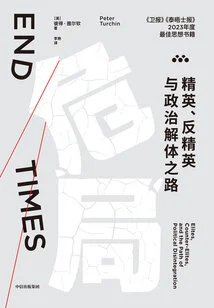
危局:精英、反精英与政治解体之路
(us) Peter Turchin
What are the common patterns of revolutions and crises experienced by human society over the past thousands of years? Are there traces of every regime disintegration and collapse? Why did the United States suddenly experience a peak of unrest in the 2020s, and when will the next political crisis come? In order to uncover the historical cycles, Peter Turchin, the founder of historical dynamics, uses data science methods and modeling methods based on compiled historical records to track the intricate and interactive networks between different "moving parts" in complex social systems, trying to find the root cause of the periodic alternation of peace and conflict. In the book, Turchin first looks back at the past and introduces the two major factors of people's impoverishment and elite overproduction to explain the formation of social unrest. In order to avoid the narrative falling into abstraction, the second part combines the real experience of beauty to outline individual cases to present the situation and demands of all parties to the conflict, including those facing despair. The author focuses on the consequences of the crisis and the way out for the future. When comparing the response strategies and game choices of many countries (such as Ukraine, the United Kingdom, etc.), The author discusses how to take the right measures to survive the current chaotic period. For readers who want to understand the historical dynamics approach, three excellent appendices are also not to be missed.
What are the common patterns of revolutions and crises experienced by human society over the past thousands of years? Are there traces of every regime disintegration and collapse? Why did the United States suddenly experience a peak of unrest in the 2020s, and when will the next political crisis come? In order to uncover the historical cycles, Peter Turchin, the founder of historical dynamics, uses data science methods and modeling methods based on compiled historical records to track the intricate and interactive networks between different "moving parts" in complex social systems, trying to find the root cause of the periodic alternation of peace and conflict. In the book, Turchin first looks back at the past and introduces the two major factors of people's impoverishment and elite overproduction to explain the formation of social unrest. In order to avoid the narrative falling into abstraction, the second part combines the real experience of beauty to outline individual cases to present the situation and demands of all parties to the conflict, including those facing despair. The author focuses on the consequences of the crisis and the way out for the future. When comparing the response strategies and game choices of many countries (such as Ukraine, the United Kingdom, etc.), The author discusses how to take the right measures to survive the current chaotic period. For readers who want to understand the historical dynamics approach, three excellent appendices are also not to be missed.
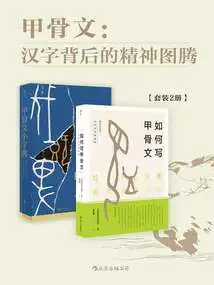
甲骨文:汉字背后的精神图腾(套装共2册)
Japan Literature And Culture Organization (japan) Junsi Ochiai
"How to Write Oracle Bone Inscriptions" Oracle bone inscriptions are the oldest mature writing discovered so far. Together with bronze inscriptions, they form the cornerstone of Chinese character writing. Modern society has greatly weakened the function of these ancient characters as communication tools and information symbols, but it does not prevent us from catching a glimpse of the life traces of our ancient ancestors and experiencing the development and changes of Chinese characters. This book selects 877 commonly used Chinese characters that appear in oracle bone inscriptions and bronze inscriptions. The interpretation of the characters is based on "Zi Tong" and "Zi Tong" written by Bai Chuanjing, and briefly introduces the composition of ancient characters. The ancient Chinese fonts were rewritten by famous calligraphers, and the order of strokes was compiled to facilitate readers' tracing and copying. Oracle bone inscriptions and bronze inscriptions are words and pictures. By writing with your own hands, I hope that everyone can open the door to the ancient world and experience our world, universe, nature, and life three thousand years ago. "Oracle Bone Inscriptions Small Dictionary" contains more than 300 basic Chinese characters, describing many of their original forms in oracle bone inscriptions, and conducting structural analysis, interpretation, and example analysis of their origins. Through the author's concise and clear discussion, readers can intuitively think about the origin and evolution of Chinese characters, understand the connection between the shape, pronunciation, and meaning of each Chinese character composed of strokes, radicals, etc., Experience the actual people, things, and abstract sensory emotions behind the Chinese characters, go deep into the textual cultural system composed of Chinese characters, and feel the material, concepts, and spirit of ancient China.
"How to Write Oracle Bone Inscriptions" Oracle bone inscriptions are the oldest mature writing discovered so far. Together with bronze inscriptions, they form the cornerstone of Chinese character writing. Modern society has greatly weakened the function of these ancient characters as communication tools and information symbols, but it does not prevent us from catching a glimpse of the life traces of our ancient ancestors and experiencing the development and changes of Chinese characters. This book selects 877 commonly used Chinese characters that appear in oracle bone inscriptions and bronze inscriptions. The interpretation of the characters is based on "Zi Tong" and "Zi Tong" written by Bai Chuanjing, and briefly introduces the composition of ancient characters. The ancient Chinese fonts were rewritten by famous calligraphers, and the order of strokes was compiled to facilitate readers' tracing and copying. Oracle bone inscriptions and bronze inscriptions are words and pictures. By writing with your own hands, I hope that everyone can open the door to the ancient world and experience our world, universe, nature, and life three thousand years ago. "Oracle Bone Inscriptions Small Dictionary" contains more than 300 basic Chinese characters, describing many of their original forms in oracle bone inscriptions, and conducting structural analysis, interpretation, and example analysis of their origins. Through the author's concise and clear discussion, readers can intuitively think about the origin and evolution of Chinese characters, understand the connection between the shape, pronunciation, and meaning of each Chinese character composed of strokes, radicals, etc., Experience the actual people, things, and abstract sensory emotions behind the Chinese characters, go deep into the textual cultural system composed of Chinese characters, and feel the material, concepts, and spirit of ancient China.
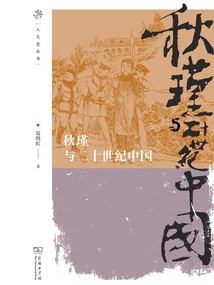
秋瑾与二十世纪中国
Xia Xiaohong
Qiu Jin is undoubtedly the most famous woman in twentieth-century China. Since her death in Shaoxing on July 15, 1907 (June 6 in the lunar calendar), Qiu Jin is the only person in the female world who has been widely known and paid constant attention to by the world in the past hundred years, and who truly deserves to be said to "live in people's hearts". Discussions and narrations about Qiu Jin have never stopped. This book is a collection of thirteen articles about Qiu Jin written by Professor Xia Xiaohong over more than twenty years. Based on a careful combing of Qiu Jin's historical materials, the author explains Qiu Jin's experiences, life encounters, thoughts, spread of poetry and works, and the evolution of his image, and presents readers with the centuries-old political situation and academic trends implicit in it.
Qiu Jin is undoubtedly the most famous woman in twentieth-century China. Since her death in Shaoxing on July 15, 1907 (June 6 in the lunar calendar), Qiu Jin is the only person in the female world who has been widely known and paid constant attention to by the world in the past hundred years, and who truly deserves to be said to "live in people's hearts". Discussions and narrations about Qiu Jin have never stopped. This book is a collection of thirteen articles about Qiu Jin written by Professor Xia Xiaohong over more than twenty years. Based on a careful combing of Qiu Jin's historical materials, the author explains Qiu Jin's experiences, life encounters, thoughts, spread of poetry and works, and the evolution of his image, and presents readers with the centuries-old political situation and academic trends implicit in it.
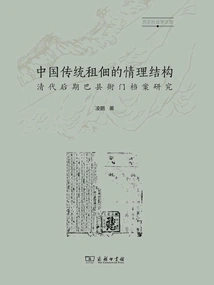
中国传统租佃的情理结构:清代后期巴县衙门档案研究
Ling Peng
This book is based on detailed information about the social background of tenancy disputes, the specific psychological emotions, rational cognition, and interactive behaviors of the parties involved in the tenancy disputes recorded in Taiwan's Danxin Archives, Baxian Archives in the Qing Dynasty, Longquan Archives in the Republic of China, and a large number of tenant-related litigation cases recorded in some local judicial archives, to conduct an in-depth study of the tenant relationship in traditional Chinese society. On this basis, the process of interaction between legal education, social customs, emotional structure, market principles and other governance logics in traditional Chinese grassroots society is sorted out. Among them, the "emotional structure" will be the key to understanding the penetration of political governance forces into grassroots society.
This book is based on detailed information about the social background of tenancy disputes, the specific psychological emotions, rational cognition, and interactive behaviors of the parties involved in the tenancy disputes recorded in Taiwan's Danxin Archives, Baxian Archives in the Qing Dynasty, Longquan Archives in the Republic of China, and a large number of tenant-related litigation cases recorded in some local judicial archives, to conduct an in-depth study of the tenant relationship in traditional Chinese society. On this basis, the process of interaction between legal education, social customs, emotional structure, market principles and other governance logics in traditional Chinese grassroots society is sorted out. Among them, the "emotional structure" will be the key to understanding the penetration of political governance forces into grassroots society.
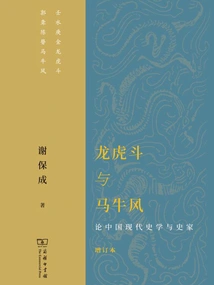
龙虎斗与马牛风:论中国现代史学与史家(增订本)
Xie Baocheng
This book discusses new history in a broad sense, which includes both the "new history" of Wang Guowei and the Marxist new history of Guo Moruo. It often publishes new and old materials that were previously unknown or unnoticed, and examines some issues that it has not dealt with in depth or has avoided for a long time. It is of a probing nature and is different from other works on "new history." The most exciting part is that "the mind wanders and meditates, and is in the same realm as the ancients who established the theory." Throughout the discussion of various historians. Describe in detail the academic achievements and scholarship of Wang Guowei, Chen Yuan, Chen Yinke, Guo Moruo, etc. Moreover, it pays attention to historical details, describing the meeting between Chen Yuan and Guo Moruo, the vivid scenes of Guo Moruo's visit to the Institute of History and Language, and the grudges between Guo Moruo and Chen Yinke, penetrating into the hearts of the characters and giving new explanations to historical unsolved cases. The book "Dragon-Tiger Fight and Horse-Niu Feng" was published in 2012 by Life, Reading, and New Knowledge Sanlian Bookstore. This is an expanded edition, which adds the author's research results in recent years and is of great benefit to a better understanding of modern Chinese historians and historiography.
This book discusses new history in a broad sense, which includes both the "new history" of Wang Guowei and the Marxist new history of Guo Moruo. It often publishes new and old materials that were previously unknown or unnoticed, and examines some issues that it has not dealt with in depth or has avoided for a long time. It is of a probing nature and is different from other works on "new history." The most exciting part is that "the mind wanders and meditates, and is in the same realm as the ancients who established the theory." Throughout the discussion of various historians. Describe in detail the academic achievements and scholarship of Wang Guowei, Chen Yuan, Chen Yinke, Guo Moruo, etc. Moreover, it pays attention to historical details, describing the meeting between Chen Yuan and Guo Moruo, the vivid scenes of Guo Moruo's visit to the Institute of History and Language, and the grudges between Guo Moruo and Chen Yinke, penetrating into the hearts of the characters and giving new explanations to historical unsolved cases. The book "Dragon-Tiger Fight and Horse-Niu Feng" was published in 2012 by Life, Reading, and New Knowledge Sanlian Bookstore. This is an expanded edition, which adds the author's research results in recent years and is of great benefit to a better understanding of modern Chinese historians and historiography.
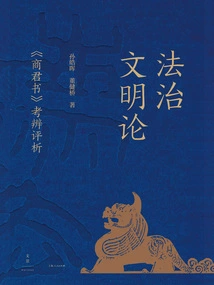
法治文明论 :《商君书》考辨评析
Sun Haohui Dong Jianqiao
This book is a textual research and analysis of the pre-Qin Legalist classic "Shang Jun Shu" and an elucidation of the Legalist political thought contained in it. The book first takes the text of "Shang Jun Shu" (hereinafter referred to as the original canon) as the benchmark, and conducts research and analysis from three aspects: 1. Examining the various historical facts of the Warring States period involved in the original canon, as well as the different views of various schools on these historical facts. 2. Correct the views and arguments in the original canon that have been distorted by later generations; comment on the blind spots and controversial points in the study of the original canon. 3. Analyze the legacy significance, inheritance value and historical flaws of the classical governance theory and rule of law theory in the original classics with the concept of modern and contemporary political civilization. The book believes that from the Warring States of Qin to the unified Qin Empire, there was a classical Chinese society ruled by law. Its crystallization, "Shang Jun Shu", discusses the systematic theory of the country's realization of a ruled by law society and its choice of governance model from the perspective of rule of law practice and governance.
This book is a textual research and analysis of the pre-Qin Legalist classic "Shang Jun Shu" and an elucidation of the Legalist political thought contained in it. The book first takes the text of "Shang Jun Shu" (hereinafter referred to as the original canon) as the benchmark, and conducts research and analysis from three aspects: 1. Examining the various historical facts of the Warring States period involved in the original canon, as well as the different views of various schools on these historical facts. 2. Correct the views and arguments in the original canon that have been distorted by later generations; comment on the blind spots and controversial points in the study of the original canon. 3. Analyze the legacy significance, inheritance value and historical flaws of the classical governance theory and rule of law theory in the original classics with the concept of modern and contemporary political civilization. The book believes that from the Warring States of Qin to the unified Qin Empire, there was a classical Chinese society ruled by law. Its crystallization, "Shang Jun Shu", discusses the systematic theory of the country's realization of a ruled by law society and its choice of governance model from the perspective of rule of law practice and governance.
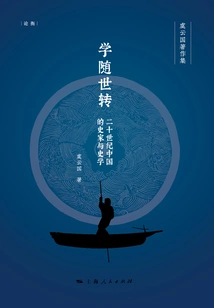
学随世转:二十世纪中国的史家与史学
Yu Yunguo
In the 20th century, the world was in a state of flux, and academic scholarship was turbulent. Chinese historians inherited old learning, integrated new knowledge, and devoted themselves to the connection and transformation of old and new paradigms. At the same time, with the vicissitudes of life and the ups and downs of the country, the scholarship and destiny of historians also experienced ups and downs. This book takes famous historians such as Lu Simian, Chen Yuan, Chen Yinke, Gu Jiegang, Wu Han, Ding Zeliang, Yan Gengwang, Liu Zijian, Zhang Jiaju and Cheng Yingluo as typical cases, and reproduces their life trajectories and academic careers under the dramatic changes of the times. Its historical outlook and methodology not only outline the glorious achievements and twists and turns of China's history over the past century, but also truly restore the fate and mental journey of these historians, leaving deep thoughts for later generations when looking back on history. This book is Professor Yu Yunguo's research on modern historians and the context of historiography in the 20th century. The essays included were written over a period of 25 years and are the author's painstaking efforts in studying history for decades.
In the 20th century, the world was in a state of flux, and academic scholarship was turbulent. Chinese historians inherited old learning, integrated new knowledge, and devoted themselves to the connection and transformation of old and new paradigms. At the same time, with the vicissitudes of life and the ups and downs of the country, the scholarship and destiny of historians also experienced ups and downs. This book takes famous historians such as Lu Simian, Chen Yuan, Chen Yinke, Gu Jiegang, Wu Han, Ding Zeliang, Yan Gengwang, Liu Zijian, Zhang Jiaju and Cheng Yingluo as typical cases, and reproduces their life trajectories and academic careers under the dramatic changes of the times. Its historical outlook and methodology not only outline the glorious achievements and twists and turns of China's history over the past century, but also truly restore the fate and mental journey of these historians, leaving deep thoughts for later generations when looking back on history. This book is Professor Yu Yunguo's research on modern historians and the context of historiography in the 20th century. The essays included were written over a period of 25 years and are the author's painstaking efforts in studying history for decades.
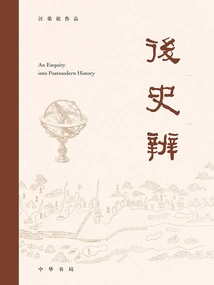
Later Historical Analysis
History后史辨
Wang Rongzu
This book examines the origins, theories, perspectives, processes and methods of postmodern historiography, as well as its impact on historical research, and then discusses a series of issues related to postmodern historiography such as historical truth-seeking, historical narrative, and new cultural history. The main purpose is to understand the nature of the postmodern trend and its impact on historiography, and whether it can contribute to the construction of a new wave of historiography in addition to destroying modern historiography. More advancedly, whether the Chinese historiography community can rethink the traditional Chinese historiography that has been replaced by Western modern historiography under the inspiration of postmodern historiography may contribute to the construction of today's historiography. Looking forward to the trend of global history, we hope that Chinese history will play a pivotal role in it.
This book examines the origins, theories, perspectives, processes and methods of postmodern historiography, as well as its impact on historical research, and then discusses a series of issues related to postmodern historiography such as historical truth-seeking, historical narrative, and new cultural history. The main purpose is to understand the nature of the postmodern trend and its impact on historiography, and whether it can contribute to the construction of a new wave of historiography in addition to destroying modern historiography. More advancedly, whether the Chinese historiography community can rethink the traditional Chinese historiography that has been replaced by Western modern historiography under the inspiration of postmodern historiography may contribute to the construction of today's historiography. Looking forward to the trend of global history, we hope that Chinese history will play a pivotal role in it.
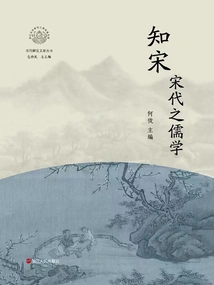
Knowing the Song Dynasty: Confucianism in the Song Dynasty (song Dynasty Research Essay Series)
History知宋:宋代之儒学(宋代研究文萃丛书)
Editor-in-chief He Jun
Each stage of development in the Chinese nation's civilization history of more than 5,000 years has its unique historical status, especially during the Song Dynasty. Our "Knowing the Song Dynasty" series aims to provide a convenient learning path for readers who have a certain foundation in literature and history and are interested in further understanding the history of the two Song Dynasties. The selected collection focuses on the two Song Dynasties and lists topics such as political system, monarchs and ministers, law, imperial examinations, military, cities and villages, currency, transportation, science and technology, Confucianism, literature, calligraphy and painting art, architecture, etc. This book focuses on the development of Confucianism in the Song Dynasty and is divided into two parts: upper and lower. The first part selects a total of seven articles by Mr. Deng Guangming, Xu Gui, Chen Zhi'e and Professors Chen Lai and Wang Ruilai according to age. The next part contains four articles written by the editor Professor He Jun in recent years, which analyze Hu Yuanhu's studies when Song Dynasty first emerged and Zhu Xi's Neo-Confucianism, Xiangshan Xinxue, and Shuixin Shigong Xue when Song Dynasty was complete. The upper and lower parts complement each other and guide readers to gain a macro and micro understanding of Confucianism in the Song Dynasty.
Each stage of development in the Chinese nation's civilization history of more than 5,000 years has its unique historical status, especially during the Song Dynasty. Our "Knowing the Song Dynasty" series aims to provide a convenient learning path for readers who have a certain foundation in literature and history and are interested in further understanding the history of the two Song Dynasties. The selected collection focuses on the two Song Dynasties and lists topics such as political system, monarchs and ministers, law, imperial examinations, military, cities and villages, currency, transportation, science and technology, Confucianism, literature, calligraphy and painting art, architecture, etc. This book focuses on the development of Confucianism in the Song Dynasty and is divided into two parts: upper and lower. The first part selects a total of seven articles by Mr. Deng Guangming, Xu Gui, Chen Zhi'e and Professors Chen Lai and Wang Ruilai according to age. The next part contains four articles written by the editor Professor He Jun in recent years, which analyze Hu Yuanhu's studies when Song Dynasty first emerged and Zhu Xi's Neo-Confucianism, Xiangshan Xinxue, and Shuixin Shigong Xue when Song Dynasty was complete. The upper and lower parts complement each other and guide readers to gain a macro and micro understanding of Confucianism in the Song Dynasty.
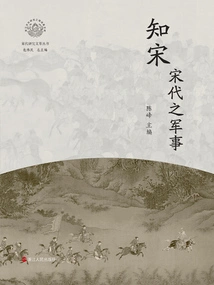
Knowing the Song Dynasty: the Military of the Song Dynasty (song Dynasty Research Collection Series)
History知宋:宋代之军事(宋代研究文萃丛书)
Editor-in-chief Chen Feng
What was the root cause of the "prosperity of culture and decline of military power" in the Song Dynasty? What military achievements did the Song Dynasty achieve? Which comes first, maintaining internal order or getting rid of the border dilemma? Gather everyone's masterpieces to explore the military gains and losses of the Song Dynasty. Understand the military of the Song Dynasty in one book! Each stage of development in the Chinese nation's civilization history of more than 5,000 years has its unique historical status, especially during the Song Dynasty. Our "Knowing the Song Dynasty" series aims to provide a convenient learning path for readers who have a certain foundation in literature and history and are interested in further understanding the history of the two Song Dynasties. This book selects representative works in the field of military history research in the Song Dynasty, trying to cover the main aspects of the military history of the Song Dynasty. Topics discussed include military systems and generals, military conquests and wars, and military ideas, tactics, and technology. They include the recruitment system of the Song Dynasty, the military reward system, the forbidden army system, the three yamen unified military institutions, the status of military attachés, etc. The content covers a wide range of topics, including studying relevant military systems, examining wars in different periods, focusing on military ideas and views on war, exploring military justice, discussing formations and diagrams, or reflecting on the production and application of revolutionary gunpowder weapons. This book aims to provide readers with a window into the military of the Song Dynasty, and will also help deepen readers' understanding of the history of the Song Dynasty.
What was the root cause of the "prosperity of culture and decline of military power" in the Song Dynasty? What military achievements did the Song Dynasty achieve? Which comes first, maintaining internal order or getting rid of the border dilemma? Gather everyone's masterpieces to explore the military gains and losses of the Song Dynasty. Understand the military of the Song Dynasty in one book! Each stage of development in the Chinese nation's civilization history of more than 5,000 years has its unique historical status, especially during the Song Dynasty. Our "Knowing the Song Dynasty" series aims to provide a convenient learning path for readers who have a certain foundation in literature and history and are interested in further understanding the history of the two Song Dynasties. This book selects representative works in the field of military history research in the Song Dynasty, trying to cover the main aspects of the military history of the Song Dynasty. Topics discussed include military systems and generals, military conquests and wars, and military ideas, tactics, and technology. They include the recruitment system of the Song Dynasty, the military reward system, the forbidden army system, the three yamen unified military institutions, the status of military attachés, etc. The content covers a wide range of topics, including studying relevant military systems, examining wars in different periods, focusing on military ideas and views on war, exploring military justice, discussing formations and diagrams, or reflecting on the production and application of revolutionary gunpowder weapons. This book aims to provide readers with a window into the military of the Song Dynasty, and will also help deepen readers' understanding of the history of the Song Dynasty.
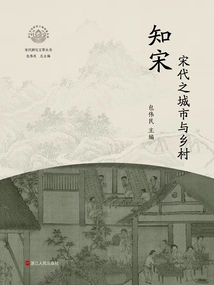
知宋:宋代之城市与乡村(宋代研究文萃丛书)
Edited By Bao Weimin
Each stage of development in the Chinese nation's civilization history of more than 5,000 years has its unique historical status, especially during the Song Dynasty. Our "Knowing the Song Dynasty" series aims to provide a convenient learning path for readers who have a certain foundation in literature and history and are interested in further understanding the history of the two Song Dynasties. The selected collection focuses on the two Song Dynasties and lists topics such as political system, monarchs and ministers, law, imperial examinations, military, cities and villages, currency, transportation, science and technology, Confucianism, literature, calligraphy and painting art, architecture, etc. The Song Dynasty can be described as the "dawn period" of modern China. Industry and commerce developed rapidly, urbanization deepened, and new forms of development emerged in cities and villages. This book displays the development of cities and villages in the Song Dynasty from five aspects: class groups, management systems, hierarchical distribution, production and exchange, and cultural overview. It analyzes the institutional, economic, cultural and other factors behind the urban and rural development in the two Song Dynasties, explores the deep-seated logic of Chinese social development, and has certain reference value for solving problems that arise in the contemporary urbanization process.
Each stage of development in the Chinese nation's civilization history of more than 5,000 years has its unique historical status, especially during the Song Dynasty. Our "Knowing the Song Dynasty" series aims to provide a convenient learning path for readers who have a certain foundation in literature and history and are interested in further understanding the history of the two Song Dynasties. The selected collection focuses on the two Song Dynasties and lists topics such as political system, monarchs and ministers, law, imperial examinations, military, cities and villages, currency, transportation, science and technology, Confucianism, literature, calligraphy and painting art, architecture, etc. The Song Dynasty can be described as the "dawn period" of modern China. Industry and commerce developed rapidly, urbanization deepened, and new forms of development emerged in cities and villages. This book displays the development of cities and villages in the Song Dynasty from five aspects: class groups, management systems, hierarchical distribution, production and exchange, and cultural overview. It analyzes the institutional, economic, cultural and other factors behind the urban and rural development in the two Song Dynasties, explores the deep-seated logic of Chinese social development, and has certain reference value for solving problems that arise in the contemporary urbanization process.
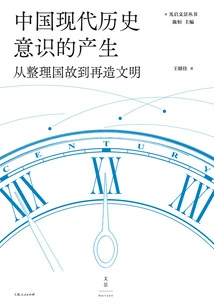
中国现代历史意识的产生:从整理国故到再造文明(光启文景丛书)
Wang Qingjia
This book collects a total of 16 discussions on the history of Chinese historiography by the famous historian Mr. Wang Qingjia. The period discussed in the article focuses on the transformation period of modern Chinese historiography in the 20th century. The author takes "the emergence of modern historical consciousness" as the core for understanding and grasping the innovation of Chinese history since the May 4th New Culture Movement. In addition to classic topics such as antiquity history, scientific history, post-colonialism, and post-modernism, some content also places Chinese historical research within global historiography for horizontal comparison, or uses new research methods to propose new solutions to old problems. This book is divided into two parts. The first part, "Ideological Trends and Characteristics," explores the overall turn and development trend of Chinese historiography in the 20th century. The second part, "Characters and Thoughts," focuses on many famous figures and schools in modern times and puts forward the author's unique personal insights.
This book collects a total of 16 discussions on the history of Chinese historiography by the famous historian Mr. Wang Qingjia. The period discussed in the article focuses on the transformation period of modern Chinese historiography in the 20th century. The author takes "the emergence of modern historical consciousness" as the core for understanding and grasping the innovation of Chinese history since the May 4th New Culture Movement. In addition to classic topics such as antiquity history, scientific history, post-colonialism, and post-modernism, some content also places Chinese historical research within global historiography for horizontal comparison, or uses new research methods to propose new solutions to old problems. This book is divided into two parts. The first part, "Ideological Trends and Characteristics," explores the overall turn and development trend of Chinese historiography in the 20th century. The second part, "Characters and Thoughts," focuses on many famous figures and schools in modern times and puts forward the author's unique personal insights.
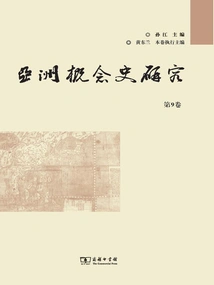
亚洲概念史研究(第9卷)
Editor-in-chief Sun Jiang
"Research on the History of Asian Concepts" is a historical collection published by the Xueheng Institute of Nanjing University in 2013. It is edited by Sun Jiang, a Yangtze River scholar, dean of the Xueheng Institute of Nanjing University, and distinguished professor of the Department of Political Science and School of History, School of Government, Nanjing University. Professor Sun Jiang is committed to studying China and the East Asian world from the 16th to the 20th centuries from the perspective of social history and intellectual history. His research methods involve many fields of humanities and social sciences. Representative studies include: Chinese modern social history, political history and intellectual history; memory research, focusing on historical narrative. Narration, historical memory, nationalism and other issues; conceptual history (history of ideas), which examines the process of Western knowledge moving into China\u002F East Asia from the perspective of global history and its variations; the history of Japanese political thought, mainly focusing on issues related to the "Kyoto School" and "modern overcoming". "Research on the History of Asian Concepts" mainly reveals the similarities and differences of modernity within the East Asian circle from the interactive relationship of concepts between different countries and regions. "Conceptual history" refers to a way of writing history based on universal ideas. From the perspective of concept history, concepts are expressed by words, but they have broader meanings than words; after certain social and political experience and meaning are accumulated in a specific word and represented, the word becomes a concept. Conceptual history focuses on the language and structure of texts, revealing the characteristics of the era through the study of dominant concepts in history. Researchers in the history of Asian concepts try to examine how Western concepts are translated into Chinese character concepts from a comparative perspective between the East and the West, as well as the interactive relationship between concepts in different countries and regions within the Chinese character circle, thereby revealing the similarities and differences of modernity within the East Asian circle.
"Research on the History of Asian Concepts" is a historical collection published by the Xueheng Institute of Nanjing University in 2013. It is edited by Sun Jiang, a Yangtze River scholar, dean of the Xueheng Institute of Nanjing University, and distinguished professor of the Department of Political Science and School of History, School of Government, Nanjing University. Professor Sun Jiang is committed to studying China and the East Asian world from the 16th to the 20th centuries from the perspective of social history and intellectual history. His research methods involve many fields of humanities and social sciences. Representative studies include: Chinese modern social history, political history and intellectual history; memory research, focusing on historical narrative. Narration, historical memory, nationalism and other issues; conceptual history (history of ideas), which examines the process of Western knowledge moving into China\u002F East Asia from the perspective of global history and its variations; the history of Japanese political thought, mainly focusing on issues related to the "Kyoto School" and "modern overcoming". "Research on the History of Asian Concepts" mainly reveals the similarities and differences of modernity within the East Asian circle from the interactive relationship of concepts between different countries and regions. "Conceptual history" refers to a way of writing history based on universal ideas. From the perspective of concept history, concepts are expressed by words, but they have broader meanings than words; after certain social and political experience and meaning are accumulated in a specific word and represented, the word becomes a concept. Conceptual history focuses on the language and structure of texts, revealing the characteristics of the era through the study of dominant concepts in history. Researchers in the history of Asian concepts try to examine how Western concepts are translated into Chinese character concepts from a comparative perspective between the East and the West, as well as the interactive relationship between concepts in different countries and regions within the Chinese character circle, thereby revealing the similarities and differences of modernity within the East Asian circle.
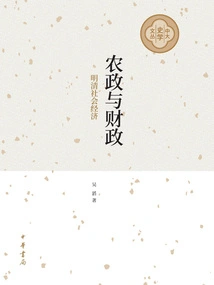
农政与财政:明清社会经济(中大史学文丛)
Wu Tao
This book focuses on the warehousing system, salt administration system, health system, and financial tax system during the Ming and Qing Dynasties, and examines the operating mechanisms of these systems in the context of regional society. It reflects the unique adjustment mechanism of traditional rural society and the market logic contained in the tribute economy. It has reference value for some important areas of the social and economic history of the Ming and Qing Dynasties.
This book focuses on the warehousing system, salt administration system, health system, and financial tax system during the Ming and Qing Dynasties, and examines the operating mechanisms of these systems in the context of regional society. It reflects the unique adjustment mechanism of traditional rural society and the market logic contained in the tribute economy. It has reference value for some important areas of the social and economic history of the Ming and Qing Dynasties.
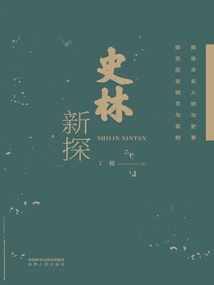
New Exploration of Shi Lin
History史林新探
Ding Jian
"New Explorations in History" is a collection of academic articles written by Professor Ding Jian, a master's tutor at the School of Marxism at Xi'an University of Science and Technology. The book has a total of 150,000 words. It mainly involves the author's research results in ancient book compilation, historical theory, etc. These articles have been published in journals. The research articles included in the collection of essays reflect what the author has seen, heard, and thought in the academic field. The collected articles often focus on specific and subtle academic issues. While using rigorous writing, they also pursue liveliness and vividness. The discussion of these articles focuses on starting from the simple to the deep, looking at the big from the small, with simple language and sincere emotions, which has very good reference significance for colleagues in the academic field.
"New Explorations in History" is a collection of academic articles written by Professor Ding Jian, a master's tutor at the School of Marxism at Xi'an University of Science and Technology. The book has a total of 150,000 words. It mainly involves the author's research results in ancient book compilation, historical theory, etc. These articles have been published in journals. The research articles included in the collection of essays reflect what the author has seen, heard, and thought in the academic field. The collected articles often focus on specific and subtle academic issues. While using rigorous writing, they also pursue liveliness and vividness. The discussion of these articles focuses on starting from the simple to the deep, looking at the big from the small, with simple language and sincere emotions, which has very good reference significance for colleagues in the academic field.
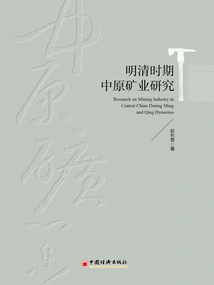
明清时期中原矿业研究
Zhao Changgui
The Central Plains region is rich in mineral resources and has a long history of mining and metallurgy. The Ming and Qing Dynasties were an important stage in the development of the mining industry in the Central Plains. During this period, the mining, smelting and mineral trading activities in the Central Plains were very active. During the Ming and Qing Dynasties, in the tortuous development process of Zhongyuan Mining, there were both commendable experiences and profound lessons. This process and its many impacts show that when we develop the mining industry today, we can no longer follow the old path of "mining and smelting first, then governance". We must make overall plans and pay attention to both economic benefits, social benefits and ecological benefits. When mining and smelting, we cannot blindly dig and smelt in a piecemeal manner, but must have a planned scale. In operation, we should pursue economies of scale, reduce waste, and cherish minerals, a non-renewable and precious resource; in the process of economic construction, especially the development of mining, we must pay attention to the vital interests of local people, properly handle the relationship between utilizing foreign capital and protecting the patriotic enthusiasm of local people, take into account the reasonable demands of both parties, and not be partial. Only in this way can my country's mining industry develop healthily, the mining area's social economy prosper, and the people can truly benefit from the development of the mining industry.
The Central Plains region is rich in mineral resources and has a long history of mining and metallurgy. The Ming and Qing Dynasties were an important stage in the development of the mining industry in the Central Plains. During this period, the mining, smelting and mineral trading activities in the Central Plains were very active. During the Ming and Qing Dynasties, in the tortuous development process of Zhongyuan Mining, there were both commendable experiences and profound lessons. This process and its many impacts show that when we develop the mining industry today, we can no longer follow the old path of "mining and smelting first, then governance". We must make overall plans and pay attention to both economic benefits, social benefits and ecological benefits. When mining and smelting, we cannot blindly dig and smelt in a piecemeal manner, but must have a planned scale. In operation, we should pursue economies of scale, reduce waste, and cherish minerals, a non-renewable and precious resource; in the process of economic construction, especially the development of mining, we must pay attention to the vital interests of local people, properly handle the relationship between utilizing foreign capital and protecting the patriotic enthusiasm of local people, take into account the reasonable demands of both parties, and not be partial. Only in this way can my country's mining industry develop healthily, the mining area's social economy prosper, and the people can truly benefit from the development of the mining industry.
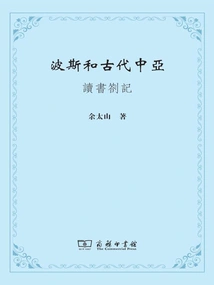
波斯和古代中亚:读书劄记
Yu Taishan
This book is a series of textual research articles on the study of Persia and ancient Central Asia. The rise of the Turks marked an era in the history of Central Asia, and the previous one belonged to ancient times. The so-called Persia in this book refers to the Achaemenid Empire, the Parthian Empire and the Sassanid Empire. Central Asia roughly refers to the area where today's "five Central Asian countries" (Kazakhstan, Kyrgyzstan, Tajikistan, Uzbekistan, Turkmenistan) and Afghanistan are located. During this period, the relationship with Sezhong, Kushan, and Gida was undoubtedly the focus of the relationship between Persia and Central Asia. This book intends to examine it from the perspective of Persia. In the past, many issues have been involved in the process of exploring the history of Sezhong, Kushan, and Gida, which will be briefly discussed in detail. Other relations between Persia and Central Asia are also covered. In short, most of the contents covered in this book are domestic gaps or weak links, which can supplement and enhance the author's past related research. The reason why it is called "Reading Notes" is because the author believes that the "Reading Notes" are only a few chapters. In the past, those who were superficial and falsely claimed to be "researching" were actually just "note-taking". Hence the name.
This book is a series of textual research articles on the study of Persia and ancient Central Asia. The rise of the Turks marked an era in the history of Central Asia, and the previous one belonged to ancient times. The so-called Persia in this book refers to the Achaemenid Empire, the Parthian Empire and the Sassanid Empire. Central Asia roughly refers to the area where today's "five Central Asian countries" (Kazakhstan, Kyrgyzstan, Tajikistan, Uzbekistan, Turkmenistan) and Afghanistan are located. During this period, the relationship with Sezhong, Kushan, and Gida was undoubtedly the focus of the relationship between Persia and Central Asia. This book intends to examine it from the perspective of Persia. In the past, many issues have been involved in the process of exploring the history of Sezhong, Kushan, and Gida, which will be briefly discussed in detail. Other relations between Persia and Central Asia are also covered. In short, most of the contents covered in this book are domestic gaps or weak links, which can supplement and enhance the author's past related research. The reason why it is called "Reading Notes" is because the author believes that the "Reading Notes" are only a few chapters. In the past, those who were superficial and falsely claimed to be "researching" were actually just "note-taking". Hence the name.
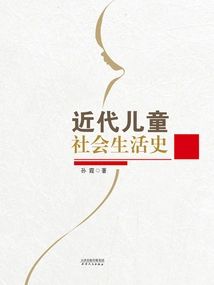
近代儿童社会生活史
Sun Xia
This book focuses on the study of children in modern Chinese history, using comics, children's daily necessities and other materials to reflect children's living conditions and the commemoration methods of different children on Children's Day. It is divided into two parts. The first part introduces the life of children in traditional Chinese society and contemporary people's views on children. Focusing on Children's Day and the Year of the Children, it studies the origin of Children's Day, the development of Children's Year activities, and the commemorative activities of Children's Day. The next chapter introduces various aspects of children's life during the Republic of China, including children's rights, children's welfare, children's issues, children's education, children's health, children's books, children's games, etc. The last chapter takes children in the northwest of Shanxi and Shanxi as the research object and examines the situation and status of children during the war and revolution.
This book focuses on the study of children in modern Chinese history, using comics, children's daily necessities and other materials to reflect children's living conditions and the commemoration methods of different children on Children's Day. It is divided into two parts. The first part introduces the life of children in traditional Chinese society and contemporary people's views on children. Focusing on Children's Day and the Year of the Children, it studies the origin of Children's Day, the development of Children's Year activities, and the commemorative activities of Children's Day. The next chapter introduces various aspects of children's life during the Republic of China, including children's rights, children's welfare, children's issues, children's education, children's health, children's books, children's games, etc. The last chapter takes children in the northwest of Shanxi and Shanxi as the research object and examines the situation and status of children during the war and revolution.
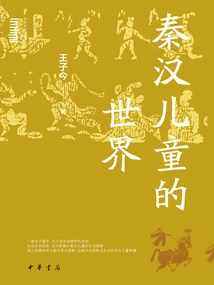
秦汉儿童的世界
Wang Zijin
This book shows readers the full picture of children's life in Qin and Han Dynasties through fourteen different but interrelated topics. The first four topics, from children's birth, birth to survival, to infant play and childhood education, use the chronology of children's growth as internal clues to outline the initial life scenes of children in the Qin and Han Dynasties; the last ten topics are divided into two parts, one is the relationship between children and the politics, economy, cultural beliefs and society of the Qin and Han Dynasties; the other is related discussions on special categories of children, such as "prodigies" and "upper-class children". The author has been deeply involved in the field of children's research for more than 20 years. With the comprehensive use of handed down documents, unearthed documents and cultural relics and archaeological materials, he deeply excavated the records of children's life in them and conducted a multi-angle and three-dimensional study on all aspects of children's life in Qin and Han Dynasties. This is a masterpiece.
This book shows readers the full picture of children's life in Qin and Han Dynasties through fourteen different but interrelated topics. The first four topics, from children's birth, birth to survival, to infant play and childhood education, use the chronology of children's growth as internal clues to outline the initial life scenes of children in the Qin and Han Dynasties; the last ten topics are divided into two parts, one is the relationship between children and the politics, economy, cultural beliefs and society of the Qin and Han Dynasties; the other is related discussions on special categories of children, such as "prodigies" and "upper-class children". The author has been deeply involved in the field of children's research for more than 20 years. With the comprehensive use of handed down documents, unearthed documents and cultural relics and archaeological materials, he deeply excavated the records of children's life in them and conducted a multi-angle and three-dimensional study on all aspects of children's life in Qin and Han Dynasties. This is a masterpiece.
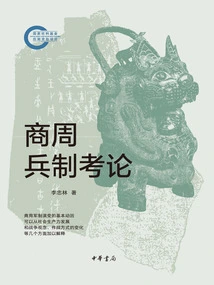
商周兵制考论
Li Zhonglin
This book systematically examines the military system of the Shang and Zhou dynasties. The Shang Dynasty focuses on the archaeological Yin Xu period, and mainly discusses the basic armed forces of the Shang Dynasty, Fang's army, combat arms, weapons and equipment, the leadership system of the dynasty's military forces, as well as military training, rewards and punishments, etc. The Western Zhou Dynasty mainly focused on issues such as the military service system under the separate system of state and field, the transformation of the military organization from "division" to "army", and the central government's control of local military forces. The Spring and Autumn Period mainly discussed issues such as the change in the concept of war and the increase in military power of the princes, the shift from the prevalence of chariot warfare to the rise of infantry, and the reform of the military tax system. During the Warring States Period, issues such as the rapid growth of the military strength of various countries, the improvement of weapons, the increase of arms, the improvement of the military attaché system, the selection and training of soldiers, and the combination of combat formations were mainly discussed. The author points out that there are generally three trends in the changes in the Shang and Zhou military systems: the transition from a temporary collection system to a standing army; the continuous expansion of the army and the increase in types of arms; the long-term existence and eventual demise of ethnic armed forces. The basic motivations for the evolution of the Shang and Zhou military systems can be explained from several aspects such as the development of social productive forces and changes in war concepts and combat methods. The completion of the manuscript will be beneficial to the study of the pre-Qin military system and can play a certain supplementary role in the study of ancient Chinese military history.
This book systematically examines the military system of the Shang and Zhou dynasties. The Shang Dynasty focuses on the archaeological Yin Xu period, and mainly discusses the basic armed forces of the Shang Dynasty, Fang's army, combat arms, weapons and equipment, the leadership system of the dynasty's military forces, as well as military training, rewards and punishments, etc. The Western Zhou Dynasty mainly focused on issues such as the military service system under the separate system of state and field, the transformation of the military organization from "division" to "army", and the central government's control of local military forces. The Spring and Autumn Period mainly discussed issues such as the change in the concept of war and the increase in military power of the princes, the shift from the prevalence of chariot warfare to the rise of infantry, and the reform of the military tax system. During the Warring States Period, issues such as the rapid growth of the military strength of various countries, the improvement of weapons, the increase of arms, the improvement of the military attaché system, the selection and training of soldiers, and the combination of combat formations were mainly discussed. The author points out that there are generally three trends in the changes in the Shang and Zhou military systems: the transition from a temporary collection system to a standing army; the continuous expansion of the army and the increase in types of arms; the long-term existence and eventual demise of ethnic armed forces. The basic motivations for the evolution of the Shang and Zhou military systems can be explained from several aspects such as the development of social productive forces and changes in war concepts and combat methods. The completion of the manuscript will be beneficial to the study of the pre-Qin military system and can play a certain supplementary role in the study of ancient Chinese military history.
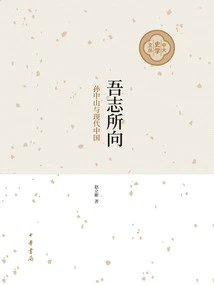
吾志所向:孙中山与现代中国
Zhao Libin
"My Ambition: Sun Yat-sen and Modern China" is one of the "Sun Yat-sen University Historiography Series", which publishes monographs and the latest research results of well-known scholars in the field of historical research at Sun Yat-sen University. This book is compiled from the author's recent research results on Sun Yat-sen, and is divided into six topics: "image" and "state of the world" in the context of the Republic, "difficulties" and "trivial matters" of the interim president, "politics" and "society" in construction considerations, "Father of the Nation" and "ism" in Taiwan's recovery, new forces and new paths in modern China, and historical materials and historiography of Sun Yat-sen's research in the new century. This book focuses on Sun Yat-sen's ideals, practices and influence on modern China, examines topics that are relatively weak in academic research, and objectively reviews Sun Yat-sen's efforts, contributions and practical significance to China's transformation into a modern country. It attempts to promote new progress in the study of Sun Yat-sen based on the excavation of new historical materials and in-depth interpretation of old historical materials.
"My Ambition: Sun Yat-sen and Modern China" is one of the "Sun Yat-sen University Historiography Series", which publishes monographs and the latest research results of well-known scholars in the field of historical research at Sun Yat-sen University. This book is compiled from the author's recent research results on Sun Yat-sen, and is divided into six topics: "image" and "state of the world" in the context of the Republic, "difficulties" and "trivial matters" of the interim president, "politics" and "society" in construction considerations, "Father of the Nation" and "ism" in Taiwan's recovery, new forces and new paths in modern China, and historical materials and historiography of Sun Yat-sen's research in the new century. This book focuses on Sun Yat-sen's ideals, practices and influence on modern China, examines topics that are relatively weak in academic research, and objectively reviews Sun Yat-sen's efforts, contributions and practical significance to China's transformation into a modern country. It attempts to promote new progress in the study of Sun Yat-sen based on the excavation of new historical materials and in-depth interpretation of old historical materials.
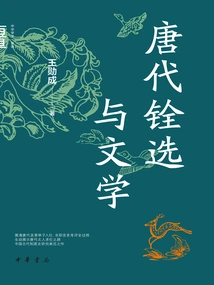
唐代铨选与文学
Wang Xuncheng
In the Tang Dynasty, whether you were promoted to a son or appointed an official, you must abide by certain election rules. After the election period, you must pass the civil examination before you can be appointed an official. This was the selection system of official selection in the Tang Dynasty. This book comprehensively discusses this complex and cumbersome official selection system and its related issues. It analyzes in detail how scholars in the Tang Dynasty entered the official career through civil service examinations, and how serving officials carried out the selection process. It vividly shows the living conditions and psychological processes of scholars in the Tang Dynasty during their pursuit of official positions. It also examines the relationship between selection and literature from the perspective of the entire electoral system of the Tang Dynasty. It fills the gaps in the academic circle and is a model work that combines history and literary research.
In the Tang Dynasty, whether you were promoted to a son or appointed an official, you must abide by certain election rules. After the election period, you must pass the civil examination before you can be appointed an official. This was the selection system of official selection in the Tang Dynasty. This book comprehensively discusses this complex and cumbersome official selection system and its related issues. It analyzes in detail how scholars in the Tang Dynasty entered the official career through civil service examinations, and how serving officials carried out the selection process. It vividly shows the living conditions and psychological processes of scholars in the Tang Dynasty during their pursuit of official positions. It also examines the relationship between selection and literature from the perspective of the entire electoral system of the Tang Dynasty. It fills the gaps in the academic circle and is a model work that combines history and literary research.
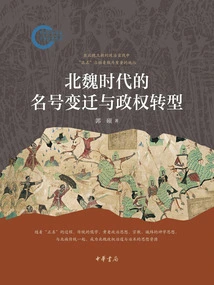
北魏时代的名号变迁与政权转型
Guo Shuo
This book focuses on the use and feedback of the political symbol of names in the Northern Wei Dynasty, discusses many unique names in the Northern Wei Dynasty, and deeply explores the historical information and political culture behind the names. These names mainly include names representing different systems such as Daiwang, Shanyu, and Khan in the Dai Kingdom; mysterious names such as Taoism and Chenwei in the early Northern Wei Dynasty; richly decorated names in the era of Emperor Xiaowen; special names used by relatives, heroines, and powerful ministers in the Northern Wei Dynasty; and various names used in the interaction between the North and the South. The author makes extensive use of various historical materials to conduct an in-depth examination of historical events and clarifies many important issues that have been debated for a long time in the academic community. The manuscript's analysis and study of the political and social context involved in names constructs a research approach that reveals the transformation of the country in the Northern Dynasties, and provides the possibility to expand the research space of medieval history.
This book focuses on the use and feedback of the political symbol of names in the Northern Wei Dynasty, discusses many unique names in the Northern Wei Dynasty, and deeply explores the historical information and political culture behind the names. These names mainly include names representing different systems such as Daiwang, Shanyu, and Khan in the Dai Kingdom; mysterious names such as Taoism and Chenwei in the early Northern Wei Dynasty; richly decorated names in the era of Emperor Xiaowen; special names used by relatives, heroines, and powerful ministers in the Northern Wei Dynasty; and various names used in the interaction between the North and the South. The author makes extensive use of various historical materials to conduct an in-depth examination of historical events and clarifies many important issues that have been debated for a long time in the academic community. The manuscript's analysis and study of the political and social context involved in names constructs a research approach that reveals the transformation of the country in the Northern Dynasties, and provides the possibility to expand the research space of medieval history.
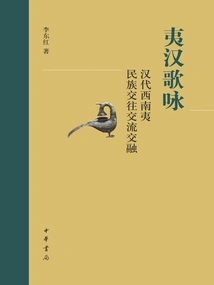
夷汉歌咏:汉代西南夷民族交往交流交融
Li Donghong
During the Qin and Han Dynasties, the vast area "west and south of Bashu" and the many ethnic groups living in this area were called "Southwestern Yi". The two Han Dynasties' exploration and governance of the southwestern barbarians laid the foundation for the political stability, multi-ethnic intermingling, and cultural prosperity of China's southwestern frontiers for more than 2,000 years. A large number of material cultural relics, relics and ruins of the Han Dynasty have been preserved in the Southwest Yi hometown. Through the material cultural relics and reviewing their social and cultural significance, we can see the positive impact of Han Dynasty governance, transportation, immigration, Han culture, and mainland customs on the social development of southwestern Yi. Through archaeological discoveries, documentary records and ethnographic materials, this book aims to present the historical process of ethnic exchanges, exchanges and integration in Southwest Yi society in the Han Dynasty from multiple dimensions, reveal the true picture of the social and cultural changes and transformation of Southwest Yi, clarify the role and contribution of Southwest Yi in the formation and development of the unified national system in the Han Dynasty, and understand the inherent historical logic of the formation and development of China's unified multi-ethnic country.
During the Qin and Han Dynasties, the vast area "west and south of Bashu" and the many ethnic groups living in this area were called "Southwestern Yi". The two Han Dynasties' exploration and governance of the southwestern barbarians laid the foundation for the political stability, multi-ethnic intermingling, and cultural prosperity of China's southwestern frontiers for more than 2,000 years. A large number of material cultural relics, relics and ruins of the Han Dynasty have been preserved in the Southwest Yi hometown. Through the material cultural relics and reviewing their social and cultural significance, we can see the positive impact of Han Dynasty governance, transportation, immigration, Han culture, and mainland customs on the social development of southwestern Yi. Through archaeological discoveries, documentary records and ethnographic materials, this book aims to present the historical process of ethnic exchanges, exchanges and integration in Southwest Yi society in the Han Dynasty from multiple dimensions, reveal the true picture of the social and cultural changes and transformation of Southwest Yi, clarify the role and contribution of Southwest Yi in the formation and development of the unified national system in the Han Dynasty, and understand the inherent historical logic of the formation and development of China's unified multi-ethnic country.
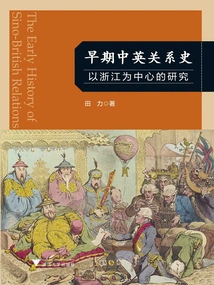
早期中英关系史:以浙江为中心的研究
Tian Li
This book studies the historical relationship between Zhejiang and Britain, starting from the middle of the Qing Dynasty to the opening of Ningbo in 1844. The main content of the book is as follows: Chapter 1, studies the British trade activities along the Zhejiang coast during the Yongzheng and Qianlong periods of the Qing Dynasty; Chapter 2, studies the exploration and impact of the Macartney Mission and the Lord Amherst spy ship on the Zhejiang coast during the late Qianlong and Daoguang years; Chapter 3, studies the British aggressive activities along the Zhejiang coast and the heroic resistance of the Zhejiang people during the Opium War; Chapter 4, mainly discusses the British strategic goals from Zhoushan to Hong Kong during the Opium War The replacement of the port explores the image and status of Zhejiang in the eyes of the British by analyzing the transformation process of British strategic goals; Chapter 5 studies the peace negotiations between China and Britain in Zhejiang, the process of Zhejiang's return from wartime to peace after the signing of the "Jiangning Treaty", and the resolution of issues left over from the war such as the release of prisoners and traitors; Chapter 6 studies the entire process of the opening of Ningbo, Zhejiang, as one of the "five ports for trade" cities, and the impact of the opening; Chapter 7 is the conclusion.
This book studies the historical relationship between Zhejiang and Britain, starting from the middle of the Qing Dynasty to the opening of Ningbo in 1844. The main content of the book is as follows: Chapter 1, studies the British trade activities along the Zhejiang coast during the Yongzheng and Qianlong periods of the Qing Dynasty; Chapter 2, studies the exploration and impact of the Macartney Mission and the Lord Amherst spy ship on the Zhejiang coast during the late Qianlong and Daoguang years; Chapter 3, studies the British aggressive activities along the Zhejiang coast and the heroic resistance of the Zhejiang people during the Opium War; Chapter 4, mainly discusses the British strategic goals from Zhoushan to Hong Kong during the Opium War The replacement of the port explores the image and status of Zhejiang in the eyes of the British by analyzing the transformation process of British strategic goals; Chapter 5 studies the peace negotiations between China and Britain in Zhejiang, the process of Zhejiang's return from wartime to peace after the signing of the "Jiangning Treaty", and the resolution of issues left over from the war such as the release of prisoners and traitors; Chapter 6 studies the entire process of the opening of Ningbo, Zhejiang, as one of the "five ports for trade" cities, and the impact of the opening; Chapter 7 is the conclusion.
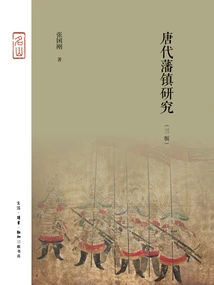
唐代藩镇研究(第3版)
Zhang Guogang
The separatist regime of vassal towns was a chronic disease that plagued the Tang court for more than a century after the middle and late Tang Dynasty, but the separatist regime of vassal towns is not the entire content of the study of vassal towns. This book covers the formation of feudal towns and the conditions for their existence, the types of feudal towns and the characteristics of unrest, and the political and financial interaction between feudal towns and the central government. It basically outlines the true appearance of feudal towns in the Tang Dynasty, and supplements and clarifies issues that have been ignored or vaguely understood by the academic community in the past. It is a representative work on the study of feudal towns in the Tang Dynasty with exemplary significance.
The separatist regime of vassal towns was a chronic disease that plagued the Tang court for more than a century after the middle and late Tang Dynasty, but the separatist regime of vassal towns is not the entire content of the study of vassal towns. This book covers the formation of feudal towns and the conditions for their existence, the types of feudal towns and the characteristics of unrest, and the political and financial interaction between feudal towns and the central government. It basically outlines the true appearance of feudal towns in the Tang Dynasty, and supplements and clarifies issues that have been ignored or vaguely understood by the academic community in the past. It is a representative work on the study of feudal towns in the Tang Dynasty with exemplary significance.
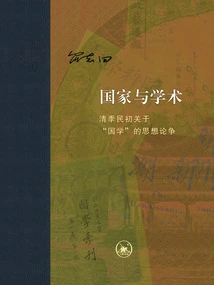
国家与学术:清季民初关于“国学”的思想论争
Luo Zhitian
The turn of the 19th to 20th centuries was an era of decline of old learning and disputes over new learning; under the impact of Western learning, concepts such as "national quintessence" and "national studies" emerged. This book focuses on "Chinese Studies" and uses it as a "starting point" to analyze the contemporary theme of "country and academics" - what is Chinese Studies? Does Chinese traditional culture hinder China from "going global"? How does Chinese studies itself "go global"? After a series of questioning, the author unfolds in front of us a series of ideological debates that are full of differences and confusion, far beyond the scope of academics, and have relatively wide participation in society. This book generally covers the two major movements of preserving national essence in the late Qing Dynasty and reorganizing national heritage in the Republic of China. It discusses the fundamental issues facing the ideological and cultural level of this era, and also expresses the common expectation of many Chinese scholars in the early 20th century, that is, the overall "rejuvenation" of China.
The turn of the 19th to 20th centuries was an era of decline of old learning and disputes over new learning; under the impact of Western learning, concepts such as "national quintessence" and "national studies" emerged. This book focuses on "Chinese Studies" and uses it as a "starting point" to analyze the contemporary theme of "country and academics" - what is Chinese Studies? Does Chinese traditional culture hinder China from "going global"? How does Chinese studies itself "go global"? After a series of questioning, the author unfolds in front of us a series of ideological debates that are full of differences and confusion, far beyond the scope of academics, and have relatively wide participation in society. This book generally covers the two major movements of preserving national essence in the late Qing Dynasty and reorganizing national heritage in the Republic of China. It discusses the fundamental issues facing the ideological and cultural level of this era, and also expresses the common expectation of many Chinese scholars in the early 20th century, that is, the overall "rejuvenation" of China.
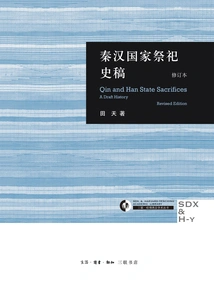
秦汉国家祭祀史稿(修订本)
Tian Tian
"The major affairs of the country lie in sacrifice and military affairs." Sacrifice was an important political system and cultural form of the ancients. National sacrifice is not only an important perspective for understanding ancient Chinese history and religious traditions, but is also closely related to the changes in political power and ideological and cultural changes. This book conducts a comprehensive study of state sacrifices during the Qin and Han dynasties, and outlines the evolution of the "formative period" of the unified dynasty's national sacrifice paradigm. In the early Qin Dynasty, the first emperor of the Qin Dynasty integrated the traditions of the Warring States Period and created a unified dynasty and national sacrificial framework. The Han Dynasty inherited the Qin system, and was reformed and restructured many times by Emperor Wen, Emperor Wu, and Emperor Xuan. The Western Han Dynasty established the "Han system" through sacrifices. Wang Mang created the "Yuan Shi Yi", which changed the scattered and widespread form of the original national sacrificial temples and emphasized the unique sacredness of the southern suburbs, thereby unifying the country's administrative center and sacrificial center, thus starting the "southern suburb sacrificial era" in China for more than two thousand years. The author provides detailed evidence and research on the specific systems of state sacrifices in each stage of the Qin and Han Dynasties, such as the location of temples, objects of sacrifice, and methods of sacrifice. His research focuses on the geographical characteristics of sacrificial activities and interprets the spatial meaning of national sacrificial rituals. At the same time, it combines factors such as central and local power relations, political geography, and the development of Confucian thought to present the inextricable connections between the transformation of national sacrificial rituals and the historical process of China's "Great Unification."
"The major affairs of the country lie in sacrifice and military affairs." Sacrifice was an important political system and cultural form of the ancients. National sacrifice is not only an important perspective for understanding ancient Chinese history and religious traditions, but is also closely related to the changes in political power and ideological and cultural changes. This book conducts a comprehensive study of state sacrifices during the Qin and Han dynasties, and outlines the evolution of the "formative period" of the unified dynasty's national sacrifice paradigm. In the early Qin Dynasty, the first emperor of the Qin Dynasty integrated the traditions of the Warring States Period and created a unified dynasty and national sacrificial framework. The Han Dynasty inherited the Qin system, and was reformed and restructured many times by Emperor Wen, Emperor Wu, and Emperor Xuan. The Western Han Dynasty established the "Han system" through sacrifices. Wang Mang created the "Yuan Shi Yi", which changed the scattered and widespread form of the original national sacrificial temples and emphasized the unique sacredness of the southern suburbs, thereby unifying the country's administrative center and sacrificial center, thus starting the "southern suburb sacrificial era" in China for more than two thousand years. The author provides detailed evidence and research on the specific systems of state sacrifices in each stage of the Qin and Han Dynasties, such as the location of temples, objects of sacrifice, and methods of sacrifice. His research focuses on the geographical characteristics of sacrificial activities and interprets the spatial meaning of national sacrificial rituals. At the same time, it combines factors such as central and local power relations, political geography, and the development of Confucian thought to present the inextricable connections between the transformation of national sacrificial rituals and the historical process of China's "Great Unification."
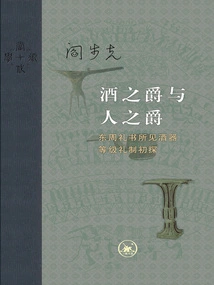
酒之爵与人之爵:东周礼书所见酒器等级礼制初探
Yan Buke
This collection of essays contains 8 articles by the author, with a very concentrated theme, all of which revolve around the hierarchy of wine vessels in the pre-Qin ritual books. The topic of "Wine Vessel Hierarchy and Etiquette" has been almost ignored before. The author discovered a rich mine here. After careful examination, he clarified some old doubts and unearthed some previously unknown historical facts. For example, it sorted out the changes in the concept of "jue", revealed that "Five Jue" was a set of "capacity device names", and made the hierarchical structure of the ceremonial jue known to the public. In addition to providing new knowledge of literature and history through specific research, this study also has theoretical significance. In the traditional era, "Jue" is the oldest and most continuous taste, which is used to confer and maintain dignity. At the same time, "Jue" is also the name of a drinking vessel. "Zun" is the most important status word in ancient times, and "Zun" is also the name of a drinking vessel. The words "Jue" and "Zun" already exist in the oracle bone inscriptions of the Yin Shang Dynasty. At the same time, among the bronze ritual vessels of the Yin Shang Dynasty, wine vessels actually accounted for 70%-80%. Although the proportion of food vessels in Zhou Dynasty bronzes has greatly increased, the offering and drinking of wine still constitute the core etiquette in major ceremonies such as sacrifices, banquets, and shooting marquises. This situation was recorded in the Rites of the Eastern Zhou Dynasty. It is not difficult to deduce that wine vessels must have occupied a special position in the pre-Qin hierarchical etiquette system, which actually made the names of wine vessels such as jue and zun become terms for people's hierarchical status. In the books of rites, which embody the essence of pre-Qin rites and music and serve as cultural classics of all dynasties, we can see that people of all colors and ranks use wine vessels with different names in different aspects of different ceremonies, and this is the research object of this book. The rank of wine nobility (and wine nobility) is used to maintain the dignity of people, so this collection of essays is titled "The Nobility of Wine and the Nobility of People".
This collection of essays contains 8 articles by the author, with a very concentrated theme, all of which revolve around the hierarchy of wine vessels in the pre-Qin ritual books. The topic of "Wine Vessel Hierarchy and Etiquette" has been almost ignored before. The author discovered a rich mine here. After careful examination, he clarified some old doubts and unearthed some previously unknown historical facts. For example, it sorted out the changes in the concept of "jue", revealed that "Five Jue" was a set of "capacity device names", and made the hierarchical structure of the ceremonial jue known to the public. In addition to providing new knowledge of literature and history through specific research, this study also has theoretical significance. In the traditional era, "Jue" is the oldest and most continuous taste, which is used to confer and maintain dignity. At the same time, "Jue" is also the name of a drinking vessel. "Zun" is the most important status word in ancient times, and "Zun" is also the name of a drinking vessel. The words "Jue" and "Zun" already exist in the oracle bone inscriptions of the Yin Shang Dynasty. At the same time, among the bronze ritual vessels of the Yin Shang Dynasty, wine vessels actually accounted for 70%-80%. Although the proportion of food vessels in Zhou Dynasty bronzes has greatly increased, the offering and drinking of wine still constitute the core etiquette in major ceremonies such as sacrifices, banquets, and shooting marquises. This situation was recorded in the Rites of the Eastern Zhou Dynasty. It is not difficult to deduce that wine vessels must have occupied a special position in the pre-Qin hierarchical etiquette system, which actually made the names of wine vessels such as jue and zun become terms for people's hierarchical status. In the books of rites, which embody the essence of pre-Qin rites and music and serve as cultural classics of all dynasties, we can see that people of all colors and ranks use wine vessels with different names in different aspects of different ceremonies, and this is the research object of this book. The rank of wine nobility (and wine nobility) is used to maintain the dignity of people, so this collection of essays is titled "The Nobility of Wine and the Nobility of People".
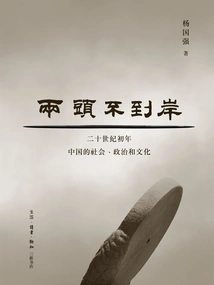
两头不到岸:二十世纪初年中国的社会、政治和文化
Yang Guoqiang
The latest masterpiece of modern historian Professor Yang Guoqiang. With his meaningful writing style, he leads readers into the historical scenes of the early 20th century, recreating the thoughts, politics, and society of the transitional era from the late Qing Dynasty to the early Republic of China: China has been fragmented through layers of decomposition over thousands of years of history; the New Law and the Western Law, which people have adapted to the times and have each expanded, have failed miserably in real China. During this period, major issues such as the suspension of the imperial examinations, the constitutional reform, the Revolution of 1911, and the New Culture Movement appeared one after another, creating a "quick modernization" on an unprecedented scale. Through the contradictions, complexity, changes in characters and chaos of world affairs in this period of history, the author explores the origin, connotation and consequences of this radical change, which has unprecedented intensity and depth, causing rupture, disconnection, destruction and even disintegration.
The latest masterpiece of modern historian Professor Yang Guoqiang. With his meaningful writing style, he leads readers into the historical scenes of the early 20th century, recreating the thoughts, politics, and society of the transitional era from the late Qing Dynasty to the early Republic of China: China has been fragmented through layers of decomposition over thousands of years of history; the New Law and the Western Law, which people have adapted to the times and have each expanded, have failed miserably in real China. During this period, major issues such as the suspension of the imperial examinations, the constitutional reform, the Revolution of 1911, and the New Culture Movement appeared one after another, creating a "quick modernization" on an unprecedented scale. Through the contradictions, complexity, changes in characters and chaos of world affairs in this period of history, the author explores the origin, connotation and consequences of this radical change, which has unprecedented intensity and depth, causing rupture, disconnection, destruction and even disintegration.
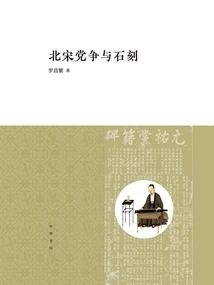
北宋党争与石刻
Luo Changfan
In the study of literature and history of the Song Dynasty, the theme of party struggle has attracted much attention. Most of the research results on party strife in the Northern Song Dynasty use handed down historical works and handed down poems and essays as reference materials, and less use of stone carvings documents. Against the background of the party struggle, this book conducts a process-oriented and all-round comprehensive study on the generation, dissemination, and influence of stone carving documents from multiple disciplines and perspectives. In this way, we examine the stone inscriptions and strive to broaden and deepen the research on stone inscriptions and party struggle. At the same time, we can look back at the party struggles in the middle and late Northern Song Dynasty to gain a more comprehensive understanding of this political activity that affected the politics, economy, culture and other aspects of the Northern Song Dynasty.
In the study of literature and history of the Song Dynasty, the theme of party struggle has attracted much attention. Most of the research results on party strife in the Northern Song Dynasty use handed down historical works and handed down poems and essays as reference materials, and less use of stone carvings documents. Against the background of the party struggle, this book conducts a process-oriented and all-round comprehensive study on the generation, dissemination, and influence of stone carving documents from multiple disciplines and perspectives. In this way, we examine the stone inscriptions and strive to broaden and deepen the research on stone inscriptions and party struggle. At the same time, we can look back at the party struggles in the middle and late Northern Song Dynasty to gain a more comprehensive understanding of this political activity that affected the politics, economy, culture and other aspects of the Northern Song Dynasty.
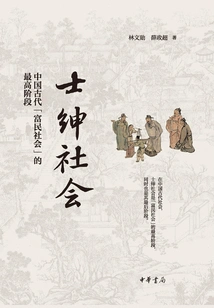
士绅社会:中国古代“富民社会”的最高阶段
Lin Wenxun Xue Zhengchao
The manuscript takes the gentry in the Ming and Qing Dynasties as the research object. By sorting out the formation of the gentry class, the essential characteristics of the gentry society, and the decline of the gentry class, it points out that the gentry is the result of the rise and continuous development of the wealthy class. The possessors of wealth acquire gentry power by expanding their knowledge, and under the protection of gentry power. However, the over-expansion of gentry power caused an imbalance in the social structure of officials, gentry and the people. Coupled with the impact of the establishment of regiment training and the abolition of imperial examinations, the gentry society eventually died out. From a historical perspective, this proves the view that the gentry society is the highest stage of the wealthy society in ancient China.
The manuscript takes the gentry in the Ming and Qing Dynasties as the research object. By sorting out the formation of the gentry class, the essential characteristics of the gentry society, and the decline of the gentry class, it points out that the gentry is the result of the rise and continuous development of the wealthy class. The possessors of wealth acquire gentry power by expanding their knowledge, and under the protection of gentry power. However, the over-expansion of gentry power caused an imbalance in the social structure of officials, gentry and the people. Coupled with the impact of the establishment of regiment training and the abolition of imperial examinations, the gentry society eventually died out. From a historical perspective, this proves the view that the gentry society is the highest stage of the wealthy society in ancient China.
金代封爵制度研究
Sun Hongmei
The title system of the Jin Dynasty not only inherited the system of the Tang and Song Dynasties, but also partially inherited the title system of the Liao Dynasty, while also developing and innovating. The manuscript details the establishment and development process of the nobility system in the Jin Dynasty, clarifies the origin and evolution of the system, carefully examines the levels of nobility in the Han system in the Jin Dynasty, accurately divides the types of royal titles, royal titles, and in-depth examination of the evolution of national titles, royal titles, and county titles, and comprehensively sorts out the order and title of the fifth-class nobility in the Jin Dynasty. On this basis, we excavate and analyze the specific links and processes of the operation of the feudal system, analyze its operation mode and related management measures, clarify the relationship between the feudal system and other political systems, interpret its status and role in bureaucratic politics and political power construction, and analyze its pros and cons in the operation of social order.
The title system of the Jin Dynasty not only inherited the system of the Tang and Song Dynasties, but also partially inherited the title system of the Liao Dynasty, while also developing and innovating. The manuscript details the establishment and development process of the nobility system in the Jin Dynasty, clarifies the origin and evolution of the system, carefully examines the levels of nobility in the Han system in the Jin Dynasty, accurately divides the types of royal titles, royal titles, and in-depth examination of the evolution of national titles, royal titles, and county titles, and comprehensively sorts out the order and title of the fifth-class nobility in the Jin Dynasty. On this basis, we excavate and analyze the specific links and processes of the operation of the feudal system, analyze its operation mode and related management measures, clarify the relationship between the feudal system and other political systems, interpret its status and role in bureaucratic politics and political power construction, and analyze its pros and cons in the operation of social order.
清代捐纳与国家治理
Wu Siwu
This book takes political ecology and institutional practice as the path, focusing on the complex relationship between donations and national governance in the Qing Dynasty. It deeply describes the ever-changing and turbulent scenes of donations as the court's purse, a new ladder for the promotion of gentry, and a new arena for confrontation between Manchu and Han forces in a specific political situation. Then it outlines the evolution and internal logic of the "invisible confrontation" between the Manchu and Han sides in new fields such as donations and imperial examinations, explores the internal rationale and deep mechanism of the Manchu-Han confrontation that eventually led to "institutional dissolution" in the Qing Dynasty, and summarizes the multiple experiences of technology, system and culture in national governance in the Qing Dynasty.
This book takes political ecology and institutional practice as the path, focusing on the complex relationship between donations and national governance in the Qing Dynasty. It deeply describes the ever-changing and turbulent scenes of donations as the court's purse, a new ladder for the promotion of gentry, and a new arena for confrontation between Manchu and Han forces in a specific political situation. Then it outlines the evolution and internal logic of the "invisible confrontation" between the Manchu and Han sides in new fields such as donations and imperial examinations, explores the internal rationale and deep mechanism of the Manchu-Han confrontation that eventually led to "institutional dissolution" in the Qing Dynasty, and summarizes the multiple experiences of technology, system and culture in national governance in the Qing Dynasty.
唐宋历史评论(第一辑)
Bao Weimin Editor-in-chief Liu Houbin
"Tang and Song History Review" is a professional historical journal sponsored by the School of History of Renmin University of China, focusing on the study of Tang and Song history. It features special research and commentary on the history of the Tang and Song Dynasties. It mainly publishes problem-oriented research papers on the history of the Tang and Song Dynasties, as well as special reviews and book reviews with the purpose of sorting out the academic history of Tang and Song studies. Article categories include essays, book reviews, prefaces and postscripts, historical reading notes, etc.
"Tang and Song History Review" is a professional historical journal sponsored by the School of History of Renmin University of China, focusing on the study of Tang and Song history. It features special research and commentary on the history of the Tang and Song Dynasties. It mainly publishes problem-oriented research papers on the history of the Tang and Song Dynasties, as well as special reviews and book reviews with the purpose of sorting out the academic history of Tang and Song studies. Article categories include essays, book reviews, prefaces and postscripts, historical reading notes, etc.
国际史学研究论丛(第1辑)
Editor-in-chief Chen Qineng
The focus of this series of discussions is on the new development issues of contemporary history, which came into being in order to adapt to the development of the times and the rapid changes in international history. It provides new developments in all aspects of international historiography, research results on all continents, major countries, major fields, and related issues, as well as extensive and rich content such as interviews with famous historians, debates on difficult issues, and the release of first-hand historical materials.
The focus of this series of discussions is on the new development issues of contemporary history, which came into being in order to adapt to the development of the times and the rapid changes in international history. It provides new developments in all aspects of international historiography, research results on all continents, major countries, major fields, and related issues, as well as extensive and rich content such as interviews with famous historians, debates on difficult issues, and the release of first-hand historical materials.
漠南军府:清代绥远城驻防研究
Huang Zhiguo
Suiyuan City Garrison, as an important military garrison set up by the Qing Dynasty in the Monan Mongolian region, played an important role in the Qing Dynasty's subjugation of Mongolia and maintenance of its rule in the Mongolian region. Based on literature and existing research results, this book analyzes the origin, process, organizational structure, operating mechanism and functional evolution of the garrison in Suiyuan City, and strives to outline the historical development trajectory of Suiyuan City Garrison from multiple angles, in order to better understand the evolution of the Qing Dynasty's policy towards Mongolia.
Suiyuan City Garrison, as an important military garrison set up by the Qing Dynasty in the Monan Mongolian region, played an important role in the Qing Dynasty's subjugation of Mongolia and maintenance of its rule in the Mongolian region. Based on literature and existing research results, this book analyzes the origin, process, organizational structure, operating mechanism and functional evolution of the garrison in Suiyuan City, and strives to outline the historical development trajectory of Suiyuan City Garrison from multiple angles, in order to better understand the evolution of the Qing Dynasty's policy towards Mongolia.
清史论丛(2015年第2辑\u002F总第30辑)
Compiled By Qing History Research Office, Institute Of History, Chinese Academy Of Social Sciences
"Qing History Series" is sponsored by the Qing History Research Office of the Institute of History, Chinese Academy of Social Sciences. It is a collection of academic papers on Qing history research at home and abroad. It was founded in 1979. This collection has wide influence at home and abroad, and is highly valued by the academic community. Its important features are concentrated research, rigorous academic style, and grasp of academic frontiers. The articles included in the book include both research articles on the critical history of the Qing Dynasty and research articles on the academic history of the Qing Dynasty. It includes both erudite Hongci research on the traditional culture of the Qing Dynasty and articles on the exchange of local Chinese and Western cultures in the Qing Dynasty.
"Qing History Series" is sponsored by the Qing History Research Office of the Institute of History, Chinese Academy of Social Sciences. It is a collection of academic papers on Qing history research at home and abroad. It was founded in 1979. This collection has wide influence at home and abroad, and is highly valued by the academic community. Its important features are concentrated research, rigorous academic style, and grasp of academic frontiers. The articles included in the book include both research articles on the critical history of the Qing Dynasty and research articles on the academic history of the Qing Dynasty. It includes both erudite Hongci research on the traditional culture of the Qing Dynasty and articles on the exchange of local Chinese and Western cultures in the Qing Dynasty.
清代家族内的罪与刑
Wei Daoming
In the Qing Dynasty, for the vast majority of civilians, family and clan were almost the only place where they lived for a long time, and naturally became one of the main places where people interacted, conflicted and even committed crimes. The social structure of "family and country as one" makes the judiciary pay special attention to criminal behavior within the family, and uses punishment to regulate the hierarchical order and implement Confucian ethics. From the perspective of the Wufu system, this book selects dozens of cases about intra-family crimes from various compilations of numerous criminal cases. On this basis, it summarizes the adjudication standards and reasoning logic of the Qing Dynasty's judicial departments at all levels when it comes to such crimes, so as to explain the influence and control of the patriarchal hierarchical order on the law and highlight the ethical characteristics of ancient Chinese law.
In the Qing Dynasty, for the vast majority of civilians, family and clan were almost the only place where they lived for a long time, and naturally became one of the main places where people interacted, conflicted and even committed crimes. The social structure of "family and country as one" makes the judiciary pay special attention to criminal behavior within the family, and uses punishment to regulate the hierarchical order and implement Confucian ethics. From the perspective of the Wufu system, this book selects dozens of cases about intra-family crimes from various compilations of numerous criminal cases. On this basis, it summarizes the adjudication standards and reasoning logic of the Qing Dynasty's judicial departments at all levels when it comes to such crimes, so as to explain the influence and control of the patriarchal hierarchical order on the law and highlight the ethical characteristics of ancient Chinese law.
宗教与历史(第十二辑)
Editor-in-chief Tao Feiya
"Religion and History (Twelfth Series)" is planned by the famous Buddhist scholar Professor Cheng Gongrang. It focuses on the study of Buddhist history and culture and includes three columns: Buddhist Sinicization Research, Buddhist History and Culture Research, and Book Reviews. The articles included in this collection enrich and expand the Sinicization of Buddhism, an ancient issue in the study of Chinese religious history, from different angles. They also conduct in-depth exploration of the academic depth in the fields of Buddhist classics, Buddhist thought, and the development of Buddhist sects. They focus on current academic cutting-edge issues and methods and demonstrate the academic characteristics of contemporary Chinese Buddhist researchers.
"Religion and History (Twelfth Series)" is planned by the famous Buddhist scholar Professor Cheng Gongrang. It focuses on the study of Buddhist history and culture and includes three columns: Buddhist Sinicization Research, Buddhist History and Culture Research, and Book Reviews. The articles included in this collection enrich and expand the Sinicization of Buddhism, an ancient issue in the study of Chinese religious history, from different angles. They also conduct in-depth exploration of the academic depth in the fields of Buddhist classics, Buddhist thought, and the development of Buddhist sects. They focus on current academic cutting-edge issues and methods and demonstrate the academic characteristics of contemporary Chinese Buddhist researchers.
中西交汇中的近代中国都市和乡村
Editor-in-chief Zhao Xiaoyang Zhou Donghua Liu Zhongming
"The intersection of China and the West" is a state of Sino-foreign relations and a perspective from which to understand modern Chinese society; "modern cities and villages" includes all of modern Chinese society. Since modern China was a country with a semi-colonial and semi-feudal society, almost all its changes were inseparable from the influence of Western factors. This book is a collection of some papers from the international academic symposium "Modern China's Cities and Rural Areas at the Intersection of East and West" held in Hangzhou in October 2013. The included papers include content from multiple disciplines such as economic history, social history, and cultural history, and provide multi-faceted and in-depth discussions on modern Sino-foreign relations and the changes in modern Chinese society.
"The intersection of China and the West" is a state of Sino-foreign relations and a perspective from which to understand modern Chinese society; "modern cities and villages" includes all of modern Chinese society. Since modern China was a country with a semi-colonial and semi-feudal society, almost all its changes were inseparable from the influence of Western factors. This book is a collection of some papers from the international academic symposium "Modern China's Cities and Rural Areas at the Intersection of East and West" held in Hangzhou in October 2013. The included papers include content from multiple disciplines such as economic history, social history, and cultural history, and provide multi-faceted and in-depth discussions on modern Sino-foreign relations and the changes in modern Chinese society.
江南社会历史评论(第20期)
Editor-in-chief Tang Lixing
This issue of "Jiangnan Social History Review" contains about 20 papers. The "Written Talk" column brings together Li Bozhong, Zhao Shiyu, Tang Lixing, Zou Zhenhuan, Chen Baoliang and other key scholars who study Jiangnan history and social history, as well as cutting-edge scholars in the field of Jiangnan art history research such as Ye Kangning and Lien Mian. Their cross-border dialogue around Jiangnan social history and Jiangnan art history will bring new ideas and new inspirations to the academic world. Mr. Chen Baoliang, a master of Ming history, has always been known for his rich historical materials in his papers. This new work he collaborated with Liu Guomin deeply excavated the folk rumors and satirical poems in the Jiangnan area of the Ming Dynasty, and thus sheds light on the changes in the scholarly style of Jiangnan in the Ming Dynasty.
This issue of "Jiangnan Social History Review" contains about 20 papers. The "Written Talk" column brings together Li Bozhong, Zhao Shiyu, Tang Lixing, Zou Zhenhuan, Chen Baoliang and other key scholars who study Jiangnan history and social history, as well as cutting-edge scholars in the field of Jiangnan art history research such as Ye Kangning and Lien Mian. Their cross-border dialogue around Jiangnan social history and Jiangnan art history will bring new ideas and new inspirations to the academic world. Mr. Chen Baoliang, a master of Ming history, has always been known for his rich historical materials in his papers. This new work he collaborated with Liu Guomin deeply excavated the folk rumors and satirical poems in the Jiangnan area of the Ming Dynasty, and thus sheds light on the changes in the scholarly style of Jiangnan in the Ming Dynasty.
中古中国门阀大族的消亡
(us) Tan Kai
This is a classic about the social changes in medieval China. It relies on the statistics and research of massive epitaph data to re-outline another aspect of the collapse of the Tang Empire. It reveals that under the social, economic and institutional changes of the seventh and eighth centuries, the Tang Dynasty's powerful families were more successful than we previously thought. Only during the thirty years of great turmoil that followed Huang Chao's capture of Chang'an in 880 did their political influence collapse due to widespread physical extermination.
This is a classic about the social changes in medieval China. It relies on the statistics and research of massive epitaph data to re-outline another aspect of the collapse of the Tang Empire. It reveals that under the social, economic and institutional changes of the seventh and eighth centuries, the Tang Dynasty's powerful families were more successful than we previously thought. Only during the thirty years of great turmoil that followed Huang Chao's capture of Chang'an in 880 did their political influence collapse due to widespread physical extermination.
种瓜得豆:清末民初的阅读文化与接受政治
Zhang Zhongmin
This book focuses on the construction of reading cultures in China at the end of the Qing Dynasty and the beginning of the Republic of China and the related issues of "reception politics", as well as the issue of how new knowledge from Europe, America and Japan is reproduced in China, such as enlightenment, new sexual ethics and reproductive concepts, some of which are different from those in the West. How were the key concepts closely related to modernity, such as Hegel, Gutenberg, and Esperanto, concretized, localized, and even symbolized in the introduction by the mass media and intellectual elites who "replaced the old and sought the new"?
This book focuses on the construction of reading cultures in China at the end of the Qing Dynasty and the beginning of the Republic of China and the related issues of "reception politics", as well as the issue of how new knowledge from Europe, America and Japan is reproduced in China, such as enlightenment, new sexual ethics and reproductive concepts, some of which are different from those in the West. How were the key concepts closely related to modernity, such as Hegel, Gutenberg, and Esperanto, concretized, localized, and even symbolized in the introduction by the mass media and intellectual elites who "replaced the old and sought the new"?
中国近代慈善义演文献及其研究
Compiled By Guo Changying
This book is mainly divided into two parts: "Research" and "Documentation". The "Research Collection" includes papers written by scholars such as Guo Changying, which conducts in-depth discussions on the interactive relationship between charity performances and the media in the late Qing Dynasty and the Republic of China, as well as the form of charity performances, performance content, fundraising methods, relief objects, donation management, etc.; The "Literature Collection" mainly focuses on newspapers such as Tianjin's "Ta Kung Pao", "Peking University Journal" and "Yi Shi Bao", and extensively collects and organizes various types of information related to charity performances, as well as stills and other pictures of charity performances.
This book is mainly divided into two parts: "Research" and "Documentation". The "Research Collection" includes papers written by scholars such as Guo Changying, which conducts in-depth discussions on the interactive relationship between charity performances and the media in the late Qing Dynasty and the Republic of China, as well as the form of charity performances, performance content, fundraising methods, relief objects, donation management, etc.; The "Literature Collection" mainly focuses on newspapers such as Tianjin's "Ta Kung Pao", "Peking University Journal" and "Yi Shi Bao", and extensively collects and organizes various types of information related to charity performances, as well as stills and other pictures of charity performances.
江南社会历史评论(第21期)
Editor-in-chief Tang Lixing
It contains more than 20 papers by scholars at home and abroad on Jiangnan society. Among them, the paper by Professor Wang Zhenzhong of Fudan University further deepened the research on Huizhou merchants that he has been engaged in for many years by examining the activities of Huizhou merchants in Longyou, Zhejiang during the Qing Dynasty; the papers by Jiang Zhaoqiang and Ding Xiuzhen of Anhui Normal University restored the life world of a late Ming scholar by exploring the home life, writing experience and travel itinerary of Suzhou dramatist Zhang Dafu; In the most important years in the history of modern times, the game between Chinese and foreign parties in the important city of Shanghai; researcher Ye Zhou of the Shanghai Academy of Social Sciences explored the transformation of family education in modern Jiangnan through research on the different attitudes of some local aristocratic families in Jiangsu towards new education in the late Qing Dynasty; the papers by Professor Zhong Chong and Zhang Hanwen of the Normal University preliminarily sorted out the basic situation such as the type, distribution and evolution of Taoist temples in the old city of Shanghai. The papers in this issue cover Jiangnan social history, Jiangnan economic history, Jiangnan cultural history, Jiangnan urban history, etc., Showing the rich and colorful picture of Jiangnan society from many aspects.
It contains more than 20 papers by scholars at home and abroad on Jiangnan society. Among them, the paper by Professor Wang Zhenzhong of Fudan University further deepened the research on Huizhou merchants that he has been engaged in for many years by examining the activities of Huizhou merchants in Longyou, Zhejiang during the Qing Dynasty; the papers by Jiang Zhaoqiang and Ding Xiuzhen of Anhui Normal University restored the life world of a late Ming scholar by exploring the home life, writing experience and travel itinerary of Suzhou dramatist Zhang Dafu; In the most important years in the history of modern times, the game between Chinese and foreign parties in the important city of Shanghai; researcher Ye Zhou of the Shanghai Academy of Social Sciences explored the transformation of family education in modern Jiangnan through research on the different attitudes of some local aristocratic families in Jiangsu towards new education in the late Qing Dynasty; the papers by Professor Zhong Chong and Zhang Hanwen of the Normal University preliminarily sorted out the basic situation such as the type, distribution and evolution of Taoist temples in the old city of Shanghai. The papers in this issue cover Jiangnan social history, Jiangnan economic history, Jiangnan cultural history, Jiangnan urban history, etc., Showing the rich and colorful picture of Jiangnan society from many aspects.
历史人物评说导论
Song Dehua
The purpose of this book is to combine it with the elective course "Comments on Chinese and Foreign Historical Figures" offered in middle schools to compile a university textbook that will help train teachers. Specifically, it is to study how to comment on historical figures in order to systematically and comprehensively understand and understand historical figures, so as to study history more deeply and understand history more deeply. The author adheres to the correct perspective of historical materialism and constructs an evaluation system for historical figures from various aspects such as the creation and restriction of historical figures by the background of the times, the commonalities and personalities between historical figures, the value and role of historical figures under various dimensions, and the reality and fiction of historical figures expressed through various communication channels. On the one hand, this book can broaden the horizons and deepen the understanding of middle school teachers in training. At the same time, it will also be of great benefit in cultivating integrity, independence and critical thinking skills. Therefore, it can be considered that this book has certain publication value.
The purpose of this book is to combine it with the elective course "Comments on Chinese and Foreign Historical Figures" offered in middle schools to compile a university textbook that will help train teachers. Specifically, it is to study how to comment on historical figures in order to systematically and comprehensively understand and understand historical figures, so as to study history more deeply and understand history more deeply. The author adheres to the correct perspective of historical materialism and constructs an evaluation system for historical figures from various aspects such as the creation and restriction of historical figures by the background of the times, the commonalities and personalities between historical figures, the value and role of historical figures under various dimensions, and the reality and fiction of historical figures expressed through various communication channels. On the one hand, this book can broaden the horizons and deepen the understanding of middle school teachers in training. At the same time, it will also be of great benefit in cultivating integrity, independence and critical thinking skills. Therefore, it can be considered that this book has certain publication value.
清代省级司法与国家治理研究
Wei Shumin
This book starts from the Chinese historical tradition, especially the relationship between justice, administration and politics since the Ming and Qing Dynasties. It focuses on provincial judicial subjects such as the governors and governors, especially governors. Based on the dual perspectives of local administration and the relationship between monarchs and ministers, the first part focuses on analyzing the actions of governors and other governors in handling self-litigation, exile cases, and death penalty cases (selecting the autumn trials of over-trials and executions); the second part is based on the perspectives of local administration and the relationship between monarchs and ministers. A more divergent discussion will be conducted around the theme of provincial justice in the Qing Dynasty, including the intersection of local criminal names and money and grain matters in each direct province, the provincial regulations in each province that have triple meanings of legislation, justice, and administration, the criminal thoughts of typical governors in different stages of the Qing Dynasty in the context of local administration and contemporary politics, and finally, in the context of spatial politics, the legal culture of traditional Chinese government offices represented by the Zhili Governor-General's Office and its modern significance will be elucidated.
This book starts from the Chinese historical tradition, especially the relationship between justice, administration and politics since the Ming and Qing Dynasties. It focuses on provincial judicial subjects such as the governors and governors, especially governors. Based on the dual perspectives of local administration and the relationship between monarchs and ministers, the first part focuses on analyzing the actions of governors and other governors in handling self-litigation, exile cases, and death penalty cases (selecting the autumn trials of over-trials and executions); the second part is based on the perspectives of local administration and the relationship between monarchs and ministers. A more divergent discussion will be conducted around the theme of provincial justice in the Qing Dynasty, including the intersection of local criminal names and money and grain matters in each direct province, the provincial regulations in each province that have triple meanings of legislation, justice, and administration, the criminal thoughts of typical governors in different stages of the Qing Dynasty in the context of local administration and contemporary politics, and finally, in the context of spatial politics, the legal culture of traditional Chinese government offices represented by the Zhili Governor-General's Office and its modern significance will be elucidated.
商旅安否:清代重庆的商业制度
Zhou Lin
Chongqing in the Qing Dynasty was a rising commercial city on the upper reaches of the Yangtze River and an immigrant city in the process of reconstruction. How would business operate in such a city? How will people from different regions and engaged in different industries interact to shape a unique business order? This book uses commercial litigation files from the Qing Dynasty's "Ba County Archives" as the main material to answer these two questions. The book outlines the three evolutionary stages of Chongqing's commercial system in the Qing Dynasty, and extracts the operating logic of "controlling business by difference (centi)" in the Chongqing market in the Qing Dynasty. That is, both local officials and businessmen were involved, and political power was the decisive factor in Chongqing's commercial changes in the Qing Dynasty.
Chongqing in the Qing Dynasty was a rising commercial city on the upper reaches of the Yangtze River and an immigrant city in the process of reconstruction. How would business operate in such a city? How will people from different regions and engaged in different industries interact to shape a unique business order? This book uses commercial litigation files from the Qing Dynasty's "Ba County Archives" as the main material to answer these two questions. The book outlines the three evolutionary stages of Chongqing's commercial system in the Qing Dynasty, and extracts the operating logic of "controlling business by difference (centi)" in the Chongqing market in the Qing Dynasty. That is, both local officials and businessmen were involved, and political power was the decisive factor in Chongqing's commercial changes in the Qing Dynasty.