Library
Browse and search books
3,417 novels found
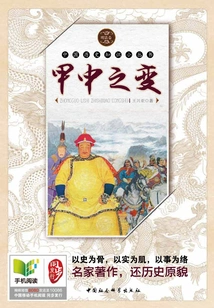
Jiashen Incident
History甲申之变
Wang Xingya
At the beginning of the Jiashen period during the Ming and Qing dynasties, the three regimes of the Ming, Dashun, and Qing dynasties fought fiercely in China. After Li Zicheng defeated the Ming army in five battles in the Central Plains, he founded the country of Xi'an, divided his troops into two groups, and pushed directly towards Beijing, making him invincible. The ruthless Emperor Chongzhen's plans to save the crisis went bankrupt one after another. With no other choice, he hanged himself on Meishan Mountain, announcing the fall of the Zhu Ming Dynasty. The Dashun leadership group was satisfied with the victory they had achieved, forgot about it, and handled it inappropriately, which was exploited by the Qing Dynasty. Wu Sangui surrendered to the Qing Dynasty, the Dashun army defeated Shanhaiguan, and the Qing army marched straight in, using force to defeat the heroes and complete the unification of the country. From then on, the less civilized Manchus became the ruling nation in China, further strengthening imperial power and strengthening ideological control, which hindered the normal development of the commodity economy in China. As a result, the Chinese civilization, which had long been the world's leader, fell behind the Western world.
At the beginning of the Jiashen period during the Ming and Qing dynasties, the three regimes of the Ming, Dashun, and Qing dynasties fought fiercely in China. After Li Zicheng defeated the Ming army in five battles in the Central Plains, he founded the country of Xi'an, divided his troops into two groups, and pushed directly towards Beijing, making him invincible. The ruthless Emperor Chongzhen's plans to save the crisis went bankrupt one after another. With no other choice, he hanged himself on Meishan Mountain, announcing the fall of the Zhu Ming Dynasty. The Dashun leadership group was satisfied with the victory they had achieved, forgot about it, and handled it inappropriately, which was exploited by the Qing Dynasty. Wu Sangui surrendered to the Qing Dynasty, the Dashun army defeated Shanhaiguan, and the Qing army marched straight in, using force to defeat the heroes and complete the unification of the country. From then on, the less civilized Manchus became the ruling nation in China, further strengthening imperial power and strengthening ideological control, which hindered the normal development of the commodity economy in China. As a result, the Chinese civilization, which had long been the world's leader, fell behind the Western world.
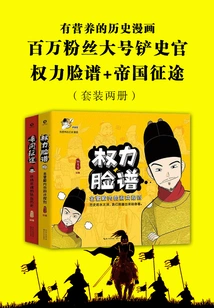
铲史官:有营养的历史漫画(权力脸谱+帝国征途)(套装二册)
Shovel Historian
"The Face of Power" is actually a game about the replacement of imperial power in ancient China. The water of history is too deep, so the historian will draw it for you to see. "Face of Power - Rules of the Game in the Jinluan Palace" uses modern language and perspective, and a cute two-dimensional way to tell the typical and atypical lives of 17 famous emperors in the two thousand years of history from the Qin and Han Dynasties to the Republic of China. It reveals the historical truth hidden in stories such as the dispute between Liu Bang and Xiang Yu between Chu and Han, Li Shimin's Xuanwu Gate incident, Kangxi's nine sons seizing the throne, and Yuan Shikai's proclaimed emperor, as well as the profound historical laws and distorted human nature behind them. Cute cartoons, funny language, reliable history, profound humanity, so many disharmonious factors, but they are unified together so harmoniously. History has never been so fascinating and nourishing. "The Journey of the Empire" is the second part of the Historian's Historical Comic Series. It selects typical military generals in Chinese history, such as Wei Qing, Huo Qubing, Yue Fei, Xu Da, Qi Jiguang and more than a dozen military generals who have made great achievements in combat. Through the unique visual presentation form of comics, concise but solid and funny text, people can laugh out loud while re-appreciating the elegance of famous generals and re-understanding history. A feast for lovers of historical knowledge, and a passionate story for boys, a book of courage!
"The Face of Power" is actually a game about the replacement of imperial power in ancient China. The water of history is too deep, so the historian will draw it for you to see. "Face of Power - Rules of the Game in the Jinluan Palace" uses modern language and perspective, and a cute two-dimensional way to tell the typical and atypical lives of 17 famous emperors in the two thousand years of history from the Qin and Han Dynasties to the Republic of China. It reveals the historical truth hidden in stories such as the dispute between Liu Bang and Xiang Yu between Chu and Han, Li Shimin's Xuanwu Gate incident, Kangxi's nine sons seizing the throne, and Yuan Shikai's proclaimed emperor, as well as the profound historical laws and distorted human nature behind them. Cute cartoons, funny language, reliable history, profound humanity, so many disharmonious factors, but they are unified together so harmoniously. History has never been so fascinating and nourishing. "The Journey of the Empire" is the second part of the Historian's Historical Comic Series. It selects typical military generals in Chinese history, such as Wei Qing, Huo Qubing, Yue Fei, Xu Da, Qi Jiguang and more than a dozen military generals who have made great achievements in combat. Through the unique visual presentation form of comics, concise but solid and funny text, people can laugh out loud while re-appreciating the elegance of famous generals and re-understanding history. A feast for lovers of historical knowledge, and a passionate story for boys, a book of courage!
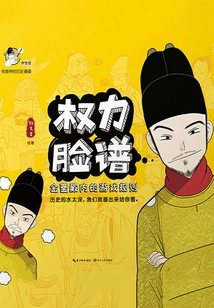
权力脸谱:金銮殿内的游戏规则
Shovel Historian
This is actually a game about the replacement of imperial power in ancient China. The water of history is too deep, so the historian will draw it for you to see. "Face of Power - Rules of the Game in the Jinluan Palace" uses modern language and perspective, and a cute two-dimensional way to tell the typical and atypical lives of 17 famous emperors in the two thousand years of history from the Qin and Han Dynasties to the Republic of China. It reveals the historical truth hidden in stories such as the dispute between Liu Bang and Xiang Yu between Chu and Han, Li Shimin's Xuanwu Gate incident, Kangxi's nine sons seizing the throne, and Yuan Shikai's proclaimed emperor, as well as the profound historical laws and distorted human nature behind them. Cute cartoons, funny language, reliable history, profound humanity, so many disharmonious factors, but they are unified together so harmoniously. History has never been so fascinating and nourishing.
This is actually a game about the replacement of imperial power in ancient China. The water of history is too deep, so the historian will draw it for you to see. "Face of Power - Rules of the Game in the Jinluan Palace" uses modern language and perspective, and a cute two-dimensional way to tell the typical and atypical lives of 17 famous emperors in the two thousand years of history from the Qin and Han Dynasties to the Republic of China. It reveals the historical truth hidden in stories such as the dispute between Liu Bang and Xiang Yu between Chu and Han, Li Shimin's Xuanwu Gate incident, Kangxi's nine sons seizing the throne, and Yuan Shikai's proclaimed emperor, as well as the profound historical laws and distorted human nature behind them. Cute cartoons, funny language, reliable history, profound humanity, so many disharmonious factors, but they are unified together so harmoniously. History has never been so fascinating and nourishing.
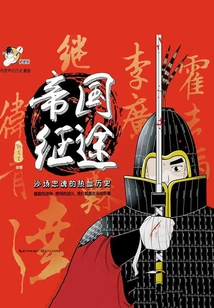
帝国征途:沙场忠魂的热血历史
Shovel Historian
This book is the second part of the historical comic series of "The Historian". It selects typical generals in Chinese history, such as Wei Qing, Huo Qubing, Yue Fei, Xu Da, Qi Jiguang and more than a dozen military generals who have made great achievements in combat. Through the unique visual presentation form of comics, concise but solid and funny text, people can laugh out loud while re-appreciating the elegance of famous generals and re-understanding history. A feast for lovers of historical knowledge, and a passionate story for boys, a book of courage!
This book is the second part of the historical comic series of "The Historian". It selects typical generals in Chinese history, such as Wei Qing, Huo Qubing, Yue Fei, Xu Da, Qi Jiguang and more than a dozen military generals who have made great achievements in combat. Through the unique visual presentation form of comics, concise but solid and funny text, people can laugh out loud while re-appreciating the elegance of famous generals and re-understanding history. A feast for lovers of historical knowledge, and a passionate story for boys, a book of courage!
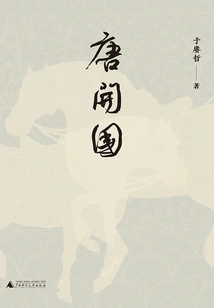
Tang Kaiguo (xinmin Theory)
History唐开国(新民说)
Yu Gengzhe
This book is narrated from the time of the death of Li Yuan, the emperor of the Tang Dynasty, in the ninth year of Zhenguan. It tells the story of the country's turmoil in the late Sui Dynasty, when various separatist forces swarmed into the Central Plains. The story centers on Li Yuan, the founder of the Tang Dynasty, and unfolds the narrative around his battles with powerful forces from all sides. From the events of Bingzhou to the rise of troops in Taiyuan, from the eastern expedition to Qu Tutong to the defeat of Xue Ju in the west, from the disintegration of Li Mi's Wagang Army to the decisive battle at Hulao Pass, many characters such as the hero Dou Jiande, the powerful enemy Wang Shichong, the fierce general Wei Chi Jingde, the famous minister Wei Zheng, Prince Jiancheng, Qin Wang Shimin, Qi Wang Yuanji, etc. Are described in detail. The work combines war narration and character description. The introduction of classic historical materials and the excavation of archaeological remains are mutually supporting. It uses rigorous textual research and careful deduction to tell many historical facts that have been misunderstood by everyone, such as the beginning and end of the so-called "Jinyang Palace Forced Palace" incident, such as "Thirteen Sticks" The historical truth of "The Monk Saves the King of Tang", as well as the combing of the intertwined interests among various people, the ever-changing conflicts between the various forces, and the interpretation of why the "Xuanwumen Incident" of brother Xiao Qiang appeared after the war for hegemony and the establishment of the dynasty. The above-mentioned controversial historical doubts surfaced one by one in Professor Gengzhe's detailed and detailed narrative, becoming concrete and clear. This book uses a smooth, concise and humorous narrative style to analyze and interpret the characters, events and the various relationships between the late Sui and early Tang Dynasties. It objectively reproduces the turbulent but true and full history of the founding of the Tang Dynasty for readers with an attitude that is infinitely close to the historical truth.
This book is narrated from the time of the death of Li Yuan, the emperor of the Tang Dynasty, in the ninth year of Zhenguan. It tells the story of the country's turmoil in the late Sui Dynasty, when various separatist forces swarmed into the Central Plains. The story centers on Li Yuan, the founder of the Tang Dynasty, and unfolds the narrative around his battles with powerful forces from all sides. From the events of Bingzhou to the rise of troops in Taiyuan, from the eastern expedition to Qu Tutong to the defeat of Xue Ju in the west, from the disintegration of Li Mi's Wagang Army to the decisive battle at Hulao Pass, many characters such as the hero Dou Jiande, the powerful enemy Wang Shichong, the fierce general Wei Chi Jingde, the famous minister Wei Zheng, Prince Jiancheng, Qin Wang Shimin, Qi Wang Yuanji, etc. Are described in detail. The work combines war narration and character description. The introduction of classic historical materials and the excavation of archaeological remains are mutually supporting. It uses rigorous textual research and careful deduction to tell many historical facts that have been misunderstood by everyone, such as the beginning and end of the so-called "Jinyang Palace Forced Palace" incident, such as "Thirteen Sticks" The historical truth of "The Monk Saves the King of Tang", as well as the combing of the intertwined interests among various people, the ever-changing conflicts between the various forces, and the interpretation of why the "Xuanwumen Incident" of brother Xiao Qiang appeared after the war for hegemony and the establishment of the dynasty. The above-mentioned controversial historical doubts surfaced one by one in Professor Gengzhe's detailed and detailed narrative, becoming concrete and clear. This book uses a smooth, concise and humorous narrative style to analyze and interpret the characters, events and the various relationships between the late Sui and early Tang Dynasties. It objectively reproduces the turbulent but true and full history of the founding of the Tang Dynasty for readers with an attitude that is infinitely close to the historical truth.
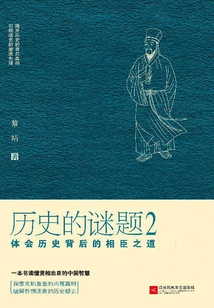
历史的谜题2:体会历史背后的相臣之道
Li Jing
The prime minister's job function is to balance. Chen Ping, the Prime Minister of the Han Dynasty, once said: "The prime minister assists the emperor in regulating yin and yang, keeping the four seasons in order, and nurturing the proper development of all things below. He controls the barbaric princes externally, and is close to the people internally, so that the ministers and officials can perform their duties." In other words, the prime minister can balance the various relationships between the upper and lower, internal and external, and between the people of the court, so that all positions and all strata in the entire system can perform their duties and do what they want. This is the greatest success. This book is not a history textbook, but uses the past to draw lessons from the present, uses history to reflect reality, uses history to dissect human nature, and tells us the deepest and essential principles of life and doing things.
The prime minister's job function is to balance. Chen Ping, the Prime Minister of the Han Dynasty, once said: "The prime minister assists the emperor in regulating yin and yang, keeping the four seasons in order, and nurturing the proper development of all things below. He controls the barbaric princes externally, and is close to the people internally, so that the ministers and officials can perform their duties." In other words, the prime minister can balance the various relationships between the upper and lower, internal and external, and between the people of the court, so that all positions and all strata in the entire system can perform their duties and do what they want. This is the greatest success. This book is not a history textbook, but uses the past to draw lessons from the present, uses history to reflect reality, uses history to dissect human nature, and tells us the deepest and essential principles of life and doing things.
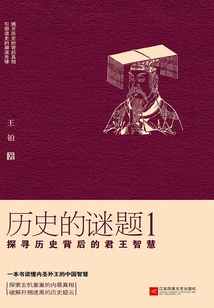
历史的谜题1:探寻历史背后的君王智慧
Wang Bo
In the history of China and the world, the success of those wise kings and overlords throughout the ages is not accidental, and the reason behind it is closely related to the success of our career today. This book summarizes the laws and principles that are suitable for our success today from historical figures and historical events, and uses ancient and modern examples to analyze and explain each other. This is neither a historical study nor a literary romance. The content here refers to official history, and also uses many exciting and interesting romance stories. Each of its stories looks back at history but reflects reality. It is just a history book that I hope will make you think and gain something from reading it.
In the history of China and the world, the success of those wise kings and overlords throughout the ages is not accidental, and the reason behind it is closely related to the success of our career today. This book summarizes the laws and principles that are suitable for our success today from historical figures and historical events, and uses ancient and modern examples to analyze and explain each other. This is neither a historical study nor a literary romance. The content here refers to official history, and also uses many exciting and interesting romance stories. Each of its stories looks back at history but reflects reality. It is just a history book that I hope will make you think and gain something from reading it.
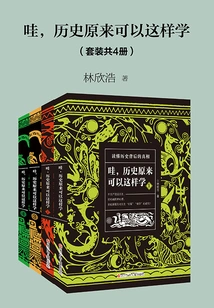
哇,历史原来可以这样学(套装共4册)
Lin Xinhao
"Wow, history can be learned like this 1" Among the major ancient civilizations in the world, only China's history is the only one that has not been interrupted. In the vast land of the motherland, there are fascinating places of interest and unearthed cultural relics everywhere. Thousands of years of history have left us with a wealth of historical books and materials, covering all aspects of life. The content of this volume focuses on a detailed introduction to the historical changes in China from primitive society to the Wei, Jin, Southern and Northern Dynasties, and basically covers half of ancient Chinese history. "Wow, History Can Be Learned This Way 2" The content of this volume is the second half of ancient history, focusing on introducing in detail the major historical events from the Sui and Tang Dynasties to the establishment of the Qing Dynasty. From the Sui Dynasty to the Qing Dynasty, you can find answers to all kinds of weird questions you want to know in this book. ...
"Wow, history can be learned like this 1" Among the major ancient civilizations in the world, only China's history is the only one that has not been interrupted. In the vast land of the motherland, there are fascinating places of interest and unearthed cultural relics everywhere. Thousands of years of history have left us with a wealth of historical books and materials, covering all aspects of life. The content of this volume focuses on a detailed introduction to the historical changes in China from primitive society to the Wei, Jin, Southern and Northern Dynasties, and basically covers half of ancient Chinese history. "Wow, History Can Be Learned This Way 2" The content of this volume is the second half of ancient history, focusing on introducing in detail the major historical events from the Sui and Tang Dynasties to the establishment of the Qing Dynasty. From the Sui Dynasty to the Qing Dynasty, you can find answers to all kinds of weird questions you want to know in this book. ...
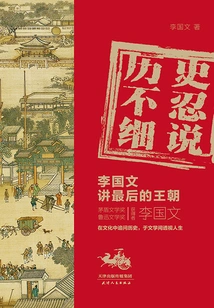
历史不忍细说:李国文讲最后的王朝
Li Guowen
This book is a collection of Li Guowen's historical prose. It selects some of Li Guowen's works that talk about famous ancient Chinese literati. There are more than 20 articles, including poets such as Li Bai and Han Yu, as well as reformers such as Zhang Juzheng and Tan Sitong. The article is written in a simple and profound way, using humorous and scolding language. It talks about a generation of masters, romantic talents and loyal ministers, and alternates it with rigorous historical narratives.
This book is a collection of Li Guowen's historical prose. It selects some of Li Guowen's works that talk about famous ancient Chinese literati. There are more than 20 articles, including poets such as Li Bai and Han Yu, as well as reformers such as Zhang Juzheng and Tan Sitong. The article is written in a simple and profound way, using humorous and scolding language. It talks about a generation of masters, romantic talents and loyal ministers, and alternates it with rigorous historical narratives.
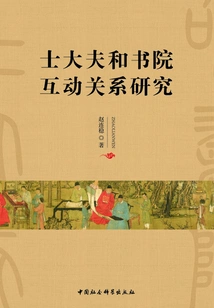
士大夫和书院互动关系研究
Zhao Lianwen
The Ming and Qing Dynasties were the heyday of the development of academies in my country, and were also a period of reform and restructuring. The reasons were closely related to the trends of scholar-bureaucrats during this period. Therefore, it is very important to study the interactive relationship between scholar-bureaucrats and academies during the Ming and Qing Dynasties. Unfortunately, there are currently no research results in this area. Therefore, the topic selected for this project has high originality value. This project provides a comprehensive, in-depth and systematic discussion of the interactive relationship between scholar-bureaucrats and academies during the Ming and Qing Dynasties. It also explores the relationship between the court and local society during the Ming and Qing Dynasties, the evolution of centralization, and the trends of the scholar-bureaucrats during the period of social change. All of these have certain innovative significance. The main contents of the manuscript include the following parts: The first part briefly describes the history of scholar-bureaucrats, the history of academies, and the changes in the interactive relationship between scholar-bureaucrats and academies. The second part reviews the interactive relationship between scholar-bureaucrats and academies before the Ming Dynasty, aiming to reveal that the interaction between scholar-bureaucrats and academies during the Ming and Qing Dynasties was the continuation and necessity of historical development. The third part is a study of the role of scholar-bureaucrats in the development of academies during the Ming and Qing Dynasties, mainly from the aspects of founding and repairing academies, donating salaries, raising funds, participating in academy management, creating a cultural atmosphere of the academy, and promoting the reform and restructuring of the academy. The fourth part discusses the impact of academies on the scholar-official class during the Ming and Qing Dynasties, including the cultivation of reserve talents for scholar-officials and the formation of scholar-official values. Finally, there is the conclusion and reflection, which is a summary of the project research results.
The Ming and Qing Dynasties were the heyday of the development of academies in my country, and were also a period of reform and restructuring. The reasons were closely related to the trends of scholar-bureaucrats during this period. Therefore, it is very important to study the interactive relationship between scholar-bureaucrats and academies during the Ming and Qing Dynasties. Unfortunately, there are currently no research results in this area. Therefore, the topic selected for this project has high originality value. This project provides a comprehensive, in-depth and systematic discussion of the interactive relationship between scholar-bureaucrats and academies during the Ming and Qing Dynasties. It also explores the relationship between the court and local society during the Ming and Qing Dynasties, the evolution of centralization, and the trends of the scholar-bureaucrats during the period of social change. All of these have certain innovative significance. The main contents of the manuscript include the following parts: The first part briefly describes the history of scholar-bureaucrats, the history of academies, and the changes in the interactive relationship between scholar-bureaucrats and academies. The second part reviews the interactive relationship between scholar-bureaucrats and academies before the Ming Dynasty, aiming to reveal that the interaction between scholar-bureaucrats and academies during the Ming and Qing Dynasties was the continuation and necessity of historical development. The third part is a study of the role of scholar-bureaucrats in the development of academies during the Ming and Qing Dynasties, mainly from the aspects of founding and repairing academies, donating salaries, raising funds, participating in academy management, creating a cultural atmosphere of the academy, and promoting the reform and restructuring of the academy. The fourth part discusses the impact of academies on the scholar-official class during the Ming and Qing Dynasties, including the cultivation of reserve talents for scholar-officials and the formation of scholar-official values. Finally, there is the conclusion and reflection, which is a summary of the project research results.
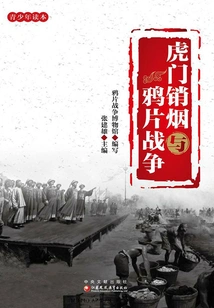
虎门销烟与鸦片战争
Opium War Museum
We selected key personnel from social education personnel to explore the connotation of this special historical and cultural resource, and carefully selected some cultural relics and documents in the collection. We strived to start from the perspective of young readers, connect them in the form of short stories, and intersperse small sections such as "Tips" and "Activity Design" to achieve both pictures and texts, highlighting the organic unity of knowledge, thinking and readability. We hope that young readers will not be tired during the reading process, be willing to continue reading, and gain something, gain insights, and be inspired. As this book goes to press, we can neither contain our joy nor our fear. Fortunately, after months of hard work, it finally came to fruition. Unfortunately, there are still some unsatisfactory aspects of this book in terms of content, structure, historical materials, etc. It is inevitable that there will be errors and omissions in the book. We would also appreciate the readers' comments and criticisms.
We selected key personnel from social education personnel to explore the connotation of this special historical and cultural resource, and carefully selected some cultural relics and documents in the collection. We strived to start from the perspective of young readers, connect them in the form of short stories, and intersperse small sections such as "Tips" and "Activity Design" to achieve both pictures and texts, highlighting the organic unity of knowledge, thinking and readability. We hope that young readers will not be tired during the reading process, be willing to continue reading, and gain something, gain insights, and be inspired. As this book goes to press, we can neither contain our joy nor our fear. Fortunately, after months of hard work, it finally came to fruition. Unfortunately, there are still some unsatisfactory aspects of this book in terms of content, structure, historical materials, etc. It is inevitable that there will be errors and omissions in the book. We would also appreciate the readers' comments and criticisms.
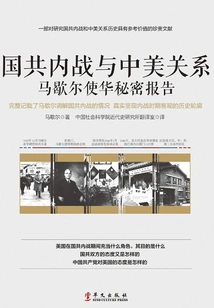
国共内战与中美关系:马歇尔使华秘密报告
(us) Marshall
"The Civil War between the Kuomintang and the Communist Party of China and Sino-US Relations: Marshall's Secret Report on his Mission to China" is a report made by Marshall to the U. S. State Department during his mission to China. It is arranged in chronological order. Marshall's report gave a complete account of his work during his stay in China, with detailed records of every meeting, the dialogue between the interviewers, the suggestions and counter-suggestions of the Kuomintang and the Communist Party, and the history of each incident. Although "The Civil War between the Kuomintang and the Communist Party of China and Sino-US Relations - Marshall's Secret Report to China" only provides an "objective" description of the evolution and process of events, many places can still reveal the true intentions of the United States at that time, which is of great reference value for studying the civil war between the Kuomintang and the Communist Party and Sino-US relations during the civil war period.
"The Civil War between the Kuomintang and the Communist Party of China and Sino-US Relations: Marshall's Secret Report on his Mission to China" is a report made by Marshall to the U. S. State Department during his mission to China. It is arranged in chronological order. Marshall's report gave a complete account of his work during his stay in China, with detailed records of every meeting, the dialogue between the interviewers, the suggestions and counter-suggestions of the Kuomintang and the Communist Party, and the history of each incident. Although "The Civil War between the Kuomintang and the Communist Party of China and Sino-US Relations - Marshall's Secret Report to China" only provides an "objective" description of the evolution and process of events, many places can still reveal the true intentions of the United States at that time, which is of great reference value for studying the civil war between the Kuomintang and the Communist Party and Sino-US relations during the civil war period.
锦衣卫:畸变的国器
Xiong Jianping
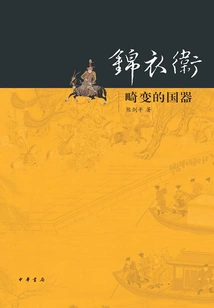
The Jinyiwei was an exclusive military and political spy agency of the Ming Dynasty. When talking about the system construction of the Ming Dynasty, the Jinyiwei was an unavoidable topic. The "secret politics" it represented affected the development direction of the entire Ming Dynasty. They directly obeyed the emperor's orders and could arrest anyone, including the emperor's relatives, and conduct private interrogations. They were also involved in collecting military information and instigating rebellion against enemy generals. It is this mysterious characteristic that makes many people unclear about its true appearance. This book is to remove the false and retain the true of this institution, restore the real Jinyiwei in history, and tell the story of the power entanglements and the fortunes and fortunes within it.
The Jinyiwei was an exclusive military and political spy agency of the Ming Dynasty. When talking about the system construction of the Ming Dynasty, the Jinyiwei was an unavoidable topic. The "secret politics" it represented affected the development direction of the entire Ming Dynasty. They directly obeyed the emperor's orders and could arrest anyone, including the emperor's relatives, and conduct private interrogations. They were also involved in collecting military information and instigating rebellion against enemy generals. It is this mysterious characteristic that makes many people unclear about its true appearance. This book is to remove the false and retain the true of this institution, restore the real Jinyiwei in history, and tell the story of the power entanglements and the fortunes and fortunes within it.
中国历史纪年表
Wan Guoding, Edited By Wan Sinian And Supplemented By Chen Mengjia
The "Chinese Historical Chronology" covers the time starting from the Xia, Shang and Zhou BC era to 1949, the founding of the People's Republic of China. The entire manuscript is divided into upper and lower parts. The upper compilation contains the "General Historical Chronology" and "Jia Zi Chronology"; the lower compilation includes "A Brief Chronological Table of Xia, Shang and Zhou Dynasties", "A Brief Chronological Table of Yin", "A Brief Table of the Kings of the Eastern and Western Zhou Dynasties", "Chronological Table of the Princes of the Eastern Zhou Dynasty", "The Survival and Death Table of the Princes in the Two Weeks", and "The Main Chronological Table after the Qin Dynasty". "Chronology of Important Dynasties" (including the Jianyuan Table), "Chronology of the Sixteen Kingdoms", "Chronology of the Ten Kingdoms", "Sino-Japanese Comparative Chronology", "A. D. Jiazi Checklist", "Tai Sui Chronology", etc. The "Chinese Historical Chronology Index" is attached at the end of the book for easy retrieval.
The "Chinese Historical Chronology" covers the time starting from the Xia, Shang and Zhou BC era to 1949, the founding of the People's Republic of China. The entire manuscript is divided into upper and lower parts. The upper compilation contains the "General Historical Chronology" and "Jia Zi Chronology"; the lower compilation includes "A Brief Chronological Table of Xia, Shang and Zhou Dynasties", "A Brief Chronological Table of Yin", "A Brief Table of the Kings of the Eastern and Western Zhou Dynasties", "Chronological Table of the Princes of the Eastern Zhou Dynasty", "The Survival and Death Table of the Princes in the Two Weeks", and "The Main Chronological Table after the Qin Dynasty". "Chronology of Important Dynasties" (including the Jianyuan Table), "Chronology of the Sixteen Kingdoms", "Chronology of the Ten Kingdoms", "Sino-Japanese Comparative Chronology", "A. D. Jiazi Checklist", "Tai Sui Chronology", etc. The "Chinese Historical Chronology Index" is attached at the end of the book for easy retrieval.
去趟民国II
Liu Yangdong
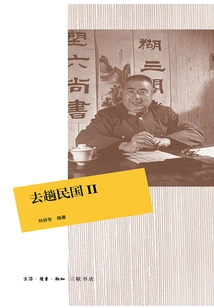
"Feng Yuxiang was originally illiterate, but later he could write well and speak simple English, and became an educated person. This is naturally the result of his hard work. It is said that when he was the governor of Henan, he studied hard for two hours a day. When he was studying, he hung a sign at the door saying "Feng Yuxiang" "Dead." Scholar Liu Bannong not only wrote poems and lyrics, but was also a master of photography. In 1927, he said in the book "Bannong Talks about Photography": "The so-called pastime is to find something to do after having enough food - or in other words, not having enough food - to waste precious time in preciousness." Eight years ago, Lu Xun was copying the epitaphs of the Six Dynasties in the Shaoxing Museum. I asked him what his purpose was, and he said: This is just like taking opium. Alas, I am also like this in photography. " Uncle Zhou, a bibliophile, compared books to women. He said to Huang Shang, another junior bibliophile: "Good stereotypes are equal to good innate figures; if the printer is good, that is, a very clear first print, it means good acquired development; coupled with good decoration , bindings like Uncle Fu Yuan's that are sprinkled with gold silk and gold inlaid with jade, it is like wearing fine clothes; after being collected by celebrities, the mark of vermilion on the seal is equivalent to rouge pollen; if it is inscribed by another celebrity, it will add even more charm. "
"Feng Yuxiang was originally illiterate, but later he could write well and speak simple English, and became an educated person. This is naturally the result of his hard work. It is said that when he was the governor of Henan, he studied hard for two hours a day. When he was studying, he hung a sign at the door saying "Feng Yuxiang" "Dead." Scholar Liu Bannong not only wrote poems and lyrics, but was also a master of photography. In 1927, he said in the book "Bannong Talks about Photography": "The so-called pastime is to find something to do after having enough food - or in other words, not having enough food - to waste precious time in preciousness." Eight years ago, Lu Xun was copying the epitaphs of the Six Dynasties in the Shaoxing Museum. I asked him what his purpose was, and he said: This is just like taking opium. Alas, I am also like this in photography. " Uncle Zhou, a bibliophile, compared books to women. He said to Huang Shang, another junior bibliophile: "Good stereotypes are equal to good innate figures; if the printer is good, that is, a very clear first print, it means good acquired development; coupled with good decoration , bindings like Uncle Fu Yuan's that are sprinkled with gold silk and gold inlaid with jade, it is like wearing fine clothes; after being collected by celebrities, the mark of vermilion on the seal is equivalent to rouge pollen; if it is inscribed by another celebrity, it will add even more charm. "
高升号的沉没:甲午第一战微观史
Sher
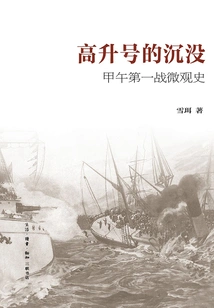
"The Sinking of the Gaosheng" takes several ships of the Beiyang Navy, mainly the Gaosheng, during the Sino-Japanese Sino-Japanese War of 1894 as examples. It does not follow the traditional routine of grand narratives, but restores the war with historical details. As Lucy Cheng, publisher of "Taiwan Li Bao", president of Biographical Literature Publishing House, and tenured professor of U-CLA at the University of California, USA, said: "The failure of the Sino-Japanese War shocked Chinese society to an unprecedented extent. However, after this humiliation, China began to wake up. This was a turning point in modern history. For more than a hundred years, There is no shortage of researchers, but there are many unsolved cases that make it difficult to understand the truth. The Gaosheng incident is still a major case of international law in the West. It has led to the revision of international law... The author has a profound writing style, devoted a lot of effort, collected a large number of historical materials, and rigorously researched. The narrative is both pertinent and specific, and it has solved many long-standing mysteries. "
"The Sinking of the Gaosheng" takes several ships of the Beiyang Navy, mainly the Gaosheng, during the Sino-Japanese Sino-Japanese War of 1894 as examples. It does not follow the traditional routine of grand narratives, but restores the war with historical details. As Lucy Cheng, publisher of "Taiwan Li Bao", president of Biographical Literature Publishing House, and tenured professor of U-CLA at the University of California, USA, said: "The failure of the Sino-Japanese War shocked Chinese society to an unprecedented extent. However, after this humiliation, China began to wake up. This was a turning point in modern history. For more than a hundred years, There is no shortage of researchers, but there are many unsolved cases that make it difficult to understand the truth. The Gaosheng incident is still a major case of international law in the West. It has led to the revision of international law... The author has a profound writing style, devoted a lot of effort, collected a large number of historical materials, and rigorously researched. The narrative is both pertinent and specific, and it has solved many long-standing mysteries. "
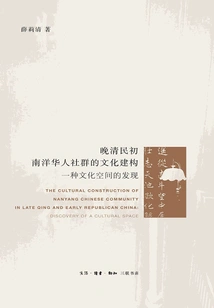
晚清民初南洋华人社群的文化建构:一种文化空间的发现
Xue Liqing
The manuscript covers cross-region (China and Southeast Asia), cross-discipline (such as history and literature), cross-culture (Chinese, Western and Southeast Asian countries), as well as many important and valuable theoretical topics (such as ethnic group, space, cultural identity). Sticking closely to the important theme of cultural space and focusing on travel, travelers and travel notes, the author examines the historical context and process of the social and cultural construction of overseas Chinese in Nanyang from 1877 to 1937, an important period of transformation. The author divides space into geographical conceptual space, travel reality space, cultural discourse space, and daily life space. He selects case points such as travelers and travel notes, the Singapore Museum and Kek Lok Si Temple, family and school, showers, clothing, and durian, etc., In his home country of China and Southeast Asia. , Chinese immigration and colonial rule, it vividly outlines and analyzes the connections and differences at each of the above levels, revealing the themes and development pedigrees of "writing Nanyang", "voyaging to Nanyang", Nanyang discourse, the formation of Chinese cultural subjectivity, and the cultural dialogue and hegemony behind it.
The manuscript covers cross-region (China and Southeast Asia), cross-discipline (such as history and literature), cross-culture (Chinese, Western and Southeast Asian countries), as well as many important and valuable theoretical topics (such as ethnic group, space, cultural identity). Sticking closely to the important theme of cultural space and focusing on travel, travelers and travel notes, the author examines the historical context and process of the social and cultural construction of overseas Chinese in Nanyang from 1877 to 1937, an important period of transformation. The author divides space into geographical conceptual space, travel reality space, cultural discourse space, and daily life space. He selects case points such as travelers and travel notes, the Singapore Museum and Kek Lok Si Temple, family and school, showers, clothing, and durian, etc., In his home country of China and Southeast Asia. , Chinese immigration and colonial rule, it vividly outlines and analyzes the connections and differences at each of the above levels, revealing the themes and development pedigrees of "writing Nanyang", "voyaging to Nanyang", Nanyang discourse, the formation of Chinese cultural subjectivity, and the cultural dialogue and hegemony behind it.
从幕府到职官:清季外官制的转型与困扰
Guan Xiaohong
The reform of the official system in the late Qing Dynasty changed the original "internal and external maintenance" pattern to a top-down focus, which was an important part of the transformation of modern political systems. The overall goal of the reform is to imitate the West and transition from an autocratic monarchy to a constitutional monarchy. The Qing court tried to lay a constitutional foundation for official governance through official system reform, and then refreshed the official system and proposed a political platform; however, the reform led to serious irregularities in the ruling order, sharp social conflicts, and the Qing court's rapid demise. Its shortcomings are mainly that the monarchs and ministers only care about their own selfish interests, obstruct reforms, and cannot respond to the interests of all aspects of society. The outcome is also very different from their expectations.
The reform of the official system in the late Qing Dynasty changed the original "internal and external maintenance" pattern to a top-down focus, which was an important part of the transformation of modern political systems. The overall goal of the reform is to imitate the West and transition from an autocratic monarchy to a constitutional monarchy. The Qing court tried to lay a constitutional foundation for official governance through official system reform, and then refreshed the official system and proposed a political platform; however, the reform led to serious irregularities in the ruling order, sharp social conflicts, and the Qing court's rapid demise. Its shortcomings are mainly that the monarchs and ministers only care about their own selfish interests, obstruct reforms, and cannot respond to the interests of all aspects of society. The outcome is also very different from their expectations.
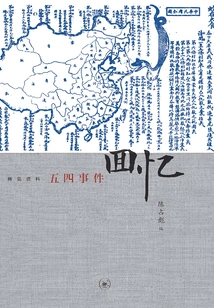
五四事件回忆
Chen Zhanbiao
This book mainly focuses on collecting and sorting out "rare materials" ("never duplicate" existing relevant materials) of the "patriotic parade that took place in Beijing on May 4, 1919" as a "factual description" (this determines that A does not include ideological and cultural materials other than the parade, strikes, and other materials; B does not include the May Fourth situation across the country outside Beijing). The basic content of this book mainly consists of the following two parts. First, "Taiwan region" materials. Memories of the May 4th Incident by the "May 4th Youth" living in Taiwan. Second, materials from the "Republic of China Period". Narratives of the May 4th Incident in the Republic of China newspaper archives.
This book mainly focuses on collecting and sorting out "rare materials" ("never duplicate" existing relevant materials) of the "patriotic parade that took place in Beijing on May 4, 1919" as a "factual description" (this determines that A does not include ideological and cultural materials other than the parade, strikes, and other materials; B does not include the May Fourth situation across the country outside Beijing). The basic content of this book mainly consists of the following two parts. First, "Taiwan region" materials. Memories of the May 4th Incident by the "May 4th Youth" living in Taiwan. Second, materials from the "Republic of China Period". Narratives of the May 4th Incident in the Republic of China newspaper archives.
海昏侯刘贺(文史悦读)
Xin Deyong
Liu He can be said to be the adult emperor with the shortest reign in history. He was not a qualified emperor, but he was not too bad. The "Book of Han" did not include him in the emperor's chronicle, but his strange character and strange experiences are indeed hilarious. In terms of appearance, as the grandson of a peerless beauty, his appearance recorded in history books does not seem to be close to "handsome". This book is the first academic research monograph on Haihunhou and his era. Based on the life of Liu He recorded in literature and combined with unearthed cultural relics, the author explains in detail many major historical events from the later years of Emperor Wu of the Han Dynasty to the period of Emperor Xuan of the Han Dynasty. By analyzing Liu He's experiences and actions, he reveals his personal living environment and personality traits, and believes that Liu He's dramatic life was not only created by the times but also by his personality.
Liu He can be said to be the adult emperor with the shortest reign in history. He was not a qualified emperor, but he was not too bad. The "Book of Han" did not include him in the emperor's chronicle, but his strange character and strange experiences are indeed hilarious. In terms of appearance, as the grandson of a peerless beauty, his appearance recorded in history books does not seem to be close to "handsome". This book is the first academic research monograph on Haihunhou and his era. Based on the life of Liu He recorded in literature and combined with unearthed cultural relics, the author explains in detail many major historical events from the later years of Emperor Wu of the Han Dynasty to the period of Emperor Xuan of the Han Dynasty. By analyzing Liu He's experiences and actions, he reveals his personal living environment and personality traits, and believes that Liu He's dramatic life was not only created by the times but also by his personality.
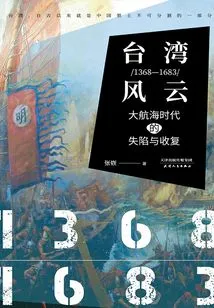
台湾风云·1368-1683:大航海时代的失陷与收复
Zhang Xin
This book tells the story of the more than 300 years from the anti-Japanese struggle in the middle of the Ming Dynasty in 1368 to the Qing Dynasty's recovery of Taiwan in 1683. In the context of the advent of the Age of Discovery, Japanese pirates, Portugal, Spain, the Netherlands and other invading forces took off. Despite the lantern-like attempt to invade Taiwan, the patriots of the Chinese nation have made unremitting struggles and made huge sacrifices to fight against foreign aggression on the island of Taiwan. They have successfully fought against the invaders time and time again and defended the beautiful and fertile island of Taiwan. The descendants of the Yan and Huang Dynasties in the Age of Discovery, in this great era, used their sweat and wisdom to leave a magnificent chapter belonging to China.
This book tells the story of the more than 300 years from the anti-Japanese struggle in the middle of the Ming Dynasty in 1368 to the Qing Dynasty's recovery of Taiwan in 1683. In the context of the advent of the Age of Discovery, Japanese pirates, Portugal, Spain, the Netherlands and other invading forces took off. Despite the lantern-like attempt to invade Taiwan, the patriots of the Chinese nation have made unremitting struggles and made huge sacrifices to fight against foreign aggression on the island of Taiwan. They have successfully fought against the invaders time and time again and defended the beautiful and fertile island of Taiwan. The descendants of the Yan and Huang Dynasties in the Age of Discovery, in this great era, used their sweat and wisdom to leave a magnificent chapter belonging to China.
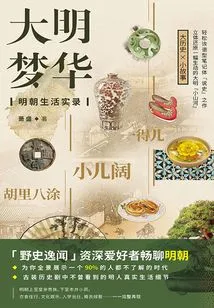
大明梦华:明朝生活实录
Xiao Sheng
This book is written in the style of Ming Dynasty notes and in the form of short stories, describing the language, clothing, food, residence, travel, culture, entertainment, festivals, workplace, officialdom and other aspects of life of the people in the Ming Dynasty. It integrates the great history of the Ming Dynasty into short stories, quotes classics, and tells history easily, showing a colorful, all-encompassing, lively and vivid picture of life in the Ming Dynasty, as if it is not far away from us. The focus of this book is not only to explain the food, clothing, housing and transportation of the people of the Ming Dynasty, as well as the customs and customs of the time, but also to express the world and people's hearts through the behavior of the people of the Ming Dynasty.
This book is written in the style of Ming Dynasty notes and in the form of short stories, describing the language, clothing, food, residence, travel, culture, entertainment, festivals, workplace, officialdom and other aspects of life of the people in the Ming Dynasty. It integrates the great history of the Ming Dynasty into short stories, quotes classics, and tells history easily, showing a colorful, all-encompassing, lively and vivid picture of life in the Ming Dynasty, as if it is not far away from us. The focus of this book is not only to explain the food, clothing, housing and transportation of the people of the Ming Dynasty, as well as the customs and customs of the time, but also to express the world and people's hearts through the behavior of the people of the Ming Dynasty.
战旗下剑指苍穹
Editor-in-chief Zhang Yihan
This book was created by the Linyi City Working Committee for Caring for the Next Generation, based on the research and compilation of the deeds of anti-Japanese heroes and martyrs in the Yimeng Revolutionary Base, and selected nearly 50 typical heroes and martyrs. Among them are generals, soldiers, heroines, primary school teachers, passionate young people, etc. This book records the heroic actions of 50 heroes who fought against the Japanese invaders, eulogizes their great achievements, and composes a series of magnificent war songs that are soul-stirring in the history of China's Anti-Japanese War. This book was created and published to commemorate the martyrs, inspire future generations, remember history, and maintain peace.
This book was created by the Linyi City Working Committee for Caring for the Next Generation, based on the research and compilation of the deeds of anti-Japanese heroes and martyrs in the Yimeng Revolutionary Base, and selected nearly 50 typical heroes and martyrs. Among them are generals, soldiers, heroines, primary school teachers, passionate young people, etc. This book records the heroic actions of 50 heroes who fought against the Japanese invaders, eulogizes their great achievements, and composes a series of magnificent war songs that are soul-stirring in the history of China's Anti-Japanese War. This book was created and published to commemorate the martyrs, inspire future generations, remember history, and maintain peace.
Strait Tenderness
History海峡柔情
Ye Yonglie
This book is the second part of the "Shanghai Trilogy", a long series by the famous writer Ye Yonglie, which tells the story of the love-hate entanglement between Zhu and Jiang families on Tamsui Road in Shanghai for hundreds of years. The son of the Zhu family, Zhu Jinyu, is an intelligence expert of the CCP. The son of the Jiang family, Jiang Chuanxian, is an economic confidant of Chiang Kai-shek, and his childhood friend has become his rival. After 1949, the Zhu and Jiang families were separated by the Taiwan Strait, but their descendants had complicated grievances and entanglements. The most legendary is the experience of Jiang Chuanxian's eldest son Jiang Bolun. He traveled back and forth between the two sides of the Taiwan Strait like a pendulum. He was arrested four times, married three times, and suffered several emotional setbacks. This reflects the complicated history of both sides of the Taiwan Strait. The strait runs between the Zhu and Jiang families, but it blocks the lingering tenderness. Their connection is broken and their love is still lingering, and one day they will get together again. "Strait Tenderness" sings a long song of family and country that "breaks the bones and connects the tendons".
This book is the second part of the "Shanghai Trilogy", a long series by the famous writer Ye Yonglie, which tells the story of the love-hate entanglement between Zhu and Jiang families on Tamsui Road in Shanghai for hundreds of years. The son of the Zhu family, Zhu Jinyu, is an intelligence expert of the CCP. The son of the Jiang family, Jiang Chuanxian, is an economic confidant of Chiang Kai-shek, and his childhood friend has become his rival. After 1949, the Zhu and Jiang families were separated by the Taiwan Strait, but their descendants had complicated grievances and entanglements. The most legendary is the experience of Jiang Chuanxian's eldest son Jiang Bolun. He traveled back and forth between the two sides of the Taiwan Strait like a pendulum. He was arrested four times, married three times, and suffered several emotional setbacks. This reflects the complicated history of both sides of the Taiwan Strait. The strait runs between the Zhu and Jiang families, but it blocks the lingering tenderness. Their connection is broken and their love is still lingering, and one day they will get together again. "Strait Tenderness" sings a long song of family and country that "breaks the bones and connects the tendons".
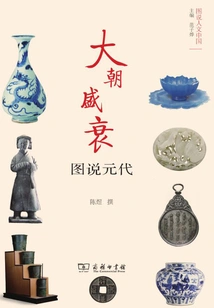
大朝盛衰:图说元代
Chen Yu
This book tells the story of the development and decline of the Yuan Dynasty. Genghis Khan unified the steppe tribes and transformed them into a country in a nomadic background, and then launched a challenge to civilized society. The author tells how the Mongols, who had strong military power, only lasted for ninety-eight years due to cultural differences and flaws in their governance model. However, in the process, Tibet and Yunnan were added to the Chinese territory, establishing the basic layout of China's territory. The rulers also hope to establish their own cultural model. However, for them who broke into the civilized world directly from the backward grasslands, the only cultural forms they can recognize and understand are almost only religions, which makes them elevate various religions to unprecedented status. The religious policy of the Yuan Dynasty was very relaxed, and some sects that were considered heretics in the past were able to develop well, which directly led to the demise of this powerful empire.
This book tells the story of the development and decline of the Yuan Dynasty. Genghis Khan unified the steppe tribes and transformed them into a country in a nomadic background, and then launched a challenge to civilized society. The author tells how the Mongols, who had strong military power, only lasted for ninety-eight years due to cultural differences and flaws in their governance model. However, in the process, Tibet and Yunnan were added to the Chinese territory, establishing the basic layout of China's territory. The rulers also hope to establish their own cultural model. However, for them who broke into the civilized world directly from the backward grasslands, the only cultural forms they can recognize and understand are almost only religions, which makes them elevate various religions to unprecedented status. The religious policy of the Yuan Dynasty was very relaxed, and some sects that were considered heretics in the past were able to develop well, which directly led to the demise of this powerful empire.
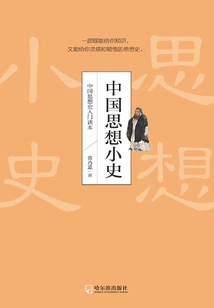
中国思想小史
Chang Naide
"A Short History of Chinese Thought" takes the popularization of Chinese thoughts as its starting point, uses concise and popular language and short and concise length to describe the characteristics, formation and development process of thoughts in various historical periods from primitive society to the "May Fourth New Culture Movement", as well as their role and influence. To a large extent, it meets the public's demand for the history of thoughts. "A Brief History of Chinese Thought" has won the favor and praise of many readers since its publication. The "Small History of Chinese Thought" published this time is based on multiple editions from Zhonghua Book Company, Shanghai Ancient Books Publishing House, etc. It has been revised more than ten times, and some illustrations and informative annotations have been added appropriately. It not only perfectly reproduces the original masterpiece of the master, but also improves the reading experience of readers to a great extent.
"A Short History of Chinese Thought" takes the popularization of Chinese thoughts as its starting point, uses concise and popular language and short and concise length to describe the characteristics, formation and development process of thoughts in various historical periods from primitive society to the "May Fourth New Culture Movement", as well as their role and influence. To a large extent, it meets the public's demand for the history of thoughts. "A Brief History of Chinese Thought" has won the favor and praise of many readers since its publication. The "Small History of Chinese Thought" published this time is based on multiple editions from Zhonghua Book Company, Shanghai Ancient Books Publishing House, etc. It has been revised more than ten times, and some illustrations and informative annotations have been added appropriately. It not only perfectly reproduces the original masterpiece of the master, but also improves the reading experience of readers to a great extent.
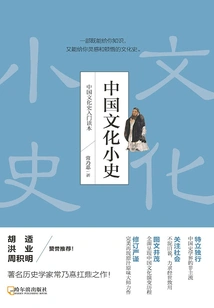
中国文化小史
Chang Naide
"A Short History of Chinese Culture" takes the popularization of Chinese culture as its starting point, uses concise and popular language and short and concise length to describe the characteristics, formation and development process of culture in various historical periods from primitive society to the "May 4th New Culture Movement", as well as their role and influence. To a large extent, it meets the public's demand for cultural history. "A Brief History of Chinese Culture" has won the favor and praise of many readers since its publication. The "A Short History of Chinese Culture" published this time is based on multiple editions from Zhonghua Book Company, Shanghai Ancient Books Publishing House, etc. It has been revised more than ten times, and some illustrations and informative annotations have been appropriately added. It not only perfectly reproduces the original masterpiece of the master, but also improves the reading experience of readers to a great extent.
"A Short History of Chinese Culture" takes the popularization of Chinese culture as its starting point, uses concise and popular language and short and concise length to describe the characteristics, formation and development process of culture in various historical periods from primitive society to the "May 4th New Culture Movement", as well as their role and influence. To a large extent, it meets the public's demand for cultural history. "A Brief History of Chinese Culture" has won the favor and praise of many readers since its publication. The "A Short History of Chinese Culture" published this time is based on multiple editions from Zhonghua Book Company, Shanghai Ancient Books Publishing House, etc. It has been revised more than ten times, and some illustrations and informative annotations have been appropriately added. It not only perfectly reproduces the original masterpiece of the master, but also improves the reading experience of readers to a great extent.
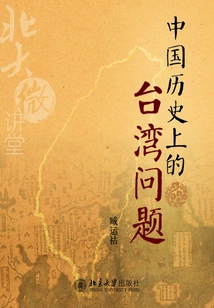
中国历史上的台湾问题
Zang Yunhu
Studying the Taiwan issue in history is actually to better think about the current Taiwan issue. Zang Yunhu, associate professor of the Department of History at Peking University, takes history as a mirror and starts from the historical Taiwan issue to enlighten the current Taiwan issue.
Studying the Taiwan issue in history is actually to better think about the current Taiwan issue. Zang Yunhu, associate professor of the Department of History at Peking University, takes history as a mirror and starts from the historical Taiwan issue to enlighten the current Taiwan issue.
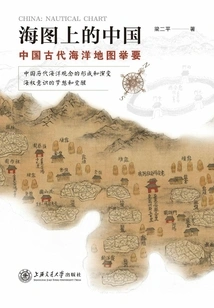
China on the Sea Map
History海图上的中国
Liang Erping
In ancient Chinese geographical knowledge, the sea has been marginalized for a long time. There were not many ancient ocean maps, and even fewer have been handed down after wars. In addition, the academic community has rarely invested in research in this field, and ordinary readers cannot even see photocopied ancient ocean charts. The author of this book collects and organizes ancient ocean maps from ancient atlases with limited circulation and overseas libraries in the hands of private collectors, and introduces them to everyone one by one with their origins, stories behind them, and the formation of ancient Chinese maritime thought. Through more than a hundred precious ancient nautical charts, it describes the historical process of ancient China's maritime exchanges, as well as the great discoveries and changes brought about by the great voyages, thereby constructing a simplified version of the history of ancient Chinese nautical charts and the history of ancient Chinese maritime thought.
In ancient Chinese geographical knowledge, the sea has been marginalized for a long time. There were not many ancient ocean maps, and even fewer have been handed down after wars. In addition, the academic community has rarely invested in research in this field, and ordinary readers cannot even see photocopied ancient ocean charts. The author of this book collects and organizes ancient ocean maps from ancient atlases with limited circulation and overseas libraries in the hands of private collectors, and introduces them to everyone one by one with their origins, stories behind them, and the formation of ancient Chinese maritime thought. Through more than a hundred precious ancient nautical charts, it describes the historical process of ancient China's maritime exchanges, as well as the great discoveries and changes brought about by the great voyages, thereby constructing a simplified version of the history of ancient Chinese nautical charts and the history of ancient Chinese maritime thought.
中国文化的张力:传统解故
Liu Mengxi
"The Tension of Chinese Culture" is a collection of the essence of Mr. Liu Mengxi's more than fifty years of research. Tradition is a spiritual river flowing from the past to the present, and everyone stands on its extension line unconsciously. The period of China's transformation from traditional society to modern society is also a period when it is necessary to reflect on culture and update tradition so that it can become a beneficial nutrient for social construction. The author extends from the perspectives of how traditional culture enters modern life, the relationship between traditional culture and contemporary China, the characteristics of Chinese culture and its value orientation, the loss and reconstruction of tradition, etc., Facing the conflict of civilizations, digging into the cultural tension and core of modern life, and providing a direction for the revitalization of Chinese culture.
"The Tension of Chinese Culture" is a collection of the essence of Mr. Liu Mengxi's more than fifty years of research. Tradition is a spiritual river flowing from the past to the present, and everyone stands on its extension line unconsciously. The period of China's transformation from traditional society to modern society is also a period when it is necessary to reflect on culture and update tradition so that it can become a beneficial nutrient for social construction. The author extends from the perspectives of how traditional culture enters modern life, the relationship between traditional culture and contemporary China, the characteristics of Chinese culture and its value orientation, the loss and reconstruction of tradition, etc., Facing the conflict of civilizations, digging into the cultural tension and core of modern life, and providing a direction for the revitalization of Chinese culture.
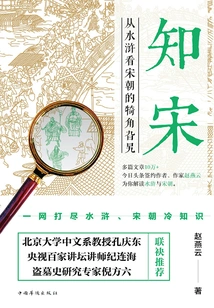
Understanding the Song Dynasty: Looking at the Corners of the Song Dynasty from the Water Margin
History知宋:从水浒看宋朝的犄角旮旯
Zhao Yanyun
Is the Song Dynasty in "Water Margin" the real Song Dynasty? In "Knowing the Song Dynasty", "Water Margin" is not only an excellent ancient literary work, but also a mirror reflecting the social outlook of the Northern Song Dynasty. The author combines the descriptions in "Water Margin" and analyzes a large number of literary works and poems by Song people and descendants, vividly reproducing the social outlook of the Song Dynasty and embodying the rigorous research spirit of mutual verification of literature and history. The author explores the origins and meanings of the character prototypes, place names, and nicknames in Water Margin, and goes further from these details to explore the official system, military system, administrative division and management, justice and litigation, currency and economic outlook, food culture, and fashion of the Song Dynasty in different categories. The story is slow and fascinating.
Is the Song Dynasty in "Water Margin" the real Song Dynasty? In "Knowing the Song Dynasty", "Water Margin" is not only an excellent ancient literary work, but also a mirror reflecting the social outlook of the Northern Song Dynasty. The author combines the descriptions in "Water Margin" and analyzes a large number of literary works and poems by Song people and descendants, vividly reproducing the social outlook of the Song Dynasty and embodying the rigorous research spirit of mutual verification of literature and history. The author explores the origins and meanings of the character prototypes, place names, and nicknames in Water Margin, and goes further from these details to explore the official system, military system, administrative division and management, justice and litigation, currency and economic outlook, food culture, and fashion of the Song Dynasty in different categories. The story is slow and fascinating.
Ming Power Field
History大明权力场
Ruan Jingdong
The Ming Dynasty was the pinnacle of the development of China's agricultural civilization. There was an unprecedentedly prosperous market culture and commercial civilization, a mature and complete political system - the cabinet, determined scholar-bureaucrats, lonely and helpless monarchs, and low-level people fighting for their destiny... However, a dynasty that pushed Confucian civilization to the extreme and strictly followed Confucian behavioral norms, a dynasty with extremely developed commercial civilization and the advent of the industrial era, a dynasty with all indicators reaching critical points in the agricultural era, collapsed suddenly in 1645! "The Field of Power in the Ming Dynasty" strives to present a true and majestic Ming Dynasty era with objective, dignified writing techniques and a different perspective, and explores the most essential reasons for the rise and fall of the dynasty and the demise of the Ming Dynasty from an institutional and economic perspective. "The Power Field of the Ming Dynasty" focuses on the struggle between monarchs and ministers, especially the Jiajing and Wanli dynasties, which reflects the political characteristics and bureaucratic contradictions of the Ming Dynasty.
The Ming Dynasty was the pinnacle of the development of China's agricultural civilization. There was an unprecedentedly prosperous market culture and commercial civilization, a mature and complete political system - the cabinet, determined scholar-bureaucrats, lonely and helpless monarchs, and low-level people fighting for their destiny... However, a dynasty that pushed Confucian civilization to the extreme and strictly followed Confucian behavioral norms, a dynasty with extremely developed commercial civilization and the advent of the industrial era, a dynasty with all indicators reaching critical points in the agricultural era, collapsed suddenly in 1645! "The Field of Power in the Ming Dynasty" strives to present a true and majestic Ming Dynasty era with objective, dignified writing techniques and a different perspective, and explores the most essential reasons for the rise and fall of the dynasty and the demise of the Ming Dynasty from an institutional and economic perspective. "The Power Field of the Ming Dynasty" focuses on the struggle between monarchs and ministers, especially the Jiajing and Wanli dynasties, which reflects the political characteristics and bureaucratic contradictions of the Ming Dynasty.
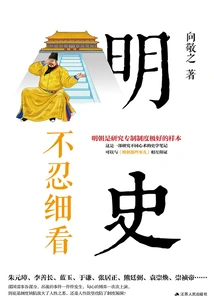
明史不忍细看
Pay Tribute To Him
"The History of the Ming Dynasty Can't Bear to Look Closely" takes the official history of the Ming and Qing dynasties and related historical records as clues, and launches a more objective and pertinent mutually reinforcing research and commentary on the many historical issues of the Ming Dynasty from prosperity to decline and finally to destruction after the Tumubao Incident. "The History of the Ming Dynasty Can't Bear to Look Closely" mainly uses the political actions and relationships between emperors and ministers of emperors, powerful eunuchs, traitors and other civil servants and generals as the entry point for research, with positive and negative criticisms. It discusses the decline of the Ming Dynasty and the rapid rise of Liaodong and Manchuria, as well as the root causes of the rise and fall of the peasant wars, including the mid-term imperial power struggle and Chongzhen Gang. The problems of governing the country, the overt and covert struggles between the cabinet and the generals, the crux of Li Zicheng and Zhang Xianzhong's difficulty in achieving great things, and the different political choices of officials and officials in the late Ming Dynasty, etc., Comprehensively and intensively summarized the bloody reality of the rupture and reconstruction of the social order in the Ming and Qing Dynasties: no master can save the Ming Dynasty, and the suspicion of the emperor and his ministers leaves the endgame. During the rescue, the great talent finally gave up, and the two ministers pretended to be confused.
"The History of the Ming Dynasty Can't Bear to Look Closely" takes the official history of the Ming and Qing dynasties and related historical records as clues, and launches a more objective and pertinent mutually reinforcing research and commentary on the many historical issues of the Ming Dynasty from prosperity to decline and finally to destruction after the Tumubao Incident. "The History of the Ming Dynasty Can't Bear to Look Closely" mainly uses the political actions and relationships between emperors and ministers of emperors, powerful eunuchs, traitors and other civil servants and generals as the entry point for research, with positive and negative criticisms. It discusses the decline of the Ming Dynasty and the rapid rise of Liaodong and Manchuria, as well as the root causes of the rise and fall of the peasant wars, including the mid-term imperial power struggle and Chongzhen Gang. The problems of governing the country, the overt and covert struggles between the cabinet and the generals, the crux of Li Zicheng and Zhang Xianzhong's difficulty in achieving great things, and the different political choices of officials and officials in the late Ming Dynasty, etc., Comprehensively and intensively summarized the bloody reality of the rupture and reconstruction of the social order in the Ming and Qing Dynasties: no master can save the Ming Dynasty, and the suspicion of the emperor and his ministers leaves the endgame. During the rescue, the great talent finally gave up, and the two ministers pretended to be confused.
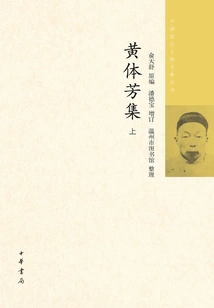
中国近代人物文集丛书:黄体芳集(上)
Yu Tianshu
This book is a collection of Huang Tifang's writings, one of the "Anthology Series of Modern Chinese Figures", with a total of about 550,000 words, divided into eight volumes. It systematically organizes Huang Tifang's memorials, edicts, writings, letters, prefaces and postscripts, longevity memorials, poetry couplets, rhymes, and notes. There is an appendix at the back of the book, which contains recent comments on Huang Tifang and a chronology of Huang Tifang compiled based on new research results.
This book is a collection of Huang Tifang's writings, one of the "Anthology Series of Modern Chinese Figures", with a total of about 550,000 words, divided into eight volumes. It systematically organizes Huang Tifang's memorials, edicts, writings, letters, prefaces and postscripts, longevity memorials, poetry couplets, rhymes, and notes. There is an appendix at the back of the book, which contains recent comments on Huang Tifang and a chronology of Huang Tifang compiled based on new research results.
秦汉简史
Lao Gan
This book is a popular book for ordinary readers written by Mr. Lao Gan, a master of Qin and Han history, in the 1940s. It introduces the historical overview, academic beliefs and material and cultural achievements of the Qin and Han Dynasties. The content is concise and the language is easy to understand. This short book by Mr. Lao Gan is immersed in his unique personal understanding of history. In this compilation and publication, several related papers by additional authors have also been collected and supplemented, making the content more substantial.
This book is a popular book for ordinary readers written by Mr. Lao Gan, a master of Qin and Han history, in the 1940s. It introduces the historical overview, academic beliefs and material and cultural achievements of the Qin and Han Dynasties. The content is concise and the language is easy to understand. This short book by Mr. Lao Gan is immersed in his unique personal understanding of history. In this compilation and publication, several related papers by additional authors have also been collected and supplemented, making the content more substantial.
Zhu Zhixin's Wencun (part 1)
History朱执信文存(上)
Editor, Guangdong Provincial People's Government Literature And History Research Institute Editor-in-chief Zhang Lei
This book is a collection of Zhu Zhixin's writings, which collects all the writings of Zhu Zhixin that can be seen so far, and comprehensively displays the historical achievements of this democratic revolutionist. This book was originally compiled by the History Research Office of the Guangdong Institute of Philosophy and Social Sciences. It is one of the "Anthology Series of Modern Chinese Figures" by Zhonghua Book Company. An expanded edition was published in 2012, but due to the conditions at that time, the newly discovered documents were only appended to the book without a unified chronological order. Based on the newly discovered documents, it has been updated and reorganized into four parts: treatises, correspondence, literature and art, miscellaneous works and other parts. It is named "Zhu Zhixin's Wen Cun" and a single hardcover edition is published as a commemoration.
This book is a collection of Zhu Zhixin's writings, which collects all the writings of Zhu Zhixin that can be seen so far, and comprehensively displays the historical achievements of this democratic revolutionist. This book was originally compiled by the History Research Office of the Guangdong Institute of Philosophy and Social Sciences. It is one of the "Anthology Series of Modern Chinese Figures" by Zhonghua Book Company. An expanded edition was published in 2012, but due to the conditions at that time, the newly discovered documents were only appended to the book without a unified chronological order. Based on the newly discovered documents, it has been updated and reorganized into four parts: treatises, correspondence, literature and art, miscellaneous works and other parts. It is named "Zhu Zhixin's Wen Cun" and a single hardcover edition is published as a commemoration.
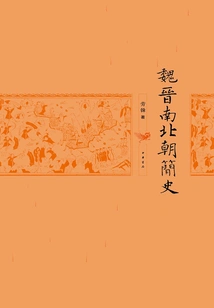
魏晋南北朝简史
Lao Gan
The original manuscript of this book is Mr. Lao Gan's lecture notes on the history of the Wei, Jin, Southern and Northern Dynasties at National Taiwan University. After being compiled by the author, it was published in Taiwan in the 1950s. It provides a brief introduction to the historical overview of the Three Kingdoms, Two Jins, Southern and Northern Dynasties, as well as the economic issues, military system, literature and academic situation during the Southern and Northern Dynasties. In this compilation and publication, relevant papers by additional authors have also been collected, making the content more substantial.
The original manuscript of this book is Mr. Lao Gan's lecture notes on the history of the Wei, Jin, Southern and Northern Dynasties at National Taiwan University. After being compiled by the author, it was published in Taiwan in the 1950s. It provides a brief introduction to the historical overview of the Three Kingdoms, Two Jins, Southern and Northern Dynasties, as well as the economic issues, military system, literature and academic situation during the Southern and Northern Dynasties. In this compilation and publication, relevant papers by additional authors have also been collected, making the content more substantial.
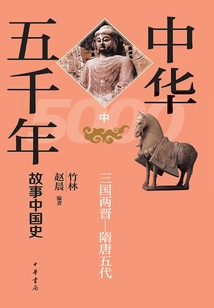
中华五千年:故事中国史(中)
Bamboo Forest Edited By Zhao Chen
This book is a popular historical reading. In the form of stories, it systematically and popularly introduces the five thousand years of civilization development of the Chinese nation, covering major historical events, heroes, allusions, culture and art, etc. It not only briefly outlines the overall picture of Chinese history, politics, culture, science, and art, but also displays the essence of Chinese traditional culture. It is both informative and interesting. It is a story-like history of China. By reading this book, you can not only understand the origin and development of Chinese civilization, enhance your love for the country and the nation, but also learn historical and cultural wisdom from it and become wise with history. It is especially useful for young students who are new to learning Chinese history and culture.
This book is a popular historical reading. In the form of stories, it systematically and popularly introduces the five thousand years of civilization development of the Chinese nation, covering major historical events, heroes, allusions, culture and art, etc. It not only briefly outlines the overall picture of Chinese history, politics, culture, science, and art, but also displays the essence of Chinese traditional culture. It is both informative and interesting. It is a story-like history of China. By reading this book, you can not only understand the origin and development of Chinese civilization, enhance your love for the country and the nation, but also learn historical and cultural wisdom from it and become wise with history. It is especially useful for young students who are new to learning Chinese history and culture.
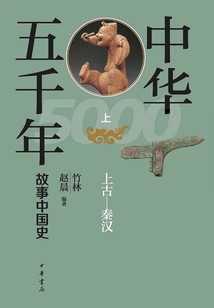
中华五千年:故事中国史(上)
Bamboo Forest Edited By Zhao Chen
This book is a popular historical reading. In the form of stories, it systematically and popularly introduces the five thousand years of civilization development of the Chinese nation, covering major historical events, heroes, allusions, culture and art, etc. It not only briefly outlines the overall picture of Chinese history, politics, culture, science, and art, but also displays the essence of Chinese traditional culture. It is both informative and interesting. It is a story-like history of China. By reading this book, you can not only understand the origin and development of Chinese civilization, enhance your love for the country and the nation, but also learn historical and cultural wisdom from it and become wise with history. It is especially useful for young students who are new to learning Chinese history and culture.
This book is a popular historical reading. In the form of stories, it systematically and popularly introduces the five thousand years of civilization development of the Chinese nation, covering major historical events, heroes, allusions, culture and art, etc. It not only briefly outlines the overall picture of Chinese history, politics, culture, science, and art, but also displays the essence of Chinese traditional culture. It is both informative and interesting. It is a story-like history of China. By reading this book, you can not only understand the origin and development of Chinese civilization, enhance your love for the country and the nation, but also learn historical and cultural wisdom from it and become wise with history. It is especially useful for young students who are new to learning Chinese history and culture.
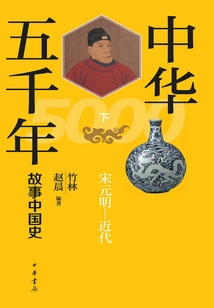
中华五千年:故事中国史(下)
Bamboo Forest Edited By Zhao Chen
This book is a popular historical reading. In the form of stories, it systematically and popularly introduces the five thousand years of civilization development of the Chinese nation, covering major historical events, heroes, allusions, culture and art, etc. It not only briefly outlines the overall picture of Chinese history, politics, culture, science, and art, but also displays the essence of Chinese traditional culture. It is both informative and interesting. It is a story-like history of China. By reading this book, you can not only understand the origin and development of Chinese civilization, enhance your love for the country and the nation, but also learn historical and cultural wisdom from it and become wise with history. It is especially useful for young students who are new to learning Chinese history and culture.
This book is a popular historical reading. In the form of stories, it systematically and popularly introduces the five thousand years of civilization development of the Chinese nation, covering major historical events, heroes, allusions, culture and art, etc. It not only briefly outlines the overall picture of Chinese history, politics, culture, science, and art, but also displays the essence of Chinese traditional culture. It is both informative and interesting. It is a story-like history of China. By reading this book, you can not only understand the origin and development of Chinese civilization, enhance your love for the country and the nation, but also learn historical and cultural wisdom from it and become wise with history. It is especially useful for young students who are new to learning Chinese history and culture.
Zhu Zhixin's Wencun (part 2)
History朱执信文存(下)
Editor, Guangdong Provincial People's Government Literature And History Research Institute Editor-in-chief Zhang Lei
This book is a collection of Zhu Zhixin's writings, which collects all the writings of Zhu Zhixin that can be seen so far, and comprehensively displays the historical achievements of this democratic revolutionist. This book was originally compiled by the History Research Office of the Guangdong Institute of Philosophy and Social Sciences. It is one of the "Anthology Series of Modern Chinese Figures" by Zhonghua Book Company. An expanded edition was published in 2012, but due to the conditions at that time, the newly discovered documents were only appended to the book without a unified chronological order. Based on the newly discovered documents, it has been updated and reorganized into four parts: treatises, correspondence, literature and art, miscellaneous works and other parts. It is named "Zhu Zhixin's Wen Cun" and a single hardcover edition is published as a commemoration.
This book is a collection of Zhu Zhixin's writings, which collects all the writings of Zhu Zhixin that can be seen so far, and comprehensively displays the historical achievements of this democratic revolutionist. This book was originally compiled by the History Research Office of the Guangdong Institute of Philosophy and Social Sciences. It is one of the "Anthology Series of Modern Chinese Figures" by Zhonghua Book Company. An expanded edition was published in 2012, but due to the conditions at that time, the newly discovered documents were only appended to the book without a unified chronological order. Based on the newly discovered documents, it has been updated and reorganized into four parts: treatises, correspondence, literature and art, miscellaneous works and other parts. It is named "Zhu Zhixin's Wen Cun" and a single hardcover edition is published as a commemoration.
中国近代人物文集丛书:黄体芳集(下)
Yu Tianshu
This book is a collection of Huang Tifang's writings, one of the "Anthology Series of Modern Chinese Figures", with a total of about 550,000 words, divided into eight volumes. It systematically organizes Huang Tifang's memorials, edicts, writings, letters, prefaces and postscripts, longevity memorials, poetry couplets, rhymes, and notes. There is an appendix at the back of the book, which contains recent comments on Huang Tifang and a chronology of Huang Tifang compiled based on new research results.
This book is a collection of Huang Tifang's writings, one of the "Anthology Series of Modern Chinese Figures", with a total of about 550,000 words, divided into eight volumes. It systematically organizes Huang Tifang's memorials, edicts, writings, letters, prefaces and postscripts, longevity memorials, poetry couplets, rhymes, and notes. There is an appendix at the back of the book, which contains recent comments on Huang Tifang and a chronology of Huang Tifang compiled based on new research results.
朱执信文存(全2册)
Editor, Guangdong Provincial People's Government Literature And History Research Institute Editor-in-chief Zhang Lei
This book is a collection of Zhu Zhixin's writings, which collects all the writings of Zhu Zhixin that can be seen so far, and comprehensively displays the historical achievements of this democratic revolutionist. This book was originally compiled by the History Research Office of the Guangdong Institute of Philosophy and Social Sciences. It is one of the "Anthology Series of Modern Chinese Figures" by Zhonghua Book Company. An expanded edition was published in 2012, but due to the conditions at that time, the newly discovered documents were only appended to the book without a unified chronological order. Based on the newly discovered documents, it has been updated and reorganized into four parts: treatises, correspondence, literature and art, miscellaneous works and other parts. It is named "Zhu Zhixin's Wen Cun" and a single hardcover edition is published as a commemoration.
This book is a collection of Zhu Zhixin's writings, which collects all the writings of Zhu Zhixin that can be seen so far, and comprehensively displays the historical achievements of this democratic revolutionist. This book was originally compiled by the History Research Office of the Guangdong Institute of Philosophy and Social Sciences. It is one of the "Anthology Series of Modern Chinese Figures" by Zhonghua Book Company. An expanded edition was published in 2012, but due to the conditions at that time, the newly discovered documents were only appended to the book without a unified chronological order. Based on the newly discovered documents, it has been updated and reorganized into four parts: treatises, correspondence, literature and art, miscellaneous works and other parts. It is named "Zhu Zhixin's Wen Cun" and a single hardcover edition is published as a commemoration.
中华五千年:故事中国史(全三册)
Bamboo Forest Edited By Zhao Chen
This book is a popular historical reading. In the form of stories, it systematically and popularly introduces the five thousand years of civilization development of the Chinese nation, covering major historical events, heroes, allusions, culture and art, etc. It not only briefly outlines the overall picture of Chinese history, politics, culture, science, and art, but also displays the essence of Chinese traditional culture. It is both informative and interesting. It is a story-like history of China. By reading this book, you can not only understand the origin and development of Chinese civilization, enhance your love for the country and the nation, but also learn historical and cultural wisdom from it and become wise with history. It is especially useful for young students who are new to learning Chinese history and culture.
This book is a popular historical reading. In the form of stories, it systematically and popularly introduces the five thousand years of civilization development of the Chinese nation, covering major historical events, heroes, allusions, culture and art, etc. It not only briefly outlines the overall picture of Chinese history, politics, culture, science, and art, but also displays the essence of Chinese traditional culture. It is both informative and interesting. It is a story-like history of China. By reading this book, you can not only understand the origin and development of Chinese civilization, enhance your love for the country and the nation, but also learn historical and cultural wisdom from it and become wise with history. It is especially useful for young students who are new to learning Chinese history and culture.
Inherit and Move Forward
History传承·前行
Compiled By The Local Chronicles Office Of The Ningbo Municipal People's Government And The Office Of The Ningbo Local Chronicles Compilation Committee
In the form of a combination of text and pictures, the book reviews in detail the main historical processes of the first round of revision, the second round of revision and other aspects of vertical development since the compilation of Ningbo's new socialist local chronicles was launched, and elaborates on the cultural origins and compilation of Ningbo as the "hometown of local chronicles". It also horizontally analyzes the experience summary in various aspects such as local chronicle compilation, yearbook compilation, old chronicle document compilation, legal compilation of chronicles, theoretical research, work publicity, geographical information education, information construction, serving local areas, external exchanges, team building, etc.
In the form of a combination of text and pictures, the book reviews in detail the main historical processes of the first round of revision, the second round of revision and other aspects of vertical development since the compilation of Ningbo's new socialist local chronicles was launched, and elaborates on the cultural origins and compilation of Ningbo as the "hometown of local chronicles". It also horizontally analyzes the experience summary in various aspects such as local chronicle compilation, yearbook compilation, old chronicle document compilation, legal compilation of chronicles, theoretical research, work publicity, geographical information education, information construction, serving local areas, external exchanges, team building, etc.
彩图馆:资治通鉴
(song Dynasty) Sima Guangzhu, Edited By Cui Xuejiao
In order to help readers quickly grasp the essence of the book "Zi Zhi Tong Jian", we have selected the most representative and exciting chapters from it, striving to comprehensively display the magnificent chapters of "Zi Zhi Tong Jian". The content of "Zi Zhi Tong Jian" focuses on politics, civil affairs and ethnic relations, as well as economic and cultural aspects.
In order to help readers quickly grasp the essence of the book "Zi Zhi Tong Jian", we have selected the most representative and exciting chapters from it, striving to comprehensively display the magnificent chapters of "Zi Zhi Tong Jian". The content of "Zi Zhi Tong Jian" focuses on politics, civil affairs and ethnic relations, as well as economic and cultural aspects.
中国历史全知道(彩图精装)
Slightly Sunny
Not only that, "Knowledge of Chinese History" carefully selects hundreds of pictures covering a wide range of content and rich expressions, including unearthed cultural relics, historical relics, war diagrams, portraits of celebrities, etc., Using a large number of exquisite pictures to convey the truth of history, verify the facts of history, and identify errors in history. At the same time, the events and characters are more three-dimensional and full of scenes. It strives to provide readers with a way back to historical reality through the close combination of pictures and texts, so as to integrate knowledge, readability and appreciation.
Not only that, "Knowledge of Chinese History" carefully selects hundreds of pictures covering a wide range of content and rich expressions, including unearthed cultural relics, historical relics, war diagrams, portraits of celebrities, etc., Using a large number of exquisite pictures to convey the truth of history, verify the facts of history, and identify errors in history. At the same time, the events and characters are more three-dimensional and full of scenes. It strives to provide readers with a way back to historical reality through the close combination of pictures and texts, so as to integrate knowledge, readability and appreciation.
Revolution
History革命
Ma Yong
This book describes the historical process in which the late Qing government tried to save itself from danger through constitutional monarchy, but was eventually overthrown by the revolutionaries. Is Zaifeng a new political figure advocating for constitutionalism, or is he a clown digging his own grave? Did Sun Yat-sen persevere to build a republic, or did he become president by chance? Was Yuan Shikai committed to constitutionalism and loyal to the Qing Dynasty, or was he coveting power and stealing the country? This book reveals the answer for you. This book also provides a new way of thinking about the Qing Dynasty.
This book describes the historical process in which the late Qing government tried to save itself from danger through constitutional monarchy, but was eventually overthrown by the revolutionaries. Is Zaifeng a new political figure advocating for constitutionalism, or is he a clown digging his own grave? Did Sun Yat-sen persevere to build a republic, or did he become president by chance? Was Yuan Shikai committed to constitutionalism and loyal to the Qing Dynasty, or was he coveting power and stealing the country? This book reveals the answer for you. This book also provides a new way of thinking about the Qing Dynasty.
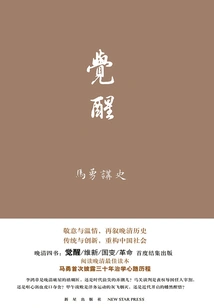
Awakening
History觉醒
Ma Yong
Content introduction: After the disastrous defeat in the Yellow Sea Battle in the Sino-Japanese War of 1991, peace became more difficult. Li Hongzhang was ordered to negotiate peace and signed the Treaty of Shimonoseki despite humiliation. Is Li Hongzhang a paper decorator of dilapidated houses in the late Qing Dynasty, or a trend-setter at the forefront of the times? Is the Shimonoseki negotiation a loss of power and humiliation to the country and letting others slaughter it, or is it a matter of painstaking efforts to seize food from the tiger's mouth? Was the defeat of the Sino-Japanese War the end of the Westernization Movement, or was it the dawn of modern times? After that, Yan Fu and others began to think about the reform of China's system, which also gave rise to the transformation from self-reliance through law to self-reliance through legislation.
Content introduction: After the disastrous defeat in the Yellow Sea Battle in the Sino-Japanese War of 1991, peace became more difficult. Li Hongzhang was ordered to negotiate peace and signed the Treaty of Shimonoseki despite humiliation. Is Li Hongzhang a paper decorator of dilapidated houses in the late Qing Dynasty, or a trend-setter at the forefront of the times? Is the Shimonoseki negotiation a loss of power and humiliation to the country and letting others slaughter it, or is it a matter of painstaking efforts to seize food from the tiger's mouth? Was the defeat of the Sino-Japanese War the end of the Westernization Movement, or was it the dawn of modern times? After that, Yan Fu and others began to think about the reform of China's system, which also gave rise to the transformation from self-reliance through law to self-reliance through legislation.