Library
Browse and search books
471 novels found
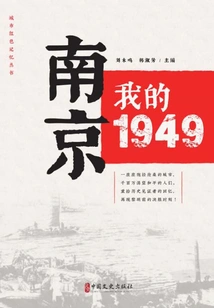
南京:我的1949(“城市红色记忆”丛书)
Liu Weiming Editor-in-chief Han Shufang
This book compiles more than 30 reminiscences of those who have experienced it, and is divided into four chapters to introduce the dark rule before the collapse of the Kuomintang, the struggle of the underground party of the Communist Party of China, the Battle of Crossing the River, and our party's stationed in Nanjing and taking over Nanjing. It fully demonstrates the heroic spirit of the people's army who is not afraid of bloodshed and sacrifice in order to liberate Nanjing and vows to carry the revolution to the end, as well as the exploration process of building and managing the city. The articles selected in this book are all sourced from the National Committee of the Chinese People's Political Consultative Conference and local cultural and historical materials. They are precious first-hand materials for studying this period of history.
This book compiles more than 30 reminiscences of those who have experienced it, and is divided into four chapters to introduce the dark rule before the collapse of the Kuomintang, the struggle of the underground party of the Communist Party of China, the Battle of Crossing the River, and our party's stationed in Nanjing and taking over Nanjing. It fully demonstrates the heroic spirit of the people's army who is not afraid of bloodshed and sacrifice in order to liberate Nanjing and vows to carry the revolution to the end, as well as the exploration process of building and managing the city. The articles selected in this book are all sourced from the National Committee of the Chinese People's Political Consultative Conference and local cultural and historical materials. They are precious first-hand materials for studying this period of history.
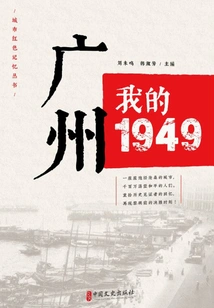
广州:我的1949(“城市红色记忆”丛书)
Liu Weiming Editor-in-chief Han Shufang
This book is compiled and compiled based on the cultural and historical materials of the National Committee of the Chinese People's Political Consultative Conference and selected oral articles of important historical figures before and after the liberation of Guangzhou. The book is divided into five chapters, covering the chaos of the Kuomintang regime in Guangzhou, the liberation of Guangzhou by the three-pronged army of the People's Liberation Army in the Guangdong Campaign, the underground struggle, the second front in the Kuomintang-controlled areas, and the uprising and takeover of the Kuomintang party and government departments in Guangzhou and after liberation. It details the important events and activities of figures before and after the liberation of Guangzhou from the perspective of first-person personal experience.
This book is compiled and compiled based on the cultural and historical materials of the National Committee of the Chinese People's Political Consultative Conference and selected oral articles of important historical figures before and after the liberation of Guangzhou. The book is divided into five chapters, covering the chaos of the Kuomintang regime in Guangzhou, the liberation of Guangzhou by the three-pronged army of the People's Liberation Army in the Guangdong Campaign, the underground struggle, the second front in the Kuomintang-controlled areas, and the uprising and takeover of the Kuomintang party and government departments in Guangzhou and after liberation. It details the important events and activities of figures before and after the liberation of Guangzhou from the perspective of first-person personal experience.
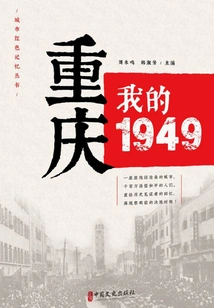
重庆:我的1949(“城市红色记忆”丛书)
Liu Weiming Editor-in-chief Han Shufang
This book compiles more than 40 recollections of those who have witnessed it, and is divided into four chapters to introduce the dark rule before the collapse of the Kuomintang, the instigation and struggle of the underground party of the Communist Party of China, the fierce battles on the riverside, and our party's entry into Chongqing and takeover of Chongqing. It fully demonstrates the heroic spirit of the people's army who is not afraid of bloodshed and sacrifice for the cause of Chongqing's liberation and vows to carry the revolution to the end, as well as the exploration process of building and managing the city. The articles selected in this book are all sourced from the National Committee of the Chinese People's Political Consultative Conference and local cultural and historical materials. They are precious first-hand materials for studying this period of history.
This book compiles more than 40 recollections of those who have witnessed it, and is divided into four chapters to introduce the dark rule before the collapse of the Kuomintang, the instigation and struggle of the underground party of the Communist Party of China, the fierce battles on the riverside, and our party's entry into Chongqing and takeover of Chongqing. It fully demonstrates the heroic spirit of the people's army who is not afraid of bloodshed and sacrifice for the cause of Chongqing's liberation and vows to carry the revolution to the end, as well as the exploration process of building and managing the city. The articles selected in this book are all sourced from the National Committee of the Chinese People's Political Consultative Conference and local cultural and historical materials. They are precious first-hand materials for studying this period of history.
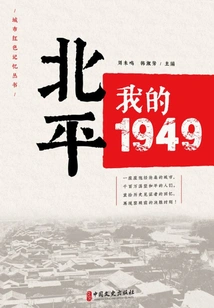
北平:我的1949(“城市红色记忆”丛书)
Liu Weiming Editor-in-chief Han Shufang
This book is compiled and compiled based on the cultural and historical materials of the National Committee of the Chinese People's Political Consultative Conference and selected oral articles written by important historical figures before and after the liberation of Peiping. The book is divided into four chapters, covering the underground struggle, the peace talks in Peking, the uprising and takeover of the Kuomintang party and government departments, and the construction of Peiping after liberation. It details the important events and activities of people before and after the liberation of Peking from the perspective of first-person personal experience and oral narration.
This book is compiled and compiled based on the cultural and historical materials of the National Committee of the Chinese People's Political Consultative Conference and selected oral articles written by important historical figures before and after the liberation of Peiping. The book is divided into four chapters, covering the underground struggle, the peace talks in Peking, the uprising and takeover of the Kuomintang party and government departments, and the construction of Peiping after liberation. It details the important events and activities of people before and after the liberation of Peking from the perspective of first-person personal experience and oral narration.
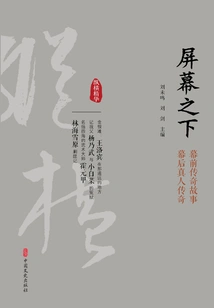
屏幕之下(纵横精华·第一辑)
Liu Weiming Editor-in-chief Liu Jian
The first volume is a fragmented arrangement of articles collected by "Zongheng" since 1983, and brings together wonderful articles that reflect the development of our country's culture and pass on the fire from generation to generation. "Under the Screen" mainly collects a series of classic movies shot after the founding of the People's Republic of China and the real historical stories behind the scenes.
The first volume is a fragmented arrangement of articles collected by "Zongheng" since 1983, and brings together wonderful articles that reflect the development of our country's culture and pass on the fire from generation to generation. "Under the Screen" mainly collects a series of classic movies shot after the founding of the People's Republic of China and the real historical stories behind the scenes.
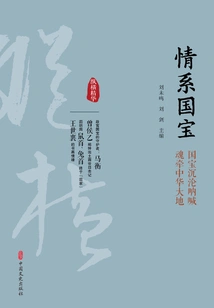
情系国宝(纵横精华·第一辑)
Liu Weiming Editor-in-chief Liu Jian
The first volume is a fragmented arrangement of articles collected by "Zongheng" since 1983, and brings together wonderful articles that reflect the development of our country's culture and pass on the fire from generation to generation. This book focuses on the theme of "national treasures" and vividly describes the Chinese cultural spirit behind national treasures from the perspectives of the loss and recovery of national treasures, the excavation and research of cultural relics, and the spirit and pursuit of cultural and museum workers.
The first volume is a fragmented arrangement of articles collected by "Zongheng" since 1983, and brings together wonderful articles that reflect the development of our country's culture and pass on the fire from generation to generation. This book focuses on the theme of "national treasures" and vividly describes the Chinese cultural spirit behind national treasures from the perspectives of the loss and recovery of national treasures, the excavation and research of cultural relics, and the spirit and pursuit of cultural and museum workers.
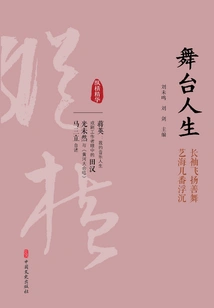
舞台人生(纵横精华·第一辑)
Liu Weiming Editor-in-chief Liu Jian
The first volume is a fragmented arrangement of articles collected by "Zongheng" since 1983, and brings together wonderful articles that reflect the development of our country's culture and pass on the fire from generation to generation. This book involves singing, dancing, drama, cross talk and other art categories, and embodies the artists' ideals and pursuits of using these stage forms to spread ideas and open up people's wisdom during the revolutionary period, and to establish themselves and realize their values in the peaceful era.
The first volume is a fragmented arrangement of articles collected by "Zongheng" since 1983, and brings together wonderful articles that reflect the development of our country's culture and pass on the fire from generation to generation. This book involves singing, dancing, drama, cross talk and other art categories, and embodies the artists' ideals and pursuits of using these stage forms to spread ideas and open up people's wisdom during the revolutionary period, and to establish themselves and realize their values in the peaceful era.
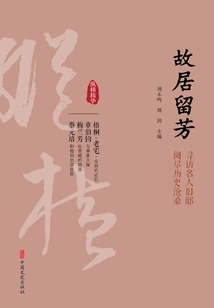
故居留芳(纵横精华·第一辑)
Liu Weiming Editor-in-chief Liu Jian
The first volume is a fragmented arrangement of articles collected by "Zongheng" since 1983, and brings together wonderful articles that reflect the development of our country's culture and pass on the fire from generation to generation. "The Fragrance of My Former Residence" mainly collects and describes the former residences of celebrities from various places.
The first volume is a fragmented arrangement of articles collected by "Zongheng" since 1983, and brings together wonderful articles that reflect the development of our country's culture and pass on the fire from generation to generation. "The Fragrance of My Former Residence" mainly collects and describes the former residences of celebrities from various places.
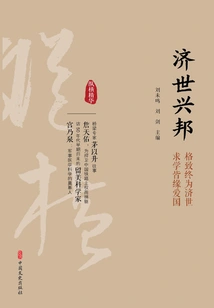
济世兴邦(纵横精华·第一辑)
Liu Weiming Editor-in-chief Liu Jian
The first volume is a fragmented arrangement of articles collected by "Zongheng" since 1983, and brings together wonderful articles that reflect the development of our country's culture and pass on the fire from generation to generation. This book is the reminiscence or biography of top scientific and technological workers in the fields of science, medicine, and military. They have the ambition to help the world and serve the country, bravely stand at the forefront of science, and contribute their own strength to the prosperity of the motherland.
The first volume is a fragmented arrangement of articles collected by "Zongheng" since 1983, and brings together wonderful articles that reflect the development of our country's culture and pass on the fire from generation to generation. This book is the reminiscence or biography of top scientific and technological workers in the fields of science, medicine, and military. They have the ambition to help the world and serve the country, bravely stand at the forefront of science, and contribute their own strength to the prosperity of the motherland.
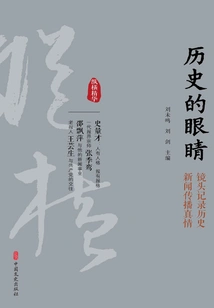
历史的眼睛(纵横精华·第一辑)
Liu Weiming Editor-in-chief Liu Jian
The first volume is a fragmented arrangement of articles collected by "Zongheng" since 1983, and brings together wonderful articles that reflect the development of our country's culture and pass on the fire from generation to generation. "The Eyes of History" mainly collects the stories of famous newspapers and reporters since the late Qing Dynasty and the founding of New China. They were not afraid of power or hardship, and recorded the correct history and conveyed it to the public.
The first volume is a fragmented arrangement of articles collected by "Zongheng" since 1983, and brings together wonderful articles that reflect the development of our country's culture and pass on the fire from generation to generation. "The Eyes of History" mainly collects the stories of famous newspapers and reporters since the late Qing Dynasty and the founding of New China. They were not afraid of power or hardship, and recorded the correct history and conveyed it to the public.
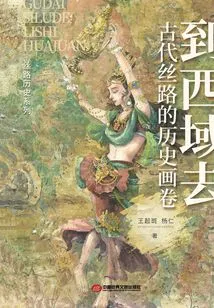
到西域去:古代丝路的历史画卷
Wang Chaoban Yang Ren
History is not a few blunt words, nor is it a series of cold numbers. It can be as detailed as people's clothing, food, housing and transportation. The author selects ancient travel notes that passed through ancient Xinjiang, or stories of ancient people living in Xinjiang, and uses vivid writing to reproduce the natural geography, folk customs, and cultural landscapes of the Western Regions. The author combines ancient documentary records with unearthed cultural relics, explores the rich historical details behind the brief records in history books, and three-dimensionally reproduces the life trajectories, food, clothing, housing and transportation of ancient Xinjiang people and Silk Road travelers. From the perspective of more than a dozen real and semi-real historical figures, the author looks at the great changes in the natural environment and humanistic features of Xinjiang over the past 2,000 years.
History is not a few blunt words, nor is it a series of cold numbers. It can be as detailed as people's clothing, food, housing and transportation. The author selects ancient travel notes that passed through ancient Xinjiang, or stories of ancient people living in Xinjiang, and uses vivid writing to reproduce the natural geography, folk customs, and cultural landscapes of the Western Regions. The author combines ancient documentary records with unearthed cultural relics, explores the rich historical details behind the brief records in history books, and three-dimensionally reproduces the life trajectories, food, clothing, housing and transportation of ancient Xinjiang people and Silk Road travelers. From the perspective of more than a dozen real and semi-real historical figures, the author looks at the great changes in the natural environment and humanistic features of Xinjiang over the past 2,000 years.
Qiushiji
History秋实集
Chen Wutong
This book contains 46 research articles on ancient Chinese history, mainly on the history of the Ming Dynasty. It includes both an examination of historical facts and a discussion of historical events. Mr. Chen Wutong has been engaged in research on the history of the Ming Dynasty for decades, and has devoted a lot of attention to the history of Zhu Yuanzhang and the early Ming Dynasty. Articles such as "Research on the Cause of Liu Ji's Death", "Reexamination of the Hu Weiyong Party Case" and "Reexamination of the Lanyu Party Case" use rich historical materials and are meticulous to eliminate falsehoods and preserve the truth, restoring the historical truth. They are masterpieces of great weight.
This book contains 46 research articles on ancient Chinese history, mainly on the history of the Ming Dynasty. It includes both an examination of historical facts and a discussion of historical events. Mr. Chen Wutong has been engaged in research on the history of the Ming Dynasty for decades, and has devoted a lot of attention to the history of Zhu Yuanzhang and the early Ming Dynasty. Articles such as "Research on the Cause of Liu Ji's Death", "Reexamination of the Hu Weiyong Party Case" and "Reexamination of the Lanyu Party Case" use rich historical materials and are meticulous to eliminate falsehoods and preserve the truth, restoring the historical truth. They are masterpieces of great weight.
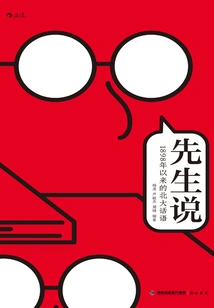
先生说:1898年以来的北大话语
Compiled By Yang Hu, Yan Minjie And Zhou Jing
"The so-called great scholar does not mean a building, but a master." The spiritual core of Peking University is reflected in the words and deeds of these gentlemen. This book imitates the style of "Shishuoxinyu" and is divided into twenty-five chapters such as teaching, conduct, integrity, spirit, and harmony. It freezes the historical moments of the gentlemen of Peking University in the form of quotations, allowing readers to discover the fresh temperament and unique character of the gentlemen in each short story.
"The so-called great scholar does not mean a building, but a master." The spiritual core of Peking University is reflected in the words and deeds of these gentlemen. This book imitates the style of "Shishuoxinyu" and is divided into twenty-five chapters such as teaching, conduct, integrity, spirit, and harmony. It freezes the historical moments of the gentlemen of Peking University in the form of quotations, allowing readers to discover the fresh temperament and unique character of the gentlemen in each short story.
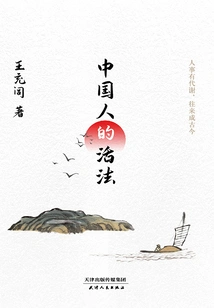
Chinese Way of Life
History中国人的活法
Wang Chonglu
This book uses an open and modern context to write about the past and the present, involving Li Yuan, Song Huizong, Zeng Guofan, Li Hongzhang, Zhuangzi, Diao Chan, Yang Guifei and many other historical figures. It expresses their various difficulties and confusions, uses the past to draw lessons from the present, writes about their hearts, ways of living, true colors and styles, and reveals the secrets of generations of Chinese people who have gone through ups and downs and walked on the right path in life.
This book uses an open and modern context to write about the past and the present, involving Li Yuan, Song Huizong, Zeng Guofan, Li Hongzhang, Zhuangzi, Diao Chan, Yang Guifei and many other historical figures. It expresses their various difficulties and confusions, uses the past to draw lessons from the present, writes about their hearts, ways of living, true colors and styles, and reveals the secrets of generations of Chinese people who have gone through ups and downs and walked on the right path in life.
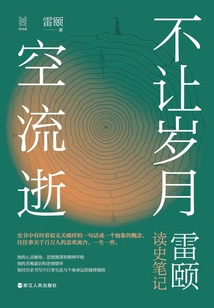
不让岁月空流逝:雷颐读史笔记
Lei Yi
This book is a collection of well-known historian Lei Yi's reading notes over more than 20 years. For Lei Yi, reading is a personal hobby and an intrinsic need. The books he reads are mainly history books, including not only Chinese history, but also world history. Because of his wide interest in reading, he also dabbles in other types of books. The book is divided into five parts according to its content, namely Part One: "Worrying about the World and Exploring Changes in the World", Part Two: "Through the Cracks of History", Part Three: "Don't Let Time Pass by in Empty", Part Four: "Rings of the Spirit", and Part Five: "Thinking Deeply in World History". The selected articles in this book include "The Generation of the "Legend" of Southwest Associated University", "Rereading in the Year of Jiashen", "Centennial Spiritual Genealogy of France", "The Philosophy of Architecture", "Harvard's Openness and Order", etc. In Lei Yi's view, telling history to the public is a mission of historical researchers.
This book is a collection of well-known historian Lei Yi's reading notes over more than 20 years. For Lei Yi, reading is a personal hobby and an intrinsic need. The books he reads are mainly history books, including not only Chinese history, but also world history. Because of his wide interest in reading, he also dabbles in other types of books. The book is divided into five parts according to its content, namely Part One: "Worrying about the World and Exploring Changes in the World", Part Two: "Through the Cracks of History", Part Three: "Don't Let Time Pass by in Empty", Part Four: "Rings of the Spirit", and Part Five: "Thinking Deeply in World History". The selected articles in this book include "The Generation of the "Legend" of Southwest Associated University", "Rereading in the Year of Jiashen", "Centennial Spiritual Genealogy of France", "The Philosophy of Architecture", "Harvard's Openness and Order", etc. In Lei Yi's view, telling history to the public is a mission of historical researchers.
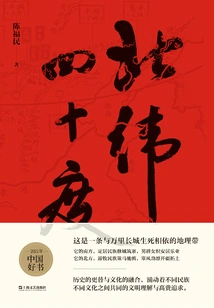
Forty Degrees North Latitude
History北纬四十度
Chen Fumin
The 2021 "Chinese Good Books" and "Harvest Literature List" top long non-fiction list. "The Forty Degrees North Latitude" is the first major cultural essay that explores the Forty Degrees North Latitude. Taking the long history of China as the longitude and the geographical zone of 40 degrees north latitude as the latitude, a unique picture of the country through the ages has been drawn. This book uses detailed historical materials and vivid and humorous writing to reshape historical figures through a series of stories on the basis of strict respect for history. In the narration of these stories and characters, we hope to open up a hidden aspect of history and present our own views of history in the context of different nations learning from each other and shaping each other. This book is a perfect combination of the delicate writing style of literary creation and the rigorous attitude of historical research. After some chapters of this book were serialized in "Harvest" magazine, it received a strong response among readers.
The 2021 "Chinese Good Books" and "Harvest Literature List" top long non-fiction list. "The Forty Degrees North Latitude" is the first major cultural essay that explores the Forty Degrees North Latitude. Taking the long history of China as the longitude and the geographical zone of 40 degrees north latitude as the latitude, a unique picture of the country through the ages has been drawn. This book uses detailed historical materials and vivid and humorous writing to reshape historical figures through a series of stories on the basis of strict respect for history. In the narration of these stories and characters, we hope to open up a hidden aspect of history and present our own views of history in the context of different nations learning from each other and shaping each other. This book is a perfect combination of the delicate writing style of literary creation and the rigorous attitude of historical research. After some chapters of this book were serialized in "Harvest" magazine, it received a strong response among readers.
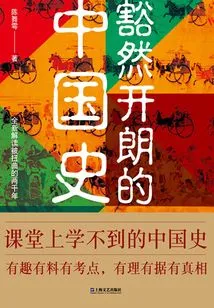
豁然开朗中国史
Chen Wuyun
This book runs through the entire feudal era, telling the ambitions and historical merits and demerits of feudal emperors such as Qin Emperor, Han Wu, Tang Zong and Song Zu, and showing the life choices and fate of capable ministers and generals. At the same time, look around the world and outline the dynasty's position in the world. Go deep into the specific historical context, analyze the misleading and specious views, transcend historical time and space, and explore the rise and fall cycles of dynasties. The language is easy to understand, relaxed and interesting, the thinking is unique, and the analysis is penetrating.
This book runs through the entire feudal era, telling the ambitions and historical merits and demerits of feudal emperors such as Qin Emperor, Han Wu, Tang Zong and Song Zu, and showing the life choices and fate of capable ministers and generals. At the same time, look around the world and outline the dynasty's position in the world. Go deep into the specific historical context, analyze the misleading and specious views, transcend historical time and space, and explore the rise and fall cycles of dynasties. The language is easy to understand, relaxed and interesting, the thinking is unique, and the analysis is penetrating.
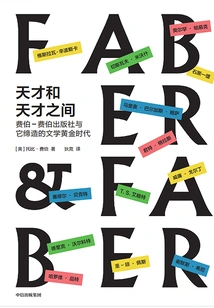
Between Genius and Genius
History天才和天才之间
(uk) Toby Faber
This book is based on the development of Faber Publishing House for more than 60 years from 1929 to 1990, and comprehensively presents the unknown details of the cooperation between publishers and writers, who jointly determined the development direction of modern literature in the 20th century. When Jeffrey Faber was 34 years old, he still had no "serious job". A letter of self-recommendation from T. S. Eliot opened the door to Faber Publishing House. The two worked side by side to create a golden era. Many interesting things that happened in the creation of masterpieces by Nobel Prize winners such as Samuel Beckett, Kazuo Ishiguro and Orhan Pamuk, as well as the fighting games in the publishing industry and interesting anecdotes in the literary circle, are all here. The Faber in this book is an explorer who went through various hardships and finally reached the land of his dreams. All those who are on the road of exploration may wish to take a look at how they made decisions at those important moments of choice. This book is the "adventure log" left by the senior explorers to those who come after them.
This book is based on the development of Faber Publishing House for more than 60 years from 1929 to 1990, and comprehensively presents the unknown details of the cooperation between publishers and writers, who jointly determined the development direction of modern literature in the 20th century. When Jeffrey Faber was 34 years old, he still had no "serious job". A letter of self-recommendation from T. S. Eliot opened the door to Faber Publishing House. The two worked side by side to create a golden era. Many interesting things that happened in the creation of masterpieces by Nobel Prize winners such as Samuel Beckett, Kazuo Ishiguro and Orhan Pamuk, as well as the fighting games in the publishing industry and interesting anecdotes in the literary circle, are all here. The Faber in this book is an explorer who went through various hardships and finally reached the land of his dreams. All those who are on the road of exploration may wish to take a look at how they made decisions at those important moments of choice. This book is the "adventure log" left by the senior explorers to those who come after them.
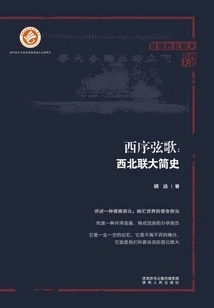
西序弦歌:西北联大简史
Yao Yuan
The "Discovering Northwest Associated University" series, based on the excavation and combing of a large number of precious historical materials and in-depth interviews, comprehensively, truly and vividly reproduces the history of Northwest Associated University, completely presents the historical origins and development of higher education in modern China, and inherits and promotes the indomitable will of the Chinese nation and the United Nations spirit of building a strong country through education. This book is one of the series. "Xixu Xiange: A Brief History of Northwest Associated University" is compiled in six parts: 1. Pingjin beacon smoke; 2. Founding of Linda; 3. Renamed United University; 4. Five schools merged into one (Part 1); 5. Five schools merged into one (Part 2); and Lu, Modern inheritance. The manuscript is corroborated by first-hand archival historical materials and oral memories, paper materials and field investigations complement each other, academic discussion and story telling are combined, vertical staged historical event descriptions are combined with horizontal short stories, with flesh and blood, pictures and texts. Summarize the significance of Northwest Associated University and its role and inspiration in the development of higher education in China and Northwest China, inherit and carry forward the indomitable will of the Chinese nation and the university spirit of building a strong country through education.
The "Discovering Northwest Associated University" series, based on the excavation and combing of a large number of precious historical materials and in-depth interviews, comprehensively, truly and vividly reproduces the history of Northwest Associated University, completely presents the historical origins and development of higher education in modern China, and inherits and promotes the indomitable will of the Chinese nation and the United Nations spirit of building a strong country through education. This book is one of the series. "Xixu Xiange: A Brief History of Northwest Associated University" is compiled in six parts: 1. Pingjin beacon smoke; 2. Founding of Linda; 3. Renamed United University; 4. Five schools merged into one (Part 1); 5. Five schools merged into one (Part 2); and Lu, Modern inheritance. The manuscript is corroborated by first-hand archival historical materials and oral memories, paper materials and field investigations complement each other, academic discussion and story telling are combined, vertical staged historical event descriptions are combined with horizontal short stories, with flesh and blood, pictures and texts. Summarize the significance of Northwest Associated University and its role and inspiration in the development of higher education in China and Northwest China, inherit and carry forward the indomitable will of the Chinese nation and the university spirit of building a strong country through education.
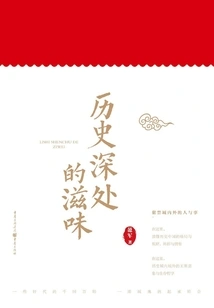
A Taste of History
History历史深处的滋味
Fan Jun
This is a collection of historical essays and a popular historical book. With the Forbidden City as the center, the book tells some political history, culture and systems, people and events during the Ming and Qing Dynasties, discusses the rise and fall of history, analyzes the gains and losses of the government, explores the evolution and development trend of the current situation, and studies the possibilities and limitations.
This is a collection of historical essays and a popular historical book. With the Forbidden City as the center, the book tells some political history, culture and systems, people and events during the Ming and Qing Dynasties, discusses the rise and fall of history, analyzes the gains and losses of the government, explores the evolution and development trend of the current situation, and studies the possibilities and limitations.
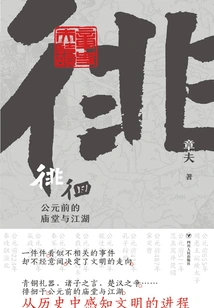
徘徊:公元前的庙堂与江湖
Akio
Living high in the temple and far away from the rivers and lakes represent two extreme life situations in the traditional Chinese discourse system. In these two extreme life situations, "worrying about the people and thinking about the king", the concern for the family, country and the world does not change due to the change of identity. This tenacious spiritual pursuit is the reason why the Chinese nation has never been interrupted since its birth. This book starts from the utensils and explores the pre-Qin cultural symbols under the utensils; to the level of scholars, it searches for the spiritual core that supports the unbroken civilization for five thousand years; and finally, during the wars between Qin and Han Dynasties, it discovers the character of the Chinese nation. While telling the history before the Christian era in prose-like words, it also conducts an in-depth analysis of the spirit of the Chinese nation that has been inherited for five thousand years. It also presents these deep-seated spiritual guidance on paper in easy-to-understand sentences, helping readers lift the fog of history and discover the Chinese culture that has been inherited in history.
Living high in the temple and far away from the rivers and lakes represent two extreme life situations in the traditional Chinese discourse system. In these two extreme life situations, "worrying about the people and thinking about the king", the concern for the family, country and the world does not change due to the change of identity. This tenacious spiritual pursuit is the reason why the Chinese nation has never been interrupted since its birth. This book starts from the utensils and explores the pre-Qin cultural symbols under the utensils; to the level of scholars, it searches for the spiritual core that supports the unbroken civilization for five thousand years; and finally, during the wars between Qin and Han Dynasties, it discovers the character of the Chinese nation. While telling the history before the Christian era in prose-like words, it also conducts an in-depth analysis of the spirit of the Chinese nation that has been inherited for five thousand years. It also presents these deep-seated spiritual guidance on paper in easy-to-understand sentences, helping readers lift the fog of history and discover the Chinese culture that has been inherited in history.
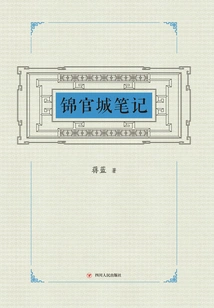
Jinguancheng Notes
History锦官城笔记
Jiang Lan
During the Three Kingdoms period, Shu brocade was famous throughout the country, and Jin officials were set up to manage the Shu brocade production and build a city to protect the Shu brocade production, so it was called Jinguan City. Jinguan City is another name for Chengdu. There are classic poems such as "Jinguan City is full of flowers" and "Beyond Jinguan City is densely populated" which are still sung to this day. The writer Jiang Lan describes the history, culture and character allusions of Jinguan City in three parts: "Shu People's Biography", "Fengwu Hunting Notes" and "Tianfu New Records", such as "Li Tiaoyuan Ode to the Chengdu Lantern Festival", "The Commoner Scholar Luo Chengxiang", "Lin Yutang's In Articles such as "Chengdu", "Isufu and Osprey", "Giant Pandas in History and Culture", "The Evolution of Phoenix Mountain in Chengdu", "Memories of Longchi Bookstore", are like presenting colorful historical pictures of Jinguan City to readers.
During the Three Kingdoms period, Shu brocade was famous throughout the country, and Jin officials were set up to manage the Shu brocade production and build a city to protect the Shu brocade production, so it was called Jinguan City. Jinguan City is another name for Chengdu. There are classic poems such as "Jinguan City is full of flowers" and "Beyond Jinguan City is densely populated" which are still sung to this day. The writer Jiang Lan describes the history, culture and character allusions of Jinguan City in three parts: "Shu People's Biography", "Fengwu Hunting Notes" and "Tianfu New Records", such as "Li Tiaoyuan Ode to the Chengdu Lantern Festival", "The Commoner Scholar Luo Chengxiang", "Lin Yutang's In Articles such as "Chengdu", "Isufu and Osprey", "Giant Pandas in History and Culture", "The Evolution of Phoenix Mountain in Chengdu", "Memories of Longchi Bookstore", are like presenting colorful historical pictures of Jinguan City to readers.
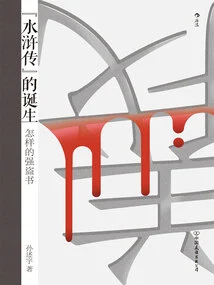
水浒传的诞生:怎样的强盗书
Sun Shuyu
This book places "Water Margin" in the context of the war between the Song and Jin Dynasties, and brilliantly uses the method of historical textual research and literary research to break the impression that readers in the past generally believed that the story of Water Margin was based on the Huainan pirates in the late Northern Song Dynasty, and reveals the story of "Water Margin". The origins of "The Biography" are inextricably linked to the history of the Southern Song Dynasty's resistance to the Jin Dynasty, especially to Yue Fei and the loyal people who fought against the Jin Dynasty with civilian armed forces in the early Southern Song Dynasty. Yue Fei's loyalty to the country and his unjust imprisonment were perhaps the biggest driving force behind the creation of "Water Margin". This book is divided into three parts: "The origin of "Water Margin"", "People and things inside and outside "Water Margin"", and "Psychology and art". It uses a lot of pen and ink to examine the relationship between the characters, places, and events in the novel and real history and geography. It examines the tragic deeds of the prototype characters in the novel. It also analyzes the artistic characteristics of "Water Margin" and further proves that the real people and things in history cast a large shadow in "Water Margin".
This book places "Water Margin" in the context of the war between the Song and Jin Dynasties, and brilliantly uses the method of historical textual research and literary research to break the impression that readers in the past generally believed that the story of Water Margin was based on the Huainan pirates in the late Northern Song Dynasty, and reveals the story of "Water Margin". The origins of "The Biography" are inextricably linked to the history of the Southern Song Dynasty's resistance to the Jin Dynasty, especially to Yue Fei and the loyal people who fought against the Jin Dynasty with civilian armed forces in the early Southern Song Dynasty. Yue Fei's loyalty to the country and his unjust imprisonment were perhaps the biggest driving force behind the creation of "Water Margin". This book is divided into three parts: "The origin of "Water Margin"", "People and things inside and outside "Water Margin"", and "Psychology and art". It uses a lot of pen and ink to examine the relationship between the characters, places, and events in the novel and real history and geography. It examines the tragic deeds of the prototype characters in the novel. It also analyzes the artistic characteristics of "Water Margin" and further proves that the real people and things in history cast a large shadow in "Water Margin".
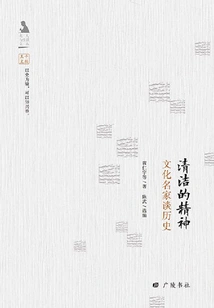
清洁的精神:文化名家谈历史
Huang Renyu Is Waiting, Edited By Chen Wu
This book selects 22 articles by modern literary masters, including "The Reign of Wenjing", "Emperor Yang of the Sui Dynasty", "Reading Han Yu", "Talking About the Emperor", "The Common Man Dong Zhuo", "The Death of Xie Xuancheng", "The Elixir of the Tang Dynasty", "The Beginning and End of Zhang Juzheng", "He Shen Falls and Jiaqing Eats Full", "Today's Helan Mountain", etc.
This book selects 22 articles by modern literary masters, including "The Reign of Wenjing", "Emperor Yang of the Sui Dynasty", "Reading Han Yu", "Talking About the Emperor", "The Common Man Dong Zhuo", "The Death of Xie Xuancheng", "The Elixir of the Tang Dynasty", "The Beginning and End of Zhang Juzheng", "He Shen Falls and Jiaqing Eats Full", "Today's Helan Mountain", etc.
历史深处的这些人,那些鬼
Jiang Limin
So many ups and downs are made a joke. China has a long history, leaving behind countless deeds of emperors, heroes, traitors, and recklessness for future generations to admire and criticize; it also leaves countless mysteries and unsolved cases for future generations to explore. This book picks out some controversial cases from the history of the Three Kingdoms to the Qing Dynasty, and puts forward its own novel and unique opinions.
So many ups and downs are made a joke. China has a long history, leaving behind countless deeds of emperors, heroes, traitors, and recklessness for future generations to admire and criticize; it also leaves countless mysteries and unsolved cases for future generations to explore. This book picks out some controversial cases from the history of the Three Kingdoms to the Qing Dynasty, and puts forward its own novel and unique opinions.
The Past (episode 2)
History旧日风云(二集)
Xu Liping
Chen Gongyin once said, "There is no time in the world without storms." Xu Liping told this "storm" into a story. Among these stories are Pan Jing'an, a hidden dragon in Xiangjiang, who has deep fame and fortune, Fu Baoshi, who is "a man of destiny", Su Liwen, who has become acquainted with Chinese art, and Ke Lin, a miracle doctor with legendary stories; there are also the truth about "same painting but different frame", including the circulation of "Han Shi Tie" in Yuanmingyuan, and the chaos in today's auctions... Xu Liping used the calligraphy and ink calligraphy and painting in his collection to research the people and things related to them, and the content is interesting and full of anecdotes. People who are interested in Hong Kong culture and history, and want to understand the history of the Republic of China, can read it.
Chen Gongyin once said, "There is no time in the world without storms." Xu Liping told this "storm" into a story. Among these stories are Pan Jing'an, a hidden dragon in Xiangjiang, who has deep fame and fortune, Fu Baoshi, who is "a man of destiny", Su Liwen, who has become acquainted with Chinese art, and Ke Lin, a miracle doctor with legendary stories; there are also the truth about "same painting but different frame", including the circulation of "Han Shi Tie" in Yuanmingyuan, and the chaos in today's auctions... Xu Liping used the calligraphy and ink calligraphy and painting in his collection to research the people and things related to them, and the content is interesting and full of anecdotes. People who are interested in Hong Kong culture and history, and want to understand the history of the Republic of China, can read it.
静女其姝:从静宜女中走出的她们
Compiled By Xu Ling
This book records the life stories of eight outstanding students who graduated from Jingyi Girls' High School. They are Wang Peiying who is persistent in her beliefs, biochemist Wang Keqin, Lao Luyi Renjun, artist Sun Weishi, Xi Peilan (Li Ye) who joined the revolution since childhood, Taiwanese female writer Guo Jinxiu, film performance artist Zhao Shuyin and Nightingale Award winner Wu Jingfang. As the pride of Jingyi people, they always embody the rare social responsibilities and responsibilities of new women. The education they received at Jingyi Girls' Middle School is the potential motivation for them to overcome all difficulties and move forward. Through ordinary and fulfilling lives, they pass on the Jingyi spirit from generation to generation.
This book records the life stories of eight outstanding students who graduated from Jingyi Girls' High School. They are Wang Peiying who is persistent in her beliefs, biochemist Wang Keqin, Lao Luyi Renjun, artist Sun Weishi, Xi Peilan (Li Ye) who joined the revolution since childhood, Taiwanese female writer Guo Jinxiu, film performance artist Zhao Shuyin and Nightingale Award winner Wu Jingfang. As the pride of Jingyi people, they always embody the rare social responsibilities and responsibilities of new women. The education they received at Jingyi Girls' Middle School is the potential motivation for them to overcome all difficulties and move forward. Through ordinary and fulfilling lives, they pass on the Jingyi spirit from generation to generation.
东方照相记:近代以来西方重要摄影家在中国
Nan Wuai
The whole article begins in 1844, when Ureidier, a member of the French Lacanian mission to negotiate in China, photographed the cityscape of Macau and Guangzhou, officials and wealthy businessmen, the Sino-French representatives participating in the negotiations, and the signing ceremony of the "Sino-French Whampoa Treaty". These were the first batch of photos taken by Westerners in China. There are still 37 daguerreotypes in France. Since then, Western travelers, missionaries, businessmen, diplomats, adventurers, soldiers, and journalists of all kinds have traveled across China. Thousands of people have left behind photos of China. Which people and photos are the most important? Why is it important? How were those famous photos taken? Why did the most important Western photographers come? This is a history of photography that deeply studies the photography activities of important Western photographers in China since China encountered photography in 1844. The manuscript presents nearly 140 historical images taken by 20 Western photographers in China from 1844 to the early 1980s, and explains them in simple and easy-to-understand words. It uniquely shows many important details of the century-old Chinese history. If you read it carefully, the whole manuscript is rich in pictures and text, and full of flesh and blood.
The whole article begins in 1844, when Ureidier, a member of the French Lacanian mission to negotiate in China, photographed the cityscape of Macau and Guangzhou, officials and wealthy businessmen, the Sino-French representatives participating in the negotiations, and the signing ceremony of the "Sino-French Whampoa Treaty". These were the first batch of photos taken by Westerners in China. There are still 37 daguerreotypes in France. Since then, Western travelers, missionaries, businessmen, diplomats, adventurers, soldiers, and journalists of all kinds have traveled across China. Thousands of people have left behind photos of China. Which people and photos are the most important? Why is it important? How were those famous photos taken? Why did the most important Western photographers come? This is a history of photography that deeply studies the photography activities of important Western photographers in China since China encountered photography in 1844. The manuscript presents nearly 140 historical images taken by 20 Western photographers in China from 1844 to the early 1980s, and explains them in simple and easy-to-understand words. It uniquely shows many important details of the century-old Chinese history. If you read it carefully, the whole manuscript is rich in pictures and text, and full of flesh and blood.
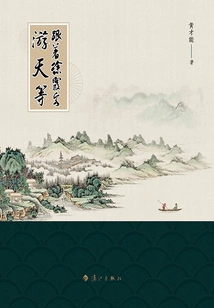
跟着徐霞客游天等
Huang Caicai
This book is a window showing the historical and cultural connotation of Tiandeng County, Chongzuo City, Guangxi. The author has continued to pay attention to the history and culture of Tiandeng for many years, and is still committed to the development of Tiandeng's cultural undertakings after retirement. As a retired comrade, he traveled among the mountains, re-walked the "Xiake Road", and wrote this book, which is a good start for Tiandeng Tourism to explore the historical and cultural connotations, and is of great significance for improving the cultural taste of Tiandeng Tourism.
This book is a window showing the historical and cultural connotation of Tiandeng County, Chongzuo City, Guangxi. The author has continued to pay attention to the history and culture of Tiandeng for many years, and is still committed to the development of Tiandeng's cultural undertakings after retirement. As a retired comrade, he traveled among the mountains, re-walked the "Xiake Road", and wrote this book, which is a good start for Tiandeng Tourism to explore the historical and cultural connotations, and is of great significance for improving the cultural taste of Tiandeng Tourism.
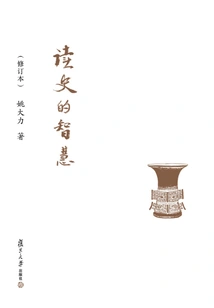
读史的智慧(修订本)
Yao Dali
"The Wisdom of Reading History (Revised Edition)" is the revised edition of the first edition. Compared with the first edition, "The Wisdom of Reading History (Revised Edition)" has undergone major changes in appearance. It mainly deleted four long articles in the original book and added some new book reviews and academic review articles written by the author in the past five years. More than 100,000 words have been removed, and the arrangement of the articles has become consistent throughout the book. Just as the author has always advocated and practiced, the fifty articles included in the book are of high professional standards on the one hand, and are highly readable and fresh on the other. The many sharp insights and vivid and fluent discussions that appear from time to time in the book not only have a certain impact on the readers' ideological concepts, but also provide the most enlightenment of wisdom in terms of observation and understanding of history.
"The Wisdom of Reading History (Revised Edition)" is the revised edition of the first edition. Compared with the first edition, "The Wisdom of Reading History (Revised Edition)" has undergone major changes in appearance. It mainly deleted four long articles in the original book and added some new book reviews and academic review articles written by the author in the past five years. More than 100,000 words have been removed, and the arrangement of the articles has become consistent throughout the book. Just as the author has always advocated and practiced, the fifty articles included in the book are of high professional standards on the one hand, and are highly readable and fresh on the other. The many sharp insights and vivid and fluent discussions that appear from time to time in the book not only have a certain impact on the readers' ideological concepts, but also provide the most enlightenment of wisdom in terms of observation and understanding of history.
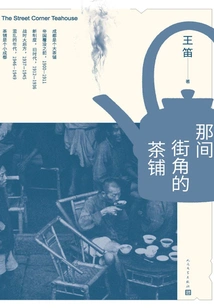
That Tea Shop on the Corner
History那间街角的茶铺
Wang Di
This book is the latest historical and cultural essay by historian Wang Di. 50 Articles, totaling 180,000 words. This book centers on tea shops in modern Chengdu and writes about the daily life, popular culture and economy of tea shops. The author starts from a bowl of tea and writes about the various people in the teahouse and their ups and downs, social interactions and conflicts in the small social space of the teahouse, fully expressing the common social understanding that "teahouse is a small Chengdu, Chengdu is a big teahouse". Full, dense and rich details and vivid, smooth and controlled narration, coupled with objective, rational and multi-dimensional analysis, make this cultural essay vivid, unique and long-lasting to read.
This book is the latest historical and cultural essay by historian Wang Di. 50 Articles, totaling 180,000 words. This book centers on tea shops in modern Chengdu and writes about the daily life, popular culture and economy of tea shops. The author starts from a bowl of tea and writes about the various people in the teahouse and their ups and downs, social interactions and conflicts in the small social space of the teahouse, fully expressing the common social understanding that "teahouse is a small Chengdu, Chengdu is a big teahouse". Full, dense and rich details and vivid, smooth and controlled narration, coupled with objective, rational and multi-dimensional analysis, make this cultural essay vivid, unique and long-lasting to read.
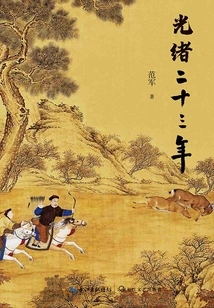
Guangxu Twenty-three Years
History光绪二十三年
Fan Jun
"Twenty-Three Years of Guangxu" is a new historical prose work by the well-known writer Fan Jun. Guangxu twenty-three years, 1897 AD. Those fireworks in the world and the changes in world affairs are the key words of this book. This book tells the story of the Grand Canal, Huai'an City, the scholar Hu Tingqing, the Chen family of Zhuyuan Kengkou in Anhui who compiled the genealogy, the county magistrates Li Chaoqiong, Li Hongzhang, Weng Tonghe and other personnel in the 23rd year of Guangxu. Their experiences in this year, the hopelessness and hope, the mediocre and the ideal; at the same time, it also tells the beauty of heaven and earth, people and customs in the ancient mountain towns in the changing times. In addition, this book also looks back and looks forward to the changes in the world from the perspective of the succession and transition of the dynasty, with the twenty-third year of Guangxu as the background.
"Twenty-Three Years of Guangxu" is a new historical prose work by the well-known writer Fan Jun. Guangxu twenty-three years, 1897 AD. Those fireworks in the world and the changes in world affairs are the key words of this book. This book tells the story of the Grand Canal, Huai'an City, the scholar Hu Tingqing, the Chen family of Zhuyuan Kengkou in Anhui who compiled the genealogy, the county magistrates Li Chaoqiong, Li Hongzhang, Weng Tonghe and other personnel in the 23rd year of Guangxu. Their experiences in this year, the hopelessness and hope, the mediocre and the ideal; at the same time, it also tells the beauty of heaven and earth, people and customs in the ancient mountain towns in the changing times. In addition, this book also looks back and looks forward to the changes in the world from the perspective of the succession and transition of the dynasty, with the twenty-third year of Guangxu as the background.
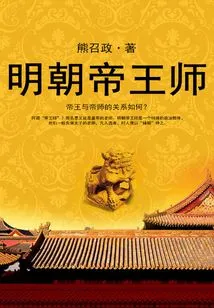
明朝帝王师
Xiong Zhaozheng
This book is another collection of historical essays by Mr. Xiong Zhaozheng. It describes and discusses 15 imperial divisions from Liu Ji in the early Ming Dynasty to Ye Xianggao in the late Ming Dynasty. Most of the 15 imperial masters selected in this book are well-known figures to the Chinese people. Through their ups and downs, we can see the development trajectory and political trend of the entire Ming Dynasty, and we can also see the "appearances" of the emperors of the Ming Dynasty. They may be close to the people, or bring harm to the country; they may be diligent in government affairs, or they may ruin the country. When dealing with one's own teachers, one may become close to them but abandon them, some may rely on their reputation, some may use their skills to belittle others, or some may respect their people but ignore their skills, and so on.
This book is another collection of historical essays by Mr. Xiong Zhaozheng. It describes and discusses 15 imperial divisions from Liu Ji in the early Ming Dynasty to Ye Xianggao in the late Ming Dynasty. Most of the 15 imperial masters selected in this book are well-known figures to the Chinese people. Through their ups and downs, we can see the development trajectory and political trend of the entire Ming Dynasty, and we can also see the "appearances" of the emperors of the Ming Dynasty. They may be close to the people, or bring harm to the country; they may be diligent in government affairs, or they may ruin the country. When dealing with one's own teachers, one may become close to them but abandon them, some may rely on their reputation, some may use their skills to belittle others, or some may respect their people but ignore their skills, and so on.
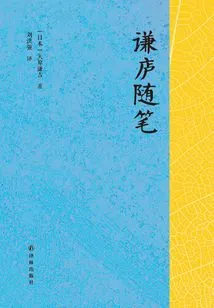
Qianlu Essays
History谦庐随笔
(japan) Kenyoshi Yahara
This book truly records the influential figures in the society of the Republic of China. Some of the anecdotes are unexpected: Christian General Feng Yuxiang was actually a hypocritical and changeable person; Chen Huan fell into decline in his later years and concentrated on studying physiognomy and divination; Wu Peifu was used to being domineering and still maintained a high airs after he stepped down; He Chengjun believed that he was the reincarnation of Sun Wukong, and specially prepared a secret room to collect supplements from young girls to maintain their health; Wang Kemin liked male sex, and one of his lovers was a certain doctor, a famous actor in the theater world; Kong Xiang was intolerant of vulgarity, and spoke English with a Shanxi accent. It also records some historical mysteries, such as the death of Zhang Zongchang, which was committed by a killer ordered by Han Fuju, etc. It is worth noting that the author, as a Japanese, had many favorable comments about the anti-Japanese generals at that time, such as Zhang Zizhong and Zhao Dengyu, but he was very disgusted with Doihara Kenji and others. The relevant historical facts recorded are relatively objective and fair.
This book truly records the influential figures in the society of the Republic of China. Some of the anecdotes are unexpected: Christian General Feng Yuxiang was actually a hypocritical and changeable person; Chen Huan fell into decline in his later years and concentrated on studying physiognomy and divination; Wu Peifu was used to being domineering and still maintained a high airs after he stepped down; He Chengjun believed that he was the reincarnation of Sun Wukong, and specially prepared a secret room to collect supplements from young girls to maintain their health; Wang Kemin liked male sex, and one of his lovers was a certain doctor, a famous actor in the theater world; Kong Xiang was intolerant of vulgarity, and spoke English with a Shanxi accent. It also records some historical mysteries, such as the death of Zhang Zongchang, which was committed by a killer ordered by Han Fuju, etc. It is worth noting that the author, as a Japanese, had many favorable comments about the anti-Japanese generals at that time, such as Zhang Zizhong and Zhao Dengyu, but he was very disgusted with Doihara Kenji and others. The relevant historical facts recorded are relatively objective and fair.
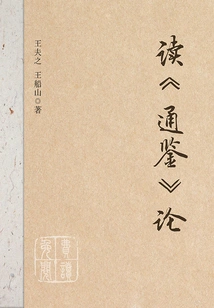
Reading "tongjian
History读《通鉴》论
Wang Fuzhi Wang Chuanshan
A representative work commenting on ancient history during the late Ming and early Qing dynasties. Based on the long history from Qin to the Five Dynasties recorded in "Zi Zhi Tong Jian", the author compared the social reality at that time, expounded his opinions, propositions and ideological understanding, and made various comments on the rise and fall of war in history. When analyzing and commenting on historical figures and events, he often has unique insights and pertinent opinions. The literary talent is high, the discussions are wide-ranging, the new insights are endless, and the arguments are sophisticated. It can be called the most systematic and brilliant masterpiece in traditional historical theory.
A representative work commenting on ancient history during the late Ming and early Qing dynasties. Based on the long history from Qin to the Five Dynasties recorded in "Zi Zhi Tong Jian", the author compared the social reality at that time, expounded his opinions, propositions and ideological understanding, and made various comments on the rise and fall of war in history. When analyzing and commenting on historical figures and events, he often has unique insights and pertinent opinions. The literary talent is high, the discussions are wide-ranging, the new insights are endless, and the arguments are sophisticated. It can be called the most systematic and brilliant masterpiece in traditional historical theory.
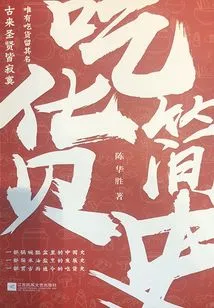
A Brief History of Foodies
History吃货简史
Chen Huasheng
This book easily tells the history of China with 52 delicacies as clues. The book takes the two protagonists "Zhuge Buliang and Yu'er" as the perspective, with 52 cards, introducing the historical evolution of 52 classic dishes from the pre-Qin Dynasty to the Ming and Qing Dynasties. Tracing back to the origin of Chinese food, we also explore the food culture across the country, explore the development history of Chinese people in food, and count the food-loving gourmets in the past dynasties.
This book easily tells the history of China with 52 delicacies as clues. The book takes the two protagonists "Zhuge Buliang and Yu'er" as the perspective, with 52 cards, introducing the historical evolution of 52 classic dishes from the pre-Qin Dynasty to the Ming and Qing Dynasties. Tracing back to the origin of Chinese food, we also explore the food culture across the country, explore the development history of Chinese people in food, and count the food-loving gourmets in the past dynasties.
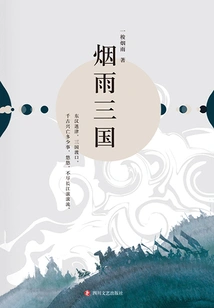
Misty Three Kingdoms
History烟雨三国
A Misty Rain
"Three Kingdoms in the Mist and Rain" is a collection of historical essays written by Yisuo Yanyu, which takes the culture of the Three Kingdoms as the narrative object. The author makes a detailed distinction between the characters and events that existed in the history of the Three Kingdoms and were shaped by the literature of the Three Kingdoms, and conducts in-depth analysis of many major historical issues; and uses easy-to-understand language to restore the neglected historical truth, allowing readers to learn more experiences and lessons.
"Three Kingdoms in the Mist and Rain" is a collection of historical essays written by Yisuo Yanyu, which takes the culture of the Three Kingdoms as the narrative object. The author makes a detailed distinction between the characters and events that existed in the history of the Three Kingdoms and were shaped by the literature of the Three Kingdoms, and conducts in-depth analysis of many major historical issues; and uses easy-to-understand language to restore the neglected historical truth, allowing readers to learn more experiences and lessons.
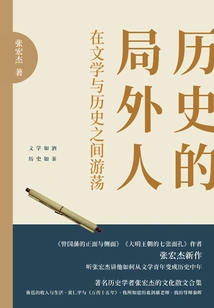
历史的局外人:在文学与历史之间游荡
Zhang Hongjie
This book is a collection of cultural essays by the famous historian Zhang Hongjie. The author personally sorted out all his works from the early days of writing and compiled them into one volume. These works revolve around the two clues of literature and history. Literature is like wine and history is like tea. They are both indispensable parts of the author's life. History is written through words and life is explored through history. The first part of the book, "Masters", is the writers and historians who inspired the author to write, such as Lu Xun, Huang Renyu, etc. The writing style and way of thinking of these masters have influenced the author to this day. The second part, "My Literary Youth Career," records how the author transformed from a literary lover to a "professional writer." The third part, "Me and Historical Writing," explains how the author embarked on the path of professional historical research, and records the teachers who guided and guided him along the way, including Dai Yi, Ge Jianxiong, Qin Hui, etc.
This book is a collection of cultural essays by the famous historian Zhang Hongjie. The author personally sorted out all his works from the early days of writing and compiled them into one volume. These works revolve around the two clues of literature and history. Literature is like wine and history is like tea. They are both indispensable parts of the author's life. History is written through words and life is explored through history. The first part of the book, "Masters", is the writers and historians who inspired the author to write, such as Lu Xun, Huang Renyu, etc. The writing style and way of thinking of these masters have influenced the author to this day. The second part, "My Literary Youth Career," records how the author transformed from a literary lover to a "professional writer." The third part, "Me and Historical Writing," explains how the author embarked on the path of professional historical research, and records the teachers who guided and guided him along the way, including Dai Yi, Ge Jianxiong, Qin Hui, etc.
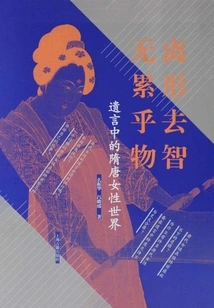
离形去智 无累乎物:遗言中的隋唐女性世界
Mo Zhenhua Lu Luyao
This book collects a total of 236 cases of women's last words in the Sui and Tang Dynasties. The research scope is very wide and the number is huge. They include women in boudoir, official women, bhikshuni, emperor's concubines, official prostitutes, officials' wives, common women, etc. Through the last words, it examines the thoughts, loves, hates, joys and pains of women before they died in the Sui and Tang Dynasties. It also pays attention to whether these last words were realized or not, that is, the attitude of the deceased's descendants or relatives and friends towards their last words or wills. From the hospice care of people in the Sui and Tang Dynasties, we can see the main content of women of different statuses before dying and the different types of views on life and death. It shows the rich and colorful ideological culture at that time, which helps to enhance our understanding of the society and women of the Sui and Tang Dynasties. "When a person is about to die, his words are also good." In most cases, last words are an expression of the true meaning and true emotions of relatives and friends. Even if they are vague, they are generally not false and false. To a large extent, they can be used as a key for the living to determine life and death. The last words reflect the deceased's life summary, social understanding, life perception, attitude towards life, and ideological wisdom. Therefore, we can interpret the ideological history of the deceased's view of death through the last words. The social status of women in the Sui and Tang Dynasties was relatively high in ancient Chinese society. From their last words, we can find the concerns of women of different statuses before their death, as well as different types of views on life and death and their mental states. With the help of their relatives' implementation of their last words, we can examine the society and the status of women in the Tang Dynasty from another perspective.
This book collects a total of 236 cases of women's last words in the Sui and Tang Dynasties. The research scope is very wide and the number is huge. They include women in boudoir, official women, bhikshuni, emperor's concubines, official prostitutes, officials' wives, common women, etc. Through the last words, it examines the thoughts, loves, hates, joys and pains of women before they died in the Sui and Tang Dynasties. It also pays attention to whether these last words were realized or not, that is, the attitude of the deceased's descendants or relatives and friends towards their last words or wills. From the hospice care of people in the Sui and Tang Dynasties, we can see the main content of women of different statuses before dying and the different types of views on life and death. It shows the rich and colorful ideological culture at that time, which helps to enhance our understanding of the society and women of the Sui and Tang Dynasties. "When a person is about to die, his words are also good." In most cases, last words are an expression of the true meaning and true emotions of relatives and friends. Even if they are vague, they are generally not false and false. To a large extent, they can be used as a key for the living to determine life and death. The last words reflect the deceased's life summary, social understanding, life perception, attitude towards life, and ideological wisdom. Therefore, we can interpret the ideological history of the deceased's view of death through the last words. The social status of women in the Sui and Tang Dynasties was relatively high in ancient Chinese society. From their last words, we can find the concerns of women of different statuses before their death, as well as different types of views on life and death and their mental states. With the help of their relatives' implementation of their last words, we can examine the society and the status of women in the Tang Dynasty from another perspective.
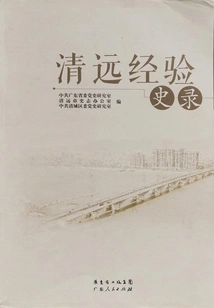
Qingyuan Experience History
History清远经验史录
Compiled By The Party History Research Office Of The Guangdong Provincial Committee Of The Communist Party Of China And Others
The compilation of the book "History of Qingyuan Experience" is an important part of the special research on "From Zhouxin Experience, Qingyuan Experience to Qingyuan Phenomenon". The book is divided into historical documents, newspaper reports, recollections and interviews, research anthologies, major events and appendices. In addition, it also includes some pictures, striving to reflect the historical background, historical process and research status of the Qingyuan experience from different levels and angles.
The compilation of the book "History of Qingyuan Experience" is an important part of the special research on "From Zhouxin Experience, Qingyuan Experience to Qingyuan Phenomenon". The book is divided into historical documents, newspaper reports, recollections and interviews, research anthologies, major events and appendices. In addition, it also includes some pictures, striving to reflect the historical background, historical process and research status of the Qingyuan experience from different levels and angles.
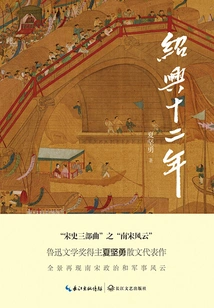
绍兴十二年(文化散文经典系列)
Xia Jianyong
Shaoxing "Twelve Years in Shaoxing" is a long historical prose masterpiece by Xia Jianyong, winner of the Lu Xun Literature Award. This book has won the Jiangsu Province "Five One Project" Award, the "Zhongshan" Literary Award and other awards. "Shaoxing Twelve Years" attempts to comprehensively reflect the political situation and social life of that era through a cross-section of Shaoxing's twelve years of history, using the twelve months of the year as the longitude and a series of major events that occurred in that year as the latitude, and deeply revealing the inner world and behavioral logic of the parties involved. There are not only grand narratives about the political and military affairs of that era, but also subtle descriptions involving all aspects of social life, including customs, prices, imperial examinations, academic trends, arts and literature, officialdom, tea politics, horse politics, ultimatums, postal transmissions, geography, climate, industry, foreign trade, clans, and relatives. The details are meticulously embedded in the framework of a big and ups and downs plot. The author is not interested in popular explanations or jokes about history, nor is he satisfied with standing at the highest point of morality and repeating the characterization of characters and events by existing evaluation systems. Instead, he strives to present a kind of historical poetry and philosophy in his writing, restore the atmosphere and social texture of the time, and pursue the characters' mental journeys, thereby moving towards a deeper and broader historical time, space and spiritual world.
Shaoxing "Twelve Years in Shaoxing" is a long historical prose masterpiece by Xia Jianyong, winner of the Lu Xun Literature Award. This book has won the Jiangsu Province "Five One Project" Award, the "Zhongshan" Literary Award and other awards. "Shaoxing Twelve Years" attempts to comprehensively reflect the political situation and social life of that era through a cross-section of Shaoxing's twelve years of history, using the twelve months of the year as the longitude and a series of major events that occurred in that year as the latitude, and deeply revealing the inner world and behavioral logic of the parties involved. There are not only grand narratives about the political and military affairs of that era, but also subtle descriptions involving all aspects of social life, including customs, prices, imperial examinations, academic trends, arts and literature, officialdom, tea politics, horse politics, ultimatums, postal transmissions, geography, climate, industry, foreign trade, clans, and relatives. The details are meticulously embedded in the framework of a big and ups and downs plot. The author is not interested in popular explanations or jokes about history, nor is he satisfied with standing at the highest point of morality and repeating the characterization of characters and events by existing evaluation systems. Instead, he strives to present a kind of historical poetry and philosophy in his writing, restore the atmosphere and social texture of the time, and pursue the characters' mental journeys, thereby moving towards a deeper and broader historical time, space and spiritual world.
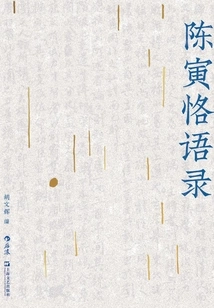
Quotes by Chen Yinke
History陈寅恪语录
Hu Wenhui
"Chen Yinke's Quotations" selects text from all of Mr. Chen Yinke's writings, as well as other people's records of Chen's lectures and memories of Chen's talks, and makes selections based on the editor's personal taste and vision. The selected content focuses on the general theory suitable for "Quotations" and highlights Chen Yinke's historical knowledge. The recording does not avoid repetition. On the contrary, it pays special attention to compiling similar scattered materials into one place, deliberately making it into a "long collection of quotations", in order to serve as a "material collection". The texts selected in this collection are organized into sixty-five subcategories in eight major categories, including academic methods, civilization and society, history·race, history·class, history·culture, history·others, literature, and self-narratives and memories, according to the subject matter, and selected excerpts The sources of Chen Yinke's representative poems are indicated one by one and arranged horizontally in simplified Chinese, in order to better refine Chen Yinke's academic essence and restore Chen Yinke's spiritual outlook, making it easier for readers to read and study, and truly understand Chen Yinke's learning, thinking, words and deeds.
"Chen Yinke's Quotations" selects text from all of Mr. Chen Yinke's writings, as well as other people's records of Chen's lectures and memories of Chen's talks, and makes selections based on the editor's personal taste and vision. The selected content focuses on the general theory suitable for "Quotations" and highlights Chen Yinke's historical knowledge. The recording does not avoid repetition. On the contrary, it pays special attention to compiling similar scattered materials into one place, deliberately making it into a "long collection of quotations", in order to serve as a "material collection". The texts selected in this collection are organized into sixty-five subcategories in eight major categories, including academic methods, civilization and society, history·race, history·class, history·culture, history·others, literature, and self-narratives and memories, according to the subject matter, and selected excerpts The sources of Chen Yinke's representative poems are indicated one by one and arranged horizontally in simplified Chinese, in order to better refine Chen Yinke's academic essence and restore Chen Yinke's spiritual outlook, making it easier for readers to read and study, and truly understand Chen Yinke's learning, thinking, words and deeds.
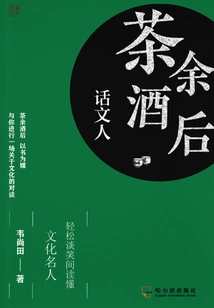
茶余酒后话文人
Wei Shangtian
This book is a collection of historical and cultural essays, narrating around the experiences and stories of ancient Chinese historical and cultural celebrities. It uses the mind of a modern intellectual to understand the passing historical smoke and records these feelings in the form of cultural essays. While tracing the experiences of historical and cultural celebrities, this book also interprets their poems and works with its own unique perspective and insights, expressing a modern person's thinking about history, culture and even human destiny.
This book is a collection of historical and cultural essays, narrating around the experiences and stories of ancient Chinese historical and cultural celebrities. It uses the mind of a modern intellectual to understand the passing historical smoke and records these feelings in the form of cultural essays. While tracing the experiences of historical and cultural celebrities, this book also interprets their poems and works with its own unique perspective and insights, expressing a modern person's thinking about history, culture and even human destiny.
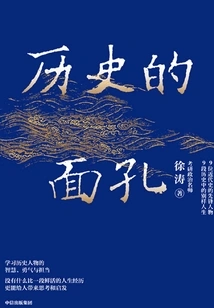
Face of History
History历史的面孔
Xu Tao
China's modern history is a history of suffering, but also a history of continuous exploration by the Chinese people. "Pursuing innovation and change" runs through the entire time and space, and many ideas, many plans, and many life choices have emerged. In the historical general education we have experienced, those who have been given thick and colorful descriptions are front-line historical figures. In fact, there are many important figures who have played an important role in the process of historical development. More importantly, they have the choices of ordinary people and the worries of ordinary people. Their academic progress, love for their children, and life choices can often bring us more practical inspiration. Xu Tao, a famous political teacher for the postgraduate entrance examination, selected nine representative figures in modern history. They were once drops of water entering the sea in the new wave of history. They were also simplified into fragmentary knowledge points in textbooks. In "The Face of History", the faces of these figures gradually become clear. The learning and working environment of modern society requires us to have strong decision-making capabilities and the ability to handle complex affairs. There is no "principle of life" that can bring people more thought and inspiration than a vivid life experience. Let's ponder the underlying logic behind the success or failure of the characters, experience different lives in history, and feel the warmth outside the test site.
China's modern history is a history of suffering, but also a history of continuous exploration by the Chinese people. "Pursuing innovation and change" runs through the entire time and space, and many ideas, many plans, and many life choices have emerged. In the historical general education we have experienced, those who have been given thick and colorful descriptions are front-line historical figures. In fact, there are many important figures who have played an important role in the process of historical development. More importantly, they have the choices of ordinary people and the worries of ordinary people. Their academic progress, love for their children, and life choices can often bring us more practical inspiration. Xu Tao, a famous political teacher for the postgraduate entrance examination, selected nine representative figures in modern history. They were once drops of water entering the sea in the new wave of history. They were also simplified into fragmentary knowledge points in textbooks. In "The Face of History", the faces of these figures gradually become clear. The learning and working environment of modern society requires us to have strong decision-making capabilities and the ability to handle complex affairs. There is no "principle of life" that can bring people more thought and inspiration than a vivid life experience. Let's ponder the underlying logic behind the success or failure of the characters, experience different lives in history, and feel the warmth outside the test site.
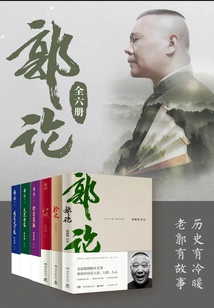
Guo Lun (6 Volumes in Total)
History郭论(全6册)
Guo Degang
"Guo Lun" series has 6 volumes in total. "Guo Lun" collects the history of the Ming and Qing Dynasties, interprets market culture, and talks about classics... Guo Degang uses a more unique perspective and a more heart-warming story to interpret the "loyalty" and "righteousness" in the bones of the Chinese people. Gain insight into life, reflect changes in the world, and have history, literature, and philosophy all at once. Cook tea over slow fire, advance and retreat in moderation, and experience Chinese humanity, human feelings, and people's hearts. Lao Guo's wisdom, passion and true temperament are fully demonstrated here. "Guo Lun" will take you to appreciate the larger world. "Collecting History" "No one believes it, but I am actually a very quiet person." Guo Degang said in "Collecting History" in the "Guo Lun" series, "It has been raining recently, and I sit at home every day, reading and watching plays, and I feel very happy." He likes reading history. "Reading history can make people wise. The ancients said, 'Learning from the past can tell the future.' This is what it means." "Collecting History" is the second article in the million-selling classic "Guo Lun" series. By analyzing historical figures, Guo Degang reviewed the undercurrents of power games, analyzed the rules of the game between kings and ministers, and discovered the subtleties and depths of human nature. To learn to speak, learn to do things, and learn to behave in society, you must read "Collecting History". From temples to rivers and lakes, from emperors and generals to traders and pawns, conspiracies, rules of game between kings and ministers, concealment, Chinese society and sophistication are all in Guo Lun's "Collecting History". "Jianghu" "Those who travel in the Jianghu should pay attention to three strengths: a strong official backing; a strong moral relationship; and a strong ability." - Guo Degang "Jianghu" What kind of city, scheming and structure do you need to travel in the Jianghu? Watch Guo Degang discuss history while cooking wine, and Jianghu bosses discuss Jianghu. From official history, anecdotal history and folk stories, he extracts the underlying logic of Chinese-style human society and reveals the mysteries of Jianghu, officialdom, and shopping malls. This book teaches you how to be a good person, guard against others, and control others. "There are waves in the heart and spring scenery in the face, this is the river and lake." "You must be elegant" In the past, if you listened to the teacher's story, you must be careful not to get up too early. In the past, storytellers did not go there early in the morning, unless it was for the "underground business" of Tianqiao. Usually it is in the afternoon or evening, and the afternoon performance is the official performance. Of course, there are also those who are earlier than this, called "shuo bench leader", or "zao'er" in jargon. There is also a performance at night, that one is called "Leng Wan'er". As the name suggests, in the past when electric lights were not widely available, oil lamp bowls were lit when it was too late. In the past, there were even audiences sitting on the stage listening! For example, sometimes when a distinguished audience comes, it's not appropriate to sit in the audience, so just sit on the stage! Stay three or five steps away from the actors, move a chair and watch from there. Therefore, at that time, in addition to the actors in costumes, there were twenty or thirty audience members in casual clothes on the stage. It was normal! "I am a Literary Man" I studied crosstalk and storytelling in elementary school, and later started singing. Along the way, many audience members mentioned in chats that they thought actors were very knowledgeable, especially storytellers. The three empresses and five emperors, who talked about the past and the present, knew everything. --Hi, actually you don't understand the characteristics of our work. Don't think that we have been talking about family planning since the beginning of the world. I have been stunned for a while. We are all "the science of remembering questions", which has been passed down orally from generation to generation. A friend asked, among those characters in storytelling, was there really such a person in history? Hey, don't take this stuff seriously. For every storyteller, the Sui and Tang Dynasties he talks about are his exclusive Sui and Tang Dynasties. Some storytellers say "Luo Shixin" and "Luo Cheng" are the same person, and say that he is a pretty boy; others say that Luo Shixin is just a fool. "Literature and History Expert" We have been talking about the right and wrong, the truth and the false in ancient times. I wonder if you have noticed that the historians in history worked hard, wrote hard, did not eat or sleep, and stayed up all night to write down the historical albums. For example, Yang Jiajiang, Lanling King, Obai, Yelu Hongji, many famous heroes and generals in history have been overthrown! The historian's pen cannot compare to the storyteller's mouth!
"Guo Lun" series has 6 volumes in total. "Guo Lun" collects the history of the Ming and Qing Dynasties, interprets market culture, and talks about classics... Guo Degang uses a more unique perspective and a more heart-warming story to interpret the "loyalty" and "righteousness" in the bones of the Chinese people. Gain insight into life, reflect changes in the world, and have history, literature, and philosophy all at once. Cook tea over slow fire, advance and retreat in moderation, and experience Chinese humanity, human feelings, and people's hearts. Lao Guo's wisdom, passion and true temperament are fully demonstrated here. "Guo Lun" will take you to appreciate the larger world. "Collecting History" "No one believes it, but I am actually a very quiet person." Guo Degang said in "Collecting History" in the "Guo Lun" series, "It has been raining recently, and I sit at home every day, reading and watching plays, and I feel very happy." He likes reading history. "Reading history can make people wise. The ancients said, 'Learning from the past can tell the future.' This is what it means." "Collecting History" is the second article in the million-selling classic "Guo Lun" series. By analyzing historical figures, Guo Degang reviewed the undercurrents of power games, analyzed the rules of the game between kings and ministers, and discovered the subtleties and depths of human nature. To learn to speak, learn to do things, and learn to behave in society, you must read "Collecting History". From temples to rivers and lakes, from emperors and generals to traders and pawns, conspiracies, rules of game between kings and ministers, concealment, Chinese society and sophistication are all in Guo Lun's "Collecting History". "Jianghu" "Those who travel in the Jianghu should pay attention to three strengths: a strong official backing; a strong moral relationship; and a strong ability." - Guo Degang "Jianghu" What kind of city, scheming and structure do you need to travel in the Jianghu? Watch Guo Degang discuss history while cooking wine, and Jianghu bosses discuss Jianghu. From official history, anecdotal history and folk stories, he extracts the underlying logic of Chinese-style human society and reveals the mysteries of Jianghu, officialdom, and shopping malls. This book teaches you how to be a good person, guard against others, and control others. "There are waves in the heart and spring scenery in the face, this is the river and lake." "You must be elegant" In the past, if you listened to the teacher's story, you must be careful not to get up too early. In the past, storytellers did not go there early in the morning, unless it was for the "underground business" of Tianqiao. Usually it is in the afternoon or evening, and the afternoon performance is the official performance. Of course, there are also those who are earlier than this, called "shuo bench leader", or "zao'er" in jargon. There is also a performance at night, that one is called "Leng Wan'er". As the name suggests, in the past when electric lights were not widely available, oil lamp bowls were lit when it was too late. In the past, there were even audiences sitting on the stage listening! For example, sometimes when a distinguished audience comes, it's not appropriate to sit in the audience, so just sit on the stage! Stay three or five steps away from the actors, move a chair and watch from there. Therefore, at that time, in addition to the actors in costumes, there were twenty or thirty audience members in casual clothes on the stage. It was normal! "I am a Literary Man" I studied crosstalk and storytelling in elementary school, and later started singing. Along the way, many audience members mentioned in chats that they thought actors were very knowledgeable, especially storytellers. The three empresses and five emperors, who talked about the past and the present, knew everything. --Hi, actually you don't understand the characteristics of our work. Don't think that we have been talking about family planning since the beginning of the world. I have been stunned for a while. We are all "the science of remembering questions", which has been passed down orally from generation to generation. A friend asked, among those characters in storytelling, was there really such a person in history? Hey, don't take this stuff seriously. For every storyteller, the Sui and Tang Dynasties he talks about are his exclusive Sui and Tang Dynasties. Some storytellers say "Luo Shixin" and "Luo Cheng" are the same person, and say that he is a pretty boy; others say that Luo Shixin is just a fool. "Literature and History Expert" We have been talking about the right and wrong, the truth and the false in ancient times. I wonder if you have noticed that the historians in history worked hard, wrote hard, did not eat or sleep, and stayed up all night to write down the historical albums. For example, Yang Jiajiang, Lanling King, Obai, Yelu Hongji, many famous heroes and generals in history have been overthrown! The historian's pen cannot compare to the storyteller's mouth!
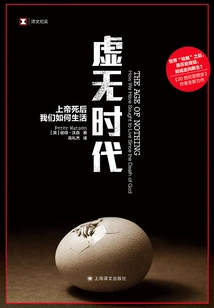
虚无时代:上帝死后我们如何生活(译文纪实)
J
How did Nietzsche's declaration of "the death of God" give birth to a postmodern, fragmented society? An intellectual book that breaks down professional barriers, a feast of ideas that refuses to be simplified. From the collapse of classical antiquity to the 21st century, the exploration journey of human intellectual adventurers over the past 130 years. Is it a spiritual regression, or a return to fanaticism? Where will mankind go when it stands at a historical divergence point? This is a captivating story of human exploration and creation, failure and success in an isolated world. As one of the most outstanding intellectual historians of our time, Peter Watson takes the ideological shock caused by Nietzsche at the turn of the century as the starting point and examines how this shock invaded all aspects of spiritual life, ranging from Dostoevsky, Jung, Husserl, and Ibsen to Picasso and Bob Dylan, from psychology, phenomenology, and theosophy. To Impressionism, Pop Art, Jazz, from Auschwitz, Hiroshima, the Great Purge to Woodstock, and "9·11". Connecting the dots, he uses elegant and precise strokes to unearth the orderly context behind seemingly unrelated phenomena, and draws an ideological map from the era of classical collapse to the bizarre postmodern era.
How did Nietzsche's declaration of "the death of God" give birth to a postmodern, fragmented society? An intellectual book that breaks down professional barriers, a feast of ideas that refuses to be simplified. From the collapse of classical antiquity to the 21st century, the exploration journey of human intellectual adventurers over the past 130 years. Is it a spiritual regression, or a return to fanaticism? Where will mankind go when it stands at a historical divergence point? This is a captivating story of human exploration and creation, failure and success in an isolated world. As one of the most outstanding intellectual historians of our time, Peter Watson takes the ideological shock caused by Nietzsche at the turn of the century as the starting point and examines how this shock invaded all aspects of spiritual life, ranging from Dostoevsky, Jung, Husserl, and Ibsen to Picasso and Bob Dylan, from psychology, phenomenology, and theosophy. To Impressionism, Pop Art, Jazz, from Auschwitz, Hiroshima, the Great Purge to Woodstock, and "9·11". Connecting the dots, he uses elegant and precise strokes to unearth the orderly context behind seemingly unrelated phenomena, and draws an ideological map from the era of classical collapse to the bizarre postmodern era.
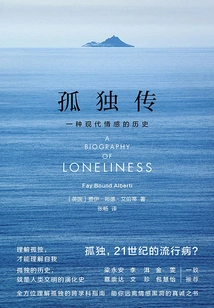
孤独传:一种现代情感的历史
(uk) Faye Bond Alberti
Some people say that loneliness is the epidemic of the 21st century. We try our best to escape loneliness, but it still follows us. Where does loneliness come from? Are humans destined to be lonely? Historian Faye Bond Alberti believes that loneliness is a modern emotion. From the decline of religion to the industrial revolution, to the boom of social media and online communities since the digital revolution, the evolution of the concept of loneliness is also the history of the development of human civilization. Understanding how loneliness was invented helps us understand why it is so prevalent today. "The Biography of Loneliness" integrates literature, philosophy, sociology, psychology and economics, etc., And strives to restore the hidden history and complex meaning of loneliness. Each chapter in this book focuses on some form of loneliness, exploring its connections with individuals and societies, emotions and bodies. In the book, Alberti quotes from many sources, combing through letters and diaries, philosophical texts, political discussions, medical documents, etc. From the 19th century to the present. He studies the experiences of people including Sylvia Plath, Queen Victoria, and Virginia Woolf, and explores the loneliness experience of different groups of people, including teenagers, people living alone, the elderly, and the homeless...
Some people say that loneliness is the epidemic of the 21st century. We try our best to escape loneliness, but it still follows us. Where does loneliness come from? Are humans destined to be lonely? Historian Faye Bond Alberti believes that loneliness is a modern emotion. From the decline of religion to the industrial revolution, to the boom of social media and online communities since the digital revolution, the evolution of the concept of loneliness is also the history of the development of human civilization. Understanding how loneliness was invented helps us understand why it is so prevalent today. "The Biography of Loneliness" integrates literature, philosophy, sociology, psychology and economics, etc., And strives to restore the hidden history and complex meaning of loneliness. Each chapter in this book focuses on some form of loneliness, exploring its connections with individuals and societies, emotions and bodies. In the book, Alberti quotes from many sources, combing through letters and diaries, philosophical texts, political discussions, medical documents, etc. From the 19th century to the present. He studies the experiences of people including Sylvia Plath, Queen Victoria, and Virginia Woolf, and explores the loneliness experience of different groups of people, including teenagers, people living alone, the elderly, and the homeless...
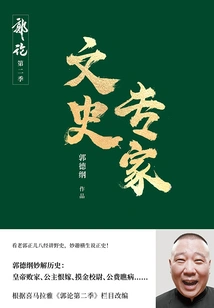
文史专家
Guo Degang
We have been chatting about the right and wrong, the truth and the false in ancient times. I wonder if you have noticed that the historians in history worked hard, wrote hard, did not eat or sleep, and stayed up all night to write down the history albums. For example, Yang Jiajiang, Lanling King, Obai, Yelu Hongji, many famous heroes and generals in history have been overthrown! The historian's pen cannot compare to the storyteller's mouth!
We have been chatting about the right and wrong, the truth and the false in ancient times. I wonder if you have noticed that the historians in history worked hard, wrote hard, did not eat or sleep, and stayed up all night to write down the history albums. For example, Yang Jiajiang, Lanling King, Obai, Yelu Hongji, many famous heroes and generals in history have been overthrown! The historian's pen cannot compare to the storyteller's mouth!
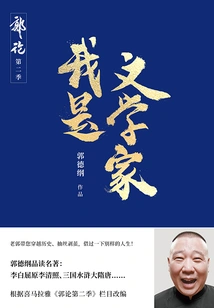
I Am a Writer
History我是文学家
Guo Degang
I studied crosstalk and storytelling in primary school, and later I started singing. Along the way, many audience members mentioned in chats that they thought actors were very knowledgeable, especially storytellers. The former three empresses and five emperors knew everything about the past and the present. --Hi, actually you don't understand the characteristics of our work. Don't think that we have been talking about family planning since the beginning of the world. I have been stunned for a while. We are all "the science of remembering questions", which has been passed down orally from generation to generation. A friend asked, among those characters in storytelling, was there really such a person in history? Hey, don't take this stuff seriously. For every storyteller, the Sui and Tang Dynasties he talks about are his exclusive Sui and Tang Dynasties. Some storytellers say "Luo Shixin" and "Luo Cheng" are the same person, and say that he is a pretty boy; others say that Luo Shixin is just a fool. Unless you mix history and storytelling, would you still go to work or not? Do you want to do something else?
I studied crosstalk and storytelling in primary school, and later I started singing. Along the way, many audience members mentioned in chats that they thought actors were very knowledgeable, especially storytellers. The former three empresses and five emperors knew everything about the past and the present. --Hi, actually you don't understand the characteristics of our work. Don't think that we have been talking about family planning since the beginning of the world. I have been stunned for a while. We are all "the science of remembering questions", which has been passed down orally from generation to generation. A friend asked, among those characters in storytelling, was there really such a person in history? Hey, don't take this stuff seriously. For every storyteller, the Sui and Tang Dynasties he talks about are his exclusive Sui and Tang Dynasties. Some storytellers say "Luo Shixin" and "Luo Cheng" are the same person, and say that he is a pretty boy; others say that Luo Shixin is just a fool. Unless you mix history and storytelling, would you still go to work or not? Do you want to do something else?