Library
Browse and search books
2,472 novels found
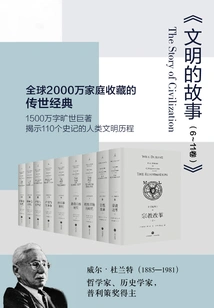
文明的故事(6-11卷)
(us) Will Durant
This is a fluent and beautiful collection of "stories" with vivid narration and is very popular around the world. This set contains volumes 6-11, including "Religious Reformation", "The Age of the Beginning of Reason", "The Age of Louis XIV", "The Age of Voltaire", "Rousseau and the Revolution (Volume 1 and 2)", and "The Age of Napoleon (Volume 1 and 2)".
This is a fluent and beautiful collection of "stories" with vivid narration and is very popular around the world. This set contains volumes 6-11, including "Religious Reformation", "The Age of the Beginning of Reason", "The Age of Louis XIV", "The Age of Voltaire", "Rousseau and the Revolution (Volume 1 and 2)", and "The Age of Napoleon (Volume 1 and 2)".
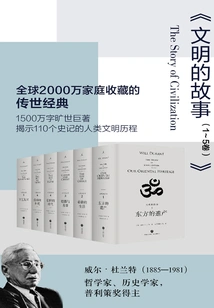
文明的故事(1-5卷)
G
This is a fluent and beautiful collection of "stories" with vivid narration and is very popular around the world. This set contains volumes 1-5, including "Heritage of the East", "Greek Life", "Caesar and Christ", "The Age of Faith (Volume 1 and 2)" and "Renaissance".
This is a fluent and beautiful collection of "stories" with vivid narration and is very popular around the world. This set contains volumes 1-5, including "Heritage of the East", "Greek Life", "Caesar and Christ", "The Age of Faith (Volume 1 and 2)" and "Renaissance".
Super Illustrated Minimalist European History (how European History Shapes Modern Civilization)
History超图解极简欧洲史(欧洲历史如何塑造现代文明)
Compiled By Wang Yukun And Dong Zhidao
More than 200 tables analyze the development process of European society and the evolution of modern civilization, allowing readers to have a clearer understanding of history and the fundamental issues of current social contradictions. ◎Unique perspective: This book starts from the monarch to the parliament, from farming to commerce, from religion to enlightenment, from hegemony to alliance. Using historical thinking to integrate specific historical facts, the long and complex European history is presented systematically. Wang Yukun and Dong Zhidao are best-selling authors of illustrated popular science books. They have long been engaged in the creation of natural and social science popular science books. They are good at telling complex and profound scientific knowledge in easy-to-read writing. Their representative works include "Super Illustrated Brief History of Humanity", "Super Illustrated Brief History of the Future", "Illustrated Brief History of Time", "Illustrated Brief History of the Universe", etc. One book grasps the evolution of European civilization over the past 4,000 years, explores the origins of Western civilization, and re-understands today's world. From "Homer's Epic" to "Magna Carta", from the Citizens' Assembly to the House of Representatives, more than 500 pictures and more than 200 tables provide a comprehensive analysis of the historical progress of Europe, taking you to appreciate the foundation of Europe's world-leading civilization and its suffering and glory over the past thousands of years. The book comes with a comparative chronology of Chinese and European history for easy understanding. Where did Thucydides' Trap come from? What are the historical roots of the Brexit problem? What kind of prosperity and crises has liberal democracy brought to Europe? Why is the situation in European countries so complicated? From the Cretan civilization in the 28th century BC to the European Union in the 21st century, "Hyper-Illustrated Minimalist European History" sorts out and summarizes the important nodes in Europe's nearly 4,000 years of history. It draws about 500 logical maps, 200 illustrations and tables. It uses a super-graphical approach to discover the evolutionary logic of European history, allowing you to have a comprehensive understanding of Europe in one hand. From monarchs to parliaments, from farming to commerce, from religion to enlightenment, from hegemony to alliances, all characters and events are no longer isolated from each other in the historical logic of this book. Specific historical facts are integrated with historical thinking, and the long and complex European history is systematically presented. Between the latitude and longitude, you will gain insight into this five-thousand-year-long European history picture.
More than 200 tables analyze the development process of European society and the evolution of modern civilization, allowing readers to have a clearer understanding of history and the fundamental issues of current social contradictions. ◎Unique perspective: This book starts from the monarch to the parliament, from farming to commerce, from religion to enlightenment, from hegemony to alliance. Using historical thinking to integrate specific historical facts, the long and complex European history is presented systematically. Wang Yukun and Dong Zhidao are best-selling authors of illustrated popular science books. They have long been engaged in the creation of natural and social science popular science books. They are good at telling complex and profound scientific knowledge in easy-to-read writing. Their representative works include "Super Illustrated Brief History of Humanity", "Super Illustrated Brief History of the Future", "Illustrated Brief History of Time", "Illustrated Brief History of the Universe", etc. One book grasps the evolution of European civilization over the past 4,000 years, explores the origins of Western civilization, and re-understands today's world. From "Homer's Epic" to "Magna Carta", from the Citizens' Assembly to the House of Representatives, more than 500 pictures and more than 200 tables provide a comprehensive analysis of the historical progress of Europe, taking you to appreciate the foundation of Europe's world-leading civilization and its suffering and glory over the past thousands of years. The book comes with a comparative chronology of Chinese and European history for easy understanding. Where did Thucydides' Trap come from? What are the historical roots of the Brexit problem? What kind of prosperity and crises has liberal democracy brought to Europe? Why is the situation in European countries so complicated? From the Cretan civilization in the 28th century BC to the European Union in the 21st century, "Hyper-Illustrated Minimalist European History" sorts out and summarizes the important nodes in Europe's nearly 4,000 years of history. It draws about 500 logical maps, 200 illustrations and tables. It uses a super-graphical approach to discover the evolutionary logic of European history, allowing you to have a comprehensive understanding of Europe in one hand. From monarchs to parliaments, from farming to commerce, from religion to enlightenment, from hegemony to alliances, all characters and events are no longer isolated from each other in the historical logic of this book. Specific historical facts are integrated with historical thinking, and the long and complex European history is systematically presented. Between the latitude and longitude, you will gain insight into this five-thousand-year-long European history picture.
罗马史:从开端到古典时代晚期
(germany) Klaus Bringemann
"The History of Rome: From the Beginning to the Late Classical Age" provides an overview of the history of Rome. The analysis and orderly writing make this brief history quite fascinating. The author leads the readers to trace the origins of Rome, and from there, he gives an overview of Rome's early foreign struggles, the crisis of the Republic, the formation of the empire and a series of problems in politics, economy, society, etc., Until the reform attempts of the Roman Empire in the late classical era. In addition, he describes the Great Migration, the disintegration of the Western Empire, and the revival of the Eastern Empire. Finally, Rome's legacy to future generations forms the final chapter of this accessible and concise history.
"The History of Rome: From the Beginning to the Late Classical Age" provides an overview of the history of Rome. The analysis and orderly writing make this brief history quite fascinating. The author leads the readers to trace the origins of Rome, and from there, he gives an overview of Rome's early foreign struggles, the crisis of the Republic, the formation of the empire and a series of problems in politics, economy, society, etc., Until the reform attempts of the Roman Empire in the late classical era. In addition, he describes the Great Migration, the disintegration of the Western Empire, and the revival of the Eastern Empire. Finally, Rome's legacy to future generations forms the final chapter of this accessible and concise history.
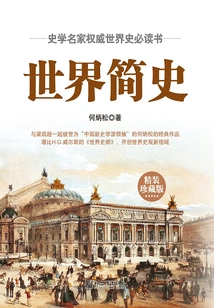
A Brief History of the World
History世界简史
He Bingsong
"A Brief History of the World" was published in 1934 and has been printed dozens of times and has had a great influence. The first volume starts from Asia and narrates the historical facts from the origin of world culture to the rise of Europe. It also intersperses the development of Eastern culture and its influence on Europe. The second volume starts with the formation of world powers and the development of colonial undertakings, and systematically explains how European powers dominated the process of modern world history. The book advocates Chinese culture as the standard. On the basis of referring to the achievements of Western history, and based on the activities and contributions of Asian countries, including China, in world cultural history, it is narrated at appropriate positions. It is intended to illustrate that Asian culture has greatly promoted the progress of Europe. The prosperity of Europe and the decline of Asia only occurred after Europe carried out world colonization in modern times. Asian nations should view history correctly. This new view of history breaks the Eurocentric view of history and adjusts the new historical perspective.
"A Brief History of the World" was published in 1934 and has been printed dozens of times and has had a great influence. The first volume starts from Asia and narrates the historical facts from the origin of world culture to the rise of Europe. It also intersperses the development of Eastern culture and its influence on Europe. The second volume starts with the formation of world powers and the development of colonial undertakings, and systematically explains how European powers dominated the process of modern world history. The book advocates Chinese culture as the standard. On the basis of referring to the achievements of Western history, and based on the activities and contributions of Asian countries, including China, in world cultural history, it is narrated at appropriate positions. It is intended to illustrate that Asian culture has greatly promoted the progress of Europe. The prosperity of Europe and the decline of Asia only occurred after Europe carried out world colonization in modern times. Asian nations should view history correctly. This new view of history breaks the Eurocentric view of history and adjusts the new historical perspective.
谋划世界的100次会议(下)(破解人类文明之谜)
Edited By Godan Qian Shu
A meeting or a conversation always creates another look for the world inadvertently. Although "100 Meetings to Plan the World" is just a war on the tip of the tongue, it is still a life-and-death chase.
A meeting or a conversation always creates another look for the world inadvertently. Although "100 Meetings to Plan the World" is just a war on the tip of the tongue, it is still a life-and-death chase.
谋划世界的100次会议(上)(破解人类文明之谜)
Edited By Godan Qian Shu
A meeting or a conversation always creates another look for the world inadvertently. Although "100 Meetings to Plan the World" is just a war on the tip of the tongue, it is still a life-and-death chase.
A meeting or a conversation always creates another look for the world inadvertently. Although "100 Meetings to Plan the World" is just a war on the tip of the tongue, it is still a life-and-death chase.
扭转世界的100次外交(上)(破解人类文明之谜)
Edited By Godan Qian Shu
Diplomacy refers to a country's activities in international relations, and cooperation between countries is achieved in diplomatic activities. It is an indispensable part of the country's prosperity and development and is the link between countries. Watch "100 Diplomacy That Changed the World", recall Zhang Qian's trip to the Western Regions, and watch Churchill's Iron Curtain speech, which all changed the development history of the world.
Diplomacy refers to a country's activities in international relations, and cooperation between countries is achieved in diplomatic activities. It is an indispensable part of the country's prosperity and development and is the link between countries. Watch "100 Diplomacy That Changed the World", recall Zhang Qian's trip to the Western Regions, and watch Churchill's Iron Curtain speech, which all changed the development history of the world.
扭转世界的100次外交(下)(破解人类文明之谜)
Edited By Godan Qian Shu
Diplomacy refers to a country's activities in international relations, and cooperation between countries is achieved in diplomatic activities. It is an indispensable part of the country's prosperity and development and is the link between countries. Watch "100 Diplomacy That Changed the World", recall Zhang Qian's trip to the Western Regions, and watch Churchill's Iron Curtain speech, which all changed the development history of the world.
Diplomacy refers to a country's activities in international relations, and cooperation between countries is achieved in diplomatic activities. It is an indispensable part of the country's prosperity and development and is the link between countries. Watch "100 Diplomacy That Changed the World", recall Zhang Qian's trip to the Western Regions, and watch Churchill's Iron Curtain speech, which all changed the development history of the world.
世界史的故事·从文明诞生到罗马帝国崛起
(us) Susan Wise Ball
"The Story of World History: From the Birth of Civilization to the Rise of the Roman Empire" includes the first two volumes of the "The Story of World History" series, telling the history of early civilization before BC and the classical era. 01 Royal power descended from the sky (the beginning of civilization - the 7th century BC). Human civilization gradually emerged in the chaos of history. In the Mesopotamia, the earliest countries were formed. Later, the early countries of Assyria, Hittite, Egypt, India, China, Phoenicia, and Greece were born, and the earliest writing, religion, emperors, and cities appeared. Early civilizations experienced several rises and falls. 02 Civilization of the Axial Age (7th century BC - 1st century BC) Ancient civilization has gradually reached its peak after thousands of years of accumulation. The Macedonian Empire, the Persian Empire, the Qin Empire, and the Roman Empire reached an unprecedentedly vast territory. The founders of great traditions such as Zoroaster, Confucius, Laozi, Buddha, Plato, Aristotle, and Jesus also appeared at this time.
"The Story of World History: From the Birth of Civilization to the Rise of the Roman Empire" includes the first two volumes of the "The Story of World History" series, telling the history of early civilization before BC and the classical era. 01 Royal power descended from the sky (the beginning of civilization - the 7th century BC). Human civilization gradually emerged in the chaos of history. In the Mesopotamia, the earliest countries were formed. Later, the early countries of Assyria, Hittite, Egypt, India, China, Phoenicia, and Greece were born, and the earliest writing, religion, emperors, and cities appeared. Early civilizations experienced several rises and falls. 02 Civilization of the Axial Age (7th century BC - 1st century BC) Ancient civilization has gradually reached its peak after thousands of years of accumulation. The Macedonian Empire, the Persian Empire, the Qin Empire, and the Roman Empire reached an unprecedentedly vast territory. The founders of great traditions such as Zoroaster, Confucius, Laozi, Buddha, Plato, Aristotle, and Jesus also appeared at this time.
震惊世界的100次变革(上)(破解人类文明之谜)
Edited By Godan Qian Shu
This book provides a panoramic scan of major historical events in the world over thousands of years. From it, we can see the improvement and transformation of political economy, the struggle and conflict between progress and conservatism, the destruction and birth of old and new systems, the creation and development of theoretical doctrines, difficult breakthroughs in scientific inventions, etc.
This book provides a panoramic scan of major historical events in the world over thousands of years. From it, we can see the improvement and transformation of political economy, the struggle and conflict between progress and conservatism, the destruction and birth of old and new systems, the creation and development of theoretical doctrines, difficult breakthroughs in scientific inventions, etc.
鹰与龙:全球化与16世纪欧洲在中国和美洲的征服梦
(france) Serge Grudinsky
"The Eagle and the Dragon: Globalization and the European Dream of Conquest in China and the Americas in the 16th Century" is the third part of Professor Serge Grudinsky's "trilogy" on global history. "Eagle" refers to Mexico in the Americas, while "dragon" is a metaphor for China. In the 16th century, two countries separated by thousands of miles were simultaneously included in the global network promoted by the Iberian Peninsula. The author advocates abandoning the existing theoretical framework of country, colony and empire, abandoning the preconceived Eurocentric view, and reinterpreting the global background and significance of the Renaissance. This book provides some profound thoughts for the study of global history.
"The Eagle and the Dragon: Globalization and the European Dream of Conquest in China and the Americas in the 16th Century" is the third part of Professor Serge Grudinsky's "trilogy" on global history. "Eagle" refers to Mexico in the Americas, while "dragon" is a metaphor for China. In the 16th century, two countries separated by thousands of miles were simultaneously included in the global network promoted by the Iberian Peninsula. The author advocates abandoning the existing theoretical framework of country, colony and empire, abandoning the preconceived Eurocentric view, and reinterpreting the global background and significance of the Renaissance. This book provides some profound thoughts for the study of global history.
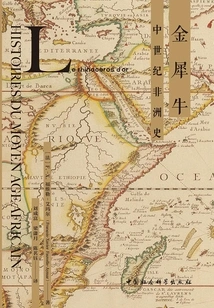
金犀牛:中世纪非洲史
(france) F.-x. Fauweiler-emaar
Ancient Africa had a writing system. For a long time, although people did not deny the existence of this civilization, they have always underestimated its value. As an expert on African history, the author uses clues from ancient civilizations and oral history to reconstruct the lost wealth of the African continent in a fascinating way. Eight centuries, nearly a thousand years. The prosperity of ancient Africa arouses endless nostalgia, and the turmoil of modern Africa arouses strong curiosity. Between the two Africas we are relatively familiar with, there continues to be a period of Africa's "dark century" - but is it really so? Perhaps, this is a "golden century".
Ancient Africa had a writing system. For a long time, although people did not deny the existence of this civilization, they have always underestimated its value. As an expert on African history, the author uses clues from ancient civilizations and oral history to reconstruct the lost wealth of the African continent in a fascinating way. Eight centuries, nearly a thousand years. The prosperity of ancient Africa arouses endless nostalgia, and the turmoil of modern Africa arouses strong curiosity. Between the two Africas we are relatively familiar with, there continues to be a period of Africa's "dark century" - but is it really so? Perhaps, this is a "golden century".
互动与认同:古典时期中国与希腊族群认同的比较
Wei Xiaoji
This book focuses on China and Greece in ancient times and discusses the identity changes experienced by the two major ethnic groups from the 8th century BC to the 5th century BC. The author believes that the changes in the ethnic identity of the Chinese state and the Greeks were completed in the interaction with external ethnic groups. The great inter-ethnic interactions that occurred during this period - the conflict and integration between Chinese and Yi, and the war and confrontation between Greece and Persia - contributed to the cultural shift in ethnic identity. Before the great inter-ethnic interaction, the ethnic identity of the Chinese state and the Greeks was mainly based on blood. After the great inter-ethnic interaction, cultural standards such as "propriety", "righteousness", "democracy" and "freedom" became the new boundaries of ethnic groups, forming a tradition of cultural identity, and at the same time, a sense of cultural prejudice against others was born.
This book focuses on China and Greece in ancient times and discusses the identity changes experienced by the two major ethnic groups from the 8th century BC to the 5th century BC. The author believes that the changes in the ethnic identity of the Chinese state and the Greeks were completed in the interaction with external ethnic groups. The great inter-ethnic interactions that occurred during this period - the conflict and integration between Chinese and Yi, and the war and confrontation between Greece and Persia - contributed to the cultural shift in ethnic identity. Before the great inter-ethnic interaction, the ethnic identity of the Chinese state and the Greeks was mainly based on blood. After the great inter-ethnic interaction, cultural standards such as "propriety", "righteousness", "democracy" and "freedom" became the new boundaries of ethnic groups, forming a tradition of cultural identity, and at the same time, a sense of cultural prejudice against others was born.
亚述赋役制度考略
Guohong Geng
This book uses the basic methods of dialectical materialism and historical materialism, starting from the interpretation of cuneiform documents in the ancient Mesopotamia. On the basis of analyzing the historical background of the creation of various tax systems, it examines the origin, development and evolution process of various tax systems in Assyria, the content of tax, objects of tax and collection methods, etc., Thereby exploring the characteristics and laws of the tax system. Assyria's tax system is an extensive unity that highly embodies the political, economic and cultural development of Assyria and Mesopotamia. Therefore, in a sense, this book can be said to interpret the ancient Mesopotamia civilization from an economic perspective.
This book uses the basic methods of dialectical materialism and historical materialism, starting from the interpretation of cuneiform documents in the ancient Mesopotamia. On the basis of analyzing the historical background of the creation of various tax systems, it examines the origin, development and evolution process of various tax systems in Assyria, the content of tax, objects of tax and collection methods, etc., Thereby exploring the characteristics and laws of the tax system. Assyria's tax system is an extensive unity that highly embodies the political, economic and cultural development of Assyria and Mesopotamia. Therefore, in a sense, this book can be said to interpret the ancient Mesopotamia civilization from an economic perspective.
写给大家的美国简史
Fanglong
This book is a book about the latitude and longitude of American history. It describes the changes in the North American continent from Columbus's discovery of the New World to World War II. Describes in detail the birth and development of the United States of America. He has profound and unique insights into historical events, Western civilization, scientific and technological inventions, and American political life.
This book is a book about the latitude and longitude of American history. It describes the changes in the North American continent from Columbus's discovery of the New World to World War II. Describes in detail the birth and development of the United States of America. He has profound and unique insights into historical events, Western civilization, scientific and technological inventions, and American political life.
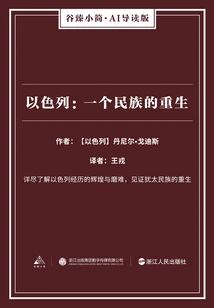
以色列:一个民族的重生(谷臻小简·AI导读版)
(israel) Daniel Gordis
Israel is a small country, but it has attracted the attention of the world since its founding. It is favored by many people and often the target of criticism. Why is the international community so concerned about a small country like Israel? Why are Israelis so deeply divided on so many key issues? Why does Israel make these decisions? What will its future be? Learn in detail the glory and suffering that Israel has experienced, and witness the rebirth of the Jewish nation.
Israel is a small country, but it has attracted the attention of the world since its founding. It is favored by many people and often the target of criticism. Why is the international community so concerned about a small country like Israel? Why are Israelis so deeply divided on so many key issues? Why does Israel make these decisions? What will its future be? Learn in detail the glory and suffering that Israel has experienced, and witness the rebirth of the Jewish nation.
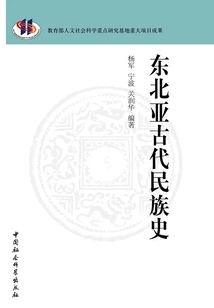
东北亚古代民族史
Yang Jun Ningbo Compiled By Guan Runhua
This book describes in detail the history of the development of various ethnic groups in ancient Northeast Asia, and comprehensively displays the overview of the ancient ethnic groups in Northeast Asia from their conception, formation to development, as well as the gradual process of forming a pluralistic and integrated pattern. Based on the stages and characteristics of the development process of ancient Northeast Asian nations, this book divides the development of ancient Northeast Asian nations into five historical periods dominated by different models: the period of comprehensive progress of all ethnic groups in Northeast Asia from the 2nd to 5th century BC, the period of comprehensive progress of various ethnic groups in Northeast Asia from the 6th to 9th century AD. The period of ethnic interaction and development, the period of fierce competition among various ethnic groups in Northeast Asia from the 9th to the 12th century AD, the period of the Donghu's heyday and the formation of a new ethnic distribution pattern from the 13th to the 14th century AD, and the period of accelerated development of the Chinese ethnic groups and other ethnic groups in Northeast Asia from the 15th to the mid-19th century. Written in stages, it highlights the development sequence of ancient Northeast Asian nations and shows the integrated and diverse historical development process of various ethnic groups in Northeast Asia in ancient times. This book comprehensively and systematically describes the distribution pattern, national origin, economic life, social structure, political organization, cultural customs, rise and fall of ancient ethnic groups in Northeast Asia, as well as their political, economic and cultural connections with surrounding ethnic groups.
This book describes in detail the history of the development of various ethnic groups in ancient Northeast Asia, and comprehensively displays the overview of the ancient ethnic groups in Northeast Asia from their conception, formation to development, as well as the gradual process of forming a pluralistic and integrated pattern. Based on the stages and characteristics of the development process of ancient Northeast Asian nations, this book divides the development of ancient Northeast Asian nations into five historical periods dominated by different models: the period of comprehensive progress of all ethnic groups in Northeast Asia from the 2nd to 5th century BC, the period of comprehensive progress of various ethnic groups in Northeast Asia from the 6th to 9th century AD. The period of ethnic interaction and development, the period of fierce competition among various ethnic groups in Northeast Asia from the 9th to the 12th century AD, the period of the Donghu's heyday and the formation of a new ethnic distribution pattern from the 13th to the 14th century AD, and the period of accelerated development of the Chinese ethnic groups and other ethnic groups in Northeast Asia from the 15th to the mid-19th century. Written in stages, it highlights the development sequence of ancient Northeast Asian nations and shows the integrated and diverse historical development process of various ethnic groups in Northeast Asia in ancient times. This book comprehensively and systematically describes the distribution pattern, national origin, economic life, social structure, political organization, cultural customs, rise and fall of ancient ethnic groups in Northeast Asia, as well as their political, economic and cultural connections with surrounding ethnic groups.
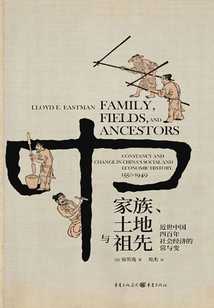
Family, Land and Ancestors
History家族、土地与祖先
(us) Easy To Work And Rest
This book breaks through the previous research paradigm of Western academic circles that emphasized political history and intellectual history. From the perspective of global history, this book examines the great changes in the economic foundation, social form, and spiritual beliefs of Chinese society in the past four centuries from 1550 to 1949. It presents new research results in this field. It is a work that understands the social changes in China since the 16th century. Since the Ming and Qing Dynasties, China's society and economy have undergone tremendous changes, and these changes have in turn shaped China's modern political history. The author uses a large amount of historical materials to clearly explain the complex and profound changes in Chinese society, and explores many issues such as population change trends, changes in class structure, the relationship between small-scale peasant economy, commodity trade and manufacturing, and faith and culture. Regarding the long-debated issue of why the scientific and industrial revolution did not occur in modern China, the author puts forward his own views, forming a meaningful dialogue with Joseph Needham's thinking on China's technological stagnation and Max Weber's "Protestant Ethic and the Spirit of Capitalism". In addition, the author also describes his understanding of the Chinese people - friendliness and indifference, hard work and laziness, aggressiveness and conservatism, generosity and selfishness. These contradictory national characters form an effective dialogue with the "differential order pattern" proposed by Fei Xiaotong in "Country China".
This book breaks through the previous research paradigm of Western academic circles that emphasized political history and intellectual history. From the perspective of global history, this book examines the great changes in the economic foundation, social form, and spiritual beliefs of Chinese society in the past four centuries from 1550 to 1949. It presents new research results in this field. It is a work that understands the social changes in China since the 16th century. Since the Ming and Qing Dynasties, China's society and economy have undergone tremendous changes, and these changes have in turn shaped China's modern political history. The author uses a large amount of historical materials to clearly explain the complex and profound changes in Chinese society, and explores many issues such as population change trends, changes in class structure, the relationship between small-scale peasant economy, commodity trade and manufacturing, and faith and culture. Regarding the long-debated issue of why the scientific and industrial revolution did not occur in modern China, the author puts forward his own views, forming a meaningful dialogue with Joseph Needham's thinking on China's technological stagnation and Max Weber's "Protestant Ethic and the Spirit of Capitalism". In addition, the author also describes his understanding of the Chinese people - friendliness and indifference, hard work and laziness, aggressiveness and conservatism, generosity and selfishness. These contradictory national characters form an effective dialogue with the "differential order pattern" proposed by Fei Xiaotong in "Country China".
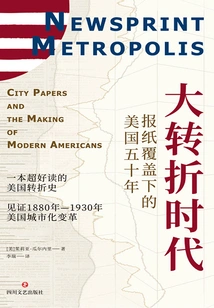
大转折时代:美国报纸覆盖下的五十年
(us)julia Guarneri
At the end of the 19th century and the beginning of the 20th century, American society entered an important transition period, and business models and social structures began to undergo earth-shaking changes. New printing and papermaking technologies expanded the influence of paper media, and the media began to influence people's lives; the Industrial Revolution changed the original urban layout, and social classes quietly changed; immigrant culture integrated into the mainstream American culture, and the city's inclusiveness and openness continued to increase. The booming development of cities has become the epitome of American prosperity and silently affects the future of the United States.
At the end of the 19th century and the beginning of the 20th century, American society entered an important transition period, and business models and social structures began to undergo earth-shaking changes. New printing and papermaking technologies expanded the influence of paper media, and the media began to influence people's lives; the Industrial Revolution changed the original urban layout, and social classes quietly changed; immigrant culture integrated into the mainstream American culture, and the city's inclusiveness and openness continued to increase. The booming development of cities has become the epitome of American prosperity and silently affects the future of the United States.
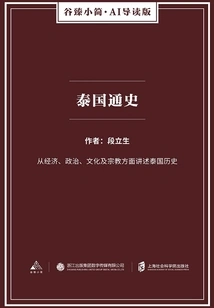
泰国通史(谷臻小简·AI导读版)
Duan Lisheng
This book relatively systematically describes the history of Thailand, an ancient civilized country, from ancient times to the present, that is, from the prehistoric period, the pre-Sukhothai Dynasty, the Sukhothai Dynasty, the Ayutthaya Dynasty, the Thonburi Dynasty to the Bangkok Dynasty, as well as the development process of Thailand's integration into the world and modernization since Rama V.
This book relatively systematically describes the history of Thailand, an ancient civilized country, from ancient times to the present, that is, from the prehistoric period, the pre-Sukhothai Dynasty, the Sukhothai Dynasty, the Ayutthaya Dynasty, the Thonburi Dynasty to the Bangkok Dynasty, as well as the development process of Thailand's integration into the world and modernization since Rama V.
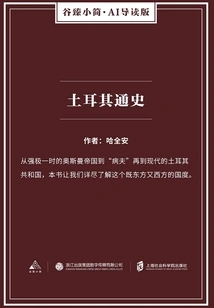
土耳其通史(谷臻小简·AI导读版)
Ha Quan'an
From the powerful Ottoman Empire to the "sick man" to the modern Republic of Türkiye, this book gives us a detailed understanding of this country that is both Eastern and Western. It runs through ancient and modern times, with clear context and informative content.
From the powerful Ottoman Empire to the "sick man" to the modern Republic of Türkiye, this book gives us a detailed understanding of this country that is both Eastern and Western. It runs through ancient and modern times, with clear context and informative content.
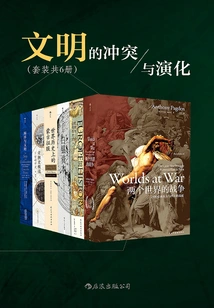
文明的冲突与演化(套装共6册)
(u. S.) Anthony Pagodon Eric R. Wolfe, Etc.
"The War of Two Worlds" Since the "9·11" incident, Western countries have published a large number of works that analyze the root causes of terrorism from the perspectives of history, politics, religion, culture, etc. This book synthesizes all these perspectives and puts forward its own point of view, believing that all this must start from the separation of reality and thought between the West and the East 2,500 years ago. "Europe and the People Without History" selects 1400 AD as a historical reference point to explain in detail the appearance of Europe and the world outside Europe during that period; combined with rich historical materials, it conducts in-depth analysis and demonstration of the era of colonial empires before the emergence of the Industrial Revolution from the 15th to the second half of the 18th century, and the development of the global expansion and dominance of the capitalist era from the second half of the 18th century to the present. It also narrates the different changes experienced by different groups of people in the world when encountering this series of great changes. "Silver Capital" is a challenging and important work that provides a magnificent account of the economic connections between various parts of the world since 1500. The author Andre Gond Frank places China at the center of Asia and Asia at the center of the global economy. He believed that the combination of China's demand for silver and Europe's demand for Chinese goods led to the expansion of commerce around the world. "Ocean and Civilization" retells the history of the world from the perspective of the ocean, shows the connection between the rise and fall of civilization and the ocean, narrates the development of human navigation in a fascinating way, and composes an epic about the voyagers. "An Overview of Asian History" On the vast Asian continent, the Chinese civilization of East Asia, the civilization of West Asia, the Sanskrit civilization of India, and the Japanese civilization are distributed. Various heterogeneous civilizations are connected through transportation links, compete with each other, and compensate for each other, thus unfolding a grand picture of the development and evolution of Asian history. From this, we can further understand the true history of all mankind. "The Mongol Conquest in World History" is a new heavyweight work in the field of research on the history of the Mongolian Empire in recent years. From the perspective of world history and global history, the author focuses on describing the Eurasian cultural exchanges promoted by Genghis Khan and the emergence of a new Eurasian world after the successive collapse of the Mongol khanates.
"The War of Two Worlds" Since the "9·11" incident, Western countries have published a large number of works that analyze the root causes of terrorism from the perspectives of history, politics, religion, culture, etc. This book synthesizes all these perspectives and puts forward its own point of view, believing that all this must start from the separation of reality and thought between the West and the East 2,500 years ago. "Europe and the People Without History" selects 1400 AD as a historical reference point to explain in detail the appearance of Europe and the world outside Europe during that period; combined with rich historical materials, it conducts in-depth analysis and demonstration of the era of colonial empires before the emergence of the Industrial Revolution from the 15th to the second half of the 18th century, and the development of the global expansion and dominance of the capitalist era from the second half of the 18th century to the present. It also narrates the different changes experienced by different groups of people in the world when encountering this series of great changes. "Silver Capital" is a challenging and important work that provides a magnificent account of the economic connections between various parts of the world since 1500. The author Andre Gond Frank places China at the center of Asia and Asia at the center of the global economy. He believed that the combination of China's demand for silver and Europe's demand for Chinese goods led to the expansion of commerce around the world. "Ocean and Civilization" retells the history of the world from the perspective of the ocean, shows the connection between the rise and fall of civilization and the ocean, narrates the development of human navigation in a fascinating way, and composes an epic about the voyagers. "An Overview of Asian History" On the vast Asian continent, the Chinese civilization of East Asia, the civilization of West Asia, the Sanskrit civilization of India, and the Japanese civilization are distributed. Various heterogeneous civilizations are connected through transportation links, compete with each other, and compensate for each other, thus unfolding a grand picture of the development and evolution of Asian history. From this, we can further understand the true history of all mankind. "The Mongol Conquest in World History" is a new heavyweight work in the field of research on the history of the Mongolian Empire in recent years. From the perspective of world history and global history, the author focuses on describing the Eurasian cultural exchanges promoted by Genghis Khan and the emergence of a new Eurasian world after the successive collapse of the Mongol khanates.
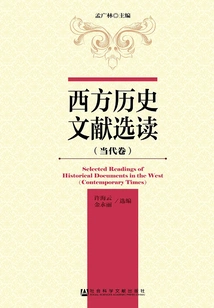
西方历史文献选读(当代卷)
Editor-in-chief Meng Guanglin Xu Haiyun Selected Editors Jin Yongli
This book selects important Western English text materials and uses Marxist historical materialism to introduce and even interpret them. It strives to reveal the basic conditions and characteristics of the economy, politics, military, ideological culture, and social life in various Western historical periods at multiple levels and in an all-round way, and to reveal the evolutionary context, trends and even development laws of Western history. The selected articles in each volume include both the full text of a certain document and excerpts of the core parts of a certain document. After each document, some research works on related issues are also listed to guide readers to extend their reading and conduct further exploration.
This book selects important Western English text materials and uses Marxist historical materialism to introduce and even interpret them. It strives to reveal the basic conditions and characteristics of the economy, politics, military, ideological culture, and social life in various Western historical periods at multiple levels and in an all-round way, and to reveal the evolutionary context, trends and even development laws of Western history. The selected articles in each volume include both the full text of a certain document and excerpts of the core parts of a certain document. After each document, some research works on related issues are also listed to guide readers to extend their reading and conduct further exploration.
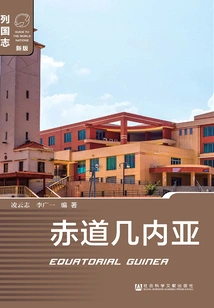
赤道几内亚(列国志)(新版)
Ling Yunzhi Edited By Li Guangyi
The Republic of Equatorial Guinea is located in west-central Africa, close to the equator and on the Atlantic Ocean. It has an important geographical location. Equatorial Guinea was originally a traditional agricultural country. Later, due to its rich oil and gas resources, its economy developed rapidly and it became a wealthy country in Central and West Africa. It is known as the "Kuwait of Central Africa". Equatorial Guinea is a developing country that has actively integrated into the international community since its independence. It maintains friendly relations with China and maintains close bilateral exchanges. This book provides a relatively detailed introduction to Equatorial Guinea's territory, economy, politics, history, culture, society, diplomacy, etc.
The Republic of Equatorial Guinea is located in west-central Africa, close to the equator and on the Atlantic Ocean. It has an important geographical location. Equatorial Guinea was originally a traditional agricultural country. Later, due to its rich oil and gas resources, its economy developed rapidly and it became a wealthy country in Central and West Africa. It is known as the "Kuwait of Central Africa". Equatorial Guinea is a developing country that has actively integrated into the international community since its independence. It maintains friendly relations with China and maintains close bilateral exchanges. This book provides a relatively detailed introduction to Equatorial Guinea's territory, economy, politics, history, culture, society, diplomacy, etc.
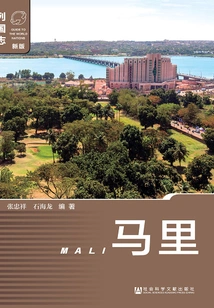
马里(第2版)(列国志)(新版)
Compiled By Zhang Zhongxiang And Shi Hailong
The Republic of Mali is a landlocked country located in the middle and upper reaches of the Niger River in West Africa and on the southwestern edge of the Sahara Desert. Mali has a long history and is one of the ancient civilizations on the African continent. It is also a multi-ethnic country. Various ethnic groups in the country have created splendid cultures in history, and the Dogon culture is the most famous. Mali was invaded and ruled by Western colonists in modern times and became independent in 1960. Mali has a traditional friendly relationship with China and is one of China's key countries in aiding Africa. China is Mali's main trading partner. This book provides a relatively detailed introduction to the territory, economy, politics, history, culture, society, diplomacy, etc. Of the Republic of Mali.
The Republic of Mali is a landlocked country located in the middle and upper reaches of the Niger River in West Africa and on the southwestern edge of the Sahara Desert. Mali has a long history and is one of the ancient civilizations on the African continent. It is also a multi-ethnic country. Various ethnic groups in the country have created splendid cultures in history, and the Dogon culture is the most famous. Mali was invaded and ruled by Western colonists in modern times and became independent in 1960. Mali has a traditional friendly relationship with China and is one of China's key countries in aiding Africa. China is Mali's main trading partner. This book provides a relatively detailed introduction to the territory, economy, politics, history, culture, society, diplomacy, etc. Of the Republic of Mali.
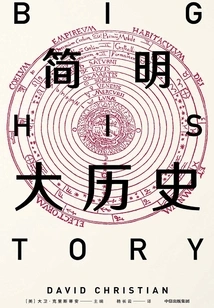
A Concise History
History简明大历史
(us) Editor-in-chief David Christian
"Concise Big History" is a classic big history book edited by David Christian, the founder of the big history concept. Big history is an emerging discipline that is developing rapidly internationally. It starts from the Big Bang 13.7 Billion years ago, opens up the timeline, places human history in the biosphere and even the history of the entire universe, and integrates cutting-edge results from biology, archaeology, physics, astronomy and other disciplines. In an era where knowledge is increasingly fragmented, big history attempts to break down disciplinary boundaries and provide a unified knowledge system. "A Concise History" gathers historians, including William McNeil, the founder of global history, and famous environmental historians John McNeil and Alfred Crosby, who have written important chapters. From cosmology, creation myths and the Gaia hypothesis to ice ages, extinctions, migrations and the Anthropocene, scientists and historians tell us why so many researchers today believe the world entered a new geological period at the onset of the Industrial Revolution. During this period, human activities unknowingly became a key force in changes in the biosphere. "Concise History" attempts to use a universal model to sort out the timeline of the universe and mankind. It uses a relaxed and lively narrative style to establish new concepts and thinking perspectives, and update the existing knowledge system. As Academician Walter Alvarez, winner of the Vitlesen Prize, said: Big history aims to use reliable empirical evidence and academic methods to understand the comprehensive history of the universe, the earth, life, and humanity.
"Concise Big History" is a classic big history book edited by David Christian, the founder of the big history concept. Big history is an emerging discipline that is developing rapidly internationally. It starts from the Big Bang 13.7 Billion years ago, opens up the timeline, places human history in the biosphere and even the history of the entire universe, and integrates cutting-edge results from biology, archaeology, physics, astronomy and other disciplines. In an era where knowledge is increasingly fragmented, big history attempts to break down disciplinary boundaries and provide a unified knowledge system. "A Concise History" gathers historians, including William McNeil, the founder of global history, and famous environmental historians John McNeil and Alfred Crosby, who have written important chapters. From cosmology, creation myths and the Gaia hypothesis to ice ages, extinctions, migrations and the Anthropocene, scientists and historians tell us why so many researchers today believe the world entered a new geological period at the onset of the Industrial Revolution. During this period, human activities unknowingly became a key force in changes in the biosphere. "Concise History" attempts to use a universal model to sort out the timeline of the universe and mankind. It uses a relaxed and lively narrative style to establish new concepts and thinking perspectives, and update the existing knowledge system. As Academician Walter Alvarez, winner of the Vitlesen Prize, said: Big history aims to use reliable empirical evidence and academic methods to understand the comprehensive history of the universe, the earth, life, and humanity.
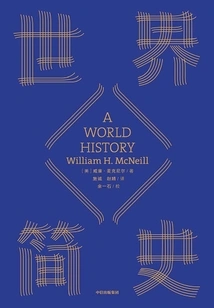
A Brief History of the World
History世界简史
I
McNeil's "A Brief History of the World" uses civilization as a unit to write about the interaction of global civilizations, turning the previously isolated and isolated world history into a dynamic and interactive world history, and drawing an interactive network diagram of human civilization. This is considered the beginning of the study of world history. The book is divided into four parts and thirty chapters, starting from the origin of human beings and ending at the beginning of the 21st century. It focuses on the four major civilizations of the Middle East, India, China, and Europe. It treats human history as a potential whole and uses the mutual influence between different civilizations as the main line to outline important events in overall and interactive world history. It provides a comprehensive overview of the integration, inheritance, rise and fall of various civilizations over thousands of years. "A Brief History of the World" has an outstanding theme and a clear context: one part is the emergence and establishment of major civilizations in the Old World, the second part is the balance between civilizations, the third part is the dominance of the West, and the fourth part is the beginning of global cosmopolitanism. He emphasized the integration of civilizations and constantly wrote about the impact and counter-impact, conquest and counter-conquest between civilizations, geography, transportation, technology, literature and art, etc. All the elements of human civilization are displayed one by one in his brilliant pen. Not only is the content all-inclusive, but the text is also fascinating. William McNeil has a profound insight into the development of human history and has painted a picture of the development of human history in a broad scope. Anyone who reads this book will gain a deeper insight and understanding of the long and complex historical process that shaped our world today.
McNeil's "A Brief History of the World" uses civilization as a unit to write about the interaction of global civilizations, turning the previously isolated and isolated world history into a dynamic and interactive world history, and drawing an interactive network diagram of human civilization. This is considered the beginning of the study of world history. The book is divided into four parts and thirty chapters, starting from the origin of human beings and ending at the beginning of the 21st century. It focuses on the four major civilizations of the Middle East, India, China, and Europe. It treats human history as a potential whole and uses the mutual influence between different civilizations as the main line to outline important events in overall and interactive world history. It provides a comprehensive overview of the integration, inheritance, rise and fall of various civilizations over thousands of years. "A Brief History of the World" has an outstanding theme and a clear context: one part is the emergence and establishment of major civilizations in the Old World, the second part is the balance between civilizations, the third part is the dominance of the West, and the fourth part is the beginning of global cosmopolitanism. He emphasized the integration of civilizations and constantly wrote about the impact and counter-impact, conquest and counter-conquest between civilizations, geography, transportation, technology, literature and art, etc. All the elements of human civilization are displayed one by one in his brilliant pen. Not only is the content all-inclusive, but the text is also fascinating. William McNeil has a profound insight into the development of human history and has painted a picture of the development of human history in a broad scope. Anyone who reads this book will gain a deeper insight and understanding of the long and complex historical process that shaped our world today.
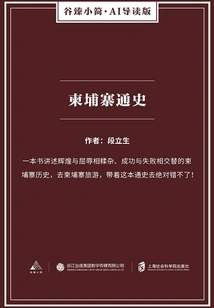
柬埔寨通史(谷臻小简·AI导读版)
Duan Lisheng
This book tells the rich history of Cambodia where glory and humiliation are mixed, and success and failure alternate. When traveling to Cambodia, you can't go wrong with this general history!
This book tells the rich history of Cambodia where glory and humiliation are mixed, and success and failure alternate. When traveling to Cambodia, you can't go wrong with this general history!

加拿大通史(谷臻小简·AI导读版)
Li Jie Chuan
This book relatively systematically narrates the history of the development of Canadian civilization from ancient times to the present, showing the appearance of the ancient society of Canada's indigenous peoples, the rise and fall of New France, the first colony established by France in Canada, and the governance of the British North American colonial era. It discusses the development process of industrialization and urbanization after Canada established a dominion in 1867, especially after the completion of the industrial revolution in World War II and became one of the seven major cities in the world today. The experience and lessons of a large industrial power analyze Canada's path to building a wealthy and fair society and the foundation for Canada's multiculturalism. Finally, it analyzes the evolution of Canada's foreign relations, including Canada's role in the post-World War II world structure and its special role in maintaining world peace. It is a general history of Canada written by Chinese scholars that runs through the past and present, has a clear context, and is informative.
This book relatively systematically narrates the history of the development of Canadian civilization from ancient times to the present, showing the appearance of the ancient society of Canada's indigenous peoples, the rise and fall of New France, the first colony established by France in Canada, and the governance of the British North American colonial era. It discusses the development process of industrialization and urbanization after Canada established a dominion in 1867, especially after the completion of the industrial revolution in World War II and became one of the seven major cities in the world today. The experience and lessons of a large industrial power analyze Canada's path to building a wealthy and fair society and the foundation for Canada's multiculturalism. Finally, it analyzes the evolution of Canada's foreign relations, including Canada's role in the post-World War II world structure and its special role in maintaining world peace. It is a general history of Canada written by Chinese scholars that runs through the past and present, has a clear context, and is informative.
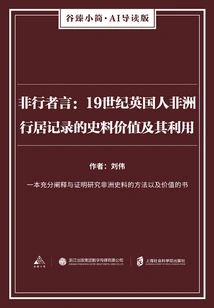
非行者言:19世纪英国人非洲行居记录的史料价值及其利用(谷臻小简·AI导读版)
Liu Wei
This book discusses the content of historical materials presented by British African records in the 19th century. By taking specific examples of content, this book displays cultural historical materials such as economic history, the history of major chiefdoms or kingdoms, the development and evolution of related ethnic groups, important historical figures and events, and traditional African social culture presented by British African records in the 19th century.
This book discusses the content of historical materials presented by British African records in the 19th century. By taking specific examples of content, this book displays cultural historical materials such as economic history, the history of major chiefdoms or kingdoms, the development and evolution of related ethnic groups, important historical figures and events, and traditional African social culture presented by British African records in the 19th century.

德国通史(谷臻小简·AI导读版)
Ding Jianhong
Without a systematic understanding of German history, it is impossible to fully understand German culture and even European civilization. This book takes German unification as a clue and can be said to be a fairly authoritative history of Germany. The author is a domestic authority on German history, and even witnessed the fall of the Berlin Wall in 1990.
Without a systematic understanding of German history, it is impossible to fully understand German culture and even European civilization. This book takes German unification as a clue and can be said to be a fairly authoritative history of Germany. The author is a domestic authority on German history, and even witnessed the fall of the Berlin Wall in 1990.

特洛伊(谷臻小简·AI导读版)
(us) Samuel Willard Crompton
"The Lost World and the Mysterious Civilization: Troy" starts with the description of the Trojan War and unfolds the glorious history of ancient Greek civilization step by step. Influenced by Homer's works and the Aeneid, the young Heinrich Schliemann began to search for the site of Troy in the Bronze Age. Under his diligent exploration, archeology has developed greatly. After him, William Drepfield continued archaeological work and wrote the German version of the archaeological masterpiece. Arthur Evans, hailed as a genius like Schliemann, also began his archaeological career at the end of the 19th century. He and other archaeologists successively discovered ancient Greek civilizations such as the Trojan, Mycenaean, and Hittite empires.
"The Lost World and the Mysterious Civilization: Troy" starts with the description of the Trojan War and unfolds the glorious history of ancient Greek civilization step by step. Influenced by Homer's works and the Aeneid, the young Heinrich Schliemann began to search for the site of Troy in the Bronze Age. Under his diligent exploration, archeology has developed greatly. After him, William Drepfield continued archaeological work and wrote the German version of the archaeological masterpiece. Arthur Evans, hailed as a genius like Schliemann, also began his archaeological career at the end of the 19th century. He and other archaeologists successively discovered ancient Greek civilizations such as the Trojan, Mycenaean, and Hittite empires.
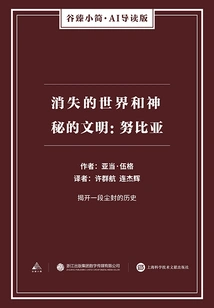
消失的世界和神秘的文明:努比亚(谷臻小简·AI导读版)
Adam Woogle
In the vast north of Africa, on the banks of the Nile that breeds life, and on the shores of the Red Sea, in addition to the well-known ancient Egyptian civilization, there is also hidden the mysterious and fascinating abandoned Eden Nubia, which has a rich and splendid civilization history. The history of Nubia can be traced back to before 3500 BC. It is the oldest known black country in the world and has been blooming culturally and economically for generations. However, it suddenly and mysteriously declined and was forgotten and no one cared about it.
In the vast north of Africa, on the banks of the Nile that breeds life, and on the shores of the Red Sea, in addition to the well-known ancient Egyptian civilization, there is also hidden the mysterious and fascinating abandoned Eden Nubia, which has a rich and splendid civilization history. The history of Nubia can be traced back to before 3500 BC. It is the oldest known black country in the world and has been blooming culturally and economically for generations. However, it suddenly and mysteriously declined and was forgotten and no one cared about it.
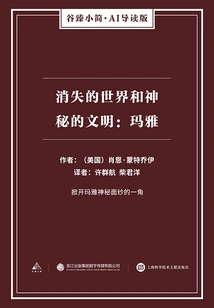
消失的世界和神秘的文明:玛雅(谷臻小简·AI导读版)
(us) Sean Mountjoy
The Mayan civilization of the Stone Age can be called a miracle in the history of world civilization. The Mayan civilization is named after the Indian Maya people. It is a great civilization created independently by the American Indian Maya people while being isolated from the ancient civilizations of Asia, Africa and Europe. Its ruins are mainly distributed in Mexico, Guatemala, Honduras and other places. The Mayan civilization was born in the 10th century BC. It was an achievement made by mankind before Columbus discovered the American continent. It is reflected in science, agriculture, culture, art and other aspects. However, what puzzles the world is that as an ancient civilization in the world that was born in tropical jungles instead of large river basins, the Mayan civilization, just like its miraculous rise and development, its decline and disappearance is also full of mystery and fascinating. This book comprehensively introduces the results of human exploration of the Mayan civilization so far. The content includes the Mayan people's living customs, economic situation, religious beliefs, city-state system, Mayan culture and art, calendar, mathematics, painting and other civilization characteristics, clearly showing the glorious and splendid Mayan civilization. In addition, this book provides a thought-provoking possible explanation for the decline and disappearance of the Mayan civilization.
The Mayan civilization of the Stone Age can be called a miracle in the history of world civilization. The Mayan civilization is named after the Indian Maya people. It is a great civilization created independently by the American Indian Maya people while being isolated from the ancient civilizations of Asia, Africa and Europe. Its ruins are mainly distributed in Mexico, Guatemala, Honduras and other places. The Mayan civilization was born in the 10th century BC. It was an achievement made by mankind before Columbus discovered the American continent. It is reflected in science, agriculture, culture, art and other aspects. However, what puzzles the world is that as an ancient civilization in the world that was born in tropical jungles instead of large river basins, the Mayan civilization, just like its miraculous rise and development, its decline and disappearance is also full of mystery and fascinating. This book comprehensively introduces the results of human exploration of the Mayan civilization so far. The content includes the Mayan people's living customs, economic situation, religious beliefs, city-state system, Mayan culture and art, calendar, mathematics, painting and other civilization characteristics, clearly showing the glorious and splendid Mayan civilization. In addition, this book provides a thought-provoking possible explanation for the decline and disappearance of the Mayan civilization.
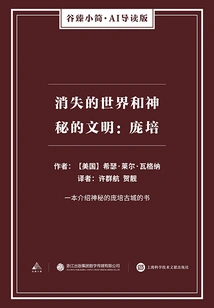
消失的世界和神秘的文明:庞培(谷臻小简·AI导读版)
(us) Heather Lyle Wagner
It was once a beautiful resort, where mansions were lined with mansions and merchants gathered; it had experienced several volcanic eruptions, but its beautiful natural conditions continued to attract generations of Pompeii people to live here; it experienced battles between the Romans and the Samonos, and was ultimately deeply imprinted with the mark of the Roman Empire... It is the mysterious historical city of Pompeii. However, this precious historical and cultural heritage of mankind was sealed under the hot magma during the roar of Mount Vesuvius. Nowadays, the ancient city of Pompeii has been restored to the light of day. It has long lost the hustle and bustle of the past, but its intertwined ancient roads, exquisite murals, magnificent square ruins... Continue to tell the world its ancient and legendary secrets.
It was once a beautiful resort, where mansions were lined with mansions and merchants gathered; it had experienced several volcanic eruptions, but its beautiful natural conditions continued to attract generations of Pompeii people to live here; it experienced battles between the Romans and the Samonos, and was ultimately deeply imprinted with the mark of the Roman Empire... It is the mysterious historical city of Pompeii. However, this precious historical and cultural heritage of mankind was sealed under the hot magma during the roar of Mount Vesuvius. Nowadays, the ancient city of Pompeii has been restored to the light of day. It has long lost the hustle and bustle of the past, but its intertwined ancient roads, exquisite murals, magnificent square ruins... Continue to tell the world its ancient and legendary secrets.
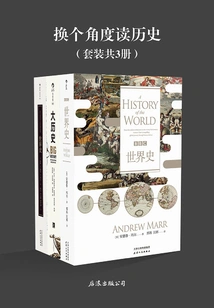
换个角度读历史(套装共3册)
(uk) Andrew Marr (us) David Christian, Etc.
BBC World History Our understanding of world history is always changing, as new discoveries are made all the time around the world and challenge our old prejudices. In this book, the author takes us back to those familiar major historical events, from ancient Greece and Rome to the coronation of Napoleon, to the environmental and demographic crises of the 21st century. However, what he introduces to us are the little-known stories surrounding these events, spanning Peru, Ukraine, and the Caribbean. The book not only examines those failed and disappearing civilizations, but also tells the origins of today's powers, and reveals how similar many historical events that happened in different historical periods and different geographical locations are! The book "Big History" examines not only the past of mankind, but also the past of the earth and even the past of the universe. By reading this book, readers will trace a history that began 13.8 Billion years ago, beginning with the Big Bang and the emergence of the universe. Big history encompasses research results in the fields of cosmology, earth and life sciences, and humanistic history, and integrates them into a single, universal historical narrative that provides the most scientific and comprehensive introduction possible to the universe and our place in it. The book summarizes eight major breakthroughs in the evolution of history. Each breakthrough means the emergence of something brand new. They call these breakthroughs "thresholds." From the universe to the earth, from the first life to human beings, from agricultural civilization to modern revolution, the author outlines the emergence and development of all things in the world in the order from "nothing" to "existence", using eight breakthroughs as clues. Ultimately, this book makes predictions about our near and distant future from a big historical perspective. "World History" In the first half of the 20th century, three famous American historians jointly wrote "World History", which discussed the past history of mankind from the perspective of civilization evolution. It became popular in the United States and has gone through revisions. Our country translated this book twice in 1946 and 1948. In 1975, another translation by Bing Xin, Wu Wenzao, Fei Xiaotong and others was published. This time we used the 1975 translation, replaced it with a large number of exquisite and interesting illustrations, and wrote rich and diverse illustrations to show the style of the original work. Although this book was written nearly a century ago, it is still useful and interesting to read today. It divides the long process from the emergence of human civilization to the end of World War II in 1945 into four stages - the beginning of civilization, classical civilization, Christian civilization, and modern civilization - to introduce it, focusing especially on the development path of Western civilization. The writing is brisk, the exposition is precise, and it often provides refreshing insights. The author is good at revealing the general trend of history from details. In a short space of time, he presents a vivid and colorful picture of the development of civilization that includes both upper-class elites and ordinary people's daily lives.
BBC World History Our understanding of world history is always changing, as new discoveries are made all the time around the world and challenge our old prejudices. In this book, the author takes us back to those familiar major historical events, from ancient Greece and Rome to the coronation of Napoleon, to the environmental and demographic crises of the 21st century. However, what he introduces to us are the little-known stories surrounding these events, spanning Peru, Ukraine, and the Caribbean. The book not only examines those failed and disappearing civilizations, but also tells the origins of today's powers, and reveals how similar many historical events that happened in different historical periods and different geographical locations are! The book "Big History" examines not only the past of mankind, but also the past of the earth and even the past of the universe. By reading this book, readers will trace a history that began 13.8 Billion years ago, beginning with the Big Bang and the emergence of the universe. Big history encompasses research results in the fields of cosmology, earth and life sciences, and humanistic history, and integrates them into a single, universal historical narrative that provides the most scientific and comprehensive introduction possible to the universe and our place in it. The book summarizes eight major breakthroughs in the evolution of history. Each breakthrough means the emergence of something brand new. They call these breakthroughs "thresholds." From the universe to the earth, from the first life to human beings, from agricultural civilization to modern revolution, the author outlines the emergence and development of all things in the world in the order from "nothing" to "existence", using eight breakthroughs as clues. Ultimately, this book makes predictions about our near and distant future from a big historical perspective. "World History" In the first half of the 20th century, three famous American historians jointly wrote "World History", which discussed the past history of mankind from the perspective of civilization evolution. It became popular in the United States and has gone through revisions. Our country translated this book twice in 1946 and 1948. In 1975, another translation by Bing Xin, Wu Wenzao, Fei Xiaotong and others was published. This time we used the 1975 translation, replaced it with a large number of exquisite and interesting illustrations, and wrote rich and diverse illustrations to show the style of the original work. Although this book was written nearly a century ago, it is still useful and interesting to read today. It divides the long process from the emergence of human civilization to the end of World War II in 1945 into four stages - the beginning of civilization, classical civilization, Christian civilization, and modern civilization - to introduce it, focusing especially on the development path of Western civilization. The writing is brisk, the exposition is precise, and it often provides refreshing insights. The author is good at revealing the general trend of history from details. In a short space of time, he presents a vivid and colorful picture of the development of civilization that includes both upper-class elites and ordinary people's daily lives.
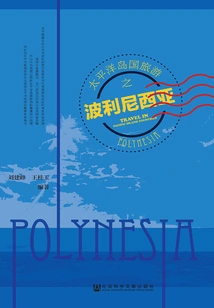
太平洋岛国旅游之波利尼西亚
Compiled By Liu Jianfeng And Wang Guiyu
Polynesia is one of the three major island groups in the Pacific, meaning "multi-island archipelago", including French Polynesia, Tonga, Samoa, Cook Islands, Niue and Tuvalu and other countries and regions. The residents are mainly Polynesians. It is dotted with lush tropical rainforest landscapes, dotted with crystal clear lagoons, and the underwater world of corals is an ideal paradise for diving enthusiasts. This book provides a comprehensive and systematic introduction to Polynesia's natural and cultural tourism resources.
Polynesia is one of the three major island groups in the Pacific, meaning "multi-island archipelago", including French Polynesia, Tonga, Samoa, Cook Islands, Niue and Tuvalu and other countries and regions. The residents are mainly Polynesians. It is dotted with lush tropical rainforest landscapes, dotted with crystal clear lagoons, and the underwater world of corals is an ideal paradise for diving enthusiasts. This book provides a comprehensive and systematic introduction to Polynesia's natural and cultural tourism resources.
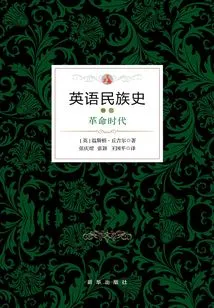
英语民族史·革命时代
J
This volume is the third volume of the "History of the English-speaking Peoples" series "The Age of Revolutions". During the period from 1688 to 1815 described in this volume, three revolutions profoundly affected the destiny of mankind. All three revolutions occurred within a century, and they all led to war between England and France.
This volume is the third volume of the "History of the English-speaking Peoples" series "The Age of Revolutions". During the period from 1688 to 1815 described in this volume, three revolutions profoundly affected the destiny of mankind. All three revolutions occurred within a century, and they all led to war between England and France.
英语民族史·不列颠的诞生
J
The British Empire reigned supreme in the 19th century, with its territories and colonies spread all over the world. It was known as the Empire on which the sun never sets. The newly born United States dominated the 20th century, and its politics, economy, culture, and military influenced the historical process of the 20th century in all aspects. Since the Industrial Revolution, the two English-speaking countries have dominated the world for more than 200 years. This is by no means an accident. Winston Churchill revealed the secrets to us profoundly and vividly with his broad strokes. This is his historical masterpiece "History of the English People", coupled with his monumental memoirs "Memoirs of the First World War" and "Memoirs of the Second World War", which almost completely describe the historical trajectory of the English-speaking people from the wilderness to the world's super power. A great empire composed of English-speaking people on the earth - including Western powers such as Britain, the United States, Canada and Australia - gradually formed after a long and tortuous process; their existence has profoundly changed the world's civilized landscape and powerfully influenced the world's civilization. The destiny of mankind and the direction of history... In this great work that took 30 years to create, Churchill, the winner of the Nobel Prize for Literature and a famous figure in British history, paints a panoramic "picture of empire" for readers with profound insights and epic strokes.
The British Empire reigned supreme in the 19th century, with its territories and colonies spread all over the world. It was known as the Empire on which the sun never sets. The newly born United States dominated the 20th century, and its politics, economy, culture, and military influenced the historical process of the 20th century in all aspects. Since the Industrial Revolution, the two English-speaking countries have dominated the world for more than 200 years. This is by no means an accident. Winston Churchill revealed the secrets to us profoundly and vividly with his broad strokes. This is his historical masterpiece "History of the English People", coupled with his monumental memoirs "Memoirs of the First World War" and "Memoirs of the Second World War", which almost completely describe the historical trajectory of the English-speaking people from the wilderness to the world's super power. A great empire composed of English-speaking people on the earth - including Western powers such as Britain, the United States, Canada and Australia - gradually formed after a long and tortuous process; their existence has profoundly changed the world's civilized landscape and powerfully influenced the world's civilization. The destiny of mankind and the direction of history... In this great work that took 30 years to create, Churchill, the winner of the Nobel Prize for Literature and a famous figure in British history, paints a panoramic "picture of empire" for readers with profound insights and epic strokes.

英语民族史·新世界
(british) Churchill
This volume is the second "New World" in the "History of the English-speaking Peoples" series. Between 1485 and 1688, the English-speaking people began to expand around the world and defeated the Spanish Empire. After the sea lanes were opened, American colonies were established one after another. A number of small, vibrant and independent societies arose on the west coast of the Atlantic that would later form the United States of America.
This volume is the second "New World" in the "History of the English-speaking Peoples" series. Between 1485 and 1688, the English-speaking people began to expand around the world and defeated the Spanish Empire. After the sea lanes were opened, American colonies were established one after another. A number of small, vibrant and independent societies arose on the west coast of the Atlantic that would later form the United States of America.

英语民族史·伟大的民主
(british) Churchill
This volume is the fourth volume in the "History of the English-speaking Peoples" series "The Great Democracy". After the fall of Napoleon in 1815, Britain firmly sat on the throne of the world's hegemon. At this time, France and even the entire European continent were exhausted, a unified Germany had not yet been formed, Russian power was shrinking from Western Europe, and the Spanish and Portuguese were busy with their own affairs or competing for overseas properties. Over the next few decades, revolutions and civil strife swept through many of Europe's great powers, and new states were born. Through years of turmoil and chaos, Britain alone has emerged virtually unscathed. At the same time, due to population growth and immigration, the English-speaking nation has become stronger than ever.
This volume is the fourth volume in the "History of the English-speaking Peoples" series "The Great Democracy". After the fall of Napoleon in 1815, Britain firmly sat on the throne of the world's hegemon. At this time, France and even the entire European continent were exhausted, a unified Germany had not yet been formed, Russian power was shrinking from Western Europe, and the Spanish and Portuguese were busy with their own affairs or competing for overseas properties. Over the next few decades, revolutions and civil strife swept through many of Europe's great powers, and new states were born. Through years of turmoil and chaos, Britain alone has emerged virtually unscathed. At the same time, due to population growth and immigration, the English-speaking nation has become stronger than ever.
古埃及:法老与神的世界
Chengdu Jinsha Site Museum
Ancient Egypt is one of the four ancient civilizations of mankind. Khufu, the builder of the pyramids, Tutankhamun, who cursed the pharaoh, Ramses II, who loved the country more than beauty, and Cleopatra VII, the queen who fell in love with Caesar and Antony, all ruled the huge ancient Egyptian empire. The Pyramids and the Sphinx, one of the seven architectural wonders of the world, the majestic Tombs of the Valley of the Kings and the Luxor Temple, mummies that have endured for thousands of years, the Book of the Dead, a book of the afterlife full of strange imaginations, ancient hieroglyphics that are as difficult to decipher as a heavenly book, and the ancient Egyptian mythology system with a huge system and vast content, have fascinated countless people who want to decipher the code of the Pharaohs' world.
Ancient Egypt is one of the four ancient civilizations of mankind. Khufu, the builder of the pyramids, Tutankhamun, who cursed the pharaoh, Ramses II, who loved the country more than beauty, and Cleopatra VII, the queen who fell in love with Caesar and Antony, all ruled the huge ancient Egyptian empire. The Pyramids and the Sphinx, one of the seven architectural wonders of the world, the majestic Tombs of the Valley of the Kings and the Luxor Temple, mummies that have endured for thousands of years, the Book of the Dead, a book of the afterlife full of strange imaginations, ancient hieroglyphics that are as difficult to decipher as a heavenly book, and the ancient Egyptian mythology system with a huge system and vast content, have fascinated countless people who want to decipher the code of the Pharaohs' world.
澳大利亚研究(2018年第1辑\u002F总第1辑)
Editor-in-chief Sun Youzhong
"Australian Studies" is sponsored by the China Australia Studies Association and the Australian Studies Center of Beijing Foreign Studies University. It is the first interdisciplinary academic collection of Australian country studies in China. It mainly collects academic articles in various fields such as Australian politics, economy, diplomacy, culture, history, etc. Each issue sets a different research theme, focuses on contemporary times, takes into account history, and advocates interdisciplinary research. It aims to create an authoritative platform for Chinese Australian studies and comprehensively display the new results of Australian country studies.
"Australian Studies" is sponsored by the China Australia Studies Association and the Australian Studies Center of Beijing Foreign Studies University. It is the first interdisciplinary academic collection of Australian country studies in China. It mainly collects academic articles in various fields such as Australian politics, economy, diplomacy, culture, history, etc. Each issue sets a different research theme, focuses on contemporary times, takes into account history, and advocates interdisciplinary research. It aims to create an authoritative platform for Chinese Australian studies and comprehensively display the new results of Australian country studies.

兴废与退进:思古论今集(谷臻小简·AI导读版)
Wang Sanyi
The articles included in this collection are the author's scattered thoughts formed in the study of world history. As a college teacher, you must do both academic research and knowledge dissemination. These articles discuss a wide range of topics, such as imperial politics, Westernization reforms, century-old changes, cultural exchanges, etc., Reflecting the author's philosophy of popularizing historical knowledge.
The articles included in this collection are the author's scattered thoughts formed in the study of world history. As a college teacher, you must do both academic research and knowledge dissemination. These articles discuss a wide range of topics, such as imperial politics, Westernization reforms, century-old changes, cultural exchanges, etc., Reflecting the author's philosophy of popularizing historical knowledge.
消失的世界和神秘的文明:黄金国(谷臻小简·AI导读版)
Dennis Abrams
As early as 700 BC, the Kingdom of Stratia in Asia Minor began to use gold coins. From then on, people's pursuit of gold became increasingly fanatical, reaching its peak during the Roman Empire. The fanatical pursuit of El Dorado has led many people to the depths of South America. As long as people still have the desire for gold and the New World, they will not hesitate to invest in the search for El Dorado.
As early as 700 BC, the Kingdom of Stratia in Asia Minor began to use gold coins. From then on, people's pursuit of gold became increasingly fanatical, reaching its peak during the Roman Empire. The fanatical pursuit of El Dorado has led many people to the depths of South America. As long as people still have the desire for gold and the New World, they will not hesitate to invest in the search for El Dorado.
消失的世界和神秘的文明:罗诺克(谷臻小简·AI导读版)
G. S. Prinzes
After Columbus discovered the route to America in 1492, European countries began to establish colonies in the Americas to plunder wealth and enhance national power. In 1587, British colonist White led 117 colonists to Roanoke Island (now near the coast of North Carolina, USA). A few months later, due to insufficient supplies, White returned to England alone to seek help. But for various reasons, White was not able to return to the Roanoke colony until three years later. To his dismay, the colony was abandoned and the colonists were nowhere to be seen. Due to weather and other reasons, White had to return to Europe. After that, he never returned to Roanoke Island. In 1607, the Virginia Company established the colony of Jamestown along the James River and conducted a search for Roanoke colonists. Although they got some clues from the Indians, they still could not find the Roanoke colonists or figure out what made them disappear. For more than 400 years, countless explorers, historians and archaeologists have explored the island, hoping to solve the mystery of the disappearance of the Roanoke colony, but they all ended in failure. Various theories have been put forward for the disappearance of the Roanoke colony, but there is a lack of sufficient evidence. To this day, archaeologists are still exploring this unsolved mystery. Let us go back to the past, learn from the truth of history, and explore...
After Columbus discovered the route to America in 1492, European countries began to establish colonies in the Americas to plunder wealth and enhance national power. In 1587, British colonist White led 117 colonists to Roanoke Island (now near the coast of North Carolina, USA). A few months later, due to insufficient supplies, White returned to England alone to seek help. But for various reasons, White was not able to return to the Roanoke colony until three years later. To his dismay, the colony was abandoned and the colonists were nowhere to be seen. Due to weather and other reasons, White had to return to Europe. After that, he never returned to Roanoke Island. In 1607, the Virginia Company established the colony of Jamestown along the James River and conducted a search for Roanoke colonists. Although they got some clues from the Indians, they still could not find the Roanoke colonists or figure out what made them disappear. For more than 400 years, countless explorers, historians and archaeologists have explored the island, hoping to solve the mystery of the disappearance of the Roanoke colony, but they all ended in failure. Various theories have been put forward for the disappearance of the Roanoke colony, but there is a lack of sufficient evidence. To this day, archaeologists are still exploring this unsolved mystery. Let us go back to the past, learn from the truth of history, and explore...

亚特兰蒂斯(谷臻小简·AI导读版)
Dennis Abrams
Since Plato first proposed Atlantis in 355 BC, this island lost in floods, time and history has aroused people's unremitting research and exploration for centuries. Thousands of articles and books have discussed the history and destiny of Atlantis. Did this island really exist? Is it a reflection of Plato's real history or an imaginary version of the Kingdom of Oz? Where in the world is it? Is the existing evidence history or pseudo-history? What inspired Plato to create such an island and civilization? This series of questions drives people's in-depth thinking and research, and gradually reveals the mysterious veil of Atlantis.
Since Plato first proposed Atlantis in 355 BC, this island lost in floods, time and history has aroused people's unremitting research and exploration for centuries. Thousands of articles and books have discussed the history and destiny of Atlantis. Did this island really exist? Is it a reflection of Plato's real history or an imaginary version of the Kingdom of Oz? Where in the world is it? Is the existing evidence history or pseudo-history? What inspired Plato to create such an island and civilization? This series of questions drives people's in-depth thinking and research, and gradually reveals the mysterious veil of Atlantis.
Malta (2nd Edition)
History马耳他(第2版)
Compiled By Cai Yajie
The Republic of Malta is located in the middle of the Mediterranean Sea, about 100 kilometers from the Italian island of Sicily. It was occupied and ruled by the British for 164 years since 1800. It declared independence in 1964 and is now a member of the Commonwealth. Tourism is one of Malta's main economic pillars, attracting millions of overseas tourists every year. Another pillar of Malta's economy is the ship repair and shipbuilding industry. Its seaport is the best port in the Mediterranean and an important shipping transit station in the Mediterranean. Joining the EU in 2004 has positive significance for further expanding its influence in Eurasia. This book provides a relatively detailed introduction to Malta's territory, economy, politics, history, culture, society, diplomacy, etc.
The Republic of Malta is located in the middle of the Mediterranean Sea, about 100 kilometers from the Italian island of Sicily. It was occupied and ruled by the British for 164 years since 1800. It declared independence in 1964 and is now a member of the Commonwealth. Tourism is one of Malta's main economic pillars, attracting millions of overseas tourists every year. Another pillar of Malta's economy is the ship repair and shipbuilding industry. Its seaport is the best port in the Mediterranean and an important shipping transit station in the Mediterranean. Joining the EU in 2004 has positive significance for further expanding its influence in Eurasia. This book provides a relatively detailed introduction to Malta's territory, economy, politics, history, culture, society, diplomacy, etc.