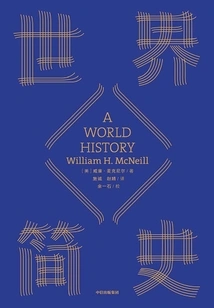
A Brief History of the World
by I
About This Novel
McNeil's "A Brief History of the World" uses civilization as a unit to write about the interaction of global civilizations, turning the previously isolated and isolated world history into a dynamic and interactive world history, and drawing an interactive network diagram of human civilization. This is considered the beginning of the study of world history. The book is divided into four parts and thirty chapters, starting from the origin of human beings and ending at the beginning of the 21st century. It focuses on the four major civilizations of the Middle East, India, China, and Europe. It treats human history as a potential whole and uses the mutual influence between different civilizations as the main line to outline important events in overall and interactive world history. It provides a comprehensive overview of the integration, inheritance, rise and fall of various civilizations over thousands of years. "A Brief History of the World" has an outstanding theme and a clear context: one part is the emergence and establishment of major civilizations in the Old World, the second part is the balance between civilizations, the third part is the dominance of the West, and the fourth part is the beginning of global cosmopolitanism. He emphasized the integration of civilizations and constantly wrote about the impact and counter-impact, conquest and counter-conquest between civilizations, geography, transportation, technology, literature and art, etc. All the elements of human civilization are displayed one by one in his brilliant pen. Not only is the content all-inclusive, but the text is also fascinating. William McNeil has a profound insight into the development of human history and has painted a picture of the development of human history in a broad scope. Anyone who reads this book will gain a deeper insight and understanding of the long and complex historical process that shaped our world today.
Official Sources
What Readers Think
Rating
Community(0)
Rating
Community(0)
