Library
Browse and search books
3,417 novels found
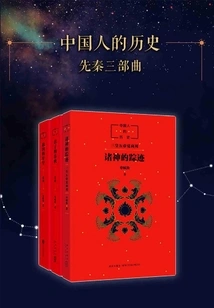
中国人的历史(先秦全3册)
Shen Fuyu
Selected by the State Administration of Radio, Film and Television to "recommend excellent books to teenagers across the country"! Recommended by CCTV News Weibo as "20 Books for Children", "Wenjin Book Award" Recommended Books, 100 Books That Influence Chinese Teachers, and Mother Tongue Chinese Education Book List to unblock the historical origins of Chinese culture! "The History of the Chinese People" consists of three volumes: "The History of the Chinese People: Traces of the Gods", "The History of the Chinese People: The Spring and Autumn Period of the Gentleman", and "The History of the Chinese People: The Starry Sky of the Warring States Period". From the ancient times when the gods shone brightly to the Xia, Shang and Zhou Dynasties, from the Spring and Autumn Period and the Warring States Period to the Qin, Han, Wei and Jin Dynasties, from the Six Dynasties to the Tang, Song, Yuan, Ming and Qing Dynasties, and then to modern times, "The History of the Chinese" focuses on outstanding historical figures, sorting out the origins of Chinese culture, and establishing a complete coordinate of the Chinese soul.
Selected by the State Administration of Radio, Film and Television to "recommend excellent books to teenagers across the country"! Recommended by CCTV News Weibo as "20 Books for Children", "Wenjin Book Award" Recommended Books, 100 Books That Influence Chinese Teachers, and Mother Tongue Chinese Education Book List to unblock the historical origins of Chinese culture! "The History of the Chinese People" consists of three volumes: "The History of the Chinese People: Traces of the Gods", "The History of the Chinese People: The Spring and Autumn Period of the Gentleman", and "The History of the Chinese People: The Starry Sky of the Warring States Period". From the ancient times when the gods shone brightly to the Xia, Shang and Zhou Dynasties, from the Spring and Autumn Period and the Warring States Period to the Qin, Han, Wei and Jin Dynasties, from the Six Dynasties to the Tang, Song, Yuan, Ming and Qing Dynasties, and then to modern times, "The History of the Chinese" focuses on outstanding historical figures, sorting out the origins of Chinese culture, and establishing a complete coordinate of the Chinese soul.
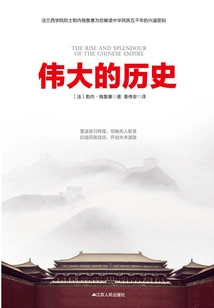
伟大的历史:中华民族五千年的兴盛与辉煌
I
"Great History" takes the historical development time of Chinese civilization as a clue and collects the major historical events and deeds of outstanding figures in the past dynasties starting from the Three Sovereigns and Five Emperors. It comprehensively introduces the major events, important figures, and outstanding achievements of science and technology and culture in the past dynasties. The content covers politics, economy, military, culture, diplomacy, science and technology and other fields. Let readers have a real and intuitive feeling about the development of the Chinese nation.
"Great History" takes the historical development time of Chinese civilization as a clue and collects the major historical events and deeds of outstanding figures in the past dynasties starting from the Three Sovereigns and Five Emperors. It comprehensively introduces the major events, important figures, and outstanding achievements of science and technology and culture in the past dynasties. The content covers politics, economy, military, culture, diplomacy, science and technology and other fields. Let readers have a real and intuitive feeling about the development of the Chinese nation.
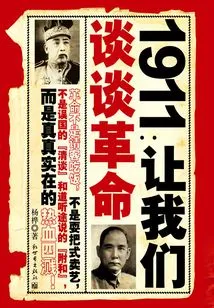
1911:让我们谈谈革命
Yang Hua
"1911: Let's Talk about the Revolution" introduces in detail the wonderful performances and mental journeys of the various forces and main figures who participated in this historical event before and after the Revolution of 1911 on the historical stage. It focuses on describing the true state of mind and choices of Yuan Shikai, Huang Xing, Sun Yat-sen, Song Jiaoren, Li Yuanhong and others at the critical juncture of history. It also depicts many historical details related to the Revolution of 1911 in detail, recreating the process of the great revolution that changed the direction of China's development 100 years ago.
"1911: Let's Talk about the Revolution" introduces in detail the wonderful performances and mental journeys of the various forces and main figures who participated in this historical event before and after the Revolution of 1911 on the historical stage. It focuses on describing the true state of mind and choices of Yuan Shikai, Huang Xing, Sun Yat-sen, Song Jiaoren, Li Yuanhong and others at the critical juncture of history. It also depicts many historical details related to the Revolution of 1911 in detail, recreating the process of the great revolution that changed the direction of China's development 100 years ago.
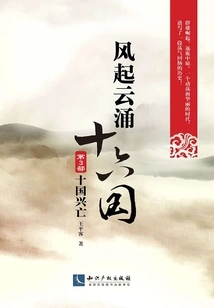
风起云涌十六国.第3部:十国兴亡
Wang Pingke
From 395 to 439, there were 10 political regimes among the sixteen countries in history. Later Yan, Later Qin, Western Qin, and Hou Liang were established one after another after the defeat of the former Qin at Feishui. After 11 years of melee, the former Qin was finally divided and stood side by side with the Northern Wei in the north. The six kingdoms of Southern Yan, Northern Yan, Huxia, Southern Liang, Northern Liang and Xiliang were split and established on the basis of the Three Kingdoms of Later Yan, Later Qin and Later Liang. During this period, Later Yan and Later Qin once dominated one area, and Southern Liang, Northern Liang, Western Qin, and Huxia also rose to a small extent. After 45 years of melee, the Northern Wei Dynasty finally unified the north.
From 395 to 439, there were 10 political regimes among the sixteen countries in history. Later Yan, Later Qin, Western Qin, and Hou Liang were established one after another after the defeat of the former Qin at Feishui. After 11 years of melee, the former Qin was finally divided and stood side by side with the Northern Wei in the north. The six kingdoms of Southern Yan, Northern Yan, Huxia, Southern Liang, Northern Liang and Xiliang were split and established on the basis of the Three Kingdoms of Later Yan, Later Qin and Later Liang. During this period, Later Yan and Later Qin once dominated one area, and Southern Liang, Northern Liang, Western Qin, and Huxia also rose to a small extent. After 45 years of melee, the Northern Wei Dynasty finally unified the north.
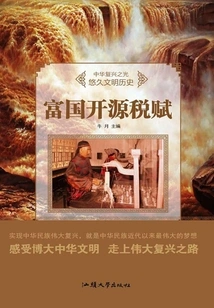
Rich Countries Open up Taxes
History富国开源税赋
Ox Moon
The report of the 18th National Congress of the Communist Party of China pointed out: "Put the construction of ecological civilization in a prominent position and integrate it into all aspects and the entire process of economic construction, political construction, cultural construction, and social construction, and strive to build a beautiful China and achieve the sustainable development of the Chinese nation."
The report of the 18th National Congress of the Communist Party of China pointed out: "Put the construction of ecological civilization in a prominent position and integrate it into all aspects and the entire process of economic construction, political construction, cultural construction, and social construction, and strive to build a beautiful China and achieve the sustainable development of the Chinese nation."
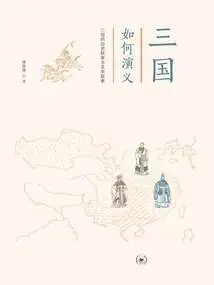
How to Romance the Three Kingdoms: Historical Narrative and Literary Narrative of the Three Kingdoms
History三国如何演义:三国的历史叙事与文学叙事
Li Qingxi
People have long noticed the differences between historians' narration of history and novelists' narration of history. Previous researchers have conducted in-depth research on certain cases, but there are few comprehensive and systematic intertextual interpretations of history books and novels. This book is an academic essay dedicated to discussing the narrative of the "Three Kingdoms" by historians and writers. It involves the main characters, events, and humanistic and political phenomena during the Three Kingdoms period, as well as related issues such as geography, official positions, and administrative customs. By comparing the history of the Three Kingdoms in history books with the stories of the Three Kingdoms in opera novels, the book reveals the changes in political ethics, personality forms, and aesthetic concepts, and traces the differences between history books and literary works in different historical eras, times, places, and people, as well as the psychological states and related historical information of nations, people, historians, and scholars in different historical situations contained in these differences.
People have long noticed the differences between historians' narration of history and novelists' narration of history. Previous researchers have conducted in-depth research on certain cases, but there are few comprehensive and systematic intertextual interpretations of history books and novels. This book is an academic essay dedicated to discussing the narrative of the "Three Kingdoms" by historians and writers. It involves the main characters, events, and humanistic and political phenomena during the Three Kingdoms period, as well as related issues such as geography, official positions, and administrative customs. By comparing the history of the Three Kingdoms in history books with the stories of the Three Kingdoms in opera novels, the book reveals the changes in political ethics, personality forms, and aesthetic concepts, and traces the differences between history books and literary works in different historical eras, times, places, and people, as well as the psychological states and related historical information of nations, people, historians, and scholars in different historical situations contained in these differences.
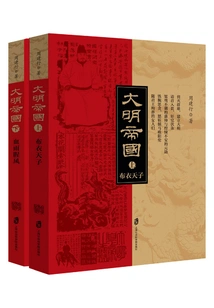
人生必读经典历史丛书:帝国时代三部曲之大明帝国(套装共2册)
Zhou Jianxing
This book is a historical novel based on "History of the Ming Dynasty" and is divided into two volumes. It comprehensively displays the treacherous and bloody historical scene after the founding of the Ming Empire. It depicts the continuous transformation of Zhu Yuanzhang's character, methods and strategies in the process of starting a business, maintaining a business and choosing his successor; it also depicts the elders and nobles surrounding the founding emperor, their secret contests, mutual support or mutual frame-off, and the subsequent ebb and flow of power. It unfolds vivid pictures of the Ming Dynasty's court and city life.
This book is a historical novel based on "History of the Ming Dynasty" and is divided into two volumes. It comprehensively displays the treacherous and bloody historical scene after the founding of the Ming Empire. It depicts the continuous transformation of Zhu Yuanzhang's character, methods and strategies in the process of starting a business, maintaining a business and choosing his successor; it also depicts the elders and nobles surrounding the founding emperor, their secret contests, mutual support or mutual frame-off, and the subsequent ebb and flow of power. It unfolds vivid pictures of the Ming Dynasty's court and city life.
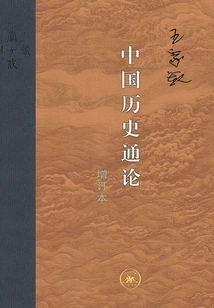
中国历史通论(增订本)
Wang Jiafan
"General Theory of Chinese History" is Mr. Wang Jiafan's classic work. It was written based on the lecture notes he taught in the "General History of China" course. The scope of discussion covers all Chinese history up to today. It not only outlines the outline and explains the whole, but also includes special attention to the "Chinese complex" that has transformed "tradition" into "modernity" over the past century. Wang Jiafan provides a personalized interpretation of major issues in history from a coherent and holistic interpretation perspective, thereby revealing the inner context of China's historical changes and presenting the "General History of China" as he understands it. The whole book is divided into three parts: preface, postpart and sequel. The first part focuses on the basic characteristics and evolutionary context of China's historical development, and carries out crisscross special discussions; the second part is intended to review and reflect on the century-old experience of writing "General History"; the sequel includes relevant articles written ten years after the first edition, such as "Reading History: Premodern, Modern and Postmodern" and "The Contingency and Inevitability of the Ming and Qing Dynasties".
"General Theory of Chinese History" is Mr. Wang Jiafan's classic work. It was written based on the lecture notes he taught in the "General History of China" course. The scope of discussion covers all Chinese history up to today. It not only outlines the outline and explains the whole, but also includes special attention to the "Chinese complex" that has transformed "tradition" into "modernity" over the past century. Wang Jiafan provides a personalized interpretation of major issues in history from a coherent and holistic interpretation perspective, thereby revealing the inner context of China's historical changes and presenting the "General History of China" as he understands it. The whole book is divided into three parts: preface, postpart and sequel. The first part focuses on the basic characteristics and evolutionary context of China's historical development, and carries out crisscross special discussions; the second part is intended to review and reflect on the century-old experience of writing "General History"; the sequel includes relevant articles written ten years after the first edition, such as "Reading History: Premodern, Modern and Postmodern" and "The Contingency and Inevitability of the Ming and Qing Dynasties".
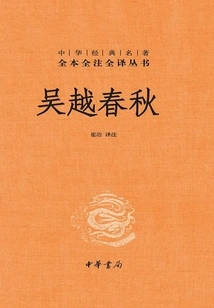
吴越春秋(中华经典名著全本全注全译)
Translation And Annotation By Cui Ye
"The Spring and Autumn Period of Wu and Yue" is a work about the history of Wu and Yue written by Zhao Ye of the Eastern Han Dynasty. According to historical records, Zhao Ye originally wrote twelve volumes, but the handed down version of "Wu Yue Chun Qiu" has only ten volumes. It is generally believed that the handed down version of "Wu Yue Chun Qiu" is the original work of Zhao Ye of the Eastern Han Dynasty and the finalized version by Huang Fu. The first five volumes of "Wu Yue Chun Qiu" mainly record the rise and fall of the State of Wu, with Wu Zixu assisting King Helu of Wu to take revenge on Chu and King Wu Fu Chai's struggle for hegemony as the main line; the last five volumes mainly record the history of the rise and fall of the State of Yue, with Gou Jian's revenge for destroying Wu as the main line. Compared with the records in historical books such as "Guoyu", "Zuo Zhuan" and "Historical Records", the content of the history of Wu and Yue's struggle for hegemony contained in "Wu Yue Chun Qiu" is more colorful and is regarded as the origin of long historical romance novels. "The Spring and Autumn Annals of Wu and Yue" records a large number of wonderful legendary stories, such as Wu Zixu begging for food to repay his kindness, Zhuan Zhu assassinating Wang Liao, general Mo Xie forging a sword, Wu people killing his son and provoking hooks, Yaoli assassinating Qing Ji, Fu Chai's day dream in Gusu, Yu Dayu's heavenly book to control floods, Gou Jian sleeping on firewood and tasting courage, Xi Shi's beauty trap, the old man turning into an ape, Yue women teaching swordsmanship, Chen Yin teaching archery, etc. Most of these stories are vivid and fascinating, and have become the subject matter sources of later literary works. "Wuyue Chunqiu" is of great value in the study of ancient Chinese literature and the history and culture of Wuyue region. The "Wu Yue Chun Qiu" published this time is one of the "Chinese classics complete annotations and full translation series". It is a popular version of classics for a wide range of readers. The original text is based on the earliest extant Yuan Dade engraving edition. It has concise explanations, concise annotations and accurate translation. It is the best choice for readers to read "Wu Yue Chun Qiu" and pursue historical secrets.
"The Spring and Autumn Period of Wu and Yue" is a work about the history of Wu and Yue written by Zhao Ye of the Eastern Han Dynasty. According to historical records, Zhao Ye originally wrote twelve volumes, but the handed down version of "Wu Yue Chun Qiu" has only ten volumes. It is generally believed that the handed down version of "Wu Yue Chun Qiu" is the original work of Zhao Ye of the Eastern Han Dynasty and the finalized version by Huang Fu. The first five volumes of "Wu Yue Chun Qiu" mainly record the rise and fall of the State of Wu, with Wu Zixu assisting King Helu of Wu to take revenge on Chu and King Wu Fu Chai's struggle for hegemony as the main line; the last five volumes mainly record the history of the rise and fall of the State of Yue, with Gou Jian's revenge for destroying Wu as the main line. Compared with the records in historical books such as "Guoyu", "Zuo Zhuan" and "Historical Records", the content of the history of Wu and Yue's struggle for hegemony contained in "Wu Yue Chun Qiu" is more colorful and is regarded as the origin of long historical romance novels. "The Spring and Autumn Annals of Wu and Yue" records a large number of wonderful legendary stories, such as Wu Zixu begging for food to repay his kindness, Zhuan Zhu assassinating Wang Liao, general Mo Xie forging a sword, Wu people killing his son and provoking hooks, Yaoli assassinating Qing Ji, Fu Chai's day dream in Gusu, Yu Dayu's heavenly book to control floods, Gou Jian sleeping on firewood and tasting courage, Xi Shi's beauty trap, the old man turning into an ape, Yue women teaching swordsmanship, Chen Yin teaching archery, etc. Most of these stories are vivid and fascinating, and have become the subject matter sources of later literary works. "Wuyue Chunqiu" is of great value in the study of ancient Chinese literature and the history and culture of Wuyue region. The "Wu Yue Chun Qiu" published this time is one of the "Chinese classics complete annotations and full translation series". It is a popular version of classics for a wide range of readers. The original text is based on the earliest extant Yuan Dade engraving edition. It has concise explanations, concise annotations and accurate translation. It is the best choice for readers to read "Wu Yue Chun Qiu" and pursue historical secrets.
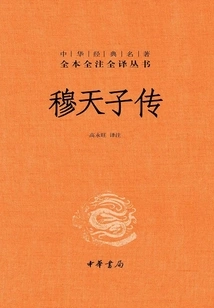
穆天子传(中华经典名著全本全注全译)
Translation And Annotation By Gao Yongwang
"The Biography of Emperor Mu" (referred to as "The Biography of Mu") was originally titled "The Journey of the King of Zhou". It is the only ancient bamboo slip book unearthed from the Jijun Tomb in the early Western Jin Dynasty and has been handed down to this day. It has extremely high documentary value and is regarded as a strange book by the academic circles. According to relevant records such as "Bamboo Chronicles" and "Historical Records", King Mu of Zhou reigned for fifty-five years. Between the 12th year (965 BC) and the 18th year (959 BC), he made two expeditions to the west, reaching Huaisi in the east, Kunlun in the west, Poyang in the south, and Jue Liusha in the north, with a total journey of 190,000 miles. "The Biography of Emperor Mu" is a precious historical book that records King Mu of Zhou's hunting tours all over the world. The whole book is divided into six volumes. The first volume records King Zhou Mu's first western expedition between the 12th year (965 BC) and the 13th year (964 BC). King Mu of the Zhou Dynasty set out from Luoyi, Zhou's ancestral home, crossed the Yellow River to the north, passed Mount Wei, crossed the Zhang River, crossed Jingxing Mountain, climbed Hengshan Mountain along the north bank of the Hutuo River, and patrolled the Quanrong in the north. He then left Yanmen Pass in the west and passed through Pinglu in present-day Shanxi to the Hetao area in present-day Inner Mongolia to worship the Hezong. He also marched westward to the Wengu Ledu of the Hezong clan. Volumes 2 to 4 record King Zhou Mu's second western expedition from the seventeenth year (960 BC) to the eighteenth year (959 BC). The second volume mainly records the itinerary and deeds of King Zhou Mu's tour of the Kunlun Mountains, visiting Shouyu, Zhuze, Chiwu, Cao Nu, Changhu, Rongcheng, Qunyushan, Jilu clan, Juanhan clan and other places, and successfully arrived at the land of the Queen Mother of the West. The third volume records the itinerary and deeds of King Mu of Zhou who met with the Queen Mother of the West, hunted in the wilderness, and then returned eastward, passing through the Zhishi and Yanhu families, and the desert of South Vietnam to reach Shouyu. The fourth volume mainly records the itinerary and deeds of King Zhou Mu as he returned eastward from the Western Regions, traveled around the country, and finally returned to Nanzheng, the other capital. The fifth volume mainly records the deeds of King Zhou Mu during his hunting tours in the Central Plains with Luoyang as the center from the 14th year (963 BC) to the 15th year (962 BC). The sixth volume records that King Mu of Zhou continued to patrol and hunt in the Central Plains. During this period, King Mu's favorite concubine Sheng Ji fell ill and died. King Mu of Zhou held a grand funeral for her in accordance with the rites of a queen.
"The Biography of Emperor Mu" (referred to as "The Biography of Mu") was originally titled "The Journey of the King of Zhou". It is the only ancient bamboo slip book unearthed from the Jijun Tomb in the early Western Jin Dynasty and has been handed down to this day. It has extremely high documentary value and is regarded as a strange book by the academic circles. According to relevant records such as "Bamboo Chronicles" and "Historical Records", King Mu of Zhou reigned for fifty-five years. Between the 12th year (965 BC) and the 18th year (959 BC), he made two expeditions to the west, reaching Huaisi in the east, Kunlun in the west, Poyang in the south, and Jue Liusha in the north, with a total journey of 190,000 miles. "The Biography of Emperor Mu" is a precious historical book that records King Mu of Zhou's hunting tours all over the world. The whole book is divided into six volumes. The first volume records King Zhou Mu's first western expedition between the 12th year (965 BC) and the 13th year (964 BC). King Mu of the Zhou Dynasty set out from Luoyi, Zhou's ancestral home, crossed the Yellow River to the north, passed Mount Wei, crossed the Zhang River, crossed Jingxing Mountain, climbed Hengshan Mountain along the north bank of the Hutuo River, and patrolled the Quanrong in the north. He then left Yanmen Pass in the west and passed through Pinglu in present-day Shanxi to the Hetao area in present-day Inner Mongolia to worship the Hezong. He also marched westward to the Wengu Ledu of the Hezong clan. Volumes 2 to 4 record King Zhou Mu's second western expedition from the seventeenth year (960 BC) to the eighteenth year (959 BC). The second volume mainly records the itinerary and deeds of King Zhou Mu's tour of the Kunlun Mountains, visiting Shouyu, Zhuze, Chiwu, Cao Nu, Changhu, Rongcheng, Qunyushan, Jilu clan, Juanhan clan and other places, and successfully arrived at the land of the Queen Mother of the West. The third volume records the itinerary and deeds of King Mu of Zhou who met with the Queen Mother of the West, hunted in the wilderness, and then returned eastward, passing through the Zhishi and Yanhu families, and the desert of South Vietnam to reach Shouyu. The fourth volume mainly records the itinerary and deeds of King Zhou Mu as he returned eastward from the Western Regions, traveled around the country, and finally returned to Nanzheng, the other capital. The fifth volume mainly records the deeds of King Zhou Mu during his hunting tours in the Central Plains with Luoyang as the center from the 14th year (963 BC) to the 15th year (962 BC). The sixth volume records that King Mu of Zhou continued to patrol and hunt in the Central Plains. During this period, King Mu's favorite concubine Sheng Ji fell ill and died. King Mu of Zhou held a grand funeral for her in accordance with the rites of a queen.
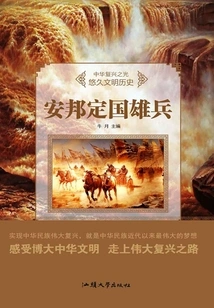
安邦定国雄兵
Ox Moon
"The Heroes of Anbang and Dingguo\u002F The Light of China's Revival and the Long History of Civilization" mainly introduces the military and weapon formations of ancient China. Including the military bravery of the past dynasties, military systems of the past dynasties, weapons of the past dynasties, etc.
"The Heroes of Anbang and Dingguo\u002F The Light of China's Revival and the Long History of Civilization" mainly introduces the military and weapon formations of ancient China. Including the military bravery of the past dynasties, military systems of the past dynasties, weapons of the past dynasties, etc.
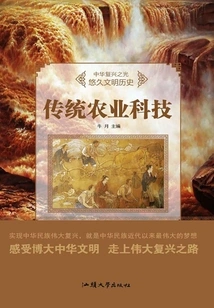
传统农业科技
Ox Moon
Crop cultivation in our country originated in the Neolithic period, when people made a living by hunting and collecting wild plants. Some of the collected seeds are scattered near the residence, where they germinate, bloom, bear fruit, and reproduce unintentionally. By observing the growth process of plants, people gradually learned to cultivate crops artificially, which led to the initial agricultural production activities.
Crop cultivation in our country originated in the Neolithic period, when people made a living by hunting and collecting wild plants. Some of the collected seeds are scattered near the residence, where they germinate, bloom, bear fruit, and reproduce unintentionally. By observing the growth process of plants, people gradually learned to cultivate crops artificially, which led to the initial agricultural production activities.
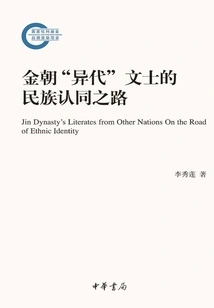
金朝“异代”文士的民族认同之路
Li Xiulian
The path of national identity of the "different generation" scribes of the Jin Dynasty runs through the ups and downs of the Jin Dynasty for a hundred years, promoting the transformation of the Jurchen northern regime from "Yi Di" to "Chinese", and interpreting the historical interaction process between the "different generation" scribes representing Han culture and the main ethnic group of the Jin Dynasty - the Jurchens' political identity, cultural identity and national identity. On the basis of critically inheriting the results of "Sinicization" research, the path of national identity of "different generation" scribes paid more attention to the study of the historical process of the Jurchen and other Northern peoples' acceptance and rejection of Han culture, and integrated national identity into the history of political and cultural identity.
The path of national identity of the "different generation" scribes of the Jin Dynasty runs through the ups and downs of the Jin Dynasty for a hundred years, promoting the transformation of the Jurchen northern regime from "Yi Di" to "Chinese", and interpreting the historical interaction process between the "different generation" scribes representing Han culture and the main ethnic group of the Jin Dynasty - the Jurchens' political identity, cultural identity and national identity. On the basis of critically inheriting the results of "Sinicization" research, the path of national identity of "different generation" scribes paid more attention to the study of the historical process of the Jurchen and other Northern peoples' acceptance and rejection of Han culture, and integrated national identity into the history of political and cultural identity.
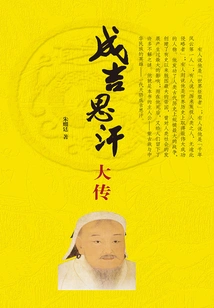
成吉思汗大传
Zhu Yaoting
Genghis Khan was an outstanding military strategist who was good at reconnaissance, warning, formation, charge, pursuit, encirclement and annihilation, and brought the combat art into full play; Genghis Khan was a shrewd politician who made allies, expanded his power, and was good at dividing, disintegrating, and isolating the enemy; Genghis Khan Sihan was an incredible careerist who brought bloodshed to an unprecedentedly vast area... Zhu Yaoting's "The Biography of Genghis Khan" will show you a real Genghis Khan and fully demonstrate the style of Genghis Khan, a great figure with global influence. We conducted an in-depth analysis and discussion of its merits and demerits, especially the "Western Expedition" that received mixed reviews, and made a realistic evaluation.
Genghis Khan was an outstanding military strategist who was good at reconnaissance, warning, formation, charge, pursuit, encirclement and annihilation, and brought the combat art into full play; Genghis Khan was a shrewd politician who made allies, expanded his power, and was good at dividing, disintegrating, and isolating the enemy; Genghis Khan Sihan was an incredible careerist who brought bloodshed to an unprecedentedly vast area... Zhu Yaoting's "The Biography of Genghis Khan" will show you a real Genghis Khan and fully demonstrate the style of Genghis Khan, a great figure with global influence. We conducted an in-depth analysis and discussion of its merits and demerits, especially the "Western Expedition" that received mixed reviews, and made a realistic evaluation.
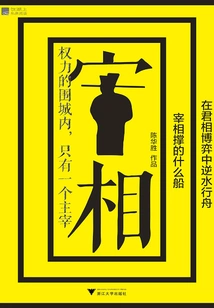
宰相撑的什么船:在君相博弈中逆水行舟
Chen Huasheng
China's prime minister system began in the Qin Dynasty. It was originally a supporting system for the autocratic imperial power. After the rise of the Han Dynasty, the lessons learned from the fall of Qin were learned. There was a time when the status of the prime minister could check and balance the imperial power. History even showed the dawn of parliamentary politics such as collective deliberation. However, this dawn finally Yu was eventually obliterated in the struggle for imperial power and prime ministerial power. Until the end of the Qing Dynasty, when the prime minister was abolished and the parliament was established, China's prime minister system went from the starting point to the end, and the end to the starting point again, making a circle, and modern parliamentary democracy finally passed outside this circle. This book reveals such a process.
China's prime minister system began in the Qin Dynasty. It was originally a supporting system for the autocratic imperial power. After the rise of the Han Dynasty, the lessons learned from the fall of Qin were learned. There was a time when the status of the prime minister could check and balance the imperial power. History even showed the dawn of parliamentary politics such as collective deliberation. However, this dawn finally Yu was eventually obliterated in the struggle for imperial power and prime ministerial power. Until the end of the Qing Dynasty, when the prime minister was abolished and the parliament was established, China's prime minister system went from the starting point to the end, and the end to the starting point again, making a circle, and modern parliamentary democracy finally passed outside this circle. This book reveals such a process.
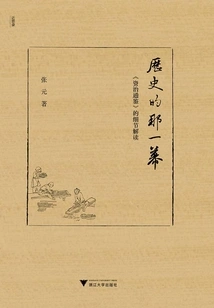
历史的那一幕:《资治通鉴》的细节解读(近思录)
Zhang Yuan
The "Recent Thoughts" series of small books is the fourth in the series, following two by Xin Deyong and one by Zhou Zhenhe. The author uses a unique perspective to interpret "Zizhi Tongjian" in an easy-to-understand manner. This time, Mr. Zhang systematically compiled 17 articles that he has never published that interpret "Tongjian", explaining some historical moments that everyone has ignored by famous historical figures such as Cao Pi and Wu Zetian. Mr. Zhang Yuan teaches "Zi Zhi Tong Jian" to students at Zhejiang University every year, and the course is well received. Mr. Wang's official account focuses on "Tongjian" and has tens of thousands of fans. It has considerable influence in the field of mainland history.
The "Recent Thoughts" series of small books is the fourth in the series, following two by Xin Deyong and one by Zhou Zhenhe. The author uses a unique perspective to interpret "Zizhi Tongjian" in an easy-to-understand manner. This time, Mr. Zhang systematically compiled 17 articles that he has never published that interpret "Tongjian", explaining some historical moments that everyone has ignored by famous historical figures such as Cao Pi and Wu Zetian. Mr. Zhang Yuan teaches "Zi Zhi Tong Jian" to students at Zhejiang University every year, and the course is well received. Mr. Wang's official account focuses on "Tongjian" and has tens of thousands of fans. It has considerable influence in the field of mainland history.
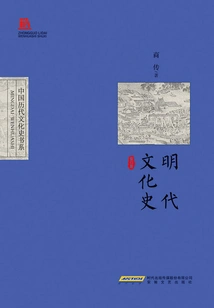
明代文化史
Business Biography
This book is one of the "Chinese Cultural History Series" and tells the cultural history of the Ming Dynasty. The book shows the cultural characteristics and historical status of the Ming Dynasty from the aspects of cultural autocracy, multi-layered cultural characteristics, education and examination systems, academic schools and religions, literature and art, and cultural heritage during the Ming Dynasty. This book has detailed content, rich historical materials, and in-depth research. It is worthy of reference and reading by the majority of historical researchers.
This book is one of the "Chinese Cultural History Series" and tells the cultural history of the Ming Dynasty. The book shows the cultural characteristics and historical status of the Ming Dynasty from the aspects of cultural autocracy, multi-layered cultural characteristics, education and examination systems, academic schools and religions, literature and art, and cultural heritage during the Ming Dynasty. This book has detailed content, rich historical materials, and in-depth research. It is worthy of reference and reading by the majority of historical researchers.
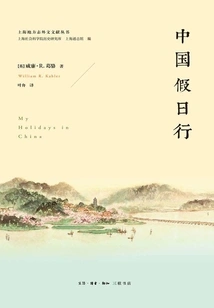
China Holiday Trip
History中国假日行
(english) Gloria
This book is divided into three parts, recording the author's three trips during his spare time at work. The first time was from Shanghai to Hangzhou and finally back to Ningbo; the second time was from Shanghai to Liyang, passing through Suzhou, Jiangyin, Wuxi, Yixing, Changzhou and other places; the third time was from Jiujiang to Wuhu. This book is very large in length, covers a lot of geographical areas, and discusses many issues. It not only contains detailed descriptions of traditional Chinese crafts such as oil pressing, coin casting, and weaving, but also records of prices and people's lives at that time, as well as records of Chinese folklore. It is a first-hand source of information to understand the situation in Shanghai and its surrounding areas at that time.
This book is divided into three parts, recording the author's three trips during his spare time at work. The first time was from Shanghai to Hangzhou and finally back to Ningbo; the second time was from Shanghai to Liyang, passing through Suzhou, Jiangyin, Wuxi, Yixing, Changzhou and other places; the third time was from Jiujiang to Wuhu. This book is very large in length, covers a lot of geographical areas, and discusses many issues. It not only contains detailed descriptions of traditional Chinese crafts such as oil pressing, coin casting, and weaving, but also records of prices and people's lives at that time, as well as records of Chinese folklore. It is a first-hand source of information to understand the situation in Shanghai and its surrounding areas at that time.
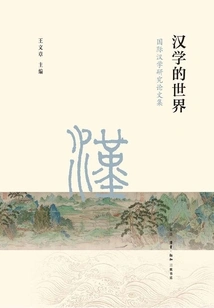
汉学的世界:国际汉学研究论文集
Editor-in-chief Wang Wenzhang
This book is based on the papers of famous experts at home and abroad that were originally planned to be organized by the Chinese Academy of Arts during the preparations for the International Sinology Conference in 2013. It selects some articles from the first four issues of "World Sinology", a total of more than 60 articles, and compiles and selects them. The book integrates the academic achievements of sinologists from China, the United States, France, Germany, the United Kingdom, Belgium and other countries. It covers reflections on the concepts, methods and paradigms of sinology research, a review of the academic history of sinology, and prospects for the future, research results of sinology schools and sinology institutions in various countries, academic biographies of famous sinologists, summaries of traditional Chinese historical experience, discussions on the reconstruction of contemporary Chinese values, etc.
This book is based on the papers of famous experts at home and abroad that were originally planned to be organized by the Chinese Academy of Arts during the preparations for the International Sinology Conference in 2013. It selects some articles from the first four issues of "World Sinology", a total of more than 60 articles, and compiles and selects them. The book integrates the academic achievements of sinologists from China, the United States, France, Germany, the United Kingdom, Belgium and other countries. It covers reflections on the concepts, methods and paradigms of sinology research, a review of the academic history of sinology, and prospects for the future, research results of sinology schools and sinology institutions in various countries, academic biographies of famous sinologists, summaries of traditional Chinese historical experience, discussions on the reconstruction of contemporary Chinese values, etc.
明清传奇史
Guo Yingde
"History of Legends of the Ming and Qing Dynasties" takes the times as a clue and systematically examines the development and evolution of legends in the Ming and Qing dynasties. The first part details the origin, the establishment of the system and the variation of the theme; the second part discusses in detail the popularity of the legend from the Wanli period of the Ming Dynasty to the Shunzhi period of the Qing Dynasty; the third part examines the prosperity of the legend from the Shunzhi period to the Kangxi period of the Qing Dynasty; the fourth part examines the end of the legend from the late Kangxi period to the Jiaqing period of the Qing Dynasty; the fifth part examines the wandering and helplessness of the legend from the first year of Daoguang to the Xuantong period of the Qing Dynasty. Overall, this is a masterpiece of research on the legends of the Ming and Qing Dynasties. It was widely praised by the academic community after the first edition was published.
"History of Legends of the Ming and Qing Dynasties" takes the times as a clue and systematically examines the development and evolution of legends in the Ming and Qing dynasties. The first part details the origin, the establishment of the system and the variation of the theme; the second part discusses in detail the popularity of the legend from the Wanli period of the Ming Dynasty to the Shunzhi period of the Qing Dynasty; the third part examines the prosperity of the legend from the Shunzhi period to the Kangxi period of the Qing Dynasty; the fourth part examines the end of the legend from the late Kangxi period to the Jiaqing period of the Qing Dynasty; the fifth part examines the wandering and helplessness of the legend from the first year of Daoguang to the Xuantong period of the Qing Dynasty. Overall, this is a masterpiece of research on the legends of the Ming and Qing Dynasties. It was widely praised by the academic community after the first edition was published.
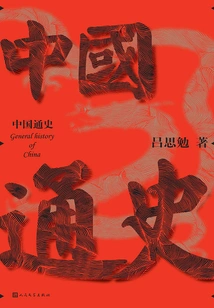
General History of China
History中国通史
Lu Simian
This is the masterpiece of historian Lu Simian. The original name of this book is "History of the Country, a Senior High School Textbook". It is a general history textbook of China written by Lu Simian in the 1930s for students of Fuxing Senior High School. Published by the Commercial Press in 1934, it is widely popular and has far-reaching influence. The writing of this book is concise, easy to understand and suitable for the general public to read.
This is the masterpiece of historian Lu Simian. The original name of this book is "History of the Country, a Senior High School Textbook". It is a general history textbook of China written by Lu Simian in the 1930s for students of Fuxing Senior High School. Published by the Commercial Press in 1934, it is widely popular and has far-reaching influence. The writing of this book is concise, easy to understand and suitable for the general public to read.
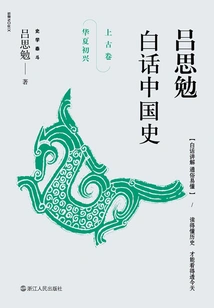
吕思勉白话中国史·上古卷·华夏初兴
Lu Simian
"Lü Simian's Vernacular History of China" is divided into "Lü Simian's Vernacular History of China·Ancient Scrolls·Early Rise of China", "Lü Simian's Vernacular History of China·Middle Ancient Scrolls·The First Sound of the Han and Tang Dynasties", "Lü Simian's Vernacular History of China·Modern Scrolls·The Rise and Fall of the Song and Yuan Dynasties", "Lü Simian's Vernacular History of China·Modern Scrolls·Ming and Qing Dynasties" The five books in the series "The Changes" and "Lü Simian's Vernacular Chinese History·Modern Volume·What Was the Republic of China" are the first comprehensive histories written in vernacular with complete meaning. They respectively describe the political history, social economy, and cultural phenomena at each stage, and also describe the relationship between various countries and China. This version is based on the first edition of the Commercial Press in 1923. In order to make it easier to understand and read, the era of the Republic of China was changed to the AD era. The changed place names were also marked in detail, and the text was completely revised.
"Lü Simian's Vernacular History of China" is divided into "Lü Simian's Vernacular History of China·Ancient Scrolls·Early Rise of China", "Lü Simian's Vernacular History of China·Middle Ancient Scrolls·The First Sound of the Han and Tang Dynasties", "Lü Simian's Vernacular History of China·Modern Scrolls·The Rise and Fall of the Song and Yuan Dynasties", "Lü Simian's Vernacular History of China·Modern Scrolls·Ming and Qing Dynasties" The five books in the series "The Changes" and "Lü Simian's Vernacular Chinese History·Modern Volume·What Was the Republic of China" are the first comprehensive histories written in vernacular with complete meaning. They respectively describe the political history, social economy, and cultural phenomena at each stage, and also describe the relationship between various countries and China. This version is based on the first edition of the Commercial Press in 1923. In order to make it easier to understand and read, the era of the Republic of China was changed to the AD era. The changed place names were also marked in detail, and the text was completely revised.
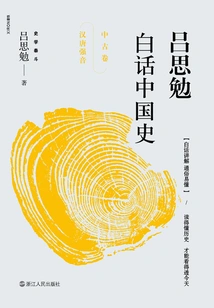
Lu Simian's Vernacular History of China. Medieval Scrolls: Strong Sounds of Han and Tang Dynasties
History吕思勉白话中国史. 中古卷:汉唐强音
Lu Simian
"Lü Simian's Vernacular History of China" is divided into "Lü Simian's Vernacular History of China·Ancient Scrolls·Early Rise of China", "Lü Simian's Vernacular History of China·Middle Ancient Scrolls·The First Sound of the Han and Tang Dynasties", "Lü Simian's Vernacular History of China·Modern Scrolls·The Rise and Fall of the Song and Yuan Dynasties", "Lü Simian's Vernacular History of China·Modern Scrolls·Ming and Qing Dynasties" The five books in the series "The Changes" and "Lü Simian's Vernacular Chinese History·Modern Volume·What Was the Republic of China" are the first comprehensive histories written in vernacular with complete meaning. They respectively describe the political history, social economy, and cultural phenomena at each stage, and also describe the relationship between various countries and China. This version is based on the first edition of the Commercial Press in 1923. In order to make it easier to understand and read, the era of the Republic of China was changed to the AD era. The changed place names were also marked in detail, and the text was completely revised.
"Lü Simian's Vernacular History of China" is divided into "Lü Simian's Vernacular History of China·Ancient Scrolls·Early Rise of China", "Lü Simian's Vernacular History of China·Middle Ancient Scrolls·The First Sound of the Han and Tang Dynasties", "Lü Simian's Vernacular History of China·Modern Scrolls·The Rise and Fall of the Song and Yuan Dynasties", "Lü Simian's Vernacular History of China·Modern Scrolls·Ming and Qing Dynasties" The five books in the series "The Changes" and "Lü Simian's Vernacular Chinese History·Modern Volume·What Was the Republic of China" are the first comprehensive histories written in vernacular with complete meaning. They respectively describe the political history, social economy, and cultural phenomena at each stage, and also describe the relationship between various countries and China. This version is based on the first edition of the Commercial Press in 1923. In order to make it easier to understand and read, the era of the Republic of China was changed to the AD era. The changed place names were also marked in detail, and the text was completely revised.
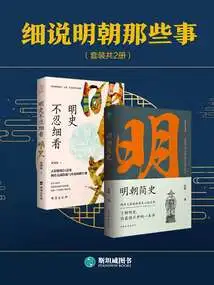
细说明朝那些事(套装共2册)
Zhang Chaoshan Wu Han
This set includes: "A Brief History of the Ming Dynasty" and "The History of the Ming Dynasty I Can't Bear to Read in Detail (Prying into the Palace Secrets of the Emperors, Concubines, and Eunuchs of the Ming Dynasty)"
This set includes: "A Brief History of the Ming Dynasty" and "The History of the Ming Dynasty I Can't Bear to Read in Detail (Prying into the Palace Secrets of the Emperors, Concubines, and Eunuchs of the Ming Dynasty)"
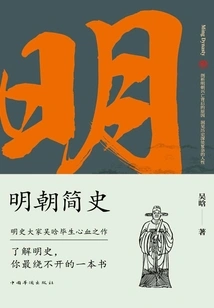
明朝简史
Wu Han
As a pioneer in the study of modern Ming history in China, Mr. Wu Han's research on Ming history is both insightful and easy to understand. It is an excellent version for the public readers to understand the history of the Ming Dynasty. This book selects "A Brief Introduction to the History of the Ming Dynasty", "The Biography of Zhu Yuanzhang", "The History of the Ming Dynasty (Unfinished)", "Notes on Reading History", etc., As well as other historical articles written by Mr. Wang on the social and historical issues of the Ming Dynasty. It is summarized from three perspectives: politics, economy and military. It combines the historical background, comments on gains and losses, and provides illustrations. It strives to enable readers to understand the history of the Ming Dynasty to the greatest extent in the smallest possible length.
As a pioneer in the study of modern Ming history in China, Mr. Wu Han's research on Ming history is both insightful and easy to understand. It is an excellent version for the public readers to understand the history of the Ming Dynasty. This book selects "A Brief Introduction to the History of the Ming Dynasty", "The Biography of Zhu Yuanzhang", "The History of the Ming Dynasty (Unfinished)", "Notes on Reading History", etc., As well as other historical articles written by Mr. Wang on the social and historical issues of the Ming Dynasty. It is summarized from three perspectives: politics, economy and military. It combines the historical background, comments on gains and losses, and provides illustrations. It strives to enable readers to understand the history of the Ming Dynasty to the greatest extent in the smallest possible length.
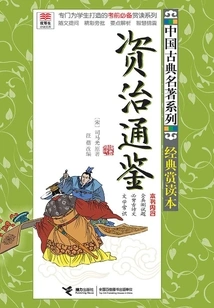
Zizhi Tongjian
History资治通鉴
(song Dynasty) Original Work By Sima Guang, Adapted By Wang Bei
This series (must-read library series for top students) is a series of classic works specially tailored for students. Each selected book is carefully equipped with opening questions from famous teachers, exciting side comments, analysis of key points in the text, and wisdom tips and other reading aids. This book, "Zi Zhi Tong Jian", is a multi-volume chronological history book edited by Sima Guang of the Northern Song Dynasty. The content mainly focuses on politics, military and ethnic relations, as well as economic, cultural and historical figures evaluation. The purpose is to warn future generations through the description of the policies of the ruling class that are related to the rise and fall of the country and the rise and fall of the nation.
This series (must-read library series for top students) is a series of classic works specially tailored for students. Each selected book is carefully equipped with opening questions from famous teachers, exciting side comments, analysis of key points in the text, and wisdom tips and other reading aids. This book, "Zi Zhi Tong Jian", is a multi-volume chronological history book edited by Sima Guang of the Northern Song Dynasty. The content mainly focuses on politics, military and ethnic relations, as well as economic, cultural and historical figures evaluation. The purpose is to warn future generations through the description of the policies of the ruling class that are related to the rise and fall of the country and the rise and fall of the nation.
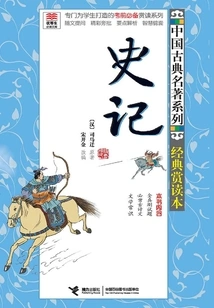
Historical Records
History史记
(han) Original Work By Sima Qian, Adapted By Song Kaijin
This series (must-read library series for top students) is a series of classic works specially tailored for students. Each selected book is carefully equipped with opening questions from famous teachers, exciting side comments, analysis of key points in the text, and wisdom tips and other reading aids. This book "Historical Records" is the first biographical general history in Chinese history. It records a history of more than 3,000 years from the legendary Huangdi era to the fourth year of Emperor Wu of the Han Dynasty. In the first year of Taichu (104 BC), Sima Qian began the creation of "Tai Shi Gong Shu", which was later called "Historical Records". It took 14 years to complete the work.
This series (must-read library series for top students) is a series of classic works specially tailored for students. Each selected book is carefully equipped with opening questions from famous teachers, exciting side comments, analysis of key points in the text, and wisdom tips and other reading aids. This book "Historical Records" is the first biographical general history in Chinese history. It records a history of more than 3,000 years from the legendary Huangdi era to the fourth year of Emperor Wu of the Han Dynasty. In the first year of Taichu (104 BC), Sima Qian began the creation of "Tai Shi Gong Shu", which was later called "Historical Records". It took 14 years to complete the work.
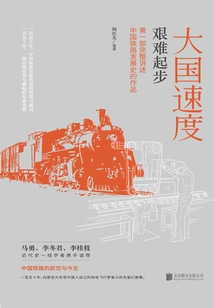
大国速度:艰难起步
Yang Hongguang
"Great Power Speed: Hard Beginnings" is the first work to completely tell the history of China's railway development. Recommended by Ma Yong, Li Dongjun, and Duanmu Cixiang, front-line scholars of modern history, this book tells in a minimalist, rigorous, and easy-to-understand way the difficult beginnings, suffering and glory of China's railway development in modern history since the Opium War, and the era of high-speed rail. This book is the first volume in the Speed of Great Powers series. Only by knowing the past can we understand the future. After more than a hundred years of development, China's railways have reached the top of the world. History cannot be forgotten. Only by looking at the modern history of China's railways can we truly understand its significance.
"Great Power Speed: Hard Beginnings" is the first work to completely tell the history of China's railway development. Recommended by Ma Yong, Li Dongjun, and Duanmu Cixiang, front-line scholars of modern history, this book tells in a minimalist, rigorous, and easy-to-understand way the difficult beginnings, suffering and glory of China's railway development in modern history since the Opium War, and the era of high-speed rail. This book is the first volume in the Speed of Great Powers series. Only by knowing the past can we understand the future. After more than a hundred years of development, China's railways have reached the top of the world. History cannot be forgotten. Only by looking at the modern history of China's railways can we truly understand its significance.
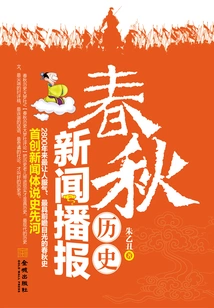
春秋历史新闻播报
Zhu Yichou
It is the first of its kind to tell history in news media. It is the most convincing and forward-looking Spring and Autumn History in 2,800 years, the sharpest commentary, and the best history book. During the Spring and Autumn Period, society was turbulent and the situation was changing. "Spring and Autumn History News Network" tells the history of the Spring and Autumn Period by writing heroic things, absurd things, and wise things. These things are educational and inspiring to future generations. The heroic thing is to tell readers what the righteousness of the Spring and Autumn Period is; the absurd thing is to tell readers that system flaws will inevitably lead to absurd things; the wisdom is to tell readers that all success is not accidental, but the crystallization of heart and brain power. Those who try to write history and history from both the positive and negative sides.
It is the first of its kind to tell history in news media. It is the most convincing and forward-looking Spring and Autumn History in 2,800 years, the sharpest commentary, and the best history book. During the Spring and Autumn Period, society was turbulent and the situation was changing. "Spring and Autumn History News Network" tells the history of the Spring and Autumn Period by writing heroic things, absurd things, and wise things. These things are educational and inspiring to future generations. The heroic thing is to tell readers what the righteousness of the Spring and Autumn Period is; the absurd thing is to tell readers that system flaws will inevitably lead to absurd things; the wisdom is to tell readers that all success is not accidental, but the crystallization of heart and brain power. Those who try to write history and history from both the positive and negative sides.
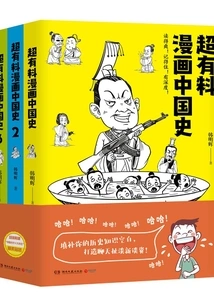
超有料漫画中国史(套装共3册)
Han Minghui
This book slowly opens the curtain of Chinese history for you through hilarious jokes and vivid hand-drawn cartoons. Behind the turbulent historical process, there are emperors, princes, civil servants and military generals with character, temperament and means. Their every move has shaped the wonderful five thousand years of history. I hope that after reading this book you will laugh out loud and have a preliminary understanding of the general context of Chinese history. How did King Gou Jian of Yue implement "family planning"? Why is Zhuge Liang said to be a "technology enthusiast"? Huan Xuan, a traitor in the Eastern Jin Dynasty who loved to write "a madman's diary", what did he write in his diary? Li Shimin valued Wei Zheng, but why did he smash his tombstone? If you lived in the Yuan Dynasty, which class among the four classes would you belong to? Empress Dowager Cixi and Emperor Guangxu died less than one day apart. What's the mystery behind it?
This book slowly opens the curtain of Chinese history for you through hilarious jokes and vivid hand-drawn cartoons. Behind the turbulent historical process, there are emperors, princes, civil servants and military generals with character, temperament and means. Their every move has shaped the wonderful five thousand years of history. I hope that after reading this book you will laugh out loud and have a preliminary understanding of the general context of Chinese history. How did King Gou Jian of Yue implement "family planning"? Why is Zhuge Liang said to be a "technology enthusiast"? Huan Xuan, a traitor in the Eastern Jin Dynasty who loved to write "a madman's diary", what did he write in his diary? Li Shimin valued Wei Zheng, but why did he smash his tombstone? If you lived in the Yuan Dynasty, which class among the four classes would you belong to? Empress Dowager Cixi and Emperor Guangxu died less than one day apart. What's the mystery behind it?
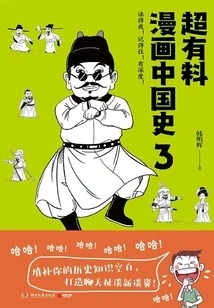
超有料漫画中国史.3
Han Minghui
This book slowly opens the curtain of Chinese history for you through hilarious jokes and vivid hand-drawn cartoons. Behind the turbulent historical process, there are emperors, princes, civil servants and military generals with character, temperament and means. Their every move has shaped the wonderful five thousand years of history. I hope that after reading this book you will laugh out loud and have a preliminary understanding of the general context of Chinese history. This volume is the third volume in this series. It tells the history from the Five Dynasties and Ten Kingdoms to the Qing Dynasty, that is, China's transition from division to reunification.
This book slowly opens the curtain of Chinese history for you through hilarious jokes and vivid hand-drawn cartoons. Behind the turbulent historical process, there are emperors, princes, civil servants and military generals with character, temperament and means. Their every move has shaped the wonderful five thousand years of history. I hope that after reading this book you will laugh out loud and have a preliminary understanding of the general context of Chinese history. This volume is the third volume in this series. It tells the history from the Five Dynasties and Ten Kingdoms to the Qing Dynasty, that is, China's transition from division to reunification.
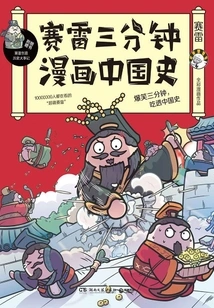
赛雷三分钟漫画中国史
Saire
"Sailei's Three Minutes Comic History of China" is the latest comic history work of "Sailei's Three Minutes", the leading self-media encyclopedia. Chinese history is a history that every Chinese should understand. The first volume of "Chinese History of Sai Lei Comics" covers the six time periods of Xia, Shang, Zhou, Spring, Autumn, Warring States and Qin. What is very outstanding about it is that it uses the humorous style of Sai Lei Comics to tell Chinese history according to chronological clues, allowing readers to understand the development of Chinese history while laughing. This is a comic book about Chinese history that you will want to recommend to people around you after reading it.
"Sailei's Three Minutes Comic History of China" is the latest comic history work of "Sailei's Three Minutes", the leading self-media encyclopedia. Chinese history is a history that every Chinese should understand. The first volume of "Chinese History of Sai Lei Comics" covers the six time periods of Xia, Shang, Zhou, Spring, Autumn, Warring States and Qin. What is very outstanding about it is that it uses the humorous style of Sai Lei Comics to tell Chinese history according to chronological clues, allowing readers to understand the development of Chinese history while laughing. This is a comic book about Chinese history that you will want to recommend to people around you after reading it.
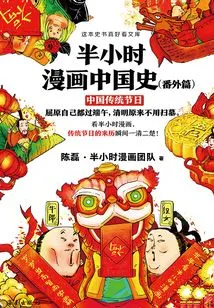
半小时漫画中国史(番外篇):中国传统节日
Chen Lei·half Hour Comics Team
Qu Yuan himself celebrated the Dragon Boat Festival, so there was no need to sweep graves during the Qingming Festival. After reading the comic for half an hour, the origins of traditional festivals are instantly clear! "Half-Hour Comic History of China (Extra Chapter): Traditional Chinese Festivals" is a brand new work launched by Chen Lei (second bastard), the pioneer of comic-style science popularization with 7 million fans on the Internet, and his team after "Half-Hour Comic History of China" and "Half-Hour Comic History of the World"! Every page is filled with knowledge points and jokes, which will make you laugh every three seconds. While laughing your abs out, you will instantly understand the true origin of traditional Chinese festivals. Qu Yuan actually celebrated the Dragon Boat Festival himself; the history of the Spring Festival is actually only more than 100 years; the Lantern Festival was actually Valentine's Day in ancient times; the Cowherd and the Weaver Girl actually had nothing to do with each other; the Qingming Festival was actually quite joyful for the ancients... Behind the origins of traditional festivals are actually various ancient Chinese knowledge: history, religion, astronomy, geography, climate, calendar, etc. It allows you to understand the traditional Chinese culture and the ancient wisdom of our ancestors while understanding the origin of the festival. Did you know? Qu Yuan himself celebrated the Dragon Boat Festival! Read the comic for half an hour and understand the true origins of traditional Chinese festivals in seconds!
Qu Yuan himself celebrated the Dragon Boat Festival, so there was no need to sweep graves during the Qingming Festival. After reading the comic for half an hour, the origins of traditional festivals are instantly clear! "Half-Hour Comic History of China (Extra Chapter): Traditional Chinese Festivals" is a brand new work launched by Chen Lei (second bastard), the pioneer of comic-style science popularization with 7 million fans on the Internet, and his team after "Half-Hour Comic History of China" and "Half-Hour Comic History of the World"! Every page is filled with knowledge points and jokes, which will make you laugh every three seconds. While laughing your abs out, you will instantly understand the true origin of traditional Chinese festivals. Qu Yuan actually celebrated the Dragon Boat Festival himself; the history of the Spring Festival is actually only more than 100 years; the Lantern Festival was actually Valentine's Day in ancient times; the Cowherd and the Weaver Girl actually had nothing to do with each other; the Qingming Festival was actually quite joyful for the ancients... Behind the origins of traditional festivals are actually various ancient Chinese knowledge: history, religion, astronomy, geography, climate, calendar, etc. It allows you to understand the traditional Chinese culture and the ancient wisdom of our ancestors while understanding the origin of the festival. Did you know? Qu Yuan himself celebrated the Dragon Boat Festival! Read the comic for half an hour and understand the true origins of traditional Chinese festivals in seconds!
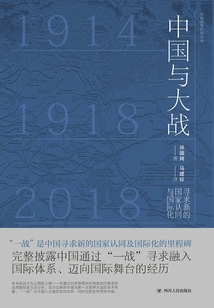
中国与大战:寻求新的国家认同与国际化
Xu Guoqi
The book "China and the Great War" uses international historical methods and multiple perspectives to study a little-known topic in China and world history: the relationship between China and the First World War. This is the first in a series of studies on China, internationalization, and national identity that I have conducted in recent years. The second part examines the history of China's pursuit of internationalization and new national identity from the perspective of sports. The book is called "Olympic Dream: China and Sports, 1895-2008" and will be published by Harvard University Press in the spring of 2008. People's Publishing House plans to release the Chinese version of the book as soon as possible. He is currently writing the third book in this series, which is tentatively titled "The Blending of Civilizations: Chinese Workers in World War I and China's Internationalization." The popular version of the book has now been completed and will be published in Chinese and French by Wuzhou Communication Publishing House in the autumn of 2007. The English version will be completed in 2009 and will be published first in English in the United States. These three books respectively provide new interpretations of relevant historical topics that are important but lack research from different angles, global perspectives, and comprehensive access to multinational archives. After the Chinese version comes out, it will be a great blessing if it can bring enlightenment to domestic academic circles in terms of methods, viewpoints, and materials, and achieve the effect of attracting new ideas!
The book "China and the Great War" uses international historical methods and multiple perspectives to study a little-known topic in China and world history: the relationship between China and the First World War. This is the first in a series of studies on China, internationalization, and national identity that I have conducted in recent years. The second part examines the history of China's pursuit of internationalization and new national identity from the perspective of sports. The book is called "Olympic Dream: China and Sports, 1895-2008" and will be published by Harvard University Press in the spring of 2008. People's Publishing House plans to release the Chinese version of the book as soon as possible. He is currently writing the third book in this series, which is tentatively titled "The Blending of Civilizations: Chinese Workers in World War I and China's Internationalization." The popular version of the book has now been completed and will be published in Chinese and French by Wuzhou Communication Publishing House in the autumn of 2007. The English version will be completed in 2009 and will be published first in English in the United States. These three books respectively provide new interpretations of relevant historical topics that are important but lack research from different angles, global perspectives, and comprehensive access to multinational archives. After the Chinese version comes out, it will be a great blessing if it can bring enlightenment to domestic academic circles in terms of methods, viewpoints, and materials, and achieve the effect of attracting new ideas!
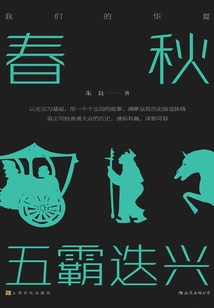
春秋:五霸迭兴
Zhu Liang
This book uses humorous and popular language to describe the historical evolution of the Spring and Autumn Period over the past three hundred years on the basis of respecting historical facts. The ups and downs of the five hegemons, the struggle for survival of small princes and small countries, and the various aspects of life under the big background are vividly displayed on the page, showing readers a magnificent picture of the Spring and Autumn Period.
This book uses humorous and popular language to describe the historical evolution of the Spring and Autumn Period over the past three hundred years on the basis of respecting historical facts. The ups and downs of the five hegemons, the struggle for survival of small princes and small countries, and the various aspects of life under the big background are vividly displayed on the page, showing readers a magnificent picture of the Spring and Autumn Period.
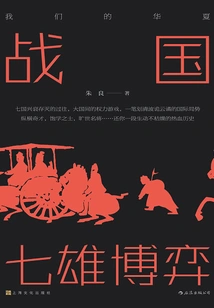
战国:七雄博弈
Zhu Liang
The content of the book begins with the division of the Jin Dynasty between the three families and finally the unification of the six kingdoms by Qin Shihuang. On the premise of respecting historical facts, it describes the ups and downs of the seven vassal states during the Warring States Period in vivid and interesting language. It reproduces the dazzling lives of Wu Qi, Shang Yang, Mencius, Zhang Yi and other outstanding talents under the background of the times, and takes you to experience a thrilling Chinese history.
The content of the book begins with the division of the Jin Dynasty between the three families and finally the unification of the six kingdoms by Qin Shihuang. On the premise of respecting historical facts, it describes the ups and downs of the seven vassal states during the Warring States Period in vivid and interesting language. It reproduces the dazzling lives of Wu Qi, Shang Yang, Mencius, Zhang Yi and other outstanding talents under the background of the times, and takes you to experience a thrilling Chinese history.
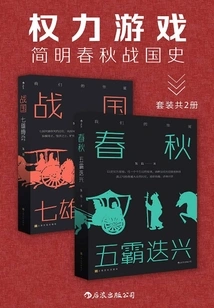
权力游戏:简明春秋战国史(套装共2册)
Zhu Liang
"Spring and Autumn: The Rise of the Five Hegemons" is a book that respects historical facts and uses humorous and popular language to describe the historical evolution of the Spring and Autumn Period in the past three hundred years. The ups and downs of the five hegemons, the struggle for survival of small princes and small countries, and the various aspects of life under the big background are vividly displayed on the page, showing readers a magnificent picture of the Spring and Autumn Period. "Warring States: The Game of the Seven Heroes" begins with the division of the Jin Dynasty between the three dynasties, and finally the unification of the six kingdoms by Qin Shihuang. On the premise of respecting historical facts, it describes the ups and downs of the seven vassal states during the Warring States Period in vivid and interesting language. It reproduces the dazzling lives of Wu Qi, Shang Yang, Mencius, Zhang Yi and other outstanding talents under the background of the times, and takes you to experience a thrilling Chinese history.
"Spring and Autumn: The Rise of the Five Hegemons" is a book that respects historical facts and uses humorous and popular language to describe the historical evolution of the Spring and Autumn Period in the past three hundred years. The ups and downs of the five hegemons, the struggle for survival of small princes and small countries, and the various aspects of life under the big background are vividly displayed on the page, showing readers a magnificent picture of the Spring and Autumn Period. "Warring States: The Game of the Seven Heroes" begins with the division of the Jin Dynasty between the three dynasties, and finally the unification of the six kingdoms by Qin Shihuang. On the premise of respecting historical facts, it describes the ups and downs of the seven vassal states during the Warring States Period in vivid and interesting language. It reproduces the dazzling lives of Wu Qi, Shang Yang, Mencius, Zhang Yi and other outstanding talents under the background of the times, and takes you to experience a thrilling Chinese history.
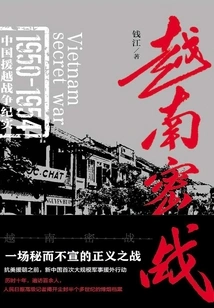
Vietnam Secret War
History越南密战
Qianjiang
The "Aid to Vietnam to Resist France" was the first large-scale military foreign aid operation after the founding of the People's Republic of China. Since the operation was top secret and was not disclosed, publicized or reported, only the officers and soldiers of the Chinese Military Advisory Group witnessed the magnificent and thrilling historical process. Based on precious files declassified in recent years, this book details the complete process from the 1950 border battle to the 1954 Dien Bien Phu battle, when China dispatched a military advisory group to assist Vietnam in its war of independence against France. Among them, there are the twists and turns of the great powers' mediation, the uncompromising decisions of leaders, the strategizing strategies of generals, the arduous fierce battles in the jungle, the heroic spirit of soldiers who killed the enemy with passion, and the lingering love between children... The author uses a magnificent documentary style to touch the smoke of the war more than 60 years ago, opening up a dusty historical memory.
The "Aid to Vietnam to Resist France" was the first large-scale military foreign aid operation after the founding of the People's Republic of China. Since the operation was top secret and was not disclosed, publicized or reported, only the officers and soldiers of the Chinese Military Advisory Group witnessed the magnificent and thrilling historical process. Based on precious files declassified in recent years, this book details the complete process from the 1950 border battle to the 1954 Dien Bien Phu battle, when China dispatched a military advisory group to assist Vietnam in its war of independence against France. Among them, there are the twists and turns of the great powers' mediation, the uncompromising decisions of leaders, the strategizing strategies of generals, the arduous fierce battles in the jungle, the heroic spirit of soldiers who killed the enemy with passion, and the lingering love between children... The author uses a magnificent documentary style to touch the smoke of the war more than 60 years ago, opening up a dusty historical memory.
中国近代通史·第一卷:近代中国历史进程
Zhang Haipeng
This book is the summary of the "General History of Modern China". In this volume, the author gives an accurate summary of the entire process of modern Chinese history, clarifies the purpose of writing the book, sorts out the clues of modern Chinese history, expounds academic insights on the period division, major events and other issues of modern Chinese history, and reviews the research results of the academic circle of modern Chinese history over the past 20 years.
This book is the summary of the "General History of Modern China". In this volume, the author gives an accurate summary of the entire process of modern Chinese history, clarifies the purpose of writing the book, sorts out the clues of modern Chinese history, expounds academic insights on the period division, major events and other issues of modern Chinese history, and reviews the research results of the academic circle of modern Chinese history over the past 20 years.
中国近代通史·第八卷:内战与危机(1927-1937)
Yang Kuisong
This book uses the major events in Chinese history from 1927 to 1937 as clues to describe this complicated and special period of modern society. After the Nanjing National Government completed the nominal unification of China, it implemented various efforts and attempts from implementing political training and constitutional government to strengthening the military, national defense, education, and economic foundation. Under the guidance of the Comintern, the CCP implemented rural armed separatism, established the Soviet Republic, and developed the difficult process of the Red Army. The manuscript reflects the tortuous negotiations between the two governments (the Nanjing National Government and the Chinese Soviet Government) and the two parties (the Kuomintang and the Communist Party) on the Chinese historical stage during this period with detailed and credible historical materials. It reproduces the clear historical context of the changes in the policies of the two parties since the September 18th Incident, the formation of the CCP's united front, and the realization of the cooperation between the KMT and the CPC.
This book uses the major events in Chinese history from 1927 to 1937 as clues to describe this complicated and special period of modern society. After the Nanjing National Government completed the nominal unification of China, it implemented various efforts and attempts from implementing political training and constitutional government to strengthening the military, national defense, education, and economic foundation. Under the guidance of the Comintern, the CCP implemented rural armed separatism, established the Soviet Republic, and developed the difficult process of the Red Army. The manuscript reflects the tortuous negotiations between the two governments (the Nanjing National Government and the Chinese Soviet Government) and the two parties (the Kuomintang and the Communist Party) on the Chinese historical stage during this period with detailed and credible historical materials. It reproduces the clear historical context of the changes in the policies of the two parties since the September 18th Incident, the formation of the CCP's united front, and the realization of the cooperation between the KMT and the CPC.
中国近代通史·第五卷:新政、立宪与辛亥革命(1901-1912)
Zhang Haipeng Li Xizhu
Against the background of China's critical situation after the Sino-Japanese War of 1888-1899, this book takes the Reform of 1898 and the signing of the Xinchou Treaty as the main narrative line of this volume. It describes the historical process of various strata of modern Chinese society from 1895 to 1900 thinking about China's crisis of national subjugation and genocide, reforming and strengthening, and resisting foreign powers to carve up China. The author describes the major events of this period with rich materials: the imperialist powers' plunder of China after the Sino-Japanese War of 1888-1894, the overall picture of the Qing government's reform movement, the Boxer Rebellion, the Eight-Power Allied Forces' deliberate expansion of the war, and the mutual protection of the Southeast, etc., Which comprehensively reflects the political, economic, cultural, military, and social life conditions of China at that time.
Against the background of China's critical situation after the Sino-Japanese War of 1888-1899, this book takes the Reform of 1898 and the signing of the Xinchou Treaty as the main narrative line of this volume. It describes the historical process of various strata of modern Chinese society from 1895 to 1900 thinking about China's crisis of national subjugation and genocide, reforming and strengthening, and resisting foreign powers to carve up China. The author describes the major events of this period with rich materials: the imperialist powers' plunder of China after the Sino-Japanese War of 1888-1894, the overall picture of the Qing government's reform movement, the Boxer Rebellion, the Eight-Power Allied Forces' deliberate expansion of the war, and the mutual protection of the Southeast, etc., Which comprehensively reflects the political, economic, cultural, military, and social life conditions of China at that time.
中国近代通史·第三卷:早期现代化的尝试(1865-1895)
Yu Heping Xie Fang
The Westernization Movement period can be said to be the earliest experimental stage of early modernization in China. During the Westernization Movement, some modern factors began to appear in China: on the military side, new weapons and equipment were introduced and produced, new military training was carried out, and a new navy was established; on the diplomatic side, a new diplomatic system began to be established, and envoys and consuls were dispatched abroad; on the economic side, new factories and enterprises began to be established in industries such as shipping, insurance, mining, communications, textiles, shipbuilding, and smelting, and the "official-supervisory-business-office" system of government-business cooperation was adopted and joint-stock forms; in terms of science and technology, some education and dissemination activities were carried out to learn from foreign advanced science and technology culture, a group of new scientific and technological talents were cultivated, and some Western science and technology books were translated and published; in terms of striving for national independence, a certain degree of military and diplomatic competition was carried out to resist foreign aggression; in terms of political reform, some early reform (reform) thinkers appeared and put forward ideas and propositions such as nationalism and democracy. Judging from the three main contents of China's early modernization, the attempts during the Westernization Movement were mainly reflected in the industrialization aspect including military industry. The other two aspects either appeared weak or were in the budding stage of ideas and made no achievements. Therefore, the early modernization attempt during the Westernization Movement was mainly an early industrialization attempt, or the beginning of early industrialization. It was an industrialization attempt that lacked prerequisites, and was a partial, preliminary and deformed early modernization attempt. The Westernization Movement ended with the Sino-Japanese Sino-Japanese War of 1895. China's failure in the Sino-Japanese War of 1891-1899 proved that the "self-strengthening" goal of the Westernization Movement not only failed to be realized, but even made China poorer and weaker, and even more invaded and plundered by foreign powers.
The Westernization Movement period can be said to be the earliest experimental stage of early modernization in China. During the Westernization Movement, some modern factors began to appear in China: on the military side, new weapons and equipment were introduced and produced, new military training was carried out, and a new navy was established; on the diplomatic side, a new diplomatic system began to be established, and envoys and consuls were dispatched abroad; on the economic side, new factories and enterprises began to be established in industries such as shipping, insurance, mining, communications, textiles, shipbuilding, and smelting, and the "official-supervisory-business-office" system of government-business cooperation was adopted and joint-stock forms; in terms of science and technology, some education and dissemination activities were carried out to learn from foreign advanced science and technology culture, a group of new scientific and technological talents were cultivated, and some Western science and technology books were translated and published; in terms of striving for national independence, a certain degree of military and diplomatic competition was carried out to resist foreign aggression; in terms of political reform, some early reform (reform) thinkers appeared and put forward ideas and propositions such as nationalism and democracy. Judging from the three main contents of China's early modernization, the attempts during the Westernization Movement were mainly reflected in the industrialization aspect including military industry. The other two aspects either appeared weak or were in the budding stage of ideas and made no achievements. Therefore, the early modernization attempt during the Westernization Movement was mainly an early industrialization attempt, or the beginning of early industrialization. It was an industrialization attempt that lacked prerequisites, and was a partial, preliminary and deformed early modernization attempt. The Westernization Movement ended with the Sino-Japanese Sino-Japanese War of 1895. China's failure in the Sino-Japanese War of 1891-1899 proved that the "self-strengthening" goal of the Westernization Movement not only failed to be realized, but even made China poorer and weaker, and even more invaded and plundered by foreign powers.
中国近代通史·第六卷:民国的初建(1912-1923)
Wang Chaoguang
This volume covers the period from 1912 to 1923, describing the basic social conditions during the period when the Republic of China was established after the Revolution of 1911. The main events during this period include the rule of the Beiyang warlords, Yuan Shikai's proclaimed emperor and the War to Protect the Law, the May Fourth Movement and the establishment of the Communist Party of China, the two Zhili-Fengtian wars, and the political turmoil in Beijing during this period. Against this broad background, the author narrates the basic situation of China's social development in the early Republic of China, describes the extremely ups and downs of the golden period of the economy in the early Republic of China, and illustrates that China's traditional economy is still struggling in the process of transforming into a modern economy.
This volume covers the period from 1912 to 1923, describing the basic social conditions during the period when the Republic of China was established after the Revolution of 1911. The main events during this period include the rule of the Beiyang warlords, Yuan Shikai's proclaimed emperor and the War to Protect the Law, the May Fourth Movement and the establishment of the Communist Party of China, the two Zhili-Fengtian wars, and the political turmoil in Beijing during this period. Against this broad background, the author narrates the basic situation of China's social development in the early Republic of China, describes the extremely ups and downs of the golden period of the economy in the early Republic of China, and illustrates that China's traditional economy is still struggling in the process of transforming into a modern economy.
中国近代通史·第二卷:近代中国的开端(1840-1864)
Jiang Tao Bian Xiuyue
The content of this book describes the period when China initially became a semi-colonial and semi-feudal society. It was also a period when the positive forces of Chinese society made their initial response to the rapid changes facing Chinese society. At the same time, this book also describes the Chinese people's struggle against the aggression of Western powers during this period, and also reflects the understanding of the reasons for the decline of Chinese society during this period by Chinese people of insight and their efforts to strengthen the country.
The content of this book describes the period when China initially became a semi-colonial and semi-feudal society. It was also a period when the positive forces of Chinese society made their initial response to the rapid changes facing Chinese society. At the same time, this book also describes the Chinese people's struggle against the aggression of Western powers during this period, and also reflects the understanding of the reasons for the decline of Chinese society during this period by Chinese people of insight and their efforts to strengthen the country.
中国近代通史·第七卷:国共合作与国民革命(1924-1927)
Wang Qisheng
This volume discusses the historical period when the Chinese Kuomintang and the Chinese Communist Party cooperated and carried out the national revolution. During this period, the balance of power between the Kuomintang and the Communist Party and the historical roles they played made Chinese society during this period full of complex contradictions and struggles. This volume narrates the history of this period based on the reorganization of the Kuomintang, the cooperation between the Kuomintang and the Communist Party, the joint Northern Expedition, and the cooperation between the Kuomintang and the Communist Party to promote the national revolution. It objectively states the role that the cooperation between the Kuomintang and the Communist Party played in promoting the society at that time, as well as the contradictions and disputes between the Kuomintang and the Communist Party until the process of rupture. It provides an objective and accurate review of a series of major events during that period, absorbs a large number of the latest research results, and gives a detailed introduction to the background, process, results and historical impact of these important events.
This volume discusses the historical period when the Chinese Kuomintang and the Chinese Communist Party cooperated and carried out the national revolution. During this period, the balance of power between the Kuomintang and the Communist Party and the historical roles they played made Chinese society during this period full of complex contradictions and struggles. This volume narrates the history of this period based on the reorganization of the Kuomintang, the cooperation between the Kuomintang and the Communist Party, the joint Northern Expedition, and the cooperation between the Kuomintang and the Communist Party to promote the national revolution. It objectively states the role that the cooperation between the Kuomintang and the Communist Party played in promoting the society at that time, as well as the contradictions and disputes between the Kuomintang and the Communist Party until the process of rupture. It provides an objective and accurate review of a series of major events during that period, absorbs a large number of the latest research results, and gives a detailed introduction to the background, process, results and historical impact of these important events.
中国近代通史·第九卷:抗日战争(1937-1945)
Wang Jianlang Zeng Jingzhong
This volume starts with the July 7th Incident and ends with Japan's defeat and surrender. It describes a series of events in my country's military, political, economic, diplomatic, ideological and cultural fields during the stage of the comprehensive resistance war. Defeating the Japanese invaders is the prominent theme of this volume. Around this center, frontal battlefield operations are the main focus, supplemented by guerrilla operations behind enemy lines and diplomatic efforts, forming the main line of this volume.
This volume starts with the July 7th Incident and ends with Japan's defeat and surrender. It describes a series of events in my country's military, political, economic, diplomatic, ideological and cultural fields during the stage of the comprehensive resistance war. Defeating the Japanese invaders is the prominent theme of this volume. Around this center, frontal battlefield operations are the main focus, supplemented by guerrilla operations behind enemy lines and diplomatic efforts, forming the main line of this volume.
Vernacular Zizhi Tongjian
History白话资治通鉴
Sima Guang
"Zizhi Tongjian", referred to as "Tongjian", is an unprecedented chronological general history masterpiece compiled by the famous Northern Song Dynasty historian Sima Guang and his assistants Liu Xun, Liu Shu, Fan Zuyu, Sima Kang and others over a period of 19 years. It occupies a very important position in the official history books of our country. The book depicts the historical development from the Warring States Period to the Five Dynasties, and explores the reasons for the rise and fall of the unified dynasties such as Qin, Han, Jin, Sui, and Tang, as well as the Seven Heroes of the Warring States Period, the Three Kingdoms of Wei, Shu, Wu, the Five Hus and Sixteen Kingdoms, the Northern and Southern Dynasties, and the Five Dynasties and Ten Kingdoms. It vividly depicts the emperors, generals, and ministers' way of governing the country and dealing with people, as well as their joys and sorrows of life and death in the whirlpool of history. For the convenience of reading, this book specially selects classic chapters from "Zi Zhi Tong Jian", translates them into vernacular, and rearranges them so that more modern readers can appreciate the unique charm of this work.
"Zizhi Tongjian", referred to as "Tongjian", is an unprecedented chronological general history masterpiece compiled by the famous Northern Song Dynasty historian Sima Guang and his assistants Liu Xun, Liu Shu, Fan Zuyu, Sima Kang and others over a period of 19 years. It occupies a very important position in the official history books of our country. The book depicts the historical development from the Warring States Period to the Five Dynasties, and explores the reasons for the rise and fall of the unified dynasties such as Qin, Han, Jin, Sui, and Tang, as well as the Seven Heroes of the Warring States Period, the Three Kingdoms of Wei, Shu, Wu, the Five Hus and Sixteen Kingdoms, the Northern and Southern Dynasties, and the Five Dynasties and Ten Kingdoms. It vividly depicts the emperors, generals, and ministers' way of governing the country and dealing with people, as well as their joys and sorrows of life and death in the whirlpool of history. For the convenience of reading, this book specially selects classic chapters from "Zi Zhi Tong Jian", translates them into vernacular, and rearranges them so that more modern readers can appreciate the unique charm of this work.
中华上下五千年(精选插图版)
Compiled By Bili
This is a general historical work written in pure vernacular language from a modern perspective. From the ancient times of slash-and-burn farming to the modern civilization that has experienced the ups and downs of honor and disgrace, the Chinese nation has continued to live and struggle, and many historical figures and national heroes have emerged who will shine through the ages. They are heroes of the Chinese nation, influential figures who promote the development of Chinese history, and create historical miracles for the Chinese nation that are praised in ancient and modern times. The author uses historical stories as narrative units and adopts a chronological style. Through the organic combination of concise style, concise text, novel layout, exquisite illustrations and other elements, the author completely reproduces the essence of China's five thousand years of history and culture, allowing readers to intuitively and clearly feel the evolution of history, and comprehensively grasp the development context of Chinese civilization. While easily acquiring knowledge, the author can gain a broader cultural vision, aesthetic feeling, imagination space and pleasant experience.
This is a general historical work written in pure vernacular language from a modern perspective. From the ancient times of slash-and-burn farming to the modern civilization that has experienced the ups and downs of honor and disgrace, the Chinese nation has continued to live and struggle, and many historical figures and national heroes have emerged who will shine through the ages. They are heroes of the Chinese nation, influential figures who promote the development of Chinese history, and create historical miracles for the Chinese nation that are praised in ancient and modern times. The author uses historical stories as narrative units and adopts a chronological style. Through the organic combination of concise style, concise text, novel layout, exquisite illustrations and other elements, the author completely reproduces the essence of China's five thousand years of history and culture, allowing readers to intuitively and clearly feel the evolution of history, and comprehensively grasp the development context of Chinese civilization. While easily acquiring knowledge, the author can gain a broader cultural vision, aesthetic feeling, imagination space and pleasant experience.
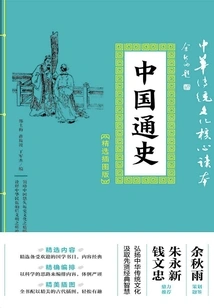
General History of China
History中国通史
Compiled By Shao Shimei, Jiang Xiaobo And Ding Junjie
"General History of China" is based on the modern new educational concept and on the basis of absorbing the results of domestic historical research. It organizes the rich graphic materials accumulated in the long history of Chinese civilization in the form of a historical chronology. It records the major historical events that occurred in China from 1.7 Million years ago to 1912 AD. The content covers various fields such as politics, economy, military, culture, diplomacy, science and technology, law, religion, art, folklore and other fields.
"General History of China" is based on the modern new educational concept and on the basis of absorbing the results of domestic historical research. It organizes the rich graphic materials accumulated in the long history of Chinese civilization in the form of a historical chronology. It records the major historical events that occurred in China from 1.7 Million years ago to 1912 AD. The content covers various fields such as politics, economy, military, culture, diplomacy, science and technology, law, religion, art, folklore and other fields.