Library
Browse and search books
2,273 novels found

Jiang Jiao, the Powerful Official of the Tang Dynasty
General Fiction大唐权臣姜皎
Long Yi
It was the end of May in the fifth year of the Kaiyuan Period of Emperor Ming of the Tang Dynasty. In Chang'an, Xijing, the sun is as scorching as fire. You can smell the smell of dust burned by the sun in the air. The most famous spy in Chang'an City, Ye Shipeng, whose official title was Zuo Jinwu Guards Deputy Commander, had a small house in Zhaoguofang in the south of the city. It is only called a house but not a home. This is because although Ye Shipeng is forty years old, he has no wife or children. Although he had no wife or children, there was a charming Persian girl living in his house who had skin like suet and eyes like green jade. She looked to be eighteen or nineteen years old, maybe twenty-one or twelve years old. This girl was born in Chang'an. Her Persian name is Delos and her Chinese name is Ruyi. "Get up quickly. How can anyone in the world grill their meat like this? Do they really have to be roasted until it's charred on the outside and tender on the inside before they can get up?"
It was the end of May in the fifth year of the Kaiyuan Period of Emperor Ming of the Tang Dynasty. In Chang'an, Xijing, the sun is as scorching as fire. You can smell the smell of dust burned by the sun in the air. The most famous spy in Chang'an City, Ye Shipeng, whose official title was Zuo Jinwu Guards Deputy Commander, had a small house in Zhaoguofang in the south of the city. It is only called a house but not a home. This is because although Ye Shipeng is forty years old, he has no wife or children. Although he had no wife or children, there was a charming Persian girl living in his house who had skin like suet and eyes like green jade. She looked to be eighteen or nineteen years old, maybe twenty-one or twelve years old. This girl was born in Chang'an. Her Persian name is Delos and her Chinese name is Ruyi. "Get up quickly. How can anyone in the world grill their meat like this? Do they really have to be roasted until it's charred on the outside and tender on the inside before they can get up?"
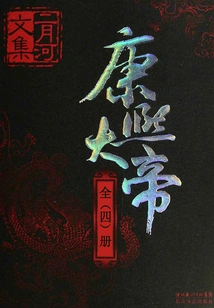
Emperor Kangxi (complete Works)
General Fiction康熙大帝(全集)
February River
"Emperor Kangxi (Collection)": records the emperor's life, showing the various aspects of the palace; Daoqing Palace's secret history, describing the ups and downs of the officialdom. The structure of the work is compact, the stories are colorful, and the plots are interlocking, making you want to read it.
"Emperor Kangxi (Collection)": records the emperor's life, showing the various aspects of the palace; Daoqing Palace's secret history, describing the ups and downs of the officialdom. The structure of the work is compact, the stories are colorful, and the plots are interlocking, making you want to read it.
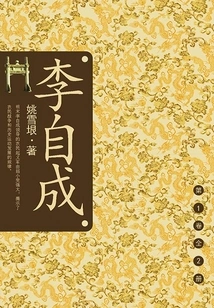
Li Zicheng (volume 1): Battle of Tongguan Nanyuan
General Fiction李自成(第1卷):潼关南原大战
Yao Xueyin
The story of this book takes place in the eleventh year of Chongzhen (1638 AD). In early October of this year, Beijing was under martial law again. Qing troops entered the fortress again, and a sharp conflict broke out between the peace faction and the war faction within the court. Under the situation of internal and external troubles, Chongzhen's various contradictions and character traits in his spiritual world were initially revealed: on the one hand, he lived late at night, did not indulge in wine and sex, was hands-on in everything, and was diligent in government affairs. He wanted to be a "wise king" and "master of resurgence" and save the Ming Dynasty from crisis and decline. On the other hand, he was headstrong, suspicious and fickle, which paved the way for the destruction of Beijing, Chongzhen's suicide, and the demise of the Ming Dynasty six years later.
The story of this book takes place in the eleventh year of Chongzhen (1638 AD). In early October of this year, Beijing was under martial law again. Qing troops entered the fortress again, and a sharp conflict broke out between the peace faction and the war faction within the court. Under the situation of internal and external troubles, Chongzhen's various contradictions and character traits in his spiritual world were initially revealed: on the one hand, he lived late at night, did not indulge in wine and sex, was hands-on in everything, and was diligent in government affairs. He wanted to be a "wise king" and "master of resurgence" and save the Ming Dynasty from crisis and decline. On the other hand, he was headstrong, suspicious and fickle, which paved the way for the destruction of Beijing, Chongzhen's suicide, and the demise of the Ming Dynasty six years later.
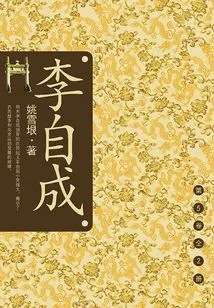
Li Zicheng (volume 5): Defeated Shanhaiguan
General Fiction李自成(第5卷):兵败山海关
Yao Xueyin
This volume is divided into two volumes: upper and lower. In April of the Jiashen year, Dorgon, with his ambitious ambition to dominate China, personally led his army to the south. On the way, he received a letter from Wu Sangui to "borrow troops" and decisively changed his route and went straight to Shanhaiguan. Wu Sangui was forced to take refuge with the Qing side under attack from two sides. Li Zicheng led the Dashun Army and Wu Sangui's Guanning Army fought fiercely at Shanhaiguan. The Qing cavalry suddenly rushed out. The Dashun Army fought bravely and suffered heavy casualties. Li Zicheng led his defeated troops back to Beijing. After he hurriedly ascended the throne, he hurriedly withdrew from Beijing. On the way back to Shaanxi, the Dashun Army suffered another series of defeats.
This volume is divided into two volumes: upper and lower. In April of the Jiashen year, Dorgon, with his ambitious ambition to dominate China, personally led his army to the south. On the way, he received a letter from Wu Sangui to "borrow troops" and decisively changed his route and went straight to Shanhaiguan. Wu Sangui was forced to take refuge with the Qing side under attack from two sides. Li Zicheng led the Dashun Army and Wu Sangui's Guanning Army fought fiercely at Shanhaiguan. The Qing cavalry suddenly rushed out. The Dashun Army fought bravely and suffered heavy casualties. Li Zicheng led his defeated troops back to Beijing. After he hurriedly ascended the throne, he hurriedly withdrew from Beijing. On the way back to Shaanxi, the Dashun Army suffered another series of defeats.
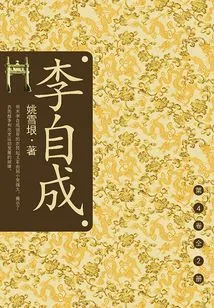
Li Zicheng (volume 4): Death of Emperor Chongzhen
General Fiction李自成(第4卷):崇祯皇帝之死
Yao Xueyin
This volume is divided into two volumes: upper and lower. It reflects the earth-shaking events that happened in China in just over a hundred days from mid-December of the 16th year of Chongzhen to early April of the 17th year of Chongzhen. After Li Zicheng returned to Chang'an from Mizhi to worship his ancestors, he immediately prepared for the Eastern Expedition. On the third day of the first lunar month, he personally led his army across the Yellow River, entered Shanxi, defeated Taiyuan, passed through Datong, and was invincible along the way, successfully arriving at the gate of Beijing. At the beginning of the rebel army's advance, the imperial court had different opinions on whether Chongzhen should stay or flee south.
This volume is divided into two volumes: upper and lower. It reflects the earth-shaking events that happened in China in just over a hundred days from mid-December of the 16th year of Chongzhen to early April of the 17th year of Chongzhen. After Li Zicheng returned to Chang'an from Mizhi to worship his ancestors, he immediately prepared for the Eastern Expedition. On the third day of the first lunar month, he personally led his army across the Yellow River, entered Shanxi, defeated Taiyuan, passed through Datong, and was invincible along the way, successfully arriving at the gate of Beijing. At the beginning of the rebel army's advance, the imperial court had different opinions on whether Chongzhen should stay or flee south.
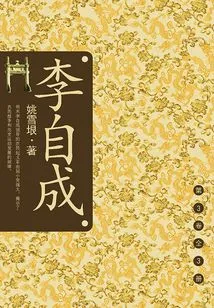
Li Zicheng (volume 3): Chronicles of Yan and Liao
General Fiction李自成(第3卷):燕辽纪事
Yao Xueyin
This volume is divided into three volumes: upper, middle and lower volumes. It reflects the story that happened from February of the 14th year of Chongzhen to the beginning of December of the 15th year of Chongzhen. After Li Zicheng defeated Luoyang, he gained great momentum. He defeated and annihilated the main force of the Ming Army several times in Henan and attacked Kaifeng three times. This volume focuses on the second and third battles of Kaifeng and the battle of Zhuxian Town. Each battle has its own characteristics. In Kaifeng, a city with a population of hundreds of thousands, many people starved to death during the siege of the city for several months. Finally, the Ming army blew up the river embankments during the autumn floods, flooding Kaifeng and killing countless people.
This volume is divided into three volumes: upper, middle and lower volumes. It reflects the story that happened from February of the 14th year of Chongzhen to the beginning of December of the 15th year of Chongzhen. After Li Zicheng defeated Luoyang, he gained great momentum. He defeated and annihilated the main force of the Ming Army several times in Henan and attacked Kaifeng three times. This volume focuses on the second and third battles of Kaifeng and the battle of Zhuxian Town. Each battle has its own characteristics. In Kaifeng, a city with a population of hundreds of thousands, many people starved to death during the siege of the city for several months. Finally, the Ming army blew up the river embankments during the autumn floods, flooding Kaifeng and killing countless people.
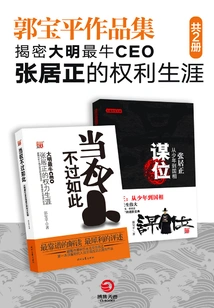
Collection of Guo Baoping's Works: Revealing the Powerful Life of Ming Dynasty Ceo Zhang Juzheng (2 Volumes in Total)
General Fiction郭宝平作品集:揭密大明CEO张居正的权利生涯(共2册)
Guo Baoping
This set of books includes two volumes: "Searching for the Throne" and "Being in Power Is Just That". On the basis of studying a large amount of historical records, the author does not stick to history and writes about Zhang Juzheng in his mind in a relaxed and humorous style. He describes that period of history in a more objective and wonderful way: about Zhang Juzheng's path to power, his ups and downs in officialdom, his policy gains and losses, his failures and greatness.
This set of books includes two volumes: "Searching for the Throne" and "Being in Power Is Just That". On the basis of studying a large amount of historical records, the author does not stick to history and writes about Zhang Juzheng in his mind in a relaxed and humorous style. He describes that period of history in a more objective and wonderful way: about Zhang Juzheng's path to power, his ups and downs in officialdom, his policy gains and losses, his failures and greatness.

Nanjing City at the End of Ming Dynasty
General Fiction大明末世南京城
Xu Haofeng
It drizzled for half a day on December 12, the fifteenth year of Wanli, and the spring scenery in the old city of Nanjing was still far away. In the colder north, a group of royal guards rode fast horses, enduring the cold pain in their noses and ears, and brought the news of the death of the famous general Qi Jiguang into the capital. The Ming Dynasty established a complete and strict civil service system. In order to prevent the recurrence of local military and vassal chaos in the Tang Dynasty, military attachés have been suppressed. The establishment of an army to sweep away Japanese pirates along the eastern coast and the establishment of a vassal vassal to deter the Mongolian tribes gave Qi Jiguang control over nearly 400,000 troops and became the only military attache in the dynasty capable of rebellion. He died of old age after being demoted to a commoner. On that day, Emperor Shenzong, wearing a black dragon robe with dark red embroidery, learned of his death in the Wenhua Hall of his study without giving any instructions.
It drizzled for half a day on December 12, the fifteenth year of Wanli, and the spring scenery in the old city of Nanjing was still far away. In the colder north, a group of royal guards rode fast horses, enduring the cold pain in their noses and ears, and brought the news of the death of the famous general Qi Jiguang into the capital. The Ming Dynasty established a complete and strict civil service system. In order to prevent the recurrence of local military and vassal chaos in the Tang Dynasty, military attachés have been suppressed. The establishment of an army to sweep away Japanese pirates along the eastern coast and the establishment of a vassal vassal to deter the Mongolian tribes gave Qi Jiguang control over nearly 400,000 troops and became the only military attache in the dynasty capable of rebellion. He died of old age after being demoted to a commoner. On that day, Emperor Shenzong, wearing a black dragon robe with dark red embroidery, learned of his death in the Wenhua Hall of his study without giving any instructions.

Defend Mao Zedong
General Fiction保卫毛泽东
Wang Dichen Shen Zhiyuan
Public Security Bureau chief Wang Huacheng, who had personally protected Mao Zedong, was falsely accused of passing information to Kuomintang agents in Taiwan and trying to murder Mao Zedong. He was imprisoned in the Qincheng Prison he had participated in building for six years. In the new millennium, the "founding leader" is still the focus of people's attention. At present, many publications describe the assassination planned by the Kuomintang secret service during Chairman Mao Zedong's visit to the Soviet Union at the end of 1949. However, the author unexpectedly discovered the story of a director of the Harbin Public Security Bureau who was falsely accused of participating in the assassination. He was Wang Huacheng who later became the mayor of Harbin. The sun of the new millennium has risen from the ground, but the "red sun" in the hearts of the Chinese people of the last century has not fallen.
Public Security Bureau chief Wang Huacheng, who had personally protected Mao Zedong, was falsely accused of passing information to Kuomintang agents in Taiwan and trying to murder Mao Zedong. He was imprisoned in the Qincheng Prison he had participated in building for six years. In the new millennium, the "founding leader" is still the focus of people's attention. At present, many publications describe the assassination planned by the Kuomintang secret service during Chairman Mao Zedong's visit to the Soviet Union at the end of 1949. However, the author unexpectedly discovered the story of a director of the Harbin Public Security Bureau who was falsely accused of participating in the assassination. He was Wang Huacheng who later became the mayor of Harbin. The sun of the new millennium has risen from the ground, but the "red sun" in the hearts of the Chinese people of the last century has not fallen.

Assassination of Prime Minister Churchill
General Fiction暗杀丘吉尔首相
Ji Chun
The German High Command issued two consecutive instructions, one was the "Instruction No. 17 On Naval and Air Operations against Britain" ("Sea Lion Plan") issued by Hitler; the other was the secret instruction "Assassination of British Prime Minister Churchill". This is a perverted and weird table full of strange tricks and strange ideas. , Named this secret order: "Operation Typhoon". August 30, 1943. The red sun hung ruthlessly in the sky, making the ground as hard as a parade ground. This was the standard "Hitler climate" at the Scandinavian combat airfield.
The German High Command issued two consecutive instructions, one was the "Instruction No. 17 On Naval and Air Operations against Britain" ("Sea Lion Plan") issued by Hitler; the other was the secret instruction "Assassination of British Prime Minister Churchill". This is a perverted and weird table full of strange tricks and strange ideas. , Named this secret order: "Operation Typhoon". August 30, 1943. The red sun hung ruthlessly in the sky, making the ground as hard as a parade ground. This was the standard "Hitler climate" at the Scandinavian combat airfield.

Desperate Heroes (part 1)
General Fiction绝境英雄(上)
Xucheng
In the spring of 1942, Burma fell, and the fragile "hump" air supply line suffered repeated heavy losses. The Nationalist Government operated urgently, and after many twists and turns, opened a post transportation line from South Asia to Xinjiang, and successfully transported aid materials to China... In the autumn of 1943, Chen Zhenxuan, the representative of the General Administration of Highways in India who was responsible for material allocation and transportation, returned to Chongqing. On the way back to India, he decided to take a detour to Hohhot via Peiping. Soon after the new transportation line was opened, the Japanese got a whiff. Intelligence showed that the investigation office of the Japanese Consulate in Zhangjiakou was looking for spies, waiting for opportunities to sneak into Xinjiang to spy on intelligence and sabotage the new northwest transportation line. After receiving the order to go up to the peak, Shi Hong, the commander of the Suiyuan Station of the Military Command, his first task was to safely escort Chen Zhenxuan from Peking to Hohhot.
In the spring of 1942, Burma fell, and the fragile "hump" air supply line suffered repeated heavy losses. The Nationalist Government operated urgently, and after many twists and turns, opened a post transportation line from South Asia to Xinjiang, and successfully transported aid materials to China... In the autumn of 1943, Chen Zhenxuan, the representative of the General Administration of Highways in India who was responsible for material allocation and transportation, returned to Chongqing. On the way back to India, he decided to take a detour to Hohhot via Peiping. Soon after the new transportation line was opened, the Japanese got a whiff. Intelligence showed that the investigation office of the Japanese Consulate in Zhangjiakou was looking for spies, waiting for opportunities to sneak into Xinjiang to spy on intelligence and sabotage the new northwest transportation line. After receiving the order to go up to the peak, Shi Hong, the commander of the Suiyuan Station of the Military Command, his first task was to safely escort Chen Zhenxuan from Peking to Hohhot.

Binjiang Shanzu
General Fiction滨江膳祖
He Hong
This is Beijing in 1900. As early as the Warring States Period more than 2,000 years ago, this was Jicheng, the capital of Yan State, one of the Seven Heroes. As time goes by, through the Qin, Han, Sui, Tang, Song, Ming and Qing dynasties, it is not only a famous city in the north, but also an important transportation thoroughfare. It was once known as Zhuojun, Youzhou, Fanyang and Yanshan. In 1153, after King Hailing of Jin occupied it, it was renamed Zhongdu. Thus began its history as the center of feudal dynasty rule. In 1276, Kublai Khan captured Zhongdu, thinking that it supported Taihang on the right, the Canghai on the left, caressed the Central Plains in the south, rested on Juyongguan in the north, backed Shuofang, surrounded the land, carried mountains and rivers, and was the place of heaven. So he built a new capital, Dadu, on the northeastern outskirts of Zhongdu. Referring to the old system of Bianluo Zhongdu, it is divided into three layers: outer city, imperial city, and palace city. It is rectangular in shape from north to south. The outer city has a circumference of 60 miles and 11 gates. Its east and west are respectively equivalent to the inner city and east and west old cities of today's Beijing, the south is the Chang'an Street area, and the north city is outside Deshengmen.
This is Beijing in 1900. As early as the Warring States Period more than 2,000 years ago, this was Jicheng, the capital of Yan State, one of the Seven Heroes. As time goes by, through the Qin, Han, Sui, Tang, Song, Ming and Qing dynasties, it is not only a famous city in the north, but also an important transportation thoroughfare. It was once known as Zhuojun, Youzhou, Fanyang and Yanshan. In 1153, after King Hailing of Jin occupied it, it was renamed Zhongdu. Thus began its history as the center of feudal dynasty rule. In 1276, Kublai Khan captured Zhongdu, thinking that it supported Taihang on the right, the Canghai on the left, caressed the Central Plains in the south, rested on Juyongguan in the north, backed Shuofang, surrounded the land, carried mountains and rivers, and was the place of heaven. So he built a new capital, Dadu, on the northeastern outskirts of Zhongdu. Referring to the old system of Bianluo Zhongdu, it is divided into three layers: outer city, imperial city, and palace city. It is rectangular in shape from north to south. The outer city has a circumference of 60 miles and 11 gates. Its east and west are respectively equivalent to the inner city and east and west old cities of today's Beijing, the south is the Chang'an Street area, and the north city is outside Deshengmen.
Tang Dynasty: There Was No Tang Dynasty after Xuanzong
General Fiction唐朝:玄宗之后无大唐
Fan Jun
In 685 AD, the Tang Dynasty, the most famous dynasty in Chinese history, had gone through 68 years of glorious history, and there was no evidence that it would no longer be glorious. Everything looks so vibrant - if we compare the existence of the Han Dynasty to the Tang Dynasty, there is no doubt that in the Tang Dynasty in 685 AD, it was the sun at eight or nine o'clock in the morning, shining brightly and full of vitality and vitality. Li Dan was especially full of life and vitality, because on the eighth day of September this year, his son Li Longji was born. The birth of Li Longji gave birth to another guardian of the Tang Dynasty - Tang Xuanzong. As the son of the sun at eight or nine o'clock in the Tang Dynasty, Xuanzong of the Tang Dynasty not only took the country of the Tang Dynasty into his arms again, but also ushered in a prosperous Kaiyuan era that was comparable to the rule of Zhenguan.
In 685 AD, the Tang Dynasty, the most famous dynasty in Chinese history, had gone through 68 years of glorious history, and there was no evidence that it would no longer be glorious. Everything looks so vibrant - if we compare the existence of the Han Dynasty to the Tang Dynasty, there is no doubt that in the Tang Dynasty in 685 AD, it was the sun at eight or nine o'clock in the morning, shining brightly and full of vitality and vitality. Li Dan was especially full of life and vitality, because on the eighth day of September this year, his son Li Longji was born. The birth of Li Longji gave birth to another guardian of the Tang Dynasty - Tang Xuanzong. As the son of the sun at eight or nine o'clock in the Tang Dynasty, Xuanzong of the Tang Dynasty not only took the country of the Tang Dynasty into his arms again, but also ushered in a prosperous Kaiyuan era that was comparable to the rule of Zhenguan.

Daming Kendo
General Fiction大明剑道
Ye Jinhai
My master told me that it is easy to kill an emperor, but it is difficult to make everyone in the world happy! My master also warned that the so-called "Ming" people worship the light, hate evil and evil, and spread good thoughts. Today, they are supported by Zhu Yuanzhang. Although they are called Ming, they were stolen from Han Lin'er, the king of the Ming Dynasty. He usurped the throne to seek power and acted against heaven. He should be punished! My master finally told me that it was better not to kill someone for the sake of selfish revenge, causing chaos in the world, devastation of life, and widespread grief. You know, absolute light will not exist in this world! My junior sister and I said goodbye to our master in tears, packed up our bags and went down the mountain. At that time, lilacs were blooming, and the air was filled with faint fragrance, as melancholy as heartbreaking songs. Junior sister is heading north, and I am heading south.
My master told me that it is easy to kill an emperor, but it is difficult to make everyone in the world happy! My master also warned that the so-called "Ming" people worship the light, hate evil and evil, and spread good thoughts. Today, they are supported by Zhu Yuanzhang. Although they are called Ming, they were stolen from Han Lin'er, the king of the Ming Dynasty. He usurped the throne to seek power and acted against heaven. He should be punished! My master finally told me that it was better not to kill someone for the sake of selfish revenge, causing chaos in the world, devastation of life, and widespread grief. You know, absolute light will not exist in this world! My junior sister and I said goodbye to our master in tears, packed up our bags and went down the mountain. At that time, lilacs were blooming, and the air was filled with faint fragrance, as melancholy as heartbreaking songs. Junior sister is heading north, and I am heading south.

The Blood and Tears of the Old Year
General Fiction旧年的血泪
Xiong Yuqun
This article is the postscript to Xiong Yuqun's novel "Rain and Snow in the Year of Ji Mao". Write about hatred and forgiveness, write about human love, write about the beating heart and spiritual journey in war, write about the pain of war - the kind of unimaginable pain that cannot be healed, and the soul will never have peace even if it is alive. Just like that black day in Yingtian, it is a nightmare that those who have experienced it will never get out of. Human nature and destiny in war, the bloody destruction of human beings by war, the collapse of human morality, widespread evil deeds, tragic survival, and the misery of love... I hope that all of this will not only arouse universal compassion, but also reflect on human nature and reality.
This article is the postscript to Xiong Yuqun's novel "Rain and Snow in the Year of Ji Mao". Write about hatred and forgiveness, write about human love, write about the beating heart and spiritual journey in war, write about the pain of war - the kind of unimaginable pain that cannot be healed, and the soul will never have peace even if it is alive. Just like that black day in Yingtian, it is a nightmare that those who have experienced it will never get out of. Human nature and destiny in war, the bloody destruction of human beings by war, the collapse of human morality, widespread evil deeds, tragic survival, and the misery of love... I hope that all of this will not only arouse universal compassion, but also reflect on human nature and reality.

The Legendary Life of "revolutionary Mother" Ge Jianhao
General Fiction“革命母亲”葛健豪的传奇人生
Li Lingling
When she was called Ge Lanying, she was just a country woman; when she was called Ge Jianhao, she determined to be an athlete and hero who devoted herself to education and transforming society. She, Qiu Jin, and Tang Qunying were known as the "Three Heroic Women" of Xiaoxiang. Their lifelong wish was to liberate women through education. She went to school at an old age and studied abroad at an old age. She successively founded the "Xiangxiang County Second Women's Vocational School" and the "Public Women's Vocational School". People at the time called her an "amazing woman". With her firm actions and unyielding spirit, she raised and supported five revolutionary sons and daughters - Cai Hesen, Cai Chang, Cai Luxian, Xiang Jingyu, and Li Fuchun. Four of them are members of the Central Committee of the Communist Party of China, and three died for the revolution. Some people call her the "Mother of the Revolution." She witnessed the establishment of the Xinmin Society and the process from the establishment of the Communist Party of China to the encounter with white terror.
When she was called Ge Lanying, she was just a country woman; when she was called Ge Jianhao, she determined to be an athlete and hero who devoted herself to education and transforming society. She, Qiu Jin, and Tang Qunying were known as the "Three Heroic Women" of Xiaoxiang. Their lifelong wish was to liberate women through education. She went to school at an old age and studied abroad at an old age. She successively founded the "Xiangxiang County Second Women's Vocational School" and the "Public Women's Vocational School". People at the time called her an "amazing woman". With her firm actions and unyielding spirit, she raised and supported five revolutionary sons and daughters - Cai Hesen, Cai Chang, Cai Luxian, Xiang Jingyu, and Li Fuchun. Four of them are members of the Central Committee of the Communist Party of China, and three died for the revolution. Some people call her the "Mother of the Revolution." She witnessed the establishment of the Xinmin Society and the process from the establishment of the Communist Party of China to the encounter with white terror.

1931·cow Hunting
General Fiction1931·寻牛记
Li Shuhui
In fact, when I was twenty-one, I was an ignorant bastard. To put it bluntly, this is an understatement. Let's be more direct - he is just a gangster. For example, in the first month of that year, I knocked on the door of a house and threw a basket of feces in. The reason is very simple. The male owner of that family does not allow his daughter to fall in love with me. This behavior is quite similar to that of Yamamoto Ichiro in 1931. The slight difference is that I am Chinese, and what I threw was just a basket of feces, dirtying other people's houses. But he was Japanese, and he threw a torch, killing people young and old. In 1931, Ichiro Yamamoto was also twenty-one years old and lived in the same city as me. This city was called Liaoyang, a small town located in the east of Liaoning. Although the city is small, it has a long history. Historians have verified that it has a history of more than 2,300 years.
In fact, when I was twenty-one, I was an ignorant bastard. To put it bluntly, this is an understatement. Let's be more direct - he is just a gangster. For example, in the first month of that year, I knocked on the door of a house and threw a basket of feces in. The reason is very simple. The male owner of that family does not allow his daughter to fall in love with me. This behavior is quite similar to that of Yamamoto Ichiro in 1931. The slight difference is that I am Chinese, and what I threw was just a basket of feces, dirtying other people's houses. But he was Japanese, and he threw a torch, killing people young and old. In 1931, Ichiro Yamamoto was also twenty-one years old and lived in the same city as me. This city was called Liaoyang, a small town located in the east of Liaoning. Although the city is small, it has a long history. Historians have verified that it has a history of more than 2,300 years.

The "begging" Landlord Zheng Zifeng
General Fiction“要饭”的地主郑子蚨
Song Benshan
The history of Zheng Zifeng was unearthed because of an accidental external investigation. His attitude was dishonest and he refused to explain the problem. In addition, Wang Shidao played tricks on the two transfer personnel, and the trivial matter became a big deal. The person doing the external investigation was from Beijing, with a big brand name and a tough tone. Two farmers with sorghum flowers on their heads actually fooled them. They became so angry that they went directly to the commune revolutionary committee. According to the information provided by the external transfer personnel, Zheng Zifeng had some background. Not only was he born a landlord and capitalist, but he also had some connections with important figures above. Unexpectedly, there is a big fish hidden in the small inlet of Guhedian. The Commune Revolutionary Committee was deeply aware of the seriousness of the matter and immediately reported it to the County Revolutionary Committee to select and deploy key personnel and assist external transfer personnel from Beijing to launch a political offensive against Zheng Zifeng and use dictatorial measures when necessary. Zheng Zifeng became a key figure in the dictatorship.
The history of Zheng Zifeng was unearthed because of an accidental external investigation. His attitude was dishonest and he refused to explain the problem. In addition, Wang Shidao played tricks on the two transfer personnel, and the trivial matter became a big deal. The person doing the external investigation was from Beijing, with a big brand name and a tough tone. Two farmers with sorghum flowers on their heads actually fooled them. They became so angry that they went directly to the commune revolutionary committee. According to the information provided by the external transfer personnel, Zheng Zifeng had some background. Not only was he born a landlord and capitalist, but he also had some connections with important figures above. Unexpectedly, there is a big fish hidden in the small inlet of Guhedian. The Commune Revolutionary Committee was deeply aware of the seriousness of the matter and immediately reported it to the County Revolutionary Committee to select and deploy key personnel and assist external transfer personnel from Beijing to launch a political offensive against Zheng Zifeng and use dictatorial measures when necessary. Zheng Zifeng became a key figure in the dictatorship.

Northern Song Dynasty, Fell from Taihe Ridge Pass
General Fiction北宋,从太和岭口陨落
Yang Jidong
Except for the fact that people in Daizhou are so familiar with the place name Taihe Ridge that they have no idea why it is called Taihe Ridge, historians and local chroniclers have never realized, or are simply unwilling to deeply interpret what an important historical fixed point or coordinate it had in the historical stage of the Northern Song Dynasty; they are even less willing or simply unwilling to clearly draw this coordinate and highlight the cultural connotation and historical value of this historical fixed point. Therefore, the compilers of "Daizhou Chronicles" in the past dynasties only recorded one stroke with sadness and helplessness: "In the second year of Jingkang, Qinzong was taken captive beyond Taihe to Five Kingdoms City." "Song Dynasty Qinzong Ji" records it more sadly and angrily as "Northern Patrol Hunting Ji".
Except for the fact that people in Daizhou are so familiar with the place name Taihe Ridge that they have no idea why it is called Taihe Ridge, historians and local chroniclers have never realized, or are simply unwilling to deeply interpret what an important historical fixed point or coordinate it had in the historical stage of the Northern Song Dynasty; they are even less willing or simply unwilling to clearly draw this coordinate and highlight the cultural connotation and historical value of this historical fixed point. Therefore, the compilers of "Daizhou Chronicles" in the past dynasties only recorded one stroke with sadness and helplessness: "In the second year of Jingkang, Qinzong was taken captive beyond Taihe to Five Kingdoms City." "Song Dynasty Qinzong Ji" records it more sadly and angrily as "Northern Patrol Hunting Ji".
The Oblivion of Miyagi
General Fiction湮没的宫城
Xia Jianyong
When modern intellectuals look at Nanjing, they often unconsciously look at it with the eyes of scholar-bureaucrats from the Tang and Song Dynasties. All they can see is the golden powder of the Six Dynasties, just like the declining scene in the poems of Liu Yuxi and Wei Zhuang. It seems that there has never been a prosperous Ming Dynasty here. They wandered in the streets and alleys of the Ming Dynasty looking for the splendor of Wang Xie's descendants, and they pushed aside the remaining bricks and tiles of the Hongwu Dynasty to search for the soft and graceful aftertaste of "Flowers in the Backyard of the Yushu". In fact, as soon as they look back, they will see the city wall of the Ming Dynasty lying under the shadow of the mountain not far away. It is a huge antique that attracts world attention, and it is not false at all. As a city, Nanjing is most worthy of boasting during the Ming Dynasty, and its urban layout is also the result of large-scale construction during the Hongwu Dynasty of the Ming Dynasty. Therefore, the Nanjing seen by modern people is actually a Ming city. When visiting ancient times and exploring the sights here, it is difficult to escape the deep and vast back of the Zhu Ming Dynasty. Of course you have to visit the Ming Forbidden City.
When modern intellectuals look at Nanjing, they often unconsciously look at it with the eyes of scholar-bureaucrats from the Tang and Song Dynasties. All they can see is the golden powder of the Six Dynasties, just like the declining scene in the poems of Liu Yuxi and Wei Zhuang. It seems that there has never been a prosperous Ming Dynasty here. They wandered in the streets and alleys of the Ming Dynasty looking for the splendor of Wang Xie's descendants, and they pushed aside the remaining bricks and tiles of the Hongwu Dynasty to search for the soft and graceful aftertaste of "Flowers in the Backyard of the Yushu". In fact, as soon as they look back, they will see the city wall of the Ming Dynasty lying under the shadow of the mountain not far away. It is a huge antique that attracts world attention, and it is not false at all. As a city, Nanjing is most worthy of boasting during the Ming Dynasty, and its urban layout is also the result of large-scale construction during the Hongwu Dynasty of the Ming Dynasty. Therefore, the Nanjing seen by modern people is actually a Ming city. When visiting ancient times and exploring the sights here, it is difficult to escape the deep and vast back of the Zhu Ming Dynasty. Of course you have to visit the Ming Forbidden City.

College Entrance Examination 1977
General Fiction高考一九七七
Li Shengming
The place where I was born is located between Datong and Yanggao, on Nalan Mountain with an altitude of 1245.7 Meters, called Gaoqiangzhang. Standing at the head of the village or on the top of the cave dwelling, overlooking the north, you will see the Beijing-Baotou Railway line, Suishying Village and Suishying Railway Station at the foot of the mountain. Looking further towards Bei Ming, you will see the Great Wall and Cailiang Mountain, the remnants of the Yinshan Mountains, on the opposite side. Liangtou in the south of the village has higher terrain and is connected to the Datong volcano group. To the west of the village is Julebao Village, an ancient post station where Empress Dowager Cixi lived during her escape to the west. To the southwest of the village is Julebao Railway Station. To the east of the village is Liugou Village under Liangtou, and opposite Liangtou is Liangjiaying Village. The whole village is littered with ditches and ditches, like a torn sheepskin coat. The village has more than 3,000 acres of land, most of which is sloping land with water, soil, and fertilizer. The overall slope exceeds 25 degrees. When planting crops, "there are many stalks and ears, one kind of slope, but not many seeds."
The place where I was born is located between Datong and Yanggao, on Nalan Mountain with an altitude of 1245.7 Meters, called Gaoqiangzhang. Standing at the head of the village or on the top of the cave dwelling, overlooking the north, you will see the Beijing-Baotou Railway line, Suishying Village and Suishying Railway Station at the foot of the mountain. Looking further towards Bei Ming, you will see the Great Wall and Cailiang Mountain, the remnants of the Yinshan Mountains, on the opposite side. Liangtou in the south of the village has higher terrain and is connected to the Datong volcano group. To the west of the village is Julebao Village, an ancient post station where Empress Dowager Cixi lived during her escape to the west. To the southwest of the village is Julebao Railway Station. To the east of the village is Liugou Village under Liangtou, and opposite Liangtou is Liangjiaying Village. The whole village is littered with ditches and ditches, like a torn sheepskin coat. The village has more than 3,000 acres of land, most of which is sloping land with water, soil, and fertilizer. The overall slope exceeds 25 degrees. When planting crops, "there are many stalks and ears, one kind of slope, but not many seeds."

Base Area (top)
General Fiction根据地(上)
Li Yanguo Li Qinghua
"The Base" is an exploration of the foundation of the Chinese Communist Party. With the help of visits and recollections of the revolutionary past in the Hebei, Shandong and Henan base areas, it clearly puts forward the conclusion that the people are the most reliable backer of our party, and the people's hearts are the largest base. Undoubtedly, this is also an exploration of the origin and starting point of the growth and development of the Communist Party of China. It is a reportage in search of the foundation and foundation. The "root" in "base" means the foundation, the basis, the "base" means the basis, the evidence, and the "ground" means the land, the country, and the country. The "base area" is the foundation and support for the Communists to lay down the country and conquer the world. It is the origin and starting point of the birth of the Republic. From this perspective, "The Base" describes a piece of party history and a piece of national memory that should not be forgotten. This memory has accumulated in the long river of time, and was polished and refreshed by the writer with vivid words.
"The Base" is an exploration of the foundation of the Chinese Communist Party. With the help of visits and recollections of the revolutionary past in the Hebei, Shandong and Henan base areas, it clearly puts forward the conclusion that the people are the most reliable backer of our party, and the people's hearts are the largest base. Undoubtedly, this is also an exploration of the origin and starting point of the growth and development of the Communist Party of China. It is a reportage in search of the foundation and foundation. The "root" in "base" means the foundation, the basis, the "base" means the basis, the evidence, and the "ground" means the land, the country, and the country. The "base area" is the foundation and support for the Communists to lay down the country and conquer the world. It is the origin and starting point of the birth of the Republic. From this perspective, "The Base" describes a piece of party history and a piece of national memory that should not be forgotten. This memory has accumulated in the long river of time, and was polished and refreshed by the writer with vivid words.

County Magistrate Chen Boldly Bans Fireworks
General Fiction陈县令斗胆禁烟花
Huang Mojun
The poem goes: "The road is long and dangerous in the long night, the wind is high and the moon is dark and the sky is murderous." On this night, the moon set and the stars set, like paint and ink. The county government compound was silent, and people had already fallen asleep. Only the county magistrate's office has tall curtains and bright lights. Chen Zanxian was writing quickly at his desk under the lamp. At this time, a black man with a pockmarked face crossed the courtyard wall like a wild cat, quietly passed through the trees, quickly approached the window, crouched in the dark, suddenly straightened up, drew his gun and was about to aim at Chen Zanxian, when he heard two gunshots from behind. The black man's arm shook, and the gun dropped from his wrist, and he ran away in panic. Zhu Jian, the county picket captain, flashed out of the darkness with a rifle in his hand, chasing after him. Here, I saw Chen Zanxian standing up slowly as if nothing had happened, rubbing his hands and stretching his waist, casting a cold glance out the window, raising his head and laughing.
The poem goes: "The road is long and dangerous in the long night, the wind is high and the moon is dark and the sky is murderous." On this night, the moon set and the stars set, like paint and ink. The county government compound was silent, and people had already fallen asleep. Only the county magistrate's office has tall curtains and bright lights. Chen Zanxian was writing quickly at his desk under the lamp. At this time, a black man with a pockmarked face crossed the courtyard wall like a wild cat, quietly passed through the trees, quickly approached the window, crouched in the dark, suddenly straightened up, drew his gun and was about to aim at Chen Zanxian, when he heard two gunshots from behind. The black man's arm shook, and the gun dropped from his wrist, and he ran away in panic. Zhu Jian, the county picket captain, flashed out of the darkness with a rifle in his hand, chasing after him. Here, I saw Chen Zanxian standing up slowly as if nothing had happened, rubbing his hands and stretching his waist, casting a cold glance out the window, raising his head and laughing.

崇祯皇帝登基始末
Huang Jiandong
In the autumn and August of the seventh year of the Ming Dynasty (1627), it was almost the Mid-Autumn Festival. The capital had been hot all summer, and now the golden breeze was blowing. Liujia Village, close to Xishan Mountain, is a beautiful and secluded place. There is a small lake next to the village. There are no waterside pavilions. There are only a few thatched houses built in twos and threes along the shore. They are simple and simple, and the villagers do not pay too much attention to it. On this day, two fishermen, an old man and a young man, came to the lake. They looked like father and son, more like master and apprentice. In fact, it is not difficult to tell from their conversation and the tone of voice that they used to have a master-servant relationship, but the young master was respectful to the elder as a master.
In the autumn and August of the seventh year of the Ming Dynasty (1627), it was almost the Mid-Autumn Festival. The capital had been hot all summer, and now the golden breeze was blowing. Liujia Village, close to Xishan Mountain, is a beautiful and secluded place. There is a small lake next to the village. There are no waterside pavilions. There are only a few thatched houses built in twos and threes along the shore. They are simple and simple, and the villagers do not pay too much attention to it. On this day, two fishermen, an old man and a young man, came to the lake. They looked like father and son, more like master and apprentice. In fact, it is not difficult to tell from their conversation and the tone of voice that they used to have a master-servant relationship, but the young master was respectful to the elder as a master.

Spring Chill
General Fiction春寒
Li Lili
In mid-August 1945, after a fierce battle with the Japanese army in Boktu, the Soviet Red Army smoothly moved southward along the Middle East Railway and captured Zhalantun, the capital of the puppet Hungarian Andong Province, on August 17. Thus, the Japanese and puppet rule in this area came to an end. In order to seize the fruits of victory, in early September, the Kuomintang sent Ma Chuanyue, commander of the Northeast Liberation Army, to collect traitors and bandits from the Japanese-Puppet period along the Zhongchang Railway and mobilize landlords' armed forces. By the end of the year, nine brigades were organized. Because the Soviet army at that time stipulated that Chinese troops were not allowed to move within 20 kilometers along the railway, Ma Chuanyue stationed the 6th and 7th brigades in the Moguqi and Lisandian areas, with the purpose of seizing Zhalantun when the Soviet troops withdrew.
In mid-August 1945, after a fierce battle with the Japanese army in Boktu, the Soviet Red Army smoothly moved southward along the Middle East Railway and captured Zhalantun, the capital of the puppet Hungarian Andong Province, on August 17. Thus, the Japanese and puppet rule in this area came to an end. In order to seize the fruits of victory, in early September, the Kuomintang sent Ma Chuanyue, commander of the Northeast Liberation Army, to collect traitors and bandits from the Japanese-Puppet period along the Zhongchang Railway and mobilize landlords' armed forces. By the end of the year, nine brigades were organized. Because the Soviet army at that time stipulated that Chinese troops were not allowed to move within 20 kilometers along the railway, Ma Chuanyue stationed the 6th and 7th brigades in the Moguqi and Lisandian areas, with the purpose of seizing Zhalantun when the Soviet troops withdrew.

Kanto Miracle Doctor
General Fiction关东神医
Li Tie
The plaque of Zhao Liange, the famous "Miracle Doctor outside China", was smashed. This incident caused a sensation in Shengjing City, and many people came to Zhao Liange's "Yirentang" drug store to watch the excitement. The person who smashed the plaque was a general of the Shengjing garrison, known as Da Dao Duan Biao. It was a sunny morning. Duan Biao led more than ten soldiers, all of whom came on horseback. When he arrived at the door of the "Yirentang" drug store, Duan Biao reined in his horse and headed straight for the plaque on the door frame with the saber in his hand. With just a slight flick, the wooden plaque engraved with the four characters "Guanwai Miracle Doctor" crashed to the ground. Duan Biao shouted loudly, Zhao Liange, you are not worthy of being called a miracle doctor. Mr. Wu from Jinzhou should be called a miracle doctor outside Guanhai. After Duan Biao roared, he led his entourage and rode away, stepping on the plaque.
The plaque of Zhao Liange, the famous "Miracle Doctor outside China", was smashed. This incident caused a sensation in Shengjing City, and many people came to Zhao Liange's "Yirentang" drug store to watch the excitement. The person who smashed the plaque was a general of the Shengjing garrison, known as Da Dao Duan Biao. It was a sunny morning. Duan Biao led more than ten soldiers, all of whom came on horseback. When he arrived at the door of the "Yirentang" drug store, Duan Biao reined in his horse and headed straight for the plaque on the door frame with the saber in his hand. With just a slight flick, the wooden plaque engraved with the four characters "Guanwai Miracle Doctor" crashed to the ground. Duan Biao shouted loudly, Zhao Liange, you are not worthy of being called a miracle doctor. Mr. Wu from Jinzhou should be called a miracle doctor outside Guanhai. After Duan Biao roared, he led his entourage and rode away, stepping on the plaque.

The Xu Family and the Kuomintang in Xu Di, Guangzhou
General Fiction广州许地许氏家族与国民党
Li Jikui
"The Xu Family and the Kuomintang in Xu Di, Guangzhou" is a relatively vague title. Strictly speaking, the Chinese Kuomintang (and its predecessor), as a political party, has no direct relationship with the prosperity and decline of the Xu family. When the Kuomintang entered the political stage of modern China, Xu's hairpin family had already passed its historical heyday. However, in an era when they were each looking for a way out, several descendants of the Xu family did become the elite of the Kuomintang. The records of their activities have become an indispensable part of China's modern history. From the time when Xu Baiting, a native of Chaozhou, settled in Panyu during the Qianlong period of the Qing Dynasty and established his foundation in Xu Di, Gaodi Street, Guangzhou, until the 29th year of Guangxu (1903), when Xu Yingjun was impeached and dismissed from the post of Governor of Fujian and Zhejiang, the name "Chong" has been passed down to the fifth generation.
"The Xu Family and the Kuomintang in Xu Di, Guangzhou" is a relatively vague title. Strictly speaking, the Chinese Kuomintang (and its predecessor), as a political party, has no direct relationship with the prosperity and decline of the Xu family. When the Kuomintang entered the political stage of modern China, Xu's hairpin family had already passed its historical heyday. However, in an era when they were each looking for a way out, several descendants of the Xu family did become the elite of the Kuomintang. The records of their activities have become an indispensable part of China's modern history. From the time when Xu Baiting, a native of Chaozhou, settled in Panyu during the Qianlong period of the Qing Dynasty and established his foundation in Xu Di, Gaodi Street, Guangzhou, until the 29th year of Guangxu (1903), when Xu Yingjun was impeached and dismissed from the post of Governor of Fujian and Zhejiang, the name "Chong" has been passed down to the fifth generation.

Treasures in the Guangxu Emperor's Mausoleum
General Fiction光绪帝陵中瑰宝
A Cigarette
During the Dragon Boat Festival, Longfu Temple becomes lively early in the morning. This is the first temple fair after the "July 7" Incident. There are more than a dozen venues in the West Street circle of Longfu Temple: those who play Zhongban, those who play foreign films, those who perform jugglers, those who run small stalls... All around the Zhongban circle are bustling and lively. The busker was a tall, strong, shirtless man. He first took out a fist-sized black iron ball from a cloth bag, then opened his jaw, held the iron ball to his lips, and let out a long breath. The iron ball slid into his mouth as he inhaled, and his throat swelled. He closed his eyes and blew gently in small sips. The iron ball entered his chest and slowly protruded in his stomach! He pointed at his belly with his finger, and saw the iron ball suspended in his belly swimming slowly with the slight movement of his finger.
During the Dragon Boat Festival, Longfu Temple becomes lively early in the morning. This is the first temple fair after the "July 7" Incident. There are more than a dozen venues in the West Street circle of Longfu Temple: those who play Zhongban, those who play foreign films, those who perform jugglers, those who run small stalls... All around the Zhongban circle are bustling and lively. The busker was a tall, strong, shirtless man. He first took out a fist-sized black iron ball from a cloth bag, then opened his jaw, held the iron ball to his lips, and let out a long breath. The iron ball slid into his mouth as he inhaled, and his throat swelled. He closed his eyes and blew gently in small sips. The iron ball entered his chest and slowly protruded in his stomach! He pointed at his belly with his finger, and saw the iron ball suspended in his belly swimming slowly with the slight movement of his finger.
The Legend of the High Roller in the Medicine City
General Fiction药都豪客传奇
Yang Xiaofan
Yaodu City is located in the Central Plains. In chaos and danger, it is a place where heroes compete for the throne, and in Shengping, it is a place where people converge. Department stores and chariots come, thousands of cannons are flown around, the products of the five directions are gathered together unexpectedly, and the needs of the four seas are obtained in Litan. It is the capital city of Kyushu. It was precisely because of this geographical advantage and the reputation of the rich Central Plains that the Japanese army that invaded China invaded this city in May 1938. The national troops stationed at that time abandoned the city and fled southward without firing a few shots. But people of all colors here deal with the enemy in different ways. Yu once visited the people all over the country and recorded the touching stories of the heroes and heroines. Yun Lan'er is a beautiful girl with a hidden door in Cuihua Lane, who lives alone in a small courtyard with her mother. As for her life experience, it is said that her mother was originally a prostitute in Quancheng. After Quancheng was captured by the Japanese, she fled to Yaodu. It is also said that Yun Lan'er was the adopted daughter of her mother, but this cannot be verified.
Yaodu City is located in the Central Plains. In chaos and danger, it is a place where heroes compete for the throne, and in Shengping, it is a place where people converge. Department stores and chariots come, thousands of cannons are flown around, the products of the five directions are gathered together unexpectedly, and the needs of the four seas are obtained in Litan. It is the capital city of Kyushu. It was precisely because of this geographical advantage and the reputation of the rich Central Plains that the Japanese army that invaded China invaded this city in May 1938. The national troops stationed at that time abandoned the city and fled southward without firing a few shots. But people of all colors here deal with the enemy in different ways. Yu once visited the people all over the country and recorded the touching stories of the heroes and heroines. Yun Lan'er is a beautiful girl with a hidden door in Cuihua Lane, who lives alone in a small courtyard with her mother. As for her life experience, it is said that her mother was originally a prostitute in Quancheng. After Quancheng was captured by the Japanese, she fled to Yaodu. It is also said that Yun Lan'er was the adopted daughter of her mother, but this cannot be verified.

Qianlong Jade Gui
General Fiction乾隆玉圭
Xue Haiquan
In the early morning of August 14, 1900, with a burst of intensive artillery fire, the heavy city gate of Beijing's Xizhimen collapsed to the ground. Under the cover of fire, soldiers of the Eight-Power Allied Forces swarmed into the undefended city gate. The Qing army and the Boxers, who had resisted ten days here, had now dispersed. Allied commander Waldersee, surrounded by his subordinates, stepped over the corpses of Qing soldiers and Boxer martyrs, stepped on the city bricks that had been blasted by artillery fire, and climbed to the city gate. On the archery tower that was riddled with holes by artillery fire, he looked eastward. Under the morning light, the Forbidden City with yellow tiles and red walls looked more and more mysterious. He narrowed his eyes slightly, with an expression that was both admiring and proud. At this time, an officer ran up to him and asked: "Mr. Commander, what is the next step for the army?" Waldersee asked humorously: "What do you think? Dear sir."
In the early morning of August 14, 1900, with a burst of intensive artillery fire, the heavy city gate of Beijing's Xizhimen collapsed to the ground. Under the cover of fire, soldiers of the Eight-Power Allied Forces swarmed into the undefended city gate. The Qing army and the Boxers, who had resisted ten days here, had now dispersed. Allied commander Waldersee, surrounded by his subordinates, stepped over the corpses of Qing soldiers and Boxer martyrs, stepped on the city bricks that had been blasted by artillery fire, and climbed to the city gate. On the archery tower that was riddled with holes by artillery fire, he looked eastward. Under the morning light, the Forbidden City with yellow tiles and red walls looked more and more mysterious. He narrowed his eyes slightly, with an expression that was both admiring and proud. At this time, an officer ran up to him and asked: "Mr. Commander, what is the next step for the army?" Waldersee asked humorously: "What do you think? Dear sir."

Soul-breaking Frontier Fortress
General Fiction魂断边塞
Zhang Yao
In the early morning of the sixth day of the first lunar month in the third year of Jianyan in the Southern Song Dynasty (1129), heavy snow fell in Yangzhou, which is famous for its gardens, with fresh ice, jade, and silver flowers and pearl trees. From the gate of the government office, four horses galloped out, with the riders being three men and one woman. The leader is a strong man with a leopard head and a swallow jaw, an ape's arms and a tiger's body. He is Han Shizhong, a famous anti-gold general who was worshiped as the Jiedushi of the two towns and the commander of the left army of the imperial camp; The latter is Liang Hongyu, the Han wife who was granted the title of wife of the two countries; the third one is a handsome young man with handsome features and elegant demeanor - Zhao Gou, Emperor Gaozong of the Song Dynasty; the one behind the throne is a middle-aged man with a white beard, Zhou Ren, the palace manager. There were only a few pedestrians on the road, and sixteen horse hooves were galloping towards the west, trampling on the Qiong Yao all over the ground.
In the early morning of the sixth day of the first lunar month in the third year of Jianyan in the Southern Song Dynasty (1129), heavy snow fell in Yangzhou, which is famous for its gardens, with fresh ice, jade, and silver flowers and pearl trees. From the gate of the government office, four horses galloped out, with the riders being three men and one woman. The leader is a strong man with a leopard head and a swallow jaw, an ape's arms and a tiger's body. He is Han Shizhong, a famous anti-gold general who was worshiped as the Jiedushi of the two towns and the commander of the left army of the imperial camp; The latter is Liang Hongyu, the Han wife who was granted the title of wife of the two countries; the third one is a handsome young man with handsome features and elegant demeanor - Zhao Gou, Emperor Gaozong of the Song Dynasty; the one behind the throne is a middle-aged man with a white beard, Zhou Ren, the palace manager. There were only a few pedestrians on the road, and sixteen horse hooves were galloping towards the west, trampling on the Qiong Yao all over the ground.
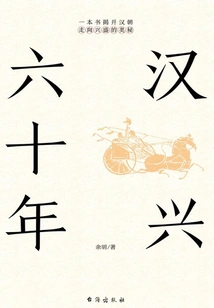
Sixty Years of the Rise of Han Dynasty
General Fiction汉兴六十年
Yu Ming
This book mainly tells some stories that happened in the more than sixty years before and after the founding of the Han Dynasty. It is based on historical materials, with the era and specific characters as the main line, with concise language and fluent writing. The book is divided into four volumes. The first volume is "The Imperial Industry of the Han Family", which tells the story of the chaos at the end of the Qin Dynasty. Liu Bang and others revolted in Peixian County and founded the Han Empire after hundreds of battles. The second volume is "The Female Protagonist Claims the System". Liu Bang died and the prince Liu Ying was young and cowardly. Empress Lu came to the throne and continued to persecute Liu Bang's disciples. The third volume "The Rule of Wenjing" is unknown. Liu Heng unexpectedly ascended to the throne. Under the leadership of him and Emperor Jing Liu Qi, Chinese civilization entered its first prosperous age after the imperial era; in the fourth volume of "Jianyuan New Deal", after the sixteen-year-old Liu Che succeeded to the throne, he respected Confucianism and reformed the system and implemented the New Deal. The vigorous Jianyuan New Deal finally failed due to the direct intervention of the Empress Dowager Dou.
This book mainly tells some stories that happened in the more than sixty years before and after the founding of the Han Dynasty. It is based on historical materials, with the era and specific characters as the main line, with concise language and fluent writing. The book is divided into four volumes. The first volume is "The Imperial Industry of the Han Family", which tells the story of the chaos at the end of the Qin Dynasty. Liu Bang and others revolted in Peixian County and founded the Han Empire after hundreds of battles. The second volume is "The Female Protagonist Claims the System". Liu Bang died and the prince Liu Ying was young and cowardly. Empress Lu came to the throne and continued to persecute Liu Bang's disciples. The third volume "The Rule of Wenjing" is unknown. Liu Heng unexpectedly ascended to the throne. Under the leadership of him and Emperor Jing Liu Qi, Chinese civilization entered its first prosperous age after the imperial era; in the fourth volume of "Jianyuan New Deal", after the sixteen-year-old Liu Che succeeded to the throne, he respected Confucianism and reformed the system and implemented the New Deal. The vigorous Jianyuan New Deal finally failed due to the direct intervention of the Empress Dowager Dou.
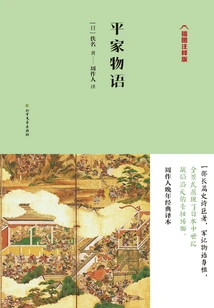
The Tale of the Heike (illustrated Annotated Edition)
General Fiction平家物语(插图注释版)
H
This book mainly tells the story of the Taira family headed by Taira Kiyomori. The first six volumes describe the prosperity and arrogance and arrogance of the Taira family; the last seven volumes focus on describing the battle between the two great samurai groups of Genpei, exaggerating the tragic ending of the Taira family's eventual annihilation. The book quotes a considerable number of Chinese classics. It was once performed vividly by Master Pipa from Japan. The author mainly focuses on the two periods of the Taira family (the Taira Kiyoshi period and the Taira clan's prosperous period), and describes after the Homoto Rebellion and the Heiji Rebellion. The whole article is mainly in the form of a history book, in which the author adds his views on many events, forming a structure in which the author is looking for the reasons for the decline of the Taira clan as the main clue. This book is a hardcover version with color illustrations and inserts.
This book mainly tells the story of the Taira family headed by Taira Kiyomori. The first six volumes describe the prosperity and arrogance and arrogance of the Taira family; the last seven volumes focus on describing the battle between the two great samurai groups of Genpei, exaggerating the tragic ending of the Taira family's eventual annihilation. The book quotes a considerable number of Chinese classics. It was once performed vividly by Master Pipa from Japan. The author mainly focuses on the two periods of the Taira family (the Taira Kiyoshi period and the Taira clan's prosperous period), and describes after the Homoto Rebellion and the Heiji Rebellion. The whole article is mainly in the form of a history book, in which the author adds his views on many events, forming a structure in which the author is looking for the reasons for the decline of the Taira clan as the main clue. This book is a hardcover version with color illustrations and inserts.
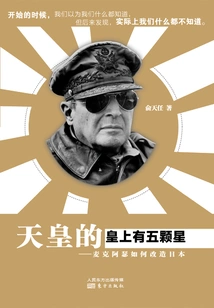
The Emperor's Emperor Has Five Stars
General Fiction天皇的皇上有五颗星
Yu Tianren
In 1945, Emperor Hirohito announced Japan's unconditional surrender. The United States carried out a separate occupation of Japan in the name of its allies. It was not until 1952 that the occupying military authorities returned to the Japanese government. The seven years of Japan's subjugation completely changed Japan's development path, transferred national sovereignty from the autocrats to the hands of the Japanese people, and led Japan onto a bright road. Just a dozen years later, Japan has developed into the world's second largest economic power...
In 1945, Emperor Hirohito announced Japan's unconditional surrender. The United States carried out a separate occupation of Japan in the name of its allies. It was not until 1952 that the occupying military authorities returned to the Japanese government. The seven years of Japan's subjugation completely changed Japan's development path, transferred national sovereignty from the autocrats to the hands of the Japanese people, and led Japan onto a bright road. Just a dozen years later, Japan has developed into the world's second largest economic power...
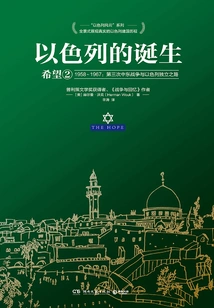
The Birth of Israel: Hope 2
General Fiction以色列的诞生:希望2
Herman Walker
1958~1967: The Third Middle East War and Israel's Road to Independence! After the first and second Middle East wars, the Palestinian-Israeli conflict continued and entered a white-hot stage. At the same time, Britain and France also successively reduced military aid to Israel under pressure from international public opinion. At this time, several political riots and armed conflicts broke out in Israel. The situation at home and abroad is becoming increasingly severe. In order to seek international support, "Flash Wolf" Zeev Barak served as the military attaché at the Israeli Embassy in the United States. Relying on his years of combat and political experience, he tried his best to gain maximum political support for Israel at United Nations meetings. At the same time, "Don Quixote" Yossi Nican gradually revealed his outstanding military talents, grew into the backbone of the armored forces, and commanded the armored brigade under his command to participate in the raging war. Under attack from all parties, the third Middle East War broke out on June 5, 1967. Israel launched a lightning air strike that destroyed the air force of the Arab League. The war lasted only six days and ended with the defeat of the Arab side. It was known as the "Six-Day War" in history. This classic battle redrawn the map of the Middle East and once again consolidated Israel's international status. However, it did not bring the long-awaited peace to Israel. It caused a series of problems that are still affecting the situation between Palestine and Israel.
1958~1967: The Third Middle East War and Israel's Road to Independence! After the first and second Middle East wars, the Palestinian-Israeli conflict continued and entered a white-hot stage. At the same time, Britain and France also successively reduced military aid to Israel under pressure from international public opinion. At this time, several political riots and armed conflicts broke out in Israel. The situation at home and abroad is becoming increasingly severe. In order to seek international support, "Flash Wolf" Zeev Barak served as the military attaché at the Israeli Embassy in the United States. Relying on his years of combat and political experience, he tried his best to gain maximum political support for Israel at United Nations meetings. At the same time, "Don Quixote" Yossi Nican gradually revealed his outstanding military talents, grew into the backbone of the armored forces, and commanded the armored brigade under his command to participate in the raging war. Under attack from all parties, the third Middle East War broke out on June 5, 1967. Israel launched a lightning air strike that destroyed the air force of the Arab League. The war lasted only six days and ended with the defeat of the Arab side. It was known as the "Six-Day War" in history. This classic battle redrawn the map of the Middle East and once again consolidated Israel's international status. However, it did not bring the long-awaited peace to Israel. It caused a series of problems that are still affecting the situation between Palestine and Israel.

The Birth of Israel: Hope 1
General Fiction以色列的诞生:希望1
Herman Walker
On May 14, 1948, David Ben-Gurion, the "Father of the Founding of Israel", promulgated the "Declaration of Independence of the State of Israel." The next day, the Arab League entered Palestine and declared a state of war against Israel. The first Middle East war broke out, known as the "Palestinian War" in history. It was also the first war to restore the state of Israel after Independence Day. Pulitzer Prize winner Herman Walker's story about Israel's war for national restoration is full of obstacles and difficulties. From the day of its founding, Israel has been dealing with powerful military attacks by the Arab League while facing a crisis of domestic shortages of weapons and personnel. At the same time, Israel has had to engage in long and harsh games and confrontations with Russia, the United States, Britain, France and other countries. The story of "The Birth of Israel: Hope 1" also begins. Relying on the founding heroes such as Zeev Barak, who negotiated with major powers and secured political and military assistance for Israel, and Yossi Nichan, who was brave and proficient in fighting, the infant Israel won decisive victories in the first and second Middle East wars with an overwhelming advantage in the confrontation with powerful enemies. The final result of the war not only consolidated Israel's position in world military history, but also had a profound impact on the Arab League, the Middle East, and even the world pattern.
On May 14, 1948, David Ben-Gurion, the "Father of the Founding of Israel", promulgated the "Declaration of Independence of the State of Israel." The next day, the Arab League entered Palestine and declared a state of war against Israel. The first Middle East war broke out, known as the "Palestinian War" in history. It was also the first war to restore the state of Israel after Independence Day. Pulitzer Prize winner Herman Walker's story about Israel's war for national restoration is full of obstacles and difficulties. From the day of its founding, Israel has been dealing with powerful military attacks by the Arab League while facing a crisis of domestic shortages of weapons and personnel. At the same time, Israel has had to engage in long and harsh games and confrontations with Russia, the United States, Britain, France and other countries. The story of "The Birth of Israel: Hope 1" also begins. Relying on the founding heroes such as Zeev Barak, who negotiated with major powers and secured political and military assistance for Israel, and Yossi Nichan, who was brave and proficient in fighting, the infant Israel won decisive victories in the first and second Middle East wars with an overwhelming advantage in the confrontation with powerful enemies. The final result of the war not only consolidated Israel's position in world military history, but also had a profound impact on the Arab League, the Middle East, and even the world pattern.
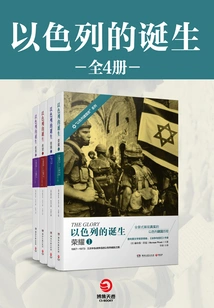
The Birth of Israel (all Four Volumes)
General Fiction以色列的诞生(全四册)
Herman Walker
The "History of the Founding of Israel" series, winner of the Pulitzer Prize for Literature, is a condensed history of the struggle for survival and an admirable history of the struggle of the soldiers who defended the country. This set of books consists of four volumes, namely "The Birth of Israel: Hope.1", "The Birth of Israel: Hope.2", "The Birth of Israel: Glory.1", "The Birth of Israel: Glory.2".
The "History of the Founding of Israel" series, winner of the Pulitzer Prize for Literature, is a condensed history of the struggle for survival and an admirable history of the struggle of the soldiers who defended the country. This set of books consists of four volumes, namely "The Birth of Israel: Hope.1", "The Birth of Israel: Hope.2", "The Birth of Israel: Glory.1", "The Birth of Israel: Glory.2".

康熙四十七年:鼎盛王朝的蚁穴之溃
Legendary Stories[edit]
On July 29, 2008, the Jiuzhou Scenic Area, the core area of the Yuanmingyuan Heritage Park that had been silent for more than 300 years, finally revealed its mysterious face to the world. Europeans who had witnessed the grace and splendor of this garden praised it as the "Garden of Ten Thousand Gardens" and said that the magnificent scene in the garden was difficult to describe in words and unbelievable. However, the wanton destruction by the British and French forces 148 years ago turned this mythical garden into ruins. This goes back 160 years - 300 years ago - to the forty-seventh year of Kangxi (1708). At that time, the Old Summer Palace was still on the drawing board. Kangxi and his ministers were having a heated discussion, and they were red-faced. Finally, a consensus was reached the next year, and construction of the Old Summer Palace started. It took six generations of emperors and more than 150 years to build this royal garden covering an area of 350 hectares and containing more than 160 scenic spots in the northwest suburbs of Beijing.
On July 29, 2008, the Jiuzhou Scenic Area, the core area of the Yuanmingyuan Heritage Park that had been silent for more than 300 years, finally revealed its mysterious face to the world. Europeans who had witnessed the grace and splendor of this garden praised it as the "Garden of Ten Thousand Gardens" and said that the magnificent scene in the garden was difficult to describe in words and unbelievable. However, the wanton destruction by the British and French forces 148 years ago turned this mythical garden into ruins. This goes back 160 years - 300 years ago - to the forty-seventh year of Kangxi (1708). At that time, the Old Summer Palace was still on the drawing board. Kangxi and his ministers were having a heated discussion, and they were red-faced. Finally, a consensus was reached the next year, and construction of the Old Summer Palace started. It took six generations of emperors and more than 150 years to build this royal garden covering an area of 350 hectares and containing more than 160 scenic spots in the northwest suburbs of Beijing.
Daming Yincheng
General Fiction大明银城
Zhang Shishan Zhou Zongqi
In the 31st year of Hongwu in the Ming Dynasty, the founding emperor Zhu Yuanzhang passed away. At that time, Prince Zhu Biao died of illness, and the second prince, King Qin, and the third prince, King Jin, both died in the struggle for the throne. Zhu Biao's son and grandson Zhu Yun succeeded to the throne. He was called Emperor Hui and changed to Jianwen of Yuan Dynasty. Known as Emperor Jianwen in history. There are rumors in the court and among the people: Zhu Di, the fourth prince of Yan, who believes that his father's throne should be "passed on to his sons rather than his grandsons", is secretly preparing to raise troops to go south. In the name of eliminating traitors, he seizes the throne. And the current emperor, Emperor Minghui, had long been wary of King Yan. Not only did they control the Changlu Saltworks, but they also strictly ordered the salt administration in Hedong, Shanxi: No grain or salt could be supplied to the nine sides of the Great Wall. He must want to draw fuel from the bottom of the Yan King's cauldron and subjugate his troops without fighting. At the same time, an edict was issued to deprive the King of Yan of his military power, and ordered the crown prince of Yan, Zhu Gaochi, to go to Nanjing to pay homage to Taizu's mausoleum.
In the 31st year of Hongwu in the Ming Dynasty, the founding emperor Zhu Yuanzhang passed away. At that time, Prince Zhu Biao died of illness, and the second prince, King Qin, and the third prince, King Jin, both died in the struggle for the throne. Zhu Biao's son and grandson Zhu Yun succeeded to the throne. He was called Emperor Hui and changed to Jianwen of Yuan Dynasty. Known as Emperor Jianwen in history. There are rumors in the court and among the people: Zhu Di, the fourth prince of Yan, who believes that his father's throne should be "passed on to his sons rather than his grandsons", is secretly preparing to raise troops to go south. In the name of eliminating traitors, he seizes the throne. And the current emperor, Emperor Minghui, had long been wary of King Yan. Not only did they control the Changlu Saltworks, but they also strictly ordered the salt administration in Hedong, Shanxi: No grain or salt could be supplied to the nine sides of the Great Wall. He must want to draw fuel from the bottom of the Yan King's cauldron and subjugate his troops without fighting. At the same time, an edict was issued to deprive the King of Yan of his military power, and ordered the crown prince of Yan, Zhu Gaochi, to go to Nanjing to pay homage to Taizu's mausoleum.

The Great Eunuch's Beauty Job
General Fiction大太监的美差
Li Jing
One afternoon in the late spring of the 11th year of Tongzhi's reign in the Qing Dynasty, the setting sun looked extremely charming, coating the golden glazed tiles of the Nine Palaces in the Forbidden City in Beijing with a layer of magnificent red light, making it even more glorious and spectacular. Just hearing a creaking sound, the left night gate under the Five Phoenix Tower in the front of the Forbidden City opened a narrow gap, and a person stepped out from it, wearing a light gray eunuch's uniform, with a blue light shining on the top of his head. He turned back and gestured towards the door, then walked a few steps quickly and got into the brand new blue woolen sedan that had been waiting outside the door. The two young and vigorous sedan bearers looked at each other and smiled. They reached out to grab the sedan pole and raised it gently on their shoulders. Then they quickly turned around Duanmen and Tiananmen, then turned west and went straight along Chang'an West Street...
One afternoon in the late spring of the 11th year of Tongzhi's reign in the Qing Dynasty, the setting sun looked extremely charming, coating the golden glazed tiles of the Nine Palaces in the Forbidden City in Beijing with a layer of magnificent red light, making it even more glorious and spectacular. Just hearing a creaking sound, the left night gate under the Five Phoenix Tower in the front of the Forbidden City opened a narrow gap, and a person stepped out from it, wearing a light gray eunuch's uniform, with a blue light shining on the top of his head. He turned back and gestured towards the door, then walked a few steps quickly and got into the brand new blue woolen sedan that had been waiting outside the door. The two young and vigorous sedan bearers looked at each other and smiled. They reached out to grab the sedan pole and raised it gently on their shoulders. Then they quickly turned around Duanmen and Tiananmen, then turned west and went straight along Chang'an West Street...

Loyal Soul of Ming Dynasty
General Fiction大明忠魂
Hu Liangqing Ma Shexiang
In 1627 AD, Chongzhen came to the throne. In order to retreat the Jin soldiers and relieve the crisis in Liaodong, he re-activated Chonghuan. Yuan Chonghuan was born in Tengzhou, Guangxi. He loved studying and practicing martial arts when he was young. He passed the imperial examination at the age of thirty-six and resigned as county magistrate. He wanted to guard outside Shanhaiguan. At that time, everyone inside and outside the country said that "Shanhaiguan is the gate of hell, and the Liaodong generals are scapegoats." The Ming Dynasty fought with Nurhaci for several years, losing nearly a hundred towns of Fushun, Liaoyang, and Guangning, and losing several famous generals such as Yang Hao, Yuan Yingtai, Wang Huazhen, and Xiong Tingbi. Who would dare to come outside the Pass.
In 1627 AD, Chongzhen came to the throne. In order to retreat the Jin soldiers and relieve the crisis in Liaodong, he re-activated Chonghuan. Yuan Chonghuan was born in Tengzhou, Guangxi. He loved studying and practicing martial arts when he was young. He passed the imperial examination at the age of thirty-six and resigned as county magistrate. He wanted to guard outside Shanhaiguan. At that time, everyone inside and outside the country said that "Shanhaiguan is the gate of hell, and the Liaodong generals are scapegoats." The Ming Dynasty fought with Nurhaci for several years, losing nearly a hundred towns of Fushun, Liaoyang, and Guangning, and losing several famous generals such as Yang Hao, Yuan Yingtai, Wang Huazhen, and Xiong Tingbi. Who would dare to come outside the Pass.

Empire's Immortality
General Fiction帝国之不死
Shen Ziwu
Kevin Empire 2300, August 15th. The sun was shining slightly, and the red red grass gently swayed its branches and leaves in the wind, as if it would never stop. Goode was lying on the edge of the cave. His old face was pale from serious illness. He opened his eyes with difficulty, and saw a hazy white scene in front of him. In his ears, he could hear the busy shouts of the medical team: "The liver is bleeding, and the heart function is slowly weakening. Hurry, prepare the medicine!" His wife Luofel let out a heart-wrenching cry beside the bed. He only felt that he had a headache from the noise, and when he wanted to speak the next moment, an uncontrollable cough escaped his lips. The green dragon flickered faintly on his wrist, indicating that the master's life was about to run out: "General, you are about to die, do you need me to treat you?" He just shook his head tiredly.
Kevin Empire 2300, August 15th. The sun was shining slightly, and the red red grass gently swayed its branches and leaves in the wind, as if it would never stop. Goode was lying on the edge of the cave. His old face was pale from serious illness. He opened his eyes with difficulty, and saw a hazy white scene in front of him. In his ears, he could hear the busy shouts of the medical team: "The liver is bleeding, and the heart function is slowly weakening. Hurry, prepare the medicine!" His wife Luofel let out a heart-wrenching cry beside the bed. He only felt that he had a headache from the noise, and when he wanted to speak the next moment, an uncontrollable cough escaped his lips. The green dragon flickered faintly on his wrist, indicating that the master's life was about to run out: "General, you are about to die, do you need me to treat you?" He just shook his head tiredly.

The Last Executioner of the Qing Dynasty
General Fiction大清国最后一个刽子手
Li Yating
At three o'clock, the marble king is about to die. Traditionally, criminals should be executed at three quarters to noon. The warden said that this was the rule of the Republic of China. In fact, this is his rule. The criminal law of the Republic of China did not have this rule. No matter whose rules, in short, the marble king is going to meet the king of hell. The King of Pinball is Wang Shukui, the boss of the Pinball Gang in Liuhe Town, Guandong. He has a unique skill, which is called the magic hand missile in the world - he carries several or a dozen iron bullets in his sleeve, like the balls in the bearings of a carriage. When used, the bullets fly up from his hand and shoot directly into the opponent's head. The bullets kill people, and every shot hits the mark. However, Pinball King has a rule: only kill bad guys and not innocent people. As the folk song goes: The King of Pinballs is so loud that he eliminates violence and spreads good news in all directions. He fights against injustice and conquers the world. The gangsters are frightened when they see him.
At three o'clock, the marble king is about to die. Traditionally, criminals should be executed at three quarters to noon. The warden said that this was the rule of the Republic of China. In fact, this is his rule. The criminal law of the Republic of China did not have this rule. No matter whose rules, in short, the marble king is going to meet the king of hell. The King of Pinball is Wang Shukui, the boss of the Pinball Gang in Liuhe Town, Guandong. He has a unique skill, which is called the magic hand missile in the world - he carries several or a dozen iron bullets in his sleeve, like the balls in the bearings of a carriage. When used, the bullets fly up from his hand and shoot directly into the opponent's head. The bullets kill people, and every shot hits the mark. However, Pinball King has a rule: only kill bad guys and not innocent people. As the folk song goes: The King of Pinballs is so loud that he eliminates violence and spreads good news in all directions. He fights against injustice and conquers the world. The gangsters are frightened when they see him.
Out-of-print Dynasty Pirated Monarchs and Cao Cao Volume
General Fiction绝版王朝 盗版君臣·曹操卷
Jingting
In the Dynasty, the Three Kingdoms developed to the extreme; in the Three Kingdoms, the emperors competed for supremacy to the extreme. As an emperor, Cao Cao performed to the extreme; as a civil servant, Kong Ming performed to the extreme; as a general, Zhou Yu performed to the extreme... The Three Kingdoms, this was a dynasty with the most heroes in Chinese history, and it was also the most controversial dynasty. There are many mysteries and dramas in the Three Kingdoms. From the Three Kingdoms to the present, from the text to the stage, the flowing heroic images are clearly visible in the audience's sight, but they are also confusing in the readers' hearts. After the publication of "Three Kingdoms", a small number of people became clear. After "The Romance of the Three Kingdoms" came out, most people were confused. Cao Cao, Liu Bei, Sun Quan... No matter whether they were good or bad, Luo Guanzhong almost changed them all beyond recognition.
In the Dynasty, the Three Kingdoms developed to the extreme; in the Three Kingdoms, the emperors competed for supremacy to the extreme. As an emperor, Cao Cao performed to the extreme; as a civil servant, Kong Ming performed to the extreme; as a general, Zhou Yu performed to the extreme... The Three Kingdoms, this was a dynasty with the most heroes in Chinese history, and it was also the most controversial dynasty. There are many mysteries and dramas in the Three Kingdoms. From the Three Kingdoms to the present, from the text to the stage, the flowing heroic images are clearly visible in the audience's sight, but they are also confusing in the readers' hearts. After the publication of "Three Kingdoms", a small number of people became clear. After "The Romance of the Three Kingdoms" came out, most people were confused. Cao Cao, Liu Bei, Sun Quan... No matter whether they were good or bad, Luo Guanzhong almost changed them all beyond recognition.
I Am Liu Bei: Grassroots Counterattack
General Fiction我是刘备:草根的逆袭
Shen Chen He Kun
This work uses a first-person writing technique to show readers the magnificent history of the Three Kingdoms of the Later Han Dynasty. It also provides an objective and detailed analysis of the historical figure Liu Bei in the form of a novel, revealing how Liu Bei, a grassroots counterattack, experienced various hardships in his growth process, the profound historical background of his entrepreneurial success, and his perseverance.
This work uses a first-person writing technique to show readers the magnificent history of the Three Kingdoms of the Later Han Dynasty. It also provides an objective and detailed analysis of the historical figure Liu Bei in the form of a novel, revealing how Liu Bei, a grassroots counterattack, experienced various hardships in his growth process, the profound historical background of his entrepreneurial success, and his perseverance.
I Am Sun Quan: the Loneliness of the King
General Fiction我是孙权:王者的孤独
Shen Chen He Kun
This work is a novel that introduces the struggle history of Sun Quan, the founding emperor of Soochow during the Three Kingdoms period. This work adopts the first-person writing method to show readers the magnificent history of the Three Kingdoms of the Later Han Dynasty. It also conducts an objective and detailed analysis of the historical figure Sun Quan in the form of a novel, revealing the various hardships that Sun Quan, a rich and handsome man, experienced in his growth process, as well as the profound historical background of his entrepreneurial success and his perseverance.
This work is a novel that introduces the struggle history of Sun Quan, the founding emperor of Soochow during the Three Kingdoms period. This work adopts the first-person writing method to show readers the magnificent history of the Three Kingdoms of the Later Han Dynasty. It also conducts an objective and detailed analysis of the historical figure Sun Quan in the form of a novel, revealing the various hardships that Sun Quan, a rich and handsome man, experienced in his growth process, as well as the profound historical background of his entrepreneurial success and his perseverance.

Dai Li's Rise to Fame
General Fiction戴笠发迹史
Cicada Sound
Although it may not "leave its fragrance for eternity", it can "leave its stink for eternity". The Chinese people will never forget Dai Li, the chief spy, executioner and murderer of the Kuomintang Military Command Bureau. Do you know how he made his fortune? Disclosure here. There is a family in Baoan Village under Xianxia Pass in Zhejiang Province whose surname is Dai. The owner is Dai Shifu, who once served as a soldier in Quzhou Prefecture. Married to the Lan family. On April 27, the 20th year of Guangxu's reign, a boy was born, named "Chunfeng", nicknamed "Fangzhou", and his scientific name was "Weilan". Time flies, "Chunfeng" is seven years old and has reached the age of studying. . One night, Lan said to her husband: "We have agreed over there that Fangzhou will be asked to go to school when spring begins."
Although it may not "leave its fragrance for eternity", it can "leave its stink for eternity". The Chinese people will never forget Dai Li, the chief spy, executioner and murderer of the Kuomintang Military Command Bureau. Do you know how he made his fortune? Disclosure here. There is a family in Baoan Village under Xianxia Pass in Zhejiang Province whose surname is Dai. The owner is Dai Shifu, who once served as a soldier in Quzhou Prefecture. Married to the Lan family. On April 27, the 20th year of Guangxu's reign, a boy was born, named "Chunfeng", nicknamed "Fangzhou", and his scientific name was "Weilan". Time flies, "Chunfeng" is seven years old and has reached the age of studying. . One night, Lan said to her husband: "We have agreed over there that Fangzhou will be asked to go to school when spring begins."
Baimenliu (complete Works)
General Fiction白门柳(全集)
Liu Sifen
"White Gate Willow" consists of three parts: "Sunset Grass", "Autumn Dew Dangerous City" and "Cockcrow Storm". With grand scenes and detailed descriptions, it vividly reproduces the choices and fate of a group of scholars before and after the overthrow of the Ming Dynasty. The author does not simply tell the story of the scholars and literati during Wang Gang's unification of the button, but through such creation, expresses his own sigh for this group of people in the old days of China.
"White Gate Willow" consists of three parts: "Sunset Grass", "Autumn Dew Dangerous City" and "Cockcrow Storm". With grand scenes and detailed descriptions, it vividly reproduces the choices and fate of a group of scholars before and after the overthrow of the Ming Dynasty. The author does not simply tell the story of the scholars and literati during Wang Gang's unification of the button, but through such creation, expresses his own sigh for this group of people in the old days of China.
Tenzo
General Fiction天藏
Guanzhong Cattle
The story of "Tianzang" begins with the madness of Mr. Jia Er, and records the past of a wealthy village full of Chinese farming civilization, which turned into a deserted village with thousands of households in a few years. The whole novel not only lashes out at the ugly behavior of corrupt officials in feudal society that harms the country, but also reveals to readers the historical reasons for the decline of Qin and Shang Dynasty for thousands of years. The character in the book, the Thirteenth Master, sacrificed his life for justice to save the village; the Second Lady, who knew the book and was courteous, devoted herself to protecting the village, was persecuted and imprisoned by the government, and eventually joined the rebel army against the Qing Dynasty; the bandit leader Yang Shuan'er traveled northward for love, starting from robbing homes and embarking on the road of resisting the Qing Dynasty.
The story of "Tianzang" begins with the madness of Mr. Jia Er, and records the past of a wealthy village full of Chinese farming civilization, which turned into a deserted village with thousands of households in a few years. The whole novel not only lashes out at the ugly behavior of corrupt officials in feudal society that harms the country, but also reveals to readers the historical reasons for the decline of Qin and Shang Dynasty for thousands of years. The character in the book, the Thirteenth Master, sacrificed his life for justice to save the village; the Second Lady, who knew the book and was courteous, devoted herself to protecting the village, was persecuted and imprisoned by the government, and eventually joined the rebel army against the Qing Dynasty; the bandit leader Yang Shuan'er traveled northward for love, starting from robbing homes and embarking on the road of resisting the Qing Dynasty.