Library
Browse and search books
753 novels found
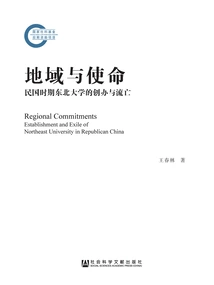
Place and Mission: the Founding and Exile of Northeastern University During the Republic of China
History地域与使命:民国时期东北大学的创办与流亡
Wang Chunlin
This book takes the founding and development of Northeastern University during the Republic of China as the main line of research. It shows the efforts and dilemmas of local forces in Northeast China toward modernization before the September 18th Incident. It also explores the responses and entanglements of the exile forces in Northeast China after the incident under the general trends of the era, such as the Anti-Japanese War, the struggle between the central and local governments, and the War of Liberation. It can be found from this that local forces have their own plans on how to develop the local area and deal with internal and external difficulties. Although this plan is full of regional characteristics, it is also full of a sense of mission, and thus merges into the torrent of development of the times.
This book takes the founding and development of Northeastern University during the Republic of China as the main line of research. It shows the efforts and dilemmas of local forces in Northeast China toward modernization before the September 18th Incident. It also explores the responses and entanglements of the exile forces in Northeast China after the incident under the general trends of the era, such as the Anti-Japanese War, the struggle between the central and local governments, and the War of Liberation. It can be found from this that local forces have their own plans on how to develop the local area and deal with internal and external difficulties. Although this plan is full of regional characteristics, it is also full of a sense of mission, and thus merges into the torrent of development of the times.
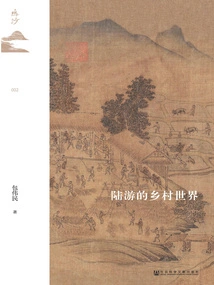
Lu You's Rural World
History陆游的乡村世界
Bao Weimin
Lu You, a famous poet in the Southern Song Dynasty, lived in his hometown of rural areas in eastern Zhejiang for a long time. Among Lu You's massive surviving poems, 60 to 70 percent are related to life in his hometown. Focus on interpreting Lu You's poems, using his eyes to observe the rural social life in eastern Zhejiang, and showing the "rural world" in his mind. Although it is not auspicious, it is extremely precious. By analyzing the case of Lu You's "Rural World", it is shown that: Lu You's rural life is a living model of an upper-middle-level rural apartment in rural eastern Zhejiang; the scholar class represented by Lu You played multiple and complex roles in rural social life; the rich and colorful rural life perceived and described by Lu You and the difficult livelihood of the people provide, to a certain extent, several fulcrums for us to rely on when imagining the "Song Dynasty countryside".
Lu You, a famous poet in the Southern Song Dynasty, lived in his hometown of rural areas in eastern Zhejiang for a long time. Among Lu You's massive surviving poems, 60 to 70 percent are related to life in his hometown. Focus on interpreting Lu You's poems, using his eyes to observe the rural social life in eastern Zhejiang, and showing the "rural world" in his mind. Although it is not auspicious, it is extremely precious. By analyzing the case of Lu You's "Rural World", it is shown that: Lu You's rural life is a living model of an upper-middle-level rural apartment in rural eastern Zhejiang; the scholar class represented by Lu You played multiple and complex roles in rural social life; the rich and colorful rural life perceived and described by Lu You and the difficult livelihood of the people provide, to a certain extent, several fulcrums for us to rely on when imagining the "Song Dynasty countryside".
History of Ningxia Farming
History宁夏农垦史
Liao Zhou
"History of Ningxia Agricultural Reclamation" focuses on the creation, reform and industrial development of contemporary Ningxia's agricultural reclamation industry, focusing on the study of state-owned farms, the 13th Agricultural Construction Division and the 5th Agricultural Division during the military reclamation period, educated youth in agricultural reclamation, agricultural and industrial and commercial integration, production responsibility system reform, agricultural zoning construction, field-based industry, land management, agricultural industrialization, historical experience and other issues.
"History of Ningxia Agricultural Reclamation" focuses on the creation, reform and industrial development of contemporary Ningxia's agricultural reclamation industry, focusing on the study of state-owned farms, the 13th Agricultural Construction Division and the 5th Agricultural Division during the military reclamation period, educated youth in agricultural reclamation, agricultural and industrial and commercial integration, production responsibility system reform, agricultural zoning construction, field-based industry, land management, agricultural industrialization, historical experience and other issues.
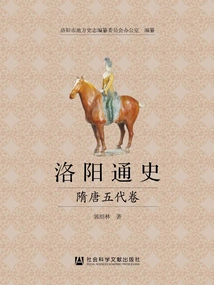
洛阳通史·隋唐五代卷
Guo Shaolin
During the Sui, Tang and Five Dynasties, Luoyang rose to a new peak. Luoyang has been the capital for thousands of years. During this period, it was either the Eastern Capital, the Divine Capital, the Western Capital or the Capital. Luoyang was the eastern starting point of the Silk Road, adding to its identity as the center of the Grand Canal in the Sui and Tang Dynasties. Luoyang peonies are emerging, and the Peony Flower City has begun. During this period, the emperors either visited Luoyang many times or stayed there for a long time, taking advantage of Luoyang's convenient conditions as "the center of the world" to rule the country and command the world. Luoyang is connected to the rest of the world. Leaders, envoys, merchants, monks, overseas students, and sailors from surrounding ethnic groups move, settle, and are buried here. Here there is a gathering of people, bright stars, prosperous economy and exquisite craftsmanship. During the long period of peaceful singing and dancing, there were also turmoils of swords and wars. The vicissitudes of history in Luoyang during the Sui, Tang and Five Dynasties are woven with glory and sadness.
During the Sui, Tang and Five Dynasties, Luoyang rose to a new peak. Luoyang has been the capital for thousands of years. During this period, it was either the Eastern Capital, the Divine Capital, the Western Capital or the Capital. Luoyang was the eastern starting point of the Silk Road, adding to its identity as the center of the Grand Canal in the Sui and Tang Dynasties. Luoyang peonies are emerging, and the Peony Flower City has begun. During this period, the emperors either visited Luoyang many times or stayed there for a long time, taking advantage of Luoyang's convenient conditions as "the center of the world" to rule the country and command the world. Luoyang is connected to the rest of the world. Leaders, envoys, merchants, monks, overseas students, and sailors from surrounding ethnic groups move, settle, and are buried here. Here there is a gathering of people, bright stars, prosperous economy and exquisite craftsmanship. During the long period of peaceful singing and dancing, there were also turmoils of swords and wars. The vicissitudes of history in Luoyang during the Sui, Tang and Five Dynasties are woven with glory and sadness.
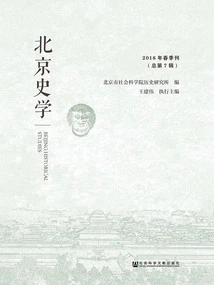
北京史学(2018年春季刊\u002F总第7辑)
Compiled By The Institute Of History, Beijing Academy Of Social Sciences
"Beijing History" is a comprehensive academic journal. Its main columns are: "Theoretical Research", which mainly focuses on the discussion of disciplinary theories and research methods in the history of Beijing and related research directions; "Special Research", which discusses the political and military, economic and social, academic culture, environmental changes and other aspects of Beijing's history. Technical issues; "New Book Review" introduces recently published academic works on Beijing history; "Research Overview" summarizes the research results and developments of Beijing history, academic activities, etc. In recent years, providing readers with academic reference and information; "Historical Supplements" publishes or introduces newly discovered new historical materials related to the study of Beijing history.
"Beijing History" is a comprehensive academic journal. Its main columns are: "Theoretical Research", which mainly focuses on the discussion of disciplinary theories and research methods in the history of Beijing and related research directions; "Special Research", which discusses the political and military, economic and social, academic culture, environmental changes and other aspects of Beijing's history. Technical issues; "New Book Review" introduces recently published academic works on Beijing history; "Research Overview" summarizes the research results and developments of Beijing history, academic activities, etc. In recent years, providing readers with academic reference and information; "Historical Supplements" publishes or introduces newly discovered new historical materials related to the study of Beijing history.
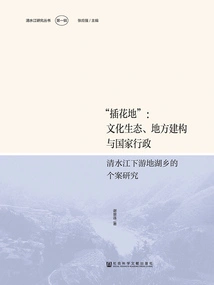
“插花地”:文化生态、地方建构与国家行政——清水江下游地湖乡的个案研究
Xie Jinglian
Dihu Township is "a 'flower arrangement land' where Guizhou flies to Hunan." Although it is outside the mother body of Tianzhu, it has always identified with Tianzhu's "mother" since the day when Tianzhu was established in the 25th year of Wanli in the Ming Dynasty. Although Dihu is small, the stories spread among the people and records in literature and classics explain why Dihu became a "flower arrangement place" and the social, cultural and historical process that continues to this day. This book attempts to use these folk stories and documentary records to explore the beginning and end of how Dihu became a "flower arrangement place", and how Dihu people in different historical periods strengthened and inherited this identity through daily life practices, so that Dihu's identity as a "flower arrangement place" has been preserved to this day.
Dihu Township is "a 'flower arrangement land' where Guizhou flies to Hunan." Although it is outside the mother body of Tianzhu, it has always identified with Tianzhu's "mother" since the day when Tianzhu was established in the 25th year of Wanli in the Ming Dynasty. Although Dihu is small, the stories spread among the people and records in literature and classics explain why Dihu became a "flower arrangement place" and the social, cultural and historical process that continues to this day. This book attempts to use these folk stories and documentary records to explore the beginning and end of how Dihu became a "flower arrangement place", and how Dihu people in different historical periods strengthened and inherited this identity through daily life practices, so that Dihu's identity as a "flower arrangement place" has been preserved to this day.
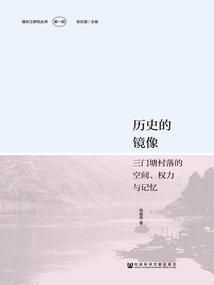
历史的镜像:三门塘村落的空间、权力与记忆
Qian Jingjing
This book takes the Sanmentang village as the starting point, and explores its relationship with space through various aspects such as the Sanmentang family's genealogy construction, religious Feng Shui concepts, historical memory, village organization, gender, rituals, etc., And displays different types of spaces. This book not only conducts synchronic structural analysis, but also provides a diachronic dynamic interpretation of space, paying attention to the many changes that have occurred in village space due to the influence of social, political and economic forces in different historical periods, in order to present historical mirror images at different levels.
This book takes the Sanmentang village as the starting point, and explores its relationship with space through various aspects such as the Sanmentang family's genealogy construction, religious Feng Shui concepts, historical memory, village organization, gender, rituals, etc., And displays different types of spaces. This book not only conducts synchronic structural analysis, but also provides a diachronic dynamic interpretation of space, paying attention to the many changes that have occurred in village space due to the influence of social, political and economic forces in different historical periods, in order to present historical mirror images at different levels.
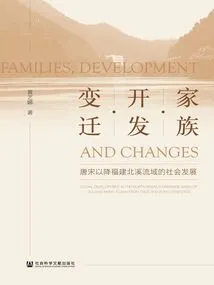
家族·开发·变迁:唐宋以降福建北溪流域的社会发展
Huang Yina
This book selects the four villages of Jinsha, Yintang, Yulan, and Bixi, which are the main development areas of the Beixi Basin, as typical field surveys. It combines the use of folk documents and official historical records to more clearly outline the historical changes in the society in the middle and lower reaches of Beixi since the Tang and Song Dynasties, and also analyzes the different forms in different eras. It conducts an in-depth discussion of the causes and impacts of regional social changes, especially the analysis of the development of the middle and lower reaches of the Jiulong River Beixi River by different families, the growth and decline of family power, and its impact on local social order. It not only supplements traditional views, but also contains some new discoveries and new perspectives.
This book selects the four villages of Jinsha, Yintang, Yulan, and Bixi, which are the main development areas of the Beixi Basin, as typical field surveys. It combines the use of folk documents and official historical records to more clearly outline the historical changes in the society in the middle and lower reaches of Beixi since the Tang and Song Dynasties, and also analyzes the different forms in different eras. It conducts an in-depth discussion of the causes and impacts of regional social changes, especially the analysis of the development of the middle and lower reaches of the Jiulong River Beixi River by different families, the growth and decline of family power, and its impact on local social order. It not only supplements traditional views, but also contains some new discoveries and new perspectives.
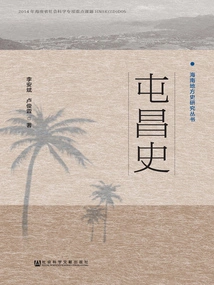
屯昌史(海南地方史研究丛书)
Li Anbin Lu Junlin
Tunchang County is located in the middle of Hainan Island and at the northern foot of Wuzhishan Mountain. It was a place for garrisoning troops in ancient times and later developed into a Wei town. Tunchang County is located in a unique "triple political edge". Due to the influence of geographical environment, cultural context and other factors, a unique "Shu Li" culture has been produced. Historically, it has been the transition zone between the Han and Li cultural circles in Qiongdao. Looking at the occurrence and development of Tunchang history, it can be seen as the epitome of the great ethnic integration between the Han and Li ethnic groups in the entire Hainan Island. Although it is not ups and downs, it is also exciting. After Hainan was established as a province, Tunchang County took "energy innovation" as a new growth point for economic development, showing a development model that is different from other cities and counties in Hainan Island.
Tunchang County is located in the middle of Hainan Island and at the northern foot of Wuzhishan Mountain. It was a place for garrisoning troops in ancient times and later developed into a Wei town. Tunchang County is located in a unique "triple political edge". Due to the influence of geographical environment, cultural context and other factors, a unique "Shu Li" culture has been produced. Historically, it has been the transition zone between the Han and Li cultural circles in Qiongdao. Looking at the occurrence and development of Tunchang history, it can be seen as the epitome of the great ethnic integration between the Han and Li ethnic groups in the entire Hainan Island. Although it is not ups and downs, it is also exciting. After Hainan was established as a province, Tunchang County took "energy innovation" as a new growth point for economic development, showing a development model that is different from other cities and counties in Hainan Island.
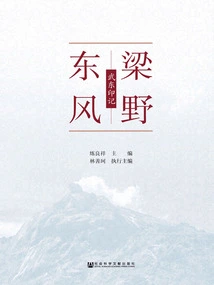
梁野东风:武东印记
Editor-in-chief Lian Liangxiang
From the perspective of historical facts, this book comprehensively and detailedly describes the customs, scenery, scenery and customs of Wudong Town, Wuping, Fujian, and systematically reflects the historical and cultural development of Wudong Town. The book is divided into seven chapters, respectively telling the history of the Red Revolution of the Wudong people; recording the famous mountains, lakes, and ancient architectural styles of Wudong Town; describing the inheritance and development of Wudong people's simple and honest customs and arts; introducing Wudong's bachelors, literary figures and folk song skills; describing the vigorous development of Wudong education; reflecting the deep hometown complex of Wudong people; focusing on introducing outstanding talents in the fields of party, government, military, education, science, culture, and health. The whole book fully demonstrates the diligence and wisdom shown by the people of Wudong in the long historical process.
From the perspective of historical facts, this book comprehensively and detailedly describes the customs, scenery, scenery and customs of Wudong Town, Wuping, Fujian, and systematically reflects the historical and cultural development of Wudong Town. The book is divided into seven chapters, respectively telling the history of the Red Revolution of the Wudong people; recording the famous mountains, lakes, and ancient architectural styles of Wudong Town; describing the inheritance and development of Wudong people's simple and honest customs and arts; introducing Wudong's bachelors, literary figures and folk song skills; describing the vigorous development of Wudong education; reflecting the deep hometown complex of Wudong people; focusing on introducing outstanding talents in the fields of party, government, military, education, science, culture, and health. The whole book fully demonstrates the diligence and wisdom shown by the people of Wudong in the long historical process.
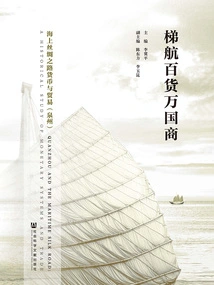
梯航百货万国商:海上丝绸之路货币与贸易·泉州(修订版)
Editor-in-chief Li Jiping
The "Maritime Silk Road" is a major maritime channel for trade and cultural exchanges between China and foreign countries. It is the oldest maritime route known so far. Quanzhou is one of the important starting points of the "Maritime Silk Road". This book starts from the rise of the Silk Road and takes Quanzhou as the perspective. It introduces the transportation, shipbuilding technology, foreign trade, etc. Of Quanzhou Port during the Tang and Five Dynasties. It focuses on the currency situation of each period of trade. It is accompanied by exquisite pictures, allowing us to re-understand the history of these Maritime Silk Road currencies and related cultural relics, and recall the peaceful and co-prosperous scene of the countries along the Maritime Silk Road in the Maritime Silk Road trade.
The "Maritime Silk Road" is a major maritime channel for trade and cultural exchanges between China and foreign countries. It is the oldest maritime route known so far. Quanzhou is one of the important starting points of the "Maritime Silk Road". This book starts from the rise of the Silk Road and takes Quanzhou as the perspective. It introduces the transportation, shipbuilding technology, foreign trade, etc. Of Quanzhou Port during the Tang and Five Dynasties. It focuses on the currency situation of each period of trade. It is accompanied by exquisite pictures, allowing us to re-understand the history of these Maritime Silk Road currencies and related cultural relics, and recall the peaceful and co-prosperous scene of the countries along the Maritime Silk Road in the Maritime Silk Road trade.
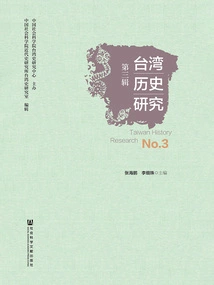
台湾历史研究(第三辑)
Li Xizhu Editor-in-chief Zhang Haipeng
"Taiwan History Research" is a professional academic journal on Taiwan history research sponsored by the Taiwan History Research Center of the Chinese Academy of Social Sciences and edited by the Taiwan History Research Office of the Institute of Modern History of the Chinese Academy of Social Sciences. It publishes original and outstanding academic results in the field of Taiwan history research from ancient times to the present. The content covers various aspects such as political history, economic history, social history, cultural history, ideological history, military history, diplomatic history, and historical figures. It also appropriately publishes rare materials and oral historical materials related to Taiwan history research, in order to build an academic exchange platform for Taiwan history research.
"Taiwan History Research" is a professional academic journal on Taiwan history research sponsored by the Taiwan History Research Center of the Chinese Academy of Social Sciences and edited by the Taiwan History Research Office of the Institute of Modern History of the Chinese Academy of Social Sciences. It publishes original and outstanding academic results in the field of Taiwan history research from ancient times to the present. The content covers various aspects such as political history, economic history, social history, cultural history, ideological history, military history, diplomatic history, and historical figures. It also appropriately publishes rare materials and oral historical materials related to Taiwan history research, in order to build an academic exchange platform for Taiwan history research.
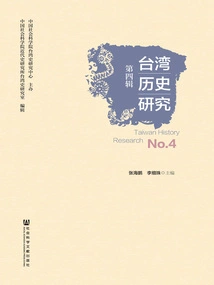
台湾历史研究(第四辑)
Li Xizhu Editor-in-chief Zhang Haipeng
"Taiwan History Research" is a professional academic journal on Taiwan history research sponsored by the Taiwan History Research Center of the Chinese Academy of Social Sciences and edited by the Taiwan History Research Office of the Institute of Modern History of the Chinese Academy of Social Sciences. It publishes original and outstanding academic results in the field of Taiwan history research from ancient times to the present. The content covers various aspects such as political history, economic history, social history, cultural history, ideological history, military history, diplomatic history, and historical figures. It also appropriately publishes rare materials and oral historical materials related to Taiwan history research, in order to build an academic exchange platform for Taiwan history research.
"Taiwan History Research" is a professional academic journal on Taiwan history research sponsored by the Taiwan History Research Center of the Chinese Academy of Social Sciences and edited by the Taiwan History Research Office of the Institute of Modern History of the Chinese Academy of Social Sciences. It publishes original and outstanding academic results in the field of Taiwan history research from ancient times to the present. The content covers various aspects such as political history, economic history, social history, cultural history, ideological history, military history, diplomatic history, and historical figures. It also appropriately publishes rare materials and oral historical materials related to Taiwan history research, in order to build an academic exchange platform for Taiwan history research.
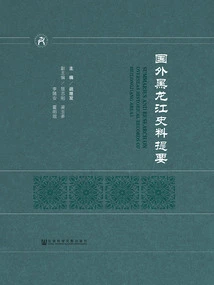
国外黑龙江史料提要
Editor-in-chief Zhan Jifa
This book is a pioneering work that comprehensively and systematically collects, translates and studies foreign historical materials on Heilongjiang. The book collects and introduces foreign historical materials related to Heilongjiang that have not been discovered by domestic scholars or are rarely known and utilized, including new materials on the history of politics, economy, culture, national defense, and foreign relations in my country's northern frontier. Through the systematic collection, sorting and research of relevant historical materials, a summary of the existing historical materials of Heilongjiang in Russia, Japan, North Korea, South Korea, and some European and American countries has been compiled to serve as an introductory guide and a tool for in-depth research for Northeastern history researchers. To a certain extent, it makes up for the shortcomings in the collection, compilation and research of historical materials on my country's Northeastern frontier.
This book is a pioneering work that comprehensively and systematically collects, translates and studies foreign historical materials on Heilongjiang. The book collects and introduces foreign historical materials related to Heilongjiang that have not been discovered by domestic scholars or are rarely known and utilized, including new materials on the history of politics, economy, culture, national defense, and foreign relations in my country's northern frontier. Through the systematic collection, sorting and research of relevant historical materials, a summary of the existing historical materials of Heilongjiang in Russia, Japan, North Korea, South Korea, and some European and American countries has been compiled to serve as an introductory guide and a tool for in-depth research for Northeastern history researchers. To a certain extent, it makes up for the shortcomings in the collection, compilation and research of historical materials on my country's Northeastern frontier.
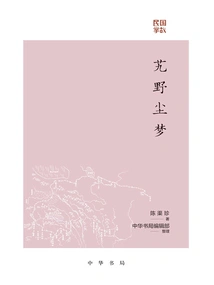
艽野尘梦:民国掌故
Written By Chen Quzhen And Compiled By The Editorial Department Of Zhonghua Book Company
This book describes the political turmoil and war that Chen Quzhen experienced as she entered and exited Tibet, her adventures across the vast snowy desert, and her touching love story. The book profoundly exposes the British and Russian imperialists' covetousness and competition for Tibet, as well as the struggle for power and intrigue among the frontier officials and the New Army in the late Qing Dynasty. It truly records the significant impact of the Revolution of 1911 on Sichuan and Tibet, as well as the actual competition between different political forces. It also describes in detail the mountainous scenery, ethnic customs, and social life of Sichuan, Tibet, and Qinghai. This book is an important live historical material on the military and political situation in Sichuan and Tibet at the end of the Qing Dynasty and the beginning of the Republic of China. It is also a wonderful documentary literary work.
This book describes the political turmoil and war that Chen Quzhen experienced as she entered and exited Tibet, her adventures across the vast snowy desert, and her touching love story. The book profoundly exposes the British and Russian imperialists' covetousness and competition for Tibet, as well as the struggle for power and intrigue among the frontier officials and the New Army in the late Qing Dynasty. It truly records the significant impact of the Revolution of 1911 on Sichuan and Tibet, as well as the actual competition between different political forces. It also describes in detail the mountainous scenery, ethnic customs, and social life of Sichuan, Tibet, and Qinghai. This book is an important live historical material on the military and political situation in Sichuan and Tibet at the end of the Qing Dynasty and the beginning of the Republic of China. It is also a wonderful documentary literary work.
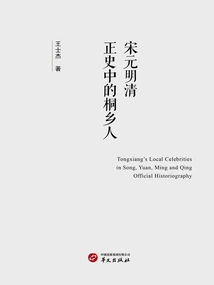
宋元明清正史中的桐乡人
Wang Shijie
There have been numerous celebrities in Tongxiang throughout the dynasties, and their imperial examinations, official achievements, writings, and life-establishment deeds are all recorded in detail or in detail in local annals. A considerable number of them have entered the official history, either as biographies, supplementary biographies, bibliographies, or mentioned. This represents a height reached by Tongxiang people. They left Tongxiang, lived far away from the rivers and lakes, and shone brightly in other places. They entered temples and discussed state affairs with them. Their people and their stories are worthy of being unearthed, sorted out, displayed and publicized, so as to shine a light on the country, to inspire future generations, to increase the cultural confidence of a place, and to help the cultural innovation of one place. This book sorts out the people of Tongxiang and the events in Tongxiang that appeared in the "official histories" of the Song, Yuan, Ming and Qing dynasties. On this basis, it makes relevant narratives and provides appropriate comments and insights. Involving 138 historical figures.
There have been numerous celebrities in Tongxiang throughout the dynasties, and their imperial examinations, official achievements, writings, and life-establishment deeds are all recorded in detail or in detail in local annals. A considerable number of them have entered the official history, either as biographies, supplementary biographies, bibliographies, or mentioned. This represents a height reached by Tongxiang people. They left Tongxiang, lived far away from the rivers and lakes, and shone brightly in other places. They entered temples and discussed state affairs with them. Their people and their stories are worthy of being unearthed, sorted out, displayed and publicized, so as to shine a light on the country, to inspire future generations, to increase the cultural confidence of a place, and to help the cultural innovation of one place. This book sorts out the people of Tongxiang and the events in Tongxiang that appeared in the "official histories" of the Song, Yuan, Ming and Qing dynasties. On this basis, it makes relevant narratives and provides appropriate comments and insights. Involving 138 historical figures.
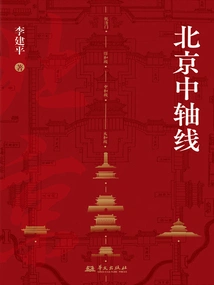
Beijing Central Axis
History北京中轴线
Li Jianping
The central axis of Beijing embodies the historical development of the ancient capital Beijing for nearly a thousand years. It is the lifeblood of Beijing's human history, moral education, customs and even social development. Mr. Li Jianping, the author of "Beijing's Central Axis", has been engaged in the study of Beijing's history and culture for many years. He once gave a lecture on "Beijing's Central Axis" at the CCTV 100 Forum. This book is rich in pictures and texts, and has detailed historical materials. It introduces the essence of history and culture of Beijing's central axis in a simple and easy-to-understand manner, as well as the left-right symmetry culture, mysterious digital culture, nine-door palace culture, bridge and water system culture of the characteristic buildings on the central axis. It is a popular science book that comprehensively understands the history, culture and architectural features of Beijing's central axis.
The central axis of Beijing embodies the historical development of the ancient capital Beijing for nearly a thousand years. It is the lifeblood of Beijing's human history, moral education, customs and even social development. Mr. Li Jianping, the author of "Beijing's Central Axis", has been engaged in the study of Beijing's history and culture for many years. He once gave a lecture on "Beijing's Central Axis" at the CCTV 100 Forum. This book is rich in pictures and texts, and has detailed historical materials. It introduces the essence of history and culture of Beijing's central axis in a simple and easy-to-understand manner, as well as the left-right symmetry culture, mysterious digital culture, nine-door palace culture, bridge and water system culture of the characteristic buildings on the central axis. It is a popular science book that comprehensively understands the history, culture and architectural features of Beijing's central axis.
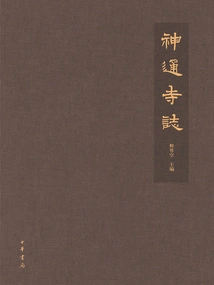
Shentong Temple Chronicles
History神通寺志
Editor-in-chief Shi Jie Kong
Shentong Temple is located at the foot of Qinglong Mountain in Liubu, Licheng County, Jinan, Shandong Province. It is a famous ancient temple and the birthplace of Shandong Buddhism. Originally named Langgong Temple, it was built around the beginning of the Eastern Jin Dynasty, the first year of the reign of Emperor Qin (AD 351). The founder was Zen Master Langgong. This book is divided into nine volumes, including scenery, founding of mountains, propagation of Buddhism, rise and fall, temple restoration, eminent monks of temples, spiritual relics of ancient temples, French garlands, legends and epigraphic documents. By compiling temple chronicles, we can not only comprehensively and systematically understand the history of the temple and its changes and development, inherit and carry forward the fine traditions of the temple, but also help more people correctly understand Buddhism, promote Buddhism, and promote cultural exchanges between China and foreign countries.
Shentong Temple is located at the foot of Qinglong Mountain in Liubu, Licheng County, Jinan, Shandong Province. It is a famous ancient temple and the birthplace of Shandong Buddhism. Originally named Langgong Temple, it was built around the beginning of the Eastern Jin Dynasty, the first year of the reign of Emperor Qin (AD 351). The founder was Zen Master Langgong. This book is divided into nine volumes, including scenery, founding of mountains, propagation of Buddhism, rise and fall, temple restoration, eminent monks of temples, spiritual relics of ancient temples, French garlands, legends and epigraphic documents. By compiling temple chronicles, we can not only comprehensively and systematically understand the history of the temple and its changes and development, inherit and carry forward the fine traditions of the temple, but also help more people correctly understand Buddhism, promote Buddhism, and promote cultural exchanges between China and foreign countries.
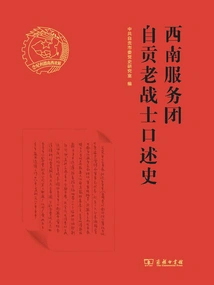
西南服务团自贡老战士口述史
Compiled By The Party History Research Office Of The Zigong Municipal Committee Of The Communist Party Of China
In accordance with the requirements of the leaders of the Zigong Municipal Party Committee, this book deeply explores Zigong's characteristic party history resources, inherits the fine traditions and styles of the older generation of soldiers, and provides spiritual motivation for the revitalization and development of old industrial cities. The author's unit interviewed 24 veterans of the former Southwest Service Corps of the People's Liberation Army. Through their memories, it shows the true picture of these veterans joining the army for training, marching eight thousand miles into the southwest, participating in the construction of the New China People's Power, suppressing bandits, land reform, socialist construction, and reform and opening up and making new contributions. This book vividly reflects from one aspect the establishment and consolidation of the new people's power in the Zigong region at the beginning of the founding of the Republic and the subsequent development of socialist construction, reform and opening up in the past 70 years. The compilation and publication of this book not only adds new content to the study of the history of the Southwest Service Corps, but also provides extremely valuable living materials that use history to inspire and educate people for the further development of party history work in the Zigong region. It has important historical value.
In accordance with the requirements of the leaders of the Zigong Municipal Party Committee, this book deeply explores Zigong's characteristic party history resources, inherits the fine traditions and styles of the older generation of soldiers, and provides spiritual motivation for the revitalization and development of old industrial cities. The author's unit interviewed 24 veterans of the former Southwest Service Corps of the People's Liberation Army. Through their memories, it shows the true picture of these veterans joining the army for training, marching eight thousand miles into the southwest, participating in the construction of the New China People's Power, suppressing bandits, land reform, socialist construction, and reform and opening up and making new contributions. This book vividly reflects from one aspect the establishment and consolidation of the new people's power in the Zigong region at the beginning of the founding of the Republic and the subsequent development of socialist construction, reform and opening up in the past 70 years. The compilation and publication of this book not only adds new content to the study of the history of the Southwest Service Corps, but also provides extremely valuable living materials that use history to inspire and educate people for the further development of party history work in the Zigong region. It has important historical value.
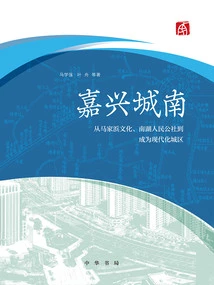
嘉兴城南:从马家浜文化、南湖人民公社到成为现代化城区
Ma Xueqiang Ye Zhou Et Al.
The Chengnan area, located on the southern edge of Jiaxing, has transformed from the early rural wilderness of Jiangnan into a modern new urban area and has become an important part of the main urban area of Jiaxing. In this process, from form to pattern, from function to structure, the evolution of Chengnan has been clear, showing the characteristics of diversity and completeness. This book was compiled by a Chinese urban history research team led by Professor Ma Xueqiang. With the theme of "Jiaxing South", it enriches and expands the content of Jiaxing urban history research through a long-term, multi-perspective investigation of the south area. Looking at the entire Yangtze River Delta region, we can provide samples for the "Chengnan phenomenon" and "Chengnan development type" in Jiangnan. In a deeper sense, combined with the research on the local practice of Chinese-style modernization, on the bank of Nanhu, one of the birthplaces of the Communist Party of China, whether it is the Nanhu People's Commune in the era of collective economy, or the Chengnan Street that integrates modern urban areas, the discussion on the path of socialist construction, from developing agriculture to pursuing industrialization and urbanization, some of the practices and experiences are worth summarizing and can provide useful reference for the modernization construction of some places. This also highlights the practical significance and social value of this manuscript.
The Chengnan area, located on the southern edge of Jiaxing, has transformed from the early rural wilderness of Jiangnan into a modern new urban area and has become an important part of the main urban area of Jiaxing. In this process, from form to pattern, from function to structure, the evolution of Chengnan has been clear, showing the characteristics of diversity and completeness. This book was compiled by a Chinese urban history research team led by Professor Ma Xueqiang. With the theme of "Jiaxing South", it enriches and expands the content of Jiaxing urban history research through a long-term, multi-perspective investigation of the south area. Looking at the entire Yangtze River Delta region, we can provide samples for the "Chengnan phenomenon" and "Chengnan development type" in Jiangnan. In a deeper sense, combined with the research on the local practice of Chinese-style modernization, on the bank of Nanhu, one of the birthplaces of the Communist Party of China, whether it is the Nanhu People's Commune in the era of collective economy, or the Chengnan Street that integrates modern urban areas, the discussion on the path of socialist construction, from developing agriculture to pursuing industrialization and urbanization, some of the practices and experiences are worth summarizing and can provide useful reference for the modernization construction of some places. This also highlights the practical significance and social value of this manuscript.
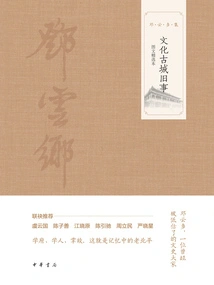
文化古城旧事(图文精选本)
Deng Yunxiang
Peiping from 1927 to 1937 was the "golden age" of Beijing in the Republic of China, with a concentration of famous schools and a gathering of literati. As a cultural capital, it was full of charm. Deng Yunxiang grew up and lived in Peiping during this period. He revisited this peaceful and peaceful cultural ancient city in his memories, restoring the cultural atmosphere of the time. Like "Along the River During the Qingming Festival", it outlines the history of cultural life in the ancient city in a three-dimensional way, which makes people think endlessly.
Peiping from 1927 to 1937 was the "golden age" of Beijing in the Republic of China, with a concentration of famous schools and a gathering of literati. As a cultural capital, it was full of charm. Deng Yunxiang grew up and lived in Peiping during this period. He revisited this peaceful and peaceful cultural ancient city in his memories, restoring the cultural atmosphere of the time. Like "Along the River During the Qingming Festival", it outlines the history of cultural life in the ancient city in a three-dimensional way, which makes people think endlessly.
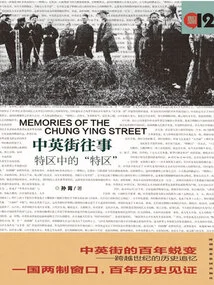
中英街往事:特区中的“特区”
Sun Xiao
Sino-British Street is not only a microcosm of China's century-old modern history, but also a historical witness of China's reform and opening up, Hong Kong's return to the motherland, and the Chinese people's hard work. "The Past on Chung Ying Street: The "Special Zone" in the Special Administrative Region" will lead readers to recall this period of history, in order to be prepared for danger in times of peace, learn from history, remember lessons, and face the future. The whole book accompanies readers into this small street that is 250 meters long and three to four meters wide. Relive the vicissitudes of the small street, experience the Hakka customs, listen to the late fishermen's songs, recall the "shopping paradise", and understand the story of the honor and disgrace of China's famous historical and cultural street - Zhongying Street and the feelings of family and country.
Sino-British Street is not only a microcosm of China's century-old modern history, but also a historical witness of China's reform and opening up, Hong Kong's return to the motherland, and the Chinese people's hard work. "The Past on Chung Ying Street: The "Special Zone" in the Special Administrative Region" will lead readers to recall this period of history, in order to be prepared for danger in times of peace, learn from history, remember lessons, and face the future. The whole book accompanies readers into this small street that is 250 meters long and three to four meters wide. Relive the vicissitudes of the small street, experience the Hakka customs, listen to the late fishermen's songs, recall the "shopping paradise", and understand the story of the honor and disgrace of China's famous historical and cultural street - Zhongying Street and the feelings of family and country.
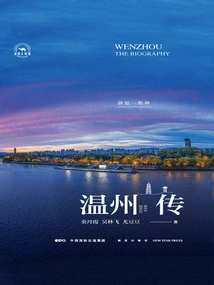
温州传:别是一乾坤
Jin Danxia Wu Linfei You Doudou
This gentle state on the coast of the East China Sea is written with magnificent literary imagination, perfectly presenting its urban characteristics of "the blending of mountains and seas, and the wisdom of traveling around the world". "Wenzhou Biography: Different Worlds" is one of the important reading books in the "Silk Road Biography of Hundred Cities" series. Wenzhou has rich and colorful humanistic characteristics, including regional culture nurtured by its unique geographical environment, long-standing traditional culture, rich and colorful local customs, and a distinctive business spirit. These humanistic features together constitute Wenzhou's unique urban charm and provide a steady stream of impetus for its development. The book is divided into ten chapters in chronological order and has a total of fifty-two small topics. It uses character stories, major historical facts, important relics and landscapes as carriers, and uses magnificent literary imagination to write about this gentle state on the coast of the East China Sea. It shows its urban highlights, cultural heritage and long history, presents its urban characteristics of "a blend of mountains and seas, and intelligent travel around the world", and highlights its role in the Maritime Silk Road. This book is the first urban biography of Wenzhou, with the full support and full supervision of the Wenzhou Municipal Party Committee and Government.
This gentle state on the coast of the East China Sea is written with magnificent literary imagination, perfectly presenting its urban characteristics of "the blending of mountains and seas, and the wisdom of traveling around the world". "Wenzhou Biography: Different Worlds" is one of the important reading books in the "Silk Road Biography of Hundred Cities" series. Wenzhou has rich and colorful humanistic characteristics, including regional culture nurtured by its unique geographical environment, long-standing traditional culture, rich and colorful local customs, and a distinctive business spirit. These humanistic features together constitute Wenzhou's unique urban charm and provide a steady stream of impetus for its development. The book is divided into ten chapters in chronological order and has a total of fifty-two small topics. It uses character stories, major historical facts, important relics and landscapes as carriers, and uses magnificent literary imagination to write about this gentle state on the coast of the East China Sea. It shows its urban highlights, cultural heritage and long history, presents its urban characteristics of "a blend of mountains and seas, and intelligent travel around the world", and highlights its role in the Maritime Silk Road. This book is the first urban biography of Wenzhou, with the full support and full supervision of the Wenzhou Municipal Party Committee and Government.
中欧国际工商学院:1994—2024
Editor-in-chief Wang Hong
Under the guidance of the school motto of "serious innovation and pursuit of excellence", China Europe International Business School adheres to the strategic positioning of "China's depth and global breadth". During the past 30 years of rapid development, it has promoted the management progress of Chinese enterprises through knowledge creation and knowledge dissemination, made positive contributions to China's economic globalization, and built a solid bridge for economic and cultural exchanges and cooperation between China, Europe and the world. "Excellence is boundless at the age of thirty." I hope this book will become a witness to CEIBS's glorious development over the past 30 years, and also provide valuable experience and reference for CEIBS to move forward in the future. I hope that all teachers, students, staff and alumni will work hand in hand with people from all walks of life who are concerned about the development of CEIBS, continue to maintain the passion and belief in innovation and entrepreneurship, and create new brilliance and miracles with the spirit of daring to pioneer and pursue excellence.
Under the guidance of the school motto of "serious innovation and pursuit of excellence", China Europe International Business School adheres to the strategic positioning of "China's depth and global breadth". During the past 30 years of rapid development, it has promoted the management progress of Chinese enterprises through knowledge creation and knowledge dissemination, made positive contributions to China's economic globalization, and built a solid bridge for economic and cultural exchanges and cooperation between China, Europe and the world. "Excellence is boundless at the age of thirty." I hope this book will become a witness to CEIBS's glorious development over the past 30 years, and also provide valuable experience and reference for CEIBS to move forward in the future. I hope that all teachers, students, staff and alumni will work hand in hand with people from all walks of life who are concerned about the development of CEIBS, continue to maintain the passion and belief in innovation and entrepreneurship, and create new brilliance and miracles with the spirit of daring to pioneer and pursue excellence.
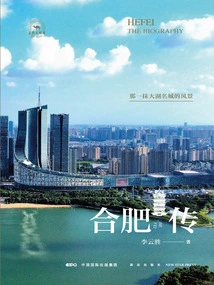
合肥传:那一抹大湖名城的风景
Li Yunsheng
There is a saying: China will look to Shanghai in 100 years, Shenzhen will look to China in 40 years, and Hefei will look to China in the future. Why Hefei? News media reported that from magnetic confinement nuclear fusion to quantum technology, to iron-based superconductivity and brain-inspired science, a number of Hefei's world-leading achievements from "0" to "1" have emerged, setting records repeatedly. Mr. Li Yunsheng, who has been deeply involved in the history, geography, culture and folk customs of Hefei for many years, conducted on-the-spot inspections, read historical materials, and compiled "Hefei Biography" with many years of hard work. Using a historian's perspective, wise thinking, and literary style, he presents to readers that Hefei is not only a world leader in technological innovation, but also a lively and flesh-and-blood fireworks city. The author repeatedly revised, planned the layout of the article, and conveyed the meaning of the text, all to convey his many years of aesthetic pursuit and philosophical thinking, and also made unique detailed research and practical annotations on "Why Hefei". "The Biography of Hefei: The Scenery of the Famous Lake City" is an important reading in the "Biography of One Hundred Cities on the Silk Road" series. Hefei is a unique city with a long history. It is known as "the first county of Jianghuai and the strategic center of Wu and Chu". Its history can be traced back to the Luzi Kingdom, which was entrusted by King Wu of Zhou Dynasty. It is famous in "Historical Records" and originated from Liangfei, which spans more than three thousand years. This book presents the history and current situation of Hefei from multiple angles in ten chapters, starting with the changes in place names, celebrity stories, food anecdotes, intangible cultural heritage and folk customs, etc., To reflect its infinite charm in history, culture, transportation, science and technology, education, ecology and other aspects. The market scroll of "Nine Lions Bridge", the hustle and bustle of "Gongchen Street", the various charms of "Baihua Well"... The author personally searched for his hometown and explored the sea of history. He told the stories of folk customs and figures that embody the historical splendor, and witnessed the long-lasting memories of the city in Hefei's various historical development stages.
There is a saying: China will look to Shanghai in 100 years, Shenzhen will look to China in 40 years, and Hefei will look to China in the future. Why Hefei? News media reported that from magnetic confinement nuclear fusion to quantum technology, to iron-based superconductivity and brain-inspired science, a number of Hefei's world-leading achievements from "0" to "1" have emerged, setting records repeatedly. Mr. Li Yunsheng, who has been deeply involved in the history, geography, culture and folk customs of Hefei for many years, conducted on-the-spot inspections, read historical materials, and compiled "Hefei Biography" with many years of hard work. Using a historian's perspective, wise thinking, and literary style, he presents to readers that Hefei is not only a world leader in technological innovation, but also a lively and flesh-and-blood fireworks city. The author repeatedly revised, planned the layout of the article, and conveyed the meaning of the text, all to convey his many years of aesthetic pursuit and philosophical thinking, and also made unique detailed research and practical annotations on "Why Hefei". "The Biography of Hefei: The Scenery of the Famous Lake City" is an important reading in the "Biography of One Hundred Cities on the Silk Road" series. Hefei is a unique city with a long history. It is known as "the first county of Jianghuai and the strategic center of Wu and Chu". Its history can be traced back to the Luzi Kingdom, which was entrusted by King Wu of Zhou Dynasty. It is famous in "Historical Records" and originated from Liangfei, which spans more than three thousand years. This book presents the history and current situation of Hefei from multiple angles in ten chapters, starting with the changes in place names, celebrity stories, food anecdotes, intangible cultural heritage and folk customs, etc., To reflect its infinite charm in history, culture, transportation, science and technology, education, ecology and other aspects. The market scroll of "Nine Lions Bridge", the hustle and bustle of "Gongchen Street", the various charms of "Baihua Well"... The author personally searched for his hometown and explored the sea of history. He told the stories of folk customs and figures that embody the historical splendor, and witnessed the long-lasting memories of the city in Hefei's various historical development stages.
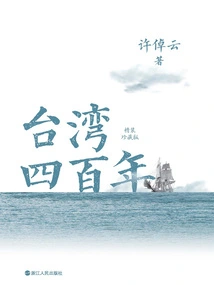
台湾四百年:精装珍藏版(2024版)
Xu Zhuoyun
Xu Zhuoyun, a great historian, uses his grand historian's vision and emotional language to describe for us the historical context and the ups and downs of Taiwan over the past four hundred years: Starting from the Age of Discovery in the 16th century, Taiwan experienced Dutch colonization, the Zheng Group, the Qing government, Japanese colonization and the rule of the Kuomintang regime, and has never been free from the entanglement of local, mainland and world factors. He analyzed the advantages and disadvantages of Taiwan's development from the aspects of geographical environment, political economy, humanities and society, and cross-strait relations, and expressed the concerns and expectations of a generation of scholars for the future of both sides of the Taiwan Strait. "This book is not an information book, but a book about the spirit and predicament of Taiwanese people today." Unlike Xu Zhuoyun's other historical writings, what he states in this book is not others, but himself. This book can be described as a "passionate work" written by a 94-year-old man to compatriots on both sides of the Taiwan Strait.
Xu Zhuoyun, a great historian, uses his grand historian's vision and emotional language to describe for us the historical context and the ups and downs of Taiwan over the past four hundred years: Starting from the Age of Discovery in the 16th century, Taiwan experienced Dutch colonization, the Zheng Group, the Qing government, Japanese colonization and the rule of the Kuomintang regime, and has never been free from the entanglement of local, mainland and world factors. He analyzed the advantages and disadvantages of Taiwan's development from the aspects of geographical environment, political economy, humanities and society, and cross-strait relations, and expressed the concerns and expectations of a generation of scholars for the future of both sides of the Taiwan Strait. "This book is not an information book, but a book about the spirit and predicament of Taiwanese people today." Unlike Xu Zhuoyun's other historical writings, what he states in this book is not others, but himself. This book can be described as a "passionate work" written by a 94-year-old man to compatriots on both sides of the Taiwan Strait.
被遗忘的战争:咸丰同治年间广东土客大械斗研究
Liu Ping
During the reign of Xianfeng and Tongzhi, the large-scale armed fight between Guangdong natives and guests was a major historical event that has been forgotten or ignored by people. The scale of this armed battle, the number of casualties, and the profound impact were unprecedented in Chinese history. Because it was regarded as a "private civil war" by the then government and later scholars and ignored. Coupled with historical events such as the Taiping Army, Hongbing Army, and the Second Opium War, this armed struggle became a blind spot in people's memory. This book uses a large number of archives, official documents, local chronicles and other materials to give a detailed description and commentary of this large-scale armed fight between natives and foreigners that took place during the reign of Xianfeng and Tongzhi. The book is divided into three parts and ten chapters. The first part describes the remote and proximate causes of the conflict; the middle part outlines the basic situation of the conflict; the second part mainly describes the countermeasures taken by the Qing government to deal with the conflict and the basic quelling of the conflict. This book not only tells a forgotten historical event, but also involves the origin of the distribution of Hakkas in modern times, so it is of great significance to fill the gaps in the study of history and Hakka studies. This book was published by The Commercial Press in 2003 and is reprinted this time.
During the reign of Xianfeng and Tongzhi, the large-scale armed fight between Guangdong natives and guests was a major historical event that has been forgotten or ignored by people. The scale of this armed battle, the number of casualties, and the profound impact were unprecedented in Chinese history. Because it was regarded as a "private civil war" by the then government and later scholars and ignored. Coupled with historical events such as the Taiping Army, Hongbing Army, and the Second Opium War, this armed struggle became a blind spot in people's memory. This book uses a large number of archives, official documents, local chronicles and other materials to give a detailed description and commentary of this large-scale armed fight between natives and foreigners that took place during the reign of Xianfeng and Tongzhi. The book is divided into three parts and ten chapters. The first part describes the remote and proximate causes of the conflict; the middle part outlines the basic situation of the conflict; the second part mainly describes the countermeasures taken by the Qing government to deal with the conflict and the basic quelling of the conflict. This book not only tells a forgotten historical event, but also involves the origin of the distribution of Hakkas in modern times, so it is of great significance to fill the gaps in the study of history and Hakka studies. This book was published by The Commercial Press in 2003 and is reprinted this time.
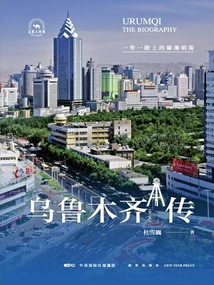
乌鲁木齐传:一带一路上的璀璨明珠
Du Xuewei
Xinjiang's first chronological urban biography! "The Biography of Urumqi", a modern and contemporary history of Xinjiang! "The Biography of Urumqi: The Shining Pearl along the Belt and Road" is one of the important readers in the "Biography of One Hundred Cities on the Silk Road" series. As a city that gradually developed and grew from a post station on the ancient Silk Road grasslands, Urumqi has a tortuous and legendary history. The original jurisdiction of Urumqi included today's Hami area, Turpan area, the entire Changji Prefecture, Shawan, Kuitun, Wusu, Jinghe and other areas. With the changes in administrative divisions, it became the city it is today. "The Biography of Urumqi" is written strictly in accordance with the historical facts and context of historical development. A history of Urumqi's founding and changes is also a history of Xinjiang's governance. This book is divided into ten chapters, written along several main lines: First, the changes in urban form. This city came into being from scratch, including the city, forts, buildings, streets and other forms and processes of destruction and construction. The second is the changes in lifestyle, food, clothing, housing, transportation and entertainment. Including various folk customs and festivals, as well as leisure and entertainment, and various delicacies. The third is the change of economic form. By tracing Urumqi's business, especially the trajectories of merchants, the rise and fall of business names, and the ups and downs of business, it reflects Urumqi's position and role in the Overland Silk Road. The fourth is the change of cultural form. Including changes in Urumqi's cultural and educational inheritance, folk crafts and other aspects. The most important thread that runs throughout is the changes in urban history.
Xinjiang's first chronological urban biography! "The Biography of Urumqi", a modern and contemporary history of Xinjiang! "The Biography of Urumqi: The Shining Pearl along the Belt and Road" is one of the important readers in the "Biography of One Hundred Cities on the Silk Road" series. As a city that gradually developed and grew from a post station on the ancient Silk Road grasslands, Urumqi has a tortuous and legendary history. The original jurisdiction of Urumqi included today's Hami area, Turpan area, the entire Changji Prefecture, Shawan, Kuitun, Wusu, Jinghe and other areas. With the changes in administrative divisions, it became the city it is today. "The Biography of Urumqi" is written strictly in accordance with the historical facts and context of historical development. A history of Urumqi's founding and changes is also a history of Xinjiang's governance. This book is divided into ten chapters, written along several main lines: First, the changes in urban form. This city came into being from scratch, including the city, forts, buildings, streets and other forms and processes of destruction and construction. The second is the changes in lifestyle, food, clothing, housing, transportation and entertainment. Including various folk customs and festivals, as well as leisure and entertainment, and various delicacies. The third is the change of economic form. By tracing Urumqi's business, especially the trajectories of merchants, the rise and fall of business names, and the ups and downs of business, it reflects Urumqi's position and role in the Overland Silk Road. The fourth is the change of cultural form. Including changes in Urumqi's cultural and educational inheritance, folk crafts and other aspects. The most important thread that runs throughout is the changes in urban history.
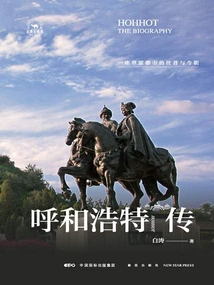
呼和浩特传:一座草原都市的往昔与今朝
Bai Tao
The author uses literary and poetic words to vividly and accurately depict the natural geography of Hohhot, vividly reproducing the history and culture of this area, including the grassland civilization, the Grassland Silk Road, the Tea Road and other human civilization achievements. "The Biography of Hohhot: The Past and Present of a Prairie City" is one of the important books in the "Biography of One Hundred Cities on the Silk Road" series. Hohhot is the capital of the Inner Mongolia Autonomous Region, a national historical and cultural city and one of the birthplaces of Chinese civilization. The book is divided into nine chapters. With the perspective of a historian, the feelings of a scholar, and the poetic language, the author vividly and accurately depicts the natural geography of Hohhot, explains the remains and current situation of the ancient civilization, analyzes and foresees its development trend, and vividly reproduces the history and culture of this area - from the Warring States Period of Zhao Dynasty Yunzhong City during the Wuhou period, from Chilechuan to Tumochuan, from Meidaizhao to Kukuhetun, from Guihua Suiyuan to Hohhot - this prairie city that traveled all the way through time, emerged from the desolation, including the prairie civilization, the Prairie Silk Road, the Tea Road and other human civilization achievements.
The author uses literary and poetic words to vividly and accurately depict the natural geography of Hohhot, vividly reproducing the history and culture of this area, including the grassland civilization, the Grassland Silk Road, the Tea Road and other human civilization achievements. "The Biography of Hohhot: The Past and Present of a Prairie City" is one of the important books in the "Biography of One Hundred Cities on the Silk Road" series. Hohhot is the capital of the Inner Mongolia Autonomous Region, a national historical and cultural city and one of the birthplaces of Chinese civilization. The book is divided into nine chapters. With the perspective of a historian, the feelings of a scholar, and the poetic language, the author vividly and accurately depicts the natural geography of Hohhot, explains the remains and current situation of the ancient civilization, analyzes and foresees its development trend, and vividly reproduces the history and culture of this area - from the Warring States Period of Zhao Dynasty Yunzhong City during the Wuhou period, from Chilechuan to Tumochuan, from Meidaizhao to Kukuhetun, from Guihua Suiyuan to Hohhot - this prairie city that traveled all the way through time, emerged from the desolation, including the prairie civilization, the Prairie Silk Road, the Tea Road and other human civilization achievements.
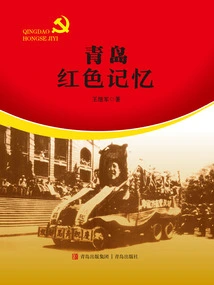
Qingdao Red Memory
History青岛红色记忆
Wang Jijun
Only when you have faith in your heart can you go far; when you have learned and understood, then you can practice it faithfully. This book is based on the column "Veteran Cadres Lecture Party Classes", with the major historical events as the background, the emerging figures of the times as the main line, and Qingdao's precious urban resources as teaching materials. It opens a red chapter of a century of turmoil and encourages party members and cadres to draw wisdom and strength from the party's century-old struggle and show greater responsibility and achievements in forging ahead on a new journey and building a new era.
Only when you have faith in your heart can you go far; when you have learned and understood, then you can practice it faithfully. This book is based on the column "Veteran Cadres Lecture Party Classes", with the major historical events as the background, the emerging figures of the times as the main line, and Qingdao's precious urban resources as teaching materials. It opens a red chapter of a century of turmoil and encourages party members and cadres to draw wisdom and strength from the party's century-old struggle and show greater responsibility and achievements in forging ahead on a new journey and building a new era.
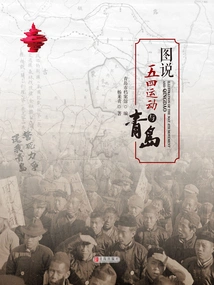
图说五四运动与青岛
Yang Laiqing
As an academic research result commemorating the May 4th Movement, this book combines the historical background and relevant historical facts of China from 1897 to 1922 to systematically sort out the ins and outs of the Qingdao issue. The series of secret diplomatic activities to seize Qingdao's interests after the First World War, China's negotiations on the Qingdao issue at the Paris Peace Conference, and the history that triggered the May Fourth Movement were deeply studied and explained, revealing the aggressive nature of imperialism and the great spirit of the Chinese people's patriotic struggle.
As an academic research result commemorating the May 4th Movement, this book combines the historical background and relevant historical facts of China from 1897 to 1922 to systematically sort out the ins and outs of the Qingdao issue. The series of secret diplomatic activities to seize Qingdao's interests after the First World War, China's negotiations on the Qingdao issue at the Paris Peace Conference, and the history that triggered the May Fourth Movement were deeply studied and explained, revealing the aggressive nature of imperialism and the great spirit of the Chinese people's patriotic struggle.
嘉庆镇原县志(点校本)
Zhenyuan County Local Chronicles Office
"Jiaqing Zhenyuan County Chronicles (edited version)" is a documentary chronicle book. It is compiled by the Zhenyuan County Local Chronicles Office and edited by experts and scholars such as Bao Zhenggang and Guo Zhibin. The original book was written in the seventh year of Jiaqing in the Qing Dynasty (1802). It is divided into ten volumes, including starry fields, geography, construction, temples, official affairs, officials, elections, characters, art and literature, and chronicles. It records the important events of the country, development, good deeds of ordinary people, official elections, etc., Promotes cleanliness and preserves historical records. In order to facilitate readers' reading, the Zhenyuan County Local Chronicles Office has collated and sorted this chronicle. The text uses simplified characters, punctuation uses new punctuation, and the collation adopts a fixed version. It comprehensively corrects errors, omissions, and omissions in the text of the book. It also examines errors in historical facts and irregular quotations in the description based on documents and sites, and also issues notes to explain them.
"Jiaqing Zhenyuan County Chronicles (edited version)" is a documentary chronicle book. It is compiled by the Zhenyuan County Local Chronicles Office and edited by experts and scholars such as Bao Zhenggang and Guo Zhibin. The original book was written in the seventh year of Jiaqing in the Qing Dynasty (1802). It is divided into ten volumes, including starry fields, geography, construction, temples, official affairs, officials, elections, characters, art and literature, and chronicles. It records the important events of the country, development, good deeds of ordinary people, official elections, etc., Promotes cleanliness and preserves historical records. In order to facilitate readers' reading, the Zhenyuan County Local Chronicles Office has collated and sorted this chronicle. The text uses simplified characters, punctuation uses new punctuation, and the collation adopts a fixed version. It comprehensively corrects errors, omissions, and omissions in the text of the book. It also examines errors in historical facts and irregular quotations in the description based on documents and sites, and also issues notes to explain them.
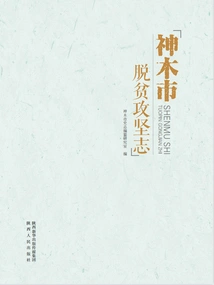
神木市脱贫攻坚志
Shenmu City Historical Records Compilation And Research Office
"Shenmu City Poverty Alleviation Chronicles" was compiled by the Shenmu City History Compilation and Research Office. It will truly record the poverty alleviation process of Shenmu City, objectively reflect the effectiveness of assistance work, summarize good experiences and practices, and play the role of historical record and administration. The book consists of chapters such as overview, major events, chapters, characters, appendices, etc., Including the municipal party committee and municipal government's series of arrangements and development plans; implementation of key poverty alleviation measures, poverty alleviation process, achievements, and accumulated experience; deeds of advanced figures; outstanding theoretical articles, research reports, media publicity, etc. The whole book has about 250,000 words. There are about 20 color photos arranged at the beginning of the article, which mainly reflect the changes in the old appearance of the new city and the advanced poverty alleviation deeds.
"Shenmu City Poverty Alleviation Chronicles" was compiled by the Shenmu City History Compilation and Research Office. It will truly record the poverty alleviation process of Shenmu City, objectively reflect the effectiveness of assistance work, summarize good experiences and practices, and play the role of historical record and administration. The book consists of chapters such as overview, major events, chapters, characters, appendices, etc., Including the municipal party committee and municipal government's series of arrangements and development plans; implementation of key poverty alleviation measures, poverty alleviation process, achievements, and accumulated experience; deeds of advanced figures; outstanding theoretical articles, research reports, media publicity, etc. The whole book has about 250,000 words. There are about 20 color photos arranged at the beginning of the article, which mainly reflect the changes in the old appearance of the new city and the advanced poverty alleviation deeds.
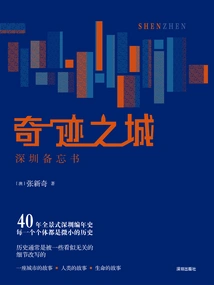
奇迹之城:深圳备忘书
(australia) Zhang Xinqi
This book is a chronological record of the urban development of Shenzhen, panoramicly showing the historical process of Shenzhen from its original pioneering to its development into an international metropolis. The book takes the past as the prelude and the urban history of more than 40 years as the core. It also captures the major events or popular social words of the year and makes use of relevant historical materials to unfold a panoramic history of Shenzhen's development. The book is divided into nine chapters. The prologue begins with pre-history, starting with the ancient ancestors and the Xiantouling site, and then introduces the historical traces of Shenzhen from the Qin and Han Dynasties to the Ming and Qing Dynasties. The core writing part is a historical review of Shenzhen after the reform and opening up in 1978, focusing on the rise and development of Shenzhen, emphasizing the overview, origin, and characteristics, and placing it in the long history and grand background of human development to trace the origins. It writes about the details of human geography, historical evolution, special zone construction, economic development, technological progress, cultural construction, and biological environment, overlooking the whole picture from multiple perspectives, and recording the development of the city and the times. What is recorded in the book is not only the story of the city of Shenzhen, but also the story of our times.
This book is a chronological record of the urban development of Shenzhen, panoramicly showing the historical process of Shenzhen from its original pioneering to its development into an international metropolis. The book takes the past as the prelude and the urban history of more than 40 years as the core. It also captures the major events or popular social words of the year and makes use of relevant historical materials to unfold a panoramic history of Shenzhen's development. The book is divided into nine chapters. The prologue begins with pre-history, starting with the ancient ancestors and the Xiantouling site, and then introduces the historical traces of Shenzhen from the Qin and Han Dynasties to the Ming and Qing Dynasties. The core writing part is a historical review of Shenzhen after the reform and opening up in 1978, focusing on the rise and development of Shenzhen, emphasizing the overview, origin, and characteristics, and placing it in the long history and grand background of human development to trace the origins. It writes about the details of human geography, historical evolution, special zone construction, economic development, technological progress, cultural construction, and biological environment, overlooking the whole picture from multiple perspectives, and recording the development of the city and the times. What is recorded in the book is not only the story of the city of Shenzhen, but also the story of our times.
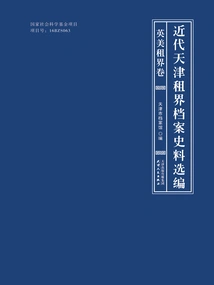
近代天津租界档案史料选编:英美租界卷
Tianjin Municipal Archives
In the modern history of Tianjin, there have been 9 special concessions including British, French, Japanese, German and Italian. The number of countries designated and the large area of the concessions are unique in the country. The concession had a significant impact on China's modern history and is an important topic in historical research. The Tianjin Municipal Archives has a systematic and rich collection of complete archives of the concession. This project has been included in the 2016 National Social Science Fund project. It is planned to publish 5 volumes in the form of proofreading and compilation, with each volume containing 1 million words, totaling 5 million words. This project is extremely valuable first-hand information for studying the history of Tianjin, the history of the concessions, and the history of modern China. The British Concession in Tianjin was one of the earliest and latest concessions to be established among the nine-nation concessions. In 1902, Britain and the United States made a private agreement to include the American Concession in Tianjin into the British Concession as the "Southern Expansion". Therefore, combining the British and American Concession files into one volume is consistent with historical facts. This volume supplements the missing content of previous archives and books on the British and American concessions through systematic archival mining, and the content is very precious.
In the modern history of Tianjin, there have been 9 special concessions including British, French, Japanese, German and Italian. The number of countries designated and the large area of the concessions are unique in the country. The concession had a significant impact on China's modern history and is an important topic in historical research. The Tianjin Municipal Archives has a systematic and rich collection of complete archives of the concession. This project has been included in the 2016 National Social Science Fund project. It is planned to publish 5 volumes in the form of proofreading and compilation, with each volume containing 1 million words, totaling 5 million words. This project is extremely valuable first-hand information for studying the history of Tianjin, the history of the concessions, and the history of modern China. The British Concession in Tianjin was one of the earliest and latest concessions to be established among the nine-nation concessions. In 1902, Britain and the United States made a private agreement to include the American Concession in Tianjin into the British Concession as the "Southern Expansion". Therefore, combining the British and American Concession files into one volume is consistent with historical facts. This volume supplements the missing content of previous archives and books on the British and American concessions through systematic archival mining, and the content is very precious.
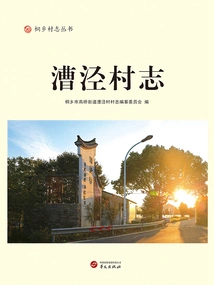
Caojing Village Chronicles
History漕泾村志
Caojing Village Chronicle Compilation Committee, Gaoqiao Street, Tongxiang City
"Caojing Village Chronicles" is the first historical chronicle within the Caojing Village area of Gaoqiao Street, Tongxiang City, Zhejiang Province. It takes the current Caojing Administrative Village as the description object. It adopts a chapter style, horizontally arranged categories, and describes historical facts in a longitudinal manner. The upper limit is the Eastern Zhou Dynasty (Spring and Autumn Period and Warring States) period, and the lower limit is December 2021 AD. Quanzhi comprehensively takes stock of the geographical location, natural environment, historical evolution, organizations and associations, economic production, culture, education and health, village construction, population life, civil affairs charity, customs and habits, dialects, people and folks, poems and selections, etc. It has the functions of preserving history, assisting with government, and educating people, and has special historical, cultural and academic value.
"Caojing Village Chronicles" is the first historical chronicle within the Caojing Village area of Gaoqiao Street, Tongxiang City, Zhejiang Province. It takes the current Caojing Administrative Village as the description object. It adopts a chapter style, horizontally arranged categories, and describes historical facts in a longitudinal manner. The upper limit is the Eastern Zhou Dynasty (Spring and Autumn Period and Warring States) period, and the lower limit is December 2021 AD. Quanzhi comprehensively takes stock of the geographical location, natural environment, historical evolution, organizations and associations, economic production, culture, education and health, village construction, population life, civil affairs charity, customs and habits, dialects, people and folks, poems and selections, etc. It has the functions of preserving history, assisting with government, and educating people, and has special historical, cultural and academic value.
广州大典研究(总第3~4辑)
Editor-in-chief Liu Pingqing
"Guangzhou Dadian" is the "root and soul" of Guangzhou, carrying the thousand-year cultural heritage of Guangzhou. The "Guangzhou Dadian Research" collection relies on the published documents of the first issue of "Guangzhou Dadian" and the second issue of the Republic of China that is being compiled. It mainly publishes academic articles on the collection and arrangement of historical documents of Guangzhou and even Guangdong, and research on Lingnan history and culture, involving politics, economy, culture, society, education, philosophy, literature, history, literature and other academic fields. It also includes reading notes of related academic works, critical articles and reviews of related academic conferences. We hope to use this collection to promote the collection, compilation, and publication of Lingnan historical documents, and to deeply explore the intrinsic value of Lingnan culture, so as to contribute to the inheritance and innovation of Lingnan culture.
"Guangzhou Dadian" is the "root and soul" of Guangzhou, carrying the thousand-year cultural heritage of Guangzhou. The "Guangzhou Dadian Research" collection relies on the published documents of the first issue of "Guangzhou Dadian" and the second issue of the Republic of China that is being compiled. It mainly publishes academic articles on the collection and arrangement of historical documents of Guangzhou and even Guangdong, and research on Lingnan history and culture, involving politics, economy, culture, society, education, philosophy, literature, history, literature and other academic fields. It also includes reading notes of related academic works, critical articles and reviews of related academic conferences. We hope to use this collection to promote the collection, compilation, and publication of Lingnan historical documents, and to deeply explore the intrinsic value of Lingnan culture, so as to contribute to the inheritance and innovation of Lingnan culture.
从省城到城市:近代广州土地产权与城市空间变迁
Huang Sujuan
This book takes the urban construction of modern Guangzhou as the starting point, and explores the emergence of land property rights in modern Guangzhou and its inclusion in government administration based on extensive use of local chronicles, government publications, archives, newspapers, journals, records, travel notes, travel guides, anthologies, memoirs, customs reports and other materials. The management process attempts to show the landscape changes and construction process of Guangzhou from "provincial city" to "city" in the context of the historical development from the late Qing Dynasty to the Republic of China from the perspective of regional society, in order to deepen the understanding and understanding of the formation and development of modern Chinese cities and rethink the transformation of Chinese cities.
This book takes the urban construction of modern Guangzhou as the starting point, and explores the emergence of land property rights in modern Guangzhou and its inclusion in government administration based on extensive use of local chronicles, government publications, archives, newspapers, journals, records, travel notes, travel guides, anthologies, memoirs, customs reports and other materials. The management process attempts to show the landscape changes and construction process of Guangzhou from "provincial city" to "city" in the context of the historical development from the late Qing Dynasty to the Republic of China from the perspective of regional society, in order to deepen the understanding and understanding of the formation and development of modern Chinese cities and rethink the transformation of Chinese cities.
《广州湾历史文化研究》第二辑
Editor-in-chief Wang Qinfeng
This book is a collection of papers from the 2016 "First International Academic Symposium on Guangzhou Bay History and Culture". The history of Guangzhou Bay seems to have not been systematically and in-depth studied. This academic seminar is precisely to make a comprehensive summary of the historical and cultural research on Guangzhou Bay. There are two series in total. The main content of the first series is the research overview and academic review of the history and culture of Guangzhou Bay. The main content of the second series includes the research on the ancient history of Guangzhou Bay and the research on the utilization of historical heritage resources of Guangzhou Bay.
This book is a collection of papers from the 2016 "First International Academic Symposium on Guangzhou Bay History and Culture". The history of Guangzhou Bay seems to have not been systematically and in-depth studied. This academic seminar is precisely to make a comprehensive summary of the historical and cultural research on Guangzhou Bay. There are two series in total. The main content of the first series is the research overview and academic review of the history and culture of Guangzhou Bay. The main content of the second series includes the research on the ancient history of Guangzhou Bay and the research on the utilization of historical heritage resources of Guangzhou Bay.
全面建成小康社会天津大事记(“记录小康工程”地方丛书)
This Book Writing Team
This book sorts out in chronological order the major events that have occurred in Tianjin in the political, economic, cultural and other fields since the Tianjin Municipal People's Government was established on January 15, 1949, as well as the specific work done and the achievements made. It clearly shows Tianjin's development over the past 70 years since the founding of New China. The development trend of urban construction reflects the spirit of the Tianjin people, under the leadership of the Party Central Committee, working together with one heart and one mind, and the enterprising spirit of the Tianjin Municipal Party Committee and Municipal Government, as well as the close unity around the Party Central Committee, the active change of thinking, the courage to explore, continuous innovation, and down-to-earth work style. The information collected in this book is comprehensive and accurate, and has reference, reference and retention significance for the deployment of Tianjin's next work.
This book sorts out in chronological order the major events that have occurred in Tianjin in the political, economic, cultural and other fields since the Tianjin Municipal People's Government was established on January 15, 1949, as well as the specific work done and the achievements made. It clearly shows Tianjin's development over the past 70 years since the founding of New China. The development trend of urban construction reflects the spirit of the Tianjin people, under the leadership of the Party Central Committee, working together with one heart and one mind, and the enterprising spirit of the Tianjin Municipal Party Committee and Municipal Government, as well as the close unity around the Party Central Committee, the active change of thinking, the courage to explore, continuous innovation, and down-to-earth work style. The information collected in this book is comprehensive and accurate, and has reference, reference and retention significance for the deployment of Tianjin's next work.
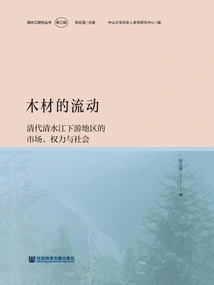
The Flow of Timber: Market, Power and Society in the Lower Qingshui River Region in the Qing Dynasty
History木材的流动:清代清水江下游地区的市场、权力与社会
Zhang Yingqiang
The most exciting chapter in the story of the Qingshui River, the main tributary of the upper reaches of the Yuanshui River in southeastern Guizhou Province, is the hustle and bustle brought by the drifting timber in the river since the Qing Dynasty. Sporadic documentary records and stories that have been passed down to this day reveal a regional social and historical picture surrounding the flow of wood. This book gradually unfolds around the story behind the flow of timber, placing the lower reaches of the Qingshui River in the political and economic development context of the dynasty. By describing the regional history centered on timber planting, harvesting and transportation activities, it explores the interaction between traditional state power and local society relying on the development of regional market networks, thereby providing a regional understanding and historical explanation of the interaction of multiple factors and the integration of multiple relationships in regional social changes.
The most exciting chapter in the story of the Qingshui River, the main tributary of the upper reaches of the Yuanshui River in southeastern Guizhou Province, is the hustle and bustle brought by the drifting timber in the river since the Qing Dynasty. Sporadic documentary records and stories that have been passed down to this day reveal a regional social and historical picture surrounding the flow of wood. This book gradually unfolds around the story behind the flow of timber, placing the lower reaches of the Qingshui River in the political and economic development context of the dynasty. By describing the regional history centered on timber planting, harvesting and transportation activities, it explores the interaction between traditional state power and local society relying on the development of regional market networks, thereby providing a regional understanding and historical explanation of the interaction of multiple factors and the integration of multiple relationships in regional social changes.
江苏基督教史
Yao Xingfu
This book uses historical time as a clue to examine the background, sect distribution, theological thoughts and social services of Jiangsu Christianity (Protestantism) in different periods. At the same time, it also discusses historical figures who have an important influence on the development of Christianity in Jiangsu and even the whole country. For the study of the history of Christianity in Jiangsu, on the one hand, it is necessary to grasp the ins and outs, gains and losses of Christianity in Jiangsu from a vertical perspective, and on the other hand, it is necessary to understand the complex relationship between Jiangsu Christianity and local society and culture from a horizontal perspective.
This book uses historical time as a clue to examine the background, sect distribution, theological thoughts and social services of Jiangsu Christianity (Protestantism) in different periods. At the same time, it also discusses historical figures who have an important influence on the development of Christianity in Jiangsu and even the whole country. For the study of the history of Christianity in Jiangsu, on the one hand, it is necessary to grasp the ins and outs, gains and losses of Christianity in Jiangsu from a vertical perspective, and on the other hand, it is necessary to understand the complex relationship between Jiangsu Christianity and local society and culture from a horizontal perspective.
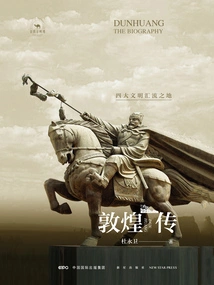
敦煌传:四大文明汇流之地
Du Yongwei
The art museum of the Eastern world opens a new window and provides a new perspective for the study of Dunhuang. Gao Ping, former member of the National Committee of the Chinese Writers Association and former chairman of the Gansu Provincial Writers Association, wrote a preface and recommended it, and Secretary of the Jiuquan Municipal Committee of the Communist Party of China wrote a preface and recommended it. "Dunhuang Biography: The Place where Four Civilizations Meet" is one of the important reading books in the "Silk Road Biography of Hundred Cities" series. Although Dunhuang is not big, it has been a place where Chinese and Western cultures have gathered for thousands of years. The four major ancient cultures in the world have gathered and spread here, creating the "Dunhuang Culture" that has attracted worldwide attention. In the overview, the author comprehensively sorted out and refined the human geography and history of Dunhuang, and then systematically presented the spiritual and material appearance of Dunhuang in each development period in chronological order. Its unique Dunhuang Grottoes are more like a historical monument, engraved with the complicated history of the evolution of human society, the ups and downs, and the vicissitudes of events, occupying a glorious chapter in the vast annals of Chinese history.
The art museum of the Eastern world opens a new window and provides a new perspective for the study of Dunhuang. Gao Ping, former member of the National Committee of the Chinese Writers Association and former chairman of the Gansu Provincial Writers Association, wrote a preface and recommended it, and Secretary of the Jiuquan Municipal Committee of the Communist Party of China wrote a preface and recommended it. "Dunhuang Biography: The Place where Four Civilizations Meet" is one of the important reading books in the "Silk Road Biography of Hundred Cities" series. Although Dunhuang is not big, it has been a place where Chinese and Western cultures have gathered for thousands of years. The four major ancient cultures in the world have gathered and spread here, creating the "Dunhuang Culture" that has attracted worldwide attention. In the overview, the author comprehensively sorted out and refined the human geography and history of Dunhuang, and then systematically presented the spiritual and material appearance of Dunhuang in each development period in chronological order. Its unique Dunhuang Grottoes are more like a historical monument, engraved with the complicated history of the evolution of human society, the ups and downs, and the vicissitudes of events, occupying a glorious chapter in the vast annals of Chinese history.
Remembering Zhejiang (2022)
History记忆浙江(2022)
Zhejiang Provincial Archives
Since 2011, the Provincial Archives has recorded the current status, changes and development trajectories of Zhejiang society every year with a sense of mission and responsibility in actively preserving history. It has been compiling the "Memory of Zhejiang" series for 11 years and has completed 11 volumes. This series of books uses concise and concise text and the form of interactive pictures and texts to sort out and compile the major events, important events, and innovations that have occurred in Zhejiang Province over the past year. From an archival perspective and a historical writing style, it originally, objectively and truly records the development achievements that Zhejiang Province has made every year in various aspects such as economy, politics, culture, society, ecology, and party building.
Since 2011, the Provincial Archives has recorded the current status, changes and development trajectories of Zhejiang society every year with a sense of mission and responsibility in actively preserving history. It has been compiling the "Memory of Zhejiang" series for 11 years and has completed 11 volumes. This series of books uses concise and concise text and the form of interactive pictures and texts to sort out and compile the major events, important events, and innovations that have occurred in Zhejiang Province over the past year. From an archival perspective and a historical writing style, it originally, objectively and truly records the development achievements that Zhejiang Province has made every year in various aspects such as economy, politics, culture, society, ecology, and party building.
Remembering Zhejiang (2021)
History记忆浙江(2021)
Zhejiang Provincial Archives
Since 2011, the Provincial Archives has recorded the current status, changes and development trajectories of Zhejiang society every year with a sense of mission and responsibility in actively preserving history. It has been compiling the "Memory of Zhejiang" series for 11 years and has completed 11 volumes. This series of books uses concise and concise text and the form of interactive pictures and texts to sort out and compile the major events, important events, and innovations that have occurred in Zhejiang Province over the past year. From an archival perspective and a historical writing style, it originally, objectively and truly records the development achievements that Zhejiang Province has made every year in various aspects such as economy, politics, culture, society, ecology, and party building.
Since 2011, the Provincial Archives has recorded the current status, changes and development trajectories of Zhejiang society every year with a sense of mission and responsibility in actively preserving history. It has been compiling the "Memory of Zhejiang" series for 11 years and has completed 11 volumes. This series of books uses concise and concise text and the form of interactive pictures and texts to sort out and compile the major events, important events, and innovations that have occurred in Zhejiang Province over the past year. From an archival perspective and a historical writing style, it originally, objectively and truly records the development achievements that Zhejiang Province has made every year in various aspects such as economy, politics, culture, society, ecology, and party building.
Urban Changes in Xiao County
History萧县城市变迁
Editor-in-chief Li Maoxiang
This book describes the historical changes of Xiaoguo's cities over the past two thousand and seven hundred years. In modern times, Xiaocheng has been attacked by external forces, experienced warlord melees, and foreign invasions. After the founding of New China, Xiaocheng rose from the ashes and finally embarked on the road to new life, gradually unfolding the colorful picture of a garden city.
This book describes the historical changes of Xiaoguo's cities over the past two thousand and seven hundred years. In modern times, Xiaocheng has been attacked by external forces, experienced warlord melees, and foreign invasions. After the founding of New China, Xiaocheng rose from the ashes and finally embarked on the road to new life, gradually unfolding the colorful picture of a garden city.
武威传:中国旅游标志之都
Chen Yufu Cheng Xie
This book is an important reading in the "Silk Road Biography of Hundred Cities" series. This book uses four major chapters, "Liangzhou", "Minqin", "Gulang" and "Tianzhu", and more than 40 chapters divided into special topics to comprehensively describe the history of Wuwei, an important city on the Silk Road, from ancient times to the present, its tolerance and openness, as well as the hardships this city has experienced and the humanistic spirit it has forged. From the moment it got its name, Wuwei officially entered the forefront of history and became an important fortress on the Silk Road. Wuwei is involved in all the stories about the Hexi Corridor, either directly involved or indirectly influenced. Daliang Prefecture has built a monument in Wuwei that people can look up to. It is unique and ancient in its vicissitudes of life. After "The Biography of Zhangye", Chen Yufu, who was born and raised in Wuwei, teamed up with Wuwei writer Cheng Xie to erect a monument and biography for their common hometown, and wrote a tough and masculine city that is inclusive, a frontier city that alternates glory and loneliness, destruction and rebirth, and a prosperous city.
This book is an important reading in the "Silk Road Biography of Hundred Cities" series. This book uses four major chapters, "Liangzhou", "Minqin", "Gulang" and "Tianzhu", and more than 40 chapters divided into special topics to comprehensively describe the history of Wuwei, an important city on the Silk Road, from ancient times to the present, its tolerance and openness, as well as the hardships this city has experienced and the humanistic spirit it has forged. From the moment it got its name, Wuwei officially entered the forefront of history and became an important fortress on the Silk Road. Wuwei is involved in all the stories about the Hexi Corridor, either directly involved or indirectly influenced. Daliang Prefecture has built a monument in Wuwei that people can look up to. It is unique and ancient in its vicissitudes of life. After "The Biography of Zhangye", Chen Yufu, who was born and raised in Wuwei, teamed up with Wuwei writer Cheng Xie to erect a monument and biography for their common hometown, and wrote a tough and masculine city that is inclusive, a frontier city that alternates glory and loneliness, destruction and rebirth, and a prosperous city.
又见繁华:苏州传
Liu Chuanming
The city of Suzhou has a long and vast history, a magnificent destiny, rich scenery, and ups and downs of stories... This book is an "archaeology" of the city in the literal sense, and also a "test" of contemporary life. The so-called "loving the ancients without sacrificing today's people" is the right heart, the right faith, and the right path. It is a related observation and analysis of a city's historical secrets and reality. "Examination" naturally evolves into looking into the future... Reading this book, you can understand the past and present of Suzhou, understand Suzhou's beautiful mountain scenery, splendid historical civilization, understand the romance of Suzhou and its stories, and thus love Suzhou even more.
The city of Suzhou has a long and vast history, a magnificent destiny, rich scenery, and ups and downs of stories... This book is an "archaeology" of the city in the literal sense, and also a "test" of contemporary life. The so-called "loving the ancients without sacrificing today's people" is the right heart, the right faith, and the right path. It is a related observation and analysis of a city's historical secrets and reality. "Examination" naturally evolves into looking into the future... Reading this book, you can understand the past and present of Suzhou, understand Suzhou's beautiful mountain scenery, splendid historical civilization, understand the romance of Suzhou and its stories, and thus love Suzhou even more.
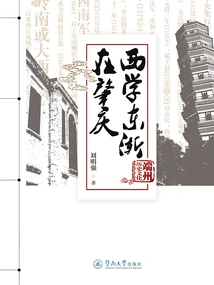
西学东渐在肇庆
Liu Mingqiang
This book includes articles such as "The posthumous manuscripts of Liu Chengfan, a fellow governor of Shaozhou Prefecture, recording the historical truth of Matteo Ricci's departure from Zhao for Shao", "An examination of Li Cai, the founder of Duanxi Academy in the Ming Dynasty", "An examination of the location of Matteo Ricci's first church in the mainland", "The "Ghost House" is Matteo Ricci's Xianhua Temple", "The present location of Matteo Ricci's Xianhua Temple" and other articles.
This book includes articles such as "The posthumous manuscripts of Liu Chengfan, a fellow governor of Shaozhou Prefecture, recording the historical truth of Matteo Ricci's departure from Zhao for Shao", "An examination of Li Cai, the founder of Duanxi Academy in the Ming Dynasty", "An examination of the location of Matteo Ricci's first church in the mainland", "The "Ghost House" is Matteo Ricci's Xianhua Temple", "The present location of Matteo Ricci's Xianhua Temple" and other articles.