Library
Browse and search novels
8,389 novels found
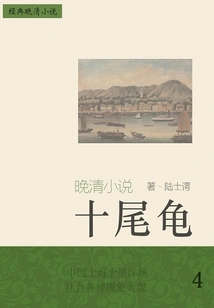
Classic Late Qing Novel: Ten-tailed Turtle (4)
General Fiction经典晚清小说:十尾龟(4)
Lu Shi'e
"Ten-Tailed Turtle" is a Qing Dynasty Zhanghui vernacular novel written by the late Qing Dynasty scholar Lu Shi'e. It describes the story of Shanghai in the late Qing Dynasty. It was written in the third year of Xuantong in the Qing Dynasty (1911). The main existing versions include the Xinxin Novel Society edition published in the third year of Xuantong Period of the Qing Dynasty (1911), and the typesetting edition of "Chinese Ancient Rare Novels Series" published by Chunfeng Literature and Art Publishing House in 1994. The book describes the glitzy life of the ten miles of old Shanghai: rich locals, foreign compradors, nouveau riche, foreign students, business owners, military and political officials, brokers, helpers, liars, ladies, aunts... Throwing many of these people into the turbulent vortex, it reveals the various social phenomena in the early days of opening up from isolation, which are still very relevant today.
"Ten-Tailed Turtle" is a Qing Dynasty Zhanghui vernacular novel written by the late Qing Dynasty scholar Lu Shi'e. It describes the story of Shanghai in the late Qing Dynasty. It was written in the third year of Xuantong in the Qing Dynasty (1911). The main existing versions include the Xinxin Novel Society edition published in the third year of Xuantong Period of the Qing Dynasty (1911), and the typesetting edition of "Chinese Ancient Rare Novels Series" published by Chunfeng Literature and Art Publishing House in 1994. The book describes the glitzy life of the ten miles of old Shanghai: rich locals, foreign compradors, nouveau riche, foreign students, business owners, military and political officials, brokers, helpers, liars, ladies, aunts... Throwing many of these people into the turbulent vortex, it reveals the various social phenomena in the early days of opening up from isolation, which are still very relevant today.
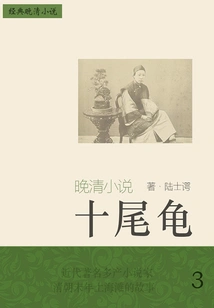
Classic Late Qing Novel: Ten-tailed Turtle (3)
General Fiction经典晚清小说:十尾龟(3)
Lu Shi'e
"Ten-Tailed Turtle" is a Qing Dynasty Zhanghui vernacular novel written by the late Qing Dynasty scholar Lu Shi'e. It describes the story of Shanghai in the late Qing Dynasty. It was written in the third year of Xuantong in the Qing Dynasty (1911). The main existing versions include the Xinxin Novel Society edition published in the third year of Xuantong Period of the Qing Dynasty (1911), and the typesetting edition of "Chinese Ancient Rare Novels Series" published by Chunfeng Literature and Art Publishing House in 1994. The book describes the glitzy life of the ten miles of old Shanghai: rich locals, foreign compradors, nouveau riche, foreign students, business owners, military and political officials, brokers, helpers, liars, ladies, aunts... Throwing many of these people into the turbulent vortex, it reveals the various social phenomena in the early days of opening up from isolation, which are still very relevant today.
"Ten-Tailed Turtle" is a Qing Dynasty Zhanghui vernacular novel written by the late Qing Dynasty scholar Lu Shi'e. It describes the story of Shanghai in the late Qing Dynasty. It was written in the third year of Xuantong in the Qing Dynasty (1911). The main existing versions include the Xinxin Novel Society edition published in the third year of Xuantong Period of the Qing Dynasty (1911), and the typesetting edition of "Chinese Ancient Rare Novels Series" published by Chunfeng Literature and Art Publishing House in 1994. The book describes the glitzy life of the ten miles of old Shanghai: rich locals, foreign compradors, nouveau riche, foreign students, business owners, military and political officials, brokers, helpers, liars, ladies, aunts... Throwing many of these people into the turbulent vortex, it reveals the various social phenomena in the early days of opening up from isolation, which are still very relevant today.
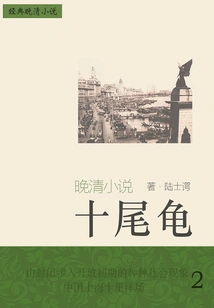
Classic Late Qing Novel: Ten-tailed Turtle (2)
General Fiction经典晚清小说:十尾龟(2)
Lu Shi'e
"Ten-Tailed Turtle" is a Qing Dynasty Zhanghui vernacular novel written by the late Qing Dynasty scholar Lu Shi'e. It describes the story of Shanghai in the late Qing Dynasty. It was written in the third year of Xuantong in the Qing Dynasty (1911). The main existing versions include the Xinxin Novel Society edition published in the third year of Xuantong Period of the Qing Dynasty (1911), and the typesetting edition of "Chinese Ancient Rare Novels Series" published by Chunfeng Literature and Art Publishing House in 1994. The book describes the glitzy life of the ten miles of old Shanghai: rich locals, foreign compradors, nouveau riche, foreign students, business owners, military and political officials, brokers, helpers, liars, ladies, aunts... Throwing many of these people into the turbulent vortex, it reveals the various social phenomena in the early days of opening up from isolation, which are still very relevant today.
"Ten-Tailed Turtle" is a Qing Dynasty Zhanghui vernacular novel written by the late Qing Dynasty scholar Lu Shi'e. It describes the story of Shanghai in the late Qing Dynasty. It was written in the third year of Xuantong in the Qing Dynasty (1911). The main existing versions include the Xinxin Novel Society edition published in the third year of Xuantong Period of the Qing Dynasty (1911), and the typesetting edition of "Chinese Ancient Rare Novels Series" published by Chunfeng Literature and Art Publishing House in 1994. The book describes the glitzy life of the ten miles of old Shanghai: rich locals, foreign compradors, nouveau riche, foreign students, business owners, military and political officials, brokers, helpers, liars, ladies, aunts... Throwing many of these people into the turbulent vortex, it reveals the various social phenomena in the early days of opening up from isolation, which are still very relevant today.
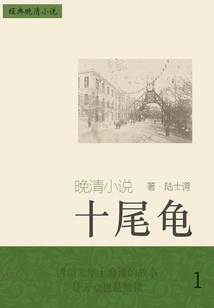
Classic Late Qing Novel: Ten-tailed Turtle (1)
General Fiction经典晚清小说:十尾龟(1)
Lu Shi'e
"Ten-Tailed Turtle" is a Qing Dynasty Zhanghui vernacular novel written by the late Qing Dynasty scholar Lu Shi'e. It describes the story of Shanghai in the late Qing Dynasty. It was written in the third year of Xuantong in the Qing Dynasty (1911). The main existing versions include the Xinxin Novel Society edition published in the third year of Xuantong Period of the Qing Dynasty (1911), and the typesetting edition of "Chinese Ancient Rare Novels Series" published by Chunfeng Literature and Art Publishing House in 1994. The book describes the glitzy life of the ten miles of old Shanghai: rich locals, foreign compradors, nouveau riche, foreign students, business owners, military and political officials, brokers, helpers, liars, ladies, aunts... Throwing many of these people into the turbulent vortex, it reveals the various social phenomena in the early days of opening up from isolation, which are still very relevant today.
"Ten-Tailed Turtle" is a Qing Dynasty Zhanghui vernacular novel written by the late Qing Dynasty scholar Lu Shi'e. It describes the story of Shanghai in the late Qing Dynasty. It was written in the third year of Xuantong in the Qing Dynasty (1911). The main existing versions include the Xinxin Novel Society edition published in the third year of Xuantong Period of the Qing Dynasty (1911), and the typesetting edition of "Chinese Ancient Rare Novels Series" published by Chunfeng Literature and Art Publishing House in 1994. The book describes the glitzy life of the ten miles of old Shanghai: rich locals, foreign compradors, nouveau riche, foreign students, business owners, military and political officials, brokers, helpers, liars, ladies, aunts... Throwing many of these people into the turbulent vortex, it reveals the various social phenomena in the early days of opening up from isolation, which are still very relevant today.
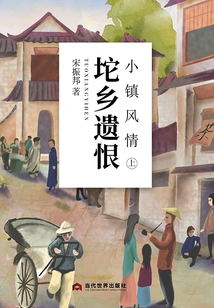
Small Town Style (part 1): the Regret of Tuo Township
General Fiction小镇风情(上):坨乡遗恨
Song Zhenbang
Aunt Lu and the prodigal son Liu San in the teahouse help each other in times of adversity, the tragedy of the carpenter Hu Si's attempted elopement with the embroiderer Cui'er, the lonely Hou Wu rescuing an old refugee woman to gain the warmth of mother's love, the humorous sadness of the donkey dealer Lao Qin helping the widowed cauliflower, the kindness of the seasoned brother-in-law, the solidarity and kindness of the wandering artist, the anti-Japanese sentiment of the blacksmith family... All of this is presented in the background of a small town. The sadness of life flows in the folk songs.
Aunt Lu and the prodigal son Liu San in the teahouse help each other in times of adversity, the tragedy of the carpenter Hu Si's attempted elopement with the embroiderer Cui'er, the lonely Hou Wu rescuing an old refugee woman to gain the warmth of mother's love, the humorous sadness of the donkey dealer Lao Qin helping the widowed cauliflower, the kindness of the seasoned brother-in-law, the solidarity and kindness of the wandering artist, the anti-Japanese sentiment of the blacksmith family... All of this is presented in the background of a small town. The sadness of life flows in the folk songs.
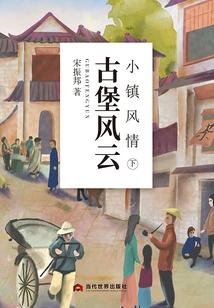
Small Town Style (part 2): Castle Storm
General Fiction小镇风情(下):古堡风云
Song Zhenbang
Fighting to the death is not for glory, but for life on earth. In the Northeast under Japanese occupation in the first half of the last century, the five major families in the small town, Song, Xiao, He, Qian and Lin, fought bloody battles in the national struggle of iron and fire. They traveled between small towns, mountains and forests, big cities, and ports, and unfolded the tragic love and hatred between them. The story scenes in this book are grand and magnificent. The epic scroll slowly unfolds, exuding the rich fragrance of local customs, showing a magnificent picture of frosty leaves and colorful leaves.
Fighting to the death is not for glory, but for life on earth. In the Northeast under Japanese occupation in the first half of the last century, the five major families in the small town, Song, Xiao, He, Qian and Lin, fought bloody battles in the national struggle of iron and fire. They traveled between small towns, mountains and forests, big cities, and ports, and unfolded the tragic love and hatred between them. The story scenes in this book are grand and magnificent. The epic scroll slowly unfolds, exuding the rich fragrance of local customs, showing a magnificent picture of frosty leaves and colorful leaves.
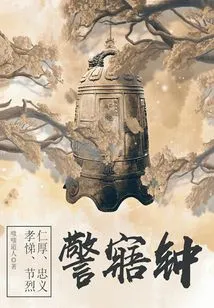
Qing Dynasty Literary Classic: Warning Bell
General Fiction清代文学经典:警寤钟
Chi Chi Taoist
This book is divided into four chapters, with four stories based on the four themes of benevolence, loyalty, filial piety, and chastity. Usually when parents are born, I am bald and bald. Suffered all the glory, tasted the humiliation of baldness. No meat is seen during the day, and he often sleeps alone at night. When you are in front of others, you must be respectful and shrink your head first. If there is something wrong, the fist will violently explode and it will be naked. The first time the bald slave suffered was thought-provoking. In the second chapter, the pious mother-in-law met with a matchmaker and suffered a loss; in the third chapter, the dowry boy thought of beauty; in the fourth chapter, the ghost writer gained fame; in the fifth chapter, he drew his sword and returned the imperial edict... How can flesh and blood deceive the heart? The bald brother suffered, benevolence and righteousness will eventually be rewarded. The old general was wronged and his loyalty was passed down from generation to generation... Every word struck the heart, every sentence was shocking, thought-provoking and a warning.
This book is divided into four chapters, with four stories based on the four themes of benevolence, loyalty, filial piety, and chastity. Usually when parents are born, I am bald and bald. Suffered all the glory, tasted the humiliation of baldness. No meat is seen during the day, and he often sleeps alone at night. When you are in front of others, you must be respectful and shrink your head first. If there is something wrong, the fist will violently explode and it will be naked. The first time the bald slave suffered was thought-provoking. In the second chapter, the pious mother-in-law met with a matchmaker and suffered a loss; in the third chapter, the dowry boy thought of beauty; in the fourth chapter, the ghost writer gained fame; in the fifth chapter, he drew his sword and returned the imperial edict... How can flesh and blood deceive the heart? The bald brother suffered, benevolence and righteousness will eventually be rewarded. The old general was wronged and his loyalty was passed down from generation to generation... Every word struck the heart, every sentence was shocking, thought-provoking and a warning.
K
K
Medical Novels: Medical Mirror
General Fiction医界小说:医界镜
Scholars And Doctors
"Mirror of the Medical World" is based on Yu Wenyao's "Record of the Appearance of the Medical World" with slight modifications. It was printed in the 34th year of Guangxu (1908), and the author signed "Rulin Yiyin". "Mirror of the Medical World" is my country's first health or medical novel in modern times. Before and after the Revolution of 1911, competition became fierce, causing the medical field to appear in a state of chaos, and the phenomenon of quackery became more and more intense. The documentary social novel "Mirror of the Medical World" depicts the faces of quack doctors and exposes their despicable medical practices. The author uses what the famous doctor Bei Zhongying and his son Bei Zuyin saw and heard in their medical practice as clues to describe the history of deception and success of many quack doctors, as well as their bad deeds of being ignorant and skillless, fishing for reputation, cheating and abducting, and disregarding human life. The novel ruthlessly exposes and criticizes the chaos in the medical community at that time. It opens a window for us to understand the medical practice at that time, and it also has reference significance for the improvement of current medical ethics and practice. The doctor-patient problems existing in the medical community in the late Qing Dynasty cannot be underestimated. From these problems, we can condense their enlightenment to the contemporary medical community.
"Mirror of the Medical World" is based on Yu Wenyao's "Record of the Appearance of the Medical World" with slight modifications. It was printed in the 34th year of Guangxu (1908), and the author signed "Rulin Yiyin". "Mirror of the Medical World" is my country's first health or medical novel in modern times. Before and after the Revolution of 1911, competition became fierce, causing the medical field to appear in a state of chaos, and the phenomenon of quackery became more and more intense. The documentary social novel "Mirror of the Medical World" depicts the faces of quack doctors and exposes their despicable medical practices. The author uses what the famous doctor Bei Zhongying and his son Bei Zuyin saw and heard in their medical practice as clues to describe the history of deception and success of many quack doctors, as well as their bad deeds of being ignorant and skillless, fishing for reputation, cheating and abducting, and disregarding human life. The novel ruthlessly exposes and criticizes the chaos in the medical community at that time. It opens a window for us to understand the medical practice at that time, and it also has reference significance for the improvement of current medical ethics and practice. The doctor-patient problems existing in the medical community in the late Qing Dynasty cannot be underestimated. From these problems, we can condense their enlightenment to the contemporary medical community.
An Overview of Ancient and Modern Stories (5)
General Fiction古今谭概(五)
(ming Dynasty) Feng Menglong
This book is a collection of ancient Chinese jokes and humorous sketches, divided into 36 parts in total. The author Feng Menglong collected a large number of ridiculous and interesting stories from the official history and unofficial history notes of the past dynasties, exposing the ugly phenomena of society and various weird and pathological phenomena. It can not only entertain the readers, but also educate and warn themselves. It is a very enlightening reading. Most of the content is allusions from past dynasties, such as the famous "state officials set fire" and so on.
This book is a collection of ancient Chinese jokes and humorous sketches, divided into 36 parts in total. The author Feng Menglong collected a large number of ridiculous and interesting stories from the official history and unofficial history notes of the past dynasties, exposing the ugly phenomena of society and various weird and pathological phenomena. It can not only entertain the readers, but also educate and warn themselves. It is a very enlightening reading. Most of the content is allusions from past dynasties, such as the famous "state officials set fire" and so on.
B
C
Summary of Ancient and Modern Tan Tan (1)
General Fiction古今谭概(一)
(ming Dynasty) Feng Menglong
This book is a collection of ancient Chinese jokes and humorous sketches, divided into 36 parts in total. The author Feng Menglong collected a large number of ridiculous and interesting stories from the official history and unofficial history notes of the past dynasties, exposing the ugly phenomena of society and various weird and pathological phenomena. It can not only entertain the readers, but also educate and warn themselves. It is a very enlightening reading. Most of the content is allusions from past dynasties, such as the famous "state officials set fire" and so on.
This book is a collection of ancient Chinese jokes and humorous sketches, divided into 36 parts in total. The author Feng Menglong collected a large number of ridiculous and interesting stories from the official history and unofficial history notes of the past dynasties, exposing the ugly phenomena of society and various weird and pathological phenomena. It can not only entertain the readers, but also educate and warn themselves. It is a very enlightening reading. Most of the content is allusions from past dynasties, such as the famous "state officials set fire" and so on.
Balzac Classic: Honorine
General Fiction巴尔扎克经典:奥诺丽纳
I
This book is Balzac's classic masterpiece, translated by Fu Lei. Honorine was first serialized in La Stampa from March 17 to 29, 1843. In 1844, a single volume was published by Botai Bookstore, divided into forty chapters, each chapter has a title. In the same year, it was compiled into the fourth volume of Finer's edition of The Human Comedy. In the work, the author not only raised issues of family, marriage, and love, but also raised issues of morality, law, and religion. Honorina is dissatisfied with her subordinate status in the family and pursues independence, freedom and exciting love. She abandoned her property and husband and ran away with her lover, only to be abandoned because she lost her property. She expected to earn her own living, but after seven years of struggle, she still had to return to her husband under the pressure of society, law, and religious concepts, and finally died of physical and mental exhaustion. Honorina is a person who intentionally stays away from the money society, and her escape is also a story of encounter. Even among all Balzac's characters, Honorine shines brightest. Balzac wrote about the various behaviors of all living beings in the money society and the stories of various people's encounters with money in this era.
This book is Balzac's classic masterpiece, translated by Fu Lei. Honorine was first serialized in La Stampa from March 17 to 29, 1843. In 1844, a single volume was published by Botai Bookstore, divided into forty chapters, each chapter has a title. In the same year, it was compiled into the fourth volume of Finer's edition of The Human Comedy. In the work, the author not only raised issues of family, marriage, and love, but also raised issues of morality, law, and religion. Honorina is dissatisfied with her subordinate status in the family and pursues independence, freedom and exciting love. She abandoned her property and husband and ran away with her lover, only to be abandoned because she lost her property. She expected to earn her own living, but after seven years of struggle, she still had to return to her husband under the pressure of society, law, and religious concepts, and finally died of physical and mental exhaustion. Honorina is a person who intentionally stays away from the money society, and her escape is also a story of encounter. Even among all Balzac's characters, Honorine shines brightest. Balzac wrote about the various behaviors of all living beings in the money society and the stories of various people's encounters with money in this era.

Q
Q
Q
100 Madmen and 99 Geniuses.ⅱ
General Fiction100个疯子99个天才.Ⅱ
Yang Jiandong
There is such a group of people who are crazy and have their own logic! "100 Madmen and 99 Geniuses.Ⅱ" Is a record of the dialogue between a psychiatrist who has been practicing for ten years and his patients. They have been treated in the hospital with high-tech equipment, upgraded drugs, improved technology, and doctors with higher academic qualifications. Those who want to make them "normal" spare no effort. They say they are extremely happy, only to be laughed off. That's not "real" happiness. Because they are different from other people, they express too crazy and cannot restrain themselves and hide it, so they must be sick. You think they are crazy, but it is almost impossible to overturn their logic and convince them. They are incredibly different. Who is sober?
There is such a group of people who are crazy and have their own logic! "100 Madmen and 99 Geniuses.Ⅱ" Is a record of the dialogue between a psychiatrist who has been practicing for ten years and his patients. They have been treated in the hospital with high-tech equipment, upgraded drugs, improved technology, and doctors with higher academic qualifications. Those who want to make them "normal" spare no effort. They say they are extremely happy, only to be laughed off. That's not "real" happiness. Because they are different from other people, they express too crazy and cannot restrain themselves and hide it, so they must be sick. You think they are crazy, but it is almost impossible to overturn their logic and convince them. They are incredibly different. Who is sober?
Ancient Version of Water Margin (3)
General Fiction古本水浒传(3)
I
The first 70 chapters of this book are basically consistent with the Guanhuatang version of "Water Margin" reviewed by Jin Shengtan; and the last 50 chapters are completely different from the currently popular 120-chapter version of "Water Margin". The Liangshan heroes here were not recruited. Until Chapter 120, they were still fighting bloody battles with the government troops. The next 50 chapters were separately typed and printed by Shanghai Zhongxi Book Company in 1933. The preface by Mr. Mei Jihe recorded the details of the publication at that time. The last 50 chapters of "Ancient Water Margin" have twists and turns in the plot and distinctive characters. Some scholars believe that it is the same author as the first 70 chapters. By comparing and analyzing the last 50 chapters with the first 70 chapters, we found that the plot structures before and after are coherent and consistent, and the layout echoes back and forth, forming a tight unity; without the former, the latter cannot be established; without the latter, many plot arrangements in the first 70 chapters are difficult to understand accurately. The characteristics of the characters before and after are consistent. The main characters in the last 50 chapters can be judged by their words and deeds. None of the other sequels that can be seen now can reach this level. The world view reflected before and after is consistent; the artistic style is consistent; especially the language characteristics of the times and local characteristics are also consistent.
The first 70 chapters of this book are basically consistent with the Guanhuatang version of "Water Margin" reviewed by Jin Shengtan; and the last 50 chapters are completely different from the currently popular 120-chapter version of "Water Margin". The Liangshan heroes here were not recruited. Until Chapter 120, they were still fighting bloody battles with the government troops. The next 50 chapters were separately typed and printed by Shanghai Zhongxi Book Company in 1933. The preface by Mr. Mei Jihe recorded the details of the publication at that time. The last 50 chapters of "Ancient Water Margin" have twists and turns in the plot and distinctive characters. Some scholars believe that it is the same author as the first 70 chapters. By comparing and analyzing the last 50 chapters with the first 70 chapters, we found that the plot structures before and after are coherent and consistent, and the layout echoes back and forth, forming a tight unity; without the former, the latter cannot be established; without the latter, many plot arrangements in the first 70 chapters are difficult to understand accurately. The characteristics of the characters before and after are consistent. The main characters in the last 50 chapters can be judged by their words and deeds. None of the other sequels that can be seen now can reach this level. The world view reflected before and after is consistent; the artistic style is consistent; especially the language characteristics of the times and local characteristics are also consistent.
Ancient Version of Water Margin (2)
General Fiction古本水浒传(2)
I
This book is a collection of "Ancient Water Margin" written by Mr. Mei Jihe during the Republic of China, that is, the last fifty chapters are not allowed to be banned. The first 70 chapters are basically consistent with the Guanhuatang version of "Water Margin" reviewed by Jin Shengtan; while the last 50 chapters are completely different from the currently popular 120-chapter version of "Water Margin". The Liangshan heroes here were not recruited. Until Chapter 120, they were still fighting bloody battles with the government troops. The next 50 chapters were separately typed and printed by Shanghai Zhongxi Book Company in 1933. The preface by Mr. Mei Jihe recorded the details of the publication at that time. The last 50 chapters of "Ancient Water Margin" have twists and turns in the plot and distinctive characters. Some scholars believe that it is the same author as the first 70 chapters. By comparing and analyzing the last 50 chapters with the first 70 chapters, we found that the plot structures before and after are coherent and consistent, and the layout echoes back and forth, forming a tight unity; without the former, the latter cannot be established; without the latter, many plot arrangements in the first 70 chapters are difficult to understand accurately. The characteristics of the characters before and after are consistent. The main characters in the last 50 chapters can be judged by their words and deeds. None of the other sequels that can be seen now can reach this level. The world view reflected before and after is consistent; the artistic style is consistent; especially the language characteristics of the times and local characteristics are also consistent.
This book is a collection of "Ancient Water Margin" written by Mr. Mei Jihe during the Republic of China, that is, the last fifty chapters are not allowed to be banned. The first 70 chapters are basically consistent with the Guanhuatang version of "Water Margin" reviewed by Jin Shengtan; while the last 50 chapters are completely different from the currently popular 120-chapter version of "Water Margin". The Liangshan heroes here were not recruited. Until Chapter 120, they were still fighting bloody battles with the government troops. The next 50 chapters were separately typed and printed by Shanghai Zhongxi Book Company in 1933. The preface by Mr. Mei Jihe recorded the details of the publication at that time. The last 50 chapters of "Ancient Water Margin" have twists and turns in the plot and distinctive characters. Some scholars believe that it is the same author as the first 70 chapters. By comparing and analyzing the last 50 chapters with the first 70 chapters, we found that the plot structures before and after are coherent and consistent, and the layout echoes back and forth, forming a tight unity; without the former, the latter cannot be established; without the latter, many plot arrangements in the first 70 chapters are difficult to understand accurately. The characteristics of the characters before and after are consistent. The main characters in the last 50 chapters can be judged by their words and deeds. None of the other sequels that can be seen now can reach this level. The world view reflected before and after is consistent; the artistic style is consistent; especially the language characteristics of the times and local characteristics are also consistent.
Ancient Version of Water Margin (1)
General Fiction古本水浒传(1)
I
The first 70 chapters of this book are basically consistent with the Guanhuatang version of "Water Margin" reviewed by Jin Shengtan; while the last 50 chapters are completely different from the currently popular 120-chapter version of "Water Margin". The Liangshan heroes here were not recruited. Until Chapter 120, they were still fighting bloody battles with the government troops. The next 50 chapters were separately typed and printed by Shanghai Zhongxi Book Company in 1933. The preface by Mr. Mei Jihe recorded the details of the publication at that time. The last 50 chapters of "Ancient Water Margin" have twists and turns in the plot and distinctive characters. Some scholars believe that it is the same author as the first 70 chapters. By comparing and analyzing the last 50 chapters with the first 70 chapters, we found that the plot structures before and after are coherent and consistent, and the layout echoes back and forth, forming a tight unity; without the former, the latter cannot be established; without the latter, many plot arrangements in the first 70 chapters are difficult to understand accurately. The characteristics of the characters before and after are consistent. The main characters in the last 50 chapters can be judged by their words and deeds. None of the other sequels that can be seen now can reach this level. The world view reflected before and after is consistent; the artistic style is consistent; especially the language characteristics of the times and local characteristics are also consistent.
The first 70 chapters of this book are basically consistent with the Guanhuatang version of "Water Margin" reviewed by Jin Shengtan; while the last 50 chapters are completely different from the currently popular 120-chapter version of "Water Margin". The Liangshan heroes here were not recruited. Until Chapter 120, they were still fighting bloody battles with the government troops. The next 50 chapters were separately typed and printed by Shanghai Zhongxi Book Company in 1933. The preface by Mr. Mei Jihe recorded the details of the publication at that time. The last 50 chapters of "Ancient Water Margin" have twists and turns in the plot and distinctive characters. Some scholars believe that it is the same author as the first 70 chapters. By comparing and analyzing the last 50 chapters with the first 70 chapters, we found that the plot structures before and after are coherent and consistent, and the layout echoes back and forth, forming a tight unity; without the former, the latter cannot be established; without the latter, many plot arrangements in the first 70 chapters are difficult to understand accurately. The characteristics of the characters before and after are consistent. The main characters in the last 50 chapters can be judged by their words and deeds. None of the other sequels that can be seen now can reach this level. The world view reflected before and after is consistent; the artistic style is consistent; especially the language characteristics of the times and local characteristics are also consistent.
清代话本小说集:八洞天(2)
Master Of Bi Lian Pavilion
In the preface at the beginning of "Badongtian", he writes: "The work of "Badongtian" is also to make up for what "Five-Colored Stone" has not prepared." Because ""Five-Colored Stone" is to make up for the deficiencies in the sky, and if the deficiencies cannot be overcome, the deficiencies cannot be made up. Also." In "Eight Caves", the author compiled eight novels, the so-called Eight Caves, in which he placed his own love, hate, praise and criticism, and social ideals based on the concept of "controlling people's wishes" and "happying people's hearts".
In the preface at the beginning of "Badongtian", he writes: "The work of "Badongtian" is also to make up for what "Five-Colored Stone" has not prepared." Because ""Five-Colored Stone" is to make up for the deficiencies in the sky, and if the deficiencies cannot be overcome, the deficiencies cannot be made up. Also." In "Eight Caves", the author compiled eight novels, the so-called Eight Caves, in which he placed his own love, hate, praise and criticism, and social ideals based on the concept of "controlling people's wishes" and "happying people's hearts".
清代话本小说集:八洞天(1)
Master Of Bi Lian Pavilion
The preface at the beginning of "Eight Caves" reads: "The work of "Eight Caves" is also to make up for what "Five Colored Stones" has not prepared." Because ""Five Colored Stones" is to make up for the deficiencies in the sky, and if the deficiencies cannot be overcome, the deficiencies cannot be filled." In "Eight Caves", the author compiled eight novels, the so-called Eight Caves, in accordance with the idea of "conquering people's wishes" and "pleasing people's hearts", in which he placed his own love, hate, praise and criticism, and social ideals.
The preface at the beginning of "Eight Caves" reads: "The work of "Eight Caves" is also to make up for what "Five Colored Stones" has not prepared." Because ""Five Colored Stones" is to make up for the deficiencies in the sky, and if the deficiencies cannot be overcome, the deficiencies cannot be filled." In "Eight Caves", the author compiled eight novels, the so-called Eight Caves, in accordance with the idea of "conquering people's wishes" and "pleasing people's hearts", in which he placed his own love, hate, praise and criticism, and social ideals.
Small Town in March
General Fiction小城三月
Xiao Hong
Xiao Hong is known as the "Literary Goddess of the 1930s". She is the woman with the most tragic fate among the four talented women in the Republic of China, and is also a legendary figure. Her novels all have a self-narrative nature. Even in the descriptions of strangers, we can read the writer's own shadow in them. "March in a Small Town" reflects Xiao Hong's perspective and attitude in observing the world from multiple angles and aspects. Xiao Hong is an author highly praised by Lu Xun. Even the literary giants Lu Xun and Mao Dun wrote prefaces to "The Biography of Hulan River" respectively, which is a seminal work that confirmed Xiao Hong's literary status. Single volumes of his works have been best-selling for decades and are sufficiently classic.
Xiao Hong is known as the "Literary Goddess of the 1930s". She is the woman with the most tragic fate among the four talented women in the Republic of China, and is also a legendary figure. Her novels all have a self-narrative nature. Even in the descriptions of strangers, we can read the writer's own shadow in them. "March in a Small Town" reflects Xiao Hong's perspective and attitude in observing the world from multiple angles and aspects. Xiao Hong is an author highly praised by Lu Xun. Even the literary giants Lu Xun and Mao Dun wrote prefaces to "The Biography of Hulan River" respectively, which is a seminal work that confirmed Xiao Hong's literary status. Single volumes of his works have been best-selling for decades and are sufficiently classic.
Qing Dynasty Novels: Kuai Xin Bian (3)
General Fiction清代小说:快心编(3)
Smallpox Talent
"Kuai Xin Bian" is a famous novel about world affairs in the early Qing Dynasty. It was written in the late Shunzhi or Kangxi period of the Qing Dynasty. It has three volumes and a total of 32 chapters. It is very popular among readers and has even spread to Japan and South Korea. It mainly revolves around the love story of four young couples: Shi, Liu, Ling, and Zhang: Ling Jia Shan was framed and bankrupted, and on the way to exile, he met Li Lijuan, fell in love at first sight, and made an engagement. Shi Peiheng killed the bully landlord's family, joined Li Fu's army as a vanguard officer, and married Qiu Cuiqiao, a mountain village girl who had repaid his kindness. Liu Jun turned his back on his unjust master and became an officer and married his adopted daughter. The novel takes their marriage story as the main line and unfolds a broad and multi-layered description of social life in the early Qing Dynasty. It is said that heroes are born everywhere, regardless of whether they are rich or poor, if they can rise up, they will turn poverty into wealth and poverty into wealth. The examples involve city mergers and folk customs, mountain bandits and bandits, official struggles, love and lovesickness, and the talk of religious mothers... They are all included in the paintings, and they read like colorful pictures of social customs.
"Kuai Xin Bian" is a famous novel about world affairs in the early Qing Dynasty. It was written in the late Shunzhi or Kangxi period of the Qing Dynasty. It has three volumes and a total of 32 chapters. It is very popular among readers and has even spread to Japan and South Korea. It mainly revolves around the love story of four young couples: Shi, Liu, Ling, and Zhang: Ling Jia Shan was framed and bankrupted, and on the way to exile, he met Li Lijuan, fell in love at first sight, and made an engagement. Shi Peiheng killed the bully landlord's family, joined Li Fu's army as a vanguard officer, and married Qiu Cuiqiao, a mountain village girl who had repaid his kindness. Liu Jun turned his back on his unjust master and became an officer and married his adopted daughter. The novel takes their marriage story as the main line and unfolds a broad and multi-layered description of social life in the early Qing Dynasty. It is said that heroes are born everywhere, regardless of whether they are rich or poor, if they can rise up, they will turn poverty into wealth and poverty into wealth. The examples involve city mergers and folk customs, mountain bandits and bandits, official struggles, love and lovesickness, and the talk of religious mothers... They are all included in the paintings, and they read like colorful pictures of social customs.
Qing Dynasty Novels: Kuai Xin Bian (2)
General Fiction清代小说:快心编(2)
Smallpox Talent
"Kuai Xin Bian" was written at the end of the Shunzhi period of the Qing Dynasty or during the Kangxi period of the Qing Dynasty. It is a famous novel about world affairs in the early Qing Dynasty. It has three volumes and a total of 32 chapters. It is very popular among readers and even spread to Japan and South Korea. It mainly revolves around the love story of four young couples: Shi, Liu, Ling, and Zhang: Ling Jia Shan was framed and bankrupted, and on the way to exile, he met Li Lijuan, fell in love at first sight, and made an engagement. Shi Peiheng killed the bully landlord's family, joined Li Fu's army as a vanguard officer, and married Qiu Cuiqiao, a mountain village girl who had repaid his kindness. Liu Jun turned his back on his unjust master and became an officer and married his adopted daughter. The novel takes their marriage story as the main line and unfolds a broad and multi-layered description of social life in the early Qing Dynasty. It is said that heroes are born everywhere, regardless of whether they are rich or poor, if they can rise up, they will turn poverty into wealth and poverty into wealth. The examples involve city mergers and folk customs, mountain bandits and bandits, official struggles, love and lovesickness, and the talk of religious mothers... They are all included in the paintings, and they read like colorful pictures of social customs.
"Kuai Xin Bian" was written at the end of the Shunzhi period of the Qing Dynasty or during the Kangxi period of the Qing Dynasty. It is a famous novel about world affairs in the early Qing Dynasty. It has three volumes and a total of 32 chapters. It is very popular among readers and even spread to Japan and South Korea. It mainly revolves around the love story of four young couples: Shi, Liu, Ling, and Zhang: Ling Jia Shan was framed and bankrupted, and on the way to exile, he met Li Lijuan, fell in love at first sight, and made an engagement. Shi Peiheng killed the bully landlord's family, joined Li Fu's army as a vanguard officer, and married Qiu Cuiqiao, a mountain village girl who had repaid his kindness. Liu Jun turned his back on his unjust master and became an officer and married his adopted daughter. The novel takes their marriage story as the main line and unfolds a broad and multi-layered description of social life in the early Qing Dynasty. It is said that heroes are born everywhere, regardless of whether they are rich or poor, if they can rise up, they will turn poverty into wealth and poverty into wealth. The examples involve city mergers and folk customs, mountain bandits and bandits, official struggles, love and lovesickness, and the talk of religious mothers... They are all included in the paintings, and they read like colorful pictures of social customs.
Qing Dynasty Novels: Kuai Xin Bian (1)
General Fiction清代小说:快心编(1)
Smallpox Talent
"Kuai Xin Bian" was written at the end of the Shunzhi period of the Qing Dynasty or during the Kangxi period of the Qing Dynasty. It is a famous novel about world affairs in the early Qing Dynasty. It has three volumes and a total of 32 chapters. It is very popular among readers and even spread to Japan and South Korea. The content revolves around the love story of four young couples: Shi, Liu, Ling, and Zhang: Ling Jia Shan was framed and bankrupted, and he met Li Lijuan on the way to exile. They fell in love at first sight and made an engagement. Shi Peiheng killed the bully landlord's family, joined Li Fu's army as a vanguard officer, and married Qiu Cuiqiao, a mountain village girl who had repaid his kindness. Liu Jun turned his back on his unjust master and became an officer and married his adopted daughter. The novel takes their marriage story as the main line and unfolds a broad and multi-layered description of social life in the early Qing Dynasty. It is said that heroes are born everywhere, regardless of whether they are rich or poor, if they can rise up, they will turn poverty into wealth and poverty into wealth. Examples include city mergers and folk customs, mountain bandits and bandits, officialdom struggles, love and lovesickness, pious women talking... They are all included in the paintings, and they read like colorful pictures of social customs.
"Kuai Xin Bian" was written at the end of the Shunzhi period of the Qing Dynasty or during the Kangxi period of the Qing Dynasty. It is a famous novel about world affairs in the early Qing Dynasty. It has three volumes and a total of 32 chapters. It is very popular among readers and even spread to Japan and South Korea. The content revolves around the love story of four young couples: Shi, Liu, Ling, and Zhang: Ling Jia Shan was framed and bankrupted, and he met Li Lijuan on the way to exile. They fell in love at first sight and made an engagement. Shi Peiheng killed the bully landlord's family, joined Li Fu's army as a vanguard officer, and married Qiu Cuiqiao, a mountain village girl who had repaid his kindness. Liu Jun turned his back on his unjust master and became an officer and married his adopted daughter. The novel takes their marriage story as the main line and unfolds a broad and multi-layered description of social life in the early Qing Dynasty. It is said that heroes are born everywhere, regardless of whether they are rich or poor, if they can rise up, they will turn poverty into wealth and poverty into wealth. Examples include city mergers and folk customs, mountain bandits and bandits, officialdom struggles, love and lovesickness, pious women talking... They are all included in the paintings, and they read like colorful pictures of social customs.
Jingdu People
General Fiction晶都人
Chen Wu
This is a novel. The novel describes the spirit of several "post-80s" young people in "Jingdu" who are not afraid of difficulties and work hard to start a business in the tide of commodity economy. Many readers will empathize with their calmness, unity, innovation and fighting spirit in the face of severe shortages of funds, financing traps, sales bottlenecks and love tests.
This is a novel. The novel describes the spirit of several "post-80s" young people in "Jingdu" who are not afraid of difficulties and work hard to start a business in the tide of commodity economy. Many readers will empathize with their calmness, unity, innovation and fighting spirit in the face of severe shortages of funds, financing traps, sales bottlenecks and love tests.
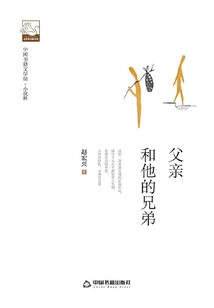
Father and His Brother
General Fiction父亲和他的兄弟
Zhao Hongxing
This is a novel about family love. It amplifies human nature in distortion, describes the essence of life, expresses the struggle of human nature and the placement of souls, and shows the tenacity, kindness and hardships of the Chinese people at the bottom. The famous writer Zhang Wei believes: ""Father and His Brothers" is a novel, but it is more like a family memoir, so it is more intimate and more simple. The emotions are all down to earth, and life is also down to earth, without any abruptness or exaggeration. The text throughout the article is also so solid and stable, without harshness. The literary tone of the novel needs to return in this way, and the fictional works need to be so real. In the Internet age, being too loud and screaming has become an unexpected norm, but the book we are reading has another kind of calm and simple appearance, which is beyond the ordinary. Before the book was published, some chapters were published as short stories and short stories in some important publications. A review in the 10th issue of "Selected Chinese Literature" in 2016 believed that the father "is a tolerant, self-denying, tolerant and kind image, a successful and touching image. He He had suffered enough grievances and even insults, but he still supported his family with his morality and responsibility, and also supported the immortal glory of humanity. "The structure of this book breaks the traditional chronological linear narrative, and instead focuses on writing each article around a theme, but the characters and themes of the entire book remain unchanged.
This is a novel about family love. It amplifies human nature in distortion, describes the essence of life, expresses the struggle of human nature and the placement of souls, and shows the tenacity, kindness and hardships of the Chinese people at the bottom. The famous writer Zhang Wei believes: ""Father and His Brothers" is a novel, but it is more like a family memoir, so it is more intimate and more simple. The emotions are all down to earth, and life is also down to earth, without any abruptness or exaggeration. The text throughout the article is also so solid and stable, without harshness. The literary tone of the novel needs to return in this way, and the fictional works need to be so real. In the Internet age, being too loud and screaming has become an unexpected norm, but the book we are reading has another kind of calm and simple appearance, which is beyond the ordinary. Before the book was published, some chapters were published as short stories and short stories in some important publications. A review in the 10th issue of "Selected Chinese Literature" in 2016 believed that the father "is a tolerant, self-denying, tolerant and kind image, a successful and touching image. He He had suffered enough grievances and even insults, but he still supported his family with his morality and responsibility, and also supported the immortal glory of humanity. "The structure of this book breaks the traditional chronological linear narrative, and instead focuses on writing each article around a theme, but the characters and themes of the entire book remain unchanged.
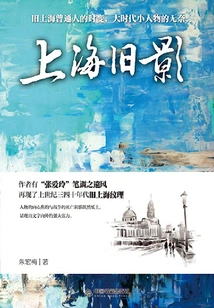
Shanghai Old Movies
General Fiction上海旧影
Zhu Hongmei
In the summer of the 23rd year of the Republic of China, in Jiangwan Town, Mrs. Hua, the proprietress of the Four Seasons Clothing Store, came back from playing mahjong and found the wet nurse lying on her husband's bed. She took the child back to her parents' home in anger. Hua Aliu was afraid that the old house would bring bad luck to his only son Hua Rongsheng, so he had no choice but to fire his nanny. The younger daughter died as a result. During the quarrel, the physical defects of the eldest daughter Hua Yingyi were involved. As compensation, Ah Liu lets Ying Yi study. She became good friends with her classmate Gu Guozhen. Hua Linghai was the bridal son-in-law of Mao Yuhai, the owner of the Yellow River Leather Shoe Factory. One day, someone sent an invitation to invite his cousin Ah Liu and his family to a banquet. It turns out that my father-in-law is terminally ill, so the birthday wish is actually a happy occasion. Hua Linghai, Mao Caidi and his wife fell in love with Hua Yingting, a six-time girl, and wanted to marry their children. Ah Liu was confused. Mao revealed that her son Hua Zhidie was not her biological child. When the Anti-Japanese War broke out in Songhu, Ah Liu defected to his senior brother Ping Guisheng. When the war broke out in Pudong, Ah Liu decided to take refuge in the concession, but his senior brother refused to leave. Hua Aliu swore that if she survived, her daughter Ping Yanyan would be her daughter-in-law.
In the summer of the 23rd year of the Republic of China, in Jiangwan Town, Mrs. Hua, the proprietress of the Four Seasons Clothing Store, came back from playing mahjong and found the wet nurse lying on her husband's bed. She took the child back to her parents' home in anger. Hua Aliu was afraid that the old house would bring bad luck to his only son Hua Rongsheng, so he had no choice but to fire his nanny. The younger daughter died as a result. During the quarrel, the physical defects of the eldest daughter Hua Yingyi were involved. As compensation, Ah Liu lets Ying Yi study. She became good friends with her classmate Gu Guozhen. Hua Linghai was the bridal son-in-law of Mao Yuhai, the owner of the Yellow River Leather Shoe Factory. One day, someone sent an invitation to invite his cousin Ah Liu and his family to a banquet. It turns out that my father-in-law is terminally ill, so the birthday wish is actually a happy occasion. Hua Linghai, Mao Caidi and his wife fell in love with Hua Yingting, a six-time girl, and wanted to marry their children. Ah Liu was confused. Mao revealed that her son Hua Zhidie was not her biological child. When the Anti-Japanese War broke out in Songhu, Ah Liu defected to his senior brother Ping Guisheng. When the war broke out in Pudong, Ah Liu decided to take refuge in the concession, but his senior brother refused to leave. Hua Aliu swore that if she survived, her daughter Ping Yanyan would be her daughter-in-law.
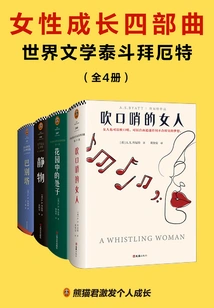
Four Steps to Female Growth
General Fiction女性成长四部曲
(english) A. S. Byatt
A must-read growth epic for women pursuing independence! "Quartet of the Growth of Women" is Byatt's most prestigious masterpiece, which took nearly 30 years to write. It uses the growth epic of Frederica, a British intellectual woman, to connect the historical changes in Britain in the decades after World War II.
A must-read growth epic for women pursuing independence! "Quartet of the Growth of Women" is Byatt's most prestigious masterpiece, which took nearly 30 years to write. It uses the growth epic of Frederica, a British intellectual woman, to connect the historical changes in Britain in the decades after World War II.
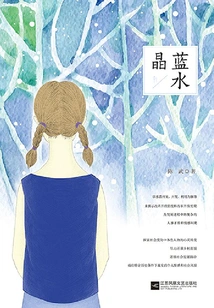
Blue Crystal
General Fiction蓝水晶
Chen Wu
Using crystal mining, development, and utilization as a context, it reveals the complex personnel conflicts and emotional entanglements on the eve of reform and opening up, the early stage of reform and opening up, and the development process; it describes the ups and downs of a group of characters in the radically changing historical trends and their changeable life fates. It pays close attention to social reality and individual lives from the perspective of human nature, and pays attention to the grief, anger and happiness of small people; it explores the spiritual changes of various characters in social changes, and tries its best to restore the appearance of the countryside, restore the path of social development, and depict the true personal emotions under specific historical conditions. We use various elements to weave stories, analyze their life predicaments, emotional predicaments and spiritual predicaments, reveal the weaknesses of human nature and the dangers of life, praise their kind nature and moral brilliance, and vividly express their grudges and life and death fatigue with swaying and colorful brushwork and a mixture of joy and sorrow.
Using crystal mining, development, and utilization as a context, it reveals the complex personnel conflicts and emotional entanglements on the eve of reform and opening up, the early stage of reform and opening up, and the development process; it describes the ups and downs of a group of characters in the radically changing historical trends and their changeable life fates. It pays close attention to social reality and individual lives from the perspective of human nature, and pays attention to the grief, anger and happiness of small people; it explores the spiritual changes of various characters in social changes, and tries its best to restore the appearance of the countryside, restore the path of social development, and depict the true personal emotions under specific historical conditions. We use various elements to weave stories, analyze their life predicaments, emotional predicaments and spiritual predicaments, reveal the weaknesses of human nature and the dangers of life, praise their kind nature and moral brilliance, and vividly express their grudges and life and death fatigue with swaying and colorful brushwork and a mixture of joy and sorrow.
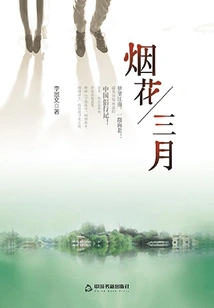
Fireworks March
General Fiction烟花三月
Li Jingwen
"Fireworks in March" is a novel about "looking for hometown, returning to hometown, and transcending hometown" with the author's hometown of Yangzhou as the background. A couple in the novel set out from Yangzhou hand in hand, and then ran all the way to the north, toward the mountains, and toward the plateau. Moreover, this kind of running and searching is not external, superficial, and superficial. It should be a "nirvana" that cuts deep into the bones, a rise, a vigorous growth, and a spiritual search for the roots of the Yangzhou people in the novel. At the same time, Yangzhou in the novel is not just a symbol of the region, it is more of a literary concept. It is the hometown in my heart that was born from Yangzhou, a hometown that is made up of words that haunts me. It sometimes overlaps, sometimes complements, and sometimes deviates from Yangzhou in reality. Even in my mind, there is such an idea growing like crazy weeds: Faced with the phenomenon of yin and yang declining in many fields among Chinese people, Yangzhou in the novel can also be transformed into a microcosm and symbol of contemporary China. On top of the feminine "show" of Chinese culture, what we need is a "male" flight, which is the "Young China" that Mr. Liang Qichao is fascinated by!
"Fireworks in March" is a novel about "looking for hometown, returning to hometown, and transcending hometown" with the author's hometown of Yangzhou as the background. A couple in the novel set out from Yangzhou hand in hand, and then ran all the way to the north, toward the mountains, and toward the plateau. Moreover, this kind of running and searching is not external, superficial, and superficial. It should be a "nirvana" that cuts deep into the bones, a rise, a vigorous growth, and a spiritual search for the roots of the Yangzhou people in the novel. At the same time, Yangzhou in the novel is not just a symbol of the region, it is more of a literary concept. It is the hometown in my heart that was born from Yangzhou, a hometown that is made up of words that haunts me. It sometimes overlaps, sometimes complements, and sometimes deviates from Yangzhou in reality. Even in my mind, there is such an idea growing like crazy weeds: Faced with the phenomenon of yin and yang declining in many fields among Chinese people, Yangzhou in the novel can also be transformed into a microcosm and symbol of contemporary China. On top of the feminine "show" of Chinese culture, what we need is a "male" flight, which is the "Young China" that Mr. Liang Qichao is fascinated by!
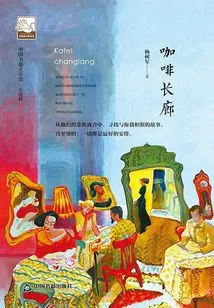
Coffee Gallery
General Fiction咖啡长廊
Yang Shujun
"Coffee Corridor" describes that under the background of social changes in the 21st century, a few representative figures are selected among ordinary people who come in and out of a coffee shop, and their joys, sorrows, joys and sorrows are recorded. Let's elaborate. The book mainly writes the stories of four people. Ye Ruyu, a working woman, yearns for ideal love and a wealthy life, but is divorced from reality and is eventually submerged by the tide of the times; Gu Junming, who has a successful career but is unwilling to be lonely, regrets it too late after experiencing ups and downs; Yang Zixiu, a coffee shop owner, after going through a lot of troubles, still chooses his natural nature and lives a casual life; Wang Haiyan, a college student who has just graduated from school, is rewarded for his dedication to good deeds. Reading the full text gives people one more choice and one more way to think about life. In the ordinary world, all living beings are just like the four seasons of spring, summer, autumn and winter, which come and go again and again. In the end, the old saying came true: everything is the best arrangement.
"Coffee Corridor" describes that under the background of social changes in the 21st century, a few representative figures are selected among ordinary people who come in and out of a coffee shop, and their joys, sorrows, joys and sorrows are recorded. Let's elaborate. The book mainly writes the stories of four people. Ye Ruyu, a working woman, yearns for ideal love and a wealthy life, but is divorced from reality and is eventually submerged by the tide of the times; Gu Junming, who has a successful career but is unwilling to be lonely, regrets it too late after experiencing ups and downs; Yang Zixiu, a coffee shop owner, after going through a lot of troubles, still chooses his natural nature and lives a casual life; Wang Haiyan, a college student who has just graduated from school, is rewarded for his dedication to good deeds. Reading the full text gives people one more choice and one more way to think about life. In the ordinary world, all living beings are just like the four seasons of spring, summer, autumn and winter, which come and go again and again. In the end, the old saying came true: everything is the best arrangement.
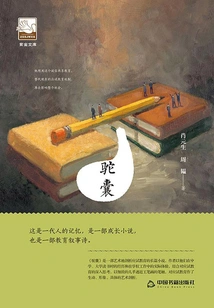
Camel Bag
General Fiction驼囊
Xiao Yuansheng Zhou Yun
"Humpback Bag" is the memory of a generation, a coming-of-age novel, and an educational narrative. This novel can be interpreted from multiple angles and levels. It provides a quasi-encyclopedic reflection of the entire education system, which is new in our experience. It integrates intelligence and sensibility, and the unrestrained narrative is punctuated by delicate brushstrokes. The numerous characters have different appearances, and they feel like they have grown out of the soil of life. Their stories are natural, and their relationships are natural. Even the "typification" of the main characters does not deviate from the laws of life. It's like the various real situations of life itself are talking to us. These flowing scenes are bright and funny, with a little bit of cunning, and some of the suspense they create is actually insignificant. Although there is a basic level of secondary education, it is extensive and can be said to be a big education. It is like a universe bag, including trees and clouds, the sky and the ocean, and contains all phenomena and truths of life and principles.
"Humpback Bag" is the memory of a generation, a coming-of-age novel, and an educational narrative. This novel can be interpreted from multiple angles and levels. It provides a quasi-encyclopedic reflection of the entire education system, which is new in our experience. It integrates intelligence and sensibility, and the unrestrained narrative is punctuated by delicate brushstrokes. The numerous characters have different appearances, and they feel like they have grown out of the soil of life. Their stories are natural, and their relationships are natural. Even the "typification" of the main characters does not deviate from the laws of life. It's like the various real situations of life itself are talking to us. These flowing scenes are bright and funny, with a little bit of cunning, and some of the suspense they create is actually insignificant. Although there is a basic level of secondary education, it is extensive and can be said to be a big education. It is like a universe bag, including trees and clouds, the sky and the ocean, and contains all phenomena and truths of life and principles.
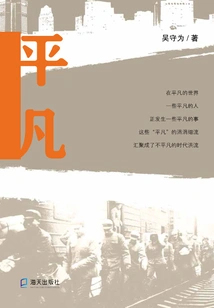
Ordinary
General Fiction平凡
Wu Shouwei
This book creates vivid characters through the cases and deeds of 20,000 infrastructure engineering soldiers who pioneered, worked, lived, developed, and dedicated themselves in the hot land of Shenzhen, and eulogizes their outstanding contributions to the development of the Shenzhen Special Economic Zone. This book is not only a microcosm of the life of 20,000 infrastructure engineering soldiers in the Shenzhen Special Economic Zone, but also a close-up picture of the 40-year development history of the Shenzhen Special Economic Zone. It is also a historical record of the country's support for the construction of the Shenzhen Special Economic Zone, and the Shenzhen Special Economic Zone's feedback and gratitude to the people across the country. Through the creation of characters, this book not only embodies the selfless dedication of Chinese soldiers, but also embodies the life philosophy that efforts must be rewarded and kindness must be rewarded. Through the creation of characters, this book not only embodies the selfless dedication of Chinese soldiers, but also embodies the life philosophy that efforts must be rewarded and kindness must be rewarded.
This book creates vivid characters through the cases and deeds of 20,000 infrastructure engineering soldiers who pioneered, worked, lived, developed, and dedicated themselves in the hot land of Shenzhen, and eulogizes their outstanding contributions to the development of the Shenzhen Special Economic Zone. This book is not only a microcosm of the life of 20,000 infrastructure engineering soldiers in the Shenzhen Special Economic Zone, but also a close-up picture of the 40-year development history of the Shenzhen Special Economic Zone. It is also a historical record of the country's support for the construction of the Shenzhen Special Economic Zone, and the Shenzhen Special Economic Zone's feedback and gratitude to the people across the country. Through the creation of characters, this book not only embodies the selfless dedication of Chinese soldiers, but also embodies the life philosophy that efforts must be rewarded and kindness must be rewarded. Through the creation of characters, this book not only embodies the selfless dedication of Chinese soldiers, but also embodies the life philosophy that efforts must be rewarded and kindness must be rewarded.
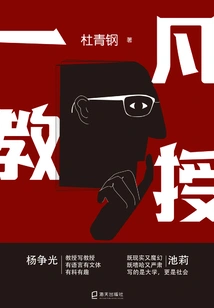
Professor Yifan
General Fiction一凡教授
Du Qinggang
This book takes Liu Yifan, a literature professor at Jiangdu University, as the main line, supplemented by two friends, Xie Feng, a scholar studying in France, and Shangpin, a businessman. It tells a series of stories that happened at Jiangdu University from 2000 to 2012, focusing on teaching, promotion, and application for doctoral programs. The novel reflects China's daily social landscape. Behind the applause and smiles, there will also be fetters and dirty tricks; behind family affection, it is also difficult to break the love between men and women. There are also stories about a mountain, a snake and a fox...
This book takes Liu Yifan, a literature professor at Jiangdu University, as the main line, supplemented by two friends, Xie Feng, a scholar studying in France, and Shangpin, a businessman. It tells a series of stories that happened at Jiangdu University from 2000 to 2012, focusing on teaching, promotion, and application for doctoral programs. The novel reflects China's daily social landscape. Behind the applause and smiles, there will also be fetters and dirty tricks; behind family affection, it is also difficult to break the love between men and women. There are also stories about a mountain, a snake and a fox...
Laura's Fate
General Fiction萝拉的命运
Stony Ground
It seemed as if the train would never reach Baltimore. Later we arrived at Harford Grace and stopped for a long time. When we arrived in Wilmington, another overheated bearing box had to be cooled before we could continue driving. Is it impossible to walk forever? Only when the train goes around the city of Philadelphia does it not seem too slow. Philip stood on the step of getting into the car, staring at the Bolton house, imagining that he could make out its roof among the trees.
It seemed as if the train would never reach Baltimore. Later we arrived at Harford Grace and stopped for a long time. When we arrived in Wilmington, another overheated bearing box had to be cooled before we could continue driving. Is it impossible to walk forever? Only when the train goes around the city of Philadelphia does it not seem too slow. Philip stood on the step of getting into the car, staring at the Bolton house, imagining that he could make out its roof among the trees.
Peeping Undercover in Real Estate
General Fiction窥视地产卧底
Stony Ground
On a late winter night in Shengjing, the biting cold wind swept across the land mercilessly. In the general manager's office of "Tonight's Emperor" nightclub, two young people of the same age but with completely different temperaments were sitting in the dim light, drinking beer silently. The man who wears a suit and tie and looks elegant and handsome is called Huang Xiaojun, and he is the owner of this nightclub; while the man who wears sports and leisure clothes, has a full beard and looks strong and rough is called "Heizi". There were piles of cigarette butts in the ashtray on the table, and there were empty cans everywhere under the table. It seemed that they had been sitting there for a long time.
On a late winter night in Shengjing, the biting cold wind swept across the land mercilessly. In the general manager's office of "Tonight's Emperor" nightclub, two young people of the same age but with completely different temperaments were sitting in the dim light, drinking beer silently. The man who wears a suit and tie and looks elegant and handsome is called Huang Xiaojun, and he is the owner of this nightclub; while the man who wears sports and leisure clothes, has a full beard and looks strong and rough is called "Heizi". There were piles of cigarette butts in the ashtray on the table, and there were empty cans everywhere under the table. It seemed that they had been sitting there for a long time.
Horse Widow
General Fiction马寡妇
Stony Ground
Kong Qingdong once wrote such an interesting story in his best-selling book "207 on the 47th Floor": When they were in middle school, several of their classmates were walking and chatting together. Suddenly, a classmate named Ma who was walking in front turned his head and shouted angrily: "Who do you call Widow Ma?" In fact, the topic everyone was talking about had nothing to do with him, so he gave himself a nickname. There are too many such suspicious "horse widows" in life. People often say that thieves have a guilty conscience. They have not done anything shameful, but they often feel guilty in their hearts. They pay too much attention to other people's evaluation of themselves or small changes in their attitudes. In fact, others do not do anything to them, but they always think that everyone is having trouble with them.
Kong Qingdong once wrote such an interesting story in his best-selling book "207 on the 47th Floor": When they were in middle school, several of their classmates were walking and chatting together. Suddenly, a classmate named Ma who was walking in front turned his head and shouted angrily: "Who do you call Widow Ma?" In fact, the topic everyone was talking about had nothing to do with him, so he gave himself a nickname. There are too many such suspicious "horse widows" in life. People often say that thieves have a guilty conscience. They have not done anything shameful, but they often feel guilty in their hearts. They pay too much attention to other people's evaluation of themselves or small changes in their attitudes. In fact, others do not do anything to them, but they always think that everyone is having trouble with them.
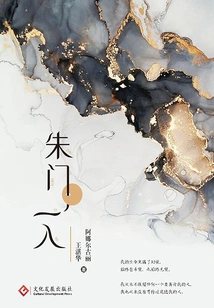
As Soon as Zhumen Enters
General Fiction朱门一入
Analguli Wang Zhanhua
The female writer Ouyang Jiazi came to a wealthy family in Rongdao, the Xia family, to write "Family History" for his family. In the process of learning about the history of the Xia family, Ouyang Jiazi discovered that her owner, Mr. Xia, was always crying inexplicably, which made her wonder what made Mr. Xia so entangled and painful... This unspeakable pain, like ripples, rose up in the family's tranquility, and then calmed down in the rising. Mr. Xia felt that the eldest son he had raised suddenly became a stranger to him. He didn't want to lose this son, but he had a lot of knots in his heart! When Mr. Xia was seriously ill, he longed to fulfill two wishes: one was to write a "Family History" for the family, and the other was to hope that his younger son's career would rise in a short time. He secretly helped his younger son expand his business and pinned his unfinished business on his younger son.
The female writer Ouyang Jiazi came to a wealthy family in Rongdao, the Xia family, to write "Family History" for his family. In the process of learning about the history of the Xia family, Ouyang Jiazi discovered that her owner, Mr. Xia, was always crying inexplicably, which made her wonder what made Mr. Xia so entangled and painful... This unspeakable pain, like ripples, rose up in the family's tranquility, and then calmed down in the rising. Mr. Xia felt that the eldest son he had raised suddenly became a stranger to him. He didn't want to lose this son, but he had a lot of knots in his heart! When Mr. Xia was seriously ill, he longed to fulfill two wishes: one was to write a "Family History" for the family, and the other was to hope that his younger son's career would rise in a short time. He secretly helped his younger son expand his business and pinned his unfinished business on his younger son.
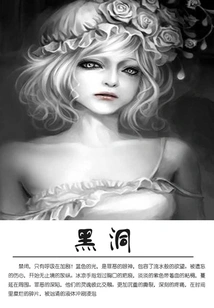
Black Hole
General Fiction黑洞
Stony Ground
At the end of September 1977, autumn was in full swing in southern Hunan. Yanxian County, located at the foot of Hengshan Mountain, has beautiful scenery and suitable seasons. This is an ancient and remote town, no more than a few thousand meters long from east to west and less than four miles from north to south, with a population of less than 60,000. A bluestone street extends westward from the city, five to six meters wide, winding out from the center of the county, passing through the downtown area, becoming less and less visited, and heading straight into the endless rural farmland in the west. The sun faces west, and autumn in the south is the most beautiful time of the year. There were sounds of hurried stumbling from the door of a red-walled hut at the foot of the mountain, and then the door opened with a "whoosh". A strong man, half supporting and half holding his woman, rushed to the tricycle locked under the south window, and carefully placed her in the car to lean against.
At the end of September 1977, autumn was in full swing in southern Hunan. Yanxian County, located at the foot of Hengshan Mountain, has beautiful scenery and suitable seasons. This is an ancient and remote town, no more than a few thousand meters long from east to west and less than four miles from north to south, with a population of less than 60,000. A bluestone street extends westward from the city, five to six meters wide, winding out from the center of the county, passing through the downtown area, becoming less and less visited, and heading straight into the endless rural farmland in the west. The sun faces west, and autumn in the south is the most beautiful time of the year. There were sounds of hurried stumbling from the door of a red-walled hut at the foot of the mountain, and then the door opened with a "whoosh". A strong man, half supporting and half holding his woman, rushed to the tricycle locked under the south window, and carefully placed her in the car to lean against.
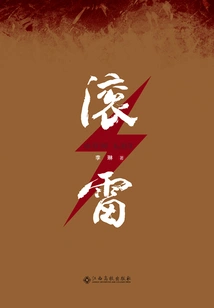
Rolling Thunder
General Fiction滚雷
Li Lin
This book is a long novel. After the "April 12" counter-revolutionary coup in 1927, Wu Tianhao, a member of the Communist Party of China and a student of the Fourth National Sun Yat-sen University in Nanjing, persisted in underground struggle and escaped the pursuit of the Kuomintang. He accepted the secret order of the Jiangsu Provincial Party Committee and sneaked back to the East China Sea in northern Jiangsu to carry out party work and find his lover. Wu Tianhao eventually became the leader and moved his people to Niushan to persist in the struggle, recruit party members, establish branches, go deep into the villages, and launch armed struggles one after another under the arrangements of the superior party organization. With the support of his father, Wu Tianhao sold the crystal stones at home to buy guns and formed the Xuhai guerrillas of the Chinese Workers' and Peasants' Red Army, but was besieged by the landlords' armed forces. Wu Tianhao finally led the guerrillas to break through the encirclement and went west to Maling Mountain to persist in the armed struggle.
This book is a long novel. After the "April 12" counter-revolutionary coup in 1927, Wu Tianhao, a member of the Communist Party of China and a student of the Fourth National Sun Yat-sen University in Nanjing, persisted in underground struggle and escaped the pursuit of the Kuomintang. He accepted the secret order of the Jiangsu Provincial Party Committee and sneaked back to the East China Sea in northern Jiangsu to carry out party work and find his lover. Wu Tianhao eventually became the leader and moved his people to Niushan to persist in the struggle, recruit party members, establish branches, go deep into the villages, and launch armed struggles one after another under the arrangements of the superior party organization. With the support of his father, Wu Tianhao sold the crystal stones at home to buy guns and formed the Xuhai guerrillas of the Chinese Workers' and Peasants' Red Army, but was besieged by the landlords' armed forces. Wu Tianhao finally led the guerrillas to break through the encirclement and went west to Maling Mountain to persist in the armed struggle.
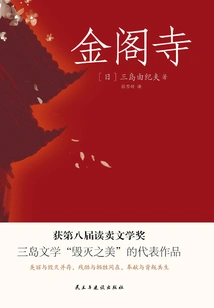
X
General Fictionx
H
"The Golden Pavilion" is based on the true incident in 1950 when monk Lin Yangxian set fire to the Golden Pavilion. Mizoguchi, a young man who was born with a stutter and was obsessed with the beauty of the Kinkakuji Temple, came to the Kinkakuji Temple to become a monk with the dream of inheriting the position of abbot of the Kinkakuji Temple and owning the Kinkaku Temple. After confirming that he could not achieve his wish, he fantasized about dying with the Kinkakuji in an enemy bombing. The end of the war frustrated his wish. In despair, he decided to find an opportunity to burn the Golden Temple to the ground. By burning down the Golden Temple, Mizoguchi eliminated his own mental demons, his suppressed humanity was released, his vision shackles by phantoms was also expanded, and destruction became the path to rebirth.
"The Golden Pavilion" is based on the true incident in 1950 when monk Lin Yangxian set fire to the Golden Pavilion. Mizoguchi, a young man who was born with a stutter and was obsessed with the beauty of the Kinkakuji Temple, came to the Kinkakuji Temple to become a monk with the dream of inheriting the position of abbot of the Kinkakuji Temple and owning the Kinkaku Temple. After confirming that he could not achieve his wish, he fantasized about dying with the Kinkakuji in an enemy bombing. The end of the war frustrated his wish. In despair, he decided to find an opportunity to burn the Golden Temple to the ground. By burning down the Golden Temple, Mizoguchi eliminated his own mental demons, his suppressed humanity was released, his vision shackles by phantoms was also expanded, and destruction became the path to rebirth.
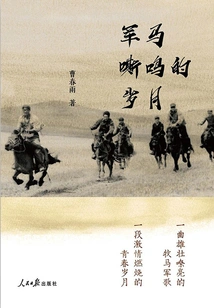
The Years When Military Horses Neighed
General Fiction军马嘶鸣的岁月
Cao Chunyu
This book is a full-length novel. In the 1970s, a group of intellectual youths from the northern cities of the motherland went to the beautiful and arduous prairie of Inner Mongolia to guard the borders and raise military horses. The novel mainly describes the stories of the educated youth army and horse warriors represented by Shen Zhiqiang and Ou Xiaohong, who battled in the freezing cold on snowy nights, fought with wolves in the wilderness, rescued the foals in the lakeside swamp, and risked their lives to fight the fire. It composed a song of youth that praised the spirit of those warriors who raised military horses for national defense. They were not afraid of hardship and death. The story also eulogizes the emotional world of that generation of young people through the tragic love tragedy of Shen Zhiqiang and Han Xuemei, the touching story of Lin Tao and Guo Shasha sacrificing their lives for love, and Wang Danxia's unwavering love for Liu Kaifu.
This book is a full-length novel. In the 1970s, a group of intellectual youths from the northern cities of the motherland went to the beautiful and arduous prairie of Inner Mongolia to guard the borders and raise military horses. The novel mainly describes the stories of the educated youth army and horse warriors represented by Shen Zhiqiang and Ou Xiaohong, who battled in the freezing cold on snowy nights, fought with wolves in the wilderness, rescued the foals in the lakeside swamp, and risked their lives to fight the fire. It composed a song of youth that praised the spirit of those warriors who raised military horses for national defense. They were not afraid of hardship and death. The story also eulogizes the emotional world of that generation of young people through the tragic love tragedy of Shen Zhiqiang and Han Xuemei, the touching story of Lin Tao and Guo Shasha sacrificing their lives for love, and Wang Danxia's unwavering love for Liu Kaifu.
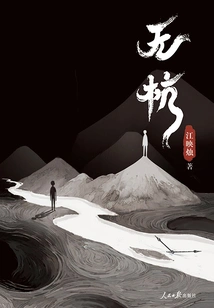
No Hang
General Fiction无杭
Jiang Yingzhu
"Wuhang" is a coming-of-age novel that tells the story of "young Jiang Chuanxu's utopia from its establishment to its collapse." The title of the book is taken from Qu Yuan's "Nine Chapters: Reciting Cherishedness": "I dreamed of reaching the sky, but my soul was on the right path without Hanging." The book mainly focuses on the growth of Jiang Chuanxu. The story covers hometown, family, campus, friendship and the inner life of teenagers. It uses magical realism writing techniques to peer into this bizarre world through a pair of strange and rebellious "ironic eyes", and deconstructs a young man's confusion and understanding of the adult world. With the help of a large number of dramatic anecdotes and metaphors, the article blends dreams and reality, and vividly depicts the hesitation and exploration of young people on their way to growth.
"Wuhang" is a coming-of-age novel that tells the story of "young Jiang Chuanxu's utopia from its establishment to its collapse." The title of the book is taken from Qu Yuan's "Nine Chapters: Reciting Cherishedness": "I dreamed of reaching the sky, but my soul was on the right path without Hanging." The book mainly focuses on the growth of Jiang Chuanxu. The story covers hometown, family, campus, friendship and the inner life of teenagers. It uses magical realism writing techniques to peer into this bizarre world through a pair of strange and rebellious "ironic eyes", and deconstructs a young man's confusion and understanding of the adult world. With the help of a large number of dramatic anecdotes and metaphors, the article blends dreams and reality, and vividly depicts the hesitation and exploration of young people on their way to growth.
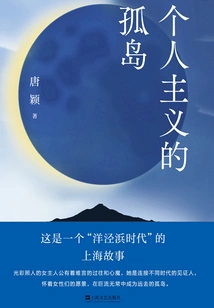
Island of Individualism
General Fiction个人主义的孤岛
Tang Ying
This novel takes personal destiny as a clue and runs through the historical dimension. The warp and weft are intertwined and densely woven, recreating the three-dimensional picture of life in Shanghai 90 years ago with different shapes, sounds and warmth. From it, you can get a glimpse of the intertwined maps of past lives in Shanghai's urban cultural genes: traditional Chinese Jiangnan, Western Europe, Eastern Europe, Judaism, and Japan; old feudal autocracy and republic, ancient times and modern times, scientific democratic civilization and ignorance, darkness and violence... The rich and vivid details reshape the historical reality, and everything that has disappeared in the past time has been salvaged again and reappeared in front of readers.
This novel takes personal destiny as a clue and runs through the historical dimension. The warp and weft are intertwined and densely woven, recreating the three-dimensional picture of life in Shanghai 90 years ago with different shapes, sounds and warmth. From it, you can get a glimpse of the intertwined maps of past lives in Shanghai's urban cultural genes: traditional Chinese Jiangnan, Western Europe, Eastern Europe, Judaism, and Japan; old feudal autocracy and republic, ancient times and modern times, scientific democratic civilization and ignorance, darkness and violence... The rich and vivid details reshape the historical reality, and everything that has disappeared in the past time has been salvaged again and reappeared in front of readers.
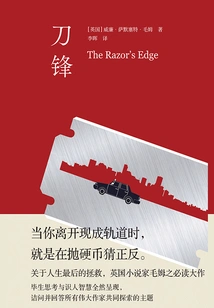
D
General FictionD
H
After witnessing the sacrifice of his closest comrade to save himself, young Larry chose to leave the established life track, rejecting a bright future and a beautiful fiancée, and began a long journey of exploring the meaning of life wholeheartedly... In the cold and objective narration that praises and criticizes self-evidently, everything is revealed. Each character gets what they want: Elliot gets prestige; Isabel gets a solid position in a well-educated social group; Gray gets a well-paying, stable job; Susanna gets security; Sophie gets death; and Larry gets happiness. A person's life is like climbing on a knife's edge. At the end of the day, maybe we can get a glimpse of the clues.
After witnessing the sacrifice of his closest comrade to save himself, young Larry chose to leave the established life track, rejecting a bright future and a beautiful fiancée, and began a long journey of exploring the meaning of life wholeheartedly... In the cold and objective narration that praises and criticizes self-evidently, everything is revealed. Each character gets what they want: Elliot gets prestige; Isabel gets a solid position in a well-educated social group; Gray gets a well-paying, stable job; Susanna gets security; Sophie gets death; and Larry gets happiness. A person's life is like climbing on a knife's edge. At the end of the day, maybe we can get a glimpse of the clues.
Ant Colony
General Fiction蚁群
Tang Wenji
2137, City 501. In a highly intelligent society dominated by women, human beings are monitored and served by countless devices, and the "social management system" judges the value of people by scoring. SFH, an organization that claims to liberate men, opposes this system. They hide in Tibet and carry out resistance activities under the supervision of the system...
2137, City 501. In a highly intelligent society dominated by women, human beings are monitored and served by countless devices, and the "social management system" judges the value of people by scoring. SFH, an organization that claims to liberate men, opposes this system. They hide in Tibet and carry out resistance activities under the supervision of the system...