Library
Browse and search books
3,417 novels found
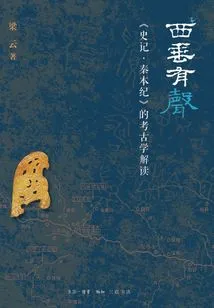
There is Sound in the West: Archaeological Interpretation of "historical Records: the Benji of Qin
History西垂有声:《史记·秦本纪》的考古学阐释
Liang Yun
"Historical Records" has two chronicles about Qin, namely "The Chronicles of Qin" and "The Chronicles of Qin Shihuang", which fully illustrates the importance Sima Qian attached to Qin. The Han Dynasty inherited the Qin system and wanted to avoid the death of Qin II. Therefore, how Qin unified the world from a humble country and then collapsed in an instant has become one of the most concerned historical issues among scholars in the two thousand years since Jia Yi. From moving west to Longyou to unifying the world, it took about seven hundred years. "Historical Records of Qin" records how the Qin people grew from small to large, from weak to strong, and completely experienced the development from vassals to vassal states, then to kingdoms, and finally to empires. It reproduces the process of the "trilogy" and has classic significance in the history of ancient Chinese civilization. This book takes "Historical Records of the Qin Dynasty" as the main line, and uses relevant archaeological data as the "fourth annotation", in order to achieve the effect of the "double evidence method" in which archeology and documents mutually confirm and inspire each other. The author focuses on the question: Qin was able to finally unify the world and establish an empire from a humble small country. In addition to historical trends, there were also factors such as institutional culture, ideological concepts, etc. How did these factors sprout in the time and space of its early development? How is it reflected in material culture? How can the early development of Qin be reasonably restored and stated from an archaeological perspective? In addition, mysteries that have long been litigated in the early history of the Qin people: such as the origin of the Qin people and the origin of Qin culture, the years when King Ping moved eastward and the founding of the Qin Dynasty, the Zhou Yumin of Qin, the owner of Qin Gong's tomb in Dabaozi Mountain, and the burial place of Duke Mu, etc. Are also the focus of this book.
"Historical Records" has two chronicles about Qin, namely "The Chronicles of Qin" and "The Chronicles of Qin Shihuang", which fully illustrates the importance Sima Qian attached to Qin. The Han Dynasty inherited the Qin system and wanted to avoid the death of Qin II. Therefore, how Qin unified the world from a humble country and then collapsed in an instant has become one of the most concerned historical issues among scholars in the two thousand years since Jia Yi. From moving west to Longyou to unifying the world, it took about seven hundred years. "Historical Records of Qin" records how the Qin people grew from small to large, from weak to strong, and completely experienced the development from vassals to vassal states, then to kingdoms, and finally to empires. It reproduces the process of the "trilogy" and has classic significance in the history of ancient Chinese civilization. This book takes "Historical Records of the Qin Dynasty" as the main line, and uses relevant archaeological data as the "fourth annotation", in order to achieve the effect of the "double evidence method" in which archeology and documents mutually confirm and inspire each other. The author focuses on the question: Qin was able to finally unify the world and establish an empire from a humble small country. In addition to historical trends, there were also factors such as institutional culture, ideological concepts, etc. How did these factors sprout in the time and space of its early development? How is it reflected in material culture? How can the early development of Qin be reasonably restored and stated from an archaeological perspective? In addition, mysteries that have long been litigated in the early history of the Qin people: such as the origin of the Qin people and the origin of Qin culture, the years when King Ping moved eastward and the founding of the Qin Dynasty, the Zhou Yumin of Qin, the owner of Qin Gong's tomb in Dabaozi Mountain, and the burial place of Duke Mu, etc. Are also the focus of this book.
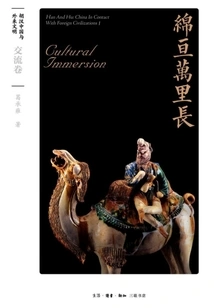
绵亘万里长:交流卷
Ge Chengyong
This book is an exchange volume on "Hu-Han China and Foreign Civilizations". It focuses on the topic of "Memory of the Han and Tang Dynasties and Silk Road Civilization", takes new archaeological discoveries as a guide, incorporates nutrients from Chinese and Western literature, adopts "cosmopolitan" thinking and observation from a broad perspective, starts from a small perspective, picks historical highlights, and launches a series of unique research results. The author combines the practice of "reading thousands of books, walking thousands of miles, and seeing thousands of objects" as well as participating in the planning of many high-quality cultural relics exhibitions. Through "words and cultural relics", "corridors and routes", and "intersections and centers", the author reflects on the unique heights that Chinese civilization has reached after diversity and collision, and understands the implicit or explicit civilizational connections between the ancient Eurasian countries and ancient China. It not only provides intellectual enlightenment for the radiation of the crossroads civilization circle, but also proves once again that cultural exchanges are the inevitable journey of mankind on the road to civilization.
This book is an exchange volume on "Hu-Han China and Foreign Civilizations". It focuses on the topic of "Memory of the Han and Tang Dynasties and Silk Road Civilization", takes new archaeological discoveries as a guide, incorporates nutrients from Chinese and Western literature, adopts "cosmopolitan" thinking and observation from a broad perspective, starts from a small perspective, picks historical highlights, and launches a series of unique research results. The author combines the practice of "reading thousands of books, walking thousands of miles, and seeing thousands of objects" as well as participating in the planning of many high-quality cultural relics exhibitions. Through "words and cultural relics", "corridors and routes", and "intersections and centers", the author reflects on the unique heights that Chinese civilization has reached after diversity and collision, and understands the implicit or explicit civilizational connections between the ancient Eurasian countries and ancient China. It not only provides intellectual enlightenment for the radiation of the crossroads civilization circle, but also proves once again that cultural exchanges are the inevitable journey of mankind on the road to civilization.
却将谈笑洗苍凉:晚清的政局和人物三编
Jiang Ming
Following "The God is Silent to the Dry Chess" and "The Autumn Wind Sword Lonely Tears", this is the third volume of late Qing historical essays written by Jiang Ming, including thirteen articles. There is a long and colorful textual research, which reveals the diplomatic failure of the Qing court after the "Ma Jiali Incident", the potential impact of "Jiashen Yishu" on the defeat of the Sino-Japanese War of 1894-1899, and the ups and downs of the "Qingliu" represented by Zhang Peilun in the political arena at that time. These events just foreshadowed the defeat of the Sino-Japanese War of 1894-1895. There are also essays with novel and interesting angles, from Hu Xueyan's bankruptcy to Sun Yat-sen's kidnapping in London; from Li Hongzhang's final residence to Zhang Peilun's love and marriage life; from the poetry and influence of Prince Chun's inspection of the Beiyang Navy to a spoonful of beef soup for health - touching on all aspects of politics, economy and life in the late Qing Dynasty. Jiang Ming is good at presenting the delicate and macroscopic sense of depth behind historical events from point to point. He combines rigorous historical research with interesting on-site visits, coupled with brisk and moving writing, to give a novel interpretation of important historical events and figures in the late Qing Dynasty. In the blend of history and reality, the true picture of that turbulent era is reproduced.
Following "The God is Silent to the Dry Chess" and "The Autumn Wind Sword Lonely Tears", this is the third volume of late Qing historical essays written by Jiang Ming, including thirteen articles. There is a long and colorful textual research, which reveals the diplomatic failure of the Qing court after the "Ma Jiali Incident", the potential impact of "Jiashen Yishu" on the defeat of the Sino-Japanese War of 1894-1899, and the ups and downs of the "Qingliu" represented by Zhang Peilun in the political arena at that time. These events just foreshadowed the defeat of the Sino-Japanese War of 1894-1895. There are also essays with novel and interesting angles, from Hu Xueyan's bankruptcy to Sun Yat-sen's kidnapping in London; from Li Hongzhang's final residence to Zhang Peilun's love and marriage life; from the poetry and influence of Prince Chun's inspection of the Beiyang Navy to a spoonful of beef soup for health - touching on all aspects of politics, economy and life in the late Qing Dynasty. Jiang Ming is good at presenting the delicate and macroscopic sense of depth behind historical events from point to point. He combines rigorous historical research with interesting on-site visits, coupled with brisk and moving writing, to give a novel interpretation of important historical events and figures in the late Qing Dynasty. In the blend of history and reality, the true picture of that turbulent era is reproduced.
权力的掌控:军机处
Xiong Jianping
This book systematically describes the power struggle between the Manchus and the Han, the clan and the emperor, the imperial power and the cabinet, and the civil servants and military generals surrounding the "Military Aircraft Department". From the Luobuzangdanjin rebellion in the Yongzheng period to the third year of Xuantong, when the Qing government implemented the cabinet system, what role did the Military Aircraft Department play in these more than 180 years? It had a very profound impact on all aspects of politics, economy, and military affairs in the Qing Dynasty. A military information transmission and processing agency can gradually transform into an all-encompassing political decision-making agency, even openly usurping the power of the cabinet and replacing it. The Military Aircraft Office can be called a very strange phenomenon in the thousands of years of ancient Chinese political history.
This book systematically describes the power struggle between the Manchus and the Han, the clan and the emperor, the imperial power and the cabinet, and the civil servants and military generals surrounding the "Military Aircraft Department". From the Luobuzangdanjin rebellion in the Yongzheng period to the third year of Xuantong, when the Qing government implemented the cabinet system, what role did the Military Aircraft Department play in these more than 180 years? It had a very profound impact on all aspects of politics, economy, and military affairs in the Qing Dynasty. A military information transmission and processing agency can gradually transform into an all-encompassing political decision-making agency, even openly usurping the power of the cabinet and replacing it. The Military Aircraft Office can be called a very strange phenomenon in the thousands of years of ancient Chinese political history.
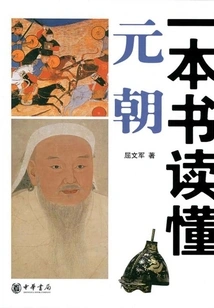
一本书读懂元朝
Qu Wenjun
The book consists of two parts. The first part introduces the historical trends of the Great Mongol Period and the Yuan Dynasty, and gives a succinct introduction to the important historical events of the Great Mongol Period and the Yuan Dynasty for more than a hundred years. The second part is a special topic on the history of the Great Mongol Period and the Yuan Dynasty, which introduces the economy and science and technology, foreign wars and diplomatic relations, official and military systems, culture and art, social life, religious customs, etc. Of the Great Mongol Period and the Yuan Dynasty. It not only corrects people's long-term improper understanding of the historical status of the Great Mongol Period and the Yuan Dynasty, but also provides a positive description of all aspects of the Great Mongol Period and the Yuan Dynasty society, which can give readers a relatively complete impression. At the same time, the "chronology of major events", "related links", etc. Make the explanation of historical common sense and background knowledge clear and rich.
The book consists of two parts. The first part introduces the historical trends of the Great Mongol Period and the Yuan Dynasty, and gives a succinct introduction to the important historical events of the Great Mongol Period and the Yuan Dynasty for more than a hundred years. The second part is a special topic on the history of the Great Mongol Period and the Yuan Dynasty, which introduces the economy and science and technology, foreign wars and diplomatic relations, official and military systems, culture and art, social life, religious customs, etc. Of the Great Mongol Period and the Yuan Dynasty. It not only corrects people's long-term improper understanding of the historical status of the Great Mongol Period and the Yuan Dynasty, but also provides a positive description of all aspects of the Great Mongol Period and the Yuan Dynasty society, which can give readers a relatively complete impression. At the same time, the "chronology of major events", "related links", etc. Make the explanation of historical common sense and background knowledge clear and rich.
Extraterritorial Collection: History of the Yuan Dynasty and History of Sino-foreign Relations
History域外集:元史、中外关系史论丛
He Gaoji Lu Junling
The content of this book is a collection of several articles published by Mr. He Gaoji and Lu Junling using Chinese and foreign literature to conduct research on the history of the Yuan Dynasty and the history of Sino-foreign relations.
The content of this book is a collection of several articles published by Mr. He Gaoji and Lu Junling using Chinese and foreign literature to conduct research on the history of the Yuan Dynasty and the history of Sino-foreign relations.
The Glory of History
History历史的荣耀
History Study Club
Is Cao Cao actually the "doomsday savior" of Taoism? Zhuge Liang actually has the same idol as Lu Bu? Song Taizu's "conscience" actually deceived the Northern Song Dynasty! Mongolians who are not afraid of blizzards? Doesn't exist! Since the Qin Dynasty, the first unified dynasty, China has begun the era of "two thousand years of empire". But can such fixed thinking about dynasty changes and imperial autocracy summarize the vast two thousand years of history? In the vast territory of the Chinese Empire, there are the horses and sword rings of the Great Wall; there are the farming people of the Central Plains who "plant the fields with green rice in their hands"; there are Qiuci and Gaochang where Hu merchants are everywhere on the Western Silk Road; Nanshui Township... Above the court, there are turbulent undercurrents: Confucian scholars and alchemists, warlords and aristocratic families, nobles and bureaucrats... Complex forces are fighting openly and covertly outside the empire, and powerful enemies are around: vassal towns, rebels, enemy countries are eyeing... What kind of ruler can manage such a complex empire? What kind of political wisdom can maintain this delicate world? This is the history of the Chinese Empire - and it's more fantastical and exciting than fiction. Let us examine the rise and fall of empires from a new perspective and appreciate the art of imperial rule. From the four levels of "people's hearts", "hegemony", "strategy" and "rise and fall", through two themes and combining two eras, this book uses detailed historical materials and professional research to analyze the historical context of the two thousand years of "imperial era" in ancient China, explore the art of imperial rule, write a brief history of the Chinese empire with a new idea, and explore the wisdom of history and the brilliance of human nature in China over thousands of years from the rise and fall of empires.
Is Cao Cao actually the "doomsday savior" of Taoism? Zhuge Liang actually has the same idol as Lu Bu? Song Taizu's "conscience" actually deceived the Northern Song Dynasty! Mongolians who are not afraid of blizzards? Doesn't exist! Since the Qin Dynasty, the first unified dynasty, China has begun the era of "two thousand years of empire". But can such fixed thinking about dynasty changes and imperial autocracy summarize the vast two thousand years of history? In the vast territory of the Chinese Empire, there are the horses and sword rings of the Great Wall; there are the farming people of the Central Plains who "plant the fields with green rice in their hands"; there are Qiuci and Gaochang where Hu merchants are everywhere on the Western Silk Road; Nanshui Township... Above the court, there are turbulent undercurrents: Confucian scholars and alchemists, warlords and aristocratic families, nobles and bureaucrats... Complex forces are fighting openly and covertly outside the empire, and powerful enemies are around: vassal towns, rebels, enemy countries are eyeing... What kind of ruler can manage such a complex empire? What kind of political wisdom can maintain this delicate world? This is the history of the Chinese Empire - and it's more fantastical and exciting than fiction. Let us examine the rise and fall of empires from a new perspective and appreciate the art of imperial rule. From the four levels of "people's hearts", "hegemony", "strategy" and "rise and fall", through two themes and combining two eras, this book uses detailed historical materials and professional research to analyze the historical context of the two thousand years of "imperial era" in ancient China, explore the art of imperial rule, write a brief history of the Chinese empire with a new idea, and explore the wisdom of history and the brilliance of human nature in China over thousands of years from the rise and fall of empires.
抉择:鼎革之际的历史与人
Xie Xizhang
This book focuses on the portraits of intellectuals during the changing dynasties, mainly in the late Ming and early Qing dynasties and the late Qing and early Republic of China, including Chen Hongshou, Fu Shan, Yu Lichu, Huang Zongxi, Li Zhi, Lu Liuliang, Yan Fu, Lu Bicheng, Xu Shichang and others. The author focuses on the personal experiences and personal choices of these characters during the turbulent times of revolution, in order to explore their inner worlds.
This book focuses on the portraits of intellectuals during the changing dynasties, mainly in the late Ming and early Qing dynasties and the late Qing and early Republic of China, including Chen Hongshou, Fu Shan, Yu Lichu, Huang Zongxi, Li Zhi, Lu Liuliang, Yan Fu, Lu Bicheng, Xu Shichang and others. The author focuses on the personal experiences and personal choices of these characters during the turbulent times of revolution, in order to explore their inner worlds.
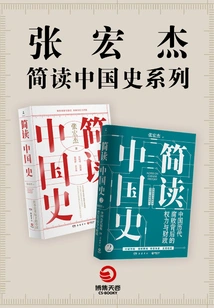
张宏杰“简读中国史”系列(共2册)
Zhang Hongjie
This set is a series of brief readings of Chinese history by the well-known historian Zhang Hongjie. "A Brief Reading of Chinese History: China in the Coordinates of World History": Chinese civilization has never developed in isolation. From the moment it emerged, it has been influenced by factors from other civilizations in the world. However, these external factors did not change the essence of Chinese civilization, but instead highlighted the uniqueness of Chinese civilization. This book puts Chinese history into the context of world history and clarifies the development of Chinese history, hoping that readers can establish an overall concept of Chinese history in a short time. At the same time, it uses a "long-term, long-distance, wide-view" interpretation method to comprehensively present the internal logic and rules of the game behind the cycle of chaos in Chinese history. "A Brief Reading of Chinese History. The Power and Finance Behind the Corruption in Chinese History": power games and financial rules, systems and checks and balances, top-level designs and the naked humanity behind bad rules are real and cruel. The root cause of corruption in China's past dynasties is absolute power control. It is impossible to solve the corruption problem without solving the foundation of the power structure. The history of imperial rule and the history of official corruption have always been inseparable. The author focuses on the Han, Tang, Song, Yuan, Ming and Qing dynasties, makes horizontal and vertical comparisons, explores the imperial rule and official ecology of ancient Chinese society, and clearly presents a multi-angle context of Chinese history to readers.
This set is a series of brief readings of Chinese history by the well-known historian Zhang Hongjie. "A Brief Reading of Chinese History: China in the Coordinates of World History": Chinese civilization has never developed in isolation. From the moment it emerged, it has been influenced by factors from other civilizations in the world. However, these external factors did not change the essence of Chinese civilization, but instead highlighted the uniqueness of Chinese civilization. This book puts Chinese history into the context of world history and clarifies the development of Chinese history, hoping that readers can establish an overall concept of Chinese history in a short time. At the same time, it uses a "long-term, long-distance, wide-view" interpretation method to comprehensively present the internal logic and rules of the game behind the cycle of chaos in Chinese history. "A Brief Reading of Chinese History. The Power and Finance Behind the Corruption in Chinese History": power games and financial rules, systems and checks and balances, top-level designs and the naked humanity behind bad rules are real and cruel. The root cause of corruption in China's past dynasties is absolute power control. It is impossible to solve the corruption problem without solving the foundation of the power structure. The history of imperial rule and the history of official corruption have always been inseparable. The author focuses on the Han, Tang, Song, Yuan, Ming and Qing dynasties, makes horizontal and vertical comparisons, explores the imperial rule and official ecology of ancient Chinese society, and clearly presents a multi-angle context of Chinese history to readers.
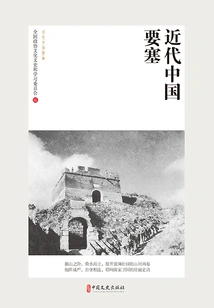
Modern China Fortress
History近代中国要塞
Cppcc Culture, History And Learning Committee
Fortresses have always been important military defense sites. Since the 16th century, maritime civilization countries with colonial nature have gradually extended their aggressive intentions to China. In order to ensure homeland security and coastal trade interests, successive Chinese governments have built and improved coastal defense fortress projects. By the 19th century, the focus of my country's national defense frontline had shifted from inside and outside the Great Wall to the coastal areas. From the south to the north, from the coast to the inland, this book mainly tells about the important coastal defense fortresses, pass fortresses and underground fortresses distributed in South my country, East China, North China and Northeast China. It describes the Chinese people who faced the invasion of foreign enemies and bravely resisted with their flesh and blood, composing heroic poems that are both evocative and evocative.
Fortresses have always been important military defense sites. Since the 16th century, maritime civilization countries with colonial nature have gradually extended their aggressive intentions to China. In order to ensure homeland security and coastal trade interests, successive Chinese governments have built and improved coastal defense fortress projects. By the 19th century, the focus of my country's national defense frontline had shifted from inside and outside the Great Wall to the coastal areas. From the south to the north, from the coast to the inland, this book mainly tells about the important coastal defense fortresses, pass fortresses and underground fortresses distributed in South my country, East China, North China and Northeast China. It describes the Chinese people who faced the invasion of foreign enemies and bravely resisted with their flesh and blood, composing heroic poems that are both evocative and evocative.
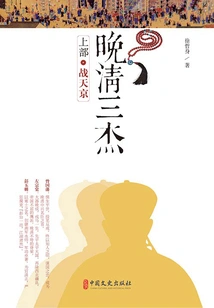
晚清三杰(上):战天京
Xu Zheshen
In the late Qing Dynasty, when the Western powers were rising strongly, the land of China was faced with a dim dynasty, corrupt officialdom, invasion by foreign powers, and peasant uprisings at home. In particular, the Taiping Army was unstoppable, and the Qing Empire was in danger. Zeng Guofan, Zuo Zongtang, and Peng Yulin were originally scholars in the traditional sense, but they wanted to help the building to turn the tide before it fell. They founded the Hunan Army, trained the navy, mastered the art of cloth, and launched a desperate battle with the Taiping Army. Xu Zheshen, the son of Hunan Army general Xu Chunrong. Xu Chunrong had many contacts with Zeng, Zuo and Peng Junjun, and had deep daily interactions with them. Xu Zheshen had a profound understanding of the three of them. Zeng Guofan's prudence and courage, Zuo Zongtang's arrogance and magnanimity, Peng Yulin's uprightness and sincerity, Xu Zheshen vividly described them with a brief history.
In the late Qing Dynasty, when the Western powers were rising strongly, the land of China was faced with a dim dynasty, corrupt officialdom, invasion by foreign powers, and peasant uprisings at home. In particular, the Taiping Army was unstoppable, and the Qing Empire was in danger. Zeng Guofan, Zuo Zongtang, and Peng Yulin were originally scholars in the traditional sense, but they wanted to help the building to turn the tide before it fell. They founded the Hunan Army, trained the navy, mastered the art of cloth, and launched a desperate battle with the Taiping Army. Xu Zheshen, the son of Hunan Army general Xu Chunrong. Xu Chunrong had many contacts with Zeng, Zuo and Peng Junjun, and had deep daily interactions with them. Xu Zheshen had a profound understanding of the three of them. Zeng Guofan's prudence and courage, Zuo Zongtang's arrogance and magnanimity, Peng Yulin's uprightness and sincerity, Xu Zheshen vividly described them with a brief history.
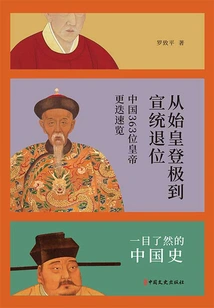
从始皇登极到宣统退位:中国363位皇帝更迭速览
Luo Zhiping
This book concisely, systematically and coherently presents to readers the inheritance process, reign time and main merits and demerits of all 62 dynasties and 363 emperors recorded in the official history in the 2132 years from the ascension of Qin Shihuang to the abdication of Xuantong, to meet the needs of readers to understand historical knowledge, clarify the historical context, and explore the laws of historical development and change. In order to facilitate reading and reference, this book has specially compiled a "Search Table of Contents for the Order of Succession and Reign Time of Emperors of All Dynasties". Based on the change of dynasties and the order of succession of emperors, you can find the specific reign time and main merits and demerits of the dynasties or emperors you want to know, and use this as a guide for further reading or research.
This book concisely, systematically and coherently presents to readers the inheritance process, reign time and main merits and demerits of all 62 dynasties and 363 emperors recorded in the official history in the 2132 years from the ascension of Qin Shihuang to the abdication of Xuantong, to meet the needs of readers to understand historical knowledge, clarify the historical context, and explore the laws of historical development and change. In order to facilitate reading and reference, this book has specially compiled a "Search Table of Contents for the Order of Succession and Reign Time of Emperors of All Dynasties". Based on the change of dynasties and the order of succession of emperors, you can find the specific reign time and main merits and demerits of the dynasties or emperors you want to know, and use this as a guide for further reading or research.
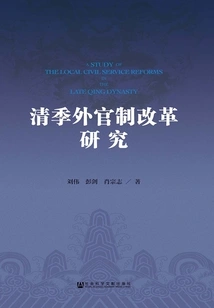
清季外官制改革研究
Liu Wei Peng Jian Xiao Zongzhi
Starting from the changes in the power structure brought about by the reform of the external official system, this book discusses the reforms in various aspects of legislation, justice, and local autonomy, revealing the gap between system design and implementation, as well as its effectiveness and impact; it explores the administrative reform patterns of governments at all levels, including the addition, adjustment, and restructuring of institutions, and and the ensuing changes in official functions, and reveal the actual direction of the reform from the debates and conflicts between the interests of all parties in the reform; explore the changes in the official selection system, assessment and supervision system, and salary system that began with the reform of the foreign official system, and strive to comprehensively show the overall appearance of the reform of the foreign official system.
Starting from the changes in the power structure brought about by the reform of the external official system, this book discusses the reforms in various aspects of legislation, justice, and local autonomy, revealing the gap between system design and implementation, as well as its effectiveness and impact; it explores the administrative reform patterns of governments at all levels, including the addition, adjustment, and restructuring of institutions, and and the ensuing changes in official functions, and reveal the actual direction of the reform from the debates and conflicts between the interests of all parties in the reform; explore the changes in the official selection system, assessment and supervision system, and salary system that began with the reform of the foreign official system, and strive to comprehensively show the overall appearance of the reform of the foreign official system.
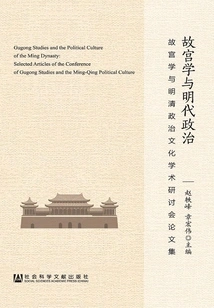
故宫学与明代政治:故宫学与明清政治文化学术研讨会论文集
Zhao Yifeng Editor-in-chief Zhang Hongwei
This book is compiled based on the papers of the "Academic Symposium on Forbiddenology and Ming and Qing Political Culture" co-sponsored by the Institute of Palace Studies of the Palace Museum and the Institute of Asian Civilizations of Northeast Normal University in July 2013. It explores the mechanism and culture of palace politics in the Ming Dynasty, including politics, memorials to "remain in China", education of concubines, and the role of sycophants. It shows that the palace in the Ming and Qing Dynasties was not only a center of autocratic rule, but also a special political and cultural field, showing the multifaceted characteristics of Chinese political traditions.
This book is compiled based on the papers of the "Academic Symposium on Forbiddenology and Ming and Qing Political Culture" co-sponsored by the Institute of Palace Studies of the Palace Museum and the Institute of Asian Civilizations of Northeast Normal University in July 2013. It explores the mechanism and culture of palace politics in the Ming Dynasty, including politics, memorials to "remain in China", education of concubines, and the role of sycophants. It shows that the palace in the Ming and Qing Dynasties was not only a center of autocratic rule, but also a special political and cultural field, showing the multifaceted characteristics of Chinese political traditions.
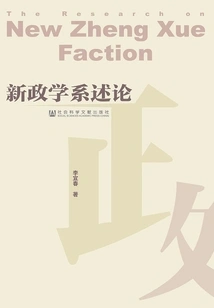
新政学系述论
Li Yichun
As one of the direct factions of Chiang Kai-shek, the New Deal Department played a pivotal role in the factional politics of the Kuomintang. This book aims to explore the development context and factional characteristics of the New Political Science Department of the Kuomintang, as well as the relationship between the New Political Science Department and other factions of the Kuomintang. Then, comprehensively use political science, management, sociology, culture and other relevant theories to explore the causes of the Kuomintang's factional politics. From the perspective of political party science, analyze the historical impact of the Kuomintang's factional struggles, including the New Deal Department.
As one of the direct factions of Chiang Kai-shek, the New Deal Department played a pivotal role in the factional politics of the Kuomintang. This book aims to explore the development context and factional characteristics of the New Political Science Department of the Kuomintang, as well as the relationship between the New Political Science Department and other factions of the Kuomintang. Then, comprehensively use political science, management, sociology, culture and other relevant theories to explore the causes of the Kuomintang's factional politics. From the perspective of political party science, analyze the historical impact of the Kuomintang's factional struggles, including the New Deal Department.
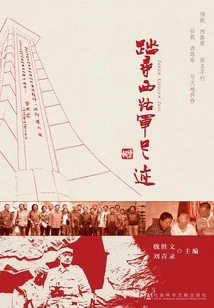
踏寻西路军足迹
Wei Shengwen Liu Qinglu
This book is a book edited by Wei Shengwen, deputy director of the Shaanxi Academy of Social Sciences, and Liu Qinglu, an investor in Biaoshi Culture Co., Ltd., Which records the publication process of the Red West Route Army-themed comic strip - "The Bloody Battle in Hexi". This set of comic books is a key cultural and creative project of Shaanxi Province. It is a key literary and artistic creation funding project of the province in 2011 by the Propaganda Department of the Gansu Provincial Committee of the Communist Party of China. It is a gift book for the 18th National Congress of the Communist Party of China. The purpose of this book is to show readers the hardships and efforts involved in completing the entire project on the basis of carrying forward the revolutionary spirit of the Red West Route Army and clarifying historical facts.
This book is a book edited by Wei Shengwen, deputy director of the Shaanxi Academy of Social Sciences, and Liu Qinglu, an investor in Biaoshi Culture Co., Ltd., Which records the publication process of the Red West Route Army-themed comic strip - "The Bloody Battle in Hexi". This set of comic books is a key cultural and creative project of Shaanxi Province. It is a key literary and artistic creation funding project of the province in 2011 by the Propaganda Department of the Gansu Provincial Committee of the Communist Party of China. It is a gift book for the 18th National Congress of the Communist Party of China. The purpose of this book is to show readers the hardships and efforts involved in completing the entire project on the basis of carrying forward the revolutionary spirit of the Red West Route Army and clarifying historical facts.
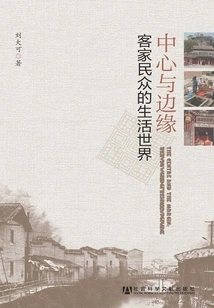
中心与边缘:客家民众的生活世界
Liu Dake
Based on fieldwork in 64 villages in northern Wuping County, western Fujian, combined with relevant literature, this book provides a panoramic and three-dimensional description and discussion of the society and culture of the Hakka villages in Wubei, western Fujian, from the perspective of the center and the periphery, focusing on ancestor worship, god worship, and market transactions.
Based on fieldwork in 64 villages in northern Wuping County, western Fujian, combined with relevant literature, this book provides a panoramic and three-dimensional description and discussion of the society and culture of the Hakka villages in Wubei, western Fujian, from the perspective of the center and the periphery, focusing on ancestor worship, god worship, and market transactions.
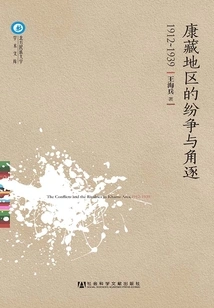
康藏地区的纷争与角逐(1912~1939)
Wang Haibing
This book places a series of major and minor wars that took place in the Kangzang area from 1912 to 1939 in the context of the development of the Kangzang issue for a comprehensive and systematic study. It strives to restore this twists and turns of the changes in the situation in Kham and Tibet in the special historical environment and the pluralistic and integrated political pattern of modern China. On this basis, the paper focuses on the impact of the power interaction and power competition between the central government of the Republic of China, Sichuan and Yunnan Kangqing and other local military forces, the Kham elites, and the Tibetan local government in the disputes in the Kham-Tibet area on the relationship between Kham and Tibet and the central government's regime construction in the Kham-Tibet area.
This book places a series of major and minor wars that took place in the Kangzang area from 1912 to 1939 in the context of the development of the Kangzang issue for a comprehensive and systematic study. It strives to restore this twists and turns of the changes in the situation in Kham and Tibet in the special historical environment and the pluralistic and integrated political pattern of modern China. On this basis, the paper focuses on the impact of the power interaction and power competition between the central government of the Republic of China, Sichuan and Yunnan Kangqing and other local military forces, the Kham elites, and the Tibetan local government in the disputes in the Kham-Tibet area on the relationship between Kham and Tibet and the central government's regime construction in the Kham-Tibet area.
明清之际的探索:张玉兴文集
Zhang Yuxing
This is a collection of historical essays. A total of 22 articles in 5 groups were collected. It includes: 4 theoretical discussions, 6 loyalty commendations, 4 textual researches, 4 Northeast literature and history, and 4 book reviews and compilation of Qing history. A total of about 405,000 words. Its general content includes the following five points: 1. It selects the hot issues that society is most concerned about, especially how to evaluate the "second ministers" who surrendered to the Qing Dynasty during the Ming and Qing Dynasties. There is a lot of controversy in the academic community. It may be said that it is a failure in major matters, or that it is a betrayal of the dark side. It can be said that it is tit for tat. The author discusses again and again, conducts in-depth analysis, and explains his views: he clearly denounces rebellion and praises loyalty; 2 Selects cutting-edge historical issues that are refreshing to the academic world. The author questions some general historical conclusions, overthrows the established theories, and puts forward new opinions, such as on Fan Wencheng's return to the Qing Dynasty and Emperor Hongguang's "loss of morality" "Debate on the issue; 3. Many original academic works have been selected. The author has published more than 80 papers. All of them have pioneered their own paths, independently operated, and filled gaps that have not been published before. This book has selected 21 works to show this; 4. Selected works that promote traditional virtues and have social benefits. The author writes good history with conscience, focusing on discovering the most valuable parts of history, in order to benefit the world, rectify people's hearts, and have a lot of enlightening significance; 5 he has selected works that seek truth and truth and criticize the current shortcomings. In the face of the widespread trend of academic shoddy, he turned a blind eye to shortcomings such as cheap flattery, and revealed them meticulously with a rigorous and prudent attitude, which is enough to make people think.
This is a collection of historical essays. A total of 22 articles in 5 groups were collected. It includes: 4 theoretical discussions, 6 loyalty commendations, 4 textual researches, 4 Northeast literature and history, and 4 book reviews and compilation of Qing history. A total of about 405,000 words. Its general content includes the following five points: 1. It selects the hot issues that society is most concerned about, especially how to evaluate the "second ministers" who surrendered to the Qing Dynasty during the Ming and Qing Dynasties. There is a lot of controversy in the academic community. It may be said that it is a failure in major matters, or that it is a betrayal of the dark side. It can be said that it is tit for tat. The author discusses again and again, conducts in-depth analysis, and explains his views: he clearly denounces rebellion and praises loyalty; 2 Selects cutting-edge historical issues that are refreshing to the academic world. The author questions some general historical conclusions, overthrows the established theories, and puts forward new opinions, such as on Fan Wencheng's return to the Qing Dynasty and Emperor Hongguang's "loss of morality" "Debate on the issue; 3. Many original academic works have been selected. The author has published more than 80 papers. All of them have pioneered their own paths, independently operated, and filled gaps that have not been published before. This book has selected 21 works to show this; 4. Selected works that promote traditional virtues and have social benefits. The author writes good history with conscience, focusing on discovering the most valuable parts of history, in order to benefit the world, rectify people's hearts, and have a lot of enlightening significance; 5 he has selected works that seek truth and truth and criticize the current shortcomings. In the face of the widespread trend of academic shoddy, he turned a blind eye to shortcomings such as cheap flattery, and revealed them meticulously with a rigorous and prudent attitude, which is enough to make people think.
中华民国史·第二卷:1912-1916(上)
Chief Editor Li Xin Research Office Of The History Of The Republic Of China, Institute Of Modern History, Chinese Academy Of Social Sciences
This volume covers the period from 1912 to 1916. In addition to comprehensively collecting and utilizing the archives of the Republic of China stored in the Second Historical Archives of China, archival materials from relevant local archives, historical materials related to the National Committee of the Chinese People's Political Consultative Conference and local political consultative conferences, as well as a large number of domestically collected books and newspapers of the Republic of China, the author also made extensive reference to relevant materials, books, and articles published in Taiwan and abroad. On the basis of respecting historical facts, the author restores the true face of the history of the Republic of China.
This volume covers the period from 1912 to 1916. In addition to comprehensively collecting and utilizing the archives of the Republic of China stored in the Second Historical Archives of China, archival materials from relevant local archives, historical materials related to the National Committee of the Chinese People's Political Consultative Conference and local political consultative conferences, as well as a large number of domestically collected books and newspapers of the Republic of China, the author also made extensive reference to relevant materials, books, and articles published in Taiwan and abroad. On the basis of respecting historical facts, the author restores the true face of the history of the Republic of China.
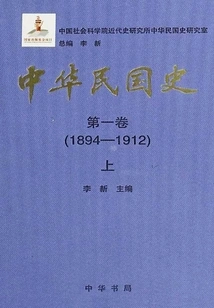
中华民国史·第一卷:1894-1912(上)
Chief Editor Li Xin Research Office Of The History Of The Republic Of China, Institute Of Modern History, Chinese Academy Of Social Sciences
This volume covers the period from 1894 to 1912. In addition to comprehensively collecting and utilizing the archives of the Republic of China stored in the Second Historical Archives of China, archival materials from relevant local archives, historical materials related to the National Committee of the Chinese People's Political Consultative Conference and local political consultative conferences, as well as a large number of domestically collected books and newspapers of the Republic of China, the author also made extensive reference to relevant materials, books, and articles published in Taiwan and abroad. On the basis of respecting historical facts, the author restores the true face of the history of the Republic of China.
This volume covers the period from 1894 to 1912. In addition to comprehensively collecting and utilizing the archives of the Republic of China stored in the Second Historical Archives of China, archival materials from relevant local archives, historical materials related to the National Committee of the Chinese People's Political Consultative Conference and local political consultative conferences, as well as a large number of domestically collected books and newspapers of the Republic of China, the author also made extensive reference to relevant materials, books, and articles published in Taiwan and abroad. On the basis of respecting historical facts, the author restores the true face of the history of the Republic of China.
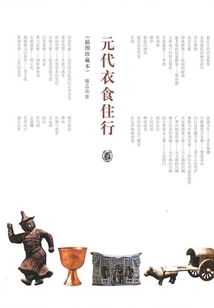
元代衣食住行(插图珍藏本)
Han Zhiyuan
The Yuan Dynasty was a unified dynasty established by Mongolian rulers in Chinese history. It lasted for ninety-eight years after eleven emperors were established by Kublai Khan. Counting from the founding of the country by Genghis Khan, there were fifteen emperors, one hundred and sixty-three years. The territory after the unification of the Yuan Dynasty was: Siberia in the north, South China Sea in the south, Tibet and Yunnan in the southwest, Xinjiang in the northwest, and the Sea of Okhotsk in the northeast. The costumes of the Yuan Dynasty had distinct characteristics of the era and the nation, and many new clothing styles appeared. Clothing materials, colors, craftsmanship, etc. All greatly exceed those of previous generations. Before the establishment of the Yuan Dynasty, the Mongolian people mainly lived on animal husbandry and hunting, with meat and dairy products as their main foods. "Eat meat without grain" and rarely eat grain. After the unification of the Yuan Dynasty, exchanges between Mongolian, Han and other ethnic groups were strengthened. The combination of agriculture and animal husbandry made the food composition of the Yuan Dynasty gradually more reasonable, and the cooking technology of the Yuan Dynasty developed greatly. Tea and wine have become a cultural phenomenon and have been immersed in people's daily lives. For eating utensils, pursue tall shapes and valuable materials. People in the Yuan Dynasty accumulated a lot of knowledge on food hygiene in social practice, which played a certain positive role in human health and social development at that time. The Yuan Dynasty had a vast territory and the different geographical environments of each ethnic group determined the differences in living styles. There are felt tents on the grasslands, palaces in the cities, cave dwellings in the mountainous areas, boathouses in the water towns, houses on the plains, stone houses in coastal cities and buildings in the Central and West Asian styles, etc., Thus making the Yuan Dynasty residential buildings a rich and colorful picture.
The Yuan Dynasty was a unified dynasty established by Mongolian rulers in Chinese history. It lasted for ninety-eight years after eleven emperors were established by Kublai Khan. Counting from the founding of the country by Genghis Khan, there were fifteen emperors, one hundred and sixty-three years. The territory after the unification of the Yuan Dynasty was: Siberia in the north, South China Sea in the south, Tibet and Yunnan in the southwest, Xinjiang in the northwest, and the Sea of Okhotsk in the northeast. The costumes of the Yuan Dynasty had distinct characteristics of the era and the nation, and many new clothing styles appeared. Clothing materials, colors, craftsmanship, etc. All greatly exceed those of previous generations. Before the establishment of the Yuan Dynasty, the Mongolian people mainly lived on animal husbandry and hunting, with meat and dairy products as their main foods. "Eat meat without grain" and rarely eat grain. After the unification of the Yuan Dynasty, exchanges between Mongolian, Han and other ethnic groups were strengthened. The combination of agriculture and animal husbandry made the food composition of the Yuan Dynasty gradually more reasonable, and the cooking technology of the Yuan Dynasty developed greatly. Tea and wine have become a cultural phenomenon and have been immersed in people's daily lives. For eating utensils, pursue tall shapes and valuable materials. People in the Yuan Dynasty accumulated a lot of knowledge on food hygiene in social practice, which played a certain positive role in human health and social development at that time. The Yuan Dynasty had a vast territory and the different geographical environments of each ethnic group determined the differences in living styles. There are felt tents on the grasslands, palaces in the cities, cave dwellings in the mountainous areas, boathouses in the water towns, houses on the plains, stone houses in coastal cities and buildings in the Central and West Asian styles, etc., Thus making the Yuan Dynasty residential buildings a rich and colorful picture.
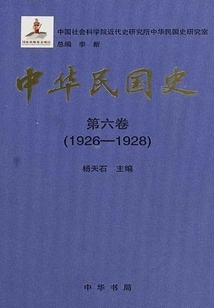
中华民国史·第六卷:1926-1928
Chief Editor Li Xin Research Office Of The History Of The Republic Of China, Institute Of Modern History, Chinese Academy Of Social Sciences
This volume covers the period from 1926 to 1928. In addition to comprehensively collecting and utilizing the archives of the Republic of China stored in the Second Historical Archives of China, archival materials from relevant local archives, historical materials related to the National Committee of the Chinese People's Political Consultative Conference and local political consultative conferences, as well as a large number of domestically collected books and newspapers of the Republic of China, the author also made extensive reference to relevant materials, books, and articles published in Taiwan and abroad. On the basis of respecting historical facts, the author restores the true face of the history of the Republic of China.
This volume covers the period from 1926 to 1928. In addition to comprehensively collecting and utilizing the archives of the Republic of China stored in the Second Historical Archives of China, archival materials from relevant local archives, historical materials related to the National Committee of the Chinese People's Political Consultative Conference and local political consultative conferences, as well as a large number of domestically collected books and newspapers of the Republic of China, the author also made extensive reference to relevant materials, books, and articles published in Taiwan and abroad. On the basis of respecting historical facts, the author restores the true face of the history of the Republic of China.
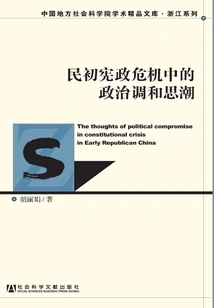
民初宪政危机中的政治调和思潮
Hu Lijuan
The idea of reconciliation can be described as a continuation of the response of intellectuals in the early years of the Republic of China to the political, social and cultural crises faced since 1895. More than that, it is a more profound and complex reflexive response that emerges from a constitutional crisis. The mediators Zhang Shizhao, Du Yaquan, Liang Qichao, Zhang Dongsun, Li Dazhao, and Li Jiannong in the early Republic of China combined Chinese and Western experience to relentlessly explore the issue of how to achieve democratic transformation in the early Republic of China. They profoundly expressed the political wisdom of achieving democratic transformation through compromise, which was an extremely precious ideological resource in the early Republic of China. In order to distinguish it from cultural reconciliation, this book uses the concept of "political reconciliation trend" to specifically refer to political reconciliation trends. The idea of reconciliation was once popular in the ideological circles in the early Republic of China and became a trend of thought, but in the end it was short-lived. This book selects the political reconciliation trend in the early Republic of China as the research object, aiming to summarize the historical experience and ideological legacy of the transition to constitutional democracy in the early Republic of China. It also has positive practical significance for today's governance of the country according to law and the construction of a socialist country under the rule of law.
The idea of reconciliation can be described as a continuation of the response of intellectuals in the early years of the Republic of China to the political, social and cultural crises faced since 1895. More than that, it is a more profound and complex reflexive response that emerges from a constitutional crisis. The mediators Zhang Shizhao, Du Yaquan, Liang Qichao, Zhang Dongsun, Li Dazhao, and Li Jiannong in the early Republic of China combined Chinese and Western experience to relentlessly explore the issue of how to achieve democratic transformation in the early Republic of China. They profoundly expressed the political wisdom of achieving democratic transformation through compromise, which was an extremely precious ideological resource in the early Republic of China. In order to distinguish it from cultural reconciliation, this book uses the concept of "political reconciliation trend" to specifically refer to political reconciliation trends. The idea of reconciliation was once popular in the ideological circles in the early Republic of China and became a trend of thought, but in the end it was short-lived. This book selects the political reconciliation trend in the early Republic of China as the research object, aiming to summarize the historical experience and ideological legacy of the transition to constitutional democracy in the early Republic of China. It also has positive practical significance for today's governance of the country according to law and the construction of a socialist country under the rule of law.
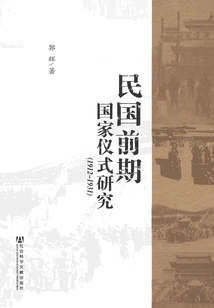
民国前期国家仪式研究(1912~1931)
Guo Hui
The book takes the construction of regime legitimacy as its theme, combines knowledge from anthropology, sociology, political science and other disciplines to define the concept of "national rituals of the Republic of China", and uses case studies to examine the performance of national rituals in the first 20 years of the Republic of China. The book collects a large amount of historical materials and uses time as a clue to explain the national rituals of the Nanjing Provisional Government, the Beijing Government, and the early Nanjing National Government during the Republic of China, and depicts the history of changes in national rituals in the early Republic of China. From the vertical aspect, we seize typical cases, involve the historical background and political background of national ritual performances, restore the scenes of various national ritual performances, and the social repercussions of the ceremony, and then explore the national ritual itself and the political and cultural connotations and meanings behind it. Systematically and deeply explore the complex relationship between national rituals and legitimacy construction, the subjective motivations and objective functions of national rituals, and believe that national rituals have become important tools and forms of "political expression".
The book takes the construction of regime legitimacy as its theme, combines knowledge from anthropology, sociology, political science and other disciplines to define the concept of "national rituals of the Republic of China", and uses case studies to examine the performance of national rituals in the first 20 years of the Republic of China. The book collects a large amount of historical materials and uses time as a clue to explain the national rituals of the Nanjing Provisional Government, the Beijing Government, and the early Nanjing National Government during the Republic of China, and depicts the history of changes in national rituals in the early Republic of China. From the vertical aspect, we seize typical cases, involve the historical background and political background of national ritual performances, restore the scenes of various national ritual performances, and the social repercussions of the ceremony, and then explore the national ritual itself and the political and cultural connotations and meanings behind it. Systematically and deeply explore the complex relationship between national rituals and legitimacy construction, the subjective motivations and objective functions of national rituals, and believe that national rituals have become important tools and forms of "political expression".
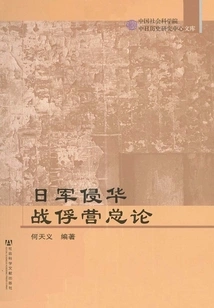
日军侵华战俘营总论
He Tianyi
This is a book completed after 28 years of historical data collection, investigation and research; this is a book written by the author in his spare time and retirement time; this is a book completed by non-governmental organizations with the support of the state; this is a book completed by collecting oral historical materials from more than a thousand prisoner-of-war workers; this is also the first book in China so far that strives to comprehensively, systematically and accurately describe and study the heinous crimes committed by the Japanese army in establishing concentration camps in China and abusing and enslaving Chinese prisoner-of-war workers, Allied prisoners of war and allied expatriates. This book speaks with facts and exposes in detail the crimes committed by the Japanese army in persecuting prisoner-of-war laborers. It strives to restore the historical truth and make efforts for Sino-Japanese friendship and world peace.
This is a book completed after 28 years of historical data collection, investigation and research; this is a book written by the author in his spare time and retirement time; this is a book completed by non-governmental organizations with the support of the state; this is a book completed by collecting oral historical materials from more than a thousand prisoner-of-war workers; this is also the first book in China so far that strives to comprehensively, systematically and accurately describe and study the heinous crimes committed by the Japanese army in establishing concentration camps in China and abusing and enslaving Chinese prisoner-of-war workers, Allied prisoners of war and allied expatriates. This book speaks with facts and exposes in detail the crimes committed by the Japanese army in persecuting prisoner-of-war laborers. It strives to restore the historical truth and make efforts for Sino-Japanese friendship and world peace.
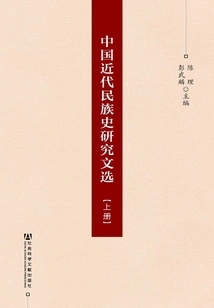
中国近代民族史研究文选(全3册)
Peng Wulin Chen Li
This manuscript is one of the 985 Project "Beijing Key Discipline Construction? Modern and Modern History of China" of the University for Nationalities of China. The book has more than 1.5 Million words and compiles more than 100 research papers on modern Chinese ethnic history published in various academic journals from the founding of New China to 2012. The main content includes subject research theories and methods, regional ethnic history, ethnic history, ethnic relations history, as well as special research fields such as social politics, economy, culture and education. The selected papers are contemporary, representative, and authoritative. They basically reflect the development process, current situation and characteristics of modern Chinese ethnic history research over the past 60 years. They have important reference value for promoting scientific research and talent cultivation in this field.
This manuscript is one of the 985 Project "Beijing Key Discipline Construction? Modern and Modern History of China" of the University for Nationalities of China. The book has more than 1.5 Million words and compiles more than 100 research papers on modern Chinese ethnic history published in various academic journals from the founding of New China to 2012. The main content includes subject research theories and methods, regional ethnic history, ethnic history, ethnic relations history, as well as special research fields such as social politics, economy, culture and education. The selected papers are contemporary, representative, and authoritative. They basically reflect the development process, current situation and characteristics of modern Chinese ethnic history research over the past 60 years. They have important reference value for promoting scientific research and talent cultivation in this field.
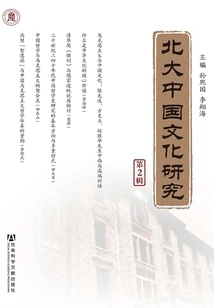
北大中国文化研究(第2辑)
Sun Xiguo Li Xianghai
"Peking University Chinese Culture Studies" is a continuous disciplinary publication sponsored by the School of Marxism at Peking University and the Chinese Cultural Development Research Center at Peking University. It is dedicated to exploring fundamental issues in the construction and development of Chinese culture, striving to promote dialogue and integration between Chinese culture, Western culture, and Marxism, and promote the great development and prosperity of Chinese culture.
"Peking University Chinese Culture Studies" is a continuous disciplinary publication sponsored by the School of Marxism at Peking University and the Chinese Cultural Development Research Center at Peking University. It is dedicated to exploring fundamental issues in the construction and development of Chinese culture, striving to promote dialogue and integration between Chinese culture, Western culture, and Marxism, and promote the great development and prosperity of Chinese culture.
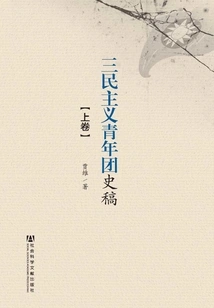
三民主义青年团史稿(全2卷)
Javi
The author is the first researcher to study the Sanqingtuan League. This book introduces the entire process of the Three Youth League from its establishment to its end. It is rich in information, informative and fair in argumentation.
The author is the first researcher to study the Sanqingtuan League. This book introduces the entire process of the Three Youth League from its establishment to its end. It is rich in information, informative and fair in argumentation.
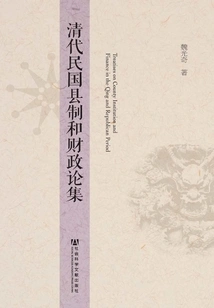
A Collection of Essays on County System and Finance in the Qing Dynasty and the Republic of China
History清代民国县制和财政论集
Wei Guangqi
The author of this book has long been engaged in research on county systems and financial issues during the Qing Dynasty and the Republic of China, and his achievements have been fully recognized by the academic community. The 25 academic papers collected in this book are the author's representative works in related academic fields. They are all evidence-based, with detailed information, simple writing style, and unique perspectives and insights.
The author of this book has long been engaged in research on county systems and financial issues during the Qing Dynasty and the Republic of China, and his achievements have been fully recognized by the academic community. The 25 academic papers collected in this book are the author's representative works in related academic fields. They are all evidence-based, with detailed information, simple writing style, and unique perspectives and insights.
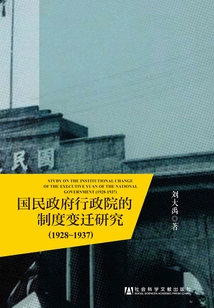
Research on the Institutional Changes of the Executive Yuan of the National Government (1928~1937)
History国民政府行政院的制度变迁研究(1928~1937)
Liu Dayu
After the National Government established its capital in Nanjing, it implemented the system of political training, implemented the rule of the country by the party, and the training of government by the party, and began the specific practice of Sun Yat-sen's five-power constitution. In the early ten years of the tutelage (1928-1937), how to set up and adjust the administrative agencies of the National Government, and how to debug and maintain the administrative system became difficult problems faced by the Executive Yuan of the National Government. After studying the origins of the establishment of the Executive Yuan, system design and replacement of the president, analysis of organizational structures and personnel, the dynamics and behavior of system changes, the relationship between the party, government and military in system changes, and the effectiveness of system changes, this book further explores the coordination of the organization and functions of the Executive Yuan, the integrity of the administrative system and the construction of institutional authority from the perspective of modernization, in order to shed some light on contemporary political development and administrative system innovation.
After the National Government established its capital in Nanjing, it implemented the system of political training, implemented the rule of the country by the party, and the training of government by the party, and began the specific practice of Sun Yat-sen's five-power constitution. In the early ten years of the tutelage (1928-1937), how to set up and adjust the administrative agencies of the National Government, and how to debug and maintain the administrative system became difficult problems faced by the Executive Yuan of the National Government. After studying the origins of the establishment of the Executive Yuan, system design and replacement of the president, analysis of organizational structures and personnel, the dynamics and behavior of system changes, the relationship between the party, government and military in system changes, and the effectiveness of system changes, this book further explores the coordination of the organization and functions of the Executive Yuan, the integrity of the administrative system and the construction of institutional authority from the perspective of modernization, in order to shed some light on contemporary political development and administrative system innovation.
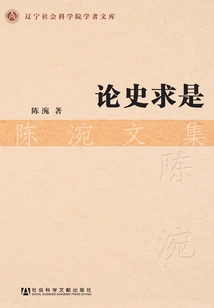
论史求是:陈涴文集
Chen Juan
"Collected Works of Chen Juan" is a professional anthology of historical works, which mainly includes the author's research results on Qing history, reform history and Liaoning local history. There are many excellent academic works among them, with unique and innovative insights into certain historical issues. For example, the article "An Examination of the Military Strength of Both Sides in the Battle of Sarhu" demonstrates that the forces of the Later Jin Dynasty and the Ming Dynasty were equal in the Battle of Sarhu, correcting the error of the Later Jin Dynasty's traditional statement about the Ming Dynasty's "victory with less". The article "History of the Relationship between Nurhachi and Li Chengliang" extensively searched for historical materials, combed and reviewed, and elaborated on the historical facts that Li Chengliang had given Nurhachi strong support, making up for the lack of detailed information about Nurhaci's history before the rebellion. The article "New Theory on the Causes of the Three Kingdoms" puts forward the new view that the three talent groups of Wei, Shu and Wu played an important role in the formation of the Three Kingdoms. It has certain academic value and good readability.
"Collected Works of Chen Juan" is a professional anthology of historical works, which mainly includes the author's research results on Qing history, reform history and Liaoning local history. There are many excellent academic works among them, with unique and innovative insights into certain historical issues. For example, the article "An Examination of the Military Strength of Both Sides in the Battle of Sarhu" demonstrates that the forces of the Later Jin Dynasty and the Ming Dynasty were equal in the Battle of Sarhu, correcting the error of the Later Jin Dynasty's traditional statement about the Ming Dynasty's "victory with less". The article "History of the Relationship between Nurhachi and Li Chengliang" extensively searched for historical materials, combed and reviewed, and elaborated on the historical facts that Li Chengliang had given Nurhachi strong support, making up for the lack of detailed information about Nurhaci's history before the rebellion. The article "New Theory on the Causes of the Three Kingdoms" puts forward the new view that the three talent groups of Wei, Shu and Wu played an important role in the formation of the Three Kingdoms. It has certain academic value and good readability.
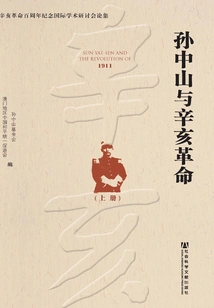
孙中山与辛亥革命
Macau Association For The Promotion Of Peaceful Reunification Of China Sun Yat-sen Foundation
This collection of essays is a collection of papers that participated in the international academic symposium "Sun Yat-sen and the Revolution of 1911" co-sponsored by the Sun Yat-sen Foundation and the Macao Association for the Promotion of Peaceful Reunification of China in September 2011 to commemorate the 100th anniversary of the 1911 Revolution. It includes more than 80 papers from relevant scholars from across the Taiwan Strait, four places and abroad. The content covers Sun Yat-sen's thought, social trends and historical events before and after the 1911 Revolution, the historical status and influence of the 1911 Revolution, historical figures and the 1911 Revolution, and the current status and review of the 1911 Revolution research. This collection of papers shows a certain cutting-edge and innovative nature, both in terms of data excavation and ideological viewpoints, and is of great reference value.
This collection of essays is a collection of papers that participated in the international academic symposium "Sun Yat-sen and the Revolution of 1911" co-sponsored by the Sun Yat-sen Foundation and the Macao Association for the Promotion of Peaceful Reunification of China in September 2011 to commemorate the 100th anniversary of the 1911 Revolution. It includes more than 80 papers from relevant scholars from across the Taiwan Strait, four places and abroad. The content covers Sun Yat-sen's thought, social trends and historical events before and after the 1911 Revolution, the historical status and influence of the 1911 Revolution, historical figures and the 1911 Revolution, and the current status and review of the 1911 Revolution research. This collection of papers shows a certain cutting-edge and innovative nature, both in terms of data excavation and ideological viewpoints, and is of great reference value.
从教门到民族:西南边地一个少数社群的民族史
Ma Xuefeng
This book explores the trajectory of Chinese population classification in the context of recent "revolution" and "Nationalism" by examining a certain aspect of the modern history of a minority community in southwest China. The introduction of modern nationalism, in the context of modern China, has strengthened the racial aspect of traditional Chinese population classification. The ideological circle tends to understand the nation and nationalism in an ethnic way. The ethnic understanding of the nation has brought about the political construction of communities. From the Ming Dynasty to the mid-19th century, Muslims as a group were mostly not mentioned in official history. In the classification of relevant groups of people in Yunnan local chronicles, Muslims are mostly "regarded as Han Chinese". However, in the mid-19th century, with the occurrence of a series of conflict events, this group was rediscovered, and then, in the context of modern Chinese revolution and nationalism, was "recognized" as an "imagined community."
This book explores the trajectory of Chinese population classification in the context of recent "revolution" and "Nationalism" by examining a certain aspect of the modern history of a minority community in southwest China. The introduction of modern nationalism, in the context of modern China, has strengthened the racial aspect of traditional Chinese population classification. The ideological circle tends to understand the nation and nationalism in an ethnic way. The ethnic understanding of the nation has brought about the political construction of communities. From the Ming Dynasty to the mid-19th century, Muslims as a group were mostly not mentioned in official history. In the classification of relevant groups of people in Yunnan local chronicles, Muslims are mostly "regarded as Han Chinese". However, in the mid-19th century, with the occurrence of a series of conflict events, this group was rediscovered, and then, in the context of modern Chinese revolution and nationalism, was "recognized" as an "imagined community."
关于浙赣地区日军细菌战的调查研究
Ding Xiaoqiang
In the 1930s and 1940s, the Japanese army launched a full-scale war of aggression against China and carried out germ warfare during the war. Its crimes were heinous. But after the war, he avoided trial because of U. S. Intervention. The author of "Investigation and Research on the Japanese Army's Bacteriological Warfare in the Zhejiang-Jiangxi Region" conducted long-term investigations and research on the Japanese Army's bacteriological warfare materials in Ningbo, Wenzhou, Quzhou, Lishui, Yushan and other places in the Zhejiang-Jiangxi region, and obtained a large number of first-hand information such as the oral experiences of the victims and the facts of the disaster. Using the facts and data of the germ warfare launched by the Japanese army, which caused various disease outbreaks and disasters to the local people, it comprehensively exposed the despicable crimes against humanity committed by the Japanese army in the Zhejiang and Jiangxi regions, and shattered the vehement denials of the Japanese militarists and right-wing forces.
In the 1930s and 1940s, the Japanese army launched a full-scale war of aggression against China and carried out germ warfare during the war. Its crimes were heinous. But after the war, he avoided trial because of U. S. Intervention. The author of "Investigation and Research on the Japanese Army's Bacteriological Warfare in the Zhejiang-Jiangxi Region" conducted long-term investigations and research on the Japanese Army's bacteriological warfare materials in Ningbo, Wenzhou, Quzhou, Lishui, Yushan and other places in the Zhejiang-Jiangxi region, and obtained a large number of first-hand information such as the oral experiences of the victims and the facts of the disaster. Using the facts and data of the germ warfare launched by the Japanese army, which caused various disease outbreaks and disasters to the local people, it comprehensively exposed the despicable crimes against humanity committed by the Japanese army in the Zhejiang and Jiangxi regions, and shattered the vehement denials of the Japanese militarists and right-wing forces.
塑造顺民:华北日伪的“国家认同”建构
Huang Dong
Why did traitors appear during the Anti-Japanese War? What methods of cultural and spiritual aggression did the puppet regime in North China use? What kind of "national identity" are they trying to construct? The exploration of these questions led to the writing of this book. Therefore, the author takes the construction of national identity of the Japanese and puppet regime in North China as the research object, focusing on exploring its construction of cultural identity. This book is a cross-field study. For history, it uses the cultural construction of the puppet regime in North China as a foothold to study the cultural and spiritual aggression of the Japanese puppets during the Anti-Japanese War. For political science, it uses a special political community as the anatomical object to study the localized operation of the national identity theory.
Why did traitors appear during the Anti-Japanese War? What methods of cultural and spiritual aggression did the puppet regime in North China use? What kind of "national identity" are they trying to construct? The exploration of these questions led to the writing of this book. Therefore, the author takes the construction of national identity of the Japanese and puppet regime in North China as the research object, focusing on exploring its construction of cultural identity. This book is a cross-field study. For history, it uses the cultural construction of the puppet regime in North China as a foothold to study the cultural and spiritual aggression of the Japanese puppets during the Anti-Japanese War. For political science, it uses a special political community as the anatomical object to study the localized operation of the national identity theory.
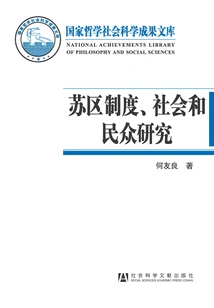
苏区制度、社会和民众研究
He Youliang
The book does not discuss history in terms of history, but rather discusses history while also looking back and forth. It not only narrates the entire historical process of the Chinese Soviet Union, but also reflects on this period of history, and conducts an in-depth discussion of its experiences, lessons, and revelations. It is of great significance for understanding the history of the Soviet area. This book is rich in references and has high research level and academic value. It is a rare masterpiece.
The book does not discuss history in terms of history, but rather discusses history while also looking back and forth. It not only narrates the entire historical process of the Chinese Soviet Union, but also reflects on this period of history, and conducts an in-depth discussion of its experiences, lessons, and revelations. It is of great significance for understanding the history of the Soviet area. This book is rich in references and has high research level and academic value. It is a rare masterpiece.
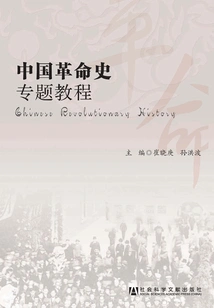
中国革命史专题教程
Cui Xiaogeng Sun Hongbo
This book describes the main events in various stages of Chinese social development in modern times with the Communist Party of China as the main clue. It is presented in the form of special topics. Each topic describes the relevant content in a relatively concentrated manner. In each topic, in addition to the systematic text, there are several parts such as basic clues, learning focus, knowledge supplement, problem thinking, recommended reading, and research trends, which are helpful for students to understand which are key issues, which are important ideas, which are academic frontier issues, and achieve the purpose of training students' independent thinking ability.
This book describes the main events in various stages of Chinese social development in modern times with the Communist Party of China as the main clue. It is presented in the form of special topics. Each topic describes the relevant content in a relatively concentrated manner. In each topic, in addition to the systematic text, there are several parts such as basic clues, learning focus, knowledge supplement, problem thinking, recommended reading, and research trends, which are helpful for students to understand which are key issues, which are important ideas, which are academic frontier issues, and achieve the purpose of training students' independent thinking ability.
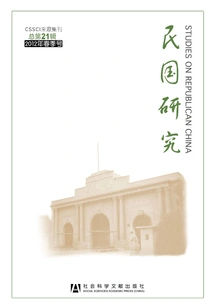
民国研究(2012年.春季号\u002F总第21辑)
Zhang Xianwen
"Republic of China Studies" is an academic special issue sponsored by the Research Center for the History of the Republic of China at Nanjing University, a key research base in the humanities and social sciences of the Ministry of Education. It is now a CSSCI source publication. Since its establishment more than ten years ago, with the attention and support of experts and scholars at home and abroad, it has produced good academic effects and social influence. This journal mainly publishes research articles on relevant historical facts and theories during the Republic of China period (1912-1949), and strives to become a window and place for research on the history of the Republic of China at home and abroad. Encouraging innovation on the basis of truth-seeking is the consistent purpose of this journal; simple writing style, theory based on history, novel viewpoints, strict logic, accurate citations, and standardized annotations are the basic requirements of this journal for manuscripts. The "Character Studies", "Monographs" and "Research Reviews" in this volume (21st) contain articles of considerable research level for academic reference.
"Republic of China Studies" is an academic special issue sponsored by the Research Center for the History of the Republic of China at Nanjing University, a key research base in the humanities and social sciences of the Ministry of Education. It is now a CSSCI source publication. Since its establishment more than ten years ago, with the attention and support of experts and scholars at home and abroad, it has produced good academic effects and social influence. This journal mainly publishes research articles on relevant historical facts and theories during the Republic of China period (1912-1949), and strives to become a window and place for research on the history of the Republic of China at home and abroad. Encouraging innovation on the basis of truth-seeking is the consistent purpose of this journal; simple writing style, theory based on history, novel viewpoints, strict logic, accurate citations, and standardized annotations are the basic requirements of this journal for manuscripts. The "Character Studies", "Monographs" and "Research Reviews" in this volume (21st) contain articles of considerable research level for academic reference.
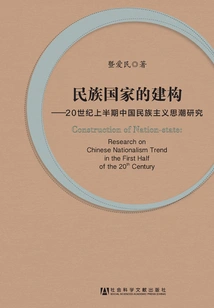
民族国家的建构:20世纪上半期中国民族主义思潮研究
Cum Aimin
Modern Chinese nationalism is closely related to the historical environment and social and political conditions of China's ethnic issues. It not only has the direct goal of resisting foreign power, but also has the political and cultural connotation of the construction of a modern nation-state. As a political and spiritual event, the May Fourth Movement represented a new beginning in the construction of the Chinese nation-state. Based on the historical requirement of national salvation and nation-building in modern times, the logical tension between liberalism and nationalism has been "resolved" to a large extent, and they have been interactively combined in specific history. Cultural nationalism insists on the positive significance of national tradition and historical culture in the construction of the nation-state, and hopes to explore a new way out for modern China from the "creation" of national culture. As the main political forces in China in the first half of the 20th century, the Kuomintang and the Communist Party organized and applied nationalism through the values and political designs they believed in, and expressed their respective national plans for nation-building. This book focuses on the manifestations, specific composition, and political demands of Chinese nationalism in the first half of the 20th century, making the study of ethnic issues, nationalism, and nation-state construction in modern China more complete and systematic. At the same time, it also shows that only nationalism that is based on the historical experience of saving and building the nation in modern China, respects the survival and development of all ethnic groups, safeguards national unity, independence, sovereignty and territorial integrity, and is full of rationality and openness can have positive significance.
Modern Chinese nationalism is closely related to the historical environment and social and political conditions of China's ethnic issues. It not only has the direct goal of resisting foreign power, but also has the political and cultural connotation of the construction of a modern nation-state. As a political and spiritual event, the May Fourth Movement represented a new beginning in the construction of the Chinese nation-state. Based on the historical requirement of national salvation and nation-building in modern times, the logical tension between liberalism and nationalism has been "resolved" to a large extent, and they have been interactively combined in specific history. Cultural nationalism insists on the positive significance of national tradition and historical culture in the construction of the nation-state, and hopes to explore a new way out for modern China from the "creation" of national culture. As the main political forces in China in the first half of the 20th century, the Kuomintang and the Communist Party organized and applied nationalism through the values and political designs they believed in, and expressed their respective national plans for nation-building. This book focuses on the manifestations, specific composition, and political demands of Chinese nationalism in the first half of the 20th century, making the study of ethnic issues, nationalism, and nation-state construction in modern China more complete and systematic. At the same time, it also shows that only nationalism that is based on the historical experience of saving and building the nation in modern China, respects the survival and development of all ethnic groups, safeguards national unity, independence, sovereignty and territorial integrity, and is full of rationality and openness can have positive significance.
中国社会科学院近代史研究所青年学术论坛(2011年卷)
Institute Of Modern History, Chinese Academy Of Social Sciences
The Institute of Modern History of the Chinese Academy of Social Sciences holds a youth academic symposium every year and collects and publishes papers submitted by participants. It has been published by our publisher since 2000. It can be described as a record of the growth of young scholars at the Institute of Modern History. This 2011 volume of the department covers the entire research field of modern Chinese history. It is a display of the research results of young scholars at the Institute of Modern History over a period of time.
The Institute of Modern History of the Chinese Academy of Social Sciences holds a youth academic symposium every year and collects and publishes papers submitted by participants. It has been published by our publisher since 2000. It can be described as a record of the growth of young scholars at the Institute of Modern History. This 2011 volume of the department covers the entire research field of modern Chinese history. It is a display of the research results of young scholars at the Institute of Modern History over a period of time.
望远镜与西风东渐
Yu Sanle
Four hundred years ago, in 1610, an Italian priest Matteo Ricci died quietly in Beijing; it was also the same year that an Italian scientist Galileo used the world's first astronomical telescope he made to observe the sky. By connecting two seemingly unrelated things, religion and science, between two Italian scientists and priests tens of thousands of miles apart, and by connecting Catholicism with telescopes, the story to be narrated in this book is deduced.
Four hundred years ago, in 1610, an Italian priest Matteo Ricci died quietly in Beijing; it was also the same year that an Italian scientist Galileo used the world's first astronomical telescope he made to observe the sky. By connecting two seemingly unrelated things, religion and science, between two Italian scientists and priests tens of thousands of miles apart, and by connecting Catholicism with telescopes, the story to be narrated in this book is deduced.
中国近现代史论丛
Teaching And Research Section Of Modern Chinese History, Fujian Normal University
The modern Chinese history discipline of the School of Social History of Fujian Normal University has made fruitful scientific research achievements. The teachers in the subject team have won a number of national, Ministry of Education, and provincial social science planning projects, and many of their achievements have won the National Ministry of Education's Humanities and Social Sciences Outstanding Achievements and the Fujian Provincial Humanities and Social Sciences Outstanding Achievement Awards. Discipline advantage areas, such as: research on modern local history of Fujian, research on modern Chinese economic history, research on modern Chinese figures, as well as Professor Chen Zenghui's research on the history of Sino-foreign relations, Professor Lin Qingyuan's research on the Westernization Movement, Professor Chen Zhenshou's research on Chinese naval history, etc., Have achieved remarkable results and have been highly praised by the academic community and have a great influence.
The modern Chinese history discipline of the School of Social History of Fujian Normal University has made fruitful scientific research achievements. The teachers in the subject team have won a number of national, Ministry of Education, and provincial social science planning projects, and many of their achievements have won the National Ministry of Education's Humanities and Social Sciences Outstanding Achievements and the Fujian Provincial Humanities and Social Sciences Outstanding Achievement Awards. Discipline advantage areas, such as: research on modern local history of Fujian, research on modern Chinese economic history, research on modern Chinese figures, as well as Professor Chen Zenghui's research on the history of Sino-foreign relations, Professor Lin Qingyuan's research on the Westernization Movement, Professor Chen Zhenshou's research on Chinese naval history, etc., Have achieved remarkable results and have been highly praised by the academic community and have a great influence.
辛亥革命与百年中国:纪念辛亥革命一百周年国际学术研讨会论文集(全4册)
Institute Of Modern History, Chinese Academy Of Social Sciences
From October 12 to 15, 2011, an international academic symposium commemorating the 100th anniversary of the Revolution of 1911 was held in Wuhan. The theme of this conference is "The Revolution of 1911 and Centenary China". More than 180 experts and scholars from mainland China, Hong Kong, Macau, Taiwan, Japan, the United States, France, Russia and other countries and regions gathered together to have a heated discussion around the politics, economy, culture and society before and after the Revolution of 1911, as well as the commemoration and interpretation of this revolution by all walks of life over the past 100 years. This book is a collection of papers from this conference.
From October 12 to 15, 2011, an international academic symposium commemorating the 100th anniversary of the Revolution of 1911 was held in Wuhan. The theme of this conference is "The Revolution of 1911 and Centenary China". More than 180 experts and scholars from mainland China, Hong Kong, Macau, Taiwan, Japan, the United States, France, Russia and other countries and regions gathered together to have a heated discussion around the politics, economy, culture and society before and after the Revolution of 1911, as well as the commemoration and interpretation of this revolution by all walks of life over the past 100 years. This book is a collection of papers from this conference.
中华民国史研究(第1辑):蒋介石的日常生活
Luo Min
What movies and TV shows did Chiang Kai-shek like to watch? Where do you often visit? What books do you usually read? How to deal with illness in yourself and your subordinates? What is his view of space and time? ...These are all aspects that have been mostly ignored in existing research on Chiang Kai-shek's life. Based on a large number of first-hand materials, this book provides a detailed description of these aspects of daily life. From this, readers may be able to see the ordinary in Chiang Kai-shek's unusual and the unusual in the ordinary.
What movies and TV shows did Chiang Kai-shek like to watch? Where do you often visit? What books do you usually read? How to deal with illness in yourself and your subordinates? What is his view of space and time? ...These are all aspects that have been mostly ignored in existing research on Chiang Kai-shek's life. Based on a large number of first-hand materials, this book provides a detailed description of these aspects of daily life. From this, readers may be able to see the ordinary in Chiang Kai-shek's unusual and the unusual in the ordinary.
中央苏区社会保障研究
Huang Huiyun
Social security is the foundation of people's livelihood. The social security policies and practices of the Central Soviet Area are an important source of social security in our country today. As my country's first special study on the history of social security in the Central Soviet Area, this book has important academic value. The book systematically sorts out the social security undertakings carried out in the Central Soviet Area under specific historical conditions from seven aspects: social security conditions, social security institutions, social security funds, social preferential care work, social assistance activities, social security policies, and social welfare benefits. It also draws some experience and enlightenment from this, which is of great reference significance for developing social security undertakings in the new era, improving people's livelihood, and building a harmonious society.
Social security is the foundation of people's livelihood. The social security policies and practices of the Central Soviet Area are an important source of social security in our country today. As my country's first special study on the history of social security in the Central Soviet Area, this book has important academic value. The book systematically sorts out the social security undertakings carried out in the Central Soviet Area under specific historical conditions from seven aspects: social security conditions, social security institutions, social security funds, social preferential care work, social assistance activities, social security policies, and social welfare benefits. It also draws some experience and enlightenment from this, which is of great reference significance for developing social security undertakings in the new era, improving people's livelihood, and building a harmonious society.
南京国民政府对西南边疆的治理研究
Duan Jinsheng
During the period of the Nanjing National Government, Japan fully invaded China, and the southwest border gradually evolved from a marginal area into a key area related to national rejuvenation and national prosperity. The status of the southwest border in the eyes of the Chinese people has been significantly improved. Therefore, how the Nanjing National Government governs the southwest border space area is an important part of the Kuomintang party's political system to realize the construction of a nation-state. However, the KMT's fragile party governance system was unable to fully control the southwestern border areas. Due to the differences in the social and political structures within the southwest frontier and the fragility of the Nanjing National Government's party system, the Nanjing National Government's governance policies and practices for different provinces and regions in the southwest frontier have both commonalities and heterogeneity.
During the period of the Nanjing National Government, Japan fully invaded China, and the southwest border gradually evolved from a marginal area into a key area related to national rejuvenation and national prosperity. The status of the southwest border in the eyes of the Chinese people has been significantly improved. Therefore, how the Nanjing National Government governs the southwest border space area is an important part of the Kuomintang party's political system to realize the construction of a nation-state. However, the KMT's fragile party governance system was unable to fully control the southwestern border areas. Due to the differences in the social and political structures within the southwest frontier and the fragility of the Nanjing National Government's party system, the Nanjing National Government's governance policies and practices for different provinces and regions in the southwest frontier have both commonalities and heterogeneity.
藏汉经济文化交流史
Chen Chongkai Wang Jianlin
This book studies and discusses the history of Tibetan-Chinese economic and cultural exchanges from the perspective of the geography and natural environment of China's historical territory, highlights the objective reasons and historical inevitability of Tibetan-Chinese economic and cultural exchanges, and uses facts to demonstrate the characteristics of the feudal manor system in the agricultural and animal husbandry areas of the Tibetan Plateau and its complementary relationship with the agricultural and animal husbandry economy of the Central Plains region. The book discusses the history of Tibetan-Chinese economic and cultural exchanges, highlights the mutual influence of Tibetan-Chinese economic and cultural exchanges, and strives to supplement the historical impact of Tibetan economic and cultural influence on the Central Plains and other ethnic groups in the Mainland, which is particularly lacking in the research on Tibetan-Chinese economic and cultural exchanges by domestic scholars.
This book studies and discusses the history of Tibetan-Chinese economic and cultural exchanges from the perspective of the geography and natural environment of China's historical territory, highlights the objective reasons and historical inevitability of Tibetan-Chinese economic and cultural exchanges, and uses facts to demonstrate the characteristics of the feudal manor system in the agricultural and animal husbandry areas of the Tibetan Plateau and its complementary relationship with the agricultural and animal husbandry economy of the Central Plains region. The book discusses the history of Tibetan-Chinese economic and cultural exchanges, highlights the mutual influence of Tibetan-Chinese economic and cultural exchanges, and strives to supplement the historical impact of Tibetan economic and cultural influence on the Central Plains and other ethnic groups in the Mainland, which is particularly lacking in the research on Tibetan-Chinese economic and cultural exchanges by domestic scholars.
当代日本中国研究(第4辑·历史·社会)
Modern China Regional Research Project Of Japan Human Culture Research Institute
This book is the fourth volume of "Contemporary Japan and China Studies", "History·Society". The history chapter allows readers to form an overall impression of the study of modern Chinese history in Japan since modern times, while the society chapter belongs to the "Modern China Studies" category of Japanese academia. The selected papers and book reviews cover party politics, educational qualifications, grassroots government and society, etc. The perspectives are broad and may not all be high-quality, but the observation points and argumentation methods of the issues have certain enlightenment.
This book is the fourth volume of "Contemporary Japan and China Studies", "History·Society". The history chapter allows readers to form an overall impression of the study of modern Chinese history in Japan since modern times, while the society chapter belongs to the "Modern China Studies" category of Japanese academia. The selected papers and book reviews cover party politics, educational qualifications, grassroots government and society, etc. The perspectives are broad and may not all be high-quality, but the observation points and argumentation methods of the issues have certain enlightenment.