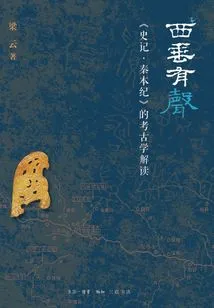
There is Sound in the West: Archaeological Interpretation of "historical Records: the Benji of Qin
by Liang Yun
About This Novel
"Historical Records" has two chronicles about Qin, namely "The Chronicles of Qin" and "The Chronicles of Qin Shihuang", which fully illustrates the importance Sima Qian attached to Qin. The Han Dynasty inherited the Qin system and wanted to avoid the death of Qin II. Therefore, how Qin unified the world from a humble country and then collapsed in an instant has become one of the most concerned historical issues among scholars in the two thousand years since Jia Yi. From moving west to Longyou to unifying the world, it took about seven hundred years. "Historical Records of Qin" records how the Qin people grew from small to large, from weak to strong, and completely experienced the development from vassals to vassal states, then to kingdoms, and finally to empires. It reproduces the process of the "trilogy" and has classic significance in the history of ancient Chinese civilization. This book takes "Historical Records of the Qin Dynasty" as the main line, and uses relevant archaeological data as the "fourth annotation", in order to achieve the effect of the "double evidence method" in which archeology and documents mutually confirm and inspire each other. The author focuses on the question: Qin was able to finally unify the world and establish an empire from a humble small country. In addition to historical trends, there were also factors such as institutional culture, ideological concepts, etc. How did these factors sprout in the time and space of its early development? How is it reflected in material culture? How can the early development of Qin be reasonably restored and stated from an archaeological perspective? In addition, mysteries that have long been litigated in the early history of the Qin people: such as the origin of the Qin people and the origin of Qin culture, the years when King Ping moved eastward and the founding of the Qin Dynasty, the Zhou Yumin of Qin, the owner of Qin Gong's tomb in Dabaozi Mountain, and the burial place of Duke Mu, etc. Are also the focus of this book.
Official Sources
What Readers Think
Rating
Community(0)
Rating
Community(0)
