Library
Browse and search books
2,037 novels found
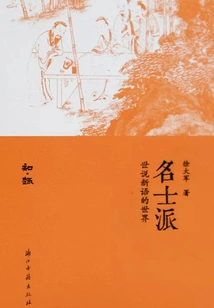
名士派:世说新语的世界(知趣丛书)
Xu Dajun
Appreciate the demeanor of celebrities in the Wei and Jin Dynasties, explain their interesting charm, and appreciate their spiritual realm. Reinterpret "Shishuo Xinyu", a masterpiece of Zhiren's novels, "a textbook for celebrities" written by Mr. Lu Xun. With vivid, humorous, easy-to-read writing style, it gathers various fragments of the original work to guide readers across the boundaries of time and space. To "listen" to understand those "Xuanyuan Lengjun" words, to "see" clearly those "high simple and strange" behaviors. The grace and bearing of celebrities and the admiring gaze directed at celebrities. Two forces support the world of "Shishuoxinyu". Take you to re-examine the world. It turns out that the celebrities living in textbooks are such interesting existences!
Appreciate the demeanor of celebrities in the Wei and Jin Dynasties, explain their interesting charm, and appreciate their spiritual realm. Reinterpret "Shishuo Xinyu", a masterpiece of Zhiren's novels, "a textbook for celebrities" written by Mr. Lu Xun. With vivid, humorous, easy-to-read writing style, it gathers various fragments of the original work to guide readers across the boundaries of time and space. To "listen" to understand those "Xuanyuan Lengjun" words, to "see" clearly those "high simple and strange" behaviors. The grace and bearing of celebrities and the admiring gaze directed at celebrities. Two forces support the world of "Shishuoxinyu". Take you to re-examine the world. It turns out that the celebrities living in textbooks are such interesting existences!
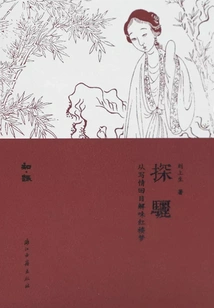
Tanli: Interpretation of the Dream of Red Mansions from the Writing of Love (zhiqu Series)
Literature探骊:从写情回目解味红楼梦(知趣丛书)
Liu Shangsheng
Use looking back as a window to enter the "Red Mansions" world of "talking about love". Starting from the review of the novel's writing, we put aside tedious research and abstract theories, and combine the analysis of the novel's writing, various versions, characters and specific plots; we are committed to explaining the emotions and art contained in the literary world of "A Dream of Red Mansions"; many details are unique and understanding, helping "red" fans to truly get closer to "A Dream of Red Mansions".
Use looking back as a window to enter the "Red Mansions" world of "talking about love". Starting from the review of the novel's writing, we put aside tedious research and abstract theories, and combine the analysis of the novel's writing, various versions, characters and specific plots; we are committed to explaining the emotions and art contained in the literary world of "A Dream of Red Mansions"; many details are unique and understanding, helping "red" fans to truly get closer to "A Dream of Red Mansions".
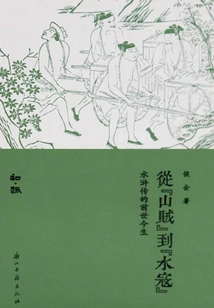
从山贼到水寇:水浒传的前世今生(知趣丛书)
Hou Hui
Quote from classics and provide a new interpretation of the heroic legend of "Water Margin". "Water Margin", one of the four great classics, is a representative work of heroic and legendary novels. The original work is based on the historical Song Jiang Uprising and tells a story of rivers and lakes represented by one hundred and eight heroes. Using various historical materials as evidence, this book traces the writing process of the Water Margin story and novel step by step, and reveals the secret connection between Zhong Xiang, Yang Yao's Dongting Lake Uprising and "Water Margin", which is refreshing. The appendix reflects the basic fact that ancient Chinese novels often have complex connections with folk religion.
Quote from classics and provide a new interpretation of the heroic legend of "Water Margin". "Water Margin", one of the four great classics, is a representative work of heroic and legendary novels. The original work is based on the historical Song Jiang Uprising and tells a story of rivers and lakes represented by one hundred and eight heroes. Using various historical materials as evidence, this book traces the writing process of the Water Margin story and novel step by step, and reveals the secret connection between Zhong Xiang, Yang Yao's Dongting Lake Uprising and "Water Margin", which is refreshing. The appendix reflects the basic fact that ancient Chinese novels often have complex connections with folk religion.
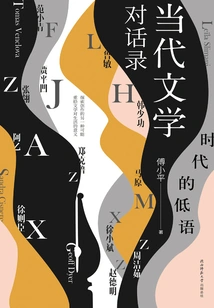
时代的低语:当代文学对话录
Fu Xiaoping
In the book, the author brings together the most representative literary masters, scholars, and thinkers at home and abroad in the form of interviews, such as Jia Pingwa, a literary master whose works have won many awards at home and abroad, the famous translator Zheng Kru, Xu Zechen, who is known as "the glory of writers born in the 1970s", Ah Yi, who is hailed by Bei Dao as "one of the best Chinese novelists"... They interpret their own works as novelists, literary critics, poets, and thinkers. They also cut into this era and society from their works, talk about ideals, life, art, and literary creation. The author raised questions to them based on his profound reading experience and unique way of thinking. The interviews were eclectic in both form and content, candid, casual, and full of passion, allowing readers to have a glimpse of the rich inner world of these writers and triggering more realistic thinking.
In the book, the author brings together the most representative literary masters, scholars, and thinkers at home and abroad in the form of interviews, such as Jia Pingwa, a literary master whose works have won many awards at home and abroad, the famous translator Zheng Kru, Xu Zechen, who is known as "the glory of writers born in the 1970s", Ah Yi, who is hailed by Bei Dao as "one of the best Chinese novelists"... They interpret their own works as novelists, literary critics, poets, and thinkers. They also cut into this era and society from their works, talk about ideals, life, art, and literary creation. The author raised questions to them based on his profound reading experience and unique way of thinking. The interviews were eclectic in both form and content, candid, casual, and full of passion, allowing readers to have a glimpse of the rich inner world of these writers and triggering more realistic thinking.
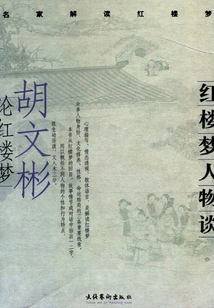
红楼梦人物谈:胡文彬论红楼梦
Hu Wenbin
Psychological description, modal perspective, and body language are three important clues to interpret the identity, cultural accomplishment, character, and fate of many characters in Dream of Red Mansions. This book picks out one or two words from the recapitulation, storyline or dialogue of Dream of Red Mansions to summarize the human nature and behavioral characteristics of different characters. It is both lively and insightful.
Psychological description, modal perspective, and body language are three important clues to interpret the identity, cultural accomplishment, character, and fate of many characters in Dream of Red Mansions. This book picks out one or two words from the recapitulation, storyline or dialogue of Dream of Red Mansions to summarize the human nature and behavioral characteristics of different characters. It is both lively and insightful.
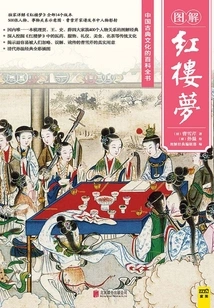
图解红楼梦(2015版)
(qing Dynasty) Editorial Department Of Cao Xueqin's "illustrated Classics"
This is the first book in China that allows you to fully understand the Dream of Red Mansions, from being "unable to read" to thinking deeply. This book will use a large number of character diagrams, character relationship diagrams, activity route maps, classic plot reproductions, and mystery tracking to comprehensively display the character relationships of the four major families of Jia, Xue, Wang, and Shi, the maps of Rongning and Rongning, and the inheritance of traditional culture such as traditional Chinese medicine, food, tea, wine, the imperial examination system, and the official system, allowing readers to easily read The Dream of Red Mansions. This is the first book in China that allows you to fully understand the Dream of Red Mansions, from "you can't read it until you die" to deep thought. This book will use a large number of character diagrams, character relationship diagrams, activity route maps, classic plot reproductions, and mystery tracking to comprehensively display the character relationships of the four major families of Jia, Xue, Wang, and Shi, the maps of Rongning and Rongning, and the inheritance of traditional culture such as traditional Chinese medicine, food, tea, wine, the imperial examination system, and the official system, allowing readers to easily read The Dream of Red Mansions.
This is the first book in China that allows you to fully understand the Dream of Red Mansions, from being "unable to read" to thinking deeply. This book will use a large number of character diagrams, character relationship diagrams, activity route maps, classic plot reproductions, and mystery tracking to comprehensively display the character relationships of the four major families of Jia, Xue, Wang, and Shi, the maps of Rongning and Rongning, and the inheritance of traditional culture such as traditional Chinese medicine, food, tea, wine, the imperial examination system, and the official system, allowing readers to easily read The Dream of Red Mansions. This is the first book in China that allows you to fully understand the Dream of Red Mansions, from "you can't read it until you die" to deep thought. This book will use a large number of character diagrams, character relationship diagrams, activity route maps, classic plot reproductions, and mystery tracking to comprehensively display the character relationships of the four major families of Jia, Xue, Wang, and Shi, the maps of Rongning and Rongning, and the inheritance of traditional culture such as traditional Chinese medicine, food, tea, wine, the imperial examination system, and the official system, allowing readers to easily read The Dream of Red Mansions.
鲁迅与20世纪中国文学教育
Zheng Jiajian
"Lu Xun and Chinese Literary Education in the 20th Century" takes the relationship between Lu Xun and Chinese literary education in the 20th century as a complex case, as an essential element and a logical link in the large field of discussion between Lu Xun and 20th century China, and then explores the complex relationship between Lu Xun and 20th century China. From the exploration of this relationship, it deconstructs the connection between knowledge and power, knowledge and ideology, and searches for "Lu Xun's existence" between the restoration and interpretation of Lu Xun in the process of Chinese literary education in the 20th century.
"Lu Xun and Chinese Literary Education in the 20th Century" takes the relationship between Lu Xun and Chinese literary education in the 20th century as a complex case, as an essential element and a logical link in the large field of discussion between Lu Xun and 20th century China, and then explores the complex relationship between Lu Xun and 20th century China. From the exploration of this relationship, it deconstructs the connection between knowledge and power, knowledge and ideology, and searches for "Lu Xun's existence" between the restoration and interpretation of Lu Xun in the process of Chinese literary education in the 20th century.
鲁迅与20世纪中国学术转型
Liu Kedi
This book puts Lu Xun's academic research results into the context of Lu Xun and China's academic transformation in the 20th century to give a new explanation, and on this basis, it comprehensively grasps the significant impact of Lu Xun's academic thoughts on China's academic transformation in the 20th century. On the basis of a relatively clear grasp of the similarities and differences in the academic thoughts of Lu Xun and his contemporaries, we can approach and enter the inner world of these masters, and truly understand everything they had to do and everything they had to do in their time - understand their original intention of enlightenment and salvation, and the confusion and helpless melancholy they showed when they encountered the contradiction between literature and politics, and the conflict between creation and academics.
This book puts Lu Xun's academic research results into the context of Lu Xun and China's academic transformation in the 20th century to give a new explanation, and on this basis, it comprehensively grasps the significant impact of Lu Xun's academic thoughts on China's academic transformation in the 20th century. On the basis of a relatively clear grasp of the similarities and differences in the academic thoughts of Lu Xun and his contemporaries, we can approach and enter the inner world of these masters, and truly understand everything they had to do and everything they had to do in their time - understand their original intention of enlightenment and salvation, and the confusion and helpless melancholy they showed when they encountered the contradiction between literature and politics, and the conflict between creation and academics.
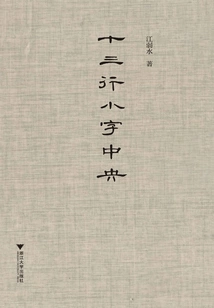
十三行小字中央
Jiang Ruoshui
From an inconspicuous auction item, an eye-catching romantic poem from ancient China is revealed: in the center of thirteen lines of small characters, there is such a subtle and thrilling emotional code hidden! From Cao Zhi to Wang Xizhi to Zhu Yizun, from poetry to calligraphy to history, the author uses delicate and considerate writing to allow readers to most truly feel a love model and emotional expression in ancient China. About the author: Jiang Ruoshui, born in 1963, is from Qingyang, Anhui. Doctor of Philosophy from the Chinese University of Hong Kong, and is currently a professor and doctoral supervisor at the School of Media and International Culture, Zhejiang University. Mainly engaged in the study of comparative poetry, he has authored "Research on Bian Zhilin's Poetry", "Synchronization and Displacement between China and the West", "Modernity of Classical Poetry", etc. He also writes poems and essays, including the collection of poems "The Mood of Threads", the collection of essays "From Wang Xifeng to Potosi", "Inland Visitors to Taiwan", "Lying in Bed", "Records of Blowing Water on the Lake", etc. In 2017, he was awarded the "Literary Critic of the Year" at the 15th Chinese Literature Media Awards. His "Eight Lessons from Poetry" was named the "China's Good Book" in 2017, and the China Reading Newspaper's Top Ten Best Books in 2017.
From an inconspicuous auction item, an eye-catching romantic poem from ancient China is revealed: in the center of thirteen lines of small characters, there is such a subtle and thrilling emotional code hidden! From Cao Zhi to Wang Xizhi to Zhu Yizun, from poetry to calligraphy to history, the author uses delicate and considerate writing to allow readers to most truly feel a love model and emotional expression in ancient China. About the author: Jiang Ruoshui, born in 1963, is from Qingyang, Anhui. Doctor of Philosophy from the Chinese University of Hong Kong, and is currently a professor and doctoral supervisor at the School of Media and International Culture, Zhejiang University. Mainly engaged in the study of comparative poetry, he has authored "Research on Bian Zhilin's Poetry", "Synchronization and Displacement between China and the West", "Modernity of Classical Poetry", etc. He also writes poems and essays, including the collection of poems "The Mood of Threads", the collection of essays "From Wang Xifeng to Potosi", "Inland Visitors to Taiwan", "Lying in Bed", "Records of Blowing Water on the Lake", etc. In 2017, he was awarded the "Literary Critic of the Year" at the 15th Chinese Literature Media Awards. His "Eight Lessons from Poetry" was named the "China's Good Book" in 2017, and the China Reading Newspaper's Top Ten Best Books in 2017.
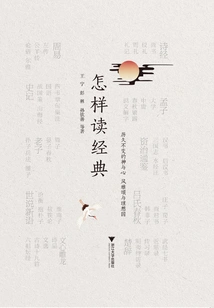
How to Read Classics
Literature怎样读经典
China Reading News Editorial Department
Classics are the treasures of traditional culture and the "where" that makes us "us". Reading classics can further confirm and consolidate the subtle cultural influence that has been received. However, as the pace of urban life accelerates, more and more people are suffering from the desire to read classics but not the ability to read classics, or even have the ability to read classics but cannot find a way to get close to them. Therefore, it is absolutely necessary to invite researchers of each classic (university professors or professional scholars) to summarize and introduce to readers the correct and popular methods of reading classics, and to teach them their experience and thinking in reading classics. This book selects traditional Chinese classics such as "Chu Ci", "Shang Shu", "Zuo Zhuan", "Historical Records" and other literary or historical classics that ordinary readers can think of, and invites more authoritative professors or scholars in the field to write them in chapters. It not only includes reading methods, historical anecdotes, and interesting comments, it is both practical and readable.
Classics are the treasures of traditional culture and the "where" that makes us "us". Reading classics can further confirm and consolidate the subtle cultural influence that has been received. However, as the pace of urban life accelerates, more and more people are suffering from the desire to read classics but not the ability to read classics, or even have the ability to read classics but cannot find a way to get close to them. Therefore, it is absolutely necessary to invite researchers of each classic (university professors or professional scholars) to summarize and introduce to readers the correct and popular methods of reading classics, and to teach them their experience and thinking in reading classics. This book selects traditional Chinese classics such as "Chu Ci", "Shang Shu", "Zuo Zhuan", "Historical Records" and other literary or historical classics that ordinary readers can think of, and invites more authoritative professors or scholars in the field to write them in chapters. It not only includes reading methods, historical anecdotes, and interesting comments, it is both practical and readable.
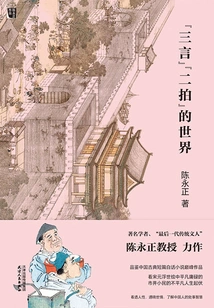
“三言”“二拍”的世界
Chen Yongzheng
Professor Chen Yongzheng, a professor at Sun Yat-sen University, a famous scholar and "the last generation of traditional literati", has a major masterpiece - "The World of "Three Words" and "Two Beats"", which shows you the ordinary and mediocre people in the Ukiyo-e paintings of the Song and Yuan Dynasties and the extraordinary life ups and downs of ordinary people. "San Yan" and "Er Pai" are five widely circulated collections of short stories in ancient Chinese vernacular. Among them, "Three Yan" is "Ming Yan", "Words to Warn the World" and "Everlasting Words to Awaken the World" compiled by Feng Menglong. In this book, the author talks informally about the stories and characters in "Three Words" and "Er Pai", the author and the influence of the works, etc. He combines literary appreciation with historical research, interprets and comments in a simple and easy-to-understand way, and is vivid and readable. He guides and enlightens readers to explore the "Three Words" and "Er Pai" step by step in detail; it is full of curiosity and unique literary charm with social practical significance. It is a dictionary of appreciation of famous artists that is both elegant and popular and can be easily read. Through the interpretation of these stories and characters, we can explore the philosophy of life and see through the various aspects of human nature. Not only can you learn a lot about how to behave in the world, but you can also get a taste of the thoughts of ancient literati!
Professor Chen Yongzheng, a professor at Sun Yat-sen University, a famous scholar and "the last generation of traditional literati", has a major masterpiece - "The World of "Three Words" and "Two Beats"", which shows you the ordinary and mediocre people in the Ukiyo-e paintings of the Song and Yuan Dynasties and the extraordinary life ups and downs of ordinary people. "San Yan" and "Er Pai" are five widely circulated collections of short stories in ancient Chinese vernacular. Among them, "Three Yan" is "Ming Yan", "Words to Warn the World" and "Everlasting Words to Awaken the World" compiled by Feng Menglong. In this book, the author talks informally about the stories and characters in "Three Words" and "Er Pai", the author and the influence of the works, etc. He combines literary appreciation with historical research, interprets and comments in a simple and easy-to-understand way, and is vivid and readable. He guides and enlightens readers to explore the "Three Words" and "Er Pai" step by step in detail; it is full of curiosity and unique literary charm with social practical significance. It is a dictionary of appreciation of famous artists that is both elegant and popular and can be easily read. Through the interpretation of these stories and characters, we can explore the philosophy of life and see through the various aspects of human nature. Not only can you learn a lot about how to behave in the world, but you can also get a taste of the thoughts of ancient literati!
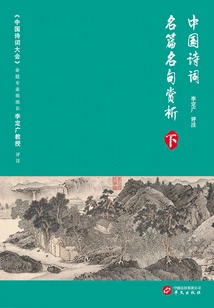
中国诗词名篇名句赏析(下)
Li Dingguang
This book is divided into two volumes, containing more than 500 poems in total. Professor Li Dingguang, the academic chief of the "Chinese Poetry Conference" and leader of the topic expert group, compiled, commented, and appreciated the poems. The selected poems basically cover the scope of the topics in the first, second, third, fourth, and fifth seasons of the "Chinese Poetry Conference", as well as several poems that were selected but not actually broadcast. The author has absorbed the latest academic research results to ensure that the annotations are accurate, the appreciation is profound and simple, lively and accessible, and guides readers into the palace of poetic beauty. This book aims to provide the society with a reliable poetry reading book, suitable for middle school students, college students and poetry lovers at different levels.
This book is divided into two volumes, containing more than 500 poems in total. Professor Li Dingguang, the academic chief of the "Chinese Poetry Conference" and leader of the topic expert group, compiled, commented, and appreciated the poems. The selected poems basically cover the scope of the topics in the first, second, third, fourth, and fifth seasons of the "Chinese Poetry Conference", as well as several poems that were selected but not actually broadcast. The author has absorbed the latest academic research results to ensure that the annotations are accurate, the appreciation is profound and simple, lively and accessible, and guides readers into the palace of poetic beauty. This book aims to provide the society with a reliable poetry reading book, suitable for middle school students, college students and poetry lovers at different levels.
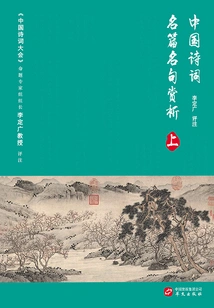
中国诗词名篇名句赏析(上)
Edited By Li Dingguang
This book is divided into two volumes, containing more than 500 poems in total. Professor Li Dingguang, the academic chief of the "Chinese Poetry Conference" and leader of the topic expert group, compiled, commented, and appreciated the poems. The selected poems basically cover the scope of the topics in the first, second, third, fourth, and fifth seasons of the "Chinese Poetry Conference", as well as several poems that were selected but not actually broadcast. The author has absorbed the latest academic research results to ensure that the annotations are accurate, the appreciation is profound and simple, lively and accessible, and guides readers into the palace of poetic beauty. This book aims to provide the society with a reliable poetry reading book, suitable for middle school students, college students and poetry lovers at different levels.
This book is divided into two volumes, containing more than 500 poems in total. Professor Li Dingguang, the academic chief of the "Chinese Poetry Conference" and leader of the topic expert group, compiled, commented, and appreciated the poems. The selected poems basically cover the scope of the topics in the first, second, third, fourth, and fifth seasons of the "Chinese Poetry Conference", as well as several poems that were selected but not actually broadcast. The author has absorbed the latest academic research results to ensure that the annotations are accurate, the appreciation is profound and simple, lively and accessible, and guides readers into the palace of poetic beauty. This book aims to provide the society with a reliable poetry reading book, suitable for middle school students, college students and poetry lovers at different levels.
Ancient Poetry Ode to Ganyu
Literature古诗咏赣榆
Song Jimin
"Ancient Poems Ode to Ganyu" collects and annotates ancient poems about Ganyu. It also includes three columns: author introduction, introduction to works, and reflection and exploration, which increases readability and facilitates readers to understand the meaning. The book is divided into six parts: the beauty of Ganyu, the wonders of mountains and seas, the song of the warbler in the Jiagu Valley, the rhyme of Xu Fu, and the idioms of the people.
"Ancient Poems Ode to Ganyu" collects and annotates ancient poems about Ganyu. It also includes three columns: author introduction, introduction to works, and reflection and exploration, which increases readability and facilitates readers to understand the meaning. The book is divided into six parts: the beauty of Ganyu, the wonders of mountains and seas, the song of the warbler in the Jiagu Valley, the rhyme of Xu Fu, and the idioms of the people.
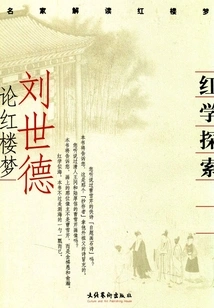
红学探索:刘世德论红楼梦
Liu Shide
Over the past two hundred years, there have been thousands of research works on Dream of Red Mansions. However, due to the researchers' personalities and different perspectives on text research, "the creativity and particularity of the arguments are formed." "Famous Experts Interpretation of the Dream of Red Mansions" mainly collects self-selected works on red studies by famous experts in the field of Dream of Red Mansions in China, including representative works of famous red scholars such as Feng Qiyong, Li Xifan, Zhou Shaoliang, Zhou Cezong, Liu Shide, Cai Yijiang, Lin Guanfu, Hu Wenbin, Deng Yunxiang, Lu Qixiang, Zhou Siyuan, Bai Dun and other famous red scholars.
Over the past two hundred years, there have been thousands of research works on Dream of Red Mansions. However, due to the researchers' personalities and different perspectives on text research, "the creativity and particularity of the arguments are formed." "Famous Experts Interpretation of the Dream of Red Mansions" mainly collects self-selected works on red studies by famous experts in the field of Dream of Red Mansions in China, including representative works of famous red scholars such as Feng Qiyong, Li Xifan, Zhou Shaoliang, Zhou Cezong, Liu Shide, Cai Yijiang, Lin Guanfu, Hu Wenbin, Deng Yunxiang, Lu Qixiang, Zhou Siyuan, Bai Dun and other famous red scholars.
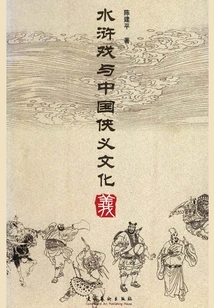
水浒戏与中国侠义文化
Chen Jianping
This book consists of three parts, including a review of Water Margin Opera, an interpretation of the chivalrous image of Water Margin Opera, and the cultural implications of the inheritance and variation of Water Margin Opera.
This book consists of three parts, including a review of Water Margin Opera, an interpretation of the chivalrous image of Water Margin Opera, and the cultural implications of the inheritance and variation of Water Margin Opera.
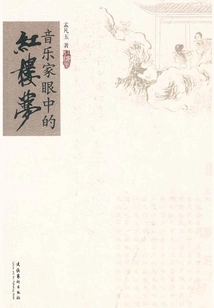
音乐家眼中的红楼梦
Meng Fanyu
This book is based on the classic literary masterpiece "A Dream of Red Mansions", combined with Zhi Pi, and the development history of ancient Chinese music, to comprehensively sort out the musical and cultural events in "A Dream of Red Mansions", and to deeply interpret the close relationship between "A Dream of Red Mansions" and traditional Chinese music culture. At the same time, he also expanded his research horizons to include "A Dream of Red Mansions" after it was written, and analyzed its profound impact on Chinese music. The book has nine chapters in total. It conducts in-depth research on many issues related to "A Dream of Red Mansions" and Chinese music culture from aspects such as music aesthetics, musicians, singing culture, instrumental music culture, ritual music, music inheritance, music terminology and allusions, the author's musical accomplishment and its impact on the creation of the work, and "A Dream of Red Mansions"'s feedback to Chinese music culture. This book is the first monograph to systematically study the musical culture of "Dream of Red Mansions". This study fills a major gap in the study of Red Mansions in the past century.
This book is based on the classic literary masterpiece "A Dream of Red Mansions", combined with Zhi Pi, and the development history of ancient Chinese music, to comprehensively sort out the musical and cultural events in "A Dream of Red Mansions", and to deeply interpret the close relationship between "A Dream of Red Mansions" and traditional Chinese music culture. At the same time, he also expanded his research horizons to include "A Dream of Red Mansions" after it was written, and analyzed its profound impact on Chinese music. The book has nine chapters in total. It conducts in-depth research on many issues related to "A Dream of Red Mansions" and Chinese music culture from aspects such as music aesthetics, musicians, singing culture, instrumental music culture, ritual music, music inheritance, music terminology and allusions, the author's musical accomplishment and its impact on the creation of the work, and "A Dream of Red Mansions"'s feedback to Chinese music culture. This book is the first monograph to systematically study the musical culture of "Dream of Red Mansions". This study fills a major gap in the study of Red Mansions in the past century.
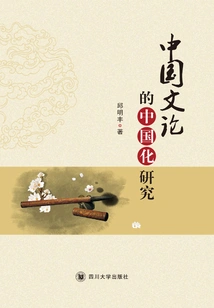
中国文论的中国化研究
Qiu Mingfeng
This book is based on the real problem of "aphasia" caused by the lack of a discourse system of its own in Chinese literary theory. It combs the Westernization process of Chinese literary theory and reveals that the essence of aphasia in Chinese literary theory is the mutation of modernity. From the perspective of cultural transformation and literary theory development, three paths are proposed to reconstruct Chinese literary theory discourse and realize the sinicization of Chinese literary theory: the immediate effectiveness of Chinese literary theory, the sinicization of Western literary theory, and making Chinese literary theory become the mainstream discourse in contemporary China.
This book is based on the real problem of "aphasia" caused by the lack of a discourse system of its own in Chinese literary theory. It combs the Westernization process of Chinese literary theory and reveals that the essence of aphasia in Chinese literary theory is the mutation of modernity. From the perspective of cultural transformation and literary theory development, three paths are proposed to reconstruct Chinese literary theory discourse and realize the sinicization of Chinese literary theory: the immediate effectiveness of Chinese literary theory, the sinicization of Western literary theory, and making Chinese literary theory become the mainstream discourse in contemporary China.
Research on "dongshan Ci" by He Zhu
Literature贺铸《东山词》研究
Ruan Liping
He Zhu, a poet in the Northern Song Dynasty, was a heroic and handsome man. The content of the book is mainly divided into three parts: the first part is an interpretation of the text of "Dongshan Ci", analyzing the multiple qualities of He Zhu's Ci; the second part of the romance poem article follows the above analysis and analyzes He Zhu's two-sided life and mentality: his social roles are multiple; he has a dual personality and mentality - indulgence in pleasure and courage in morality. The third part of the article is the foothold of the full text. The social customs and cultural psychology contained in He Zhu's poems are a reflection of the social and cultural psychology of the society in the middle and late Northern Song Dynasty where he lived.
He Zhu, a poet in the Northern Song Dynasty, was a heroic and handsome man. The content of the book is mainly divided into three parts: the first part is an interpretation of the text of "Dongshan Ci", analyzing the multiple qualities of He Zhu's Ci; the second part of the romance poem article follows the above analysis and analyzes He Zhu's two-sided life and mentality: his social roles are multiple; he has a dual personality and mentality - indulgence in pleasure and courage in morality. The third part of the article is the foothold of the full text. The social customs and cultural psychology contained in He Zhu's poems are a reflection of the social and cultural psychology of the society in the middle and late Northern Song Dynasty where he lived.
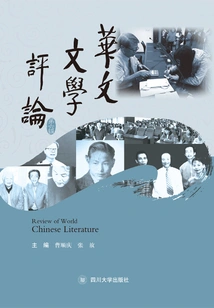
Chinese Literature Review (sixth Series)
Literature华文文学评论(第六辑)
Cao Shunqing Zhang Fang
Collection of manuscripts and papers. The manuscripts mainly include the relevant literary creation achievements of scholars from mainland China, Hong Kong, Macao and Taiwan, as well as Chinese in North America and other places. The collected articles include not only famous writers and celebrities, but also works that comment on and study new literary phenomena and trends. The principles of the papers included in the book adhere to the Double Hundred Policy and Marxism-Leninism, aiming to reflect the cutting-edge results of literary creation and research.
Collection of manuscripts and papers. The manuscripts mainly include the relevant literary creation achievements of scholars from mainland China, Hong Kong, Macao and Taiwan, as well as Chinese in North America and other places. The collected articles include not only famous writers and celebrities, but also works that comment on and study new literary phenomena and trends. The principles of the papers included in the book adhere to the Double Hundred Policy and Marxism-Leninism, aiming to reflect the cutting-edge results of literary creation and research.
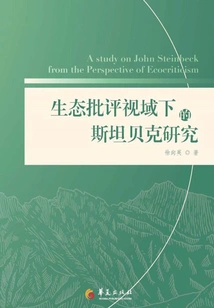
生态批评视域下的斯坦贝克研究
Xu Xiangying
With the novel "The Grapes of Wrath", John Steinbeck established his position in the American literary world in the 1930s and became a famous people's novelist in the United States. In the eyes of ordinary people, he is a famous writer during the Great Depression in the United States. But in reality, Steinbeck's richness goes far beyond that. Steinbeck was both a literary writer and an amateur marine ecologist. In recent years, as critics reinterpret the classic writer's works from the perspective of ecocriticism, his interest in marine ecology and concern for the human living environment have attracted a certain amount of attention. Based on the context of the new era, this book starts from the perspective of ecocriticism, combines his ecological narratives in diaries and letters, and uses "The Golden Cup" and other seven works that were created in different periods but ignored by most scholars as the main research base. It deeply analyzes the rich ecological thoughts contained in these texts and strives to explain the internal consistency of Steinbeck's ecological thoughts, thereby showing readers a new image of Steinbeck. This book attempts to show that Steinbeck was not just an angry writer in the United States in the 1930s, but also a writer who was forward-thinking and made positive contributions to ecological science, environmental ethics and environmental protection. It aims to reveal the richness and diversity of Steinbeck's literary world and point out the importance of studying Steinbeck from a new perspective without political bias.
With the novel "The Grapes of Wrath", John Steinbeck established his position in the American literary world in the 1930s and became a famous people's novelist in the United States. In the eyes of ordinary people, he is a famous writer during the Great Depression in the United States. But in reality, Steinbeck's richness goes far beyond that. Steinbeck was both a literary writer and an amateur marine ecologist. In recent years, as critics reinterpret the classic writer's works from the perspective of ecocriticism, his interest in marine ecology and concern for the human living environment have attracted a certain amount of attention. Based on the context of the new era, this book starts from the perspective of ecocriticism, combines his ecological narratives in diaries and letters, and uses "The Golden Cup" and other seven works that were created in different periods but ignored by most scholars as the main research base. It deeply analyzes the rich ecological thoughts contained in these texts and strives to explain the internal consistency of Steinbeck's ecological thoughts, thereby showing readers a new image of Steinbeck. This book attempts to show that Steinbeck was not just an angry writer in the United States in the 1930s, but also a writer who was forward-thinking and made positive contributions to ecological science, environmental ethics and environmental protection. It aims to reveal the richness and diversity of Steinbeck's literary world and point out the importance of studying Steinbeck from a new perspective without political bias.
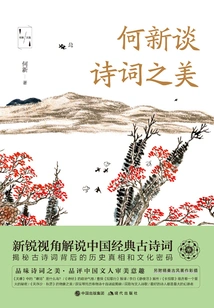
He Xin Talks About the Beauty of Poetry
Literature何新谈诗词之美
He Xin
This book is scholar He Xin's evaluation, interpretation and interpretation of classic Chinese poetry. Relying on his profound academic quality, the author not only accurately grasps and presents the unique artistic rules and artistic charm of ancient Chinese poetry, but also makes a unique evaluation of the aesthetic taste and temperament of Chinese literati. He also deciphers and interprets the historical background and content allusions of the creation of these classic poems, as well as the codes of traditional Chinese culture contained in them. Many of his innovative ideas are refreshing.
This book is scholar He Xin's evaluation, interpretation and interpretation of classic Chinese poetry. Relying on his profound academic quality, the author not only accurately grasps and presents the unique artistic rules and artistic charm of ancient Chinese poetry, but also makes a unique evaluation of the aesthetic taste and temperament of Chinese literati. He also deciphers and interprets the historical background and content allusions of the creation of these classic poems, as well as the codes of traditional Chinese culture contained in them. Many of his innovative ideas are refreshing.
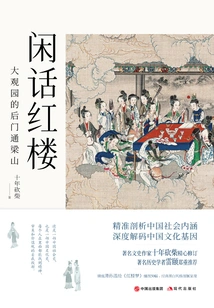
Gossip About the Red Mansion: the Back Door of Grand View Garden Leads to Liangshan Mountain
Literature闲话红楼:大观园的后门通梁山
Ten Years Of Cutting Firewood
"Talk about Red Mansions: The Back Door of the Grand View Garden Leads to Liangshan" is a book that interprets Chinese history and social reality. By interpreting the character and destiny of the characters in "A Dream of Red Mansions", as well as the process and reasons for the decline of Ning and Rong Mansion, the author tries his best to explore and analyze the profound connotation of Chinese society epitomized by "Grand View Garden" and the deep genes of Chinese culture represented by the people in "Red Mansions", in order to observe, think and examine social reality and people in reality through the unchanging basic human nature and the noisy social surface. This book is different from the general interpretation works of "A Dream of Red Mansions" and pays more attention to its social and cultural aspects. It can be said to be a classic text of social history and cultural history. The author uses the perspective of a historical writer and calm and objective thinking to understand and view the people and events in the "Red Mansions", mourning their misfortune and expressing sympathy.
"Talk about Red Mansions: The Back Door of the Grand View Garden Leads to Liangshan" is a book that interprets Chinese history and social reality. By interpreting the character and destiny of the characters in "A Dream of Red Mansions", as well as the process and reasons for the decline of Ning and Rong Mansion, the author tries his best to explore and analyze the profound connotation of Chinese society epitomized by "Grand View Garden" and the deep genes of Chinese culture represented by the people in "Red Mansions", in order to observe, think and examine social reality and people in reality through the unchanging basic human nature and the noisy social surface. This book is different from the general interpretation works of "A Dream of Red Mansions" and pays more attention to its social and cultural aspects. It can be said to be a classic text of social history and cultural history. The author uses the perspective of a historical writer and calm and objective thinking to understand and view the people and events in the "Red Mansions", mourning their misfortune and expressing sympathy.
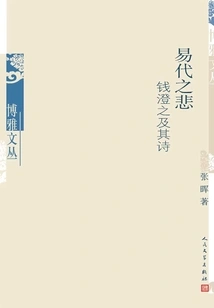
易代之悲:钱澄之及其诗
Zhang Hui
This book takes Qian Chengzhi, a survivor of the Ming Dynasty, as a starting point for his poetry creation, poetic exchanges, construction of poetry history, and writing of poetry theory, and presents the vicissitudes of experience and the melodious mood of the scholar-bureaucrats during the Ming and Qing dynasties. Focusing closely on the negotiation between "poetry" and "history" by the survivor Qian Chengzhi, it continues and expands the author's previous longitudinal research on the "tradition of poetic history". It is also an important entrance for him to enter the historical cross-section of the Southern Ming Dynasty and explore the spiritual history of the scholar-bureaucrats in the "empire in exile".
This book takes Qian Chengzhi, a survivor of the Ming Dynasty, as a starting point for his poetry creation, poetic exchanges, construction of poetry history, and writing of poetry theory, and presents the vicissitudes of experience and the melodious mood of the scholar-bureaucrats during the Ming and Qing dynasties. Focusing closely on the negotiation between "poetry" and "history" by the survivor Qian Chengzhi, it continues and expands the author's previous longitudinal research on the "tradition of poetic history". It is also an important entrance for him to enter the historical cross-section of the Southern Ming Dynasty and explore the spiritual history of the scholar-bureaucrats in the "empire in exile".
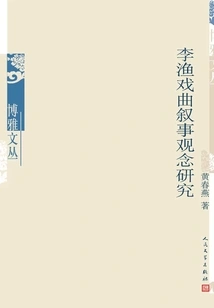
李渔戏曲叙事观念研究
Huang Chunyan
Li Yu is a typical and unique "text" of Jiangnan urban culture in the late Ming and early Qing dynasties. The fine appreciation between daily life and artistic aesthetics, the blend of elegance and vulgarity, enabled Li Yu to form his own opera narrative theory that integrates literature, music, performance and reception in the activities of writing lyrics, music and performing and teaching. This book deeply discusses important aspects such as Li Yu's leisurely mood and the interest of Jiangnan cities, the narrative structure strategy of Li Yu's operas and the cultural customs of Jiangnan cities, the narrative implications of Li Yu's interesting operas and the cultural psychology of Jiangnan cities. It is of great enlightenment for readers to comprehensively and carefully grasp Li Yu and his operas.
Li Yu is a typical and unique "text" of Jiangnan urban culture in the late Ming and early Qing dynasties. The fine appreciation between daily life and artistic aesthetics, the blend of elegance and vulgarity, enabled Li Yu to form his own opera narrative theory that integrates literature, music, performance and reception in the activities of writing lyrics, music and performing and teaching. This book deeply discusses important aspects such as Li Yu's leisurely mood and the interest of Jiangnan cities, the narrative structure strategy of Li Yu's operas and the cultural customs of Jiangnan cities, the narrative implications of Li Yu's interesting operas and the cultural psychology of Jiangnan cities. It is of great enlightenment for readers to comprehensively and carefully grasp Li Yu and his operas.
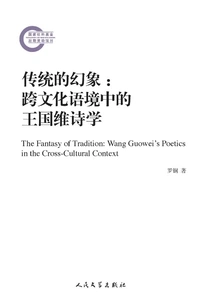
传统的幻象:跨文化语境中的王国维诗学
Luo Gang
This book uses the perspective of comparative poetics to examine the characteristics of Wang Guowei's poetics in the context of Chinese and Western academics. After carefully combing and analyzing the sources of Wang's poetics, it believes that: Wang Guowei's poetics is to a large extent a Chinese variant of Western, especially German, modern aesthetics, rather than being rooted in the ancient Chinese poetic tradition, which has been almost established in the academic world. On this basis, this book raises the issue of "rediscovering tradition", which is quite inspiring for the reflection and reconstruction of the humanities. The research in this book is unconventional and has never been done before. It is a new advancement for the study of Wang Guowei's poetry.
This book uses the perspective of comparative poetics to examine the characteristics of Wang Guowei's poetics in the context of Chinese and Western academics. After carefully combing and analyzing the sources of Wang's poetics, it believes that: Wang Guowei's poetics is to a large extent a Chinese variant of Western, especially German, modern aesthetics, rather than being rooted in the ancient Chinese poetic tradition, which has been almost established in the academic world. On this basis, this book raises the issue of "rediscovering tradition", which is quite inspiring for the reflection and reconstruction of the humanities. The research in this book is unconventional and has never been done before. It is a new advancement for the study of Wang Guowei's poetry.
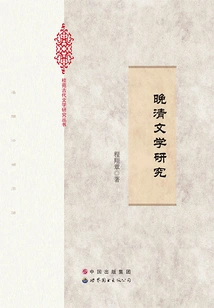
Research on Late Qing Literature
Literature晚清文学研究
Cheng Xiangzhang
China's modern society is a special historical stage, a period in which great changes have taken place in both society and literature. The collection of papers in this book provides a relatively comprehensive reflection of this history from different levels, different aspects, and different perspectives. This book has a total of 30 papers, divided into five series: the first series has 5 articles, all of which are articles on Gong Zizhen; the second series of 5 articles, all of which are articles on Huang Kan; the third series of 7 articles, which are mainly articles on modern prose; the fourth series of 6 articles, all of which are articles on the study of modern Chinese translated literature; the fifth series is comprehensive, with a total of 7 articles, and the research objects involve poetry, poetry, novels, drama and community genres, as well as some important issues in modern literary research.
China's modern society is a special historical stage, a period in which great changes have taken place in both society and literature. The collection of papers in this book provides a relatively comprehensive reflection of this history from different levels, different aspects, and different perspectives. This book has a total of 30 papers, divided into five series: the first series has 5 articles, all of which are articles on Gong Zizhen; the second series of 5 articles, all of which are articles on Huang Kan; the third series of 7 articles, which are mainly articles on modern prose; the fourth series of 6 articles, all of which are articles on the study of modern Chinese translated literature; the fifth series is comprehensive, with a total of 7 articles, and the research objects involve poetry, poetry, novels, drama and community genres, as well as some important issues in modern literary research.
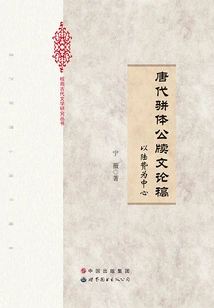
唐代骈体公牍文论稿:以陆贽为中心
Ning Wei
Under the general framework of "Confucianism, Taoism and Literature" and relying on Lu Zhi's cultural character, this book conducts an overall survey of Lu Zhi's creation of parallel-style official documents, and then analyzes the changes in parallel-style official documents during the Tang and Song Dynasties and Lu Zhi's role and influence in them, as well as the important impact and significance of Lu Zhi's reform of parallel-style official documents in the context of the cultural transformation of the Tang and Song Dynasties. The book is divided into three parts: upper, middle and lower, with a total of nine chapters. It studies the evolution of the style and style of parallel-style official documents before the Tang Dynasty, the social and cultural background of parallel-style official documents in the Tang Dynasty, the new atmosphere of parallel-style official documents in the Tang Dynasty before Lu Zhi, and Lu Zhi's political ideals and cultural psychology. There are both macroscopic discussions and microscopic observations, with a broad vision and quite innovative ideas.
Under the general framework of "Confucianism, Taoism and Literature" and relying on Lu Zhi's cultural character, this book conducts an overall survey of Lu Zhi's creation of parallel-style official documents, and then analyzes the changes in parallel-style official documents during the Tang and Song Dynasties and Lu Zhi's role and influence in them, as well as the important impact and significance of Lu Zhi's reform of parallel-style official documents in the context of the cultural transformation of the Tang and Song Dynasties. The book is divided into three parts: upper, middle and lower, with a total of nine chapters. It studies the evolution of the style and style of parallel-style official documents before the Tang Dynasty, the social and cultural background of parallel-style official documents in the Tang Dynasty, the new atmosphere of parallel-style official documents in the Tang Dynasty before Lu Zhi, and Lu Zhi's political ideals and cultural psychology. There are both macroscopic discussions and microscopic observations, with a broad vision and quite innovative ideas.
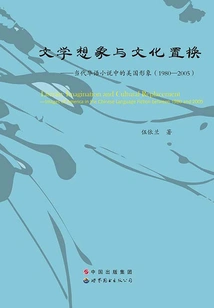
文学想象与文化置换:当代华语小说中的美国形象(1980:2005)
Wu Yilan
This book uses the theoretical method of comparative literary iconology to conduct a diachronic study of the image of the United States in Chinese novels from 1980 to 2005, and examines the characteristics and contemporary significance of the image of the United States in three major periods. (1) The image of the United States in Chinese-language novels in the 1980s embodies strong "political modeling" characteristics, and is a politically modeled image of a developed capitalist country. (2) The image of the United States in Chinese novels in the 1990s shows the characteristics of "social panorama", is broad and diverse, and expresses the rich social features and vivid personalities of the United States. (3) The image of the United States in Chinese novels at the beginning of the 21st century shows the characteristics of "cultural diversity" in the United States. It no longer focuses too much on macro-level discourses such as politics and economics, but instead turns to an in-depth exploration of the basic factor of American society: "people."
This book uses the theoretical method of comparative literary iconology to conduct a diachronic study of the image of the United States in Chinese novels from 1980 to 2005, and examines the characteristics and contemporary significance of the image of the United States in three major periods. (1) The image of the United States in Chinese-language novels in the 1980s embodies strong "political modeling" characteristics, and is a politically modeled image of a developed capitalist country. (2) The image of the United States in Chinese novels in the 1990s shows the characteristics of "social panorama", is broad and diverse, and expresses the rich social features and vivid personalities of the United States. (3) The image of the United States in Chinese novels at the beginning of the 21st century shows the characteristics of "cultural diversity" in the United States. It no longer focuses too much on macro-level discourses such as politics and economics, but instead turns to an in-depth exploration of the basic factor of American society: "people."
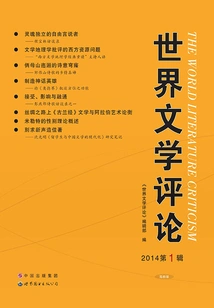
World Literature Review (2014 Issue 1)
Literature世界文学评论(2014第1辑)
Editor Of "world Literature Review"
The contents of the book mainly include: comparative literature research, British literature research, American literature research, research reviews and book reviews, etc. The articles included in the book mainly include: "Writing of Regional Culture in Epic Style - On Liu Baochang's New Work "King Wu of Chu"" by Weiners, "Don't Seek New Voices to Create a Better Work - Research Notes on Shen Guangming's "Foreign Students and the Modernization of Chinese Literature"" by Zhao Guotai, "Acceptance, Influence and Integration - Part 1 of an Interview with Peng Yanjiao's Poetry" by He Yunbo, "The Philosophical Implications of the Novel "Tonghua"" by Zou Jianjun and Chen Qingfang, etc.
The contents of the book mainly include: comparative literature research, British literature research, American literature research, research reviews and book reviews, etc. The articles included in the book mainly include: "Writing of Regional Culture in Epic Style - On Liu Baochang's New Work "King Wu of Chu"" by Weiners, "Don't Seek New Voices to Create a Better Work - Research Notes on Shen Guangming's "Foreign Students and the Modernization of Chinese Literature"" by Zhao Guotai, "Acceptance, Influence and Integration - Part 1 of an Interview with Peng Yanjiao's Poetry" by He Yunbo, "The Philosophical Implications of the Novel "Tonghua"" by Zou Jianjun and Chen Qingfang, etc.
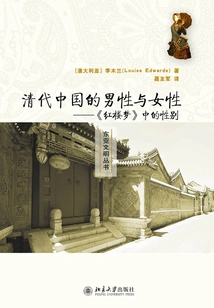
清代中国的男性与女性:《红楼梦》中的性别
(australia) Li Mulan
"A Dream of Red Mansions", one of China's most famous novels, has generated considerable criticism in both Chinese and Western academic circles. The novel narrates the intricate life details of an aristocratic family in the Qing Dynasty and is full of information about gender rules. For example, this book describes in detail how gender privileges are maintained through a series of gender discourses and how the contradictions caused by these privileges are mediated. This book cites gender as a basic category in the structure of social systems and develops analysis on this basis. In the following chapters, the author will interpret the text of "A Dream of Red Mansions" from a gender perspective, sorting out the efforts made by Red Studies critics in different periods to interpret and interpret "A Dream of Red Mansions" and the gender\u002F political discourse hidden behind such efforts.
"A Dream of Red Mansions", one of China's most famous novels, has generated considerable criticism in both Chinese and Western academic circles. The novel narrates the intricate life details of an aristocratic family in the Qing Dynasty and is full of information about gender rules. For example, this book describes in detail how gender privileges are maintained through a series of gender discourses and how the contradictions caused by these privileges are mediated. This book cites gender as a basic category in the structure of social systems and develops analysis on this basis. In the following chapters, the author will interpret the text of "A Dream of Red Mansions" from a gender perspective, sorting out the efforts made by Red Studies critics in different periods to interpret and interpret "A Dream of Red Mansions" and the gender\u002F political discourse hidden behind such efforts.
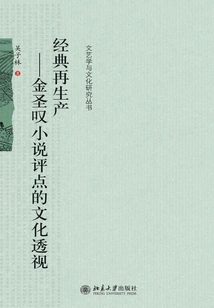
经典再生产:金圣叹小说评点的文化透视
Wu Zilin
By analyzing Jin Shengtan's comments on popular novels, this book not only analyzes the unique social and cultural background and characteristics of Jin Shengtan's comments, but also analyzes the importance of Jin Shengtan's comments on the canonization of popular novels in the Ming and Qing Dynasties. The content of this book is mainly divided into the following parts: The first chapter studies the specific cultural context in which Jin Shengtan lives from the perspective of regional culture, that is, the various cultural resources, social needs, popular values, dominant ways of thinking, etc. He faced, trying to accurately grasp the emergence, existence and significance of his novel commentary discourse system. The second chapter mainly studies the formal criticism of Jin Shengtan's novel criticism, that is, Jin Shengtan's construction of the narrative theory of the novel. The third chapter focuses on the political criticism of Jin Shengtan's novels. The fourth chapter focuses on the cultural significance of Jin Shengtan's novel criticism, connecting external research and internal research to integrate the above discussion.
By analyzing Jin Shengtan's comments on popular novels, this book not only analyzes the unique social and cultural background and characteristics of Jin Shengtan's comments, but also analyzes the importance of Jin Shengtan's comments on the canonization of popular novels in the Ming and Qing Dynasties. The content of this book is mainly divided into the following parts: The first chapter studies the specific cultural context in which Jin Shengtan lives from the perspective of regional culture, that is, the various cultural resources, social needs, popular values, dominant ways of thinking, etc. He faced, trying to accurately grasp the emergence, existence and significance of his novel commentary discourse system. The second chapter mainly studies the formal criticism of Jin Shengtan's novel criticism, that is, Jin Shengtan's construction of the narrative theory of the novel. The third chapter focuses on the political criticism of Jin Shengtan's novels. The fourth chapter focuses on the cultural significance of Jin Shengtan's novel criticism, connecting external research and internal research to integrate the above discussion.
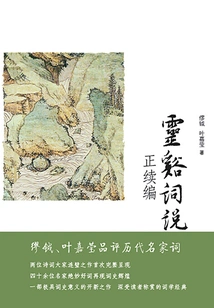
The Sequel to Lingxi Ci Shuo
Literature灵谿词说正续编
Miao Yue Ye Jiaying
This book discusses the poets from the Tang and Song dynasties to the Ming and Qing dynasties, comments on their gains and losses, and describes their evolution. However, due to various reasons, the original and sequels were published separately. The main volume is "Lingxi Ci Shu", which was published by Shanghai Ancient Books Publishing House in 1987. The sequel was "Talks on Ancient and Modern Ci Studies", published by Taipei Wanjuanlou Book Co., Ltd. In 1992 and Yuelu Publishing House in 1993. The two authors have profound knowledge of poetry, and every discussion can be said to be a perfect infiltration of knowledge, emotion and meaning. Therefore, this book was once a popular classic work on poetry research.
This book discusses the poets from the Tang and Song dynasties to the Ming and Qing dynasties, comments on their gains and losses, and describes their evolution. However, due to various reasons, the original and sequels were published separately. The main volume is "Lingxi Ci Shu", which was published by Shanghai Ancient Books Publishing House in 1987. The sequel was "Talks on Ancient and Modern Ci Studies", published by Taipei Wanjuanlou Book Co., Ltd. In 1992 and Yuelu Publishing House in 1993. The two authors have profound knowledge of poetry, and every discussion can be said to be a perfect infiltration of knowledge, emotion and meaning. Therefore, this book was once a popular classic work on poetry research.
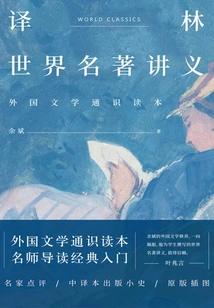
译林世界名著讲义
Yu Bin
Professor Yu Bin, a senior expert and writer in the field of world literature, combined his many years of teaching, reading, and writing results to intensively study the translation of Lin's translation of world classics and create "Lecture Notes on Translation of Lin's World Masters." This book selects the most "master" writers in the history of world literature and their works with the most "prototype" significance, and uses humorous and lively words to interpret "Don Quixote", "Madame Bovary", "The Great Gatsby" and "Wheatfield" in simple and easy-to-understand terms. "The Watcher" and other pinnacle works in the development history of world literature. It explores the author's personal anecdotes and decodes the essence of the work's style. It also includes comments by famous writers and a brief history of the publication of the Chinese translation, allowing readers to get started easily, wander through the forest of famous works, and appreciate the joy of reading. Famous writers Ye Zhaoyan and Liu Liangcheng sincerely recommend it!
Professor Yu Bin, a senior expert and writer in the field of world literature, combined his many years of teaching, reading, and writing results to intensively study the translation of Lin's translation of world classics and create "Lecture Notes on Translation of Lin's World Masters." This book selects the most "master" writers in the history of world literature and their works with the most "prototype" significance, and uses humorous and lively words to interpret "Don Quixote", "Madame Bovary", "The Great Gatsby" and "Wheatfield" in simple and easy-to-understand terms. "The Watcher" and other pinnacle works in the development history of world literature. It explores the author's personal anecdotes and decodes the essence of the work's style. It also includes comments by famous writers and a brief history of the publication of the Chinese translation, allowing readers to get started easily, wander through the forest of famous works, and appreciate the joy of reading. Famous writers Ye Zhaoyan and Liu Liangcheng sincerely recommend it!
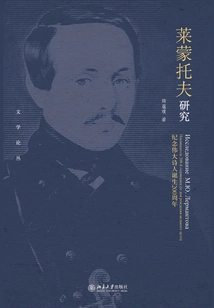
Lermontov Studies
Literature莱蒙托夫研究
Gu Yunpu
With the unique perspective and sensitivity of an admirer, translator, and researcher, the author of this book, after 52 years of elimination, reveals the interaction between genius and adversity of the great poet Mio Lermontov, one of the founders of modern Russian literature headed by Pushkin, and reveals his spiritual realm and originality as a non-literary person. The pursuit of complementarity, the discovery of the commonality and complementarity of inspiration in different art forms as a multi-faceted writer (poet, novelist, playwright), the analysis of his inner drive to use poetic aesthetics to create a new path for world prose narrative ("Contemporary Heroes") and his influence on modern literature are all refreshing highlights for readers. The author of this book translates poems, appreciates poems, analyzes poems, reviews poems, and even uses his own poems to interpret the artistic thinking of Lermontov, a rare genius, to our readers.
With the unique perspective and sensitivity of an admirer, translator, and researcher, the author of this book, after 52 years of elimination, reveals the interaction between genius and adversity of the great poet Mio Lermontov, one of the founders of modern Russian literature headed by Pushkin, and reveals his spiritual realm and originality as a non-literary person. The pursuit of complementarity, the discovery of the commonality and complementarity of inspiration in different art forms as a multi-faceted writer (poet, novelist, playwright), the analysis of his inner drive to use poetic aesthetics to create a new path for world prose narrative ("Contemporary Heroes") and his influence on modern literature are all refreshing highlights for readers. The author of this book translates poems, appreciates poems, analyzes poems, reviews poems, and even uses his own poems to interpret the artistic thinking of Lermontov, a rare genius, to our readers.
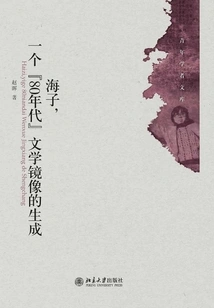
海子,一个“80年代”文学镜像的生成
Zhao Hui
This book selects Haizi, an iconic figure in literature in the 1980s, as the research object. Through the discussion of comments about Haizi and his poems, it reflects on Chinese literature in the 1980s and the self-knowledge and self-understanding of Chinese intellectuals. The shaping of Haizi by different cultures and intellectual spaces demonstrates the new anxieties and new hopes of Chinese thought after the 1990s. This book has a novel and unique perspective, showing the author's good problem awareness and method awareness, as well as the ability to independently engage in creative scientific research. It embodies new academic ideas, explores valuable new phenomena and new laws, and has strong theoretical significance and practical value. The structure of the book is exquisite and complete, the writing is beautiful and smooth, and the theoretical analysis and text interpretation can be perfectly combined. This book is revised and improved from the author's doctoral thesis, which has won the title of Beijing's Outstanding Doctoral Thesis in 2009.
This book selects Haizi, an iconic figure in literature in the 1980s, as the research object. Through the discussion of comments about Haizi and his poems, it reflects on Chinese literature in the 1980s and the self-knowledge and self-understanding of Chinese intellectuals. The shaping of Haizi by different cultures and intellectual spaces demonstrates the new anxieties and new hopes of Chinese thought after the 1990s. This book has a novel and unique perspective, showing the author's good problem awareness and method awareness, as well as the ability to independently engage in creative scientific research. It embodies new academic ideas, explores valuable new phenomena and new laws, and has strong theoretical significance and practical value. The structure of the book is exquisite and complete, the writing is beautiful and smooth, and the theoretical analysis and text interpretation can be perfectly combined. This book is revised and improved from the author's doctoral thesis, which has won the title of Beijing's Outstanding Doctoral Thesis in 2009.
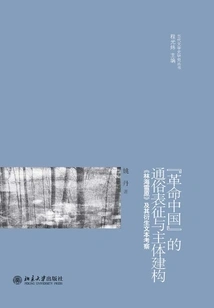
“革命中国”的通俗表征与主体建构:《林海雪原》及其衍生文本考察
Yao Dan
There are two paths to the practice of creating proletarian literature (culture) in revolutionary China. One insists on cultivating writers from workers and peasants; the other insists on transforming intellectuals with proletarian consciousness so that they can create qualified works. By studying the production of "Lin Hai Xue Yuan" and its derivative texts, this book presents the various difficulties and heights that can be achieved in the process of exploring these two paths. This book believes that revolutionary China consciously regarded literature (culture) as an organic component of the ideological state apparatus. Therefore, the creation of literature (culture) must attach importance to the popular pursuit of all people; and in the actual production process, due to the intervention of senior literati, this popular pursuit has a certain elegance. Elegance suppresses the original roughness of the peasant and army writers and reflects their actual low status in the cultural hierarchy. But on the other hand, the imprint of peasants and soldiers stubbornly fixed in the work, because of its ambiguity and vividness, makes the adaptation also have the possibility of repeated interpretation, that is, it has a classic character.
There are two paths to the practice of creating proletarian literature (culture) in revolutionary China. One insists on cultivating writers from workers and peasants; the other insists on transforming intellectuals with proletarian consciousness so that they can create qualified works. By studying the production of "Lin Hai Xue Yuan" and its derivative texts, this book presents the various difficulties and heights that can be achieved in the process of exploring these two paths. This book believes that revolutionary China consciously regarded literature (culture) as an organic component of the ideological state apparatus. Therefore, the creation of literature (culture) must attach importance to the popular pursuit of all people; and in the actual production process, due to the intervention of senior literati, this popular pursuit has a certain elegance. Elegance suppresses the original roughness of the peasant and army writers and reflects their actual low status in the cultural hierarchy. But on the other hand, the imprint of peasants and soldiers stubbornly fixed in the work, because of its ambiguity and vividness, makes the adaptation also have the possibility of repeated interpretation, that is, it has a classic character.
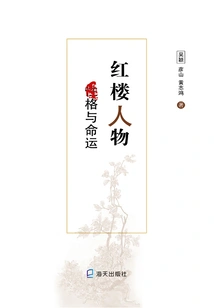
红楼人物·性格与命运
Wu Ying Yan Shan Huang Zhihong
The selection of characters in Red Mansions in this monograph is very appropriate. Among the twelve characters, only Jia Baoyu was chosen by men, and the others were all women. Among the female images, there are six of the Twelve Beauties of Jinling: Lin Daiyu, Xue Baochai, Shi Xiangyun, Jia Tanchun, Wang Xifeng, and Miaoyu; three maids: Xi Ren, Qingwen, and Siqi; and two concubines: Ping'er and Xiangling; almost covering several major types of important characters in "A Dream of Red Mansions". These characters are all hot topics that were discussed a lot in red academic circles 30 years ago.
The selection of characters in Red Mansions in this monograph is very appropriate. Among the twelve characters, only Jia Baoyu was chosen by men, and the others were all women. Among the female images, there are six of the Twelve Beauties of Jinling: Lin Daiyu, Xue Baochai, Shi Xiangyun, Jia Tanchun, Wang Xifeng, and Miaoyu; three maids: Xi Ren, Qingwen, and Siqi; and two concubines: Ping'er and Xiangling; almost covering several major types of important characters in "A Dream of Red Mansions". These characters are all hot topics that were discussed a lot in red academic circles 30 years ago.
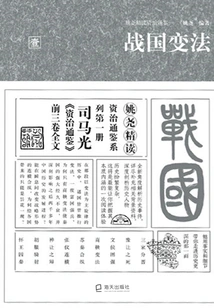
姚尧精读资治通鉴一:战国变法
Yao Yao
This book is the paperback version of "Yao Yao's Intensive Reading of Zizhi Tongjian and the Warring States Reform", and some contents have been revised. The whole book is based on the first three volumes of Sima Guang's "Zizhi Tongjian" (Zhou Ji 1 to Zhou Ji 3). It is mainly divided into four parts: original text, vernacular, annotation, and interpretation, providing an in-depth interpretation of it. In addition to the vernacular translation of the original text of "Zi Zhi Tong Jian", the author added annotations, corrected some errors in the original text, and interpreted it from his own unique perspective, providing a wonderful analysis and commentary on historical events. This book is the first volume in Yao Yao's series of intensive readings of "Zizhi Tongjian". The translation and annotation are accurate, the views are unique, and the text is easy to understand. This book has no guiding questions and the ideological content is healthy.
This book is the paperback version of "Yao Yao's Intensive Reading of Zizhi Tongjian and the Warring States Reform", and some contents have been revised. The whole book is based on the first three volumes of Sima Guang's "Zizhi Tongjian" (Zhou Ji 1 to Zhou Ji 3). It is mainly divided into four parts: original text, vernacular, annotation, and interpretation, providing an in-depth interpretation of it. In addition to the vernacular translation of the original text of "Zi Zhi Tong Jian", the author added annotations, corrected some errors in the original text, and interpreted it from his own unique perspective, providing a wonderful analysis and commentary on historical events. This book is the first volume in Yao Yao's series of intensive readings of "Zizhi Tongjian". The translation and annotation are accurate, the views are unique, and the text is easy to understand. This book has no guiding questions and the ideological content is healthy.
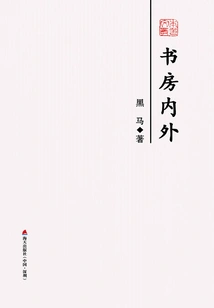
Inside and Outside the Study
Literature书房内外
Dark Horse
"Inside and Out of the Study" revolves around the two themes of book writers and book translators, which fully embodies the characteristics of Dark Horse's literary profession: it records the book romances of famous Chinese and foreign literary figures, digs into anecdotes about their literary careers; it talks about the hardships and skills of literary translation, tastes classics, and comments on new books. The articles collected have all been published in newspaper columns and have been specially revised and supplemented for this book. The manuscript has no political orientation.
"Inside and Out of the Study" revolves around the two themes of book writers and book translators, which fully embodies the characteristics of Dark Horse's literary profession: it records the book romances of famous Chinese and foreign literary figures, digs into anecdotes about their literary careers; it talks about the hardships and skills of literary translation, tastes classics, and comments on new books. The articles collected have all been published in newspaper columns and have been specially revised and supplemented for this book. The manuscript has no political orientation.
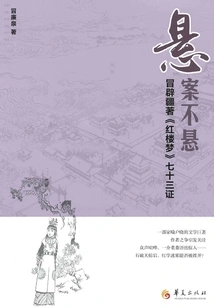
Unsolved Case
Literature悬案不悬
Maolianquan
"A Dream of Red Mansions", as a representative work of Chinese classical literature, has always been a hot topic in the literary and historical circles. However, who is the author of "A Dream of Red Mansions"? Rugao native Mao Lianquan used his spare time, did not believe in the authority of red studies, and was not limited by the established theory. After thirty years of painstaking research, he proposed a new theory: the real author of "Dream of Red Mansions" is not Cao Xueqin, but Rugao scholar Mao Bijiang! This book believes that Mao Pijiang wrote "A Dream of Red Mansions" under the pseudonym Cao Xueqin, and convincingly presented 70 pieces of evidence. These evidences are Mao Pijiang's elements buried in "A Dream of Red Mansions".
"A Dream of Red Mansions", as a representative work of Chinese classical literature, has always been a hot topic in the literary and historical circles. However, who is the author of "A Dream of Red Mansions"? Rugao native Mao Lianquan used his spare time, did not believe in the authority of red studies, and was not limited by the established theory. After thirty years of painstaking research, he proposed a new theory: the real author of "Dream of Red Mansions" is not Cao Xueqin, but Rugao scholar Mao Bijiang! This book believes that Mao Pijiang wrote "A Dream of Red Mansions" under the pseudonym Cao Xueqin, and convincingly presented 70 pieces of evidence. These evidences are Mao Pijiang's elements buried in "A Dream of Red Mansions".
玄学与魏晋南朝诗学研究
Cai Yanfeng
This book's study of the relationship between metaphysics and the poetics of the Wei, Jin and Six Dynasties will focus on basic poetic categories and poetry history issues, such as the relationship between metaphysics' "discrimination of words and meaning" and the categories of "word" and "meaning" in poetics, the development of the "discrimination of words and meaning" from "proud to forget words" to "exhausting meaning" and its historical significance in poetry, the emergence of metaphysical views of nature and "object" poetics, the establishment of "nature" as a category of literary criticism, etc. Through the analysis of the basic categories of Wei and Jin poetics and basic issues in the history of poetry, it is a basic research idea of this book to explore the inner relationship between metaphysics and the development and construction of Wei and Jin poetics.
This book's study of the relationship between metaphysics and the poetics of the Wei, Jin and Six Dynasties will focus on basic poetic categories and poetry history issues, such as the relationship between metaphysics' "discrimination of words and meaning" and the categories of "word" and "meaning" in poetics, the development of the "discrimination of words and meaning" from "proud to forget words" to "exhausting meaning" and its historical significance in poetry, the emergence of metaphysical views of nature and "object" poetics, the establishment of "nature" as a category of literary criticism, etc. Through the analysis of the basic categories of Wei and Jin poetics and basic issues in the history of poetry, it is a basic research idea of this book to explore the inner relationship between metaphysics and the development and construction of Wei and Jin poetics.
欲望的浮世绘:金瓶梅人物写真
Zuojiang
The various urban men and women in the trivial and chaotic emotional whirlpool of "Jin Ping Mei" have woven into a complex and tense web. With the beautiful and fast writing style of the book, the objects and human feelings of the society at that time are vividly displayed on the page one by one. This book is written with women's delicate feelings, thoughtful and rounded, yet lively, interesting and meaningful. It is very different from ordinary academic treatises.
The various urban men and women in the trivial and chaotic emotional whirlpool of "Jin Ping Mei" have woven into a complex and tense web. With the beautiful and fast writing style of the book, the objects and human feelings of the society at that time are vividly displayed on the page one by one. This book is written with women's delicate feelings, thoughtful and rounded, yet lively, interesting and meaningful. It is very different from ordinary academic treatises.
Research on Zhu Xi's Literary Thoughts
Literature朱熹文学思想研究
Li Shijin
Starting from Zhu Xi's original works, we conduct in-depth research and exploration of the profound connotations of Zhu Xi's literary thoughts from both macro and micro levels. From Zhu Xi's literary research monographs on the Book of Songs, Songs of Chu, and Korean studies, to Zhu Xi's analysis and reflections on the works of writers of all ages, from Zhu Xi's literary theory topics, to his literary criticism and appreciation, and even Zhu Xi's theory of creation in a broad sense, a comprehensive and in-depth study has been conducted.
Starting from Zhu Xi's original works, we conduct in-depth research and exploration of the profound connotations of Zhu Xi's literary thoughts from both macro and micro levels. From Zhu Xi's literary research monographs on the Book of Songs, Songs of Chu, and Korean studies, to Zhu Xi's analysis and reflections on the works of writers of all ages, from Zhu Xi's literary theory topics, to his literary criticism and appreciation, and even Zhu Xi's theory of creation in a broad sense, a comprehensive and in-depth study has been conducted.
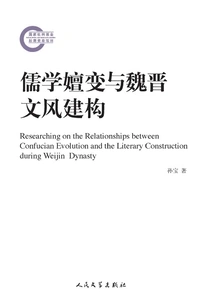
The Evolution of Confucianism and the Construction of Literary Style in Wei and Jin Dynasties
Literature儒学嬗变与魏晋文风建构
Sun Bao
This book mainly analyzes the development of Confucianism in the Wei and Jin Dynasties and its impact on literary creation and literary criticism. The book is divided into three parts: upper, middle and lower. The upper part explains the official Confucian construction in the Wei and Jin Dynasties. The middle part focuses on Xu Qian, Wang Su, He Yan, Xue Zong and others for detailed case studies, discussing the influence of Confucianism on specific writers. The lower part analyzes the influence of Confucianism on critical theory during this period.
This book mainly analyzes the development of Confucianism in the Wei and Jin Dynasties and its impact on literary creation and literary criticism. The book is divided into three parts: upper, middle and lower. The upper part explains the official Confucian construction in the Wei and Jin Dynasties. The middle part focuses on Xu Qian, Wang Su, He Yan, Xue Zong and others for detailed case studies, discussing the influence of Confucianism on specific writers. The lower part analyzes the influence of Confucianism on critical theory during this period.
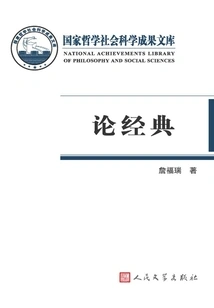
On Classics
Literature论经典
Jim Fury
The author of this article has long been committed to the study of Chinese classical literature and is a research expert in the field of Chinese classical literature. In this manuscript, the author collects decades of research experience and systematically explains in ten chapters the inheritance, universality, authority and influence of classic works on contemporary society. The entire manuscript is widely cited, with clear arguments, novel and unique viewpoints, and an in-depth analysis of the connotation of the word "classic". It is a valuable theoretical research monograph.
The author of this article has long been committed to the study of Chinese classical literature and is a research expert in the field of Chinese classical literature. In this manuscript, the author collects decades of research experience and systematically explains in ten chapters the inheritance, universality, authority and influence of classic works on contemporary society. The entire manuscript is widely cited, with clear arguments, novel and unique viewpoints, and an in-depth analysis of the connotation of the word "classic". It is a valuable theoretical research monograph.
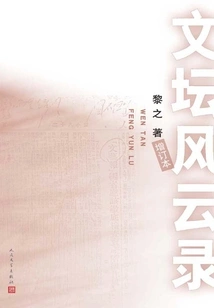
Literary Records
Literature文坛风云录
Li Zhi
In the book, the author "reminisces and thinks" about the past among some literati in the literary world, major issues and events in literary history, and the discussion of major issues in literature and art. Respecting history, seeking truth from facts, being true, concrete and "authentic" are the main themes of the author's writing. Since the author "has worked in the Propaganda Department of the Central Committee for a long time, directly participated in the discussion of major issues in literature and art, and came into contact with some noteworthy materials," some of the reminiscence articles provide some first-hand valuable materials and have certain historical and academic value.
In the book, the author "reminisces and thinks" about the past among some literati in the literary world, major issues and events in literary history, and the discussion of major issues in literature and art. Respecting history, seeking truth from facts, being true, concrete and "authentic" are the main themes of the author's writing. Since the author "has worked in the Propaganda Department of the Central Committee for a long time, directly participated in the discussion of major issues in literature and art, and came into contact with some noteworthy materials," some of the reminiscence articles provide some first-hand valuable materials and have certain historical and academic value.
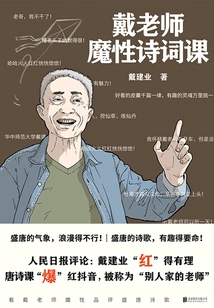
Teacher Dai's Magical Poetry Class
Literature戴老师魔性诗词课
Dai Jianye
Dai Jianye, read the latest Tang poetry! The most magical introductory course on poetry, a book that will make you fall in love with ancient poetry! An immersive reading experience. In the language and text of this book, the author retains his language characteristics in the classroom, allowing readers to see an "authentic" Teacher Dai. The writing is witty and the exciting passages are fully reproduced. Dai Jianye always said, "What I write is more interesting than what I tell!", And this book is exactly the same. The book not only retains Mr. Dai's wonderful moments in class, but he also combines his own life experiences with them to bring the atmosphere of the prosperous Tang Dynasty to life in his poems. Carefully annotated and rich in content. The content in this book will be more systematic, comprehensive and thorough than the content in the author's Tang poetry class video. In addition to adding a long preface and postscript written by the author, there are also many supplements and annotations on the content. It can be said that this book is an upgraded version of the author's online lecture videos. "Teacher Dai's Magic Poetry Class" is just the beginning, more new works will be released one after another, so stay tuned. In this book, in addition to a more systematic arrangement of the content of his Tang poetry class that has become popular all over the Internet, Teacher Dai also adds new content and knowledge points, including his own appreciation of the classic poetry of the Tang Dynasty, as well as an explanation of the life trajectories of the two most representative poets of the Tang Dynasty, Li Bai and Du Fu. The author also combines his own life experience to vividly display the atmosphere of the Tang Dynasty in the poems in front of readers. The content in this book is the accumulation of many years of teaching and research by Mr. Dai Jianye. He has always emphasized that "although online video clips are interesting, they are not systematic after all. To learn knowledge, you still need to go to class systematically, read books, and read books repeatedly!" He hopes that his new book can help more people who are interested in learning ancient poetry.
Dai Jianye, read the latest Tang poetry! The most magical introductory course on poetry, a book that will make you fall in love with ancient poetry! An immersive reading experience. In the language and text of this book, the author retains his language characteristics in the classroom, allowing readers to see an "authentic" Teacher Dai. The writing is witty and the exciting passages are fully reproduced. Dai Jianye always said, "What I write is more interesting than what I tell!", And this book is exactly the same. The book not only retains Mr. Dai's wonderful moments in class, but he also combines his own life experiences with them to bring the atmosphere of the prosperous Tang Dynasty to life in his poems. Carefully annotated and rich in content. The content in this book will be more systematic, comprehensive and thorough than the content in the author's Tang poetry class video. In addition to adding a long preface and postscript written by the author, there are also many supplements and annotations on the content. It can be said that this book is an upgraded version of the author's online lecture videos. "Teacher Dai's Magic Poetry Class" is just the beginning, more new works will be released one after another, so stay tuned. In this book, in addition to a more systematic arrangement of the content of his Tang poetry class that has become popular all over the Internet, Teacher Dai also adds new content and knowledge points, including his own appreciation of the classic poetry of the Tang Dynasty, as well as an explanation of the life trajectories of the two most representative poets of the Tang Dynasty, Li Bai and Du Fu. The author also combines his own life experience to vividly display the atmosphere of the Tang Dynasty in the poems in front of readers. The content in this book is the accumulation of many years of teaching and research by Mr. Dai Jianye. He has always emphasized that "although online video clips are interesting, they are not systematic after all. To learn knowledge, you still need to go to class systematically, read books, and read books repeatedly!" He hopes that his new book can help more people who are interested in learning ancient poetry.
元代文人心态
What Book Instrument
This book is the author's famous work. Originally published by Culture and Art Press, it has not been reprinted for many years. The author of this book has always been good at studying social customs and cultural psychology. After the publication of his "Transformation of Opera in the Late Qing Dynasty", the society received a good response.
This book is the author's famous work. Originally published by Culture and Art Press, it has not been reprinted for many years. The author of this book has always been good at studying social customs and cultural psychology. After the publication of his "Transformation of Opera in the Late Qing Dynasty", the society received a good response.