Library
Browse and search books
2,982 novels found
明朝那些事儿·第捌部(2021年 增补版)
The Bright Moon
This book is the eighth part of "Those Things in the Ming Dynasty", which mainly tells the history of the past ten years from Emperor Xizong of Ming Dynasty to Emperor Chongzhen. After Tianqi succeeded to the throne, he ignored the government affairs and indulged in carpentry work. The entire empire was suffering from internal and external troubles and was lifeless: Internally, the Donglin Party took the opportunity to control the government, but internally the Qi, Chu, and Zhejiang factions still fought openly and secretly and enjoyed it. During this period, the eunuch Wei Zhongxian gradually became prosperous. He took advantage of Zhu Youxiao's mediocrity and gradually climbed up the political ladder by clinging to the emperor's wet nurse, the Hakka family. However, after Emperor Chongzhen succeeded to the throne, he liquidated the eunuch party. Wei Zhongxian was desperate and finally chose to kill himself. However, the entire empire was greatly damaged as a result. Externally, because Li Chengliang was troubled by raising tigers, Nurhachi took the opportunity to rise and unify the Later Jin Dynasty. In order to resist the Jin, defend the city, and seize the lost territory, under the leadership of the emperor's master Sun Chengzong, Yuan Chonghuan grew from a scholar to a frontier general. However, just when he was about to display his ambitions, a huge crisis had been brewing for a long time.
This book is the eighth part of "Those Things in the Ming Dynasty", which mainly tells the history of the past ten years from Emperor Xizong of Ming Dynasty to Emperor Chongzhen. After Tianqi succeeded to the throne, he ignored the government affairs and indulged in carpentry work. The entire empire was suffering from internal and external troubles and was lifeless: Internally, the Donglin Party took the opportunity to control the government, but internally the Qi, Chu, and Zhejiang factions still fought openly and secretly and enjoyed it. During this period, the eunuch Wei Zhongxian gradually became prosperous. He took advantage of Zhu Youxiao's mediocrity and gradually climbed up the political ladder by clinging to the emperor's wet nurse, the Hakka family. However, after Emperor Chongzhen succeeded to the throne, he liquidated the eunuch party. Wei Zhongxian was desperate and finally chose to kill himself. However, the entire empire was greatly damaged as a result. Externally, because Li Chengliang was troubled by raising tigers, Nurhachi took the opportunity to rise and unify the Later Jin Dynasty. In order to resist the Jin, defend the city, and seize the lost territory, under the leadership of the emperor's master Sun Chengzong, Yuan Chonghuan grew from a scholar to a frontier general. However, just when he was about to display his ambitions, a huge crisis had been brewing for a long time.
明朝那些事儿·第肆部(2021年 增补版)
The Bright Moon
This book is the fourth part of "Those Things in the Ming Dynasty". It mainly tells the history of more than fifty years from Ming Xiaozong's succession to the Renyin Palace Incident. After Zhu Youtang ascended the throne after going through many hardships, he worked closely with virtuous ministers and distant villains, and worked hard to govern, and the political atmosphere in the court was completely renewed. With the assistance of Wang Shu, Ma Wensheng and others, the Ming Dynasty flourished and showed a rejuvenating atmosphere. Unfortunately, Xiaozong died young and was succeeded by his son Zhu Houzhao. This prodigal emperor, known for his playfulness, did not want to make progress and indulged in pleasure. The power of the government fell into the hands of Liu Jin and others, which turned a good empire into a mess and greatly damaged its vitality. Soon, King Ning, who had been planning for a long time, launched a rebellion and wanted to rule across the river from the imperial court. Fortunately, Wang Shouren, the most outstanding person in the Ming Dynasty, turned the tide and avoided a protracted internal strife. In response to this, Zhu Houzhao not only refused to repent, but intensified his efforts, traveling around in the name of personal expedition, and ultimately lost his life. After careful consideration by Yang Tinghe and others, Zhu Houcong, the son of the feudal lord, was promoted to the throne. Around the issue of the names of the biological parents, the famous "Great Etiquette" event broke out between the emperor and his ministers. In the end, Emperor Jiajing won and the imperial power was consolidated. At this time, a strange change occurred in Renyin Palace, and the political situation of the entire empire began to become subtle.
This book is the fourth part of "Those Things in the Ming Dynasty". It mainly tells the history of more than fifty years from Ming Xiaozong's succession to the Renyin Palace Incident. After Zhu Youtang ascended the throne after going through many hardships, he worked closely with virtuous ministers and distant villains, and worked hard to govern, and the political atmosphere in the court was completely renewed. With the assistance of Wang Shu, Ma Wensheng and others, the Ming Dynasty flourished and showed a rejuvenating atmosphere. Unfortunately, Xiaozong died young and was succeeded by his son Zhu Houzhao. This prodigal emperor, known for his playfulness, did not want to make progress and indulged in pleasure. The power of the government fell into the hands of Liu Jin and others, which turned a good empire into a mess and greatly damaged its vitality. Soon, King Ning, who had been planning for a long time, launched a rebellion and wanted to rule across the river from the imperial court. Fortunately, Wang Shouren, the most outstanding person in the Ming Dynasty, turned the tide and avoided a protracted internal strife. In response to this, Zhu Houzhao not only refused to repent, but intensified his efforts, traveling around in the name of personal expedition, and ultimately lost his life. After careful consideration by Yang Tinghe and others, Zhu Houcong, the son of the feudal lord, was promoted to the throne. Around the issue of the names of the biological parents, the famous "Great Etiquette" event broke out between the emperor and his ministers. In the end, Emperor Jiajing won and the imperial power was consolidated. At this time, a strange change occurred in Renyin Palace, and the political situation of the entire empire began to become subtle.
明朝那些事儿·第伍部(2021年 增补版)
The Bright Moon
This book is the fifth part of "Those Things in the Ming Dynasty", which mainly tells the history of the middle and late Jiajing period. This volume unfolds a thrilling historical story around the political struggle in the cabinet between the famous traitor Yan Song of the Ming Dynasty and his opponents. This period of history spans more than 50 years from Yan Song's rise to power to his downfall. During this period, Xia Yan, who spoke out for justice, Xu Jie, who tolerated revenge, Lu Bing, who secretly betrayed the pearl, and Yan Shifan, who was treacherous and evil, appeared in turn, and Gao Gong and Zhang Juzheng also came to the fore. These political talents intertwined into a large network in the officialdom, fighting openly and secretly. The current emperor, Emperor Jiajing, was reduced from a king who manipulated his ministers into a tool for their ministers to manipulate power. Although there was no battlefield in the cabinet, there was secretly a bloody storm. The cabinet does not believe in tears, nor in absolute good and evil.
This book is the fifth part of "Those Things in the Ming Dynasty", which mainly tells the history of the middle and late Jiajing period. This volume unfolds a thrilling historical story around the political struggle in the cabinet between the famous traitor Yan Song of the Ming Dynasty and his opponents. This period of history spans more than 50 years from Yan Song's rise to power to his downfall. During this period, Xia Yan, who spoke out for justice, Xu Jie, who tolerated revenge, Lu Bing, who secretly betrayed the pearl, and Yan Shifan, who was treacherous and evil, appeared in turn, and Gao Gong and Zhang Juzheng also came to the fore. These political talents intertwined into a large network in the officialdom, fighting openly and secretly. The current emperor, Emperor Jiajing, was reduced from a king who manipulated his ministers into a tool for their ministers to manipulate power. Although there was no battlefield in the cabinet, there was secretly a bloody storm. The cabinet does not believe in tears, nor in absolute good and evil.
明朝那些事儿·第玖部(2021年 增补版)
The Bright Moon
This book is the ninth part of "Those Things in the Ming Dynasty", which mainly tells the history from the second year of Chongzhen to the sixteenth year of the Ming Dynasty. Outside the Liaodong Pass, even though Jinzhou-Ningyuan-Shanhai Pass are impregnable, they are still attacked repeatedly! In the six provinces of Zhili, disasters were frequent. Zhang Xianzhong, Li Zicheng, and the rebel armies were like ants, endlessly exterminated! Ministers of the Ming Dynasty, don't you work hard enough? Is the Chongzhen Dynasty about to run out of steam? The general trend of the world is that if we divide for a long time, we will unite, and if we unite for a long time, we will divide. After nearly 300 years of unification, the Ming Dynasty ushered in the last moment of its life. It was faced with internal and external troubles and constant disputes. The east wall was demolished to repair the west wall. In the end, it could not be demolished or repaired. Even though Chongzhen tried his best, it was difficult to turn things around. Forbidden City, Jingshan, small trees, the Ming Dynasty, looking back for the last time!
This book is the ninth part of "Those Things in the Ming Dynasty", which mainly tells the history from the second year of Chongzhen to the sixteenth year of the Ming Dynasty. Outside the Liaodong Pass, even though Jinzhou-Ningyuan-Shanhai Pass are impregnable, they are still attacked repeatedly! In the six provinces of Zhili, disasters were frequent. Zhang Xianzhong, Li Zicheng, and the rebel armies were like ants, endlessly exterminated! Ministers of the Ming Dynasty, don't you work hard enough? Is the Chongzhen Dynasty about to run out of steam? The general trend of the world is that if we divide for a long time, we will unite, and if we unite for a long time, we will divide. After nearly 300 years of unification, the Ming Dynasty ushered in the last moment of its life. It was faced with internal and external troubles and constant disputes. The east wall was demolished to repair the west wall. In the end, it could not be demolished or repaired. Even though Chongzhen tried his best, it was difficult to turn things around. Forbidden City, Jingshan, small trees, the Ming Dynasty, looking back for the last time!
明朝那些事儿·第参部(2021年 增补版)
The Bright Moon
This book is the third part of "Those Things in the Ming Dynasty", which mainly tells the history of more than sixty years from the Hongxi period to the Chenghua period. After Zhu Di, the Ming Dynasty ushered in two wise emperors: Zhu Gaochi and his son Zhu Zhanji. They created a prosperous age of benevolence and xuanji that lasted for eleven years. The country's power increased and the country was peaceful. The rebellious prince Zhu Gaoxu could only end his unsuccessful rebellion in a clown manner. However, a violent storm is coming. An emperor who experienced the legendary life of emperor-prisoner-emperor, a man who could be called the second strongest man in the Ming Dynasty, and the first authoritarian prince in the Ming Dynasty.
This book is the third part of "Those Things in the Ming Dynasty", which mainly tells the history of more than sixty years from the Hongxi period to the Chenghua period. After Zhu Di, the Ming Dynasty ushered in two wise emperors: Zhu Gaochi and his son Zhu Zhanji. They created a prosperous age of benevolence and xuanji that lasted for eleven years. The country's power increased and the country was peaceful. The rebellious prince Zhu Gaoxu could only end his unsuccessful rebellion in a clown manner. However, a violent storm is coming. An emperor who experienced the legendary life of emperor-prisoner-emperor, a man who could be called the second strongest man in the Ming Dynasty, and the first authoritarian prince in the Ming Dynasty.
明朝那些事儿·第贰部(2021年 增补版)
The Bright Moon
Before Zhu Yuanzhang died of illness, he confidently passed the throne to his grandson Zhu Yunwen. Subtle instability was brewing in the seemingly orderly succession of the Ming Dynasty. The nine border-guarding vassal kings held heavy troops. The young and weak Zhu Yunwen always felt threatened and began to reduce the vassal policy. King Zhu Di of Yan responded and rebelled, thus provoking a four-year peace war. How could Zhu Yunwen, who had taken advantage of the right time, location, and people, be forced to lose his strength and change hands? Zhu Di went from resisting despite the reputation of being a rebel to marching straight into Beijing with his troops. During this period, he experienced many crises and miraculously escaped from death many times. Is there really a destiny? Fang Xiaoru, Tie Xuan, Dao Yan... Loyal ministers and good generals all showed their true colors, creating momentum and slandering Fang Qiu. The impact of this war has not dissipated. Jianwen's old ministers were driven out and killed, and the unknown whereabouts of Zhu Yunwen's life and death have become an eternal mystery. But no matter what, Zhu Di started his career as a king and single-handedly created a prosperous dynasty, a great country that everyone looked up to, the Ming Dynasty!
Before Zhu Yuanzhang died of illness, he confidently passed the throne to his grandson Zhu Yunwen. Subtle instability was brewing in the seemingly orderly succession of the Ming Dynasty. The nine border-guarding vassal kings held heavy troops. The young and weak Zhu Yunwen always felt threatened and began to reduce the vassal policy. King Zhu Di of Yan responded and rebelled, thus provoking a four-year peace war. How could Zhu Yunwen, who had taken advantage of the right time, location, and people, be forced to lose his strength and change hands? Zhu Di went from resisting despite the reputation of being a rebel to marching straight into Beijing with his troops. During this period, he experienced many crises and miraculously escaped from death many times. Is there really a destiny? Fang Xiaoru, Tie Xuan, Dao Yan... Loyal ministers and good generals all showed their true colors, creating momentum and slandering Fang Qiu. The impact of this war has not dissipated. Jianwen's old ministers were driven out and killed, and the unknown whereabouts of Zhu Yunwen's life and death have become an eternal mystery. But no matter what, Zhu Di started his career as a king and single-handedly created a prosperous dynasty, a great country that everyone looked up to, the Ming Dynasty!
明朝那些事儿·全集(2021年 增补版)
The Bright Moon
This book mainly talks about the history of the Ming Dynasty in the three hundred years from 1344 to 1644. It refers to more than twenty kinds of historical materials and notes of the Ming Dynasty, such as "Records of the Ming Dynasty", "Tongjian of the Ming Dynasty", "History of the Ming Dynasty", "Chronicles of the Ming Dynasty", etc. It is reviewed and recommended by Mao Peiqi, an expert on the history of the Ming Dynasty. Looking at the history of the Ming Dynasty over the past three hundred years, you can see a different Ming Dynasty. Dynasty: In the 276th year of the Ming Dynasty, there have been 16 emperors, and no emperor has a similar routine; follow Zhu Yuanzhang to learn entrepreneurship, the failure of Emperor Jianwen, the power manipulation of Emperor Jiajing, the literary and artistic young Ming Wuzong, the Ming Xiaozong who insisted on monogamy, and the carpenter emperor Ming Xizong; there are so many loyal and righteous people that it is sad to see. Looking coldly at the enemy and shedding tears is a hero. Xu Da, Chang Yuchun, Lan Yu, how to arrange the founding war gods, scholar Yu Qian won the battle to defend Beijing, why Wang Yangming was worshiped by the Japanese, formation madmen Qi Jiguang, Yuan Chonghuan, are they heroes or sinners; interpretation of officialdom politics and imperial power. Regardless of the country, power, world, and people's hearts, the man behind Zhu Di, Yao Guangxiao, \u002FThe multi-faceted life of a generation of upright official Hai Rui\u002FXu Jie, the number one politician in the Ming Dynasty\u002FWho was touched by Zhang Juzheng's reforms. What kind of organization is the Donglin Party? Spring and Autumn Period, poetry and painting, novels and legends, a dynasty with prosperous culture, economy and art, how "Yongle Dadian" was compiled, the prodigal talent Tang Bohu, the emergence of the four great wonders of the Ming Dynasty ("Romance of the Three Kingdoms", "Water Margin", "Journey to the West" and "Jin Ping Mei"), the madman Li Zhi. The Ming Dynasty was a bloody dynasty, a grotesque dynasty, a strong and tender dynasty, a dynasty that had experienced disasters and was magnificent. The Ming Dynasty is like the folds of Chinese history. Every time you open a chapter, there are wonderful stories that contain the cultural codes, political logic, and human experience of the Chinese people.
This book mainly talks about the history of the Ming Dynasty in the three hundred years from 1344 to 1644. It refers to more than twenty kinds of historical materials and notes of the Ming Dynasty, such as "Records of the Ming Dynasty", "Tongjian of the Ming Dynasty", "History of the Ming Dynasty", "Chronicles of the Ming Dynasty", etc. It is reviewed and recommended by Mao Peiqi, an expert on the history of the Ming Dynasty. Looking at the history of the Ming Dynasty over the past three hundred years, you can see a different Ming Dynasty. Dynasty: In the 276th year of the Ming Dynasty, there have been 16 emperors, and no emperor has a similar routine; follow Zhu Yuanzhang to learn entrepreneurship, the failure of Emperor Jianwen, the power manipulation of Emperor Jiajing, the literary and artistic young Ming Wuzong, the Ming Xiaozong who insisted on monogamy, and the carpenter emperor Ming Xizong; there are so many loyal and righteous people that it is sad to see. Looking coldly at the enemy and shedding tears is a hero. Xu Da, Chang Yuchun, Lan Yu, how to arrange the founding war gods, scholar Yu Qian won the battle to defend Beijing, why Wang Yangming was worshiped by the Japanese, formation madmen Qi Jiguang, Yuan Chonghuan, are they heroes or sinners; interpretation of officialdom politics and imperial power. Regardless of the country, power, world, and people's hearts, the man behind Zhu Di, Yao Guangxiao, \u002FThe multi-faceted life of a generation of upright official Hai Rui\u002FXu Jie, the number one politician in the Ming Dynasty\u002FWho was touched by Zhang Juzheng's reforms. What kind of organization is the Donglin Party? Spring and Autumn Period, poetry and painting, novels and legends, a dynasty with prosperous culture, economy and art, how "Yongle Dadian" was compiled, the prodigal talent Tang Bohu, the emergence of the four great wonders of the Ming Dynasty ("Romance of the Three Kingdoms", "Water Margin", "Journey to the West" and "Jin Ping Mei"), the madman Li Zhi. The Ming Dynasty was a bloody dynasty, a grotesque dynasty, a strong and tender dynasty, a dynasty that had experienced disasters and was magnificent. The Ming Dynasty is like the folds of Chinese history. Every time you open a chapter, there are wonderful stories that contain the cultural codes, political logic, and human experience of the Chinese people.
最后的皇室(全3册)
Aisin Gioro Puyi (english) Johnston
This set of books includes three works of the late Qing Dynasty, "The Forbidden City Gone Away", "My First Half of Life" and "Twilight in the Forbidden City", providing a diversified understanding of the history of the late Qing Dynasty from multiple perspectives.
This set of books includes three works of the late Qing Dynasty, "The Forbidden City Gone Away", "My First Half of Life" and "Twilight in the Forbidden City", providing a diversified understanding of the history of the late Qing Dynasty from multiple perspectives.
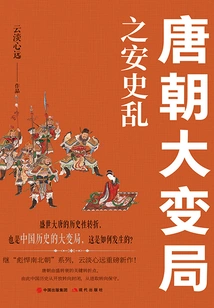
唐朝大变局之安史乱
The Clouds Are Calm And The Heart Is Far Away
This book tells the historical background of the Anshi Rebellion in the middle and late Tang Dynasty and the process of quelling the rebellion, as well as the impact of this incident on the history of the Tang Dynasty and even China. The outbreak of the Anshi Rebellion in the Tang Dynasty ended the myth of the prosperous Tang Dynasty, and the Tang Empire began to decline. This book begins with An Lushan, who embarked on the path of rebellion due to his ambition, Yang Guifei's beauty brought disaster, Shi Siming, An Qingxu, Shi Chaoyi, Li Linfu, Yang Guozhong brought disaster to the country and the people, and Guo Ziyi, Li Guangbi, Yan Zhenqing, Yan Gaoqing and Shen Yong put down the rebellion. Although countless people with lofty ideals have made countless efforts, they still have no way to save the once glorious Tang Dynasty. They can only watch it continue to decline until it completely falls into the abyss. A war led to changes in the political arena of the Tang Dynasty, and became a turning point in Chinese history from openness to isolation, from aggressiveness to conservatism. This book gives a panoramic view of the entire history of the Anshi Rebellion and tells readers about this turbulent, treacherous and changeable history.
This book tells the historical background of the Anshi Rebellion in the middle and late Tang Dynasty and the process of quelling the rebellion, as well as the impact of this incident on the history of the Tang Dynasty and even China. The outbreak of the Anshi Rebellion in the Tang Dynasty ended the myth of the prosperous Tang Dynasty, and the Tang Empire began to decline. This book begins with An Lushan, who embarked on the path of rebellion due to his ambition, Yang Guifei's beauty brought disaster, Shi Siming, An Qingxu, Shi Chaoyi, Li Linfu, Yang Guozhong brought disaster to the country and the people, and Guo Ziyi, Li Guangbi, Yan Zhenqing, Yan Gaoqing and Shen Yong put down the rebellion. Although countless people with lofty ideals have made countless efforts, they still have no way to save the once glorious Tang Dynasty. They can only watch it continue to decline until it completely falls into the abyss. A war led to changes in the political arena of the Tang Dynasty, and became a turning point in Chinese history from openness to isolation, from aggressiveness to conservatism. This book gives a panoramic view of the entire history of the Anshi Rebellion and tells readers about this turbulent, treacherous and changeable history.
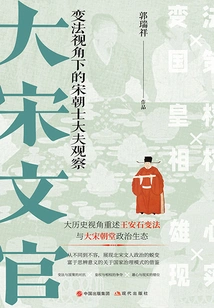
大宋文官:变法视角下的宋朝士大夫观察
Guo Ruixiang
Renzong died, his heir succeeded to the throne, and the national treasury was insufficient. Xixia was ready to move. Internal and external conflicts became apparent again. The national policies of Zhao and Song Dynasties that had been implemented for nearly a century were facing adjustments. Song Shenzong was an emperor who wanted to make great achievements, and boldly asked Wang Anshi to carry out reforms. However, this reform was controversial from the beginning, and it also led to the division of the civil service class. Although Wang Anshi and Sima Guang were both capable ministers, they attacked each other due to their different political views, which plunged the government into a quagmire of party disputes and was unable to extricate itself. The loose and tolerant political environment suffered a devastating blow. The entire society underwent a series of profound changes, whose influence lasted until at least the end of the 19th century. This book starts from Renzong's establishment of heirs and ends with Yuanyou's transformation. It uses time as the axis, viewpoints as bones, and historical facts as flesh. It reproduces the turmoil of major historical events such as Xining Reform, Yuanfeng Reform, and Yuanyou's Reform. It reveals the evolution of Song Dynasty civil servants from disparity to intolerance, the transition of Song Dynasty politics from centralization to imperial autocracy, and the transformation of social thoughts from openness and tolerance to restraint and conservatism. This provides readers with ample historical facts and dimensions of thinking to deeply understand the political ecology of the Song Dynasty, the spiritual pattern of scholar-bureaucrats such as Wang Anshi and Sima Guang, and even the political characteristics and trends of the entire imperial society. From the perspective of big history, he also put forward his own insights into the national governance model, talent selection mechanism, human choice in the destiny of the times, etc.
Renzong died, his heir succeeded to the throne, and the national treasury was insufficient. Xixia was ready to move. Internal and external conflicts became apparent again. The national policies of Zhao and Song Dynasties that had been implemented for nearly a century were facing adjustments. Song Shenzong was an emperor who wanted to make great achievements, and boldly asked Wang Anshi to carry out reforms. However, this reform was controversial from the beginning, and it also led to the division of the civil service class. Although Wang Anshi and Sima Guang were both capable ministers, they attacked each other due to their different political views, which plunged the government into a quagmire of party disputes and was unable to extricate itself. The loose and tolerant political environment suffered a devastating blow. The entire society underwent a series of profound changes, whose influence lasted until at least the end of the 19th century. This book starts from Renzong's establishment of heirs and ends with Yuanyou's transformation. It uses time as the axis, viewpoints as bones, and historical facts as flesh. It reproduces the turmoil of major historical events such as Xining Reform, Yuanfeng Reform, and Yuanyou's Reform. It reveals the evolution of Song Dynasty civil servants from disparity to intolerance, the transition of Song Dynasty politics from centralization to imperial autocracy, and the transformation of social thoughts from openness and tolerance to restraint and conservatism. This provides readers with ample historical facts and dimensions of thinking to deeply understand the political ecology of the Song Dynasty, the spiritual pattern of scholar-bureaucrats such as Wang Anshi and Sima Guang, and even the political characteristics and trends of the entire imperial society. From the perspective of big history, he also put forward his own insights into the national governance model, talent selection mechanism, human choice in the destiny of the times, etc.
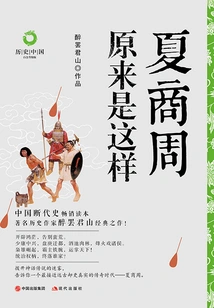
夏商周原来是这样(白金升级版)
Get Drunk In Junshan
The Xia, Shang and Zhou dynasties laid the foundation of Chinese civilization. However, the history of the three dynasties is complicated and confusing. The historical materials are originally limited. In addition, the Qin Dynasty burned books, which only makes future generations sigh at the sight of flowers in the fog. This book strives to unearth the truth of that glorious historical era from limited clues with a rigorous and realistic attitude. By comparing "Historical Records", "The Year of the Bamboo Secretary", "Shangshu", and the documents of pre-Qin scholars, the falsehood is preserved and the truth is preserved. Are Xia Jie and Shang Zhou really the most tyrannical monarchs in history? Is Yi Yin a virtuous prime minister or a traitor? In the hegemonic era of "respecting the king and rejecting the barbarians", what role did the Emperor Zhou play? This book integrates stories scattered in various historical materials into a relatively complete story, with clear chronological order, coherent historical events, and orderly context. It combines knowledge and storytelling, and is highly readable, which shows the author's hard work.
The Xia, Shang and Zhou dynasties laid the foundation of Chinese civilization. However, the history of the three dynasties is complicated and confusing. The historical materials are originally limited. In addition, the Qin Dynasty burned books, which only makes future generations sigh at the sight of flowers in the fog. This book strives to unearth the truth of that glorious historical era from limited clues with a rigorous and realistic attitude. By comparing "Historical Records", "The Year of the Bamboo Secretary", "Shangshu", and the documents of pre-Qin scholars, the falsehood is preserved and the truth is preserved. Are Xia Jie and Shang Zhou really the most tyrannical monarchs in history? Is Yi Yin a virtuous prime minister or a traitor? In the hegemonic era of "respecting the king and rejecting the barbarians", what role did the Emperor Zhou play? This book integrates stories scattered in various historical materials into a relatively complete story, with clear chronological order, coherent historical events, and orderly context. It combines knowledge and storytelling, and is highly readable, which shows the author's hard work.
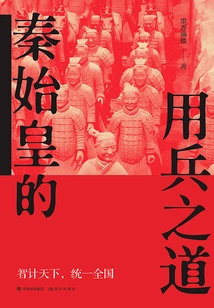
秦始皇的用兵之道
The Building Is Full Of Ink
Qin Shihuang was the creator of a unified dynasty: he sent troops to destroy Korea and kicked off the unification war. In 221 BC, the state of Qin destroyed Qi, and now the whole world belonged to Qin. Qin Shihuang unified the six countries and created a unified dynasty, which had a profound impact on Chinese and world history and established the basic pattern of China's centralized political system for more than 2,000 years. This book mainly tells the story of Qin Shihuang's battles in the six kingdoms, and analyzes his political, military, diplomatic and other strategies in detail, allowing readers to understand a different emperor through the ages. Qin Shihuang was the creator of a unified dynasty: he unified the six kingdoms and adopted a series of measures such as writing in the same text, driving in the same track, walking in the same order, and unifying weights and measures to create a unified dynasty and set the standard for unified dynasty for future generations. Qin Shihuang is the founder of the title of emperor: he believed that he had "the virtues of the three emperors and the merits of the five emperors", so he created the title of emperor, which also became the official title of later Chinese rulers. Qin Shihuang was the founder of centralization: in response to the situation of division and separatism since the Spring and Autumn Period, he constructed a centralized system based on the emperor system, the three official systems and the prefecture and county system. This system has been used by later emperors. Qin Shihuang was the builder of the world's wonder, the Great Wall: Facing the all-pervasive invasion of the Huns, he formulated a plan for the Great Wall that exceeded everyone's imagination. He sent Meng Tian to build the Great Wall and used the entire country to build the Great Wall. It is known as one of the seven wonders of the world. ... Open this book and appreciate Qin Shihuang's military tactics.
Qin Shihuang was the creator of a unified dynasty: he sent troops to destroy Korea and kicked off the unification war. In 221 BC, the state of Qin destroyed Qi, and now the whole world belonged to Qin. Qin Shihuang unified the six countries and created a unified dynasty, which had a profound impact on Chinese and world history and established the basic pattern of China's centralized political system for more than 2,000 years. This book mainly tells the story of Qin Shihuang's battles in the six kingdoms, and analyzes his political, military, diplomatic and other strategies in detail, allowing readers to understand a different emperor through the ages. Qin Shihuang was the creator of a unified dynasty: he unified the six kingdoms and adopted a series of measures such as writing in the same text, driving in the same track, walking in the same order, and unifying weights and measures to create a unified dynasty and set the standard for unified dynasty for future generations. Qin Shihuang is the founder of the title of emperor: he believed that he had "the virtues of the three emperors and the merits of the five emperors", so he created the title of emperor, which also became the official title of later Chinese rulers. Qin Shihuang was the founder of centralization: in response to the situation of division and separatism since the Spring and Autumn Period, he constructed a centralized system based on the emperor system, the three official systems and the prefecture and county system. This system has been used by later emperors. Qin Shihuang was the builder of the world's wonder, the Great Wall: Facing the all-pervasive invasion of the Huns, he formulated a plan for the Great Wall that exceeded everyone's imagination. He sent Meng Tian to build the Great Wall and used the entire country to build the Great Wall. It is known as one of the seven wonders of the world. ... Open this book and appreciate Qin Shihuang's military tactics.
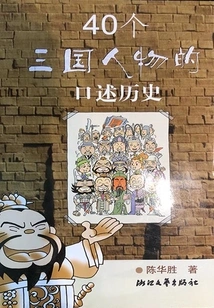
40个三国人物的口述历史
Chen Huasheng
This is a humorous read, but it is not unreasonably funny. The author resurrects the characters of the Three Kingdoms and allows those involved to speak about historical events, hoping to use this virtual situation to restore the historical truth. The humor of this book is based on the author's profound knowledge of Three Kingdoms research, allowing you to get rid of the historical misunderstandings brought to you by "The Romance of the Three Kingdoms" through easy reading. The current online version of the Three Kingdoms has become like "the rolling water of the Yangtze River flowing eastward", which is far beyond the ability of traditional defenders to stop it. These Internet Three Kingdoms break tradition, laugh about history, deconstruct classics, and pay attention to understanding. With their own understanding, they provide today's people with a reading model that is more in line with today's situation. While everyone is "entertaining themselves", the author wants to let the historical figures of the Three Kingdoms "talk to themselves", reviewing and commenting on his own period of history. All chapters in this book restore and clarify history through the characters' autobiography. In a nutshell: this book attempts to borrow modern people's way of thinking and language from the ancients, and then reverses the "three-point fiction" of "The Romance of the Three Kingdoms"; on the other hand, it also attempts to reflect on real life through the various phenomena of the Three Kingdoms era. The style of this book is a weird "oral style". Maybe it is an anomaly, but respecting history is the author's basic point. To deconstruct it based on this basic point is also funny, but this book does not want to "spoof", but to create a "good way to do it".
This is a humorous read, but it is not unreasonably funny. The author resurrects the characters of the Three Kingdoms and allows those involved to speak about historical events, hoping to use this virtual situation to restore the historical truth. The humor of this book is based on the author's profound knowledge of Three Kingdoms research, allowing you to get rid of the historical misunderstandings brought to you by "The Romance of the Three Kingdoms" through easy reading. The current online version of the Three Kingdoms has become like "the rolling water of the Yangtze River flowing eastward", which is far beyond the ability of traditional defenders to stop it. These Internet Three Kingdoms break tradition, laugh about history, deconstruct classics, and pay attention to understanding. With their own understanding, they provide today's people with a reading model that is more in line with today's situation. While everyone is "entertaining themselves", the author wants to let the historical figures of the Three Kingdoms "talk to themselves", reviewing and commenting on his own period of history. All chapters in this book restore and clarify history through the characters' autobiography. In a nutshell: this book attempts to borrow modern people's way of thinking and language from the ancients, and then reverses the "three-point fiction" of "The Romance of the Three Kingdoms"; on the other hand, it also attempts to reflect on real life through the various phenomena of the Three Kingdoms era. The style of this book is a weird "oral style". Maybe it is an anomaly, but respecting history is the author's basic point. To deconstruct it based on this basic point is also funny, but this book does not want to "spoof", but to create a "good way to do it".
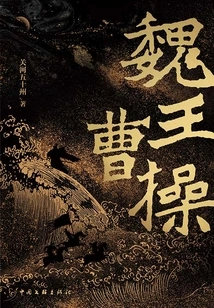
Cao Cao, King of Wei
History魏王曹操
Guanhe Fifty States
What is your impression of Cao Cao? Is he a treacherous minister who "holds the emperor hostage to order the princes"? Or is he a suspicious king who wants to leave 72 doubtful graves for himself? Or is he a violent, bloodthirsty and violent person? However, have you really understood Cao Cao? Different from the stereotyped image of a treacherous minister in opera novels, Cao Cao's life experience is actually exciting. As a young man, he was quirky, with bright clothes and angry horses; as a young man, he was passionate and dedicated to serving the country; in his prime, he composed poems and scolded Fang Qiu. However, few people understand the real Cao Cao through the fragments of history. Through a series of real historical stories and a series of wonderful and spectacular battles, this book gradually lifts the mysterious veil shrouding Cao Cao for us, giving us the opportunity to get close to such a hero who stands on the forefront of history and feel his unique personal charm. And follow his perspective to revisit the turbulent history of the late Eastern Han Dynasty...
What is your impression of Cao Cao? Is he a treacherous minister who "holds the emperor hostage to order the princes"? Or is he a suspicious king who wants to leave 72 doubtful graves for himself? Or is he a violent, bloodthirsty and violent person? However, have you really understood Cao Cao? Different from the stereotyped image of a treacherous minister in opera novels, Cao Cao's life experience is actually exciting. As a young man, he was quirky, with bright clothes and angry horses; as a young man, he was passionate and dedicated to serving the country; in his prime, he composed poems and scolded Fang Qiu. However, few people understand the real Cao Cao through the fragments of history. Through a series of real historical stories and a series of wonderful and spectacular battles, this book gradually lifts the mysterious veil shrouding Cao Cao for us, giving us the opportunity to get close to such a hero who stands on the forefront of history and feel his unique personal charm. And follow his perspective to revisit the turbulent history of the late Eastern Han Dynasty...
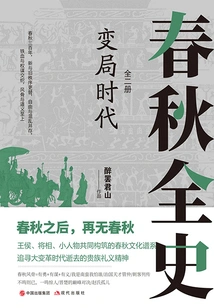
变局时代:春秋全史(全二册)
Get Drunk In Junshan
The Spring and Autumn Period was an era of great changes, with the alternation of the old and the new; the Spring and Autumn Period was a chaotic era with numerous princes and frequent wars, but monarchy was not supreme and freedom was not stifled; the Spring and Autumn Period was an era that advocated bravery and resourcefulness, where blood and power were intertwined; the Spring and Autumn Period was the last glorious era of the Chinese aristocratic spirit, where character and morality were supreme. This book takes the three hundred years of the Spring and Autumn Period as the main line of the feudal princes' struggle for hegemony, and presents this soul-stirring and magnificent history in a three-dimensional and panoramic manner. It is based on the records of classic historical books such as "Zuo Zhuan", "Guoyu", "Lü Shi Chun Qiu", "Historical Records", and "Zi Zhi Tong Jian", etc., And fully demonstrates the Spring and Autumn Spiritual Genealogy jointly constructed by princes, generals, ministers, and small figures.
The Spring and Autumn Period was an era of great changes, with the alternation of the old and the new; the Spring and Autumn Period was a chaotic era with numerous princes and frequent wars, but monarchy was not supreme and freedom was not stifled; the Spring and Autumn Period was an era that advocated bravery and resourcefulness, where blood and power were intertwined; the Spring and Autumn Period was the last glorious era of the Chinese aristocratic spirit, where character and morality were supreme. This book takes the three hundred years of the Spring and Autumn Period as the main line of the feudal princes' struggle for hegemony, and presents this soul-stirring and magnificent history in a three-dimensional and panoramic manner. It is based on the records of classic historical books such as "Zuo Zhuan", "Guoyu", "Lü Shi Chun Qiu", "Historical Records", and "Zi Zhi Tong Jian", etc., And fully demonstrates the Spring and Autumn Spiritual Genealogy jointly constructed by princes, generals, ministers, and small figures.
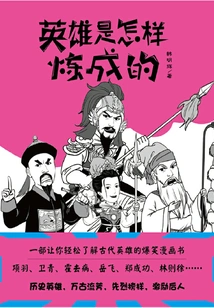
How a Hero is Made
History英雄是怎样炼成的
Han Minghui
A hilarious comic book that allows you to easily understand ancient heroes, helping children supplement their extracurricular knowledge and increase their knowledge. Read comics for half an hour and learn about the growth history of ancient heroes. Best-selling author Han Minghui carefully selects eleven ancient heroes and outlines their growth paths and ups and downs through hand-drawn comics and jokes. The ancient heroes in the book include Xiang Yu, Wei Qing, Huo Qubing, Su Wu, Zu Ti, Yue Fei, Yu Qian, Yuan Chonghuan, Qin Liangyu, Zheng Chenggong, Lin Zexu, etc.
A hilarious comic book that allows you to easily understand ancient heroes, helping children supplement their extracurricular knowledge and increase their knowledge. Read comics for half an hour and learn about the growth history of ancient heroes. Best-selling author Han Minghui carefully selects eleven ancient heroes and outlines their growth paths and ups and downs through hand-drawn comics and jokes. The ancient heroes in the book include Xiang Yu, Wei Qing, Huo Qubing, Su Wu, Zu Ti, Yue Fei, Yu Qian, Yuan Chonghuan, Qin Liangyu, Zheng Chenggong, Lin Zexu, etc.
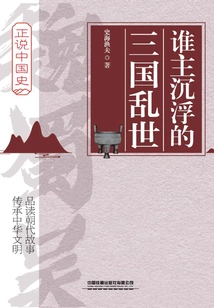
谁主沉浮的三国乱世
Shihai Fisherman
This book tells the story of an important period in ancient Chinese history - the historical evolution of the Three Kingdoms period. The Three Kingdoms (220-280) was a historical period that started from the Eastern Han Dynasty and started from the Western Jin Dynasty. It was divided into three regimes: Cao Wei, Shu Han, and Soochow. In 220, Cao Pi usurped the Han Dynasty and proclaimed himself emperor. The country was named "Wei" and the history was called Cao Wei. The history of the Three Kingdoms officially began. The following year, Liu Bei continued the Han Dynasty in Chengdu, which was known as Shu Han in history. In 229, Sun Quan proclaimed himself emperor, the country was named "Wu", and the history was called Soochow. At this point, the Three Kingdoms were officially established. In 263, Sima Zhao of Cao Wei launched a war between Wei and Shu, and the Shu Han Dynasty was destroyed. Sima Zhao died of illness two years later. His son Sima Yan deposed Emperor Yuan of Wei and established his own country. The founding name of the country was "Jin", which was known as the Western Jin Dynasty in history. In 280 AD, the Western Jin Dynasty destroyed Dongwu and unified China. This ended the Three Kingdoms period and entered the Jin Dynasty.
This book tells the story of an important period in ancient Chinese history - the historical evolution of the Three Kingdoms period. The Three Kingdoms (220-280) was a historical period that started from the Eastern Han Dynasty and started from the Western Jin Dynasty. It was divided into three regimes: Cao Wei, Shu Han, and Soochow. In 220, Cao Pi usurped the Han Dynasty and proclaimed himself emperor. The country was named "Wei" and the history was called Cao Wei. The history of the Three Kingdoms officially began. The following year, Liu Bei continued the Han Dynasty in Chengdu, which was known as Shu Han in history. In 229, Sun Quan proclaimed himself emperor, the country was named "Wu", and the history was called Soochow. At this point, the Three Kingdoms were officially established. In 263, Sima Zhao of Cao Wei launched a war between Wei and Shu, and the Shu Han Dynasty was destroyed. Sima Zhao died of illness two years later. His son Sima Yan deposed Emperor Yuan of Wei and established his own country. The founding name of the country was "Jin", which was known as the Western Jin Dynasty in history. In 280 AD, the Western Jin Dynasty destroyed Dongwu and unified China. This ended the Three Kingdoms period and entered the Jin Dynasty.
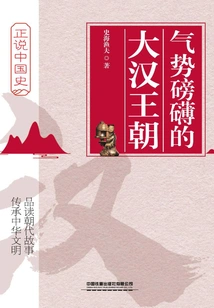
The Majestic Han Dynasty
History气势磅礴的大汉王朝
Shihai Fisherman
This book tells the story of an important period in ancient Chinese history - the historical evolution of the Han Dynasty. The Han Dynasty was a unified dynasty after the Qin Dynasty and was divided into the Western Han Dynasty and the Eastern Han Dynasty. In 206 BC, Liu Bang destroyed the Qin Dynasty. In 202 BC, Liu Bang proclaimed himself emperor. The country was named Han, and its capital was Chang'an. It was called the Western Han Dynasty or the Former Han Dynasty in history. In 8 AD, Wang Mang proclaimed himself emperor on behalf of the Han Dynasty and gave the country a new name. In 25 AD, Liu Xiu reestablished the Han Dynasty and established the capital in Luoyang, which was known as the Eastern Han Dynasty or the Later Han Dynasty in history. In 220 AD, the Han Dynasty fell. There were twenty-four emperors in the Han Dynasty, who ruled for 406 years. The Han Dynasty was a famous highlight moment in Chinese history, with a strong national power, a prosperous society, a developed economy, and many famous historical figures. The history (story) of the Han Dynasty is extremely exciting.
This book tells the story of an important period in ancient Chinese history - the historical evolution of the Han Dynasty. The Han Dynasty was a unified dynasty after the Qin Dynasty and was divided into the Western Han Dynasty and the Eastern Han Dynasty. In 206 BC, Liu Bang destroyed the Qin Dynasty. In 202 BC, Liu Bang proclaimed himself emperor. The country was named Han, and its capital was Chang'an. It was called the Western Han Dynasty or the Former Han Dynasty in history. In 8 AD, Wang Mang proclaimed himself emperor on behalf of the Han Dynasty and gave the country a new name. In 25 AD, Liu Xiu reestablished the Han Dynasty and established the capital in Luoyang, which was known as the Eastern Han Dynasty or the Later Han Dynasty in history. In 220 AD, the Han Dynasty fell. There were twenty-four emperors in the Han Dynasty, who ruled for 406 years. The Han Dynasty was a famous highlight moment in Chinese history, with a strong national power, a prosperous society, a developed economy, and many famous historical figures. The history (story) of the Han Dynasty is extremely exciting.
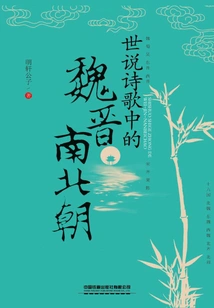
世说诗歌中的魏晋南北朝
Mr. Mingxuan
The Wei, Jin, Southern and Northern Dynasties were a historical period of division and integration in Chinese history. This period began in 220 when Cao Pi forced Emperor Xian of the Eastern Han Dynasty to abdicate and established Cao Wei, and ended in 589 when the Sui Dynasty destroyed Chen and reunified the Southern Dynasty. During this period, there was not only the historical process of great national integration, but also the process of war and strife in the world, and various historical figures appeared one after another. This book mainly quotes poems from later generations commenting on the Wei, Jin, Southern and Northern Dynasties, including comments on emperors and generals, troubled times, powerful families, and major historical turning points, etc., So as to penetrate into all aspects of the Wei, Jin, Southern and Northern Dynasties. In addition to introducing the poems, it also introduces the history behind them in the form of short stories, leading readers to see the ups and downs of history.
The Wei, Jin, Southern and Northern Dynasties were a historical period of division and integration in Chinese history. This period began in 220 when Cao Pi forced Emperor Xian of the Eastern Han Dynasty to abdicate and established Cao Wei, and ended in 589 when the Sui Dynasty destroyed Chen and reunified the Southern Dynasty. During this period, there was not only the historical process of great national integration, but also the process of war and strife in the world, and various historical figures appeared one after another. This book mainly quotes poems from later generations commenting on the Wei, Jin, Southern and Northern Dynasties, including comments on emperors and generals, troubled times, powerful families, and major historical turning points, etc., So as to penetrate into all aspects of the Wei, Jin, Southern and Northern Dynasties. In addition to introducing the poems, it also introduces the history behind them in the form of short stories, leading readers to see the ups and downs of history.
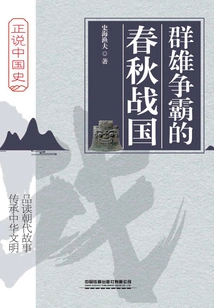
群雄争霸的春秋战国
Shihai Fisherman
This book uses popular and humorous writing techniques to introduce the historical evolution of the Spring and Autumn and Warring States periods in ancient Chinese history. The Spring and Autumn Period and the Warring States Period (770 BC - 221 BC) were a period of great division in Chinese history. After the beginning of the Eastern Zhou Dynasty, the Zhou Dynasty gradually declined, retaining only the name of co-lord of the world but no actual control ability. Due to different socio-economic conditions among the countries in the Central Plains, competition for hegemony among major powers has emerged. The mergers and hegemony of various countries have contributed to the unification of various regions. Therefore, the great social turmoil during the Eastern Zhou Dynasty prepared the conditions for national unification. During this period, capable people emerged in large numbers, and culture, literature, thought, art, etc. Also made great progress.
This book uses popular and humorous writing techniques to introduce the historical evolution of the Spring and Autumn and Warring States periods in ancient Chinese history. The Spring and Autumn Period and the Warring States Period (770 BC - 221 BC) were a period of great division in Chinese history. After the beginning of the Eastern Zhou Dynasty, the Zhou Dynasty gradually declined, retaining only the name of co-lord of the world but no actual control ability. Due to different socio-economic conditions among the countries in the Central Plains, competition for hegemony among major powers has emerged. The mergers and hegemony of various countries have contributed to the unification of various regions. Therefore, the great social turmoil during the Eastern Zhou Dynasty prepared the conditions for national unification. During this period, capable people emerged in large numbers, and culture, literature, thought, art, etc. Also made great progress.
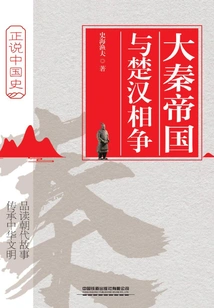
大秦帝国与楚汉相争
Shihai Fisherman
This book uses popular and humorous writing techniques to introduce the historical evolution of the Qin Dynasty in ancient Chinese history. The Qin Dynasty was the first unified dynasty in Chinese history that developed from the Qin State in the late Warring States Period. It lasted for three generations, with two emperors and one king, and the state lasted for fourteen years. The Qin Dynasty established an imperial system and a central official system represented by the Three Gongs and Nine Ministers, abolished the feudal system and replaced it with the county system, completely breaking the Shiqing Shilu system since the Western Zhou Dynasty. It strongly safeguarded the unity of the country and strengthened the central government's control over local areas. It also promoted the unified cultural customs of traveling in the same track, writing in the same text, and practicing in the same order, which strengthened the cohesion of the unified nation and laid the foundation for the rule of the unified Chinese dynasty. Therefore, it is called "Qin's politics and law have been followed for a hundred generations." The Qin Dynasty ended the five hundred years of division and separatism among feudal lords since the Spring and Autumn Period and the Warring States Period, and became the first centralized state in Chinese history that featured multi-ethnic integration.
This book uses popular and humorous writing techniques to introduce the historical evolution of the Qin Dynasty in ancient Chinese history. The Qin Dynasty was the first unified dynasty in Chinese history that developed from the Qin State in the late Warring States Period. It lasted for three generations, with two emperors and one king, and the state lasted for fourteen years. The Qin Dynasty established an imperial system and a central official system represented by the Three Gongs and Nine Ministers, abolished the feudal system and replaced it with the county system, completely breaking the Shiqing Shilu system since the Western Zhou Dynasty. It strongly safeguarded the unity of the country and strengthened the central government's control over local areas. It also promoted the unified cultural customs of traveling in the same track, writing in the same text, and practicing in the same order, which strengthened the cohesion of the unified nation and laid the foundation for the rule of the unified Chinese dynasty. Therefore, it is called "Qin's politics and law have been followed for a hundred generations." The Qin Dynasty ended the five hundred years of division and separatism among feudal lords since the Spring and Autumn Period and the Warring States Period, and became the first centralized state in Chinese history that featured multi-ethnic integration.
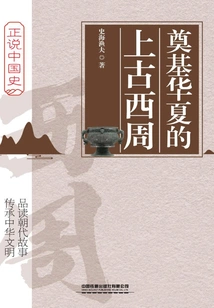
奠基华夏的上古西周
Shihai Fisherman
The author of this book uses a popular and humorous writing style to introduce the historical stories of the ancient Chinese history and the Xia, Shang and Western Zhou Dynasty, starting from Nuwa's turning of earth to teach people, patching up the sky to teach people, as well as the construction of houses by the Chao family and the tribal disputes of Emperor Chi You, Dayu's control of floods, Bigan's removal of the heart, the punishment of cannon burning, and King Wu's defeat of Zhou, until King You of Zhou was killed and the Western Zhou Dynasty ended. This period of history dates back a long time, and there are few written and physical materials from that time. It mainly relies on legends to spread to this day. Therefore, this period of history has many ambiguities for later people. However, this period of history laid the foundation for our Chinese nation today and is an indispensable part.
The author of this book uses a popular and humorous writing style to introduce the historical stories of the ancient Chinese history and the Xia, Shang and Western Zhou Dynasty, starting from Nuwa's turning of earth to teach people, patching up the sky to teach people, as well as the construction of houses by the Chao family and the tribal disputes of Emperor Chi You, Dayu's control of floods, Bigan's removal of the heart, the punishment of cannon burning, and King Wu's defeat of Zhou, until King You of Zhou was killed and the Western Zhou Dynasty ended. This period of history dates back a long time, and there are few written and physical materials from that time. It mainly relies on legends to spread to this day. Therefore, this period of history has many ambiguities for later people. However, this period of history laid the foundation for our Chinese nation today and is an indispensable part.
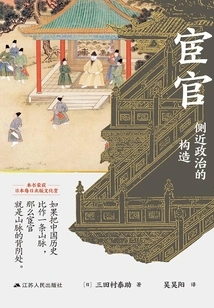
宦官:侧近政治的构造
V
What is a eunuch? Who created eunuchs? Where does the eunuch's power come from? Why do lowly eunuchs often become the key force in Chinese history? How can eunuchs, who seem to have always been notorious, survive for thousands of years? Behind these problems, the history of eunuchs may be related to some deep factors in Chinese history and society. The famous Japanese Sinologist Taisuke Mitamura proposed the concept of "closer politics" to observe eunuchs in Chinese history based on an extensive collection of historical examples. He selected three eunuch groups, Han, Tang, and Ming, as the active eras, and discussed the activity characteristics and historical fate of eunuchs in each era within the framework of monarch power and side politics. He believed that eunuchs were "the shadow of the emperor" and "the agent of the monarch." The eunuch system and the monarchy system were mutually exclusive, or an indispensable part of monarchy. After the book was published, it was widely praised and won Japan's "Mainichi Publishing Culture Award". It has been best-selling for half a century and has become a classic for understanding Chinese history.
What is a eunuch? Who created eunuchs? Where does the eunuch's power come from? Why do lowly eunuchs often become the key force in Chinese history? How can eunuchs, who seem to have always been notorious, survive for thousands of years? Behind these problems, the history of eunuchs may be related to some deep factors in Chinese history and society. The famous Japanese Sinologist Taisuke Mitamura proposed the concept of "closer politics" to observe eunuchs in Chinese history based on an extensive collection of historical examples. He selected three eunuch groups, Han, Tang, and Ming, as the active eras, and discussed the activity characteristics and historical fate of eunuchs in each era within the framework of monarch power and side politics. He believed that eunuchs were "the shadow of the emperor" and "the agent of the monarch." The eunuch system and the monarchy system were mutually exclusive, or an indispensable part of monarchy. After the book was published, it was widely praised and won Japan's "Mainichi Publishing Culture Award". It has been best-selling for half a century and has become a classic for understanding Chinese history.
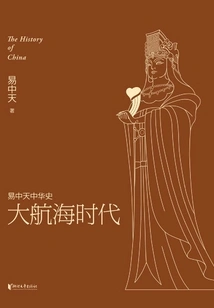
易中天中华史:大航海时代
Yi Zhongtian
Ming Taizu's sea ban was very strict: no one was allowed to enter the sea. Therefore, more than sixty years after Zheng He's voyages to the West, the West began the historical process of geographical discovery and the opportunity to open the maritime century was handed over to others. After Aobai, there were no powerful ministers to act arrogantly; after the vassal withdrawal, there was no local separatism; after Yongzheng, there was no struggle for the throne; after the people were spread over the land, there was no rebellion by hungry people. There are too many problems that need to be solved to build a cross-cultural and multi-ethnic unified empire, but Kangxi and his successors answered them better than any previous dynasty. So, is the problem really solved? After meeting Qianlong in court, British diplomat Macartney said this: The Qing Empire was like a luxurious warship that was in disrepair and only relied on the support of the sailors to prevent it from sinking. The people in the first-class cabin didn't know this. Only a literary work felt that it was riddled with holes. She is the great "Dream of Red Mansions".
Ming Taizu's sea ban was very strict: no one was allowed to enter the sea. Therefore, more than sixty years after Zheng He's voyages to the West, the West began the historical process of geographical discovery and the opportunity to open the maritime century was handed over to others. After Aobai, there were no powerful ministers to act arrogantly; after the vassal withdrawal, there was no local separatism; after Yongzheng, there was no struggle for the throne; after the people were spread over the land, there was no rebellion by hungry people. There are too many problems that need to be solved to build a cross-cultural and multi-ethnic unified empire, but Kangxi and his successors answered them better than any previous dynasty. So, is the problem really solved? After meeting Qianlong in court, British diplomat Macartney said this: The Qing Empire was like a luxurious warship that was in disrepair and only relied on the support of the sailors to prevent it from sinking. The people in the first-class cabin didn't know this. Only a literary work felt that it was riddled with holes. She is the great "Dream of Red Mansions".
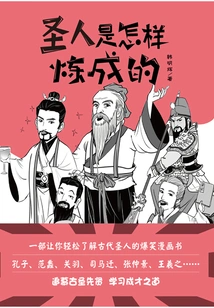
How is a Saint Made?
History圣人是怎样炼成的
Han Minghui
A hilarious comic book that allows you to easily understand the growth history of ancient saints, helping children supplement extracurricular knowledge and increase their knowledge. Read comics for half an hour and learn about the growth history of ancient saints. Best-selling author Han Minghui carefully selects eleven ancient saints and outlines their growth paths and ups and downs through hand-drawn comics and jokes. The saints in the book include: Wine Sage Du Kang, Supreme Sage Confucius, Shang Sage Fan Li, History Sage Sima Qian, Medical Sage Zhang Zhongjing, Wu Sage Guan Yu, Calligraphy Sage Wang Xizhi, Grass Sage Zhang Xu, Painting Sage Wu Daozi, Tea Sage Lu Yu, Medicine Sage Li Shizhen, etc.
A hilarious comic book that allows you to easily understand the growth history of ancient saints, helping children supplement extracurricular knowledge and increase their knowledge. Read comics for half an hour and learn about the growth history of ancient saints. Best-selling author Han Minghui carefully selects eleven ancient saints and outlines their growth paths and ups and downs through hand-drawn comics and jokes. The saints in the book include: Wine Sage Du Kang, Supreme Sage Confucius, Shang Sage Fan Li, History Sage Sima Qian, Medical Sage Zhang Zhongjing, Wu Sage Guan Yu, Calligraphy Sage Wang Xizhi, Grass Sage Zhang Xu, Painting Sage Wu Daozi, Tea Sage Lu Yu, Medicine Sage Li Shizhen, etc.
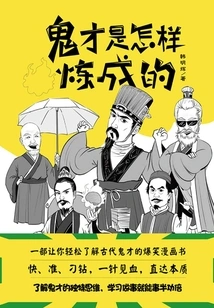
How Are Ghosts Made?
History鬼才是怎样炼成的
Han Minghui
Read comics for half an hour and learn about the wonderful history of ancient geniuses. Eleven ancient outstanding geniuses in strategy, military, politics, etc. Are carefully selected, and their wonderful life trajectories and legendary stories are told through the form of hand-drawn comics + jokes.
Read comics for half an hour and learn about the wonderful history of ancient geniuses. Eleven ancient outstanding geniuses in strategy, military, politics, etc. Are carefully selected, and their wonderful life trajectories and legendary stories are told through the form of hand-drawn comics + jokes.
The Other Side of History
History历史的另一面
Li Yang
History may value results. In this case, the Whampoa Military Academy leaders Sun Yat-sen and Chiang Kai-shek and Whampoa Military Academy instructors such as Zhang Shenfu, Hu Hanmin, Tao Xisheng, etc. In this book are almost all losers. However, if we place them in the process of transformation from traditional China to modern China, they are also the pioneers of the times. This book mainly re-understands and discusses the people of Huangpu in the great era, especially the figures of the Republic of China, Zhang Shenfu, Chiang Kai-shek, Hu Hanmin, and Tao Xisheng, who have been either denied or ignored. In terms of method, the author reconstructs historical events in a narrative way of "seeing it in action", working hard on historical details, trying to abandon the traditional "fixed on one statue" ideological view of history, and interpreting and recreating the historical scenes of the character's activities as objectively as possible. The whole book has about 200,000 words.
History may value results. In this case, the Whampoa Military Academy leaders Sun Yat-sen and Chiang Kai-shek and Whampoa Military Academy instructors such as Zhang Shenfu, Hu Hanmin, Tao Xisheng, etc. In this book are almost all losers. However, if we place them in the process of transformation from traditional China to modern China, they are also the pioneers of the times. This book mainly re-understands and discusses the people of Huangpu in the great era, especially the figures of the Republic of China, Zhang Shenfu, Chiang Kai-shek, Hu Hanmin, and Tao Xisheng, who have been either denied or ignored. In terms of method, the author reconstructs historical events in a narrative way of "seeing it in action", working hard on historical details, trying to abandon the traditional "fixed on one statue" ideological view of history, and interpreting and recreating the historical scenes of the character's activities as objectively as possible. The whole book has about 200,000 words.
清宫藏鸦片战争后粤海关税收报告
Compiled By Ye Nong And Huang Sufang
This book is based on the imperial edict files, Zhu's memorials, telegram files and other files of the Qing Dynasty after the Opium War. It compiles and edits the business records of Guangdong, Hong Kong and Macao after the Opium War, especially the regular customs management and taxation of Guangdong Customs. The archives compiled in this book start from the 23rd year of Daoguang in the Qing Dynasty (1843) and end in the 3rd year of Xuantong in the Qing Dynasty (1911), with about 160 files. The archives compiled in this book mainly cover the tasks of Guangdong Customs and Hong Kong and Macao branch customs after the Opium War, mainly tax reports, as well as issues such as expenses, personnel, anti-smuggling, and tribute services. Some of the archives involve the Qing government's management of foreign merchants entering Guangdong, Hong Kong, and Macao, that is, the number of foreign ships arriving in Guangdong and the items and personnel on board. The archives compiled in this book are true records of Guangdong Customs' regular customs tax collection and other commercial activities after the Opium War. They comprehensively reflect the changes in Guangdong Customs taxation and the decline of Guangdong Customs regular customs after the Opium War. They can be used as a reference for research on modern diplomatic relations, Sino-Western trade, especially trade between Guangdong, Hong Kong and Macao.
This book is based on the imperial edict files, Zhu's memorials, telegram files and other files of the Qing Dynasty after the Opium War. It compiles and edits the business records of Guangdong, Hong Kong and Macao after the Opium War, especially the regular customs management and taxation of Guangdong Customs. The archives compiled in this book start from the 23rd year of Daoguang in the Qing Dynasty (1843) and end in the 3rd year of Xuantong in the Qing Dynasty (1911), with about 160 files. The archives compiled in this book mainly cover the tasks of Guangdong Customs and Hong Kong and Macao branch customs after the Opium War, mainly tax reports, as well as issues such as expenses, personnel, anti-smuggling, and tribute services. Some of the archives involve the Qing government's management of foreign merchants entering Guangdong, Hong Kong, and Macao, that is, the number of foreign ships arriving in Guangdong and the items and personnel on board. The archives compiled in this book are true records of Guangdong Customs' regular customs tax collection and other commercial activities after the Opium War. They comprehensively reflect the changes in Guangdong Customs taxation and the decline of Guangdong Customs regular customs after the Opium War. They can be used as a reference for research on modern diplomatic relations, Sino-Western trade, especially trade between Guangdong, Hong Kong and Macao.
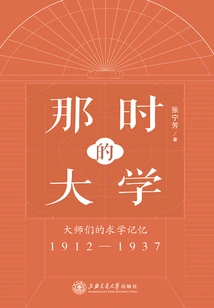
那时的大学:大师们的求学记忆(1912-1937)
Zhang Ningfang
This book uses light and humorous words to describe the university examinations, food, clothing, housing, transportation, study life, campus culture and graduation stories of students in the Republic of China. It uses the descriptions and memories of famous scholars such as Hu Shi, Fei Xiaotong, Pan Guangdan, Chen Daisun, Zhao Yuanren, Mao Dun, Bing Xin, Qian Zhongshu, Ji Xianlin, etc. About their study experiences, and makes use of newspapers and periodicals of the Republic of China. Oral materials, school archives and other materials reproduce the excellent academic style and colorful campus life of universities during the Republic of China, reflect the educational management experience of well-known universities during the Republic of China, and vividly demonstrate one aspect of higher education in the Republic of China, which can provide reference for today's educators and readers interested in the history of the Republic of China.
This book uses light and humorous words to describe the university examinations, food, clothing, housing, transportation, study life, campus culture and graduation stories of students in the Republic of China. It uses the descriptions and memories of famous scholars such as Hu Shi, Fei Xiaotong, Pan Guangdan, Chen Daisun, Zhao Yuanren, Mao Dun, Bing Xin, Qian Zhongshu, Ji Xianlin, etc. About their study experiences, and makes use of newspapers and periodicals of the Republic of China. Oral materials, school archives and other materials reproduce the excellent academic style and colorful campus life of universities during the Republic of China, reflect the educational management experience of well-known universities during the Republic of China, and vividly demonstrate one aspect of higher education in the Republic of China, which can provide reference for today's educators and readers interested in the history of the Republic of China.
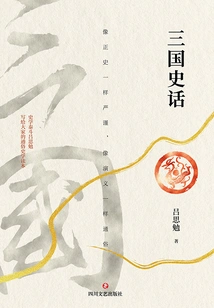
三国史话
Lu Simian
This book is a popular historical work written by the historian Mr. Lu Simian during his lifetime. From the perspective of literature and history, the author makes a detailed distinction between the real Three Kingdoms and the characters, events, wars and geographical environment created in Three Kingdoms literature. He also conducts in-depth analysis on many major historical issues such as how Dong Zhuo disrupted the imperial court, how Cao Cao's power rose, the truth of the Battle of Chibi, the rise and fall of the Sima family, etc., And provides unique insights. "I would like to briefly describe this period of history, either to correct previous errors or to state some things that predecessors have ignored." The combination of a deep historical foundation and easy-to-understand sentences makes the writing lively and interesting. Readers will not feel difficult when reading it, and they will sometimes understand it. Therefore, this book has become an important reference for Mr. Yi Zhongtian's study of the Three Kingdoms.
This book is a popular historical work written by the historian Mr. Lu Simian during his lifetime. From the perspective of literature and history, the author makes a detailed distinction between the real Three Kingdoms and the characters, events, wars and geographical environment created in Three Kingdoms literature. He also conducts in-depth analysis on many major historical issues such as how Dong Zhuo disrupted the imperial court, how Cao Cao's power rose, the truth of the Battle of Chibi, the rise and fall of the Sima family, etc., And provides unique insights. "I would like to briefly describe this period of history, either to correct previous errors or to state some things that predecessors have ignored." The combination of a deep historical foundation and easy-to-understand sentences makes the writing lively and interesting. Readers will not feel difficult when reading it, and they will sometimes understand it. Therefore, this book has become an important reference for Mr. Yi Zhongtian's study of the Three Kingdoms.
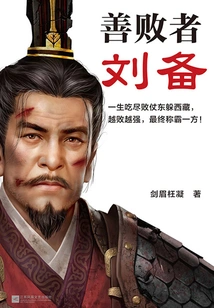
Liu Bei the Good Loser
History善败者刘备
The Sword Eyebrows Are In Vain
Liu Bei suffered defeats all his life and hid in Tibet. The more he lost, the stronger he became, and finally he dominated one side! Among the founders of the Three Kingdoms of Wei, Shu and Wu, Liu Bei not only had the lowest background, but also had the most difficult experiences. From a hawker who weaved mats and sold shoes to a powerful figure in the world, he was forced to flee from Hebei to Jiangnan, and traveled almost throughout most of China. However, every time Liu Bei was defeated, his strength became stronger. In the end, all the hardships were rewarded: Sun and Liu allied forces won a victory at Chibi, captured the four counties of Jingzhou, entered Shu to destroy Liu Zhang, and defeated Cao's army in Hanzhong... With one victory after another, the pattern of the three-part world was established. Open this book and learn the secret of Liu Bei's success in defeating and fighting again and again, and getting stronger with each defeat!
Liu Bei suffered defeats all his life and hid in Tibet. The more he lost, the stronger he became, and finally he dominated one side! Among the founders of the Three Kingdoms of Wei, Shu and Wu, Liu Bei not only had the lowest background, but also had the most difficult experiences. From a hawker who weaved mats and sold shoes to a powerful figure in the world, he was forced to flee from Hebei to Jiangnan, and traveled almost throughout most of China. However, every time Liu Bei was defeated, his strength became stronger. In the end, all the hardships were rewarded: Sun and Liu allied forces won a victory at Chibi, captured the four counties of Jingzhou, entered Shu to destroy Liu Zhang, and defeated Cao's army in Hanzhong... With one victory after another, the pattern of the three-part world was established. Open this book and learn the secret of Liu Bei's success in defeating and fighting again and again, and getting stronger with each defeat!
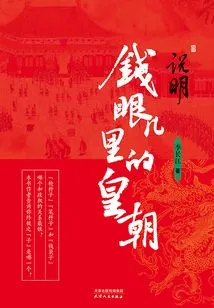
说明:钱眼儿里的皇朝
Li Changjiang
This book is a cultural reading about the finance and taxation of the Ming Dynasty. Through relevant historical materials, the author uses the seventeen emperors of the Ming Dynasty as nodes to panoramically display the entire economic, political, social, and ecological changes caused by taxation and finance throughout the Ming Dynasty. The book outlines the inner connection and mechanism between complex factors such as the ruler's personality and preferences and taxes and servitude, and deduces that the evolution of taxation and the rise and fall of dynasties are closely related and highly consistent. It reveals how a regime based on traditional agricultural productivity continued to devour itself in the expansion of fiscal expenditures.
This book is a cultural reading about the finance and taxation of the Ming Dynasty. Through relevant historical materials, the author uses the seventeen emperors of the Ming Dynasty as nodes to panoramically display the entire economic, political, social, and ecological changes caused by taxation and finance throughout the Ming Dynasty. The book outlines the inner connection and mechanism between complex factors such as the ruler's personality and preferences and taxes and servitude, and deduces that the evolution of taxation and the rise and fall of dynasties are closely related and highly consistent. It reveals how a regime based on traditional agricultural productivity continued to devour itself in the expansion of fiscal expenditures.
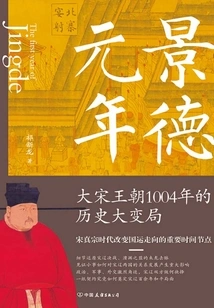
景德元年:大宋王朝1004年的历史大变局
Qi Xinlong
This book is a popular history book about the Song Dynasty, telling the long-standing events that took place on the territory of China in the first year of Jingde (1004 AD), the reign of Emperor Zhenzong of the Song Dynasty. In the first month of 1004 AD, an earthquake struck the Song Dynasty, officially kicking off an unquiet year. Immediately, Li Jiqian, the leader of the party, was ambushed by Pan Luozhi. Li Hang, the prime minister of the Song Dynasty, died of illness. Bi Shi'an and Kou Zhun became prime ministers at the same time. Empress Dowager Xiao of the Liao Kingdom led an army of 300,000 people to the south. The war broke out on the Song-Liao border again. Each tortuous and bizarre story was staged one after another; each vivid and unique character appeared on the stage of history this year. They fulfilled their duties at the critical moment of the country and repelled the Liao army's attack. Finally, Song and Liao ended the war with the Chanyuan Alliance. Although the Chanyuan Alliance has always been controversial, it laid the foundation for the advent of the reign of Emperor Renzong of the Song Dynasty and laid the foundation for peace between the Song and Liao Dynasties for more than a hundred years. Through this book, readers can learn about the fierce political, military, and diplomatic competition between Song and Liao in 1004 AD, and see how the rulers of Song and Liao made decisions in the face of numerous crises, which affected the development of relations between the two countries.
This book is a popular history book about the Song Dynasty, telling the long-standing events that took place on the territory of China in the first year of Jingde (1004 AD), the reign of Emperor Zhenzong of the Song Dynasty. In the first month of 1004 AD, an earthquake struck the Song Dynasty, officially kicking off an unquiet year. Immediately, Li Jiqian, the leader of the party, was ambushed by Pan Luozhi. Li Hang, the prime minister of the Song Dynasty, died of illness. Bi Shi'an and Kou Zhun became prime ministers at the same time. Empress Dowager Xiao of the Liao Kingdom led an army of 300,000 people to the south. The war broke out on the Song-Liao border again. Each tortuous and bizarre story was staged one after another; each vivid and unique character appeared on the stage of history this year. They fulfilled their duties at the critical moment of the country and repelled the Liao army's attack. Finally, Song and Liao ended the war with the Chanyuan Alliance. Although the Chanyuan Alliance has always been controversial, it laid the foundation for the advent of the reign of Emperor Renzong of the Song Dynasty and laid the foundation for peace between the Song and Liao Dynasties for more than a hundred years. Through this book, readers can learn about the fierce political, military, and diplomatic competition between Song and Liao in 1004 AD, and see how the rulers of Song and Liao made decisions in the face of numerous crises, which affected the development of relations between the two countries.
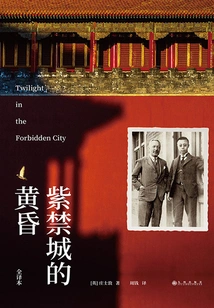
紫禁城的黄昏(全译本)
I
This book mainly records the twilight period of the "Qing Dynasty" trapped in the Forbidden City, that is, the history from 1912 to 1924 from the founding of the Republic of China to Puyi's expulsion from the palace. The author Johnston uses the transition from monarchy to republic as the historical background, including the Reform Movement of 1898, the Boxer Rebellion, the Revolution of 1911, Yuan Shikai's proclaimed emperor, and Zhang Xun's restoration. And other events; based on his experience as an imperial advisor and coexisting with the last emperor Puyi, the book depicts the unique, closed and desirable life in the Forbidden City, and presents the real Puyi and the turbulent situation in modern China in his eyes one by one through memoirs. All kinds of characters are vivid and vivid on the page.
This book mainly records the twilight period of the "Qing Dynasty" trapped in the Forbidden City, that is, the history from 1912 to 1924 from the founding of the Republic of China to Puyi's expulsion from the palace. The author Johnston uses the transition from monarchy to republic as the historical background, including the Reform Movement of 1898, the Boxer Rebellion, the Revolution of 1911, Yuan Shikai's proclaimed emperor, and Zhang Xun's restoration. And other events; based on his experience as an imperial advisor and coexisting with the last emperor Puyi, the book depicts the unique, closed and desirable life in the Forbidden City, and presents the real Puyi and the turbulent situation in modern China in his eyes one by one through memoirs. All kinds of characters are vivid and vivid on the page.
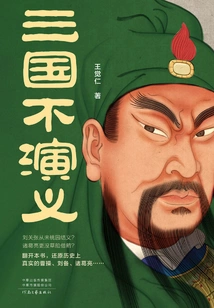
三国不演义
Wang Jueren
A historical version of "The Romance of the Three Kingdoms"! The new masterpiece by Wang Jueren, author of the best-selling book "Three Hundred Years of the Rise and Fall of the Tang Dynasty"! This is enough to understand the history of the Three Kingdoms! Liu Guan and Zhang never became sworn brothers in Taoyuan? Zhuge Liang didn't even have a straw boat to borrow arrows? Open this book and restore the real Cao Cao, Liu Bei, and Zhuge Liang in history...
A historical version of "The Romance of the Three Kingdoms"! The new masterpiece by Wang Jueren, author of the best-selling book "Three Hundred Years of the Rise and Fall of the Tang Dynasty"! This is enough to understand the history of the Three Kingdoms! Liu Guan and Zhang never became sworn brothers in Taoyuan? Zhuge Liang didn't even have a straw boat to borrow arrows? Open this book and restore the real Cao Cao, Liu Bei, and Zhuge Liang in history...
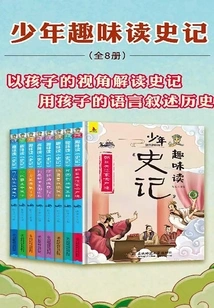
少年趣味读史记(全8册)
Zhang Fang
Youngsters' Interesting Reading of Historical Records (set of 8 volumes) interprets historical records from a child's perspective and narrates history in children's language. It is a set of interesting comic versions of historical records tailored for children, making the already boring history more attractive, allowing them to remember historical stories and gain insights into historical records. 1. Loyal to the original work: In order to reduce the reading burden on young people, on the premise of being loyal to the original work, it is reasonably adapted based on many excellent versions. The storyline is complete and not lengthy, and the language is popular without losing the classical charm. 2. Uncommon annotations: Annotate the uncommon and difficult words in the original texts of this set of books, and translate the original texts to clear obstacles for young people to read. Let them easily read and understand the original scriptures. 3. Rich plug-ins: Three-minute reading of key historical facts, selected original classics, accumulation of idioms... These rich plug-ins increase the interest of the work, stimulate young people's interest in reading, and at the same time allow them to understand and accumulate extracurricular knowledge and improve their Chinese performance. 4. Exquisite illustrations: This set of books is equipped with rich illustrations, which can effectively deepen young people's perceptual understanding of the content of the works, stimulate their interest in reading classics, and attract them to further reading and learning.
Youngsters' Interesting Reading of Historical Records (set of 8 volumes) interprets historical records from a child's perspective and narrates history in children's language. It is a set of interesting comic versions of historical records tailored for children, making the already boring history more attractive, allowing them to remember historical stories and gain insights into historical records. 1. Loyal to the original work: In order to reduce the reading burden on young people, on the premise of being loyal to the original work, it is reasonably adapted based on many excellent versions. The storyline is complete and not lengthy, and the language is popular without losing the classical charm. 2. Uncommon annotations: Annotate the uncommon and difficult words in the original texts of this set of books, and translate the original texts to clear obstacles for young people to read. Let them easily read and understand the original scriptures. 3. Rich plug-ins: Three-minute reading of key historical facts, selected original classics, accumulation of idioms... These rich plug-ins increase the interest of the work, stimulate young people's interest in reading, and at the same time allow them to understand and accumulate extracurricular knowledge and improve their Chinese performance. 4. Exquisite illustrations: This set of books is equipped with rich illustrations, which can effectively deepen young people's perceptual understanding of the content of the works, stimulate their interest in reading classics, and attract them to further reading and learning.
Xiang Yu: God-like Opponent
History项羽:神一样的对手
Han Minghui
As the unparalleled god of war for thousands of years, Xiang Yu only led 8,000 Jiangdong disciples to destroy the powerful Qin Dynasty and divide the world under his rule in just three years, which is unprecedented. However, in the struggle between Chu and Han for hegemony, he, who was victorious in all battles, lost once, so Wujiang committed suicide, and his country was destroyed, which made people sigh. What makes Xiang Yu victorious in every battle? What caused Xiang Yu to be completely defeated? Why would he rather commit suicide in Wujiang River than cross the river to make a comeback? This book not only explains the reasons for Xiang Yu's success and failure, but also restores a flesh-and-blood Xiang Yu for readers.
As the unparalleled god of war for thousands of years, Xiang Yu only led 8,000 Jiangdong disciples to destroy the powerful Qin Dynasty and divide the world under his rule in just three years, which is unprecedented. However, in the struggle between Chu and Han for hegemony, he, who was victorious in all battles, lost once, so Wujiang committed suicide, and his country was destroyed, which made people sigh. What makes Xiang Yu victorious in every battle? What caused Xiang Yu to be completely defeated? Why would he rather commit suicide in Wujiang River than cross the river to make a comeback? This book not only explains the reasons for Xiang Yu's success and failure, but also restores a flesh-and-blood Xiang Yu for readers.
古代巴比伦:从王权建立到波斯征服
(uk) Leonard W. King
"Ancient Babylon: From the Establishment of the Kingship to the Persian Conquest" is Leonard W. King's most important work. Leonard W. King, PhD, is an Honorary Fellow of the Society of Antiquities in London, Assistant Conservator of Egyptian and Babylonian Antiquities at the British Museum, and Professor of Assyrian and Babylonian Archeology at the University of London. He is also famous for his translations of ancient works such as the Code of Hammurabi. This book describes the early peoples of Babylonia from prehistoric times to the establishment of the monarchy as a whole, ending with the city of Babylon on the verge of establishing a firm leadership position under its Sishemite kings. The book describes the historical trend of Babylonia throughout the dynastic period, and provides a complete account of the history of the southern kingdom. As the most famous city in the ancient world, the history of Babylon is not just the military achievements of a group of people, but is closely related to the development and spread of civilization. The name Babylon means one of the great civilizations in the ancient world that influenced other peoples. The history from the constitutional monarchy to the Persian conquest is a wonderful history of the Babylonian Empire. With an epic vision, this book lingers on the glory of ancient civilization and reproduces the oldest Babylonian civilization.
"Ancient Babylon: From the Establishment of the Kingship to the Persian Conquest" is Leonard W. King's most important work. Leonard W. King, PhD, is an Honorary Fellow of the Society of Antiquities in London, Assistant Conservator of Egyptian and Babylonian Antiquities at the British Museum, and Professor of Assyrian and Babylonian Archeology at the University of London. He is also famous for his translations of ancient works such as the Code of Hammurabi. This book describes the early peoples of Babylonia from prehistoric times to the establishment of the monarchy as a whole, ending with the city of Babylon on the verge of establishing a firm leadership position under its Sishemite kings. The book describes the historical trend of Babylonia throughout the dynastic period, and provides a complete account of the history of the southern kingdom. As the most famous city in the ancient world, the history of Babylon is not just the military achievements of a group of people, but is closely related to the development and spread of civilization. The name Babylon means one of the great civilizations in the ancient world that influenced other peoples. The history from the constitutional monarchy to the Persian conquest is a wonderful history of the Babylonian Empire. With an epic vision, this book lingers on the glory of ancient civilization and reproduces the oldest Babylonian civilization.
Ancient China
History古代中国
(french) Marble
Among the ancient civilizations in the history of human civilization, only the Chinese nation has continued and created a continuous civilization history recorded in writing for more than 5,000 years, making indelible contributions to human civilization and progress. The famous French sinologist Marble, known as the "wizard of ancient Chinese history", had in-depth contact with people from all walks of life in China to understand their society and customs. He strictly used information resources provided by local people and brought with him the essential reference books for travelers traveling in China - Chinese local chronicles and European special collections. The author compiled this classic masterpiece "Ancient China" by collecting cultural relics that have been published in publications in the Far East. The author comprehensively used linguistics, philology, anthropology, sociology and other methods, and extensively used myths, legends, epigraphy, and archaeological materials to construct a picture of the development of Chinese civilization before the Qin Dynasty.
Among the ancient civilizations in the history of human civilization, only the Chinese nation has continued and created a continuous civilization history recorded in writing for more than 5,000 years, making indelible contributions to human civilization and progress. The famous French sinologist Marble, known as the "wizard of ancient Chinese history", had in-depth contact with people from all walks of life in China to understand their society and customs. He strictly used information resources provided by local people and brought with him the essential reference books for travelers traveling in China - Chinese local chronicles and European special collections. The author compiled this classic masterpiece "Ancient China" by collecting cultural relics that have been published in publications in the Far East. The author comprehensively used linguistics, philology, anthropology, sociology and other methods, and extensively used myths, legends, epigraphy, and archaeological materials to construct a picture of the development of Chinese civilization before the Qin Dynasty.
一看就停不下来的明朝史(上)
Historical Events
"The Unstoppable History of the Ming Dynasty (Part 1)" narrates the history of the early Ming Dynasty. After more than ten years of hard work, the cowherd boy Zhu Yuanzhang officially opened the curtain of the Ming Empire. Then you sang and I came on stage. Zhu Yuanzhang who laid the foundation for the future development of the Ming Dynasty, Zhu Yunwen whose "whereabouts are a mystery", Zhu Di who created the "Yongle prosperous age", Zhu Gaochi and Zhu Zhanji who created the "Renxuan rule", these people took turns performing on the stage like a revolving lantern.
"The Unstoppable History of the Ming Dynasty (Part 1)" narrates the history of the early Ming Dynasty. After more than ten years of hard work, the cowherd boy Zhu Yuanzhang officially opened the curtain of the Ming Empire. Then you sang and I came on stage. Zhu Yuanzhang who laid the foundation for the future development of the Ming Dynasty, Zhu Yunwen whose "whereabouts are a mystery", Zhu Di who created the "Yongle prosperous age", Zhu Gaochi and Zhu Zhanji who created the "Renxuan rule", these people took turns performing on the stage like a revolving lantern.
一看就停不下来的明朝史(中)
Historical Events
"The History of the Ming Dynasty that I can't stop watching (Part 2)" narrates the history of the mid-Ming Dynasty, from Zhu Qizhen, who caused the Ming Dynasty to turn from prosperity to decline, to Jiajing, who was obsessed with cultivating immortals. During this period, Yu Qian, a famous minister who was able to turn the tide from collapse, and eunuchs Wang Zhi and Liu Jin, who were powerful in both the government and the public, emerged. During this period, the Ming Dynasty began to decline.
"The History of the Ming Dynasty that I can't stop watching (Part 2)" narrates the history of the mid-Ming Dynasty, from Zhu Qizhen, who caused the Ming Dynasty to turn from prosperity to decline, to Jiajing, who was obsessed with cultivating immortals. During this period, Yu Qian, a famous minister who was able to turn the tide from collapse, and eunuchs Wang Zhi and Liu Jin, who were powerful in both the government and the public, emerged. During this period, the Ming Dynasty began to decline.
每个青少年都应该读的中国历史故事:上古夏商西周
Zhu Yan
"Man and ape say goodbye", human society has begun since humans evolved from apes to humans. This book tells the story from the birth of Chinese civilization to the Western Zhou Dynasty. Pangu, Nuwa, Three Sovereigns and Five Emperors, Gonggong, Chiyou, Leizu... These stories of characters that sound very fantasy but represent the origin of Chinese civilization give us a clearer understanding of this distant period. From the slave dynasty of the Xia Dynasty to the founding of the Western Zhou Dynasty by feudal lords, Chinese history has experienced the succession of successes and failures of the Xia, Shang, and Wednesday dynasties, and the development of Chinese civilization has taken a big step forward. By reading this book, you can learn more about the historical period from ancient times to the Western Zhou Dynasty, and you can also have a clearer understanding of the origin and development of Chinese civilization.
"Man and ape say goodbye", human society has begun since humans evolved from apes to humans. This book tells the story from the birth of Chinese civilization to the Western Zhou Dynasty. Pangu, Nuwa, Three Sovereigns and Five Emperors, Gonggong, Chiyou, Leizu... These stories of characters that sound very fantasy but represent the origin of Chinese civilization give us a clearer understanding of this distant period. From the slave dynasty of the Xia Dynasty to the founding of the Western Zhou Dynasty by feudal lords, Chinese history has experienced the succession of successes and failures of the Xia, Shang, and Wednesday dynasties, and the development of Chinese civilization has taken a big step forward. By reading this book, you can learn more about the historical period from ancient times to the Western Zhou Dynasty, and you can also have a clearer understanding of the origin and development of Chinese civilization.
每个青少年都应该读的中国历史故事:隋唐
Wu Wanxuan
The Sui and Tang Dynasties were the most glorious eras in Chinese history. Chang'an, the capital of the Tang Dynasty, was an international metropolis at that time and the center of economic and cultural exchanges with surrounding countries. The Grand Canal of the Sui and Tang Dynasties promoted the prosperity of China, and the Silk Road spread China's porcelain, silk, papermaking, printing and other wisdom to the world, affecting the development and progress of the entire human civilization! In addition, the imperial examination gave children from poor families the opportunity to rise, and the emergence of a large number of outstanding poets and painters pushed Chinese civilization to a new height.
The Sui and Tang Dynasties were the most glorious eras in Chinese history. Chang'an, the capital of the Tang Dynasty, was an international metropolis at that time and the center of economic and cultural exchanges with surrounding countries. The Grand Canal of the Sui and Tang Dynasties promoted the prosperity of China, and the Silk Road spread China's porcelain, silk, papermaking, printing and other wisdom to the world, affecting the development and progress of the entire human civilization! In addition, the imperial examination gave children from poor families the opportunity to rise, and the emergence of a large number of outstanding poets and painters pushed Chinese civilization to a new height.
有趣得让人睡不着的大汉史
Tang Dynasty Terracotta Warriors
Starting from "people", this book selects the most representative figures from different classes to analyze the historical events and mysteries involved, enriching the public's existing knowledge of the history of the Han Dynasty. In relaxed and humorous language, you can read the 400-year history of the rise and fall of the Han Dynasty. Through the narration of many historical figures of the Han Dynasty, this book reveals the unknown secrets of the political system, officialdom, emperors and generals of the Han Empire from many aspects, and unearths aspects that have not been paid attention to by predecessors, striving to show a rich historical picture that is different from textbooks.
Starting from "people", this book selects the most representative figures from different classes to analyze the historical events and mysteries involved, enriching the public's existing knowledge of the history of the Han Dynasty. In relaxed and humorous language, you can read the 400-year history of the rise and fall of the Han Dynasty. Through the narration of many historical figures of the Han Dynasty, this book reveals the unknown secrets of the political system, officialdom, emperors and generals of the Han Empire from many aspects, and unearths aspects that have not been paid attention to by predecessors, striving to show a rich historical picture that is different from textbooks.
每个青少年都应该读的中国历史故事:秦汉
Zhu Yan
King Qin Yingzheng unified the world and created a new era in Chinese history. Starting from him, subsequent emperors of China have had a basic goal, which is to bring the areas of Chinese civilization into the scope of their rule. Understanding the history from the Qin Dynasty to the Han Dynasty, one cannot help but be impressed by the talented and strategic emperors like Qin Shihuang, Han Gaozu, and Han Wu Emperor, admire heroes like Xiang Yu, Han Xin, and Zhou Yafu, and be moved by outstanding women like Tiying and Zhaojun, from which they can gain useful inspiration for growth and life.
King Qin Yingzheng unified the world and created a new era in Chinese history. Starting from him, subsequent emperors of China have had a basic goal, which is to bring the areas of Chinese civilization into the scope of their rule. Understanding the history from the Qin Dynasty to the Han Dynasty, one cannot help but be impressed by the talented and strategic emperors like Qin Shihuang, Han Gaozu, and Han Wu Emperor, admire heroes like Xiang Yu, Han Xin, and Zhou Yafu, and be moved by outstanding women like Tiying and Zhaojun, from which they can gain useful inspiration for growth and life.
每个青少年都应该读的中国历史故事:元朝
Peng Jiaoyan
The Yuan Dynasty was the first unified dynasty established by ethnic minorities in Chinese history, with its capital being Dadu (today's Beijing). Genghis Khan unified Mobei and established the Mongolian Empire, and successively attacked and destroyed Western Liao, Western Xia, Khwarezm, Eastern Xia, Jin and other countries; his descendants fought everywhere to expand their territories, but they inevitably fought for power and profit. After Kublai Khan ascended the throne, he changed the country's name to "Dayuan", eliminated the Southern Song Dynasty, and completed the unification of China. Different cultures collided in the Yuan Dynasty, leaving countless precious treasures to future generations. Yuan opera and Yuan blue and white flowers also bloomed with their own colors.
The Yuan Dynasty was the first unified dynasty established by ethnic minorities in Chinese history, with its capital being Dadu (today's Beijing). Genghis Khan unified Mobei and established the Mongolian Empire, and successively attacked and destroyed Western Liao, Western Xia, Khwarezm, Eastern Xia, Jin and other countries; his descendants fought everywhere to expand their territories, but they inevitably fought for power and profit. After Kublai Khan ascended the throne, he changed the country's name to "Dayuan", eliminated the Southern Song Dynasty, and completed the unification of China. Different cultures collided in the Yuan Dynasty, leaving countless precious treasures to future generations. Yuan opera and Yuan blue and white flowers also bloomed with their own colors.
一看就停不下来的明朝史(下册)
Historical Events
"The History of the Ming Dynasty You Can't Stop at the First Reading (Volume 2)" narrates the history of the late Ming Dynasty, starting from Ming Shenzong Zhu Yijun and ending with Chongzhen who hanged Meishan. In the middle, there were Zhang Juzheng's reforms, the three major Wanli campaigns, the three major cases in the late Ming Dynasty, and the eunuch Donglin Party dispute, which eventually led to widespread peasant uprisings in the late Ming Dynasty and the collapse of the Ming Dynasty.
"The History of the Ming Dynasty You Can't Stop at the First Reading (Volume 2)" narrates the history of the late Ming Dynasty, starting from Ming Shenzong Zhu Yijun and ending with Chongzhen who hanged Meishan. In the middle, there were Zhang Juzheng's reforms, the three major Wanli campaigns, the three major cases in the late Ming Dynasty, and the eunuch Donglin Party dispute, which eventually led to widespread peasant uprisings in the late Ming Dynasty and the collapse of the Ming Dynasty.
每个青少年都应该读的中国历史故事:辽西夏金
Liu Xiaojian
Liao, Xixia, and Jin were ethnic minority regimes in northern China in ancient times. Their politics, economy, culture, and military were obviously different from those of the Central Plains. They learned from the political system of the Central Plains, conducted trade with the Central Plains, and also worked hard to learn the advanced culture and technology of the Central Plains. However, the complex social environment led to constant friction between them and the Central Plains...
Liao, Xixia, and Jin were ethnic minority regimes in northern China in ancient times. Their politics, economy, culture, and military were obviously different from those of the Central Plains. They learned from the political system of the Central Plains, conducted trade with the Central Plains, and also worked hard to learn the advanced culture and technology of the Central Plains. However, the complex social environment led to constant friction between them and the Central Plains...
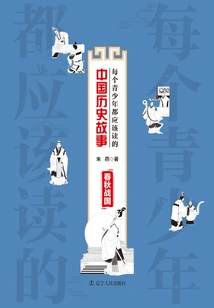
Chinese Historical Stories That Every Teenager Should Read: Spring and Autumn and Warring States
History每个青少年都应该读的中国历史故事:春秋战国
Zhu Yan
The Five Hegemons of the Spring and Autumn Period, the Seven Heroes of the Warring States Period, and King Qin Yingzheng unified the world. The Spring and Autumn Period and the Warring States Period were a period of chaos and war, but it was also a period of great explosion of ideological civilization. A hundred schools of thought contend. Laozi, Confucius, Zhuangzi and other major schools have laid the cornerstone of the development of Chinese culture and are the ideological roots of Chinese civilization. Understanding this period of history will give us a clearer concept of this special chaotic period in Chinese history, and will also give us a clearer understanding of the important development stages of Chinese culture.
The Five Hegemons of the Spring and Autumn Period, the Seven Heroes of the Warring States Period, and King Qin Yingzheng unified the world. The Spring and Autumn Period and the Warring States Period were a period of chaos and war, but it was also a period of great explosion of ideological civilization. A hundred schools of thought contend. Laozi, Confucius, Zhuangzi and other major schools have laid the cornerstone of the development of Chinese culture and are the ideological roots of Chinese civilization. Understanding this period of history will give us a clearer concept of this special chaotic period in Chinese history, and will also give us a clearer understanding of the important development stages of Chinese culture.