Library
Browse and search books
2,823 novels found
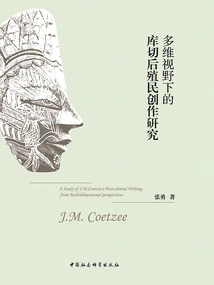
多维视野下的库切后殖民创作研究
Zhang Yong
J. M. Coetzee is a famous contemporary South African novelist and winner of the 2003 Nobel Prize for Literature. He is the second white South African writer to win this honor after Gordimer. As a deeply introspective white writer, discourse, gender, and body constitute the three basic dimensions of his postcolonial creation. Starting from these three dimensions, Coetzee constructed his own literary edifice, explored the discourse, gender, and body strategies of deconstructing colonialism, expressed the pursuit of intersubjectivity in the relationship between different genders, races, and cultures, and advocated the establishment of a new historical ethical norm of natural harmony and diverse coexistence. Focusing on the three dimensions of discourse, gender, and body, this book adopts a method that combines theoretical analysis and textual reading to explore Coetzee's postcolonial creation. It has a broad theoretical vision, delicate text analysis, and unique perspective interpretation, thereby constructing a literary research picture of Coetzee.
J. M. Coetzee is a famous contemporary South African novelist and winner of the 2003 Nobel Prize for Literature. He is the second white South African writer to win this honor after Gordimer. As a deeply introspective white writer, discourse, gender, and body constitute the three basic dimensions of his postcolonial creation. Starting from these three dimensions, Coetzee constructed his own literary edifice, explored the discourse, gender, and body strategies of deconstructing colonialism, expressed the pursuit of intersubjectivity in the relationship between different genders, races, and cultures, and advocated the establishment of a new historical ethical norm of natural harmony and diverse coexistence. Focusing on the three dimensions of discourse, gender, and body, this book adopts a method that combines theoretical analysis and textual reading to explore Coetzee's postcolonial creation. It has a broad theoretical vision, delicate text analysis, and unique perspective interpretation, thereby constructing a literary research picture of Coetzee.
《玉台新咏》成书研究
Huang Wei
"New Odes of Yutai" is a collection of literature mainly including palace-style poems. For a long time, scholars have had many disputes about the compilation of this book, such as the time of its compilation, the motivation for its compilation, and even the compiler. Such disputes at the document level not only restrict the pace of in-depth research on "New Odes of Yutai", but also have a negative impact on the study of imperial style literature and Southern Dynasties literature. In view of this, based on the topics raised by predecessors and the actual situation of the book, we divided the issue of the writing of "New Ode from Yutai" into eight topics for systematic investigation, namely the compiler of "New Ode from Yutai", the motivation for compilation, the time of writing, the style of compilation, the standards for recording poems, the meaning of the book title, the interpretation of the "Preface to "New Ode from Yutai", and other suspicious phenomena in the writing of "New Ode from Yutai". In the research, on the basis of a comprehensive review of previous results, we try to give reasonable explanations for these long-standing controversial topics or puzzling phenomena.
"New Odes of Yutai" is a collection of literature mainly including palace-style poems. For a long time, scholars have had many disputes about the compilation of this book, such as the time of its compilation, the motivation for its compilation, and even the compiler. Such disputes at the document level not only restrict the pace of in-depth research on "New Odes of Yutai", but also have a negative impact on the study of imperial style literature and Southern Dynasties literature. In view of this, based on the topics raised by predecessors and the actual situation of the book, we divided the issue of the writing of "New Ode from Yutai" into eight topics for systematic investigation, namely the compiler of "New Ode from Yutai", the motivation for compilation, the time of writing, the style of compilation, the standards for recording poems, the meaning of the book title, the interpretation of the "Preface to "New Ode from Yutai", and other suspicious phenomena in the writing of "New Ode from Yutai". In the research, on the basis of a comprehensive review of previous results, we try to give reasonable explanations for these long-standing controversial topics or puzzling phenomena.
文本 传播 对话:从比较文学影响研究到跨文化传播
Mei Qibo
The study of the impact of comparative literature has focused on the factual connections between literary texts since the beginning of the French school, and its research "roadmap" is inherently consistent with the research paradigm of cross-cultural communication. This book is divided into three parts: text, communication and dialogue. "Text" revolves around the origin, connotation, development and evolution of the concept of text, and believes that comparative literary criticism should be based on text research; "Diffusion" analyzes the translation and spread of some Western concepts, trends of thought, and literary texts in China; "Dialogue" believes that Chinese and Western literature ultimately need to develop dialogue and exchanges between texts on the basis of each other as subjects, so that they can learn from each other's strengths and complement each other's weaknesses and develop.
The study of the impact of comparative literature has focused on the factual connections between literary texts since the beginning of the French school, and its research "roadmap" is inherently consistent with the research paradigm of cross-cultural communication. This book is divided into three parts: text, communication and dialogue. "Text" revolves around the origin, connotation, development and evolution of the concept of text, and believes that comparative literary criticism should be based on text research; "Diffusion" analyzes the translation and spread of some Western concepts, trends of thought, and literary texts in China; "Dialogue" believes that Chinese and Western literature ultimately need to develop dialogue and exchanges between texts on the basis of each other as subjects, so that they can learn from each other's strengths and complement each other's weaknesses and develop.
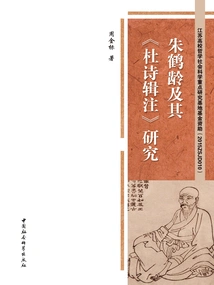
朱鹤龄及其《杜诗辑注》研究
Zhou Jinbiao
Zhu Heling was a famous survivor scholar in the late Ming and early Qing dynasties. He had six works recorded in Sikuquanshu. "Collected Notes on Du Poems" is a legendary annotated version of Du Poems that contains the heritage of the survivors and is of great academic value. Together with "Qian Zhu Du Poems", they are respectfully known as "Zhu Zhu" and "Qian Jian". They are one of the foundation works of Du Poetry in the Qing Dynasty, but for a long time people have been unable to see the full picture. Its main advantage lies in its clear origin and extensive and rigorous textual research. Therefore, it has extracted the essence and used it extensively, and has achieved remarkable results. Most of it was collected and recorded in Qiu Zhaoao's "Du Shi Detailed Notes". The ancients called it a masterpiece, and it is not an exaggeration.
Zhu Heling was a famous survivor scholar in the late Ming and early Qing dynasties. He had six works recorded in Sikuquanshu. "Collected Notes on Du Poems" is a legendary annotated version of Du Poems that contains the heritage of the survivors and is of great academic value. Together with "Qian Zhu Du Poems", they are respectfully known as "Zhu Zhu" and "Qian Jian". They are one of the foundation works of Du Poetry in the Qing Dynasty, but for a long time people have been unable to see the full picture. Its main advantage lies in its clear origin and extensive and rigorous textual research. Therefore, it has extracted the essence and used it extensively, and has achieved remarkable results. Most of it was collected and recorded in Qiu Zhaoao's "Du Shi Detailed Notes". The ancients called it a masterpiece, and it is not an exaggeration.
元代东迁色目作家研究
Hu Rong
Based on the work of previous sages, this book comprehensively uses Dunhuang documents, inscriptions, epitaphs, family trees and other newly unearthed documents to explore the cultural background and historical origins of the Western Regions of the Semu people who migrated eastward, as well as the creation of the Semu writers. Taking the Dabuhumu family, the Guan family, the Lian family, the Chongxi family, the Ma Zichang family in the Central Plains, and the Wanghan family in Fujian as examples, this paper discusses the development and evolution of the culture and literature of the Semu family, and reveals the development process of the family's literary creation level from low to high after the Semu family moved eastward. This book also explores the regional characteristics of the literary creation of Semu writers, and elaborates on the relationship between Semu writers and Yuan Dynasty scholarship and its influence on the literary world of the Yuan Dynasty.
Based on the work of previous sages, this book comprehensively uses Dunhuang documents, inscriptions, epitaphs, family trees and other newly unearthed documents to explore the cultural background and historical origins of the Western Regions of the Semu people who migrated eastward, as well as the creation of the Semu writers. Taking the Dabuhumu family, the Guan family, the Lian family, the Chongxi family, the Ma Zichang family in the Central Plains, and the Wanghan family in Fujian as examples, this paper discusses the development and evolution of the culture and literature of the Semu family, and reveals the development process of the family's literary creation level from low to high after the Semu family moved eastward. This book also explores the regional characteristics of the literary creation of Semu writers, and elaborates on the relationship between Semu writers and Yuan Dynasty scholarship and its influence on the literary world of the Yuan Dynasty.
解构广角观:当代西方文论精要
Tong Ming
After the deconstruction theory was proposed, it had a broad and profound impact on the Western humanities, but it is sometimes blurred due to differences in interpretation. This book uses the primary philosophical significance of deconstruction throughout, stating the ins and outs of deconstruction theory before and after Derrida, and provides a detailed and multi-dimensional elaboration on the value and problems of deconstruction in practice, as well as on the similarities and differences between Chinese and Western cultures. The whole book is divided into two parts: upper and lower. The first part briefly and carefully summarizes the origin, practice and problems of deconstruction; the second part discusses the theories, authors and works related to deconstruction, as well as how to think about deconstruction theory from a comparative perspective between China and the West.
After the deconstruction theory was proposed, it had a broad and profound impact on the Western humanities, but it is sometimes blurred due to differences in interpretation. This book uses the primary philosophical significance of deconstruction throughout, stating the ins and outs of deconstruction theory before and after Derrida, and provides a detailed and multi-dimensional elaboration on the value and problems of deconstruction in practice, as well as on the similarities and differences between Chinese and Western cultures. The whole book is divided into two parts: upper and lower. The first part briefly and carefully summarizes the origin, practice and problems of deconstruction; the second part discusses the theories, authors and works related to deconstruction, as well as how to think about deconstruction theory from a comparative perspective between China and the West.
Ancient Novels and Novelists
Literature古代小说与小说家
Fu Chengzhou
This book is a collection of the author's papers on ancient Chinese novels and novelists. Divided into four volumes, Volume One explores the characteristics and value of the masterpieces of chapter novels from various angles. Volume 2 focuses on the study of the stylistic characteristics and evolution rules of story-telling novels. Volume Three mainly discusses the ideological concepts of ancient novelists and their impact on creation, and examines the authors and versions of the novels. Volume Four reviews the academic contributions and research personalities of several famous scholars who studied ancient novels.
This book is a collection of the author's papers on ancient Chinese novels and novelists. Divided into four volumes, Volume One explores the characteristics and value of the masterpieces of chapter novels from various angles. Volume 2 focuses on the study of the stylistic characteristics and evolution rules of story-telling novels. Volume Three mainly discusses the ideological concepts of ancient novelists and their impact on creation, and examines the authors and versions of the novels. Volume Four reviews the academic contributions and research personalities of several famous scholars who studied ancient novels.
Wang Fangchen's Creation Theory
Literature王方晨创作论
Zhang Yanmei
Shandong literature has its own unique style and pursuit. From Wang Tongzhao at the beginning of New Literature, to Zang Kejia in the 1930s, to Guo Qingcheng after the founding of the People's Republic of China, Shandong writers have always paid attention to reality, stayed close to the land, and expressed the life and death of ordinary people. It has both the historical sense of the great era and the real sense of survival of ordinary people. The creations of Wang Zirun, Liu Yumin, Liu Yutang, Zhang Wei, You Fengwei and others in the new era not only wrote an important chapter in the development history of Shandong literature, but also laid the foundation and height of contemporary new rural novels and made important contributions to the development of contemporary Chinese literature. Wang Fangchen is a representative of the new generation of writers in Shandong. Like Ling Kexin, Zhang Ji, Liu Yudong and others, as a rising star of the Lu Army in the literary world, he was nurtured by the land of Qilu culture. He grew up in the literary and cultural atmosphere of the new era, with the deep imprint of the idealistic era. He hated evil as much as hatred, loved the land and home, had a clear sense of justice, and had a clear and cold understanding of real life. This made him create a gap with his contemporary writers from other provinces. This book is the first book on Wang Fangchen's creative ethics. The book is divided into two parts: a general introduction and sub-parts. The general introduction mainly starts from the background, tendencies and characteristics of Wang Fangchen's literary creation, analyzing and discussing the overall appearance and basic shape of Wang Fangchen's literary world; the sub-part is represented by Wang Fangchen's novels. As an object of examination, this article uses a close reading of the text to discuss the inner texture and aesthetic style of his novel, trying to rationally analyze and objectively evaluate it, and give an accurate positioning of Wang Fangchen's creation, hoping to become a valuable reference book for the study of Shandong literature and Shandong writers.
Shandong literature has its own unique style and pursuit. From Wang Tongzhao at the beginning of New Literature, to Zang Kejia in the 1930s, to Guo Qingcheng after the founding of the People's Republic of China, Shandong writers have always paid attention to reality, stayed close to the land, and expressed the life and death of ordinary people. It has both the historical sense of the great era and the real sense of survival of ordinary people. The creations of Wang Zirun, Liu Yumin, Liu Yutang, Zhang Wei, You Fengwei and others in the new era not only wrote an important chapter in the development history of Shandong literature, but also laid the foundation and height of contemporary new rural novels and made important contributions to the development of contemporary Chinese literature. Wang Fangchen is a representative of the new generation of writers in Shandong. Like Ling Kexin, Zhang Ji, Liu Yudong and others, as a rising star of the Lu Army in the literary world, he was nurtured by the land of Qilu culture. He grew up in the literary and cultural atmosphere of the new era, with the deep imprint of the idealistic era. He hated evil as much as hatred, loved the land and home, had a clear sense of justice, and had a clear and cold understanding of real life. This made him create a gap with his contemporary writers from other provinces. This book is the first book on Wang Fangchen's creative ethics. The book is divided into two parts: a general introduction and sub-parts. The general introduction mainly starts from the background, tendencies and characteristics of Wang Fangchen's literary creation, analyzing and discussing the overall appearance and basic shape of Wang Fangchen's literary world; the sub-part is represented by Wang Fangchen's novels. As an object of examination, this article uses a close reading of the text to discuss the inner texture and aesthetic style of his novel, trying to rationally analyze and objectively evaluate it, and give an accurate positioning of Wang Fangchen's creation, hoping to become a valuable reference book for the study of Shandong literature and Shandong writers.
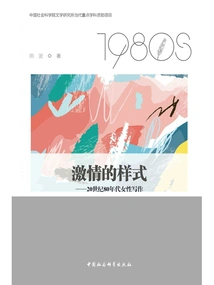
激情的样式:20世纪80年代女性写作
Tian Ni
This book examines Chinese women's literature in the 1980s from multiple female perspectives, sorts out the background and resources for the generation of women's literature, analyzes the chaotic memory logic of women's ideology, and examines the form, characteristics and development trajectory of women's literature. At the same time, it points out how women's writing inherits the pulse of "May Fourth" women's liberation, how it responds to the guidance of Western modernity, carries out cross-border movement and time-space switching, thereby participating in the poetic expression of the spirit of the times and human appeals required by the mainstream discourse system, and gradually realizes the transformation after being stripped away from the original matrix, and displays the various postures and styles of women's passion, will, ambition and desire from the level of spiritual fugue, as well as images of self-imagination and cultural construction. It reveals the radical significance and limitations of the construction of female ideological aesthetics, and then through reflection and inspection, rediscovers the growth point of Chinese female literature and even the development of national justice in the new era.
This book examines Chinese women's literature in the 1980s from multiple female perspectives, sorts out the background and resources for the generation of women's literature, analyzes the chaotic memory logic of women's ideology, and examines the form, characteristics and development trajectory of women's literature. At the same time, it points out how women's writing inherits the pulse of "May Fourth" women's liberation, how it responds to the guidance of Western modernity, carries out cross-border movement and time-space switching, thereby participating in the poetic expression of the spirit of the times and human appeals required by the mainstream discourse system, and gradually realizes the transformation after being stripped away from the original matrix, and displays the various postures and styles of women's passion, will, ambition and desire from the level of spiritual fugue, as well as images of self-imagination and cultural construction. It reveals the radical significance and limitations of the construction of female ideological aesthetics, and then through reflection and inspection, rediscovers the growth point of Chinese female literature and even the development of national justice in the new era.
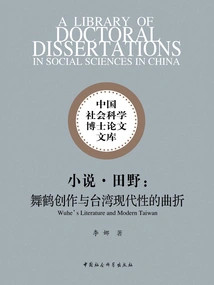
小说·田野:舞鹤创作与台湾现代性的曲折
Li Na
Wu He (1951-) is an important novelist in contemporary Taiwan. His writing based on his personal life experience is surprising and rich, running through the major transitions and issues of modernity in Taiwanese society since the 1970s. This book goes back and forth between the desk of literature and the field of social life, exploring the literary and historical connotations of Wu He's creation and the twists and turns of Taiwan's modernity issues it reflects: including reflections on colonial history, the emergence of a sense of freedom under the martial law system, the rise of local politics and local cultural narratives, the modern landscape and criticism of rural\u002F cities, and the utopian imagination of minority cultures, etc. In short, Wu He embodies the aesthetic heights and ideological dilemmas achieved by Taiwan's "baby boomer" generation of writers after the war by integrating "native experience" and "modernism." The second part of the book examines six novels in detail, discussing the novels of the Chinese in Taiwan, Chen Yingzhen, Guo Songfen, Bai Xianyong, Zhang Wenhuan, Lu Heruo, etc., In order to extend the discussion of Taiwan's modernity issues to more aspects, especially the submergence and rebirth of left-wing ideas with modern enlightenment significance in literature since the Japanese occupation era.
Wu He (1951-) is an important novelist in contemporary Taiwan. His writing based on his personal life experience is surprising and rich, running through the major transitions and issues of modernity in Taiwanese society since the 1970s. This book goes back and forth between the desk of literature and the field of social life, exploring the literary and historical connotations of Wu He's creation and the twists and turns of Taiwan's modernity issues it reflects: including reflections on colonial history, the emergence of a sense of freedom under the martial law system, the rise of local politics and local cultural narratives, the modern landscape and criticism of rural\u002F cities, and the utopian imagination of minority cultures, etc. In short, Wu He embodies the aesthetic heights and ideological dilemmas achieved by Taiwan's "baby boomer" generation of writers after the war by integrating "native experience" and "modernism." The second part of the book examines six novels in detail, discussing the novels of the Chinese in Taiwan, Chen Yingzhen, Guo Songfen, Bai Xianyong, Zhang Wenhuan, Lu Heruo, etc., In order to extend the discussion of Taiwan's modernity issues to more aspects, especially the submergence and rebirth of left-wing ideas with modern enlightenment significance in literature since the Japanese occupation era.
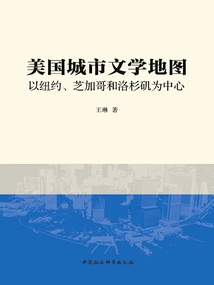
美国城市文学地图:以纽约、芝加哥和洛杉矶为中心
Wang Lin
This book takes the development history of American urban novels as a vertical line and the three metropolises of New York, Chicago and Los Angeles as a horizontal line, and makes a detailed review of the development history of American urban novels from the late 19th century to the mid-20th century. The book is divided into three chapters: New York, Chicago and Los Angeles. New York in literature presents various forms: old New York, lower-class New York, modern New York and multi-ethnic New York. Chicago literature has experienced three literary waves, from Henry Fuller to Nelson Algren. Chicago literature has gone from prosperity to decline, from the center to the periphery. It wasn't until the 1920s that Los Angeles literature really began. In two of the most important genres, the Hollywood novel and the hard-boiled detective novel, Los Angeles appears as "the city of fantasy and violence." By combing through the cities in American literature, we found that no matter which urban model, ultimately did not bring a true sense of paradise city to mankind. Where is the future of human cities? We are always looking.
This book takes the development history of American urban novels as a vertical line and the three metropolises of New York, Chicago and Los Angeles as a horizontal line, and makes a detailed review of the development history of American urban novels from the late 19th century to the mid-20th century. The book is divided into three chapters: New York, Chicago and Los Angeles. New York in literature presents various forms: old New York, lower-class New York, modern New York and multi-ethnic New York. Chicago literature has experienced three literary waves, from Henry Fuller to Nelson Algren. Chicago literature has gone from prosperity to decline, from the center to the periphery. It wasn't until the 1920s that Los Angeles literature really began. In two of the most important genres, the Hollywood novel and the hard-boiled detective novel, Los Angeles appears as "the city of fantasy and violence." By combing through the cities in American literature, we found that no matter which urban model, ultimately did not bring a true sense of paradise city to mankind. Where is the future of human cities? We are always looking.
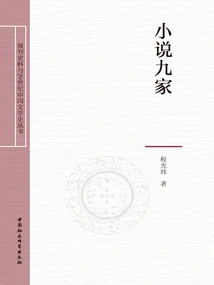
Nine Novels
Literature小说九家
Cheng Guangwei
This book adopts a method that combines knowledge of people and the world with close reading of texts to discuss the important works of nine contemporary novelists in recent years, and also provides a positioning analysis of the status of their creations in the history of contemporary Chinese literature. The appendix is an open-ended comment on the relationship between writers and readers, writers and critics, writers and literary history. It is a narrative style of chatting between friends.
This book adopts a method that combines knowledge of people and the world with close reading of texts to discuss the important works of nine contemporary novelists in recent years, and also provides a positioning analysis of the status of their creations in the history of contemporary Chinese literature. The appendix is an open-ended comment on the relationship between writers and readers, writers and critics, writers and literary history. It is a narrative style of chatting between friends.
点与面:中国现当代文学史论
Luo Guande
This book is compiled from the postgraduate course "History of Modern and Contemporary Chinese Literature". Faced with the characteristics of short class hours and large capacity, we try to construct a literary history theory based on the "big historical view" of French new history master Fernand Braudel and the literary history narrative method of the British and American New Criticism's genre model and day and night alternating model. The basic viewpoints and methods adhered to in this book are: taking the century-old literary history as the perspective, using representative writers as the observation point, using different genres as the observation perspective, and trying to highlight the works of writers who have made outstanding contributions to the history of literature as much as possible. Even for the writers mentioned, they do not give a comprehensive discussion, but focus on certain specific types or specific works. That is to say, we should pursue the macroscopic view on the macroscopic level and the microscopic view on the microscopic view, so as to realize the "detumescence" of historical theory under the tension of "face" and "point". In the evaluation of specific writers, we will not stick to current stereotypes. In some aspects, we will adopt personal understanding and expression to convey a personal view of history.
This book is compiled from the postgraduate course "History of Modern and Contemporary Chinese Literature". Faced with the characteristics of short class hours and large capacity, we try to construct a literary history theory based on the "big historical view" of French new history master Fernand Braudel and the literary history narrative method of the British and American New Criticism's genre model and day and night alternating model. The basic viewpoints and methods adhered to in this book are: taking the century-old literary history as the perspective, using representative writers as the observation point, using different genres as the observation perspective, and trying to highlight the works of writers who have made outstanding contributions to the history of literature as much as possible. Even for the writers mentioned, they do not give a comprehensive discussion, but focus on certain specific types or specific works. That is to say, we should pursue the macroscopic view on the macroscopic level and the microscopic view on the microscopic view, so as to realize the "detumescence" of historical theory under the tension of "face" and "point". In the evaluation of specific writers, we will not stick to current stereotypes. In some aspects, we will adopt personal understanding and expression to convey a personal view of history.
文艺鉴赏学举凡
Wei Yi
It is a very rare systematic research monograph in this field that studies the occurrence and development of literary appreciation activities, the expectation horizon of the appreciation subject, the aesthetic characteristics of the appreciation object, the aesthetic description of the appreciation process, and the realization of high-quality literary appreciation. It is suitable for reading by literature and art lovers at home and abroad; the author is also regarded as the first person in the field of literary appreciation research by many scholars in the industry.
It is a very rare systematic research monograph in this field that studies the occurrence and development of literary appreciation activities, the expectation horizon of the appreciation subject, the aesthetic characteristics of the appreciation object, the aesthetic description of the appreciation process, and the realization of high-quality literary appreciation. It is suitable for reading by literature and art lovers at home and abroad; the author is also regarded as the first person in the field of literary appreciation research by many scholars in the industry.
莎士比亚戏剧汉译的定量对比研究:以朱生豪、梁实秋译本为例
Zhang Wei
Based on comparative linguistics, corpus translation studies and translator style research theories, this book uses empirical methods to conduct a quantitative description and qualitative comparative study of the linguistic features of the Chinese translations of Liang Shiqiu and Zhu Shenghao of four Shakespeare plays (Hamlet, King Lear, Othello and Romeo and Juliet). The research perspective includes lexical features such as vocabulary density, sentence length, characteristic words, and high-frequency words, as well as sentence patterns such as "bei" sentences, "is..." Structures, and cultural images. The research enriches the corpus-based text characteristics and translator style description paradigm, proves the existing style conclusions of the two translators, and deepens, refines and improves their translator style system. The corpus comparative research method involved in the book is also helpful for research on language contact and influence patterns.
Based on comparative linguistics, corpus translation studies and translator style research theories, this book uses empirical methods to conduct a quantitative description and qualitative comparative study of the linguistic features of the Chinese translations of Liang Shiqiu and Zhu Shenghao of four Shakespeare plays (Hamlet, King Lear, Othello and Romeo and Juliet). The research perspective includes lexical features such as vocabulary density, sentence length, characteristic words, and high-frequency words, as well as sentence patterns such as "bei" sentences, "is..." Structures, and cultural images. The research enriches the corpus-based text characteristics and translator style description paradigm, proves the existing style conclusions of the two translators, and deepens, refines and improves their translator style system. The corpus comparative research method involved in the book is also helpful for research on language contact and influence patterns.
蒙太奇旋涡中的解离—联聚—整体性
Zhang Hui
The starting point of this article is to explore the relationship between montage and Döblin's "holistic" thinking, subjectivity criticism, philosophy of language, and his novel poetics, aiming to abandon the cliché that "montage originates from cinematography". Subversive assumptions require an alternative theoretical perspective. Drawing on the close relationship between Döblin and Chinese Taoist philosophy, as well as the philosophical similarities with other thinkers of the same period, the article sharpens Zhuangzi's "yan" as a theoretical tool. It goes against the common practice of using Western theory to guide Chinese literary phenomena, and reversely uses literary theory discourse with national characteristics to analyze a typical modern Western literary phenomenon. In order to enrich the rationale of the explanation, the article gives some new concepts, such as "cultural isotopes", and newly organizes and defines a series of seemingly unobjectionable concepts, such as "montage", "wholeness", "chaos" and so on. The article is divided into two parts: philosophical comparison and literary comparison.
The starting point of this article is to explore the relationship between montage and Döblin's "holistic" thinking, subjectivity criticism, philosophy of language, and his novel poetics, aiming to abandon the cliché that "montage originates from cinematography". Subversive assumptions require an alternative theoretical perspective. Drawing on the close relationship between Döblin and Chinese Taoist philosophy, as well as the philosophical similarities with other thinkers of the same period, the article sharpens Zhuangzi's "yan" as a theoretical tool. It goes against the common practice of using Western theory to guide Chinese literary phenomena, and reversely uses literary theory discourse with national characteristics to analyze a typical modern Western literary phenomenon. In order to enrich the rationale of the explanation, the article gives some new concepts, such as "cultural isotopes", and newly organizes and defines a series of seemingly unobjectionable concepts, such as "montage", "wholeness", "chaos" and so on. The article is divided into two parts: philosophical comparison and literary comparison.
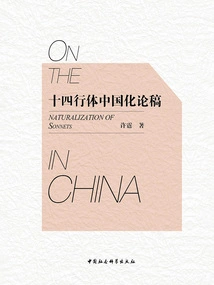
Essay on Sinicization of Sonnets
Literature十四行体中国化论稿
Xu Ting
The century-old process of the sinicization of sonnets has gone through an early import period, a standardization period, a variant exploration period and a diversified development period, during which tens of thousands of Chinese sonnets were born. The cross-lingual transplantation of poetic styles generally requires the acquisition of original styles, communication with intermediaries, and the birth of new styles. The most important transfer links are work translation, theoretical introduction, and work creation. Through the above transfer links, Chinese poets have promoted the sinicization of the sonnet rhythm pattern, segment structure, line construction method, poetic rhyme organization, and verse structure, and promoted the construction of new Chinese poetic styles and new poetic rhythms. The sinicization of sonnets is an outstanding achievement of Sino-Western cultural exchanges and an important contribution made by Chinese poets to the development of world sonnets.
The century-old process of the sinicization of sonnets has gone through an early import period, a standardization period, a variant exploration period and a diversified development period, during which tens of thousands of Chinese sonnets were born. The cross-lingual transplantation of poetic styles generally requires the acquisition of original styles, communication with intermediaries, and the birth of new styles. The most important transfer links are work translation, theoretical introduction, and work creation. Through the above transfer links, Chinese poets have promoted the sinicization of the sonnet rhythm pattern, segment structure, line construction method, poetic rhyme organization, and verse structure, and promoted the construction of new Chinese poetic styles and new poetic rhythms. The sinicization of sonnets is an outstanding achievement of Sino-Western cultural exchanges and an important contribution made by Chinese poets to the development of world sonnets.
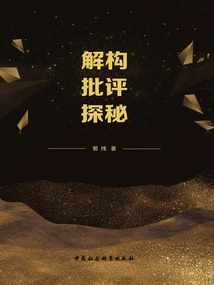
解构批评探秘
Guo Wei
De Man, Miller, Hartman and Bloom are four American deconstruction critics who are often called the "Yale School". Their academic theories are both similar, but also full of differences and individuality. They have original thoughts on major issues such as genre, literature, criticism, theory, rhetoric, narrative, reading, literary history, meaning, ethics, politics, etc., And have had a huge and lasting impact on the field of literary research. This book provides an in-depth exploration of the insightful theoretical perspectives and critical practices of deconstruction critics.
De Man, Miller, Hartman and Bloom are four American deconstruction critics who are often called the "Yale School". Their academic theories are both similar, but also full of differences and individuality. They have original thoughts on major issues such as genre, literature, criticism, theory, rhetoric, narrative, reading, literary history, meaning, ethics, politics, etc., And have had a huge and lasting impact on the field of literary research. This book provides an in-depth exploration of the insightful theoretical perspectives and critical practices of deconstruction critics.
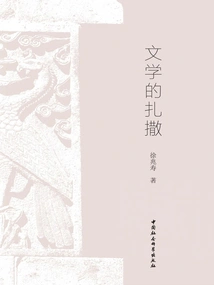
Literary Zasa
Literature文学的扎撒
Xu Zhaoshou
This book collects some of Xu Zhaoshou's literary criticism works since the 1990s. It is divided into four volumes, but it can be roughly divided into two parts. One part is a review of some writers or works, and the other part is a specific interpretation of literary theory. These articles are published by teachers in public magazines. Among them, articles such as "On the Criteria of Great Literature" were reprinted in full by Xinhua Digest; articles such as "The Dilemma and Overload of Humanities" have aroused discussions in the literary world; articles such as "From Poetry to Faith: Zhang Chengzhi's Literary World" and "The Dimension of Criticism" have won some literary awards. Most of Xu Zhaoshou's literary criticism contains strong life experience and philosophical reflection. It is a combination of sensibility and rationality. Basically, it can be read as a beautiful article. The issues he was thinking about were basically some of the problems that the literary world was anxious about at that time. Like his novels, most of them interrogate, think and answer the problems existing in society, with a strong sense of mission.
This book collects some of Xu Zhaoshou's literary criticism works since the 1990s. It is divided into four volumes, but it can be roughly divided into two parts. One part is a review of some writers or works, and the other part is a specific interpretation of literary theory. These articles are published by teachers in public magazines. Among them, articles such as "On the Criteria of Great Literature" were reprinted in full by Xinhua Digest; articles such as "The Dilemma and Overload of Humanities" have aroused discussions in the literary world; articles such as "From Poetry to Faith: Zhang Chengzhi's Literary World" and "The Dimension of Criticism" have won some literary awards. Most of Xu Zhaoshou's literary criticism contains strong life experience and philosophical reflection. It is a combination of sensibility and rationality. Basically, it can be read as a beautiful article. The issues he was thinking about were basically some of the problems that the literary world was anxious about at that time. Like his novels, most of them interrogate, think and answer the problems existing in society, with a strong sense of mission.
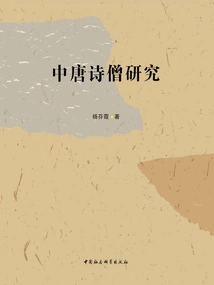
中唐诗僧研究
Yang Fenxia
This book conducts a systematic study of the poets, monks and monks' poems in the Mid-Tang Dynasty. The poems, monks and monks' poems in the Mid-Tang Dynasty are not only the representation of Buddhist and Zen culture, but also an indispensable part of the literature of the Mid-Tang Dynasty. Its existence is the result of the mutual influence of the prosperity of Buddhism and poetry in the Tang Dynasty. The poet monk of the Mid-Tang Dynasty had the dual personality of being both a monk and a scholar. His poems played an important role in the prosperity of Tang poetry with his unique literary character. This book generally grasps the common characteristics of monk poetry and monk poetry in the Mid-Tang Dynasty, and divides them into popular schools and elegant schools. Focused on the study of Hanshan, Shide's life experience and the late Tang and Song Dynasties, Hanshan was widely spread among Shilin and Mianliu. This paper systematically examines the origins, knowledge, thoughts, and close ties with the secular literary world of Jiao Ran and other representatives of the Qing Ya School in the mid-Tang Dynasty. It also objectively evaluates the role played by Monk Poetry in the Tang Dynasty in the prosperity of Tang poetry and the determination of the character of literati poetry, as well as its pioneering contribution in poetic theory and poetry creation and its exemplary role in the development of later generations of Monk Poetry.
This book conducts a systematic study of the poets, monks and monks' poems in the Mid-Tang Dynasty. The poems, monks and monks' poems in the Mid-Tang Dynasty are not only the representation of Buddhist and Zen culture, but also an indispensable part of the literature of the Mid-Tang Dynasty. Its existence is the result of the mutual influence of the prosperity of Buddhism and poetry in the Tang Dynasty. The poet monk of the Mid-Tang Dynasty had the dual personality of being both a monk and a scholar. His poems played an important role in the prosperity of Tang poetry with his unique literary character. This book generally grasps the common characteristics of monk poetry and monk poetry in the Mid-Tang Dynasty, and divides them into popular schools and elegant schools. Focused on the study of Hanshan, Shide's life experience and the late Tang and Song Dynasties, Hanshan was widely spread among Shilin and Mianliu. This paper systematically examines the origins, knowledge, thoughts, and close ties with the secular literary world of Jiao Ran and other representatives of the Qing Ya School in the mid-Tang Dynasty. It also objectively evaluates the role played by Monk Poetry in the Tang Dynasty in the prosperity of Tang poetry and the determination of the character of literati poetry, as well as its pioneering contribution in poetic theory and poetry creation and its exemplary role in the development of later generations of Monk Poetry.
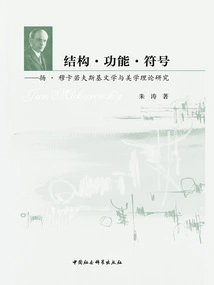
结构·功能·符号:扬·穆卡若夫斯基文学与美学理论研究
Zhu Tao
Jan Mukarovsky can be called a leading figure in literary and aesthetic research of the Prague School. This book mainly focuses on three key words: "structure", "function" and "symbol". It is the first time in China to systematically introduce and study Mukarovsky's literary and artistic thoughts. On the one hand, from a diachronic perspective, it deeply interprets the original context in which Mukarovsky's theory emerged, and systematically sorts out the origin, development and influence of his theory; on the other hand, from a synchronic perspective, mainly through comparison with the Russian Formalist School and French Structuralism, some key concepts, core interests, and basic methods in his theory are analyzed, trying to reveal the harmonious but different aspects of Czech structuralism and traditional structuralism, and a fairer positioning of Mukarovsky's role in the development of world literary theory in the 20th century.
Jan Mukarovsky can be called a leading figure in literary and aesthetic research of the Prague School. This book mainly focuses on three key words: "structure", "function" and "symbol". It is the first time in China to systematically introduce and study Mukarovsky's literary and artistic thoughts. On the one hand, from a diachronic perspective, it deeply interprets the original context in which Mukarovsky's theory emerged, and systematically sorts out the origin, development and influence of his theory; on the other hand, from a synchronic perspective, mainly through comparison with the Russian Formalist School and French Structuralism, some key concepts, core interests, and basic methods in his theory are analyzed, trying to reveal the harmonious but different aspects of Czech structuralism and traditional structuralism, and a fairer positioning of Mukarovsky's role in the development of world literary theory in the 20th century.
民俗学视角下的竹枝词研究:以京津竹枝词为例
Zheng Yan
Zhuzhi Ci is one of the written carriers of my country's traditional culture. Its form is fixed, its content is complex, and its style is humorous. It has been accepted and inherited by the general public and has become an integral part of ancient Chinese literature. It has considerable research value and significance. From the perspective of folklore, this book takes the texts of Beijing-Tianjin Zhuzhi Ci from the Yuan Dynasty to the Republic of China as the main research object and scope, preliminarily analyzes the formation and development process of Beijing-Tianjin Zhuzhi Ci, and describes the urban folk life and types of urban people described and presented in it. On this basis, by introducing the style and stance issues of folk literature, we focus on exploring the value and function of the Beijing-Tianjin Zhuzhi Ci texts that exist and are handed down in poetic form, and then try to construct the concept and connotation of folk poetry.
Zhuzhi Ci is one of the written carriers of my country's traditional culture. Its form is fixed, its content is complex, and its style is humorous. It has been accepted and inherited by the general public and has become an integral part of ancient Chinese literature. It has considerable research value and significance. From the perspective of folklore, this book takes the texts of Beijing-Tianjin Zhuzhi Ci from the Yuan Dynasty to the Republic of China as the main research object and scope, preliminarily analyzes the formation and development process of Beijing-Tianjin Zhuzhi Ci, and describes the urban folk life and types of urban people described and presented in it. On this basis, by introducing the style and stance issues of folk literature, we focus on exploring the value and function of the Beijing-Tianjin Zhuzhi Ci texts that exist and are handed down in poetic form, and then try to construct the concept and connotation of folk poetry.
民国安徽文学史论
Fu Ying
Anhui has been a major province of Chinese literature since ancient times. During the Republic of China, Anhui became even more successful due to favorable weather, geographical conditions, and cultural factors. This book breaks through the limitations of previous "modern literary history" in terms of time and content, focusing on the literary style of Anhui during the transition period between old and new literature. Issues such as the literary writings of military generals from Anhui Province, the popular literature of Anhui people during the Republic of China, and the group of translators of Anhui literature from the Republic of China strive to show the literary style of Anhui during the Republic of China from specific angles, and draw readers' attention to literary phenomena that no one has systematically elaborated on in the history of various types of literature in the past. The whole book is based on historical materials and centered on regional culture. It seizes the clue of Anhui's humanistic history, traces its origins, and explores to the end, aiming to be helpful to the writing of Chinese regional literary history.
Anhui has been a major province of Chinese literature since ancient times. During the Republic of China, Anhui became even more successful due to favorable weather, geographical conditions, and cultural factors. This book breaks through the limitations of previous "modern literary history" in terms of time and content, focusing on the literary style of Anhui during the transition period between old and new literature. Issues such as the literary writings of military generals from Anhui Province, the popular literature of Anhui people during the Republic of China, and the group of translators of Anhui literature from the Republic of China strive to show the literary style of Anhui during the Republic of China from specific angles, and draw readers' attention to literary phenomena that no one has systematically elaborated on in the history of various types of literature in the past. The whole book is based on historical materials and centered on regional culture. It seizes the clue of Anhui's humanistic history, traces its origins, and explores to the end, aiming to be helpful to the writing of Chinese regional literary history.
中国现代民族主义文学思潮(1895—1945)
Li Jun
"Modern Chinese Nationalist Literary Thoughts (1895-1945)" mainly carries out research work at three levels: on the first level, it clarifies the trend of modern Chinese nationalist thoughts from 1895 to 1945, explores the profound influence of nationalist thoughts on literary creation, and rewrites a clear, systematic and complete "History of Modern Chinese Nationalist Literary Thoughts"; on the second level, it starts with the macroscopic changes in modern Chinese nationalist thoughts and goes back to the nationalist era. The nationalist nature of Zeng Guofan's theory of "defending morality" and Kang Youwei's theory of "reforming from ancient times", while focusing on analyzing the nationalist thoughts of Liang Qichao, Sun Yat-sen, and Chiang Kai-shek, aiming to clarify the origins and differences of modern nationalist trends of thought; the third level focuses on interpreting the works of classic writers of political nationalist literature and cultural nationalist literature, explaining the aesthetic characteristics of modern Chinese nationalist literature, and providing useful resources for the construction of the theoretical system of modern Chinese nationalist literature.
"Modern Chinese Nationalist Literary Thoughts (1895-1945)" mainly carries out research work at three levels: on the first level, it clarifies the trend of modern Chinese nationalist thoughts from 1895 to 1945, explores the profound influence of nationalist thoughts on literary creation, and rewrites a clear, systematic and complete "History of Modern Chinese Nationalist Literary Thoughts"; on the second level, it starts with the macroscopic changes in modern Chinese nationalist thoughts and goes back to the nationalist era. The nationalist nature of Zeng Guofan's theory of "defending morality" and Kang Youwei's theory of "reforming from ancient times", while focusing on analyzing the nationalist thoughts of Liang Qichao, Sun Yat-sen, and Chiang Kai-shek, aiming to clarify the origins and differences of modern nationalist trends of thought; the third level focuses on interpreting the works of classic writers of political nationalist literature and cultural nationalist literature, explaining the aesthetic characteristics of modern Chinese nationalist literature, and providing useful resources for the construction of the theoretical system of modern Chinese nationalist literature.
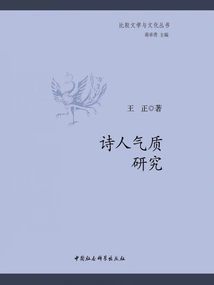
Study on the Poet's Temperament
Literature诗人气质研究
Wang Zheng
This is an academic monograph on the study of "poet temperament". This book believes that the poet's temperament is composed of poetry and poetry. Poetry nurtures the poet's "childlike innocence-art" and "innocence-aesthetic" aesthetic taste, and poetry constructs the poet's unique existence of "original-simple" and "sacred-transcendent". The poet's temperament is not only generated by his psychological foundation and personality traits, but also appears as five spiritual qualities such as purity, bitterness, drunkenness, lightness and distance due to artistic aesthetic activities, which respectively point to the poet's human nature, life experience, spiritual release, aesthetic observation and mental transcendence, thus forming the poet's innocence, existential worries, free will, elegance and philosophical interest. The "five causes" of the poet's temperament are condensed into the overall harmonious spiritual atmosphere and vivid aura of "life-art". This book selects two poets, Xu Zhimo and Byron, as typical cases of the "five causes" concept of poet's temperament.
This is an academic monograph on the study of "poet temperament". This book believes that the poet's temperament is composed of poetry and poetry. Poetry nurtures the poet's "childlike innocence-art" and "innocence-aesthetic" aesthetic taste, and poetry constructs the poet's unique existence of "original-simple" and "sacred-transcendent". The poet's temperament is not only generated by his psychological foundation and personality traits, but also appears as five spiritual qualities such as purity, bitterness, drunkenness, lightness and distance due to artistic aesthetic activities, which respectively point to the poet's human nature, life experience, spiritual release, aesthetic observation and mental transcendence, thus forming the poet's innocence, existential worries, free will, elegance and philosophical interest. The "five causes" of the poet's temperament are condensed into the overall harmonious spiritual atmosphere and vivid aura of "life-art". This book selects two poets, Xu Zhimo and Byron, as typical cases of the "five causes" concept of poet's temperament.
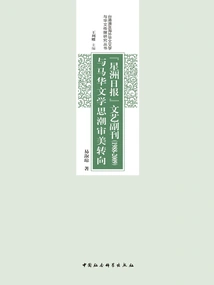
《星洲日报》文艺副刊(1988—2009)与马华文学思潮审美转向
Yi Shuqiong
Using the methods of "local knowledge" proposed by anthropologist Clifford Geertz and Foucault's "archeology of knowledge", this book enters the space of the literary supplement of Sin Chew Daily (1988-2009), which has a huge influence in Malaysian Chinese society. From the perspective of the relationship between media and literature, it explores the aesthetic transformation of Malaysian Chinese literary thought from "Mahua Chinese Literature" to "Literary Mahua" in the past twenty years amid the anxiety of subjectivity construction. In this transformation of aesthetic forms, literary supplements have always intervened and intervened as an invisible structural force in the field of Malaysian Chinese literary power. Since the "little literature" Malaysian Chinese literature mainly resides in newspaper supplements with culture as the medium and business as the background, under the "cultural newspaper" strategy, the literary supplement of "Sin Chew Daily" uses the "literature-culture" production process to promote the aesthetic evolution of Malaysian Chinese literary trends.
Using the methods of "local knowledge" proposed by anthropologist Clifford Geertz and Foucault's "archeology of knowledge", this book enters the space of the literary supplement of Sin Chew Daily (1988-2009), which has a huge influence in Malaysian Chinese society. From the perspective of the relationship between media and literature, it explores the aesthetic transformation of Malaysian Chinese literary thought from "Mahua Chinese Literature" to "Literary Mahua" in the past twenty years amid the anxiety of subjectivity construction. In this transformation of aesthetic forms, literary supplements have always intervened and intervened as an invisible structural force in the field of Malaysian Chinese literary power. Since the "little literature" Malaysian Chinese literature mainly resides in newspaper supplements with culture as the medium and business as the background, under the "cultural newspaper" strategy, the literary supplement of "Sin Chew Daily" uses the "literature-culture" production process to promote the aesthetic evolution of Malaysian Chinese literary trends.
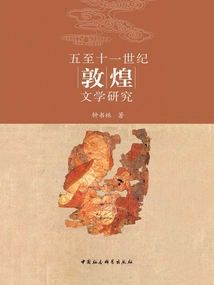
五至十一世纪敦煌文学研究
Zhong Shulin
This manuscript takes the works of local Dunhuang writers as the research object, and examines the life and creation situations of Dunhuang writers in various periods from the fifth to the eleventh century. From Li Hao's Xiliang regime during the Sixteen Kingdoms period, to the period when Tubo ruled Dunhuang, and then to the period of Dunhuang rebels, it presents the progressive development process of Dunhuang local literature in a three-dimensional manner. There are many typical case studies, from the Li Hao Literary Group, to the study of the 72 poems that trapped Tibet in Volume P.2555 Of Dunhuang Posthumous Letters and the political pattern of the northwest during the Kaiyuan period of the Tang Dynasty, to the overall study of local Dunhuang writers such as Wu Zhen and Daozhen during the period of the Yijun. This manuscript has a unique perspective and novel viewpoints, showing the exchanges and connections between Dunhuang regional literature and Central Plains literature from the fifth to the eleventh century, and fully revealing the status and value of Dunhuang writers' works in the history of Chinese literature. This manuscript is based on the works of local Dunhuang writers, recreating the status of Dunhuang literary creation at that time, and reconstructing the historical position from individual Dunhuang writers to the entire group of Dunhuang writers at that time.
This manuscript takes the works of local Dunhuang writers as the research object, and examines the life and creation situations of Dunhuang writers in various periods from the fifth to the eleventh century. From Li Hao's Xiliang regime during the Sixteen Kingdoms period, to the period when Tubo ruled Dunhuang, and then to the period of Dunhuang rebels, it presents the progressive development process of Dunhuang local literature in a three-dimensional manner. There are many typical case studies, from the Li Hao Literary Group, to the study of the 72 poems that trapped Tibet in Volume P.2555 Of Dunhuang Posthumous Letters and the political pattern of the northwest during the Kaiyuan period of the Tang Dynasty, to the overall study of local Dunhuang writers such as Wu Zhen and Daozhen during the period of the Yijun. This manuscript has a unique perspective and novel viewpoints, showing the exchanges and connections between Dunhuang regional literature and Central Plains literature from the fifth to the eleventh century, and fully revealing the status and value of Dunhuang writers' works in the history of Chinese literature. This manuscript is based on the works of local Dunhuang writers, recreating the status of Dunhuang literary creation at that time, and reconstructing the historical position from individual Dunhuang writers to the entire group of Dunhuang writers at that time.
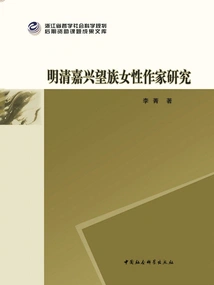
A Study on Female Writers from Prominent Families in Jiaxing During the Ming and Qing Dynasties
Literature明清嘉兴望族女性作家研究
Li Jing
The book combs and examines various Ming and Qing poetry collections, collections, family collections, genealogies, poems and county chronicles and other documents. It identifies more than 300 female writers from prominent Jiaxing families in the Ming and Qing Dynasties, unearths 71 collections by women, sorts out 13 creative groups of female writers from prominent families, and analyzes the life environment of women from prominent families in Jiaxing from both macro and micro perspectives. This paper comprehensively examines and discusses the environment, cultural ecology, time and space distribution, family lineage, characteristics and stages of literary creation, dissemination of texts and regional representative writers, outlines the spiritual outlook and the overall outline of literary creation of female writers from prominent Jiaxing families in the Ming and Qing dynasties, and expounds the value and influence of literary creation by female writers from prominent Jiaxing families in the Ming and Qing dynasties. This book adds a new perspective to the study of family literature and provides a model for the study of women's literature.
The book combs and examines various Ming and Qing poetry collections, collections, family collections, genealogies, poems and county chronicles and other documents. It identifies more than 300 female writers from prominent Jiaxing families in the Ming and Qing Dynasties, unearths 71 collections by women, sorts out 13 creative groups of female writers from prominent families, and analyzes the life environment of women from prominent families in Jiaxing from both macro and micro perspectives. This paper comprehensively examines and discusses the environment, cultural ecology, time and space distribution, family lineage, characteristics and stages of literary creation, dissemination of texts and regional representative writers, outlines the spiritual outlook and the overall outline of literary creation of female writers from prominent Jiaxing families in the Ming and Qing dynasties, and expounds the value and influence of literary creation by female writers from prominent Jiaxing families in the Ming and Qing dynasties. This book adds a new perspective to the study of family literature and provides a model for the study of women's literature.
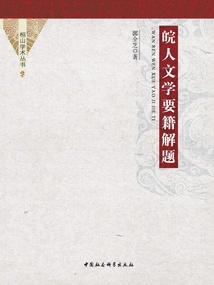
皖人文学要籍解题
Guo Quanzhi
There are many important literary works in Anhui history, and many of them are influential, so it is necessary to discuss them. This book analyzes more than 100 existing important literary creations, important poems and essays, or important poetry collections compiled by Anhui writers from the pre-Qin Dynasty to the late Qing Dynasty (1840). The scope of each topic covers the writer's life story, main works and editions, the content of important literary classics, and literary achievements, etc., With an emphasis on the latter. It makes new breakthroughs in the overall study of Anhui Province's literary classics, and provides academic resources for the construction of local traditional literature and culture.
There are many important literary works in Anhui history, and many of them are influential, so it is necessary to discuss them. This book analyzes more than 100 existing important literary creations, important poems and essays, or important poetry collections compiled by Anhui writers from the pre-Qin Dynasty to the late Qing Dynasty (1840). The scope of each topic covers the writer's life story, main works and editions, the content of important literary classics, and literary achievements, etc., With an emphasis on the latter. It makes new breakthroughs in the overall study of Anhui Province's literary classics, and provides academic resources for the construction of local traditional literature and culture.
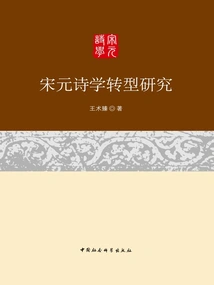
宋元诗学转型研究
Wang Shuzhen
This book takes the evolution of poetics in the Song and Yuan Dynasties as the research object, and puts forward its own views on some major issues related to the overall situation in the history of poetics in the Song and Yuan Dynasties. The author used a large number of first-hand documents to examine the poetic ecology of the late Southern Song Dynasty and the early Yuan Dynasty in detail, and conducted a realistic analysis of the schools and debates of poetic thought at that time, confirming the origin and artistic value of Yuan poetry. The conclusions drawn from this were unprecedented, which is a great contribution to this book. This book can avoid the interference of later generations' discussions, strive to analyze first-hand literature materials, and make practical research and discussion on many difficult issues. It can also closely combine the close reading of the text with the examination of the cultural background, and look at the internal issues of poetics and the history of its development and evolution from a textual research perspective. Every material can tell a story. Therefore, its academic methods are solid and reliable, and the conclusions drawn are also convincing.
This book takes the evolution of poetics in the Song and Yuan Dynasties as the research object, and puts forward its own views on some major issues related to the overall situation in the history of poetics in the Song and Yuan Dynasties. The author used a large number of first-hand documents to examine the poetic ecology of the late Southern Song Dynasty and the early Yuan Dynasty in detail, and conducted a realistic analysis of the schools and debates of poetic thought at that time, confirming the origin and artistic value of Yuan poetry. The conclusions drawn from this were unprecedented, which is a great contribution to this book. This book can avoid the interference of later generations' discussions, strive to analyze first-hand literature materials, and make practical research and discussion on many difficult issues. It can also closely combine the close reading of the text with the examination of the cultural background, and look at the internal issues of poetics and the history of its development and evolution from a textual research perspective. Every material can tell a story. Therefore, its academic methods are solid and reliable, and the conclusions drawn are also convincing.
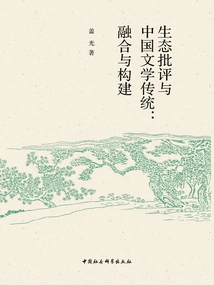
生态批评与中国文学传统:融合与构建
Cover Light
Ecocriticism organically combines ecology and literature to form a special research line on literature and life experience, perspective transformation and discourse expression. It also promotes the paradigm shift of literary research around ecological organicity, and uses complexity thinking to present the diversity of nature, ecology, life and literary activities. The Chinese literary tradition has a unique point of "Taoism", which forms the basis of ecological wisdom based on the "harmony of nature and man". It can form a good connection with ecocriticism in terms of understanding nature, creation of literary "artistic realm", poetic value, emotional connection, artistic authenticity and divine charm, etc., And can establish a multi-directional integration and fusion mechanism of organic coexistence. Optimized paths in many disciplines such as ecological culture, ecological aesthetics, anthropology, phenomenology and theory of knowledge can support, highlight and complete this "integrated" academic construction. This book consists of twelve chapters, including an introduction and conclusion, divided into theory, integration, source analysis and construction.
Ecocriticism organically combines ecology and literature to form a special research line on literature and life experience, perspective transformation and discourse expression. It also promotes the paradigm shift of literary research around ecological organicity, and uses complexity thinking to present the diversity of nature, ecology, life and literary activities. The Chinese literary tradition has a unique point of "Taoism", which forms the basis of ecological wisdom based on the "harmony of nature and man". It can form a good connection with ecocriticism in terms of understanding nature, creation of literary "artistic realm", poetic value, emotional connection, artistic authenticity and divine charm, etc., And can establish a multi-directional integration and fusion mechanism of organic coexistence. Optimized paths in many disciplines such as ecological culture, ecological aesthetics, anthropology, phenomenology and theory of knowledge can support, highlight and complete this "integrated" academic construction. This book consists of twelve chapters, including an introduction and conclusion, divided into theory, integration, source analysis and construction.
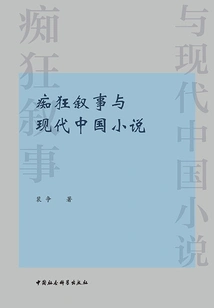
痴狂叙事与现代中国小说
Pei Zheng
This book systematically studies the artistic innovation of modern Chinese novels in the past century from the field of narratology, proposes the concept of crazy narrative, and summarizes three crazy narrative modes: narrative of crazy people, narrative of madmen, and carnival narrative. As a unique narrative art, crazy narrative has always followed the occurrence and development of modern Chinese novels. It has realized the transformation of modern Chinese novels from both content and form, changed the simplification and mechanization of the artistic image setting of traditional Chinese novels, and also changed the single-line or linear narrative mode of plot construction. The emergence of this narrative mode is an impact and subversion of conventional writing methods that are good at rationality. Its deep narrative expectation is to achieve anti-orthodox and anti-conventional purposes through the transformation of narrative methods. Crazy narrative is a proactive choice made by modern Chinese literati in the face of profound changes in social reality and in-depth exchanges of Chinese and foreign literature over the past century. It reflects the courage and ideas of modern Chinese intellectuals in pursuing independence and innovation.
This book systematically studies the artistic innovation of modern Chinese novels in the past century from the field of narratology, proposes the concept of crazy narrative, and summarizes three crazy narrative modes: narrative of crazy people, narrative of madmen, and carnival narrative. As a unique narrative art, crazy narrative has always followed the occurrence and development of modern Chinese novels. It has realized the transformation of modern Chinese novels from both content and form, changed the simplification and mechanization of the artistic image setting of traditional Chinese novels, and also changed the single-line or linear narrative mode of plot construction. The emergence of this narrative mode is an impact and subversion of conventional writing methods that are good at rationality. Its deep narrative expectation is to achieve anti-orthodox and anti-conventional purposes through the transformation of narrative methods. Crazy narrative is a proactive choice made by modern Chinese literati in the face of profound changes in social reality and in-depth exchanges of Chinese and foreign literature over the past century. It reflects the courage and ideas of modern Chinese intellectuals in pursuing independence and innovation.
新时期文学批评的转型与走向
Liu Xuesong
Literary criticism in the new era has shown unprecedented splendor in the context of the great changes in the basic structure of Chinese society, forming one of the most exciting and active scenes in the history of Chinese literary criticism in the twentieth century. Literary criticism in the new era is at the time of social transformation and the transition between old and new, showing major turning points and changes. It constitutes the most profound and complex aspect of contemporary ideological and cultural changes, and contains rich information. Timely sorting and research on it can present the historical appearance and trend of the complexity of literary thought in the past thirty years, and help us understand the complex and diverse cultural context of the times. This book is a review and summary of thirty years of literary criticism in the new era, starting from the perspective of the transformation and trend of literary criticism. It is sorted out and summarized mainly from six aspects: the form of literary criticism: from the whole to the split; the pattern of literary criticism: from the tripartite confrontation to the coexistence of pluralism; the mode of literary criticism: from perceptual criticism to rational criticism; the perspective of literary criticism: from the internal perspective of aesthetic criticism to the external perspective of cultural criticism; the character of literary criticism: from elite criticism to secularization and flatness; critical discourse: from promoting "modernity" in the 1980s to reflecting on "modernity" in the 1990s.
Literary criticism in the new era has shown unprecedented splendor in the context of the great changes in the basic structure of Chinese society, forming one of the most exciting and active scenes in the history of Chinese literary criticism in the twentieth century. Literary criticism in the new era is at the time of social transformation and the transition between old and new, showing major turning points and changes. It constitutes the most profound and complex aspect of contemporary ideological and cultural changes, and contains rich information. Timely sorting and research on it can present the historical appearance and trend of the complexity of literary thought in the past thirty years, and help us understand the complex and diverse cultural context of the times. This book is a review and summary of thirty years of literary criticism in the new era, starting from the perspective of the transformation and trend of literary criticism. It is sorted out and summarized mainly from six aspects: the form of literary criticism: from the whole to the split; the pattern of literary criticism: from the tripartite confrontation to the coexistence of pluralism; the mode of literary criticism: from perceptual criticism to rational criticism; the perspective of literary criticism: from the internal perspective of aesthetic criticism to the external perspective of cultural criticism; the character of literary criticism: from elite criticism to secularization and flatness; critical discourse: from promoting "modernity" in the 1980s to reflecting on "modernity" in the 1990s.
感性批评和现当代小说
Liu Jiye
Perceptual criticism is the author's consistent basic idea and method in researching modern and contemporary Chinese novels. The author believes that in the context of modern Western and contemporary literary theories and trends being introduced into the country, the reading and research of novels are no longer guided by any single theory or method. Instead, they need to enter the reading and thinking of novel texts without any theoretical foresight and with full sensibility, conduct a thorough text reading, and randomly select different theories and methods of literary criticism and research based on the different aspects of novel texts and some text details.
Perceptual criticism is the author's consistent basic idea and method in researching modern and contemporary Chinese novels. The author believes that in the context of modern Western and contemporary literary theories and trends being introduced into the country, the reading and research of novels are no longer guided by any single theory or method. Instead, they need to enter the reading and thinking of novel texts without any theoretical foresight and with full sensibility, conduct a thorough text reading, and randomly select different theories and methods of literary criticism and research based on the different aspects of novel texts and some text details.
第一人称复数“我们”叙事研究
Wang Meihong
Narrative person is a basic issue in narratology research. The first-person plural "we" is a relatively rare narrative person in novel narratives. It has the characteristics of unnaturalness, non-commonness, and unreliability. In the past ten years, the Western narrative academic community has carried out active discussions based on the first-person plural "we" narrative in Western novels, among which the research results of Yuri Maglin, Susan S. Lancer, Brian Richardson, Amit Marcus and others are particularly outstanding. This kind of narrative person also exists in modern and contemporary Chinese novels. A review of the use of the person in China's literary field over the past century reveals that the first-person plural "we" in poetry and literary essays is more influenced by political factors, while the "we" in the field of novels is an expression of collectivism in a specific region or space derived from literary innovation, which has unique artistic charm.
Narrative person is a basic issue in narratology research. The first-person plural "we" is a relatively rare narrative person in novel narratives. It has the characteristics of unnaturalness, non-commonness, and unreliability. In the past ten years, the Western narrative academic community has carried out active discussions based on the first-person plural "we" narrative in Western novels, among which the research results of Yuri Maglin, Susan S. Lancer, Brian Richardson, Amit Marcus and others are particularly outstanding. This kind of narrative person also exists in modern and contemporary Chinese novels. A review of the use of the person in China's literary field over the past century reveals that the first-person plural "we" in poetry and literary essays is more influenced by political factors, while the "we" in the field of novels is an expression of collectivism in a specific region or space derived from literary innovation, which has unique artistic charm.
新时期晋东南作家的创作维度与精神向度(“浊漳流馨”丛书)
Zhao Dongdong Et Al.
At this golden opportunity for the implementation of the national "rural revitalization" strategy, we are eager to add a new dimension to the study of literature in southeastern Shanxi. Literary creation in the southeastern Shanxi region is as rapid as our country's economic development in the new era, showing a prosperous situation. Not only has the reportage writer Mr. Zhao Yu, the winner of the Lu Xun Literature Award Ms. Ge Shuiping and other influential writers in the country emerged, they use their talents to write about the customs and customs of the southeastern Shanxi region and the memories of their childhood and youth. And the experience of current life, and there are always a group of well-known local writers in the area, such as Guo Junmin, Liu Lusheng, Suo Pengxiang, Nie Er, Song Fuju, etc. They are also touching the land of southeastern Shanxi with their own brushwork, caring for the lives of the people in southeastern Shanxi with their own emotions, and recording and creating the local culture of southeastern Shanxi with their own energy. What these writers are engaged in is the "subaltern writing" recognized and studied by the current literary research community. "Ballow writing" has always been a hot area of expression among contemporary Chinese writers, and the research on "lower class writing" is still at a fever pitch, and its contention has not shown any signs of fading away. Our book starts from the perspective of "lower class writing" and explores the creative dimensions of these writers - what kind of bottom class and what kind of life do they focus on?
At this golden opportunity for the implementation of the national "rural revitalization" strategy, we are eager to add a new dimension to the study of literature in southeastern Shanxi. Literary creation in the southeastern Shanxi region is as rapid as our country's economic development in the new era, showing a prosperous situation. Not only has the reportage writer Mr. Zhao Yu, the winner of the Lu Xun Literature Award Ms. Ge Shuiping and other influential writers in the country emerged, they use their talents to write about the customs and customs of the southeastern Shanxi region and the memories of their childhood and youth. And the experience of current life, and there are always a group of well-known local writers in the area, such as Guo Junmin, Liu Lusheng, Suo Pengxiang, Nie Er, Song Fuju, etc. They are also touching the land of southeastern Shanxi with their own brushwork, caring for the lives of the people in southeastern Shanxi with their own emotions, and recording and creating the local culture of southeastern Shanxi with their own energy. What these writers are engaged in is the "subaltern writing" recognized and studied by the current literary research community. "Ballow writing" has always been a hot area of expression among contemporary Chinese writers, and the research on "lower class writing" is still at a fever pitch, and its contention has not shown any signs of fading away. Our book starts from the perspective of "lower class writing" and explores the creative dimensions of these writers - what kind of bottom class and what kind of life do they focus on?
马克思主义文学理论与20世纪中国文学理论的变迁
Ji Shuihe Et Al.
This book comprehensively reviews the relationship between Marxist literary theory and Chinese literary theory in the 20th century, and summarizes it into three aspects: from the perspective of historical process, Marxist literary theory influenced the system construction of Chinese literary theory in the 20th century, promoted its spatial expansion, and promoted the emergence of Chinese Marxist literary theory; from the perspective of theoretical category, Marxist literary ideology is the theoretical basis of the ideological category in Chinese literary theory in the 20th century, and Marxist realism theory is the theoretical foundation of the ideological category in Chinese literary theory in the 20th century. It is the core resource of the realist category in Chinese literary theory. The Marxist theory of national culture is the academic basis for the category of national form in Chinese literary theory in the 20th century. The Marxist literary criticism standards are the fundamental follower of the literary criticism category in Chinese literary theory in the 20th century. From the perspective of development trends, the scope of Marxist literary theory still needs to be open and expanded in contemporary China. The Marxist theory of artistic production and the spirit of literary criticism have important practical significance and influence contemporary Chinese literary and artistic activities.
This book comprehensively reviews the relationship between Marxist literary theory and Chinese literary theory in the 20th century, and summarizes it into three aspects: from the perspective of historical process, Marxist literary theory influenced the system construction of Chinese literary theory in the 20th century, promoted its spatial expansion, and promoted the emergence of Chinese Marxist literary theory; from the perspective of theoretical category, Marxist literary ideology is the theoretical basis of the ideological category in Chinese literary theory in the 20th century, and Marxist realism theory is the theoretical foundation of the ideological category in Chinese literary theory in the 20th century. It is the core resource of the realist category in Chinese literary theory. The Marxist theory of national culture is the academic basis for the category of national form in Chinese literary theory in the 20th century. The Marxist literary criticism standards are the fundamental follower of the literary criticism category in Chinese literary theory in the 20th century. From the perspective of development trends, the scope of Marxist literary theory still needs to be open and expanded in contemporary China. The Marxist theory of artistic production and the spirit of literary criticism have important practical significance and influence contemporary Chinese literary and artistic activities.
On Feng Jiqi's Creation
Literature冯积岐创作论
Wang Zuji Et Al.
Feng Jiqi is a leading figure among the third generation writers in Shaanxi. This book takes Feng Jiqi's novel creation as the research object and comprehensively uses a variety of research methods from the dimensions of biographical research, creative psychology, thematics, narratology, female criticism, influence research and parallel research to comprehensively and in-depth analyze and explain the ideological connotation and artistic characteristics of Feng Jiqi's novels, presenting the unique artistic charm of Feng Jiqi's novels.
Feng Jiqi is a leading figure among the third generation writers in Shaanxi. This book takes Feng Jiqi's novel creation as the research object and comprehensively uses a variety of research methods from the dimensions of biographical research, creative psychology, thematics, narratology, female criticism, influence research and parallel research to comprehensively and in-depth analyze and explain the ideological connotation and artistic characteristics of Feng Jiqi's novels, presenting the unique artistic charm of Feng Jiqi's novels.
Ecofeminist Literary Research
Literature生态女性主义文学研究
Tang Jing Li Jing
This book draws on Western feminist theories and perspectives to analyze the differences in expression forms, development characteristics, spiritual connotations, contents and propositions of Chinese and Western ecofeminism in literary works. The ecological characteristics are first reflected in the "naturalness" of contemporary literature. Nature is "reenchanted" and regains its spirituality. The concept of treating nature as a resource and profit-making tool has been criticized; the core beliefs of ecology such as equality between species, harmonious coexistence between man and nature, obeying the laws of nature, and maintaining natural restraint have also penetrated into contemporary literature. Secondly, the relationship between human nature\u002F sensibility and social nature\u002F rationality has been reorganized. The author believes that the propositions of ecological literature are consistent with the traditional Chinese spirit, and it is possible for Chinese literature to develop ecofeminism with national characteristics.
This book draws on Western feminist theories and perspectives to analyze the differences in expression forms, development characteristics, spiritual connotations, contents and propositions of Chinese and Western ecofeminism in literary works. The ecological characteristics are first reflected in the "naturalness" of contemporary literature. Nature is "reenchanted" and regains its spirituality. The concept of treating nature as a resource and profit-making tool has been criticized; the core beliefs of ecology such as equality between species, harmonious coexistence between man and nature, obeying the laws of nature, and maintaining natural restraint have also penetrated into contemporary literature. Secondly, the relationship between human nature\u002F sensibility and social nature\u002F rationality has been reorganized. The author believes that the propositions of ecological literature are consistent with the traditional Chinese spirit, and it is possible for Chinese literature to develop ecofeminism with national characteristics.
现代化进程中的作家生存危机:乔治·吉辛作品研究
Ying Ying
This is the first research monograph in China on the British writer George Gissing (1857-1903). This book shows that as an indispensable part of the British cultural landscape in the late 19th century, Gissing's novels profoundly pondered the cultural proposition of the "writer's existential crisis" in the process of British modernization. These works not only vividly presented the writer's danger and opportunity in modern mythology, but also dissected the causes of the crisis in rich images. In the reflection and challenge of modernity in British literature in the 19th century, Gissing was unique and carved an indelible mark in the history of British progressive thinking.
This is the first research monograph in China on the British writer George Gissing (1857-1903). This book shows that as an indispensable part of the British cultural landscape in the late 19th century, Gissing's novels profoundly pondered the cultural proposition of the "writer's existential crisis" in the process of British modernization. These works not only vividly presented the writer's danger and opportunity in modern mythology, but also dissected the causes of the crisis in rich images. In the reflection and challenge of modernity in British literature in the 19th century, Gissing was unique and carved an indelible mark in the history of British progressive thinking.
Modernity and Modern Chinese Literature
Literature现代性与中国现代文学
Chen Guoen
In the 21st century, China faces both challenges and opportunities. What basic stance should be determined to understand history, think about the present, and explore the future? The author of this book adheres to the values of modernity and studies some important issues in the development of modern Chinese literature, such as the inherent stipulations of modern Chinese literature, the emergence of cultural conservatism, and the popularity of secularization. He also explores enlightenment modernity and revolutionary modernity from the perspective of the historical evolution of modernity. Relationship and its far-reaching historical influence, emphasizing the historical status of the May 4th literary revolution as the starting point of modern Chinese literary history, and using the perspective of modernity to select new literary journals to examine the spread and acceptance of Russian and Soviet literature in China, and study the ideological exploration and artistic innovation of modern writers such as Lu Xun. Problem-oriented, hot-spot attention, cutting-edge tracking, the combination of rational thinking and aesthetic analysis, you can always see sparks of thought.
In the 21st century, China faces both challenges and opportunities. What basic stance should be determined to understand history, think about the present, and explore the future? The author of this book adheres to the values of modernity and studies some important issues in the development of modern Chinese literature, such as the inherent stipulations of modern Chinese literature, the emergence of cultural conservatism, and the popularity of secularization. He also explores enlightenment modernity and revolutionary modernity from the perspective of the historical evolution of modernity. Relationship and its far-reaching historical influence, emphasizing the historical status of the May 4th literary revolution as the starting point of modern Chinese literary history, and using the perspective of modernity to select new literary journals to examine the spread and acceptance of Russian and Soviet literature in China, and study the ideological exploration and artistic innovation of modern writers such as Lu Xun. Problem-oriented, hot-spot attention, cutting-edge tracking, the combination of rational thinking and aesthetic analysis, you can always see sparks of thought.
中国接受俄国文论研究
Zhuang Guicheng
This book accurately analyzes the phenomena of copying, misunderstanding, correction, and elaboration that occurred in the process of China's acceptance of Russian literary theory, conducts an in-depth analysis of the causes, and demonstrates the gains and losses of China's acceptance of Russian literary theory. It believes that China's acceptance of Russian literary theory not only promotes the modern transformation of Chinese literary theory, but also encourages the growth of instrumental theory in Chinese literary theory, thus providing experience that can be used as a reference for the current development of Chinese literary theory. At the same time, this book also conducts a detailed combing of the materials on China's acceptance of Russian literary theory and completes the chronology of China's acceptance of Russian literary theory.
This book accurately analyzes the phenomena of copying, misunderstanding, correction, and elaboration that occurred in the process of China's acceptance of Russian literary theory, conducts an in-depth analysis of the causes, and demonstrates the gains and losses of China's acceptance of Russian literary theory. It believes that China's acceptance of Russian literary theory not only promotes the modern transformation of Chinese literary theory, but also encourages the growth of instrumental theory in Chinese literary theory, thus providing experience that can be used as a reference for the current development of Chinese literary theory. At the same time, this book also conducts a detailed combing of the materials on China's acceptance of Russian literary theory and completes the chronology of China's acceptance of Russian literary theory.
美国少数族裔文学中的生态思想研究
Shi Pingping Cai Xia
This book combs through the first and second waves of American ecocriticism over time, and extracts the basic category of American ethnic minority ecocriticism - "environment". It then constructs an American ethnic minority "environmental text library" with "explicit\u002F implicit environmental texts" in novels, poems, dramas, and non-fiction works. It selects representative writers and works from them to comprehensively and systematically explore ecological ideas in American ethnic minority literature from the dimensions of "environment and place," "environment and gender," and "environment and national boundaries."
This book combs through the first and second waves of American ecocriticism over time, and extracts the basic category of American ethnic minority ecocriticism - "environment". It then constructs an American ethnic minority "environmental text library" with "explicit\u002F implicit environmental texts" in novels, poems, dramas, and non-fiction works. It selects representative writers and works from them to comprehensively and systematically explore ecological ideas in American ethnic minority literature from the dimensions of "environment and place," "environment and gender," and "environment and national boundaries."
俄罗斯形式主义诗学(“跨文化”研究丛书)
Zhang Bing
This book mainly studies the Russian formalist poetics which has global influence. Russian formalism is considered by Western literary theory to be the beginning of literary theory in the 20th century. This book includes the aesthetic origins of formalist poetics; special studies on the main representatives such as Shklovsky, Eichenbaum, Dignanov and Yakobson; the interpretation of the core concepts of formalism such as "literariness" and "defamiliarization"; the relationship between formalist poetics and other poetics, and its impact on the development of Russian poetics in the 20th century. The author not only affirms the importance of formalist poetics attaching importance to literary characteristics, but also points out its shortcomings of ignoring social, historical and cultural context.
This book mainly studies the Russian formalist poetics which has global influence. Russian formalism is considered by Western literary theory to be the beginning of literary theory in the 20th century. This book includes the aesthetic origins of formalist poetics; special studies on the main representatives such as Shklovsky, Eichenbaum, Dignanov and Yakobson; the interpretation of the core concepts of formalism such as "literariness" and "defamiliarization"; the relationship between formalist poetics and other poetics, and its impact on the development of Russian poetics in the 20th century. The author not only affirms the importance of formalist poetics attaching importance to literary characteristics, but also points out its shortcomings of ignoring social, historical and cultural context.
中国现代诗歌内形式研究
Xue Shichang
This book takes inner form in poetic form as its main research object. There are four chapters in the book. The first part introduces the basic concepts of internal form in poetry and the history and current situation of internal form research. The second part introduces the large inner form among the inner forms of poetry, paving the way for the subsequent exploration of the small inner form. The third and fourth articles go deep into the text of modern poetry and observe the characteristics and laws of its internal structure. This book first mentions the poetic concept of "small inner form" (as opposed to "large inner form"), and also mentions the concept of "meaning section" in poetry (opposed to the "syllable" of traditional poetics and the "formal section" formed by mountain divisions). This book believes that the small internal form of poetry is mainly composed of three basic meanings of poetic speech (codenamed A, B, C in the book), which constitute its regular form and variation; an independent "ABC combination" is the process of poetic speech, a surge of poetic thoughts, a three-level progression, and "innovation". , This process forms the "meaning section" of a poem (that is, the meaning section that transcends the "formal section" seen with the eyes and the "syllables" heard by the ear and must be perceived by the mind); the meaning section of the poem, like the "DNA" of the poem, determines the existence of the "poetic meaning" of the poetic text. In modern times, with the great liberation of poetic styles and other major trends, the external form of poetry, as well as rhyme, meter and even "new meter", etc., No longer have the regulatory power of poetic speech. The only universal observance that remains after the art of poetry has been so forged is the small internal form of poetry. The formal construction of Chinese poetry must bid farewell to external formal construction and step into internal formal construction.
This book takes inner form in poetic form as its main research object. There are four chapters in the book. The first part introduces the basic concepts of internal form in poetry and the history and current situation of internal form research. The second part introduces the large inner form among the inner forms of poetry, paving the way for the subsequent exploration of the small inner form. The third and fourth articles go deep into the text of modern poetry and observe the characteristics and laws of its internal structure. This book first mentions the poetic concept of "small inner form" (as opposed to "large inner form"), and also mentions the concept of "meaning section" in poetry (opposed to the "syllable" of traditional poetics and the "formal section" formed by mountain divisions). This book believes that the small internal form of poetry is mainly composed of three basic meanings of poetic speech (codenamed A, B, C in the book), which constitute its regular form and variation; an independent "ABC combination" is the process of poetic speech, a surge of poetic thoughts, a three-level progression, and "innovation". , This process forms the "meaning section" of a poem (that is, the meaning section that transcends the "formal section" seen with the eyes and the "syllables" heard by the ear and must be perceived by the mind); the meaning section of the poem, like the "DNA" of the poem, determines the existence of the "poetic meaning" of the poetic text. In modern times, with the great liberation of poetic styles and other major trends, the external form of poetry, as well as rhyme, meter and even "new meter", etc., No longer have the regulatory power of poetic speech. The only universal observance that remains after the art of poetry has been so forged is the small internal form of poetry. The formal construction of Chinese poetry must bid farewell to external formal construction and step into internal formal construction.
20世纪初中国小说中的西方形象
Zou Xiaojuan
This book mainly studies the image of the West in Chinese novels in the first decade of the 20th century. In the specific historical and cultural context of the collision of Chinese and Western cultures, through the text-based reading of representative works of important writers of the late Qing Dynasty, the Western image and its characteristics in different novels are sorted out and analyzed, as well as the reasons for the formation of the Western image and the internal relationship between the self-image.
This book mainly studies the image of the West in Chinese novels in the first decade of the 20th century. In the specific historical and cultural context of the collision of Chinese and Western cultures, through the text-based reading of representative works of important writers of the late Qing Dynasty, the Western image and its characteristics in different novels are sorted out and analyzed, as well as the reasons for the formation of the Western image and the internal relationship between the self-image.
沃勒·索因卡:后殖民主义文化与写作
Song Zhiming
As Africa's first "Nobel Prize" winner, "Africa's Shakespeare" and "the father of English African drama", Nigerian writer Wole Soyinka's writing has typical post-colonial cultural characteristics. His "black skin, white mask" syndrome manifests itself in the fact that he is both rooted in African cultural resources and fused with European literary traditions since ancient Greece, resisting colonial authority as a "cultural hybrid". Soyinka constructed the "Yoruba mythical world" from the resources of his own national religious mythology, formed his own unique "mythological aesthetics", and creatively created a new form of "ritual drama". Soyinka is also a thinker and political activist who emphasizes the "political intervention" of literature. His works and cultural treatises are of distinct realistic and political nature, and he deeply reflects on the core issues of post-colonial Africa such as colonial history, political tyranny, language integration and independence.
As Africa's first "Nobel Prize" winner, "Africa's Shakespeare" and "the father of English African drama", Nigerian writer Wole Soyinka's writing has typical post-colonial cultural characteristics. His "black skin, white mask" syndrome manifests itself in the fact that he is both rooted in African cultural resources and fused with European literary traditions since ancient Greece, resisting colonial authority as a "cultural hybrid". Soyinka constructed the "Yoruba mythical world" from the resources of his own national religious mythology, formed his own unique "mythological aesthetics", and creatively created a new form of "ritual drama". Soyinka is also a thinker and political activist who emphasizes the "political intervention" of literature. His works and cultural treatises are of distinct realistic and political nature, and he deeply reflects on the core issues of post-colonial Africa such as colonial history, political tyranny, language integration and independence.
Rural Changes in Zhao Shuli's Novels
Literature赵树理小说中的乡村变革
Clever
Since the 1840s, China's modernization process has caused great shocks in the countryside. Rural transformation has immediately faced a series of difficulties. China's backbone figures - the forefathers of rural construction, Liang Shuming, Fei Xiaotong and Lu Zuofu, and leaders of the Communist Party of China have consciously devoted themselves to this process of historical changes. With the general theme of "Where is China going?", They actively explore the way out for China's rural areas. In this context, Zhao Shuli occupies a position that cannot be ignored. What this book will discuss is that although Zhao Shuli's fame mainly comes from his literary achievements, he is also of great significance as a long-lasting concern and participant in China's rural issues. Through Zhao Shuli and his works, we can see the inevitability of the collapse of the old Chinese countryside, and we can also see the substantial changes that the Chinese revolution brought to farmers and villages. What is particularly valuable is that Zhao Shuli's works profoundly touch upon China's rural reform, especially the deep-seated issues in the practice of collectivization. Therefore, re-examining Zhao Shuli's life course and his literary world is still of great reference significance for China's current rural governance and construction.
Since the 1840s, China's modernization process has caused great shocks in the countryside. Rural transformation has immediately faced a series of difficulties. China's backbone figures - the forefathers of rural construction, Liang Shuming, Fei Xiaotong and Lu Zuofu, and leaders of the Communist Party of China have consciously devoted themselves to this process of historical changes. With the general theme of "Where is China going?", They actively explore the way out for China's rural areas. In this context, Zhao Shuli occupies a position that cannot be ignored. What this book will discuss is that although Zhao Shuli's fame mainly comes from his literary achievements, he is also of great significance as a long-lasting concern and participant in China's rural issues. Through Zhao Shuli and his works, we can see the inevitability of the collapse of the old Chinese countryside, and we can also see the substantial changes that the Chinese revolution brought to farmers and villages. What is particularly valuable is that Zhao Shuli's works profoundly touch upon China's rural reform, especially the deep-seated issues in the practice of collectivization. Therefore, re-examining Zhao Shuli's life course and his literary world is still of great reference significance for China's current rural governance and construction.
19世纪英国文学中的趣味焦虑
He Chang
In the context of the growing middle class in Britain in the 19th century, this book focuses on a number of typical novel texts to examine the development trajectory of the concept of "interest" in 19th-century British literature. It pays particular attention to the dialogue between the above-mentioned class anxiety and other social ideologies (such as science, music, aesthetics, etc.) To discover how the middle class gained its own cultural identity during this special period of social transformation and became an integral part of the British cultural outlook in the 19th century. In our country, discussions on "interesting" topics have long become an integral part of public life and are closely related to the construction of public culture. Therefore, in order to grasp the current emotional structure of our society and promote the construction of public culture, it is necessary for us to understand the discussions involving "interest" and its development trajectory in British literature in the 19th century, and use this as a reference.
In the context of the growing middle class in Britain in the 19th century, this book focuses on a number of typical novel texts to examine the development trajectory of the concept of "interest" in 19th-century British literature. It pays particular attention to the dialogue between the above-mentioned class anxiety and other social ideologies (such as science, music, aesthetics, etc.) To discover how the middle class gained its own cultural identity during this special period of social transformation and became an integral part of the British cultural outlook in the 19th century. In our country, discussions on "interesting" topics have long become an integral part of public life and are closely related to the construction of public culture. Therefore, in order to grasp the current emotional structure of our society and promote the construction of public culture, it is necessary for us to understand the discussions involving "interest" and its development trajectory in British literature in the 19th century, and use this as a reference.