Library
Browse and search books
3,417 novels found
秋风宝剑孤臣泪:晚清的政局和人物续编
Jiang Ming
This book is another work written by Mr. Jiang Ming that details the political situation and characters of the late Qing Dynasty after "The God of Silence and Kuqi". The late Qing Dynasty was the transition between the old and new eras in China. During this change, there was both attachment to old things and desire and curiosity for new things. In this era, culture, ideas, systems, technology, etc. Were constantly changing, changing and colliding with the thinking of those in power. It is this kind of collision that gives special attention to the characters of this era, paying attention to the subtle changes in the current situation and characters. It is worth reading for every reader who is interested in history.
This book is another work written by Mr. Jiang Ming that details the political situation and characters of the late Qing Dynasty after "The God of Silence and Kuqi". The late Qing Dynasty was the transition between the old and new eras in China. During this change, there was both attachment to old things and desire and curiosity for new things. In this era, culture, ideas, systems, technology, etc. Were constantly changing, changing and colliding with the thinking of those in power. It is this kind of collision that gives special attention to the characters of this era, paying attention to the subtle changes in the current situation and characters. It is worth reading for every reader who is interested in history.
A Brief History of China
History中国简史
Lu Simian
"A Brief History of China" is written by Lu Simian, a master of historians. It is based on the very popular history textbook "Fuxing Senior High School Textbook History of the Country" during the Republic of China. The original version of the book was published by the Commercial Press. The first edition was a sensation. It was reprinted many times and reprinted nearly 200 times in total, influencing a generation. It is known as an introductory book on the general history of China that is still readable from the Republic of China to this day. Peking University, Renmin University, Zhejiang University, Fudan University, etc. Have formulated reading lists, and Yi Zhongtian, Gu Jiegang, and Qian Mu unanimously praised the minimalist history of China. The book is divided into six chapters: introduction, ancient history, medieval history, modern history, modern history, and conclusion. The author uses concise and fluent language to describe China's historical trends, political systems, ideological culture, geography, society, etc. From ancient times to the 1930s. Mr. Lu Simian uses short and concise pages to analyze and explain China's five thousand years of history in detail, and explains the difficult points with detailed annotations, turning the complex Chinese history into a popular historical book that is easy to read and understand. To understand Chinese history, a copy of "A Brief History of China" is enough.
"A Brief History of China" is written by Lu Simian, a master of historians. It is based on the very popular history textbook "Fuxing Senior High School Textbook History of the Country" during the Republic of China. The original version of the book was published by the Commercial Press. The first edition was a sensation. It was reprinted many times and reprinted nearly 200 times in total, influencing a generation. It is known as an introductory book on the general history of China that is still readable from the Republic of China to this day. Peking University, Renmin University, Zhejiang University, Fudan University, etc. Have formulated reading lists, and Yi Zhongtian, Gu Jiegang, and Qian Mu unanimously praised the minimalist history of China. The book is divided into six chapters: introduction, ancient history, medieval history, modern history, modern history, and conclusion. The author uses concise and fluent language to describe China's historical trends, political systems, ideological culture, geography, society, etc. From ancient times to the 1930s. Mr. Lu Simian uses short and concise pages to analyze and explain China's five thousand years of history in detail, and explains the difficult points with detailed annotations, turning the complex Chinese history into a popular historical book that is easy to read and understand. To understand Chinese history, a copy of "A Brief History of China" is enough.
中华上下五千年(第二册)
Yezi
In 206 BC, after Liu Bang entered Xianyang, he declared that he should be the king of Guanzhong. In order to win the hearts and minds of the people, he changed his greedy and lustful style, accepted the advice of the officials, closed the Qin Dynasty's treasury, returned the military hegemony, summoned representatives of the landowners from all over the country, and made a three-chapter agreement, which stipulated: "Those who kill will die, and those who injure and steal will not be punished. I will remove the Qin law, and all officials will remain in trouble." That is to say, the peasant army was prohibited from suppressing the landlords and bureaucrats, the landowners' land ownership and private property were protected, and the original lower-level officials of the Qin Dynasty continued to serve. The three chapters of the agreement marked Liu Bang's transformation from a peasant uprising leader to a political representative of the landlord class. Liu Bang's counselor Xiao He also received the legal documents, documents and archives of the Qin Dynasty, mastered the household registration and tax situation across the country, and made full preparations for the restoration of feudal order.
In 206 BC, after Liu Bang entered Xianyang, he declared that he should be the king of Guanzhong. In order to win the hearts and minds of the people, he changed his greedy and lustful style, accepted the advice of the officials, closed the Qin Dynasty's treasury, returned the military hegemony, summoned representatives of the landowners from all over the country, and made a three-chapter agreement, which stipulated: "Those who kill will die, and those who injure and steal will not be punished. I will remove the Qin law, and all officials will remain in trouble." That is to say, the peasant army was prohibited from suppressing the landlords and bureaucrats, the landowners' land ownership and private property were protected, and the original lower-level officials of the Qin Dynasty continued to serve. The three chapters of the agreement marked Liu Bang's transformation from a peasant uprising leader to a political representative of the landlord class. Liu Bang's counselor Xiao He also received the legal documents, documents and archives of the Qin Dynasty, mastered the household registration and tax situation across the country, and made full preparations for the restoration of feudal order.
资治通鉴(附考异)(中国史学要籍丛刊)
(northern Song Dynasty) Written By Sima Guang Wu Guoyi School Point
This book is a chronological history book edited by Sima Guang of the Northern Song Dynasty. It has a total of 294 volumes. Its narrative is based on time and events as the objectives. It starts from the 23rd year of King Weilie of Zhou Dynasty to the sixth year of Zhou Shizong's Xiande after the Five Dynasties. It is China's first chronological general history.
This book is a chronological history book edited by Sima Guang of the Northern Song Dynasty. It has a total of 294 volumes. Its narrative is based on time and events as the objectives. It starts from the 23rd year of King Weilie of Zhou Dynasty to the sixth year of Zhou Shizong's Xiande after the Five Dynasties. It is China's first chronological general history.
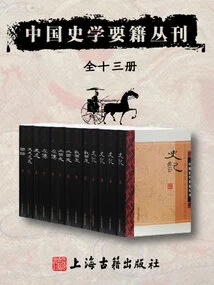
中国史学要籍丛刊(全十三册)
(han) Sima Qian (warring States) Zuo Qiuming (han) Liu Xiang (western Jin) Chen Shou (tang) Liu Zhiji (qing) Zhang Xuecheng, Etc.
"Chinese Historical Essentials Series" (13 volumes in total) includes seven important historical works: "Historical Records", "Three Kingdoms", "Zuo Zhuan", "Guoyu", "Warring States Policy", "Shi Tong" and "Wen Shi Tong Yi". The books selected in the series are all outstanding representative works of traditional Chinese historiography and can be regarded as "must-read textbooks" for understanding Chinese history.
"Chinese Historical Essentials Series" (13 volumes in total) includes seven important historical works: "Historical Records", "Three Kingdoms", "Zuo Zhuan", "Guoyu", "Warring States Policy", "Shi Tong" and "Wen Shi Tong Yi". The books selected in the series are all outstanding representative works of traditional Chinese historiography and can be regarded as "must-read textbooks" for understanding Chinese history.
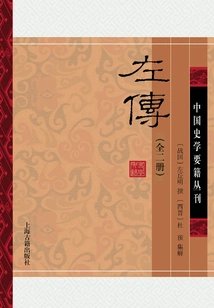
Left Pass
History左传
(warring States) Zuo Qiuming (western Jin) Du Yuji Jiji
"Chun Qiu Zuo Shi Zhuan" mainly explains the "Spring and Autumn" with historical facts. It started from the first year of Lu Yin (722 BC) and ended in the 14th year of Lu Daogong (454 BC). It is 27 years longer than "Spring and Autumn". It mainly records events and also contains remarks. It comprehensively reflects the social and historical situation at that time. It is not only an important Confucian classic, but also the first complete chronological history book in China. It also has high achievements in literature.
"Chun Qiu Zuo Shi Zhuan" mainly explains the "Spring and Autumn" with historical facts. It started from the first year of Lu Yin (722 BC) and ended in the 14th year of Lu Daogong (454 BC). It is 27 years longer than "Spring and Autumn". It mainly records events and also contains remarks. It comprehensively reflects the social and historical situation at that time. It is not only an important Confucian classic, but also the first complete chronological history book in China. It also has high achievements in literature.
中国通史(第四册)
Dongfang Wenrui
This set of books is divided into four volumes, telling the historical development process of the Chinese nation in stages, and showing a historical picture of the descendants of the Yan and Huang Dynasties constantly striving for self-improvement from all angles.
This set of books is divided into four volumes, telling the historical development process of the Chinese nation in stages, and showing a historical picture of the descendants of the Yan and Huang Dynasties constantly striving for self-improvement from all angles.
中国通史(第三册)
Dongfang Wenrui
This set of books is divided into four volumes, telling the historical development process of the Chinese nation in stages, and showing a historical picture of the descendants of the Yan and Huang Dynasties constantly striving for self-improvement from all angles.
This set of books is divided into four volumes, telling the historical development process of the Chinese nation in stages, and showing a historical picture of the descendants of the Yan and Huang Dynasties constantly striving for self-improvement from all angles.
中国通史(第一册)
Dongfang Wenrui
This set of books is divided into four volumes, telling the historical development process of the Chinese nation in stages, and showing a historical picture of the descendants of the Yan and Huang Dynasties constantly striving for self-improvement from all angles.
This set of books is divided into four volumes, telling the historical development process of the Chinese nation in stages, and showing a historical picture of the descendants of the Yan and Huang Dynasties constantly striving for self-improvement from all angles.
中华上下五千年(第四册)
Yezi
After the Opium War, foreign capitalist countries stepped up their aggression against China. In order to pay compensation, the Qing government stepped up its efforts to plunder the people. In the ten years after the war, the people's burden more than doubled compared to before the war, and thousands of working people were forced to go bankrupt and sell their children and daughters. In order to survive, the people took up arms one after another to resist the exploitation and oppression of the ruling class. In 1851, large and small uprisings throughout the southern provinces finally merged into a powerful revolutionary torrent - the Taiping Rebellion. The main figure who led this great uprising was the outstanding peasant leader Hong Xiuquan.
After the Opium War, foreign capitalist countries stepped up their aggression against China. In order to pay compensation, the Qing government stepped up its efforts to plunder the people. In the ten years after the war, the people's burden more than doubled compared to before the war, and thousands of working people were forced to go bankrupt and sell their children and daughters. In order to survive, the people took up arms one after another to resist the exploitation and oppression of the ruling class. In 1851, large and small uprisings throughout the southern provinces finally merged into a powerful revolutionary torrent - the Taiping Rebellion. The main figure who led this great uprising was the outstanding peasant leader Hong Xiuquan.
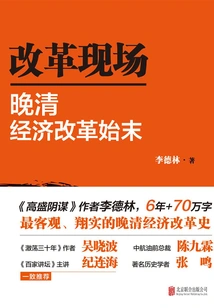
改革现场:晚清经济改革始末
Li Delin
In 1862, the economic reforms of the late Qing Dynasty kicked off. In the process of the struggle for power between the ruling group and the Han armed groups, two major military projects, Mawei Shipyard and Jiangnan Manufacturing Administration, were launched. The operational efficiency of government-run state-owned enterprises was extremely low. During an anti-corruption campaign against state-owned enterprises that began in 1872, the door to reform was opened to private capital. Since then, 1872 has become a starting point for the reform from state-owned to private and partial to overall. It is also the starting point for the late Qing Dynasty to lay hidden dangers for itself. The powerful official faction headed by Yi , Zeng Guofan, Li Hongzhang, Zuo Zongtang, Yuan Shikai, and Zhang Zhidong became the protagonists of the reform, and the old and new businessmen headed by Tang Tingshu, Hu Xueyan, Sheng Xuanhuai, and Zheng Guanying became the vanguard of the reform. The battle between the imperial court and businessmen, and the years of confrontation between the state and the people, and the people and the state, eventually forced economic reform to force political reform. In a constitutional reform promoted by commercial forces, the late Qing Dynasty came to an end in 1911.
In 1862, the economic reforms of the late Qing Dynasty kicked off. In the process of the struggle for power between the ruling group and the Han armed groups, two major military projects, Mawei Shipyard and Jiangnan Manufacturing Administration, were launched. The operational efficiency of government-run state-owned enterprises was extremely low. During an anti-corruption campaign against state-owned enterprises that began in 1872, the door to reform was opened to private capital. Since then, 1872 has become a starting point for the reform from state-owned to private and partial to overall. It is also the starting point for the late Qing Dynasty to lay hidden dangers for itself. The powerful official faction headed by Yi , Zeng Guofan, Li Hongzhang, Zuo Zongtang, Yuan Shikai, and Zhang Zhidong became the protagonists of the reform, and the old and new businessmen headed by Tang Tingshu, Hu Xueyan, Sheng Xuanhuai, and Zheng Guanying became the vanguard of the reform. The battle between the imperial court and businessmen, and the years of confrontation between the state and the people, and the people and the state, eventually forced economic reform to force political reform. In a constitutional reform promoted by commercial forces, the late Qing Dynasty came to an end in 1911.
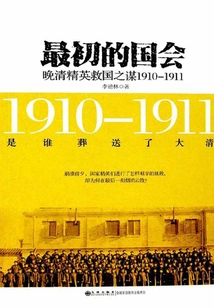
最初的国会:晚清精英救国之谋1910-1911
Li Delin
This book tells the story of the arduous rescue effort carried out by the national elite on the eve of the collapse of the Qing Dynasty, but why did it disappear at the last moment? From 1910 to 1911, the Manchu Qing Zizhengyuan held a meeting to prepare for amending the constitution and promoting the monarchy. However, the results disappointed the people. In despair, the constitutionalists changed course and moved towards a republic. Although the Manchu Qing regime eventually collapsed, the top-level design and governance ideals of the elites of the Zizhengyuan in many aspects such as politics, education, and economy left a rich legacy that China could learn from later on.
This book tells the story of the arduous rescue effort carried out by the national elite on the eve of the collapse of the Qing Dynasty, but why did it disappear at the last moment? From 1910 to 1911, the Manchu Qing Zizhengyuan held a meeting to prepare for amending the constitution and promoting the monarchy. However, the results disappointed the people. In despair, the constitutionalists changed course and moved towards a republic. Although the Manchu Qing regime eventually collapsed, the top-level design and governance ideals of the elites of the Zizhengyuan in many aspects such as politics, education, and economy left a rich legacy that China could learn from later on.
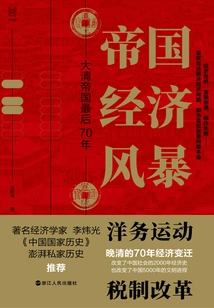
帝国经济风暴:大清帝国最后70年
Zhang Xinran
The financial economy is the lifeblood of a country and has a huge impact on the direction of history. The economy is also related to everyone's food, clothing, housing and transportation. The public has needs and desires to understand economic relationships. However, the current economic books are mainly academic monographs, which are difficult to attract readers, or they are unofficial historical legends, making it difficult for readers to distinguish between true and false. As a feudal dynasty closest to us today, the late Qing Dynasty was especially the hardest hit area for misunderstandings. The market lacks systematic, in-depth and interesting works, so the author does not make superficial assumptions and hopes to write a popular book that is both rigorous and interesting. The 70 years from 1840 to 1911 were a period of great change in Chinese history. This book takes the financial economy of this period as the starting point for research, looks at the changes in the financial economy of the late Qing Dynasty from many aspects, and shows the various attempts and changes made by an ancient feudal dynasty when faced with the impact of new economic factors.
The financial economy is the lifeblood of a country and has a huge impact on the direction of history. The economy is also related to everyone's food, clothing, housing and transportation. The public has needs and desires to understand economic relationships. However, the current economic books are mainly academic monographs, which are difficult to attract readers, or they are unofficial historical legends, making it difficult for readers to distinguish between true and false. As a feudal dynasty closest to us today, the late Qing Dynasty was especially the hardest hit area for misunderstandings. The market lacks systematic, in-depth and interesting works, so the author does not make superficial assumptions and hopes to write a popular book that is both rigorous and interesting. The 70 years from 1840 to 1911 were a period of great change in Chinese history. This book takes the financial economy of this period as the starting point for research, looks at the changes in the financial economy of the late Qing Dynasty from many aspects, and shows the various attempts and changes made by an ancient feudal dynasty when faced with the impact of new economic factors.
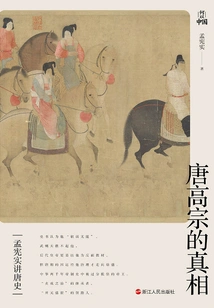
孟宪实讲唐史·唐高宗的真相
Meng Xianshi
Most of the handed down history books believe that Tang Gaozong was "weak and incompetent", but they cannot explain why Gaozong's era had the vastest territory in the Tang Dynasty, and why the "Kaiyuan Age" could come after Gaozong. In fact, Emperor Gaozong of the Tang Dynasty was round on the outside and square on the inside, bold and careful, and he dared to think and act. Without the development, consolidation, and paving the way in the Gaozong era, the "Reign of Zhenguan" would be just a short-lived climax, and the "Kaiyuan Prosperity" would become water without a source. Whether measured by the traditional political thought of "the monarch does nothing" or the actual achievements achieved, Gaozong was a successful emperor. The reason why history books describe Tang Gaozong in this way is simply because Wu Zetian, whom he trained, replaced "Li Tang" with "Wu Zhou". In order to prevent the recurrence of the Queen's dictatorship, later historians must have historical facts that can serve as a warning. Therefore, they would rather "retarded" Tang Gaozong at the expense of historical truth.
Most of the handed down history books believe that Tang Gaozong was "weak and incompetent", but they cannot explain why Gaozong's era had the vastest territory in the Tang Dynasty, and why the "Kaiyuan Age" could come after Gaozong. In fact, Emperor Gaozong of the Tang Dynasty was round on the outside and square on the inside, bold and careful, and he dared to think and act. Without the development, consolidation, and paving the way in the Gaozong era, the "Reign of Zhenguan" would be just a short-lived climax, and the "Kaiyuan Prosperity" would become water without a source. Whether measured by the traditional political thought of "the monarch does nothing" or the actual achievements achieved, Gaozong was a successful emperor. The reason why history books describe Tang Gaozong in this way is simply because Wu Zetian, whom he trained, replaced "Li Tang" with "Wu Zhou". In order to prevent the recurrence of the Queen's dictatorship, later historians must have historical facts that can serve as a warning. Therefore, they would rather "retarded" Tang Gaozong at the expense of historical truth.
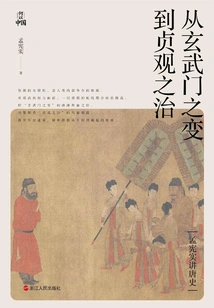
孟宪实讲唐史·从玄武门之变到贞观之治
Meng Xianshi
The "Xuanwumen Incident" was an extremely bloody and cruel palace coup in Chinese history. In front of Xuanwu Gate, Li Shimin made a precise layout and executed decisively, shooting an arrow through his brother's throat. In ancient China, there are countless incidents of violent seizure of political power. However, among those who violently seize power, few can achieve the brilliant results that Li Shimin did later. The "Government of Zhenguan" has been talked about by historians since ancient times. During his twenty-three-year reign, Emperor Taizong of the Tang Dynasty was good at accepting advice and working hard to govern. He not only created a civilized political environment and a harmonious relationship between monarchs and ministers in the monarchy era, but also laid the foundation of the Tang Dynasty's three-hundred-year-old system. He also became a model for the Ming Dynasty in China for the next thousand years. The birth and development of the Zhenguan era were inseparable from Taizong's wisdom. But the word "wise" alone is not enough to explain all the reasons why Taizong was able to create such brilliant achievements, let alone the bloody killings in front of Xuanwu Gate. From the Xuanwumen incident to the Zhenguan period, what did Li Shimin experience?
The "Xuanwumen Incident" was an extremely bloody and cruel palace coup in Chinese history. In front of Xuanwu Gate, Li Shimin made a precise layout and executed decisively, shooting an arrow through his brother's throat. In ancient China, there are countless incidents of violent seizure of political power. However, among those who violently seize power, few can achieve the brilliant results that Li Shimin did later. The "Government of Zhenguan" has been talked about by historians since ancient times. During his twenty-three-year reign, Emperor Taizong of the Tang Dynasty was good at accepting advice and working hard to govern. He not only created a civilized political environment and a harmonious relationship between monarchs and ministers in the monarchy era, but also laid the foundation of the Tang Dynasty's three-hundred-year-old system. He also became a model for the Ming Dynasty in China for the next thousand years. The birth and development of the Zhenguan era were inseparable from Taizong's wisdom. But the word "wise" alone is not enough to explain all the reasons why Taizong was able to create such brilliant achievements, let alone the bloody killings in front of Xuanwu Gate. From the Xuanwumen incident to the Zhenguan period, what did Li Shimin experience?
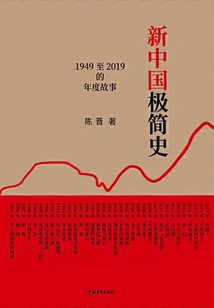
新中国极简史:1949至2019的年度故事
Chen Jin
This book takes the form of a chronology, focuses on the theme words of the year, and uses storytelling and history as a narrative method to panoramicly depict the great process of the 70th anniversary of the founding of New China. The book highlights the great achievements of the Communist Party of China in leading the Chinese people in building a socialist country with Chinese characteristics, vividly demonstrates the earth-shaking development and changes of Chinese society over the past 70 years, and especially gives a colorful description of the historic achievements made in the past seven years. This book uses a large number of vivid examples and details to confirm and explain the internal logic and historical inevitability of the construction and development of New China. The author has long been engaged in the study of the history of the Communist Party of China and its leaders. He has the unique advantage of having a broad vision, clear position, precise evaluation, and appropriate narrative to grasp the historical process and development trend of the 70 years of New China. The whole book has a novel and original perspective and a lively form. The author breaks the established pattern of conventional historical narration, and through personalized expression, has a strong sense of substitution, participation and appeal. This book is a rare and vivid textbook for the education of party history and national history in recent years.
This book takes the form of a chronology, focuses on the theme words of the year, and uses storytelling and history as a narrative method to panoramicly depict the great process of the 70th anniversary of the founding of New China. The book highlights the great achievements of the Communist Party of China in leading the Chinese people in building a socialist country with Chinese characteristics, vividly demonstrates the earth-shaking development and changes of Chinese society over the past 70 years, and especially gives a colorful description of the historic achievements made in the past seven years. This book uses a large number of vivid examples and details to confirm and explain the internal logic and historical inevitability of the construction and development of New China. The author has long been engaged in the study of the history of the Communist Party of China and its leaders. He has the unique advantage of having a broad vision, clear position, precise evaluation, and appropriate narrative to grasp the historical process and development trend of the 70 years of New China. The whole book has a novel and original perspective and a lively form. The author breaks the established pattern of conventional historical narration, and through personalized expression, has a strong sense of substitution, participation and appeal. This book is a rare and vivid textbook for the education of party history and national history in recent years.
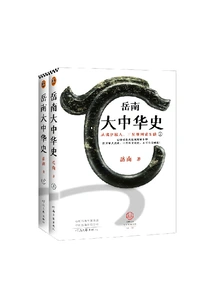
岳南大中华史
Yuenan
12 major archaeological discoveries bear witness to China's millions of years of human history, 10,000 years of cultural history, and 5,000 years of civilization history! Yue Nan, the author of "Going South to the North" is a blockbuster work. The discovery of the skull of "Peking Man" traces the history of mankind on the land of China to 500,000 years ago. The discovery of the Yangshao Culture has dispelled the fallacy that China did not have a Stone Age. The archaeological discovery of oracle bones at the Yin Ruins has provided China with credible historical evidence. Going back to the Shang Dynasty, the discovery of Sanxingdui helped us get rid of the misunderstanding that Chinese civilization only originated in the Central Plains. The discovery of the Mawangdui Han Tomb gave us a glimpse of the luxurious daily life of the Han Dynasty nobles. Open this book and read the thrilling archaeological discoveries again and again to rebuild our understanding of Chinese civilization!
12 major archaeological discoveries bear witness to China's millions of years of human history, 10,000 years of cultural history, and 5,000 years of civilization history! Yue Nan, the author of "Going South to the North" is a blockbuster work. The discovery of the skull of "Peking Man" traces the history of mankind on the land of China to 500,000 years ago. The discovery of the Yangshao Culture has dispelled the fallacy that China did not have a Stone Age. The archaeological discovery of oracle bones at the Yin Ruins has provided China with credible historical evidence. Going back to the Shang Dynasty, the discovery of Sanxingdui helped us get rid of the misunderstanding that Chinese civilization only originated in the Central Plains. The discovery of the Mawangdui Han Tomb gave us a glimpse of the luxurious daily life of the Han Dynasty nobles. Open this book and read the thrilling archaeological discoveries again and again to rebuild our understanding of Chinese civilization!
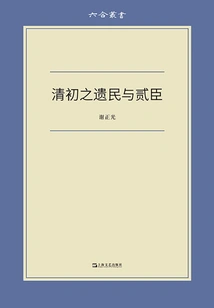
清初之遗民与贰臣
Xie Zhengguang
Historically in China, whenever dynasties changed, the origin of scholars became the biggest ethical issue for intellectuals, and it also became a focus of discussion among intellectuals in the future. As far as recent history is concerned, the choices of scholars in the late Ming and early Qing dynasties still affect people today. However, those who have always discussed this issue have always maintained that the boundaries between the remnants and the second ministers are clearly defined and that fire and water are incompatible. However, Xie Zhengguang pointed out that this is not a historical fact. In the early Qing Dynasty, those who emphasized the distinction between Yi and Xia, such as Gu Yan, also had many contacts with the ministers of the new dynasty. The articles included in this book abandon the one-way discussion and interpretation of "political ethics" and try to examine the social relations, academic directions, daily ethics, temperament and interests between the survivors and the ministers, etc., And deduce the situation and the reasons for the discussion, presenting the literati circle and historical reality of the early Qing Dynasty that are far more complex than generally recognized. This book is Xie Zhengguang's second collection of academic essays after "The Record of Stopping Clouds".
Historically in China, whenever dynasties changed, the origin of scholars became the biggest ethical issue for intellectuals, and it also became a focus of discussion among intellectuals in the future. As far as recent history is concerned, the choices of scholars in the late Ming and early Qing dynasties still affect people today. However, those who have always discussed this issue have always maintained that the boundaries between the remnants and the second ministers are clearly defined and that fire and water are incompatible. However, Xie Zhengguang pointed out that this is not a historical fact. In the early Qing Dynasty, those who emphasized the distinction between Yi and Xia, such as Gu Yan, also had many contacts with the ministers of the new dynasty. The articles included in this book abandon the one-way discussion and interpretation of "political ethics" and try to examine the social relations, academic directions, daily ethics, temperament and interests between the survivors and the ministers, etc., And deduce the situation and the reasons for the discussion, presenting the literati circle and historical reality of the early Qing Dynasty that are far more complex than generally recognized. This book is Xie Zhengguang's second collection of academic essays after "The Record of Stopping Clouds".
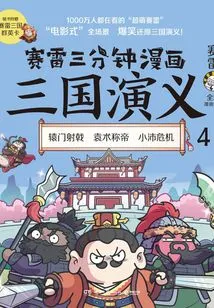
赛雷三分钟漫画三国演义4
Saire
"Super Cute Sai Lei", watched by 10 million people, took three years to create and carefully drew a full-color comic Romance of the Three Kingdoms! Full movie-style scenes, hilarious restoration of the Romance of the Three Kingdoms! Super three-dimensional, super vivid, super-expanding knowledge! "The Romance of the Three Kingdoms" is a very important chapter-length historical novel in ancient China. As Sai Lei, who specializes in three-dimensional vividness, he wanted to create such a three-dimensional and vivid work that presents the history of the Three Kingdoms in all scenes. The fourth book mainly focuses on classic scenes such as Sun Lang defeating Yan Baihu, pacifying Jiangdong, shooting a halberd at the gate, Yuan Shu proclaiming himself emperor, and Xiaopei's crisis. It vividly reproduces the scenes of the Three Kingdoms, allowing readers to understand the history of the Three Kingdoms while laughing. The most outstanding thing about it is that it uses the humorous style of Sai Lei comics to tell the history of the Three Kingdoms according to chronological clues, allowing readers to understand the development of the history of the Three Kingdoms while laughing.
"Super Cute Sai Lei", watched by 10 million people, took three years to create and carefully drew a full-color comic Romance of the Three Kingdoms! Full movie-style scenes, hilarious restoration of the Romance of the Three Kingdoms! Super three-dimensional, super vivid, super-expanding knowledge! "The Romance of the Three Kingdoms" is a very important chapter-length historical novel in ancient China. As Sai Lei, who specializes in three-dimensional vividness, he wanted to create such a three-dimensional and vivid work that presents the history of the Three Kingdoms in all scenes. The fourth book mainly focuses on classic scenes such as Sun Lang defeating Yan Baihu, pacifying Jiangdong, shooting a halberd at the gate, Yuan Shu proclaiming himself emperor, and Xiaopei's crisis. It vividly reproduces the scenes of the Three Kingdoms, allowing readers to understand the history of the Three Kingdoms while laughing. The most outstanding thing about it is that it uses the humorous style of Sai Lei comics to tell the history of the Three Kingdoms according to chronological clues, allowing readers to understand the development of the history of the Three Kingdoms while laughing.
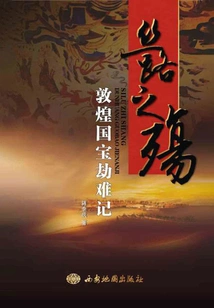
丝路之殇:敦煌国宝劫难记
Jiang Jicheng
In 1900, when the Eight-Power Allied Forces invaded and the country was in danger, a Buddhist scripture cave containing tens of thousands of scrolls was discovered in the Mogao Grottoes of Dunhuang on the ancient Silk Road. The Qing Dynasty was unable to protect it. The Western powers heard the news and started to rush to explore, investigate, and archeology. They smuggled into Dunhuang under the guise, and started scenes of shocking cultural plunder... In the long years since they witnessed foreign powers taking advantage of national treasures, the people of Dunhuang have gone from submission to resistance, loving their hometown and protecting caves, and composing tear-jerking songs of resistance with their blood and lives...
In 1900, when the Eight-Power Allied Forces invaded and the country was in danger, a Buddhist scripture cave containing tens of thousands of scrolls was discovered in the Mogao Grottoes of Dunhuang on the ancient Silk Road. The Qing Dynasty was unable to protect it. The Western powers heard the news and started to rush to explore, investigate, and archeology. They smuggled into Dunhuang under the guise, and started scenes of shocking cultural plunder... In the long years since they witnessed foreign powers taking advantage of national treasures, the people of Dunhuang have gone from submission to resistance, loving their hometown and protecting caves, and composing tear-jerking songs of resistance with their blood and lives...
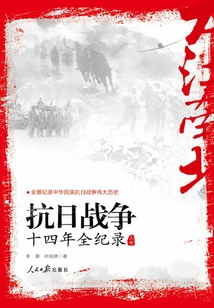
From North to South: a Complete Record of the Fourteen Years of the Anti-japanese War (part 1)
History大江南北:抗日战争十四年全纪录(上)
Li Rong Ye Chenglin
This book begins with the September 18th Incident, which was the prelude to Japan's invasion of China, and ends with Japan's defeat and surrender on August 15, 1945. It uses an academic perspective, popular writing style, and flexible use of archives and memoirs to fully reproduce the fourteen-year course of the Anti-Japanese War. Among them, the discussion of the history of the Northeast Anti-Japanese War and the casualties and property losses caused to China during the Japanese invasion of China is even more detailed and rich, supplementing the deficiencies of previous research and showing the author's professional perspective.
This book begins with the September 18th Incident, which was the prelude to Japan's invasion of China, and ends with Japan's defeat and surrender on August 15, 1945. It uses an academic perspective, popular writing style, and flexible use of archives and memoirs to fully reproduce the fourteen-year course of the Anti-Japanese War. Among them, the discussion of the history of the Northeast Anti-Japanese War and the casualties and property losses caused to China during the Japanese invasion of China is even more detailed and rich, supplementing the deficiencies of previous research and showing the author's professional perspective.
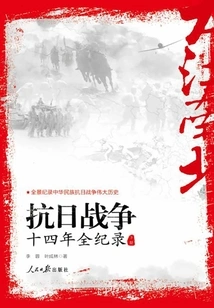
From North to South: a Complete Record of the Fourteen Years of the Anti-japanese War (part 2)
History大江南北:抗日战争十四年全纪录(下)
Li Rong Ye Chenglin
This book begins with the September 18th Incident, which was the prelude to Japan's invasion of China, and ends with Japan's defeat and surrender on August 15, 1945. It uses an academic perspective, popular writing style, and flexible use of archives and memoirs to fully reproduce the fourteen-year course of the Anti-Japanese War. Among them, the discussion of the history of the Northeast Anti-Japanese War and the casualties and property losses caused to China during the Japanese invasion of China is even more detailed and rich, supplementing the deficiencies of previous research and showing the author's professional perspective.
This book begins with the September 18th Incident, which was the prelude to Japan's invasion of China, and ends with Japan's defeat and surrender on August 15, 1945. It uses an academic perspective, popular writing style, and flexible use of archives and memoirs to fully reproduce the fourteen-year course of the Anti-Japanese War. Among them, the discussion of the history of the Northeast Anti-Japanese War and the casualties and property losses caused to China during the Japanese invasion of China is even more detailed and rich, supplementing the deficiencies of previous research and showing the author's professional perspective.
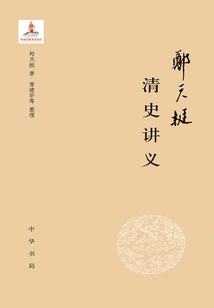
郑天挺清史讲义
Zheng Tianting, Compiled By Chang Jianhua And Others
Mr. Zheng Tianting is an outstanding historian and expert on Qing history in my country in the 20th century. This handout is compiled based on the teaching cards and handouts accumulated by Zheng Tianting when he taught Qing history at Southwest Associated University, Peking University, and Nankai University from the 1930s to the 1970s. It reflects It contains Zheng Tianting's research results on Qing Dynasty politics, economy, military, culture, people, frontier history and geography, ethnic relations and other fields. It also reflects Zheng Tianting's in-depth thinking on history teaching. It is very rich in content, both informative and readable, and is a work of high academic value. The main organizer of this book is Professor Chang Jianhua from the History Department of Nankai University. In addition to reading and typing the manuscripts, he also carefully classified and rearranged them, and conducted detailed checks on the documents cited in the original manuscripts, which enhanced the readability and systematicness of the book. The book consists of three volumes, divided into twenty-three topics according to the content, and the remaining notes, outlines, excerpts, etc. Are included as appendices.
Mr. Zheng Tianting is an outstanding historian and expert on Qing history in my country in the 20th century. This handout is compiled based on the teaching cards and handouts accumulated by Zheng Tianting when he taught Qing history at Southwest Associated University, Peking University, and Nankai University from the 1930s to the 1970s. It reflects It contains Zheng Tianting's research results on Qing Dynasty politics, economy, military, culture, people, frontier history and geography, ethnic relations and other fields. It also reflects Zheng Tianting's in-depth thinking on history teaching. It is very rich in content, both informative and readable, and is a work of high academic value. The main organizer of this book is Professor Chang Jianhua from the History Department of Nankai University. In addition to reading and typing the manuscripts, he also carefully classified and rearranged them, and conducted detailed checks on the documents cited in the original manuscripts, which enhanced the readability and systematicness of the book. The book consists of three volumes, divided into twenty-three topics according to the content, and the remaining notes, outlines, excerpts, etc. Are included as appendices.
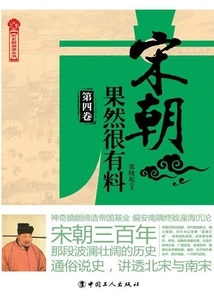
宋朝果然很有料(第四卷)
Zhang Xiaomin
This book mainly tells about some political and foreign policies during the reign of Song Zhenzong Zhao Heng. In this volume, it is mainly written that after the "Chanyuan Alliance", Song Zhenzong became politically depressed, indulged in enshrining Zen, engaged in superstitious activities, and delayed political affairs, which led to the villain in power in the later period of his rule and the crisis in the prosperous age. This volume ends with the death of Song Zhenzong.
This book mainly tells about some political and foreign policies during the reign of Song Zhenzong Zhao Heng. In this volume, it is mainly written that after the "Chanyuan Alliance", Song Zhenzong became politically depressed, indulged in enshrining Zen, engaged in superstitious activities, and delayed political affairs, which led to the villain in power in the later period of his rule and the crisis in the prosperous age. This volume ends with the death of Song Zhenzong.
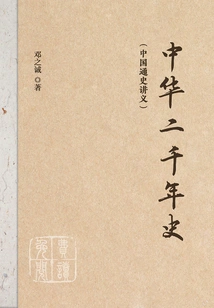
中华二千年史(中国通史讲义)
Deng Zhicheng
The representative work of the famous historian Mr. Deng Zhicheng. It was originally a lecture notes for teaching the general history of China at the History Department of Peking University, including four parts: "Qin and Han Three Kingdoms", "Two Jin and Southern and Northern Dynasties", "Sui, Tang and Five Dynasties" and "Song, Liao, Jin, Xia and Yuan". After liberation, the Ming and Qing parts were supplemented and became a magnificent work of five volumes and nine volumes. It is a very unique historical work that reveals the reasons for the rise and fall of the Chinese nation's chaos.
The representative work of the famous historian Mr. Deng Zhicheng. It was originally a lecture notes for teaching the general history of China at the History Department of Peking University, including four parts: "Qin and Han Three Kingdoms", "Two Jin and Southern and Northern Dynasties", "Sui, Tang and Five Dynasties" and "Song, Liao, Jin, Xia and Yuan". After liberation, the Ming and Qing parts were supplemented and became a magnificent work of five volumes and nine volumes. It is a very unique historical work that reveals the reasons for the rise and fall of the Chinese nation's chaos.
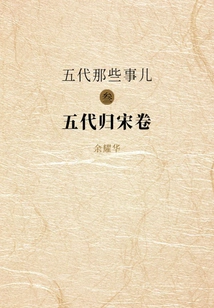
五代那些事儿(叁):五代归宋卷
Yu Yaohua
The book begins with Liu Zhiyuan, the great ancestor of the Later Han Dynasty, ascending the throne, and ends with Emperor Gong of the Later Zhou Dynasty, Chai Zongxun was deposed, Zhao Kuangyin conquered the world, and the Five Dynasties returned to the Song Dynasty. The book objectively describes Liu Zhiyuan, Guo Wei, Chai Rong, Zhao Kuangyin and other typical figures and events in history, recreating the troubled times of the Five Dynasties. The work integrates knowledge, authenticity and interest. The language is humorous, sharp and full of vitality. It is a good popular reading book on the history of the Five Dynasties.
The book begins with Liu Zhiyuan, the great ancestor of the Later Han Dynasty, ascending the throne, and ends with Emperor Gong of the Later Zhou Dynasty, Chai Zongxun was deposed, Zhao Kuangyin conquered the world, and the Five Dynasties returned to the Song Dynasty. The book objectively describes Liu Zhiyuan, Guo Wei, Chai Rong, Zhao Kuangyin and other typical figures and events in history, recreating the troubled times of the Five Dynasties. The work integrates knowledge, authenticity and interest. The language is humorous, sharp and full of vitality. It is a good popular reading book on the history of the Five Dynasties.
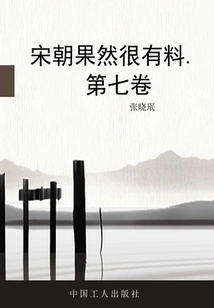
宋朝果然很有料·第七卷
Zhang Xiaomin
This book mainly covers events during the reigns of Song Shenzong, Song Huizong and Song Qinzong. In the last era of the Northern Song Dynasty, people such as Song Shenzong Zhao Xiang, Wang Anshi, Sima Guang, Song Zhezong Zhao Xu, Su Shi Zhangchun, Song Huizong Zhao Ji, and Cai Jingtong Guan successively stepped onto the stage of history and staged the last events of the Northern Song Dynasty.
This book mainly covers events during the reigns of Song Shenzong, Song Huizong and Song Qinzong. In the last era of the Northern Song Dynasty, people such as Song Shenzong Zhao Xiang, Wang Anshi, Sima Guang, Song Zhezong Zhao Xu, Su Shi Zhangchun, Song Huizong Zhao Ji, and Cai Jingtong Guan successively stepped onto the stage of history and staged the last events of the Northern Song Dynasty.
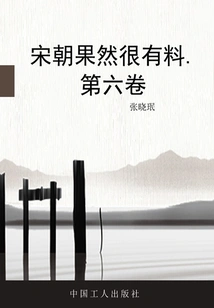
宋朝果然很有料·第六卷
Zhang Xiaomin
This book mainly tells that after Song Renzong came to the throne, Fan Zhongyan, Ouyang Xiu, Su Shi, Bao Zheng and other good officials and generals successively stepped onto the stage of history and jointly wrote the splendid epic of the empire. However, during Renzong's reign, border wars broke out again - the invasion of Xixia and the game between Song and Liao. The use of troops for many years resulted in "three redundancies and three expenses" for the imperial court. In this context, the Qingli New Deal... Tells history in a popular way and is humorous; the author writes about the Song Dynasty and also comments on some human nature. History is changing, but human nature remains unchanged.
This book mainly tells that after Song Renzong came to the throne, Fan Zhongyan, Ouyang Xiu, Su Shi, Bao Zheng and other good officials and generals successively stepped onto the stage of history and jointly wrote the splendid epic of the empire. However, during Renzong's reign, border wars broke out again - the invasion of Xixia and the game between Song and Liao. The use of troops for many years resulted in "three redundancies and three expenses" for the imperial court. In this context, the Qingli New Deal... Tells history in a popular way and is humorous; the author writes about the Song Dynasty and also comments on some human nature. History is changing, but human nature remains unchanged.
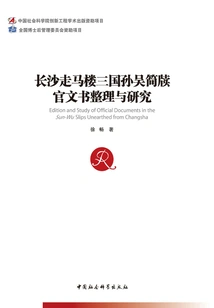
长沙走马楼三国孙吴简牍官文书整理与研究
Xu Chang
During the Qin, Han, Wei and Jin dynasties, the administration of slips and slips was an effective means for the state to maintain the operation of the bureaucracy and control at the grassroots level. With the help of unearthed slips since the 20th century, the form of slips and slips at each administrative level in the Qin and Han Dynasties has been presented. Due to insufficient documentation, academic circles know very little about local administration and official document forms during the Three Kingdoms period. This book uses the largest batch of documents from the Three Kingdoms discovered to date (the bamboo slips of Sun Wu unearthed in Changsha in 1996) to explore the official document form and document administration reality of Sun Wu's Jiangnan county-level institutions (Linxiang Marquis). Because the bamboo slips were disturbed when they were unearthed, this book uses paleographic methods to explore new methods, classify and integrate bamboo and wood official documents, and restore the official documents. After restoring the original appearance of the official documents, combined with the books, the nature and administrative level of the Wu bamboo slips are analyzed, and it is pointed out that they are Linxiang Marquis State archives group; analyze the types of domestic and external upward and downward documents of the Marquis to reveal the operating mechanism of county-level official documents; integrate the official documents of the Marquis and official documents to restore the regular and irregular affairs processing procedures of the Marquis; and use the above work to assemble the administrative blueprint of county-level documents in the Three Kingdoms.
During the Qin, Han, Wei and Jin dynasties, the administration of slips and slips was an effective means for the state to maintain the operation of the bureaucracy and control at the grassroots level. With the help of unearthed slips since the 20th century, the form of slips and slips at each administrative level in the Qin and Han Dynasties has been presented. Due to insufficient documentation, academic circles know very little about local administration and official document forms during the Three Kingdoms period. This book uses the largest batch of documents from the Three Kingdoms discovered to date (the bamboo slips of Sun Wu unearthed in Changsha in 1996) to explore the official document form and document administration reality of Sun Wu's Jiangnan county-level institutions (Linxiang Marquis). Because the bamboo slips were disturbed when they were unearthed, this book uses paleographic methods to explore new methods, classify and integrate bamboo and wood official documents, and restore the official documents. After restoring the original appearance of the official documents, combined with the books, the nature and administrative level of the Wu bamboo slips are analyzed, and it is pointed out that they are Linxiang Marquis State archives group; analyze the types of domestic and external upward and downward documents of the Marquis to reveal the operating mechanism of county-level official documents; integrate the official documents of the Marquis and official documents to restore the regular and irregular affairs processing procedures of the Marquis; and use the above work to assemble the administrative blueprint of county-level documents in the Three Kingdoms.
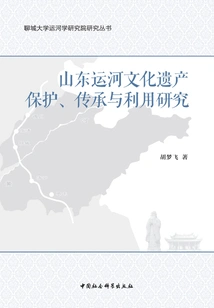
山东运河文化遗产保护、传承与利用研究
Hu Mengfei
This book is one of the research series of the Institute of Canal Studies of Liaocheng University. It takes Shandong canal cultural heritage as the research object. While discussing and sorting out its connotation, characteristics and value, it also analyzes the dilemmas and problems faced by heritage protection. On this basis, it summarizes and summarizes the specific paths for the protection and inheritance of canal cultural heritage, and explores its development and utilization. Strategies and methods are expected to help improve people's understanding of the canal cultural heritage and better realize the rational, scientific and humanized use of the canal cultural heritage, thereby helping to enhance the image and urban taste of Shandong's canal city, enhance the attraction of Shandong's cultural tourism resources, and better serve the economic, social and cultural development of the areas along the canal.
This book is one of the research series of the Institute of Canal Studies of Liaocheng University. It takes Shandong canal cultural heritage as the research object. While discussing and sorting out its connotation, characteristics and value, it also analyzes the dilemmas and problems faced by heritage protection. On this basis, it summarizes and summarizes the specific paths for the protection and inheritance of canal cultural heritage, and explores its development and utilization. Strategies and methods are expected to help improve people's understanding of the canal cultural heritage and better realize the rational, scientific and humanized use of the canal cultural heritage, thereby helping to enhance the image and urban taste of Shandong's canal city, enhance the attraction of Shandong's cultural tourism resources, and better serve the economic, social and cultural development of the areas along the canal.
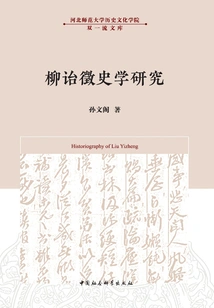
柳诒徵史学研究
Sun Wenge
This book mainly takes Liu Yizheng and his historiography as the research object, and conducts research and discussion around Liu Yizheng's cultural views, historical thoughts, historical methods, historical research achievements, Liu Yizheng's relationship with related historical groups, and his relationship with other modern scholars. The main feature of this book is a case study of Liu Yizheng. Liu Yizheng is a well-known historian, philologist, and educator in modern China. He has been active in China's history and education circles. He began to rise to prominence in the early 20th century and successively taught at Nanjing Jiangnan College, Business School, and Liangjiang Normal University. He taught at Xuetang and Nanjing Higher Normal School, and later served as the director of the Jiangsu Chinese Studies Library until his retirement in 1949. He was appointed by the Ministry of Education of the Republic of China as a professor and member of the Academic Council. In 1947, he was elected as an academician of the Academia Sinica. As a famous historian, Liu Yizheng had many famous scholars and masters from his disciples, and many modern historians and cultural masters had close contacts with him. This book attempts to fully demonstrate Liu Yizheng's academic status in the modern history.
This book mainly takes Liu Yizheng and his historiography as the research object, and conducts research and discussion around Liu Yizheng's cultural views, historical thoughts, historical methods, historical research achievements, Liu Yizheng's relationship with related historical groups, and his relationship with other modern scholars. The main feature of this book is a case study of Liu Yizheng. Liu Yizheng is a well-known historian, philologist, and educator in modern China. He has been active in China's history and education circles. He began to rise to prominence in the early 20th century and successively taught at Nanjing Jiangnan College, Business School, and Liangjiang Normal University. He taught at Xuetang and Nanjing Higher Normal School, and later served as the director of the Jiangsu Chinese Studies Library until his retirement in 1949. He was appointed by the Ministry of Education of the Republic of China as a professor and member of the Academic Council. In 1947, he was elected as an academician of the Academia Sinica. As a famous historian, Liu Yizheng had many famous scholars and masters from his disciples, and many modern historians and cultural masters had close contacts with him. This book attempts to fully demonstrate Liu Yizheng's academic status in the modern history.
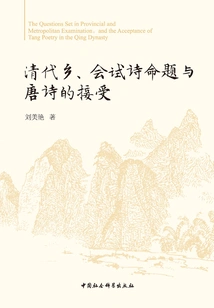
清代乡、会试诗命题与唐诗的接受
Liu Meiyan
This book is a study of the propositions of examination poems in the Qing Dynasty. It takes the examination questions from Tang poetry in the propositions of the rural and general examinations in the Qing Dynasty as the research object. Taking the examination questions of the examination poems as the entry point, it combines it with the atmosphere of the times, academic fashions, examiner preferences, etc. At the time of the propositions to explore the reasons for the tendency of the propositions and the Qing people's acceptance of the works of literati of the Tang Dynasty in the propositions. The imperial examination poem titles are examination questions of rhymed poems, which are originally poem titles and also belong to the category of poetry. Most of the poem titles themselves are verses. Therefore, the poetry titles have a great relationship with the poetic concepts of the Qing Dynasty, the poetic tendencies of the Qing people, and the reception of previous works in the Qing Dynasty. The comprehensive study of these aspects is itself a reflection of literary value.
This book is a study of the propositions of examination poems in the Qing Dynasty. It takes the examination questions from Tang poetry in the propositions of the rural and general examinations in the Qing Dynasty as the research object. Taking the examination questions of the examination poems as the entry point, it combines it with the atmosphere of the times, academic fashions, examiner preferences, etc. At the time of the propositions to explore the reasons for the tendency of the propositions and the Qing people's acceptance of the works of literati of the Tang Dynasty in the propositions. The imperial examination poem titles are examination questions of rhymed poems, which are originally poem titles and also belong to the category of poetry. Most of the poem titles themselves are verses. Therefore, the poetry titles have a great relationship with the poetic concepts of the Qing Dynasty, the poetic tendencies of the Qing people, and the reception of previous works in the Qing Dynasty. The comprehensive study of these aspects is itself a reflection of literary value.
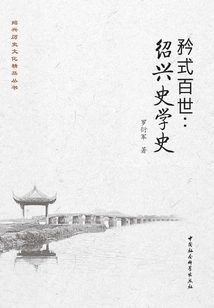
矜式百世:绍兴史学史
Luo Yanjun
This book has five chapters in total: (1) An investigation of the local chronicles and miscellaneous histories of Shaoxing in the past dynasties, systematically expounding the content and influence of local chronicles from the Han Dynasty to the Republic of China. (2) Examine the historical treatises on Shaoxing before the Qing Dynasty, discuss their authors, content and their influence on academic circles and social trends of thought, examine Song studies with Shaoxing as the academic focus, and explain their historical concepts and their internal reasons. (3) Examine the historical thinking of the East Zhejiang School of Economic History represented by Huang Zongxi, Zhang Xuecheng, and Wan Sitong, and conduct a comparative study with the Qianjia School to explore the reasons for the development of its practical thoughts on managing the world and its impact on the development of subsequent historiography, and explore the evolution from historiography to new historiography, nationalist historiography, and Marxist historiography. (4) Examine the ancient history compilation and compilation work of Lu Xun and others, explore the connection between the development of Shaoxing history and the local consciousness of local scholars, and seek the inner connection between academic development and local humanistic spirit and social environment; expound the historical concepts and educational ideas of Luo Jialun and others, explore the academic ideas of modern bourgeois history educators represented by Luo Jialun, and elaborate on their important influence in the history of modern academic development. (5) Expound the academic writing activities of modern Marxist historians in Shaoxing represented by Fan Wenlan, conduct a comparative study with contemporary scholars such as Jiang Tingfu, Qian Mu, and Fu Sinian, and examine their inherent similarities and differences.
This book has five chapters in total: (1) An investigation of the local chronicles and miscellaneous histories of Shaoxing in the past dynasties, systematically expounding the content and influence of local chronicles from the Han Dynasty to the Republic of China. (2) Examine the historical treatises on Shaoxing before the Qing Dynasty, discuss their authors, content and their influence on academic circles and social trends of thought, examine Song studies with Shaoxing as the academic focus, and explain their historical concepts and their internal reasons. (3) Examine the historical thinking of the East Zhejiang School of Economic History represented by Huang Zongxi, Zhang Xuecheng, and Wan Sitong, and conduct a comparative study with the Qianjia School to explore the reasons for the development of its practical thoughts on managing the world and its impact on the development of subsequent historiography, and explore the evolution from historiography to new historiography, nationalist historiography, and Marxist historiography. (4) Examine the ancient history compilation and compilation work of Lu Xun and others, explore the connection between the development of Shaoxing history and the local consciousness of local scholars, and seek the inner connection between academic development and local humanistic spirit and social environment; expound the historical concepts and educational ideas of Luo Jialun and others, explore the academic ideas of modern bourgeois history educators represented by Luo Jialun, and elaborate on their important influence in the history of modern academic development. (5) Expound the academic writing activities of modern Marxist historians in Shaoxing represented by Fan Wenlan, conduct a comparative study with contemporary scholars such as Jiang Tingfu, Qian Mu, and Fu Sinian, and examine their inherent similarities and differences.
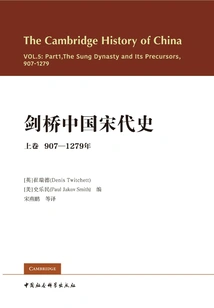
剑桥中国宋代史·上卷:907-1279年
(us) Shi Lemin (uk) Cui Ruide
This book is the first volume of the fifth volume in the "Cambridge History of China" series. It narrates the history of the two Song Dynasties in chapters according to the reign of the emperors of the Song Dynasty. These two volumes, together with Volume 6 of the Cambridge History of China, the Cambridge History of Liao, Jin and Western Xia, will provide a comprehensive and in-depth examination of the history of the Central Plains dynasty and its surrounding countries from the 10th to the 14th centuries. This book is the first volume of the fifth volume in the "Cambridge History of China" series. It narrates the history of the two Song Dynasties in chapters according to the reign of the emperors of the Song Dynasty. These two volumes, together with Volume 6 of the Cambridge History of China, the Cambridge History of Liao, Jin and Western Xia, will provide a comprehensive and in-depth examination of the history of the Central Plains dynasty and its surrounding countries from the 10th to the 14th centuries. This book is the first volume of the fifth volume in the "Cambridge History of China" series. It narrates the history of the two Song Dynasties in chapters according to the reign of the emperors of the Song Dynasty. These two volumes, together with Volume 6 of the Cambridge History of China, the Cambridge History of Liao, Jin and Western Xia, will provide a comprehensive and in-depth examination of the history of the Central Plains dynasty and its surrounding countries from the 10th to the 14th centuries.
This book is the first volume of the fifth volume in the "Cambridge History of China" series. It narrates the history of the two Song Dynasties in chapters according to the reign of the emperors of the Song Dynasty. These two volumes, together with Volume 6 of the Cambridge History of China, the Cambridge History of Liao, Jin and Western Xia, will provide a comprehensive and in-depth examination of the history of the Central Plains dynasty and its surrounding countries from the 10th to the 14th centuries. This book is the first volume of the fifth volume in the "Cambridge History of China" series. It narrates the history of the two Song Dynasties in chapters according to the reign of the emperors of the Song Dynasty. These two volumes, together with Volume 6 of the Cambridge History of China, the Cambridge History of Liao, Jin and Western Xia, will provide a comprehensive and in-depth examination of the history of the Central Plains dynasty and its surrounding countries from the 10th to the 14th centuries. This book is the first volume of the fifth volume in the "Cambridge History of China" series. It narrates the history of the two Song Dynasties in chapters according to the reign of the emperors of the Song Dynasty. These two volumes, together with Volume 6 of the Cambridge History of China, the Cambridge History of Liao, Jin and Western Xia, will provide a comprehensive and in-depth examination of the history of the Central Plains dynasty and its surrounding countries from the 10th to the 14th centuries.
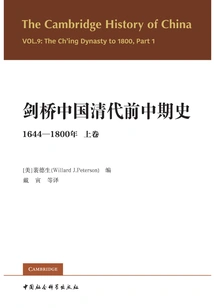
剑桥中国清代前中期史:1644-1800年(上卷)
(us) Pei Desheng
This book is the ninth volume in the Cambridge History of China series. It narrates the history of the Qing Dynasty from 1616 to 1800, including the politics, economy, military, diplomacy, culture and other aspects of the Qing Dynasty. The work is divided into 10 chapters, covering about 200 years of history, from the formation of the Jurchens at the end of the 16th century to the death of Emperor Qianlong in 1799. This volume shows the author's mastery of all the materials and his proficiency in mastering the latest materials. It provides a three-dimensional interpretation of the imperial society in its heyday, and presents readers with a balanced mix of political history and social history. The first chapter talks about the founding of the Qing Dynasty before 1644; the second chapter is the Shunzhi Dynasty; the third chapter is the Kangxi Dynasty; the fourth chapter is the Yongzheng Dynasty; and the fifth chapter is the Qianlong Dynasty. The time limit is 1644 to 1800. The first five chapters describe the major events of the Qing Dynasty vertically, including the evaluation of each emperor and their status in Chinese history. The next five chapters focus on the horizontal aspects. For example, Mr. Elman talks about the social role of scholars in the early and middle Qing Dynasty. Other chapters talk about women, gender, family, and marriage. Some talk about the stability and changes of the Qing Dynasty society. The last chapter talks about the economic development of the Qing Dynasty. This book uses nearly a million words in both vertical and horizontal aspects to give a three-dimensional outline of the Qing Dynasty.
This book is the ninth volume in the Cambridge History of China series. It narrates the history of the Qing Dynasty from 1616 to 1800, including the politics, economy, military, diplomacy, culture and other aspects of the Qing Dynasty. The work is divided into 10 chapters, covering about 200 years of history, from the formation of the Jurchens at the end of the 16th century to the death of Emperor Qianlong in 1799. This volume shows the author's mastery of all the materials and his proficiency in mastering the latest materials. It provides a three-dimensional interpretation of the imperial society in its heyday, and presents readers with a balanced mix of political history and social history. The first chapter talks about the founding of the Qing Dynasty before 1644; the second chapter is the Shunzhi Dynasty; the third chapter is the Kangxi Dynasty; the fourth chapter is the Yongzheng Dynasty; and the fifth chapter is the Qianlong Dynasty. The time limit is 1644 to 1800. The first five chapters describe the major events of the Qing Dynasty vertically, including the evaluation of each emperor and their status in Chinese history. The next five chapters focus on the horizontal aspects. For example, Mr. Elman talks about the social role of scholars in the early and middle Qing Dynasty. Other chapters talk about women, gender, family, and marriage. Some talk about the stability and changes of the Qing Dynasty society. The last chapter talks about the economic development of the Qing Dynasty. This book uses nearly a million words in both vertical and horizontal aspects to give a three-dimensional outline of the Qing Dynasty.
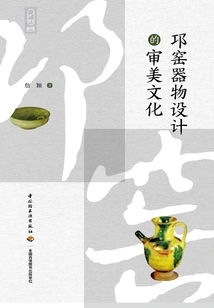
邛窑器物设计的审美文化(轻艺术系列丛书)
Zhan Ying
Qiong kiln is a folk kiln system with the largest number of kilns, the longest firing time, the widest distribution of products, and the greatest social influence among the ancient ceramic kiln systems in the Bashu region. Starting from the perspective of "aesthetic culture" that has not been covered in previous studies, this book comprehensively explores and studies Qiong Kiln from three levels: artifact design, aesthetic consciousness, and aesthetic behavior. This book has positive innovative value in academic fields such as Qiong kiln research, ancient Chinese ceramic culture research, ancient Bashu culture research, and Southern Silk Road art research. It can play a good guiding role in promoting traditional excellent culture, protecting and inheriting intangible cultural heritage skills, and promoting the development of local cultural industries.
Qiong kiln is a folk kiln system with the largest number of kilns, the longest firing time, the widest distribution of products, and the greatest social influence among the ancient ceramic kiln systems in the Bashu region. Starting from the perspective of "aesthetic culture" that has not been covered in previous studies, this book comprehensively explores and studies Qiong Kiln from three levels: artifact design, aesthetic consciousness, and aesthetic behavior. This book has positive innovative value in academic fields such as Qiong kiln research, ancient Chinese ceramic culture research, ancient Bashu culture research, and Southern Silk Road art research. It can play a good guiding role in promoting traditional excellent culture, protecting and inheriting intangible cultural heritage skills, and promoting the development of local cultural industries.
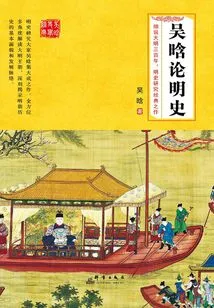
吴晗论明史
Wu Han
"Wu Han on the History of the Ming Dynasty" is the masterpiece of Wu Han, a master of Ming history. It interprets the Ming Dynasty from all aspects and angles, and deeply reveals the basic appearance and development of the Ming Dynasty's history. The content covers all aspects of the Ming Dynasty's politics, institutions, society, characters, etc. Based on precious historical materials, he quotes scriptures and carefully verifies, restoring the Ming Dynasty as truly and truly as possible, deeply revealing the basic appearance and development of the Ming Dynasty's history, and has extremely high academic value. At the same time, the text is easy to understand and highly readable. It is also a popular historical reading that the public likes.
"Wu Han on the History of the Ming Dynasty" is the masterpiece of Wu Han, a master of Ming history. It interprets the Ming Dynasty from all aspects and angles, and deeply reveals the basic appearance and development of the Ming Dynasty's history. The content covers all aspects of the Ming Dynasty's politics, institutions, society, characters, etc. Based on precious historical materials, he quotes scriptures and carefully verifies, restoring the Ming Dynasty as truly and truly as possible, deeply revealing the basic appearance and development of the Ming Dynasty's history, and has extremely high academic value. At the same time, the text is easy to understand and highly readable. It is also a popular historical reading that the public likes.
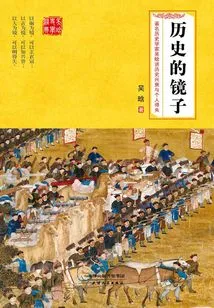
Mirror of History
History历史的镜子
Wu Han
The content includes politics, military, culture and other aspects, highlighting his thinking on the fate of the country and the nation, and focusing on the relationship between the decline of social atmosphere, political corruption, people's hardship and the rise and fall of the country and the governance of chaos. It raises many practical issues such as improving social atmosphere, limiting power, eliminating corruption, implementing democratic politics that combines governance of people and governance, press and freedom of speech, etc. It is very enlightening and expresses Wu Han's thinking about history and concern for reality. This book is a very readable popularization of historical knowledge.
The content includes politics, military, culture and other aspects, highlighting his thinking on the fate of the country and the nation, and focusing on the relationship between the decline of social atmosphere, political corruption, people's hardship and the rise and fall of the country and the governance of chaos. It raises many practical issues such as improving social atmosphere, limiting power, eliminating corruption, implementing democratic politics that combines governance of people and governance, press and freedom of speech, etc. It is very enlightening and expresses Wu Han's thinking about history and concern for reality. This book is a very readable popularization of historical knowledge.
隋唐五代史(上下册)
Lu Simian
This book fully embodies Lu Simian's historical research methods. From beginning to end, it is full of various methods of reading history and historical viewpoints. It is full of hidden hooks, vertical and horizontal openings and closings, and has sufficient historical materials. Each section is enough to complete a major paper. During the Republic of China, it was included in the monograph collection of the Chinese Academy of Qilu University, and later became a history textbook in colleges and universities across the country.
This book fully embodies Lu Simian's historical research methods. From beginning to end, it is full of various methods of reading history and historical viewpoints. It is full of hidden hooks, vertical and horizontal openings and closings, and has sufficient historical materials. Each section is enough to complete a major paper. During the Republic of China, it was included in the monograph collection of the Chinese Academy of Qilu University, and later became a history textbook in colleges and universities across the country.
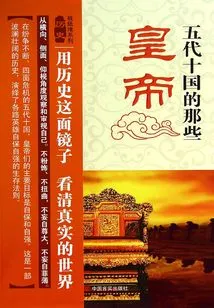
五代十国的那些皇帝(故纸堆系列)
Li Qi
During fifty-four years of chaos, fifteen dynasties ruled the world, but more than fifty people with eight surnames became emperors. More than a dozen separatist regimes are staged a farce in which you sing and I appear. After experiencing the great turmoil at the end of the Tang Empire, the world, which was severely damaged, could only silently heal in this way. Such troubled times are destined to be chaotic, destined to be non-mainstream, destined to produce tyrants who defy heaven, and are destined to have a good king who can push history forward. Distorted times, distorted human nature, the short gap after bloody and violent massacres, how colorful the lives of the emperors of the Five Dynasties and Ten Kingdoms were. This book selects thirty-five representative emperors of the Five Dynasties and Ten Kingdoms, and shows you the historical legends of that troubled time by interpreting their lives and politics.
During fifty-four years of chaos, fifteen dynasties ruled the world, but more than fifty people with eight surnames became emperors. More than a dozen separatist regimes are staged a farce in which you sing and I appear. After experiencing the great turmoil at the end of the Tang Empire, the world, which was severely damaged, could only silently heal in this way. Such troubled times are destined to be chaotic, destined to be non-mainstream, destined to produce tyrants who defy heaven, and are destined to have a good king who can push history forward. Distorted times, distorted human nature, the short gap after bloody and violent massacres, how colorful the lives of the emperors of the Five Dynasties and Ten Kingdoms were. This book selects thirty-five representative emperors of the Five Dynasties and Ten Kingdoms, and shows you the historical legends of that troubled time by interpreting their lives and politics.
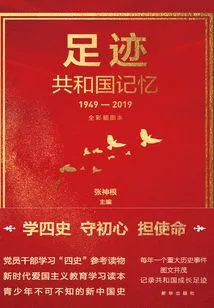
足迹:共和国记忆
Editor-in-chief Zhang Shengen
History is the best textbook. The history of New China is not only compulsory but also must be studied well. In recent years, with the gradual declassification of historical archives and the deepening of research, the ins and outs of many major events have gradually been clarified. In order to introduce these new results to the general readership, from 1949 to 2019, we select a major event, major decision or major issue every year, covering various aspects such as politics, economy, military, diplomacy, culture, society, science and technology, ecology, etc., And use moving words full of positive energy. The stories and precious historical photos outline the epic historical picture of the Republic of China in the past 70 years, allowing readers, especially the young "post-80s", "post-90s" and "post-00s", to understand the earth-shaking changes that have taken place in Chinese society and the world-renowned achievements made under the leadership of the party in the past 70 years. This book is a history of New China with both pictures and texts. It adopts the form of memorabilia and records the glorious history from 1949 to 2019 in full color. It is carefully selected with 154 precious historical photos. It has accurate historical facts, vivid details and lively language. It is suitable as a patriotic education reading material for studying the "Four Histories".
History is the best textbook. The history of New China is not only compulsory but also must be studied well. In recent years, with the gradual declassification of historical archives and the deepening of research, the ins and outs of many major events have gradually been clarified. In order to introduce these new results to the general readership, from 1949 to 2019, we select a major event, major decision or major issue every year, covering various aspects such as politics, economy, military, diplomacy, culture, society, science and technology, ecology, etc., And use moving words full of positive energy. The stories and precious historical photos outline the epic historical picture of the Republic of China in the past 70 years, allowing readers, especially the young "post-80s", "post-90s" and "post-00s", to understand the earth-shaking changes that have taken place in Chinese society and the world-renowned achievements made under the leadership of the party in the past 70 years. This book is a history of New China with both pictures and texts. It adopts the form of memorabilia and records the glorious history from 1949 to 2019 in full color. It is carefully selected with 154 precious historical photos. It has accurate historical facts, vivid details and lively language. It is suitable as a patriotic education reading material for studying the "Four Histories".
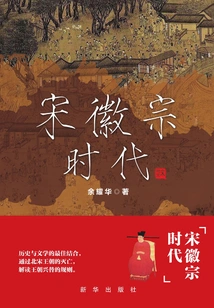
Song Huizong Era
History宋徽宗时代
Yu Yaohua
When the Northern Song Dynasty fell, some people thought that the political power was corrupt, while others thought that the enemy was too powerful. These two points are not enough to explain the root cause of the Northern Song Dynasty's weakness and demise. From the perspective of a historian, this book interprets the fall of the Northern Song Dynasty from the aspects of the crisis behind the glitz, the exchanges between farming and nomadic civilizations, and the conflicts between military, secret, economic and cultural aspects.
When the Northern Song Dynasty fell, some people thought that the political power was corrupt, while others thought that the enemy was too powerful. These two points are not enough to explain the root cause of the Northern Song Dynasty's weakness and demise. From the perspective of a historian, this book interprets the fall of the Northern Song Dynasty from the aspects of the crisis behind the glitz, the exchanges between farming and nomadic civilizations, and the conflicts between military, secret, economic and cultural aspects.
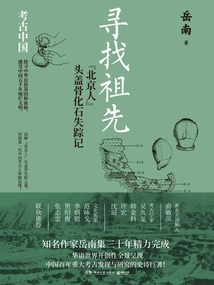
寻找祖先:“北京人”头盖骨化石失踪记
Yuenan
Was the disappearance of the "Peking Man" fossils stolen or destroyed? Did it sink to the bottom of the sea, or has it turned into dust and smoke? This mystery has troubled and stirred in people's hearts for a long time... In 1929, the skull of the "Chinese Peking Man" unearthed in Zhoukoudian, Beijing, caused a sensation in the world at that time, and was hailed as "a shock to mankind on the entire earth!" But what is extremely absurd is that in the smoke and dust of the years, The "Peking Man" who had been wronged in the fog for 500,000 years only appeared for 12 years before suddenly and mysteriously disappeared... For more than half a century, this mystery has puzzled anthropologists from all over the world and troubled mankind, but mankind has never given up the search for the "Peking Man". After arduous searches, the author recorded the entire process of the discovery, excavation, transfer, disappearance and search of the skull fossils of "Peking Man" in a long documentary.
Was the disappearance of the "Peking Man" fossils stolen or destroyed? Did it sink to the bottom of the sea, or has it turned into dust and smoke? This mystery has troubled and stirred in people's hearts for a long time... In 1929, the skull of the "Chinese Peking Man" unearthed in Zhoukoudian, Beijing, caused a sensation in the world at that time, and was hailed as "a shock to mankind on the entire earth!" But what is extremely absurd is that in the smoke and dust of the years, The "Peking Man" who had been wronged in the fog for 500,000 years only appeared for 12 years before suddenly and mysteriously disappeared... For more than half a century, this mystery has puzzled anthropologists from all over the world and troubled mankind, but mankind has never given up the search for the "Peking Man". After arduous searches, the author recorded the entire process of the discovery, excavation, transfer, disappearance and search of the skull fossils of "Peking Man" in a long documentary.
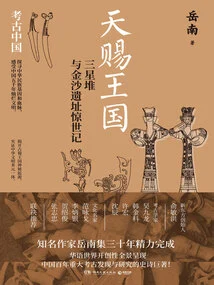
天赐王国:三星堆与金沙遗址惊世记
Yuenan
A jade pit suddenly appeared in the peaceful Moon Bay, and the Yan family dug for treasure late at night. Secrets are leaked on the streets of Chengdu, brilliant treasures are rising and falling in the billowing dust, and a rusty mysterious door full of temptation and hope is about to open... In the 1920s and 1930s, artifact burial pits were discovered in Guanghan County, Sichuan, and a large number of jade artifacts were dug out, thus unveiling a corner of the mysterious veil of Sanxingdui. The real large-scale excavation of the Sanxingdui site began in the 1980s. Its rich artifact burial pits attracted the world's attention and showed people the remains of ancient Shu culture. The discovery of the Jinsha site in 2001 provides the possibility for us to further interpret the Sanxingdui culture. This book describes the discovery and excavation of the Sanxingdui Culture in Guanghan, Sichuan, as well as the discovery and excavation process of the Jinsha Site that is closely related to the Sanxingdui Culture in recent years.
A jade pit suddenly appeared in the peaceful Moon Bay, and the Yan family dug for treasure late at night. Secrets are leaked on the streets of Chengdu, brilliant treasures are rising and falling in the billowing dust, and a rusty mysterious door full of temptation and hope is about to open... In the 1920s and 1930s, artifact burial pits were discovered in Guanghan County, Sichuan, and a large number of jade artifacts were dug out, thus unveiling a corner of the mysterious veil of Sanxingdui. The real large-scale excavation of the Sanxingdui site began in the 1980s. Its rich artifact burial pits attracted the world's attention and showed people the remains of ancient Shu culture. The discovery of the Jinsha site in 2001 provides the possibility for us to further interpret the Sanxingdui culture. This book describes the discovery and excavation of the Sanxingdui Culture in Guanghan, Sichuan, as well as the discovery and excavation process of the Jinsha Site that is closely related to the Sanxingdui Culture in recent years.
越国之殇:广州南越王墓发掘记
Yuenan
This book tells the story of the discovery and excavation of the tomb of Zhao Hu (眜), the second generation king of the South Vietnam Kingdom, in Xianggang Mountain, Guangzhou in the 1980s. The author uses documentary literature techniques to lay out the entire excavation process in layers, cutting into the historical background of the Qin and Han Dynasties, events in the South Vietnam Kingdom, and historical figures in South Vietnam at key places. The plot is vivid and fascinating. The author Yue Nan is good at describing the archaeological excavation process in a literary way, integrating history and new archaeological discoveries, which is different from boring archaeological excavation reports and traditional documentary literature. With a rigorous attitude and well-organized writing techniques, this book connects the archaeological excavation process with the historical sea and recreates ancient Chinese civilization for readers, making the archaeological process an object of public reading.
This book tells the story of the discovery and excavation of the tomb of Zhao Hu (眜), the second generation king of the South Vietnam Kingdom, in Xianggang Mountain, Guangzhou in the 1980s. The author uses documentary literature techniques to lay out the entire excavation process in layers, cutting into the historical background of the Qin and Han Dynasties, events in the South Vietnam Kingdom, and historical figures in South Vietnam at key places. The plot is vivid and fascinating. The author Yue Nan is good at describing the archaeological excavation process in a literary way, integrating history and new archaeological discoveries, which is different from boring archaeological excavation reports and traditional documentary literature. With a rigorous attitude and well-organized writing techniques, this book connects the archaeological excavation process with the historical sea and recreates ancient Chinese civilization for readers, making the archaeological process an object of public reading.
绝代兵圣:银雀山《孙子兵法》破译记
Yuenan
In the spring of 1972, an ancient tomb from the Han Dynasty was discovered in Yinqueshan, Linyi City, Shandong Province, and a number of bamboo slips were unearthed. The emergence of these treasures has opened the prelude to the "archaeological renaissance" since the founding of the People's Republic of China. In particular, the simultaneous unearthing of the sacred military classic "Sun Tzu's Art of War" and the authentic copy of "Sun Bin's Art of War" that had been lost for more than a thousand years has suddenly solved an academic mystery that has been debated for more than a thousand years, and opened an epoch-making page for the study of these two military books. This book uses documentary literature to describe the entire process of the discovery and excavation of the Yinqueshan Han Tomb, as well as the scholars' research, interpretation and deciphering of the unearthed bamboo writings. The author Yue Nan is good at describing the archaeological excavation process in a literary way, integrating history and new archaeological discoveries, which is different from boring archaeological excavation reports and traditional documentary literature. With a rigorous attitude and well-organized writing techniques, the archaeological excavation process is closely related to the historical sea, recreating ancient Chinese civilization for readers, making the archaeological process an object of public reading.
In the spring of 1972, an ancient tomb from the Han Dynasty was discovered in Yinqueshan, Linyi City, Shandong Province, and a number of bamboo slips were unearthed. The emergence of these treasures has opened the prelude to the "archaeological renaissance" since the founding of the People's Republic of China. In particular, the simultaneous unearthing of the sacred military classic "Sun Tzu's Art of War" and the authentic copy of "Sun Bin's Art of War" that had been lost for more than a thousand years has suddenly solved an academic mystery that has been debated for more than a thousand years, and opened an epoch-making page for the study of these two military books. This book uses documentary literature to describe the entire process of the discovery and excavation of the Yinqueshan Han Tomb, as well as the scholars' research, interpretation and deciphering of the unearthed bamboo writings. The author Yue Nan is good at describing the archaeological excavation process in a literary way, integrating history and new archaeological discoveries, which is different from boring archaeological excavation reports and traditional documentary literature. With a rigorous attitude and well-organized writing techniques, the archaeological excavation process is closely related to the historical sea, recreating ancient Chinese civilization for readers, making the archaeological process an object of public reading.
旷世绝响:擂鼓墩曾侯乙墓发掘记
Yuenan
Just as many major archaeological discoveries in the world began with building roads and houses, digging pits and dams in the wild, the emergence of the tomb of Zeng Hou Yi originated from an accidental construction by the local garrison: the burial place of princes, generals and ministers of a mysterious country that lasted for more than 20 centuries and countless treasures were revealed. The tomb of Marquis Yi of Zeng is one of the great archaeological discoveries in human history in the 20th century. A large number of funerary objects were unearthed in the tomb, including many national treasure-level precious cultural relics such as bronze bells, which attracted attention and caused a worldwide sensation. This book uses documentary techniques and literary forms to describe in detail the entire process of the discovery, survey, and excavation of the tomb of Marquis Yi of Zeng. It also explores as much as possible the ancient burial system, the formation era of the robber cave, the strange encounters of the tomb robbers after entering the cave, the historical relationship between Zeng State and Chu State, and the general time and historical events of the demise of Zeng State.
Just as many major archaeological discoveries in the world began with building roads and houses, digging pits and dams in the wild, the emergence of the tomb of Zeng Hou Yi originated from an accidental construction by the local garrison: the burial place of princes, generals and ministers of a mysterious country that lasted for more than 20 centuries and countless treasures were revealed. The tomb of Marquis Yi of Zeng is one of the great archaeological discoveries in human history in the 20th century. A large number of funerary objects were unearthed in the tomb, including many national treasure-level precious cultural relics such as bronze bells, which attracted attention and caused a worldwide sensation. This book uses documentary techniques and literary forms to describe in detail the entire process of the discovery, survey, and excavation of the tomb of Marquis Yi of Zeng. It also explores as much as possible the ancient burial system, the formation era of the robber cave, the strange encounters of the tomb robbers after entering the cave, the historical relationship between Zeng State and Chu State, and the general time and historical events of the demise of Zeng State.
The Eternal Dharma Gate: the Appearance of Buddha Bones in the Underground Palace of Famen Temple
History万世法门:法门寺地宫佛骨现世记
Yuenan
This book is a long documentary work based on the archaeological discoveries and excavation materials of the underground palace of Famen Temple, and focuses on the emergence of Buddha finger relics and related events. It presents readers with a long scroll with voluminous volumes, twists and turns, profound artistic conception and beautiful pictures. It not only looks at the history of Buddhism, but also combines it with the history of our country to examine in detail the origins of Buddhism presented by Famen Temple and the rise and fall of Chinese history.
This book is a long documentary work based on the archaeological discoveries and excavation materials of the underground palace of Famen Temple, and focuses on the emergence of Buddha finger relics and related events. It presents readers with a long scroll with voluminous volumes, twists and turns, profound artistic conception and beautiful pictures. It not only looks at the history of Buddhism, but also combines it with the history of our country to examine in detail the origins of Buddhism presented by Famen Temple and the rise and fall of Chinese history.
日暮皇陵:清东陵地宫珍宝被盗记
Yuenan
In July 1928, warlord Sun Dianying led his troops to break into the two underground palaces of Qianlong and Cixi, cut open the coffins and dumped the corpses, and looted all the priceless treasures, leading to an earth-shattering case in the history of Chinese and foreign civilizations. Looking back on this period of history, we can't help but have a strong interest in the Qing Tombs and try to restore the scene at that time. On this basis, this book carefully outlines real historical scenes that have been sealed for more than half a century. It introduces in detail the establishment and scale of the imperial mausoleums of the Qing Dynasty and the burial process of the emperors and concubines. It vividly reproduces the tortuous process of the prosperity and decline of China's last feudal dynasty.
In July 1928, warlord Sun Dianying led his troops to break into the two underground palaces of Qianlong and Cixi, cut open the coffins and dumped the corpses, and looted all the priceless treasures, leading to an earth-shattering case in the history of Chinese and foreign civilizations. Looking back on this period of history, we can't help but have a strong interest in the Qing Tombs and try to restore the scene at that time. On this basis, this book carefully outlines real historical scenes that have been sealed for more than half a century. It introduces in detail the establishment and scale of the imperial mausoleums of the Qing Dynasty and the burial process of the emperors and concubines. It vividly reproduces the tortuous process of the prosperity and decline of China's last feudal dynasty.