Library
Browse and search books
2,273 novels found
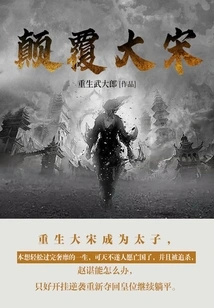
Subverting the Song Dynasty (volume 4)
General Fiction颠覆大宋(第4卷)
Rebirth Of Wu Dalang
He traveled through time and became the prince, but unfortunately he was the prince of the subjugated country... The shame of Jingkang came, and the prince had no choice but to escape from Kaifeng. The Jurchens were chasing him, and King Kang Zhaogou was also chasing him. Later, he had no choice but to flee to the northwest. However, there were still powerful ministers in the northwest, Zhe, who could survive... He defeated Zhe. Keqiu finally took charge of the government and developed the military and economy step by step. He first occupied Guanshan, Sichuan and Shu, then went south to destroy King Kang, and finally went north to destroy Jin... Friends who have passed by, be sure to click in and take a look. It is guaranteed to be exciting and I guarantee you will not be disappointed. During the Northern and Southern Song Dynasties, your favorite heroes Yue Fei, Han Shizhong, and Wang Chongyang are among them, as are all kinds of colorful little characters.
He traveled through time and became the prince, but unfortunately he was the prince of the subjugated country... The shame of Jingkang came, and the prince had no choice but to escape from Kaifeng. The Jurchens were chasing him, and King Kang Zhaogou was also chasing him. Later, he had no choice but to flee to the northwest. However, there were still powerful ministers in the northwest, Zhe, who could survive... He defeated Zhe. Keqiu finally took charge of the government and developed the military and economy step by step. He first occupied Guanshan, Sichuan and Shu, then went south to destroy King Kang, and finally went north to destroy Jin... Friends who have passed by, be sure to click in and take a look. It is guaranteed to be exciting and I guarantee you will not be disappointed. During the Northern and Southern Song Dynasties, your favorite heroes Yue Fei, Han Shizhong, and Wang Chongyang are among them, as are all kinds of colorful little characters.
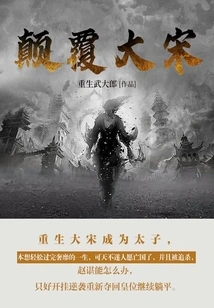
Subverting the Song Dynasty (volume 3)
General Fiction颠覆大宋(第3卷)
Rebirth Of Wu Dalang
He traveled through time and became the prince, but unfortunately he was the prince of the subjugated country... The shame of Jingkang came, and the prince had no choice but to escape from Kaifeng. The Jurchens were chasing him, and King Kang Zhaogou was also chasing him. Later, he had no choice but to flee to the northwest. However, there were still powerful ministers in the northwest, Zhe, who could survive... He defeated Zhe. Keqiu finally took charge of the government and developed the military and economy step by step. He first occupied Guanshan, Sichuan and Shu, then went south to destroy King Kang, and finally went north to destroy Jin... Friends who have passed by, be sure to click in and take a look. It is guaranteed to be exciting and I guarantee you will not be disappointed. During the Northern and Southern Song Dynasties, your favorite heroes Yue Fei, Han Shizhong, and Wang Chongyang are among them, as are all kinds of colorful little characters.
He traveled through time and became the prince, but unfortunately he was the prince of the subjugated country... The shame of Jingkang came, and the prince had no choice but to escape from Kaifeng. The Jurchens were chasing him, and King Kang Zhaogou was also chasing him. Later, he had no choice but to flee to the northwest. However, there were still powerful ministers in the northwest, Zhe, who could survive... He defeated Zhe. Keqiu finally took charge of the government and developed the military and economy step by step. He first occupied Guanshan, Sichuan and Shu, then went south to destroy King Kang, and finally went north to destroy Jin... Friends who have passed by, be sure to click in and take a look. It is guaranteed to be exciting and I guarantee you will not be disappointed. During the Northern and Southern Song Dynasties, your favorite heroes Yue Fei, Han Shizhong, and Wang Chongyang are among them, as are all kinds of colorful little characters.
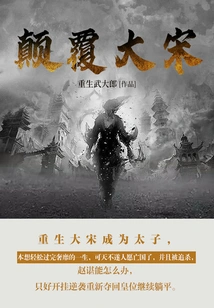
Subverting the Song Dynasty (volume 2)
General Fiction颠覆大宋(第2卷)
Rebirth Of Wu Dalang
He traveled through time and became the prince, but unfortunately he was the prince of the subjugated country... The shame of Jingkang came, and the prince had no choice but to escape from Kaifeng. The Jurchens were chasing him, and King Kang Zhaogou was also chasing him. Later, he had no choice but to flee to the northwest. However, there were still powerful ministers in the northwest, Zhe, who could survive... He defeated Zhe. Keqiu finally took charge of the government and developed the military and economy step by step. He first occupied Guanshan, Sichuan and Shu, then went south to destroy King Kang, and finally went north to destroy Jin... Friends who have passed by, be sure to click in and take a look. It is guaranteed to be exciting and I guarantee you will not be disappointed. During the Northern and Southern Song Dynasties, your favorite heroes Yue Fei, Han Shizhong, and Wang Chongyang are among them, as are all kinds of colorful little characters.
He traveled through time and became the prince, but unfortunately he was the prince of the subjugated country... The shame of Jingkang came, and the prince had no choice but to escape from Kaifeng. The Jurchens were chasing him, and King Kang Zhaogou was also chasing him. Later, he had no choice but to flee to the northwest. However, there were still powerful ministers in the northwest, Zhe, who could survive... He defeated Zhe. Keqiu finally took charge of the government and developed the military and economy step by step. He first occupied Guanshan, Sichuan and Shu, then went south to destroy King Kang, and finally went north to destroy Jin... Friends who have passed by, be sure to click in and take a look. It is guaranteed to be exciting and I guarantee you will not be disappointed. During the Northern and Southern Song Dynasties, your favorite heroes Yue Fei, Han Shizhong, and Wang Chongyang are among them, as are all kinds of colorful little characters.
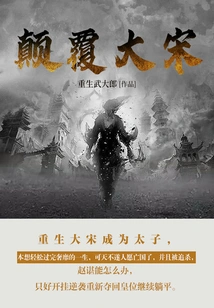
Subverting the Song Dynasty (volume 1)
General Fiction颠覆大宋(第1卷)
Rebirth Of Wu Dalang
He traveled through time and became the prince, but unfortunately he was the prince of the subjugated country... The shame of Jingkang came, and the prince had no choice but to escape from Kaifeng. The Jurchens were chasing him, and King Kang Zhaogou was also chasing him. Later, he had no choice but to flee to the northwest. However, there were still powerful ministers in the northwest, Zhe, who could survive... He defeated Zhe. Keqiu finally took charge of the government and developed the military and economy step by step. He first occupied Guanshan, Sichuan and Shu, then went south to destroy King Kang, and finally went north to destroy Jin... Friends who have passed by, be sure to click in and take a look. It is guaranteed to be exciting and I guarantee you will not be disappointed. During the Northern and Southern Song Dynasties, your favorite heroes Yue Fei, Han Shizhong, and Wang Chongyang are among them, as are all kinds of colorful little characters.
He traveled through time and became the prince, but unfortunately he was the prince of the subjugated country... The shame of Jingkang came, and the prince had no choice but to escape from Kaifeng. The Jurchens were chasing him, and King Kang Zhaogou was also chasing him. Later, he had no choice but to flee to the northwest. However, there were still powerful ministers in the northwest, Zhe, who could survive... He defeated Zhe. Keqiu finally took charge of the government and developed the military and economy step by step. He first occupied Guanshan, Sichuan and Shu, then went south to destroy King Kang, and finally went north to destroy Jin... Friends who have passed by, be sure to click in and take a look. It is guaranteed to be exciting and I guarantee you will not be disappointed. During the Northern and Southern Song Dynasties, your favorite heroes Yue Fei, Han Shizhong, and Wang Chongyang are among them, as are all kinds of colorful little characters.
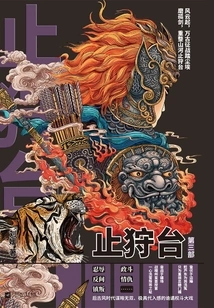
The Hunting Terrace (part 3)
General Fiction止狩台(第三部)
Liu Yuan
The reform failed, and Tang Yu was demoted to the county magistrate of the remote and impoverished Fu County. He cared about the people, solved major cases, and won the hearts of the people. He led the people to reclaim land and trekked two thousand miles of dangerous mountains and rivers. He was getting closer and closer to Yuancheng, but he didn't know that a larger political conspiracy was surging undercurrent... In order to regain the lost land of Tanzhou, Sun Muye was ordered to attack Nanjing. However, the friendship between brothers and sisters in the past made him worry, and his old friends in Nianbo City also disturbed his mood... One man, one man, one man, one power, one conspiracy, facing internal and external troubles, the two of them work together to move forward, where will the fate of Dayan go?
The reform failed, and Tang Yu was demoted to the county magistrate of the remote and impoverished Fu County. He cared about the people, solved major cases, and won the hearts of the people. He led the people to reclaim land and trekked two thousand miles of dangerous mountains and rivers. He was getting closer and closer to Yuancheng, but he didn't know that a larger political conspiracy was surging undercurrent... In order to regain the lost land of Tanzhou, Sun Muye was ordered to attack Nanjing. However, the friendship between brothers and sisters in the past made him worry, and his old friends in Nianbo City also disturbed his mood... One man, one man, one man, one power, one conspiracy, facing internal and external troubles, the two of them work together to move forward, where will the fate of Dayan go?
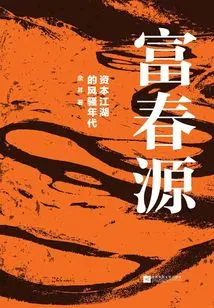
Fuchunyuan: the Romantic Era of Capital Arena
General Fiction富春源:资本江湖的风骚年代
Yu Sheng
This book tells the story of the changes and vicissitudes of the national capital along the Fuchun River in the past century. The story revolves around the ups and downs of several generations of the Shi family in Hangzhou, taking as clues the thrilling entrepreneurial stories and development miracles that occurred in important historical stages such as before and after liberation, reform and opening up, and the 21st century, showing the tenacity and self-improvement of national capital under many adverse conditions. The novel organically combines the changes since the birth of China's securities market, and uses a mixture of fiction and reality to show the bloodshed, love and hatred between contemporary industrialists and capital, society, and families, presenting readers with a picture of the great era of capital and entrepreneurship.
This book tells the story of the changes and vicissitudes of the national capital along the Fuchun River in the past century. The story revolves around the ups and downs of several generations of the Shi family in Hangzhou, taking as clues the thrilling entrepreneurial stories and development miracles that occurred in important historical stages such as before and after liberation, reform and opening up, and the 21st century, showing the tenacity and self-improvement of national capital under many adverse conditions. The novel organically combines the changes since the birth of China's securities market, and uses a mixture of fiction and reality to show the bloodshed, love and hatred between contemporary industrialists and capital, society, and families, presenting readers with a picture of the great era of capital and entrepreneurship.
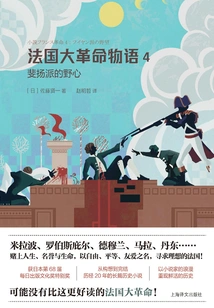
Story of the French Revolution 4: the Feuillant Ambition
General Fiction法国大革命物语4:斐扬派的野心
J
The winning work of Japan's 68th Mainichi Publication Culture Award Special Prize, with the rigor of a historian and the romance of a novelist, reproduces the turmoil of France in the 18th century. From conception to completion, it took 20 years for a full-length historical novel to read. There may be no more readable French Revolution than this! Mirabeau, Robespierre, Desmoulins, Marat, Danton... Risked their lives, reputations and lives to pursue the ideal France in the name of freedom, equality and friendship! The king's flight ended at Varennes. On June 25, 1791, Louis XVI and his family were "invited" back to Paris. From then on, the royal family lost the support of the people and lost its majesty. Disputes arose among the Jacobins over the handling of the escape. On July 16, the Constitutional Monarchists broke away from the Jacobin Club and established the Feillant Club. On July 17, thousands of citizens gathered in the Champ de Mars to petition for the deposed Louis XVI. The National Constituent Assembly, which was supposed to represent the French people, used force to disperse the gathering, leading to the tragedy of the massacre at the Champ de Mars. At the same time, the exiled nobles are taking action, European countries intend to interfere in the French Revolution, and war is about to break out. With internal differences over the direction of reform and constant external pressure on the French revolution, where will France go?
The winning work of Japan's 68th Mainichi Publication Culture Award Special Prize, with the rigor of a historian and the romance of a novelist, reproduces the turmoil of France in the 18th century. From conception to completion, it took 20 years for a full-length historical novel to read. There may be no more readable French Revolution than this! Mirabeau, Robespierre, Desmoulins, Marat, Danton... Risked their lives, reputations and lives to pursue the ideal France in the name of freedom, equality and friendship! The king's flight ended at Varennes. On June 25, 1791, Louis XVI and his family were "invited" back to Paris. From then on, the royal family lost the support of the people and lost its majesty. Disputes arose among the Jacobins over the handling of the escape. On July 16, the Constitutional Monarchists broke away from the Jacobin Club and established the Feillant Club. On July 17, thousands of citizens gathered in the Champ de Mars to petition for the deposed Louis XVI. The National Constituent Assembly, which was supposed to represent the French people, used force to disperse the gathering, leading to the tragedy of the massacre at the Champ de Mars. At the same time, the exiled nobles are taking action, European countries intend to interfere in the French Revolution, and war is about to break out. With internal differences over the direction of reform and constant external pressure on the French revolution, where will France go?
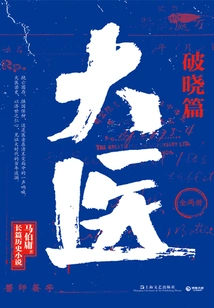
The Great Doctor: Breaking Dawn (two Volumes)
General Fiction大医·破晓篇(全两册)
Ma Boyong
"The Great Doctor: Breaking Dawn" is Ma Boyong's new full-length historical novel in 2022. To save the nation from destruction and to strengthen the country and preserve its species, this was the cry of doctors during the changes in the late Qing Dynasty. A great doctor is like a history, and with his benevolence to help the world, he has witnessed the hundreds of years of great changes in the era. A northeastern boy who narrowly escaped death in the Russo-Japanese War, a Guangdong boy who ran errands at the London Legation, and a Shanghai girl who refused to enjoy her wealth and status - these three young people with different origins, personalities, and circumstances entered the Red Cross General Hospital of China at the same time at the critical juncture of 1910, and began their entangled medical careers. As the first generation of public charity doctors in China, the three of them shoulder heavier responsibilities than ordinary doctors. Wherever there is an epidemic, we must go there to treat the epidemic; wherever there is a disaster, we must go there to provide disaster relief; wherever a war breaks out, we must go there to save lives and heal the wounded in the hail of bullets. The plague in Shanghai, the floods in northern Anhui, the Wuchang Uprising... The ups and downs of the late Qing Dynasty involved the fate of the three people at all times. They supported each other and gradually grew from three ignorant and naive teenagers into three outstanding doctors. Through rescue after rescue, they realized what a real "great doctor" is.
"The Great Doctor: Breaking Dawn" is Ma Boyong's new full-length historical novel in 2022. To save the nation from destruction and to strengthen the country and preserve its species, this was the cry of doctors during the changes in the late Qing Dynasty. A great doctor is like a history, and with his benevolence to help the world, he has witnessed the hundreds of years of great changes in the era. A northeastern boy who narrowly escaped death in the Russo-Japanese War, a Guangdong boy who ran errands at the London Legation, and a Shanghai girl who refused to enjoy her wealth and status - these three young people with different origins, personalities, and circumstances entered the Red Cross General Hospital of China at the same time at the critical juncture of 1910, and began their entangled medical careers. As the first generation of public charity doctors in China, the three of them shoulder heavier responsibilities than ordinary doctors. Wherever there is an epidemic, we must go there to treat the epidemic; wherever there is a disaster, we must go there to provide disaster relief; wherever a war breaks out, we must go there to save lives and heal the wounded in the hail of bullets. The plague in Shanghai, the floods in northern Anhui, the Wuchang Uprising... The ups and downs of the late Qing Dynasty involved the fate of the three people at all times. They supported each other and gradually grew from three ignorant and naive teenagers into three outstanding doctors. Through rescue after rescue, they realized what a real "great doctor" is.
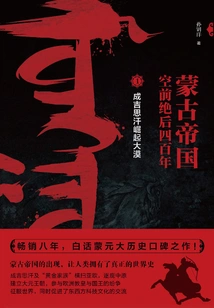
The Mongol Empire Was Unprecedented for Four Hundred Years 1: the Rise of Genghis Khan in the Desert
General Fiction蒙古帝国空前绝后四百年1:成吉思汗崛起大漠
Sun Yaoyang
The main content of the first part tells the story of the legendary life of Genghis Khan Temujin, from the hardships he experienced at birth to growing up as a grassland hero, to the unification of Mongolia, the crusade against the Jin Kingdom, the massive Western Expedition, and the demise of a generation of geniuses. Important historical events include the Battle of Thirteen Wings, the Battle of King Han, the Battle of Taiyang Khan, the unification of Mongolia, the surrender of the Lion King, the Battle of Yehuling, and the Western Expedition. Relevant historical figures from the same period as Genghis Khan are involved, including Wang Han, Jamuhe, Bohu, Jin Xuanzong, Yelv Chucai, Mu Huali, Qiu Chuji, etc.
The main content of the first part tells the story of the legendary life of Genghis Khan Temujin, from the hardships he experienced at birth to growing up as a grassland hero, to the unification of Mongolia, the crusade against the Jin Kingdom, the massive Western Expedition, and the demise of a generation of geniuses. Important historical events include the Battle of Thirteen Wings, the Battle of King Han, the Battle of Taiyang Khan, the unification of Mongolia, the surrender of the Lion King, the Battle of Yehuling, and the Western Expedition. Relevant historical figures from the same period as Genghis Khan are involved, including Wang Han, Jamuhe, Bohu, Jin Xuanzong, Yelv Chucai, Mu Huali, Qiu Chuji, etc.
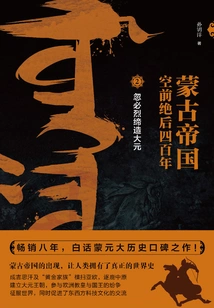
The Mongol Empire Was Unprecedented for Four Hundred Years 2: Kublai Khan Created the Yuan Dynasty
General Fiction蒙古帝国空前绝后四百年2:忽必烈缔造大元
Sun Yaoyang
The main content of the second part tells the tragic history of Kublai Khan and his son Yuan Chengzong who sent troops to Japan, Annan, Champa, Myanmar, Java and other places to conduct overseas expeditions and suffered repeated defeats. The second half tells the history of domestic and foreign affairs in the middle and late Yuan Dynasty. Important historical events during this historical period are involved, including Kublai Khan's conquest of Goryeo, the Eastern Conquest of Japan, the Battle of Annan, the split of the four great khanates, the death of Kublai Khan, the Haidu Rebellion, the Nanpo Incident, Zhang Gui's resignation, the Dadu Incident, etc. There are many historical figures involved, including Kublai Khan, Marco Polo, Haidu, Yuan Chengzong, Yuan Wuzong, Yuan Renzong, Yuan Yingzong, Emperor Taiding, etc.
The main content of the second part tells the tragic history of Kublai Khan and his son Yuan Chengzong who sent troops to Japan, Annan, Champa, Myanmar, Java and other places to conduct overseas expeditions and suffered repeated defeats. The second half tells the history of domestic and foreign affairs in the middle and late Yuan Dynasty. Important historical events during this historical period are involved, including Kublai Khan's conquest of Goryeo, the Eastern Conquest of Japan, the Battle of Annan, the split of the four great khanates, the death of Kublai Khan, the Haidu Rebellion, the Nanpo Incident, Zhang Gui's resignation, the Dadu Incident, etc. There are many historical figures involved, including Kublai Khan, Marco Polo, Haidu, Yuan Chengzong, Yuan Wuzong, Yuan Renzong, Yuan Yingzong, Emperor Taiding, etc.
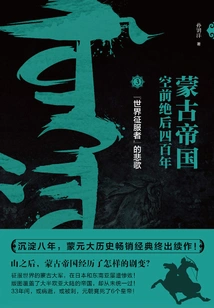
Unprecedented Four Hundred Years of the Mongol Empire 3: the Tragedy of the "world Conqueror
General Fiction蒙古帝国空前绝后四百年3:“世界征服者”的悲歌
Sun Yaoyang
The first half of the third part mainly tells the tragic history of Kublai Khan and his son Yuan Chengzong who sent troops to Japan, Annan, Champa, Myanmar, Java and other places to conduct overseas expeditions and suffered repeated defeats. The second half mainly tells the story of how the Yuan Dynasty came to decline step by step in the middle and late period. It describes in detail the overt and covert struggles of several generations of Yuan emperors over the right to inherit during this period. In just 40 years, 8 emperors died, one of whom was assassinated and one who was poisoned by his own brother, which shows how tragic it was.
The first half of the third part mainly tells the tragic history of Kublai Khan and his son Yuan Chengzong who sent troops to Japan, Annan, Champa, Myanmar, Java and other places to conduct overseas expeditions and suffered repeated defeats. The second half mainly tells the story of how the Yuan Dynasty came to decline step by step in the middle and late period. It describes in detail the overt and covert struggles of several generations of Yuan emperors over the right to inherit during this period. In just 40 years, 8 emperors died, one of whom was assassinated and one who was poisoned by his own brother, which shows how tragic it was.
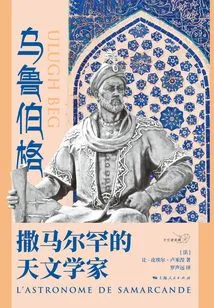
Ulugh Beg: Astronomer of Samarkand
General Fiction乌鲁伯格:撒马尔罕的天文学家
(france) Jean-pierre Lumigne
This book uses Ulu Beg's two different life trajectories as a context - as a prince of Samarkand and as an astronomer - to narrate a moving picture of the intertwining of knowledge and war in the Timurid Empire. Lumine's romance as a novelist and rigor as a scientist are cleverly blended between the lines of the novel, weaving the cold names in the entries of scientific discoveries into the historical story of fiction and reality: Turkish mathematician and astronomer Khadizadeh was forced to wander to Samarkand due to Timur's invasion and massacre, but here he gained academic success. "Oasis Ptolemy" Cassie came to Samarkand from the desert, but was assassinated for political reasons after a speech questioning geocentrism; and Ulugh Berg himself saw his destiny in the stars and accepted death calmly. His only last wish was to spread the knowledge about the starry sky to the entire world...
This book uses Ulu Beg's two different life trajectories as a context - as a prince of Samarkand and as an astronomer - to narrate a moving picture of the intertwining of knowledge and war in the Timurid Empire. Lumine's romance as a novelist and rigor as a scientist are cleverly blended between the lines of the novel, weaving the cold names in the entries of scientific discoveries into the historical story of fiction and reality: Turkish mathematician and astronomer Khadizadeh was forced to wander to Samarkand due to Timur's invasion and massacre, but here he gained academic success. "Oasis Ptolemy" Cassie came to Samarkand from the desert, but was assassinated for political reasons after a speech questioning geocentrism; and Ulugh Berg himself saw his destiny in the stars and accepted death calmly. His only last wish was to spread the knowledge about the starry sky to the entire world...
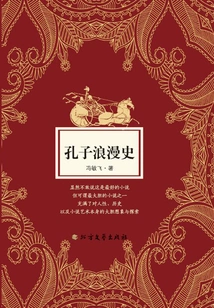
Romance of Confucius
General Fiction孔子浪漫史
Feng Minfei
The book "The Romance of Confucius" tells the story of Confucius traveling around the country, being enthusiastically persuaded by Wei Linggong and his wife Nanzi, and organizing the collection and compilation of Weiguo poems. Confucius and Nanzi had the same affection as father and daughter, but Nanzi did not adopt his political views. Confucius left the army and traveled to more than ten countries but still could not get an appointment. He had to return to the army and compiled poems from all over the world, finally realizing the "mandate of destiny".
The book "The Romance of Confucius" tells the story of Confucius traveling around the country, being enthusiastically persuaded by Wei Linggong and his wife Nanzi, and organizing the collection and compilation of Weiguo poems. Confucius and Nanzi had the same affection as father and daughter, but Nanzi did not adopt his political views. Confucius left the army and traveled to more than ten countries but still could not get an appointment. He had to return to the army and compiled poems from all over the world, finally realizing the "mandate of destiny".
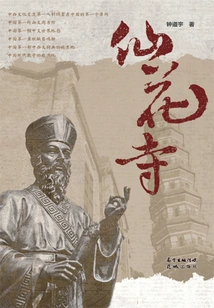
Xianhua Temple
General Fiction仙花寺
Zhong Daoyu
During the Wanli Period of the Ming Dynasty, Matteo Ricci, later known as the first person to bridge Chinese and Western cultures, lived in Zhaoqing for six years as a Tianzhu monk and built the Xianhua Temple in Zhaoqing. This book tells the story of how Matteo Ricci started from Zhaoqing, brought the fruits of Western civilization to China, and how he spread Eastern Confucian culture to the West... The work is based on the real historical data of the mutual exchange between East and West, and uses the vivid and fascinating narrative technique of the novel to construct a story of ups and downs...
During the Wanli Period of the Ming Dynasty, Matteo Ricci, later known as the first person to bridge Chinese and Western cultures, lived in Zhaoqing for six years as a Tianzhu monk and built the Xianhua Temple in Zhaoqing. This book tells the story of how Matteo Ricci started from Zhaoqing, brought the fruits of Western civilization to China, and how he spread Eastern Confucian culture to the West... The work is based on the real historical data of the mutual exchange between East and West, and uses the vivid and fascinating narrative technique of the novel to construct a story of ups and downs...
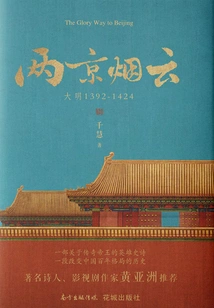
The Smoke and Clouds of Two Capitals: Ming Dynasty 1392-1424
General Fiction两京烟云:大明1392—1424
Qianhui
More than 600 years ago, a contest began between Peking and Yingtianfu (now Nanjing). This contest ultimately led to the northward shift of China's political center, thus changing China's century-old historical pattern. And behind this contest is the bloodshed and sacrifice of countless people. Family, country, love and morality have all rolled away in the torrent of history and been buried in the sand of time...
More than 600 years ago, a contest began between Peking and Yingtianfu (now Nanjing). This contest ultimately led to the northward shift of China's political center, thus changing China's century-old historical pattern. And behind this contest is the bloodshed and sacrifice of countless people. Family, country, love and morality have all rolled away in the torrent of history and been buried in the sand of time...
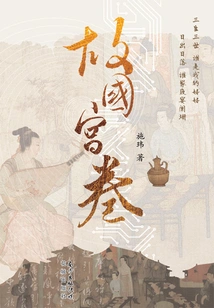
Imperial Palace Scroll
General Fiction故国宫卷
Shi Wei
Five young people from different regions gathered in the Forbidden City in Beijing because of their love for traditional Chinese culture, and thus staged a funny love story that traveled through the late Tang Dynasty and the Southern Tang Dynasty in a quantum way. Song Tianyi, an American-Chinese mixed-race IT boy, came to the Palace Museum in Beijing from California. The first job he accepted was to develop the APP for "Han Xizai's Night Banquet". From there, he met Beijing girl Li Ping'er, Wang Xiaohu who runs a game company, and Taiwanese girls Zhang Haohao and Jin Lingling who demonstrated dance and pipa for "Han Xizai's Night Banquet". Two ancient palace scrolls in the Forbidden City, the late Tang calligraphy "Zhang Haohao Poem" and the Southern Tang painting scroll "Han Xizai's Night Banquet" attracted several young people, who were eager to learn about the stories behind the palace scrolls for different purposes. The palace scroll became the door for them to enter another time and space. In the end, the "Han Xizai Night Banquet" APP was successfully developed. The love that young people found through ancient and modern times was different from the results of the "intelligent novelist" test. What happened...
Five young people from different regions gathered in the Forbidden City in Beijing because of their love for traditional Chinese culture, and thus staged a funny love story that traveled through the late Tang Dynasty and the Southern Tang Dynasty in a quantum way. Song Tianyi, an American-Chinese mixed-race IT boy, came to the Palace Museum in Beijing from California. The first job he accepted was to develop the APP for "Han Xizai's Night Banquet". From there, he met Beijing girl Li Ping'er, Wang Xiaohu who runs a game company, and Taiwanese girls Zhang Haohao and Jin Lingling who demonstrated dance and pipa for "Han Xizai's Night Banquet". Two ancient palace scrolls in the Forbidden City, the late Tang calligraphy "Zhang Haohao Poem" and the Southern Tang painting scroll "Han Xizai's Night Banquet" attracted several young people, who were eager to learn about the stories behind the palace scrolls for different purposes. The palace scroll became the door for them to enter another time and space. In the end, the "Han Xizai Night Banquet" APP was successfully developed. The love that young people found through ancient and modern times was different from the results of the "intelligent novelist" test. What happened...
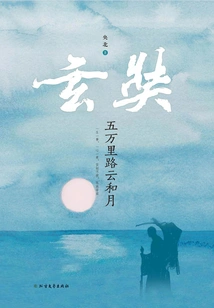
Xuanzang: Fifty Thousand Miles of Clouds and Moon
General Fiction玄奘:五万里路云和月
Yangbei
In the style of a novel, this book tells the story of Xuanzang, a famous eminent monk in the Tang Dynasty, who arrived in Chang'an at the age of 26 and decided to go west to learn Buddhist scriptures. He passed through eight hundred miles of quicksand and visited more than seventy countries, and returned home after seventeen years of study. Xuanzang traveled to many countries, experienced thrilling experiences, and held a firm and moving spirit. He was a spiritual pioneer for the current society, and he is also worthy of learning. He traveled westward to learn more and went through many hardships, which embodies the tenacity of the Chinese people to learn from foreign cultures. The novel respects historical facts, upholds the spirit of Xuanzang, and leads readers to explore along Master Xuanzang's journey of seeking scriptures. While introducing Master Xuanzang's legendary life, it reflects the confidence and wisdom of Chinese national culture.
In the style of a novel, this book tells the story of Xuanzang, a famous eminent monk in the Tang Dynasty, who arrived in Chang'an at the age of 26 and decided to go west to learn Buddhist scriptures. He passed through eight hundred miles of quicksand and visited more than seventy countries, and returned home after seventeen years of study. Xuanzang traveled to many countries, experienced thrilling experiences, and held a firm and moving spirit. He was a spiritual pioneer for the current society, and he is also worthy of learning. He traveled westward to learn more and went through many hardships, which embodies the tenacity of the Chinese people to learn from foreign cultures. The novel respects historical facts, upholds the spirit of Xuanzang, and leads readers to explore along Master Xuanzang's journey of seeking scriptures. While introducing Master Xuanzang's legendary life, it reflects the confidence and wisdom of Chinese national culture.
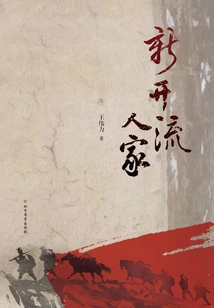
Xinkailiu Family
General Fiction新开流人家
Wang Weili
This book radiates and summarizes a period of history in Heilongjiang by writing the story of Xinkailiu Village, an ancient village on the hills between the Xiaoxingkai Lake in Mishan Mountain. The Xinkailiu people lived in the sparsely populated Northern Wilderness. They fought bravely and tenaciously. They not only fought unremittingly against the dangerous nature and bravely resisted the bandits, but also joined the Northeast Anti-Japanese Allied Forces led by the Communist Party to defend their country and fight against the Japanese, which showed their national righteousness. The author summarizes the history of Heilongjiang, shows the ancient civilization, customs and natural scenery of Heilongjiang, and demonstrates the Chinese people's fearlessness, bravery, tenacity and indomitable spirit.
This book radiates and summarizes a period of history in Heilongjiang by writing the story of Xinkailiu Village, an ancient village on the hills between the Xiaoxingkai Lake in Mishan Mountain. The Xinkailiu people lived in the sparsely populated Northern Wilderness. They fought bravely and tenaciously. They not only fought unremittingly against the dangerous nature and bravely resisted the bandits, but also joined the Northeast Anti-Japanese Allied Forces led by the Communist Party to defend their country and fight against the Japanese, which showed their national righteousness. The author summarizes the history of Heilongjiang, shows the ancient civilization, customs and natural scenery of Heilongjiang, and demonstrates the Chinese people's fearlessness, bravery, tenacity and indomitable spirit.
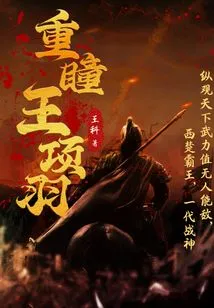
King Xiang Yu with Double Pupils
General Fiction重瞳王项羽
Wang Ke
Based on historical data, this article gives a panoramic view of the fate of Xiang Yu, a generation of heroes, and related historical figures. It uses vivid popular literary language and unofficial historical writing to explain how Xiang Yu's army went from being elite to declining, from being powerful at home to being defeated. It attempts to revisit the process from a contemporary perspective. It newly deconstructs the historical figure Xiang Yu to create a more vivid, three-dimensional and fuller character image, and outlines a magnificent picture of historical figures, giving Xiang Yu culture and Western Chu culture a brand-new image, making it rich in new elements and connotations, making people have endless aftertaste after watching it.
Based on historical data, this article gives a panoramic view of the fate of Xiang Yu, a generation of heroes, and related historical figures. It uses vivid popular literary language and unofficial historical writing to explain how Xiang Yu's army went from being elite to declining, from being powerful at home to being defeated. It attempts to revisit the process from a contemporary perspective. It newly deconstructs the historical figure Xiang Yu to create a more vivid, three-dimensional and fuller character image, and outlines a magnificent picture of historical figures, giving Xiang Yu culture and Western Chu culture a brand-new image, making it rich in new elements and connotations, making people have endless aftertaste after watching it.
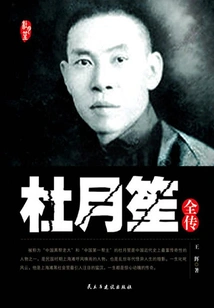
Complete Biography of Du Yuesheng
General Fiction杜月笙全传
Wang Hui
Shanghai during the Republic of China created countless opportunities for gamblers, and Du Yuesheng was one of these gamblers. He dominated Shanghai at that time and was known as the "Chinese Gang Leader." Du Yuesheng went from a "little bastard" to a foreign business ten miles away and became a gang leader in Shanghai. He is gentle and gentle, but ruthless and murderous. His thoughts and personality were complex and changeable, he was in and out of black and white, and he was able to navigate both business and political circles. His life was a reflection of the vicissitudes of the old society. "The Complete Biography of Du Yuesheng" truly tells the story of Du Yuesheng's ups and downs and shocking life, and reveals the shady story of the gangs in old China. From the development to the decline of Du Yuesheng, it reflects the tortuous and changing history of the Republic of China from one aspect.
Shanghai during the Republic of China created countless opportunities for gamblers, and Du Yuesheng was one of these gamblers. He dominated Shanghai at that time and was known as the "Chinese Gang Leader." Du Yuesheng went from a "little bastard" to a foreign business ten miles away and became a gang leader in Shanghai. He is gentle and gentle, but ruthless and murderous. His thoughts and personality were complex and changeable, he was in and out of black and white, and he was able to navigate both business and political circles. His life was a reflection of the vicissitudes of the old society. "The Complete Biography of Du Yuesheng" truly tells the story of Du Yuesheng's ups and downs and shocking life, and reveals the shady story of the gangs in old China. From the development to the decline of Du Yuesheng, it reflects the tortuous and changing history of the Republic of China from one aspect.
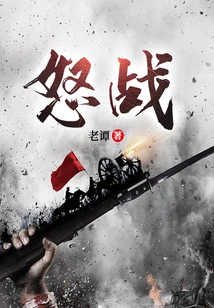
Fight Furiously
General Fiction怒战
Lao Tan
"Wrath of War" is a passionate anti-war theme work. It tells the story of 800 warriors who rushed to the Songhu battlefield, participated in the Sihang Warehouse defense battle, and defended the country's territorial integrity to the death. It reproduced the heroic deeds of 400 warriors from Tongcheng, Hubei on the Songhu battlefield. A group of little people killed local tyrants, fought against gangs, fought to the death with enemy invaders, and eventually grew into the backbone of the nation. The whole story is full of faith, the plot is tense and beautiful, and exciting.
"Wrath of War" is a passionate anti-war theme work. It tells the story of 800 warriors who rushed to the Songhu battlefield, participated in the Sihang Warehouse defense battle, and defended the country's territorial integrity to the death. It reproduced the heroic deeds of 400 warriors from Tongcheng, Hubei on the Songhu battlefield. A group of little people killed local tyrants, fought against gangs, fought to the death with enemy invaders, and eventually grew into the backbone of the nation. The whole story is full of faith, the plot is tense and beautiful, and exciting.
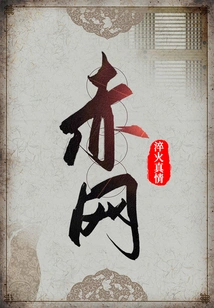
Red Net
General Fiction赤网
Quenching True Feelings
A cadenza of the Chinese nation's modern history of struggle is condensed and sublimated in the work. An underground member of the Communist Party of China who has made great achievements for New China has spent more than ten years in hiding, from the Wang Puppet Government in Nanjing in 1939 to breaking into the military, from hiding in the Chongguang Hall of the Japanese invaders to destroying the enemy organizations hidden in Shanghai after the founding of New China. The nearly 20 years of struggle have performed scenes of evocative, ups and downs, and exciting spy battles. The addition of emotion, faith, wits, suspense and other elements makes the whole work more tense. Sometimes the writing is soothing and focuses on portraying the character's heart; sometimes it is compact and depressing, making people unable to put it down. The author's admiration for the martyrs is revealed in the writing style, and the focus of the writing is used to highlight the pursuit of outlook on life and values. It has a correct guiding role in today's phenomenon of losing the goal of life and blurring moral ethics.
A cadenza of the Chinese nation's modern history of struggle is condensed and sublimated in the work. An underground member of the Communist Party of China who has made great achievements for New China has spent more than ten years in hiding, from the Wang Puppet Government in Nanjing in 1939 to breaking into the military, from hiding in the Chongguang Hall of the Japanese invaders to destroying the enemy organizations hidden in Shanghai after the founding of New China. The nearly 20 years of struggle have performed scenes of evocative, ups and downs, and exciting spy battles. The addition of emotion, faith, wits, suspense and other elements makes the whole work more tense. Sometimes the writing is soothing and focuses on portraying the character's heart; sometimes it is compact and depressing, making people unable to put it down. The author's admiration for the martyrs is revealed in the writing style, and the focus of the writing is used to highlight the pursuit of outlook on life and values. It has a correct guiding role in today's phenomenon of losing the goal of life and blurring moral ethics.
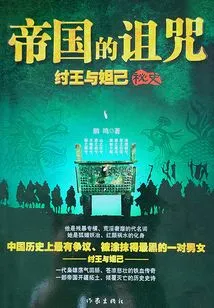
帝国的诅咒:纣王与妲己秘史
Peng Ming
It shows the life of Xin (King Zhou), a great hero, who was passionate about his nature, killed in battles and fought wildly. Su Daji melted the emperor's cold and suspicious heart with tenderness. However, the cruel life-and-death struggle in the court extended to the harem. In order to survive, Su Daji murdered nine of Zi Xin's beloved concubines, slowly opening the mysterious curtain of overt and covert struggles in the harem. The extravagance and debauchery of competing in the wine pool and the meat forest, the brutal behavior of burning loyal people, caesarean section and observing the fetus, the east and west conquests, and excessive expropriation caused the people's resentment to boil. The Zhou people took advantage of the opportunity, and the Yin and Shang empire collapsed. Zi Xin burned himself in the Zhaixing Tower and died for his country.
It shows the life of Xin (King Zhou), a great hero, who was passionate about his nature, killed in battles and fought wildly. Su Daji melted the emperor's cold and suspicious heart with tenderness. However, the cruel life-and-death struggle in the court extended to the harem. In order to survive, Su Daji murdered nine of Zi Xin's beloved concubines, slowly opening the mysterious curtain of overt and covert struggles in the harem. The extravagance and debauchery of competing in the wine pool and the meat forest, the brutal behavior of burning loyal people, caesarean section and observing the fetus, the east and west conquests, and excessive expropriation caused the people's resentment to boil. The Zhou people took advantage of the opportunity, and the Yin and Shang empire collapsed. Zi Xin burned himself in the Zhaixing Tower and died for his country.
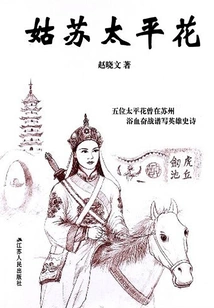
Suzhou Taiping Flower
General Fiction姑苏太平花
Zhao Xiaowen
With the Taiping Heavenly Kingdom as the background of the era, it brilliantly presents a period of historical facts that have been submerged in the dust of history. It combines the legend of classical novels with the delicacy of modern novels, achieving the ideal combination of historical reality and romantic fiction; the story of the five sisters who bravely and strategically kill the enemy, one wave after another, hearty and high-spirited.
With the Taiping Heavenly Kingdom as the background of the era, it brilliantly presents a period of historical facts that have been submerged in the dust of history. It combines the legend of classical novels with the delicacy of modern novels, achieving the ideal combination of historical reality and romantic fiction; the story of the five sisters who bravely and strategically kill the enemy, one wave after another, hearty and high-spirited.
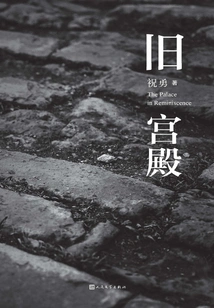
Old Palace
General Fiction旧宫殿
Zhu Yong
Leaving the puzzle of "Blood Court", Zhu Yong traces the original appearance of imperial power in "Old Palace", and derives all kinds of past history from the various palaces, halls, objects and utensils in the Forbidden City. Using the struggle for imperial power as a clue, it interprets the various secret and cruel conspiracy methods used by Zhu Di, the founder of the Ming Dynasty, in the process of seizing power. The author combines a huge research base with the fiction of the novel in solid prose. Through this book, we not only see a kind of unspoken rules hidden deep in the real history, but also see the fragility of the Ming Dynasty that emerged from a conspiracy. Kan's inner world... Zhu Yong lets the cold building gradually warm up with the movement of people and things, becoming a mirror image of "the past reappears", reflecting the countless shadow spider webs in the palace, making blood, killing, struggle and humiliation completely invisible.
Leaving the puzzle of "Blood Court", Zhu Yong traces the original appearance of imperial power in "Old Palace", and derives all kinds of past history from the various palaces, halls, objects and utensils in the Forbidden City. Using the struggle for imperial power as a clue, it interprets the various secret and cruel conspiracy methods used by Zhu Di, the founder of the Ming Dynasty, in the process of seizing power. The author combines a huge research base with the fiction of the novel in solid prose. Through this book, we not only see a kind of unspoken rules hidden deep in the real history, but also see the fragility of the Ming Dynasty that emerged from a conspiracy. Kan's inner world... Zhu Yong lets the cold building gradually warm up with the movement of people and things, becoming a mirror image of "the past reappears", reflecting the countless shadow spider webs in the palace, making blood, killing, struggle and humiliation completely invisible.
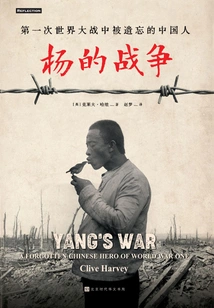
Yang's War
General Fiction杨的战争
(uk) Clive Harvey
During World War I, about 140,000 Chinese men were conscripted to serve as frontline laborers in the United Kingdom and France. This was the "Chinese Labor Brigade" in history. They were responsible for carrying goods, digging trenches, and repairing machines on the battlefield. They did the most painful and tiring jobs. Some of them were attacked by enemy troops and died in foreign lands. The Chinese Labor Brigade provided a buffer and assistance to the British and French troops in their frontline operations. However, after the war, due to various reasons, they became silent and forgotten by history. Nearly a hundred years later, in 2014, British musician Clive Harvey heard the story of the Chinese Labor Brigades. He noticed that there were nearly 60,000 monuments to the First World War across Europe at that time, but none of them mentioned the Chinese. Harvey's "Yang's War" takes "Yang", a man from Shandong, China, as the main story line and tells the story of the joys and sorrows of ordinary people in a foreign land who have been manipulated by history and fate...
During World War I, about 140,000 Chinese men were conscripted to serve as frontline laborers in the United Kingdom and France. This was the "Chinese Labor Brigade" in history. They were responsible for carrying goods, digging trenches, and repairing machines on the battlefield. They did the most painful and tiring jobs. Some of them were attacked by enemy troops and died in foreign lands. The Chinese Labor Brigade provided a buffer and assistance to the British and French troops in their frontline operations. However, after the war, due to various reasons, they became silent and forgotten by history. Nearly a hundred years later, in 2014, British musician Clive Harvey heard the story of the Chinese Labor Brigades. He noticed that there were nearly 60,000 monuments to the First World War across Europe at that time, but none of them mentioned the Chinese. Harvey's "Yang's War" takes "Yang", a man from Shandong, China, as the main story line and tells the story of the joys and sorrows of ordinary people in a foreign land who have been manipulated by history and fate...
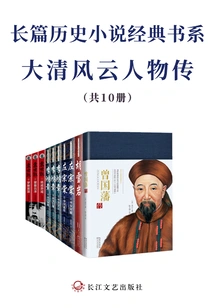
Classic Book Series of Long Historical Novels·biographies of Influential Figures of the Qing Dynasty (10 Volumes in Total)
General Fiction长篇历史小说经典书系·大清风云人物传(共10册)
(u. S.) Hale Er Er He Et Al.
"Zeng Guofan" (three volumes) - a biography of a strange man who experienced great changes in the world. It describes Zeng Guofan's literary and military strategies, advances and retreats, favors and disgrace, philosophy of life, and ability to manage the army and safeguard rights. It restores an important minister of the late Qing Dynasty who had gone through many ups and downs, experienced the ups and downs of the world, and was full of helplessness, complexity, and struggling emotions. "Zuo Zongtang" (two volumes in total) - a magnificent epic from the perspective of a late bloomer. Taking Zuo Zongtang's experience as a clue, it writes about Zuo Zongtang's different experiences before and after he was 40 years old. It records his great feats from pacifying the Taiping Heavenly Kingdom and advocating the Westernization Movement to pacifying the Shaanxi-Gansu Revolution and regaining Xinjiang. "Li Hongzhang" (three volumes in total) - an expose of the political intrigues of the late Qing Dynasty, tells the story of the ups and downs of the famous late Qing official Li Hongzhang, and his magnificent life. It describes his ups and downs, discusses his merits and demerits, and describes the officialdom, military power, human nature and philosophy of life from the perspective of Li Hongzhang. "Hu Xueyan" (all one volume) - The entrepreneurial record of the red-top businessman uses the consistent historical novel style to reinterpret the red-top businessman Hu Xueyan's way of doing business from scratch, from childhood to adulthood, demonstrating the wisdom and strategy, and has great reference significance for contemporary businessmen and business. "Yuan Shikai" (all three volumes) - - The "Epic Mirror" that shines through the modern history of China uses an epic artistic panorama to present the magnificent and difficult process of the Chinese nation overthrowing the monarchy and moving toward republic. It magnificently reproduces major historical events such as the Sino-Japanese War of 1888-1898 and the Reform Movement of 1898, and shaped Yuan Shikai's double life and ups and downs of destiny.
"Zeng Guofan" (three volumes) - a biography of a strange man who experienced great changes in the world. It describes Zeng Guofan's literary and military strategies, advances and retreats, favors and disgrace, philosophy of life, and ability to manage the army and safeguard rights. It restores an important minister of the late Qing Dynasty who had gone through many ups and downs, experienced the ups and downs of the world, and was full of helplessness, complexity, and struggling emotions. "Zuo Zongtang" (two volumes in total) - a magnificent epic from the perspective of a late bloomer. Taking Zuo Zongtang's experience as a clue, it writes about Zuo Zongtang's different experiences before and after he was 40 years old. It records his great feats from pacifying the Taiping Heavenly Kingdom and advocating the Westernization Movement to pacifying the Shaanxi-Gansu Revolution and regaining Xinjiang. "Li Hongzhang" (three volumes in total) - an expose of the political intrigues of the late Qing Dynasty, tells the story of the ups and downs of the famous late Qing official Li Hongzhang, and his magnificent life. It describes his ups and downs, discusses his merits and demerits, and describes the officialdom, military power, human nature and philosophy of life from the perspective of Li Hongzhang. "Hu Xueyan" (all one volume) - The entrepreneurial record of the red-top businessman uses the consistent historical novel style to reinterpret the red-top businessman Hu Xueyan's way of doing business from scratch, from childhood to adulthood, demonstrating the wisdom and strategy, and has great reference significance for contemporary businessmen and business. "Yuan Shikai" (all three volumes) - - The "Epic Mirror" that shines through the modern history of China uses an epic artistic panorama to present the magnificent and difficult process of the Chinese nation overthrowing the monarchy and moving toward republic. It magnificently reproduces major historical events such as the Sino-Japanese War of 1888-1898 and the Reform Movement of 1898, and shaped Yuan Shikai's double life and ups and downs of destiny.
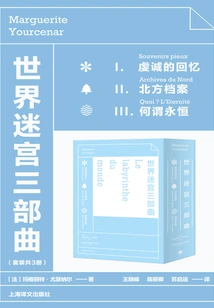
World Labyrinth Trilogy (set of 3 Volumes in Total)
General Fiction世界迷宫三部曲(套装共3册)
J
A trilogy of autobiographical novels by the first female "immortal" of the French Academy, the final work of Yourcenar that has been out of print for ten years. A magnificent triptych that explores history and eternity, it is a great unfinished classic of the 20th century that completely subverts the biography genre and expresses human destiny and historical laws outside of time and space. Literary masters such as Pamuk, Wang Xiaobo, Yu Hua, Alai, Chen Ran, Qiu Miaojin, etc. Are the models of intellectual writing of the French "New Fable School". The "Labyrinth of the World Trilogy" is the representative work of the biography of female writer Margaret Yourcenar, including "Reverent Memories", "Northern Files" and "Northern Files". This trilogy fully embodies the writer's idea that history is a "school of freedom" and the results of her philosophical thinking on human beings.
A trilogy of autobiographical novels by the first female "immortal" of the French Academy, the final work of Yourcenar that has been out of print for ten years. A magnificent triptych that explores history and eternity, it is a great unfinished classic of the 20th century that completely subverts the biography genre and expresses human destiny and historical laws outside of time and space. Literary masters such as Pamuk, Wang Xiaobo, Yu Hua, Alai, Chen Ran, Qiu Miaojin, etc. Are the models of intellectual writing of the French "New Fable School". The "Labyrinth of the World Trilogy" is the representative work of the biography of female writer Margaret Yourcenar, including "Reverent Memories", "Northern Files" and "Northern Files". This trilogy fully embodies the writer's idea that history is a "school of freedom" and the results of her philosophical thinking on human beings.
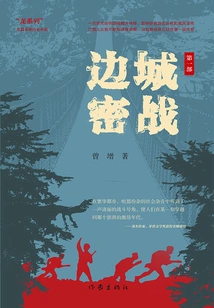
边城密战(“龙系列”第一部)
Zeng Zeng
The Red Army fought extremely hard in the fifth anti-"encirclement and suppression" campaign. They suffered successive defeats in positional battles and suffered heavy casualties. A major strategic shift was imminent. The central leadership dispatched special commissioner Zhong Longhua, the commander of the Tiger Battalion with special skills, to the Arrow Mountain area to find the Arrow Mountain guerrillas. He would seize and defend the mysterious iron bridge over the Grand Canyon at all costs and establish a "system" for the Central Red Army to advance into Hunan. Wang Qingquan, director of the Kuomintang's Nanchang Camp Intelligence Center, learned of this top-secret news and formulated a detailed "Iron Bucket Plan". He sent agent "Monkey King" Wang Xiao to pretend to be a special commissioner and went deep into the Arrow Mountain guerrillas to wait for opportunities to cause sabotage. Because of the betrayal by the traitor, Zhong Longhua's whereabouts were exposed. Wang Qingquan laid out a dragnet and set many traps to round up Zhong Longhua. Zhong Longhua is bold, careful and alert. With his good martial arts and intelligence, he has saved danger time and time again. Since ancient times, beauties love heroes. During the execution of their mission, Lei Longmei, the daughter of the leader of the Leigong Village, and Ouyang Yu, the daughter of the leader of the White Tiger Hall, fell in love with Zhong Longhua at first sight. A chivalrous and heart-wrenching emotional entanglement unfolded between them...
The Red Army fought extremely hard in the fifth anti-"encirclement and suppression" campaign. They suffered successive defeats in positional battles and suffered heavy casualties. A major strategic shift was imminent. The central leadership dispatched special commissioner Zhong Longhua, the commander of the Tiger Battalion with special skills, to the Arrow Mountain area to find the Arrow Mountain guerrillas. He would seize and defend the mysterious iron bridge over the Grand Canyon at all costs and establish a "system" for the Central Red Army to advance into Hunan. Wang Qingquan, director of the Kuomintang's Nanchang Camp Intelligence Center, learned of this top-secret news and formulated a detailed "Iron Bucket Plan". He sent agent "Monkey King" Wang Xiao to pretend to be a special commissioner and went deep into the Arrow Mountain guerrillas to wait for opportunities to cause sabotage. Because of the betrayal by the traitor, Zhong Longhua's whereabouts were exposed. Wang Qingquan laid out a dragnet and set many traps to round up Zhong Longhua. Zhong Longhua is bold, careful and alert. With his good martial arts and intelligence, he has saved danger time and time again. Since ancient times, beauties love heroes. During the execution of their mission, Lei Longmei, the daughter of the leader of the Leigong Village, and Ouyang Yu, the daughter of the leader of the White Tiger Hall, fell in love with Zhong Longhua at first sight. A chivalrous and heart-wrenching emotional entanglement unfolded between them...
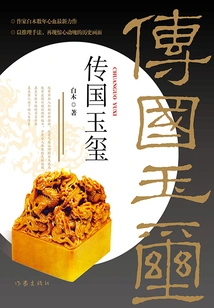
Jade Seal of the Kingdom
General Fiction传国玉玺
Shiraki
Ever since the First Emperor of Qin ordered Prime Minister Li Si to carve an imperial seal out of the priceless Heshi Bi, the jade seal passed down from generation to generation came into being and became a token of the divine power of emperors of all dynasties. Those who gain it regard themselves as the destined emperor, while those who lose it become the ridiculed emperor with a blank slate. The whole book uses reasoning techniques to unfold historical records. Over a span of half a century, the work witnessed the turmoil and bitterness, glory and humiliation of an era through the displacement of the national jade seal. It vividly depicts a large number of historical figures such as Xiao Yan, Xiao Yi, Ran Ji, Yu Wentai, Gao Huan, He Batayue, He Basheng, Hou Jing, Gao Wei, etc., Calmly and naturally showing the colorful historical scenes of the Southern Liang, Northern Zhou and Northern Qi. It is magnificent but also exciting.
Ever since the First Emperor of Qin ordered Prime Minister Li Si to carve an imperial seal out of the priceless Heshi Bi, the jade seal passed down from generation to generation came into being and became a token of the divine power of emperors of all dynasties. Those who gain it regard themselves as the destined emperor, while those who lose it become the ridiculed emperor with a blank slate. The whole book uses reasoning techniques to unfold historical records. Over a span of half a century, the work witnessed the turmoil and bitterness, glory and humiliation of an era through the displacement of the national jade seal. It vividly depicts a large number of historical figures such as Xiao Yan, Xiao Yi, Ran Ji, Yu Wentai, Gao Huan, He Batayue, He Basheng, Hou Jing, Gao Wei, etc., Calmly and naturally showing the colorful historical scenes of the Southern Liang, Northern Zhou and Northern Qi. It is magnificent but also exciting.
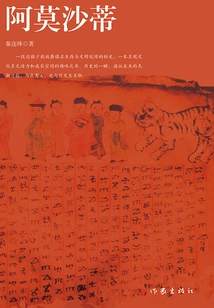
Amosati
General Fiction阿莫沙蒂
Qin Ershu
At the end of the Yuan Dynasty and the beginning of the Ming Dynasty, Zhu Yuanzhang ordered the southern expedition to Yunnan to unify the remnants of the Yuan army in the Central Plains. The King of Yuan and Liang ordered all government offices in Yunnan to resist stubbornly in an attempt to occupy the southwest and confront the Ming Dynasty. However, the indigenous people in Yunnan want to respect the Duan family, a descendant of the Dali Kingdom, as their leader, and the various chieftain houses are intricately entangled with grievances and hatreds, and each has his or her own agenda. Amo Chieftain's Mansion is located in a military fortress and is powerful. Its every move is related to the speed of victory in the war. The divisions and conflicts among the top rulers of the Amo chieftain family made it difficult for the female chieftain Amo Shati to successfully obtain strong support, and the fate of the family branch was difficult to maintain. Against the background of dynasty changes, the crisis of family survival and the pain of alien invasion made the female chieftain feel the responsibility she should bear. Faced with the antagonism between mother and daughter, her brother fighting for inheritance rights, the vacillating priest Xi Po, and the aristocracy who wanted to fight to death for the dignity of their clan, Amosadi made a difficult choice. In the age of war, which is like a torrent and unstoppable, Amo Shadi united the power of the newly wealthy family members, civilians and slaves to turn the tide of genocide and pave a path for survival and development full of controversy and helplessness for the people.
At the end of the Yuan Dynasty and the beginning of the Ming Dynasty, Zhu Yuanzhang ordered the southern expedition to Yunnan to unify the remnants of the Yuan army in the Central Plains. The King of Yuan and Liang ordered all government offices in Yunnan to resist stubbornly in an attempt to occupy the southwest and confront the Ming Dynasty. However, the indigenous people in Yunnan want to respect the Duan family, a descendant of the Dali Kingdom, as their leader, and the various chieftain houses are intricately entangled with grievances and hatreds, and each has his or her own agenda. Amo Chieftain's Mansion is located in a military fortress and is powerful. Its every move is related to the speed of victory in the war. The divisions and conflicts among the top rulers of the Amo chieftain family made it difficult for the female chieftain Amo Shati to successfully obtain strong support, and the fate of the family branch was difficult to maintain. Against the background of dynasty changes, the crisis of family survival and the pain of alien invasion made the female chieftain feel the responsibility she should bear. Faced with the antagonism between mother and daughter, her brother fighting for inheritance rights, the vacillating priest Xi Po, and the aristocracy who wanted to fight to death for the dignity of their clan, Amosadi made a difficult choice. In the age of war, which is like a torrent and unstoppable, Amo Shadi united the power of the newly wealthy family members, civilians and slaves to turn the tide of genocide and pave a path for survival and development full of controversy and helplessness for the people.
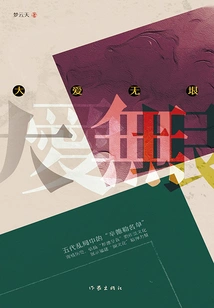
Love is Boundless
General Fiction大爱无垠
Meng Yuntian
"Boundless Love" tells the story of the legendary life of Mrs. Lian, who was revered as "Mother of the City" by later generations, with great virtue and great love under the changing historical background of the Five Dynasties and Ten Kingdoms. Mrs. Lian was in many difficulties when she was young, but she was not afraid of danger, relied on her extraordinary wisdom to turn danger into disaster, and saved others many times. After getting married, she took care of her husband and raised her children, respected her parents-in-law, and supported her husband's career. Her husband, Zhang Zijun, loves the people like a son and enforces strict military laws. With the support of his wife, he has achieved great success and is deeply respected and loved by the people. Many years later, the country of Fujian was in decline. When the elderly Mrs. Lian received a secret notice that the city was about to be massacred, she said, "I am willing to let the whole family die on the same day, but the whole city will live in peace but not gold." She saved 100,000 people in Jianzhou...
"Boundless Love" tells the story of the legendary life of Mrs. Lian, who was revered as "Mother of the City" by later generations, with great virtue and great love under the changing historical background of the Five Dynasties and Ten Kingdoms. Mrs. Lian was in many difficulties when she was young, but she was not afraid of danger, relied on her extraordinary wisdom to turn danger into disaster, and saved others many times. After getting married, she took care of her husband and raised her children, respected her parents-in-law, and supported her husband's career. Her husband, Zhang Zijun, loves the people like a son and enforces strict military laws. With the support of his wife, he has achieved great success and is deeply respected and loved by the people. Many years later, the country of Fujian was in decline. When the elderly Mrs. Lian received a secret notice that the city was about to be massacred, she said, "I am willing to let the whole family die on the same day, but the whole city will live in peace but not gold." She saved 100,000 people in Jianzhou...
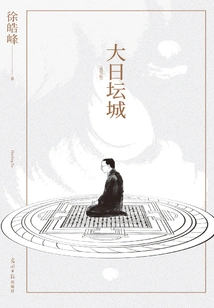
Great Sun Mandala: Rewritten Edition
General Fiction大日坛城:重写版
Xu Haofeng
The protagonist Yu Shangquan is a Go genius. During the Sino-Japanese War in the 1930s and 1940s, with his incredible chess skills, he defeated many Japanese Go masters and won the title of "First Man". He became invincible in challenges one after another. This was in sharp contrast to the situation of China's domestic war of resistance that was losing ground at that time. On the other hand, when the Japanese aggressors were winning successive battles on the Chinese battlefield, they were defeated one after another in the game of Go, which they regarded as their "national skill", at the hands of a Chinese. Around Yu Shangquan, various forces are fighting and fighting to protect him or destroy him: Chinese martial arts masters with special skills, Japanese samurai celebrities, Central Unification agents, Japanese spies, anti-Japanese fighters, traitors... The fighting of various forces is often like thunder on the ground, strange, fast, and breathtaking. Yu Shangquan, who was in the center of the storm, turned a blind eye to all kinds of forces and turned a deaf ear to all dangers. Whether it was the murderous intent on the chessboard or the murderous intent from unknown sources in the dark, he faced it with the heart to die, and survived every desperate situation. But in the end he could not resist the cruel crushing of the wheel of history...
The protagonist Yu Shangquan is a Go genius. During the Sino-Japanese War in the 1930s and 1940s, with his incredible chess skills, he defeated many Japanese Go masters and won the title of "First Man". He became invincible in challenges one after another. This was in sharp contrast to the situation of China's domestic war of resistance that was losing ground at that time. On the other hand, when the Japanese aggressors were winning successive battles on the Chinese battlefield, they were defeated one after another in the game of Go, which they regarded as their "national skill", at the hands of a Chinese. Around Yu Shangquan, various forces are fighting and fighting to protect him or destroy him: Chinese martial arts masters with special skills, Japanese samurai celebrities, Central Unification agents, Japanese spies, anti-Japanese fighters, traitors... The fighting of various forces is often like thunder on the ground, strange, fast, and breathtaking. Yu Shangquan, who was in the center of the storm, turned a blind eye to all kinds of forces and turned a deaf ear to all dangers. Whether it was the murderous intent on the chessboard or the murderous intent from unknown sources in the dark, he faced it with the heart to die, and survived every desperate situation. But in the end he could not resist the cruel crushing of the wheel of history...
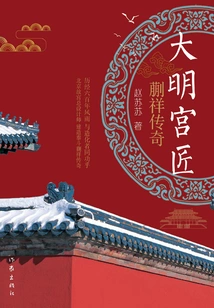
Daming Palace Craftsman
General Fiction大明宫匠
Zhao Susu
Through the legendary life of Kuai Xiang, this book tells the stories that happened inside and outside the palace during the reign of six generations of monarchs from Yongle to Chenghua years of the Ming Dynasty, such as the battle for the right to inherit the throne, the civil war, the defense of Beijing, the gate war, and the Shicao rebellion. The fate of the protagonist followed these thrilling events and ups and downs. Goodness and evil, loyalty and betrayal, family affection, love, friendship... Present a turbulent and magnificent historical picture.
Through the legendary life of Kuai Xiang, this book tells the stories that happened inside and outside the palace during the reign of six generations of monarchs from Yongle to Chenghua years of the Ming Dynasty, such as the battle for the right to inherit the throne, the civil war, the defense of Beijing, the gate war, and the Shicao rebellion. The fate of the protagonist followed these thrilling events and ups and downs. Goodness and evil, loyalty and betrayal, family affection, love, friendship... Present a turbulent and magnificent historical picture.
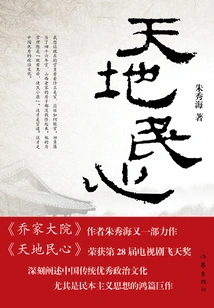
The Hearts of the World and the People
General Fiction天地民心
Zhu Xiuhai
Qi Junzao, the protagonist of "Heaven, Earth and People", is a famous minister and prime minister in the late Qing Dynasty. He started his education at the age of four and entered a private school at the age of six. He has a photographic memory of his reading and is known as a child prodigy. He was a Jinshi at the age of twenty-two, and had served as a bachelor and chief military minister (first grade). He was a famous poet and calligrapher at that time and wrote nearly 3,000 poems in his life. He also wrote the ancient agricultural treatise "Mashou Nongyan". He composed a legendary story of Chinese literati based on his experiences as "three generations of emperors" and "four dynasties of civil servants" in the Qing Dynasty. During the Jiaqing period of the Qing Dynasty, 17-year-old Qi Junzao was talented. After experiencing a sudden family crisis, he began to think about the serious issue of how to be a human being and how to be a scholar. By following Zhang Guanli, the young Qi Junzao established his life beliefs of "putting the people first", "contributing to the emperors Yao and Shun", and "making the people well-off", returned to the "scientific examination", and finally won the gold list. When the Qing Dynasty came to an end, Qi Junzao personally executed his brother-in-law, a corrupt official whom he regarded as his flesh and blood. In the political turmoil filled with secret assassinations, he used his life to protect his "imperial criminal" brother-in-law who was a sympathizer for him. Deep in his heart, he treasured the love of his life. As a scholar and scholar-official, Qi Junzao devoted all his life, love, family affection and wealth to his political ideas, but what he valued more was the "Tao". This "Tao" is exactly the "Tao" pursued by good ministers and literati with lofty ideals in the world. This is the "Heaven, Earth and People's Heart"!
Qi Junzao, the protagonist of "Heaven, Earth and People", is a famous minister and prime minister in the late Qing Dynasty. He started his education at the age of four and entered a private school at the age of six. He has a photographic memory of his reading and is known as a child prodigy. He was a Jinshi at the age of twenty-two, and had served as a bachelor and chief military minister (first grade). He was a famous poet and calligrapher at that time and wrote nearly 3,000 poems in his life. He also wrote the ancient agricultural treatise "Mashou Nongyan". He composed a legendary story of Chinese literati based on his experiences as "three generations of emperors" and "four dynasties of civil servants" in the Qing Dynasty. During the Jiaqing period of the Qing Dynasty, 17-year-old Qi Junzao was talented. After experiencing a sudden family crisis, he began to think about the serious issue of how to be a human being and how to be a scholar. By following Zhang Guanli, the young Qi Junzao established his life beliefs of "putting the people first", "contributing to the emperors Yao and Shun", and "making the people well-off", returned to the "scientific examination", and finally won the gold list. When the Qing Dynasty came to an end, Qi Junzao personally executed his brother-in-law, a corrupt official whom he regarded as his flesh and blood. In the political turmoil filled with secret assassinations, he used his life to protect his "imperial criminal" brother-in-law who was a sympathizer for him. Deep in his heart, he treasured the love of his life. As a scholar and scholar-official, Qi Junzao devoted all his life, love, family affection and wealth to his political ideas, but what he valued more was the "Tao". This "Tao" is exactly the "Tao" pursued by good ministers and literati with lofty ideals in the world. This is the "Heaven, Earth and People's Heart"!
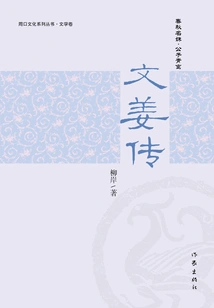
Wen Jiang Chuan
General Fiction文姜传
Willow Bank
This book is the third in the "Famous Women of the Spring and Autumn Period" series. Wen Jiang, who is world-famous for his talent and "Qi Dafei", is the starting point. Through a woman's perspective, it tells the history of Qi State seizing the opportunity of Zheng State's break with the Zhou royal family, Qi Zheng's alliance, Qi State embarking on the road to hegemony, and finally becoming the overlord of the Spring and Autumn Period. This series takes a unique approach and unfolds the Spring and Autumn Period from a female perspective. It does not fabricate or exaggerate, but uses rational language to restore the life of a legendary woman.
This book is the third in the "Famous Women of the Spring and Autumn Period" series. Wen Jiang, who is world-famous for his talent and "Qi Dafei", is the starting point. Through a woman's perspective, it tells the history of Qi State seizing the opportunity of Zheng State's break with the Zhou royal family, Qi Zheng's alliance, Qi State embarking on the road to hegemony, and finally becoming the overlord of the Spring and Autumn Period. This series takes a unique approach and unfolds the Spring and Autumn Period from a female perspective. It does not fabricate or exaggerate, but uses rational language to restore the life of a legendary woman.
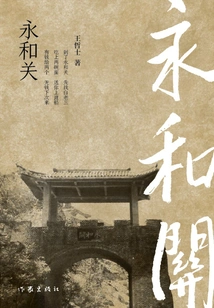
Yongheguan
General Fiction永和关
Wang Zheshi
At the end of the Qing Dynasty and the beginning of the Republic of China, the ancient ferry of the Yellow River in Shanxi Province was at the Baijia Pass in Yonghe. Bai Yonghe, the third young master, lives in the gap between his Confucian grandmother and his business grandfather. He suffers from the hardships of imperial examinations, frequent setbacks in business, the pain of marriage changes, and the ups and downs of life. However, with his righteousness and courage, and adhering to the ancestral motto of "peace is valued and righteousness is beneficial," he influenced his ancestors and resolved clan strife. A long ship, thousands of miles up and down, escaped the momentum of the Bai family and the honest business path. When the Shanxi merchants were completely defeated, it miraculously became a wealthy ship gang merchant.
At the end of the Qing Dynasty and the beginning of the Republic of China, the ancient ferry of the Yellow River in Shanxi Province was at the Baijia Pass in Yonghe. Bai Yonghe, the third young master, lives in the gap between his Confucian grandmother and his business grandfather. He suffers from the hardships of imperial examinations, frequent setbacks in business, the pain of marriage changes, and the ups and downs of life. However, with his righteousness and courage, and adhering to the ancestral motto of "peace is valued and righteousness is beneficial," he influenced his ancestors and resolved clan strife. A long ship, thousands of miles up and down, escaped the momentum of the Bai family and the honest business path. When the Shanxi merchants were completely defeated, it miraculously became a wealthy ship gang merchant.
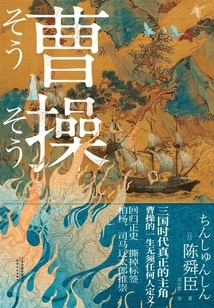
Cao Cao
General Fiction曹操
K
He fought more than sixty battles, escaped death more than ten times, suffered three betrayals and two assassinations. To understand Cao Cao is to understand the Three Kingdoms and the way of history. "Cao Cao" is based on historical facts and takes Cao Cao's family life and career experience as the main line. It objectively presents a flesh-and-blood, three-dimensional and real Cao Cao. A book that allows readers to get to know the different Cao Cao under various labels and the different Three Kingdoms under the war-torn sky!
He fought more than sixty battles, escaped death more than ten times, suffered three betrayals and two assassinations. To understand Cao Cao is to understand the Three Kingdoms and the way of history. "Cao Cao" is based on historical facts and takes Cao Cao's family life and career experience as the main line. It objectively presents a flesh-and-blood, three-dimensional and real Cao Cao. A book that allows readers to get to know the different Cao Cao under various labels and the different Three Kingdoms under the war-torn sky!
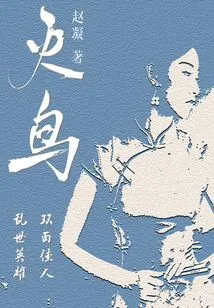
Firebird
General Fiction火鸟
Zhao Ning
In 1943, Shanghai was occupied by the Japanese army. She is the daughter of a wealthy businessman in Shanghai. She originally lived a carefree life, but she couldn't bear to see her family and country destroyed. She resolutely accepted the assigned job, using the codename "Firebird" to secretly convey messages with the sound of the piano. The double-faced beauty resolutely holds on to the hope of transformation in troubled times and suffering!
In 1943, Shanghai was occupied by the Japanese army. She is the daughter of a wealthy businessman in Shanghai. She originally lived a carefree life, but she couldn't bear to see her family and country destroyed. She resolutely accepted the assigned job, using the codename "Firebird" to secretly convey messages with the sound of the piano. The double-faced beauty resolutely holds on to the hope of transformation in troubled times and suffering!
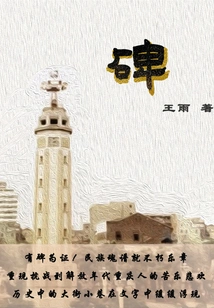
Monument
General Fiction碑
Wang Yu
The novel "The Monument" has a unique and novel perspective, fascinatingly presenting the protagonist's extraordinary life experiences, twists and turns of love and mental journey, and showing the joys, sorrows, joys and perseverance of Chongqing people from the Anti-Japanese War to the liberation. History reappears between the lines, and the memories of the streets and alleys unfold against a broad background. The characters in the book each have different experiences, beliefs, pursuits and persistence. The monument testifies that the melodies composed with blood and tears in the past are deeply rooted in our hearts. In the unrepeatable tragedy, we see the spirit and soul of the nation.
The novel "The Monument" has a unique and novel perspective, fascinatingly presenting the protagonist's extraordinary life experiences, twists and turns of love and mental journey, and showing the joys, sorrows, joys and perseverance of Chongqing people from the Anti-Japanese War to the liberation. History reappears between the lines, and the memories of the streets and alleys unfold against a broad background. The characters in the book each have different experiences, beliefs, pursuits and persistence. The monument testifies that the melodies composed with blood and tears in the past are deeply rooted in our hearts. In the unrepeatable tragedy, we see the spirit and soul of the nation.

God of War
General Fiction战争之神
N
"The God of War" is a novel written by John Toland. It is also a magnificent story told from multiple perspectives by Toland after extensive historical research. By reading this novel, readers can fully understand the changes in the diplomatic relations between Japan and the United States during World War II. They can also reflect on the profound impact of the war on the people of the two countries and even all mankind by observing the fate of two families - the Toda family and the McGlynn family - from small to large. The marriage of Akira Toda and Flos is cross-cultural, so it is destined to go through ups and downs in the war years. The survival instinct will launch a multi-dimensional impact on family affection, love, ideals and beliefs. The well-being of ordinary people is as light as a feather in the smoke-filled years. The novel "God of War" is the work of Pulitzer Prize winner and famous American historian John Toland exclusively introduced by Zhejiang Literature and Art Publishing House. It is also the only fictional work in the "John Toland Historical Series (eight types in total)".
"The God of War" is a novel written by John Toland. It is also a magnificent story told from multiple perspectives by Toland after extensive historical research. By reading this novel, readers can fully understand the changes in the diplomatic relations between Japan and the United States during World War II. They can also reflect on the profound impact of the war on the people of the two countries and even all mankind by observing the fate of two families - the Toda family and the McGlynn family - from small to large. The marriage of Akira Toda and Flos is cross-cultural, so it is destined to go through ups and downs in the war years. The survival instinct will launch a multi-dimensional impact on family affection, love, ideals and beliefs. The well-being of ordinary people is as light as a feather in the smoke-filled years. The novel "God of War" is the work of Pulitzer Prize winner and famous American historian John Toland exclusively introduced by Zhejiang Literature and Art Publishing House. It is also the only fictional work in the "John Toland Historical Series (eight types in total)".
Legend of Shu Queen
General Fiction蜀后传奇
Liu Caicai
Three thousand years ago in ancient Shu, the gods and tribes were divided into different powers. On the surface, they were happy, but in reality, there were undercurrents. The admirer turned into a strange stranger, and murderous intent loomed in the thick fog and smoke; but the title of Sun Goddess suddenly fell from the sky, and overnight, she was protected by the divine bird, the moon was held by the stars, and she gained boundless power. On one side, there is the past that I don't want to go back to. On one side, there is a future that is inevitable. And with a small body of six feet, he can bear the heavy responsibility of the world.
Three thousand years ago in ancient Shu, the gods and tribes were divided into different powers. On the surface, they were happy, but in reality, there were undercurrents. The admirer turned into a strange stranger, and murderous intent loomed in the thick fog and smoke; but the title of Sun Goddess suddenly fell from the sky, and overnight, she was protected by the divine bird, the moon was held by the stars, and she gained boundless power. On one side, there is the past that I don't want to go back to. On one side, there is a future that is inevitable. And with a small body of six feet, he can bear the heavy responsibility of the world.

何谓永恒:世界迷宫III(世界迷宫三部曲)
J
The memoirs of the Yourcenar family, which have been out of print for ten years, are a magnificent triptych that explores history and eternity. The third of a trilogy of autobiographical novels "The Labyrinth of the World", the first female "immortal" of the French Academy, completely subverts the biography genre and continues to be written from the beginning. It slipped from the hand, and like Kafka's "The Castle", it belongs to the great unfinished classics of the 20th century, admired by literary masters such as Pamuk, Wang Xiaobo, Yu Hua, Alai, Chen Ran, Qiu Miaojin, etc., And a model of intellectual writing of the French "New Allegorical School". "What is Eternity" is the last part of Margaret Yourcenar's autobiographical novel trilogy "The Labyrinth of the World". The author tells about his father's life after his mother's death, focusing especially on the intricate emotional entanglement between his mother's close friend Jeanne and his father. He also reviews his childhood and teenage years, and the book ends abruptly with the outbreak of World War I. This book is the one in the trilogy that is most closely integrated with the author's personal experience. Yourcenar also follows her consistent principle of detachment and calmness when describing the close and dearest relatives around her, allowing the people and events in her writing to transcend the limitations of time and geography, reflecting the author's profound thinking about history and time, and a complete subversion of the biography genre. The lingering cloud of war at the end of the work also expresses Yourcenar's deepest worries and most appropriate metaphor for the fate of mankind.
The memoirs of the Yourcenar family, which have been out of print for ten years, are a magnificent triptych that explores history and eternity. The third of a trilogy of autobiographical novels "The Labyrinth of the World", the first female "immortal" of the French Academy, completely subverts the biography genre and continues to be written from the beginning. It slipped from the hand, and like Kafka's "The Castle", it belongs to the great unfinished classics of the 20th century, admired by literary masters such as Pamuk, Wang Xiaobo, Yu Hua, Alai, Chen Ran, Qiu Miaojin, etc., And a model of intellectual writing of the French "New Allegorical School". "What is Eternity" is the last part of Margaret Yourcenar's autobiographical novel trilogy "The Labyrinth of the World". The author tells about his father's life after his mother's death, focusing especially on the intricate emotional entanglement between his mother's close friend Jeanne and his father. He also reviews his childhood and teenage years, and the book ends abruptly with the outbreak of World War I. This book is the one in the trilogy that is most closely integrated with the author's personal experience. Yourcenar also follows her consistent principle of detachment and calmness when describing the close and dearest relatives around her, allowing the people and events in her writing to transcend the limitations of time and geography, reflecting the author's profound thinking about history and time, and a complete subversion of the biography genre. The lingering cloud of war at the end of the work also expresses Yourcenar's deepest worries and most appropriate metaphor for the fate of mankind.

虔诚的回忆:世界迷宫I(世界迷宫三部曲)
(france) Margaret Yourcenard
"Even though he knew that human beings are a mixture of flaws and virtues, he still believed in the future happiness of mankind." The memoirs of the Yourcenar family, which have been out of print for ten years, are a magnificent triptych that explores history and eternity. It is one of the trilogy of autobiographical novels "The Labyrinth of the World", the first female "immortal" of the Academy of France. Literary masters such as Pamuk, Wang Xiaobo, Yu Hua, Alai, Chen Ran, Qiu Miaojin, etc. Are the models of intellectual writing of the French "New Fable School". "Reverent Memories" is the first part of Margaret Yourcenar's autobiographical novel trilogy "The Labyrinth of the World". The author starts from his own birth and traces the history of his mother's family with a panoramic description, focusing on his two uncles Octave and Fernand, whom he has never met, and his mother Fernand, who died of puerperal fever. Yourcenar used a large number of oral materials, letters, photos, aristocratic family yearbooks and leftover items to construct a complete picture of his mother's family. He traced the roots as far back as possible to the longest past, and used a calm and objective writing style to make the images of each ancestor vivid on the page. She is not content to depict various characters in the family, but tries to clarify the theme of "eternity" through this, condensing the family that has been inherited from generation to generation into a symbol in the macroscopic time and space of the world. Standing outside of time and space, she observes with a cold eye, describes the destiny of mankind, and reveals the eternal laws of history.
"Even though he knew that human beings are a mixture of flaws and virtues, he still believed in the future happiness of mankind." The memoirs of the Yourcenar family, which have been out of print for ten years, are a magnificent triptych that explores history and eternity. It is one of the trilogy of autobiographical novels "The Labyrinth of the World", the first female "immortal" of the Academy of France. Literary masters such as Pamuk, Wang Xiaobo, Yu Hua, Alai, Chen Ran, Qiu Miaojin, etc. Are the models of intellectual writing of the French "New Fable School". "Reverent Memories" is the first part of Margaret Yourcenar's autobiographical novel trilogy "The Labyrinth of the World". The author starts from his own birth and traces the history of his mother's family with a panoramic description, focusing on his two uncles Octave and Fernand, whom he has never met, and his mother Fernand, who died of puerperal fever. Yourcenar used a large number of oral materials, letters, photos, aristocratic family yearbooks and leftover items to construct a complete picture of his mother's family. He traced the roots as far back as possible to the longest past, and used a calm and objective writing style to make the images of each ancestor vivid on the page. She is not content to depict various characters in the family, but tries to clarify the theme of "eternity" through this, condensing the family that has been inherited from generation to generation into a symbol in the macroscopic time and space of the world. Standing outside of time and space, she observes with a cold eye, describes the destiny of mankind, and reveals the eternal laws of history.
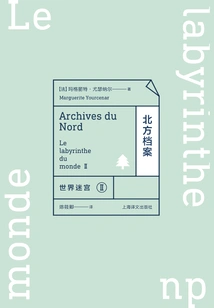
北方档案:世界迷宫II(世界迷宫三部曲)
(france) Margaret Yourcenard
The memoirs of the Yourcenar family, which have been out of print for ten years, are a magnificent triptych that explores history and eternity. It is the second part of the trilogy of the autobiographical novel "The Labyrinth of the World", the first female "immortal" of the French Academy. Literary masters such as Pamuk, Wang Xiaobo, Yu Hua, Alai, Chen Ran, Qiu Miaojin, etc. Are the models of intellectual writing of the French "New Fable School". "Northern Archives: The Labyrinth of the World II" is the second part of the autobiographical novel trilogy "The Labyrinth of the World" by Margaret Yourcenard, the famous French writer and the first female "immortal" of the French Academy. It is a memory mainly based on the paternal family history, telling the life of his grandfather, father and half-brother. "Northern Archives", "Reverent Memories" and "What is Eternity" together form the "Labyrinth of the World" trilogy. Yourcenar traces the mother's family and the father's family as far back as possible, detailing the decline of the two families. In the end, there was only one woman left in the two families. This woman had no heirs, changed her surname, and chose the path of breaking away from the family. The fate of a family symbolizes the fate of mankind. Even though history has the power to serve as evidence and reference, human beings always repeat mistakes, and tragedy seems unstoppable.
The memoirs of the Yourcenar family, which have been out of print for ten years, are a magnificent triptych that explores history and eternity. It is the second part of the trilogy of the autobiographical novel "The Labyrinth of the World", the first female "immortal" of the French Academy. Literary masters such as Pamuk, Wang Xiaobo, Yu Hua, Alai, Chen Ran, Qiu Miaojin, etc. Are the models of intellectual writing of the French "New Fable School". "Northern Archives: The Labyrinth of the World II" is the second part of the autobiographical novel trilogy "The Labyrinth of the World" by Margaret Yourcenard, the famous French writer and the first female "immortal" of the French Academy. It is a memory mainly based on the paternal family history, telling the life of his grandfather, father and half-brother. "Northern Archives", "Reverent Memories" and "What is Eternity" together form the "Labyrinth of the World" trilogy. Yourcenar traces the mother's family and the father's family as far back as possible, detailing the decline of the two families. In the end, there was only one woman left in the two families. This woman had no heirs, changed her surname, and chose the path of breaking away from the family. The fate of a family symbolizes the fate of mankind. Even though history has the power to serve as evidence and reference, human beings always repeat mistakes, and tragedy seems unstoppable.
Wujiangyin
General Fiction乌江引
Pompeii
The manuscript is a full-length novel with a word count of 160,000 words. The manuscript uses "sketch" and "profile" as its main structure, with the work of the Second Bureau of the Central Military Commission, the technical investigation and intelligence agency on the Long March, as the core, recreating the arduous anti-encirclement and suppression struggle on the Long March. Especially around 1935, after the huge losses in the Battle of Xiangjiang, the critical juncture of where our party and army were headed, the intelligence work of the Second Bureau played a crucial role. This book is based on this period of history. After extensive review of declassified archives, the author used solid historical materials and objective historical facts to create characters with novel imagination and reproduce history with "non-fiction" writing. He not only wrote about the spirit of the Long March, the demeanor of great men and the dedication and sacrifice of the officers and soldiers of the Second Bureau, but also wrote about the significance of red history to today. What is even more commendable is that the novel is cleverly conceived. It uses the activities in the secret front of the Second Bureau, the history of several key figures in the Second Bureau and the difficult searches of descendants to cleverly connect the entire history of the Long March, the Anti-Japanese War, and the War of Liberation, and write about the youth, faith, wisdom and original intention of a generation of communists. It is both intimate and touching, yet magnificent and has strong appeal and profound educational significance. It is a rare and excellent party history novel in recent years.
The manuscript is a full-length novel with a word count of 160,000 words. The manuscript uses "sketch" and "profile" as its main structure, with the work of the Second Bureau of the Central Military Commission, the technical investigation and intelligence agency on the Long March, as the core, recreating the arduous anti-encirclement and suppression struggle on the Long March. Especially around 1935, after the huge losses in the Battle of Xiangjiang, the critical juncture of where our party and army were headed, the intelligence work of the Second Bureau played a crucial role. This book is based on this period of history. After extensive review of declassified archives, the author used solid historical materials and objective historical facts to create characters with novel imagination and reproduce history with "non-fiction" writing. He not only wrote about the spirit of the Long March, the demeanor of great men and the dedication and sacrifice of the officers and soldiers of the Second Bureau, but also wrote about the significance of red history to today. What is even more commendable is that the novel is cleverly conceived. It uses the activities in the secret front of the Second Bureau, the history of several key figures in the Second Bureau and the difficult searches of descendants to cleverly connect the entire history of the Long March, the Anti-Japanese War, and the War of Liberation, and write about the youth, faith, wisdom and original intention of a generation of communists. It is both intimate and touching, yet magnificent and has strong appeal and profound educational significance. It is a rare and excellent party history novel in recent years.
General Zhao Sheng
General Fiction赵声将军
Wang Guihong
General Zhao Sheng was a legend throughout his life. He was Sun Yat-sen's right-hand man, leader of the Yangtze Alliance of the Tongmen League, and commander-in-chief of the Huanghuagang Uprising. He had close friendships with Huang Xing, Hu Hanmin, Tan Renfeng, Zhang Shizhao, Wu Yue and others, and trained outstanding talents such as Chen Mingshu, Zhang Yunyi, Deng Yanda, Jiang Guangnai, etc. The famous "Anthem of Protecting the Country" was written by him. He died young and was posthumously promoted to general by Sun Yat-sen. This book restores the growth and struggle of a revolutionary, reproduces the encounters of those figures who played an important role in the modern history of China during the late Qing Dynasty and the Republic of China, and retells the difficult road to republic in modern China from the perspective of a revolutionary.
General Zhao Sheng was a legend throughout his life. He was Sun Yat-sen's right-hand man, leader of the Yangtze Alliance of the Tongmen League, and commander-in-chief of the Huanghuagang Uprising. He had close friendships with Huang Xing, Hu Hanmin, Tan Renfeng, Zhang Shizhao, Wu Yue and others, and trained outstanding talents such as Chen Mingshu, Zhang Yunyi, Deng Yanda, Jiang Guangnai, etc. The famous "Anthem of Protecting the Country" was written by him. He died young and was posthumously promoted to general by Sun Yat-sen. This book restores the growth and struggle of a revolutionary, reproduces the encounters of those figures who played an important role in the modern history of China during the late Qing Dynasty and the Republic of China, and retells the difficult road to republic in modern China from the perspective of a revolutionary.
Classic Book Series of Long Historical Novels·the Prosperous Times of Han and Tang Dynasties (set of 9 Volumes in Total)
General Fiction长篇历史小说经典书系·汉唐盛世(套装共9册)
Yang Huanting Zhao Yang
Emperor Wu of the Han Dynasty (all three volumes) - a panoramic view of the heroic spirit, talents and strategies of a generation of heroes. It begins with Liu Che's childhood, taking over the throne through risks, seizing power, using talents to reform, respecting the king and rejecting the barbarians and other major events. It revolves around conflicts such as peace and war, loyalty and rebellion, life and death, and shows the ups and downs and magnificent life of Emperor Wu of the Han Dynasty. Wu Zetian (all three volumes) - Reproduces Wu Zetian's counterattack life from commoner to emperor. It describes the complex and rich emotional life of a generation of empresses, their wisdom and strategies for managing the country and the world, and their rebellious and lonely extraordinary life, and reproduces the thrilling power situation of the Tang Dynasty. Emperor Taizong of the Tang Dynasty (all three volumes) - comprehensively reproduces the man-made attack path of the "power" of one emperor throughout the ages. The most eminent Emperor in Chinese history is Tang Taizong. He was extremely intelligent and courageous. He launched an army against the Sui Dynasty at the age of 18. Along the way, he defeated Liu Wuzhou, defeated Song Jingang, forced Wang Shichong to surrender, and captured Dou Jiande alive... He made great battles and laid the territorial foundation for the Tang Dynasty.
Emperor Wu of the Han Dynasty (all three volumes) - a panoramic view of the heroic spirit, talents and strategies of a generation of heroes. It begins with Liu Che's childhood, taking over the throne through risks, seizing power, using talents to reform, respecting the king and rejecting the barbarians and other major events. It revolves around conflicts such as peace and war, loyalty and rebellion, life and death, and shows the ups and downs and magnificent life of Emperor Wu of the Han Dynasty. Wu Zetian (all three volumes) - Reproduces Wu Zetian's counterattack life from commoner to emperor. It describes the complex and rich emotional life of a generation of empresses, their wisdom and strategies for managing the country and the world, and their rebellious and lonely extraordinary life, and reproduces the thrilling power situation of the Tang Dynasty. Emperor Taizong of the Tang Dynasty (all three volumes) - comprehensively reproduces the man-made attack path of the "power" of one emperor throughout the ages. The most eminent Emperor in Chinese history is Tang Taizong. He was extremely intelligent and courageous. He launched an army against the Sui Dynasty at the age of 18. Along the way, he defeated Liu Wuzhou, defeated Song Jingang, forced Wang Shichong to surrender, and captured Dou Jiande alive... He made great battles and laid the territorial foundation for the Tang Dynasty.
Classic Book Series of Long Historical Novels·song and Ming Dynasties (set of 13 Volumes)
General Fiction长篇历史小说经典书系·宋明风云(套装全13册)
Bao Liying Yan Tingrui Cai Dongfan Yao Xueyin Yu Rujie
"The Mongol Empire" (4 volumes in total) - a little-known secret history of the Mongol Empire. Taking the rolling torrent of history as the warp and the life experiences of central figures such as Genghis Khan as the weft, the warp and weft are intertwined to compose a little-known secret history of the Mongolian Empire. "The Song Dynasty" (3 volumes in total) - the struggle and loneliness of a group of insightful people. The author uses elegant and refined words and takes the reform as the main line, running through the laws and regulations, customs and sentiments, poems and songs, and military disputes of the Song Dynasty, and then reshapes the image of politicians and literati led by Wang Anshi. It makes the reader feel excited and immersed in the situation. "The Romance of the Ming Dynasty" (2 volumes in total) - a popular history book with detailed historical materials. The history of the Ming Dynasty from the founding of the country by Zhu Yuanzhang to the fall of the country by Chongzhen lasted for 276 years. Zhu Yuanzhang rose to the occasion, and within a few years he expelled Emperor Yuan and unified China. It is a new popular romance of Chinese dynasties with advanced concepts and beautiful writing that fully reflects the historical reality. "Li Zicheng" (4 volumes in total) - an "encyclopedia" of Chinese feudal society. This work fills the gap in the field of long historical novels since the May 4th Movement and won the 1st Mao Dun Literature Award. Based on the principle of "going deep into history and jumping out of history", it describes the intricate historical process and the magnificent peasant uprising of more than 300 years ago.
"The Mongol Empire" (4 volumes in total) - a little-known secret history of the Mongol Empire. Taking the rolling torrent of history as the warp and the life experiences of central figures such as Genghis Khan as the weft, the warp and weft are intertwined to compose a little-known secret history of the Mongolian Empire. "The Song Dynasty" (3 volumes in total) - the struggle and loneliness of a group of insightful people. The author uses elegant and refined words and takes the reform as the main line, running through the laws and regulations, customs and sentiments, poems and songs, and military disputes of the Song Dynasty, and then reshapes the image of politicians and literati led by Wang Anshi. It makes the reader feel excited and immersed in the situation. "The Romance of the Ming Dynasty" (2 volumes in total) - a popular history book with detailed historical materials. The history of the Ming Dynasty from the founding of the country by Zhu Yuanzhang to the fall of the country by Chongzhen lasted for 276 years. Zhu Yuanzhang rose to the occasion, and within a few years he expelled Emperor Yuan and unified China. It is a new popular romance of Chinese dynasties with advanced concepts and beautiful writing that fully reflects the historical reality. "Li Zicheng" (4 volumes in total) - an "encyclopedia" of Chinese feudal society. This work fills the gap in the field of long historical novels since the May 4th Movement and won the 1st Mao Dun Literature Award. Based on the principle of "going deep into history and jumping out of history", it describes the intricate historical process and the magnificent peasant uprising of more than 300 years ago.