Library
Browse and search books
2,472 novels found
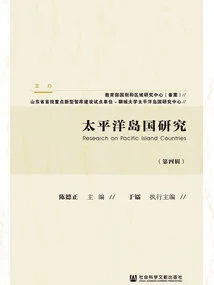
太平洋岛国研究(第4辑)
Editor-in-chief Chen Dezheng
"Pacific Island Countries Studies" is an academic journal sponsored by Liaocheng University. It aims to explore the history and current issues of Pacific Island Countries, focusing on the history and culture, political situation and system, foreign relations, economy, trade and tourism, and regional integration of Pacific Island Countries. This is the fourth volume of this book, which focuses on the relationship between Pacific island countries and China from the perspective of the "One Belt, One Road" initiative, as well as the politics, economy, culture and history of the Pacific island region and island countries.
"Pacific Island Countries Studies" is an academic journal sponsored by Liaocheng University. It aims to explore the history and current issues of Pacific Island Countries, focusing on the history and culture, political situation and system, foreign relations, economy, trade and tourism, and regional integration of Pacific Island Countries. This is the fourth volume of this book, which focuses on the relationship between Pacific island countries and China from the perspective of the "One Belt, One Road" initiative, as well as the politics, economy, culture and history of the Pacific island region and island countries.
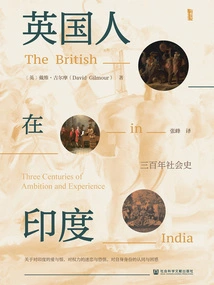
英国人在印度:三百年社会史
(uk) David Gilmour
From the establishment of the East India Company's first trading post in 1615 to India's independence in 1947, who went to India, the "crown jewel" of the British Empire, and what kind of motivation drove these people to risk their lives and embark on a long and unknown journey? When they finally arrived in India, what did they do and what kind of life did they live here? David Gilmore spent decades of painstaking research in archives, excavating many personal documents that few people have set foot on, leading us through remote mountain towns, bustling coastal ports, magnificent palaces, neatly planned barracks and dense jungles, to inspect many The lives of the British who went to India, including governors-general, officials, soldiers, missionaries, planters, rangers, merchants, engineers, teachers and doctors, and even women who challenged tradition, describing their personal experiences, family lives, leisure activities, and complex emotions towards Indians.
From the establishment of the East India Company's first trading post in 1615 to India's independence in 1947, who went to India, the "crown jewel" of the British Empire, and what kind of motivation drove these people to risk their lives and embark on a long and unknown journey? When they finally arrived in India, what did they do and what kind of life did they live here? David Gilmore spent decades of painstaking research in archives, excavating many personal documents that few people have set foot on, leading us through remote mountain towns, bustling coastal ports, magnificent palaces, neatly planned barracks and dense jungles, to inspect many The lives of the British who went to India, including governors-general, officials, soldiers, missionaries, planters, rangers, merchants, engineers, teachers and doctors, and even women who challenged tradition, describing their personal experiences, family lives, leisure activities, and complex emotions towards Indians.
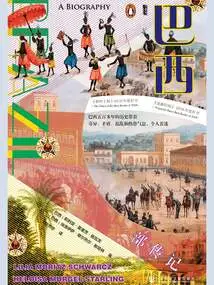
Brazil: a Biography
History巴西:一部传记
(brazil) Lilia Moritz Schwartz Et Al.
Since Europeans first set foot in Brazil in 1500, it has been a place of profound fascination. More than anywhere else in the "New World," Brazil displayed both beauty and splendor, but it also witnessed some of the most horrific atrocities committed by Europeans. This work, written by two leading Brazilian historians, aims to show the history of this vast country from its origins to the 21st century. This book depicts the different periods but near-continuous struggles to establish political institutions and social frameworks, achieve stable economic growth, and protect civil rights - which are the main themes of this book. While in some ways Brazil still hasn't quite achieved that, it remains one of the world's great proving grounds: creative, ruthless and unique. The history of Brazil is a fascinating biography for locals and outsiders alike.
Since Europeans first set foot in Brazil in 1500, it has been a place of profound fascination. More than anywhere else in the "New World," Brazil displayed both beauty and splendor, but it also witnessed some of the most horrific atrocities committed by Europeans. This work, written by two leading Brazilian historians, aims to show the history of this vast country from its origins to the 21st century. This book depicts the different periods but near-continuous struggles to establish political institutions and social frameworks, achieve stable economic growth, and protect civil rights - which are the main themes of this book. While in some ways Brazil still hasn't quite achieved that, it remains one of the world's great proving grounds: creative, ruthless and unique. The history of Brazil is a fascinating biography for locals and outsiders alike.
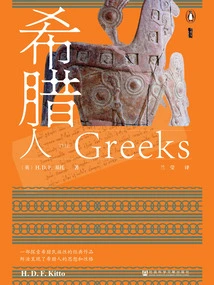
Greek
History希腊人
(english) H. D. F. Kitto
There are countless books in the world that introduce the Greek world to modern readers, but Kitto's "The Greeks" is a classic in the field. This book uses the style of British prose to introduce us to the group of people who shaped and established a new and unique way of life, that is, city-state democracy. Frequently quoting the Greeks themselves, the author shows us how a group of people formed a nation, the nature of the state, the influence of Homer, and the rise and fall of the city-state. It is an in-depth study of the classical period and provides us with an illuminating picture of Greek thought, mythology and religion, life and sensuality.
There are countless books in the world that introduce the Greek world to modern readers, but Kitto's "The Greeks" is a classic in the field. This book uses the style of British prose to introduce us to the group of people who shaped and established a new and unique way of life, that is, city-state democracy. Frequently quoting the Greeks themselves, the author shows us how a group of people formed a nation, the nature of the state, the influence of Homer, and the rise and fall of the city-state. It is an in-depth study of the classical period and provides us with an illuminating picture of Greek thought, mythology and religion, life and sensuality.
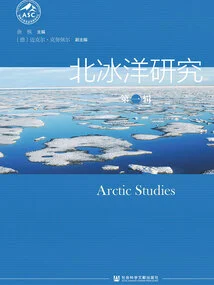
北冰洋研究(第一辑)
Editor-in-chief Qu Feng
"Journal of Arctic Ocean Research" is sponsored by the Arctic Ocean Research Center of Liaocheng University. It is the first and currently the only academic journal on Arctic Ocean research in China. Relying on the Arctic Ocean Research Center of Liaocheng University and the Department of Anthropology of the University of Alaska, this journal mainly publishes research articles on archeology, history, anthropology, religion, ethnology and other fields in Arctic countries or regions. It also translates and introduces the latest foreign research results, which is of great academic value. At the same time, this journal can also provide cultural reference for the country's "Belt and Road" construction and participation in Arctic affairs, which has important practical significance.
"Journal of Arctic Ocean Research" is sponsored by the Arctic Ocean Research Center of Liaocheng University. It is the first and currently the only academic journal on Arctic Ocean research in China. Relying on the Arctic Ocean Research Center of Liaocheng University and the Department of Anthropology of the University of Alaska, this journal mainly publishes research articles on archeology, history, anthropology, religion, ethnology and other fields in Arctic countries or regions. It also translates and introduces the latest foreign research results, which is of great academic value. At the same time, this journal can also provide cultural reference for the country's "Belt and Road" construction and participation in Arctic affairs, which has important practical significance.
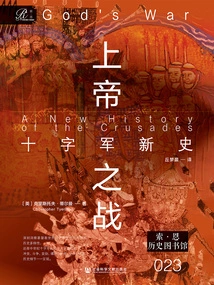
上帝之战:十字军新史
(uk) Christopher Tillman
From 1096 to 1500, European Christians worked hard to reshape the Middle East, Muslim Spain, and the polytheistic Baltics in the image of God. The Crusades, a well-known but easily misunderstood historical event, receive a new look in the writing of Christopher Tillman. He tried to start from the root and restore the true picture of this centuries-long violent conflict in the name of faith.
From 1096 to 1500, European Christians worked hard to reshape the Middle East, Muslim Spain, and the polytheistic Baltics in the image of God. The Crusades, a well-known but easily misunderstood historical event, receive a new look in the writing of Christopher Tillman. He tried to start from the root and restore the true picture of this centuries-long violent conflict in the name of faith.
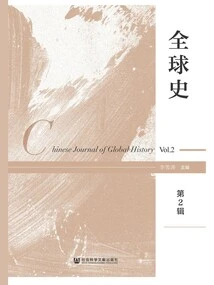
Global History (Volume 2)
History全球史(第2辑)
Editor-in-chief Li Xuetao
"Global History" is sponsored by the School of History at Beijing Foreign Studies University. It publishes two volumes per year. It specializes in publishing papers, translations, interviews and book reviews in the field of global history research. It strives to explore and present human interactions and interactions across various geographical, political and cultural boundaries in modern times at different scales and dimensions, including but not limited to trade history, immigration history, missionary history, language exchange history, knowledge transfer history, environmental history, science and technology history, disease history, conceptual history, translation history, history of study abroad, etc.
"Global History" is sponsored by the School of History at Beijing Foreign Studies University. It publishes two volumes per year. It specializes in publishing papers, translations, interviews and book reviews in the field of global history research. It strives to explore and present human interactions and interactions across various geographical, political and cultural boundaries in modern times at different scales and dimensions, including but not limited to trade history, immigration history, missionary history, language exchange history, knowledge transfer history, environmental history, science and technology history, disease history, conceptual history, translation history, history of study abroad, etc.
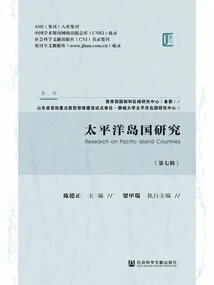
太平洋岛国研究(第7辑)
Editor-in-chief Chen Dezheng
Pacific island countries are an integral part of the southern route of the "21st Century Maritime Silk Road" and an indispensable part of the "Belt and Road" initiative. "Pacific Island Countries Studies" is an academic journal sponsored by the Pacific Island Countries Research Center of Liaocheng University. It relies on the center's advantageous research fields and is guided by Marxism. It strives to work hard on the interpretation of new materials, the application of new theories and the exploration of new perspectives. It mainly publishes academic articles in the field of Pacific Island Countries studies at home and abroad, highlighting the latest research results of Pacific Island Countries studies, which has certain academic and social practical significance. This is the seventh edition. It has columns such as special articles, foreign relations, economy and history, politics and culture, book reviews, and academic trends. It provides a forum for academic exchanges to promote and promote domestic research on Pacific Island countries, highlights the latest research results of Chinese researchers on Pacific Island countries, and contributes to the construction of world history research with Chinese characteristics and characteristics of the times.
Pacific island countries are an integral part of the southern route of the "21st Century Maritime Silk Road" and an indispensable part of the "Belt and Road" initiative. "Pacific Island Countries Studies" is an academic journal sponsored by the Pacific Island Countries Research Center of Liaocheng University. It relies on the center's advantageous research fields and is guided by Marxism. It strives to work hard on the interpretation of new materials, the application of new theories and the exploration of new perspectives. It mainly publishes academic articles in the field of Pacific Island Countries studies at home and abroad, highlighting the latest research results of Pacific Island Countries studies, which has certain academic and social practical significance. This is the seventh edition. It has columns such as special articles, foreign relations, economy and history, politics and culture, book reviews, and academic trends. It provides a forum for academic exchanges to promote and promote domestic research on Pacific Island countries, highlights the latest research results of Chinese researchers on Pacific Island countries, and contributes to the construction of world history research with Chinese characteristics and characteristics of the times.
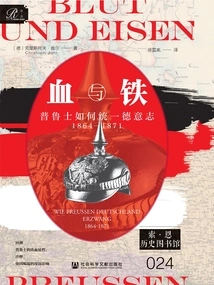
血与铁:普鲁士如何统一德意志,1864—1871
(germany)christophe Jarre
On January 18, 1871, the Hall of Mirrors in the Palace of Versailles witnessed one of the most influential power political changes in the 19th century - the declaration of the establishment of the German Empire. The loose confederacy that had lasted for hundreds of years in Central Europe came to an end, and a nation-state was born that continued to reshape the European continent with its geographical location, territorial scale and economic strength. Why did the unfinished business of the predecessors succeed now? Historian Christoph Jarre adopts a new perspective in this book, retelling the ups and downs of Prussia's "iron and blood" efforts to promote German reunification, and revealing the profound impact of the establishment of the empire on the contemporary world.
On January 18, 1871, the Hall of Mirrors in the Palace of Versailles witnessed one of the most influential power political changes in the 19th century - the declaration of the establishment of the German Empire. The loose confederacy that had lasted for hundreds of years in Central Europe came to an end, and a nation-state was born that continued to reshape the European continent with its geographical location, territorial scale and economic strength. Why did the unfinished business of the predecessors succeed now? Historian Christoph Jarre adopts a new perspective in this book, retelling the ups and downs of Prussia's "iron and blood" efforts to promote German reunification, and revealing the profound impact of the establishment of the empire on the contemporary world.
亚洲史导论
Niu Junkai Editor-in-chief Zhu Mei
The pillars of Greek temples are symmetrical because in Western aesthetic consciousness, binary opposition is balanced and complete. But the history of the world is not a Greek temple, but more like an irregular group of crystals - the sides and facets of different crystals are combined, and irregular edges and boundaries still exist. The history of Asia does not follow the movement of the world's power centers as its logic; it follows the formation of free subjects as its logic. Subjectivity comes from the ability to judge independently, and freedom means dialogue with others as equals. This book collects monographs or discussions on Asian history research by Hamashita Takeshi, Ge Zhaoguang, Sun Ge, Han Dongyu, Niu Junkai, Shen Dansen, Miyajima Hiroshi, Kawago Kozo, Sun Binggui, Zhu Mei, and Liu Zhiwei. They focus on their respective issues. Starting from the consciousness, it elucidates the understanding of the academic boundaries, main issues, existing models, academic growth points and other issues of Asian history. It reflects the latest thinking of local Asian scholars on the research of Asian history, and has academic historical and methodological significance.
The pillars of Greek temples are symmetrical because in Western aesthetic consciousness, binary opposition is balanced and complete. But the history of the world is not a Greek temple, but more like an irregular group of crystals - the sides and facets of different crystals are combined, and irregular edges and boundaries still exist. The history of Asia does not follow the movement of the world's power centers as its logic; it follows the formation of free subjects as its logic. Subjectivity comes from the ability to judge independently, and freedom means dialogue with others as equals. This book collects monographs or discussions on Asian history research by Hamashita Takeshi, Ge Zhaoguang, Sun Ge, Han Dongyu, Niu Junkai, Shen Dansen, Miyajima Hiroshi, Kawago Kozo, Sun Binggui, Zhu Mei, and Liu Zhiwei. They focus on their respective issues. Starting from the consciousness, it elucidates the understanding of the academic boundaries, main issues, existing models, academic growth points and other issues of Asian history. It reflects the latest thinking of local Asian scholars on the research of Asian history, and has academic historical and methodological significance.
坎尼的幽灵:汉尼拔与罗马共和国最黑暗的时刻
(us) Robert L. O'connell
In 216 BC, Carthage defeated Rome at Cannae, a battle that has been admired and revered for thousands of years. It was Hannibal's most unexpected, innovative, and bloody military victory that no other general since then could match. Robert L. O'Connell, one of the most respected figures in military history, tells the story of the Battle of Cannae in its entirety for the first time, bringing readers a thrilling record of this apocalyptic battle.
In 216 BC, Carthage defeated Rome at Cannae, a battle that has been admired and revered for thousands of years. It was Hannibal's most unexpected, innovative, and bloody military victory that no other general since then could match. Robert L. O'Connell, one of the most respected figures in military history, tells the story of the Battle of Cannae in its entirety for the first time, bringing readers a thrilling record of this apocalyptic battle.
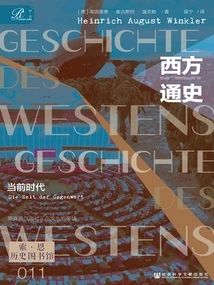
西方通史:当前时代
(germany) Heinrich August Winkler
This volume is the last volume in the four-volume "General History of the West" written by the German historian Winkler. Since the end of the Cold War, the world has become neither simpler nor more peaceful. Terrorist attacks, territorial disputes, global financial turmoil, financial and people's livelihood issues, the struggle between nation-state interests and supranational communities, the refugee crisis, and the Ebola epidemic have had a profound impact on all mankind. They have once again challenged what the "West" is and how the "West" will stand. This short period of contemporary history is full of crises and changes. It is not a final conclusion to the entire long history of the West, but an open discussion that faces current world issues head-on. As a responsible intellectual, historian Winkler did not shy away from talking about these issues because of the unforeseeable outcome and insufficient research documents. He admitted that all conclusions on contemporary history are inevitably tentative and subjective, and believed that to escape from real difficulties, international scholars need to be determined to be realistic, otherwise they will not be able to raise illuminating questions and substantive answers. It is this point that allows readers to see once again that "the West" is not a static "conclusion", but a dynamic development "process". It is the product of continuous shaping of ideology and political practice, and it is also a manifestation of continuous mistakes and self-regulation on the way to pursue values such as freedom and democracy. Winkler also firmly believes that the ideological legacy of 1776 and 1789 is still far from exhausted.
This volume is the last volume in the four-volume "General History of the West" written by the German historian Winkler. Since the end of the Cold War, the world has become neither simpler nor more peaceful. Terrorist attacks, territorial disputes, global financial turmoil, financial and people's livelihood issues, the struggle between nation-state interests and supranational communities, the refugee crisis, and the Ebola epidemic have had a profound impact on all mankind. They have once again challenged what the "West" is and how the "West" will stand. This short period of contemporary history is full of crises and changes. It is not a final conclusion to the entire long history of the West, but an open discussion that faces current world issues head-on. As a responsible intellectual, historian Winkler did not shy away from talking about these issues because of the unforeseeable outcome and insufficient research documents. He admitted that all conclusions on contemporary history are inevitably tentative and subjective, and believed that to escape from real difficulties, international scholars need to be determined to be realistic, otherwise they will not be able to raise illuminating questions and substantive answers. It is this point that allows readers to see once again that "the West" is not a static "conclusion", but a dynamic development "process". It is the product of continuous shaping of ideology and political practice, and it is also a manifestation of continuous mistakes and self-regulation on the way to pursue values such as freedom and democracy. Winkler also firmly believes that the ideological legacy of 1776 and 1789 is still far from exhausted.
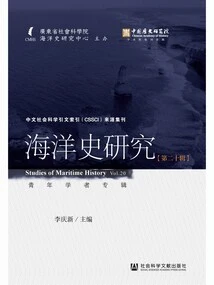
海洋史研究(第20辑):青年学者专辑
Editor-in-chief Li Qingxin
"Marine History Research" is an academic publication funded by the Chinese Academy of History sponsored by the Maritime History Research Center of the Guangdong Academy of Social Sciences. This book is the 20th volume. It mainly discusses maritime trade in ancient and modern seas, navigation activities in various countries around the world, navigation technology exchanges and nautical chart research, the formation of seaport cities in Southeast Asia and China routes, customs history, etc. The book is divided into two special topics: monographs and academic reviews. The monograph section focuses on maritime history issues in Vietnam, and there are also articles on the ancient Mediterranean international system, Russia's Northern Sea Route, and Malacca Sea Law. The academic reviews are two reviews of maritime history works.
"Marine History Research" is an academic publication funded by the Chinese Academy of History sponsored by the Maritime History Research Center of the Guangdong Academy of Social Sciences. This book is the 20th volume. It mainly discusses maritime trade in ancient and modern seas, navigation activities in various countries around the world, navigation technology exchanges and nautical chart research, the formation of seaport cities in Southeast Asia and China routes, customs history, etc. The book is divided into two special topics: monographs and academic reviews. The monograph section focuses on maritime history issues in Vietnam, and there are also articles on the ancient Mediterranean international system, Russia's Northern Sea Route, and Malacca Sea Law. The academic reviews are two reviews of maritime history works.
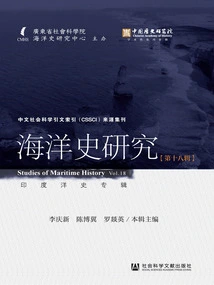
海洋史研究(第18辑):印度洋史专辑
Li Qingxin, Luo Yiying, Chief Editor Chen Boyi
"Marine History Research" is an academic publication funded by the Chinese Academy of History sponsored by the Maritime History Research Center of the Guangdong Academy of Social Sciences. This book is the 18th volume. It is the first academic album in China with the theme of Indian Ocean history. It discusses the achievements and new thinking, new concepts, and new theories in the study of Indian Ocean history in the integration of global history, regional history, and transnational history. The content covers long-distance cross-sea commercial activities in the Indian Ocean world, China-Africa porcelain trade, port society and merchant groups, and Chinese business networks. It also explores the history of navigation, medical diseases, and ecological environment that have been neglected in the past.
"Marine History Research" is an academic publication funded by the Chinese Academy of History sponsored by the Maritime History Research Center of the Guangdong Academy of Social Sciences. This book is the 18th volume. It is the first academic album in China with the theme of Indian Ocean history. It discusses the achievements and new thinking, new concepts, and new theories in the study of Indian Ocean history in the integration of global history, regional history, and transnational history. The content covers long-distance cross-sea commercial activities in the Indian Ocean world, China-Africa porcelain trade, port society and merchant groups, and Chinese business networks. It also explores the history of navigation, medical diseases, and ecological environment that have been neglected in the past.
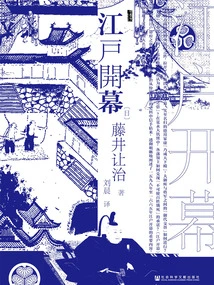
Opening of Edo
History江户开幕
(japan) Fujii Joji
The Summer Battle of Osaka, where Sanada Yukimura fought to the death, marked the beginning of the demise of the Toyotomi clan. Tokugawa Ieyasu, who deservedly held the power of the world, promulgated the laws of the samurai, forbidden and public families in the same year, thereby establishing his dominance among the daimyo and the imperial court throughout the country. After Ieyasu died in 1616 the following year, Hidetada and Iemitsu continued to strengthen the shogunate politics and gradually established the Laochu system as the basis of the political power. As a result, even if the shogun was bedridden, government affairs could be carried out without hindrance. This book is a masterpiece that clearly analyzes the power of the Edo shogunate that lasted for more than 260 years.
The Summer Battle of Osaka, where Sanada Yukimura fought to the death, marked the beginning of the demise of the Toyotomi clan. Tokugawa Ieyasu, who deservedly held the power of the world, promulgated the laws of the samurai, forbidden and public families in the same year, thereby establishing his dominance among the daimyo and the imperial court throughout the country. After Ieyasu died in 1616 the following year, Hidetada and Iemitsu continued to strengthen the shogunate politics and gradually established the Laochu system as the basis of the political power. As a result, even if the shogun was bedridden, government affairs could be carried out without hindrance. This book is a masterpiece that clearly analyzes the power of the Edo shogunate that lasted for more than 260 years.
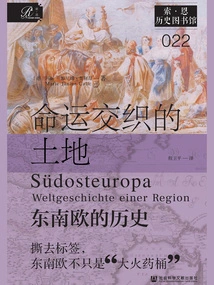
命运交织的土地:东南欧的历史
(germany) Marie-janina Chalic
"Strong empires are all similar, but unfortunate countries have their own misfortunes." Different ethnic groups living in Southeast Europe undoubtedly have many common historical experiences, but they have never been able to find a unified identity. A unique diversity has developed here, and this quality is precisely the result of thousands of years of cross-regional exchanges. Marie-Janina Chalic chooses to narrate the history of Southeast Europe from the unconventional perspective of world interdependence, because many historical processes cannot be understood at all if we think only within the framework of closed regions and countries. By examining cross-border interactions, connections, and experiences, interspersed with micro-narratives that are highly humane and graphic, Chalik presents a new, multi-faceted picture that is completely different from the stereotype of the backward, ever-violent "European Other" in Southeastern Europe. From this, it is not difficult for readers to discover that the story of this land is far richer and more vivid than what traditional historical narratives present.
"Strong empires are all similar, but unfortunate countries have their own misfortunes." Different ethnic groups living in Southeast Europe undoubtedly have many common historical experiences, but they have never been able to find a unified identity. A unique diversity has developed here, and this quality is precisely the result of thousands of years of cross-regional exchanges. Marie-Janina Chalic chooses to narrate the history of Southeast Europe from the unconventional perspective of world interdependence, because many historical processes cannot be understood at all if we think only within the framework of closed regions and countries. By examining cross-border interactions, connections, and experiences, interspersed with micro-narratives that are highly humane and graphic, Chalik presents a new, multi-faceted picture that is completely different from the stereotype of the backward, ever-violent "European Other" in Southeastern Europe. From this, it is not difficult for readers to discover that the story of this land is far richer and more vivid than what traditional historical narratives present.
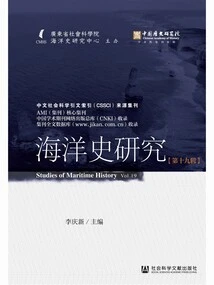
海洋史研究(第19辑)
Editor-in-chief Li Qingxin
"Marine History Research" is a professional academic journal founded by the Guangdong Academy of Social Sciences. It has been published in two series every year since 2018. Each series contains about 20 academic articles. It has columns such as special talks, special papers, and academic reviews. It includes relevant special papers according to the changes in academic focus, reflecting the academic frontier of marine history research. In 2021, it received funding for academic journals from the Chinese Academy of History. This volume is the collection of "Marine History Research" (the 19th edition), which contains about 20 special papers on maritime history research. It mainly discusses issues related to Atlantic history, with in-depth research and unique insights. It also includes papers from foreign maritime history research experts, which reflects the academic level of international maritime history researchers and reflects the international research frontier.
"Marine History Research" is a professional academic journal founded by the Guangdong Academy of Social Sciences. It has been published in two series every year since 2018. Each series contains about 20 academic articles. It has columns such as special talks, special papers, and academic reviews. It includes relevant special papers according to the changes in academic focus, reflecting the academic frontier of marine history research. In 2021, it received funding for academic journals from the Chinese Academy of History. This volume is the collection of "Marine History Research" (the 19th edition), which contains about 20 special papers on maritime history research. It mainly discusses issues related to Atlantic history, with in-depth research and unique insights. It also includes papers from foreign maritime history research experts, which reflects the academic level of international maritime history researchers and reflects the international research frontier.
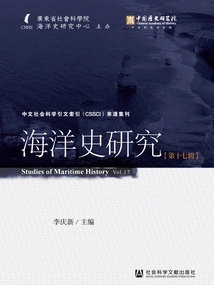
海洋史研究(第17辑)
Editor-in-chief Li Qingxin
"Marine History Research" is an academic publication funded by the Chinese Academy of History sponsored by the Maritime History Research Center of the Guangdong Academy of Social Sciences. This book is the 17th volume. The articles are mainly selected from the 2019 International Academic Symposium on "Exchanges between the Pearl River Estuary Bay Area and the Pacific-Indian Ocean in the Age of Discovery" and the "2019 (Second) Young Scholars Forum on Maritime History Research". The content includes the history of life in maritime societies, East Asian trade and regional politics, the history of the Pearl River Estuary Bay Area, and the introduction of marine archeology and marine documents. It integrates and improves the research on the life history of marine society, the history of ideas, and the history of culture from the perspective of global history and comparative perspective, and provides valuable reference for the study of maritime regional history and marine geographical space in terms of method and theory.
"Marine History Research" is an academic publication funded by the Chinese Academy of History sponsored by the Maritime History Research Center of the Guangdong Academy of Social Sciences. This book is the 17th volume. The articles are mainly selected from the 2019 International Academic Symposium on "Exchanges between the Pearl River Estuary Bay Area and the Pacific-Indian Ocean in the Age of Discovery" and the "2019 (Second) Young Scholars Forum on Maritime History Research". The content includes the history of life in maritime societies, East Asian trade and regional politics, the history of the Pearl River Estuary Bay Area, and the introduction of marine archeology and marine documents. It integrates and improves the research on the life history of marine society, the history of ideas, and the history of culture from the perspective of global history and comparative perspective, and provides valuable reference for the study of maritime regional history and marine geographical space in terms of method and theory.
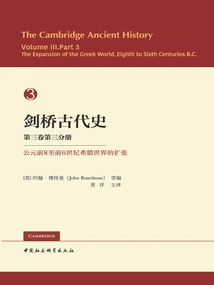
剑桥古代史(第三卷·第三分册):公元前8至前6世纪希腊世界的扩张
(uk) Edited By John Boardman And Others
"Cambridge Ancient History" (Volume 3, Part 3) focuses on the expansion of the Greek world from the 8th to 6th centuries BC. This book covers the activities of the Greeks in the Near East, Egypt, and Cyprus, discusses their colonial expansion, involves the colonial situation in Asia Minor, Sicily, and other places, as well as the relationship between the colonies, the mother state, and the indigenous people, and analyzes the causes of the colonial movement. It also introduces the situation of the Greeks in the west and east, Crete, Euboea and the Aegean Islands, explains the development of Illyris, Epirus, Macedonia, central Greece, Thessaly, and the Peloponnese Peninsula, details the national development of Athens and the tyrant politics of Pisistratus, discusses the economic and social conditions of the Greek world and the material culture of the Archaic era, and provides comprehensive and in-depth content for the study of Greek history in this period, which is both academic and informative.
"Cambridge Ancient History" (Volume 3, Part 3) focuses on the expansion of the Greek world from the 8th to 6th centuries BC. This book covers the activities of the Greeks in the Near East, Egypt, and Cyprus, discusses their colonial expansion, involves the colonial situation in Asia Minor, Sicily, and other places, as well as the relationship between the colonies, the mother state, and the indigenous people, and analyzes the causes of the colonial movement. It also introduces the situation of the Greeks in the west and east, Crete, Euboea and the Aegean Islands, explains the development of Illyris, Epirus, Macedonia, central Greece, Thessaly, and the Peloponnese Peninsula, details the national development of Athens and the tyrant politics of Pisistratus, discusses the economic and social conditions of the Greek world and the material culture of the Archaic era, and provides comprehensive and in-depth content for the study of Greek history in this period, which is both academic and informative.
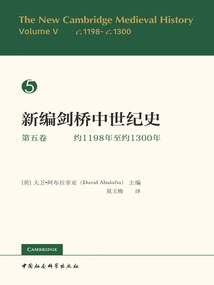
新编剑桥中世纪史(第五卷):约1198年至约1300年
(uk) Editor-in-chief David Aboulafia
The authority of "The New Cambridge History of the Middle Ages" is universally recognized, and it is listed as a basic collection of historical and other related subject libraries around the world. To a certain extent, it has the nature of a reference book. This volume is The New Cambridge History of the Middle Ages. "Volume Five, About 1198 to About 1300" mainly explains the history of Europe in the 13th century, using the interaction between Western Europe and outside peripheral areas as the research framework, highlighting the theme of "expansion" from multiple dimensions: such as the expansion of the Catholic Church, the rapid growth of the European population and economic expansion, and the in-depth development of royal power.
The authority of "The New Cambridge History of the Middle Ages" is universally recognized, and it is listed as a basic collection of historical and other related subject libraries around the world. To a certain extent, it has the nature of a reference book. This volume is The New Cambridge History of the Middle Ages. "Volume Five, About 1198 to About 1300" mainly explains the history of Europe in the 13th century, using the interaction between Western Europe and outside peripheral areas as the research framework, highlighting the theme of "expansion" from multiple dimensions: such as the expansion of the Catholic Church, the rapid growth of the European population and economic expansion, and the in-depth development of royal power.
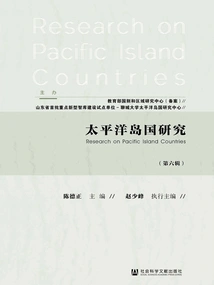
太平洋岛国研究(第6辑)
Editor-in-chief Chen Dezheng
"Pacific Island Countries Studies" is an academic journal sponsored by Liaocheng University. It aims to explore the history and current issues of Pacific Island Countries, focusing on the history and culture, political situation and system, foreign relations, economy, trade and tourism, and regional integration of Pacific Island Countries. This book is the 6th volume. It has columns such as special articles, "One Belt and One Road" and Pacific Island Countries, diseases and epidemics, society and economy, culture and art, essays, book reviews and book news, and conference communications. The author has theoretically analyzed the politics, diplomacy, culture, and education of the Pacific Islands region and Pacific Island Countries from different research perspectives, and has made useful explorations for in-depth research on Pacific Island Countries.
"Pacific Island Countries Studies" is an academic journal sponsored by Liaocheng University. It aims to explore the history and current issues of Pacific Island Countries, focusing on the history and culture, political situation and system, foreign relations, economy, trade and tourism, and regional integration of Pacific Island Countries. This book is the 6th volume. It has columns such as special articles, "One Belt and One Road" and Pacific Island Countries, diseases and epidemics, society and economy, culture and art, essays, book reviews and book news, and conference communications. The author has theoretically analyzed the politics, diplomacy, culture, and education of the Pacific Islands region and Pacific Island Countries from different research perspectives, and has made useful explorations for in-depth research on Pacific Island Countries.
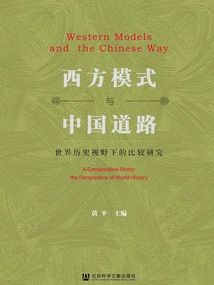
The Western Model and the Chinese Road: a Comparative Study from a World Historical Perspective
History西方模式与中国道路:世界历史视野下的比较研究
Editor-in-chief Huang Ping
The social, political and academic ideological changes in China over the past hundred years have always been inseparable from the issue of how to understand and treat the development path and model dominated by the West. During the late Qing Dynasty and the Republic of China, there was a debate over the "appropriation" of Chinese and Western development models. After the May Fourth Movement, especially after the founding of the Communist Party of China, through continuous exploration of the Chinese path and the practice of building socialism with Chinese characteristics, and on the basis of constantly accommodating the development experience of China and the West and ancient and modern times, a Chinese-style modernization path is being forged. The articles included in this book analyze the historical and institutional differences between Chinese and Western development models from the historical formation and institutional structure of the Chinese path, the historical evolution of the Western model, the crisis and reconstruction of the global order, and the comparative study of Chinese and Western systems.
The social, political and academic ideological changes in China over the past hundred years have always been inseparable from the issue of how to understand and treat the development path and model dominated by the West. During the late Qing Dynasty and the Republic of China, there was a debate over the "appropriation" of Chinese and Western development models. After the May Fourth Movement, especially after the founding of the Communist Party of China, through continuous exploration of the Chinese path and the practice of building socialism with Chinese characteristics, and on the basis of constantly accommodating the development experience of China and the West and ancient and modern times, a Chinese-style modernization path is being forged. The articles included in this book analyze the historical and institutional differences between Chinese and Western development models from the historical formation and institutional structure of the Chinese path, the historical evolution of the Western model, the crisis and reconstruction of the global order, and the comparative study of Chinese and Western systems.
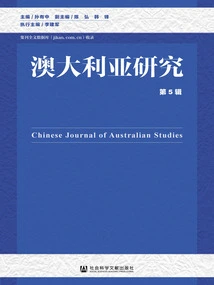
澳大利亚研究(第5辑)
Editor-in-chief Sun Youzhong
"Australia Studies" is sponsored by the China Australia Studies Association and the Australian Studies Center of Beijing Foreign Studies University. It is the first interdisciplinary Australian country studies academic journal in China. It mainly publishes academic papers in the fields of Australian politics, economy, society, culture, diplomacy and other fields. "Australian Studies" provides a platform for academic exchanges to promote and promote domestic Australian country studies and comprehensively display the new results of China's Australian country studies.
"Australia Studies" is sponsored by the China Australia Studies Association and the Australian Studies Center of Beijing Foreign Studies University. It is the first interdisciplinary Australian country studies academic journal in China. It mainly publishes academic papers in the fields of Australian politics, economy, society, culture, diplomacy and other fields. "Australian Studies" provides a platform for academic exchanges to promote and promote domestic Australian country studies and comprehensively display the new results of China's Australian country studies.
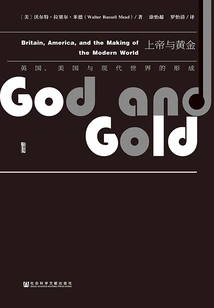
上帝与黄金:英国、美国与现代世界的形成
(u. S.) Walter Russell Mead
This book won the "Washington Post Book World" Best Nonfiction Book of 2008. Weaving together history, literature, philosophy and religion, it is an important work, authoritative and coherent. At the same time, it is also a book that outlines the development system of the modern world with the Anglo-Saxon nation as its core. It interprets the history of recent centuries from a new perspective, allowing readers to have a deep understanding of today's British and American countries and the world.
This book won the "Washington Post Book World" Best Nonfiction Book of 2008. Weaving together history, literature, philosophy and religion, it is an important work, authoritative and coherent. At the same time, it is also a book that outlines the development system of the modern world with the Anglo-Saxon nation as its core. It interprets the history of recent centuries from a new perspective, allowing readers to have a deep understanding of today's British and American countries and the world.
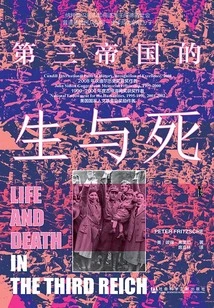
第三帝国的生与死
(us) Peter Fritsch
This book uses a calm and objective tone to describe and analyze how Nazi ideology gradually became dominant in Germany. The core of the Nazis' basic appeal was national community. It called on all Germans to correct the mistakes of the Treaty of Versailles, strive to make the country strong and dynamic, and eliminate "unhealthy" factors in the system. For Germany to survive, others (especially the Jews) had to die. The diaries and letters revealed by Fritsche reveal the fears, desires and misgivings of Germans and show how Nazi concepts permeated the daily lives of ordinary Germans. This book explores in a new light how Germans struggled to adapt to a new racial identity, believe in the necessity of war, and accept unconditional destruction-in short, how to become Nazis.
This book uses a calm and objective tone to describe and analyze how Nazi ideology gradually became dominant in Germany. The core of the Nazis' basic appeal was national community. It called on all Germans to correct the mistakes of the Treaty of Versailles, strive to make the country strong and dynamic, and eliminate "unhealthy" factors in the system. For Germany to survive, others (especially the Jews) had to die. The diaries and letters revealed by Fritsche reveal the fears, desires and misgivings of Germans and show how Nazi concepts permeated the daily lives of ordinary Germans. This book explores in a new light how Germans struggled to adapt to a new racial identity, believe in the necessity of war, and accept unconditional destruction-in short, how to become Nazis.
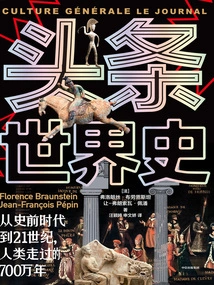
Headline World History
History头条世界史
(france) Florence Braunstein Jean-francois Pépin
What was the living condition of great apes on the African continent in prehistoric times? Does the ancient Greek poet "Homer" really exist? Peisistratus mobilized all his forces to investigate a man named "Homer". His name either refers to "blind man" or "hostage", and some say he is a woman. How did people in the Middle Ages keep themselves clean? Bathing was a luxury at that time: the steam bath cost 2 silver coins and the hot steam bath cost 4 silver coins - the price was set by the Paris judge. Fashion columns reveal the secrets of life trends in every era. Fashionistas in the 18th century claimed: "I will not wear a hat that is not designed by Ross Bertin." It was the most complicated and exaggerated era in the development of human hats, and even something as simple as entering the door became a problem. This book adopts the form of "Headlines Express", with a long and clear timeline from prehistoric times to the 21st century, condensing the society, culture, economy, politics, science and technology, art, war, religion, architecture, food, fashion and other themes of each era. It is equipped with massive illustrations, infographics and special columns to visually restore the hot concerns, world news and trends at that time without any threshold. In addition to the grand historical themes we are familiar with, special attention is also paid to the daily lives of ordinary people. We will truly be in the center of the times, and through seemingly ordinary and subtle details and clues, we can clarify the development of history from the perspective of an insider.
What was the living condition of great apes on the African continent in prehistoric times? Does the ancient Greek poet "Homer" really exist? Peisistratus mobilized all his forces to investigate a man named "Homer". His name either refers to "blind man" or "hostage", and some say he is a woman. How did people in the Middle Ages keep themselves clean? Bathing was a luxury at that time: the steam bath cost 2 silver coins and the hot steam bath cost 4 silver coins - the price was set by the Paris judge. Fashion columns reveal the secrets of life trends in every era. Fashionistas in the 18th century claimed: "I will not wear a hat that is not designed by Ross Bertin." It was the most complicated and exaggerated era in the development of human hats, and even something as simple as entering the door became a problem. This book adopts the form of "Headlines Express", with a long and clear timeline from prehistoric times to the 21st century, condensing the society, culture, economy, politics, science and technology, art, war, religion, architecture, food, fashion and other themes of each era. It is equipped with massive illustrations, infographics and special columns to visually restore the hot concerns, world news and trends at that time without any threshold. In addition to the grand historical themes we are familiar with, special attention is also paid to the daily lives of ordinary people. We will truly be in the center of the times, and through seemingly ordinary and subtle details and clues, we can clarify the development of history from the perspective of an insider.
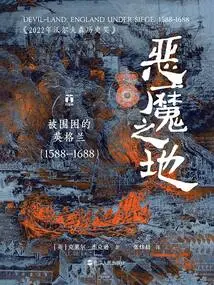
恶魔之地:被围困的英格兰:1588—1688(好望角系列)
(uk) Claire Jackson
England in the 17th century was known as the "Devil's Land": this land occupied by fallen angels was filled with rebellions, religious differences, and the collapse of royal power. Claire Jackson stunningly reinterprets the most turbulent and radical era in England's history, telling the fate of a country trapped in crisis. The "heretic" Queen Elizabeth I, who was unmarried and childless, was regarded as a terror by European Catholic forces. His successors, James I and Charles I of the Stuart dynasty, were regarded as incompetent and poor monarchs. After experiencing the trauma caused by civil war, regicide, and the founding of the Republic, Charles II and his brother James II wavered under the influence of external forces and ruled with difficulty until William of Orange led the Dutch army to invade England and reshape the new order. In many ways, Devil's Land reveals England to be a "failed state," mired in a series of disasters ranging from the Gunpowder Plot to the Great Fire of London, and in long-term turmoil. However, crises can also breed creativity. Jackson's deft use of eyewitness accounts-many written by shocked foreigners-injects dramatic tension into his sweeping narrative. The book begins on the eve of the invasion of the Spanish Armada in 1588 and ends a hundred years later with the not-so-"glorious" revolution. It completes an outstanding reinterpretation of England's chaotic and fascinating history in an eloquent and moving way.
England in the 17th century was known as the "Devil's Land": this land occupied by fallen angels was filled with rebellions, religious differences, and the collapse of royal power. Claire Jackson stunningly reinterprets the most turbulent and radical era in England's history, telling the fate of a country trapped in crisis. The "heretic" Queen Elizabeth I, who was unmarried and childless, was regarded as a terror by European Catholic forces. His successors, James I and Charles I of the Stuart dynasty, were regarded as incompetent and poor monarchs. After experiencing the trauma caused by civil war, regicide, and the founding of the Republic, Charles II and his brother James II wavered under the influence of external forces and ruled with difficulty until William of Orange led the Dutch army to invade England and reshape the new order. In many ways, Devil's Land reveals England to be a "failed state," mired in a series of disasters ranging from the Gunpowder Plot to the Great Fire of London, and in long-term turmoil. However, crises can also breed creativity. Jackson's deft use of eyewitness accounts-many written by shocked foreigners-injects dramatic tension into his sweeping narrative. The book begins on the eve of the invasion of the Spanish Armada in 1588 and ends a hundred years later with the not-so-"glorious" revolution. It completes an outstanding reinterpretation of England's chaotic and fascinating history in an eloquent and moving way.
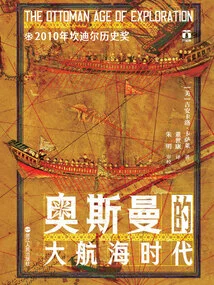
奥斯曼的大航海时代(好望角系列)
(u. S.) Giancarlo Casale
This ambitious work that rewrites world history subverts the narrative of global history as you know it, and "The Age of Discovery" completes the other half of the lost territory. In 1517, the Ottoman Sultan Selim "The Cruel" led his army to conquer Egypt, extending the empire's territory to the Indian Ocean trade circle for the first time. In the following decades, the Ottomans continued to penetrate into this unfamiliar and vast sea, and finally launched a comprehensive challenge to their main rival, the Portuguese Empire. This competition to control the lifeline of Asia's maritime trade covered multiple dimensions of ideology, military and commerce. This book provides the first panoramic representation of this century-old battle for global hegemony. The war spread from the Mediterranean coast to the Strait of Malacca, and from the heart of Africa to the grasslands of Central Asia. Based on first-hand documents from Turkish and Portuguese archives, the author brings together historical materials from six continents written in six major languages. Through the legendary experiences of vivid groups such as sultans and prime ministers, spies and pirates, mercenaries and harem women, the author vividly demonstrates the global influence of the Ottoman Empire in the 16th century. This book subverts the traditional narrative dominated by the West and demonstrates that the Ottomans not only actively participated in the competition in the Age of Discovery, but also used maritime hegemony, imperial prestige and business wisdom to eventually establish an imperial order in the Indian Ocean that surpassed Portugal and became the ultimate winner of the global political game.
This ambitious work that rewrites world history subverts the narrative of global history as you know it, and "The Age of Discovery" completes the other half of the lost territory. In 1517, the Ottoman Sultan Selim "The Cruel" led his army to conquer Egypt, extending the empire's territory to the Indian Ocean trade circle for the first time. In the following decades, the Ottomans continued to penetrate into this unfamiliar and vast sea, and finally launched a comprehensive challenge to their main rival, the Portuguese Empire. This competition to control the lifeline of Asia's maritime trade covered multiple dimensions of ideology, military and commerce. This book provides the first panoramic representation of this century-old battle for global hegemony. The war spread from the Mediterranean coast to the Strait of Malacca, and from the heart of Africa to the grasslands of Central Asia. Based on first-hand documents from Turkish and Portuguese archives, the author brings together historical materials from six continents written in six major languages. Through the legendary experiences of vivid groups such as sultans and prime ministers, spies and pirates, mercenaries and harem women, the author vividly demonstrates the global influence of the Ottoman Empire in the 16th century. This book subverts the traditional narrative dominated by the West and demonstrates that the Ottomans not only actively participated in the competition in the Age of Discovery, but also used maritime hegemony, imperial prestige and business wisdom to eventually establish an imperial order in the Indian Ocean that surpassed Portugal and became the ultimate winner of the global political game.
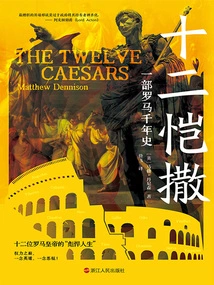
十二恺撒:一部罗马千年史(经纬度系列)
(uk)matthew Dennison
This book tells the story of the twelve Caesars of the Roman Empire. "Caesar" is a title commonly used by Roman and European emperors. Under their rule, Rome transformed from a republic into an empire, and the imperial dictatorship model they created existed in Western countries for more than a thousand years. In this book, the author presents the different images and destinies of these twelve Caesars: some of them were military geniuses, some murdered their mothers, some stood by when Rome collapsed, six of them were assassinated, two committed suicide, and five of them were praised to the status of gods... At the same time, the author leads us closer to the luxury, cruelty and prosperity of the Roman Empire. Through the lives and destinies of these twelve Caesars, we can see the glory of the Roman Empire at its peak and the story of the city of Rome.
This book tells the story of the twelve Caesars of the Roman Empire. "Caesar" is a title commonly used by Roman and European emperors. Under their rule, Rome transformed from a republic into an empire, and the imperial dictatorship model they created existed in Western countries for more than a thousand years. In this book, the author presents the different images and destinies of these twelve Caesars: some of them were military geniuses, some murdered their mothers, some stood by when Rome collapsed, six of them were assassinated, two committed suicide, and five of them were praised to the status of gods... At the same time, the author leads us closer to the luxury, cruelty and prosperity of the Roman Empire. Through the lives and destinies of these twelve Caesars, we can see the glory of the Roman Empire at its peak and the story of the city of Rome.
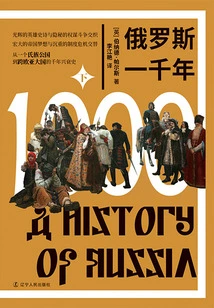
Russia for a Thousand Years
History俄罗斯一千年
(british) Bernard Pals
This book is a popular Russian history book for general readers. It begins with the origin of the Russian nation and ends with the overthrow of the Romanov dynasty of Tsarist Russia in 1917. It details the development history of the Russian nation from its establishment to 1917. The language of this book is beautiful, popular and fluent, and it is highly readable; it is also extremely practical. The author's profound description of Russian society and people's living conditions helps us deeply understand the history and current situation of Russia. After reading this book, readers will not only gain a clear understanding of the historical development of Russia, but also gain new understanding and insights into many hot issues in the world today.
This book is a popular Russian history book for general readers. It begins with the origin of the Russian nation and ends with the overthrow of the Romanov dynasty of Tsarist Russia in 1917. It details the development history of the Russian nation from its establishment to 1917. The language of this book is beautiful, popular and fluent, and it is highly readable; it is also extremely practical. The author's profound description of Russian society and people's living conditions helps us deeply understand the history and current situation of Russia. After reading this book, readers will not only gain a clear understanding of the historical development of Russia, but also gain new understanding and insights into many hot issues in the world today.

拉美之殇系列:银、剑、石+混血的文明(套装共2册)
(u. S.) Mary Alana Lin Beidian Dong Jingsheng
2026 will be a turning point year for Latin America and perhaps the world. Everyone will be curious, who will be the next Venezuela? Why is this continent rich in resources always accompanied by turmoil, poverty, and stagnation? I recommend this blockbuster set to everyone who can understand "The Sorrow of Latin America". These two books are the three keys to understanding this magical continent. They reveal the mystery of Latin America's suffering layer by layer from the historical imprint and individual destiny records. The first key, "Silver, Sword, Stone". The author uses a lifetime of observation to extract the three historical imprints that have shaped Latin America: silver, representing the never-ending plunder of resources; swords, representing the cycle of violence and dictatorship; and stone, representing the shackles of religious spiritual control. These are not abstract concepts, but the real life histories of ordinary people in contemporary Latin America, allowing us to see how history leaves bloody marks on individuals. The second key, "Hybrid Civilization". This book provides a panoramic view of 5,000 years of Latin American civilization history, from the legacy of the Aztecs, Mayans, and Incas, to the conquest and colonization of the Spanish Empire, to the transformation dilemma of Latin American modernization, revealing that "mixed blood" is not only the fusion of blood, but also the process of painful rebirth of civilizations in collisions.
2026 will be a turning point year for Latin America and perhaps the world. Everyone will be curious, who will be the next Venezuela? Why is this continent rich in resources always accompanied by turmoil, poverty, and stagnation? I recommend this blockbuster set to everyone who can understand "The Sorrow of Latin America". These two books are the three keys to understanding this magical continent. They reveal the mystery of Latin America's suffering layer by layer from the historical imprint and individual destiny records. The first key, "Silver, Sword, Stone". The author uses a lifetime of observation to extract the three historical imprints that have shaped Latin America: silver, representing the never-ending plunder of resources; swords, representing the cycle of violence and dictatorship; and stone, representing the shackles of religious spiritual control. These are not abstract concepts, but the real life histories of ordinary people in contemporary Latin America, allowing us to see how history leaves bloody marks on individuals. The second key, "Hybrid Civilization". This book provides a panoramic view of 5,000 years of Latin American civilization history, from the legacy of the Aztecs, Mayans, and Incas, to the conquest and colonization of the Spanish Empire, to the transformation dilemma of Latin American modernization, revealing that "mixed blood" is not only the fusion of blood, but also the process of painful rebirth of civilizations in collisions.
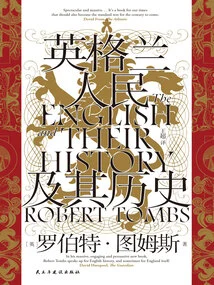
英格兰人民及其历史
(uk) Robert Toombs
If a nation is a group of people with kinship ties, political identities and representative institutions, then the English have a right to claim to be the oldest people in the world. The English first existed as an idea, before they had a common ruler, before the country they inhabited even had a name. They have persisted as an identifiable entity ever since, with their national institutions dating back to the earliest years of their history. The English had passed through many great changes of fortune in their journey from those precarious days of invasion and conquest. Their political, economic and cultural exchanges have left good or bad traces around the world. This book describes their history and their significance, starting with the monasteries of Northumbria and the wetlands of Wessex, to England's vitality around the world today. Robert Toombs outlines important threads throughout the story, including participatory governance, language, law, religion, land and sea, and changing relationships with other peoples. The most important of these connections is the way in which English people understand their nation's history, debate it, forget it, and are shaped by history. These different and sometimes conflicting understandings are an inherent part of their identities. The first single-volume history of England in more than half a century, this length incorporates a wealth of recent scholarship to offer a challenging, modern account of a long and evolving story that reveals the strength and resilience of English government, deep patterns of division, and enduring capacity to unite in the face of danger.
If a nation is a group of people with kinship ties, political identities and representative institutions, then the English have a right to claim to be the oldest people in the world. The English first existed as an idea, before they had a common ruler, before the country they inhabited even had a name. They have persisted as an identifiable entity ever since, with their national institutions dating back to the earliest years of their history. The English had passed through many great changes of fortune in their journey from those precarious days of invasion and conquest. Their political, economic and cultural exchanges have left good or bad traces around the world. This book describes their history and their significance, starting with the monasteries of Northumbria and the wetlands of Wessex, to England's vitality around the world today. Robert Toombs outlines important threads throughout the story, including participatory governance, language, law, religion, land and sea, and changing relationships with other peoples. The most important of these connections is the way in which English people understand their nation's history, debate it, forget it, and are shaped by history. These different and sometimes conflicting understandings are an inherent part of their identities. The first single-volume history of England in more than half a century, this length incorporates a wealth of recent scholarship to offer a challenging, modern account of a long and evolving story that reveals the strength and resilience of English government, deep patterns of division, and enduring capacity to unite in the face of danger.
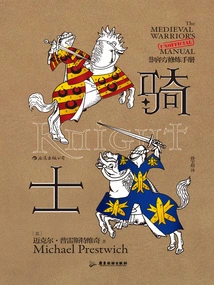
骑士:非官方修炼手册
(uk) Michael Prestwich
The armored knight is one of the iconic images of medieval Europe. They are highly skilled in martial arts and have a firm will. They are the protagonists of many literary masterpieces and have also provided inspiration for a large number of movies, comics, and games. Therefore, they are deeply loved by readers and film and television enthusiasts. However, what are the real knights in history? Based on historical materials, the author of this book comprehensively describes all aspects of the life of medieval knights and takes readers into the world of medieval knights.
The armored knight is one of the iconic images of medieval Europe. They are highly skilled in martial arts and have a firm will. They are the protagonists of many literary masterpieces and have also provided inspiration for a large number of movies, comics, and games. Therefore, they are deeply loved by readers and film and television enthusiasts. However, what are the real knights in history? Based on historical materials, the author of this book comprehensively describes all aspects of the life of medieval knights and takes readers into the world of medieval knights.
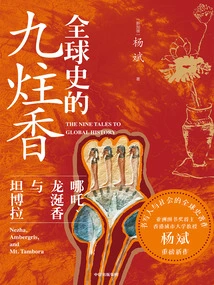
全球史的九炷香:哪吒、龙涎香与坦博拉
(singapore) Yang Bin
This book uses several distinctive historical themes and cultural images as clues to connect the extensive history of interactions between many places in the world. The author shows us that the image of "lotus growing\u002F lotus" represented by Nezha is not unique to China, but was introduced to China from Egypt via West Asia and India; during the Shang and Zhou dynasties, seashells from the mainland of the Central Plains were not introduced from the southern coastal areas of the mainland, but were introduced from the west to the northwest and north of my country from the Maldives via India. Most of the seashells in official warehouses in the south of the Yangtze River during the Yuan and Ming Dynasties came from Ryukyu. Using this as an incision, the author shows us the important hub function that Ryukyu played at this time connecting East Asia, Northeast Asia, Southeast Asia and even South Asia. In addition, the author also uses the legend of underwater magnetic mountains and the ambergris trade as clues to reveal the history of cultural trade exchanges between China and the Indian Ocean (Arab) world; and reveals how the 1815 eruption of the Tambora volcano in the southern hemisphere (known as the largest volcanic eruption in the history of human civilization) and the extreme climate anomalies it caused created unexpected obstacles to the world, especially ancient China in the 19th century. The content of the book is scattered in form but concentrated in spirit. It uses microscopic things such as lotus seals, seashells, ambergris, etc. As clues to trace their origins and whereabouts, as well as their important role in history. Through this, it extensively explores the history of cultural and trade exchanges between the Asian continent, with China as the main object, and the Indian Ocean, Pacific Islands and other places. Ultimately, it reveals a rich and exquisite history of global interaction that spans several centuries.
This book uses several distinctive historical themes and cultural images as clues to connect the extensive history of interactions between many places in the world. The author shows us that the image of "lotus growing\u002F lotus" represented by Nezha is not unique to China, but was introduced to China from Egypt via West Asia and India; during the Shang and Zhou dynasties, seashells from the mainland of the Central Plains were not introduced from the southern coastal areas of the mainland, but were introduced from the west to the northwest and north of my country from the Maldives via India. Most of the seashells in official warehouses in the south of the Yangtze River during the Yuan and Ming Dynasties came from Ryukyu. Using this as an incision, the author shows us the important hub function that Ryukyu played at this time connecting East Asia, Northeast Asia, Southeast Asia and even South Asia. In addition, the author also uses the legend of underwater magnetic mountains and the ambergris trade as clues to reveal the history of cultural trade exchanges between China and the Indian Ocean (Arab) world; and reveals how the 1815 eruption of the Tambora volcano in the southern hemisphere (known as the largest volcanic eruption in the history of human civilization) and the extreme climate anomalies it caused created unexpected obstacles to the world, especially ancient China in the 19th century. The content of the book is scattered in form but concentrated in spirit. It uses microscopic things such as lotus seals, seashells, ambergris, etc. As clues to trace their origins and whereabouts, as well as their important role in history. Through this, it extensively explores the history of cultural and trade exchanges between the Asian continent, with China as the main object, and the Indian Ocean, Pacific Islands and other places. Ultimately, it reveals a rich and exquisite history of global interaction that spans several centuries.
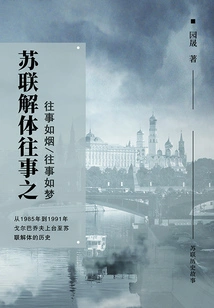
苏联解体往事之往事如烟\\往事如梦
Yuan Sheng
"The Past of the Soviet Union" mainly writes about the history of the Soviet Union in the last fifteen years (1977 to 1991), and is divided into two parts. The first half is named "The Past Is Like Smoke", which means that many historical stories and historical figures disappeared with the disintegration of the Soviet Union and no one remembers it. The content is the history of the Soviet Union from 1977 to 1985 before Gorbachev came to power. The lower part is named "The Past Is Like a Dream", which means that many historical stories and historical figures have become dreamlike and incomprehensible following the disintegration of the Soviet Union. The content is the history from March 1985 when Gorbachev came to power to the disintegration of the Soviet Union in December 1991, plus the history of the two Russian revolutions in 1917 and the formation of the Soviet Union from 1922 to 1940.
"The Past of the Soviet Union" mainly writes about the history of the Soviet Union in the last fifteen years (1977 to 1991), and is divided into two parts. The first half is named "The Past Is Like Smoke", which means that many historical stories and historical figures disappeared with the disintegration of the Soviet Union and no one remembers it. The content is the history of the Soviet Union from 1977 to 1985 before Gorbachev came to power. The lower part is named "The Past Is Like a Dream", which means that many historical stories and historical figures have become dreamlike and incomprehensible following the disintegration of the Soviet Union. The content is the history from March 1985 when Gorbachev came to power to the disintegration of the Soviet Union in December 1991, plus the history of the two Russian revolutions in 1917 and the formation of the Soviet Union from 1922 to 1940.
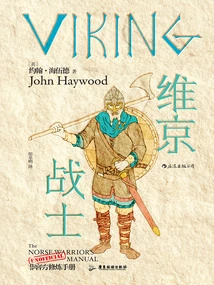
维京战士:非官方修炼手册
(uk) John Heywood
Viking warriors are also called Vikings. They set out from their home in Northern Europe and attacked various parts of Europe by boat, frightening the local residents. They changed the historical course of Britain, France, Russia and other places, and their influence was far-reaching. The author of this book uses existing historical materials, scholars' research works, and archaeological results to describe the Vikings' living conditions and historical evolution in vivid language, showing the Vikings' life in an all-round way from the fields of culture, economy, military, and politics.
Viking warriors are also called Vikings. They set out from their home in Northern Europe and attacked various parts of Europe by boat, frightening the local residents. They changed the historical course of Britain, France, Russia and other places, and their influence was far-reaching. The author of this book uses existing historical materials, scholars' research works, and archaeological results to describe the Vikings' living conditions and historical evolution in vivid language, showing the Vikings' life in an all-round way from the fields of culture, economy, military, and politics.
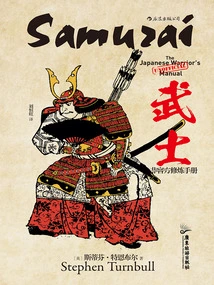
武士:非官方修炼手册
(uk) Stephen Turnbull
The armored samurai is one of Japan's iconic images. These powerful warriors with superb martial arts and strong will have provided inspiration for a large number of movies, comics, and games, and are known to people all over the world as the protagonists of these works. However, what were the real samurai in history like? Based on historical materials, the author of this book tells the history of samurai and restores the true image of samurai from ancient times to the Warring States Period to the Edo Period.
The armored samurai is one of Japan's iconic images. These powerful warriors with superb martial arts and strong will have provided inspiration for a large number of movies, comics, and games, and are known to people all over the world as the protagonists of these works. However, what were the real samurai in history like? Based on historical materials, the author of this book tells the history of samurai and restores the true image of samurai from ancient times to the Warring States Period to the Edo Period.
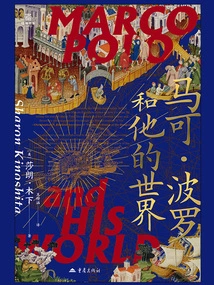
Marco Polo and His World
History马可·波罗和他的世界
(us) Sharon Kinoshita
As an early Westerner who recorded Asian features in detail, Marco Polo's name is well-known in China, and his book "The Travels of Marco Polo" has influenced the exchange process between Eastern and Western civilizations. This book does not stop at retelling the legendary experience of Marco Polo, but takes a different approach, taking "The Travels of Marco Polo" as the main line of research, combining multiple historical materials, and striving to expand the depth of history behind it. The author also uses a multi-dimensional narrative technique to extend the focus from Marco Polo's personal experiences to the life stories of a Chinese painter, an Indian poet and a Byzantine princess, vividly recreating the Eurasian world that was unprecedentedly connected and culturally diverse due to the Mongol conquest. The book's language is simple and clear, and its perspective is novel and unique. It has important enlightenment significance for people's understanding of the history of exchanges between the East and the West.
As an early Westerner who recorded Asian features in detail, Marco Polo's name is well-known in China, and his book "The Travels of Marco Polo" has influenced the exchange process between Eastern and Western civilizations. This book does not stop at retelling the legendary experience of Marco Polo, but takes a different approach, taking "The Travels of Marco Polo" as the main line of research, combining multiple historical materials, and striving to expand the depth of history behind it. The author also uses a multi-dimensional narrative technique to extend the focus from Marco Polo's personal experiences to the life stories of a Chinese painter, an Indian poet and a Byzantine princess, vividly recreating the Eurasian world that was unprecedentedly connected and culturally diverse due to the Mongol conquest. The book's language is simple and clear, and its perspective is novel and unique. It has important enlightenment significance for people's understanding of the history of exchanges between the East and the West.
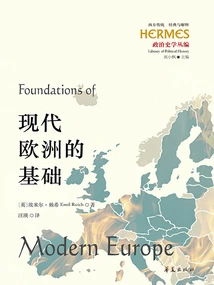
现代欧洲的基础(西方传统:经典与解释)
(uk) Emil Reich
"The Foundations of Modern Europe" aims to briefly introduce the main facts and trends in European history since 1756, but more importantly, to point out the "soul and significance" of these historical events. The book is divided into 12 chapters, respectively discussing major events such as the American War of Independence, the French Revolution, Napoleon, the unification of Italy, the unification of Germany, and the Franco-Prussian War. From a structural point of view, the discussion of Napoleon is the most lengthy and is at the core of the book. Napoleon and the French Revolution laid the foundations of modern Europe. Before Napoleon, Europe had always lacked centripetal force. The dream of uniting Europe was unrealistic and ultimately achieved nothing. Although Napoleon failed to succeed, no one came closer to the goal of uniting Europe than he did. Compared with many historical accounts of Europe, the unique value of this book is that the author does not have any color of modern empirical history, but insists on making pertinent and reasonable moral evaluations of historical figures.
"The Foundations of Modern Europe" aims to briefly introduce the main facts and trends in European history since 1756, but more importantly, to point out the "soul and significance" of these historical events. The book is divided into 12 chapters, respectively discussing major events such as the American War of Independence, the French Revolution, Napoleon, the unification of Italy, the unification of Germany, and the Franco-Prussian War. From a structural point of view, the discussion of Napoleon is the most lengthy and is at the core of the book. Napoleon and the French Revolution laid the foundations of modern Europe. Before Napoleon, Europe had always lacked centripetal force. The dream of uniting Europe was unrealistic and ultimately achieved nothing. Although Napoleon failed to succeed, no one came closer to the goal of uniting Europe than he did. Compared with many historical accounts of Europe, the unique value of this book is that the author does not have any color of modern empirical history, but insists on making pertinent and reasonable moral evaluations of historical figures.
全球化在东亚的开端(“经典与解释”第57期)
Editor-in-chief Lou Lin
In modern times, almost all Asian and African countries have become colonies or semi-colonies of Western powers. Only Japan, located in East Asia, has not only maintained its sovereignty and independence and avoided the fate of colonization, but even left Asia and joined Europe in an attempt to change the foundation of its civilization. This period of Japan's history can be used as a sample for our understanding of the history of modern globalization. The process of realizing Japan's modernization was as "smooth" as sliding on ice. Investigating its root cause, the Oriyo regime (the rule of Oda Nobunaga and Toyotomi Hideyoshi) characterized by military and commercial affairs was the turning point. Its series of policies paved the way for Japan's modernization.
In modern times, almost all Asian and African countries have become colonies or semi-colonies of Western powers. Only Japan, located in East Asia, has not only maintained its sovereignty and independence and avoided the fate of colonization, but even left Asia and joined Europe in an attempt to change the foundation of its civilization. This period of Japan's history can be used as a sample for our understanding of the history of modern globalization. The process of realizing Japan's modernization was as "smooth" as sliding on ice. Investigating its root cause, the Oriyo regime (the rule of Oda Nobunaga and Toyotomi Hideyoshi) characterized by military and commercial affairs was the turning point. Its series of policies paved the way for Japan's modernization.
欧洲历史上的世俗化之争(“经典与解释”第64期)
Editor-in-chief Liu Xiaofeng
This book is the 64th issue of "Classics and Interpretation". The topic of this issue is "The Controversy over Secularization in European History". The formation of modern Europe is often said to be the process of so-called "secularization". Regarding this process, the famous intellectual historian Lovett believes that the progressive doctrine of modernization secularizes and practices the mythical historical realization model, but this is a deviation and a dangerous and unprecedented illusion. This judgment had a huge impact and also aroused Blumenberg's opposition. Blumenberg tried his best to prove in "Modern Legitimacy" that the modern concept of progress is not the modern version of Lovett's eschatology, but presents a movement process that is immanent in history. It is a gradually emerging concept of "overall progress" and is not a transcendent transcendence. This is where the "legitimacy" of modernity lies. The thematic articles selected in this volume focus on the debates between the two, either deepening the understanding of their respective concepts, or providing new entry points for this debate, which are all helpful for us to understand the secularization process in modern Europe.
This book is the 64th issue of "Classics and Interpretation". The topic of this issue is "The Controversy over Secularization in European History". The formation of modern Europe is often said to be the process of so-called "secularization". Regarding this process, the famous intellectual historian Lovett believes that the progressive doctrine of modernization secularizes and practices the mythical historical realization model, but this is a deviation and a dangerous and unprecedented illusion. This judgment had a huge impact and also aroused Blumenberg's opposition. Blumenberg tried his best to prove in "Modern Legitimacy" that the modern concept of progress is not the modern version of Lovett's eschatology, but presents a movement process that is immanent in history. It is a gradually emerging concept of "overall progress" and is not a transcendent transcendence. This is where the "legitimacy" of modernity lies. The thematic articles selected in this volume focus on the debates between the two, either deepening the understanding of their respective concepts, or providing new entry points for this debate, which are all helpful for us to understand the secularization process in modern Europe.
The Cry of the Wilderness
History荒野的喊声
Suo Sa
This book is a selected translation and commentary of "History of the West Indies" by Bartolomé de Las Casas, the "Protector of the Indians". There are eleven chapters in total, each chapter consists of two parts: translation and commentary. Las Casas entered the Americas with the advance party of his country's colonial army. Ultimately, his humanitarian conscience led him to side with the early "other." Las Casas's practice, thoughts and writings will place readers in the vast desert of the continent five hundred years ago, listen to the cries crossing the wilderness, imagine the interpretation of utopian ideals, and re-examine the "modernity" we face.
This book is a selected translation and commentary of "History of the West Indies" by Bartolomé de Las Casas, the "Protector of the Indians". There are eleven chapters in total, each chapter consists of two parts: translation and commentary. Las Casas entered the Americas with the advance party of his country's colonial army. Ultimately, his humanitarian conscience led him to side with the early "other." Las Casas's practice, thoughts and writings will place readers in the vast desert of the continent five hundred years ago, listen to the cries crossing the wilderness, imagine the interpretation of utopian ideals, and re-examine the "modernity" we face.
波斯湾五千年:全球史视野下的中东海湾地区
(u. S.) Alan James Fromholtz
This book takes us back to review how the prosperous, open, and diverse Middle East was formed and developed. As early as the Mesopotamian civilization, the Persian Gulf region relied on commerce rather than agriculture for a living. The trading city-states represented by Dilmun connected the trade routes to the Mediterranean and the Indian Ocean, and connected the Mesopotamian Civilization and the Indus Civilization. After the rise of the Arab Empire, Basra, which was closer to the center of the empire, became As a bridge between the empire and the outside world, Islam was also accepted by people from afar here and became a world religion. After the decline of the Arab Empire, the Persian Gulf ports represented by Sherov still showed the resilience of autonomous ports and maintained trade with South Asia, East Africa and even China. After 1507, the foreign Portuguese and British, as well as the local Omanis, dominated the Persian Gulf. However, they were unable to establish direct rule or change the pluralistic and autonomous status of the Gulf region. The ports represented by Hormuz and Muscat instead integrated them into a global trading system that has been operating for thousands of years. Since the world entered the oil age, the Gulf region, which is dotted with oil-producing countries along its coast, has become the engine of the world economy. Metropolises represented by Dubai still witness the prosperity, openness and diversity of the Gulf region.
This book takes us back to review how the prosperous, open, and diverse Middle East was formed and developed. As early as the Mesopotamian civilization, the Persian Gulf region relied on commerce rather than agriculture for a living. The trading city-states represented by Dilmun connected the trade routes to the Mediterranean and the Indian Ocean, and connected the Mesopotamian Civilization and the Indus Civilization. After the rise of the Arab Empire, Basra, which was closer to the center of the empire, became As a bridge between the empire and the outside world, Islam was also accepted by people from afar here and became a world religion. After the decline of the Arab Empire, the Persian Gulf ports represented by Sherov still showed the resilience of autonomous ports and maintained trade with South Asia, East Africa and even China. After 1507, the foreign Portuguese and British, as well as the local Omanis, dominated the Persian Gulf. However, they were unable to establish direct rule or change the pluralistic and autonomous status of the Gulf region. The ports represented by Hormuz and Muscat instead integrated them into a global trading system that has been operating for thousands of years. Since the world entered the oil age, the Gulf region, which is dotted with oil-producing countries along its coast, has become the engine of the world economy. Metropolises represented by Dubai still witness the prosperity, openness and diversity of the Gulf region.
皇帝与国王:足利义满和他的时代
Kang Hao
1374-1419 was a turbulent era in East Asia: in China, King Yan Zhu Di raised troops to depose his nephew Emperor Jianwen and became the "Ming Dynasty"; in the Korean Peninsula, general Li Chenggui forced the King of Korea to abdicate and established the Joseon Dynasty. His son Li Bangyuan later seized power and ascended the throne and was called "Korea Taizong"; in Japan, general Ashikaga Yoshimitsu ended the division of the Northern and Southern Dynasties that lasted for more than 60 years and unified Japan. However, Ashikaga Yoshimitsu was criticized by many in his own country - his political power was stable. In order to return to the East Asian tribute system centered on the Ming Dynasty, he racked his brains to obtain the title of "King of Japan" awarded by the Ming Dynasty. In Japan, where the emperor was regarded as the supreme, it was a treason. This book analyzes the impact of Ashikaga Yoshimitsu on Japan and the East Asian world from the perspectives of domestic politics, international exchanges, and cultural development through Ashikaga Yoshimitsu, the third generation shogun of the Muromachi shogunate, from the "Koretsu Coup" to the end of his life. It attempts to use a broad perspective and small details. The picture returns to the scene of East Asian history from the second half of the 14th century to the early 15th century. From different perspectives of Japan, China, and the Korean Peninsula, it peels off the layers of masks on Ashikaga Yoshimitsu's face and reanalyzes his experiences and intentions: Is Ashikaga Yoshimitsu a transgressive "traitor"? Or does it have its own insights and wisdom? What does the emergence of Ashikaga Yoshimitsu mean to Muromachi Japan in the East Asian world with the Ming Dynasty as its core?
1374-1419 was a turbulent era in East Asia: in China, King Yan Zhu Di raised troops to depose his nephew Emperor Jianwen and became the "Ming Dynasty"; in the Korean Peninsula, general Li Chenggui forced the King of Korea to abdicate and established the Joseon Dynasty. His son Li Bangyuan later seized power and ascended the throne and was called "Korea Taizong"; in Japan, general Ashikaga Yoshimitsu ended the division of the Northern and Southern Dynasties that lasted for more than 60 years and unified Japan. However, Ashikaga Yoshimitsu was criticized by many in his own country - his political power was stable. In order to return to the East Asian tribute system centered on the Ming Dynasty, he racked his brains to obtain the title of "King of Japan" awarded by the Ming Dynasty. In Japan, where the emperor was regarded as the supreme, it was a treason. This book analyzes the impact of Ashikaga Yoshimitsu on Japan and the East Asian world from the perspectives of domestic politics, international exchanges, and cultural development through Ashikaga Yoshimitsu, the third generation shogun of the Muromachi shogunate, from the "Koretsu Coup" to the end of his life. It attempts to use a broad perspective and small details. The picture returns to the scene of East Asian history from the second half of the 14th century to the early 15th century. From different perspectives of Japan, China, and the Korean Peninsula, it peels off the layers of masks on Ashikaga Yoshimitsu's face and reanalyzes his experiences and intentions: Is Ashikaga Yoshimitsu a transgressive "traitor"? Or does it have its own insights and wisdom? What does the emergence of Ashikaga Yoshimitsu mean to Muromachi Japan in the East Asian world with the Ming Dynasty as its core?
君临天下:世界历史上的皇帝
L
Professor Dominic Liffin's new book explores the qualities required of monarchs across many dynasties throughout history. A monarch needs qualities such as tenacity, abundant energy, accurate judgment and moderate self-confidence. Of course, he also needs qualities such as ambition, courage and kindness. These qualities are partly innate, but they are also created by education and experience. Marriage strategies and inheritance systems also had a significant impact on dynasties and their rulers. The author traces the changes in these elements through different historical periods. Although the imperial system has basically died out today, this does not mean that it has no relevance to today's world. The author's discussion shows us how people today live with its political and cultural heritage.
Professor Dominic Liffin's new book explores the qualities required of monarchs across many dynasties throughout history. A monarch needs qualities such as tenacity, abundant energy, accurate judgment and moderate self-confidence. Of course, he also needs qualities such as ambition, courage and kindness. These qualities are partly innate, but they are also created by education and experience. Marriage strategies and inheritance systems also had a significant impact on dynasties and their rulers. The author traces the changes in these elements through different historical periods. Although the imperial system has basically died out today, this does not mean that it has no relevance to today's world. The author's discussion shows us how people today live with its political and cultural heritage.
文明的重建:战后德国五十年(译林思想史)
(u. S.) Conrad H. Yarausch
In the spring of 1945, the German army was defeated, and the world was immersed in the unspeakable crime of the Holocaust. Few people expected that just half a century later, the Germans would transform and stand at the forefront of European integration as a prosperous nation. How did the Germans recover from the devastation of World War II and stand up again from the shame of the Holocaust? In this book, Jarausch describes the detailed process of Germany rebuilding civilization and civil society destroyed by the Nazi regime, thereby achieving national rejuvenation. Unlike other scholarly works that explore Germany's response to its Nazi past, The Reconstruction of Civilization focuses primarily on how a disoriented people learned practical lessons from the mistakes of the past and their struggle to create a new society focused on human rights. This perspective provides a challenging analysis of the gradually formed national and character traits of the Germans, and provides new possibilities for the study of world history.
In the spring of 1945, the German army was defeated, and the world was immersed in the unspeakable crime of the Holocaust. Few people expected that just half a century later, the Germans would transform and stand at the forefront of European integration as a prosperous nation. How did the Germans recover from the devastation of World War II and stand up again from the shame of the Holocaust? In this book, Jarausch describes the detailed process of Germany rebuilding civilization and civil society destroyed by the Nazi regime, thereby achieving national rejuvenation. Unlike other scholarly works that explore Germany's response to its Nazi past, The Reconstruction of Civilization focuses primarily on how a disoriented people learned practical lessons from the mistakes of the past and their struggle to create a new society focused on human rights. This perspective provides a challenging analysis of the gradually formed national and character traits of the Germans, and provides new possibilities for the study of world history.
开罗1921:缔造现代中东的十日
(add) C. Brad Ford
From March 12 to 21, 1921, Britain, as the main mandate power in the Middle East, held a conference in Cairo under the leadership of its Secretary of Colonial Affairs, Winston Churchill, to resolve the future of the Arab countries in the Middle East after the collapse of the Ottoman Empire. The ten-day conference was intended to redraw the map of the Middle East, establish kingdoms in Iraq and Transjordan, and confirm the creation of a Jewish homeland in Palestine - the future state of Israel. British officials, including T. E. Lawrence and Gertrude Bell, ambitiously tried to bring the Middle East into the world of modern nationalism, but their prejudices profoundly changed the Middle East in the decades that followed.
From March 12 to 21, 1921, Britain, as the main mandate power in the Middle East, held a conference in Cairo under the leadership of its Secretary of Colonial Affairs, Winston Churchill, to resolve the future of the Arab countries in the Middle East after the collapse of the Ottoman Empire. The ten-day conference was intended to redraw the map of the Middle East, establish kingdoms in Iraq and Transjordan, and confirm the creation of a Jewish homeland in Palestine - the future state of Israel. British officials, including T. E. Lawrence and Gertrude Bell, ambitiously tried to bring the Middle East into the world of modern nationalism, but their prejudices profoundly changed the Middle East in the decades that followed.
马匹与文明的缔造
(us) David Chaffetz
This book uses horses as clues and revolves around the three most typical human images in the interaction between humans and horses-cavalry, monarchs, and merchants, connecting thousands of years of civilization history in the Eurasian steppes. In this historical work full of literary tension, we will see: how horses and people first met and established a close relationship; how cavalry changed their fighting methods and gradually built horses as the basis of ancient military power, and then established multiple empires; how monarchs regarded horses as a strategic tool, obtained horse resources through domestication, trade, plunder, etc., And developed their own unique politics Influence; how merchants balance the attributes of horses as a means of transportation and valuable commodities, driving horses across mountains, grasslands, and deserts, building bridges of interconnected civilizations; in history, many empires that rose and fell suddenly, how they shattered the old order, rebuilt the political system, protected the territory of rule, and maintained their own authority in the midst of war, governance, trade, and education, and what role horses played in them. With a broad vision and vivid narrative, this book reveals how horses have profoundly influenced and even rewritten the trajectory of human civilization. It also reminds us that civilization is not just a single-line human narrative. The evolution of civilization is the result of the joint creation of humans, animals and the environment.
This book uses horses as clues and revolves around the three most typical human images in the interaction between humans and horses-cavalry, monarchs, and merchants, connecting thousands of years of civilization history in the Eurasian steppes. In this historical work full of literary tension, we will see: how horses and people first met and established a close relationship; how cavalry changed their fighting methods and gradually built horses as the basis of ancient military power, and then established multiple empires; how monarchs regarded horses as a strategic tool, obtained horse resources through domestication, trade, plunder, etc., And developed their own unique politics Influence; how merchants balance the attributes of horses as a means of transportation and valuable commodities, driving horses across mountains, grasslands, and deserts, building bridges of interconnected civilizations; in history, many empires that rose and fell suddenly, how they shattered the old order, rebuilt the political system, protected the territory of rule, and maintained their own authority in the midst of war, governance, trade, and education, and what role horses played in them. With a broad vision and vivid narrative, this book reveals how horses have profoundly influenced and even rewritten the trajectory of human civilization. It also reminds us that civilization is not just a single-line human narrative. The evolution of civilization is the result of the joint creation of humans, animals and the environment.
草原帝国:阿提拉、成吉思汗与帖木儿
I
Most of the great achievements in the history of world civilization occurred on the edges of the Eurasian continent, and in the middle of this vast continent is a barbaric land separated from civilization. Attila, Genghis Khan and Tamerlane... These names from this land still echo in the dark side of the history of civilization. Have the grassland people brought only disaster and destruction to world history? In order to answer this question, René Gruset collected historical events related to the grassland from written historical materials scattered in various civilized worlds in Eurasia, supplemented by archaeological data, restored the history of the grassland from about 1000 BC to 1759, and told the origin, development and demise of each grassland regime. In the author's writing, the invaders from the grassland are no longer a disaster sent by God, but a periodic interaction between the grassland world and the civilized world.
Most of the great achievements in the history of world civilization occurred on the edges of the Eurasian continent, and in the middle of this vast continent is a barbaric land separated from civilization. Attila, Genghis Khan and Tamerlane... These names from this land still echo in the dark side of the history of civilization. Have the grassland people brought only disaster and destruction to world history? In order to answer this question, René Gruset collected historical events related to the grassland from written historical materials scattered in various civilized worlds in Eurasia, supplemented by archaeological data, restored the history of the grassland from about 1000 BC to 1759, and told the origin, development and demise of each grassland regime. In the author's writing, the invaders from the grassland are no longer a disaster sent by God, but a periodic interaction between the grassland world and the civilized world.